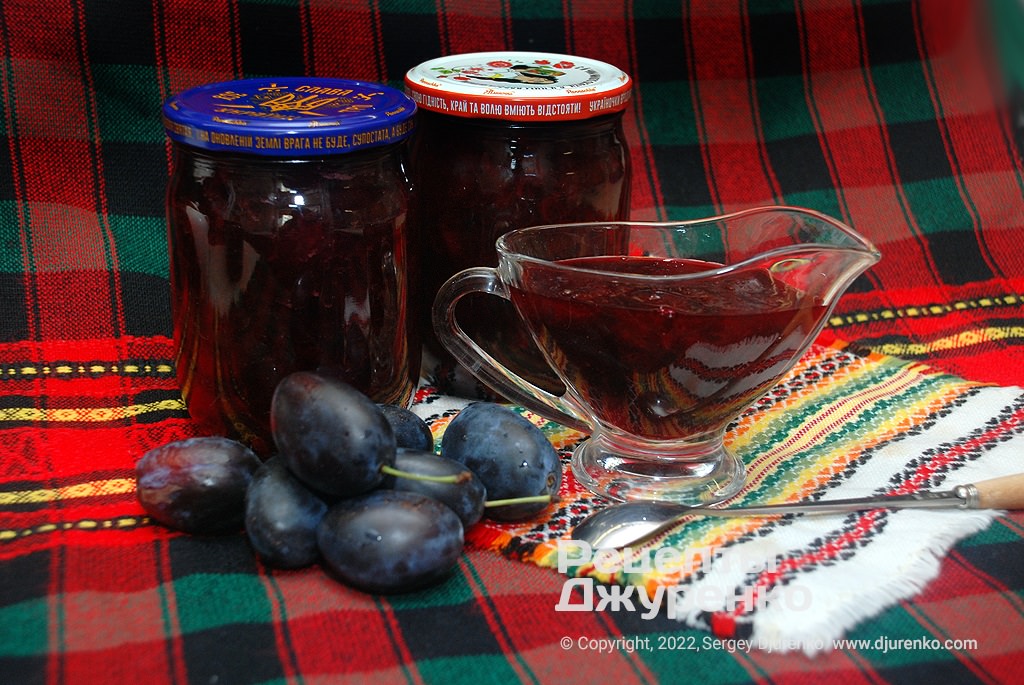
Plum Jam
Ingredients
3 jars (0.5 l)
- Ripe plums 1.7 kg
- Sugar 800 g
Step-by-step recipe
Preparing the plums
For us, plum jam is a traditional sweet dessert, a treat and a filling for all kinds of baking, a cake ingredient and a lovely sauce for syrniki.
Take ripe plums without any astringency. We usually wait until they show up in the stores – from then on, we start pickling them and making jam.
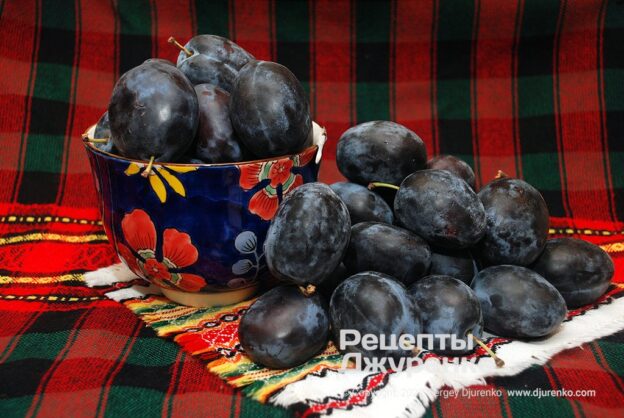
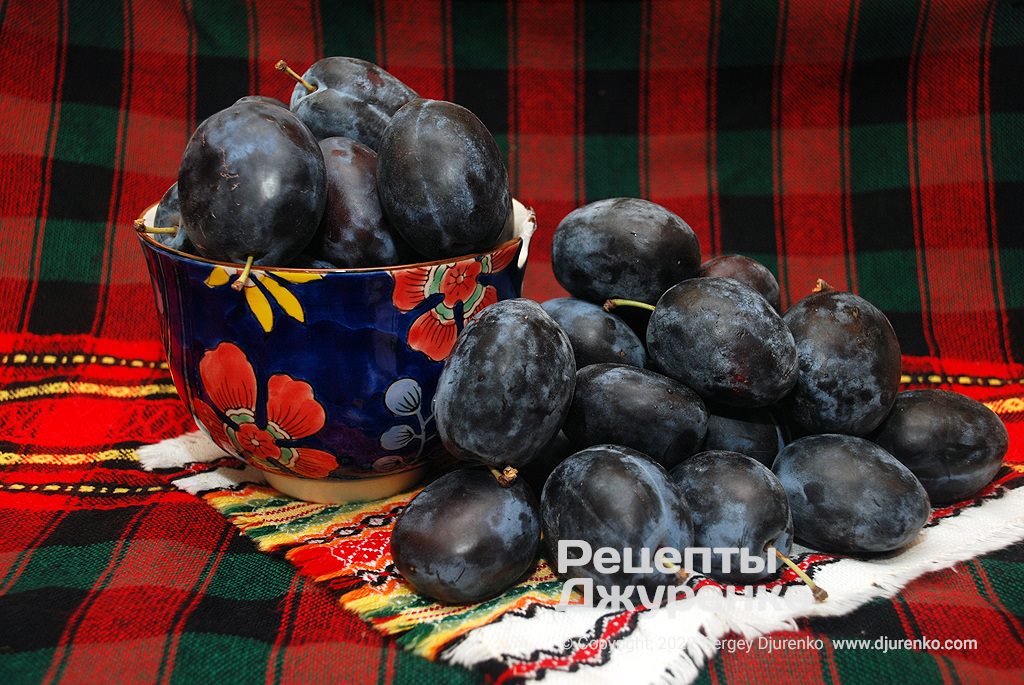
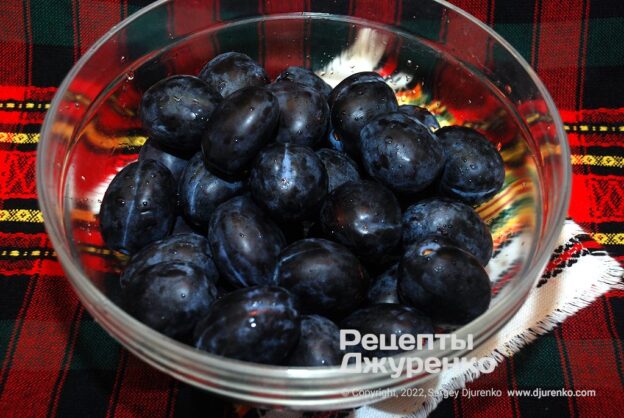
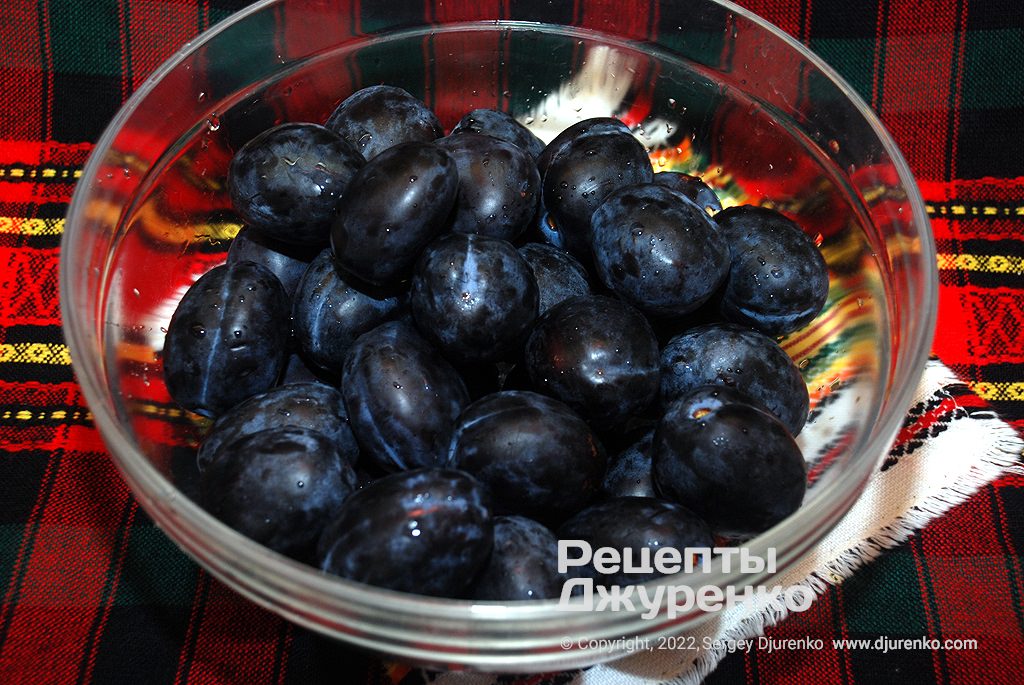
Wash the plums. Blue plums always have a whitish bloom that washes off easily. But even if a little remains, that’s fine. I remember as kids we didn’t bother much with washing fruit, and we’re still alive.
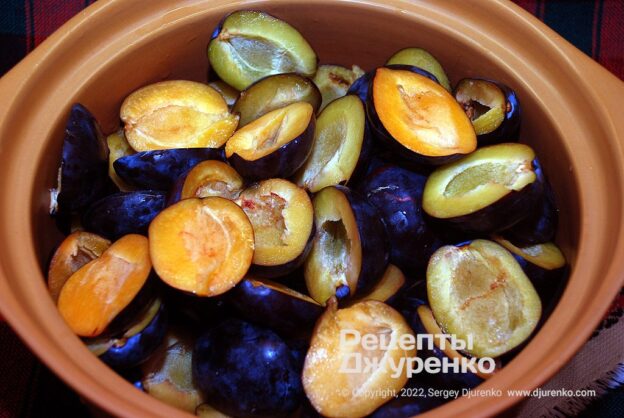
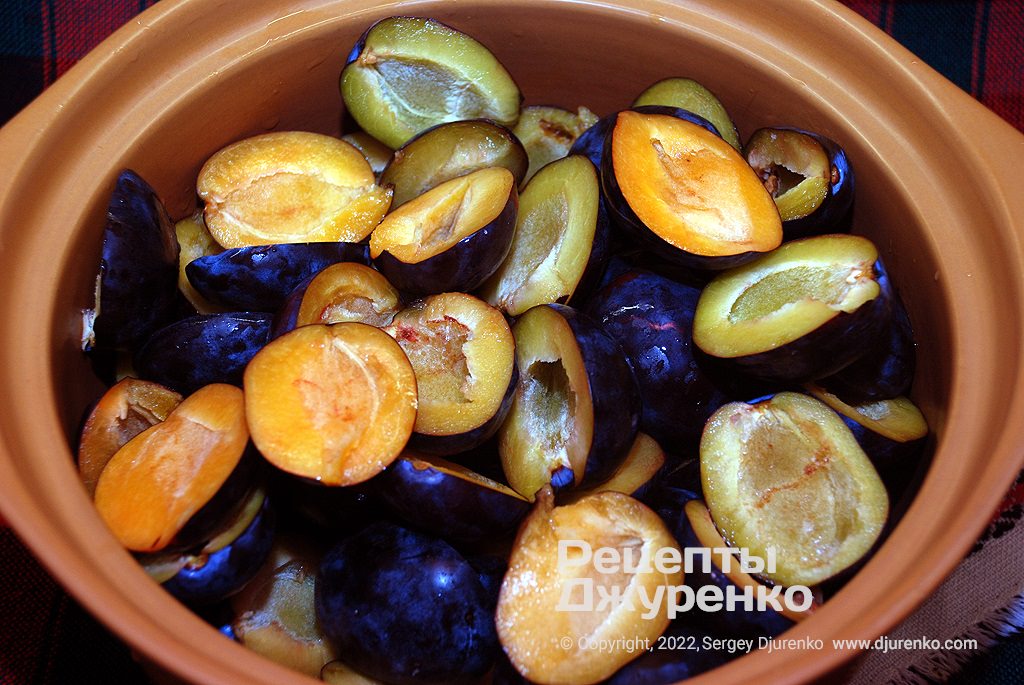
Cut each plum with a knife and remove the pit – as a rule, it comes out easily. You should end up with two separate halves.
Covering with sugar
It’s best to cook plum jam in a ceramic or enameled pot – there’s no need for the fruit to touch metal more than necessary.
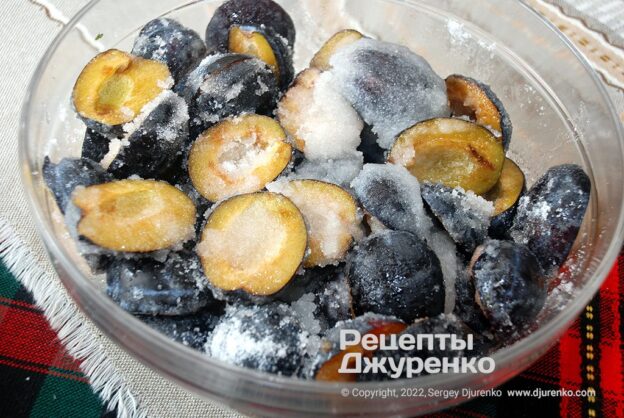
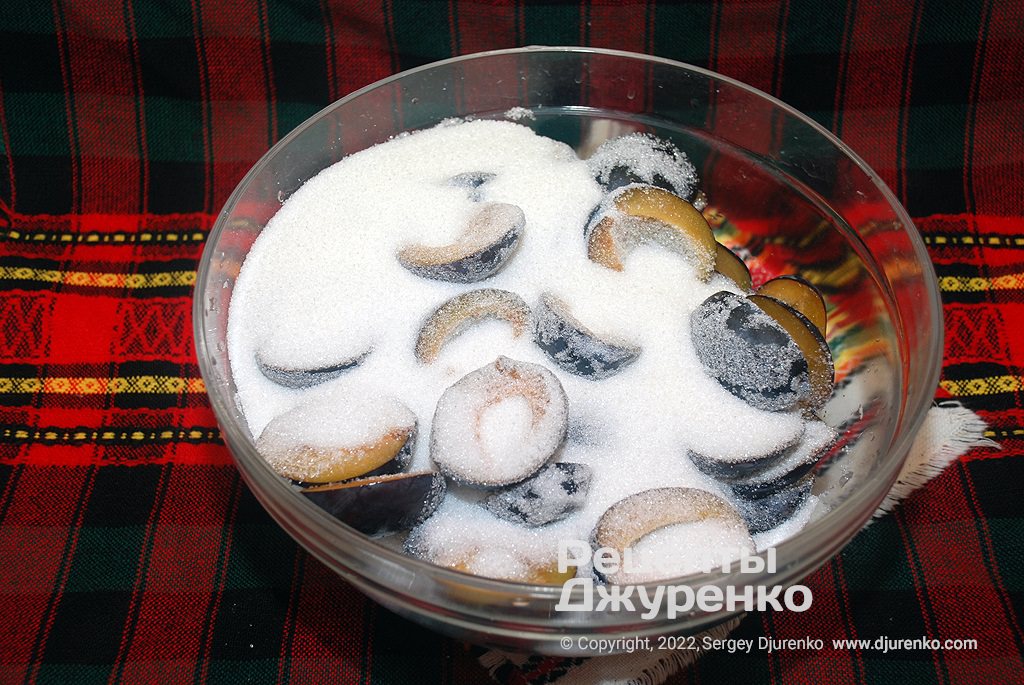
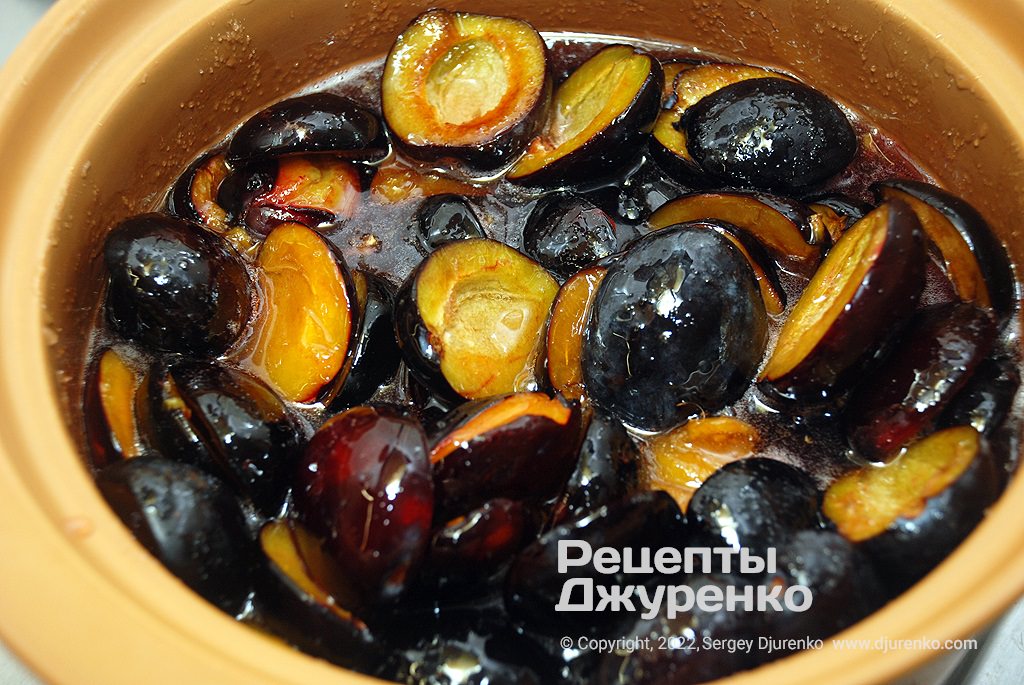
Put the plum halves in the pot and cover with sugar. Gently stir with a wooden spatula, or just shake the pot to spread the sugar.
The eternal question and bone of contention: how much sugar to add and whether to add water. For good jam we use white granulated sugar at half the weight of the pitted plums. We don’t add any water at all – it’s unnecessary. Ripe plums dissolve the sugar beautifully, if only partly at first. But as they heat, the halves release juice, and the sugar dissolves in minutes. What’s more, without extra water you get plum jam of “classic” thickness, with clearly visible pieces of fruit.
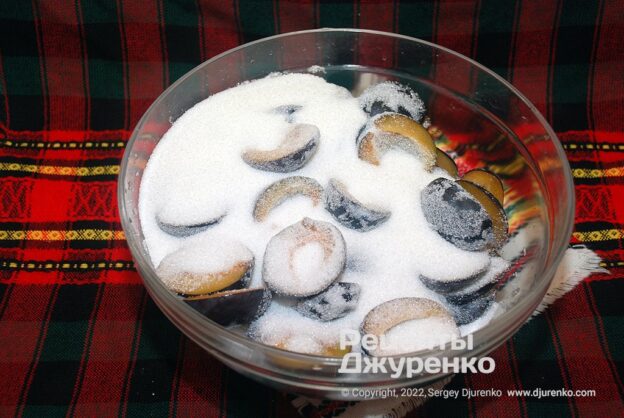
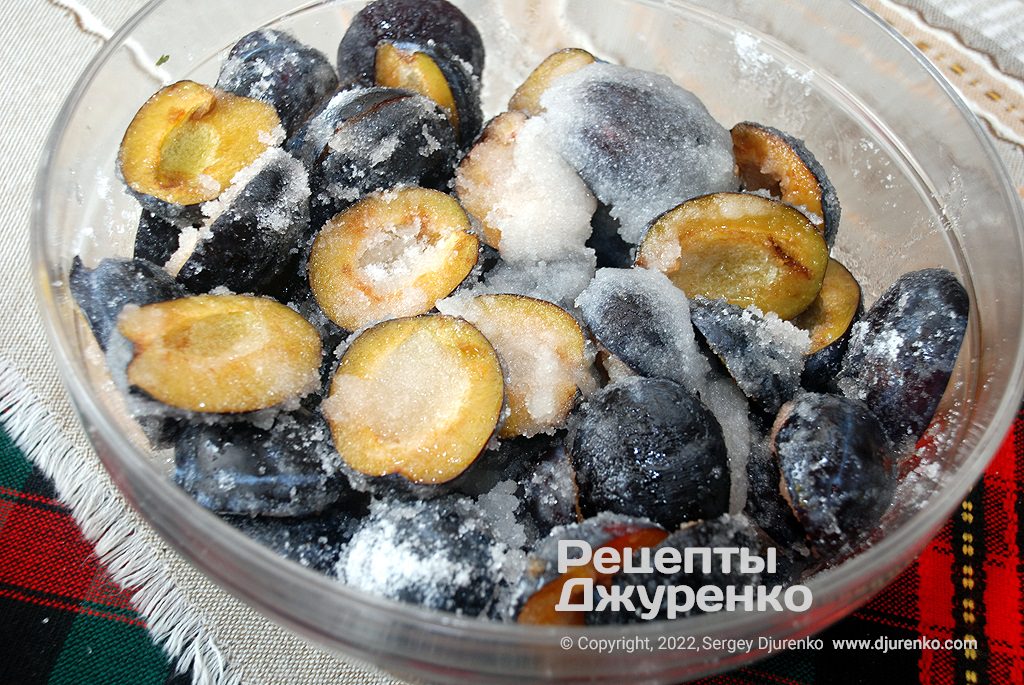
Cover with a lid or an upside-down plate and leave for 4–6 hours for the plums to release juice and the sugar to start dissolving. Stir now and then – once an hour is enough.
Heating in two rounds
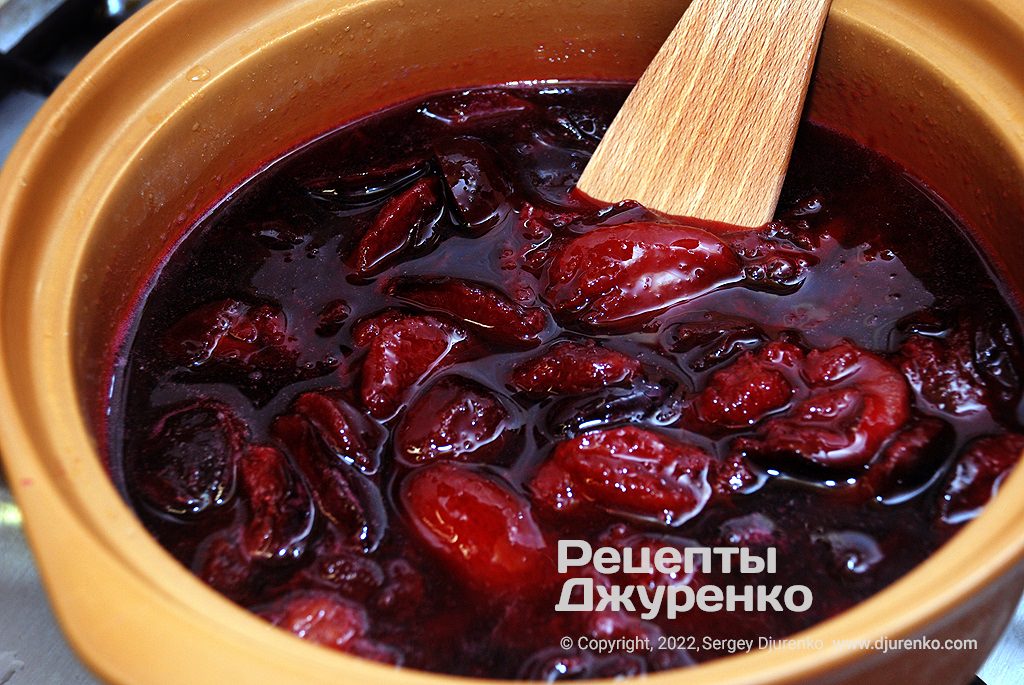
Put the pot on the heat and warm it up. The sugar will dissolve completely very quickly, and there will be plenty of liquid in the pot. It may seem like too much liquid – don’t worry. Once it cools, a spoon will stand up in the plum jam.
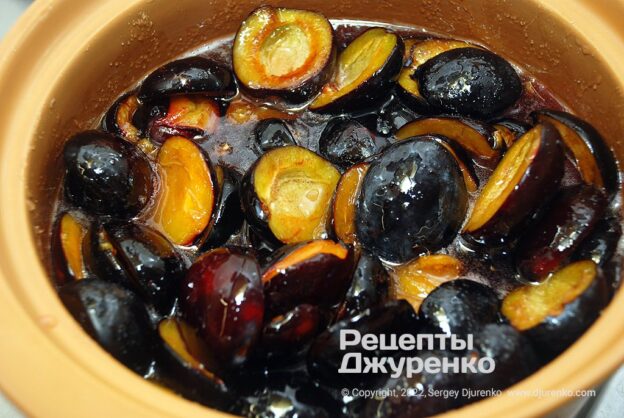
Bring the jam just to a boil and take it off the heat.
At this stage the liquid usually foams a lot and turns pale pink. It’s often said the foam should be skimmed off. Don’t bother. As it cools, all the foam will blend back into the jam and disappear.
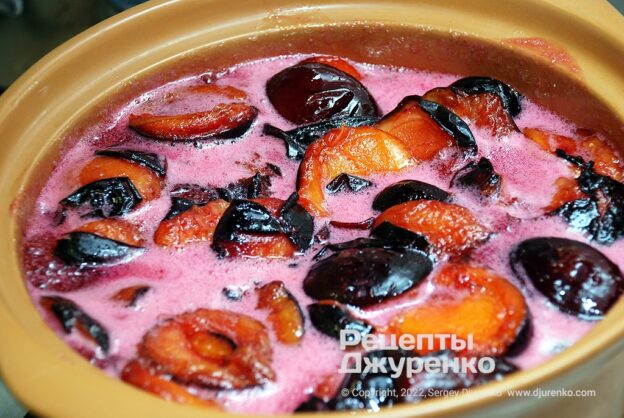
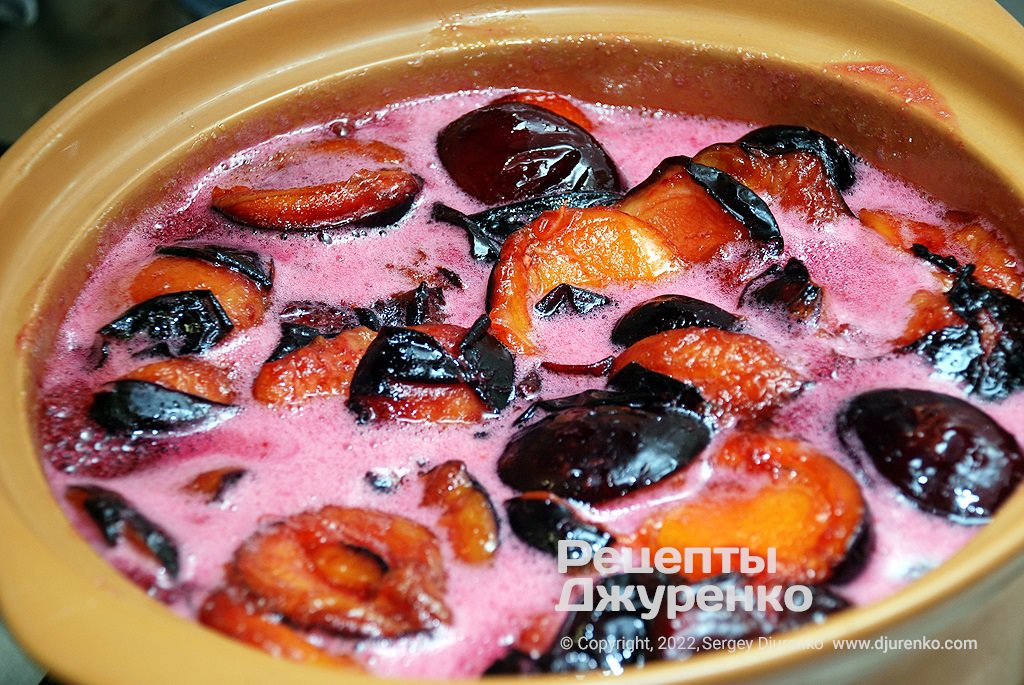
Cover and leave for 6–8 hours.
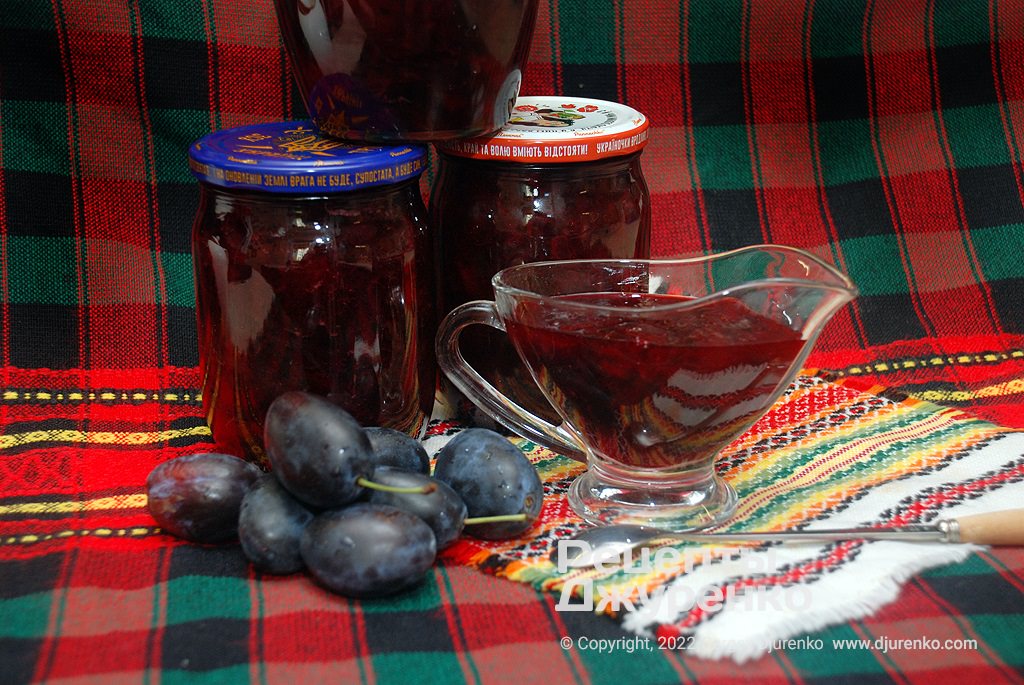
As it cools, the plum pieces soak up the syrup and release some of their moisture into it. The syrup turns deep purple and incredibly fragrant. Once cool, the jam becomes very thick, which you can clearly feel when you stir it.
Filling the jars
Get the jars and lids ready – wash them and sterilize them any way you can.
Put the pot of jam back on the heat and bring to a boil. Once it’s clearly boiling, turn the heat down.
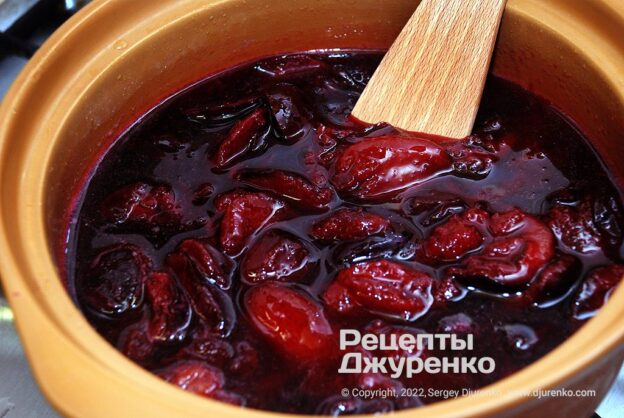
Fill the jars with jam – a small cup is handy for this. Try not to fill them to the very brim; leave about 5 mm.
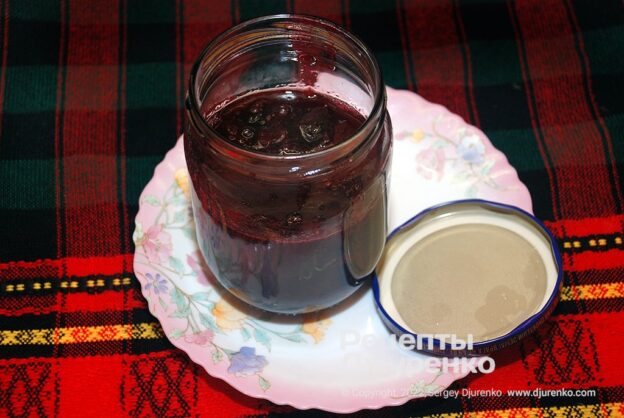
Seal each jar with its lid right away and stand it upside down on the table. After 3–4 minutes, once you’re sure the jar is airtight, turn it right side up.
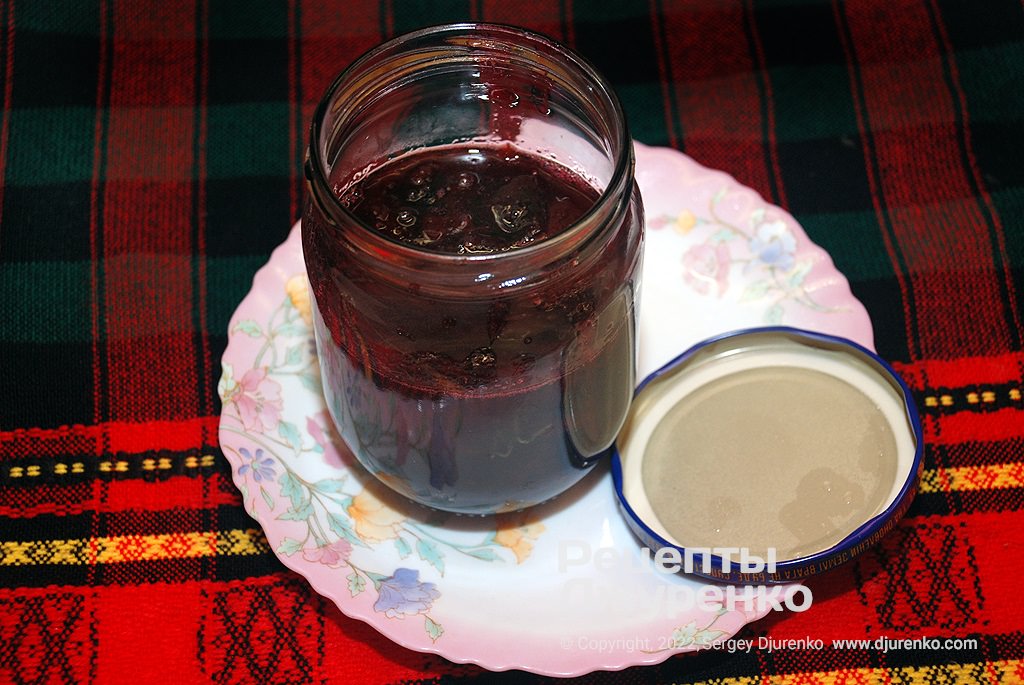
If you like, wrap the jars in a blanket, though it isn’t necessary. Once completely cool, the jars of jam can be stored in the pantry.
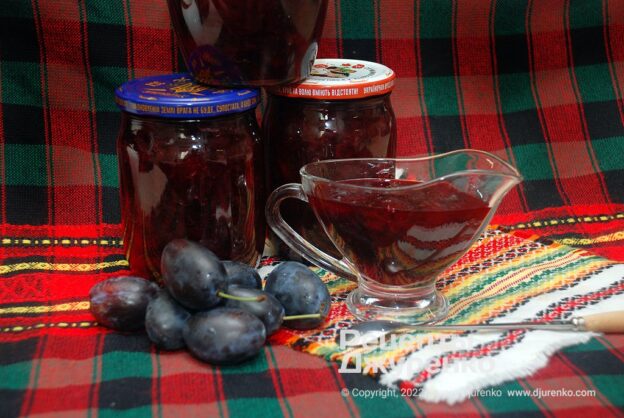
Open a new jar of plum jam as needed, but after that it’s best kept in the cold. By the way, in all these years I’ve never seen this jam crystallize. Then again, it rarely lasts until spring – it just gets eaten sooner.
Calories and macros
155 kcal
100 g
- Protein0.5 g1% of kcal
- Fat0.2 g1% of kcal
- Carbs38.8 g98% of kcal
Calculated from the recipe ingredients, excluding salt and spices. Data: USDA and Matvaretabellen.
How did you like this recipe?
To Get It Right
Thick without water or thickeners
Don’t add water: the sugar dissolves in the plums’ own juice. Right after heating there seems to be a lot of syrup, but while resting the plums soak it up, and in the cooled jam a spoon will stand – it doesn’t run, but doesn’t set like marmalade either.
What not to do
- don’t skim the foam – it blends back into the jam as it cools;
- don’t cook in a metal pot – a ceramic or enameled one is better.
Storage
Keep sealed jars in the pantry and an opened jar in the cold. In all these years this jam has never crystallized for us.
Have your own trick for this recipe?
Questions and answers
How much sugar per 1 kg of plums?
Half the weight of the pitted plums – 500 g of sugar per 1 kg of halves. This recipe uses 800 g of sugar for 1.7 kg of plums.
How long to cook plum jam?
Not long – it’s essentially a five-minute jam done in two rounds. The plums are brought just to a boil, left under a lid for 6–8 hours, then brought to a boil again, the heat is turned down and the jam goes straight into jars.
How to make plum jam with halves that don’t fall apart?
Use ripe but firm plums that don’t turn runny when pressed, and split them into two separate halves. The cooking is short and the juice comes from the plums themselves under the sugar, so the halves soak up the syrup and stay whole.
Can you make plum jam with the pits in?
Yes. Plums with pits need a bit less sugar – about 450 g per 1 kg. Prick each plum with a toothpick so it doesn’t burst, and cook in two rounds with resting time, as in the recipe. Just eat jam with pits within a year.
Can you make jam from yellow or white plums?
Yes, the same way, as long as the fruit is firm. Soft overripe plums will cook down to a purée, and there will be no halves left in the jam.