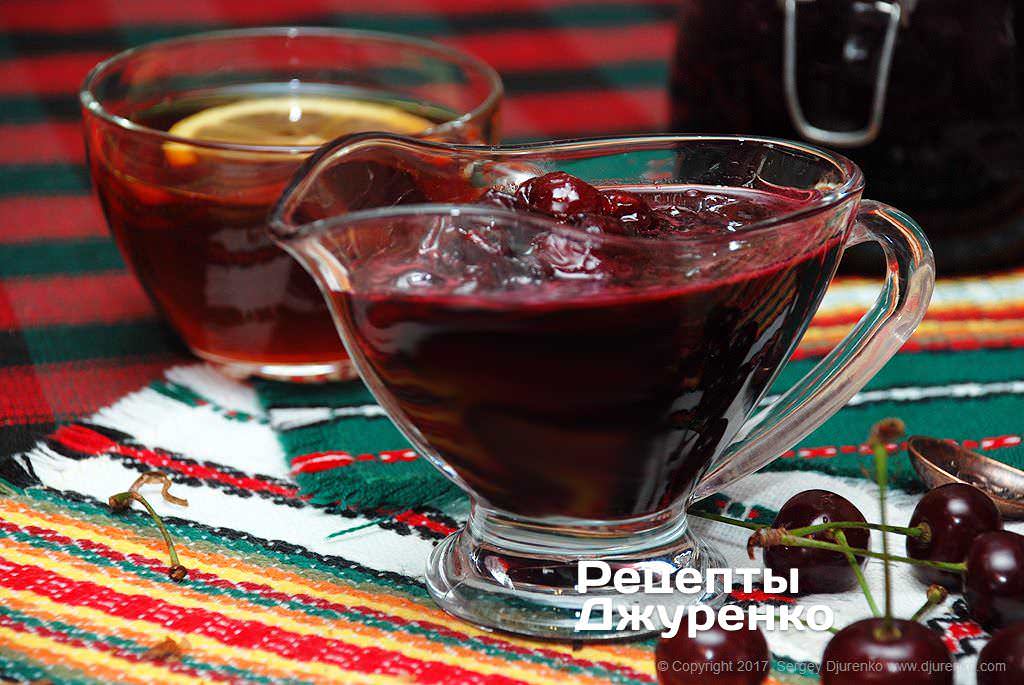
Cherry Jam with Pectin: Homemade Recipe with Photos
The most delicious homemade cherry jam I have ever tasted is made by my wife and daughter. Friends lucky enough to get a jar from us usually sum it up in one word — goddesses! My goodness, what incomparable jam it turns out. Thick, it doesn't run out of pies, it's nothing like runny confiture, with an amazing cherry tartness and an incredible aroma.
Jam is a traditional dessert found in many cuisines around the world. Making jam is very simple, yet at the same time it takes attention and a certain skill. It's not enough just to boil fruit or berries with a given amount of sugar. What matters is that every berry or piece of fruit keeps its shape while cooking, and that the jam keeps at room temperature without constant refrigeration.
Cherry jam is an excellent filling for small pies or larger pies, and it works just as well for a grated pie or for spreading between cake layers. But the simplest thing cherry jam is indispensable for is a cozy evening tea at home with cookies, or just tea with jam.
Many people don't really see the difference between jam, preserves and marmalade. World literature has plenty of examples of this. It's generally accepted that confiture and jam are a jelly-like sweet dessert made from whole or crushed fruit or berries (sometimes even vegetables, by the way). Gelling agents are added — pectin, agar-agar, gelatin. The fruit and berry mass is cooked down with sugar and mixed with the gelling agents. The main difference between jam and preserves is that in jam the fruit breaks down quite a lot.
Sour cherries, which cherry jam is made from, are relatives of sweet cherries. Sweet cherries, which also make excellent jam, are believed to be almost the most ancient form of cherry, known long before the Roman Empire.
To make good cherry preserves or cherry jam, you need pectin. Pectin is a polysaccharide, the so-called food additive E440. Surprisingly, unlike the vast majority of E-numbers, this additive is considered beneficial; besides, it is not absorbed by the body and binds a lot of unwanted substances. It is of plant origin and is found in abundance, for example, in Antonovka apples, sunflower pulp, citrus fruit or sugar beet pulp.
Ingredients
12-15 jars of 0.5 l
- Ripe cherries 5-5.5 kg
- Sugar 5 kg
- Pectin or gelling sugar according to the package instructions
Step-by-step recipe
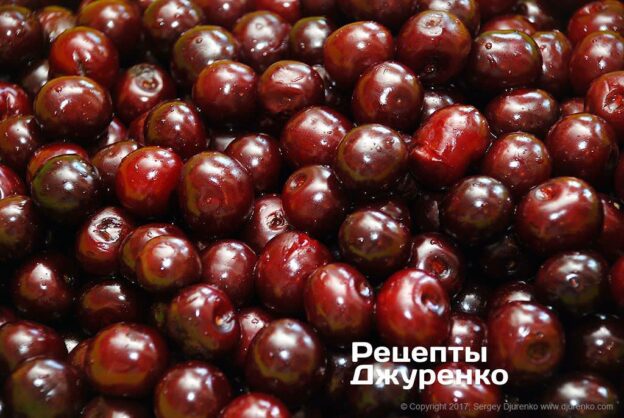
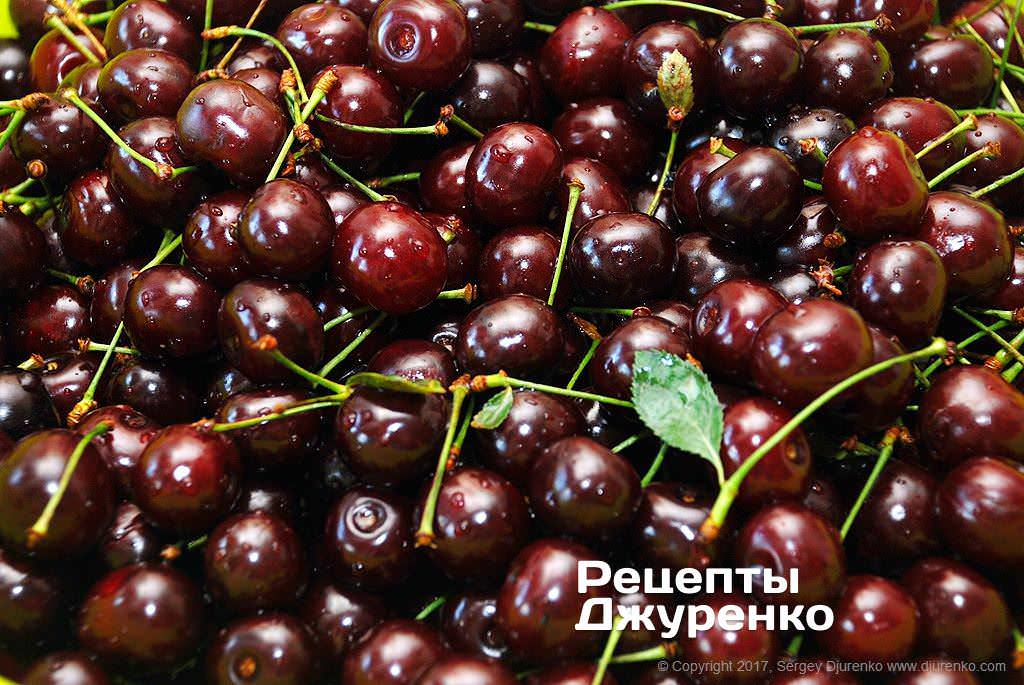
- If you're going to make truly delicious cherry jam, wait for the ripest cherries — sweet, juicy and very dark in color. Ideally, the cherries grow in your own garden. That said, buying good cherries in season is no problem. I remember that when I was little, my grandmother cooked cherry jam over a fire in a huge basin, maybe even a copper one. And the amount of cherries for one batch wasn't a bucket or a few kilograms, but “a tree” — the cherries from a whole tree went into one batch.
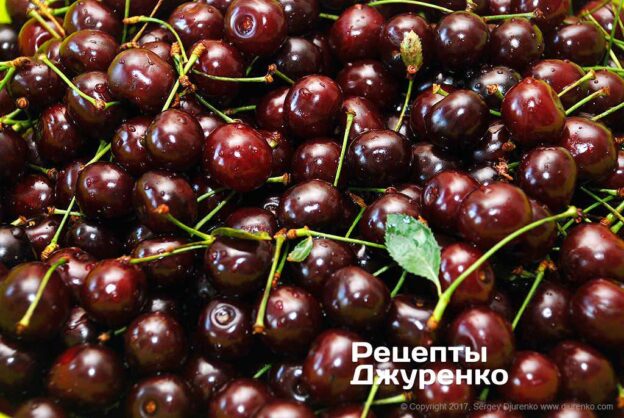
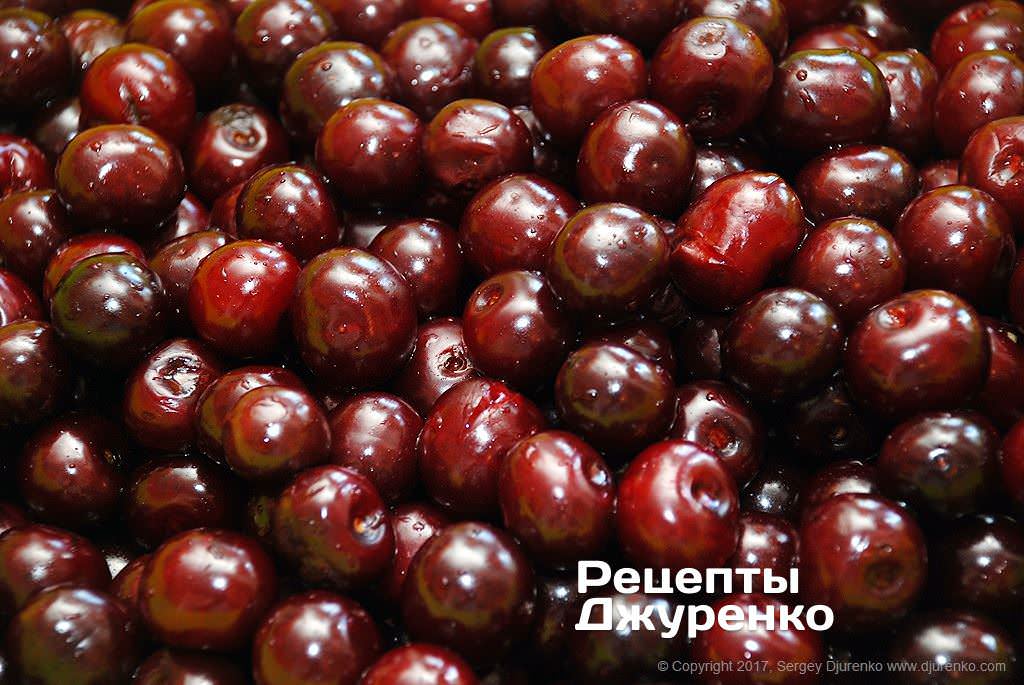
- Sort through the picked cherries. First, remove the stems, or, as my grandmother used to say, the tails. Second, pick out any rotten, damaged or clearly unripe cherries. Then wash the cherries under running water. And third, you simply can't do without this: making jam without a good taste of the cherries is a crime.
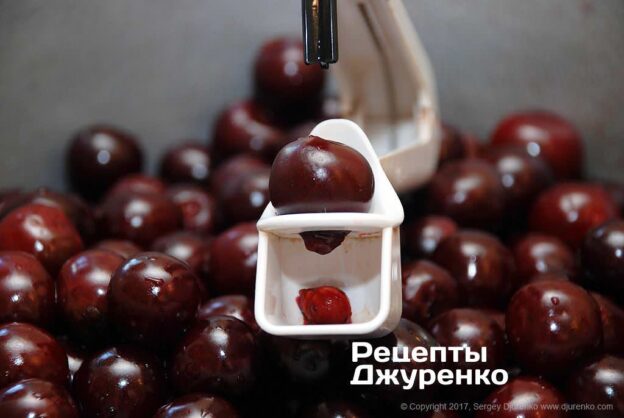
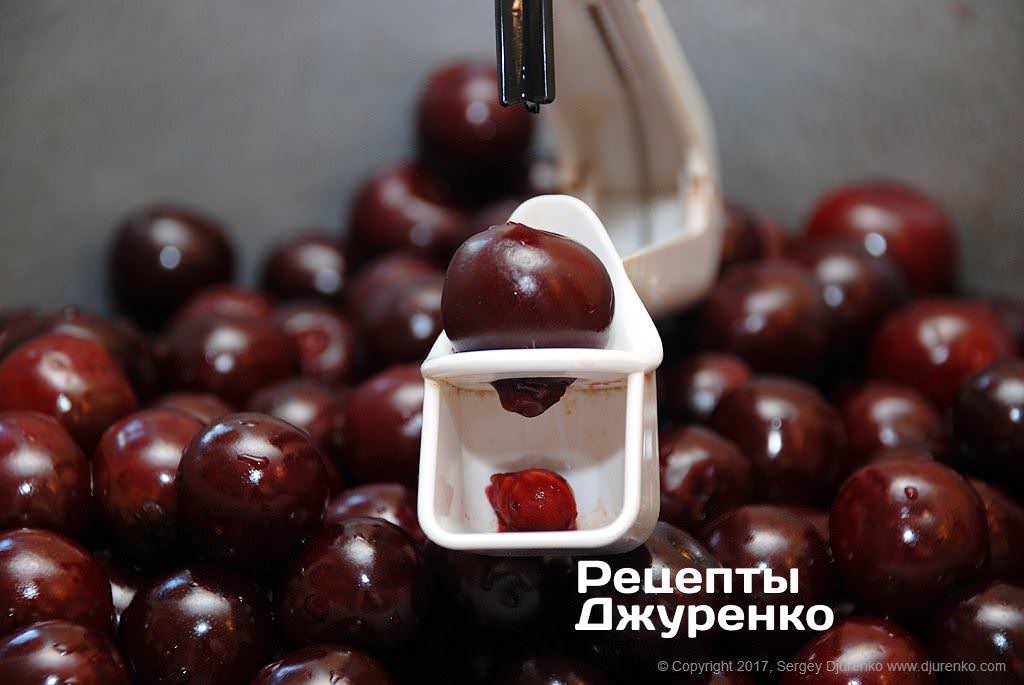
- Next comes a fun job — pitting the cherries. Everyone at home can join in. In the old days, pits were removed with a pin. I confess, I never learned how. Nowadays you can buy all kinds of inexpensive pitters that handle the job quickly and efficiently. By the way, juice usually runs out when you pit the cherries, so it's worth collecting it in a bowl.
- Take care of the jars and lids in advance. From experience, the most convenient jar size is 350-500 ml, preferably with screw-on lids. Such lids are simply convenient — no need to fuss with a canning sealer. Wash the jars thoroughly with baking soda, rinse and sterilize them over steam or with boiling water. Sterilize the lids as well.
- Very lightly, without effort, squeeze the prepared cherries with your hands so that they release a little juice. Pour in the juice collected while pitting. Then transfer the cherries to a metal basin, a large pot or a suitably sized cauldron. The pot you cook the cherry jam in should be 2.5-3 times larger than the volume of the cherries — sugar will be added, so you need room to spare.
- The next step is mixing the cherries with the gelling sugar. There are lots of ready-made mixes for making jam on sale, which even surprised me. But, as a closer look showed, almost all of them consist of natural pectin — that very E440 — citric acid and glucose (dextrose). That's really all there is to the know-how and secret formulas. When choosing a mix, pay attention to the proportions required for the jam to set properly. This matters — how many parts of fruit you need per part of sugar.
- I remember from childhood that my relatives strictly followed the formula: a ton of cherries needs a ton of sugar. Just kidding. But every joke has some truth in it… In short, the ratio is 1:1, and we use a 1:1 gelling mix, i.e. for 1 kg of cherries add 1 kg of sugar and one packet of gelling sugar.
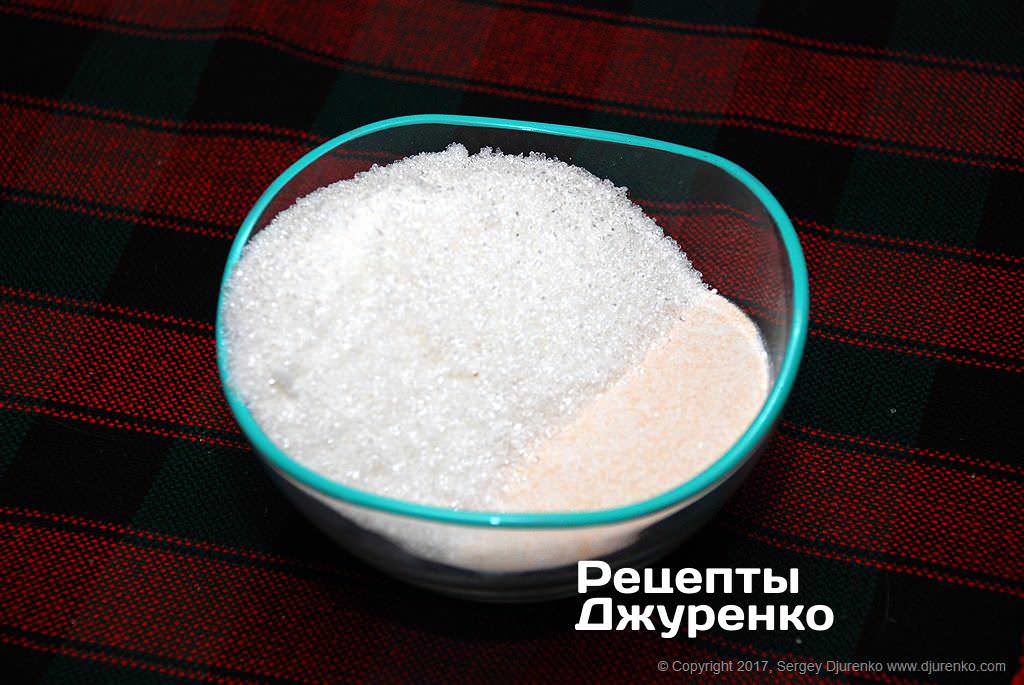
- Mix the required amount of gelling sugar with regular sugar — 2 scant tablespoons for each packet. Stir the dry mixture thoroughly.
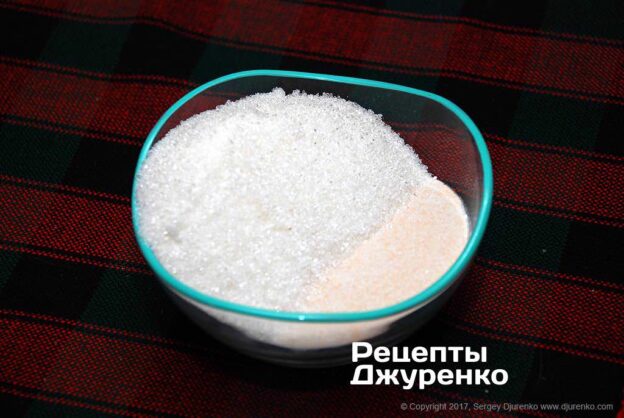
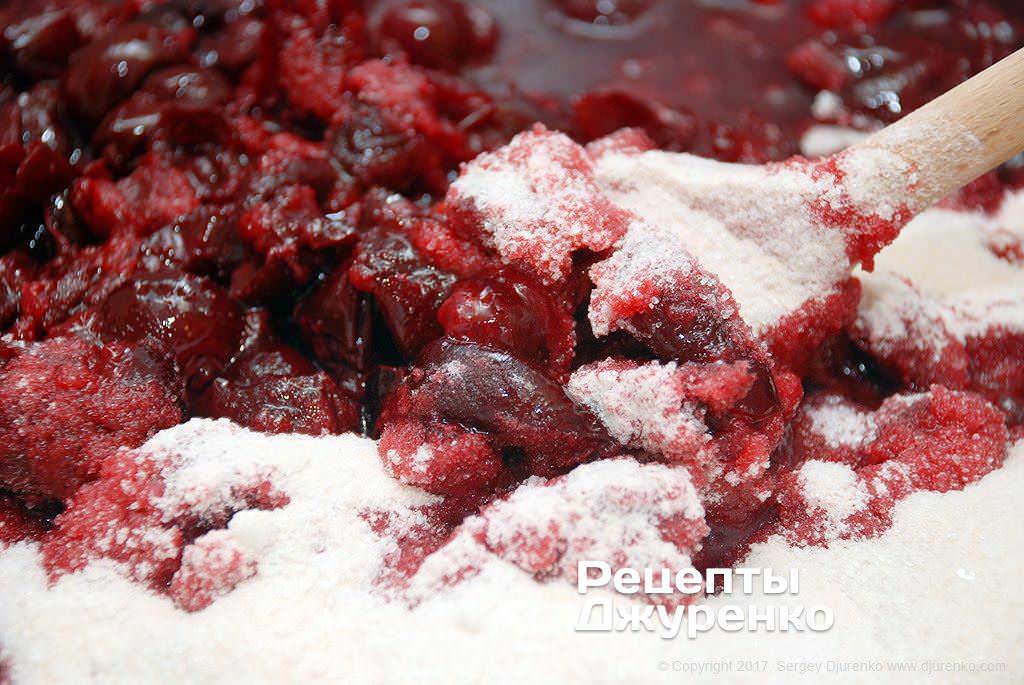
- Pour the gelling mixture into the cherries and stir very thoroughly. By the way, I recommend doing everything with the hot jam using a wooden spoon. Under no circumstances should lumps form. Then put the pot with the cherries on the heat.
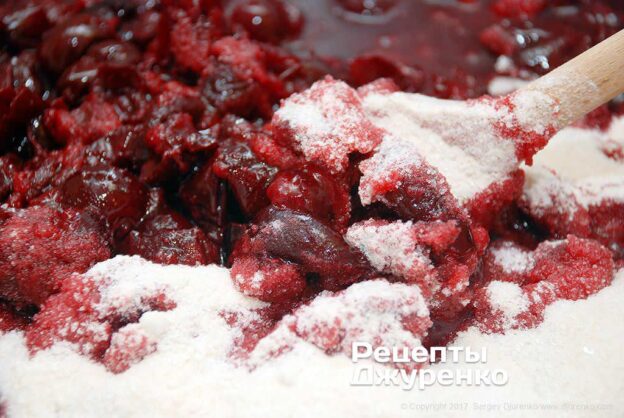
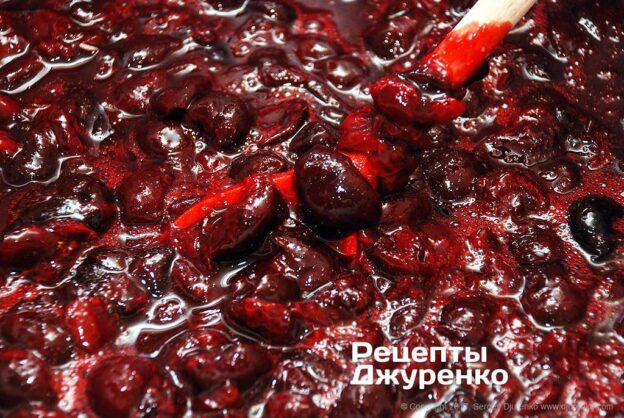
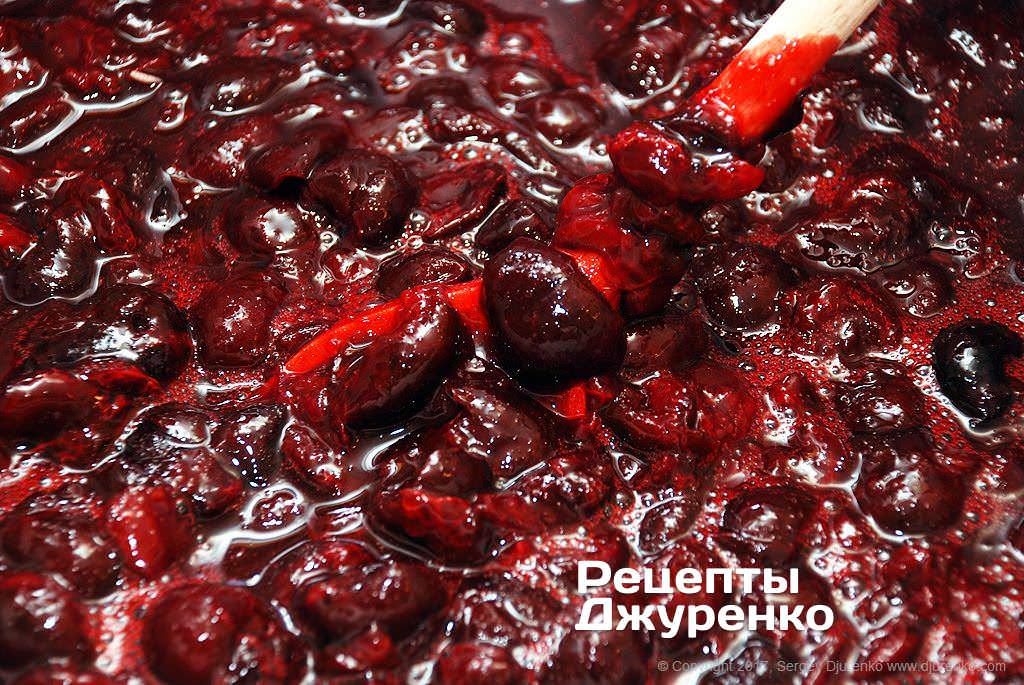
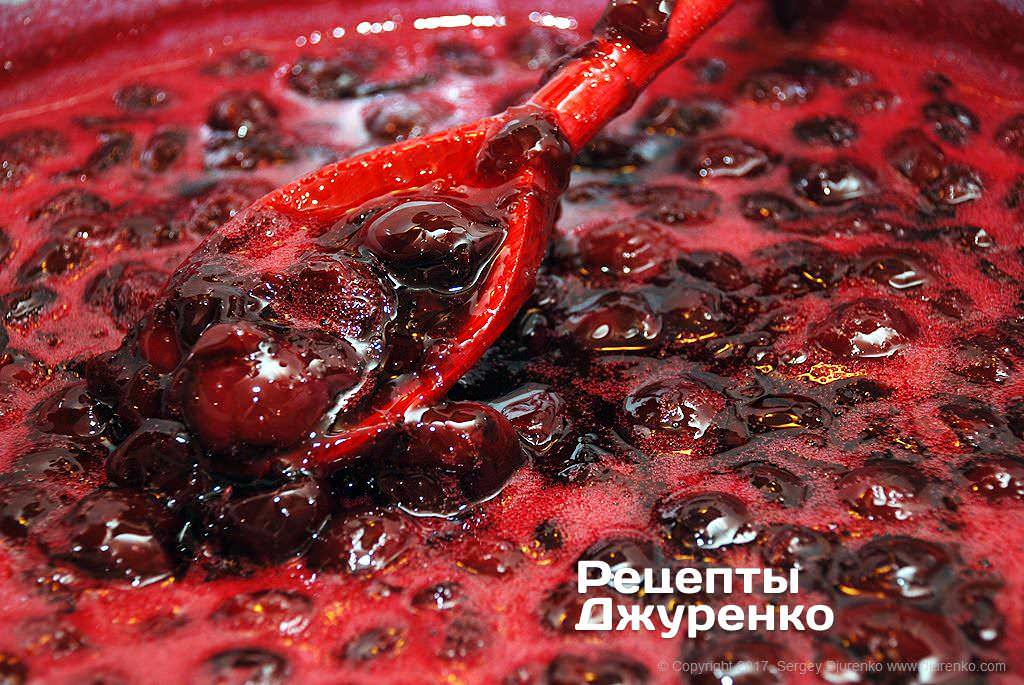
- Stirring, bring the cherry jam to the point where the liquid starts to boil, but don't let it boil. As soon as the first signs of boiling appear, quite a lot of foam will form. That's normal.
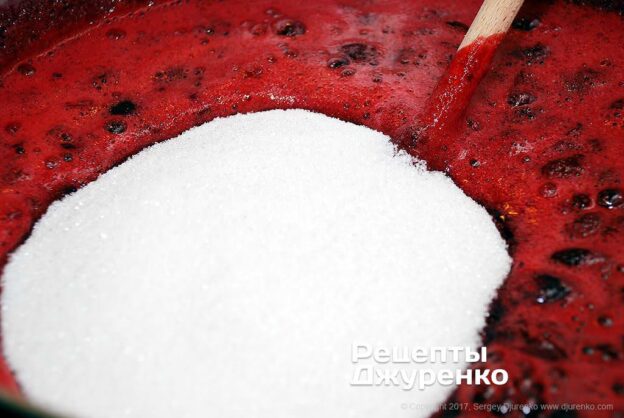
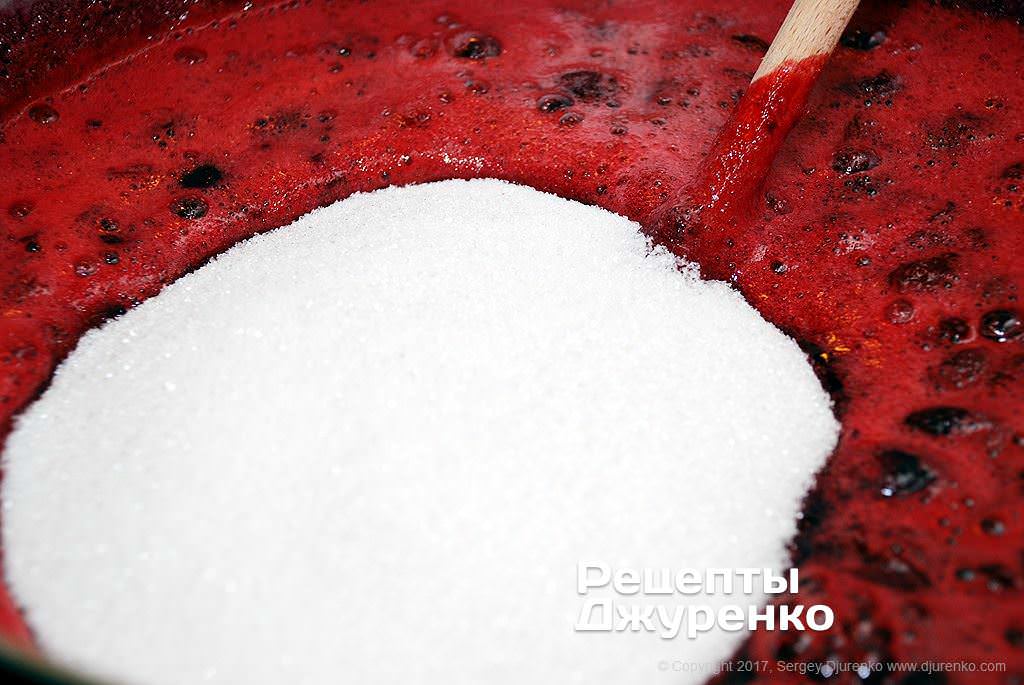
- Pour all the remaining sugar into the pot with the jam. To keep lumps of sugar out of the cherry jam, sift it through a sieve or a mesh colander. Large lumps of sugar usually don't dissolve and only get in the way in the jam.
- Stir the jam and keep heating it. After adding the sugar, stir almost continuously, as sugar tends to stick to the bottom of the pot and burn.
- When it boils again, a lot of sugary foam with a wonderful cherry hue will form. Many people leave this sweet foam in the jam. But, as we've checked many times, cherry foam is a treat in its own right, especially for kids. We collect it in a small jar or a cup, though the foam runs out quickly, almost at once — there are plenty of takers.
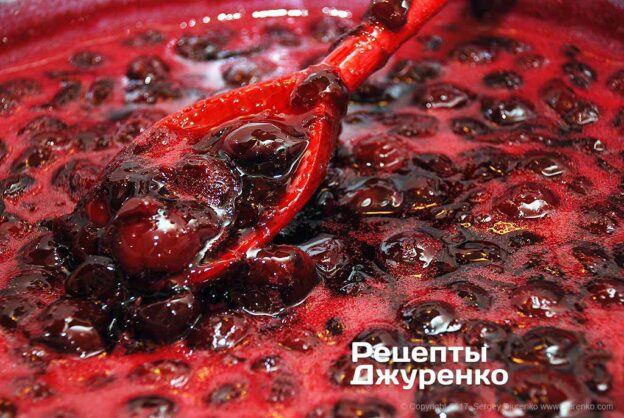
- As soon as the cherry jam boils for the second time, set a timer for exactly 3 minutes. The cherry jam should simmer gently for this time, and then it's completely ready.
- Pour the hot cherry jam into sterilized jars, right up to the neck. Immediately cover each jar with a prepared lid and seal it. Turn the jar upside down and put it on the table. There's no need to wrap the jars in a blanket. Just let them cool.
- Once cooled, the cherry jam can be stored in a pantry or a utility cupboard with shelves. I recommend labeling the jars with a permanent marker, otherwise in winter you'll have to guess through the glass which jam is in which jar.
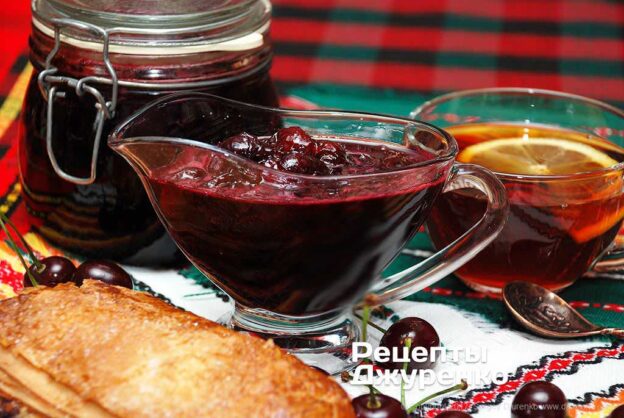
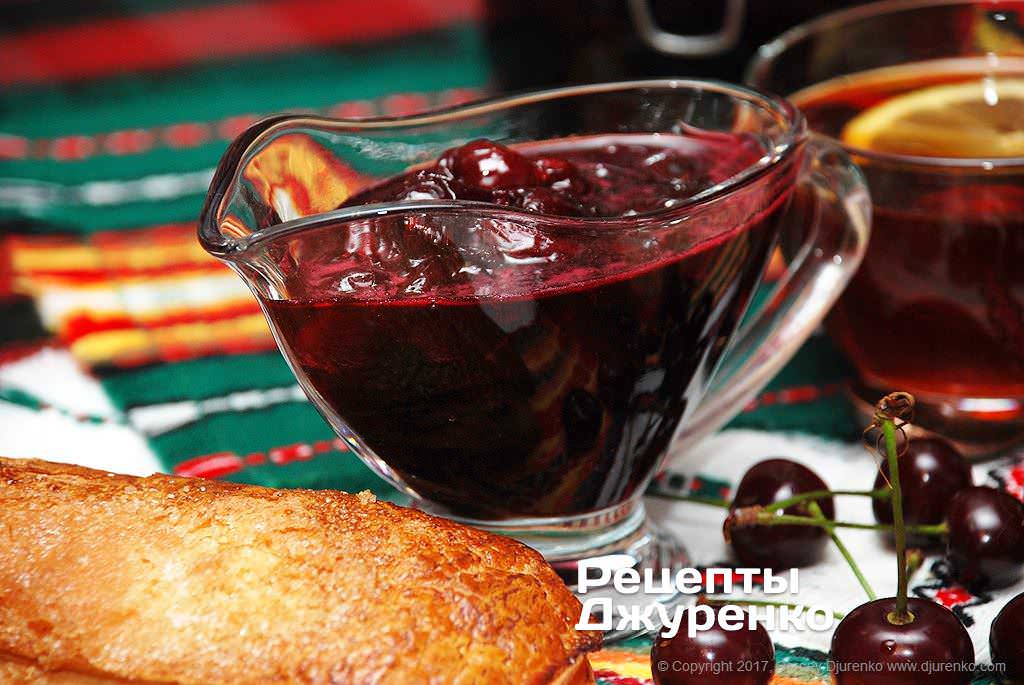
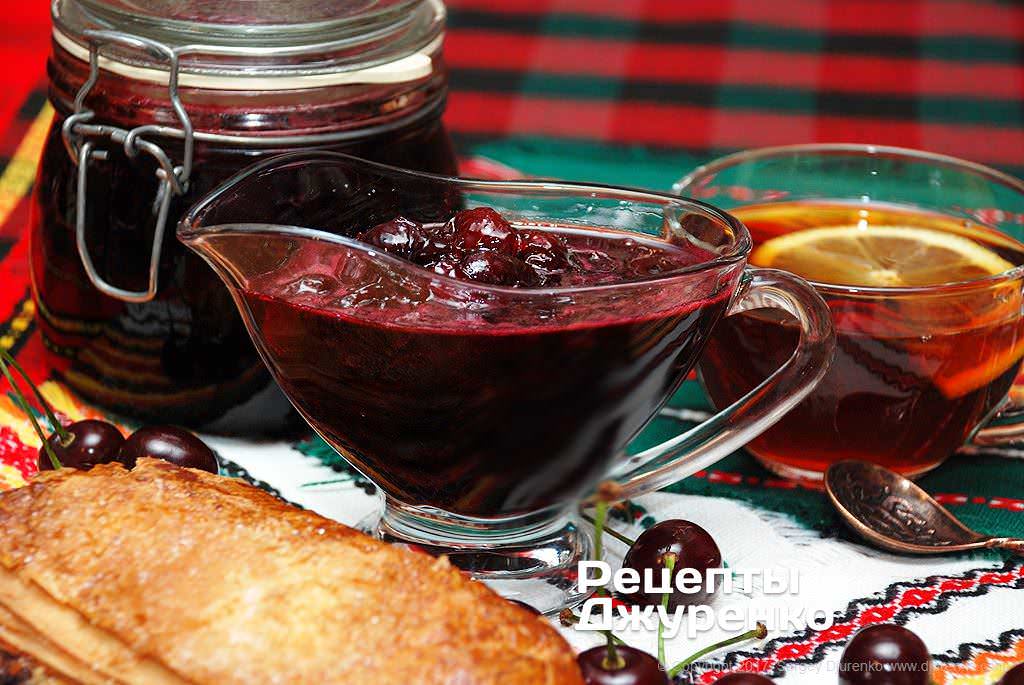
- Delicious homemade cherry jam is perfect with tea. Bake some fresh buns, pour fragrant tea with lemon, and cherry jam will be just the thing.
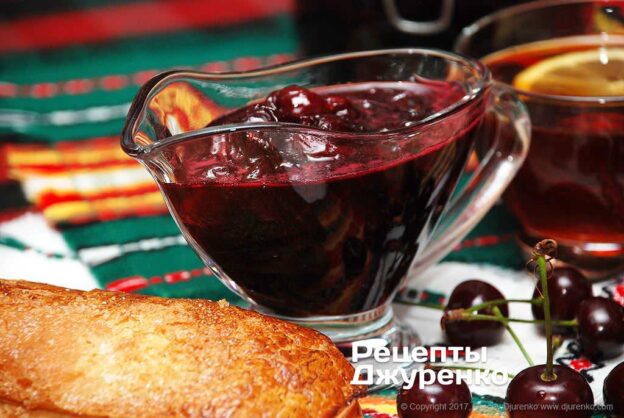
- If you decide to bake a grated pie, cherry jam is a great substitute for currant jam. The finished jam will be quite thick and will hardly run at all — you can even top a cheesecake with it. But it won't reach the consistency of marmalade either — it will be something in between.
| Yield: | 12-15 jars of 0.5 l |
| Calories: | 250 |
| Prep: | 1 h |
| Cooking: | 30 mins |
| Ready in: | 1 h 30 mins |
| Category: | Desserts and Drinks |
| Cuisine: | European |
| Rating: |
⭐
⭐
⭐
⭐
⭐
4.4
(5)
|