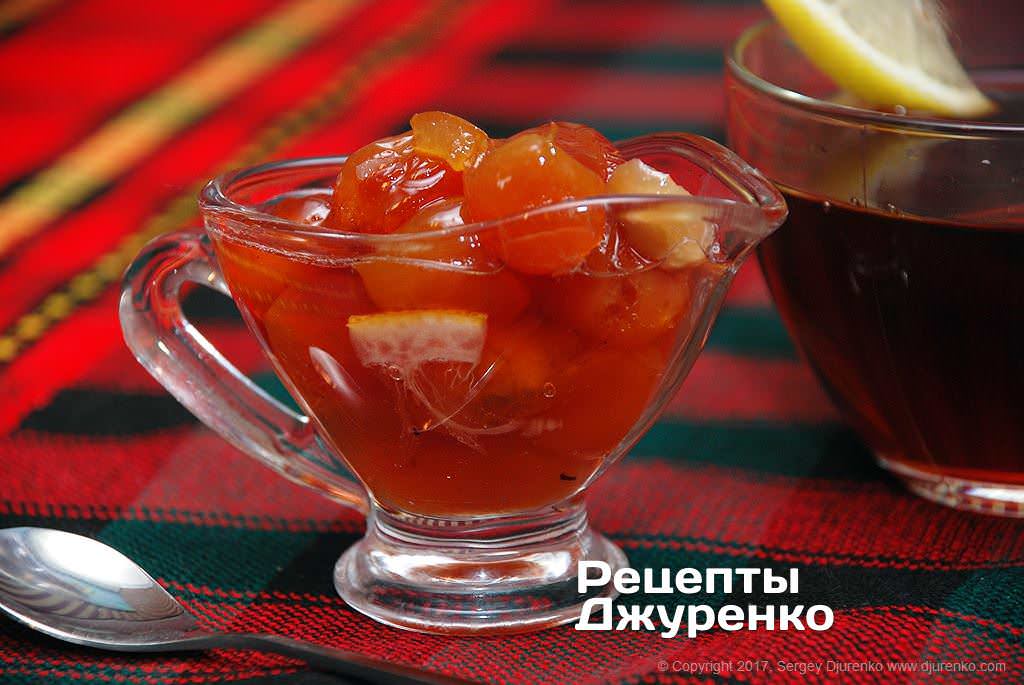
Sweet Cherry Jam with Hazelnuts and Lemon
How long do you cook cherry jam?
Sweet cherry jam is hardly cooked at all: the cherries are brought to a boil in syrup three times, taken off the heat each time and left to cool for 2–3 hours under a clean cloth, not a lid. The syrup for 1 kg of pitted cherries is 1 cup of water, 1 kg of sugar and 2 g of vanilla, and each cherry can hold a toasted hazelnut. Thin lemon slices go in before the last boil, and the jam is poured into sterilized jars while still boiling.
Ingredients
2-3 jars
- White sweet cherries with a red blush 1 kg
- Shelled hazelnuts 100 g
- Sugar 1 kg
- Water for the syrup 1 cup (200 ml)
- Natural vanilla 2 g
- Lemon 1
Step-by-step recipe
Preparing the cherries and hazelnuts
Sweet cherries are widespread in the Caucasus, Ukraine, Crimea and Moldova – the cherry tree loves warmth. The cherry got its name from the city of Kerasous (in modern Turkey), where many sour and sweet cherries grew. The Romans called them “fruits of Kerasous”, cerasi. Hence the Italian ciliegia, French cerise, Spanish cereza, Portuguese cereja, German Kirsche and English cherry.
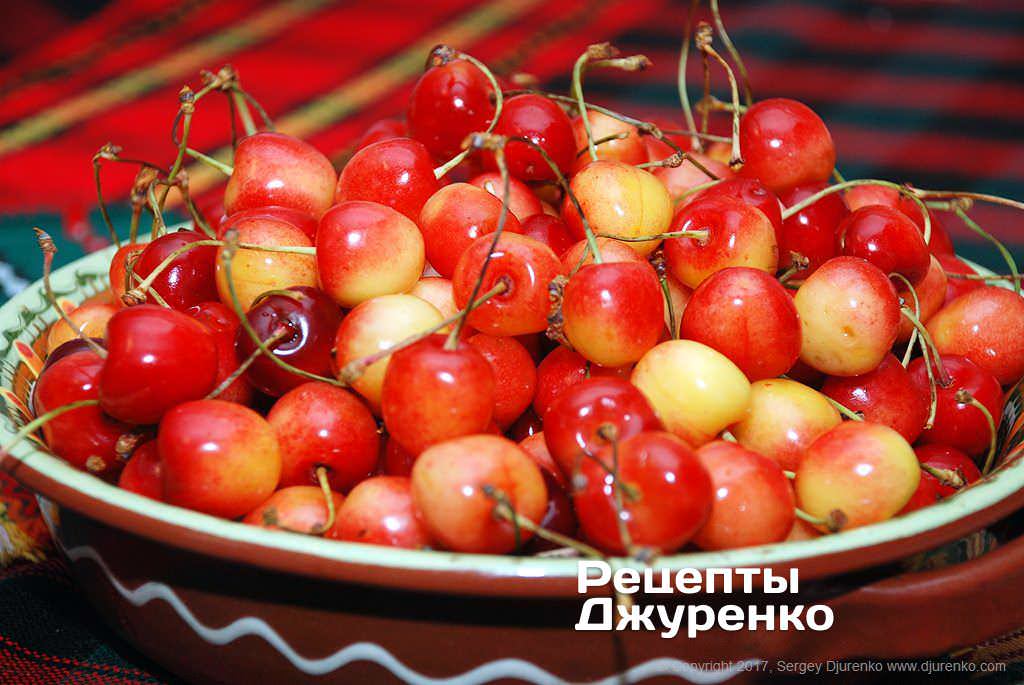
White cherry jam is popular in the Caucasus. For some reason, people here tend to think that a white cherry means an unripe, green one. To be honest, I haven’t seen purely yellow cherries in a long time. But yellow ones with a pink blush are everywhere, so that’s what we bought. Then again, jam made from red cherries turns out no worse. Good heavens, what am I saying – there’s no such thing as worse jam.
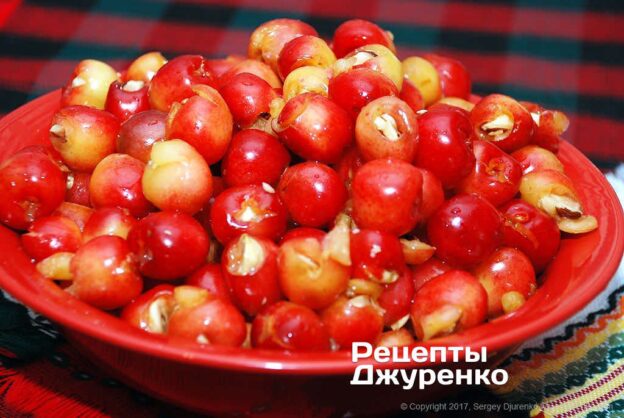
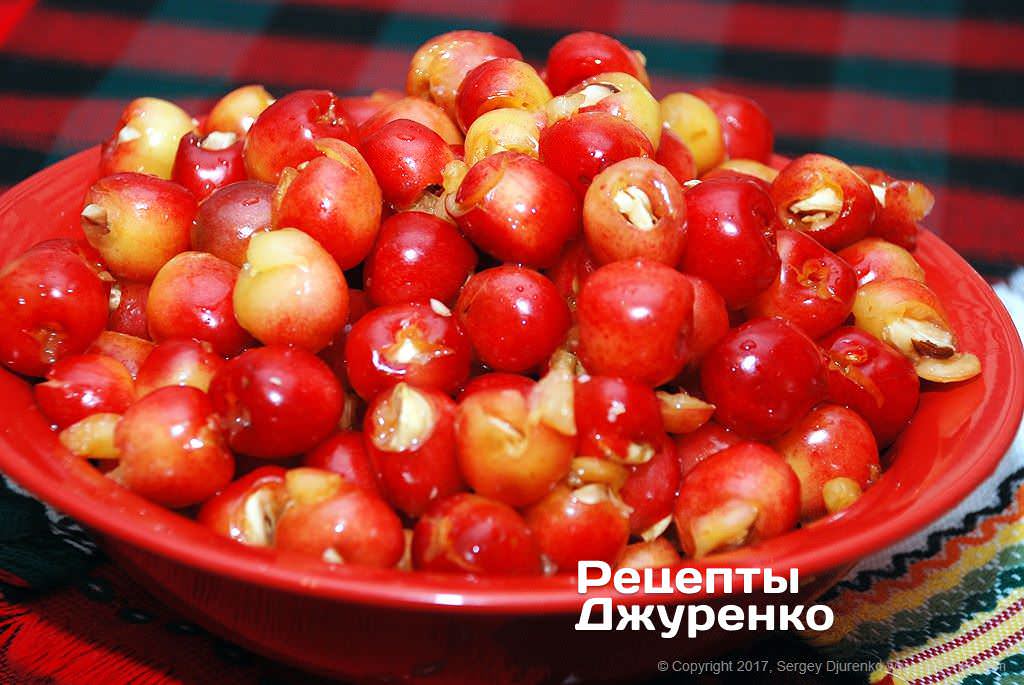
Rinse the cherries and remove the pit from each one, trying to leave only a very small hole so the cherries keep their shape.
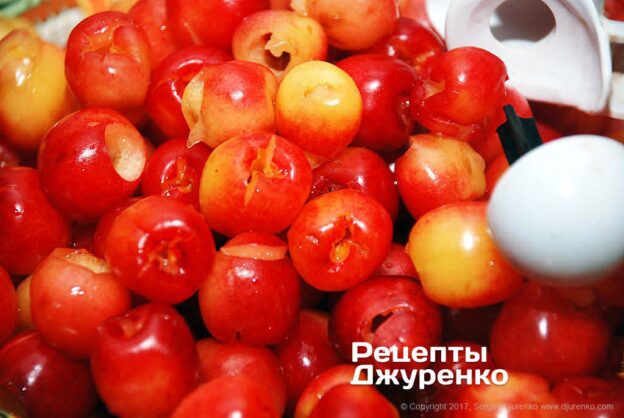
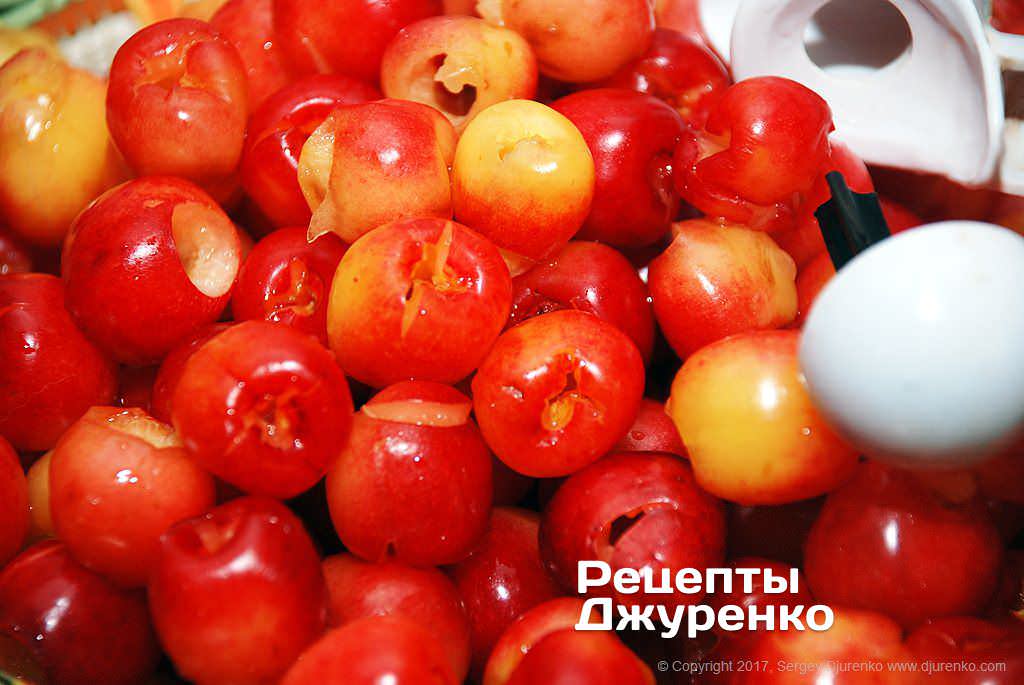
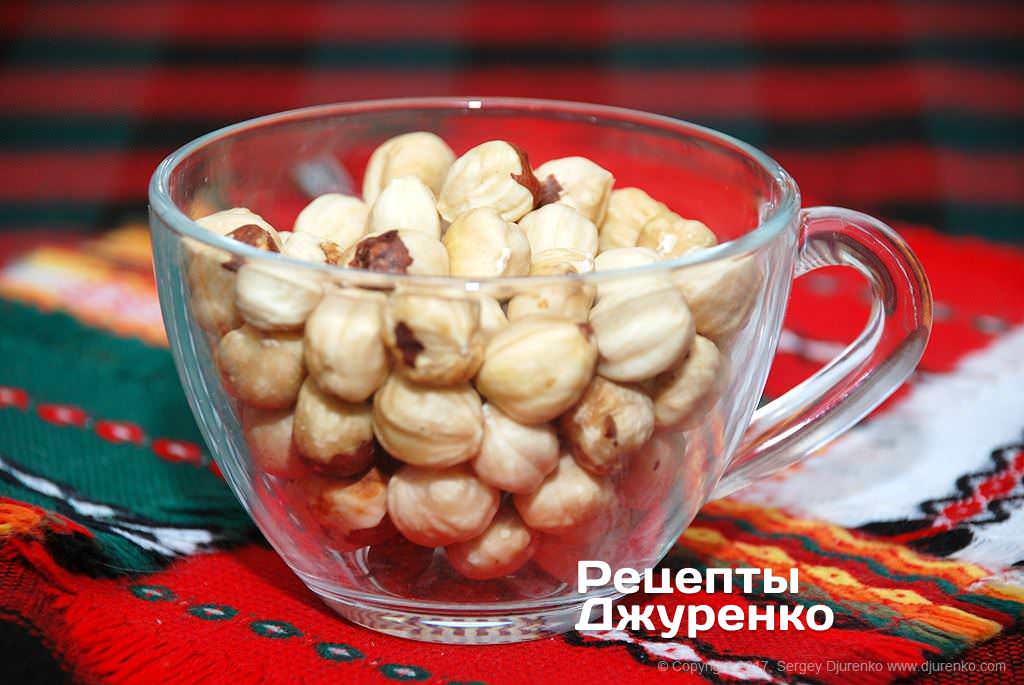
Prepare the hazelnuts. You’ll want small ones, which you can leave as they are. If they’re large, split each nut in half.
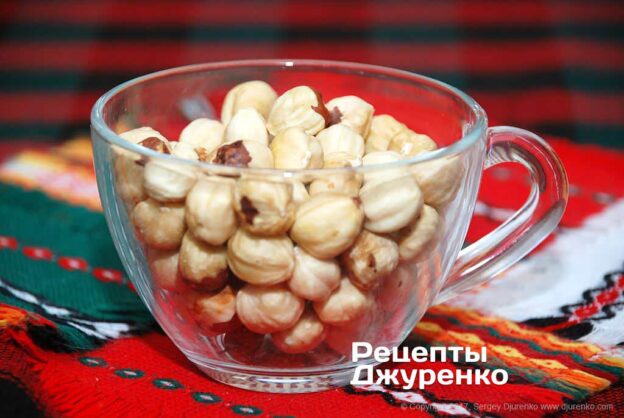
Either way, the hazelnuts need to be toasted: toast them in a hot dry frying pan over medium heat until they give off a pleasant aroma.
Push one nut into each cherry through the hole. It’s much easier and quicker than pitting them.
Cooking the jam
In my childhood, jam was always made in a huge copper basin – that was set in stone. We don’t have a basin now, but we do have a large pot, and we’re not dealing with two buckets of cherries, just one kilogram. So a pot will do just fine.
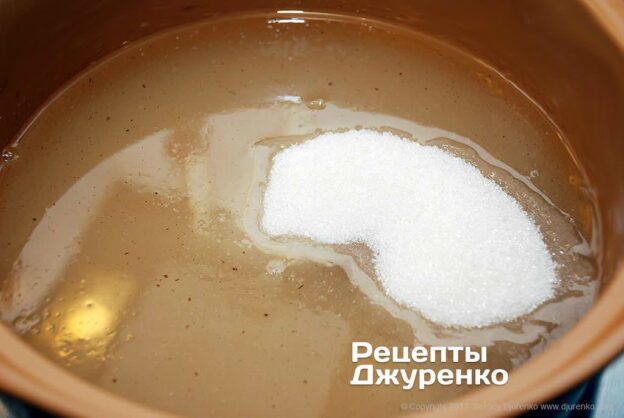
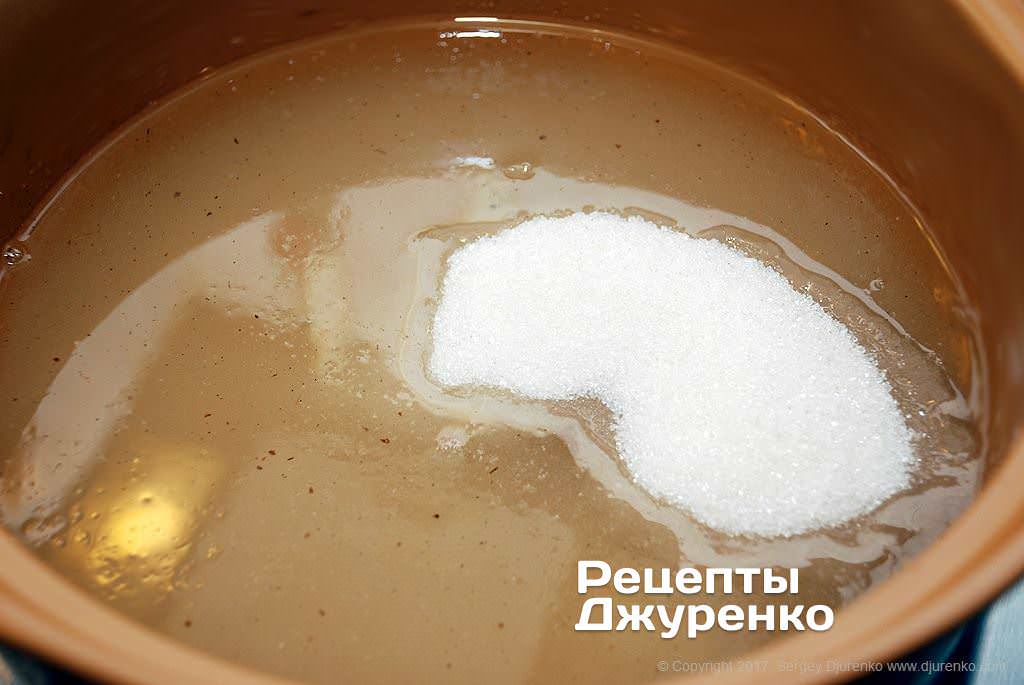
Make a sugar syrup in the pot. Bring one cup of water (200 ml) to a boil and add 1 kg of sugar and 2 g of vanilla. Note: vanilla, not vanilla sugar. Ideally, use a natural vanilla pod – cut it in half and put it in the syrup. Cook the syrup over medium heat until it starts to boil, a lot of foam appears and all the sugar has dissolved. This amount of sugar seems to be about the limit of what boiling water can dissolve, but I may be wrong. Don’t worry, though – the cherries release their juice almost instantly as they cook and will dissolve whatever is left.
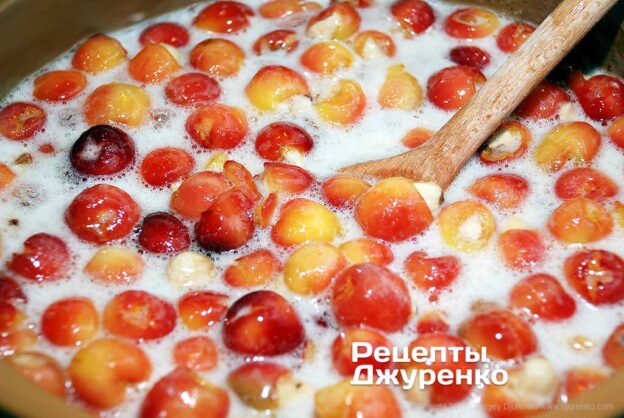
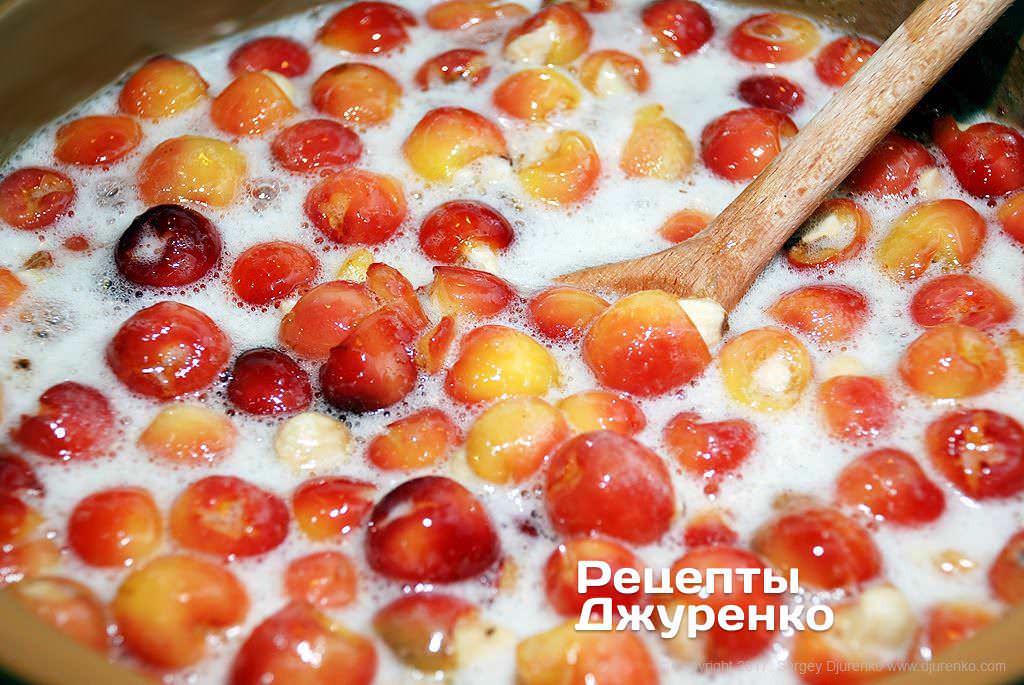
Add the cherries to the boiling sugar syrup and bring to a boil, stirring gently. Don’t be put off by the heavy foaming. As soon as the syrup with the cherries starts to boil, turn off the heat and let the jam cool for 2-3 hours. Better not to cover it with a lid, so moisture doesn’t collect. Cover the pot with a clean cloth instead, or you’ll end up with wasp jam rather than cherry jam. Wasps are the most annoying part of making jam.
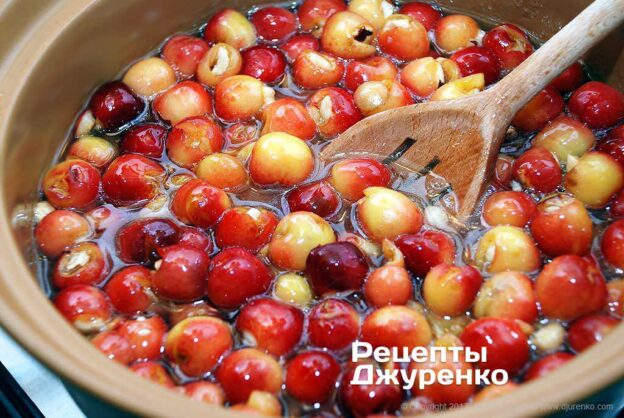
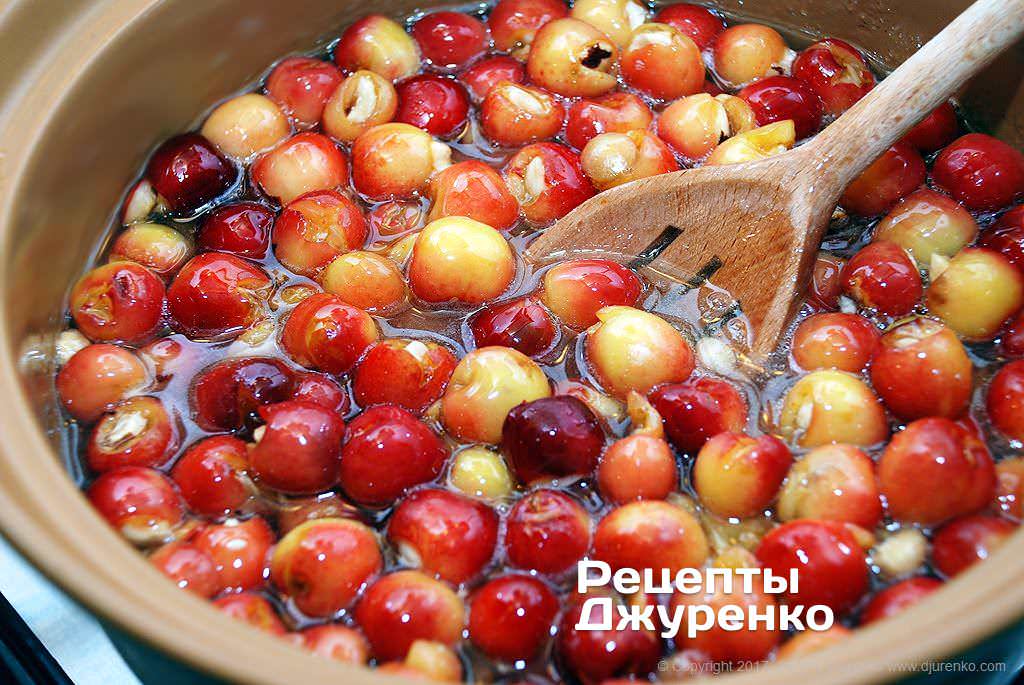
Repeat this three times, so the jam comes to a boil three times in all. Once the jam has cooled, bring it to a boil over medium heat, turn off the heat and let it cool again under the cloth. If some of the hazelnuts fall out of the cherries, don’t worry. When the jam is ready, you won’t even notice.
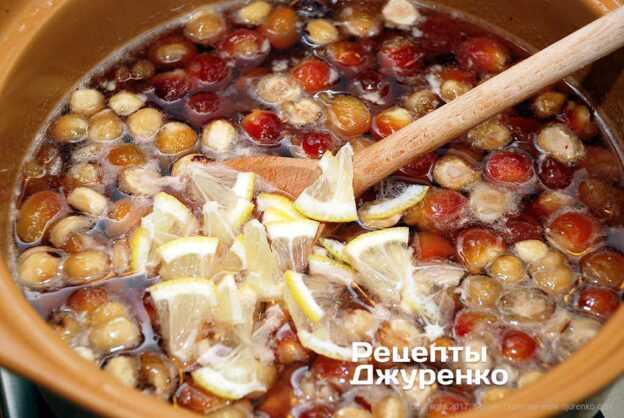
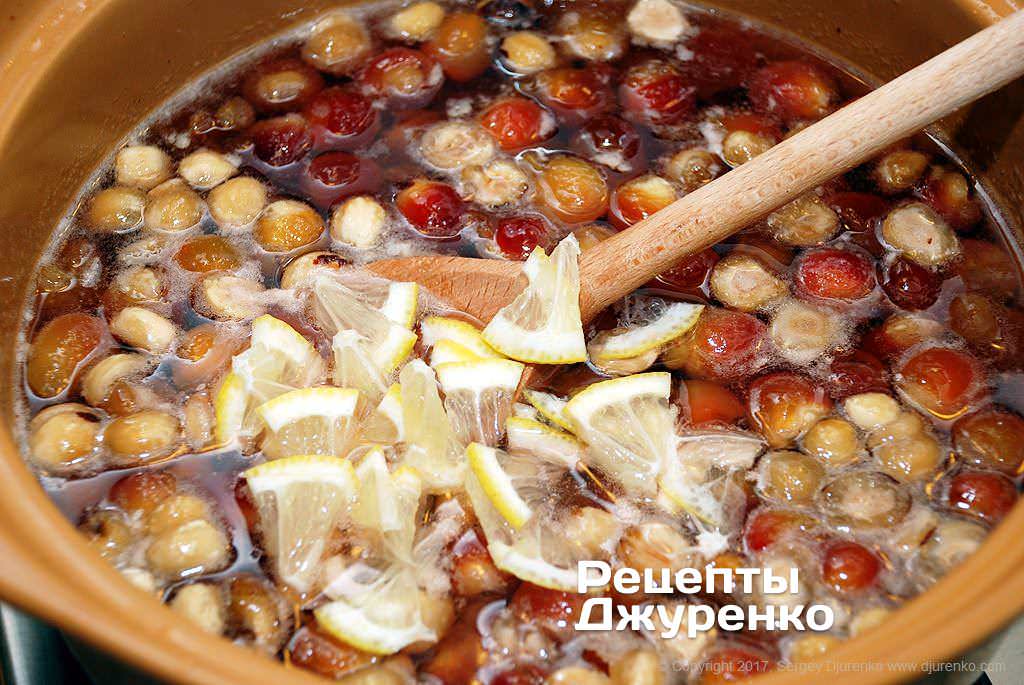
Before the last heating, add thinly sliced lemon to the jam, and only then bring it to a boil.
Filling the jars
Pour the still-boiling jam into sterilized jars and seal them tightly with lids. Once cooled, put them on the shelf if you’re planning to eat the jam in winter. Usually, though, it never gets that far – it gets eaten much sooner, the same day or the next.
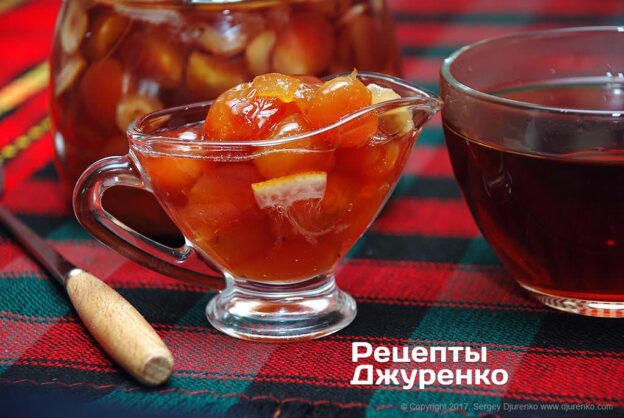
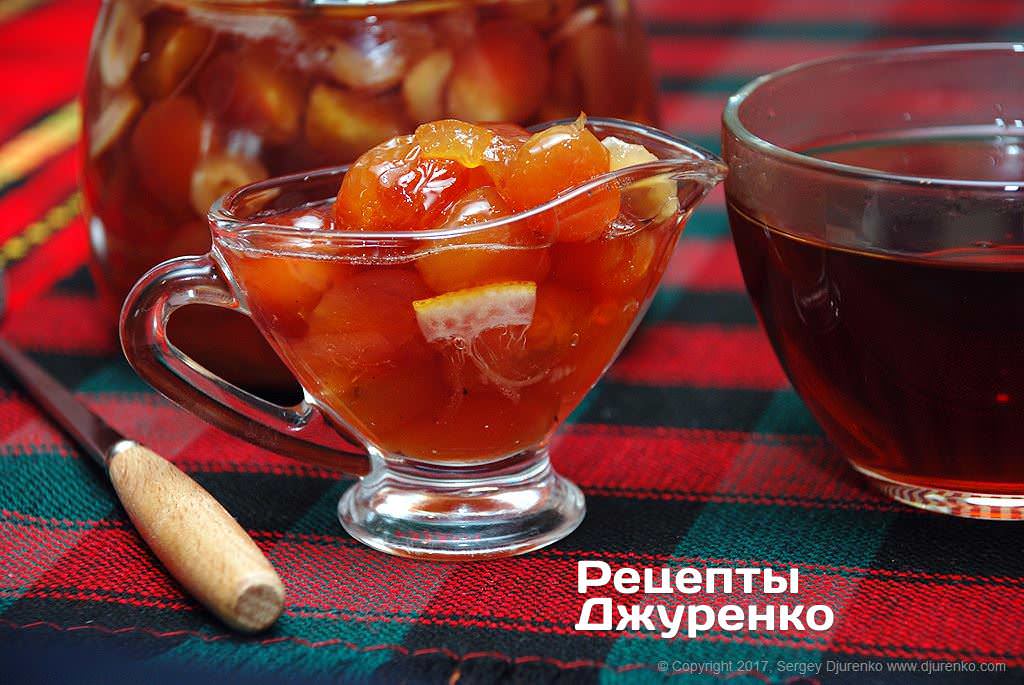
Serving
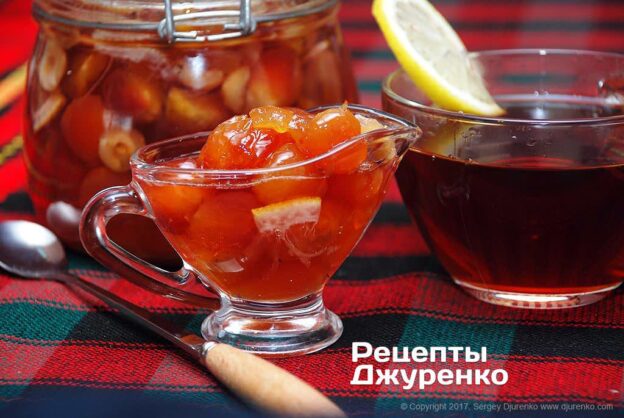
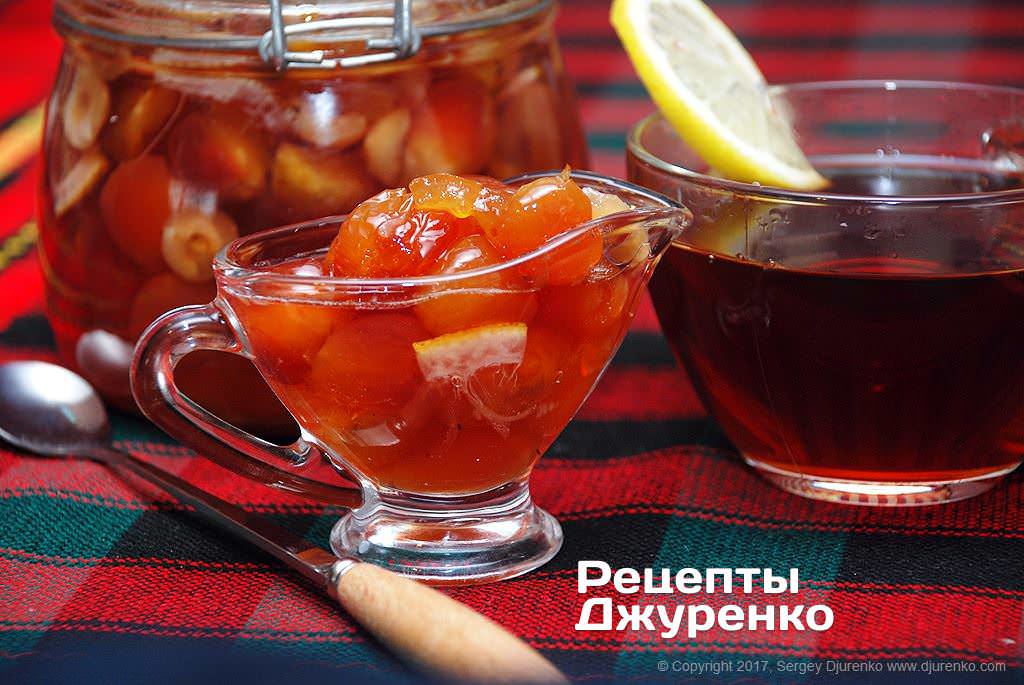
Serve with tasty biscotti and a fragrant cup of hot ginger tea – it’s amazingly delicious. Oh, where’s our basket of cookies and jam???
Calories and macros
218 kcal
100 g
- Protein1.1 g2% of kcal
- Fat2.7 g11% of kcal
- Carbs48.7 g87% of kcal
Calculated from the recipe ingredients, excluding salt and spices. Data: USDA and Matvaretabellen.