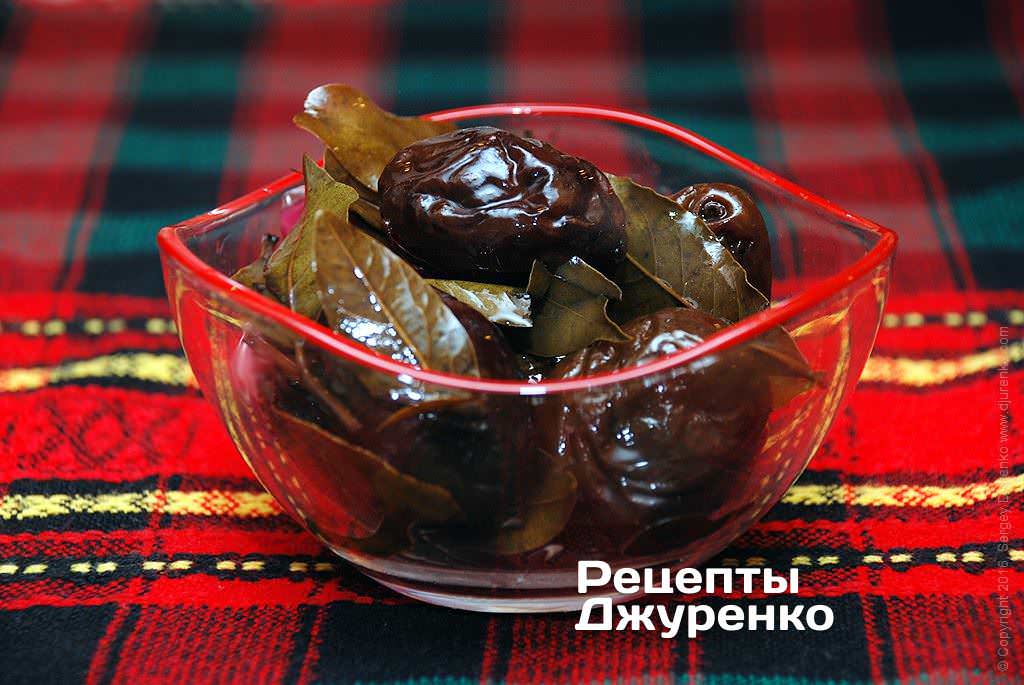
Pickled Plums: Sweet and Tangy Recipe for Winter Jars
The plum is one of the most important fruit trees in temperate countries. Experts believe plums reached us from Italy and, by another route, from the Caucasus. The plum itself is a hybrid of wild cherry plum and blackthorn. It was domesticated in deep antiquity and first grown in the Caucasus and Asia Minor.
I know from experience that you can't eat a lot of fresh plums, your stomach will act up. But all kinds of homemade preserves and plum brandy are always relevant, always in demand, and very tasty. Plums are put up in many ways: jam, preserves, compote, prunes. They're dried, salted, smoked, frozen and pickled. And then there are all sorts of sauces, seasonings and dressings.
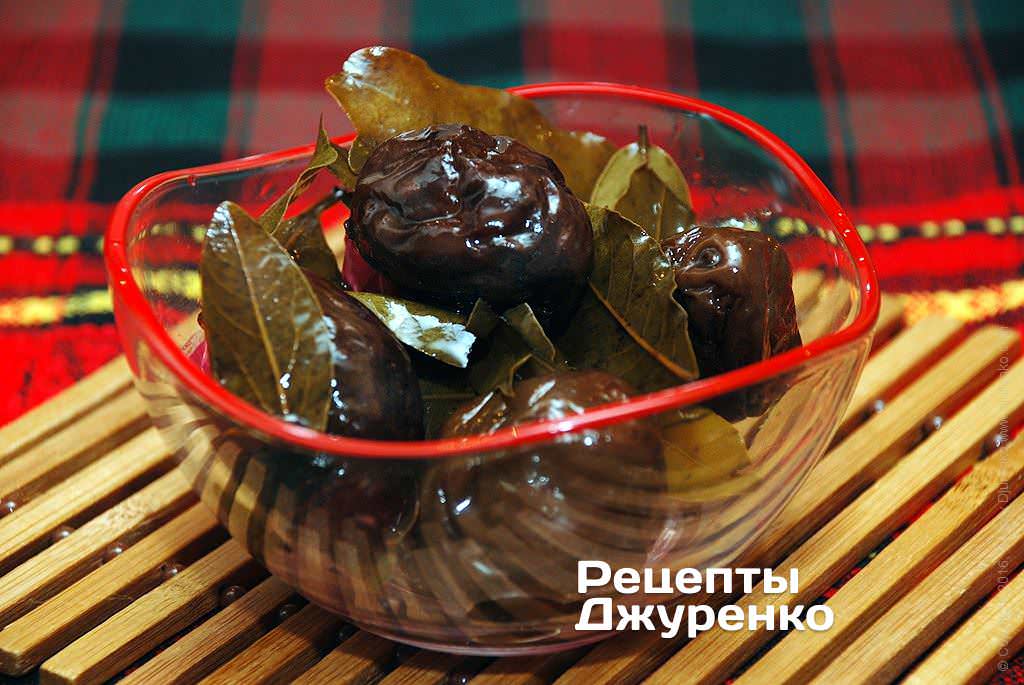
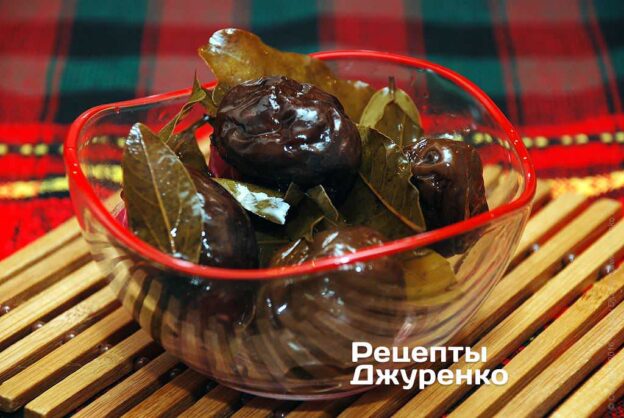
Pickled plums are a wonderful side for any dish. Although, come to think of it, they're more of a nice change for the side, an extra that gives it some zing. In my opinion, pickled plums are first and foremost an excellent snack to go with a drink, in the literal sense. Recipes for pickled plums vary, but they're always delicious.
Pickling is a common way to preserve food. It works through acid, which stops microorganisms from growing, or through sugar in the pickling liquid.
Usually it's fruit, vegetables, mushrooms, fish and meat that get pickled. But fruit is pickled very often too, mostly plums, cherries and so on. Of course, plums can't match pickled cucumbers for tradition, but let's not oversimplify. Everyone knows how to pickle onions, but pickled plums are something you absolutely have to learn to make.
By the way, plums don't ripen year-round, so it's worth pickling them for winter without putting it off.
Ingredients
10-15 half-liter jars
- Plums 10 kg
- Sugar 3 kg
- Wine vinegar 0.5 l
- Bay leaves 40 g
- Cloves 20 g
Step-by-step recipe
- Picture this: you, in a velvet robe and slippers with a white collar, smoking a hookah on the balcony, admiring the trees and the stray dogs. On a mahogany table inlaid with ivory stands a silver tray with a frosted crystal glass of ice-cold vodka, and on a Chinese porcelain saucer lies a pickled plum speared on a golden two-pronged fork… How about that?
- In Japan, pickled (salted) plums, umeboshi (梅干), are a seasoning used in Japanese cuisine. They're small, pink, salted plums. Japanese scientists found a substance in umeboshi that can stop the growth of the H1N1 virus. In Vietnam a very similar seasoning is called xí muội or ô mai. In South Asia it's known as amla pickle and is made from Indian gooseberries. In Mexico the product is known as chamoy and is usually made from apricot or tamarind with salt and dried chili.
- In the Caucasus, plums are made into tkemali sauce and tklapi, a must for a proper kharcho soup (made with pork). Cherry plum is actually a kind of plum, even its direct ancestor, so tkemali sauce isn't necessarily made from wild cherry plums; it's often made from ordinary plums.
- Plums don't have enough fruit acid of their own to pickle in their “own juice.” That's why you need vinegar to pickle plums. Grape vinegar is best. The acidity of the finished marinade should be about 2% to stop microorganisms from growing. Still, it's better to either sterilize the finished product or heat it to 75-80°C, that is, pasteurize it.
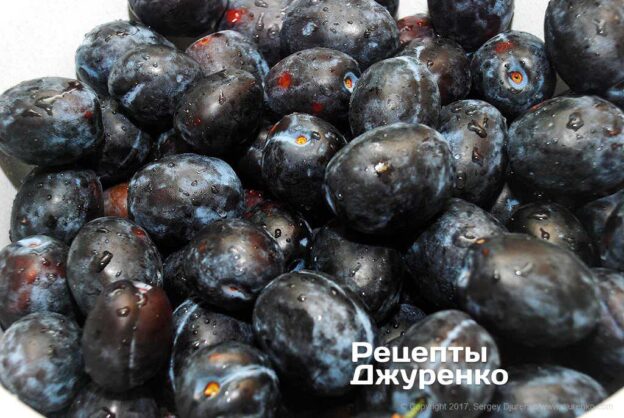
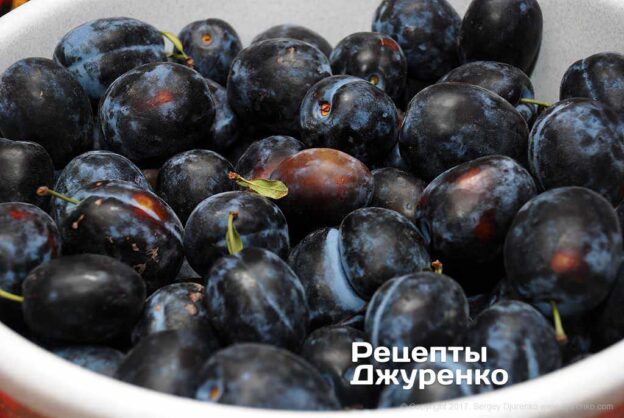
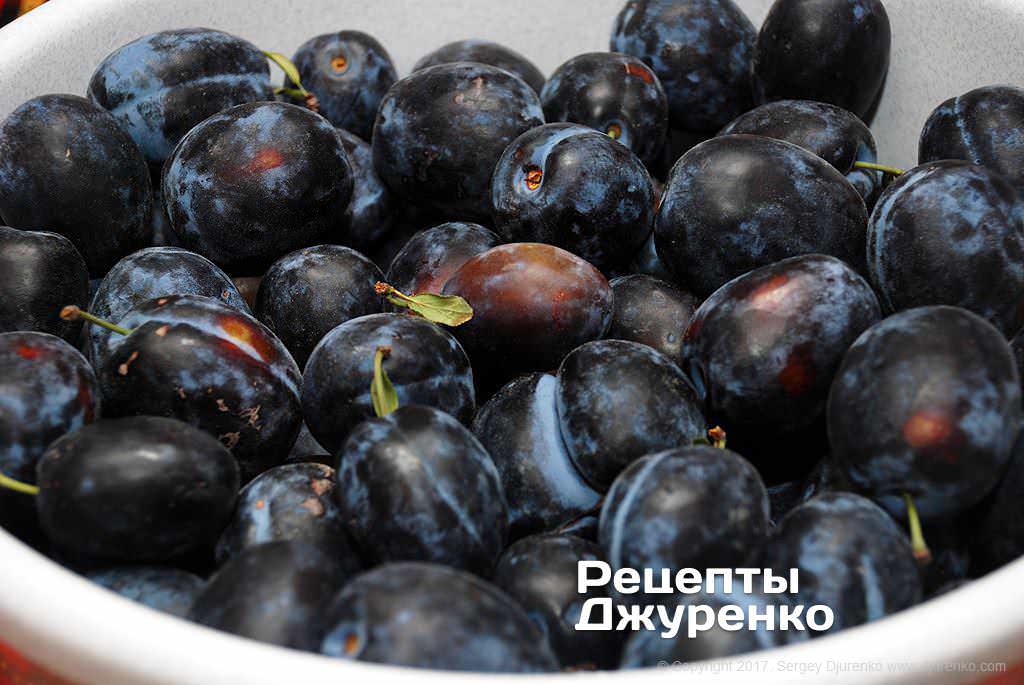
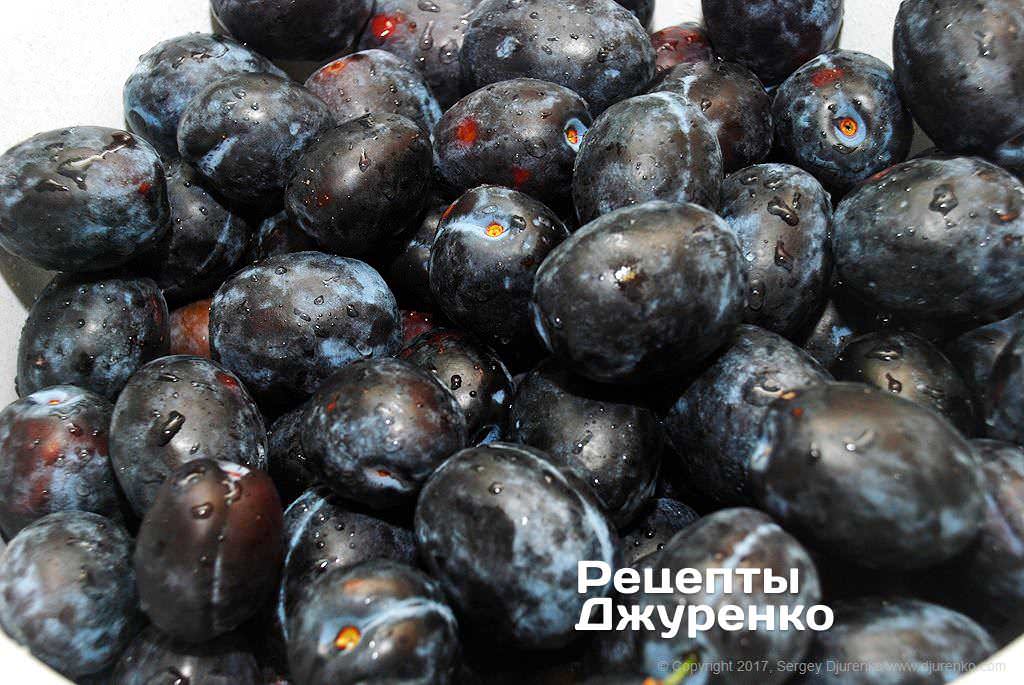
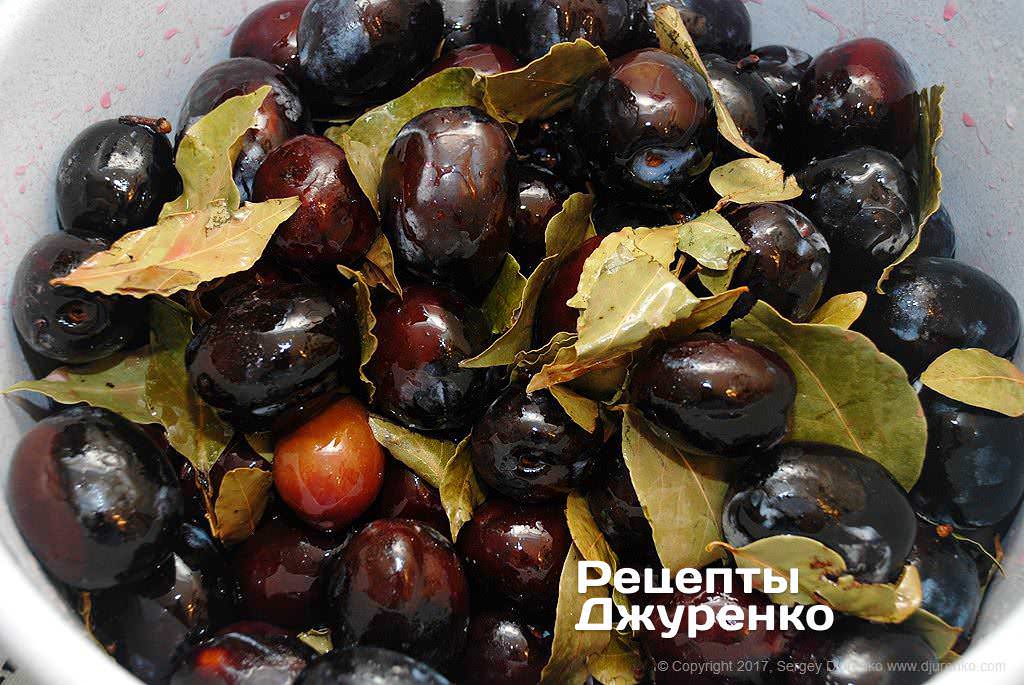
- For pickling, it's best to use the plums we're used to calling Italian prune plums, and not the ripest ones. Better if they aren't overripe and are a bit firm. That way they won't turn to mush while pickling. Be sure to sort through the plums and throw out any damaged ones, this is important (!). Pull off the stems. And of course, wash them, trying to rub off the bluish bloom.
- Put the fruit into a container for pickling. It's very important that the container is made of a material that doesn't react with acid: plastic, porcelain, glass. An oak barrel is best of all. But at home, a large plastic tub will do just fine.
- How to layer: just pour the plums in.
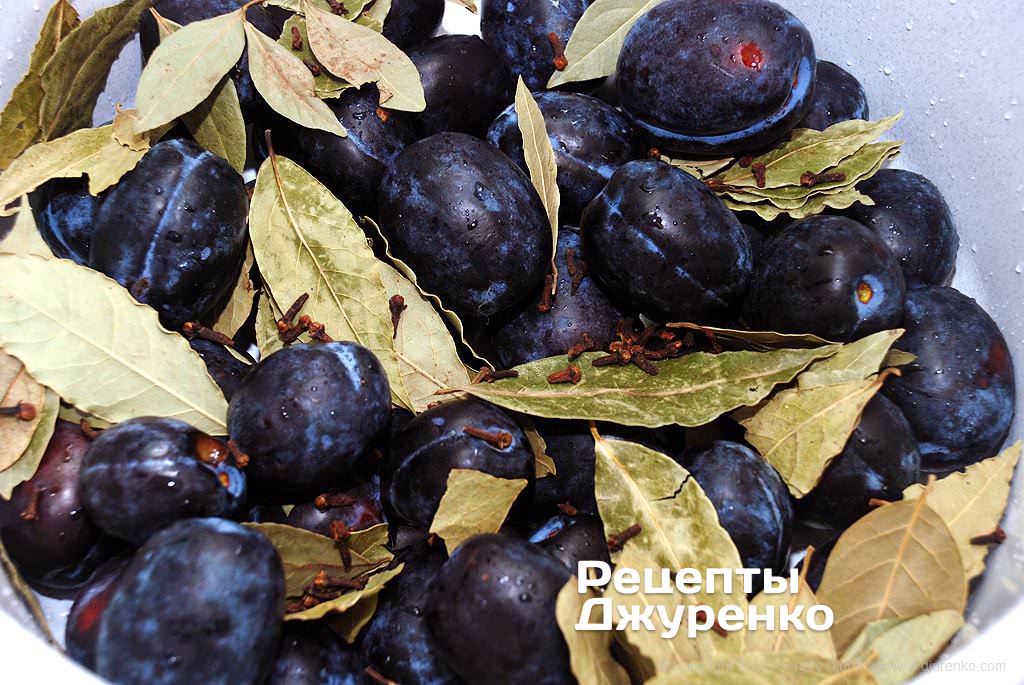
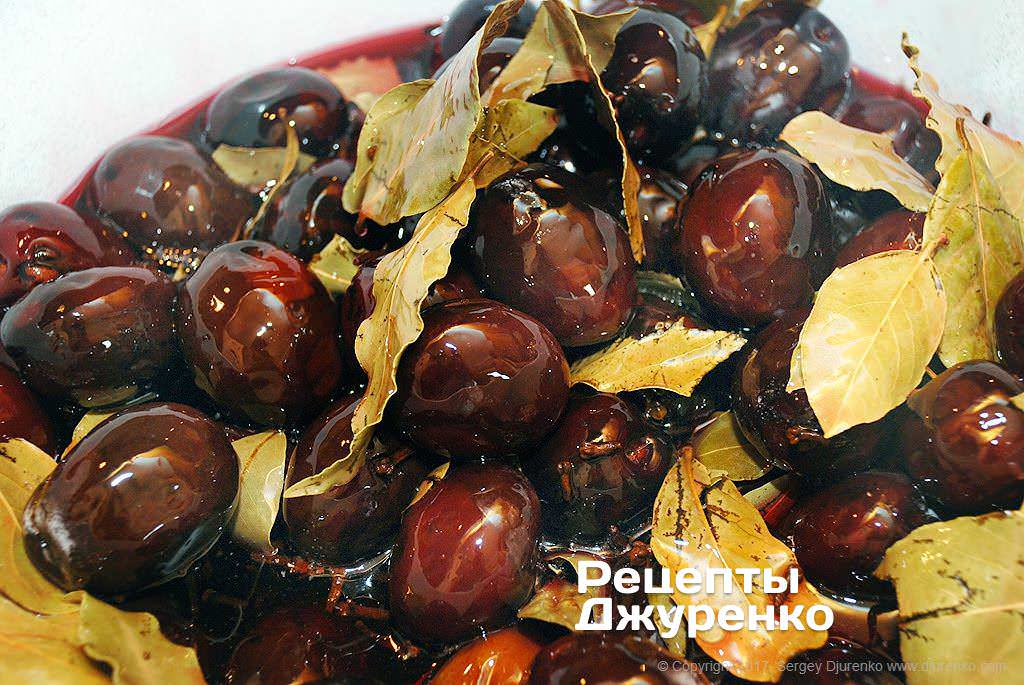
- Cover the bottom of the container with plums and scatter bay leaves and cloves on top. Add another layer of plums, then bay leaves and cloves again. And so on. The top layer should be plums.
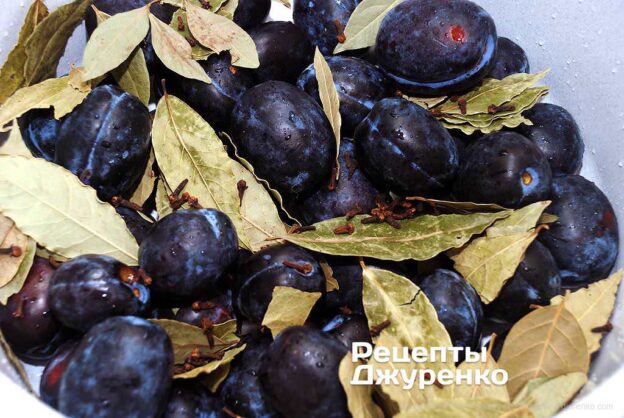
- By the way, at first glance the amount of bay leaves and cloves may seem excessive. That's a mistake. In the end, I was even sorry I didn't add more. But, as they say, there's no accounting for taste…
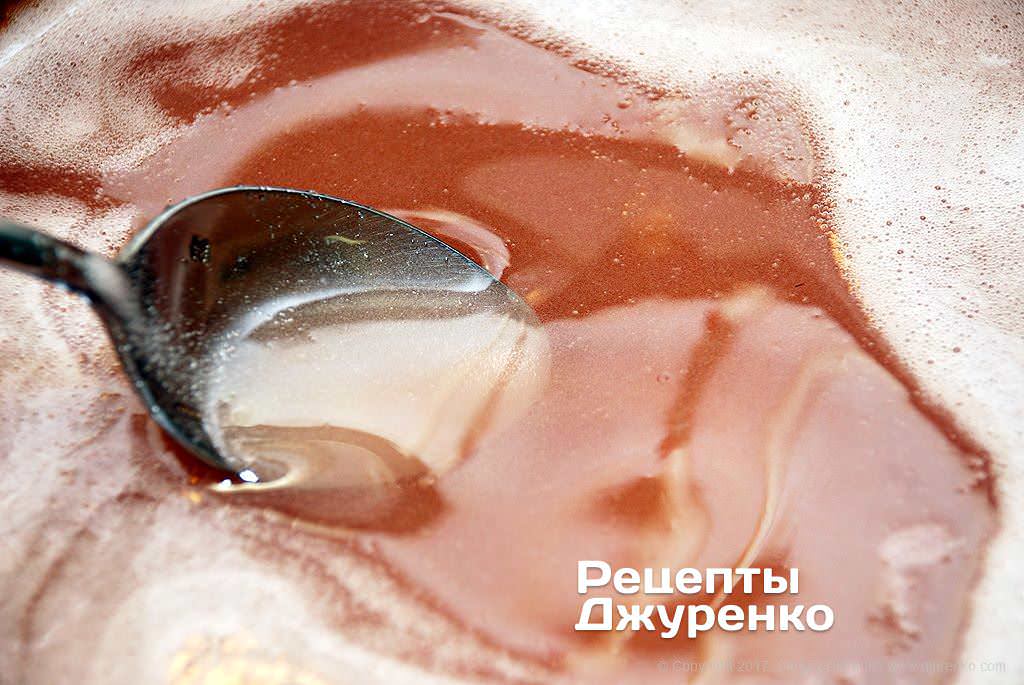
- Bring the vinegar to a boil in a pot. Add the sugar to the boiling vinegar, preferably in batches of 1-2 cups. Stir until dissolved. Physically, it's impossible to dissolve 3 kg of sugar in 0.5 liters of liquid. You'll end up with a thick syrup with sugar crystals in it. Again, don't let that scare you. The fruit will release juice very soon, and everything will be as it should!
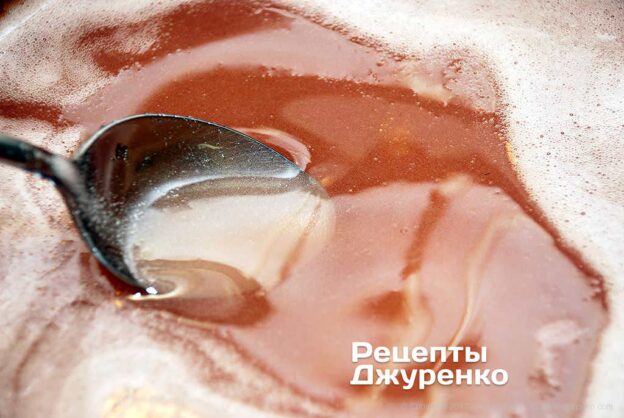
- Pour the boiling syrup marinade over the plums. At first the marinade won't even cover them. That's how it should be.
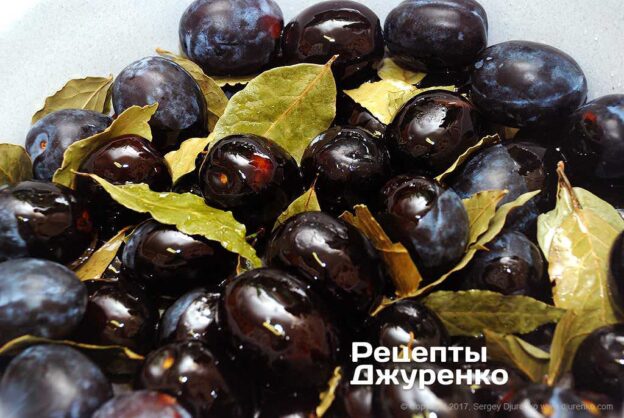
- Next, you're in for a simple but extremely engaging 5-day routine.
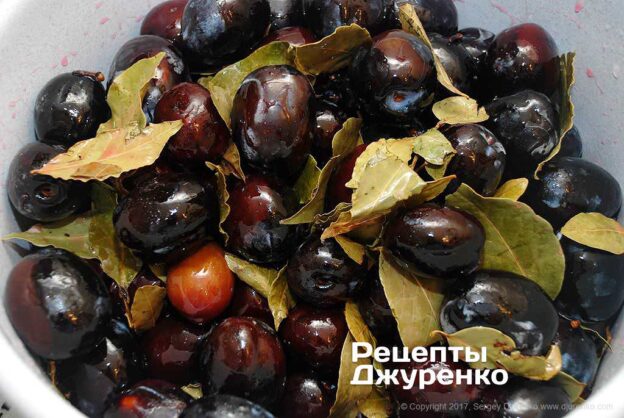
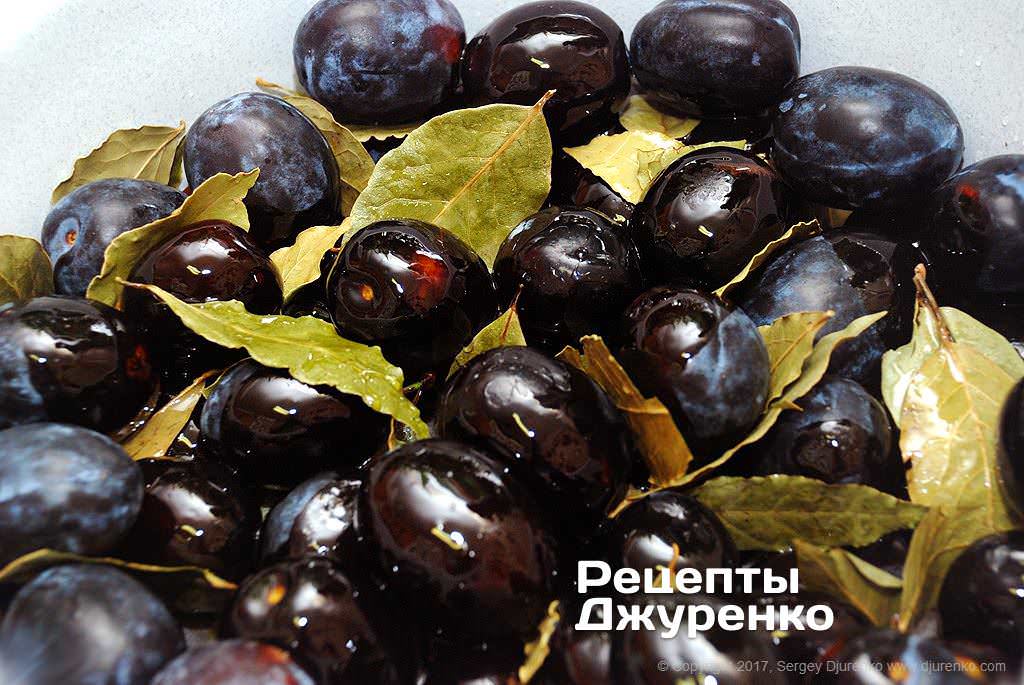
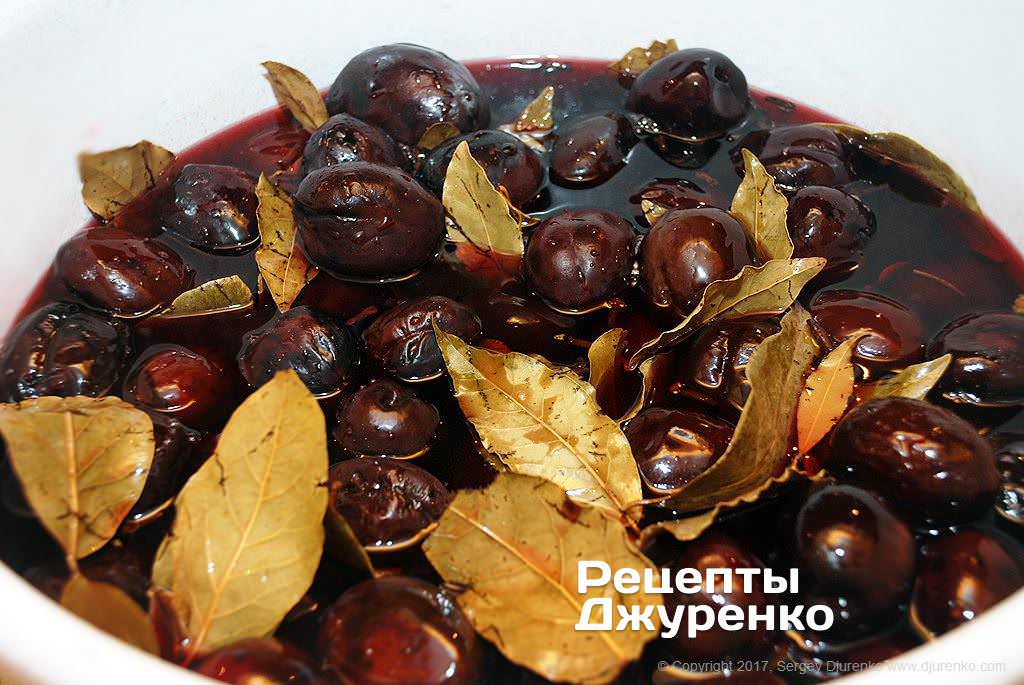
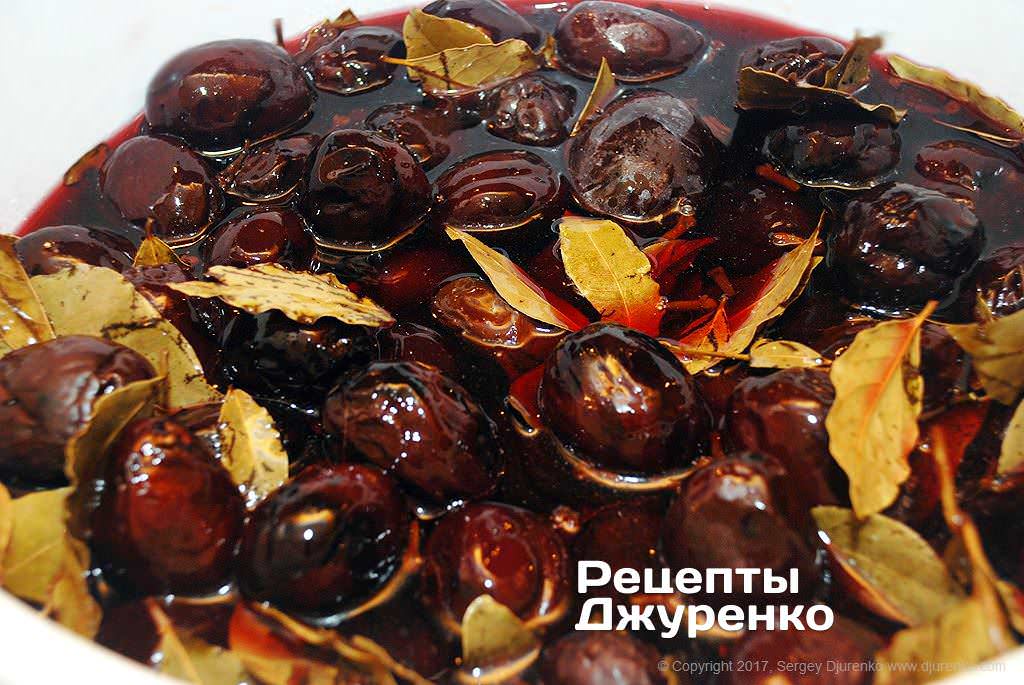
- So: twice a day, morning and evening, drain all the liquid from the plum container into a large pot. Gently stir the plums with a big spoon, or better yet, just with your hand. Bring the drained liquid to a boil and pour it back over the plums. By day 2, or day 3 at most, there will be enough liquid to cover the plums completely.
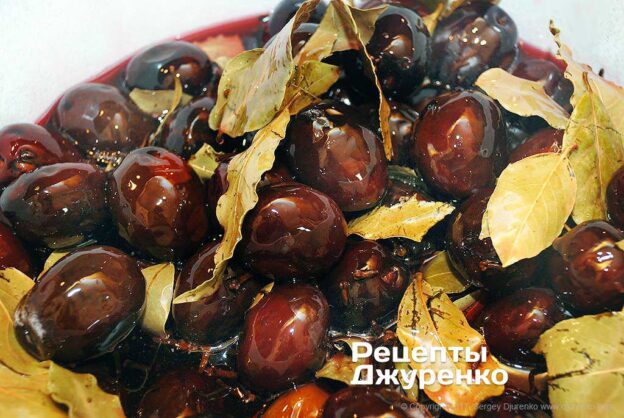
- It's best to cover the plum container with a bag or plastic wrap. First, to keep debris out. Second, to keep insects out, especially wasps (!). Third, to stop the family from snacking on the plums. Pickled plums are edible on the very first day, and delicious. So by the time you get to canning, there may be nothing left to can.
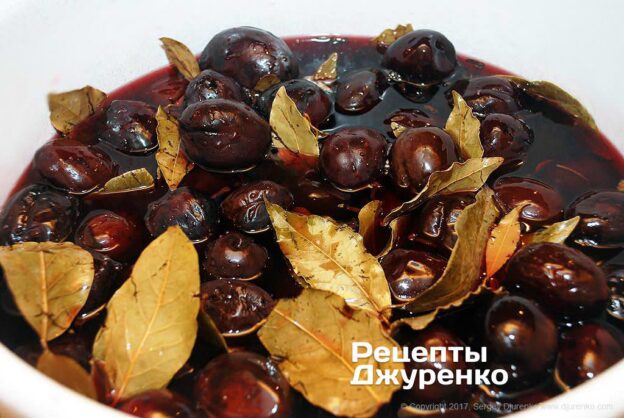
- At the end of the fifth day, drain all the marinade into a pot. Bring it to a boil.
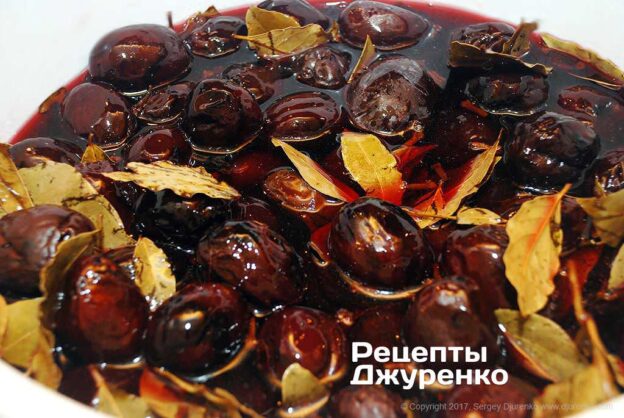
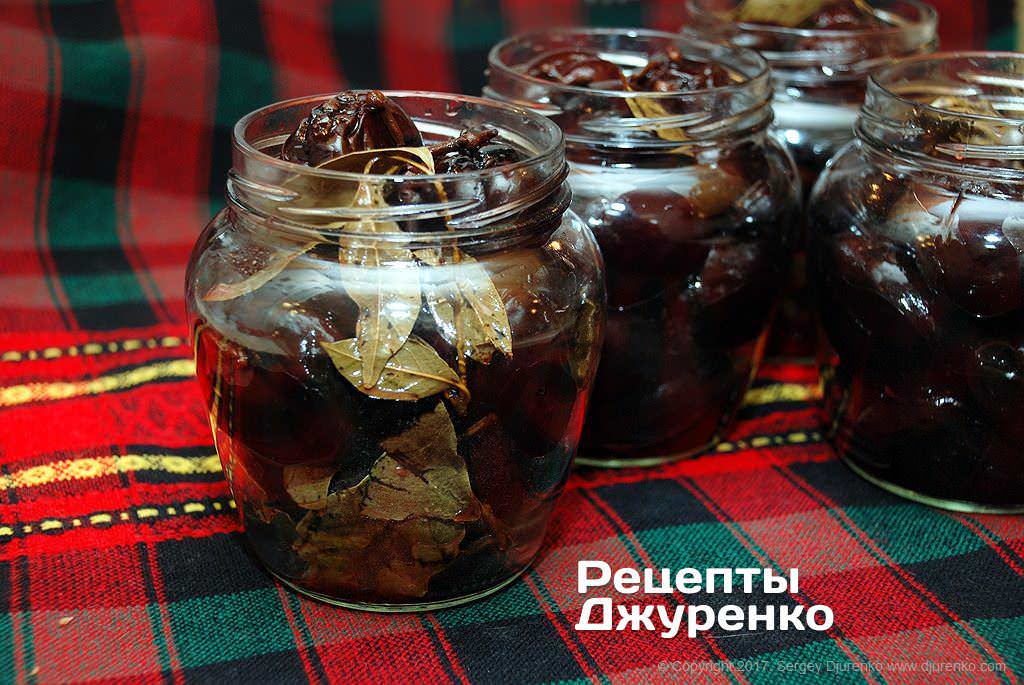
- Pack the pickled plums into sterilized jars, making sure to add bay leaves and cloves.
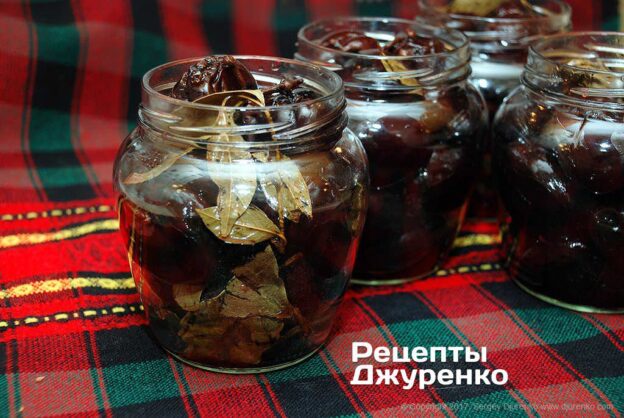
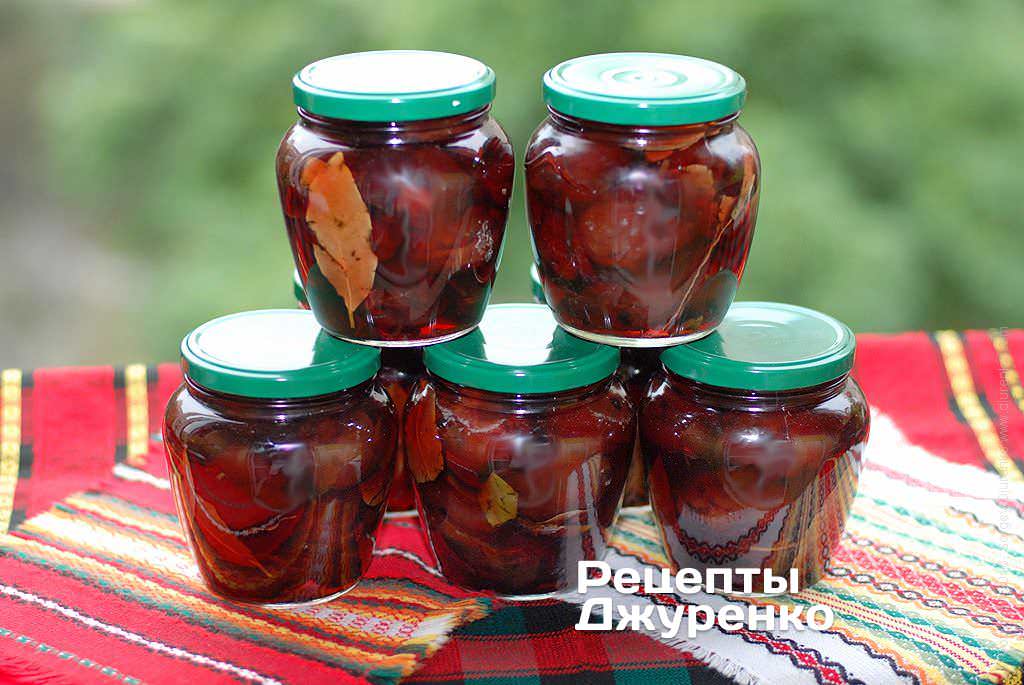
- Using a cup, pour boiling marinade over the plums in each jar. Right up to the neck! Cover with a lid and seal tightly.
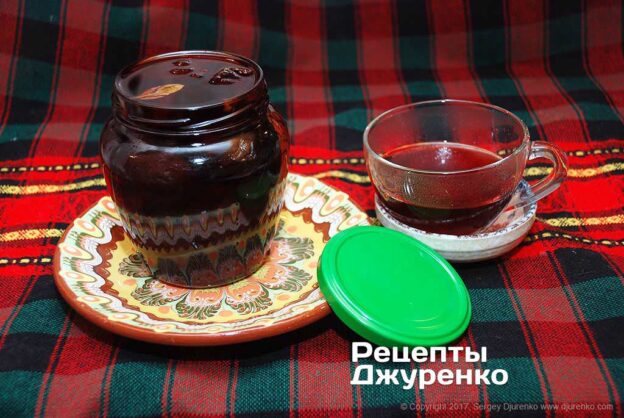
- Turn the jars upside down so they stand on their lids. Wrap them all in a wool or quilted blanket and leave them until completely cool.
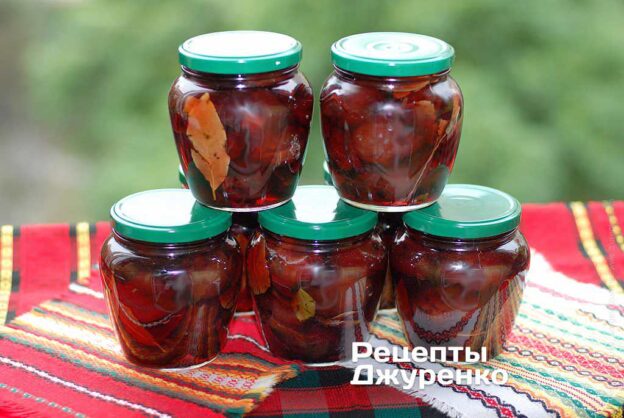
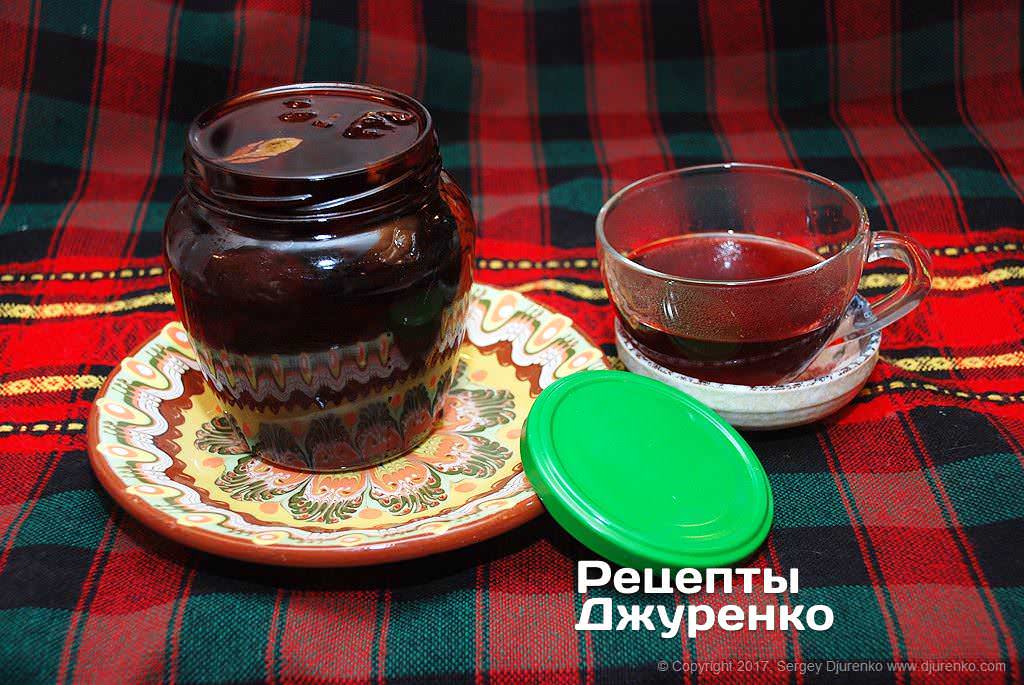
- Store jars of pickled plums in a cool place. And every now and then, take out a jar, open it and enjoy.
| Makes: | 10-15 half-liter jars |
| Calories: | 42 |
| Prep: | 5 days |
| Cook: | 60 mins |
| Total: | 5 days 1 h |
| Category: | Snacks and Sauces |
| Cuisine: | Caucasian cuisine |
| Rating: |
⭐
⭐
⭐
⭐
⭐
5
(7)
|