
Raw Feijoa Jam with Sugar
When I was little, in winter my mother used to make “raw” jam: feijoa with sugar. It’s an extremely simple and delicious treat. The jar was always kept in the fridge and pleased the eye with its soft pale green color. It’s wonderful when you use a teaspoon of this sweet jam instead of sugar in your tea: the tea becomes fragrant, even without lemon.
In Crimea and the Caucasus there grow small evergreen trees or shrubs of the genus Acca, bearing juicy fruits that look like very large gooseberries, with a smooth, slightly ribbed skin. Wild species, however, grow all over the world. Ripe fruits taste like wild strawberries, which is why I especially love them. Many people catch notes of pineapple in the flavor; maybe I just wasn’t spoiled with pineapples as a child.
It’s a common subtropical plant, often planted for decoration. But the fruits contain so many vitamins and trace elements that they are successfully used to support immunity and the body’s balance. I remember that long ago they were recommended to make up for an iodine deficiency. And besides being healthy, the fruits are also very tasty.
It’s worth noting that ripe feijoas don’t need any heat treatment. It’s enough to mash them into a puree. Combined with sugar or honey, they keep very well in the fridge for quite a long time, and almost all their beneficial properties are preserved. Sugar acts as a preservative and does the job perfectly. Still, I don’t remember a jar of this jam ever standing full for long.
Buy small fruits with an evenly colored skin. Large fruits are usually less aromatic. If you can, taste or cut open one fruit: white flesh means it isn’t ripe yet, and dark flesh is a sign of overripeness or spoilage. A ripe fruit is soft and very juicy inside.
For the healthiest feijoa jam, use ripe fruits. Ripe feijoas spoil quickly, so they are usually sold slightly underripe. If they sit at room temperature for a few days, they ripen just right. Let them stand until the flesh inside becomes a little jelly-like. By the way, if the fruits are simply eaten, they are cut in half and the flesh is scooped out with a small spoon. But feijoas chopped up together with the skin are better mixed with sugar or honey.


Ingredients
2 kg of jam
- Ripe feijoas 1.5 kg
- White sugar 1 kg
Step-by-step recipe
Preparing the fruit
This simple homemade feijoa and sugar preserve belongs to the so-called “raw” jams, or, as it’s most often called, to fruit ground with sugar. The important difference from other similar preserves is that the mixture isn’t heat-treated. At home we make sea buckthorn and raspberries for winter this way, a stock of vitamins in case of illness. As a rule, the ratio of sugar to fruit is equal or almost equal.
As I said, buy fruits that aren’t the largest. If they are slightly underripe, let them sit on the windowsill for a few days, until the flesh inside becomes a little jelly-like.

Wash the feijoas thoroughly in cold water and dry them.
Recipes often advise blanching the fruits, but there is no need for it, since the jam isn’t heat-treated.
Use a knife to cut off the tips of each fruit, where the stem and the blossom end are. Cut off any damage on the surface.
Don’t peel the skin off: it contains the most nutrients, and in feijoa with sugar it’s not noticeable at all.

Cut all the fruits in half and throw away any with darkened or very underripe flesh.
After preparation the total weight of the fruits drops to just over 1 kg. That’s why the same amount of sugar is used.


Feijoa with sugar
Chop all the fruit with a blender or an ordinary meat grinder.
A blender is better: it chops much finer, and the mass comes out more uniform, though you will still feel small pieces; that’s unavoidable. Besides, contact with metal is kept to a minimum, which preserves the vitamins.

Pour the resulting mass into a large bowl or plastic container.
Add the white sugar and stir until it dissolves. The fruits are quite moist, so the sugar dissolves quickly.
People often advise adding a few drops of lemon juice to feijoa with sugar. By the way, it’s tasty and sets off the flavor of the fruit itself. It’s worth trying on a small amount of the mixture; maybe you’ll like it.


Into jars and the fridge
Prepare several jars with tight-fitting lids. Since the preserve is kept in the fridge, the jars should have screw-on or clip-on lids, so it’s convenient to take the jam in and out. Wash and sterilize the jars.
Divide the finished mass among the prepared jars and put them in the fridge right away. This is a raw jam: it doesn’t need fermenting, and in the warmth it may start to ferment on its own.
Stored properly, the jam can stay in the fridge for several months, if you have the willpower to keep it there that long. Because of the high iodine content, the top layer of the jam may darken slightly or change color; that’s normal. Mold, however, is unacceptable.
Honey is often used instead of sugar. In the final product the flavors and aromas mix and overpower each other. In my opinion, it’s better to eat honey on its own. I’ve seen somewhere that this kind of raw jam is portioned into small plastic cups and frozen, which is a very good way to preserve it with no risk of spoilage.


Calories and macros
191 kcal
100 g
- Protein0.4 g1% of kcal
- Fat0.2 g1% of kcal
- Carbs45.3 g98% of kcal
Calculated from the recipe ingredients, excluding salt and spices. Data: USDA and Matvaretabellen.
 Wide-mouth canning funnelAliExpress
 CheeseclothAliExpress
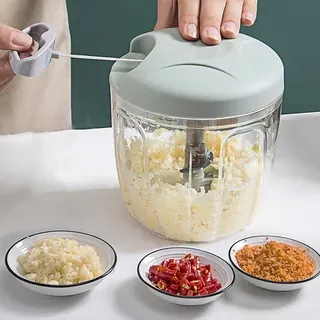 Pull chopper for garlic and onionAliExpress
 Oil sprayerAliExpress
 Kitchen scale up to 5 kgAliExpress
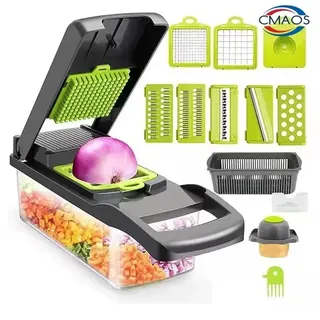 Vegetable chopper with handleAliExpress