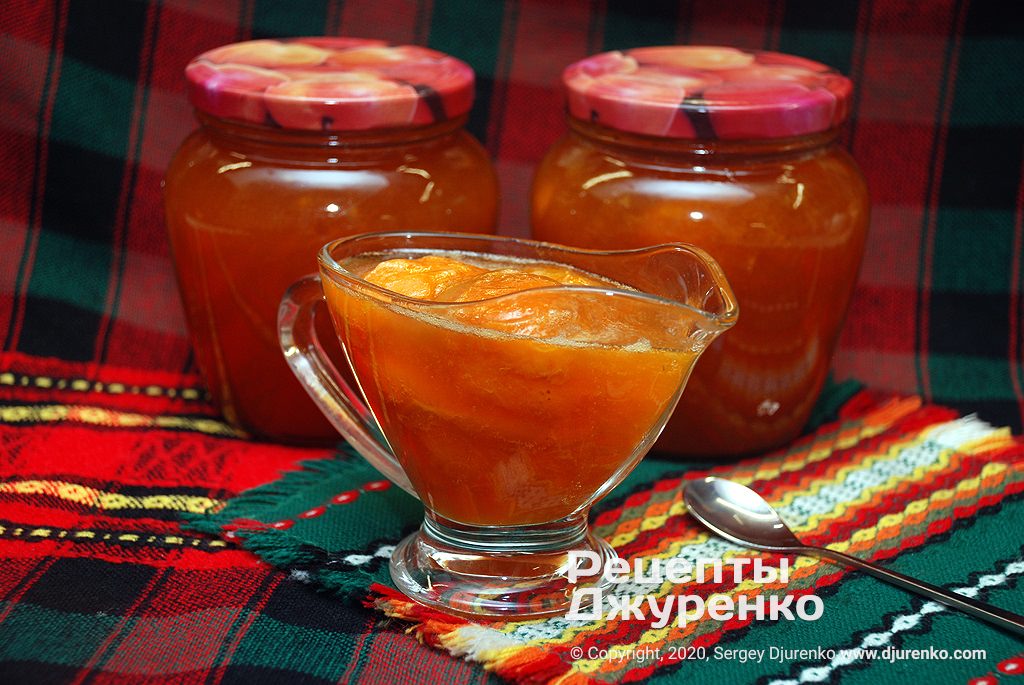
Thick Apricot Jam with Pectin – Homemade Family Recipe
Midsummer is apricot jam season. You have to catch it while the fruit is plentiful and fully ripe. Just 5-10 kg of apricots is enough for a sweet treat that will keep you happy all winter. It is especially good with cottage cheese pancakes (syrniki) – for us that has become a Saturday breakfast tradition.
Making jam is a tradition, and so is eating it afterwards. Years ago people put up many times more preserves. Whether the families were bigger or, as my grandmother used to say, you need something to eat in winter – I can't say for sure. These days, out of all the options, we have settled on sour cherry jam, currant jam and apricot jam. Less often, when the chance comes up, we manage to make mulberry jam. And in winter we make a delicious, fragrant tangerine jam.
Making preserves for winter comes down to reducing, or briefly boiling, fruit or berry pulp with sugar, sometimes with added pectin. A high concentration of sugar preserves fruit perfectly. What mostly sets jam apart from other sweet preserves is that it keeps more or less whole pieces of fruit in a looser syrup, whereas fruit butter turns out smooth and thick, and fruit spreads are runnier.
An important step in preparing the fruit is removing the pits. It is quick and easy when the pits are large, but with cherries it gets rather tedious, especially without a special pitter. The apricot, however, is a large fruit, and its pit comes away from the flesh very easily.
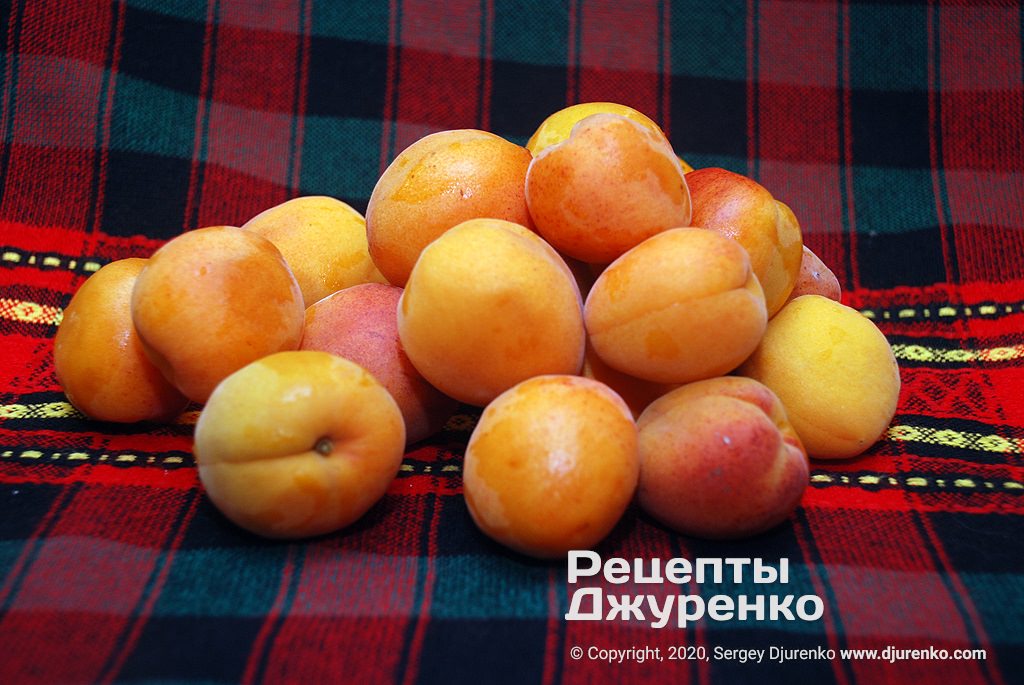
Many people like to use the small, half-wild apricots that grow in our shelterbelts. We prefer the large, juicy fruit grown in orchards. What matters is that the apricots are ripe and juicy, with no signs of spoilage or dark spots.
In our family we prefer exactly this kind of jam, where the apricot halves stay almost whole in a thick syrup. It goes well with thin crepes and makes a great pie filling. Our jam comes out bright orange – apricots are rich in carotene. To make the syrup thick we use any pectin available in the shops – there is plenty of choice. My wife and daughter make this jam every year, and I help as best I can.
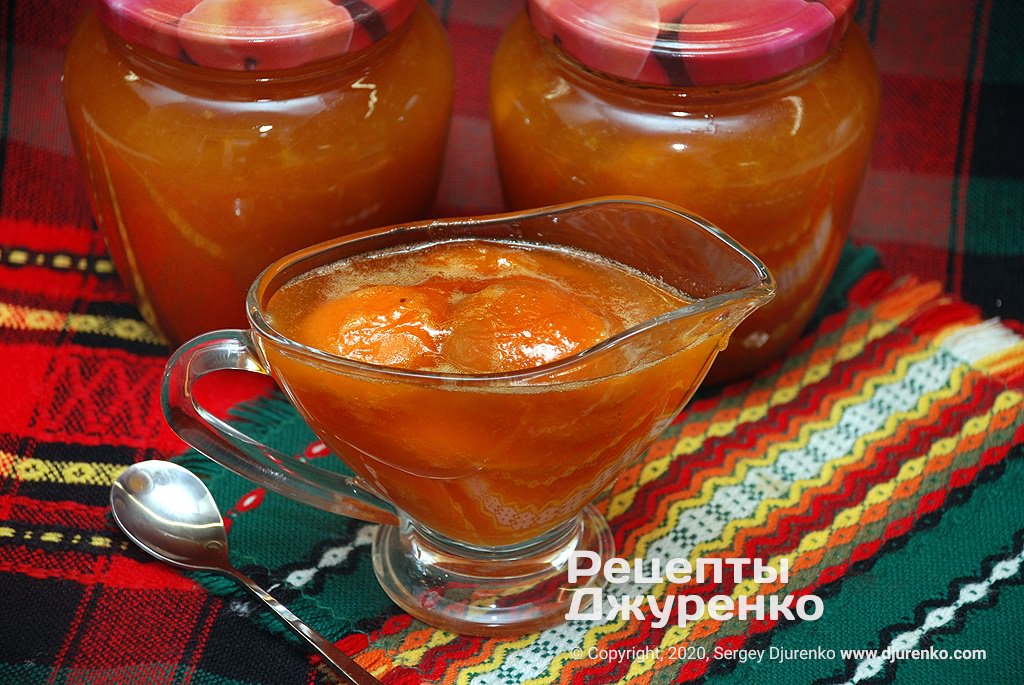
Ingredients
12-15 jars of 0.5 l
- Ripe apricots 5 kg
- Sugar 5 kg
- Pectin (powder) as needed
Step-by-step recipe
- Good, brightly colored apricot jam can only be made from fruit of the very best quality and ripeness. If you have an orchard, it is better to pick ripe apricots from the tree rather than gather them from the ground. At the market you will most likely get fruit that has fallen from the branches, so go through all of it and discard any that are rotting or damaged. Also avoid slightly green apricots and ones with a dark side – they are not uncommon.
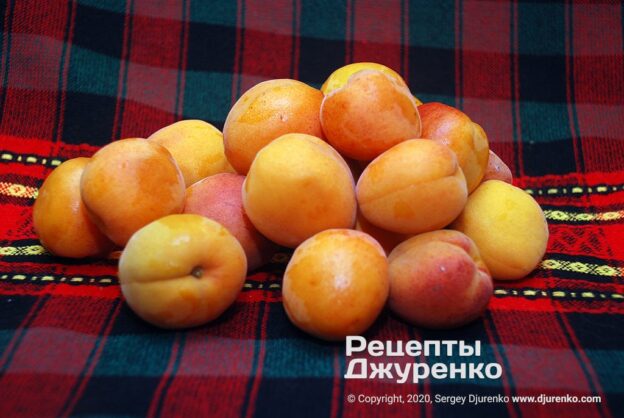
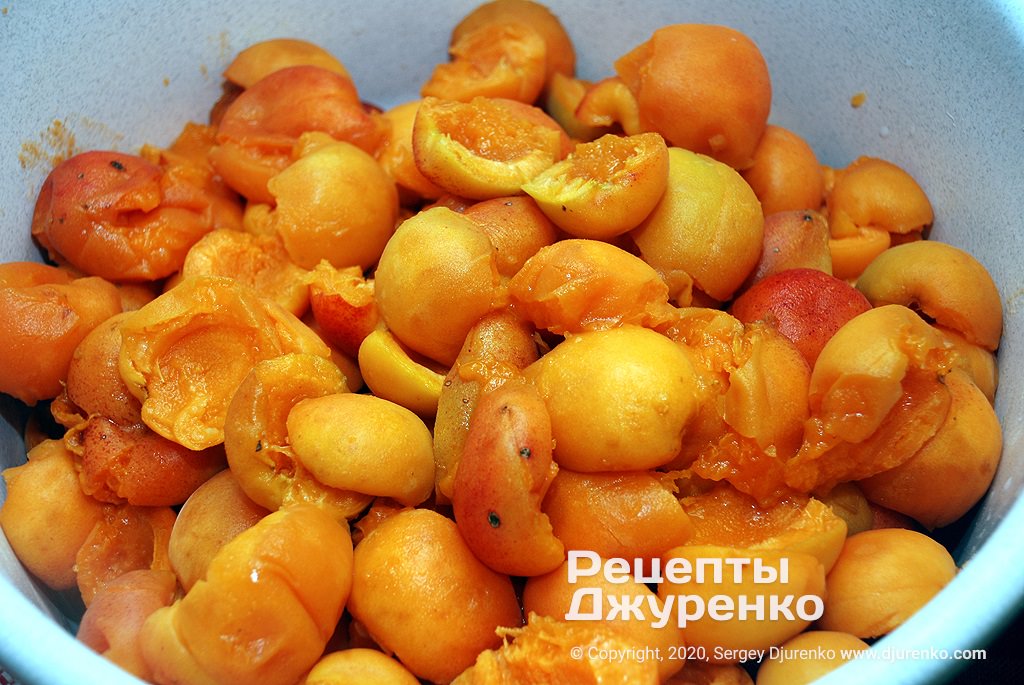
- Wash the sorted fruit – this matters, since there is always dust and other nasties on it. Then break each apricot in half and remove the pit. By the way, the stem is often still attached – remove that too. We throw the pits away, although people often dry them and use the kernels as a substitute for bitter almonds. Put the apricot halves into a large bowl.
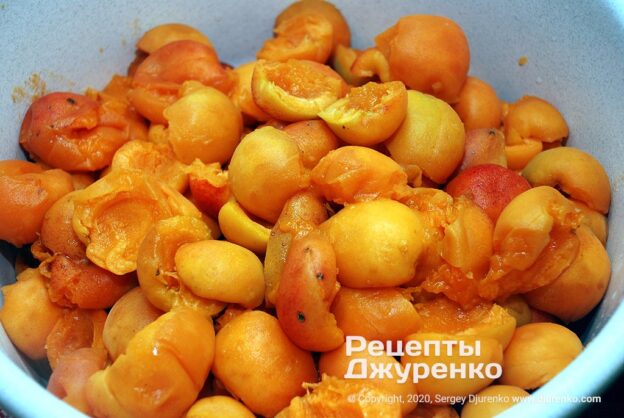
- At this stage we add pectin. Large supermarkets sell sachets meant for thickening fruit and berry mixtures. They vary a lot and often contain other additives – citric acid, sugar and so on. The package has clear instructions on how to use the pectin. In our case it was 1 sachet per 1 kg of fruit.
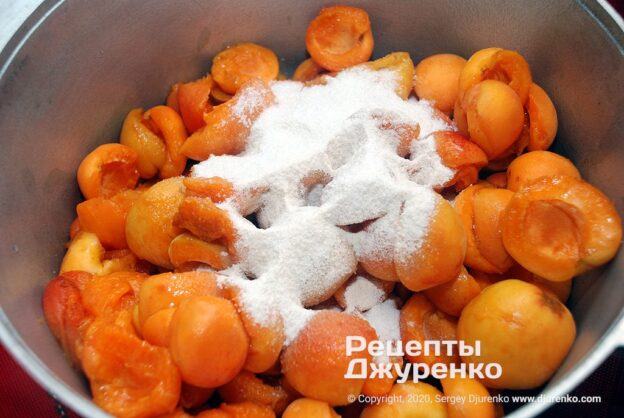
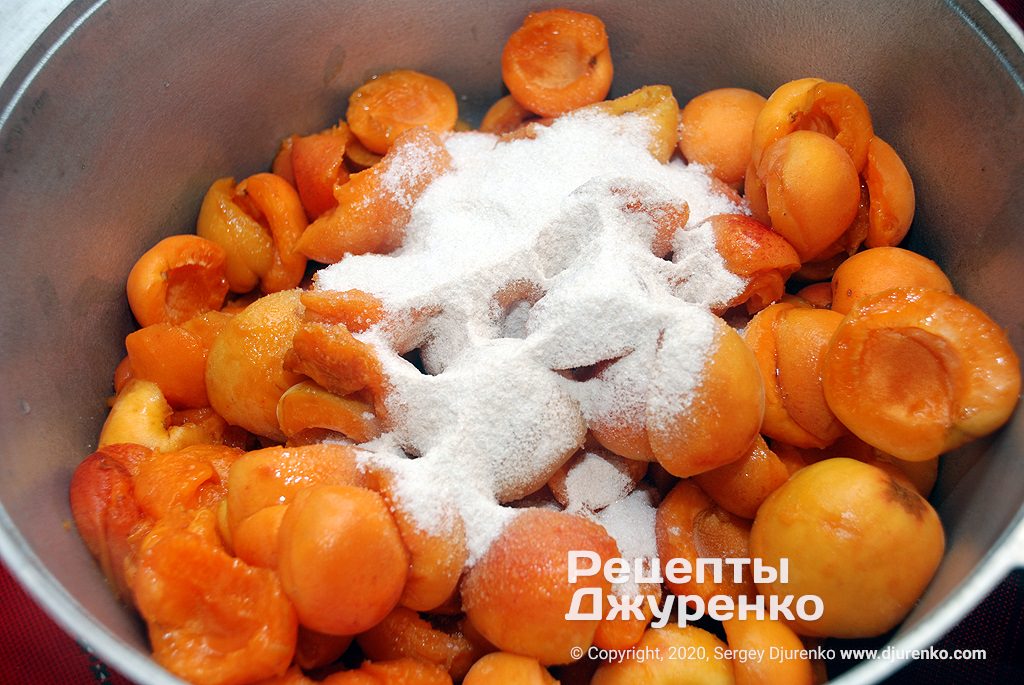
- Mix all the pectin with a cup of sugar and sprinkle it over the pitted apricots. With clean hands, lightly mash the apricots so that large pieces remain and a thick, puree-like juice appears. Transfer the apricots to a cauldron or a large jam pan.
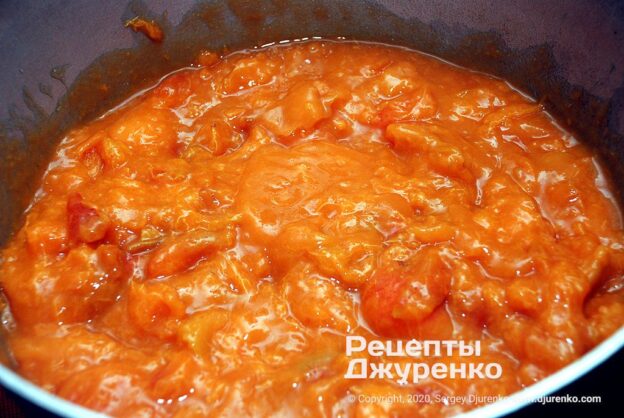
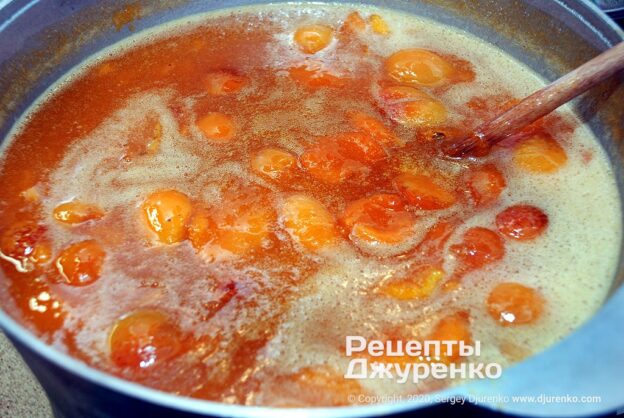
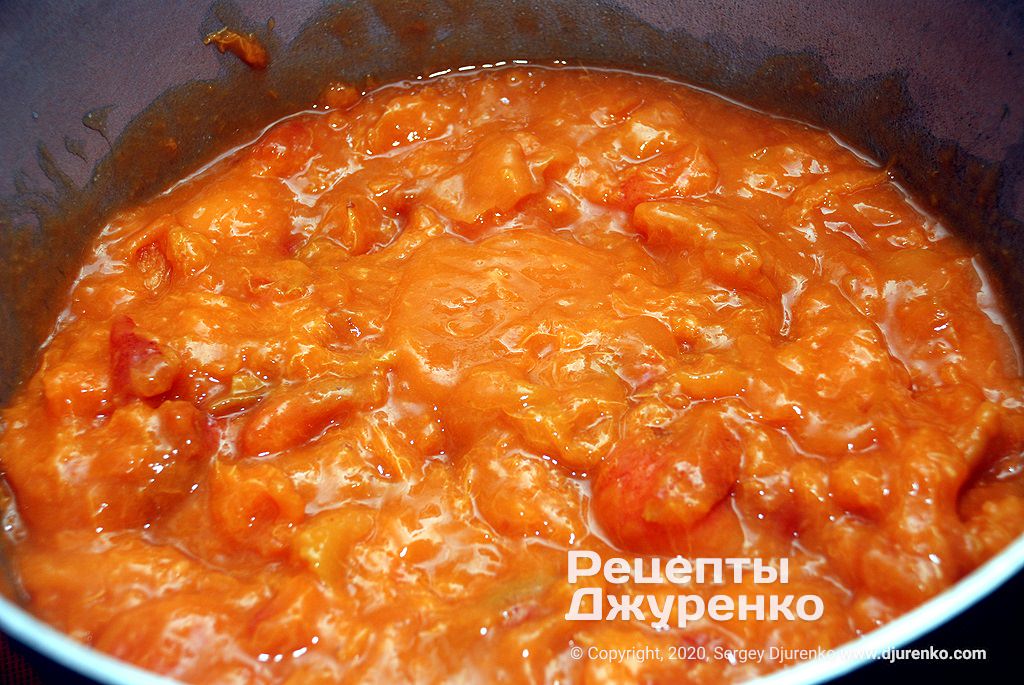
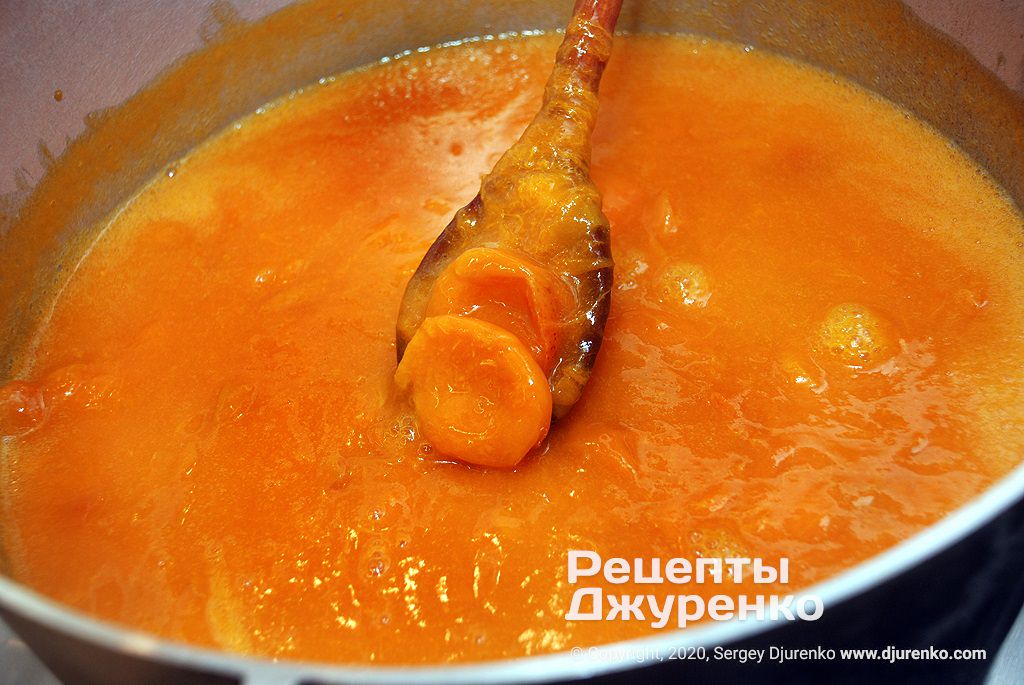
- Put the pan over medium heat. Heat the mixture, stirring constantly with a wooden spatula. Stirring is a must, as the fruit can very easily stick to the bottom and start to burn. If you spot a stray pit while stirring, remove it straight away. Bring the apricot jam to a boil and simmer over low heat for exactly 10 mins.
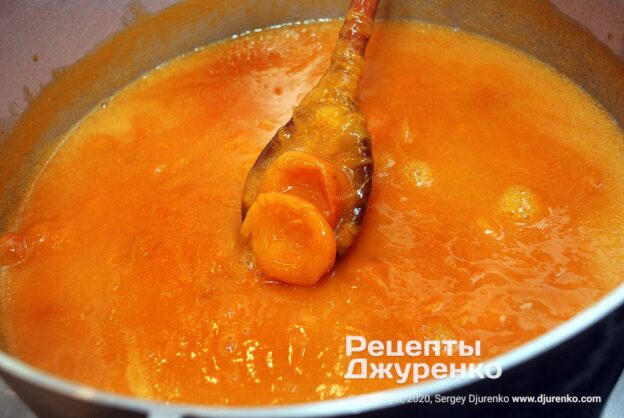
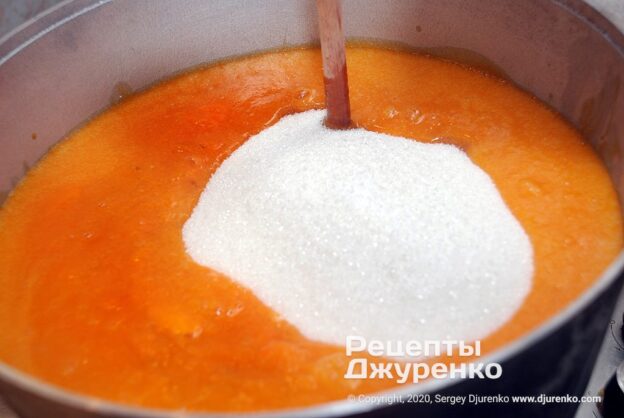
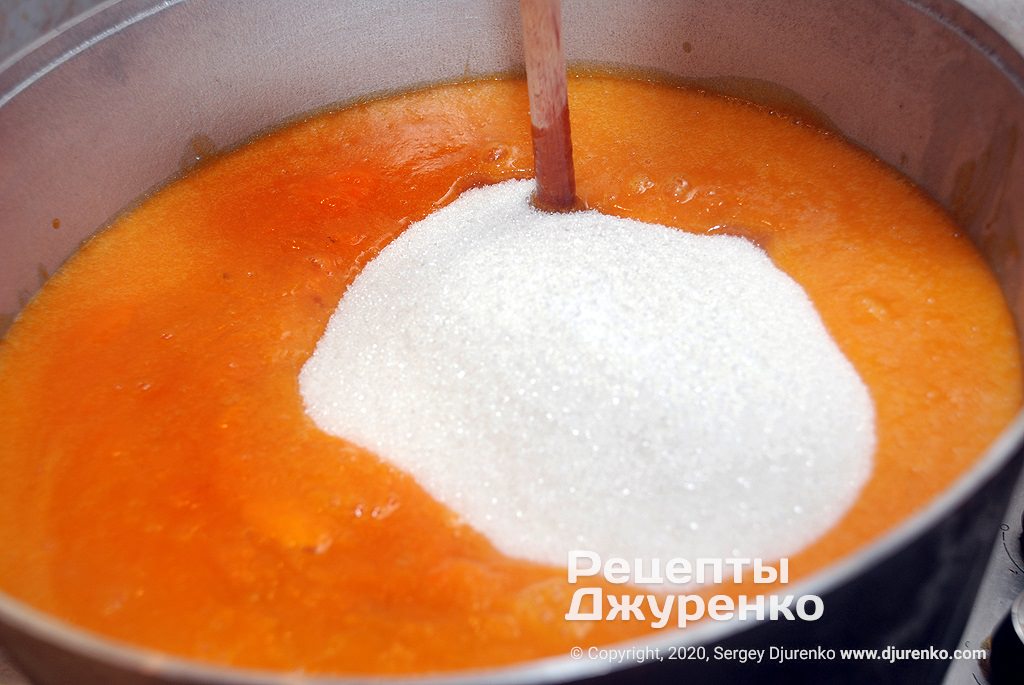
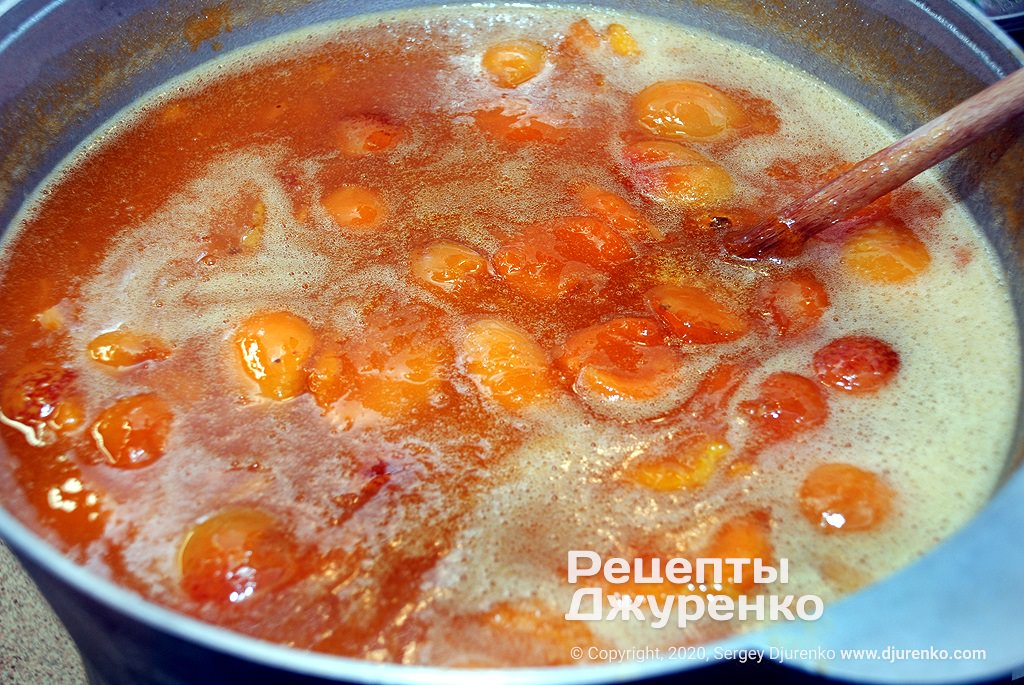
- Next, add all the remaining sugar. Just pour it into the hot jam and stir. The sugar will make the syrup noticeably runnier at once. That's normal. Without pectin it would not get much thicker as it cools – keep that in mind. Stirring with a spoon, cook the apricot jam for another 3 mins, then turn off the heat. If sweet foam forms, it is best to skim it off into a separate bowl.
- Wash and sterilize the jars in advance. As a rule, we wash them with plain baking soda and sterilize them with boiling water from the kettle. The lids also need to be boiled in hot water for 1-2 mins. We use 500-550 ml glass jars with screw-on lids – the most convenient size for storing and eating over the winter.
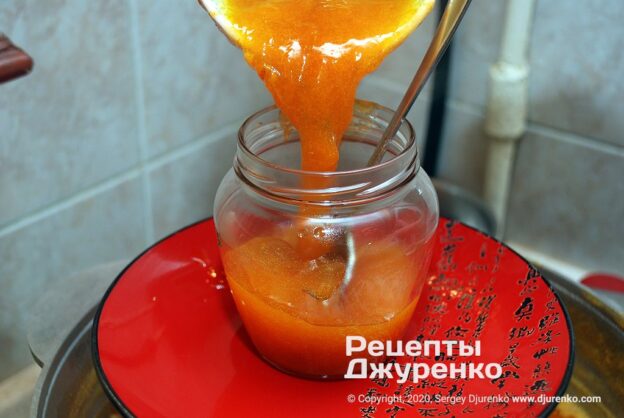
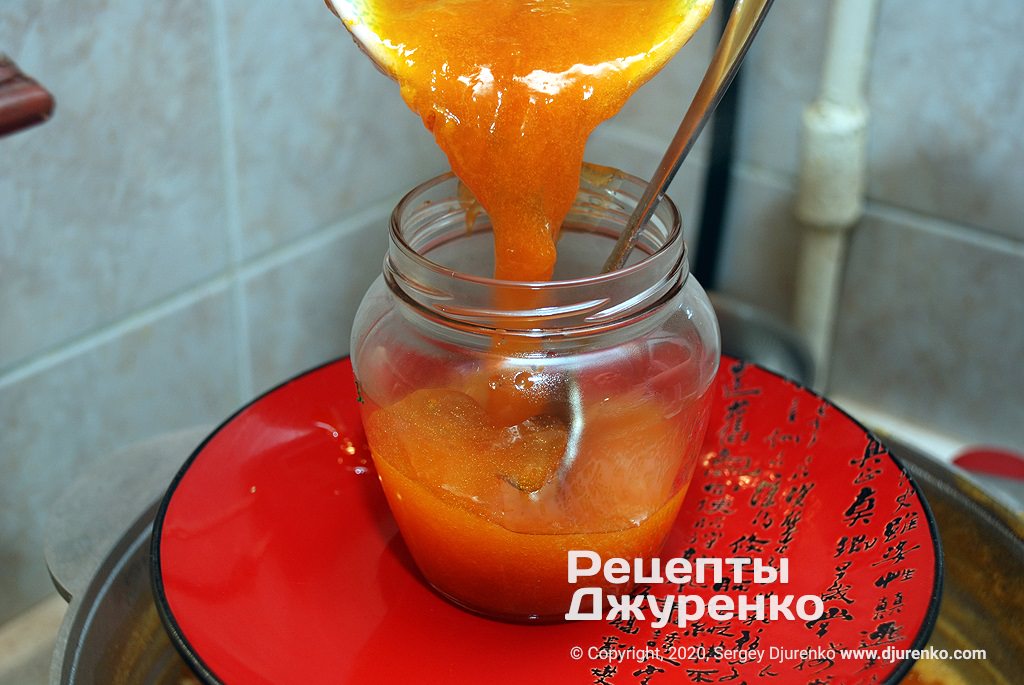
- Use a cup to ladle the runny hot jam into a jar, up to where the thread on the neck begins. If you are afraid the jar might crack, put a spoon in it – that helps. Screw the lid on immediately. Turn the jar upside down and stand it on the table. There is no need to wrap it up.
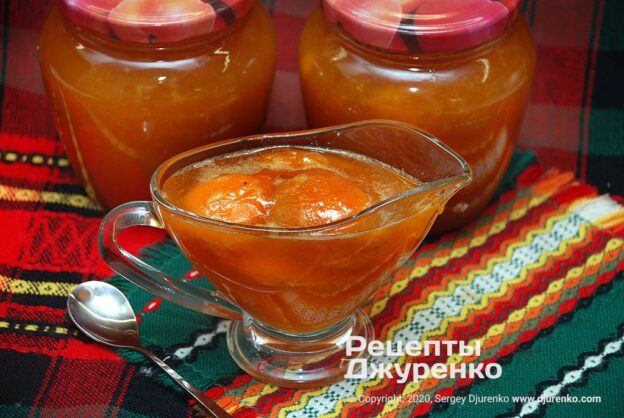
- The finished apricot jam in jars cools down quite quickly. After half an hour the jars can be turned right side up. Once cool, put them away in the pantry. They keep perfectly for a whole year until the next harvest. As it turns out, a jar of delicious jam makes a wonderful gift for friends, especially if they deserve it.
- By the way, there is a special “by-product” of making apricot jam – the foam. When the syrup boils, the sugar produces a sweet, fragrant foam. You can leave it, but then light specks may show up in the finished jam. Ideally, skim off the foam and save it for syrniki or tea – as kids, we could not dream of anything better.
| Yield: | 12-15 jars of 0.5 l |
| Calories: | 220 |
| Prep time: | 1 h |
| Cook time: | 30 mins |
| Total time: | 1 h 30 mins |
| Category: | Desserts and Drinks |
| Cuisine: | European |
| Rating: |
⭐
⭐
⭐
⭐
⭐
4.3
(3)
|