
Homemade Sauerkraut
We make sauerkraut 3–4 jars at a time, with nothing extra: just cabbage, carrot, rock salt and cold water. We pack the cabbage very tightly into a three-litre jar, add a scant tablespoon of salt (20–25 g) and cover with water. 3 days in a warm place, poking it to the bottom with a stick, then a week in the fridge.
Ingredients
3–4 three-liter jars
For fermenting
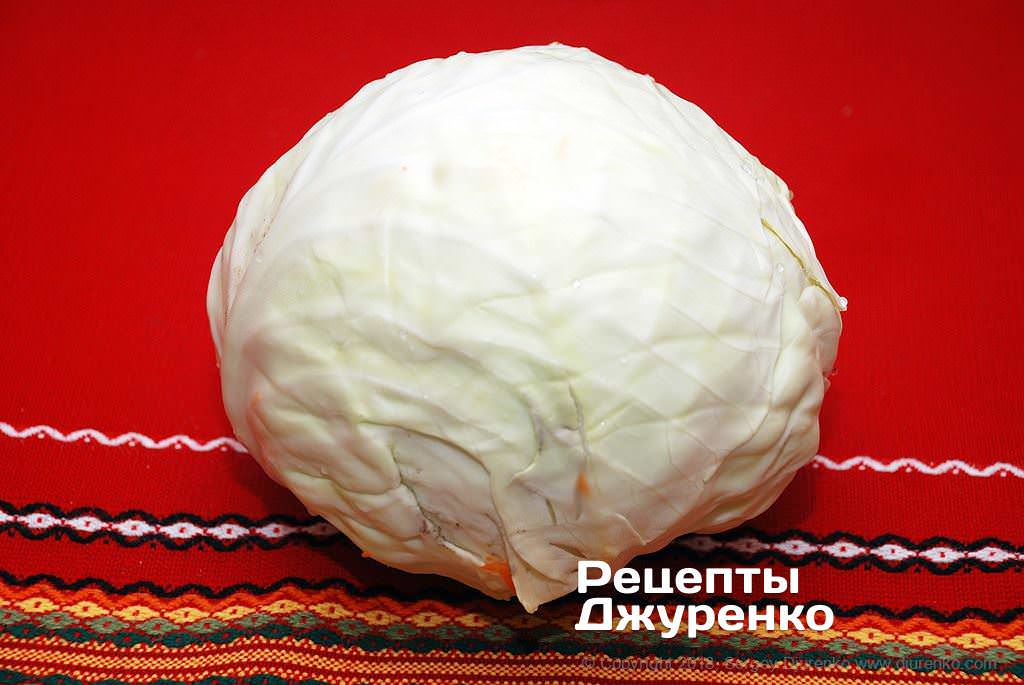
- White cabbage, firm 3 heads
- Carrots 3
- Non-iodized rock salt a scant tablespoon per jar (12 g)
- Cold filtered water as needed


For serving
- Onion to taste
- Sunflower oil to taste


Step-by-step recipe
Cabbage and carrots
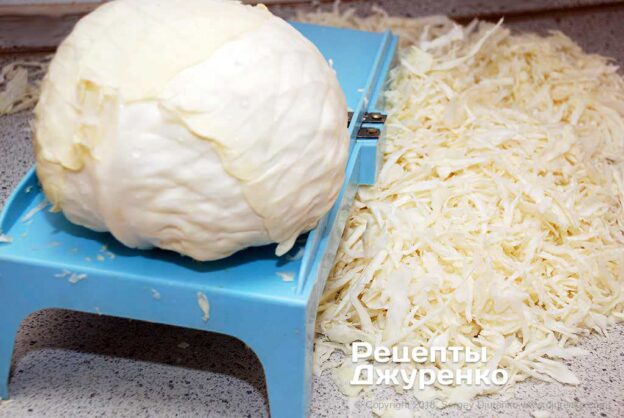
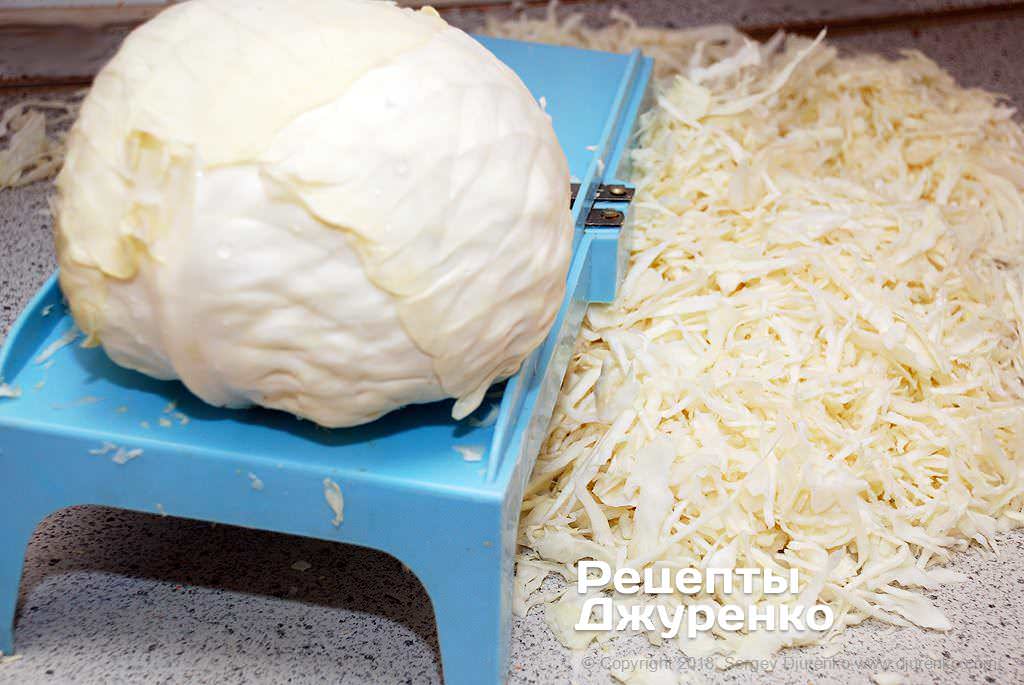
Everyone has their own way of shredding cabbage. You can do it with a knife, but it’s awkward and takes skill. There are special manual and electric shredders – they’re convenient and give an even cut.
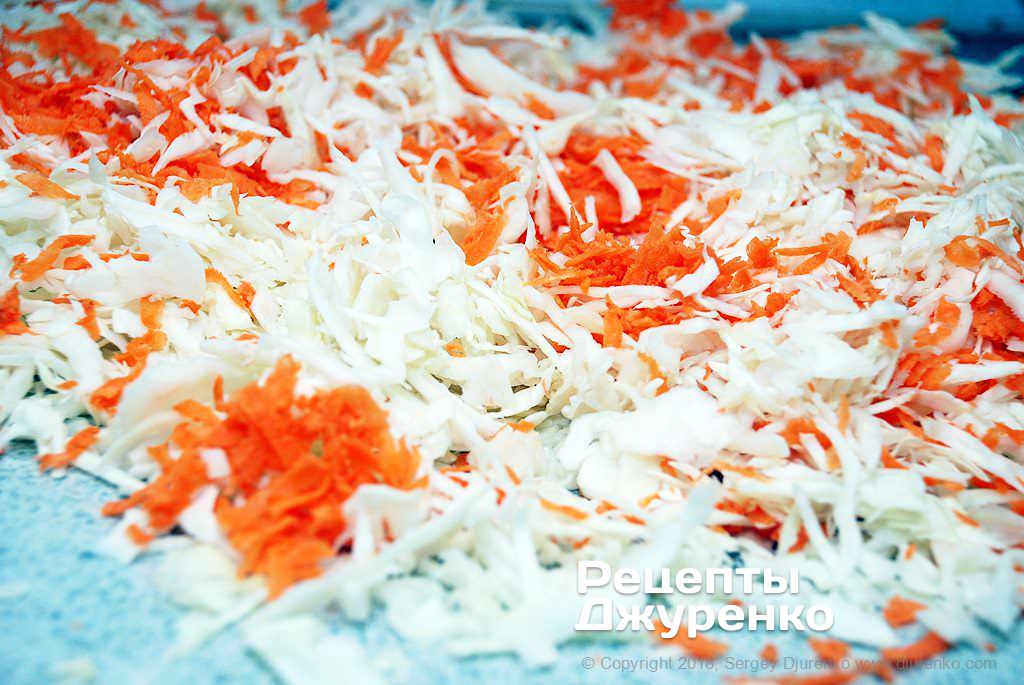
Shred the heads of white cabbage right onto the table. The cores can be peeled and eaten. I remember as kids my brothers and I would first fight over them, and then feel sick from eating too many.

Peel the carrots with a knife and grate them on the coarse side of a grater.
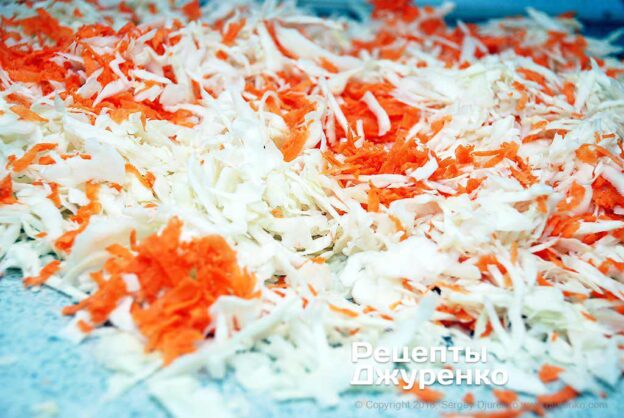
Mix the shredded cabbage and carrots right on the kitchen table.
Packing the jars
Pack the cabbage very tightly into a 3-liter glass jar. Very tightly! Use a rolling pin to help. Fill it up to where the neck begins, i.e. a few centimeters below the rim.

By the way, I have never once guessed how much raw cabbage is needed for a given number of 3-liter jars – it’s different every time. We usually ferment 3–4 jars at once, enough for everyone. A rough guide from readers: a tightly packed 3-liter jar holds about 2 kg of shredded cabbage.
Add a scant (level) tablespoon of non-iodized rock salt to each jar – about 20–25 g. By tablespoon I don’t mean a new spoon from a trendy modern cutlery set, but that old spoon from childhood – use the photo as a guide.

Carefully pour in cold filtered water in several goes. Wait until the water fills all the gaps in the jar, then top up again. The water should rise above the surface of the cabbage.

Place the jar in a deep plate or bowl – this matters, because during fermentation the liquid can overflow.

Put the jar of cabbage on the table or a windowsill. Not in direct sunlight!




Fermenting
Leave the cabbage to ferment at room temperature for 3 days – 72 hours. Anyone remember “Kapustis-72” from the film DMB? As it ferments, pour the liquid that overflows into a small jar.
While it is fermenting, pierce the cabbage once or twice a day with a wooden stick all the way to the bottom of the jar – this lets the gases out, and the cabbage won’t turn bitter.
Then cover the jar with a plastic lid and put it in the fridge or cellar for one week.
The liquid level in the jar gradually drops and needs topping up – with that same liquid you collected in the small jar.
Serving
After a week, a week and a half at most, the sauerkraut is ready to eat. Take the finished cabbage straight out of the jar with a fork – it’s packed quite tightly.
Feel free to put it in a bowl, add sliced onion and dress it with sunflower oil. If the onion is sharp, chop it finely; if it’s sweet, like Yalta onion, cut it coarsely. And treat yourself to everything!

We don’t keep it long: over time it turns too sour, so it’s better to make 1–2 jars at a time as needed.


How did you like this recipe?
No one has rated it yet — be the first.
Calories and macros
26 kcal
100 g
- Protein1.3 g26% of kcal
- Fat0.1 g5% of kcal
- Carbs3.5 g70% of kcal
Calculated from the recipe ingredients, excluding salt and spices. Data: USDA and Matvaretabellen.