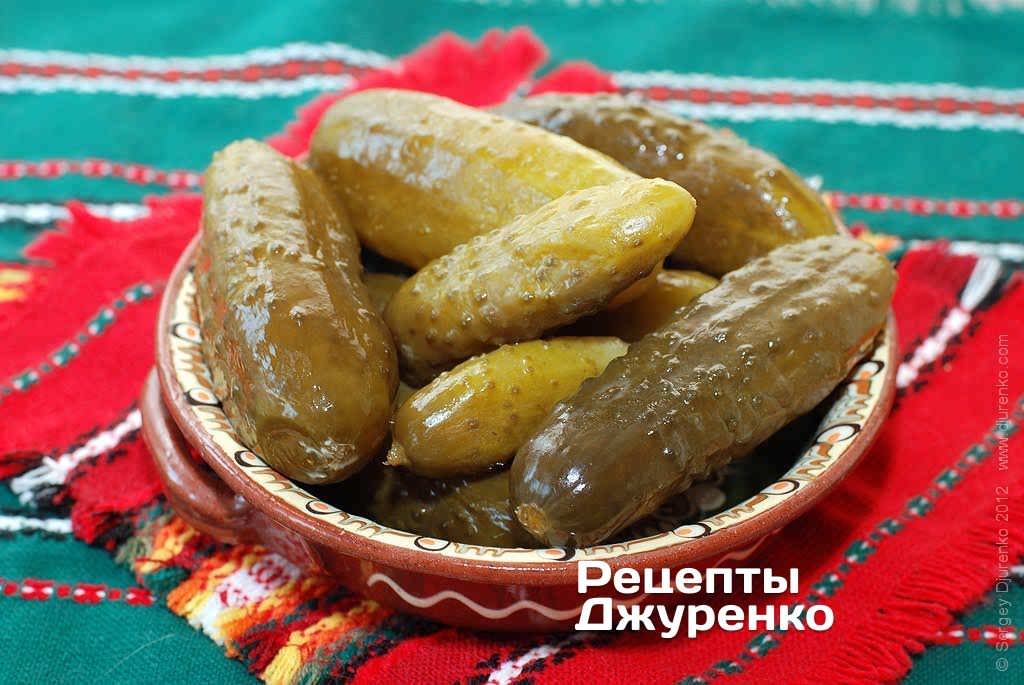
Fermented Pickles: Old-Fashioned Cucumbers Canned for Winter
The theory of the perfect snack, I no longer remember who came up with it (maybe even me), holds that a snack should be simple. It should be affordable and in season. It should be tasty. And its brine should cure, the next morning, what folks call a hangover.
This theory is a perfect fit for sauerkraut, the most perfect snack of all, fermented tomatoes , which I adore, and fermented pickles.
When I was a kid, at my grandmother's in the village, every summer they salted and fermented all sorts of garden vegetables, cucumbers included. They didn't plant many cucumbers in the village, just a couple of hundred square meters. But with constant care, weeding and pest control, the cucumber harvest was always excellent, despite all the plant diseases going around. The cucumbers were fermented in a huge oak barrel, I can't even remember how big. I was little then, and the barrel seemed simply enormous to me! And in winter, the pickles were dug out of the barrel with a bare hand and eaten just like that, or as a snack with fiery village moonshine.
I still can't figure out for sure what the right word is: fermenting, salting, or something else. Apparently it's fermenting after all.
Salting is a way of preserving food with salt, either dry or as a brine. The high salt content kills microbes, so the food keeps for a long time. Cucumbers are salted by simply pouring a salt solution over them and leaving them in barrels for quite a long time. That's how quick-salted cucumbers are made. As soon as the cucumbers are lightly salted, they get eaten right away.
Pickling in vinegar: the cucumbers are covered with a vinegar marinade and canned. Also an acquired taste.
In my opinion, the best way to preserve cucumbers is fermentation. Fermented pickles are really a combination of salting and fermenting. That's how it was done when I was a kid. The point of fermentation is to produce lactic acid, which acts as a preservative. It's the lactic acid that gives fermented pickles their refined flavor.
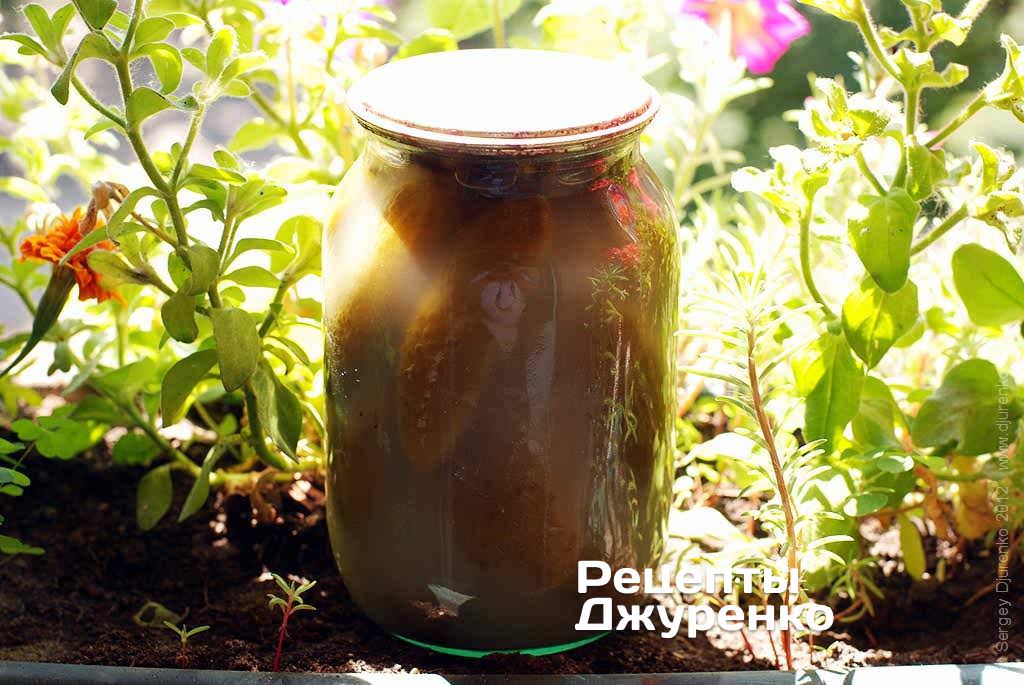
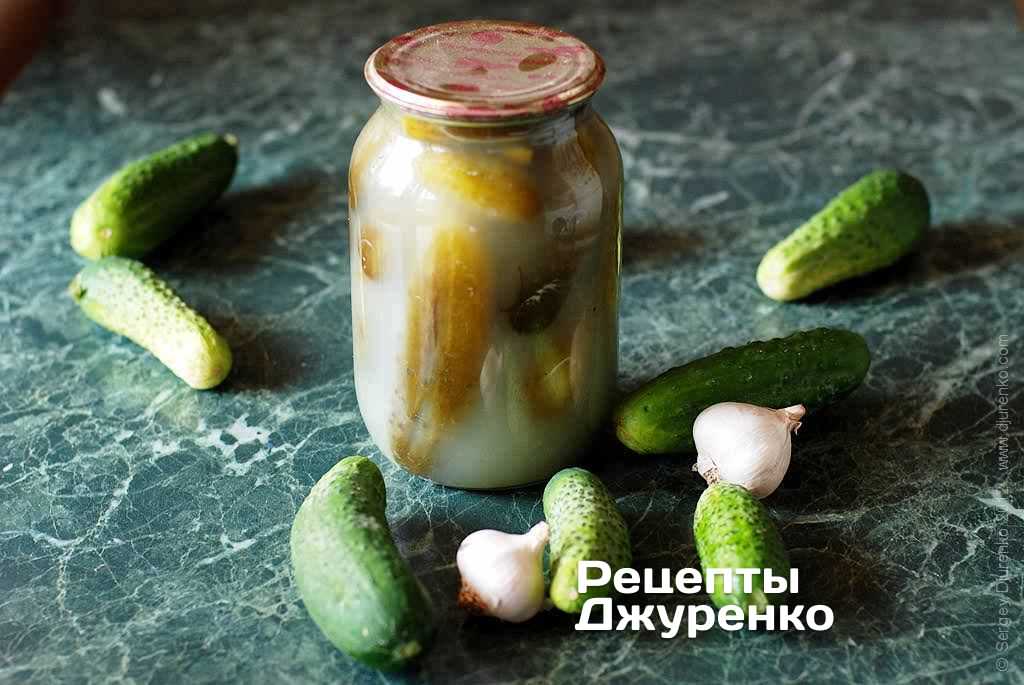
Fermented pickles can be kept in oak barrels in a cellar. But in a city apartment, it's better to can them after fermenting. That's what my mom still does: she seals fermented pickles in one-liter jars, and they sit on the shelf at room temperature in cloudy brine and never spoil or “explode.” An amazing process.
And in winter, as needed, the fermented pickles get eaten: just like that, as a snack, in classic vinaigrette salad, and you can even make a meat solyanka or rassolnik with pearl barley.
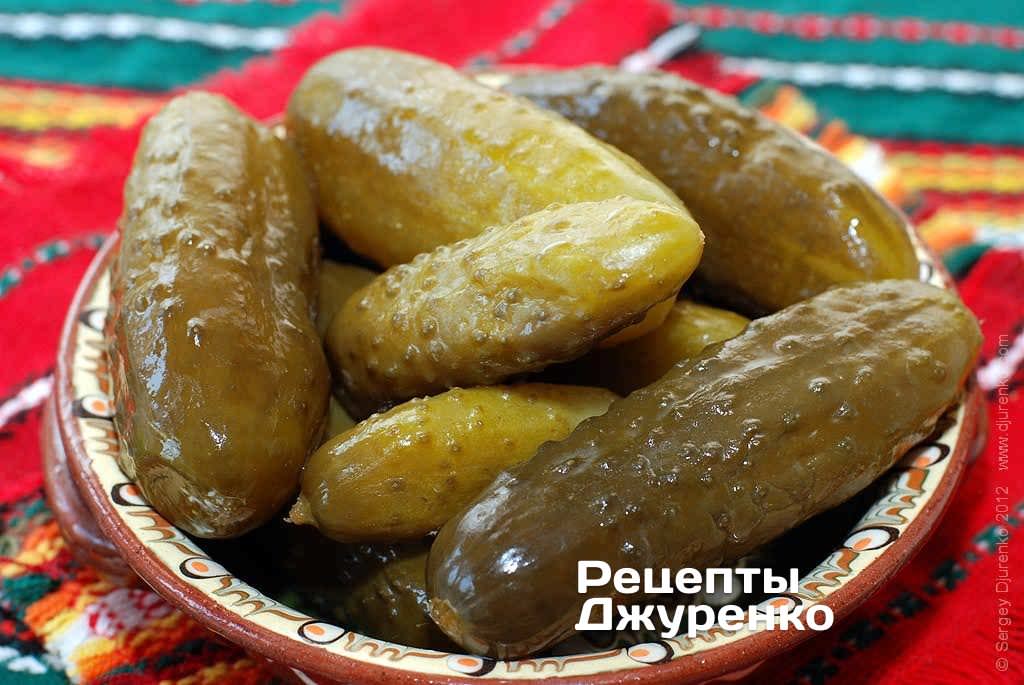
Ingredients
8-10 jars
- Cucumbers 8 kg
- Pickling herb bundle 1 bunch
- Garlic 3 heads
- Non-iodized rock salt to taste
Step-by-step recipe
- Home canning of fermented pickles has three stages: fermenting, canning and eating.
- The most enjoyable one, without a doubt, is eating. Hard to argue with that.
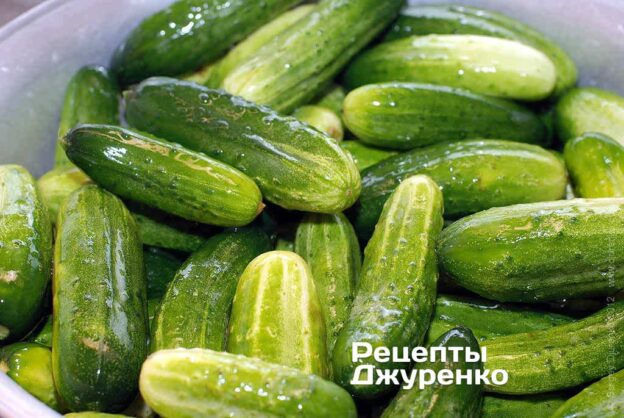
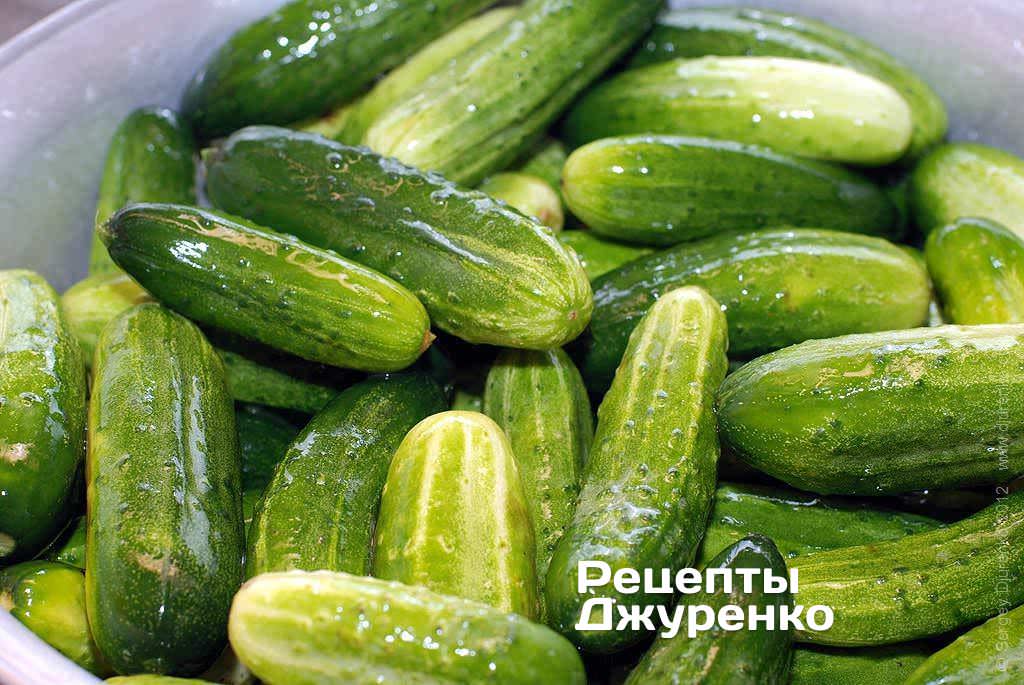
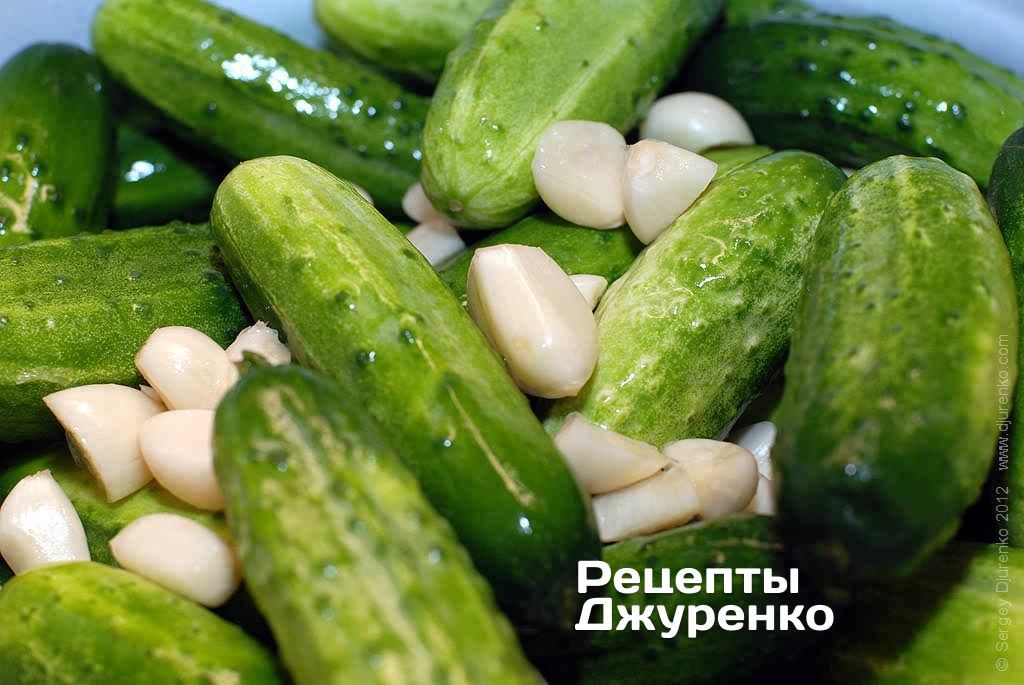
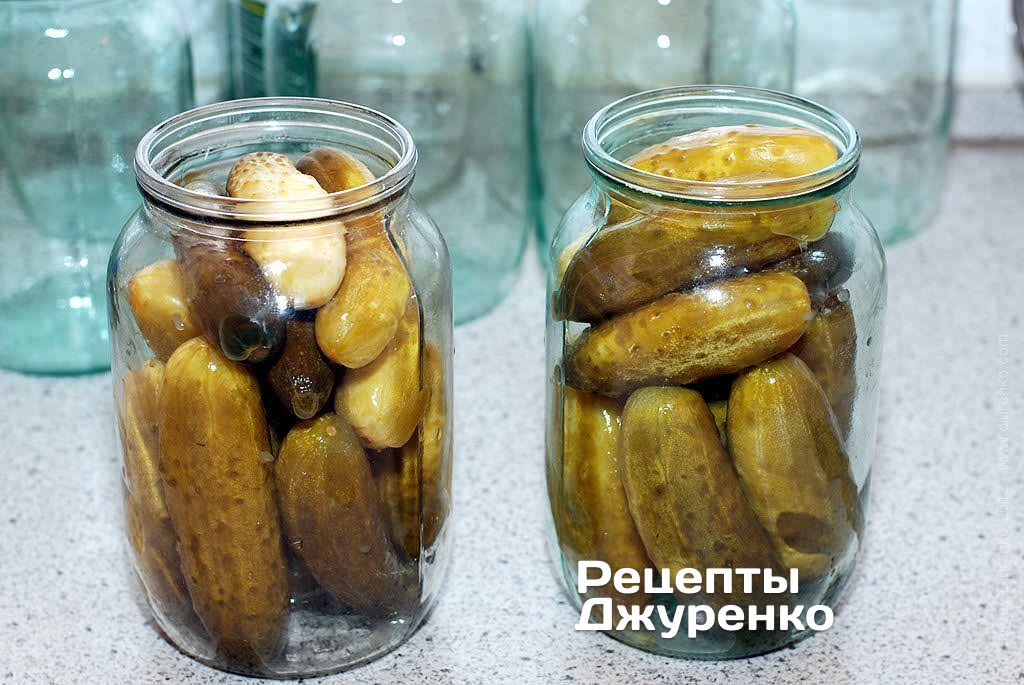
- First, you need to choose the cucumbers. Small green ones work best, a nice green color with black bumps. For some reason, people believe cucumbers with white bumps aren't good for pickling. I admit I haven't checked. Hollow and bitter cucumbers don't pickle well and can ruin the whole batch. It's important that the cucumbers are small enough to fit into a one-liter jar, and fairly snugly.
- Be sure to sort the cucumbers, removing the stems, damaged ones and any debris. Then wash the cucumbers well. Very thoroughly, under running water. Be sure to soak the cucumbers in cold water for a few hours. Then rinse them once more.
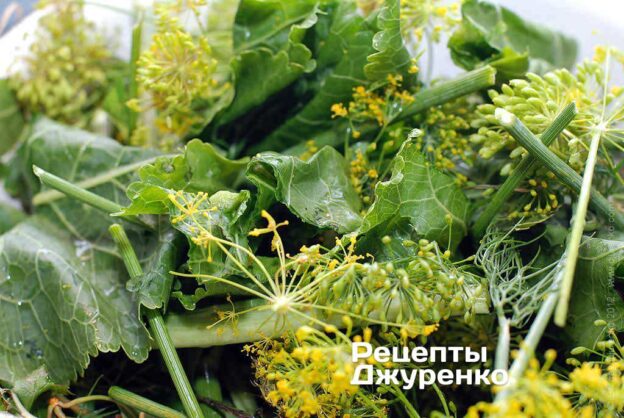
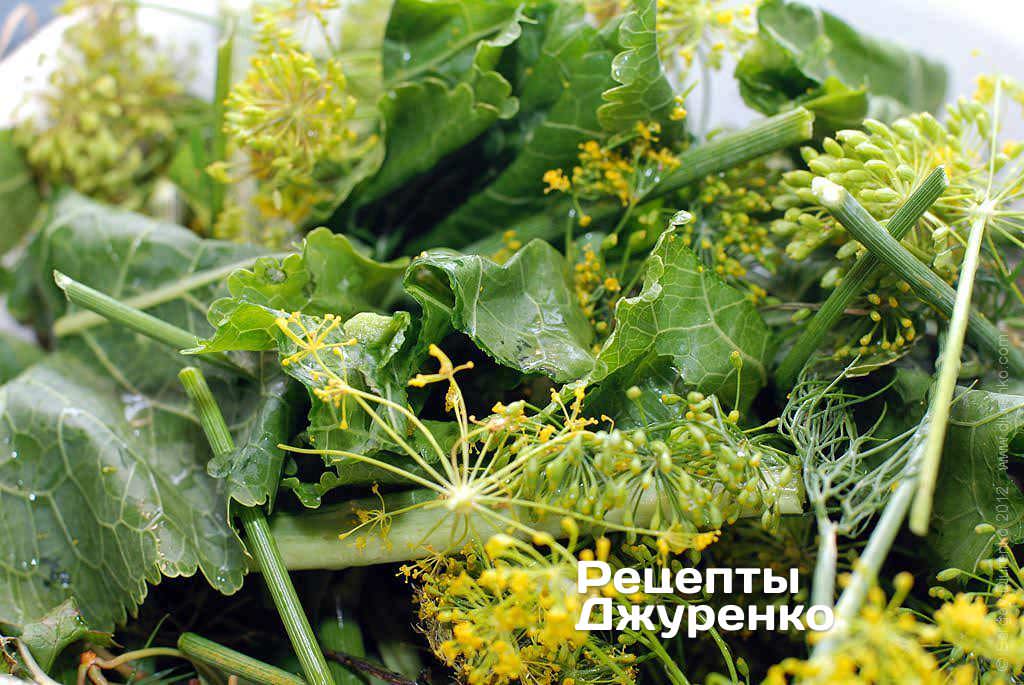
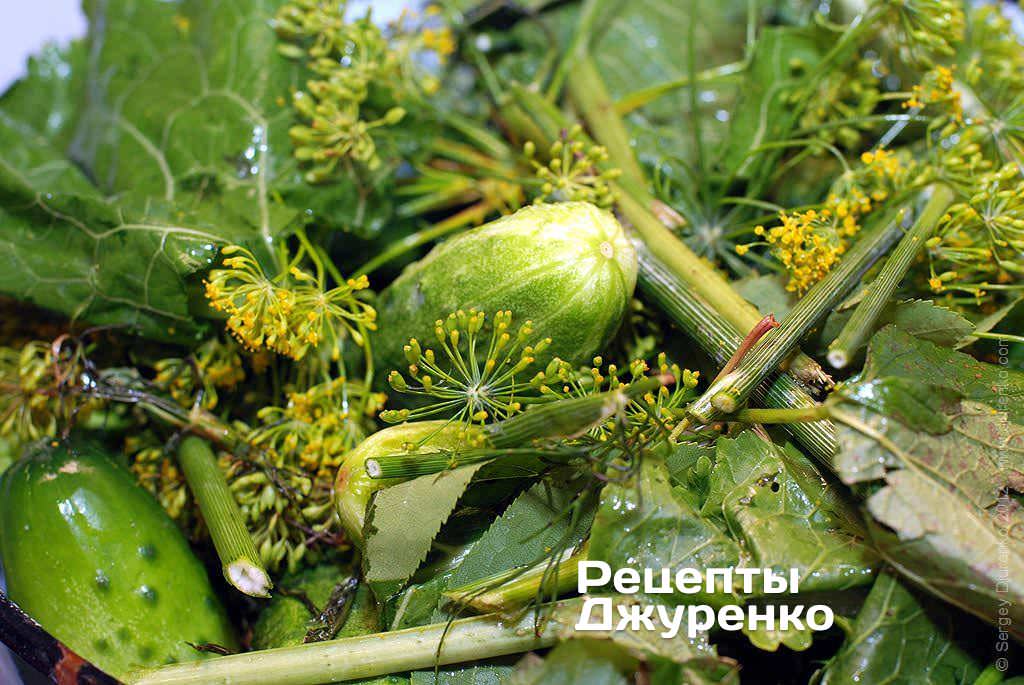
- You'll need a pickling herb bundle. What goes into it is a subject of endless debate. But experience shows that the old ladies at the local market will advise you on it like a professor. Usually the bundle includes whole stalks of mature dill (with the seeds), a blackcurrant twig with leaves, fennel, sometimes an oak twig, and almost always a cherry twig. Horseradish leaves are a must. The bundle is usually sold either fresh or dried, which makes almost no difference for pickling. Wash the bundle and cut it roughly into pieces about the width of your palm.
- The garlic, of course, should be young, this year's crop. Peel all the cloves and wash them.
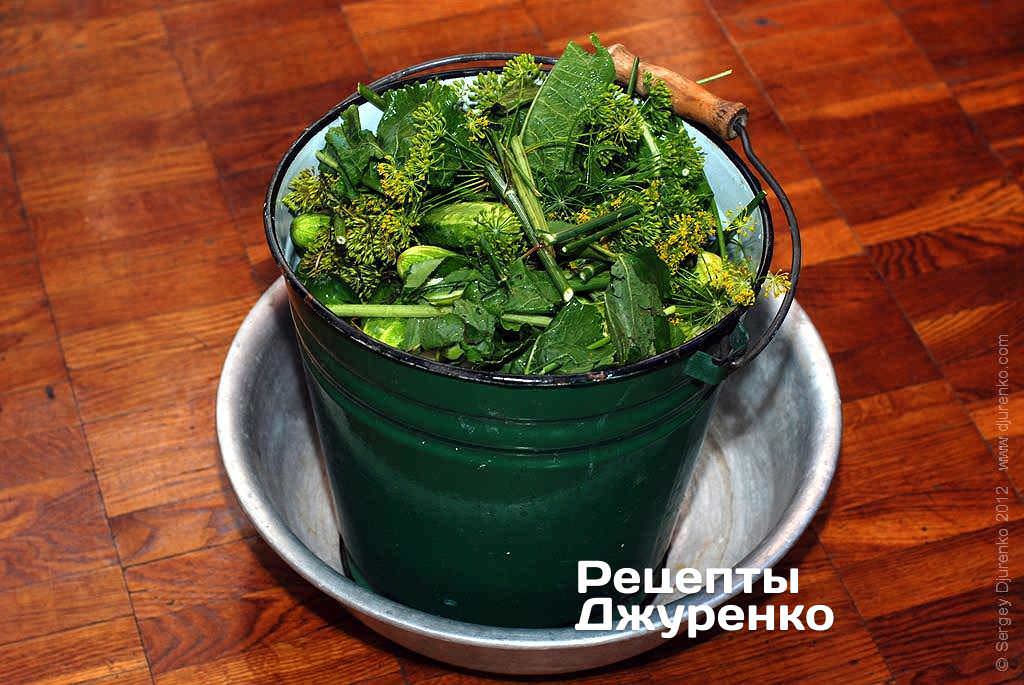
- It's best to ferment cucumbers in a barrel. But if you're going to can them in jars afterwards, an ordinary enamel bucket will do. Set the bucket in a large, deep bowl or basin.
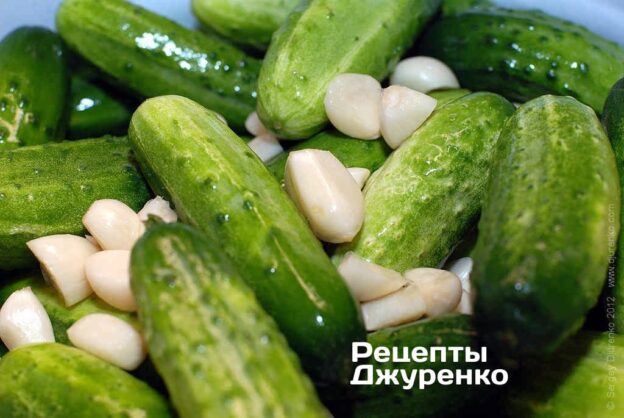
- Pack the cucumbers tightly into the bucket, scattering peeled garlic cloves between them.
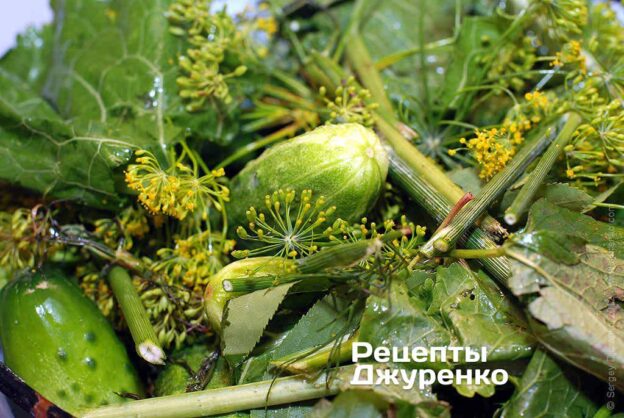
- Leave about a palm's width of space at the top of the bucket. Lay the chopped, washed herb bundle on top.
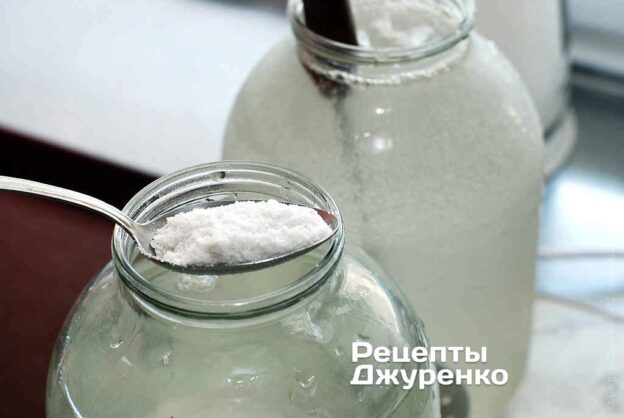
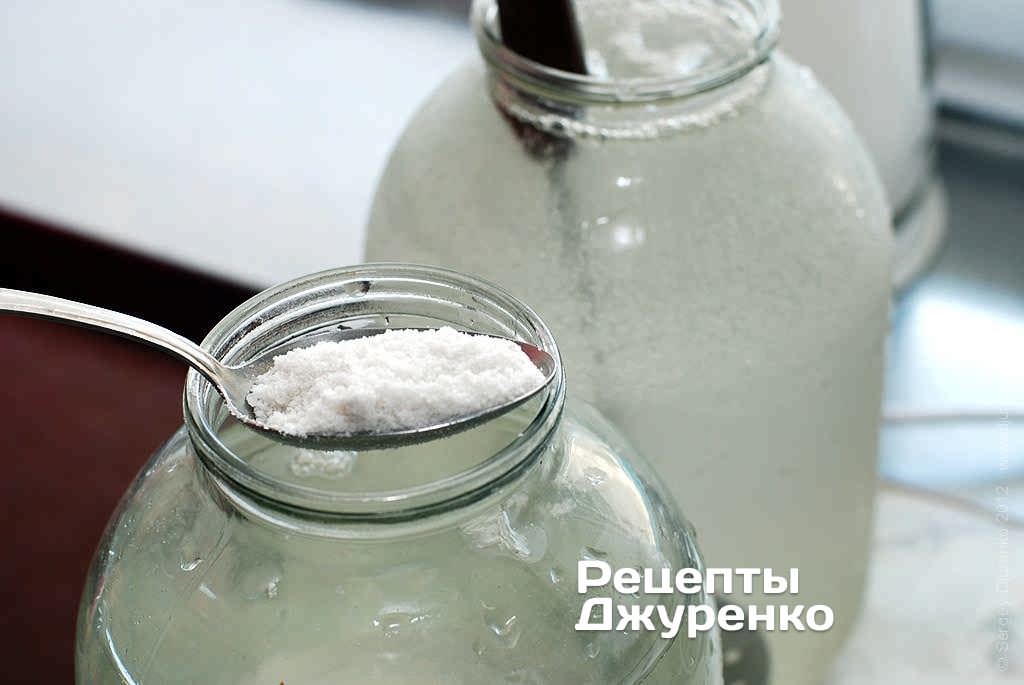
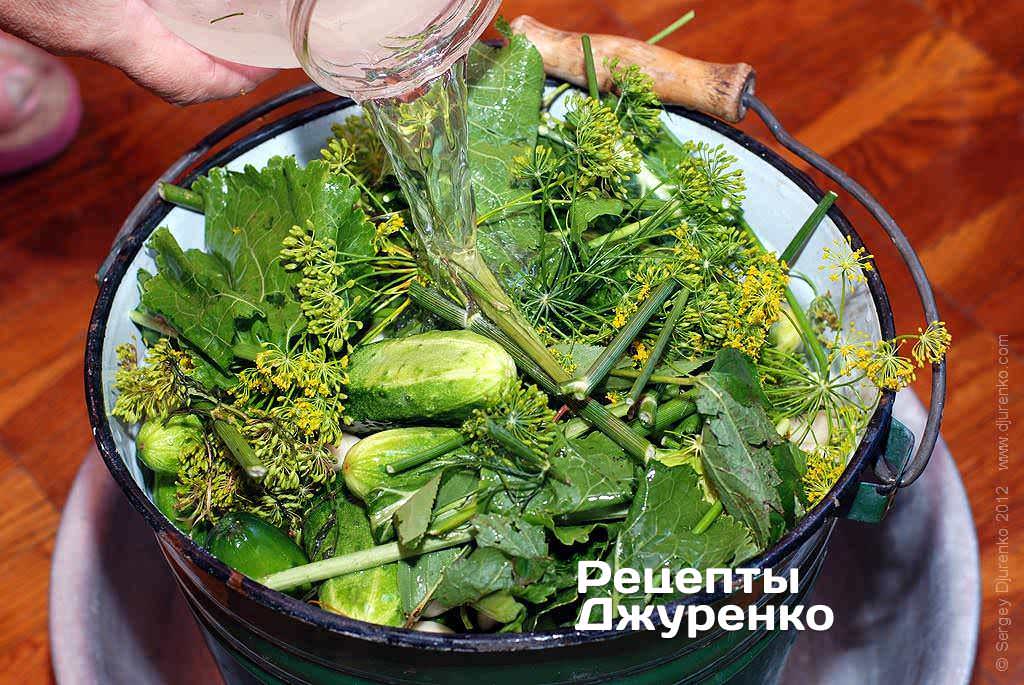
- Now the fermenting begins. Fill an ordinary three-liter jar with plain water at room temperature. A bucket needs 1.5-2 jars. Add 6 (six) spoonfuls of non-iodized rock salt to each jar. Level spoonfuls. It's hard for me to say how much that is in grams, see the photo. But here's the important part: don't oversalt, or it will be salting, not fermenting. Just today, as we were finishing the canning, a neighbor came by to “double-check” the amount of salt, since she overdid it last year. Update: it didn't occur to me right away to just weigh it , so I did. It turns out those 6 spoonfuls of salt weigh 120-130 g.
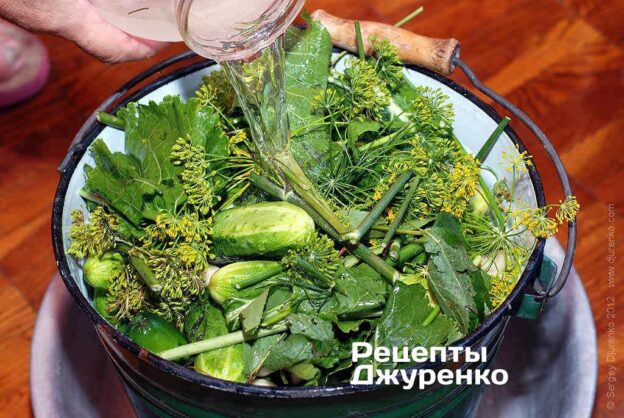
- Stir the salt into the water until completely dissolved. Pour the brine into the bucket with the prepared cucumbers. The brine should completely cover the cucumbers and partly cover the herbs.
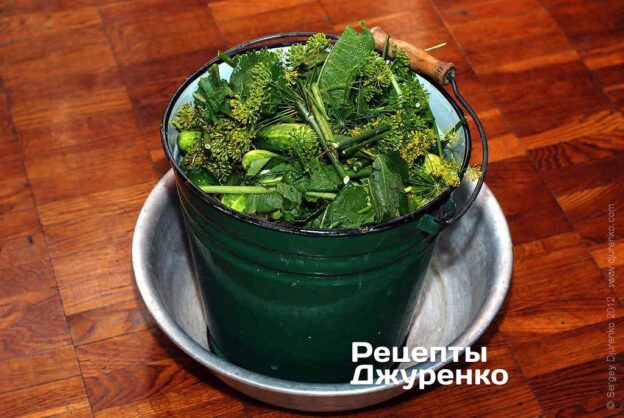
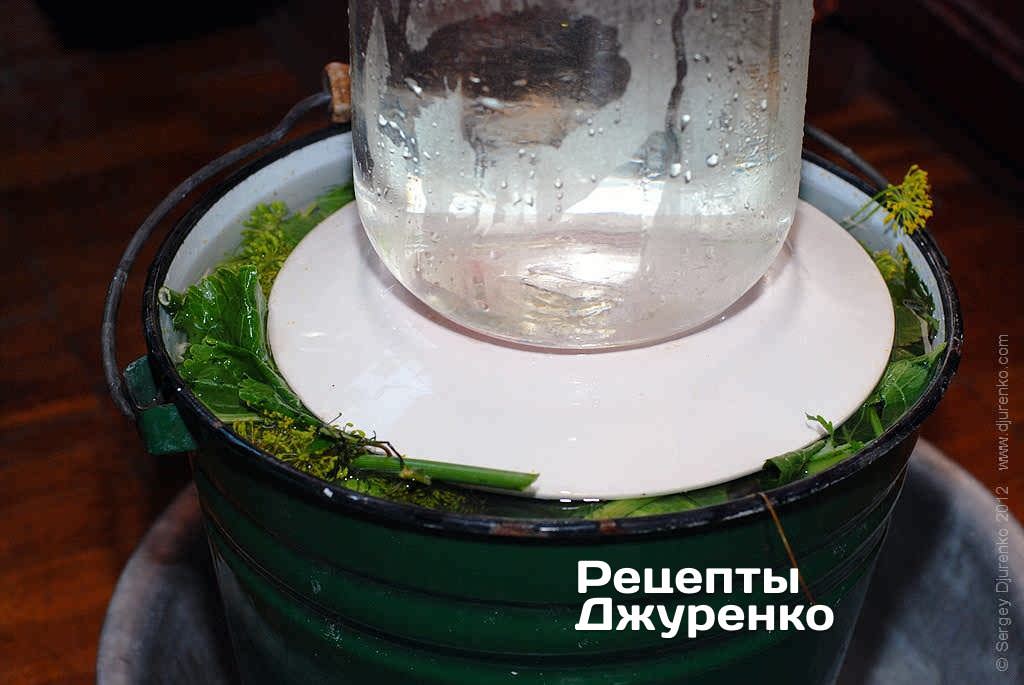
- Cover the cucumbers with a flat disc or an upside-down plate. And weigh them down! No, don't put a huge kettlebell on top, you could crush the cucumbers. A three-liter jar of water is plenty.
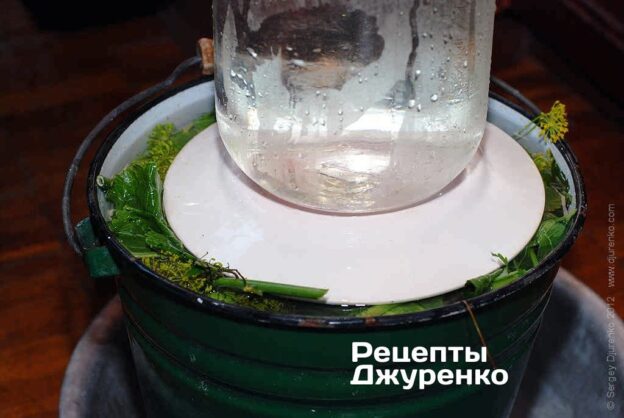
- Now push the basin with the bucket into a corner, away from the sun and light. And forget about the cucumbers for 4 days.
- If the room is hot, the fermentation will go quite fast, and three days will most likely be enough. By the way, after a day the cucumbers will be lightly salted and you can already start “tasting” them. But don't get carried away!
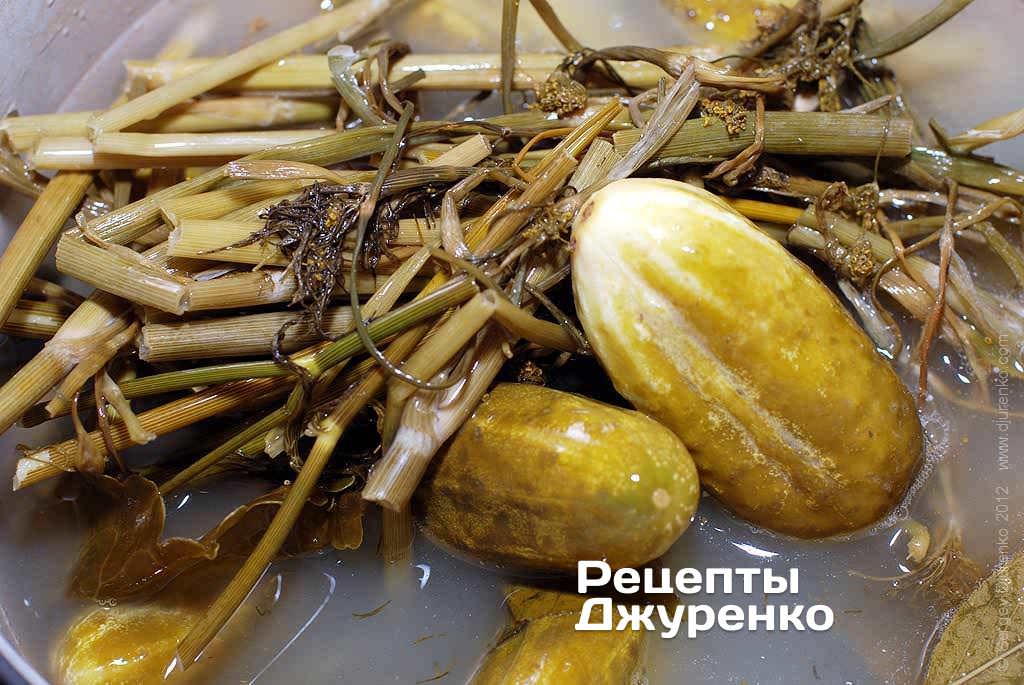
- In the end, the cucumbers should taste still lightly salted but already starting to sour. Something in between. A cloudy white brine is a sign that the lactic acid fermentation is going well.
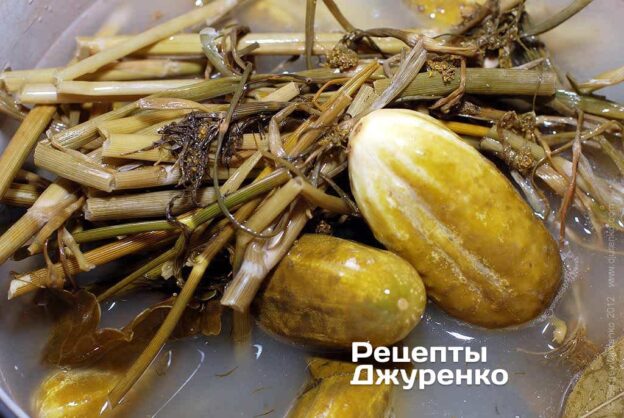
- On day 5, we start canning.
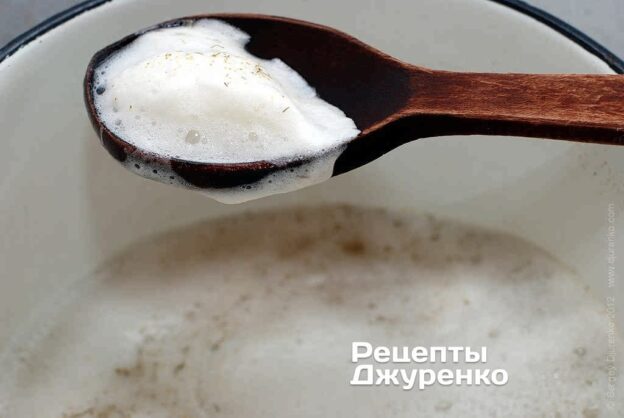
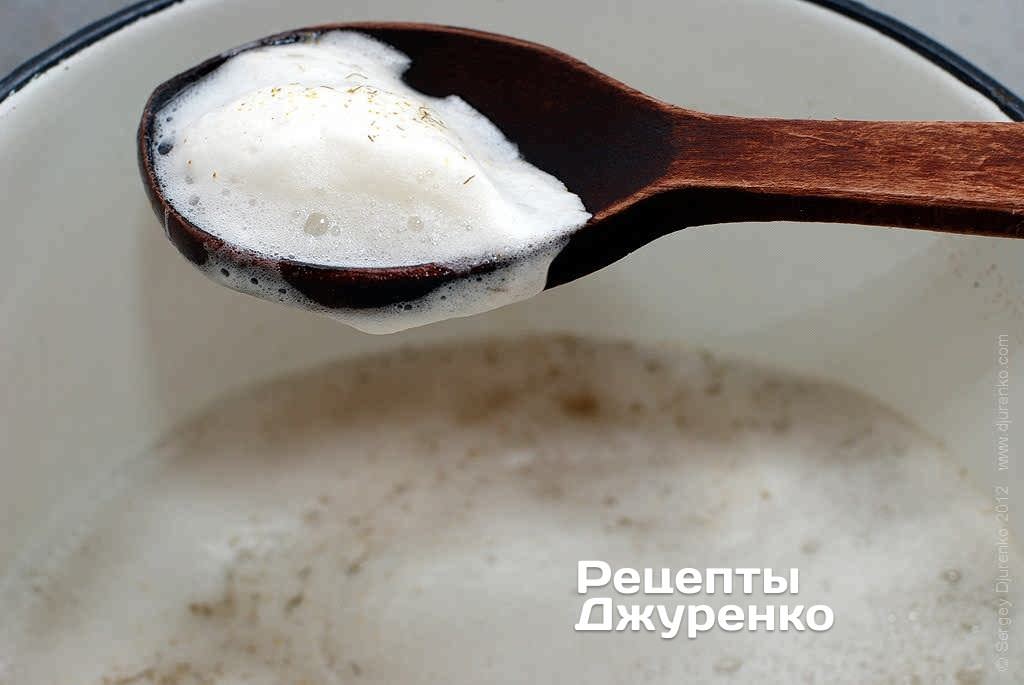
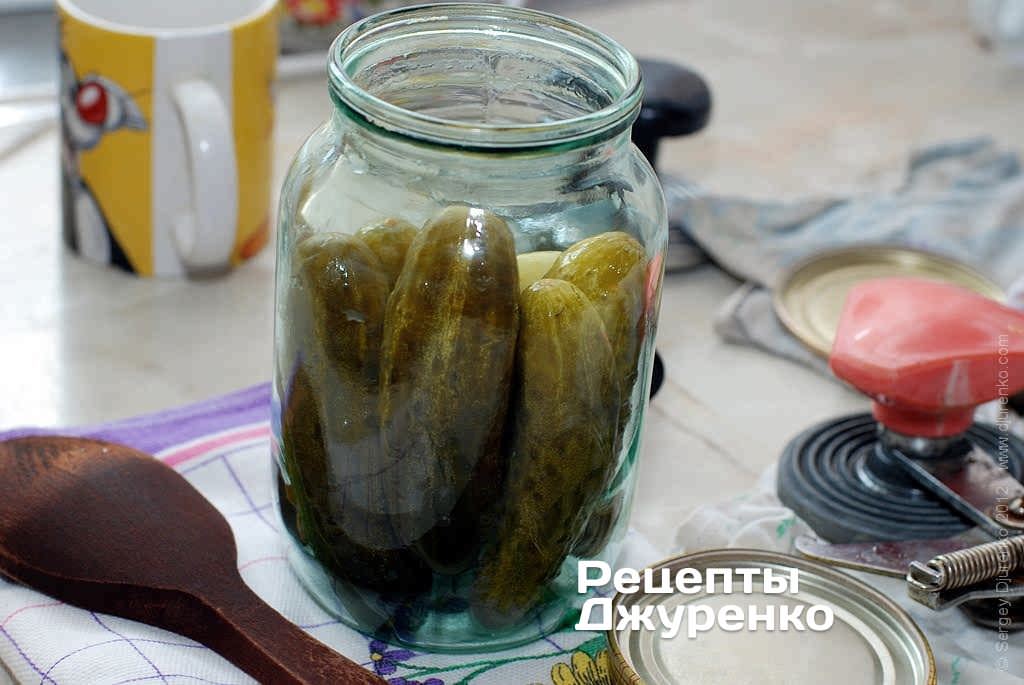
- I recommend one-liter jars. Very convenient. Just the right size. Wash the jars well and sterilize them. Throw away what's left of the herb bundle and the garlic. Strain the brine from the bucket into a large enamel pot. Put the pot on the heat. Careful! Watch the foam. It rises quickly. Skim it off with a wooden spoon.
- Meanwhile, pack the cucumbers into the jars.
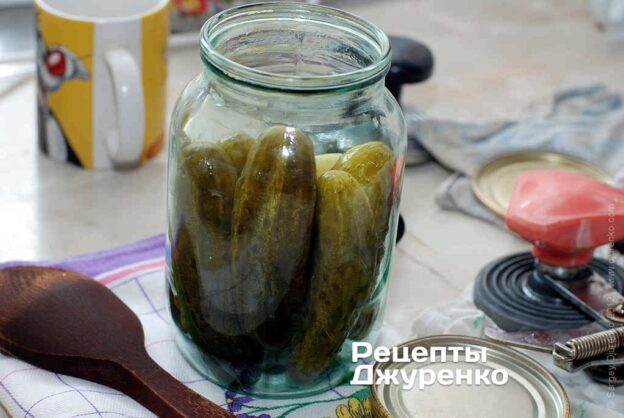
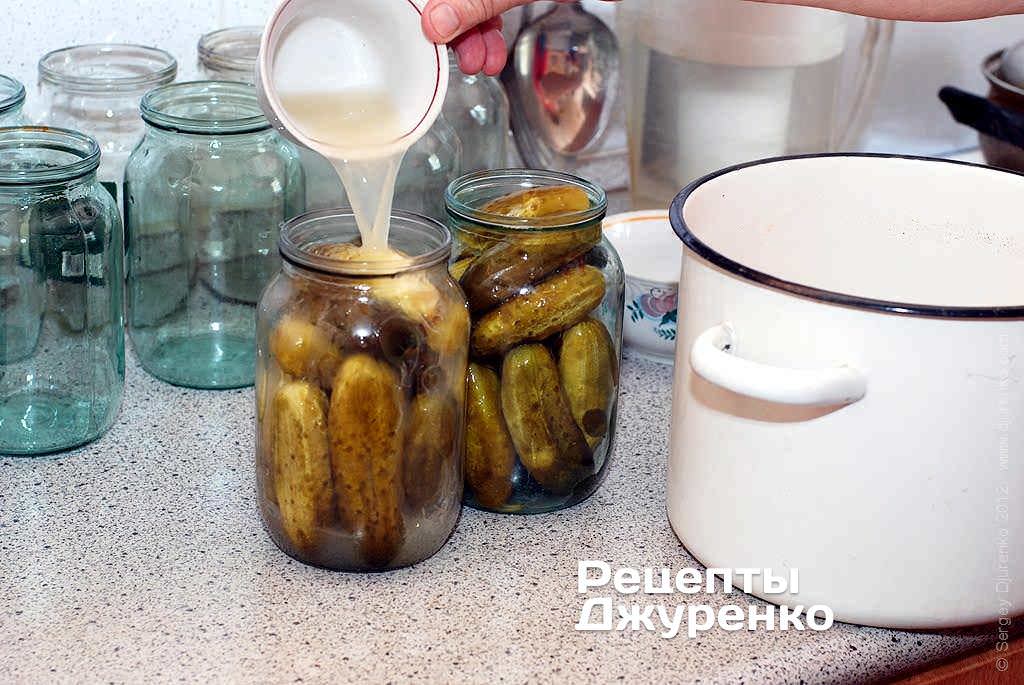
- As soon as the brine boils, pour it into the jars of cucumbers.
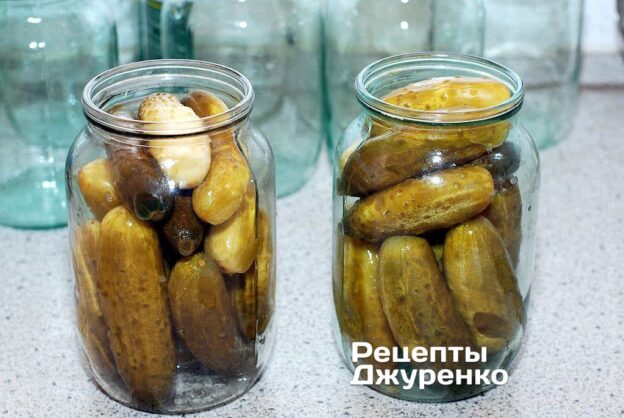
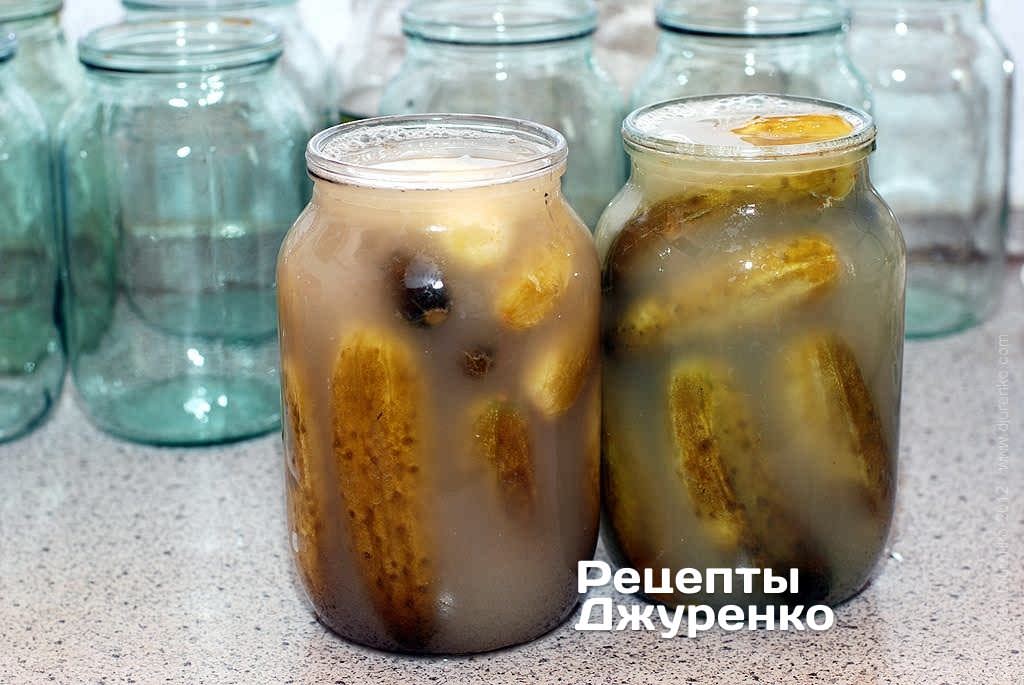
- Pour the brine over the cucumbers right to the brim.
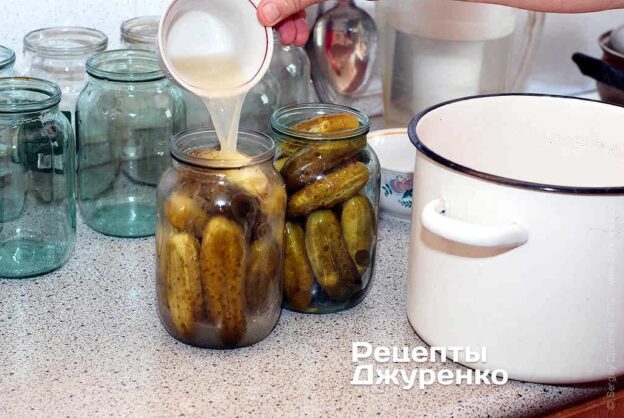
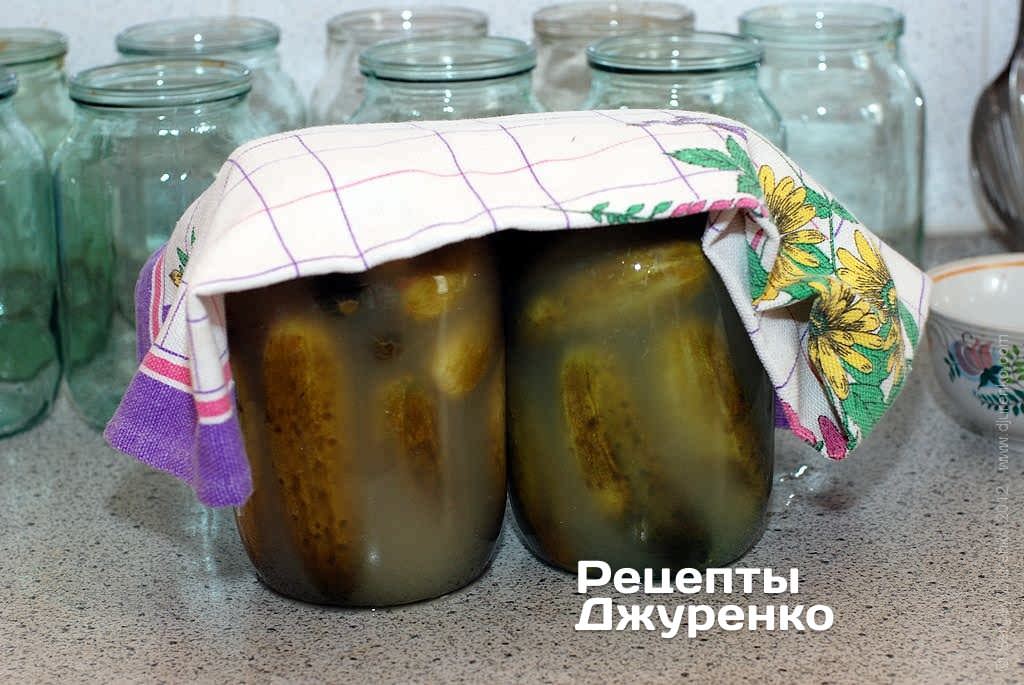
- Then cover the jars with a clean towel and leave them for 7-8 minutes.
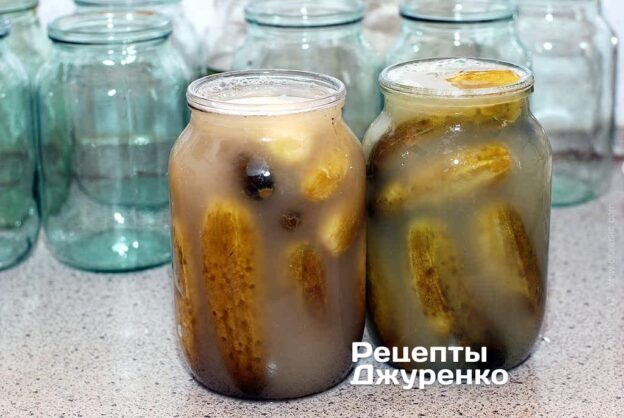
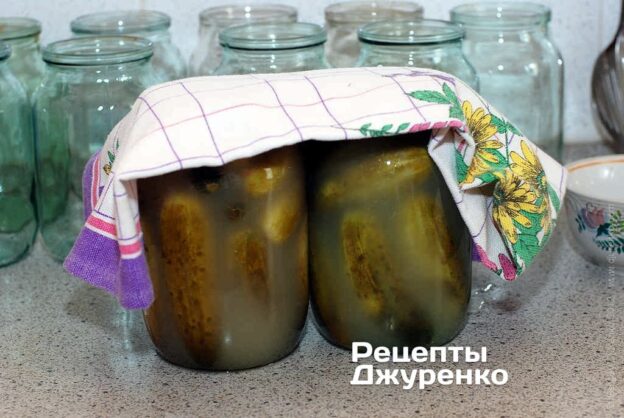
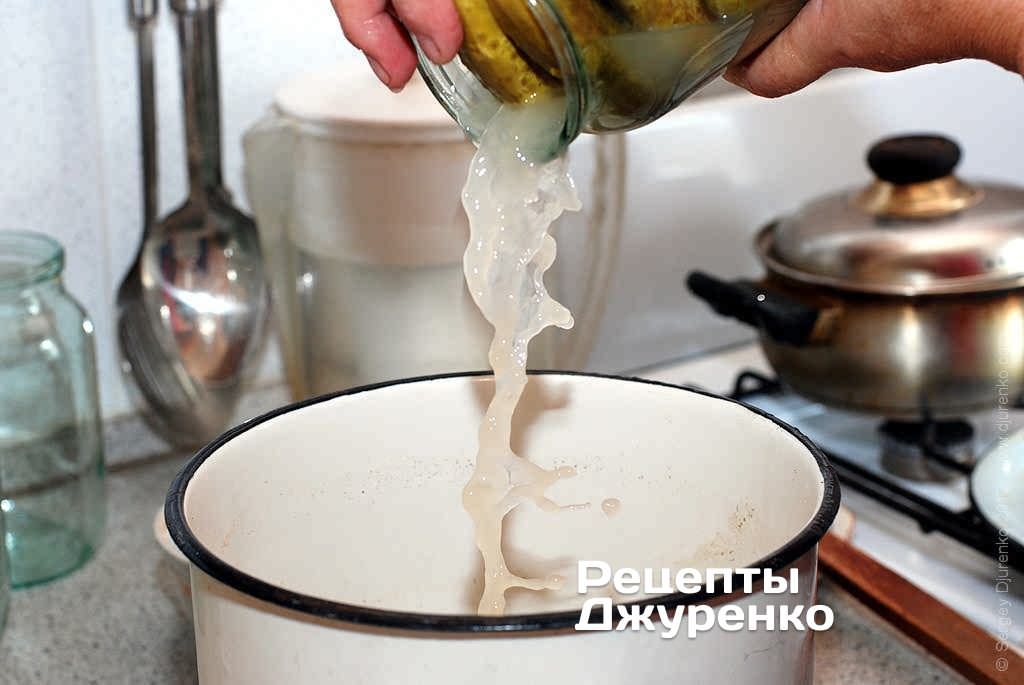
- Pour the brine from the jars back into the pot.
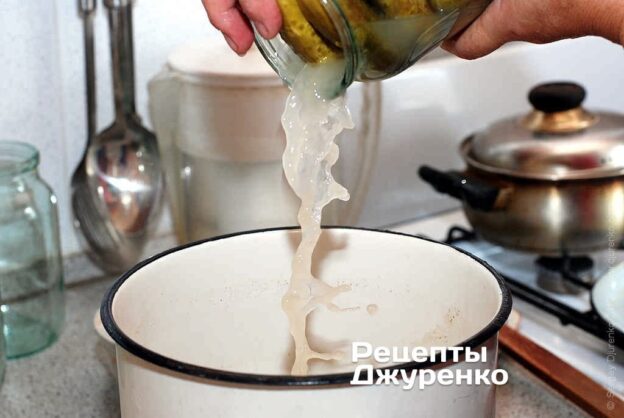
- And bring it to a boil once more. Meanwhile, boil the canning lids and get the can sealer ready.
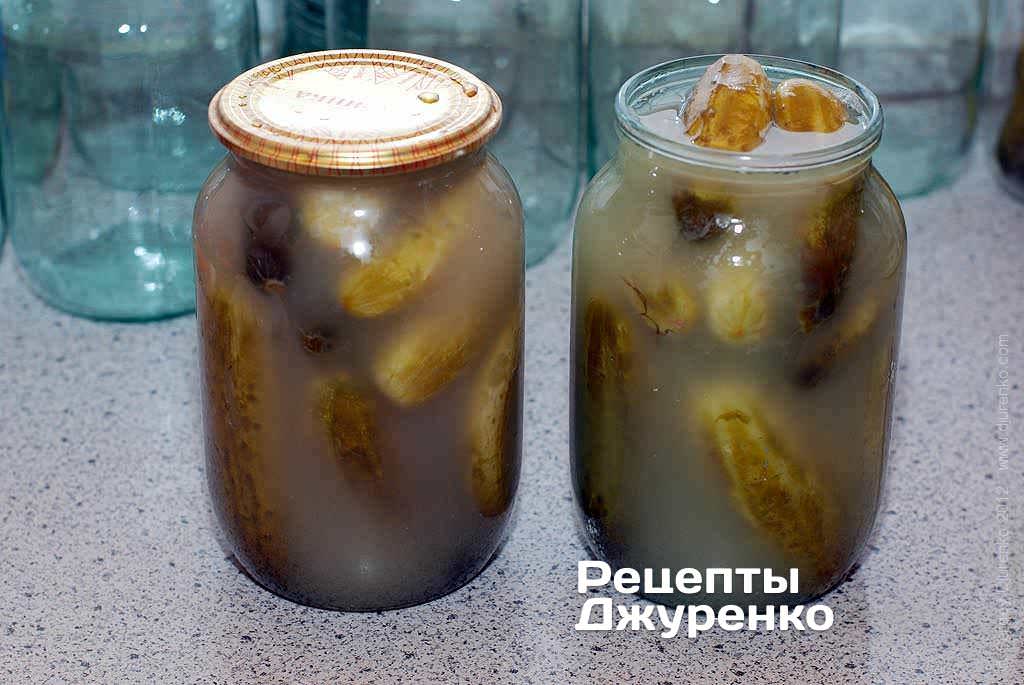
- Pour the boiling brine over the cucumbers in the jars, trying to fill them right to the brim, put on the lids and seal them immediately. Do this quickly.
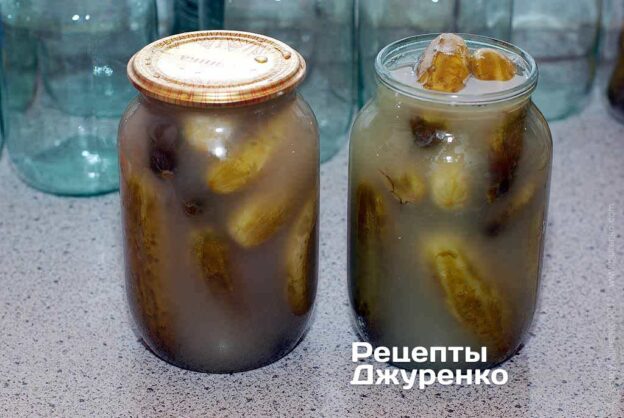
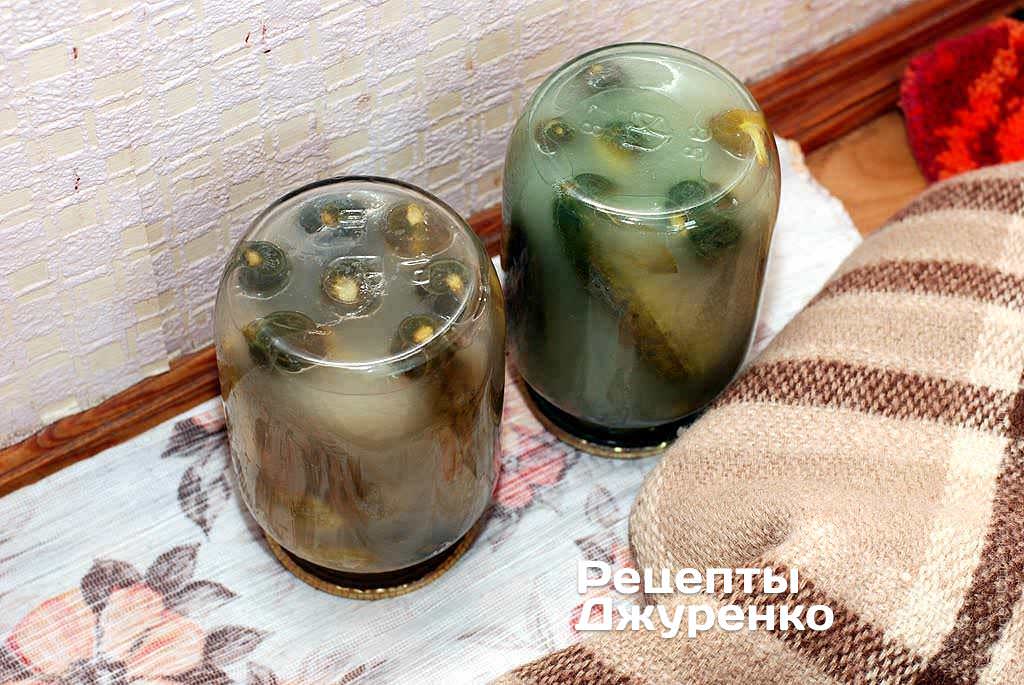
- Turn the sealed jars of pickles upside down and put them under a warm wool blanket. Let them stay warm until completely cool.
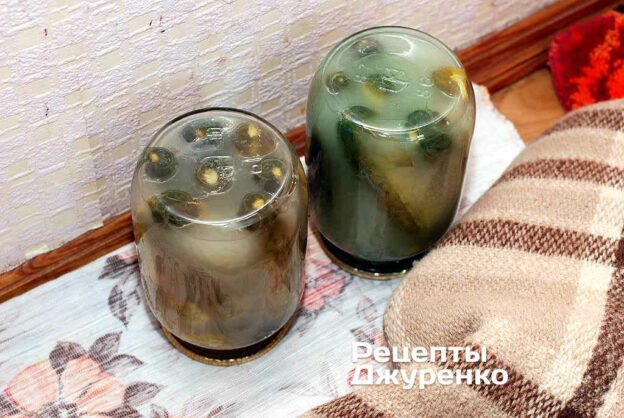
- This canning method has never failed me yet. The jars of pickles keep all year round.
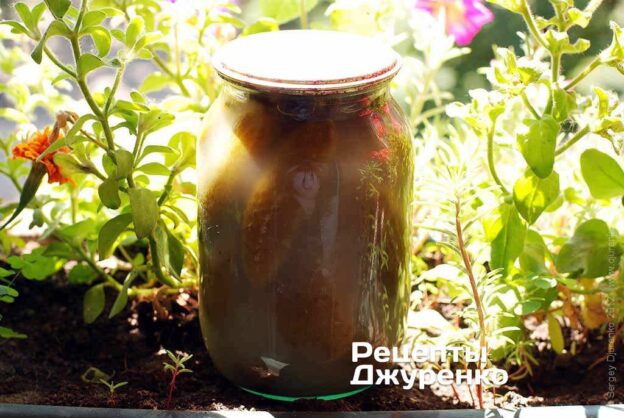
- Just yesterday we opened the last jar from last year to make vinaigrette salad. And simply eating a crunchy pickle on its own is a real pleasure.
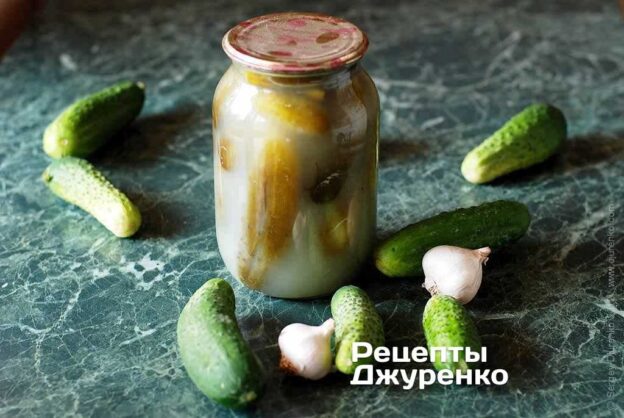
- Spend a day on fermented pickles, and you'll have pickles all winter.

| Makes: | 8-10 jars |
| Calories: | 11 |
| Prep: | 4 days |
| Cook: | 1 day |
| Total: | 5 days |
| Category: | Snacks and Sauces |
| Cuisine: | European |
| Rating: |
⭐
⭐
⭐
⭐
⭐
4.6
(3)
|