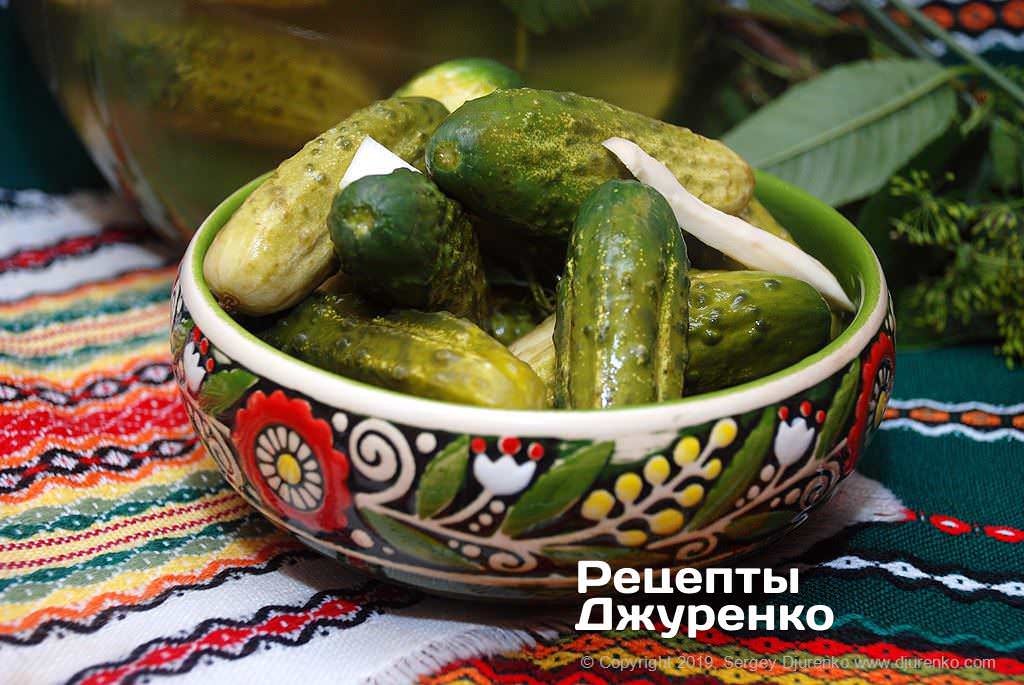
Quick-Pickled Cucumbers in a Jar: Lightly Salted Dill Pickles
As soon as the season of young vegetables began, the first thing my grandmother made was quick-pickled cucumbers. Small cucumbers were picked straight from the garden bed and salted in a little barrel or simply in an enamel bucket. The very next day they were ready for a taste, and a day later the whole family was tucking into them in earnest. More often than not, no side dishes or extras were needed. The grown-ups, though, treated these cucumbers as a snack in the most literal sense.
Quick-salted cucumbers are considered a traditional summer dish of Slavic cuisines. Similar ways of briefly salting vegetables are found in many cuisines: people salt zucchini, eggplants, even tomatoes. You often come across lightly salted quick cucumbers with berries that tint the vegetables. The speed of salting is what sets this snack apart from fermented cucumbers: cucumbers start to ferment quite quickly, picking up a characteristic sour taste and losing the delicate, unique flavor that so many people love.
Preserving vegetables with salt is the most common method. It is combined with fermentation, which gives you very tasty and popular snacks. The key is not to miss the moment when lightly salted cucumbers turn into fermented ones. Most often, after 3-4 days the taste of the cucumbers changes completely.
There are countless recipes and variations for quick-salting cucumbers. I think every cook has their own. We salt our cucumbers very simply: just water, a bundle of pickling herbs, garlic and a little horseradish root. Any other additions, such as pepper, bay leaf, cloves, coriander or chili, are not welcome. Since the cucumbers go sour very quickly, we salt at most one 3-liter jar at a time for the family. If you feel like more, you can always make another batch, and more than once.
Quick-pickled cucumbers are covered with hot brine for faster results and with cold brine for crunchier cucumbers. To speed things up, you can trim the ends of the cucumbers before salting. Jars of cucumbers salted in cold brine are best kept in the fridge. Jars of cucumbers covered with hot brine can be sealed with metal lids and stored at room temperature.
We use ordinary cold salting, although there are also “dry” methods, salting in the cucumbers' own juice, and salting in hot brine, which speeds the process up a lot. Traditionally, non-iodized rock salt is used. We salt the cucumbers whole, without trimming the ends. If the cucumbers are large, though, it is better to trim them. Be sure to soak the cucumbers in cold water for a few hours: this keeps them crunchy.
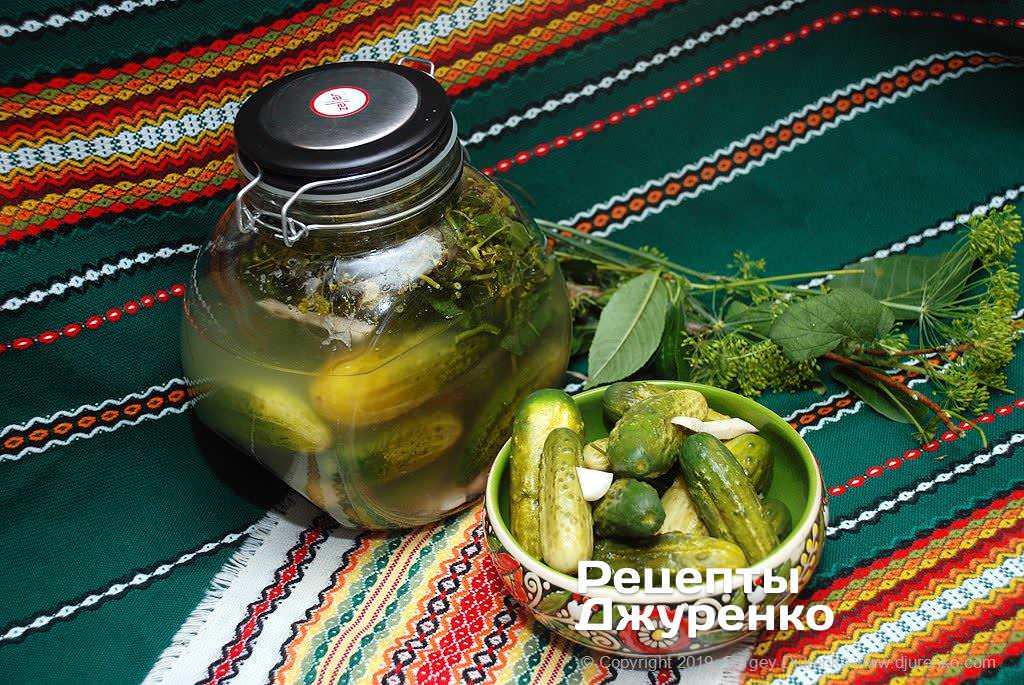
Ingredients
1 kg
- Small fresh cucumbers 1 kg
- Rock salt 50 g
- Fresh dill, heads and sprigs 1 bunch
- Garlic 1 head
- Horseradish root 1 piece
- Cold water 1.5 l
Step-by-step recipe
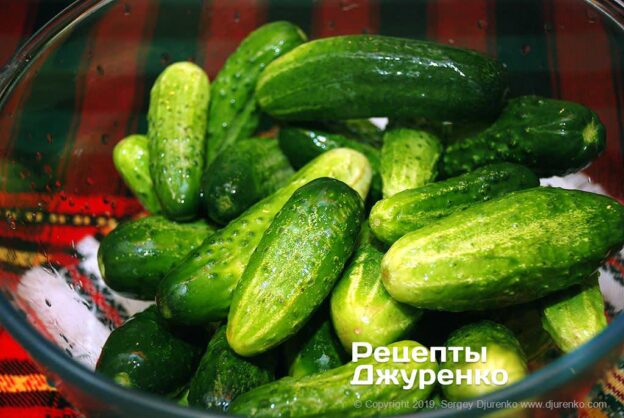
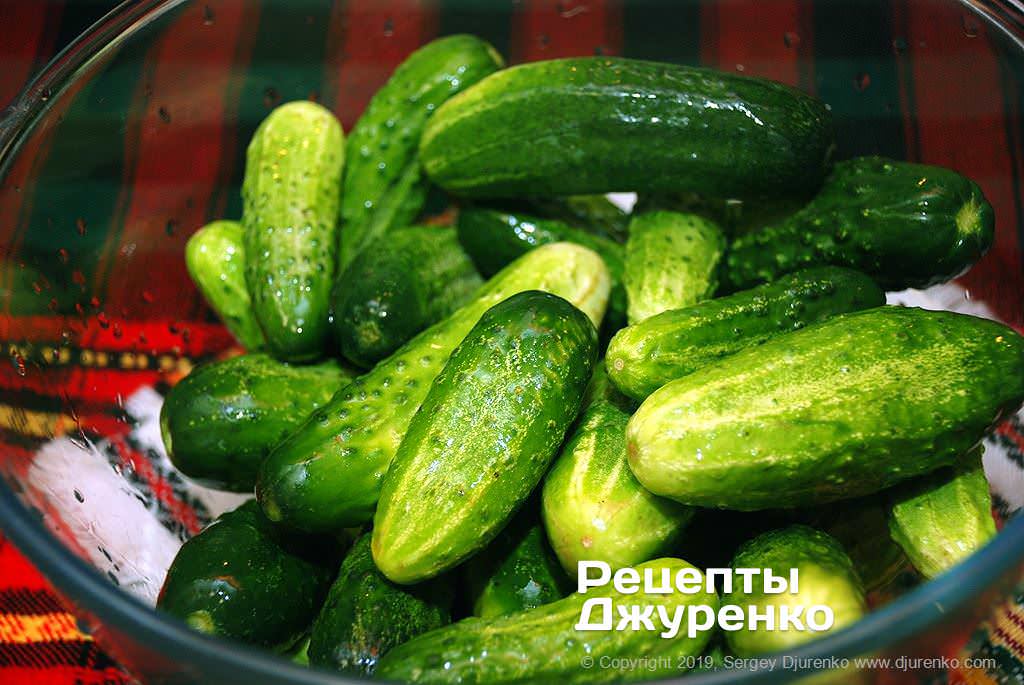
- For the cucumbers to be well and evenly salted, you need small young cucumbers of roughly the same size. Ideally, they should be straight, with no signs of damage. Bright green bumpy cucumbers, the so-called pickling varieties, are considered the best for salting. Wash the cucumbers, rinsing off any film, put them in a bowl and cover with cold water for at least 1-2 hours, or better overnight. This helps the cucumbers keep their characteristic crunch.
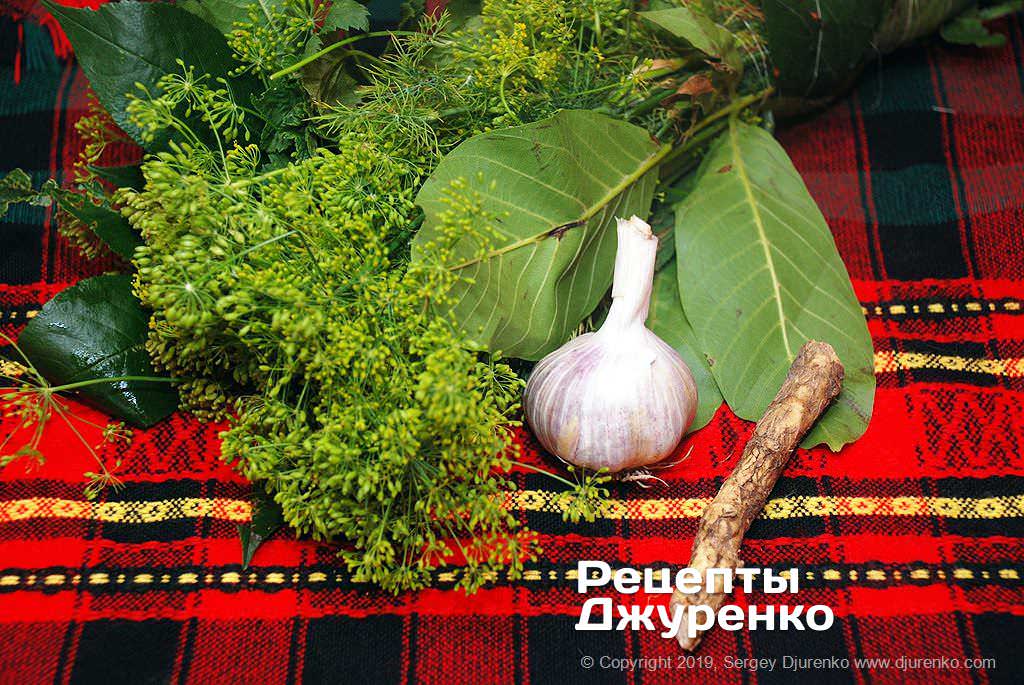
- A few words about the pickling bundle, since it always raises lots of questions. The easiest way is to go to the market, where they will recommend a good bundle of herbs. It always includes dill (whole stalks with the flower heads), cherry and currant twigs with leaves, and horseradish leaves. An oak twig is often added, which is a great option, as well as fennel and much more. It is better not to use wilted herbs: they go soggy quickly and spoil the pickles.

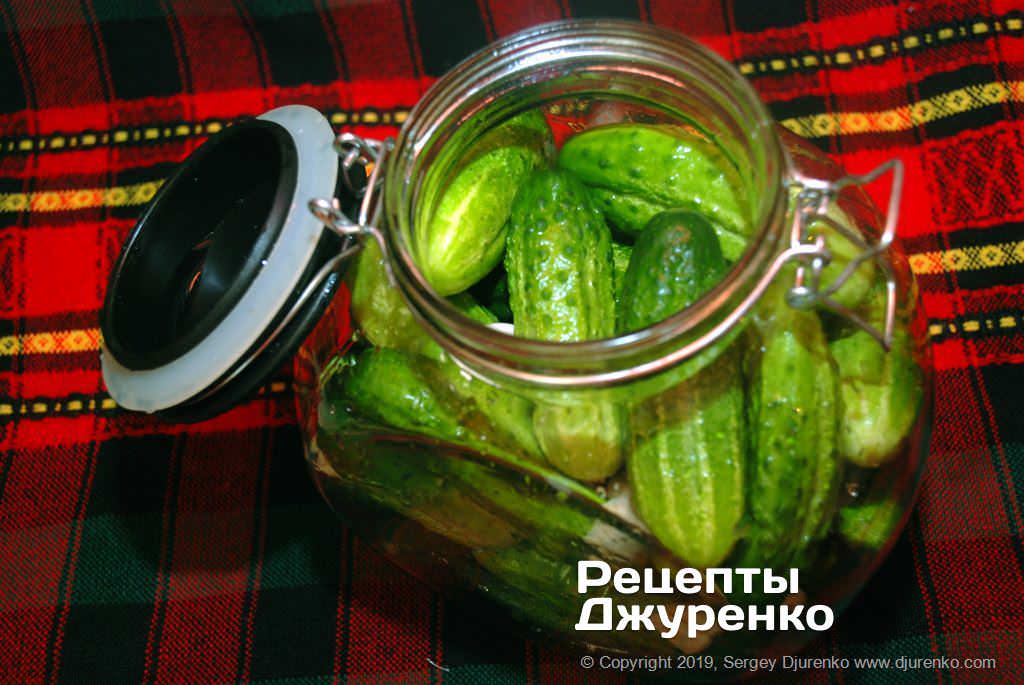
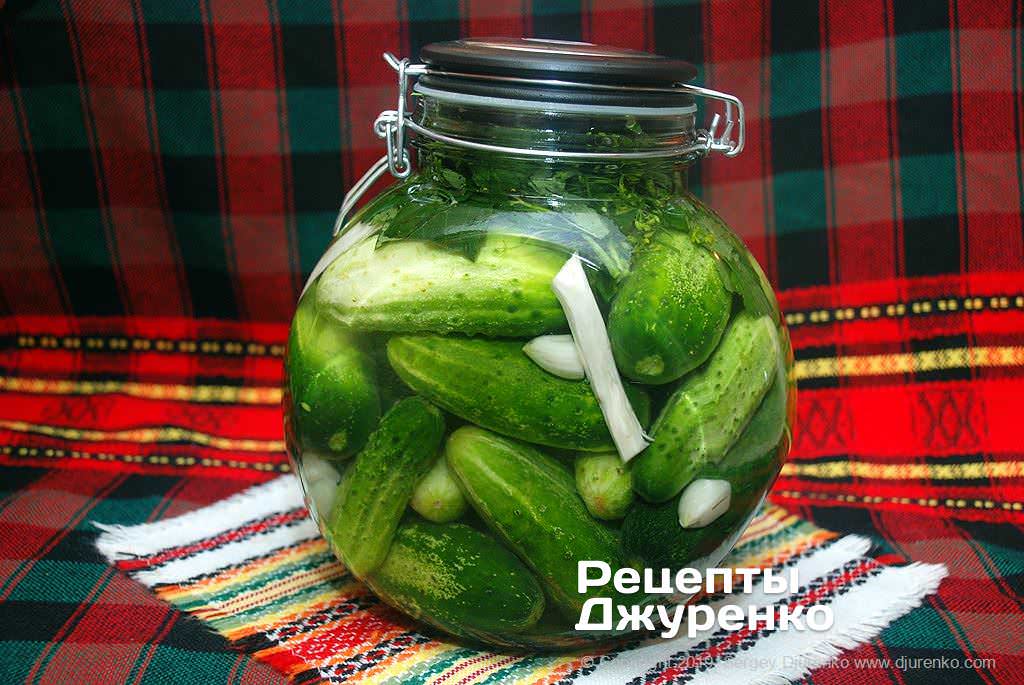
- For 1-1.2 kg of small cucumbers, a glass jar with a lid of about 2 liters will do. At any rate, everything fit into this jar of mine just right. Peel a piece of horseradish root, cut it in half lengthwise and then in half crosswise to get four pieces. Peel a small head of garlic and cut the cloves in half. Pack the well-washed, pre-soaked cucumbers into the jar, scattering the garlic cloves and horseradish pieces between them.
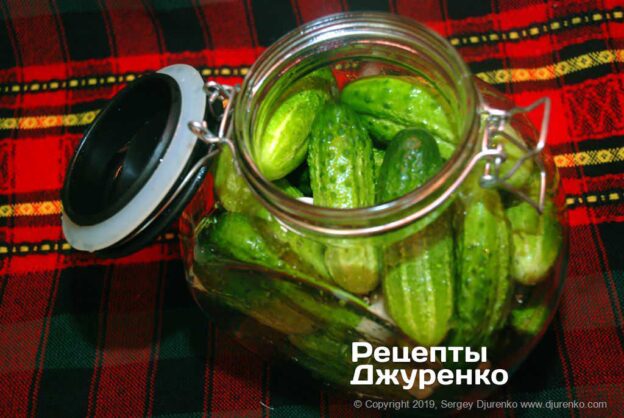
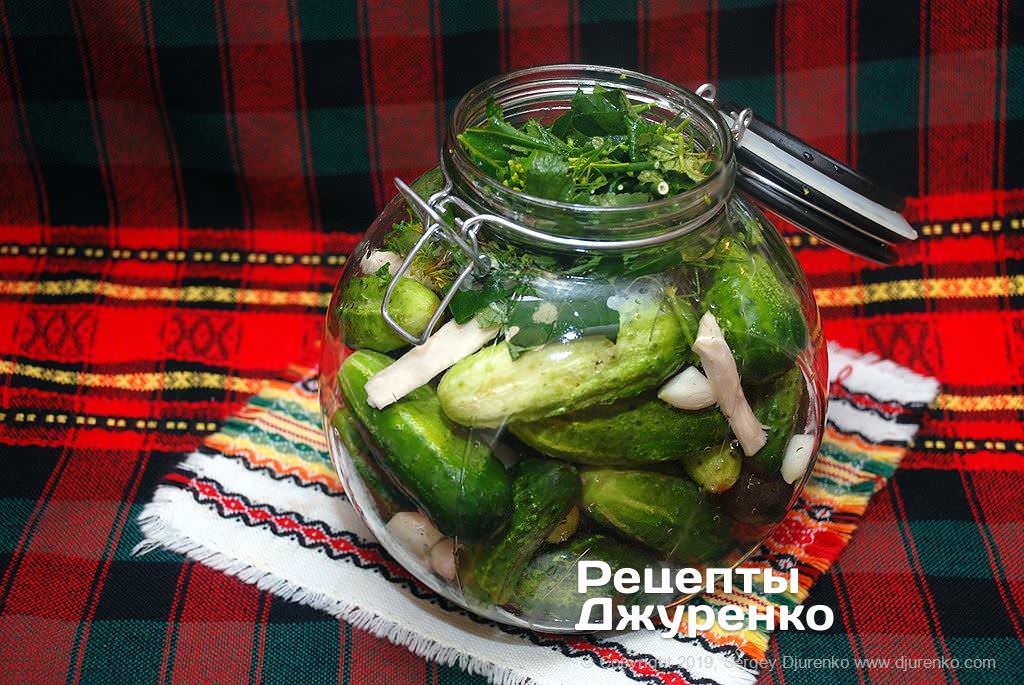
- When packing the cucumbers, leave room for the herbs: 4-5 cm below the neck of the jar. Wash the pickling herbs well and remove any damaged parts. With a sharp knife, cut the herbs across the stems into 4-5 cm pieces, roughly the length of a match. Put the cut herbs in a bowl and mix. Lay the herbs on top of the cucumbers in the jar, packing them down tightly so that they end up level with the rim.
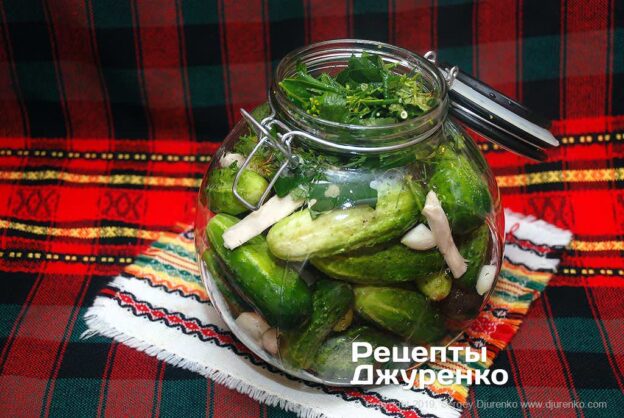
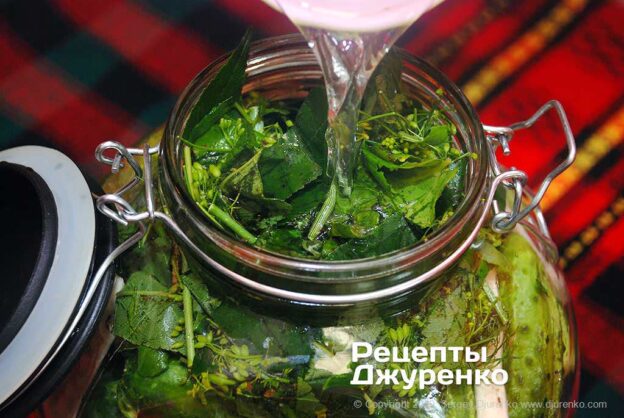
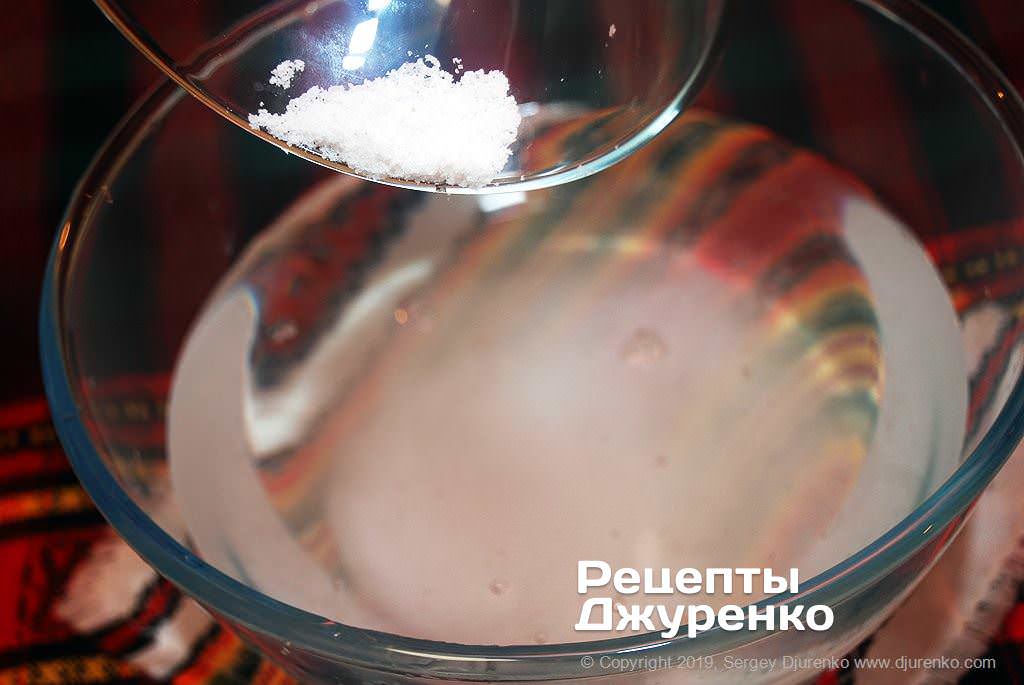
- Now for the brine. It's all simple here. It is impossible to say in advance how much brine you will need: it all depends on the size of the cucumbers, how tightly they are packed and the amount of herbs. So we make 1.5 liters of brine, pour as much as fits into the jar with the cucumbers and discard the rest. Pour 1.5 l of clean cold water into a jar or a large bowl and add 50 g of rock salt. This is roughly a 3.3-3.5% salt solution. The salt should dissolve completely.

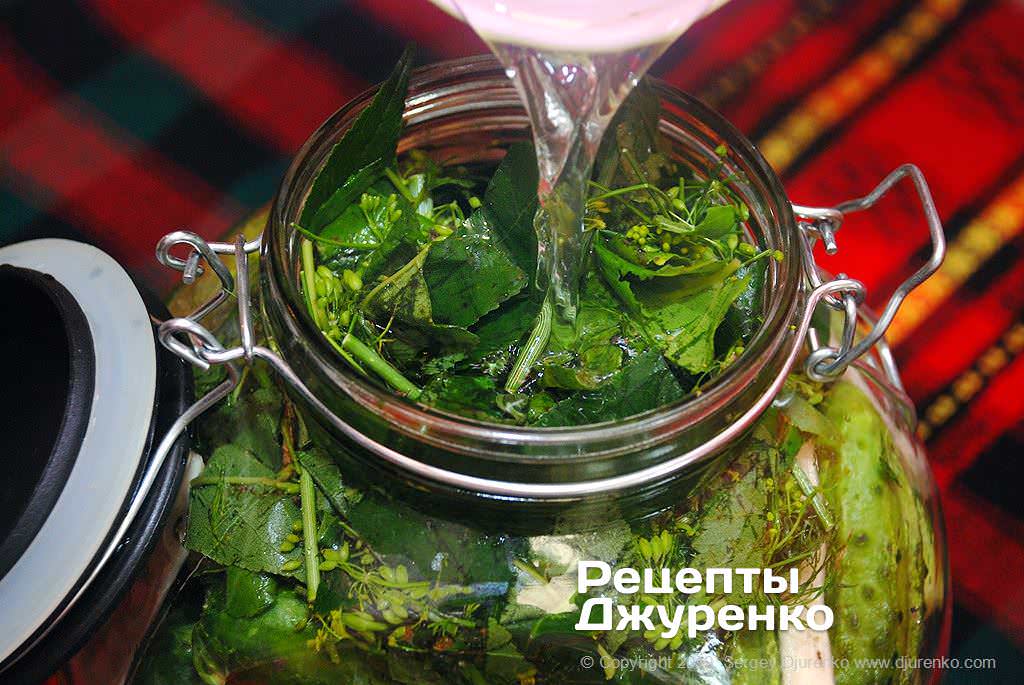
- To avoid spilling the brine while pouring it into the jar, it is best to stand the jar on a tray or a large plate. Carefully fill the jar to the brim with brine and cover it loosely with the lid, so that there is still some “ventilation”. Then leave the jar at room temperature out of direct sunlight. If your kitchen is very hot, it is better to move the jar to a hallway.
- The cucumbers start salting very quickly. Some people like to start tasting them after just a few hours. We leave the jar of cucumbers for exactly 24 hours: after that they are perfectly edible, but the middle still tastes a bit like fresh cucumber.
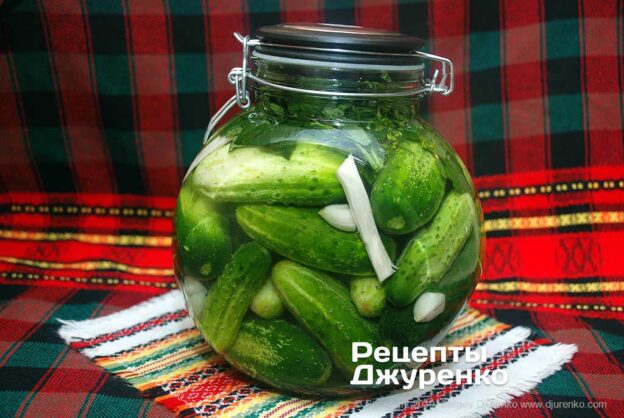
- As a rule, by the end of the first day the brine turns slightly cloudy, gas bubbles appear, and the cucumbers change from bright green to olive green. From this point on, it is best to close the jar tightly and put it in the fridge. By the end of the second day, the cucumbers are perfectly done and at their tastiest. If you made only a small batch, eat them in one or two sittings before they turn sour.
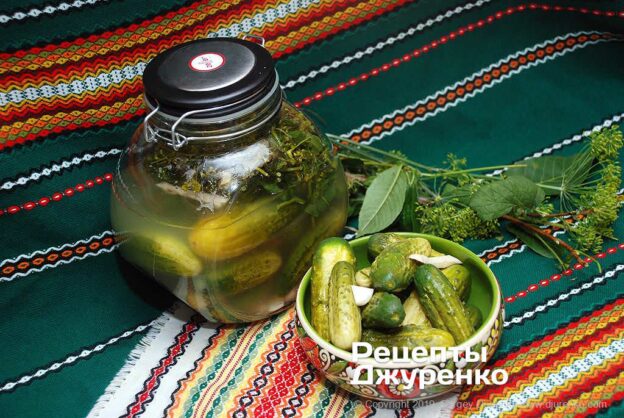
- Keeping quick-pickled cucumbers in the fridge extends their “lightly salted” stage by a day or two, so they don't have time to go sour. If you couldn't eat the whole batch, make a salad or a sauce such as tartar or tzatziki. The cucumbers go great with hard-boiled eggs, onions and herbs, and they are used in okroshka. And, of course, let's not forget that they are a popular snack with strong drinks.
| Yield: | 1 kg |
| Calories: | 15 |
| Prep: | 1 day |
| Cooking: | 1-2 days |
| Ready in: | 2-3 days |
| Category: | Snacks and Sauces |
| Cuisine: | Ukrainian cuisine |
| Rating: |
⭐
⭐
⭐
⭐
⭐
4.6
(9)
|