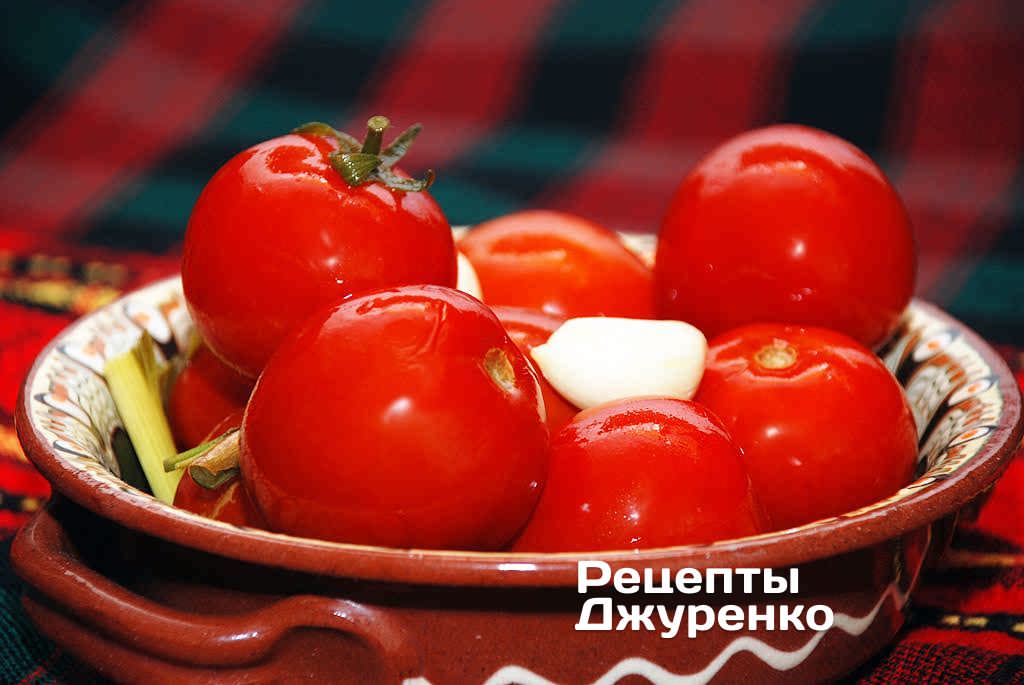
Fermented Tomatoes: Old-Fashioned Salt Brine Recipe in Jars
The theory of the perfect snack goes like this: it should be simple, cheap, tasty, and its brine should cure you in the morning. I won't argue that the most perfect snack of all is sauerkraut: it looks decent on any table, and if people wolf it down, no big loss! It's a classic. But be honest, what would you rather have with a drink? Some cabbage, or a crunchy, tasty, fragrant barrel-cured pickle? And what about a fermented tomato? Fermented tomatoes are the perfect snack!
I remember, some 20 years ago, at my grandmother's in the village, they always fermented everything that could be fermented. Cucumbers, cabbage, tomatoes. Nobody bothered with small batches! A barrel of each, just like that. A huge oak barrel! Down in the cellar. And then, in the freezing winter, we'd run down to the cellar, dig out whatever we fancied from the icy brine with our bare hands, fermented tomatoes, pickles, and have them with fiery village moonshine.
I'm still not quite sure what to call them: fermented tomatoes or salted tomatoes. But definitely not pickled in vinegar!
Strictly speaking, salting, pickling and fermenting are all ways of preserving food. They make it keep longer and change its flavor. The idea behind all of them is to change the brine the food sits in so that harmful bacteria practically stop growing.
The finer points are hard to untangle. But as far as I understand, salting means keeping food in salt or a salt solution. Salt draws the water out and makes the food last longer. That's how meat, pork fat, game and fish are salted. That's how corned beef and dried salted fish are made. Fermenting is something in between salting and preserving with natural acids. Salt is a preservative in itself, and lactic acid bacteria, which turn sugar into acid, preserve the food further and give it a flavor you can't get any other way.
Pickling means preserving with acid, often plain vinegar. The acid kills bacteria and soaks into the food itself.
Correct me if I'm wrong, but the way we put up sauerkraut, barrel tomatoes and so on is classic fermentation. It's our tradition! Everyone has their own fermenting recipes. I remember my grandmother kept all hers written in indelible pencil on a scrap of a 1930s newspaper, tucked behind the icons.
We used to ferment tomatoes in bulk, enough for everyone. Then in the cellar we'd ladle them from the barrel into a bucket and take them home. But a lot of water has flowed under the bridge since then. Now we ferment in jars in the fridge. And I'll tell you, it's no worse at all. Our fermented tomatoes are simply wonderful!
To ferment tomatoes well, you need a bit of inspiration. Pickled tomatoes are not the same thing: tasty too, but not the same! This year, I admit, I got a little confused with the recipe. I made them by a combined recipe, part mine, part someone else's. So thanks to a retired friend of mine. I also checked with my mom. And it worked out after all!!!
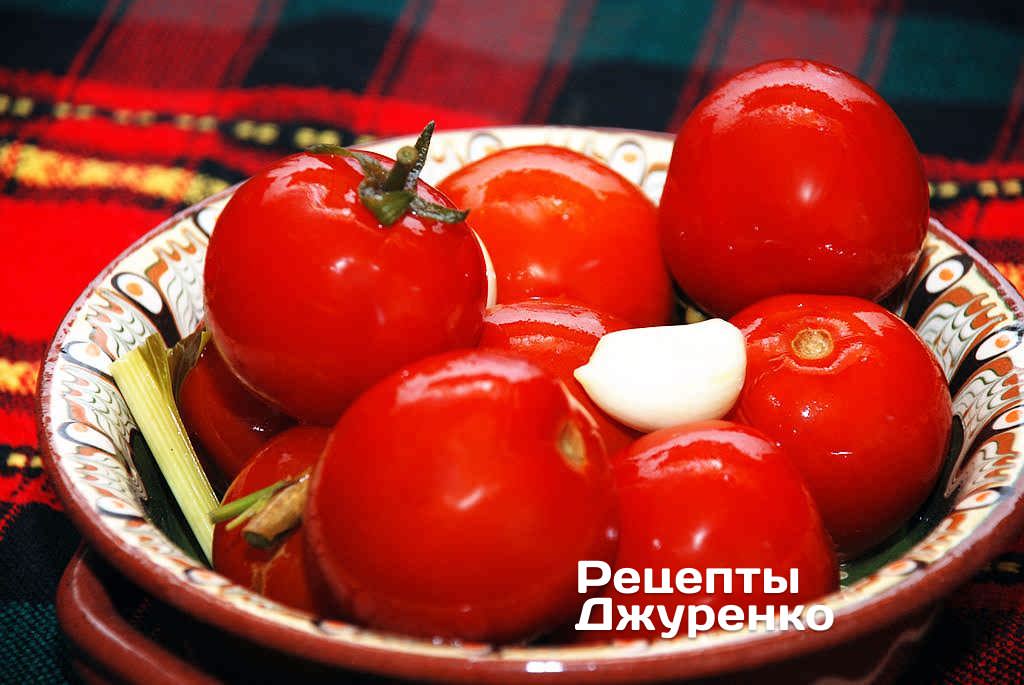
Ingredients
2 three-liter jars
- Tomatoes (plum type) 3 kg
- Pickling herb bundle to taste
- Garlic 1 head
- Black peppercorns, allspice berries, cloves, bay leaves, non-iodized rock salt to taste
Step-by-step recipe
- Two three-liter glass jars hold exactly 3 kg of tomatoes, large plum ones. Well, give or take a couple.
- You'll also need a pickling bundle, the same as for quick-salted cucumbers. What goes into it is always a mystery. The old ladies at the market put it together differently every time, but it's always very good. The bundle includes horseradish leaves, cherry and blackcurrant twigs, dill with its seed heads, and sometimes fennel.

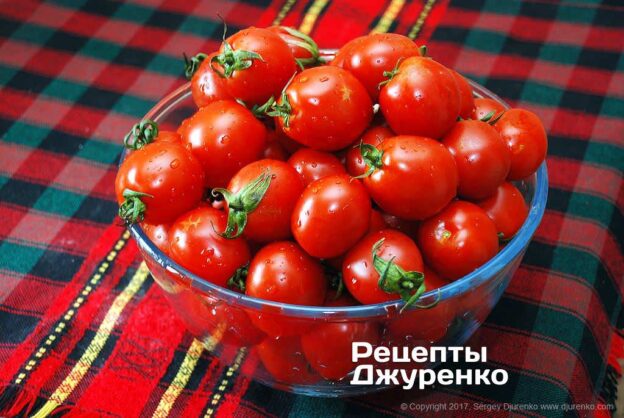
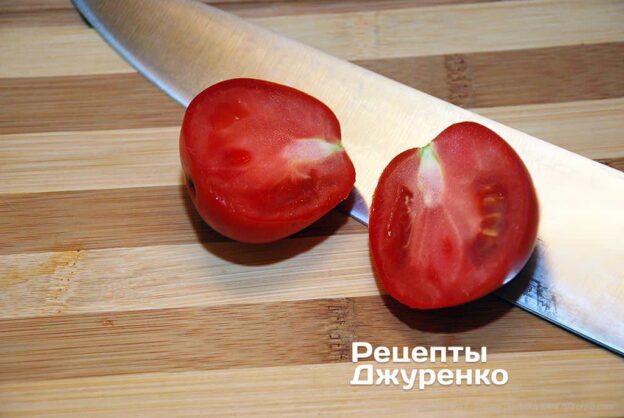
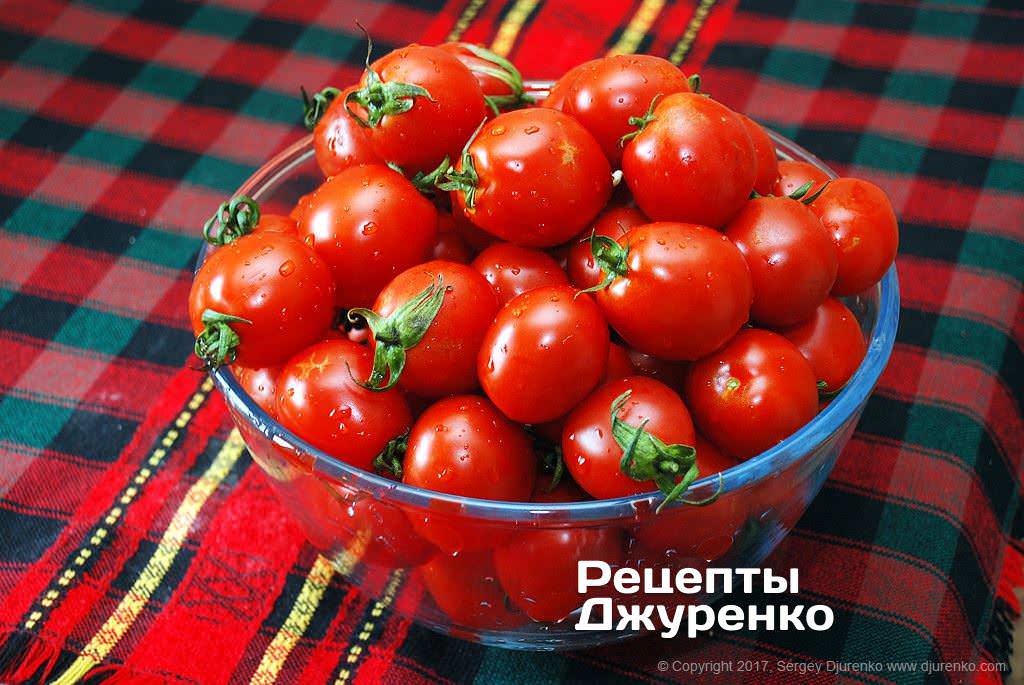
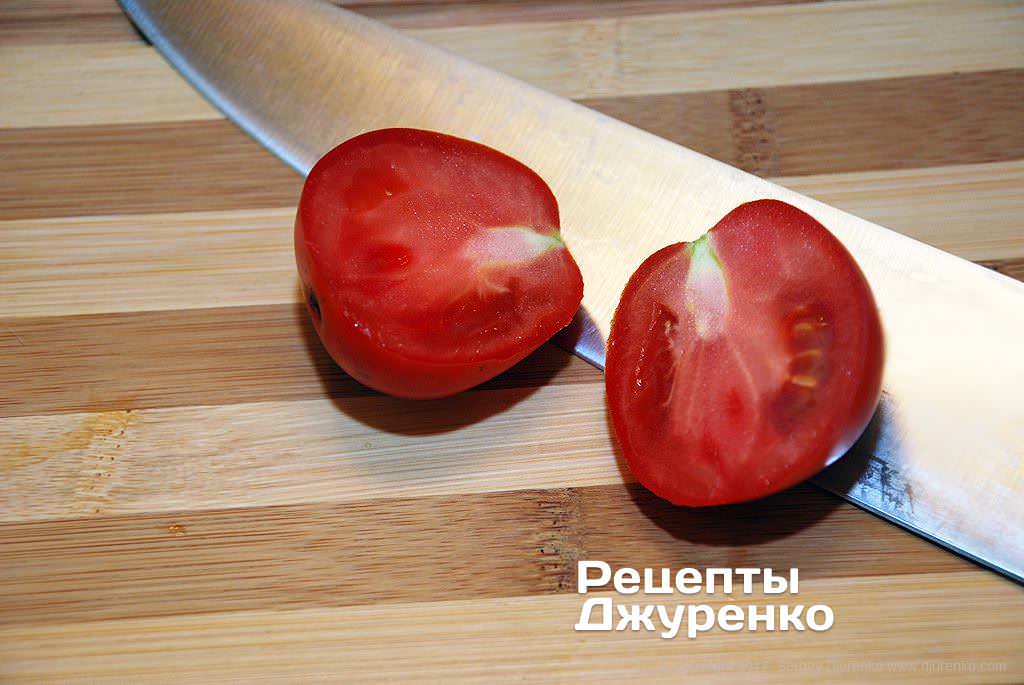
- Plum tomatoes work best. For some reason, that's what we're used to. These varieties are meant for preserving and have much more dry matter. It's important that the tomato has no white core inside. That's bad form. The inside of the tomato should be evenly red all the way through.
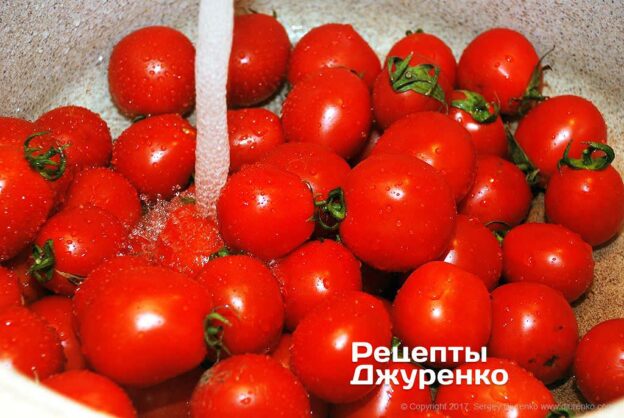
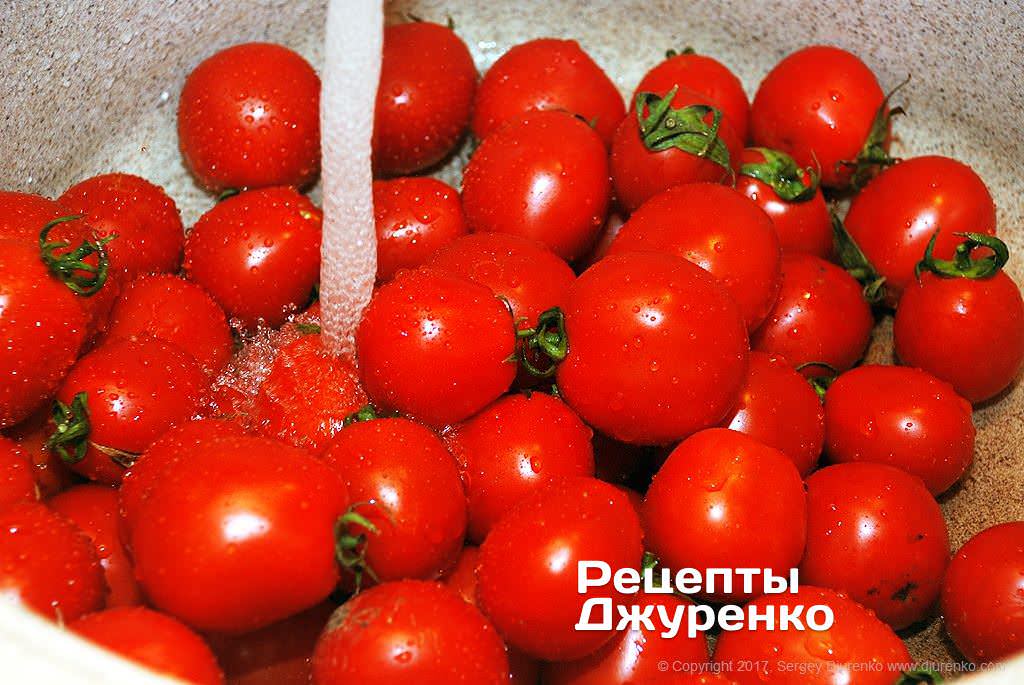
- Wash the tomatoes in cold water. Be sure to pull off the stems and discard any damaged ones, if you come across them.
- Next, wash the herb bundle and cut it into pieces about the length of a matchstick. An ordinary knife will do. Mix the chopped herbs so they're more or less evenly combined.

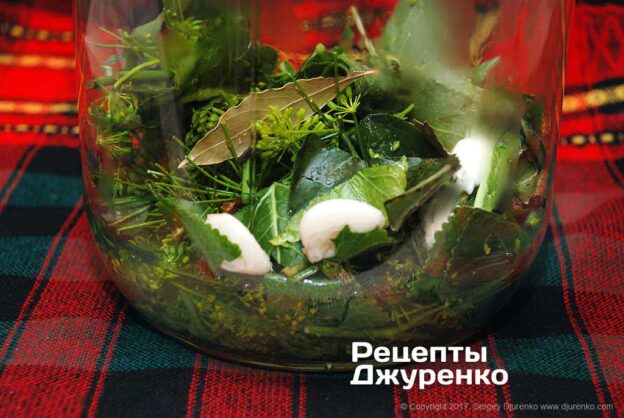
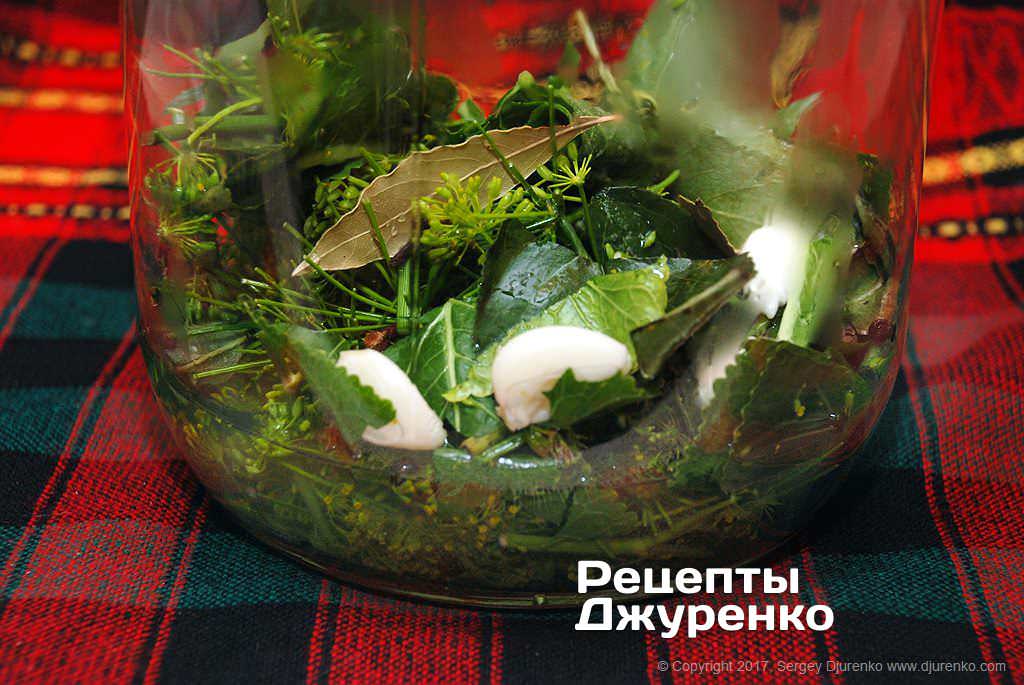
- Put a big handful of herbs into each jar to cover the bottom. You should have the same amount left over.

- Drop 2 bay leaves, 10 black peppercorns, 2 cloves and 3 allspice berries into each jar.
- Next comes the brine. One three-liter jar needs roughly 50-60 g of salt. This is the trickiest part of the whole process: getting the salt right. Since the tomatoes take up part of the jar, there's no telling how much water will go in. So we go by the amount of salt per jar.
- Dissolve 100-120 g of coarse rock salt in 0.5 liters of boiling water, and God forbid it's iodized. Just ordinary rock salt, the kind sold in 1.5 kg brick-shaped packs.
- While the brine is still hot, divide it evenly between the jars, straight over the herbs and spices.
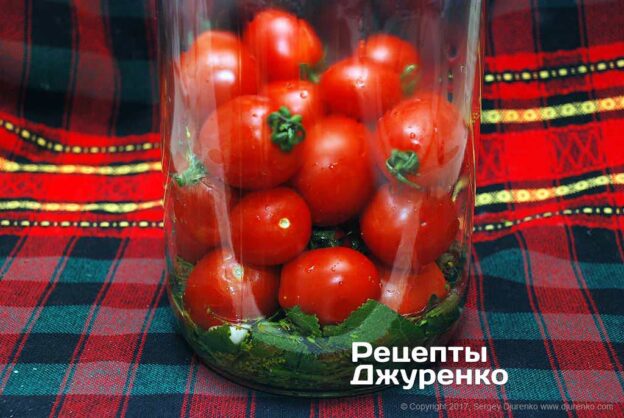
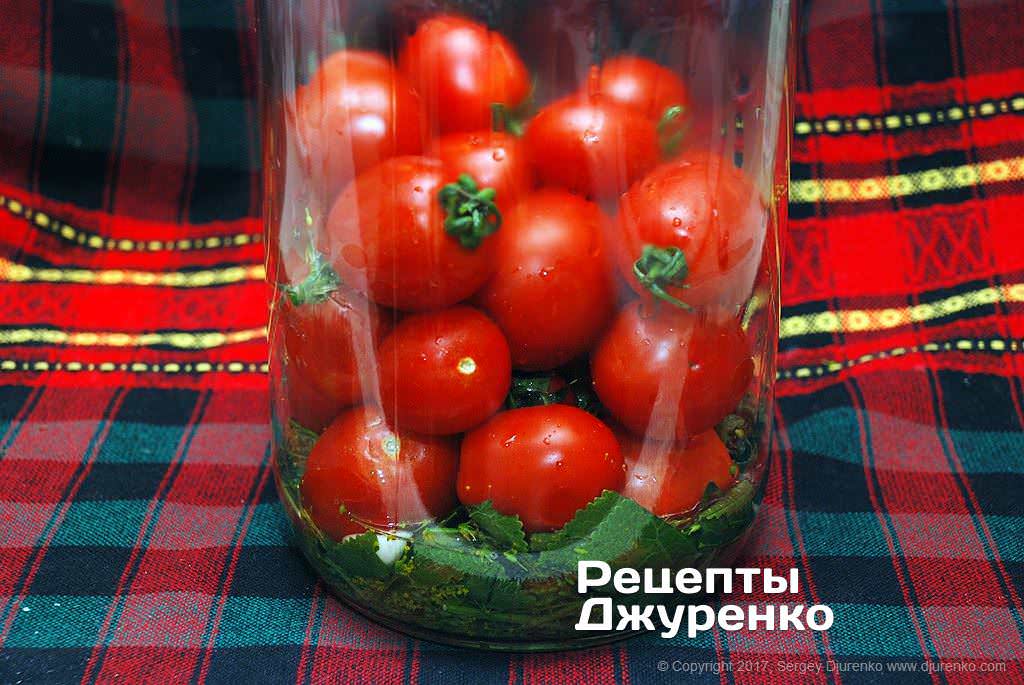
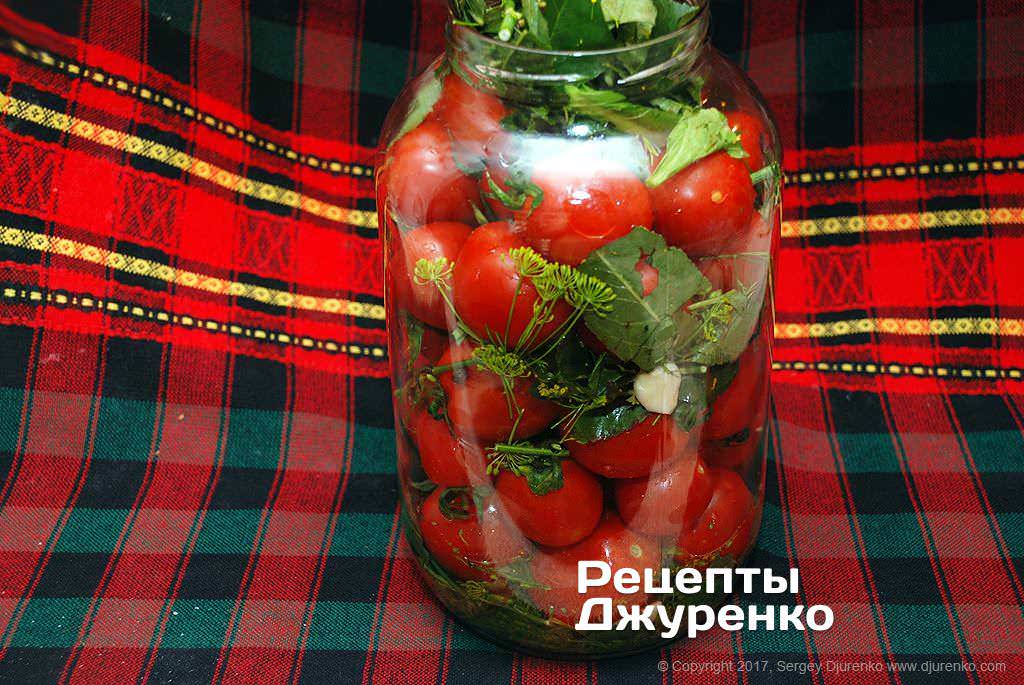
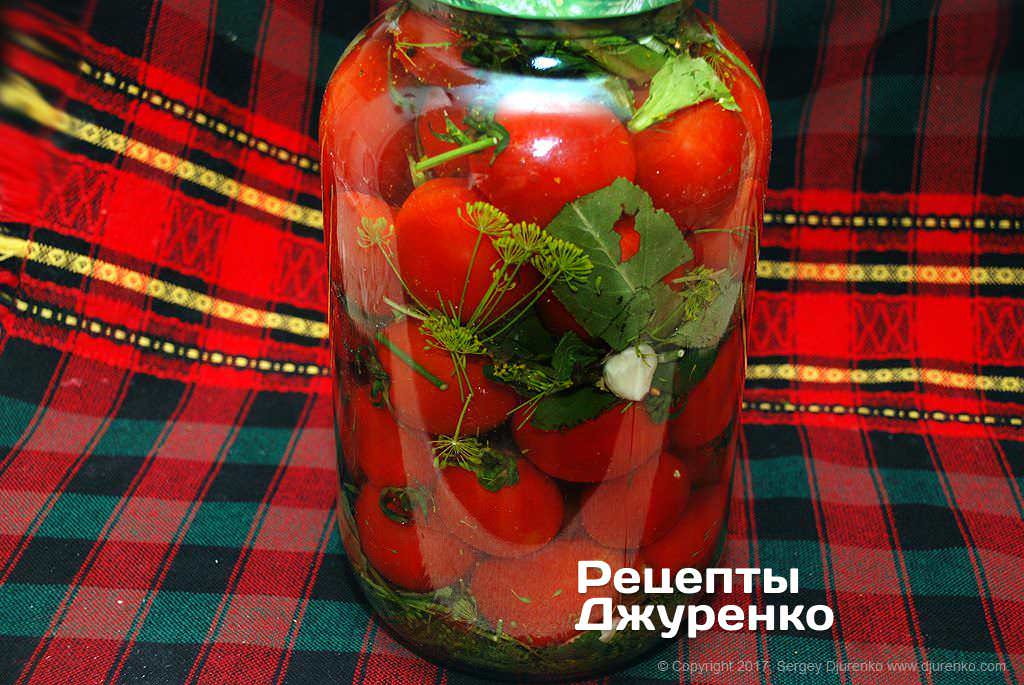
- Now arrange the tomatoes in the jars. Don't pack them in too tightly, although it doesn't really matter. Tuck the unpeeled garlic cloves in among the tomatoes. Top the tomatoes with the rest of the chopped herbs. You can also add a layer of herbs in the middle of the jar, but the jar is small, so what's on the bottom and on top is plenty.
- The rest is easy. Top up each jar with plain cold water, right to the brim. Close the jar with a plastic lid so it's airtight, and gently rock and turn it over so the salt spreads evenly throughout.
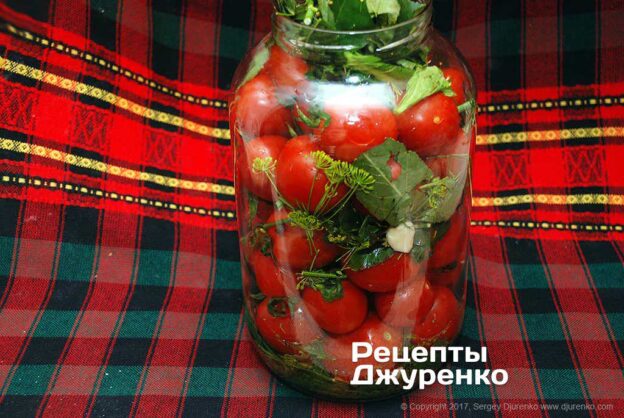
- Set the jars with their plastic lids on a windowsill, ideally out of direct sunlight. Leave them for three days. During this time the tomatoes will start to ferment a little, which means the process has begun. Then move the jars to the fridge and try not to touch them for 2 weeks. Let the tomatoes ferment in peace, with nobody bothering them. If it's already cold outside, you can put them out on the balcony. And if you have a cellar, I almost envy you.
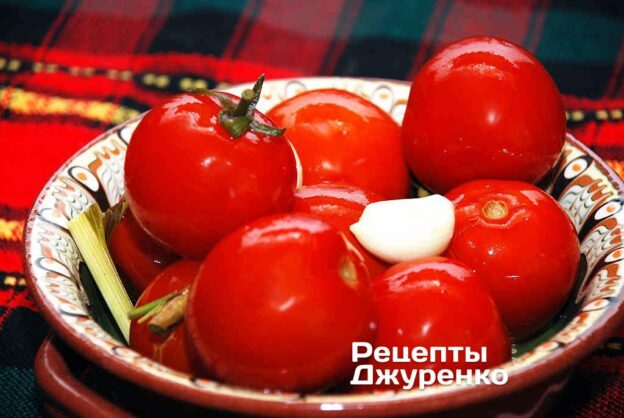
- After two weeks, start tasting the fermented tomatoes. If you did everything right, they'll turn out to be a masterpiece, like mine.
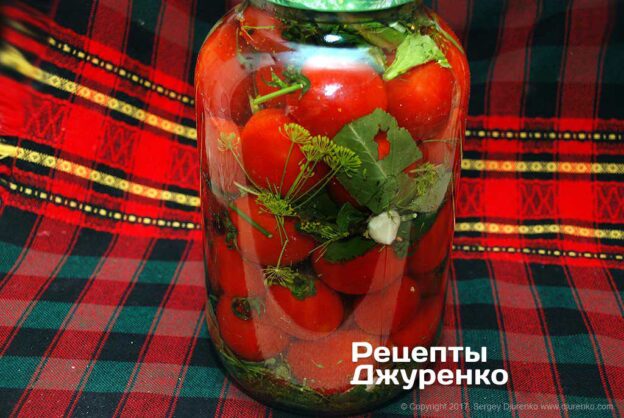
- My mom came over to try the fermented tomatoes. She tried one. Without a word she scooped half a jar into a container for herself, said “Well done!” and went home to make mashed potatoes, which is how she likes them best.
- And I recommend it to you too, by the way. And don't forget: fermented tomatoes are a snack to go with a drink.



| Makes: | 2 three-liter jars |
| Calories: | 20 |
| Prep: | 30 mins |
| Cook: | 2 weeks |
| Total: | 2 weeks |
| Category: | Snacks and Sauces |
| Cuisine: | European |
| Rating: |
⭐
⭐
⭐
⭐
⭐
4.3
(4)
|