
Pesto Sauce
Basil pesto is one of the most famous cold sauces of Italian cuisine. A good sauce can turn a simple ingredient into an inimitable masterpiece. A good sauce is a cry of the soul, the pinnacle of a cook’s craft joined with a gift from God. I have always wondered how the Italians manage to make such varied and amazing dishes, completely unlike each other, from something as simple as pasta. For some reason I remember those mountains of grated cheese and the people who make macaroni… G. Boccaccio, “The Decameron.”
The delicious sauce is sold in small jars, green and thick, and incredibly tasty. It is usually served with pasta or in soups, and spread on bread. Pesto comes from pestato, pestare, “to pound, to crush,” and originates in the north of Italy, in Genoa, in the Liguria region. Its Italian name is Pesto alla genovese.
Pesto has been known since the days of ancient Rome. The classic way is to grind basil, pine nuts, salt, garlic and the best olive oil with a wooden pestle in a marble mortar, adding Pecorino cheese.
The Italians say that the basil must be grown near Genoa, the olive oil must be Ligurian, and the pine nuts must be grown on the Mediterranean coast. That is a lot of categorical “musts.” I wonder whether all Italians really hold these canons sacred, and use a marble mortar and a wooden pestle and so on. It seems a bit unusual and doubtful.
Surely they chop the ingredients with kitchen appliances, use pine nuts or walnuts instead of the traditional ones, and replace Pecorino with Parmesan. But that doesn’t make the sauce any less tasty.
An interesting fact: Pecorino Siciliano is a hard Italian sheep’s milk cheese made in Sicily and aged for more than 2 years. It is hardly cheap enough to be used in mass production of jarred sauce. And still, Parmesan is more available and cheaper. Sicily is one thing, Genoa another… We always try to make pesto as close to the classic as possible, so that pasta with basil sauce turns out superb!


Ingredients
200 g of sauce
- Fresh green basil 2 bunches
- Pecorino, Parmesan or Grana Padano 100 g
- Olive oil 5-6 tbsp
- Garlic 2-3 cloves
- Pine nuts 50 g
- Sea salt to taste
Step-by-step recipe
Most of the ingredients in the original recipe are practically unavailable to us, and the varieties are strictly specified. The basil leaves are basilico di Pra’ giovani, the olive oil is della Riviera Ligure, the pine nuts are Pinoli italiani, the pecorino is Fiore sardo, and the garlic is Aglio di Vessalico. Parmesan and sea salt are easier, since you can buy them. So, as is done even in Italy, the unavailable components are replaced.

Pick all the leaves off the basil sprigs. The basil stems are tough and not edible. Wash the leaves and dry them as thoroughly as you can.

If you have a marble mortar and a wooden pestle, grind the leaves into a paste.

I use a kitchen blender. Put the basil leaves, peeled garlic cloves and pine nuts in the blender and add 1-2 pinches of salt. Coarse sea salt is the usual choice.

Blend everything to a puree. Add the Parmesan, grated first so the blender chops the cheese more evenly and finely.

Pour in the olive oil. Blend everything again. You will get a fairly thick, bright green puree.

The sauce is ready. You can taste it, spread it on bread or crackers, make a good vegetable soup with it, or cook pasta.


Calories and macros
455 kcal
100 g
- Protein13.2 g11% of kcal
- Fat43.6 g85% of kcal
- Carbs4.4 g4% of kcal
Calculated from the recipe ingredients, excluding salt and spices. Data: USDA and Matvaretabellen.
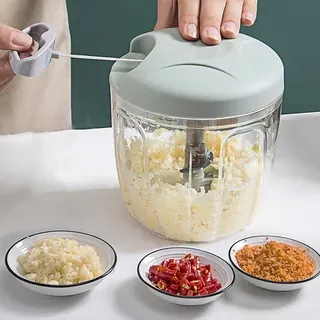 Pull chopper for garlic and onionAliExpress
 Oil sprayerAliExpress
 Kitchen scale up to 5 kgAliExpress
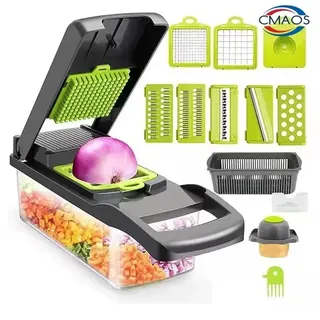 Vegetable chopper with handleAliExpress
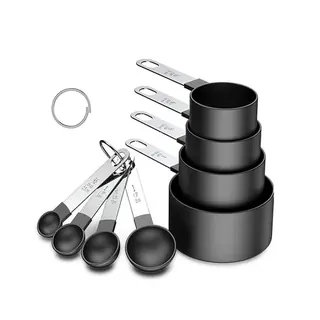 Measuring cups and spoonsAliExpress
 Peeler with wooden handleAliExpress