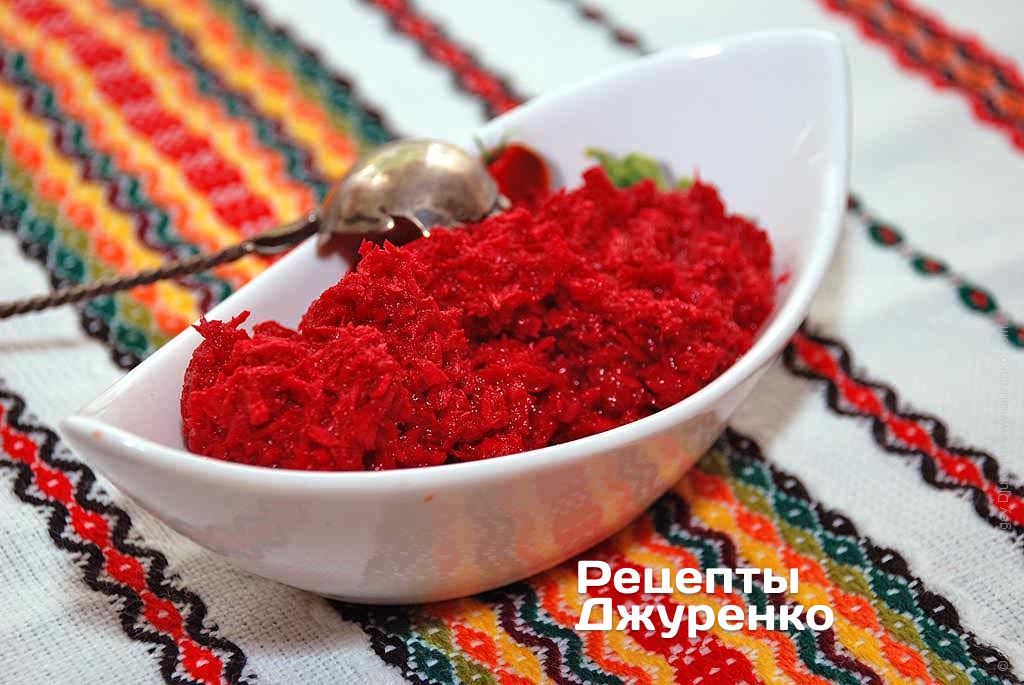
Homemade Horseradish: Hot Prepared Horseradish with Beet Juice
Long, long ago, back in the last century, when I was still very little, there was a big country called the Soviet Union. There wasn't much of anything in it. In Ukrainian we say “not a horseradish,” and it was true both literally and figuratively. Although, I won't argue, it was fun.
I remember that on the eve of my birthday (November 7, the anniversary of the October Revolution), my parents would get ready for the celebration.
As usual, besides some excellent drinks, there was the obligatory Olivier salad with green peas, herring under a fur coat, pickled mushrooms and the ever-present meat aspic. And what's meat aspic without grated horseradish???
And what about stuffed pike, fish in aspic or roast pork?? Without horseradish, it's like beer without the fizz. There's liquid, but no kick. Different recipes give different results.
I don't know if Dad came up with the recipe himself or got it from someone. But horseradish didn't earn its reputation as the hottest of our “home-grown” condiments for nothing. His always came out atomic. You could have set the water in the Dnieper on fire with it.
These days we usually make it just because, not for any particular occasion. There's simply a jar sitting in the fridge, even just to spread on bread.
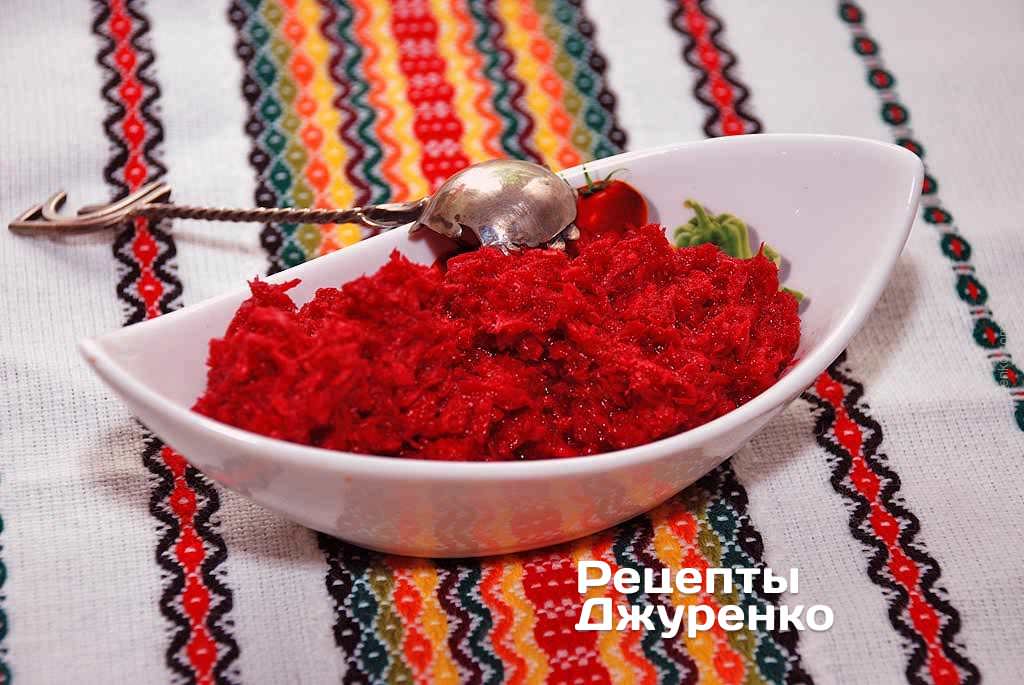
Ingredients
0.5 liters
- Horseradish roots 0.5 kg
- Red beet 1
- Sugar to taste
- Salt to taste
- White vinegar to taste
Step-by-step recipe
- Horseradish (Armoracia rusticana) grows almost everywhere in Europe except the Arctic. The leaves are usually used for preserving, most often cucumbers, and the thick, fleshy roots for making a table condiment. In Kyivan Rus' the roots were used much more widely: for preserving, for salting everything, for spicy kvass, and for khrenovina, that wonderful condiment so dear to the heart of any of our countrymen.
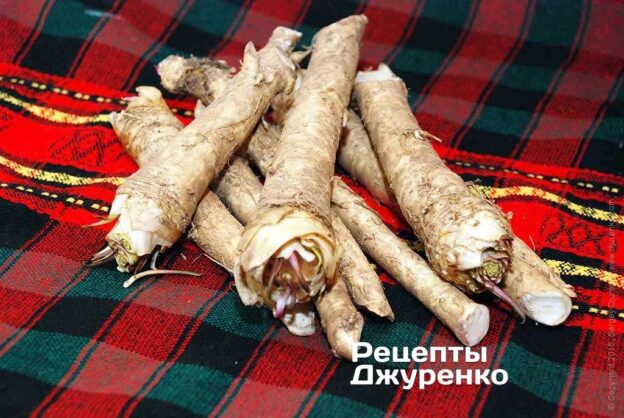
- I read in a clever book that horseradish gets its sharpness and heat from a glycoside called sinigrin. Its relatives are mustard, watercress and radishes. The ancient Romans, Greeks and Egyptians already used these fiery roots.
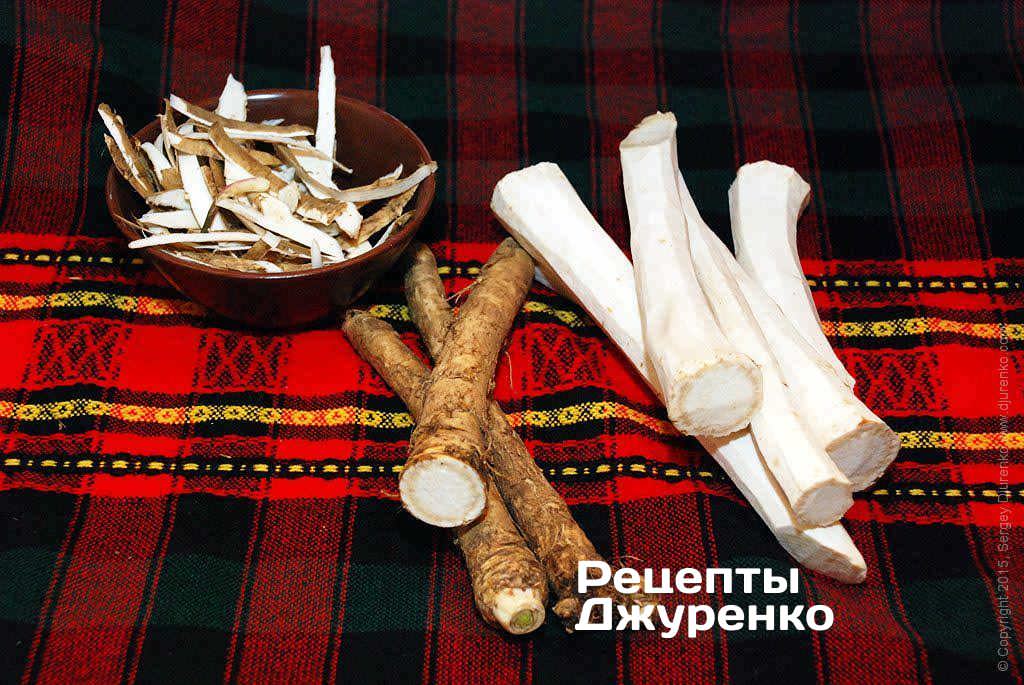
- Horseradish has been used as a medicine throughout history. But whichever way you look at it, before it's prepared, it's just a root. Thick, dirty and unappetizing.
- First, you need to buy the roots. In autumn and winter that's easy. In summer they sell last year's, which are hardly usable. Today we bought almost half a kilo. Just what we needed.
- Next, peel the roots with a sharp knife. Cut off the tips.
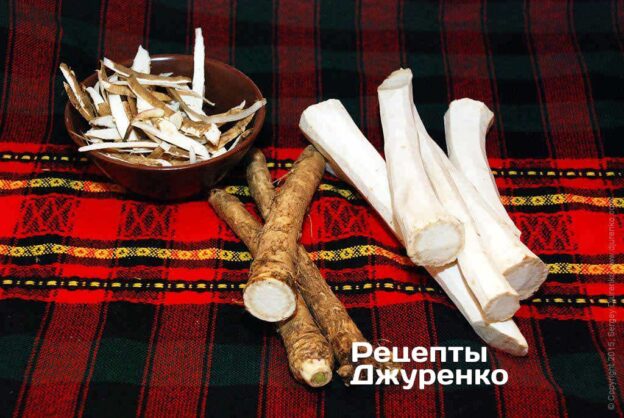
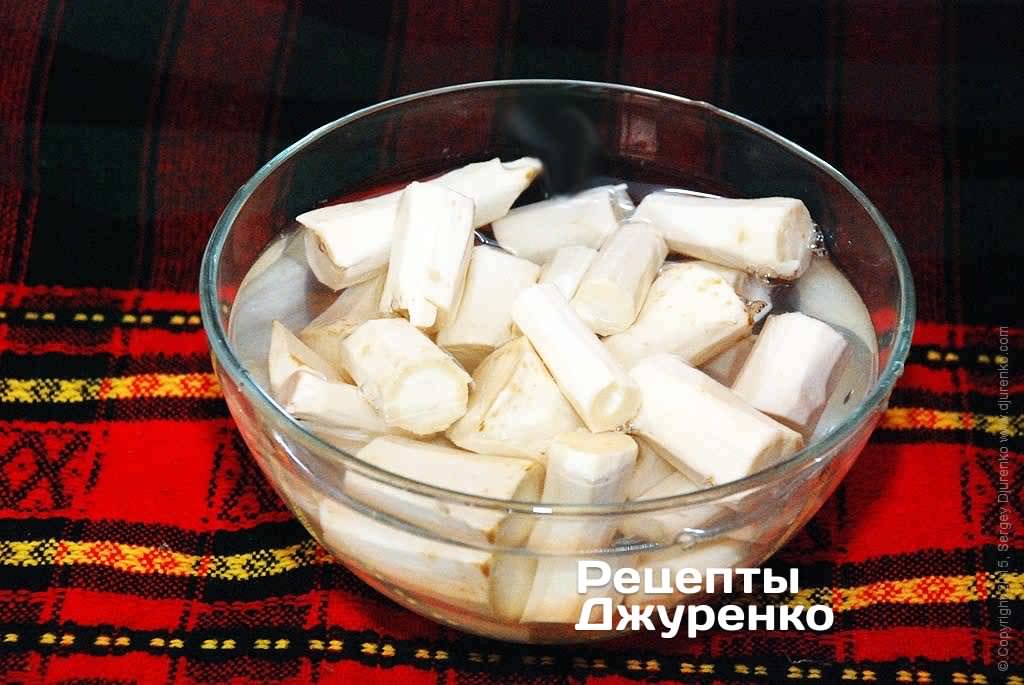
- After that, wash the roots thoroughly and cut them into pieces about the length of a matchstick or a bit longer.
- I soak the roots, although many people claim it makes them less hot. Well, they can hardly get any hotter. As it is, they can knock you right out of your slippers. Soak them in cold, almost icy water for 5-6 hours. Put them in the fridge.
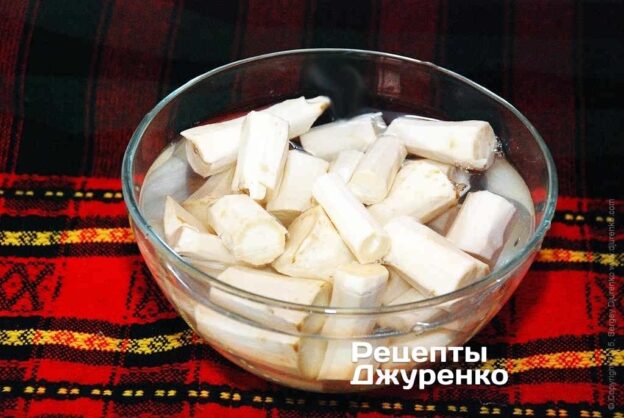
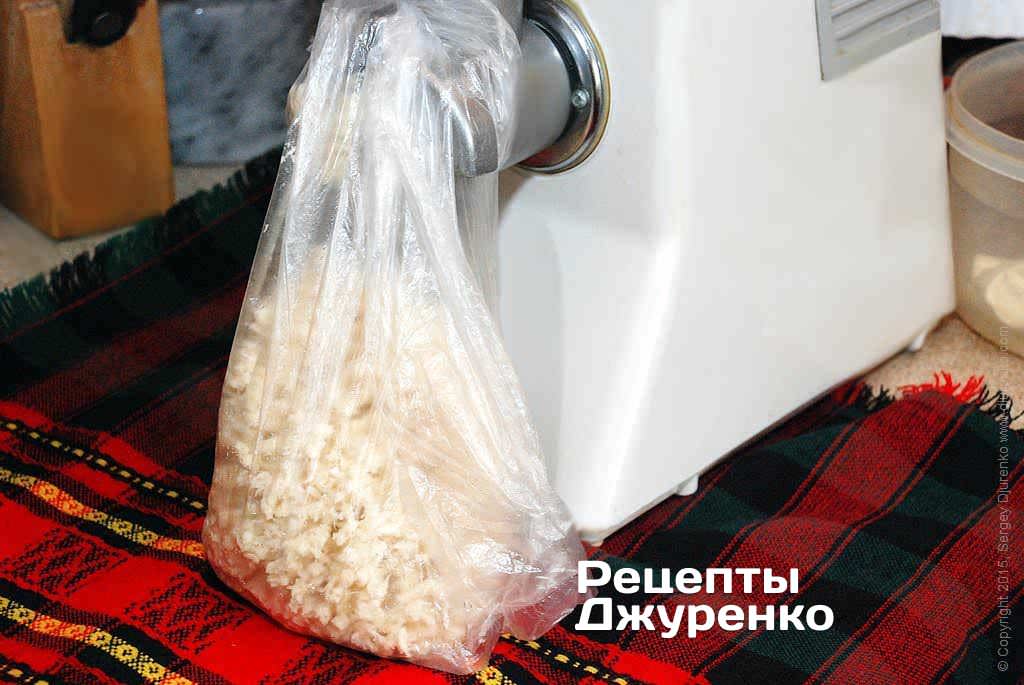
- Then the roots need to be ground. Many people grate them by hand. Well, I'm not into self-torture. Tormenting myself and my family isn't my thing. An electric meat grinder is ideal.
- Back when I was a kid, when an electric meat grinder in a kitchen was rarer than a UFO over Kyiv, Dad ground the roots in an ordinary hand-cranked meat grinder clamped to the table. To be safe, I was sent outside, and Mom went over to the neighbor's for 10 minutes, asking Dad to stir the soup every half hour. Dad cranked the horseradish through the grinder, lifting the table off the floor. Hard work. Everything was done in a gas mask only.
After that, nobody could go into the kitchen for another three hours. Airing it out didn't help either. - I keep wondering why nobody thought back then to pull a plastic bag over the grinder and catch the ground root, fumes and all. Then I got it. Who remembers how rare plastic bags were in the '70s??? There simply weren't any. People washed and dried them. To reuse them.
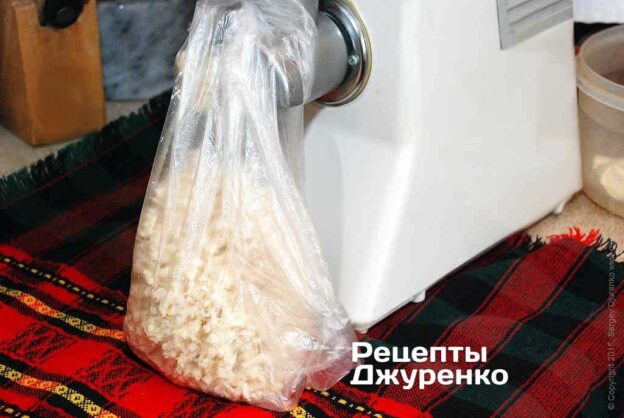
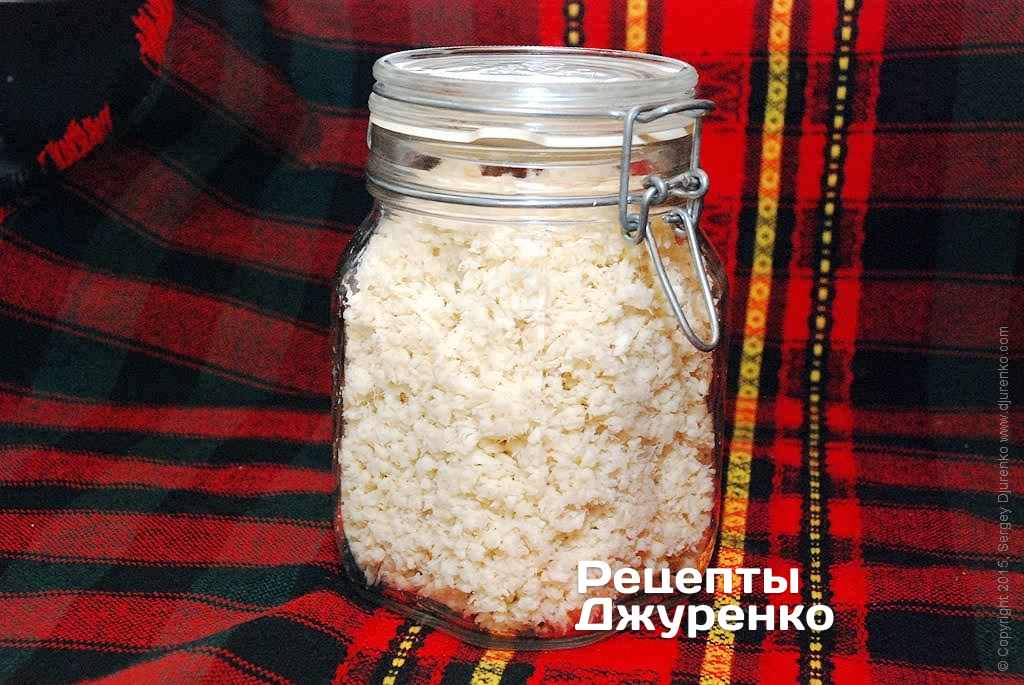
- The ground root was carefully packed into a big jar and closed with a plastic lid. Well, let's say not a big one, a half-liter jar. After that, decontamination of the kitchen began.
- Don't experiment. Hold an ordinary plastic bag over the grinder's outlet with your hand. You could feed a baby right next to it and there'd be no complaints. At least no legitimate ones. Unless out of sheer spite.
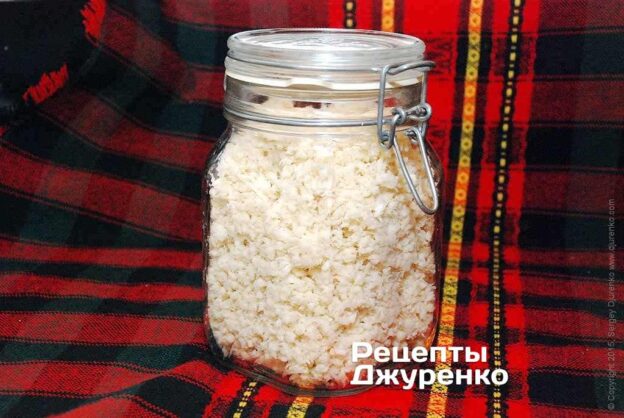
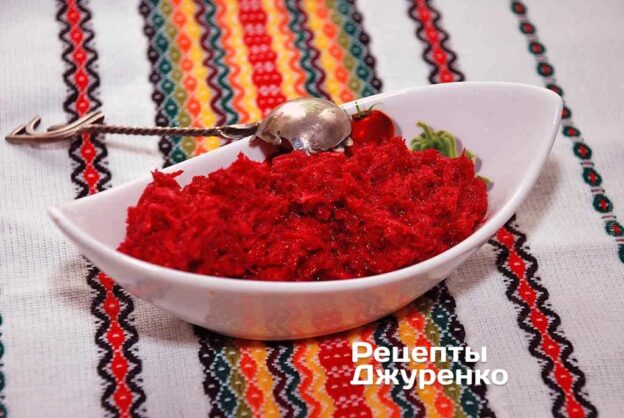
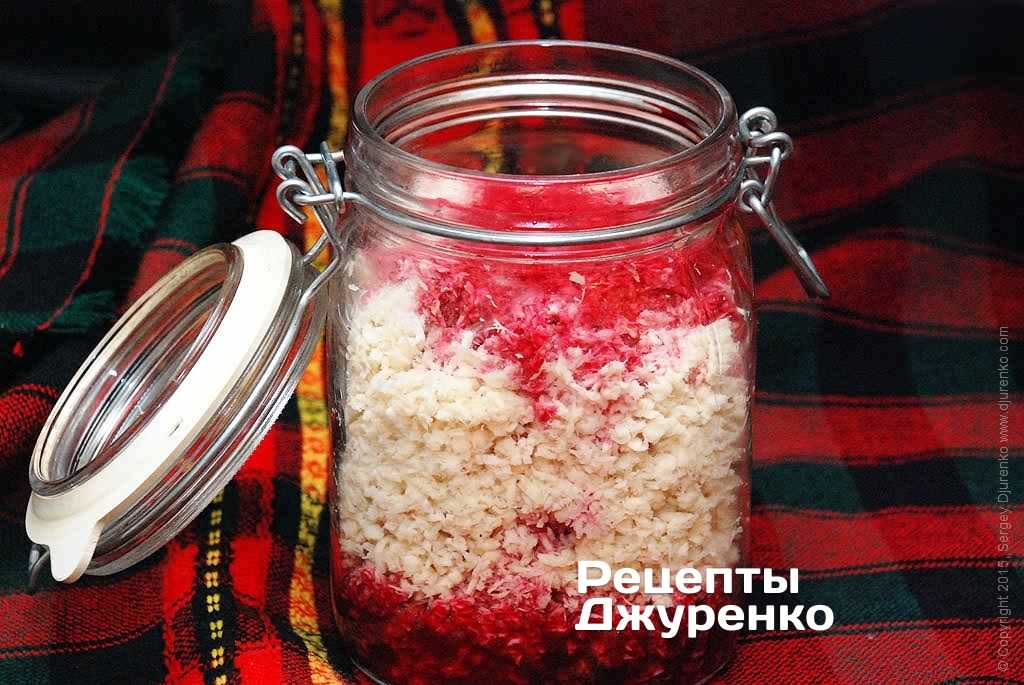
- Next, a big red beet was taken out of the fridge. The beet was peeled and grated on the finest grater, practically to dust. The juice was squeezed out through a piece of cotton cloth and poured into the jar of horseradish. Into the same jar went a heaping tablespoon of sugar and a teaspoon of coarse salt.
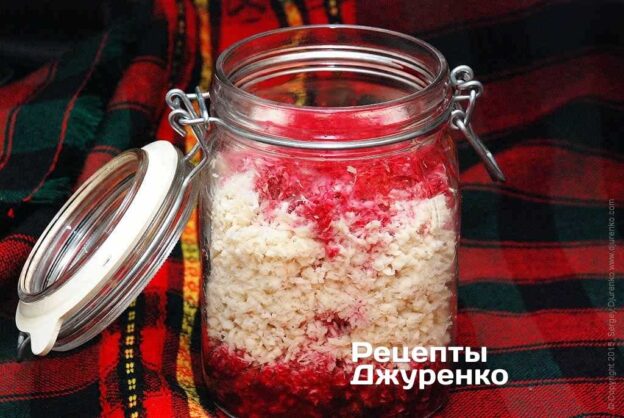
- Mix everything thoroughly and add 2 tbsp of ordinary white vinegar. Top up with cooled boiled water so everything in the jar is covered with liquid. But don't add too much.
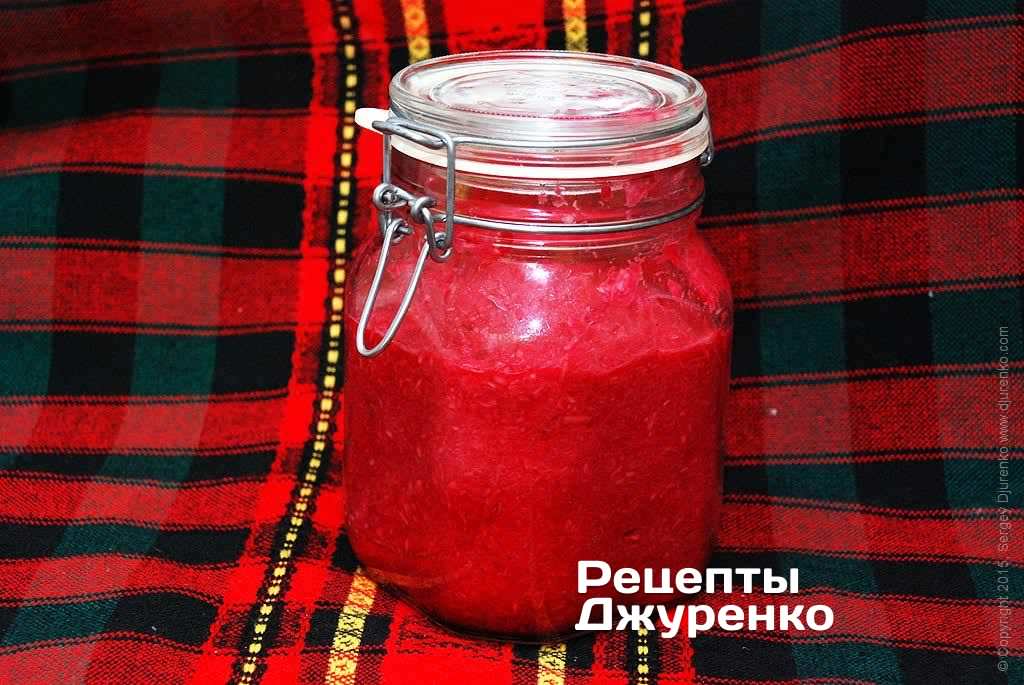
- Mix again. The horseradish is already bright pink.
- Add salt, vinegar and sugar to taste. And water. The liquid should be level with the grated horseradish. The condiment needs to steep and mature. A night in the fridge. Overnight the roots will soak up the color and release their heat into the liquid.
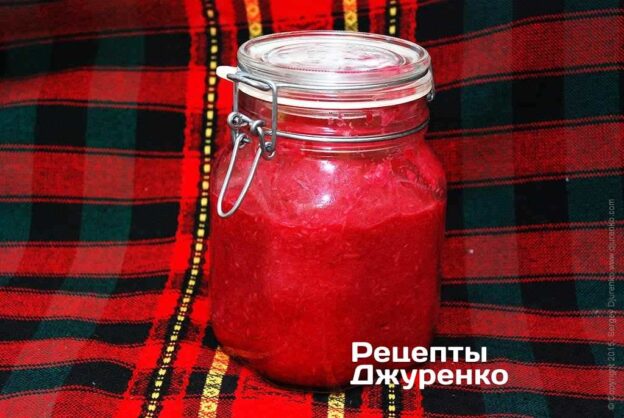
- Everyone keeps asking what khrenovina is. A machine-shop foreman and a cook will give you different answers. I can't speak for the foreman, but for a cook it's a sauce!
- It's a hot condiment for main courses made of tomatoes, horseradish, garlic and salt put through a meat grinder. Sometimes a bit of ground black and red pepper, apples, carrots, sweet bell peppers, vinegar and sugar are added.
- Its variations go by names like khrenoder, gorloder (“throat-ripper”), cobra and ogonyok (“little fire”).

| Makes: | 0.5 liters |
| Calories: | 57 |
| Prep: | 12 h (soaking) |
| Cook: | 30 mins (cooking) + 12 h (resting) |
| Total: | 24 h |
| Category: | Snacks and Sauces |
| Cuisine: | European |
| Rating: |
⭐
⭐
⭐
⭐
⭐
4.7
(2)
|