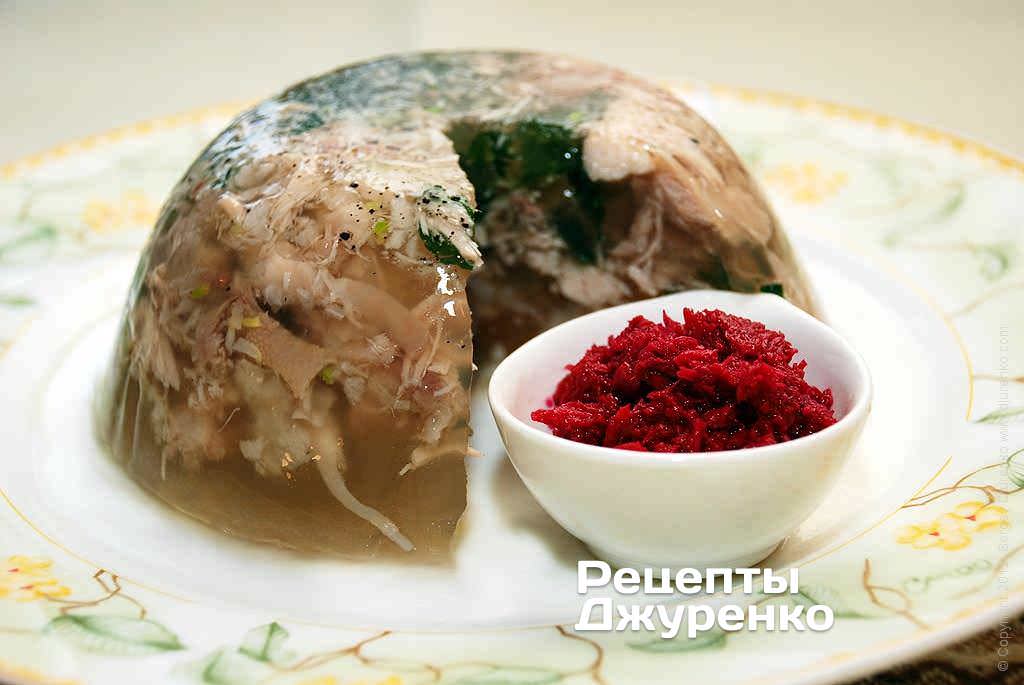
Classic Kholodets: Meat Aspic from Pork Trotters and Beef
New Year's is coming! The old year will end, we'll see it off properly and welcome the New Year however it turns out. As tradition goes, we'll set a lavish table with all kinds of tasty dishes and no less tasty drinks.
Tradition… So what exactly is traditional for us? Hmm?
As a good friend of mine says, the appetizers on the table on New Year's Eve must include Olivier salad, herring under a fur coat and kholodets with horseradish. Everything else is just indulgence and an inappropriate tribute to foreign fashion.
To be honest, I can't remember a New Year's or Christmas without kholodets. It would be sacrilege or something.
Where I live, kholodets is called kholodne, “the cold one,” and only rarely kholodets. Elsewhere, especially in the Urals, it's called studen. Or simply zalyvne, aspic. I spent a long time trying to figure out the difference between studen and kholodets. They say it's the same thing. Maybe. But here kholodets is made from a young pig. Or from pork trotters and hocks. Beef hooves or shanks are added only rarely. And judging by recipe collections, studen is usually made from beef: hooves, shanks, head.
The eternal question when making kholodets is “will it set or not,” since adding gelatin is considered bad form.
Jokes aside, it always sets. Even without any beef. And how could pork trotter kholodets not set, when a spoon floats calmly in the boiling pot?
Making good kholodets is very laborious and time-consuming, especially from pork trotters. How do you cook kholodets? I'll tell you: for a long time.
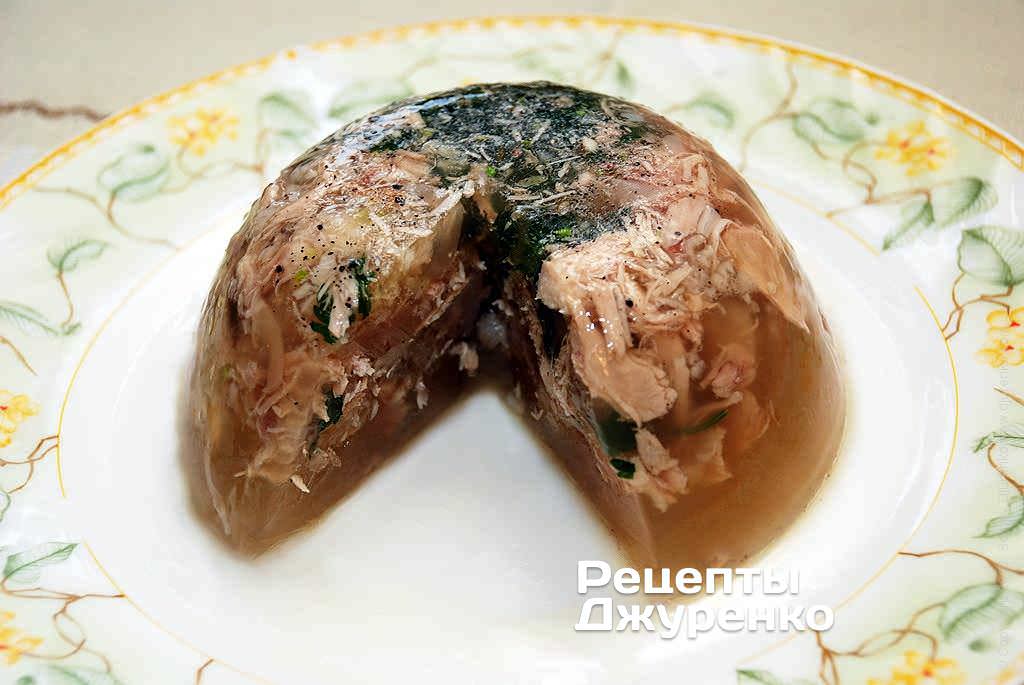
Ingredients
6-8 plates
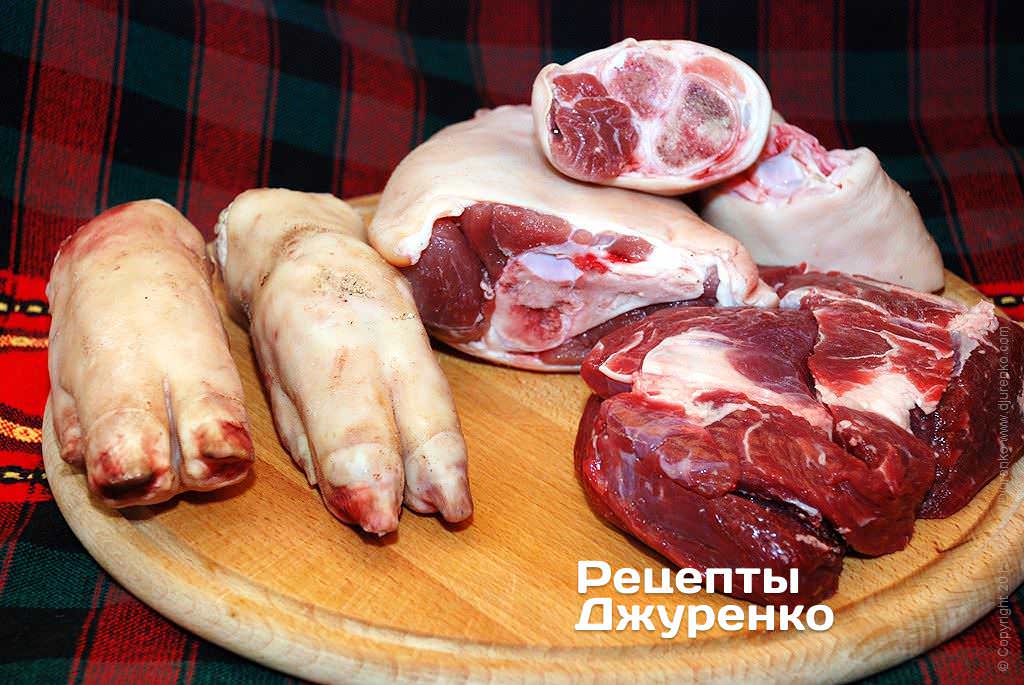
- Pork trotters 2
- Pork hock 1
- Beef 1-1.2 kg
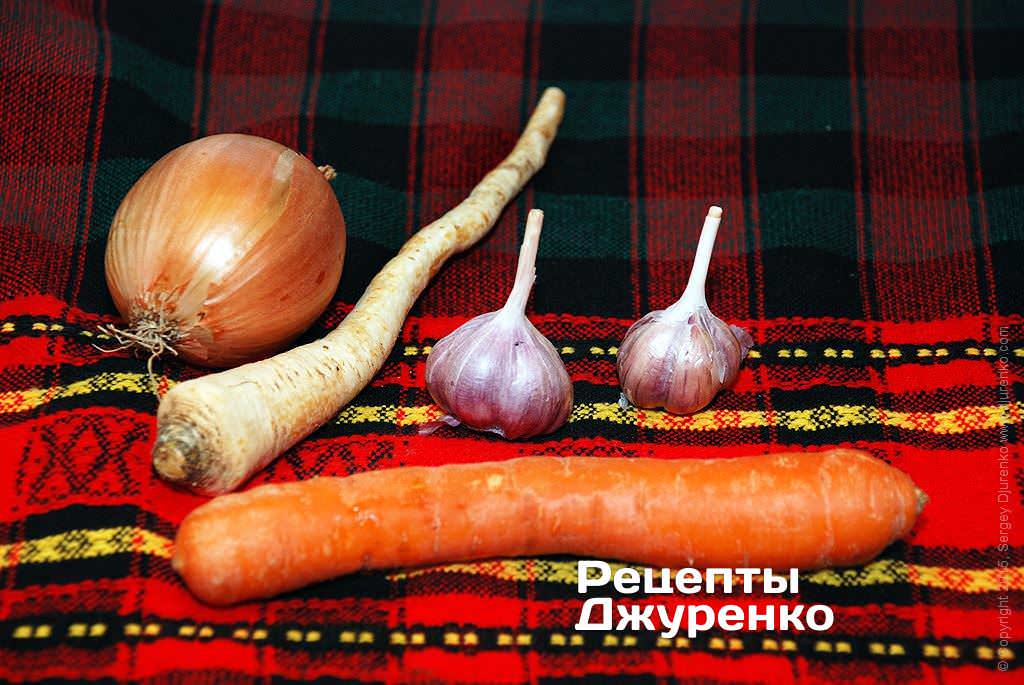
- Carrot 1
- Parsley root 1
- Onion 1
- Garlic 1 head
- Black peppercorns, allspice berries, bay leaf, salt to taste
Step-by-step recipe
- Since my family likes lots of meat in their kholodets, an all-pork version isn't very welcome at home. So I have to add veal.
- We never added chicken, or any poultry at all, to the dish.
- Historically, clear kholodets isn't held in particularly high regard here.
- It's best to buy the meat at a market. That way it's guaranteed never to have been frozen.
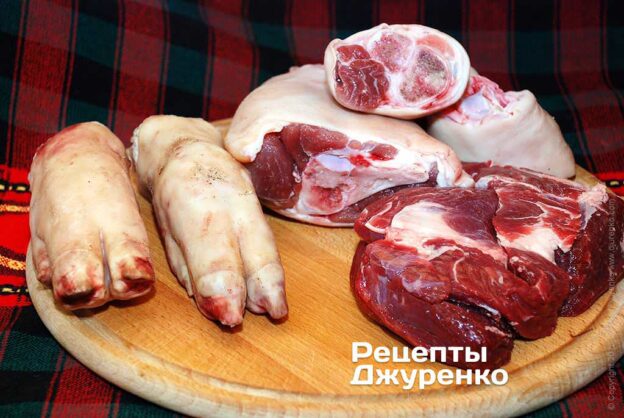
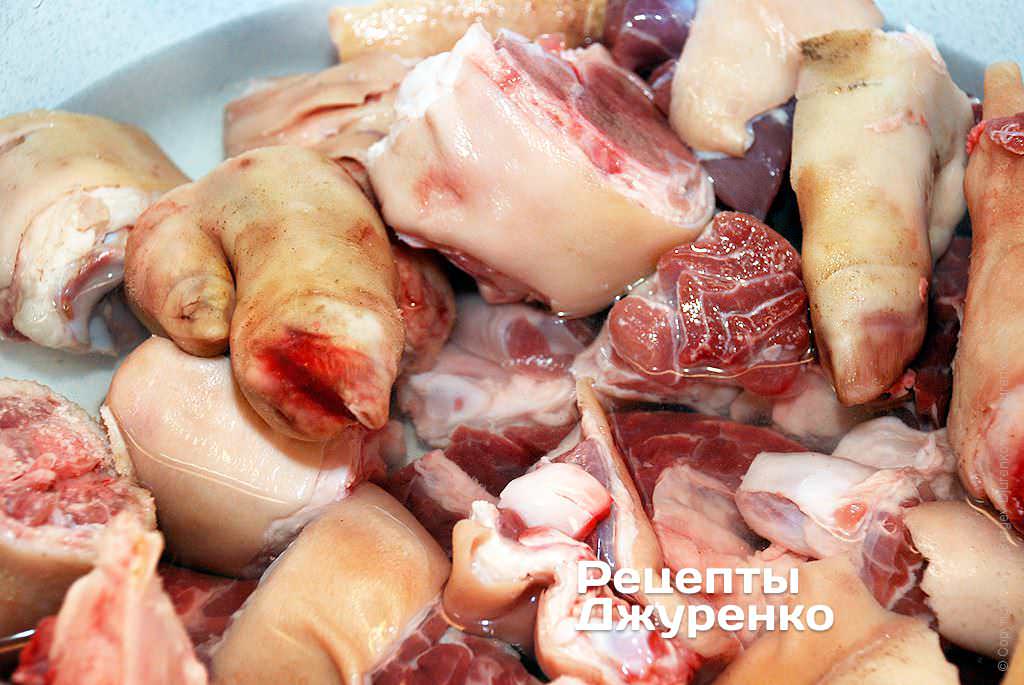
- Thoroughly clean the trotters and hocks of bristles and, if necessary, singe them over an open flame. Scrape and rinse.
- Cut the pork trotters in half lengthwise with a knife, and then in half again at the joint. Don't chop them with a cleaver, or there'll be lots of small bone fragments.
- Cut the hock into several pieces; the large central bone can be left whole, uncut.
- Cut the brisket into several pieces.
- Strictly speaking, the size of the meat pieces for kholodets doesn't matter.
- Rinse all the meat and soak it in cold water for at least 2-3 hours, or better, overnight in a cold place. The second option is preferable, since kholodets takes a long time to cook and it's better to start in the morning.
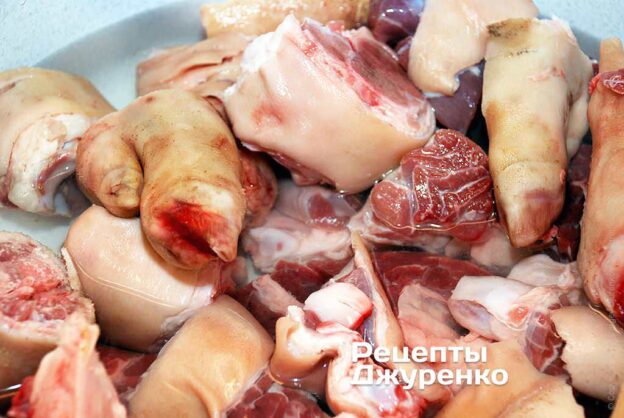
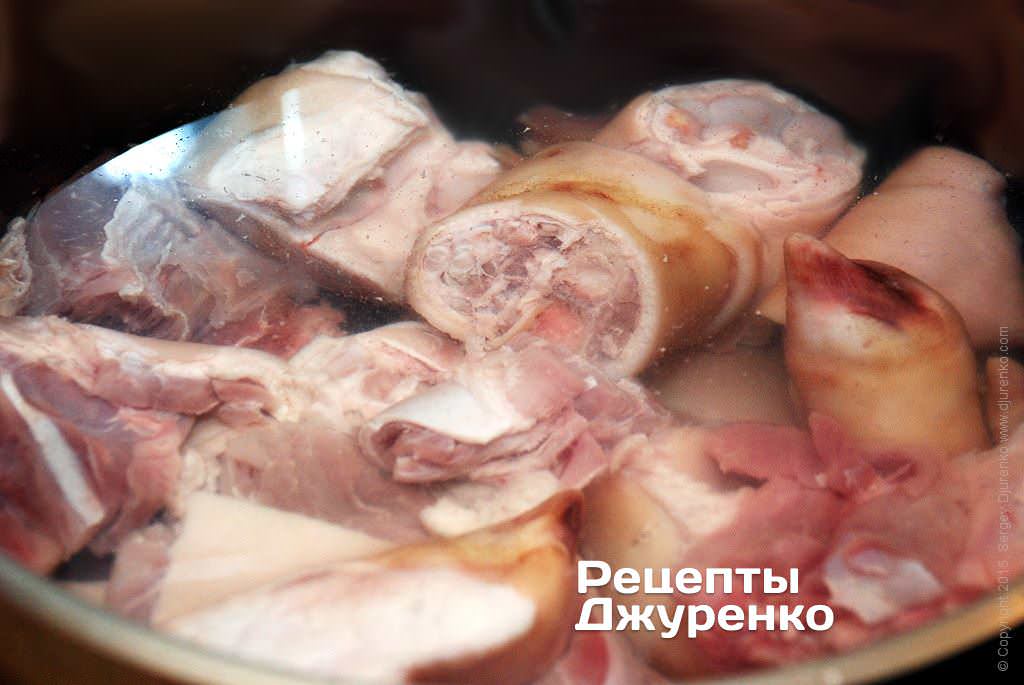
- In the morning, rinse the meat again, put it in a large pot or kazan and cover with cold water. The water should come 5-7 cm above the meat.
- Put the pot on the heat and bring to a boil.
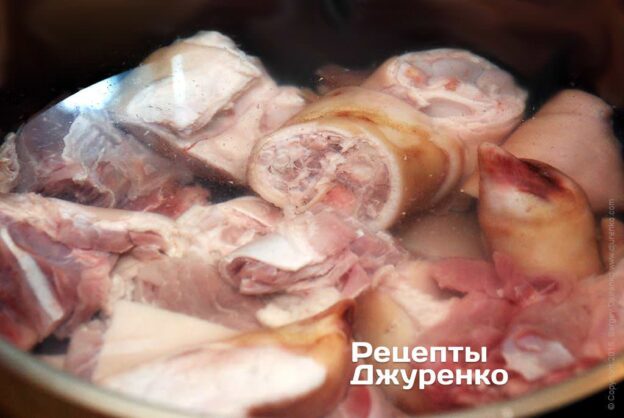
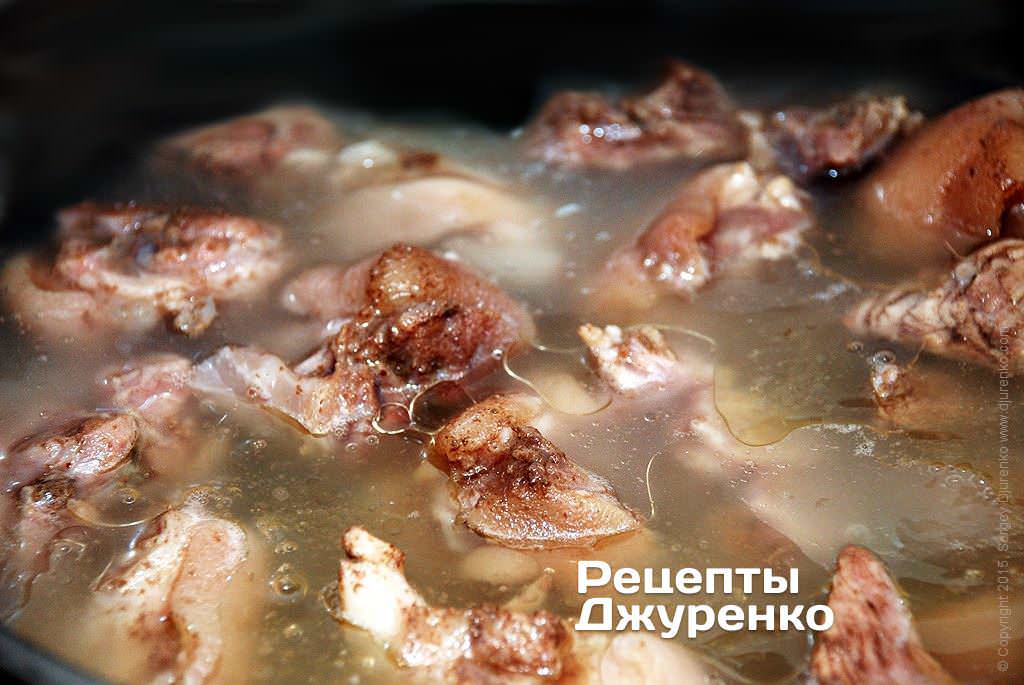
- It's important not to miss the moment it boils. There'll be a lot of foam. It needs to be removed. Skim off all the foam that keeps forming with a spoon. After 5-10 minutes, the foaming will stop completely. From then on, cover the pot and turn the heat down to the very minimum. The liquid in the pot shouldn't even boil, just barely “move.” Never let it boil hard. Only a gentle simmer.
- Leave the meat to simmer for 4-5 hours. You can stir it now and then. Do not add water to the pot!!! Even if some of it boils away.
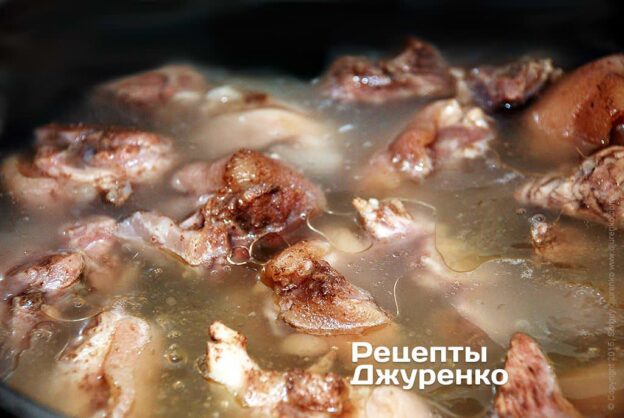
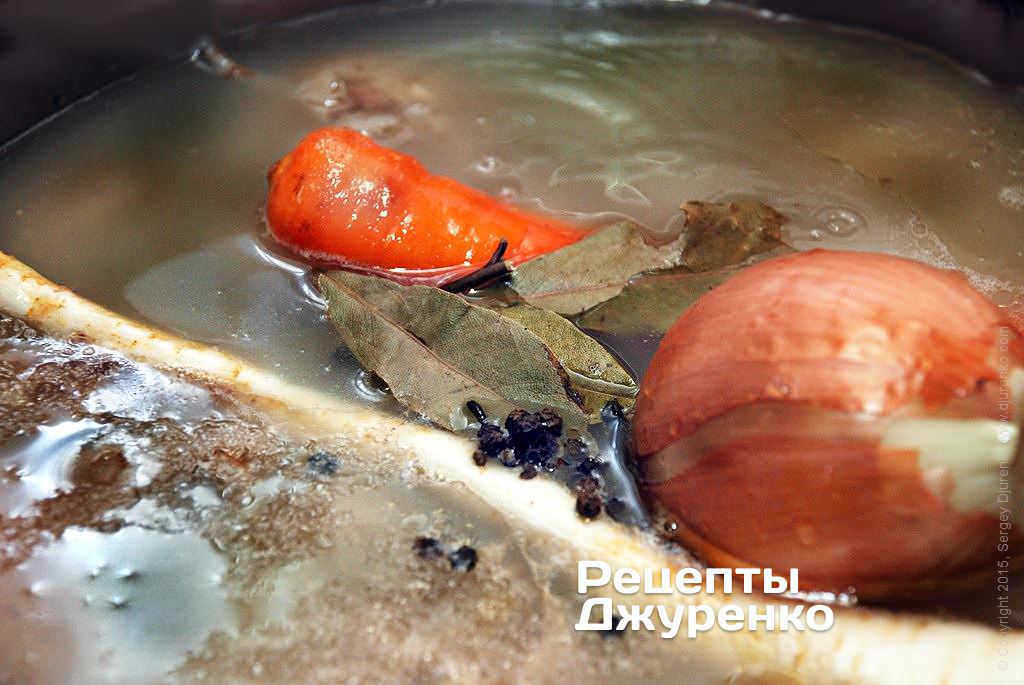
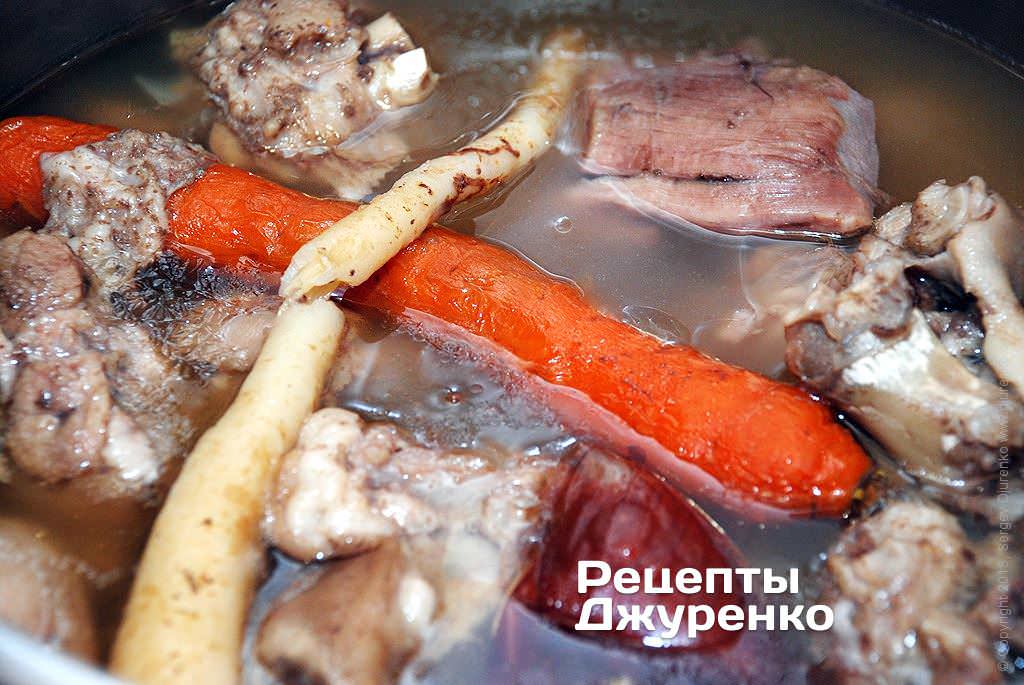
- After 4-5 hours, add black peppercorns and allspice berries, bay leaves, 1 tsp of rock salt and a washed, unpeeled onion, carrot, parsley root and celery root to the pot.
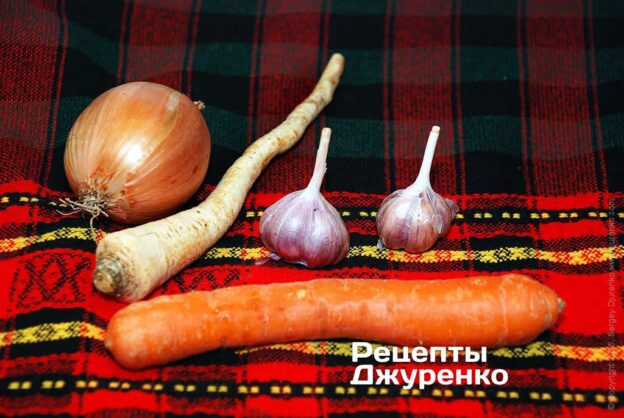
- If a lot of liquid has boiled away, you'll have to add boiling water from the kettle. It's not ideal, but the liquid is needed.
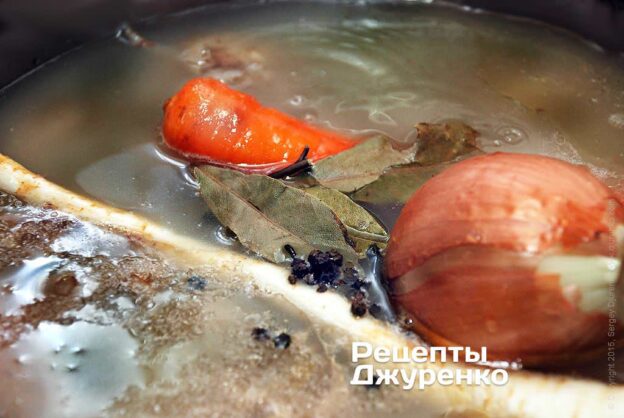
- Cover the pot and simmer gently for another 1-1.5 hours.
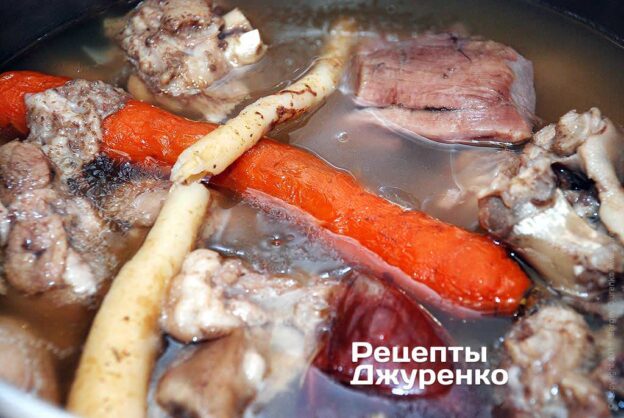
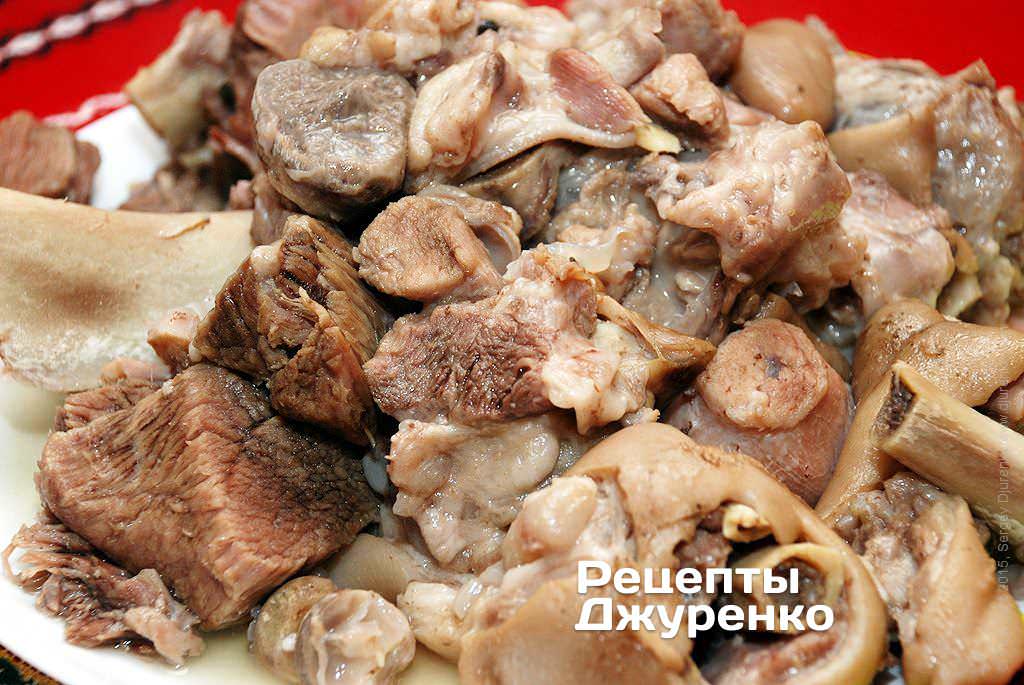
- Take the pot off the heat. Scoop out all the meat with a slotted spoon. Spread the meat on plates and let it cool. Throw out the onion, carrot and roots, although you can keep the carrot for decoration.
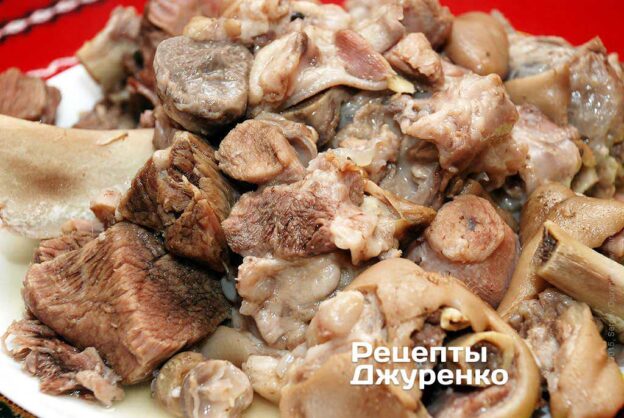
- A small digression. Many people prefer kholodets that's completely clear. For that, the broth needs to be clarified. How? Look it up yourself; they say egg whites work well. I won't say mine came out clear as glass; let's say it had the clarity of amber. And without any clarifying.
- Salt the broth to taste and then a bit more. It should seem slightly salty, just a touch. Season with ground black pepper and add garlic crushed to a paste. Stir the broth, cover the pot and leave for 20-30 minutes.
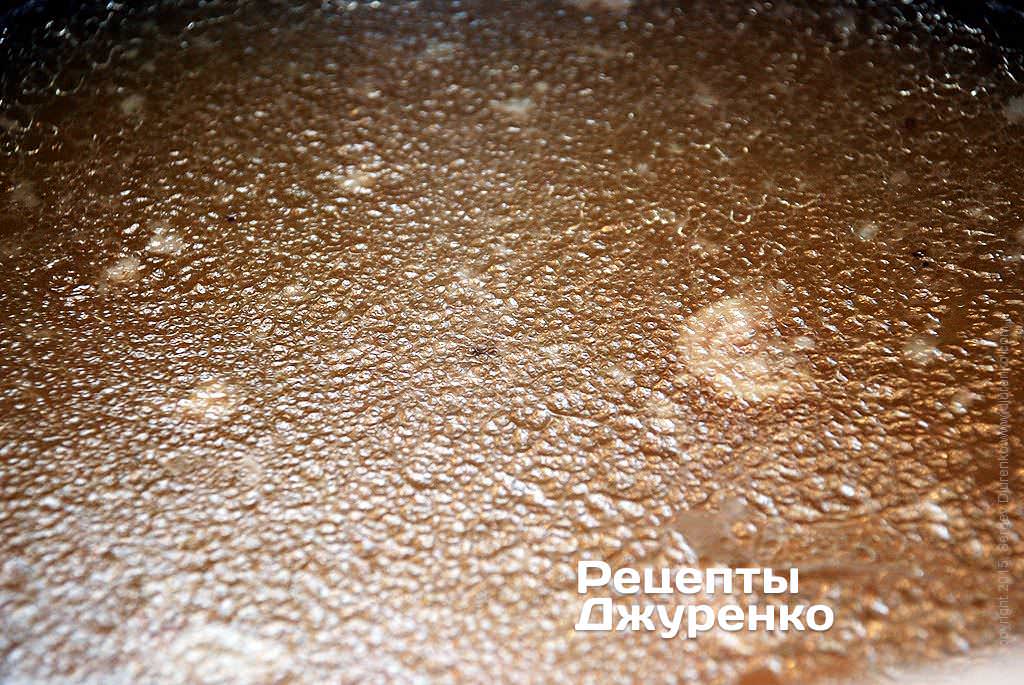
- Next, strain the broth. It's best to do this through cloth, clean, of course. The cloth will catch small bones, peppercorns, garlic and bay leaves. None of that belongs in kholodets. Leave the broth to cool. After 10-15 minutes, remove the excess fat from the surface of the broth. You can simply skim it off with a spoon.
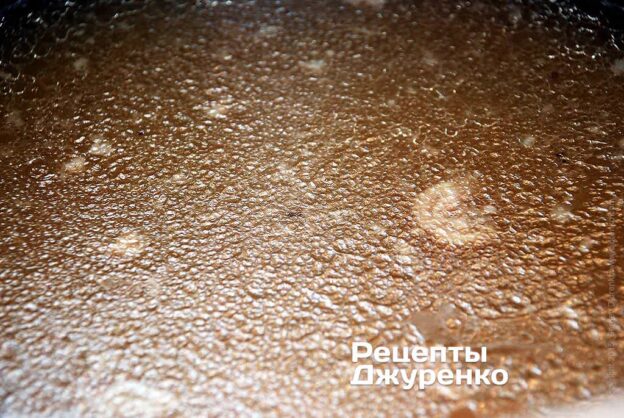
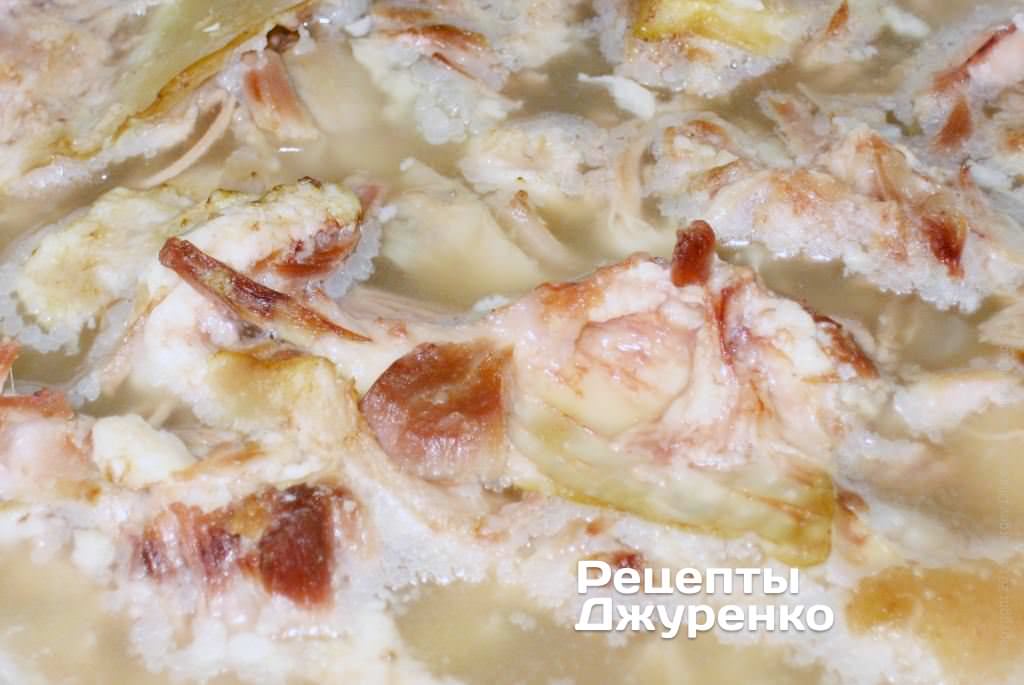
- Or use a paper towel. An ordinary paper towel dropped onto the surface of the broth gets coated with a film of fat; lift it out and throw it away. Repeat this several times and you can clear almost all the fat off the surface. Oh, by the way, leave a little fat, and the surface of the finished kholodets will have a “frost” on it.
- You can do a test that answers the question “will it set or not.” Put a drop of broth on your index finger and thumb and check that they stick together nicely. If they don't, you must have made your kholodets from bouillon cubes.
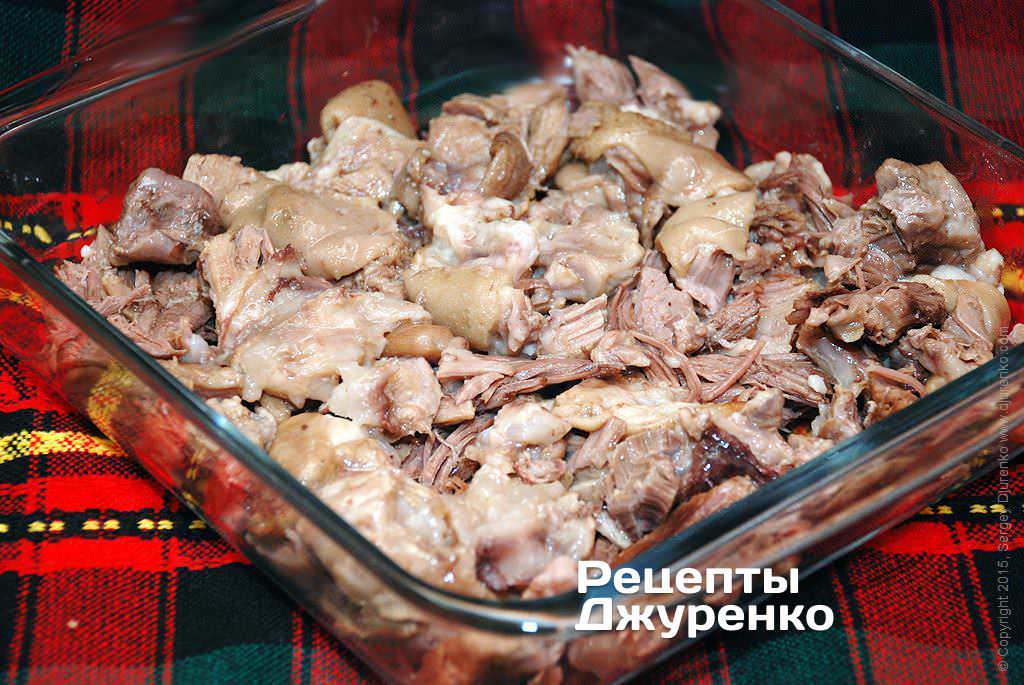
- Sort through the cooled meat by hand, removing and discarding all the bones. This is important, because you can easily break a tooth on a bone. You can cut the meat into small pieces, pull it into shreds, or use it as is, in chunks.
- Get out several deep plates or molds for the kholodets. Large rectangular enamel trays, trough-like, or deep soup plates are very convenient.
- At the bottom of each plate you can put some parsley, a piece of hard-boiled egg and some carrot taken from the broth. Put the meat in the plate. Lots of it; it's tastier that way.
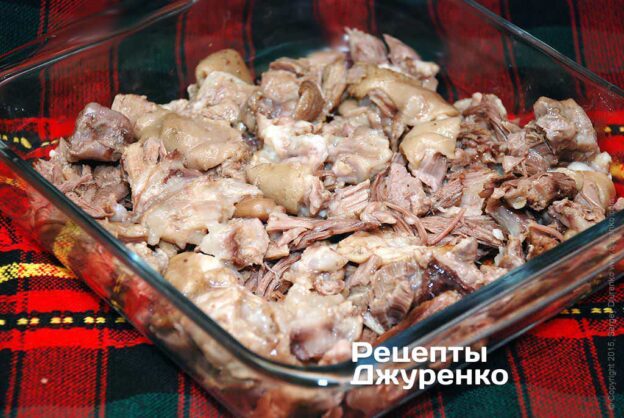
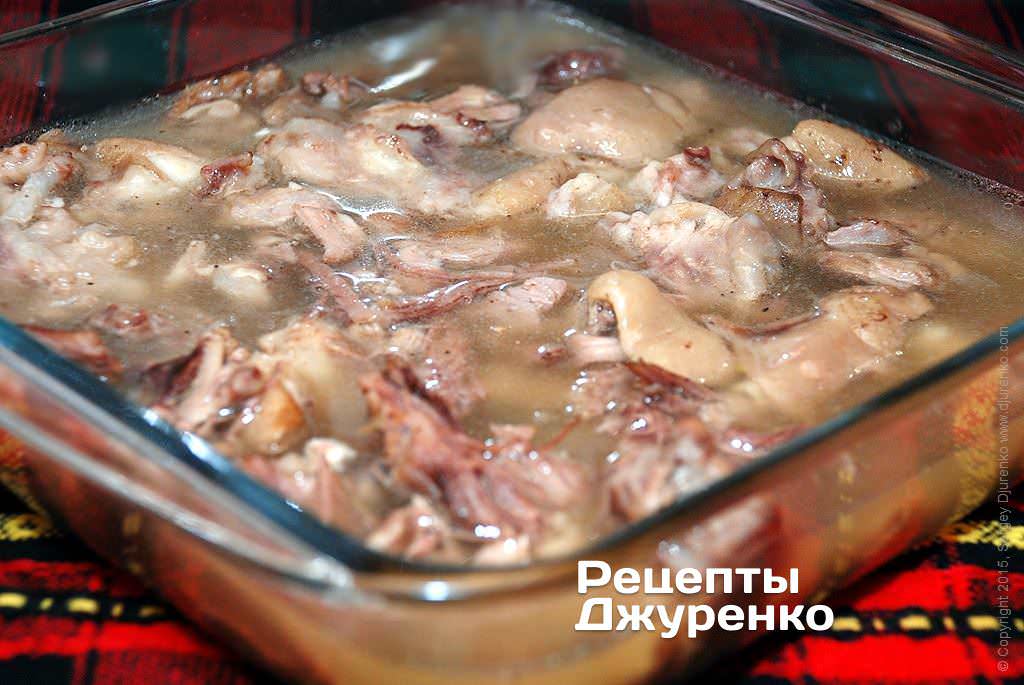
- Pour over the cooled broth so the meat is completely or almost completely covered.
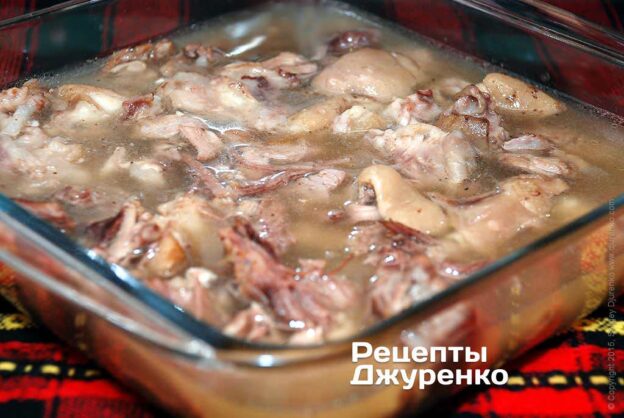
- And now the hardest part. Put the kholodets in a cold place, preferably the fridge rather than the balcony. On the balcony it will simply freeze instead of setting. Now you need to be patient and wait several hours. Meanwhile, you can make grated horseradish or mustard, which are rightly considered the best accompaniments to kholodets.
- Before serving, you can warm the bottom of the plate of kholodets a little, literally for 5-10 seconds, by dipping it in boiling water; the layer touching the plate will melt slightly and you can easily turn it out onto a large platter, where it can be sliced into portions and garnished. That said, the plate the kholodets set in looks more than fitting on the table.
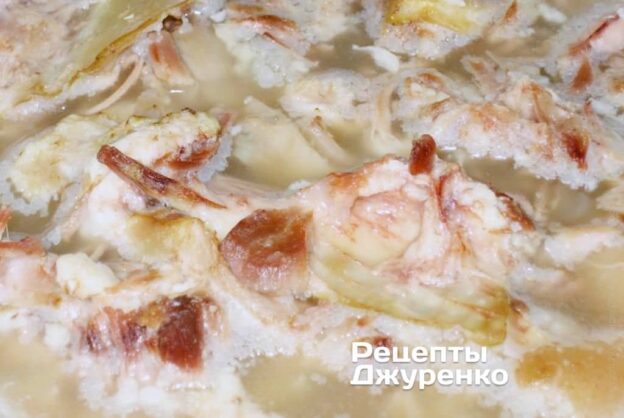
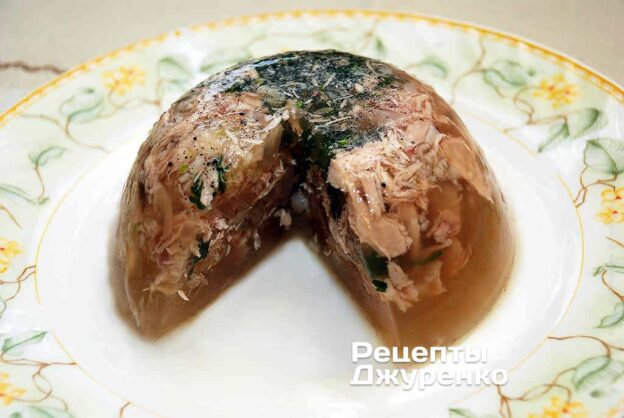
- There you go! A plate of kholodets, horseradish or mustard, and fresh dark rye bread!
Serves: 6-8 plates Calories: 183 Prep: 8 h (on average) Cook: 7-8 h Total: 1 day (including setting) Category: Snacks and Sauces Cuisine: European Rating: