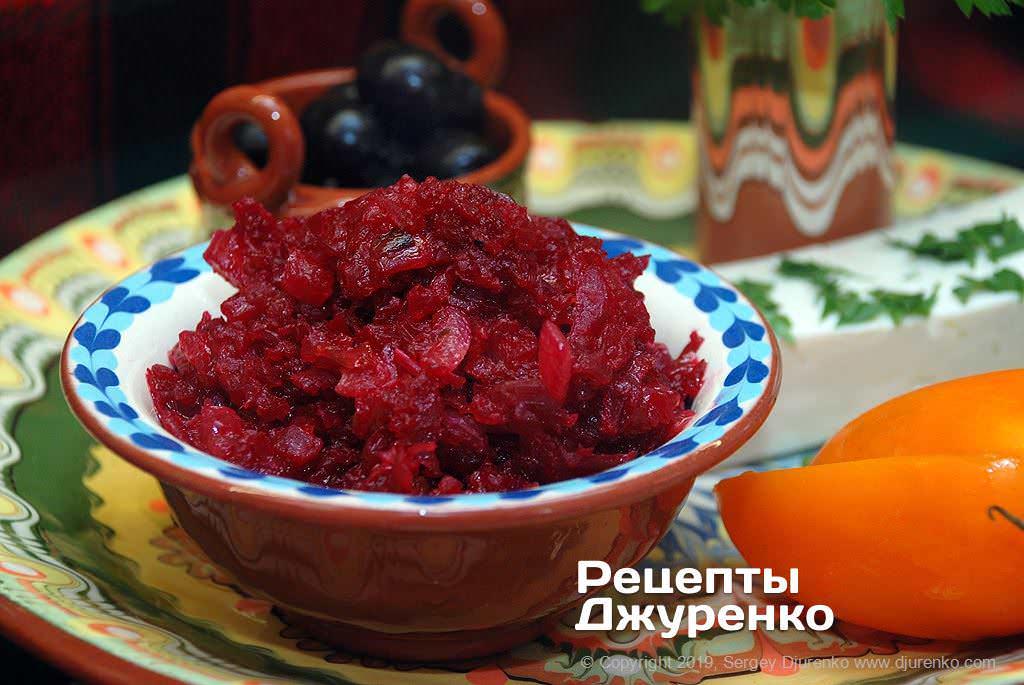
Beet Caviar: Easy Homemade Appetizer Recipe
Homemade beet caviar is an exceptionally tasty vegetable appetizer that can be served either hot or cold. Caviar is usually thought of as a cold appetizer, but this beetroot version is good either way. Vegetable caviar is normally made from several vegetables and named after the one that makes up most of the mix by volume. Beet caviar is made almost entirely from a single vegetable.
Everyone here knows how to make tasty zucchini caviar. It is the most democratic and affordable appetizer, and you can buy it in any store. It is a pity that lately it is more and more often made from pumpkin, judging by the color of the product. Eggplant caviar is not as popular, but it is also sold everywhere. Beet caviar, though, is not something you find in shops. Maybe I simply never noticed it.
At heart, the Balkan lutenitsa and the Serbian ajvar are typical vegetable caviars. They are often a complex mix of roasted eggplant, sweet and hot peppers, onion, garlic, herbs and spices. For beet caviar it is better to bake the roots than to boil them. Baking makes beets soft and gives them a distinctly sweet flavor. A little lemon juice or wine vinegar only brings out the flavor of the beets.
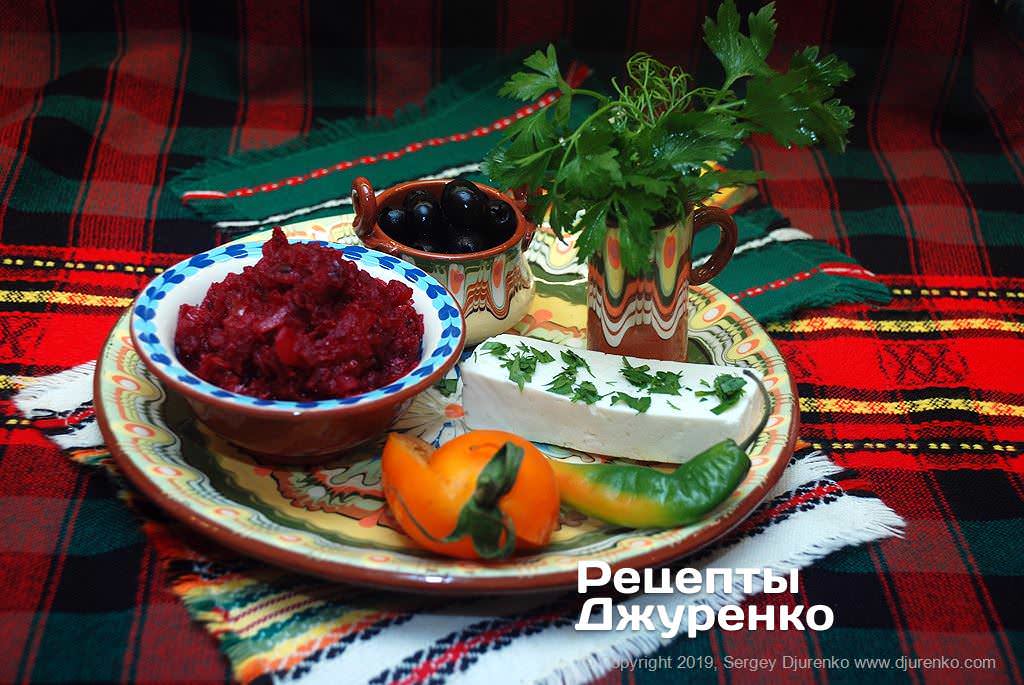
Beet caviar makes a wonderful side dish. It contains little liquid and does not spread. The bright burgundy vegetable mix decorates the plate all by itself. To serve it as an appetizer, add feta, fresh sliced vegetables, herbs and fresh bread. A big plate of cheese and vegetables, the caviar and bread make a great breakfast.
The beets must be baked, in the oven or in a microwave. This matters because during baking the roots lose some of their moisture and become aromatic and slightly sweet.
For baking, choose small roots with no signs of rot or spoilage. It is also best if the beets are a proper named variety rather than a cross-pollinated one. This matters because non-varietal beets rarely have an even, deep purple color. There are excellent varieties whose roots are very dark in cross-section, almost black, and these are the best. Sometimes you come across poor-quality beets with alternating light purple and almost white layers, and those are not suitable for cooking at all.
More with beets
 Pickled BeetsHomemade pickled beets: boiled beet slices in a wine vinegar marinade with garlic, herbs and spices. A small jar keeps in the fridge and is ready in 3-5 days.
 Homemade Horseradish with BeetHomemade prepared horseradish with beet juice, vinegar, sugar and salt. Fiery, bright pink and perfect with meat aspic, roast pork, fish and any meat.
 Vegetarian Borscht Without MeatTasty Ukrainian red borscht without meat: beets, carrot and onion braised with tomato, plus beans, potatoes and young cabbage. Ready in 45 minutes.
 Beet Salad with GarlicBeet salad with garlic: baked beets grated with sweet white onion, garlic and olive oil, served cold with garlic toast. A simple step-by-step recipe.
 Beetroot Salad with Sour Cream DressingEasy beetroot salad with baked beets and a light sour cream, mustard and soy sauce dressing instead of mayo. Tasty all year round, step by step with photos.
Ingredients
2 servings
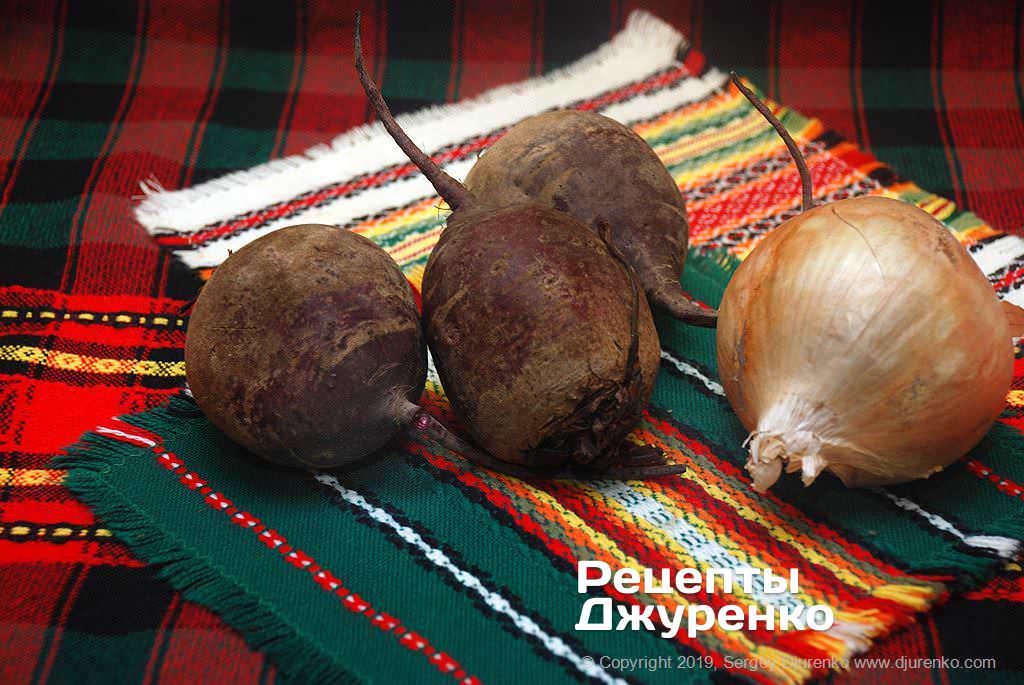
- Beets 3-4
- Onion 1
- Butter 30 g
- Salt, black pepper, lemon juice to taste
- Herbs, feta, olives, sliced vegetables, chili for serving
Step-by-step recipe
- Scrub the good beetroots thoroughly to remove the soil, then trim off the roots and tops. Cut off the tail. Wash the beets and wipe them dry. Next they need to be baked in whatever way is available: in the oven, or in a microwave. I have long baked vegetables for bean vinaigrette in the microwave. It is quick and easy. I pierce the washed beets right through with a knife, put them on a microwave-safe plate and cook on full power for 15 minutes. Then I add 4-5 minutes at a time as needed. The beets should start to wrinkle and be pierced very easily by a knife.

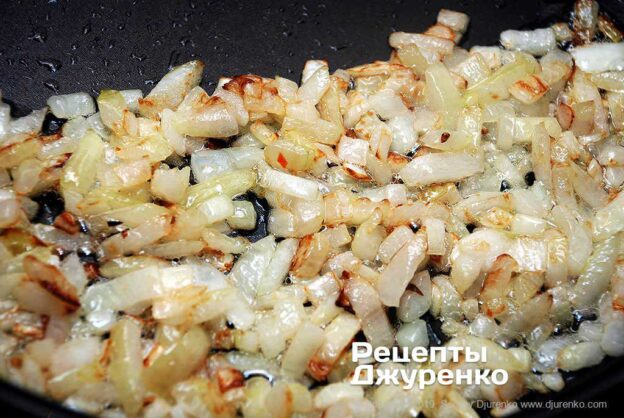
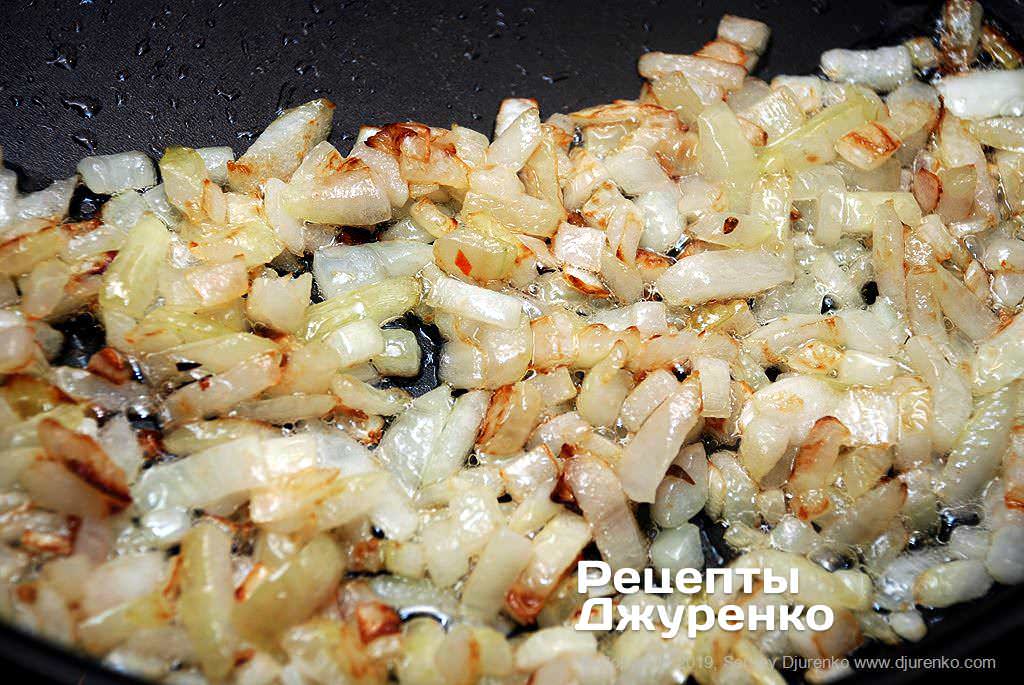
- Peel the onion and chop it, not too finely. Melt the butter in a frying pan and cook the onion in it until soft and a pleasant golden color. Never overcook the onion, or the beet caviar will have an aftertaste. It is better to lower the heat once the onion begins to darken and keep frying on a lower heat, which makes it easier to control how far it browns.
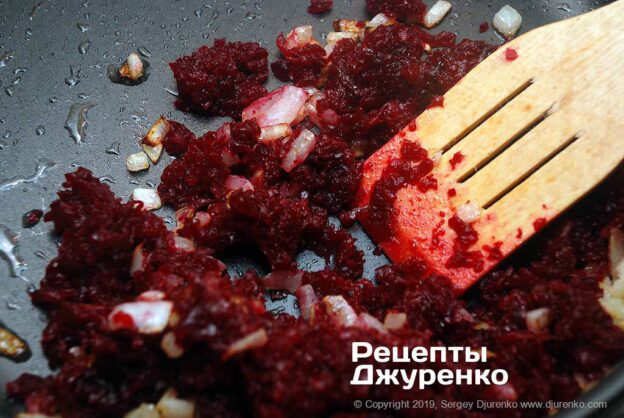
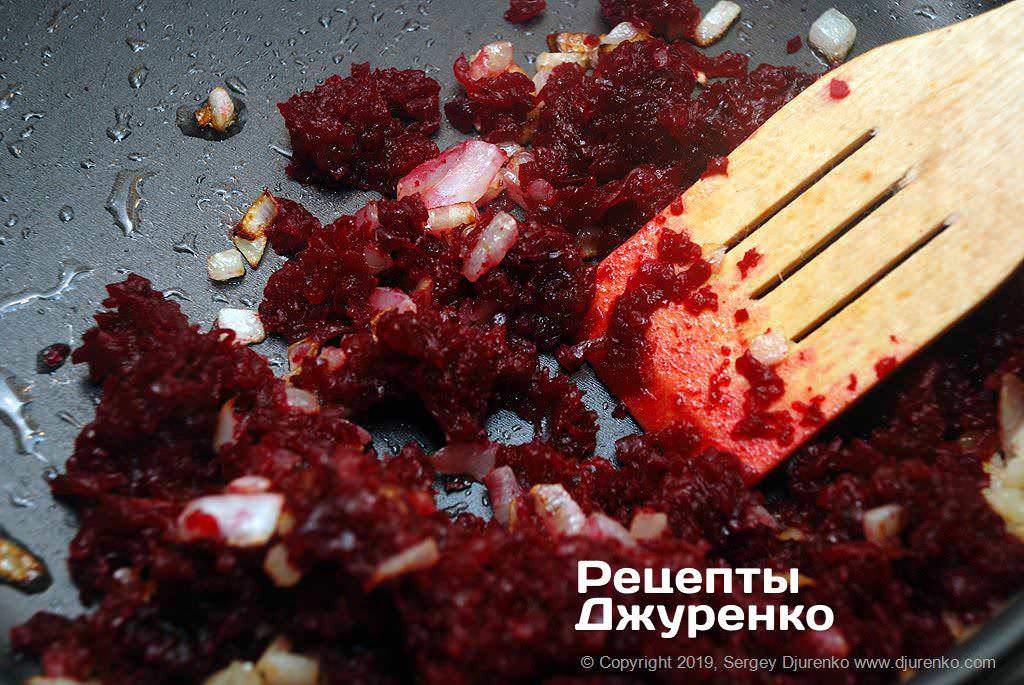
- The baked beets should have cooled a little by now, and you need to peel off the wrinkled skin. Grate the beets on a coarse grater and then chop further with a blender in pulse mode. You should get an even mass with small pieces. Add the chopped beets to the fried onion. Salt and pepper the vegetables and add 1 tsp lemon juice, and a little lemon zest if you like.
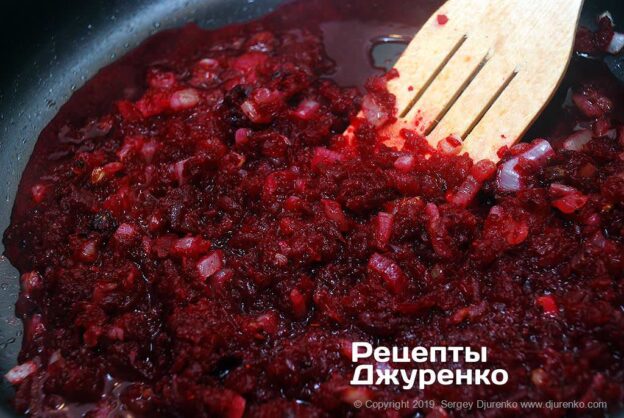
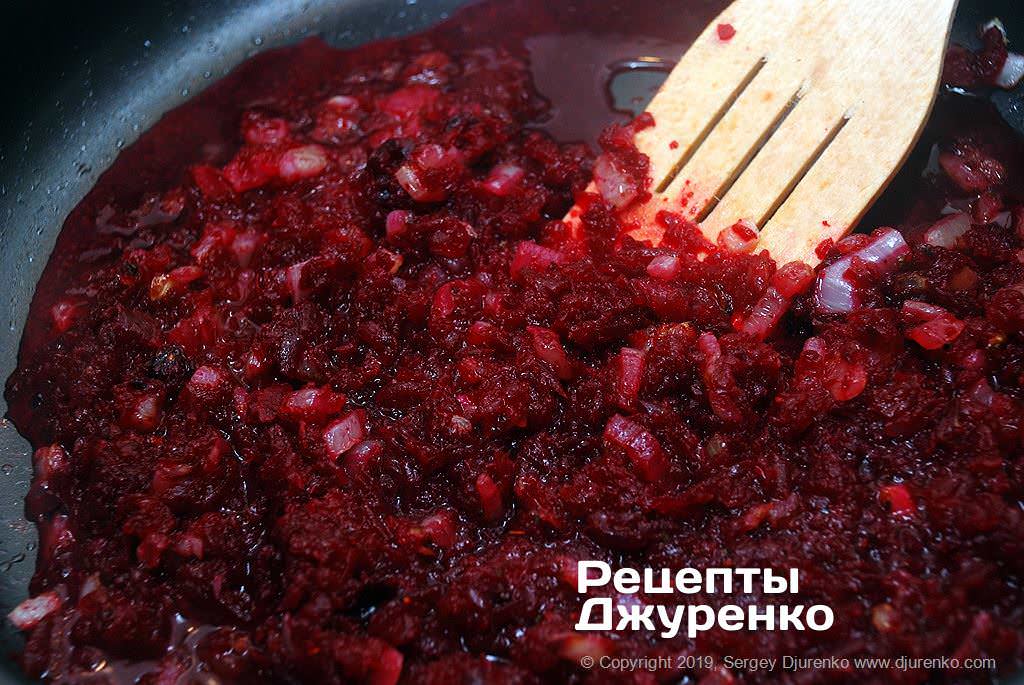
- Stir constantly so the mixture does not burn, and fry the vegetables for 4-5 minutes. Then add 1/2 cup hot water and simmer under a lid for 10 minutes. During this time all the liquid will be absorbed and evaporate. If needed, take off the lid and let the extra moisture evaporate. In the end the beet caviar becomes even, a pleasant dark color and very fragrant.
- Beet caviar should cool, or even be well chilled, although many people like it warm. Put the caviar into a small bowl or salad bowl. To serve, set the bowl on a large plate and add sliced tomatoes and cucumbers, pieces of feta, olives and herbs.

- As a standalone appetizer, the caviar can be served with white bread. As a side dish it goes well with mashed potatoes and homemade breaded pork cutlets. The caviar keeps in the fridge only for a short time, so it is better to make it for a single meal.
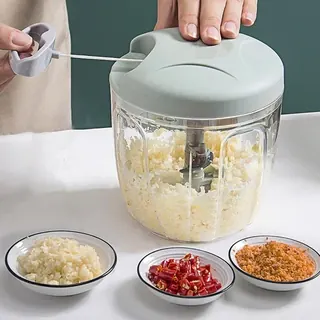 Pull chopper for garlic and onionAliExpress
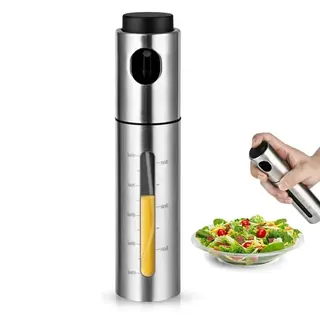 Oil sprayerAliExpress
 Kitchen scale up to 5 kgAliExpress
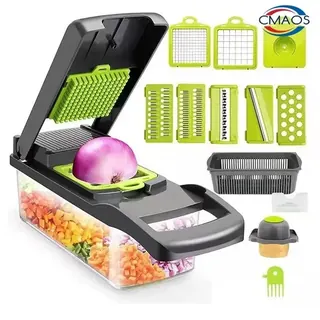 Vegetable chopper with handleAliExpress
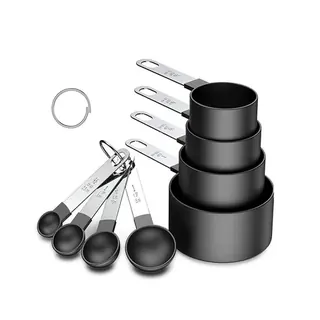 Measuring cups and spoonsAliExpress
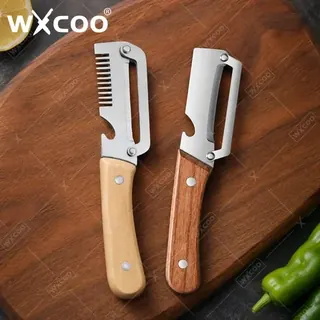 Peeler with wooden handleAliExpress
| Yield: | 2 servings |
| Calories: | 90 kcal per 100 g |
| Prep: | 45 mins |
| Cooking: | 15 mins |
| Total time: | 1 h |
| Cuisine: | European |
| Rating: |