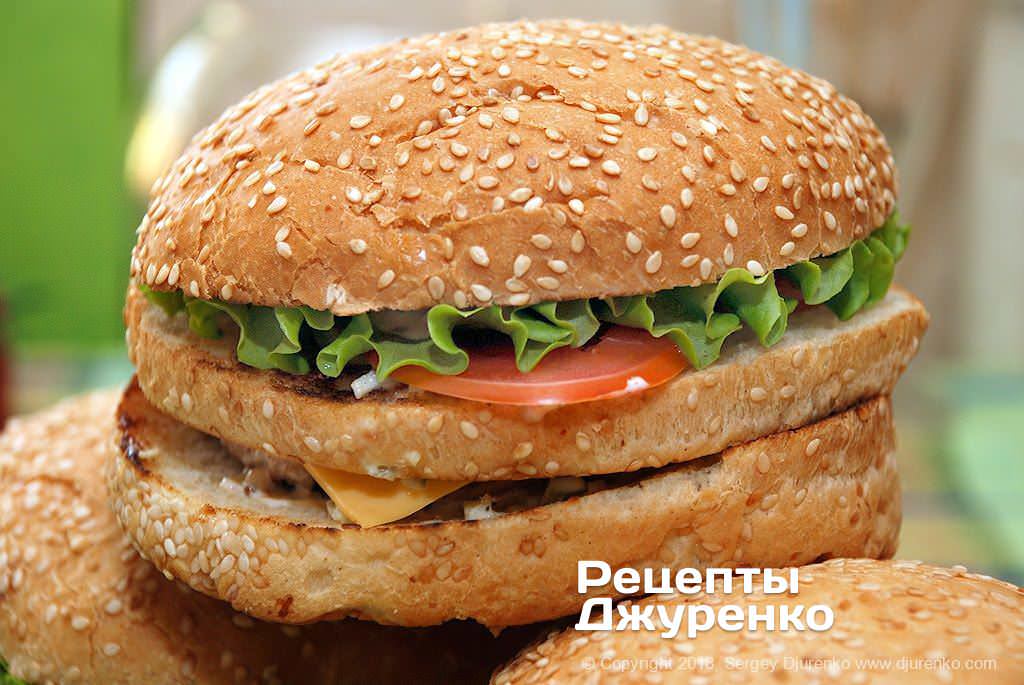
Homemade Burger





Ingredients
4 burgers
- For the patties
- Pork 150 g
- Beef 150 g
- Beef fat 1 tbsp
- Coarsely ground sweet paprika ½ tsp
- Salt a pinch
- Black pepper to taste
- For the sauce
- Mayonnaise 3 tbsp (43 g)
- Mild whole grain mustard 1 tsp (5 g)
- Sugar 1 tsp (5 g)
- Sweet paprika ½ tsp
- Salt a pinch
- Granulated garlic a pinch
- Gherkin brine to the consistency of kefir
- For assembly
- Hamburger buns 4
- Processed cheddar slices 4
- Pickled gherkins 5–6
- Sweet white onion 1
- Lemon juice or grape vinegar for the onion
- Tomato 1
- Lettuce leaves 8
Step-by-step recipe
Buns
A homemade burger recipe can vary widely depending on what you like and what you have on hand. Strictly speaking, what I’m giving here is a cheeseburger recipe. But, as always, someone doesn’t like cheese, and then it’s a hamburger recipe. The key thing is that all the fillings take just a few minutes, you can buy fresh, excellent buns, and the patties can be shaped ahead of time and frozen.
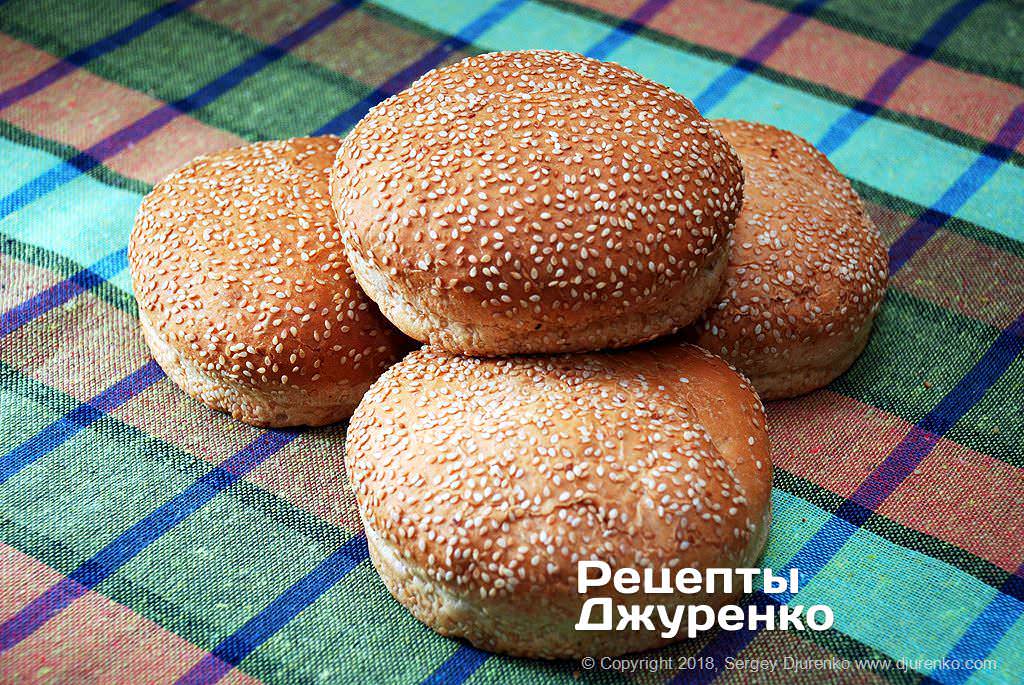
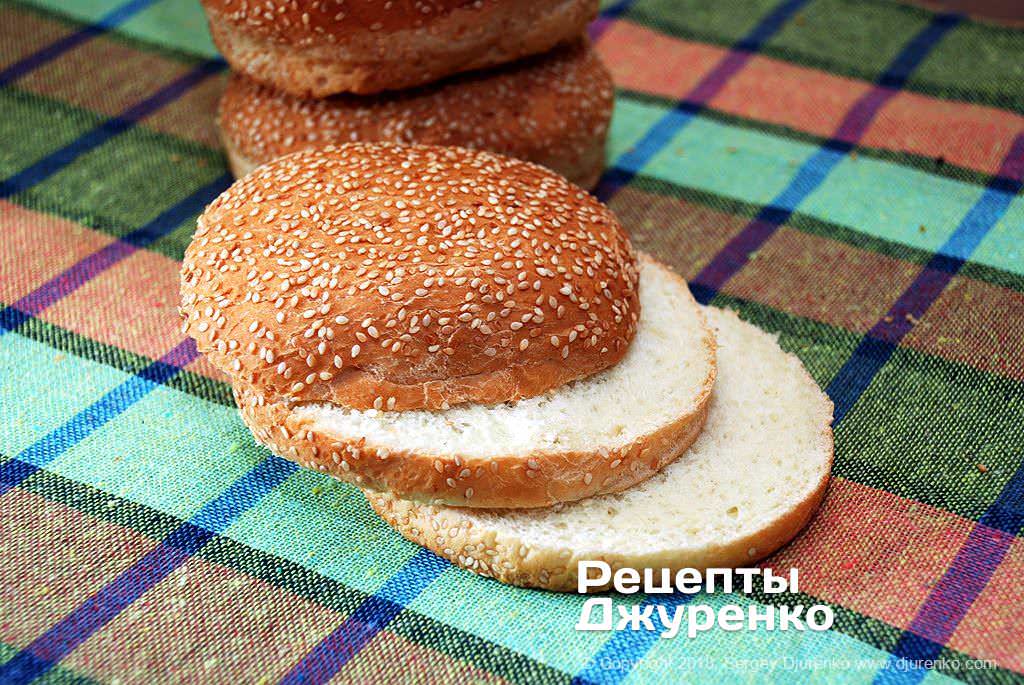
Buy hamburger buns. Baking really good buns takes experience and skill, so it’s better to buy them. They’re sold in most stores, usually packed several to a bag, always an even number.
I went for very fresh large sesame buns — they’re more suited to a Big Mac, but they made a great homemade hamburger. It’s best if the buns are very fresh, since they get a bit tough later.

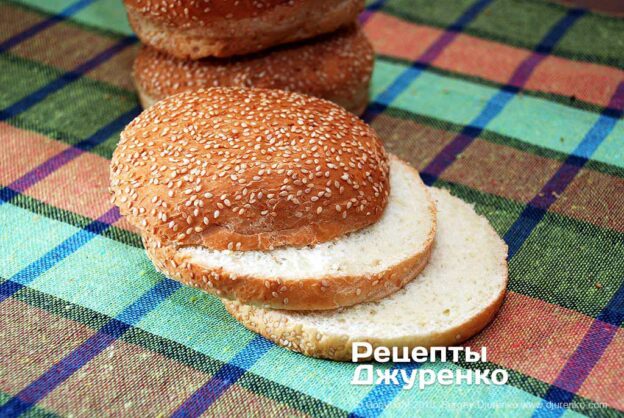
Slice each bun into three pieces. Hamburger buns are usually cut in two, but for more elaborate burgers they’re cut into three.
I read somewhere that in fast food restaurants the bottom of the sliced bun is called the heel, the middle the club and the sesame top the crown. To keep the bun from crumbling, slice it with the sharpest large knife you have, and don’t press it against the board — cut it literally in midair.
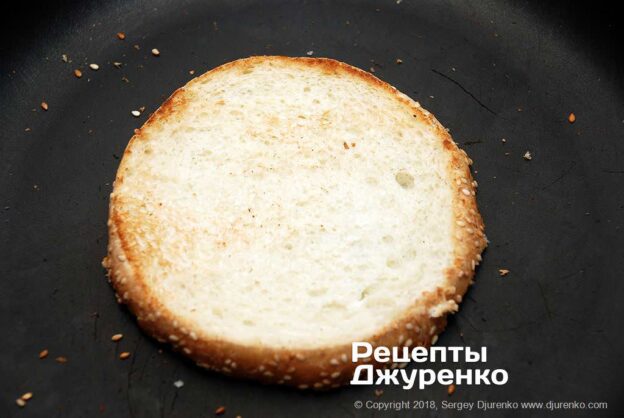
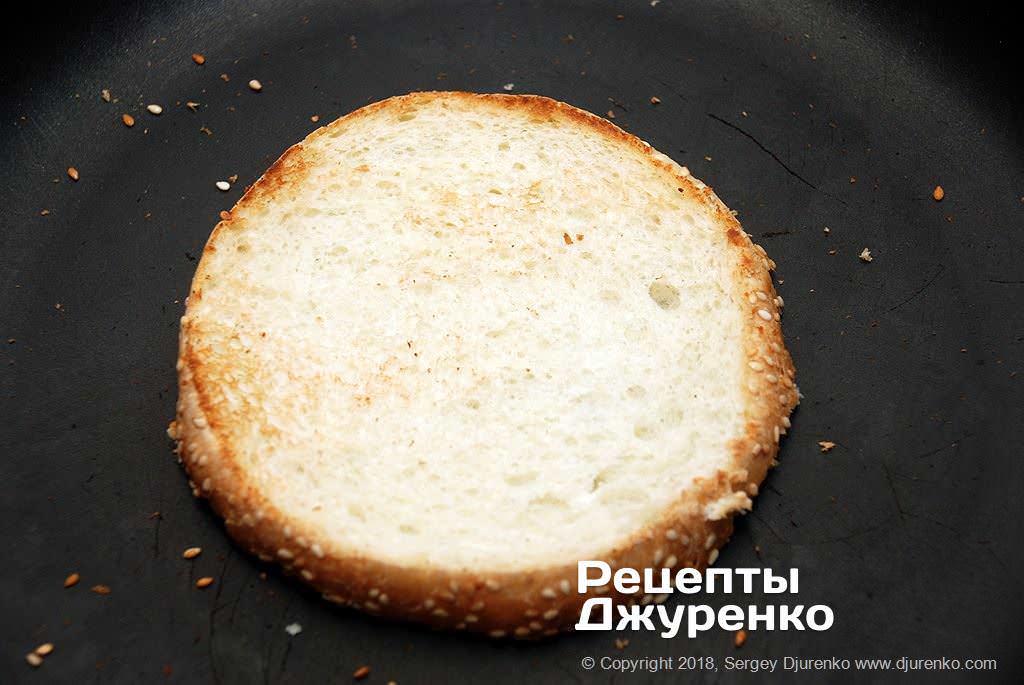
Without greasing the skillet, lightly toast all the bun pieces for 1 minute per side. The outer sides of the top and bottom don’t need toasting. If you have a toaster, great, but an ordinary skillet works just as well.
Transfer the lightly toasted bun to a plate, taking care not to mix up the pieces of different buns.
Patties
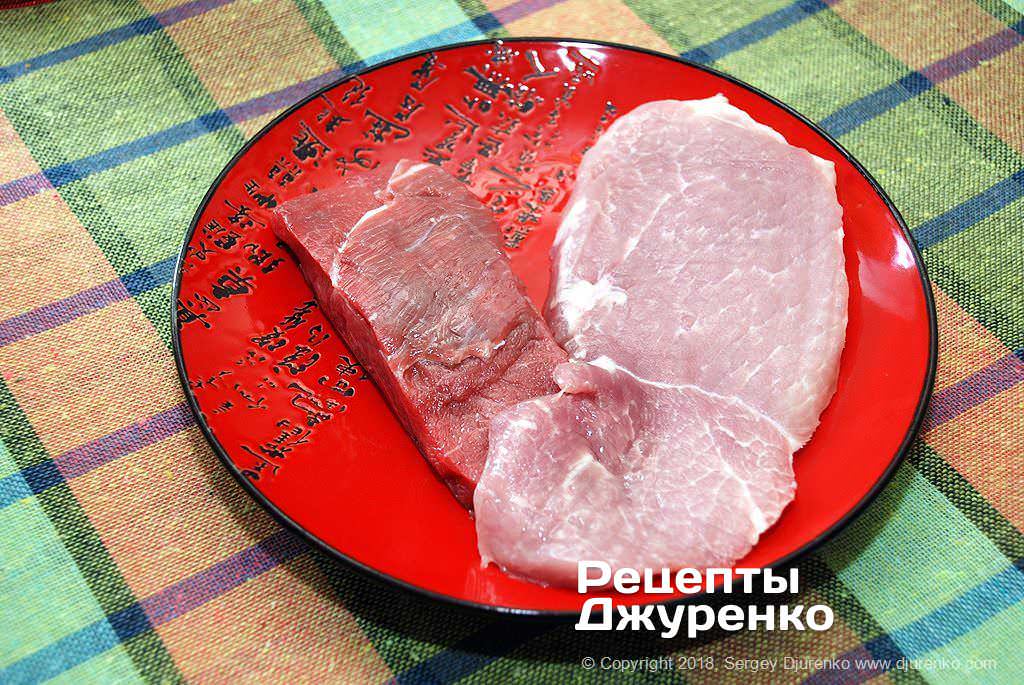
Burger patties are usually made from beef or a mix of beef and pork. The meat should be fairly fatty, or you should add a little beef fat to the ground meat. Fillers and additions — especially egg and bread — are a no-go. A proper burger has a patty of pure meat.
Prepare the ground meat. If the meat was frozen, move it from the freezer to the fridge ahead of time.
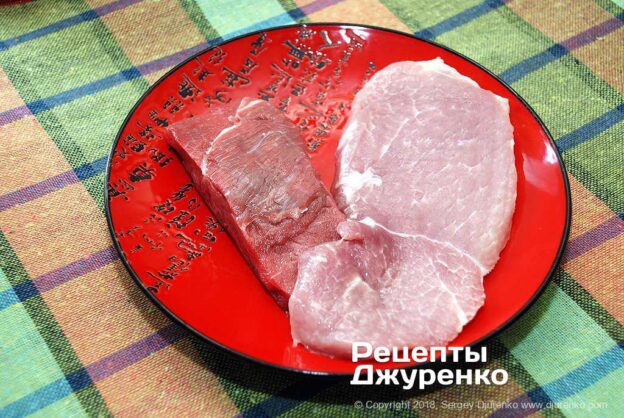
Grind all the meat twice. If the meat isn’t fatty enough, add a little beef fat and grind that too.
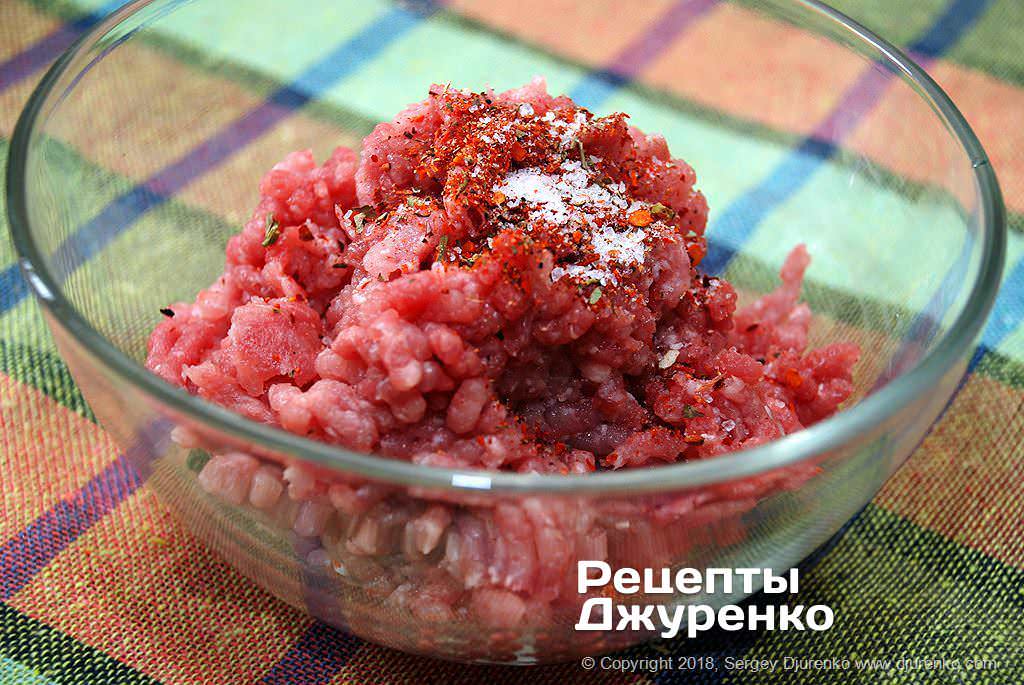
Season the ground meat with a pinch of salt and some pepper, and add ½ tsp coarsely ground sweet paprika.
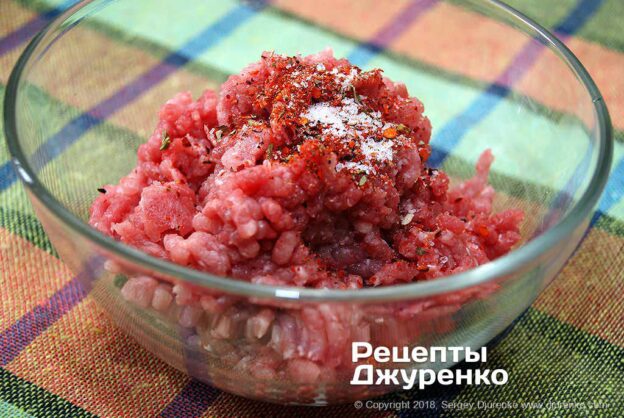
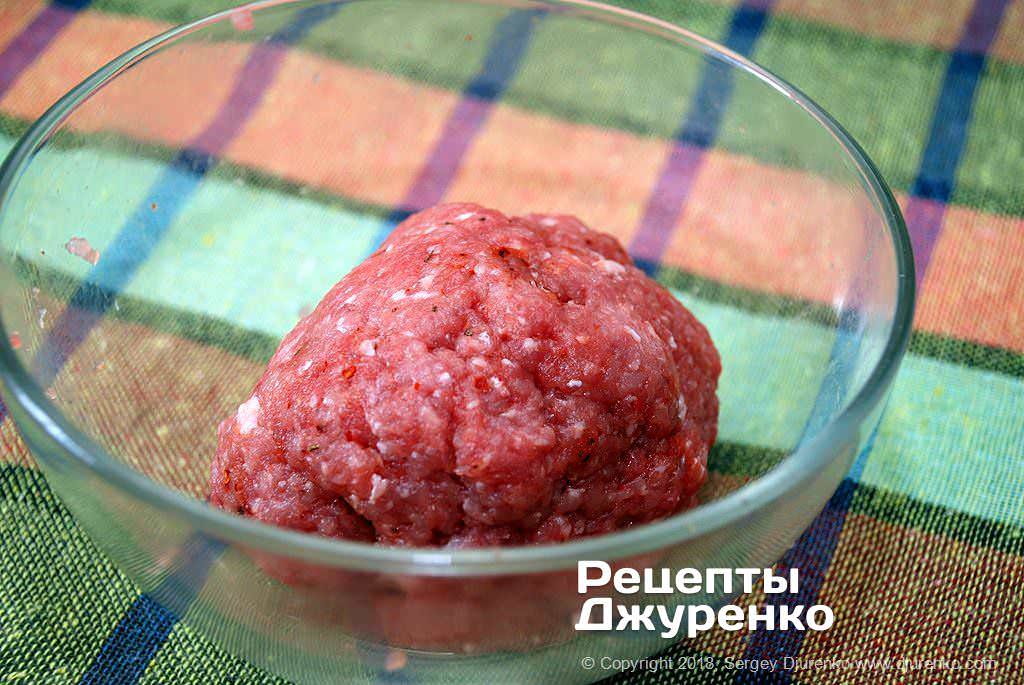
Mix the meat thoroughly until completely uniform.
If for some reason it seems underseasoned, it’s better to add more pepper after frying. Besides, the sauce affects the burger’s flavor more than the seasoning in the meat.
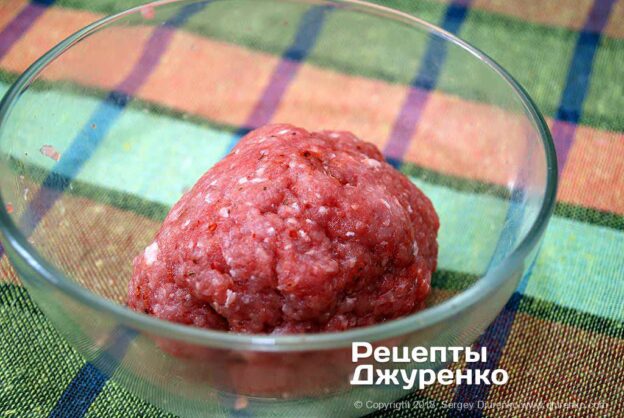
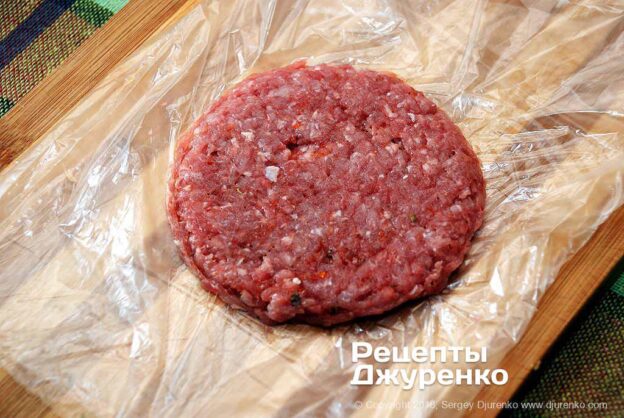
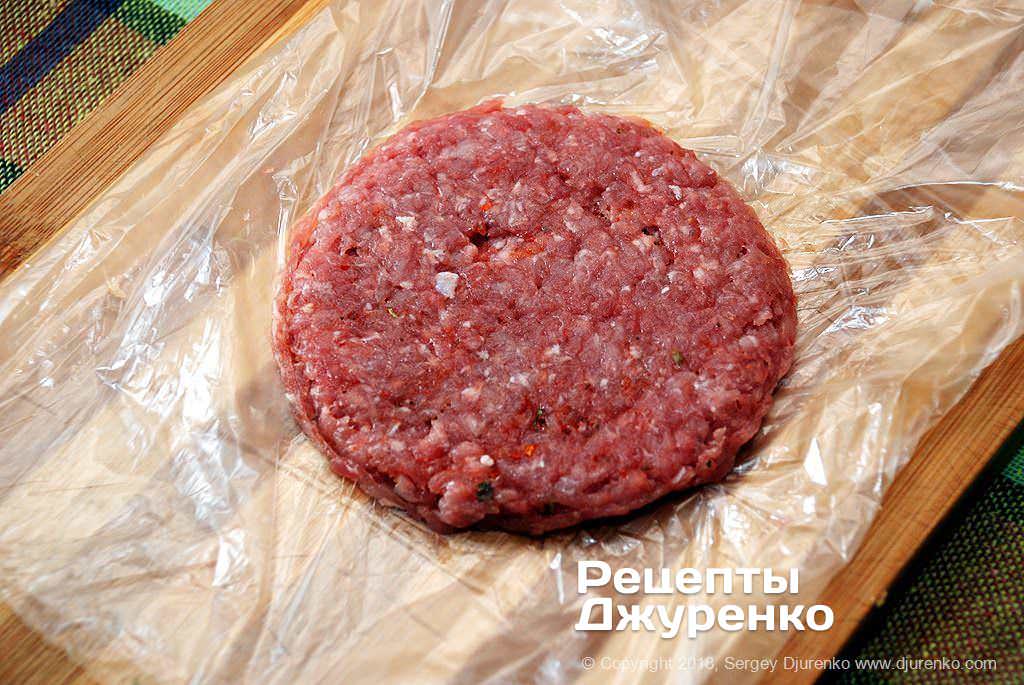
Shape the patties. Get everything ready for shaping the patties. There are all sorts of presses and gadgets, but at home, in the simplest version, you’ll need two cutting boards, thin plastic wrap and a round cutter, the kind usually used to cut dough for dumplings.
There’s a subtlety here. A meat patty usually shrinks a little as it cooks, so it will end up 1–2 cm smaller than the cutter. Keep that in mind. Although when you bring a homemade hamburger to the table, nobody will notice that the patty is a little smaller than the bun.
Spread a piece of plastic wrap on a board. Divide the ground meat into 4 portions. Put one portion on the plastic and flatten it with your palm.
Cover the meat with another piece of plastic and press it down with the second board. The finished burger patty should be 8–10 mm thick.
That said, you’ll see both thinner patties and monster ones a finger thick.
Cut out a round patty with the cutter, then remove the excess meat and reuse it. The meat doesn’t stick to the plastic.
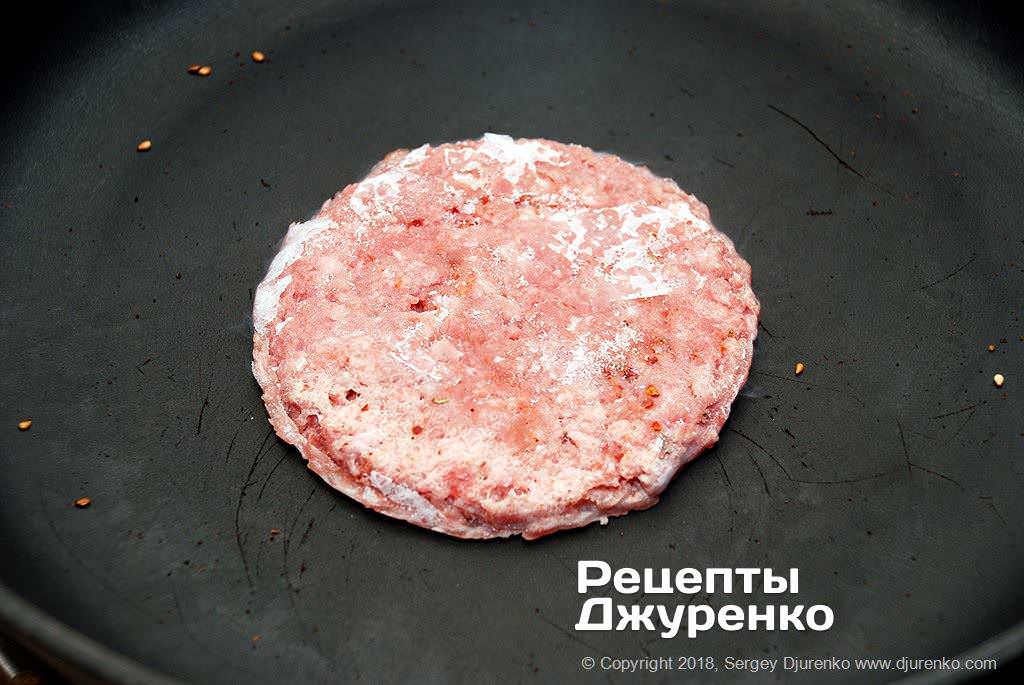
For easier frying, it’s better to freeze the patties.
Fry the patties. Right before assembling the burgers, fry the patties so they’re ready by the time you serve. Heat a flat-bottomed skillet well. Don’t grease it with oil or any fat! Hamburger patties are cooked on a dry grill or skillet.
By the way, a frozen patty fries even better and holds its shape more.
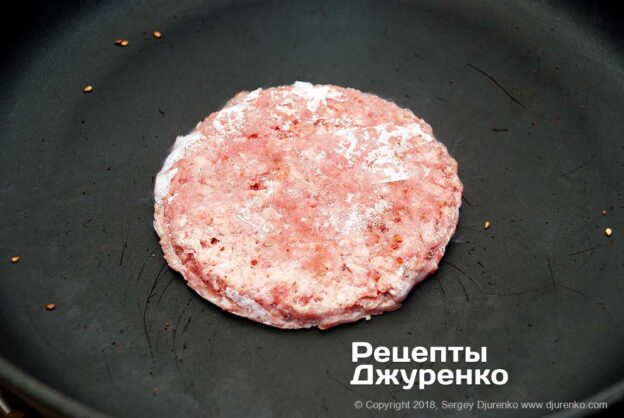
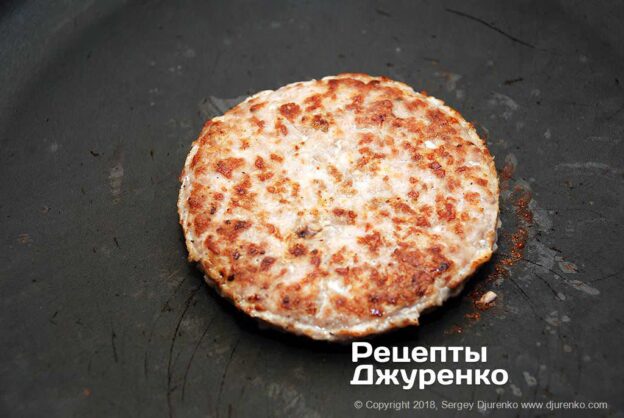
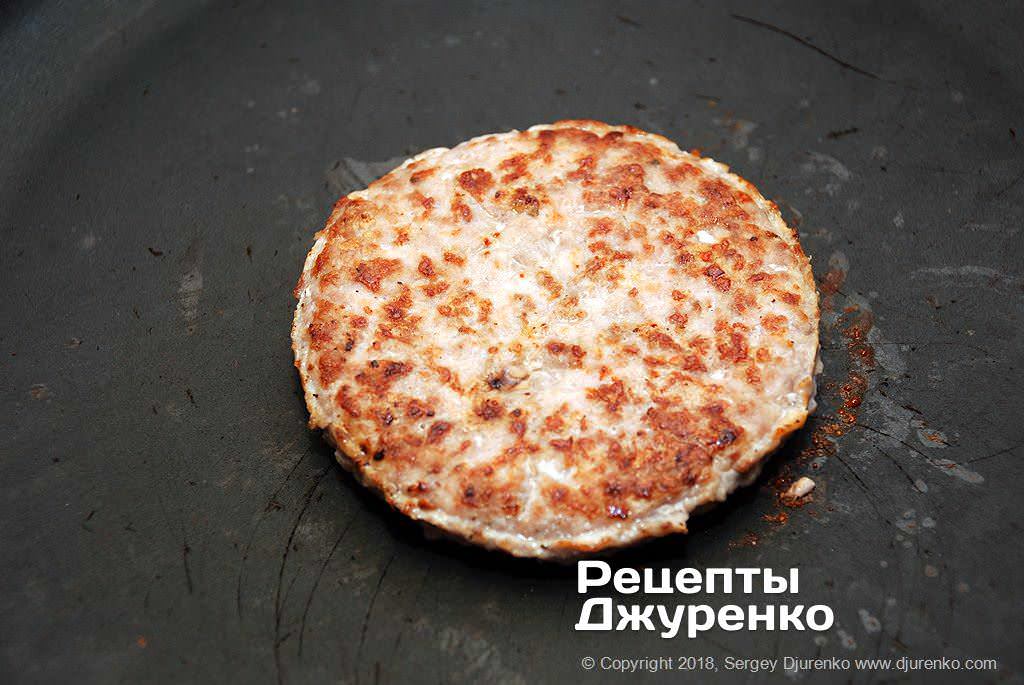
Put a patty in the hot skillet and fry for 3–4 minutes. Don’t worry — the meat won’t stick to a hot skillet.
Flip the patty with a spatula and fry the other side. If you think it’s needed, flip it once more on each side for better browning. After that, you can add a little more salt and pepper to the patty if needed.
Sauce
Burger sauce, especially for famous burgers, has always been shrouded in secrets, legends and speculation. If you look closely, most well-known sauces are a variety of Thousand Island dressing — a Canadian-American sauce, salad dressing and even a salad. There’s little point in reproducing it exactly; it’s enough to use it as a base, adding or leaving out certain ingredients. I made the hamburger sauce from simple, easy-to-find ingredients, and it made the burger exceptionally tasty.
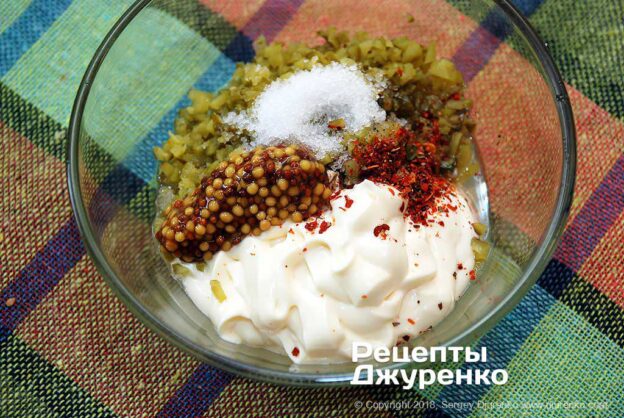
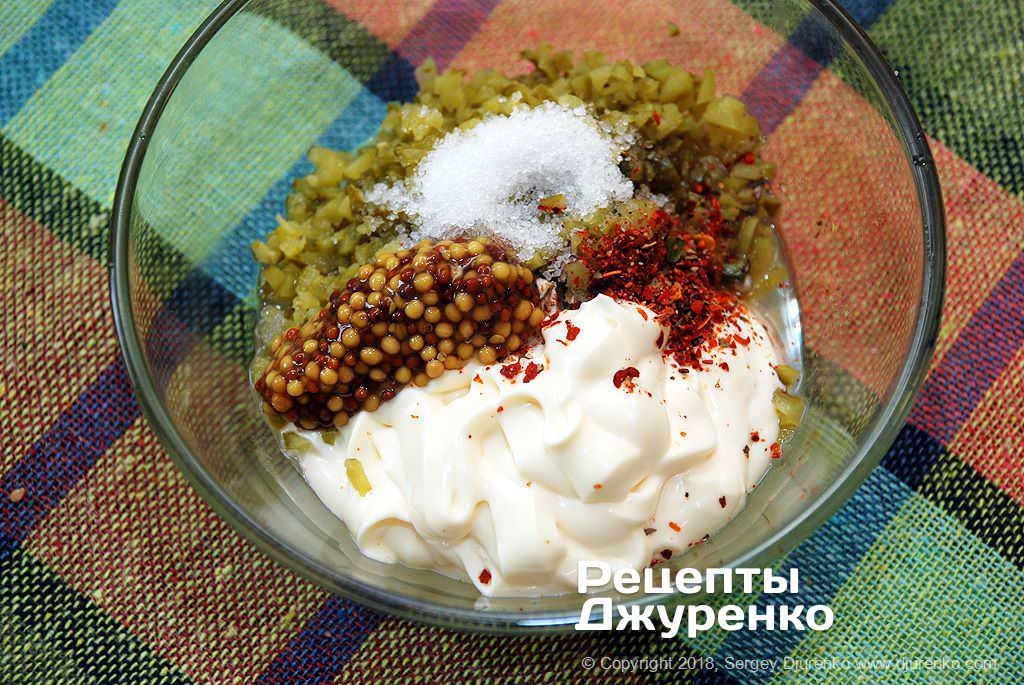
Make the sauce. The base is store-bought or homemade mayonnaise. By the way, it’s easy to make from an egg yolk and vegetable oil, on the same principle as aioli. Take 3 tbsp mayonnaise (43 g) and add 1 tsp mild whole grain mustard (5 g) — the kind called “French” or “Dijon”.
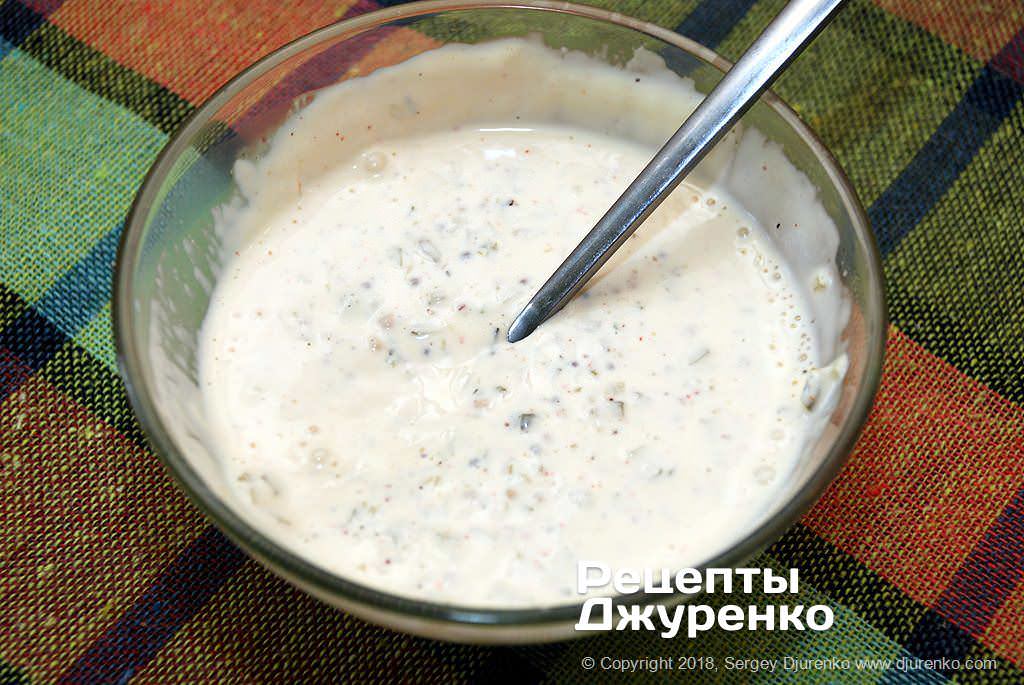
Add a pinch of salt, ½ tsp sweet paprika, 1 tsp sugar (5 g), finely chopped gherkins and a pinch of granulated garlic. Stir.
Usually this kind of sauce is a mix of mayonnaise, something sour, cream and chili, and some kind of tomato — most often ketchup or Tabasco. Pickled vegetables, onion, sometimes garlic, nuts and herbs are often added.
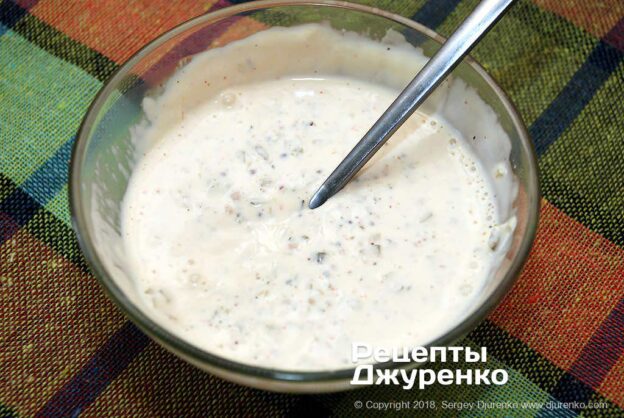
Thin the sauce with brine from the jar of gherkins until it has the consistency of kefir. The sauce should be noticeably tangy and spicy.
Assembling the burger
To make a juicy, tasty homemade hamburger, include green lettuce leaves in the filling — leaf lettuce or oak leaf. You can use iceberg lettuce, but then your burger will start to resemble a Big Mac.
Prepare the vegetables. Cut the sweet white onion into thin strips and marinate it in lemon juice or grape vinegar.
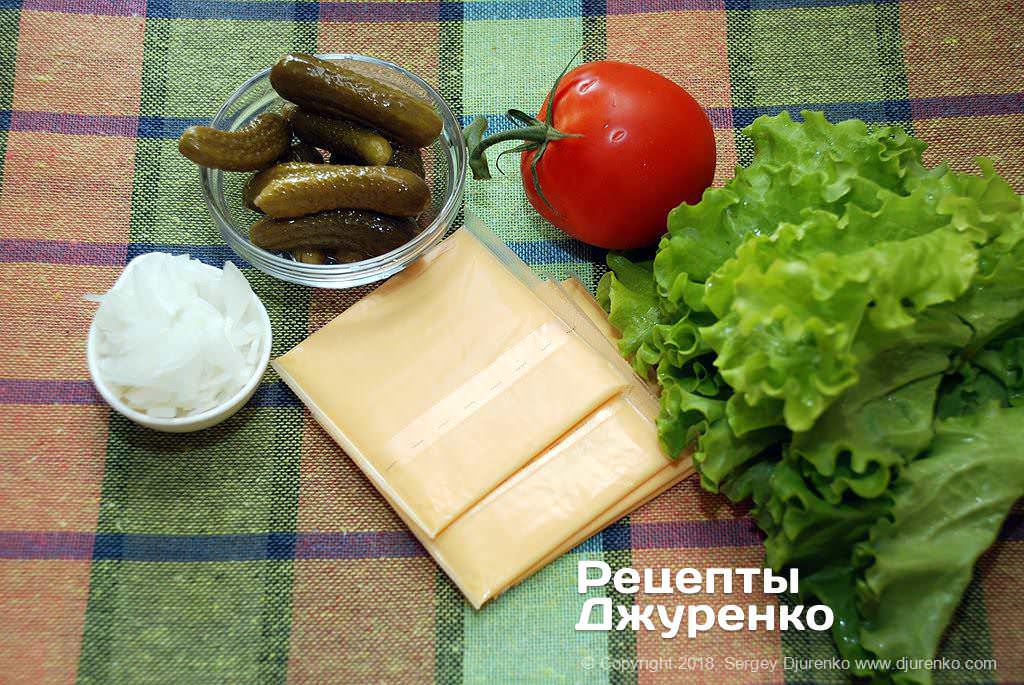
Slice a small ripe tomato into very thin rounds and thinly slice the gherkins. Put the gherkins, onion and tomato in separate bowls.
Pickled gherkins are sold in any store. And the processed cheese: cheddar in individually wrapped slices, just right for one homemade hamburger.
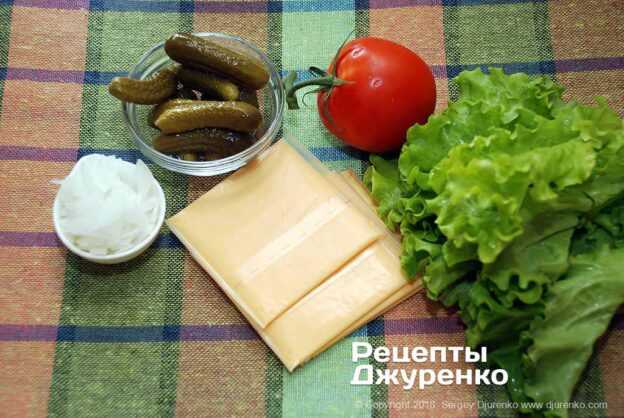
Wash the lettuce leaves and start frying the patties. That’s assuming the buns are already toasted and ready to go.
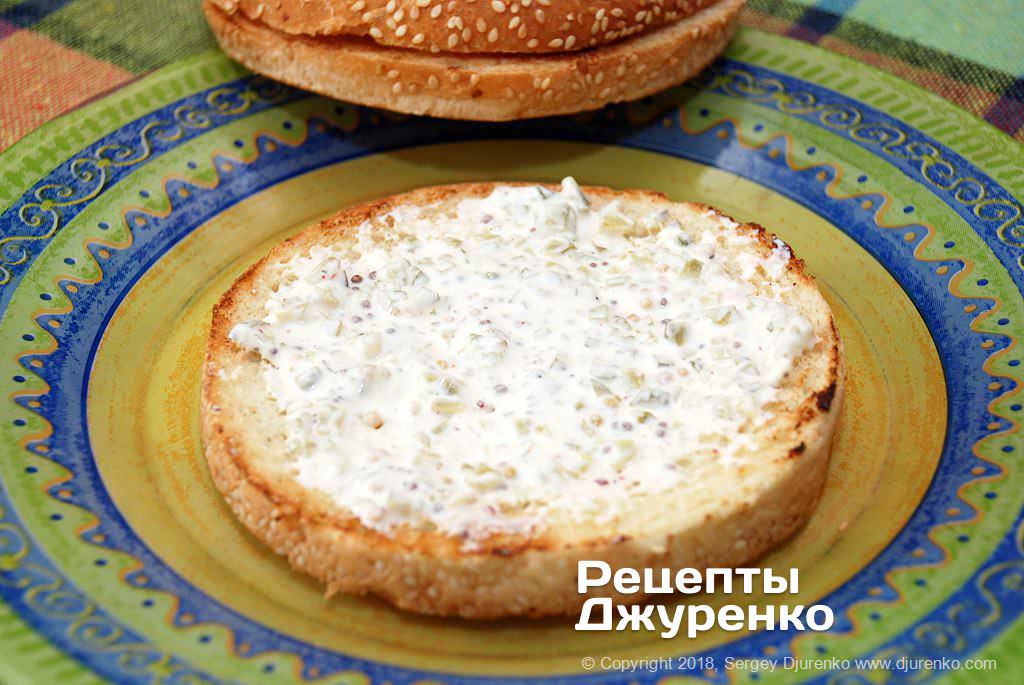
Spread sauce on the cut side of every bun piece — the white side. As they say, don’t be stingy. Each bun should have four surfaces spread with sauce.
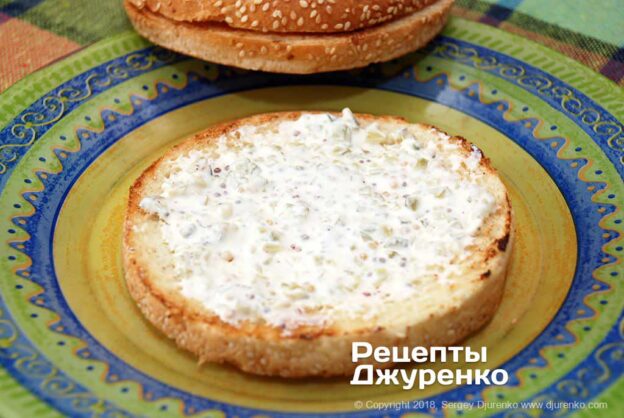
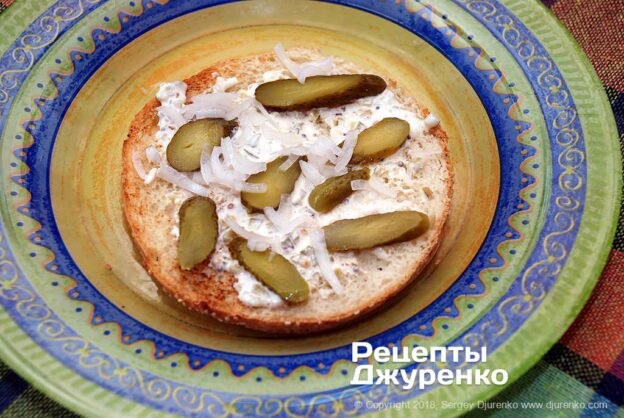
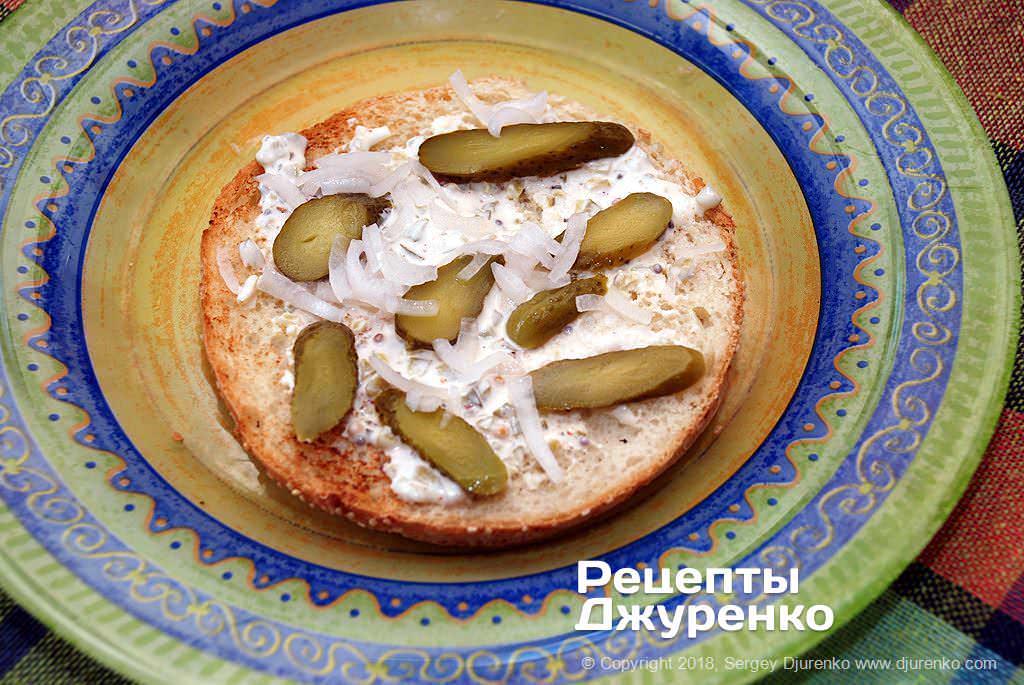
First assemble the top part of the homemade hamburger: spread thinly sliced gherkins over the whole middle piece of the bun.
Every hamburger recipe usually specifies how many slices you need, but at home you use whatever pickles are in the store rather than “standard” ones.
Sprinkle 1 tsp lightly marinated sweet white onion evenly over the top.
If onion isn’t an option, make the sauce a bit more tangy with a few drops of lemon juice or grape vinegar, otherwise the burger will be rather bland.
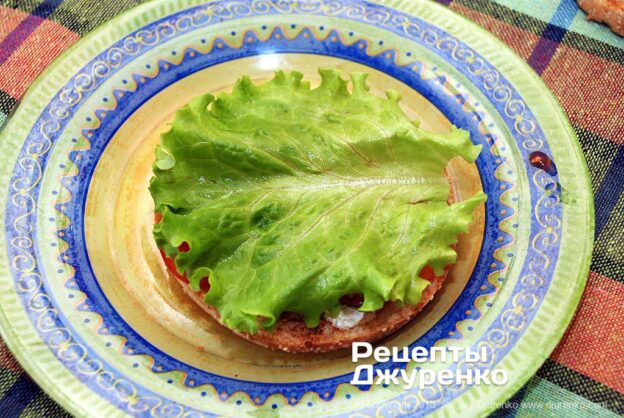
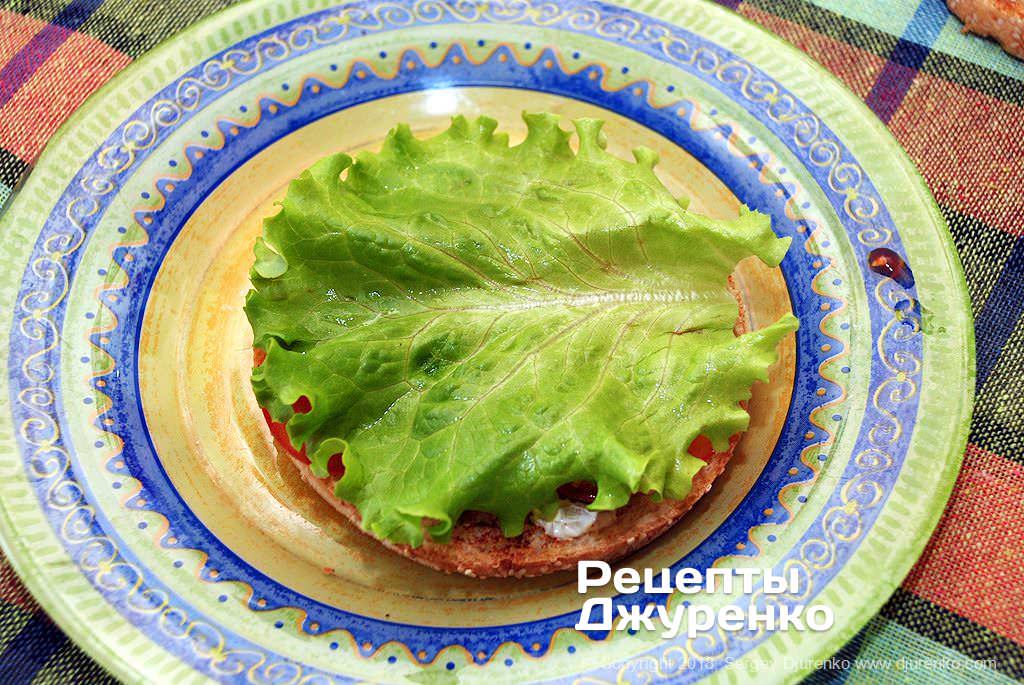
Top with 3–4 very thin tomato slices, then 2 lettuce leaves, washed and patted dry.
Cover the vegetables with the top of the bun — the part called the crown.
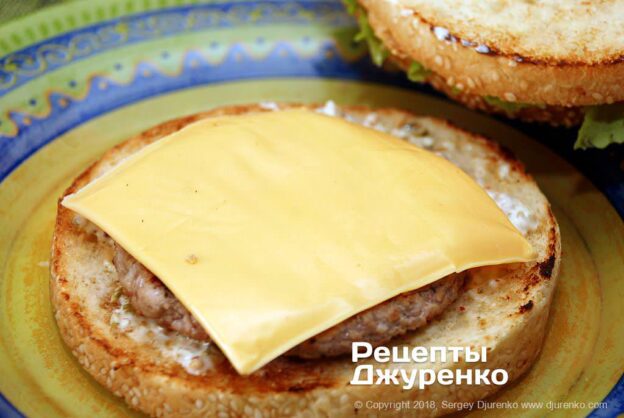
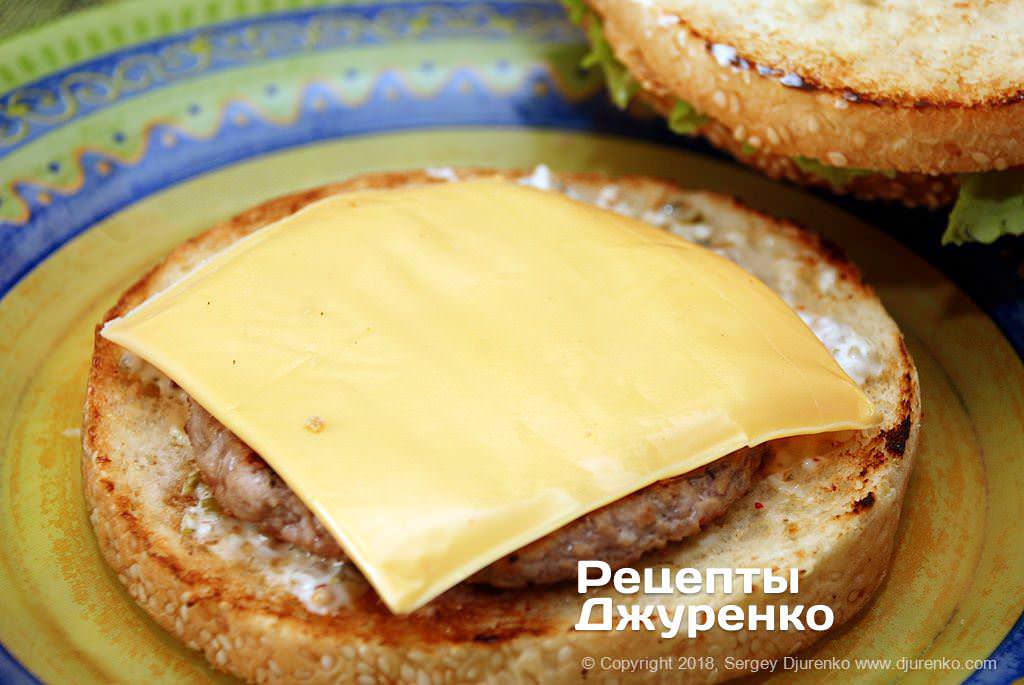
Assemble the burger. Meanwhile, the patties have finished frying. Carefully use a spatula to place a cooked patty on the bottom of the bun — the heel. It’s not a problem at all if the patty is smaller than the bun.
Unwrap a square slice of processed cheddar and lay it on top of the hot patty. The cheese will start to melt a little from the heat of the meat.
Immediately cover the patty and cheese with the assembled top part.
Serving
Serve right away: a freshly made hamburger is still warm and doesn’t need reheating. If it has cooled, you can warm it in a toaster oven or regular oven. Don’t use the microwave — the vegetables will heat up.
To my taste, a glass of tomato juice is all this burger needs.
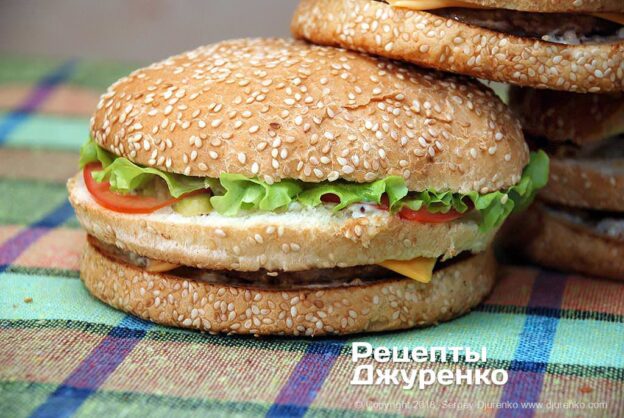
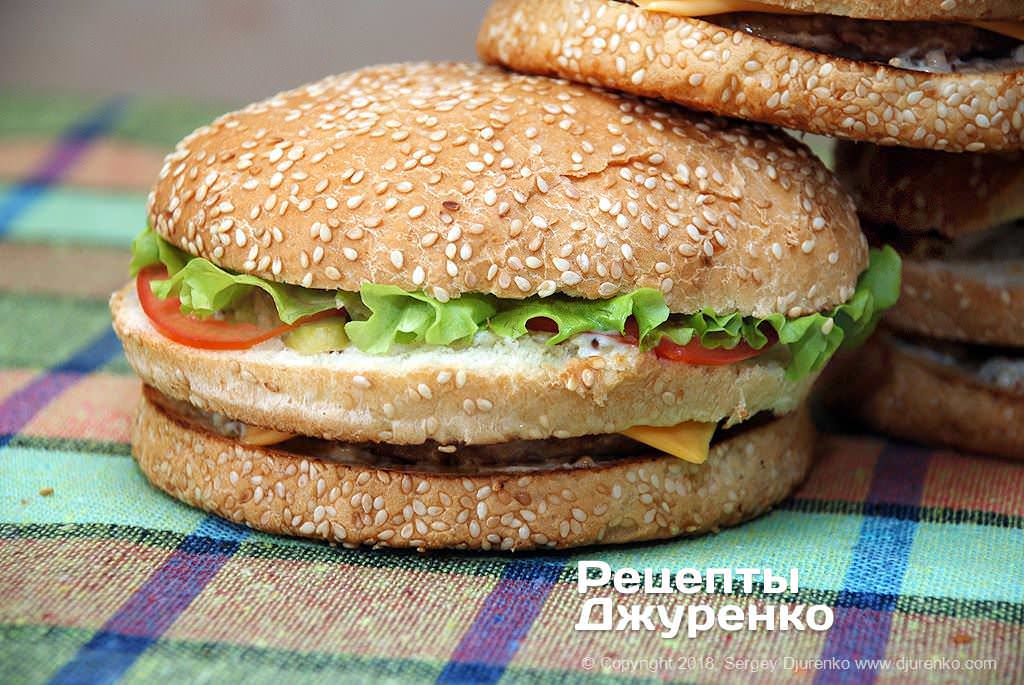
Sandwiches like this are often served with fries, sauces and salads. I remember how in Arizona we were served a “signature” homemade burger the size of a plate, with a pile of delicious fries and a gorgeous salad with pear and blue cheese. There’s no limit to perfection and imagination. Kids love hamburgers and cheeseburgers, so it’s worth learning to make them. And when someone asks you how to make a homemade burger, you can proudly share your own recipe, with your own touches and ingredients.
Calories and macros
193 kcal
100 g
- Protein9.2 g19% of kcal
- Fat11.5 g55% of kcal
- Carbs12.1 g26% of kcal
Calculated from the recipe ingredients, excluding salt and spices. Data: USDA and Matvaretabellen.
To Get It Right
Which buns to buy
Soft, round, with sesame seeds, and always fresh: stale buns turn tough once toasted. If you want to bake your own, try sesame buns.
Patties ahead of time
It’s handy to make enough patties for several meals: separate each one with plastic wrap and put them in the freezer. They keep for up to 2–3 months.
What readers do
They marinate the onion in rice vinegar and add a little grated onion to the ground meat, which makes the patty juicier.
Have your own trick for this recipe?
Questions and answers
How do you assemble a burger?
From the bottom up: the bottom of the bun (heel), the hot patty, a slice of cheddar, the middle piece (club), gherkins, marinated onion, thin tomato slices, lettuce and the sesame top (crown). All the cut sides of the bun are spread with sauce beforehand.
How do you make burger sauce like McDonald’s?
The exact recipes are kept secret, but most of these sauces are a variety of American Thousand Island dressing: mayonnaise, something sour, pickles and tomato. My sauce of mayonnaise, mustard and gherkins belongs to the same family; for a tomato note, add a spoonful of ketchup.
How long to cook a burger patty?
3–4 minutes per side in a dry, well-heated skillet, without oil. A frozen patty fries even better and holds its shape more.
Can you cook burger patties in the oven?
Yes: on a rack or a parchment-lined baking sheet at 200–220°C for 10–12 minutes. But you won’t get the same crust as in a very hot skillet or on a grill.