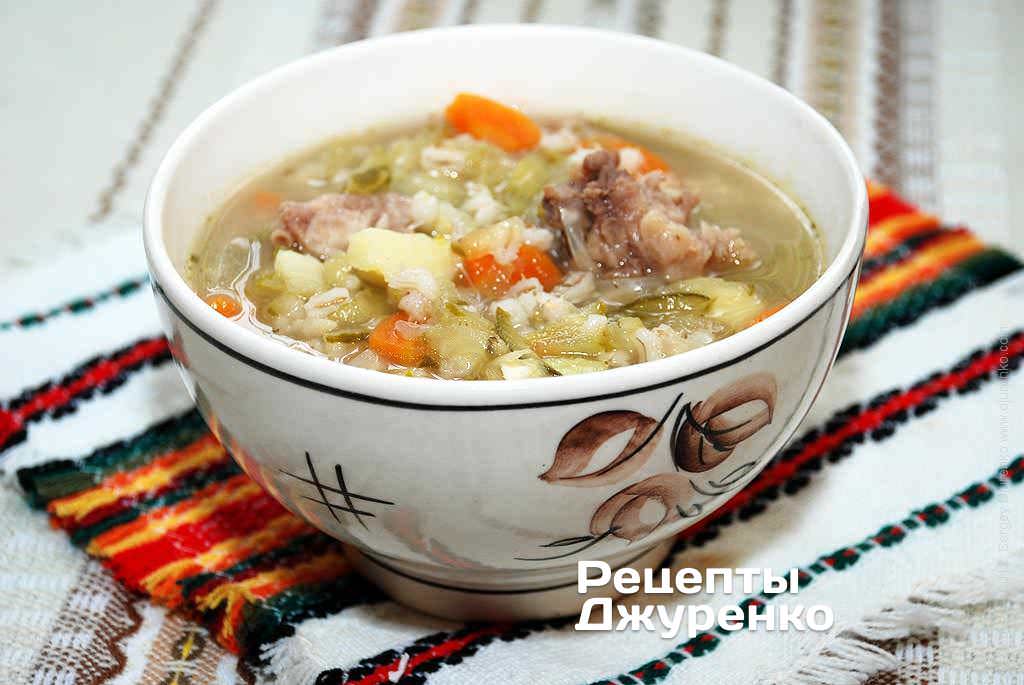
Traditional Rassolnik on Beef Broth with Pickle Brine
What do we import from India? And what do we drink almost every morning? Most of our people will answer without hesitation: pickle brine!!! Who says brine is just a by-product of salting, fermenting or soaking food??? For generations of people, brine has been something of a lifesaver, in a certain sense.
The main ingredient of brine is table salt, along with organic acids and an incredible amount of trace elements and vitamins.
Whatever anyone says, brine is a most valuable food, an important part of folk medicine and a wonderful base for cooking.
Rassolnik is a soup of Ukrainian cuisine, much like mixed meat solyanka, cooked with salted (fermented) pickles, not (!) vinegar-preserved ones, and with pickle brine added. In Kyivan Rus' it was called kalya, though it was made with fish rather than meat.
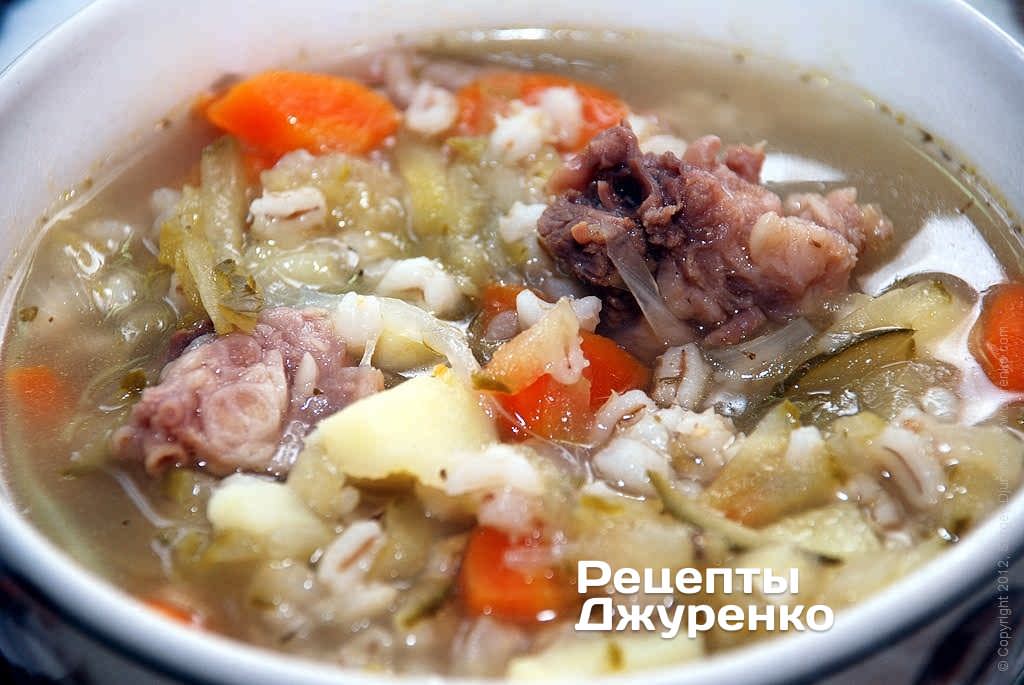
In fact, the soup can be made with fish, with meat, with mushrooms, and there is even a vegetarian version. Various grains, offal and herbs are often added. The one essential ingredient is brine, and it always goes in. Let's make rassolnik with pearl barley and fermented pickles.
To serve with soup
 Homemade White Bread in the OvenEasy homemade white bread baked in the oven: a simple yeast dough of flour, water, salt and sugar, shaped into baguettes. Step-by-step photo recipe.
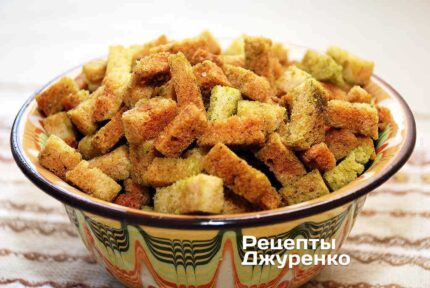 Crispy CroutonsCrispy homemade croutons for beer: a white loaf, dried green onion, rock salt and a little olive oil, dried in the microwave in 20-30 minutes.
 Garlic PampushkySoft Ukrainian garlic pampushky for borscht: yeast buns baked until pale golden, then soaked in garlic, dill and oil sauce. Step-by-step recipe with photos.
Ingredients
2 servings
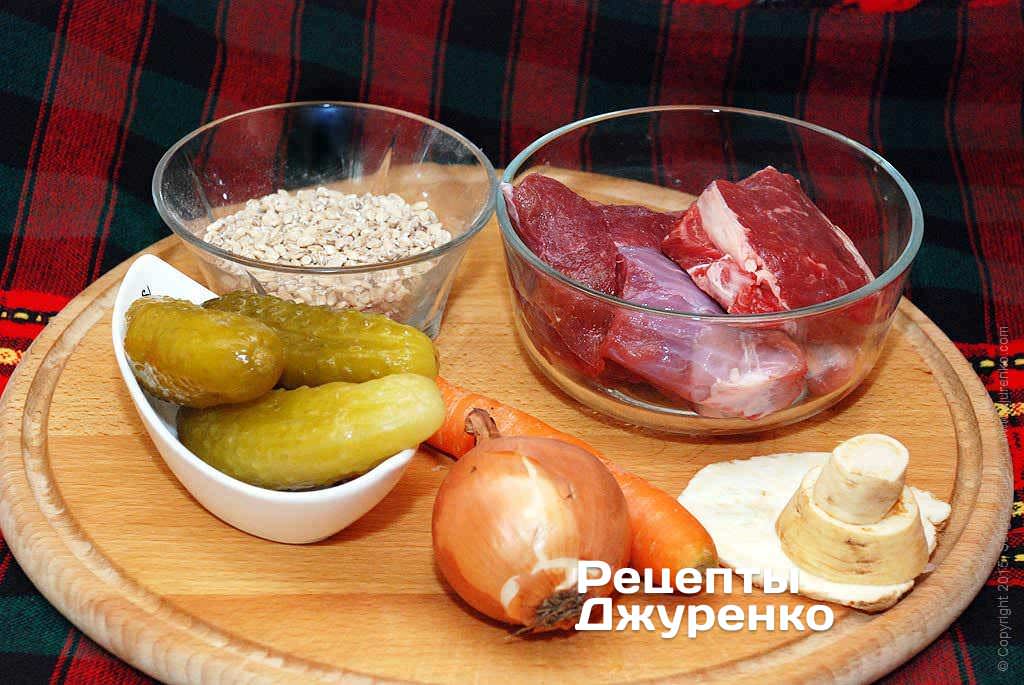
- Beef 400 g
- Fermented pickles 3-4
- Pickle brine 0.5 cup
- Onion 1
- Carrot 1
- Roots: parsley, parsnip, celery 50 g
- Pearl barley 0.5 cup
- Spices: bay leaf, black pepper to taste
Step-by-step recipe
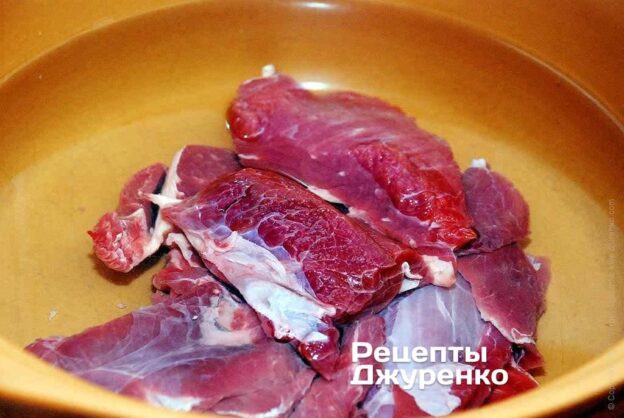
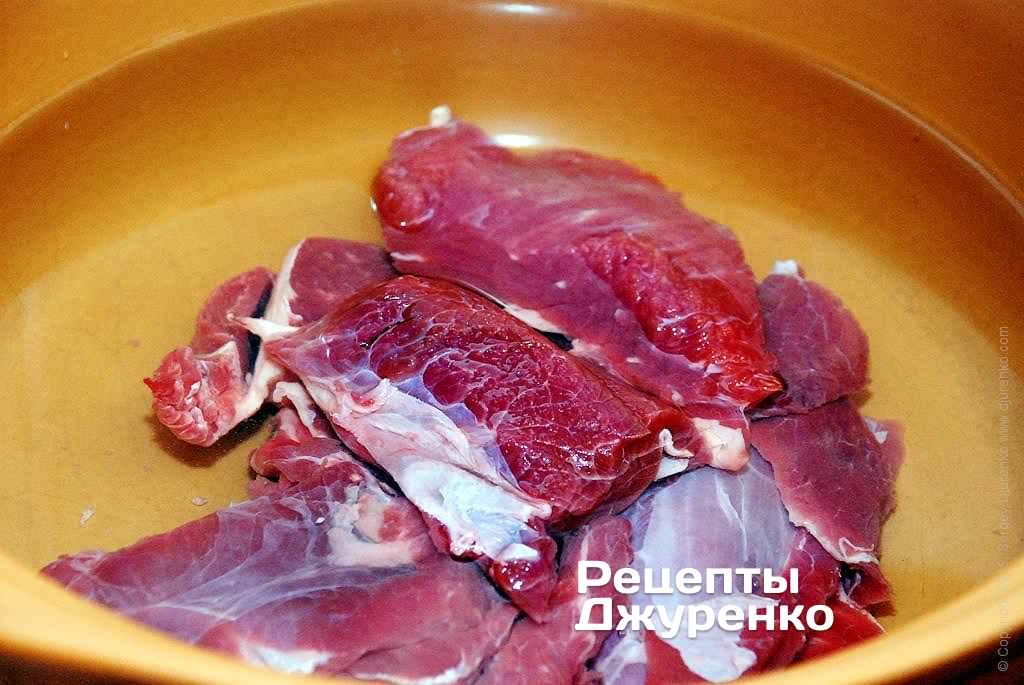
- For some reason, people believe rassolnik must be cooked with beef kidneys. I won't argue, boiled beef kidneys are often added. But nobody makes it with kidneys alone. The soup is best cooked on a meat broth made from beef brisket or ribs.
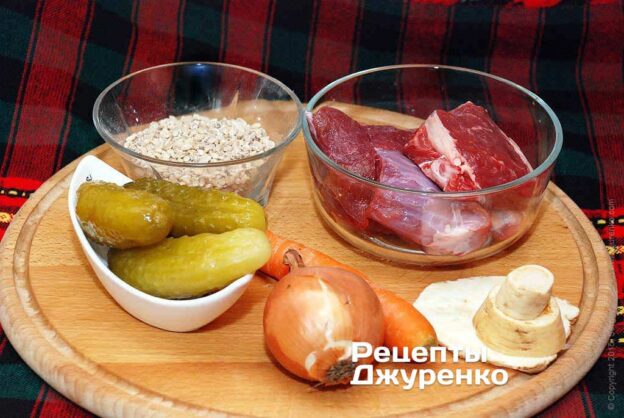
- Pour 1.5 l of cold water into a pot. Put the meat in the water and set it on the heat. As soon as the water boils, skim off the foam. Then cover the pot with a lid, turn the heat down to minimum and simmer the meat for 1-1.5 hours. The broth should barely simmer and never boil hard.
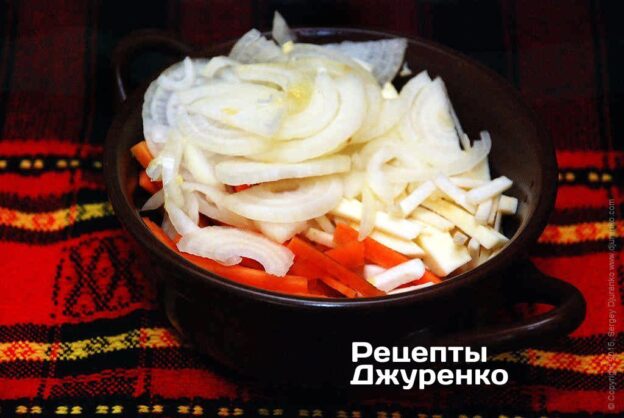
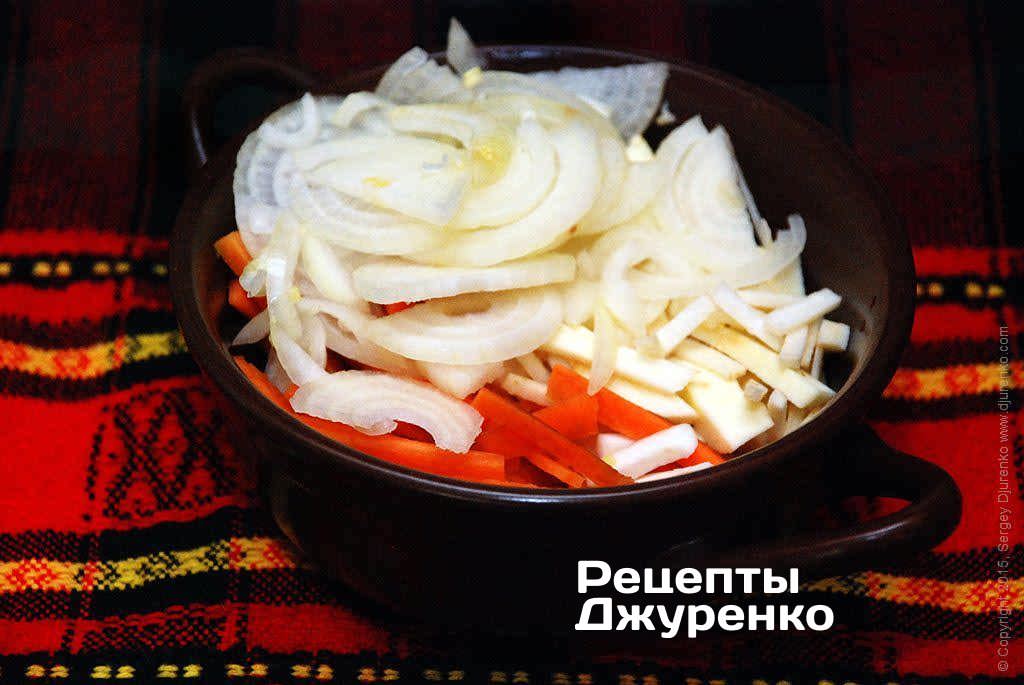
- Peel the onion, carrot and roots. Slice the onion into half rings, cut the carrot and roots into thin strips.
- Take the cooked meat out of the broth. Strain the broth and put it back on the heat. Add the bay leaf and pepper. There's no need to salt it, since the brine and pickles contain plenty of salt.
- Rinse the pearl barley thoroughly and for a long time under cold running water. It's even worth leaving the bowl of barley under a thin stream from the tap for 10-15 minutes, so that everything unwanted washes away and the water runs completely clear.
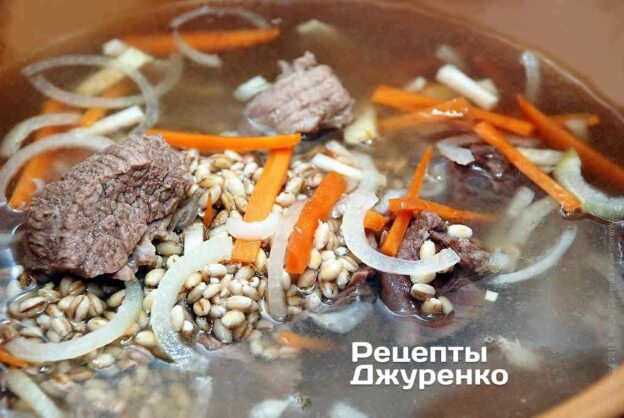
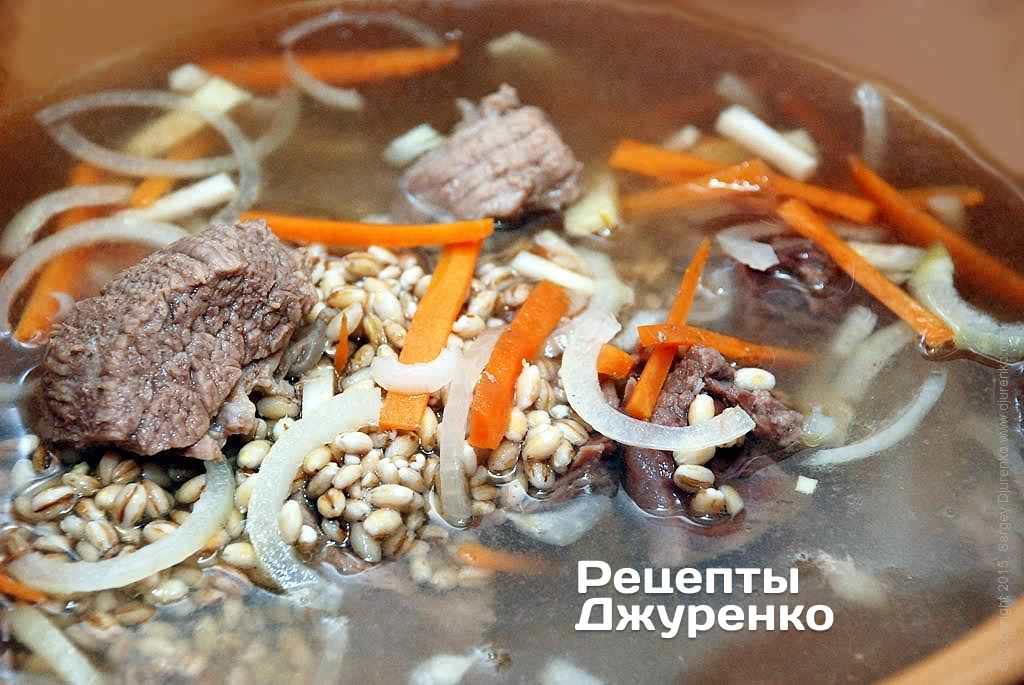
- Add the sliced vegetables and pearl barley to the broth, bring to the boil and keep cooking over low heat. Cut the meat into pieces, removing any gristle, and return it to the soup.
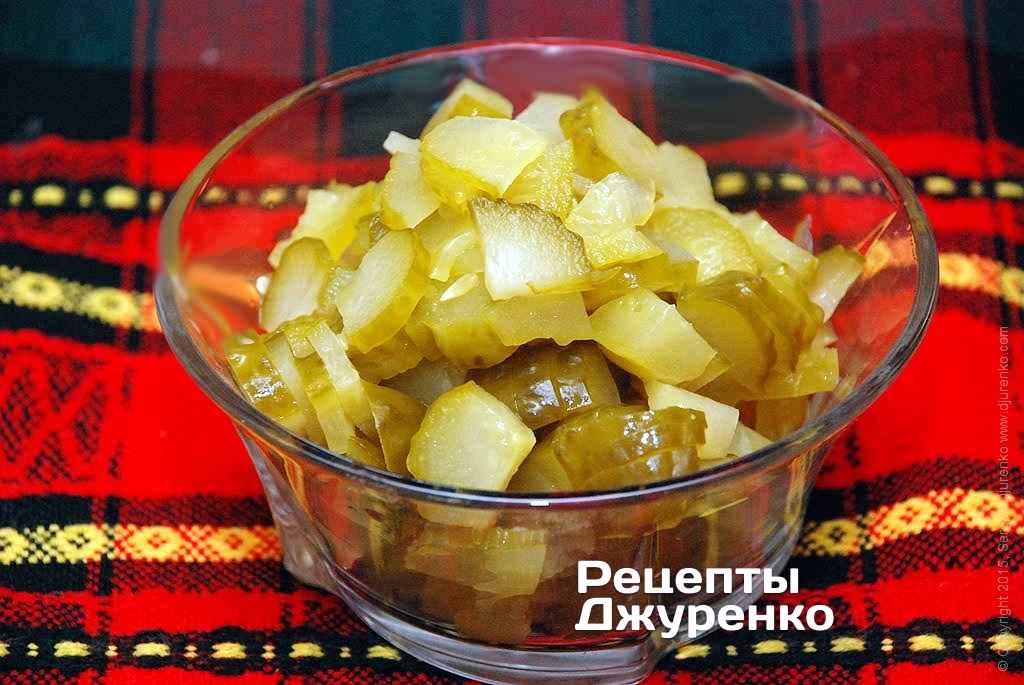
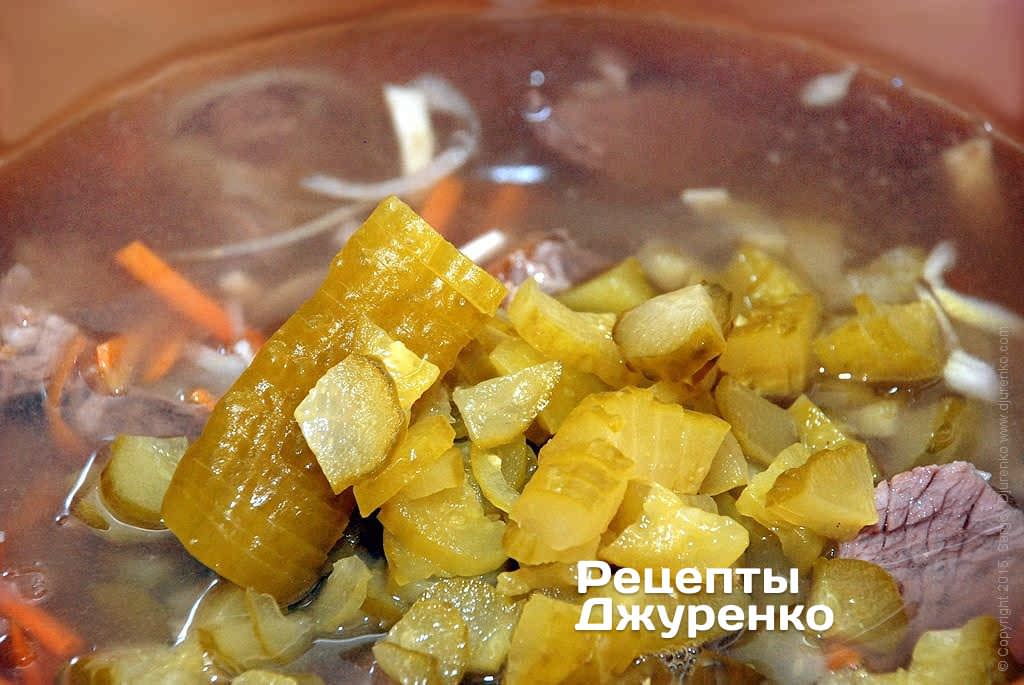
- Slice the fermented pickles. People often argue about how to cut the pickles. I think the way you cut them matters about as much as which end you crack an egg from, the blunt or the pointed one. My grandmother and mother used a coarse grater. Cookbooks advise cutting them into strips, rounds and so on. So it's up to you; the only thing that matters is that the pieces aren't too thick.
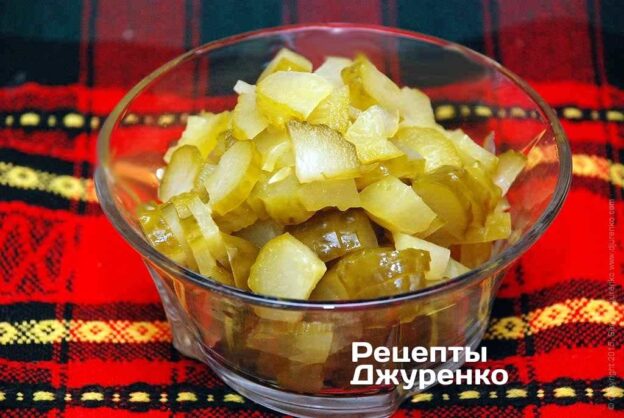
- Next, people usually advise braising the pickles with brine in a frying pan. I don't do that. I add the brine together with the sliced pickles just as they are, as soon as the vegetables in the broth are almost done.
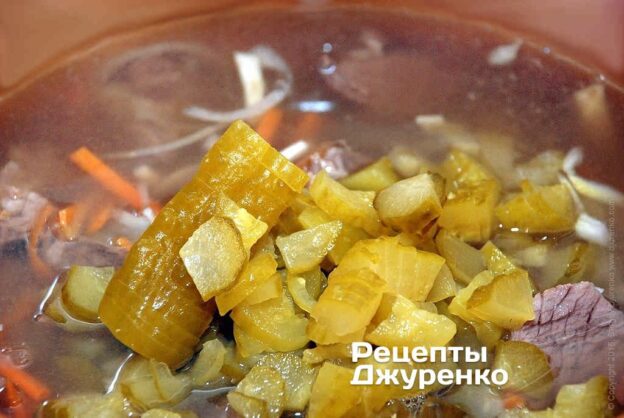
- All that's left is to finish cooking the barley. Pearl barley is usually best cooked a little longer than necessary.
- I remember that as kids we often argued about what pearl barley is made of. Well, pearl barley is made from barley by the initial polishing of the grains. And barley grits are made from barley by polishing and crushing. Got that?
- If you noticed, we never salted the soup. If you taste it and feel it needs salt and pepper, don't hold back. But remember: too much salt is no good!
- At the end, you can add cleaned and sliced kidneys to the soup, if you like.
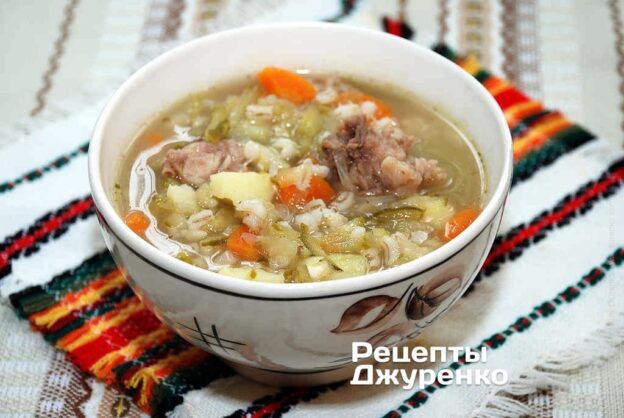
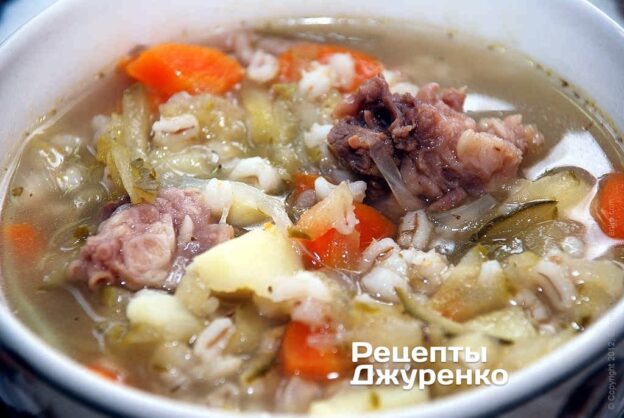
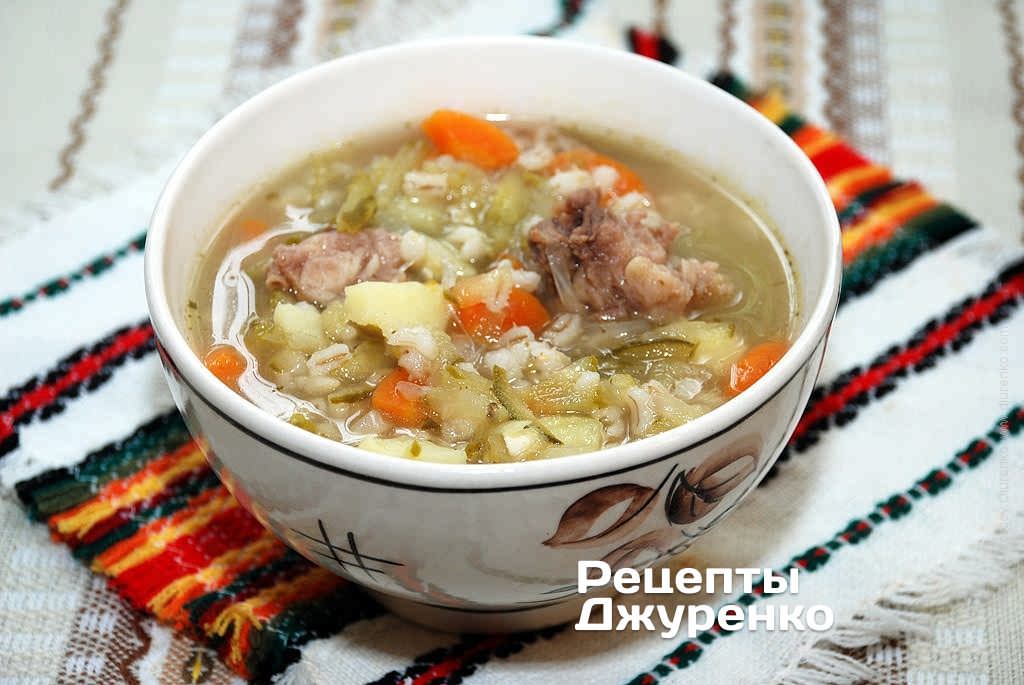
- Serve slightly cooled, because the soup is a little sour and when piping hot it will simply burn your tongue, and you won't be able to enjoy the taste of this traditional dish. Oh, and add a spoonful of sour cream, if you like.
| Yield: | 2 servings |
| Calories: | 37 kcal per 100 g |
| Prep: | 15 mins |
| Cooking: | 2 h |
| Ready in: | 2 h 15 mins |
| Category: | Soups › Meat Soups |
| Cuisine: | European |
| Rating: |
⭐
⭐
⭐
⭐
⭐
4.9
(1)
|