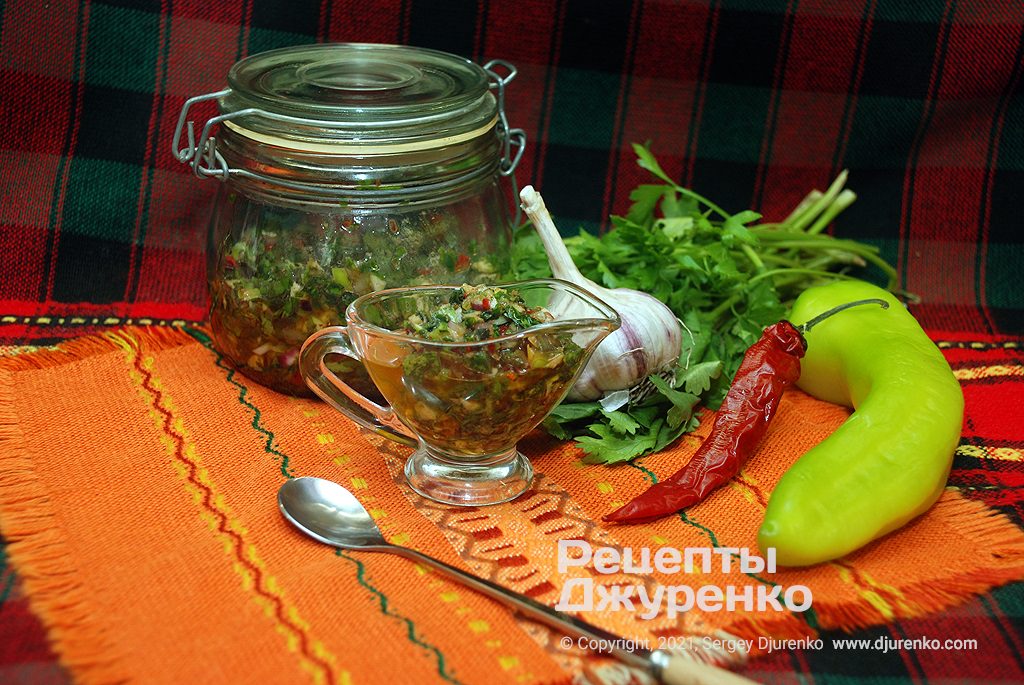
Chimichurri Sauce
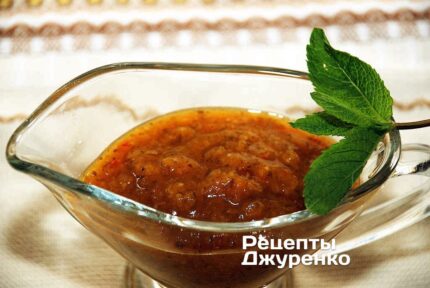
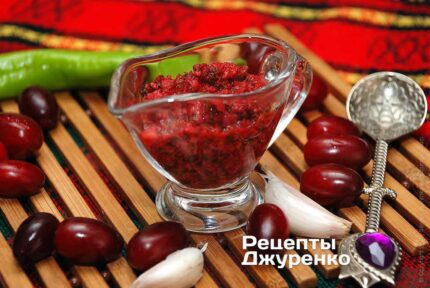
Ingredients
250 ml
- Parsley 1 bunch
- Oregano 1 bunch
- Garlic 1 head
- Red chili pepper 1
- Green chili pepper 1
- Red onion 1
- Sweet paprika, preferably smoked 1–2 tsp (2–5 g)
- Salt 0.5–1 tsp (3–6 g)
- Olive oil 100–150 ml
- Wine or balsamic vinegar, lime or lemon juice 1–2 tbsp
- Cilantro a little, optional
- Basil 1–2 sprigs, optional
- Fresh thyme 1–2 sprigs, optional
- Ground cumin 0.5 tsp, optional
Step-by-step recipe
Herbs and vegetables
I made my chimichurri the cold way – I like it better. The sauce came out fragrant and very herby. By the way, it makes a great pico de gallo – a spicy salad where the sauce acts as the dressing. Broadly speaking, it’s a bit like gremolata, the parsley and lemon sauce for the Italian dish ossobuco.
I recommend using as many fresh herbs as possible rather than dried – it will be much tastier and more fragrant. Apparently, if you use dried herbs, you need hot water so the herbs can “steep”. To make the sauce, you’ll need a large mortar or wooden bowl and a pestle for crushing the herbs.
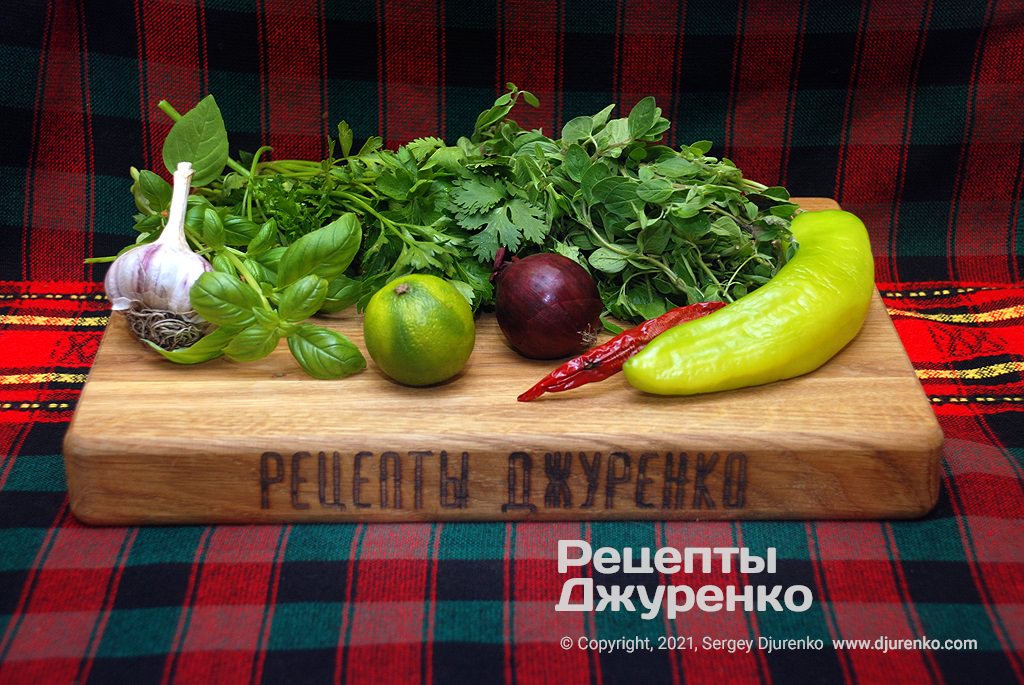
Prepare the herbs: wash and dry all the fresh herbs. Parsley and oregano are the main ones. For aroma, add a little cilantro and 1–2 sprigs of basil. If you have fresh thyme, add 1–2 sprigs.
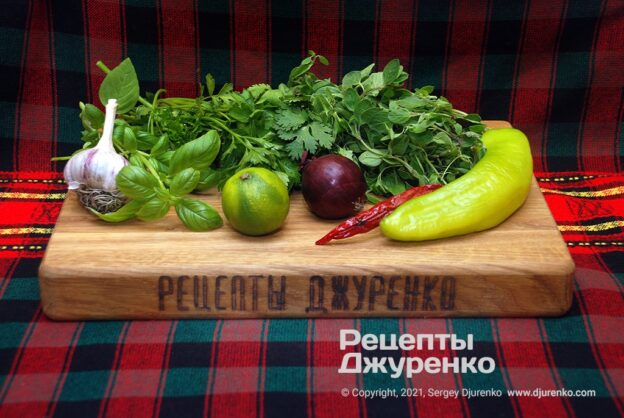
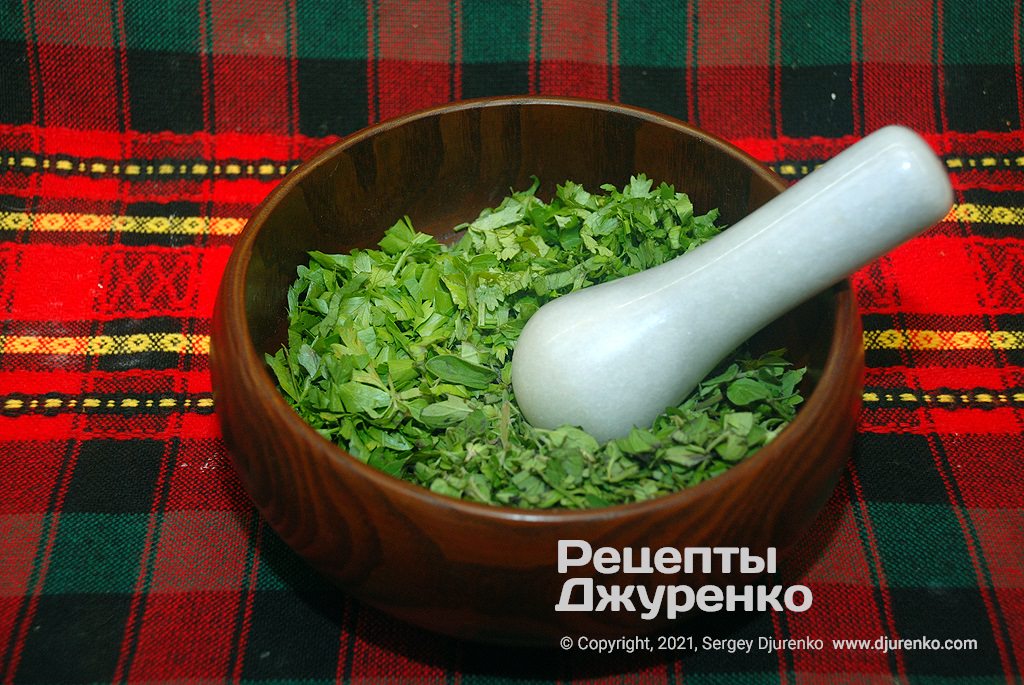
Chop and crush the herbs. Pick all the leaves off the stems, chop them fairly roughly with a knife and put them in the bowl. Crush the herbs with the pestle until they release their juices and turn moist. They’ll shrink in volume and won’t sit loosely anymore.
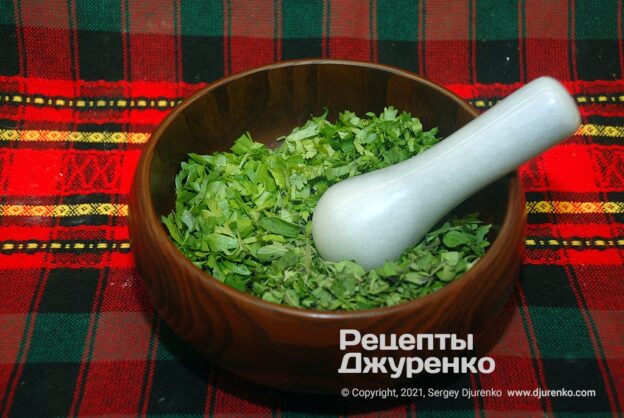
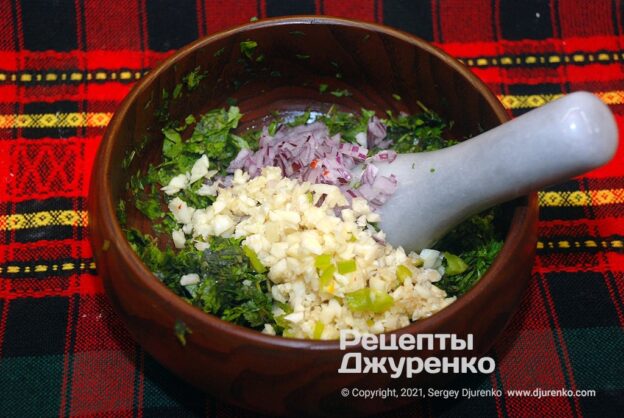
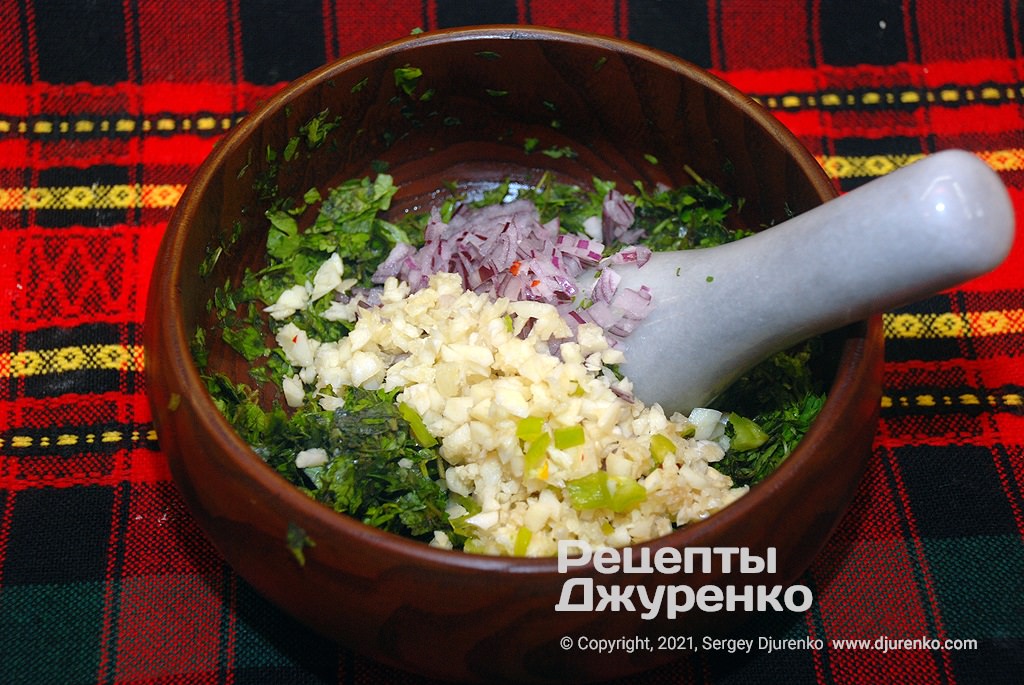
Add the onion and garlic. Peel the garlic and onion. Crush the garlic cloves with the flat of a knife and chop finely. Simply chop the red onion finely. Add the onion and garlic to the herbs and crush everything with the pestle once more.
Spices, acid and oil
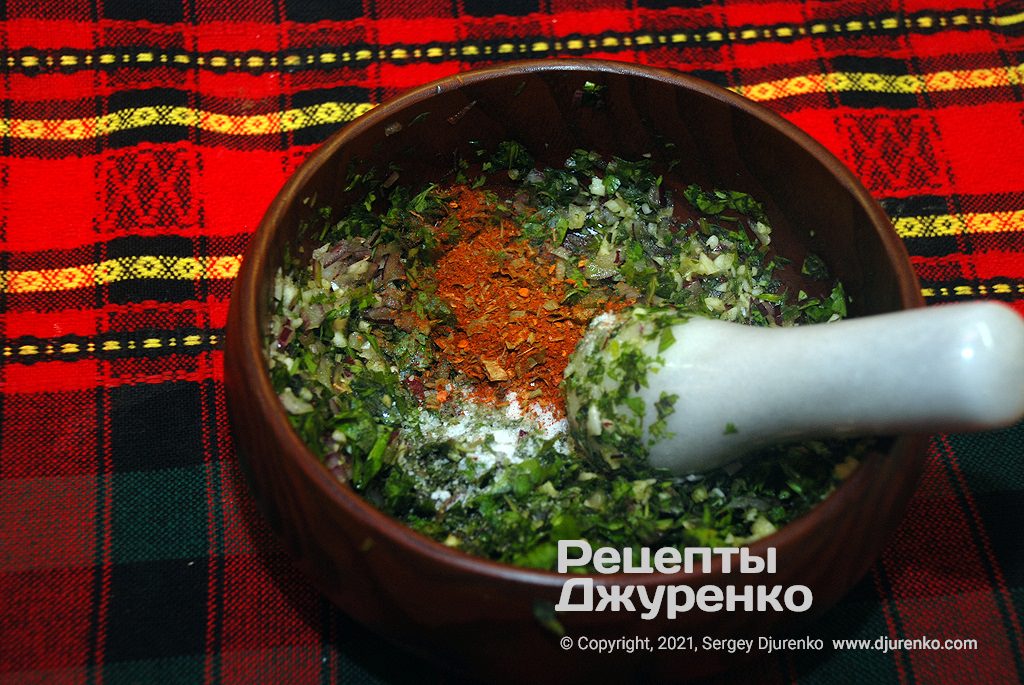
Salt the mixture and add the spices: 0.5 tsp salt (3 g) (you can add more later) and 1–2 tsp sweet paprika (2–5 g), preferably smoked. Ground cumin is often added to chimichurri – try it, 0.5 tsp is enough. Mix everything thoroughly so the salt dissolves and the spices are evenly distributed. Taste the mixture for salt – it’s best to adjust it right away.
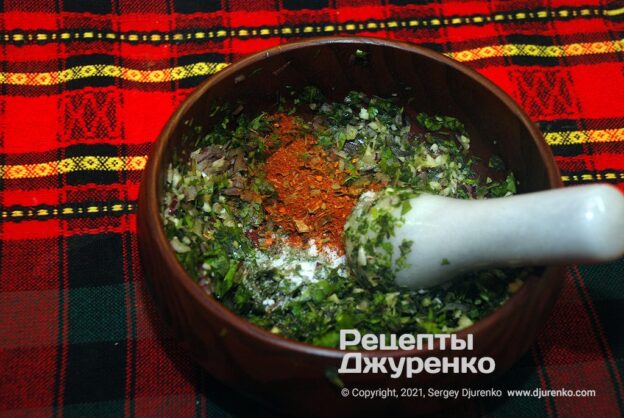
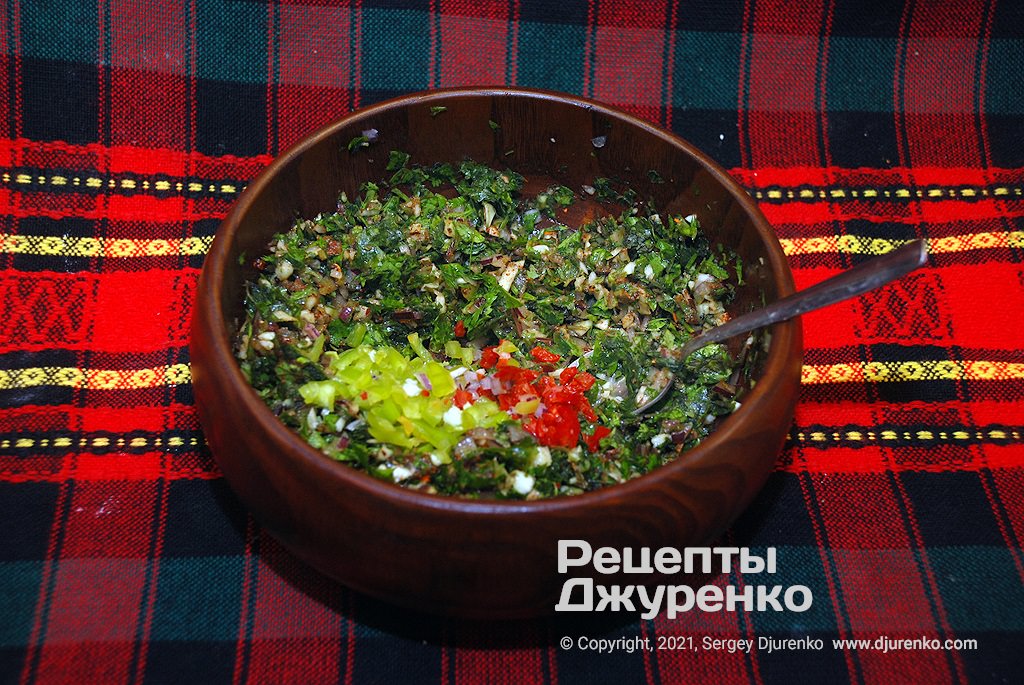
Add the acid and chili peppers. You’ll need 1–2 tbsp of acid. The simplest option is wine or balsamic vinegar. A mix of white and red wine vinegar is common; balsamic makes the sauce darker. Then again, many versions include tomatoes, which darken it anyway. I use the juice of a quarter of a lemon or half a lime – I like it better that way. Finely chop the red and green chili peppers, add them to the bowl with the herb mixture and stir.
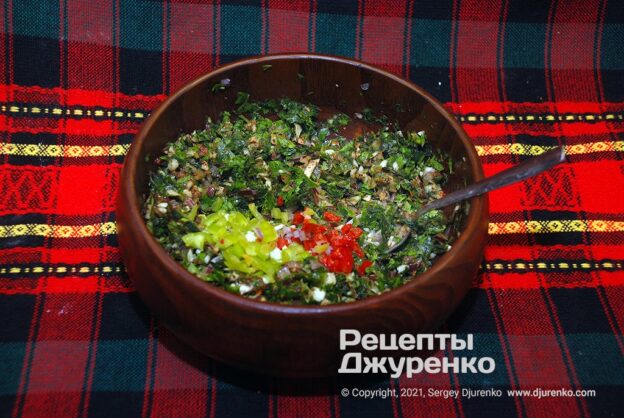
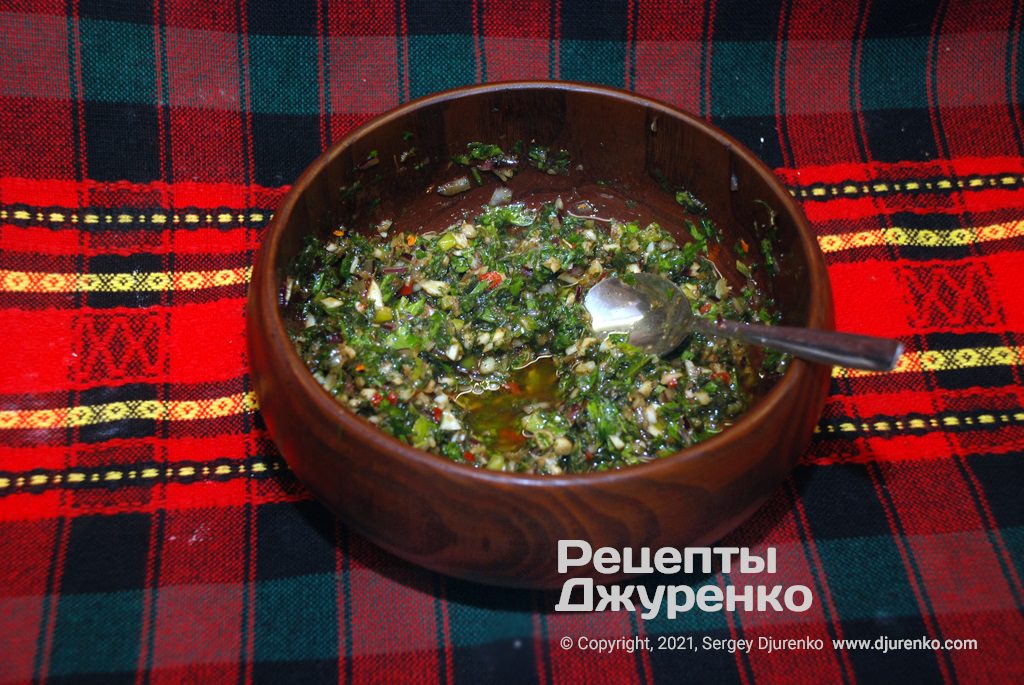
Add the oil: stirring the mixture, pour in 100–150 ml of real, top-quality olive oil. Chimichurri should come out medium-thick, with the oil just slightly pooling on top. The amount of olive oil determines how thick the sauce is.
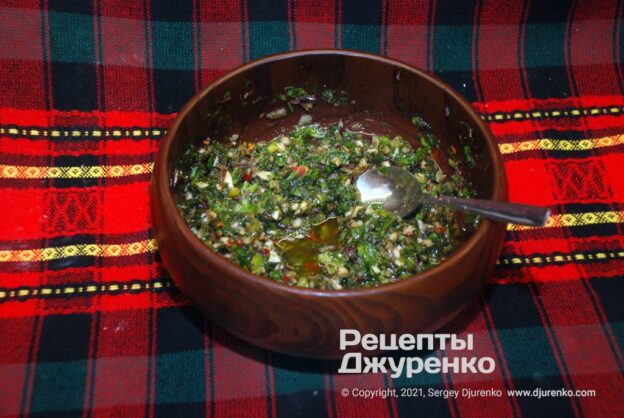
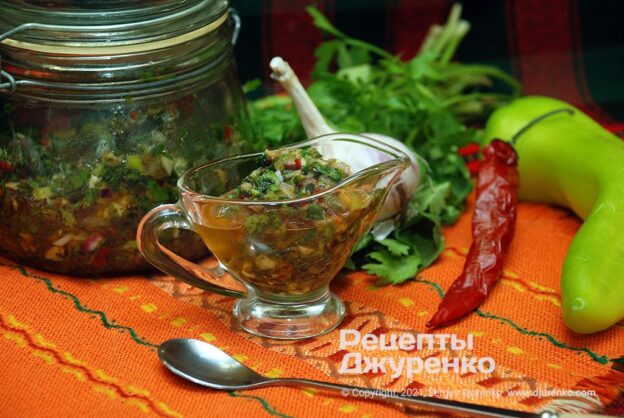
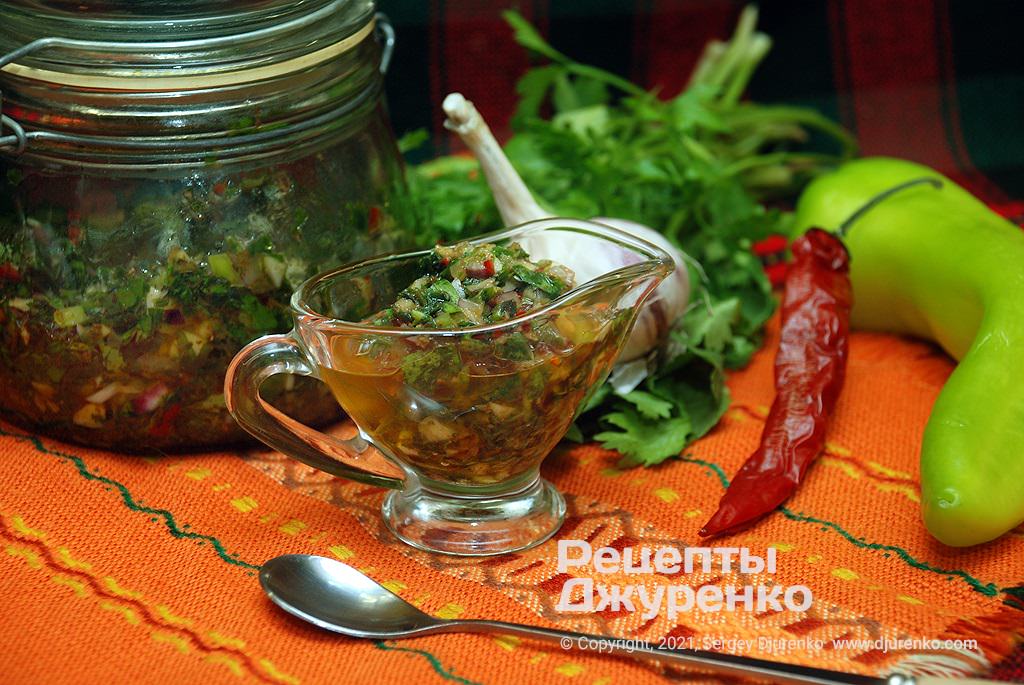
Transfer the finished sauce to a jar with a lid, shake it and put it in the fridge – you may want to let the sauce sit for 2–3 hours. The jar keeps in the fridge for quite a long time; the sauce hardly spoils.
Serving
Serve the sauce with grilled meat. It’s often simply spread in a thin layer over the pieces and brought to the table that way. Or take some fresh lavash and spread the sauce on it – you’ll love it. Besides serving it with meat, it makes an excellent marinade.
Calories and macros
307 kcal
100 g
- Protein2.5 g3% of kcal
- Fat28.5 g85% of kcal
- Carbs8.9 g12% of kcal
Calculated from the recipe ingredients, excluding salt and spices. Data: USDA and Matvaretabellen.