
Braised Sauerkraut with Pork Belly
How long should you braise sauerkraut? About 2 hours, no less than 1.5 — until it loses its moisture and turns light brown. I fry pork belly in 5–7 mm slices until golden and crisp, add onion, the sauerkraut, coriander and bay leaf and braise covered over the lowest heat. I salt carefully: the sauerkraut is already salty.
Ingredients
2 servings
- Homemade sauerkraut 0.5 kg
- Pork belly (without rib bones) 300 g
- Onion 3-4
- Vegetable oil or lard 1 tbsp (if the belly is lean)
- Ground coriander 1-2 pinches
- Bay leaves 1-2
- Black pepper to taste
- Salt to taste, carefully (sauerkraut is already salty)
- Cabbage brine if needed


Step-by-step recipe
Choosing ingredients
A friend of mine considers braised sauerkraut a snack to go with drinks, and enjoys it that way. For me, it is a tasty, filling meal – a main course. But anything goes. In the cold months of the year we always have sauerkraut on hand. Mostly we make a sauerkraut salad with sweet red onion and fragrant sunflower oil. It goes exceptionally well with fried potatoes.
Choose homemade sauerkraut. The taste and saltiness of the finished dish depend on how sour the cabbage is. At our market they sell “more sour” and “less sour” sauerkraut – I prefer the latter.

Choose the pork belly: braised cabbage is tastiest with the part of the belly where the rib bones have not yet started and there is only a little cartilage. This cut has little cartilage and plenty of meat. And there is not much fat in it at all.



Frying the pork belly and onion
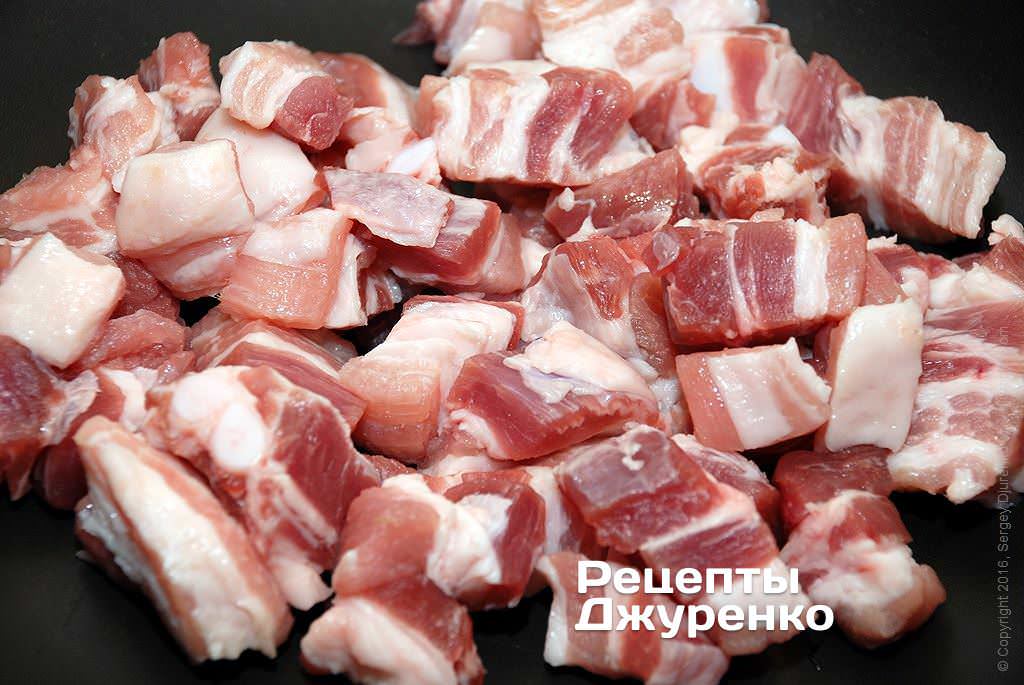
Cut the pork belly into slices 5-7 mm thick, then cut the slices into fairly large pieces. If there is some well-cleaned pork skin left on the pieces, you can leave it on. There is no need to salt the belly or add spices.

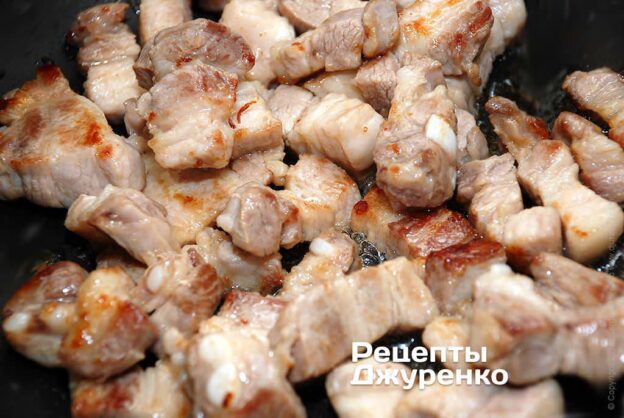
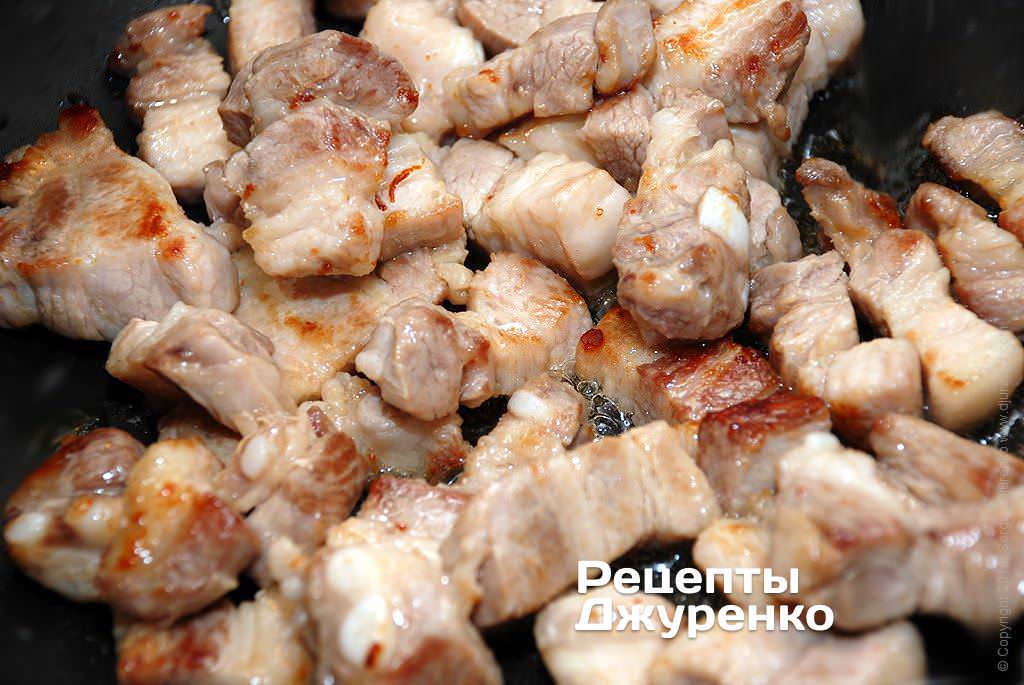
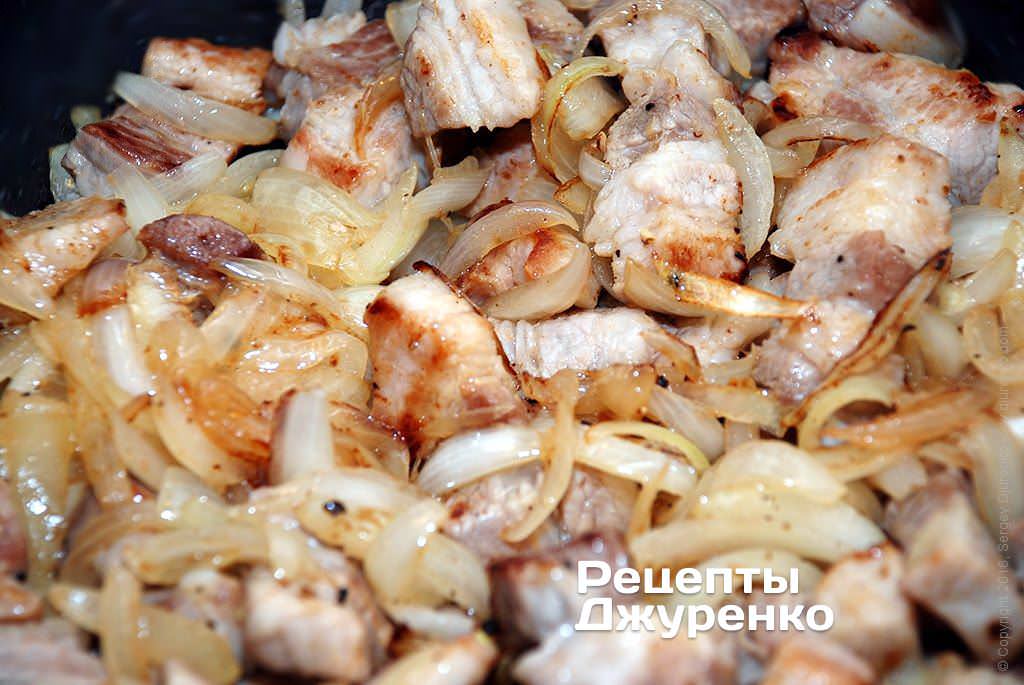
Fry the pork belly. If the belly is fatty enough, it will render some pork fat as it fries. If the meat is lean, heat 1 tbsp of lard or vegetable oil in a sauté pan (or a deep frying pan with a lid). Fry the pork belly over medium heat until golden brown. To brown it evenly, stir the belly often and don’t cover the pan with a lid.
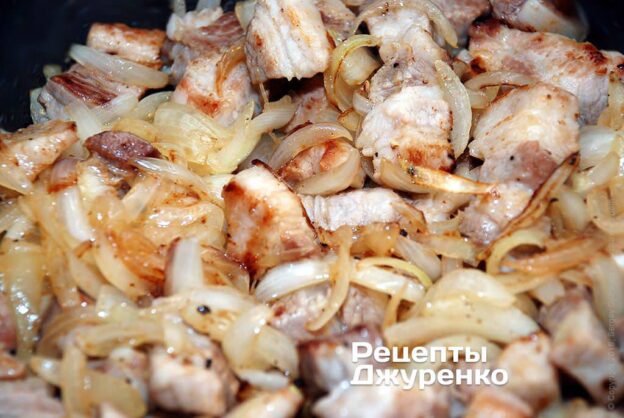
Fry the onion. Peel the onion and cut it into thick strips. Add the onion to the fried belly and keep frying over medium heat until the onion turns a nice golden color. Take care not to overcook the onion, or the dish will have a noticeable burnt taste.
Braising the sauerkraut
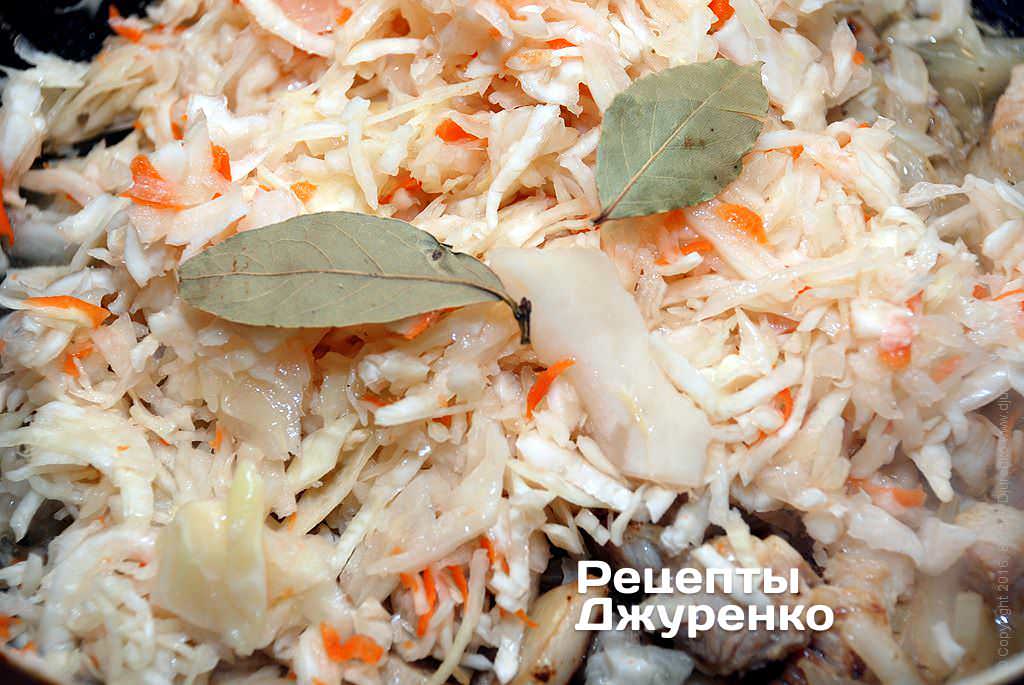
Add the homemade sauerkraut to the fried belly and onion. Sauerkraut usually has enough liquid and brine of its own, so no water is added – the cabbage braises in its own juices. If for some reason you need to add liquid to the pan, it should be cabbage brine.

Season the sauerkraut with black pepper and add 1-2 pinches of ground coriander and 1-2 bay leaves. Gently stir the sauerkraut and pork belly together. Cover the pan with a lid and wait until the liquid starts to boil. Immediately turn the heat down to the minimum and let it cook – this takes quite a while.
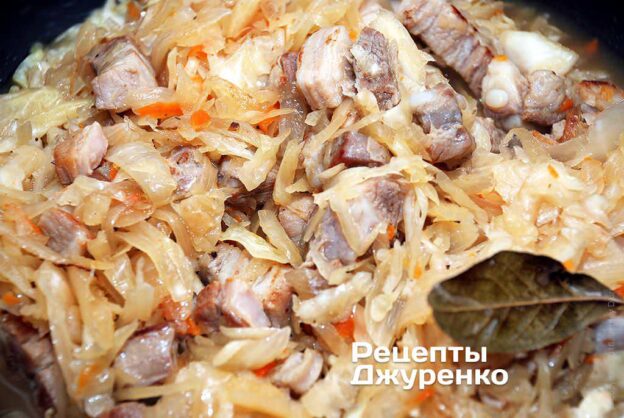
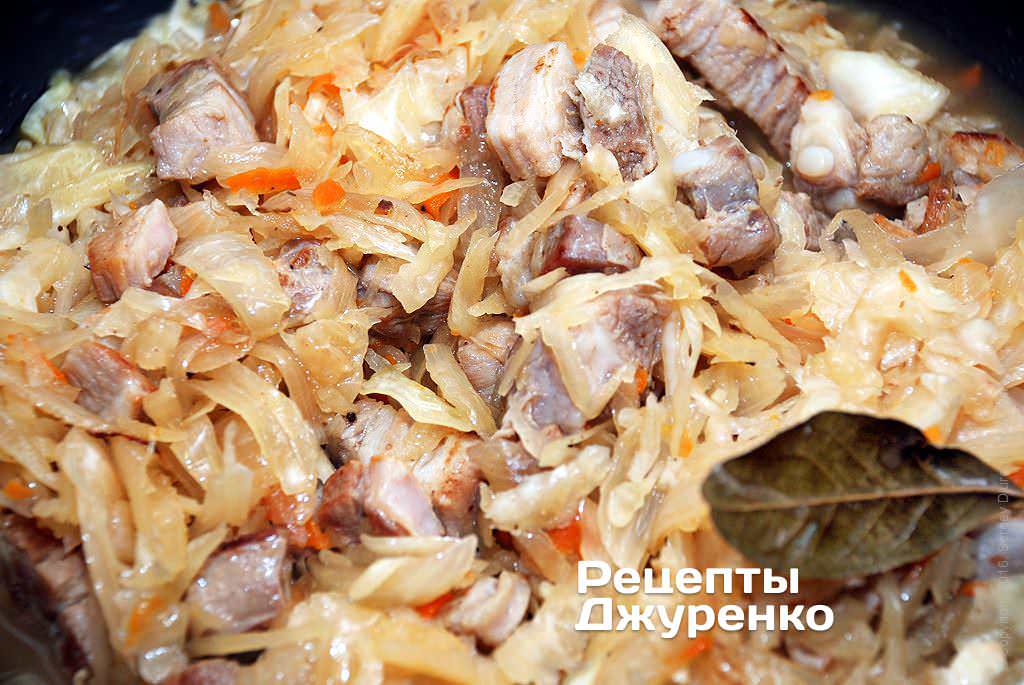
Braise covered for about 2 hours, at least 1 h 30 mins. Any less, and it will just be ordinary sauerkraut, only hot. The sauerkraut needs to lose most of its moisture and start turning light brown – the first sign that it is cooking the way it should. Over this time the acidity mellows, the cabbage darkens and becomes soft and slightly sweet, and the pork belly gives the cabbage its flavor and turns tender. Stir the cabbage from time to time and make sure there is always a little liquid in the pan – literally just barely visible on the very bottom. Half an hour after the braising begins, take out the bay leaves and discard them.
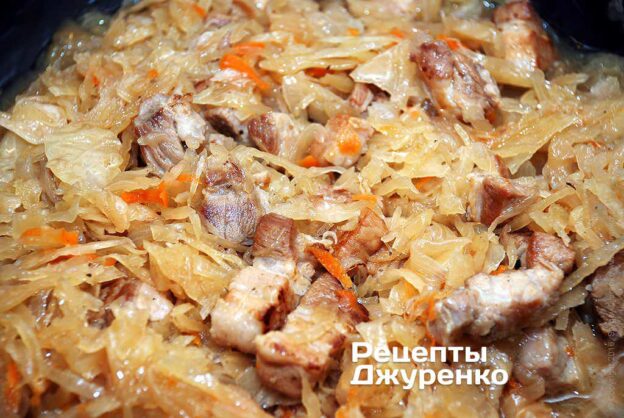
Finish the dish. Salt braised sauerkraut very carefully – plenty of salt goes in during fermentation. Salt only to taste, or better yet, not at all. At the very end of cooking, if there is still liquid in the pan, remove the lid and let it evaporate, turning the heat up a little. The cabbage should have no liquid left.
Prunes go into bigos, but sauerkraut is sour enough, so this recipe doesn’t need them.
We make homemade bigos from a mix of fresh and fermented cabbage with pork ribs and prunes, following an old family recipe. Before the holiday feasts, bigos is cooked in a big batch and reheated as needed. I have read that some people even freeze it.

Serving
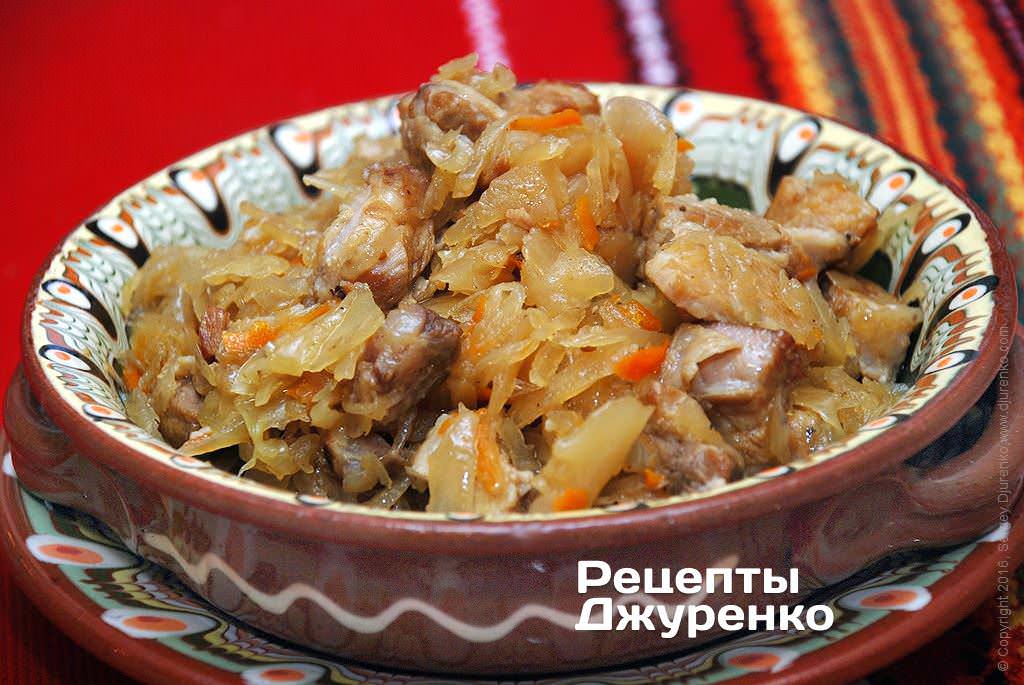
Braised sauerkraut with pork belly is served hot, with fresh bread.
Arrange the braised sauerkraut on plates. If the dish is served as a starter, small bowls or ceramic dishes work best. As a main course, serve it on large rimmed plates.


By the way, braised sauerkraut makes an excellent side dish, and without the pork belly it is a superb vegetarian dish.


How did you like this recipe?
Rate it with one tap.
Calories and macros
955 kcal
Serving ≈ 490 g
- Protein18 g8% of kcal
- Fat87 g85% of kcal
- Carbs17 g7% of kcal
100 g193 kcalProtein 3.7 gFat 17.6 gCarbs 3.4 g
Calculated from the recipe ingredients, excluding salt and spices. Data: USDA and Matvaretabellen.
To Get It Right
If the sauerkraut is too sour or too salty
The most common complaint in the comments is “it came out sour and salty”. That depends on the sauerkraut: choose a “less sour” one and don’t salt the dish – plenty of salt goes in during fermentation. Add brine only if the bottom of the pan is completely dry. Over 1.5–2 hours of braising the acidity mellows noticeably and the cabbage turns slightly sweet. Very sour or oversalted sauerkraut readers rinse in two changes of water and squeeze out – then don’t add any brine at all.
Which sauerkraut to use
Homemade – your own or from the market. If you ferment it yourself, there is a sauerkraut recipe on the site. Sauerkraut can be mixed with fresh cabbage – that is how bigos is made: a mix of fresh and fermented cabbage with pork ribs and prunes.
Without meat
If you don’t eat meat, make it without the pork belly: fry the onion in 2–3 tbsp of vegetable oil or lard, then everything else is the same. You get a lean side dish or a vegetarian main course in its own right.
Making ahead and storing
For a holiday table it is convenient to braise the cabbage the day before: like bigos, it reheats without any trouble. Covered, it keeps in the fridge for 3–4 days. Reheat in a sauté pan under a lid over low heat, stirring; if the cabbage has dried out, add a spoonful of brine or water. You can also freeze it in portions – that is done with bigos.
What to serve it with
Hot, with fresh bread. As a side dish it goes with boiled or fried potatoes, sausages, or roast pork. Cooled braised sauerkraut makes a ready filling for varenyky and pyrizhky.
Have your own trick for this recipe?
Questions and answers
Can you braise sauerkraut?
Yes, and it is one of the simplest dishes to make with it. No water is added – the sauerkraut braises in its own juices with the fried pork belly and onion, and in a couple of hours a sour appetizer turns into a soft, slightly sweet hot dish.
How long to braise sauerkraut?
About 2 hours covered, over the lowest heat, and no less than 1.5. Any less, and you get plain hot sauerkraut. When done, the cabbage has lost most of its moisture, darkened to light brown, and become soft and slightly sweet.
How to braise sauerkraut in a frying pan or a pot?
The same way as in a sauté pan: fry the pork belly with the onion, add the sauerkraut and braise covered over minimum heat. The frying pan should be deep and have a lid; a pot should have a thick bottom so the cabbage doesn’t scorch. Make sure there is always a barely visible layer of liquid on the bottom.
What goes into braised sauerkraut?
In this recipe, only onion, black pepper, a couple of pinches of ground coriander and bay leaves, which are taken out after half an hour. There is no tomato paste, sugar or prunes here: sauerkraut is sour enough as it is, and the long braising mellows the acidity on its own.
What other meat can you braise sauerkraut with?
Pork ribs, as in bigos, or a fattier cut of pork – neck or shoulder: fry them until browned with the onion the same way. Smoked ribs or sausages work too – they are not fried, just added together with the sauerkraut.
Can you braise sauerkraut with potatoes?
There are no potatoes in this recipe; they are served on the side. A reader, Volodymyr, shares his family version: fry diced salted pork fat until crisp, cut potatoes boiled in their skins into small cubes, add the sauerkraut (rinse it if it is sour), mix everything in a cast-iron pot and braise for about two hours, as here.