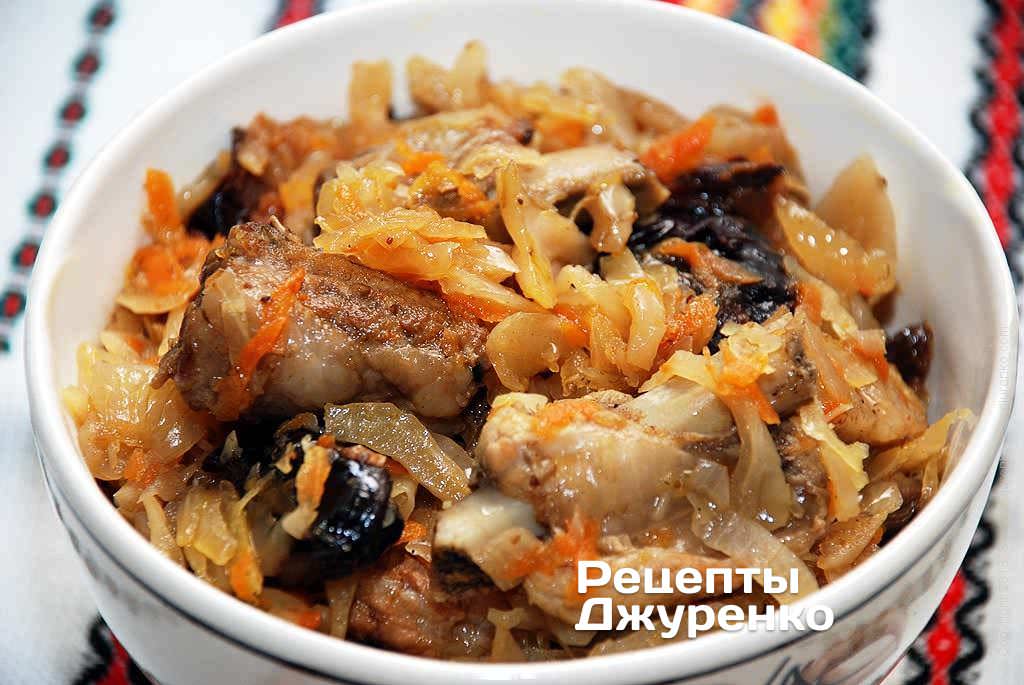
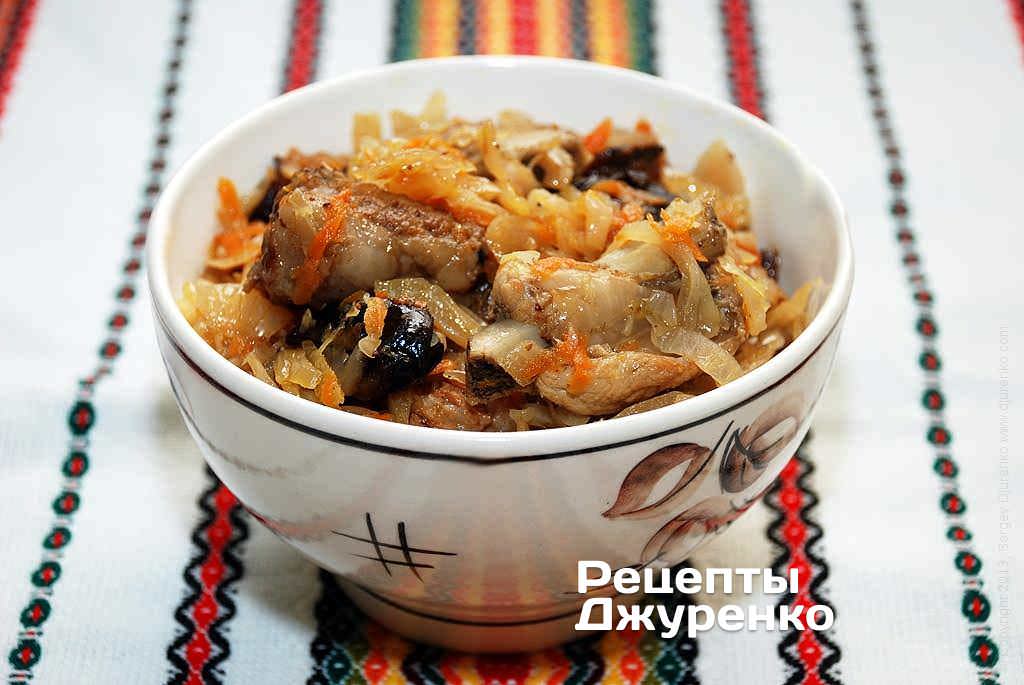
Bigos (Bigus) with Pork Ribs
Ingredients
4 servings
- Pork ribs 400 g
- White cabbage 500 g
- Sauerkraut 400 g
- Onion 1
- Carrot 1
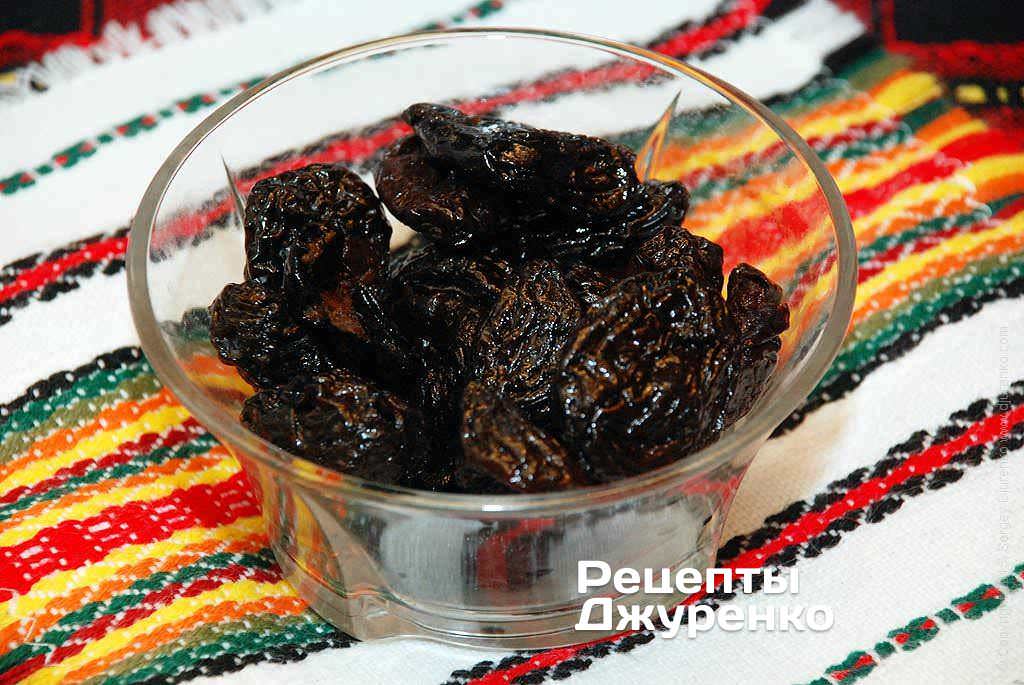
- Pitted prunes 150 g
- Bay leaves 2–3
- Ground coriander a pinch
- Salt, ground black pepper to taste


Step-by-step recipe
Browning the ribs and vegetables
Note that there’s no fat of any kind in the ingredient list. It isn’t needed. Pork ribs contain quite enough fat, so there’s no need to add more. Water is unnecessary too. Fresh cabbage gives plenty of moisture, and sauerkraut brings its wonderfully tasty and healthy brine.
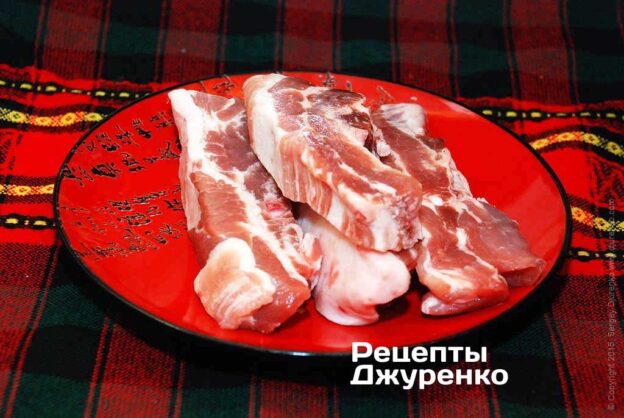
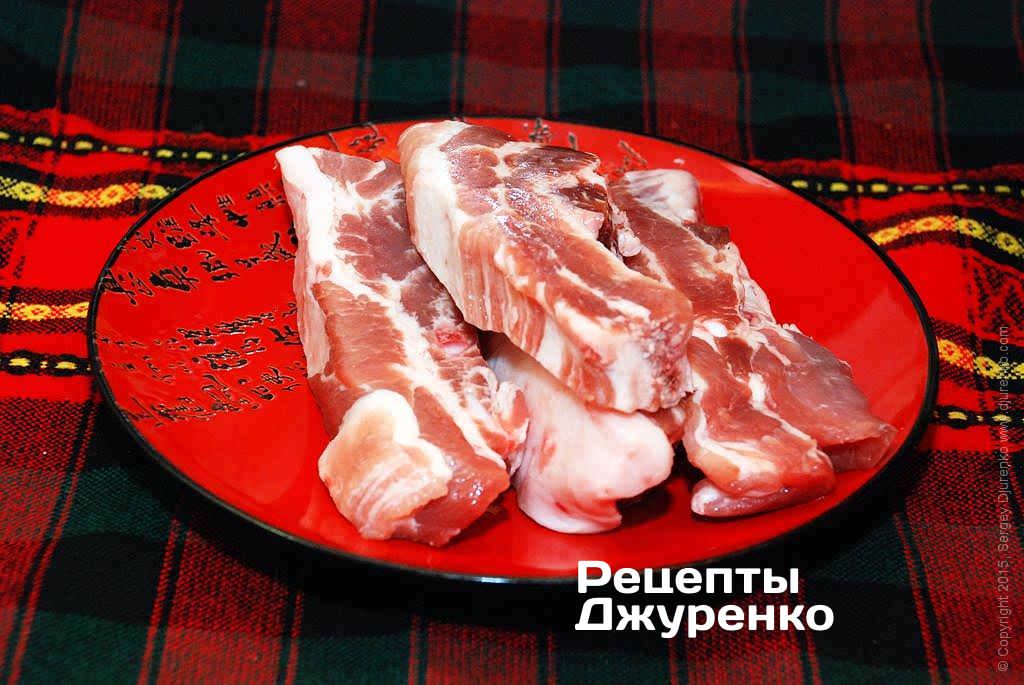
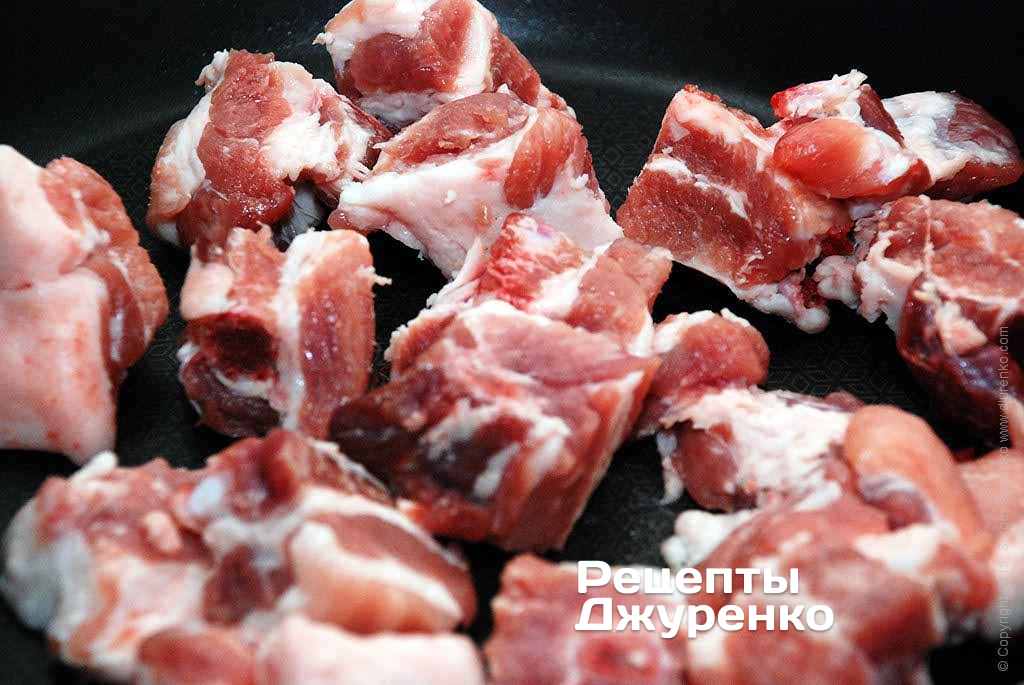
Cut the ribs into pieces. They can be large, i.e. each piece has a rib bone in it.
It’s best to buy fresh pork ribs that have never been frozen. At the markets they’re sold as long strips, chopped across the ribs. Choose a piece with bones and cartilage — that part is a little fattier.
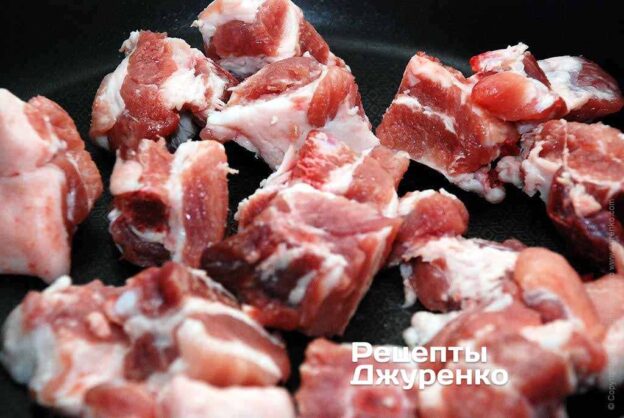
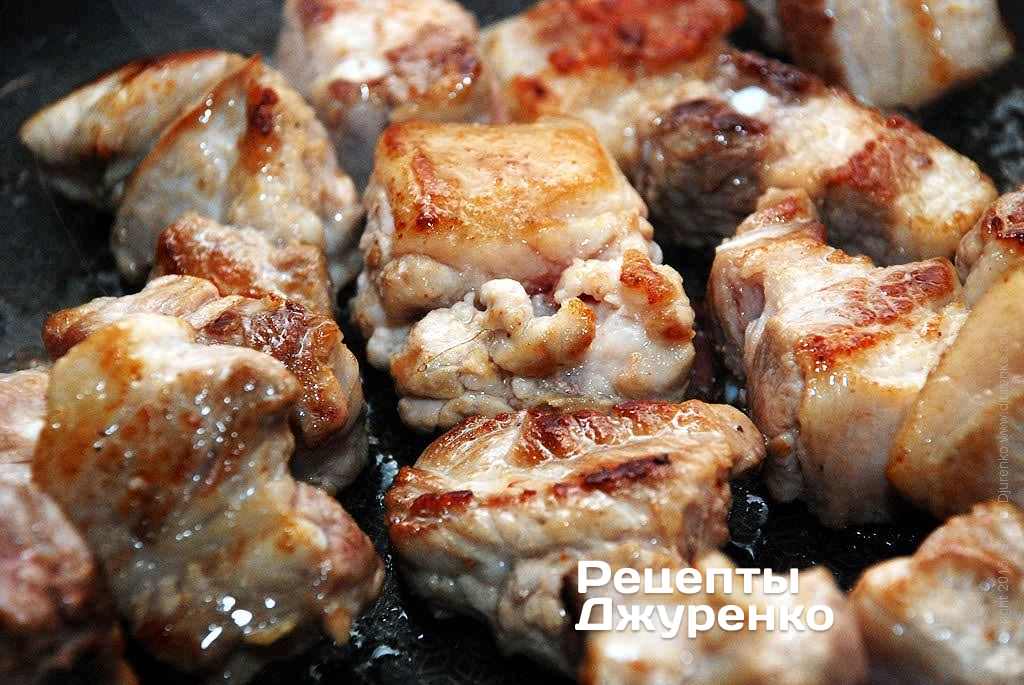
In a deep sauté pan or pot, brown the rib pieces without any extra fat.
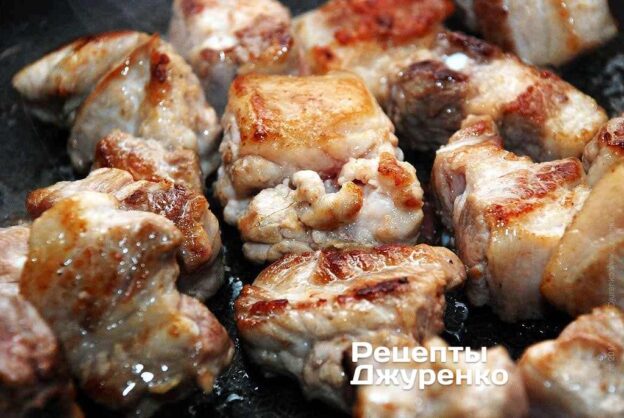
Stir constantly so the meat turns deep golden and gets a browned crust. Brown the ribs for 10–15 minutes over medium heat, without covering the pan.
This initial browning is very important. First, the pork renders a little fat, which you’ll need for the rest of the cooking. Otherwise you’d have to add lard or — simply horrible — vegetable oil. Second, browning the meat gives the dish a special aroma. Third, with boiled meat it’s already soup, just a thick one. So whichever way you look at it, the browning is a must.
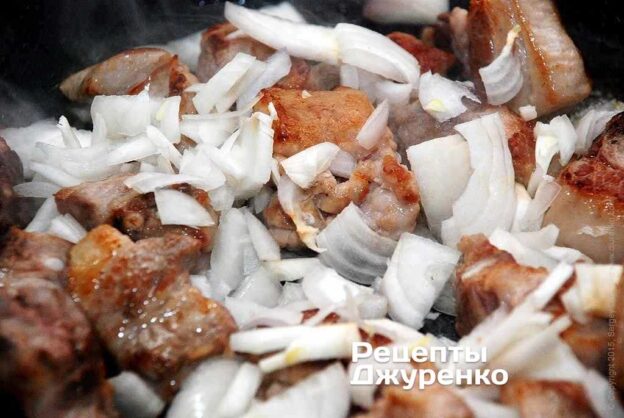
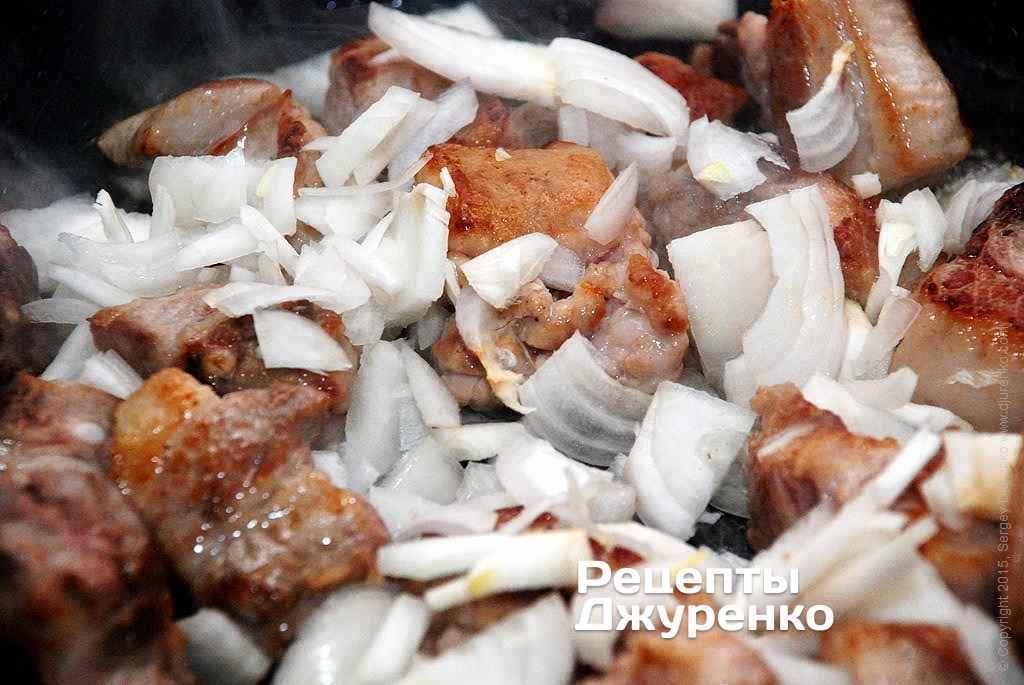
Peel the onion, cut it into thin strips and add it once the meat is nicely browned. Stir and keep frying everything together until the onion turns golden.
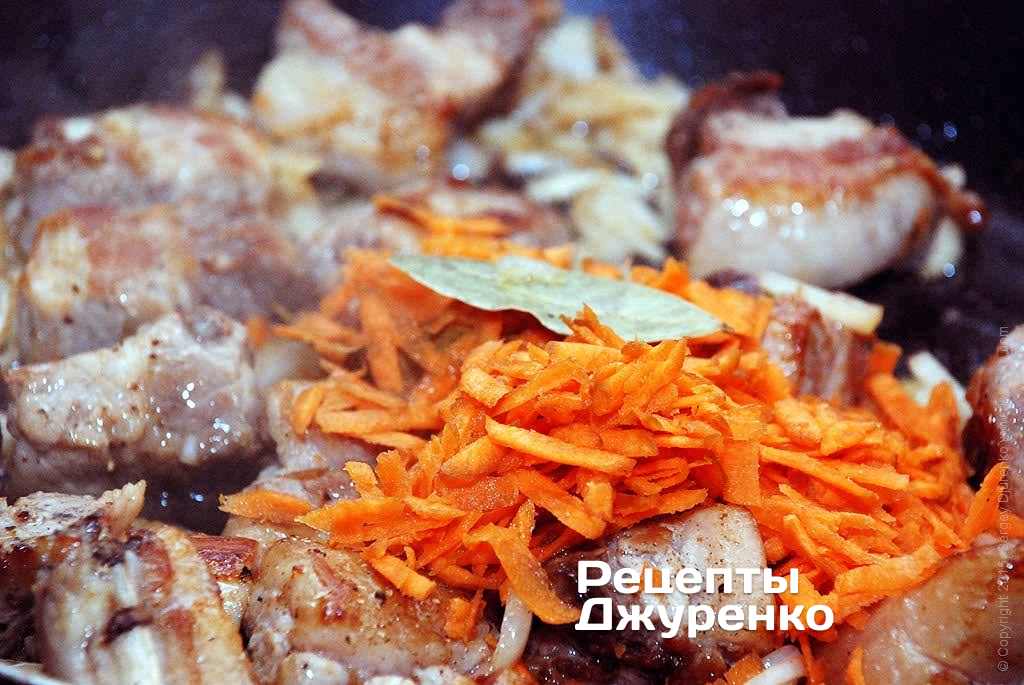
Coarsely grate the peeled carrot straight into the bigos, season lightly with salt and pepper, and add 2–3 bay leaves and, if you like, a pinch of ground coriander.
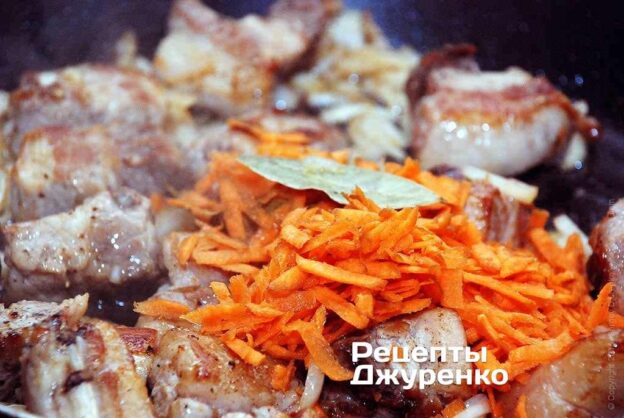
Fry uncovered for another 5 minutes, until the carrot softens.
Keep an eye on the heat so everything fries but doesn’t burn. Under no circumstances let anything catch and scorch.
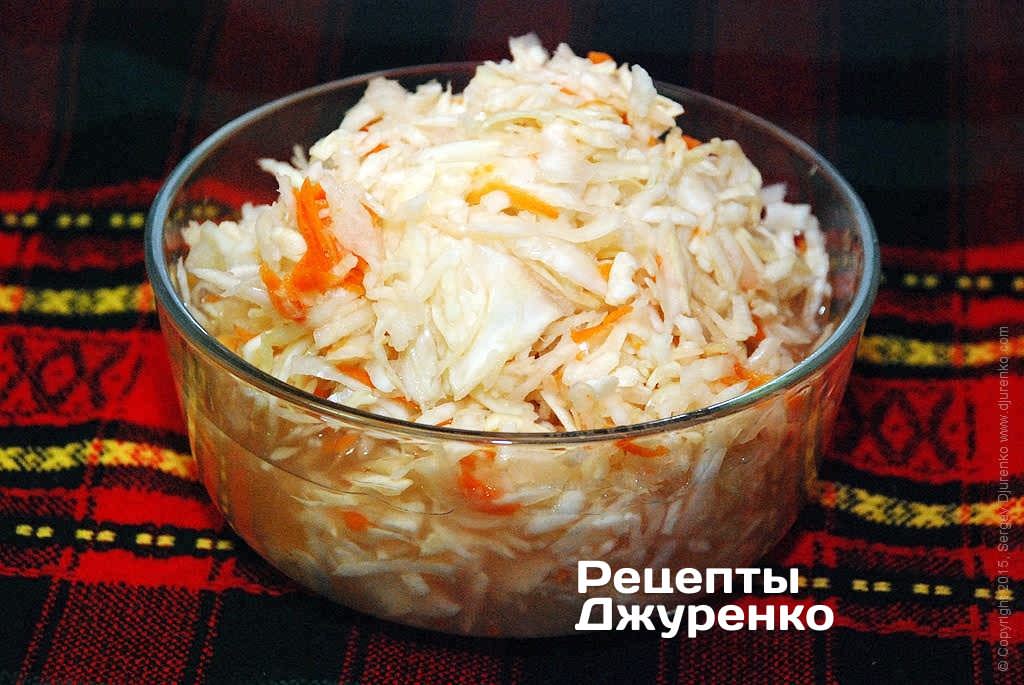
Stewing the cabbage
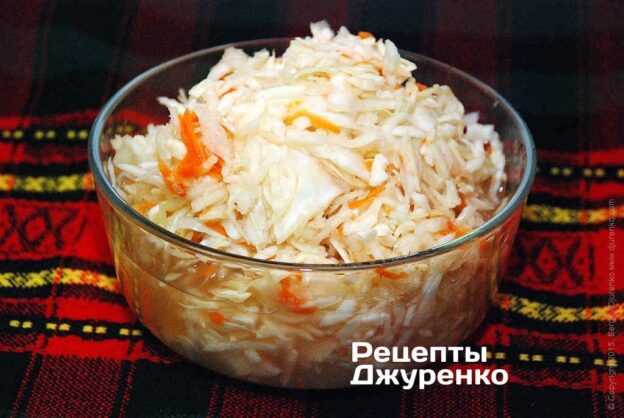
Next comes the most interesting and, perhaps, most enjoyable part: adding the sauerkraut. We go down to the cellar and lift the stone off the wooden lid that covers the 200-litre barrel. We open the barrel and scoop out sauerkraut by hand. With its brine. Pasha Emilevich, digging cabbage out of the barrel with his whole arm, would understand me. But in the city there’s no cellar, no barrel, no idyll and none of the right mood. There’s a fridge with a 3-litre jar of sauerkraut in it.
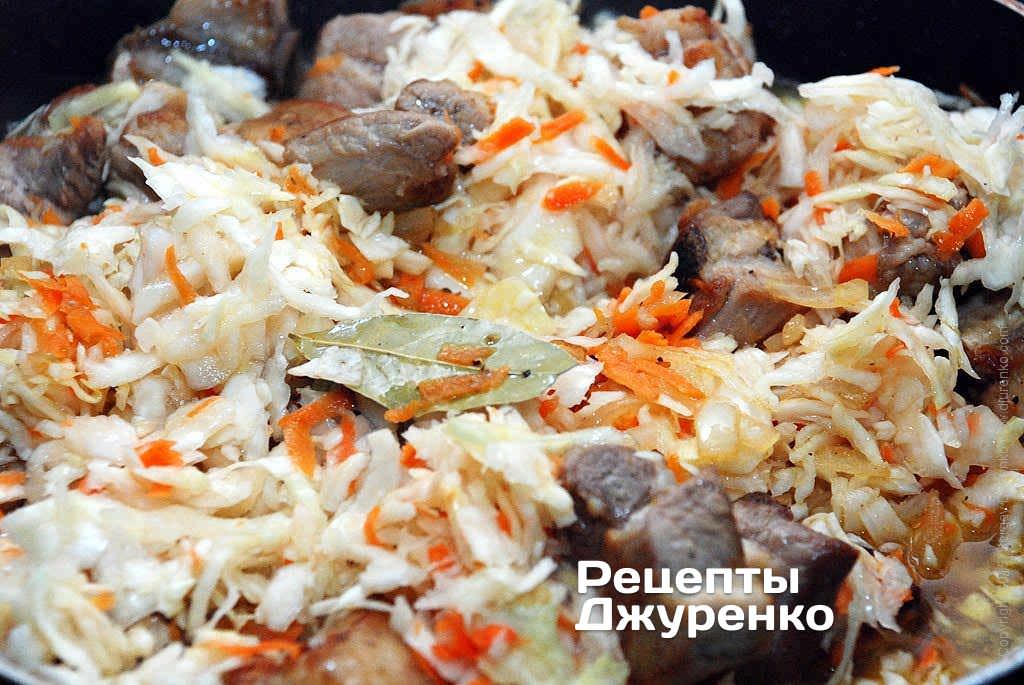
Put the sauerkraut into the pan, stir, cover with a lid (only now do you need the lid), turn the heat down to “just below medium” and stew the cabbage with the meat for 15 minutes.
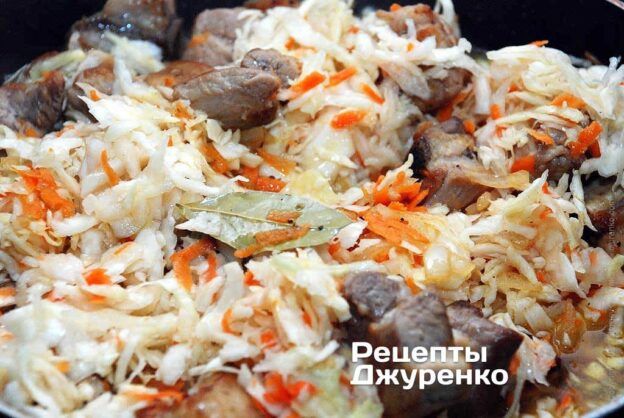
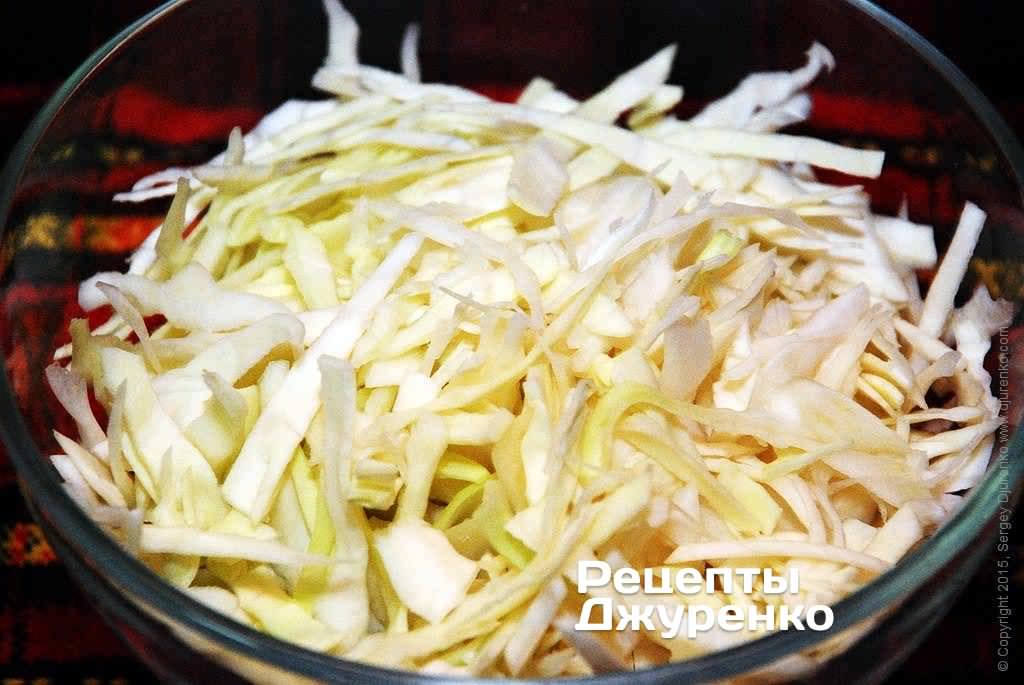
Shred the fresh white cabbage. By the way, it doesn’t have to be very “fine” — I’d even say not fine at all — but don’t go too coarse either.
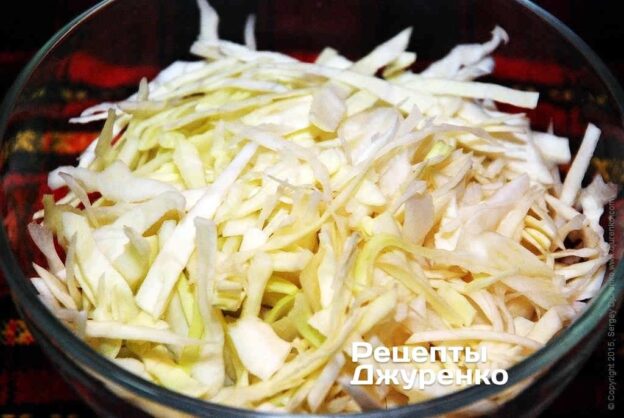
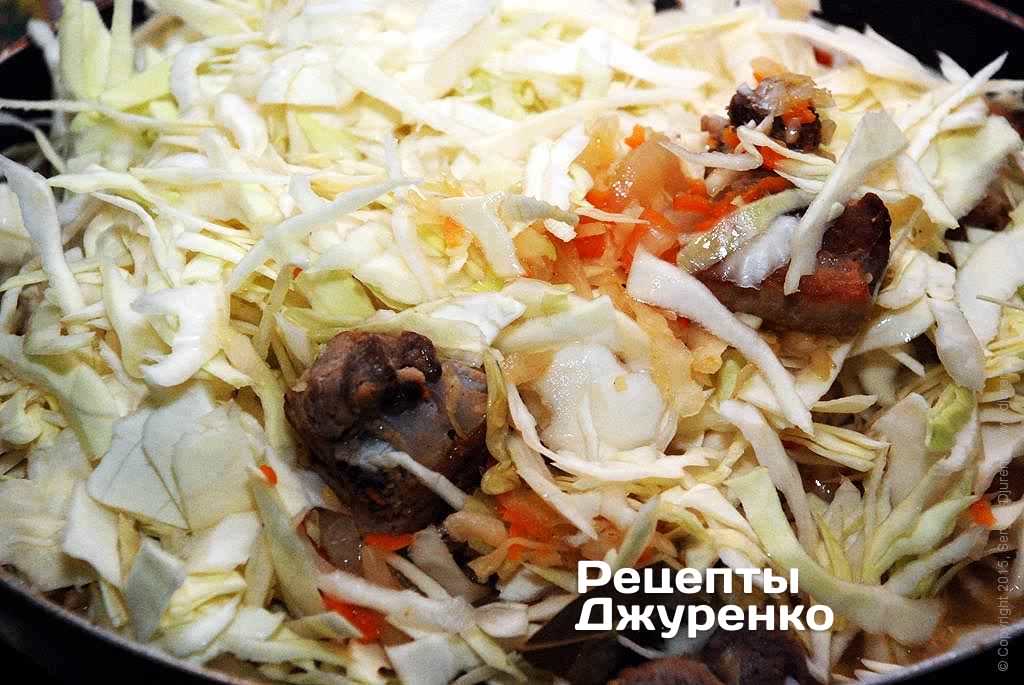
Add the shredded fresh cabbage to the pan and cover with a lid.
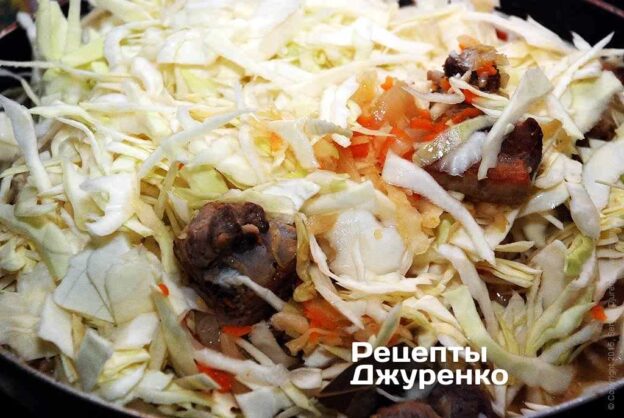
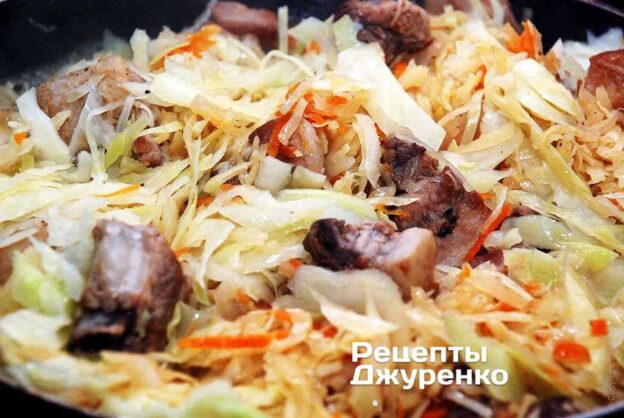
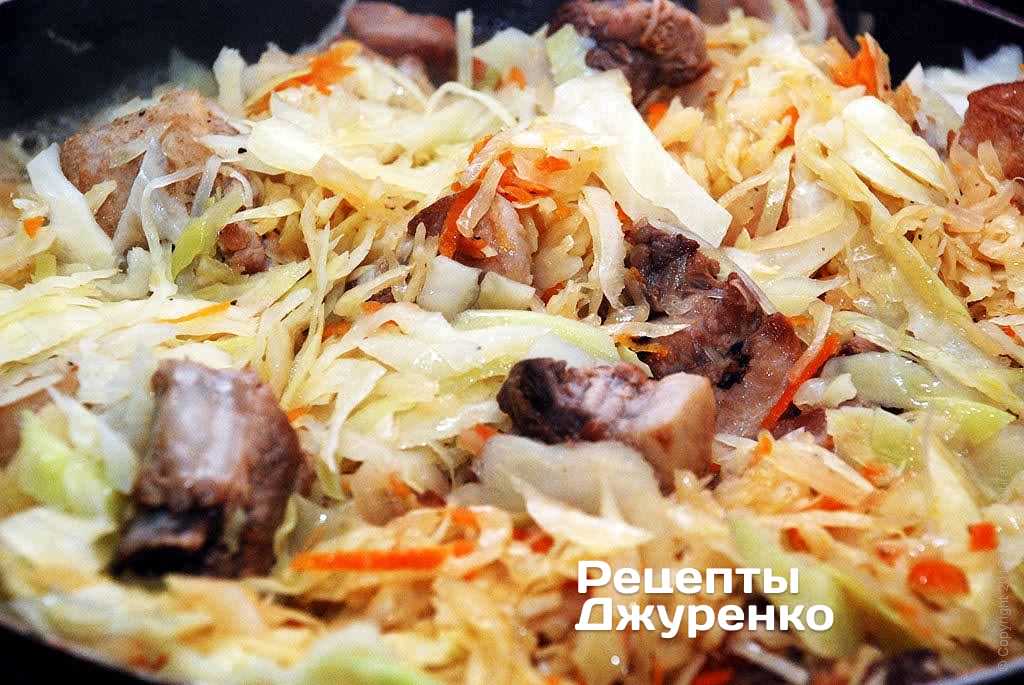
Stew for 1–1.5 hours, stirring from time to time. The fresh cabbage wilts very quickly, “settles”, shrinks in volume and releases lots of moisture.
Adding the prunes
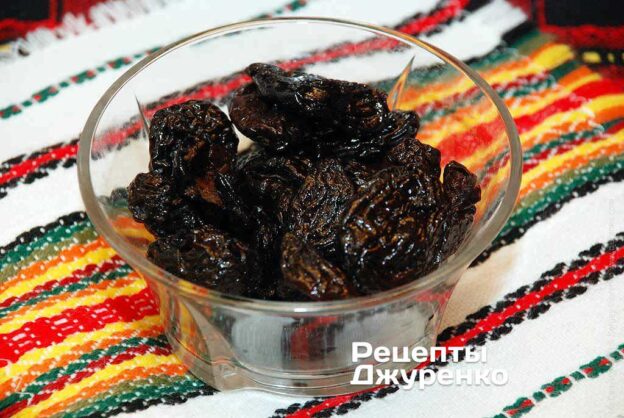
Wash the pitted prunes. Don’t cut them into pieces under any circumstances, even if they’re large — otherwise they’ll simply fall apart into mush. Too many prunes isn’t great either.
If the prunes are on the dry side, as they often are, wash them in advance, drain the water and leave them in a sealed bag for a few hours so they soften a little.
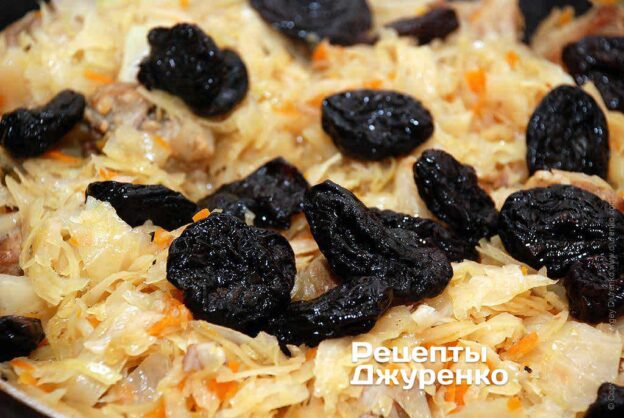
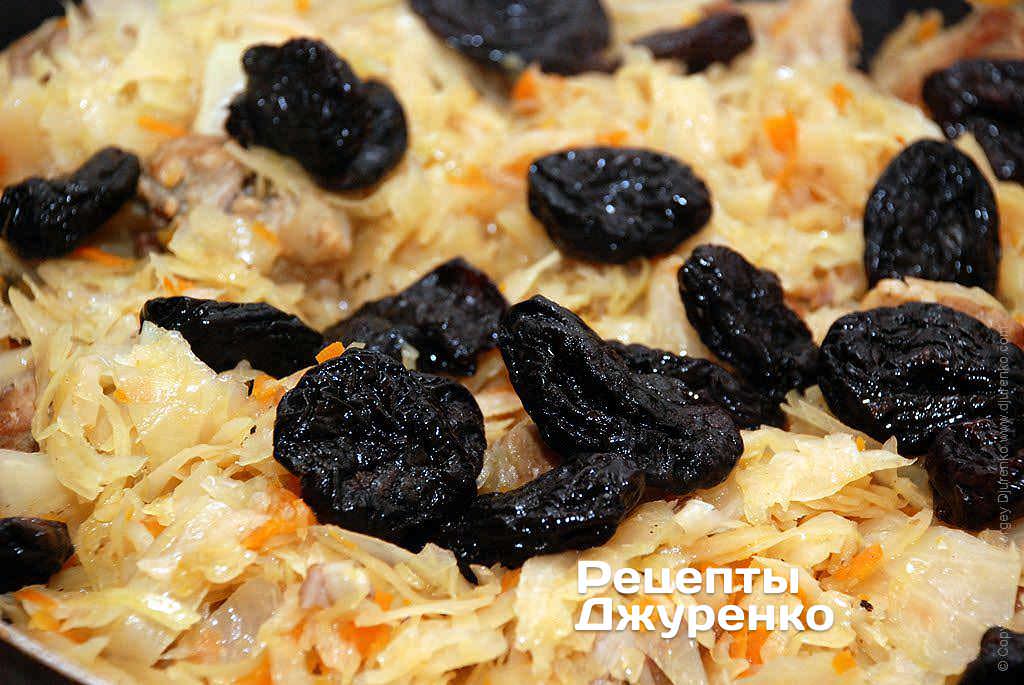
Add the prunes to the bigos, stir and stew for another 15 minutes.
Taste and add the final salt — only now, because the sauerkraut brings its own salt.
They say the dish should be slightly sour, and some even recommend adding citric acid. I’ll put it this way: that’s barbaric, whimsical heresy! Better to add more sauerkraut. And there’s no need for ketchup, tomato paste or tomatoes — they don’t belong here.
Serving
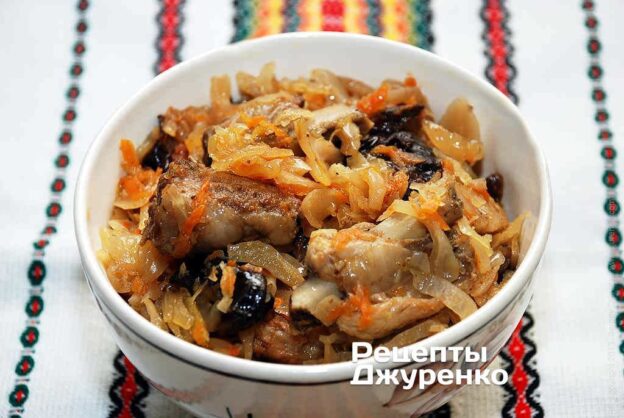
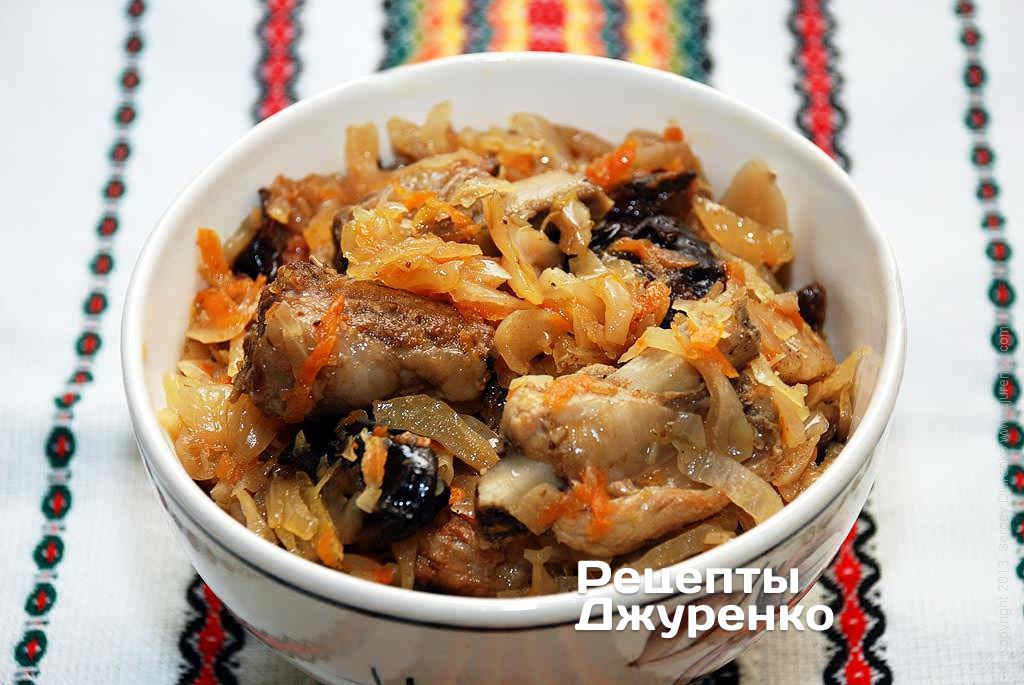
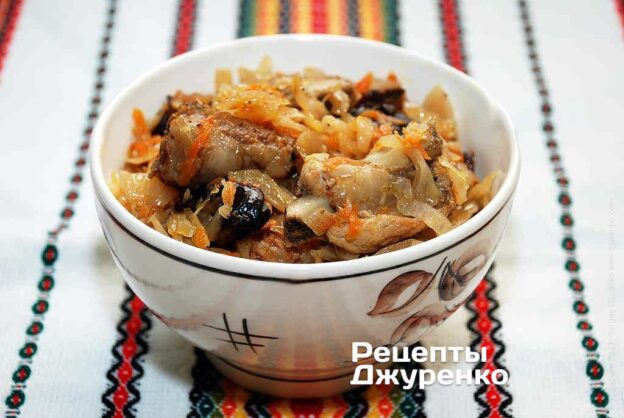
After that, do as you see fit — you can “freeze” it. I don’t have the patience for that, and hot bigos, piping hot from the stove — I just can’t resist. Straight onto the plates, a slice of bread, and that very…
And as Professor Philip Philippovich Preobrazhensky said: “…and if you tell me that’s bad, I’ll be your sworn enemy for life. ‘From Seville to Granada!'”

How did you like this recipe?
Rate it with one tap.
Calories and macros
355 kcal
Serving ≈ 280 g
- Protein15 g18% of kcal
- Fat17 g46% of kcal
- Carbs30 g36% of kcal
100 g125 kcalProtein 5.2 gFat 6 gCarbs 10.6 g
Calculated from the recipe ingredients, excluding salt and spices. Data: USDA and Matvaretabellen.