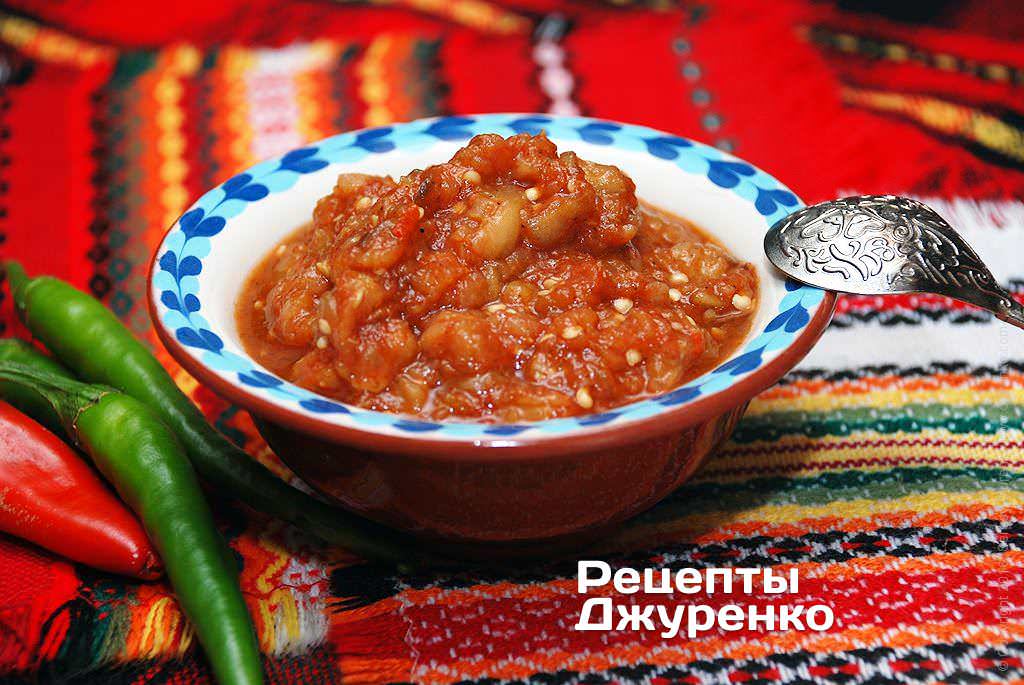
Kyopolou: Bulgarian Eggplant Pepper Tomato Spread
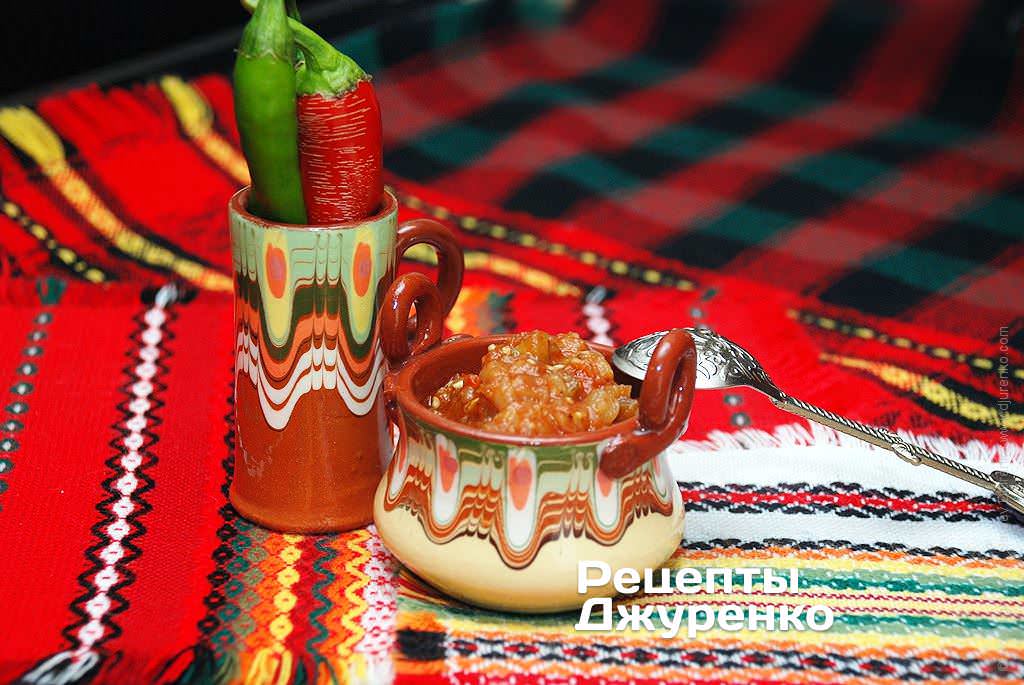
For all the refinement and variety of Bulgarian cuisine, the most surprising dish is probably the kyopolou appetizer. By and large it is a close relative of eggplant caviar, found in many Eastern and Slavic cuisines.
In many regions of Bulgaria this appetizer is called “zelen haivar”, green caviar. In Turkey a similar dish, Köpoğlu, is a vegetable appetizer with quite ancient roots, probably passed from fathers to children. The word kyopolou is thought to have Turkish roots, literally meaning “son of a dog” or “scoundrel”. In Bulgarian, the expression “to send someone for green caviar” is used about cheats.
Kyopolou is a tasty dish of baked eggplants pounded with garlic, spices and vegetable oil. Long ago the ingredients were ground by hand and the consistency was quite coarse. Today, in industrial production and even at home, the ingredients are ground with blenders and choppers, and the appetizer has a very uniform texture.
By and large, kyopolou is eggplants baked over coals, peeled and crushed in a wooden mortar with spices, garlic and oil. Tomatoes and peppers are secondary ingredients. In Serbia, however, a similar dish is common: ajvar, in which sweet pepper is the main ingredient and eggplants are only an optional addition.
Vegetable caviar is an appetizer, a side dish, an accompaniment to meat dishes, a sauce and, let's be honest, insanely tasty simply spread on bread. I think a little of this sauce can well be added to a salad.
But most often caviar is an appetizer, served with bread, brynza cheese or as part of elaborate meze platters. Kyopolou is served cold, either freshly made or preserved. In the simplest version the dish needs eggplants, peppers, ripe tomatoes and garlic. Everything is very easy to make, and the caviar keeps in the fridge for several days.
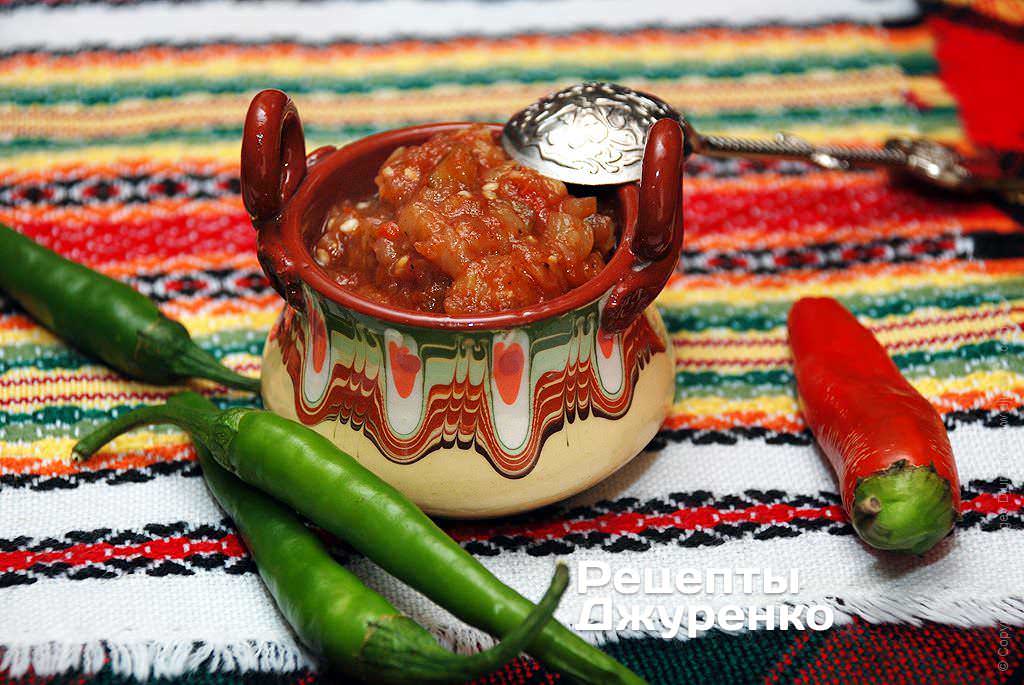
More with tomatoes, bell peppers and eggplant
 Lecho with EggplantEasy lecho with eggplant, sweet peppers, onion and tomatoes. A Bulgarian-style eggplant stew for serving with bread or rice, or for canning. Step-by-step recipe.
 Eggplant caviarEggplant caviar – a famous appetizer! The most common way to prepare vegetable caviar is to fry vegetables and grind them.
 LyutenitsaHomemade Bulgarian lyutenitsa: roasted red peppers, tomatoes, chili, garlic and eggplant simmered into a thick, sweet and tangy sauce for meat, bread and cheese.
 Vegetable PizzaHomemade vegetable pizza with fresh tomato sauce, fried eggplant, roasted peppers, pickled onion, mozzarella and Parmesan. Step-by-step recipe with photos.
 Ajapsandali: spiced Caucasian eggplant stewAjapsandali, a fragrant Caucasian stew of eggplant, bell peppers, tomatoes, carrots, garlic and fresh herbs. Step-by-step recipe with photos, hot or cold.
Ingredients
6 servings
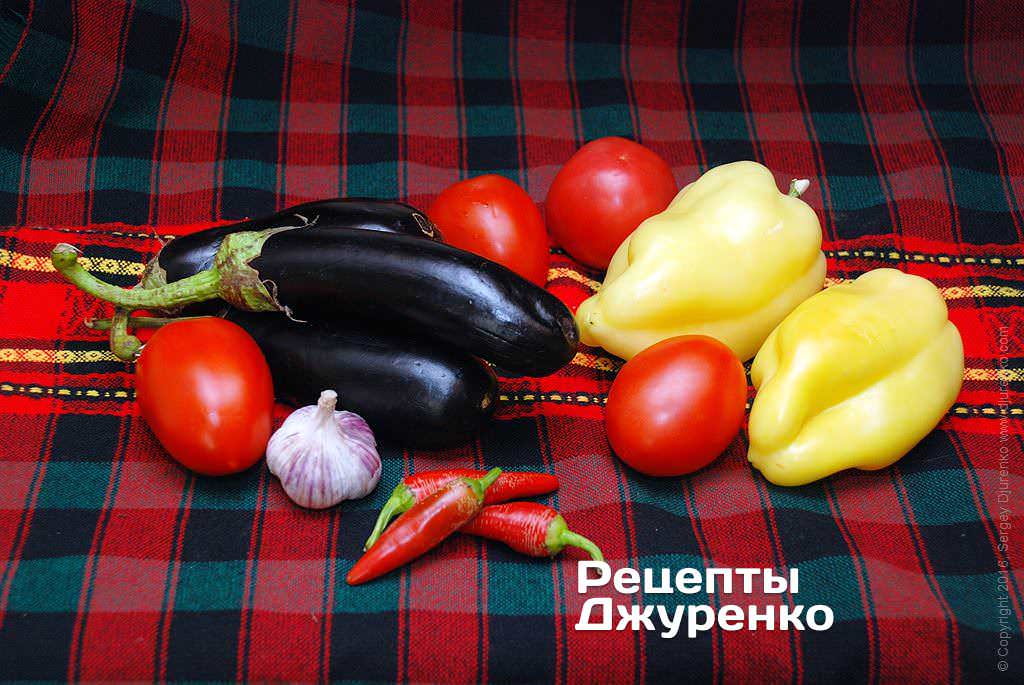
- Eggplants 2-3
- Bell peppers 2
- Ripe tomatoes 4-5
- Garlic 2-5 cloves
- Hot pepper 2-3
- Vegetable oil 2 tbsp
- Salt, savory, fenugreek, sugar, wine vinegar to taste
Step-by-step recipe
- Given how widespread dishes like kyopolou are, the caviar hardly has a clear, single recipe. From region to region, and even from cook to cook, the variations can be quite noticeable. Only the eggplants never change: young, dark, with glossy skin and, preferably, barely formed seeds. Besides the usual variations, additions of nuts, herbs, cheese or brynza, and various vegetables, most often carrot and onion, are quite common.
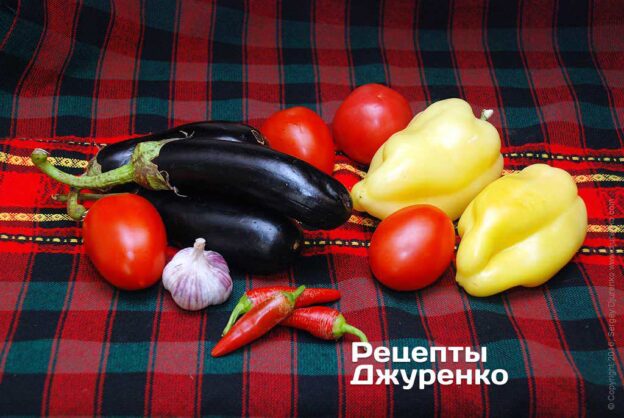
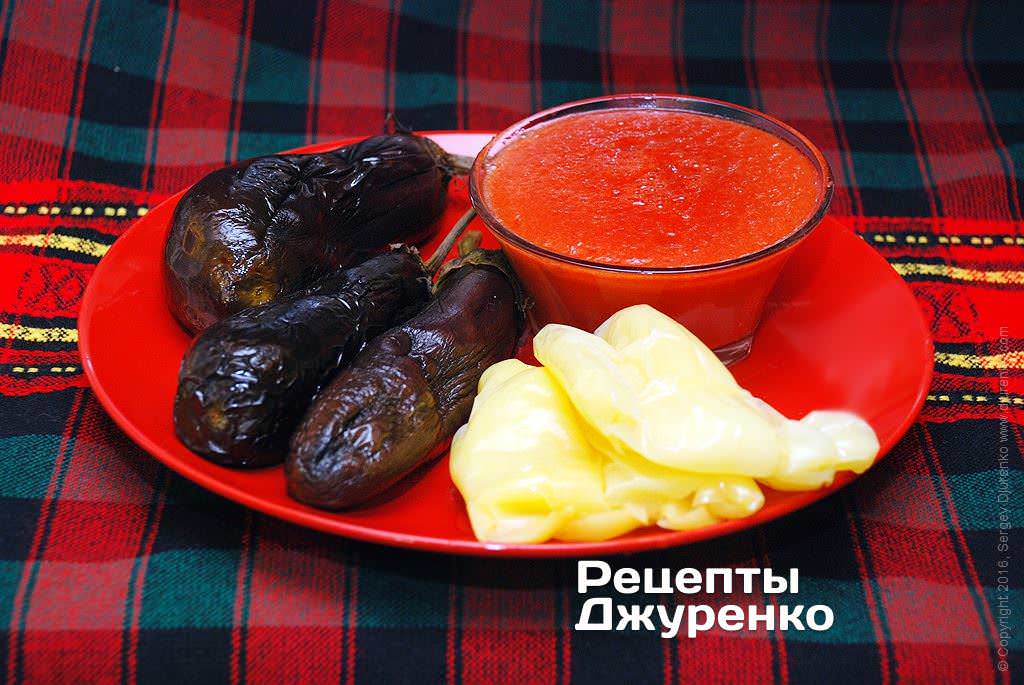
- The preparation stage involves baking the eggplants and peppers. Ideally, bake the vegetables over coals or an open flame until charred, then peel them. That makes the dish uniquely tasty and aromatic. In a city kitchen you can bake the vegetables in the oven. Brush the eggplants and peppers with a little vegetable oil, then bake at 180-200°C until done. The eggplants and peppers should become soft and wrinkled.
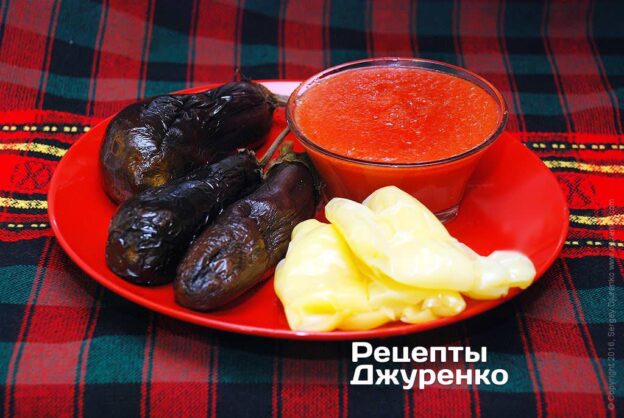
- After baking, be sure to put the peppers in an airtight plastic bag until cool, then peel off the outer skin, which comes off beautifully. Peppers for stuffing are baked in just the same way. Cut the eggplants in half lengthwise and scrape out the flesh; throw the skin away. Chop the peeled pepper and eggplant flesh very finely with a knife. Don't use a blender, or you'll get mush.
- Scald very ripe tomatoes with boiling water and remove the seeds. Purée the tomato flesh in a blender. If you like spicy appetizers, add a clove of garlic and 1-2 peeled hot peppers to the tomatoes. Note that garlic and hot pepper will be added to the dish again at the final stage.
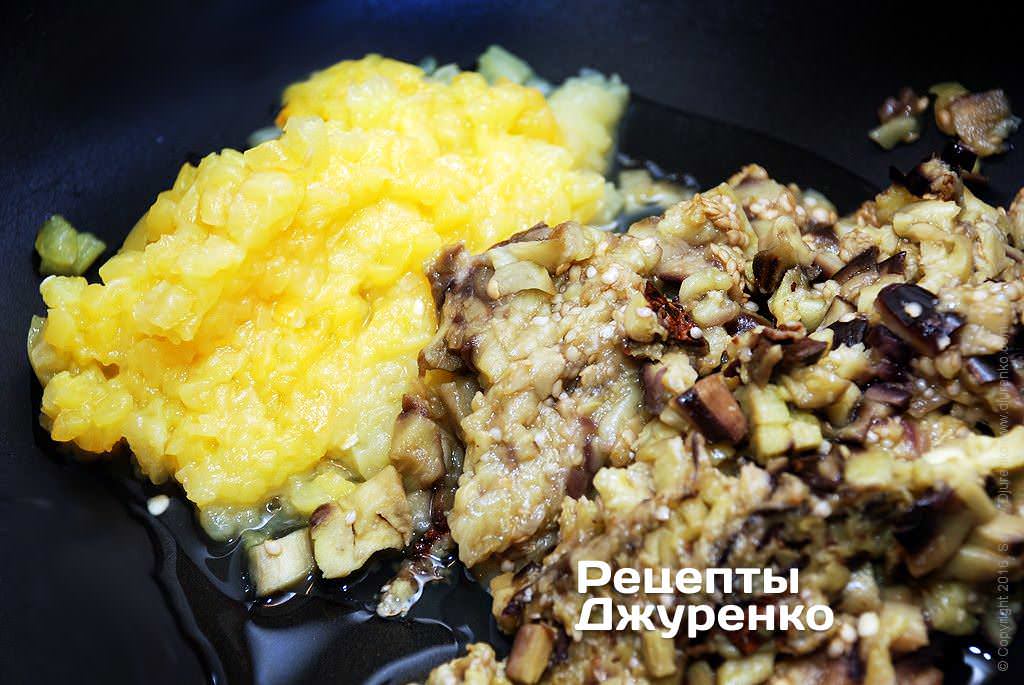
- Heat the vegetable oil in a saucepan and fry the mixture of chopped baked eggplant and pepper flesh in it. Fry over medium heat, stirring fairly often, for 5-6 mins.
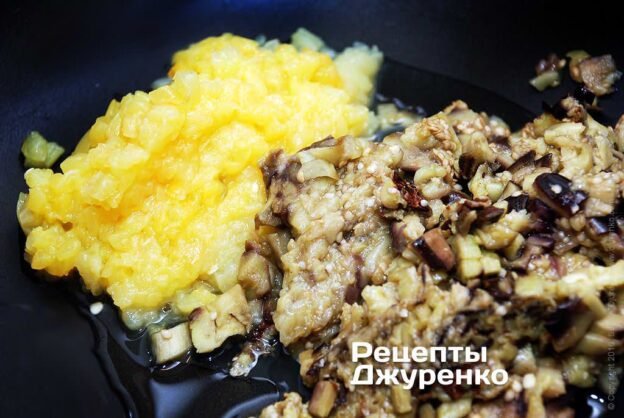
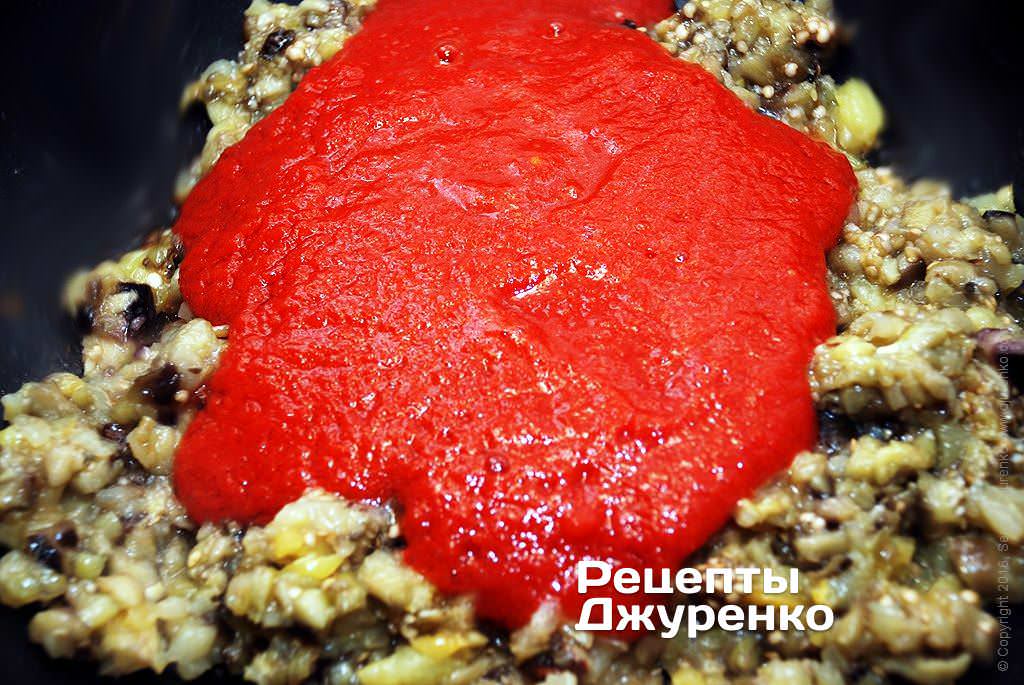
- Pour the tomato purée, or tomato purée with garlic and hot pepper, into the fried pepper and eggplant mixture. Stir; if the mixture is very thick, add a little water, no more than 0.5 cup. Once it comes to the boil, cover the saucepan with a lid and let the caviar simmer over low heat for 10 mins.
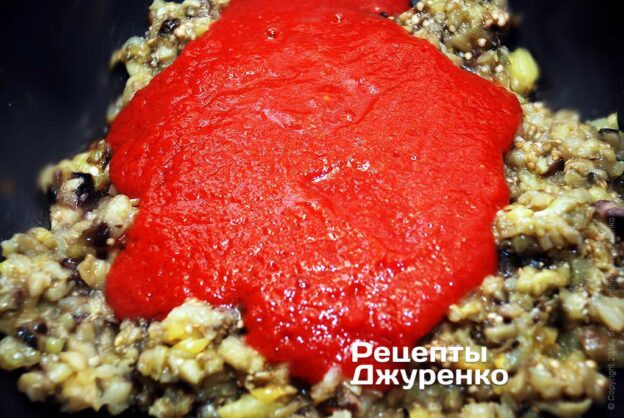
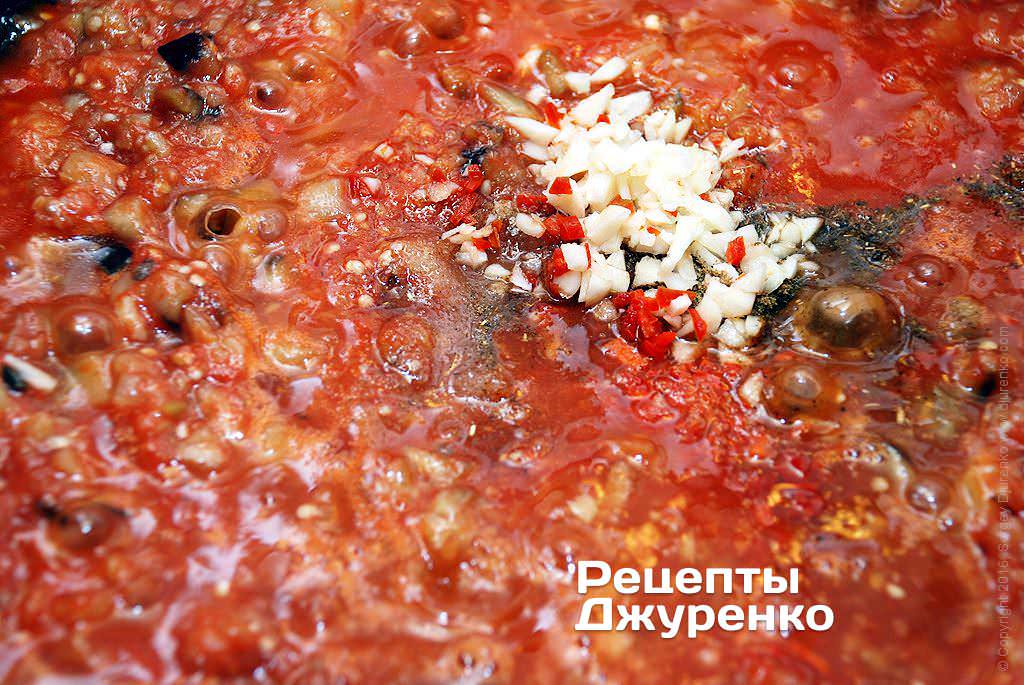
- Peel the remaining garlic and hot pepper and chop very finely with a knife. Don't grate them, or the garlic will release juice and turn mushy during further cooking. Add the chopped garlic and hot pepper to the saucepan, with 1-2 tsp of sugar (to taste), salt, dried savory, ground fenugreek and just a tiny bit of wine vinegar, no more than 0.5 tsp. The vinegar should give a barely perceptible tang. If the tomatoes have given the dish enough acidity, you can do without the wine vinegar.
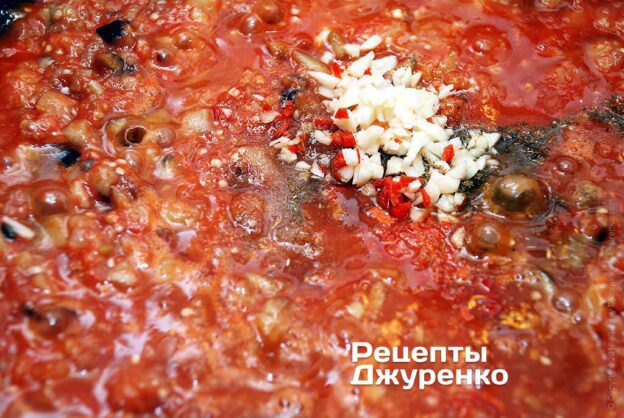
- Instead of savory and fenugreek, you can use the traditional Bulgarian spice blends “trapezna chubritsa” and “sharena sol”. They contain all the necessary ingredients and give the dish the inimitable flavour typical of many Bulgarian dishes. These blends are easy to make at home from simple spices.
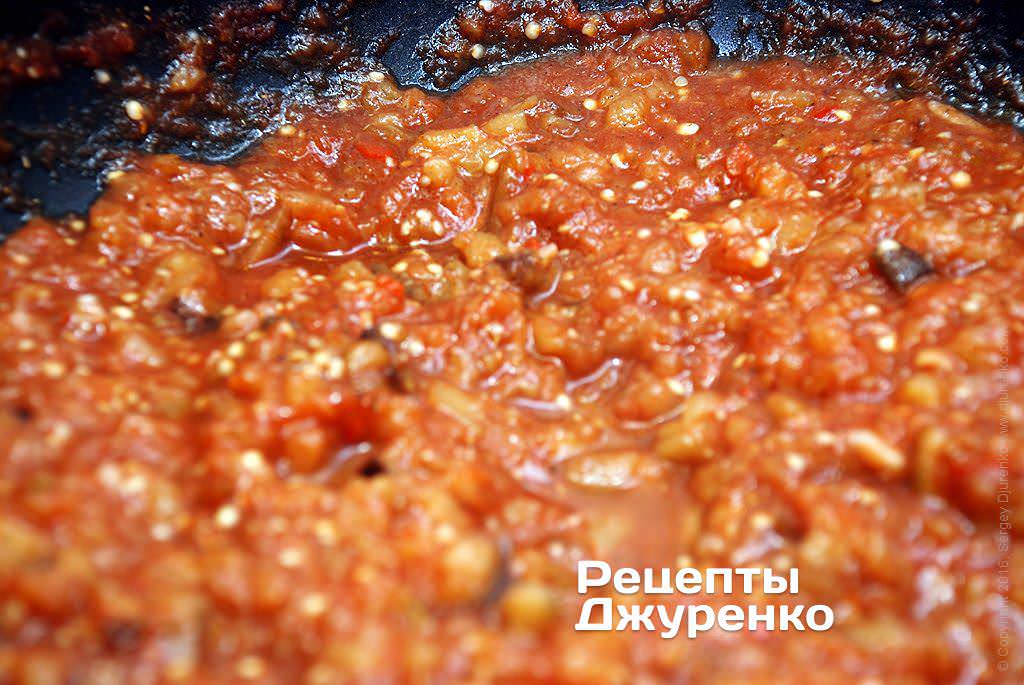
- Stir the caviar thoroughly and simmer over low heat under a lid for another 10 mins. In the end the appetizer should be quite thick, with no obvious free liquid. If there is liquid, take the lid off the saucepan and let it evaporate.
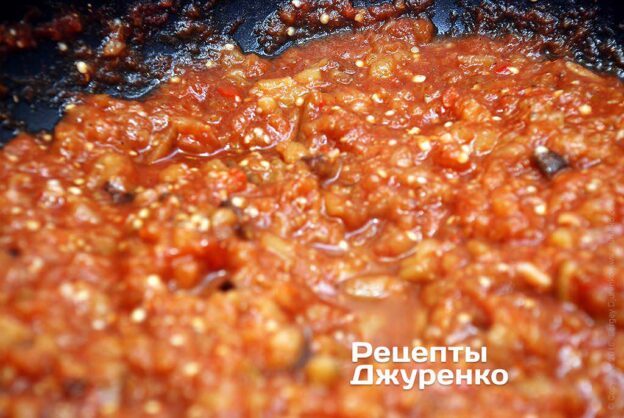
- From here there are options. Cookbooks usually recommend blending it after it cools, or even rubbing it through a sieve. Frankly, I didn't like that. I prefer the caviar to consist of very small but noticeable pieces of vegetables, ideally with bits of garlic and hot pepper and even leftover pepper and eggplant seeds.
- How you proceed is up to you. In any case, kyopolou must be chilled; the caviar is tastiest when very well chilled.

- How you serve the appetizer is a field for imagination. Serve it on its own with fresh bread, or spread it on sandwiches.

- A large platter with all kinds of sliced meats and vegetables, fresh herbs, baked peppers and a mound of eggplant caviar looks very impressive on the table. This eggplant caviar goes wonderfully with black olives and fresh brined brynza.


 Pull chopper for garlic and onionAliExpress
 Oil sprayerAliExpress
 Kitchen scale up to 5 kgAliExpress
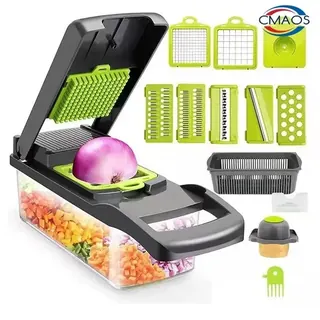 Vegetable chopper with handleAliExpress
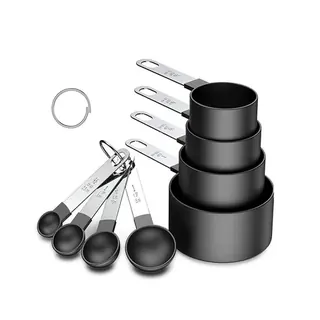 Measuring cups and spoonsAliExpress
 Peeler with wooden handleAliExpress
| Yield: | 6 servings |
| Calories: | 80 kcal per 100 g |
| Prep: | 15 mins |
| Cook: | 30 mins |
| Total: | 45 mins |
| Cuisine: | Bulgarian cuisine |
| Rating: |