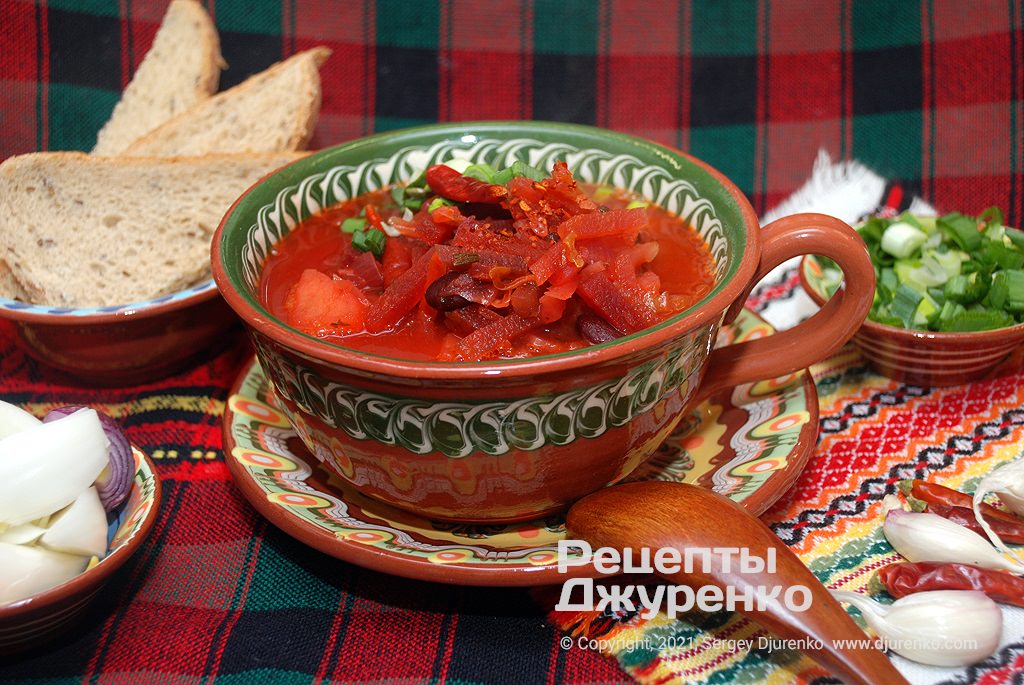
Vegetarian Borscht
I like the cabbage in borscht half-raw — that's from childhood, so it goes in last, for 5–10 minutes. The base of red borscht without meat is potatoes with cooked beans and a mix of beets, carrot and onion stewed with 2 tbsp of tomato paste. 4–5 cups of water, 45 minutes. Serve borscht with fresh onion, garlic and bread.
Ingredients
2 servings
For the borscht
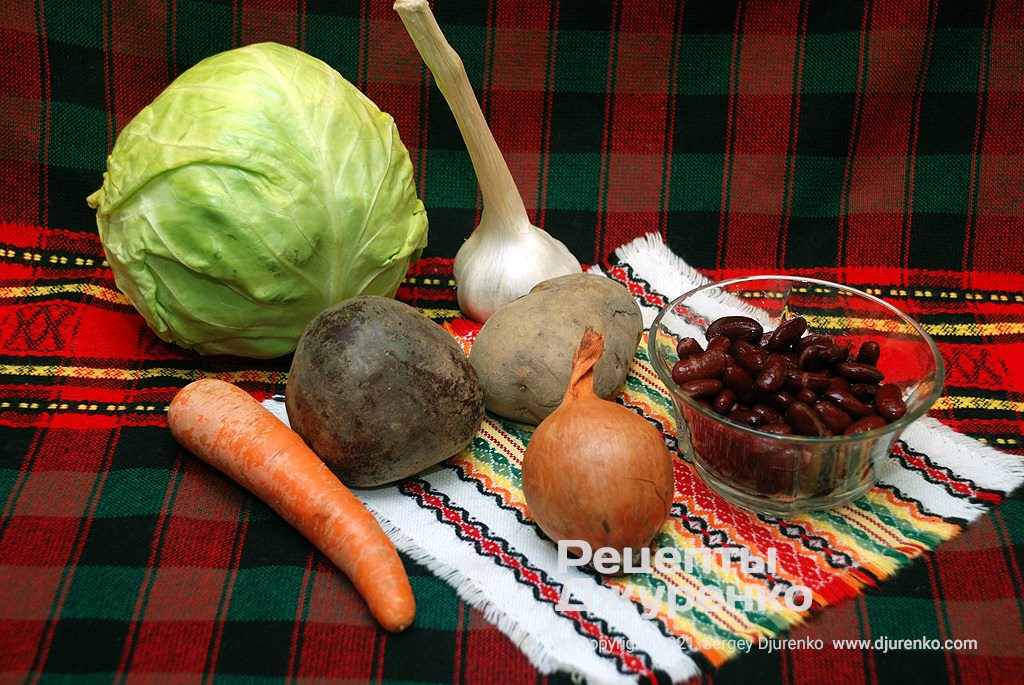
- Water 4–5 cups (0.8–1 l)
- Potatoes 1–2
- Beans (cooked) ½ cup (85 g)
- Cabbage ½ head
- Bay leaves 1–2
- Dried soup roots and herbs 1 tbsp (5 g)
- Salt, black pepper, ground coriander to taste


For the base
- Red beet 1
- Carrot 1
- Onion 1
- Tomato paste 2 tbsp (33 g)
- Vegetable oil 2 tbsp
- Garlic, chili pepper, vinegar optional


For serving
- Dill, onion, green onion, garlic, bread to taste

Step-by-step recipe
Potatoes and beans
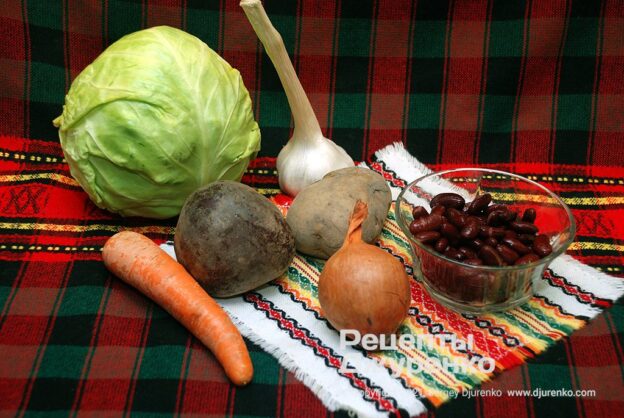
For a tasty, rich borscht without meat, you need the freshest, best-quality vegetables. Make especially sure the beets are dark, without pale “rings”. Young cabbage gives the best result. You can use dried beans; soak and boil them first. By the way, if you use lots of beans, you can skip the potatoes; many people even like it better that way.
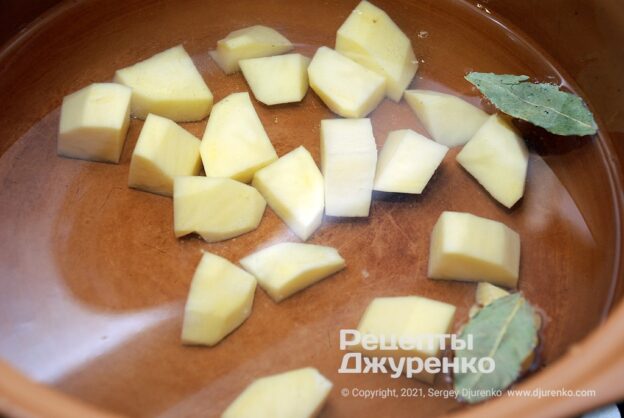
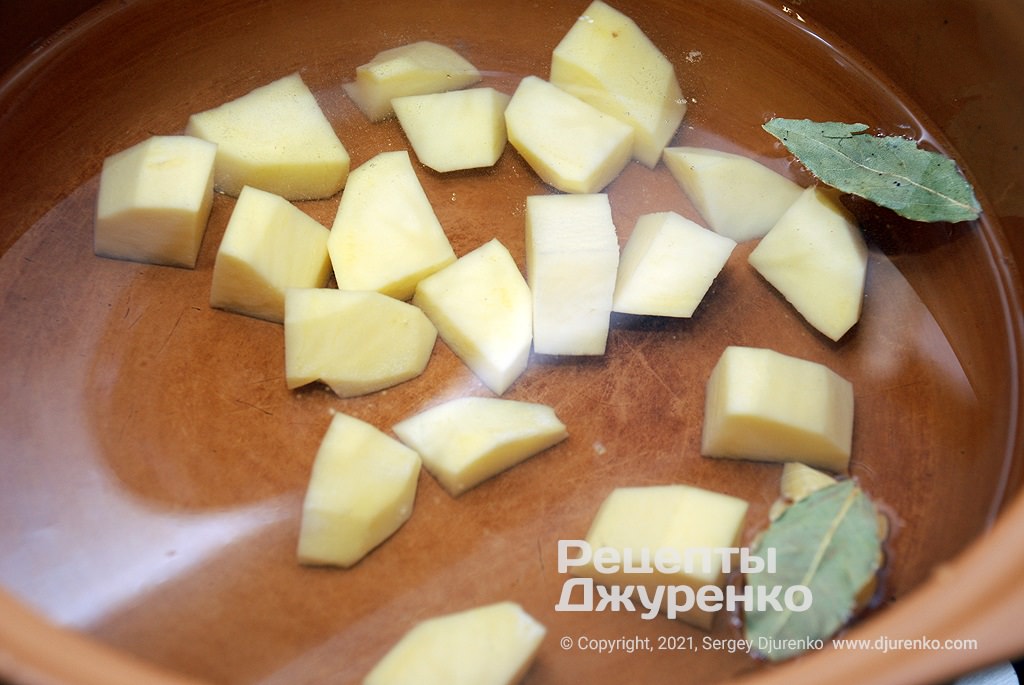
Pour 4–5 cups of cold water (0.8–1 l) into a pot. Peel the potatoes and cut into large cubes.
I remember my grandma boiled the potatoes whole. Once they were cooked through, she simply mashed them with a spoon right in the borscht.
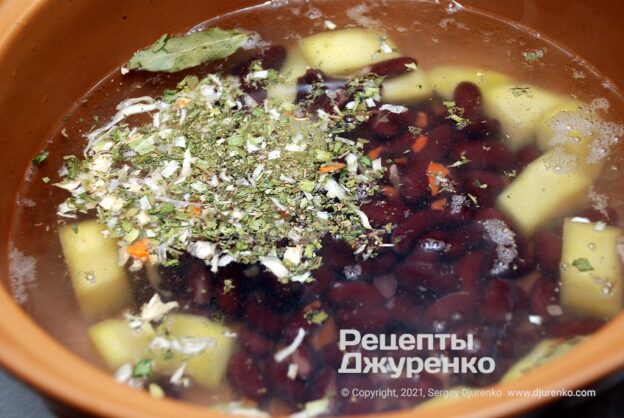
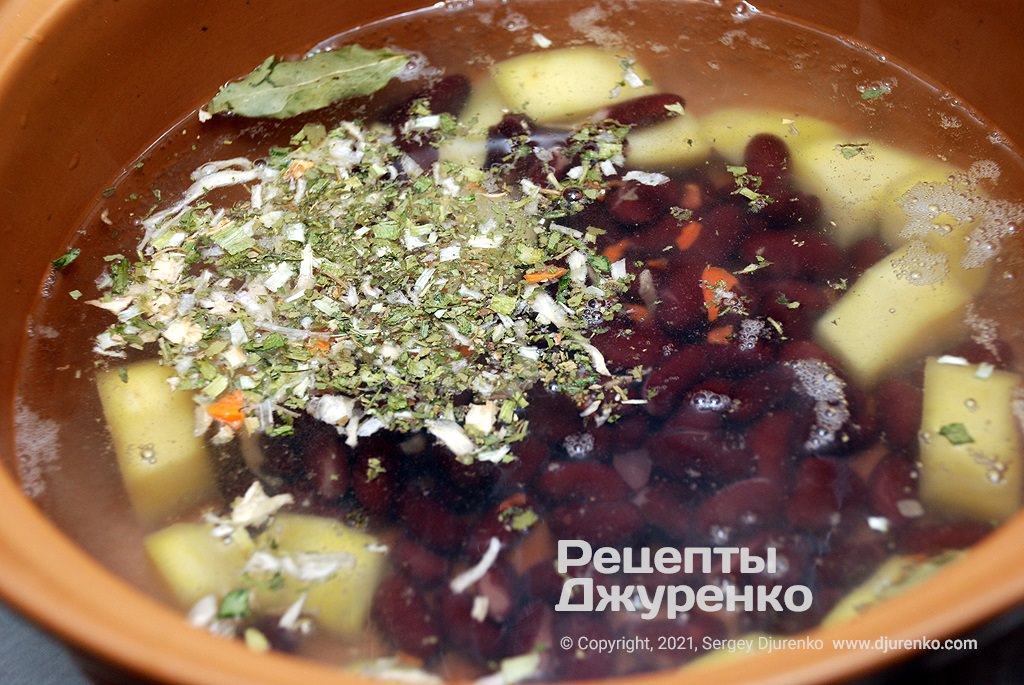
Add the cooked beans. In principle, you can cook the beans along with the vegetables, but that takes time. And red beans color the broth heavily, so I prefer to add them already cooked.
Add 1–2 bay leaves, a little salt, just a little, and 1 tbsp dried soup roots (5 g) and herbs; I always use these dry blends for soups and broths. If you like, add a dried chili pod as well. I suggest a pinch of ground coriander.
Simmer the potatoes and beans until the potatoes are done, about 15 minutes.
The base
Meanwhile, make the base. Borscht without meat is especially tasty with lots of vegetables. The “half liquid, half solids” rule doesn’t apply to borscht; that’s more for soups.
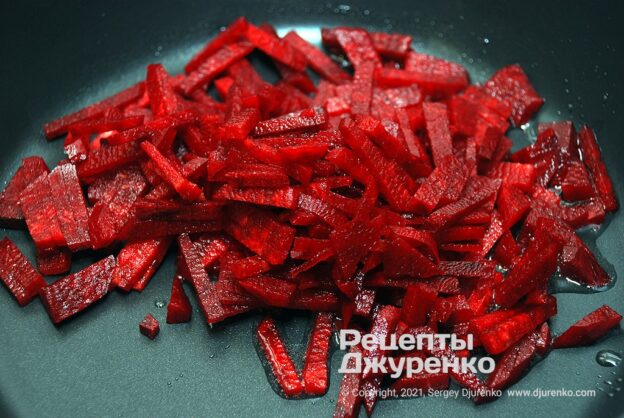
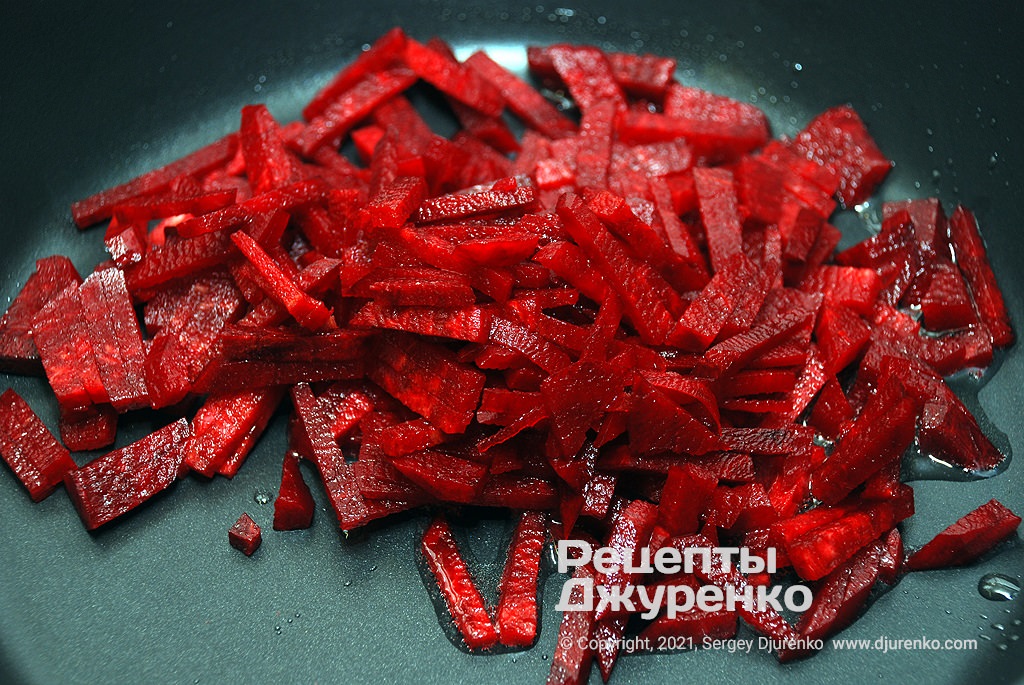
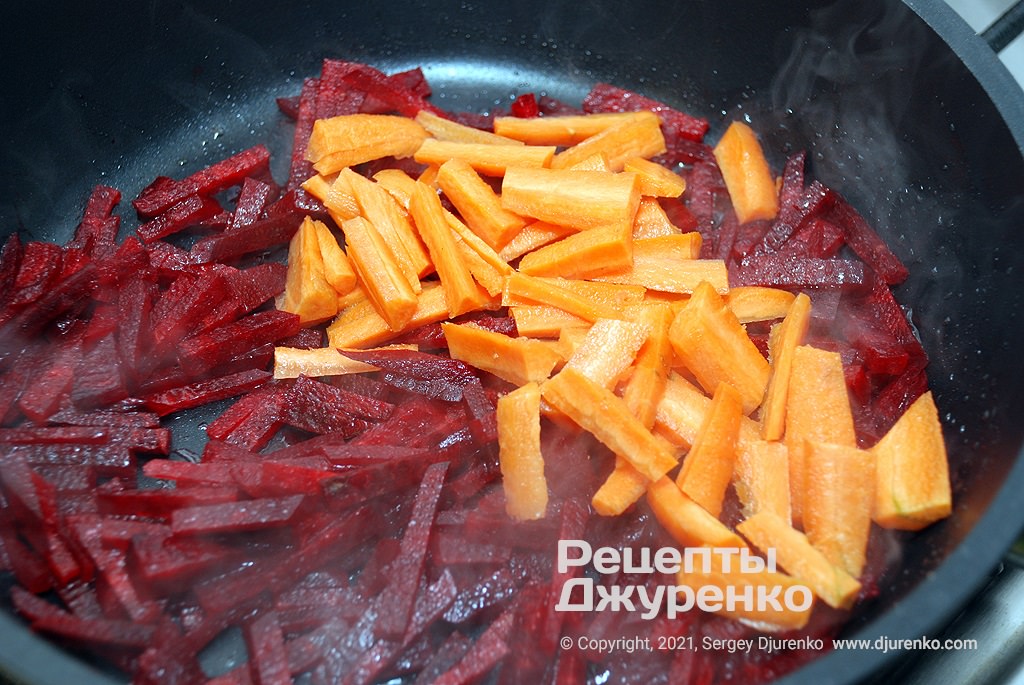
Prepare the vegetables: peel the beet, carrot and onion. Cut the beet and carrot into strips and dice the onion.
Heat 2 tbsp vegetable oil in a skillet with a lid. Fry the beet until soft.
Next, quite often it makes sense to add a little vinegar, just 1 tsp. Do this if the beet isn’t as dark as you’d like: vinegar will deepen the color of the borscht. But remember, tomato paste will add acidity too. So vinegar is up to you. By the way, my grandma sometimes added a pinch of citric acid.
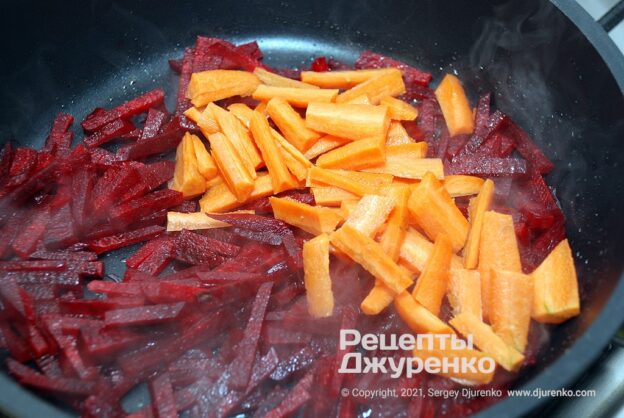
Add the carrot to the base and keep frying for 5 minutes.
Add the diced onion. Season the base with a pinch of salt and some pepper. Fry the vegetables for 4–5 minutes.
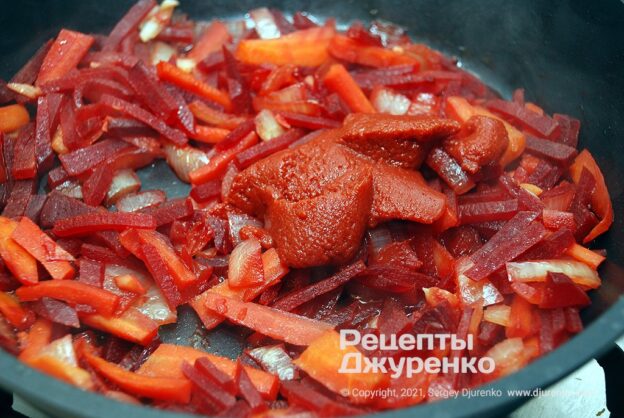
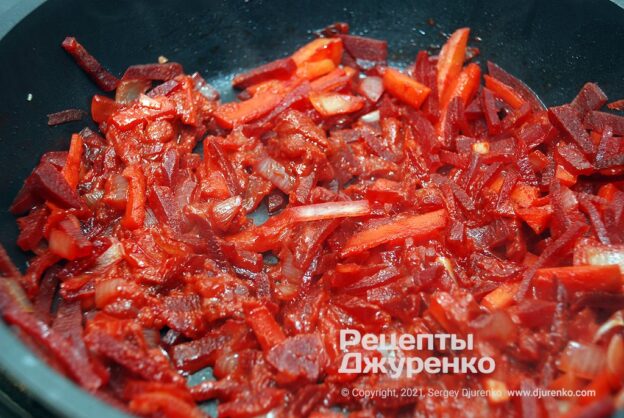
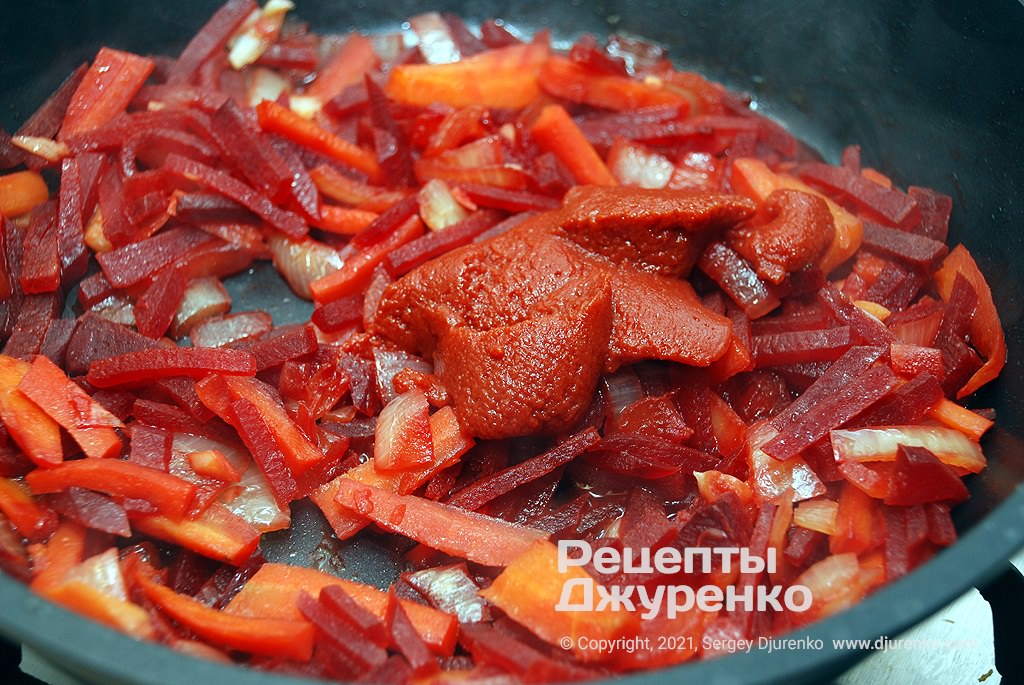
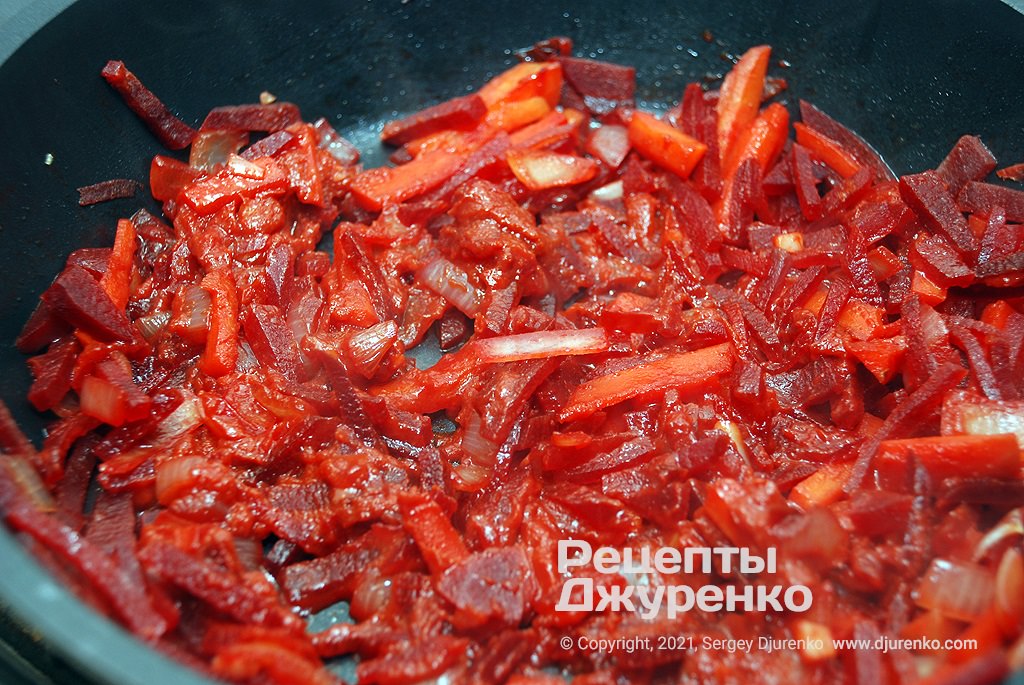
Add the tomato paste. Tomato paste is usually fairly salty, so go easy on the salt. Add 2–3 tbsp water, bring the base to a boil and braise, covered, over low heat for up to 10 minutes.
Often most of the spices go in while making the base, and you season by the taste of the base itself, not the finished soup. I once saw a ready-made borscht base in a store, which surprised me a little; it felt like you just add boiling water. A homemade spiced base will make your meatless borscht unique and tasty. It’s quick and easy, so there’s no need to buy something of unknown origin.
If you want the borscht spicy, add finely chopped fresh chili or 1–2 pinches of dried ground chili to the base.
Cooking the borscht
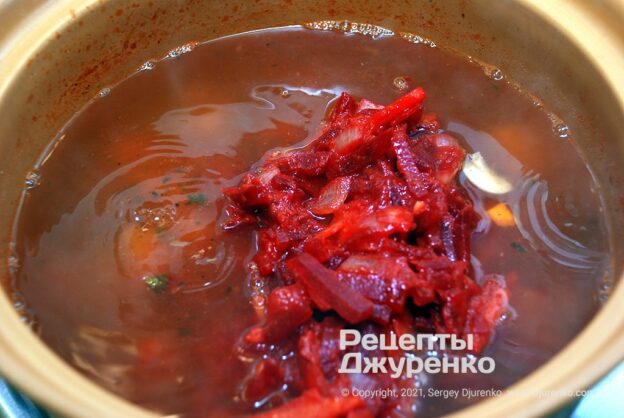
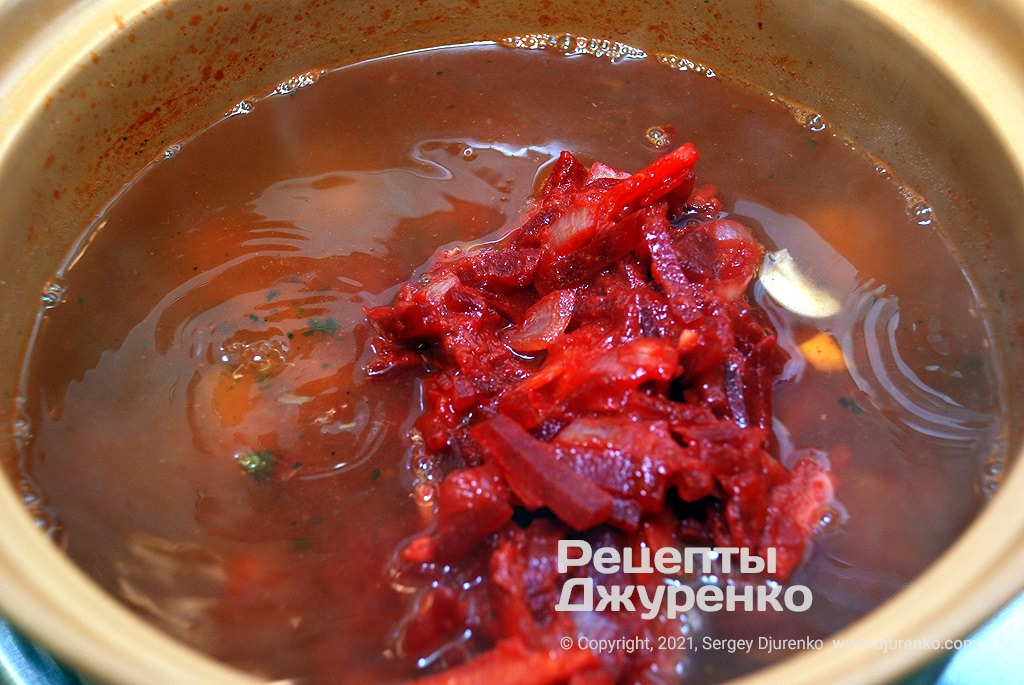
When the potatoes are done, add all the borscht base to the pot and stir. Bring the borscht to a boil and turn the heat down. Add salt and spices to taste. For the final salting, you can mash 1–2 garlic cloves with salt instead of using plain salt, then add them to the pot. This many vegetables usually makes a thick soup.
You can adjust the thickness by adding more cabbage or, which is acceptable, a little flour fried in vegetable oil. People often do that, though I prefer to add more cabbage.
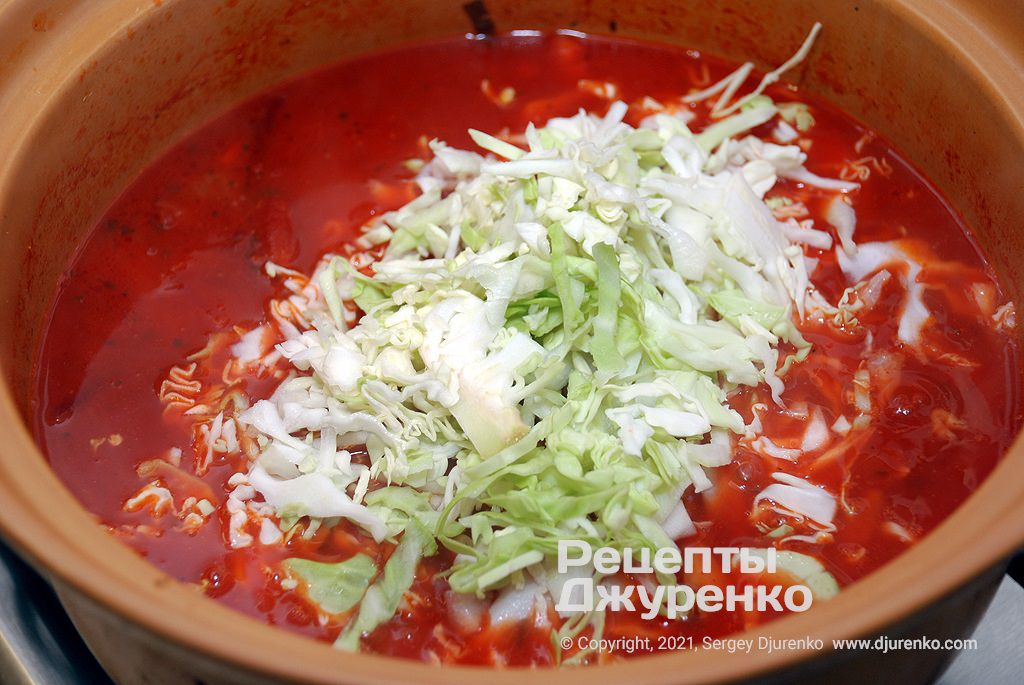
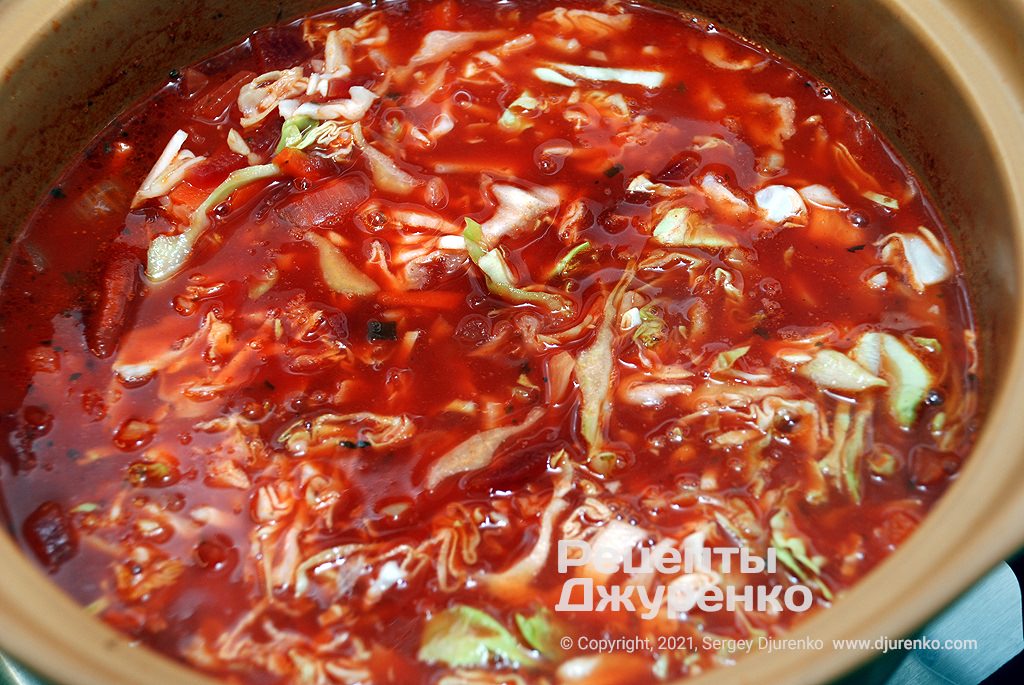
Shred the cabbage, thinly if possible. Add the cabbage to the borscht and stir. Once the borscht is boiling, cook for 5–10 minutes.
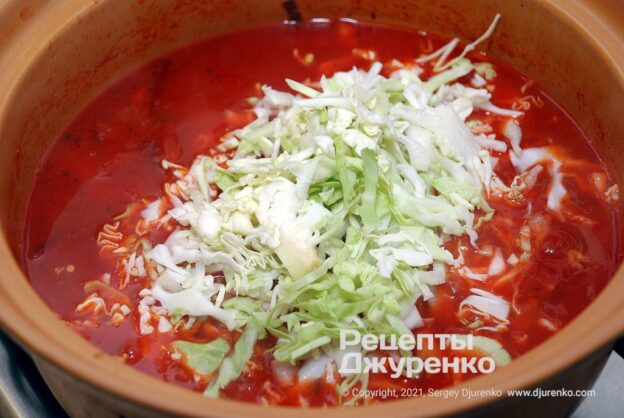
Cook the cabbage to the doneness you like. I like the cabbage in borscht half-raw; that goes back to childhood. Many people prefer it soft or even falling apart. By changing the cooking time, you can make the cabbage just the way you like it. If you think your meatless borscht is too thin, add a bit more cabbage. But don’t add water; better for the soup to be thick.
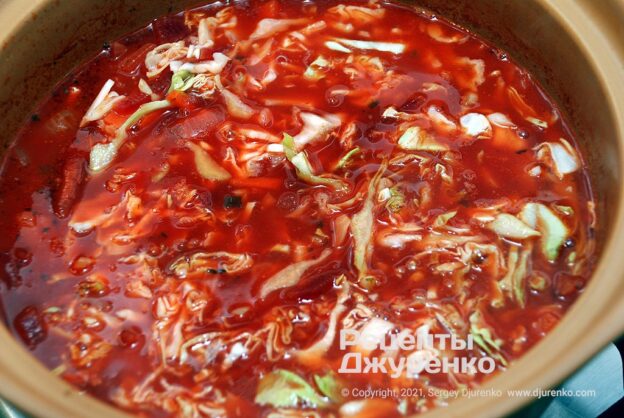
Turn off the heat and let the pot stand for a few minutes. Red borscht is said to need several hours to rest, or even longer; then it gets especially tasty. That’s true: in villages people often make a big batch of borscht, enough for a week, and reheat it as needed.
Serving
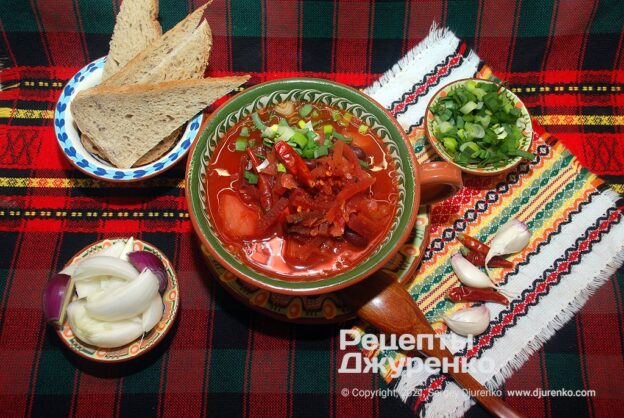
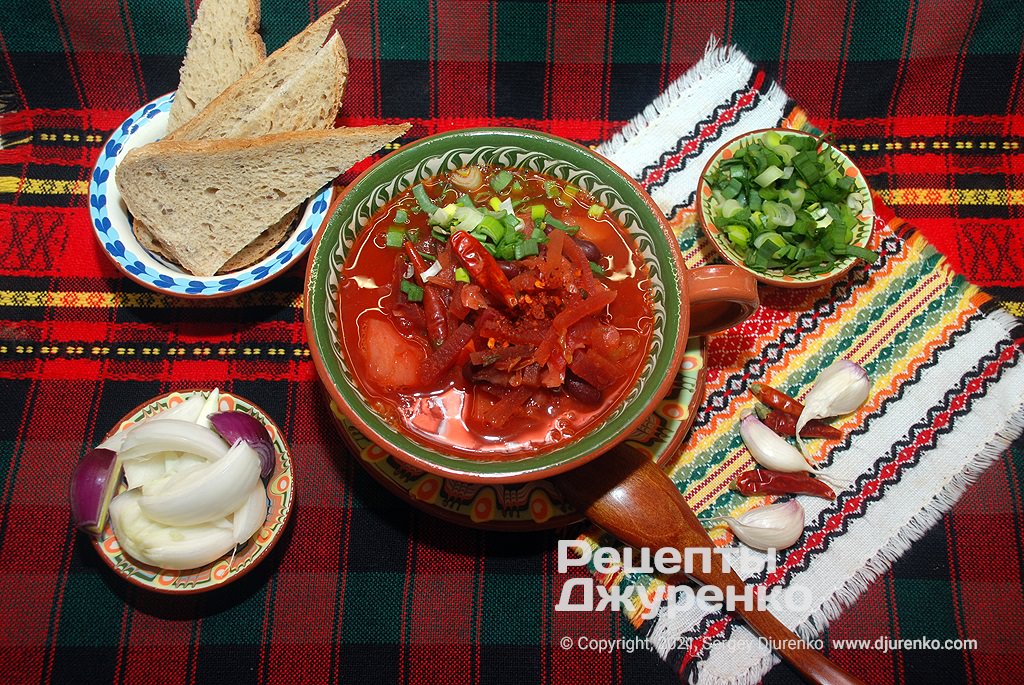
Before serving, sprinkle the borscht with finely chopped dill. Ladle the borscht into bowls and serve while hot. Vegetarian borscht isn’t served with sour cream, but that’s up to you. Be sure to slice some fresh onion, preferably not too sharp, and serve garlic cloves, green onion and fresh bread with it. The height of chic is pampushky, garlic buns. By the way, they’re easy to make and contain no animal products.

How did you like this recipe?
Rate it with one tap.
Calories and macros
445 kcal
Serving ≈ 1120 g
- Protein14 g14% of kcal
- Fat15 g35% of kcal
- Carbs51 g52% of kcal
100 g40 kcalProtein 1.2 gFat 1.4 gCarbs 4.6 g
Calculated from the recipe ingredients, excluding salt and spices. Data: USDA and Matvaretabellen.