Lemon-Blueberry Cake

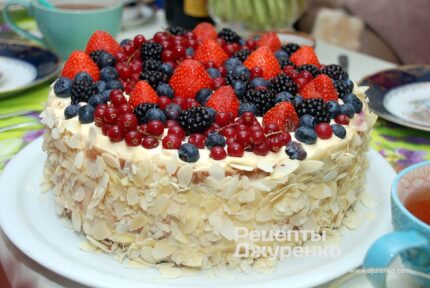
Ingredients
about 5 kg
- For 3 sponge layers
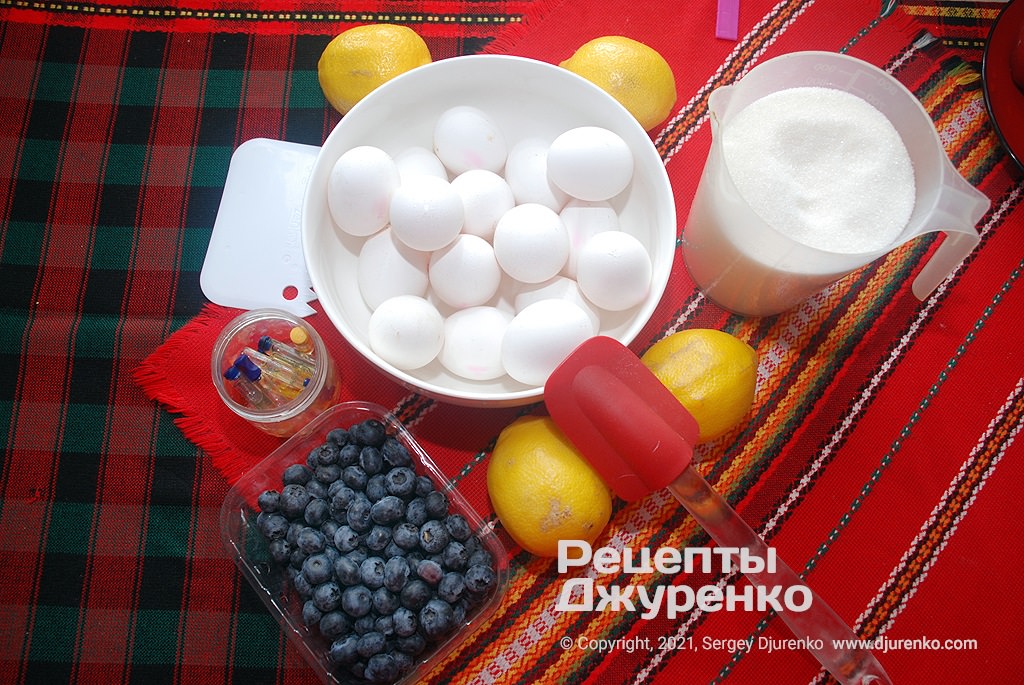
- Wild blueberries 350 g
- Eggs 15
- Sugar 4.5 cups (810 g)
- Wheat flour 4.5 cups (590 g)
- Vegetable oil as needed
- Vanilla to taste
- For the lemon cream
- Lemons 6
- Water 2 cups (400 ml)
- Sugar 2 cups (360 g)
- Egg yolks 6
- Cornstarch 6 tbsp (60 g)
- Lemon zest 1-2 tbsp (6–12 g)
- For the cheese cream
- Boiled condensed milk 0.5 can
- Mascarpone 500 g
- Powdered sugar 2 tbsp (18 g)
- Yellow food coloring optional
- For the soaking syrup
- Rum 100 ml
- Sugar 3 tbsp (41 g)
- Water 1 cup (200 ml)
- Lemon peels 2-3
- For decoration
- Blueberries 300 g
- Mint, lemon zest optional
Step-by-step recipe
How to bake the sponge layers
Before you start making the lemon-blueberry cake, understand that it takes time, though most of the stages can be done at the same time. Note that you need three layers: divide all the ingredients into three parts, and all the steps will have to be repeated three times! Basically, baking the layers is not much different from preparing the base for any cake. The cake will be huge, so my daughter and I baked three sponge layers, one after another in three batches.
Prepare the ingredients in advance: take the eggs out of the refrigerator so they come to room temperature, measure out all the ingredients, sift the flour and boil the condensed milk until done. Grate plenty of zest from the lemons and cut off 2-3 peels from the ends. Preheat the oven to 180-190°C.
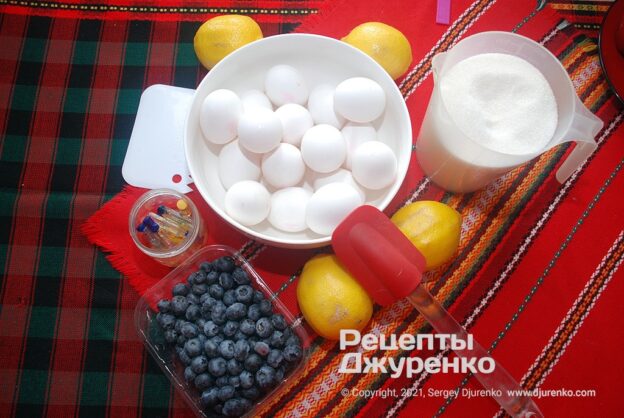
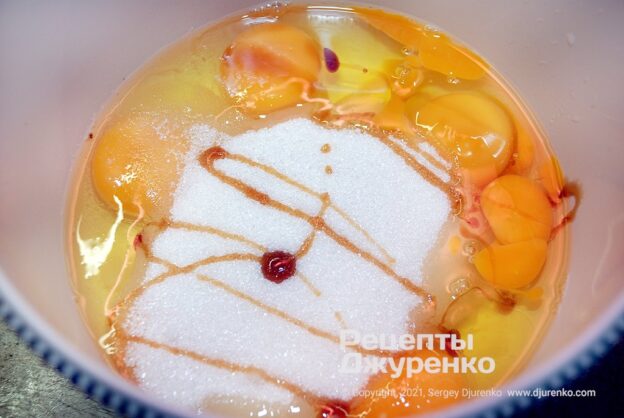
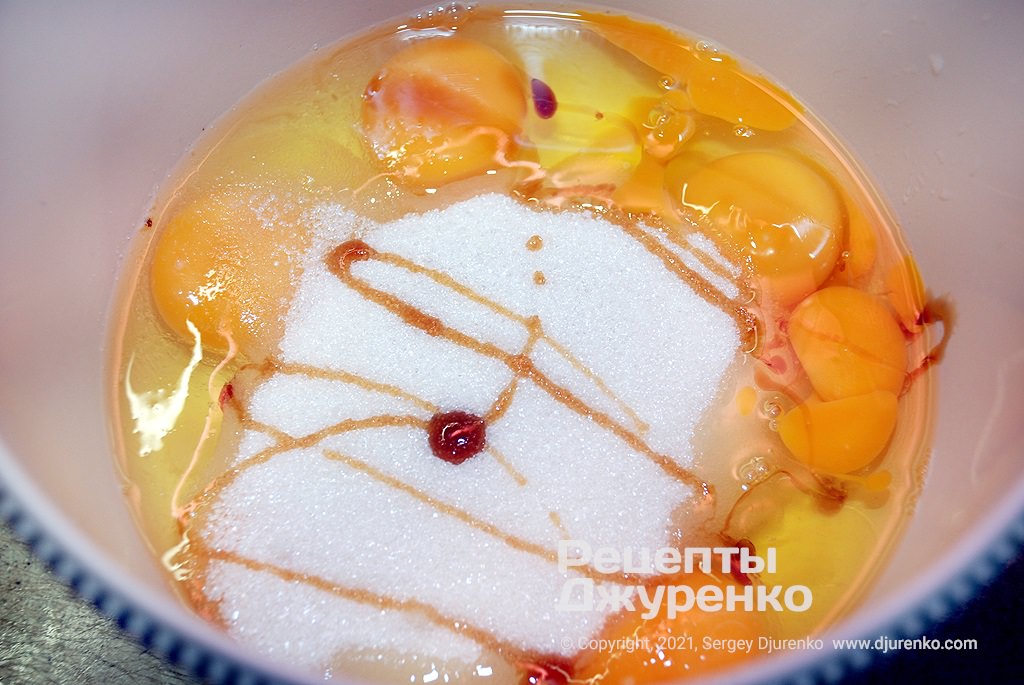
Make the sponge batter. In the mixer bowl, combine five eggs, liquid vanilla to taste and 1.5 cups of sugar (270 g). Basically, this is the basic set for sponge batter.
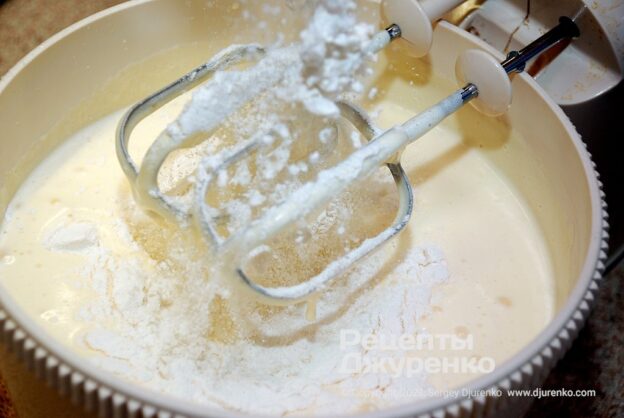
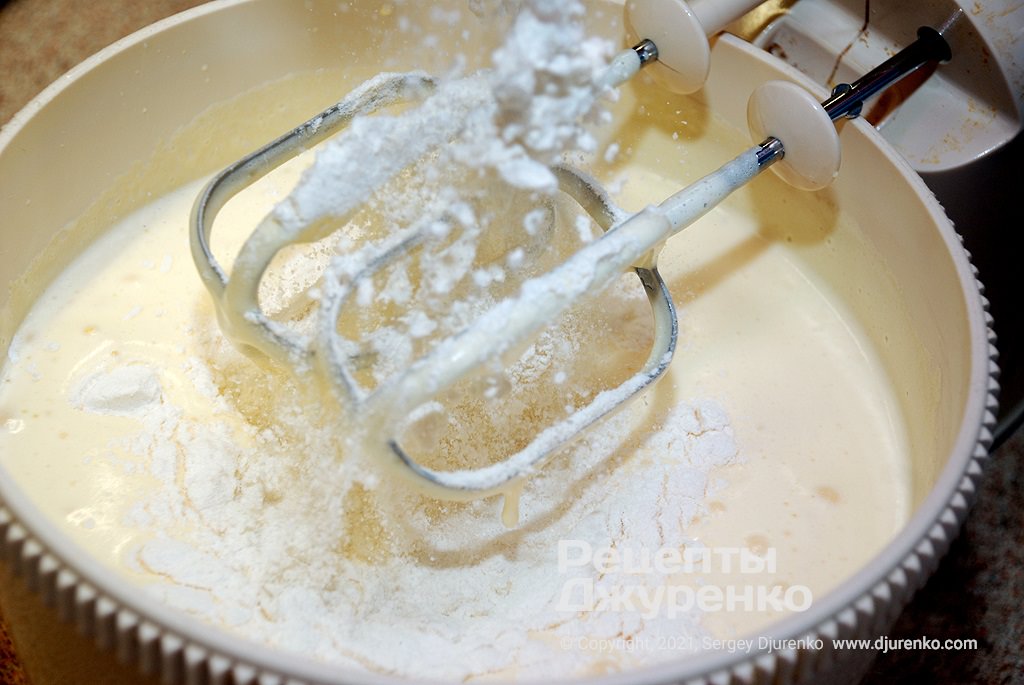
Beat the eggs with the sugar thoroughly until you get a very uniform, thick foam. The volume of the mixture should increase several times. Getting this foam is important, otherwise the cake will turn out thin rather than fluffy.
After whipping to a foam, add 1.5 cups of sifted wheat flour (195 g) to the mixer bowl. Keep mixing the batter on low speed until the flour is incorporated, and it will settle slightly. By the way, if you’re not sure the layers won’t stick to the pan, add 1 tsp of vegetable oil to the batter.
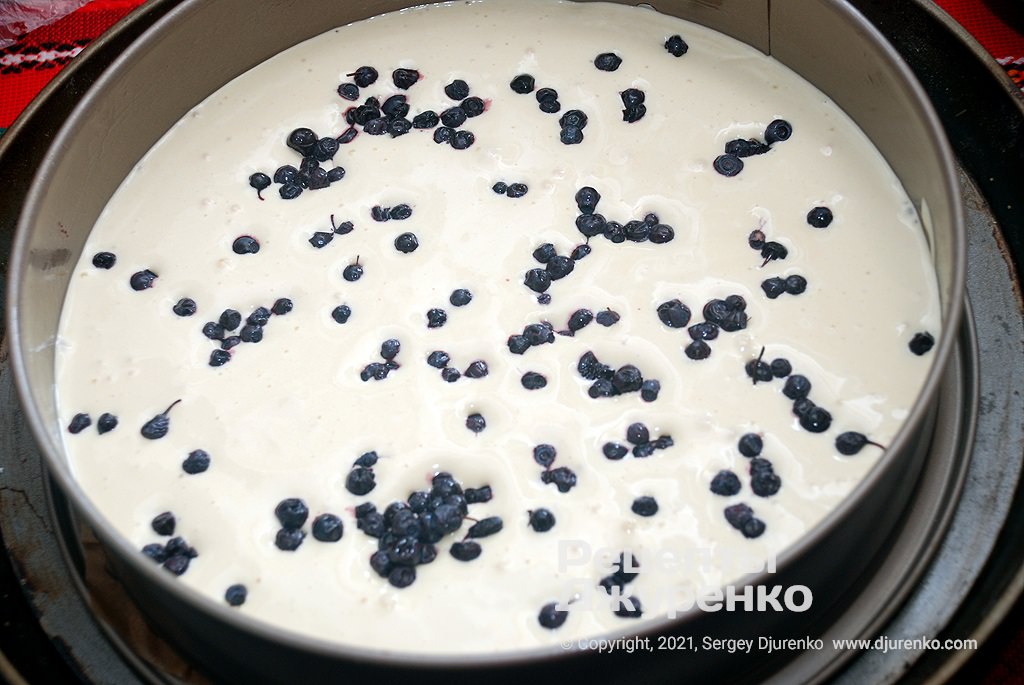
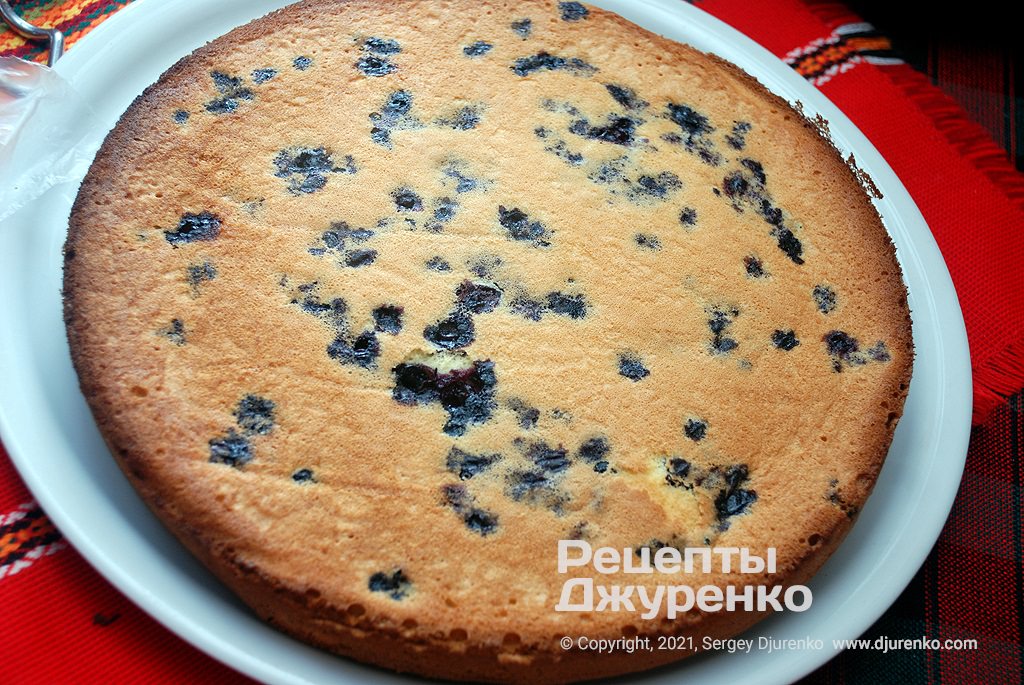
Pour the batter into the pan and add the blueberries. I recommend baking the sponge in a springform pan with a removable bottom, which noticeably speeds up and simplifies baking the following layers. Line the bottom of the pan with baking paper and grease the bottom and sides with a little vegetable oil. Carefully pour all the prepared batter into the pan. Then sprinkle the liquid batter with washed and dried wild blueberries, a third of all you’ve prepared. The berries should “sink” into the batter, and you can gently tap and shake the pan to help.
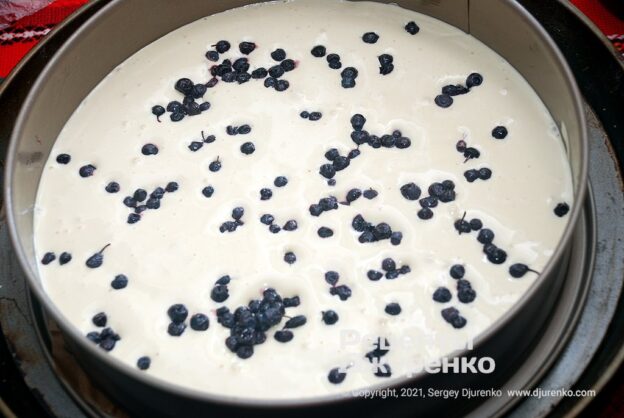
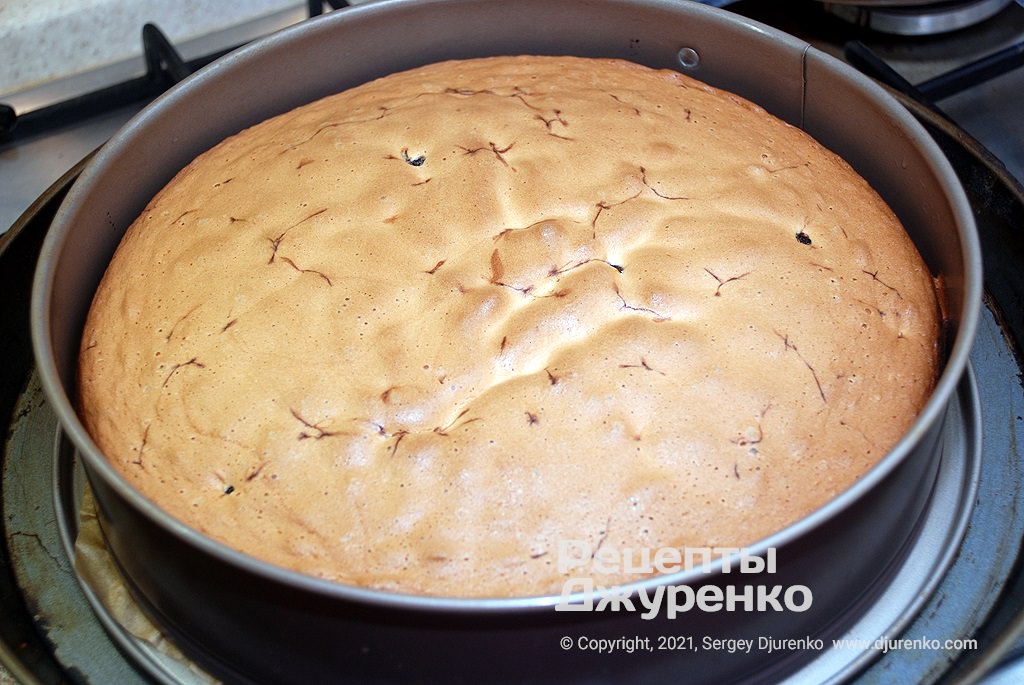
Bake the layer at 180-190°C for 35-40 minutes. Place the pan with the batter into a well-heated oven. A sponge usually bakes for 45-60 minutes, but in our case the layer of batter is fairly thin. Be sure to keep an eye on it, as the top browns well. Test for doneness with a toothpick: finished sponge doesn’t stick to the wood when pierced, and feels slightly springy to the touch.
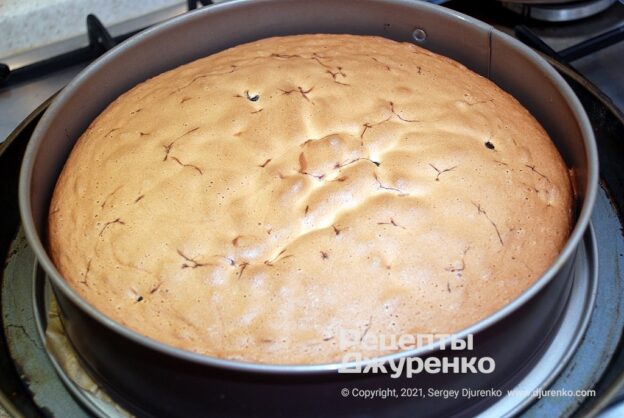
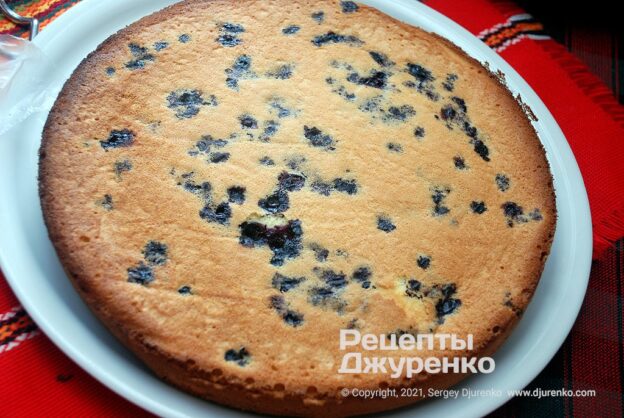
Take the finished layer out of the pan and cool it to room temperature. In the same way, while the first layer is baking, prepare the batter for the second layer, prepare the pan again and bake it. Bake the third layer the same way. Level the finished layers with a knife by cutting off the thin browned layer from the top and sides, which makes a tasty bonus with tea. Place the finished layers on separate plates.
Soaking syrup and lemon cream
While the layers bake, you need to prepare the soaking syrup and the main cream. Without the syrup the cake will be “dry”. It’s best to make it with an aromatic alcohol, if that’s acceptable. Still, the liquid is heated and alcohol is very volatile, so its content in the finished cake is completely negligible.
Cook the soaking syrup. In a small saucepan, combine 100 ml of rum, 1 cup of water (200 ml) and 3 tbsp of sugar (41 g), and add a few lemon peels. Bring to a boil over medium heat until the sugar dissolves, and let the mixture cool.
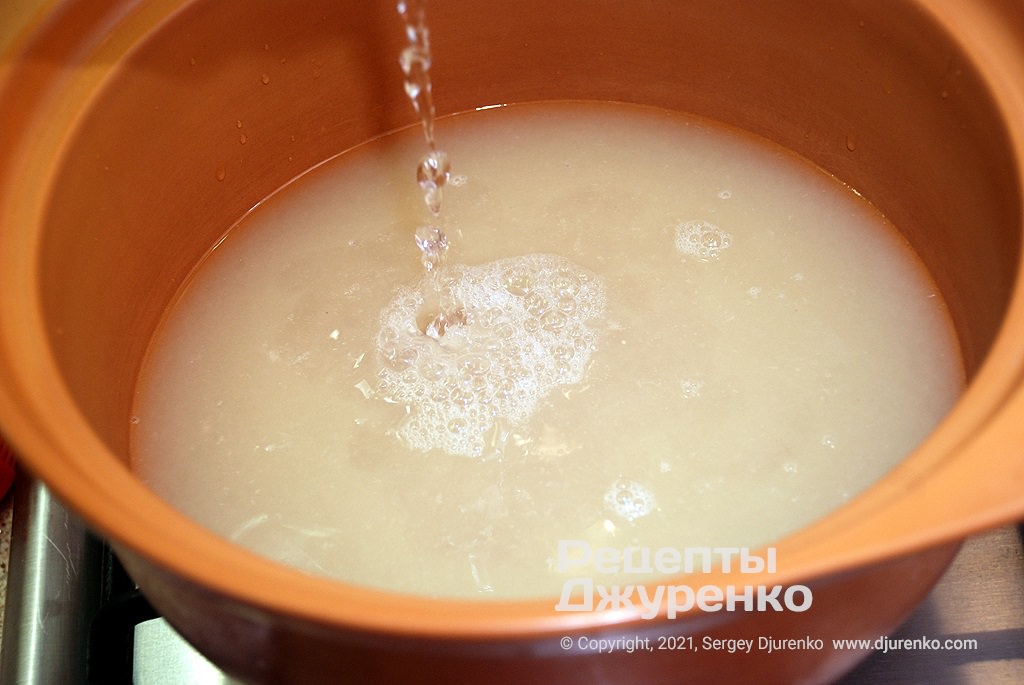
Prepare the base of the lemon cream. Squeeze the juice from the lemons: a big cake needs about two cups. If possible, strain the juice through a sieve. Pour the lemon juice into a pot, add water in the same volume as the juice, and place the pot over medium heat.
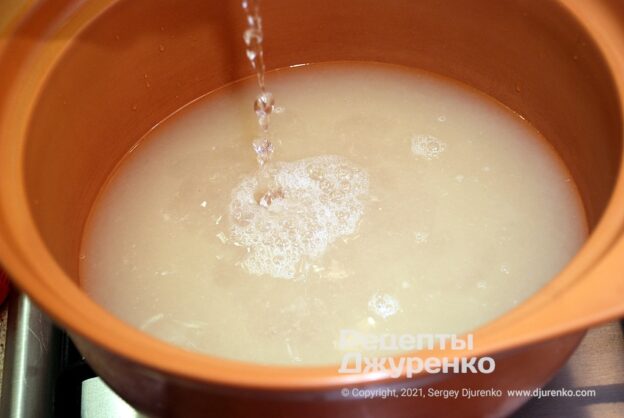
The main cream for the cake is a custard. It is made from fresh lemon juice with egg yolks and cornstarch. Custard is perhaps the simplest and most widely used cream in cooking. The acidity of the juice is balanced by the sugar, so the cream will taste moderately sweet and sour, without provoking any strong reaction.
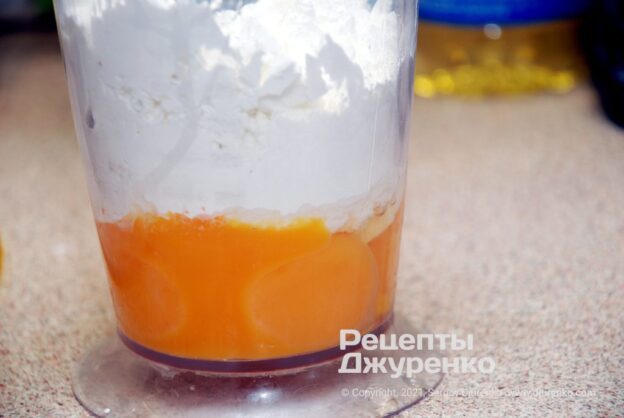
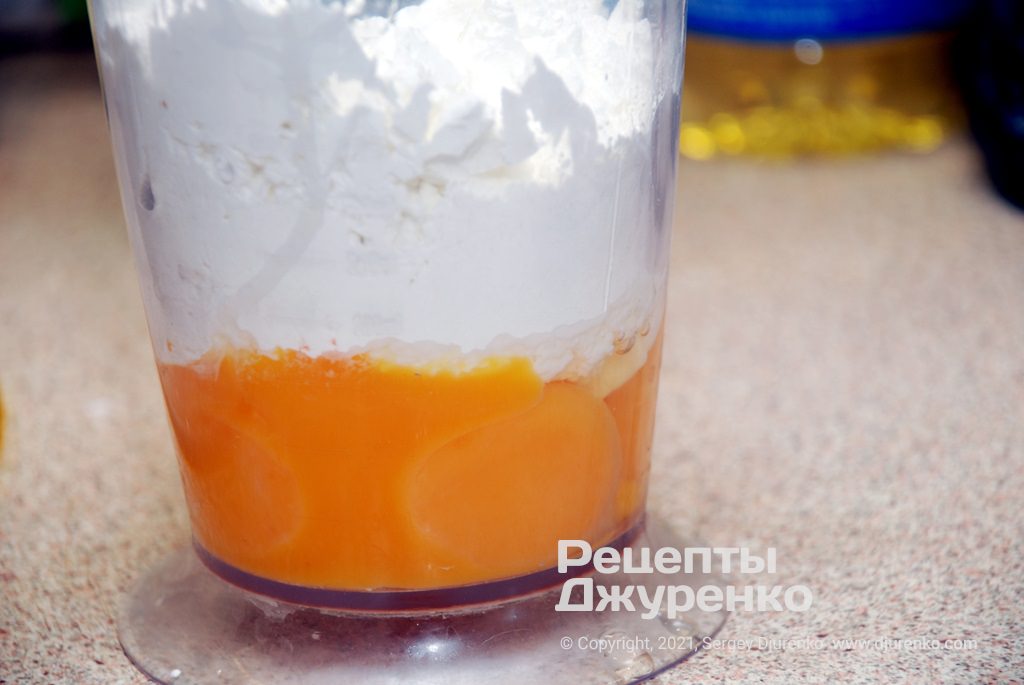
While the juice is heating, in a tall glass mix 6 egg yolks and 6 heaping tablespoons of cornstarch (90 g). Add 1-2 tbsp of the lemon juice and water mixture, but not hot. Mix thoroughly with an immersion blender to avoid lumps.
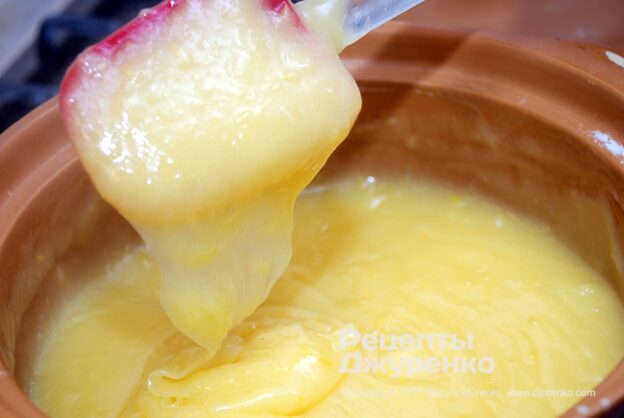
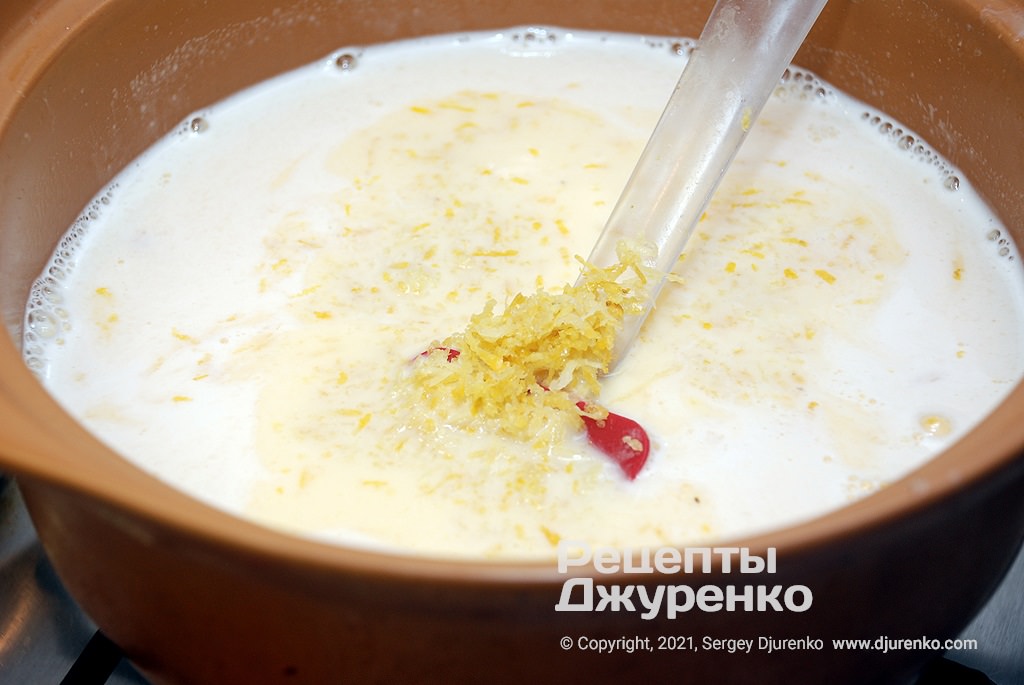
Cook the cream. When the mixture of lemon juice and water reaches a boil, pour in the yolk and starch mixture in a thin stream, stirring constantly. From this moment you need to stir almost continuously. Add 2 cups of sugar (360 g) and 1-2 tbsp of lemon zest (6–12 g) to the mixture and keep stirring. To avoid a sharp sour taste in the cake, you need plenty of sugar. Gradually the lemon cream will start to thicken. Be sure to stir it all the time, especially scraping it off the bottom of the pot, as it can easily stick and burn.
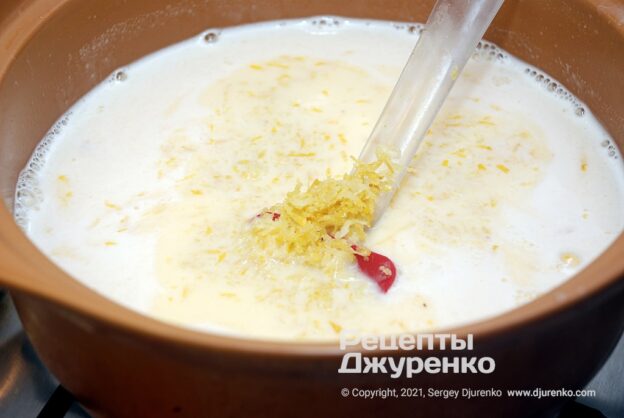
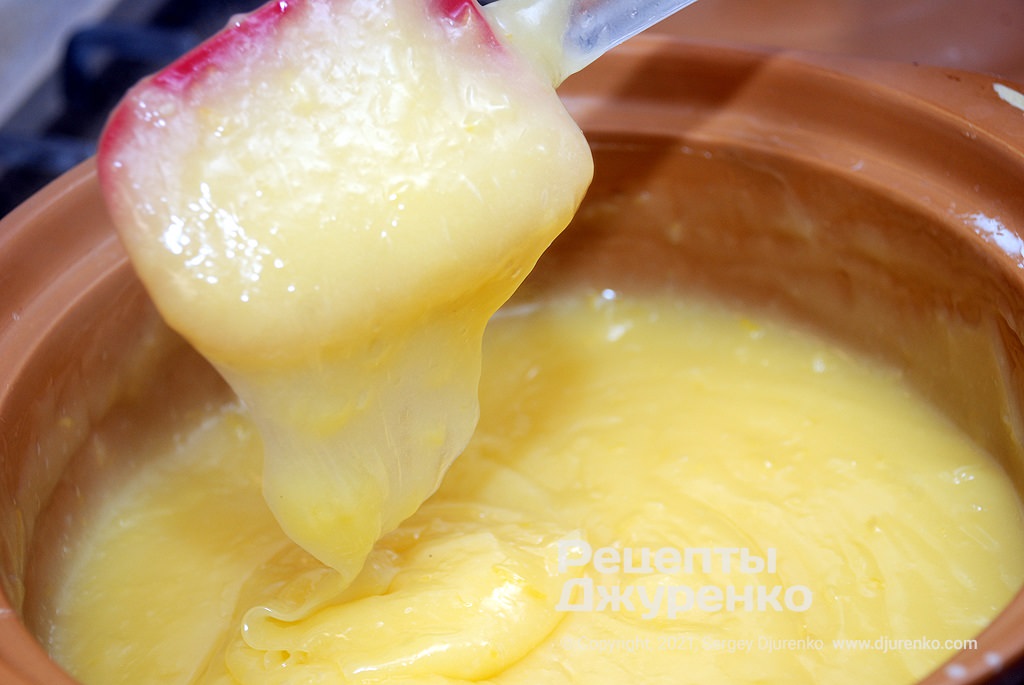
Lemon custard thickens quite intensely. Let it simmer over low heat, stirring constantly. It’s ready in 3-4 minutes. While the cream is hot, strain it through a sieve to remove any lumps. Cool the cream and put it in the refrigerator. Most likely it will be quite firm after chilling, so you will need to stir it before spreading it on the layers.
Cheese cream
For the second cream we chose a mixture familiar to us: soft cream cheese mascarpone and boiled condensed milk. It’s convenient to mix the cream with a mixer, which makes it uniform.
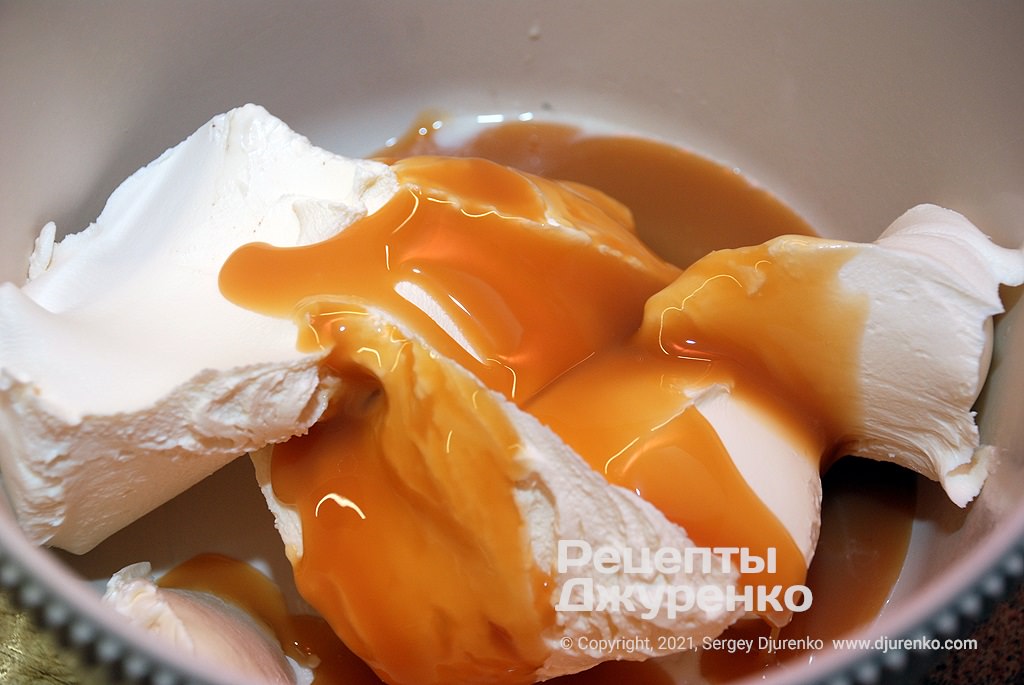
Make the cheese cream. Put the cheese in the mixer bowl and add half a can of boiled condensed milk. If the condensed milk is thick, you can use more of it.
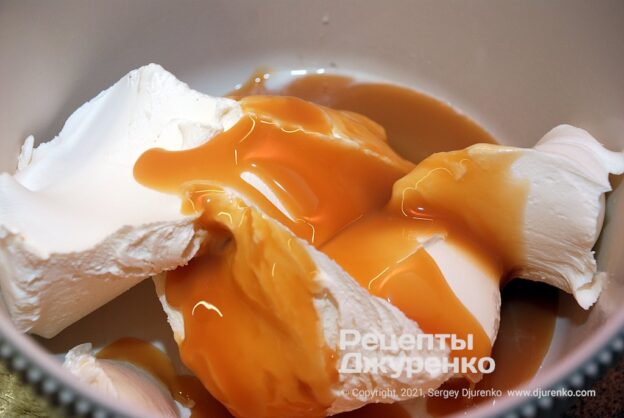
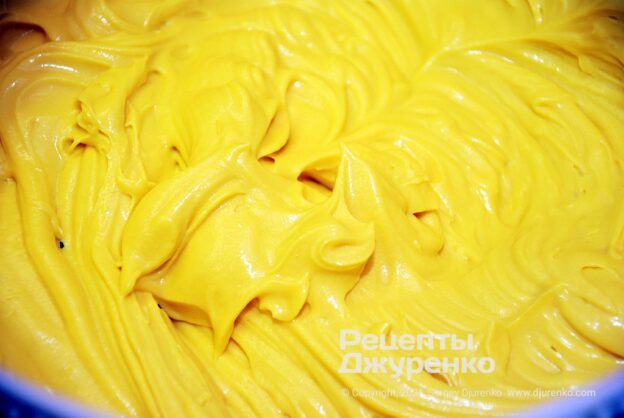
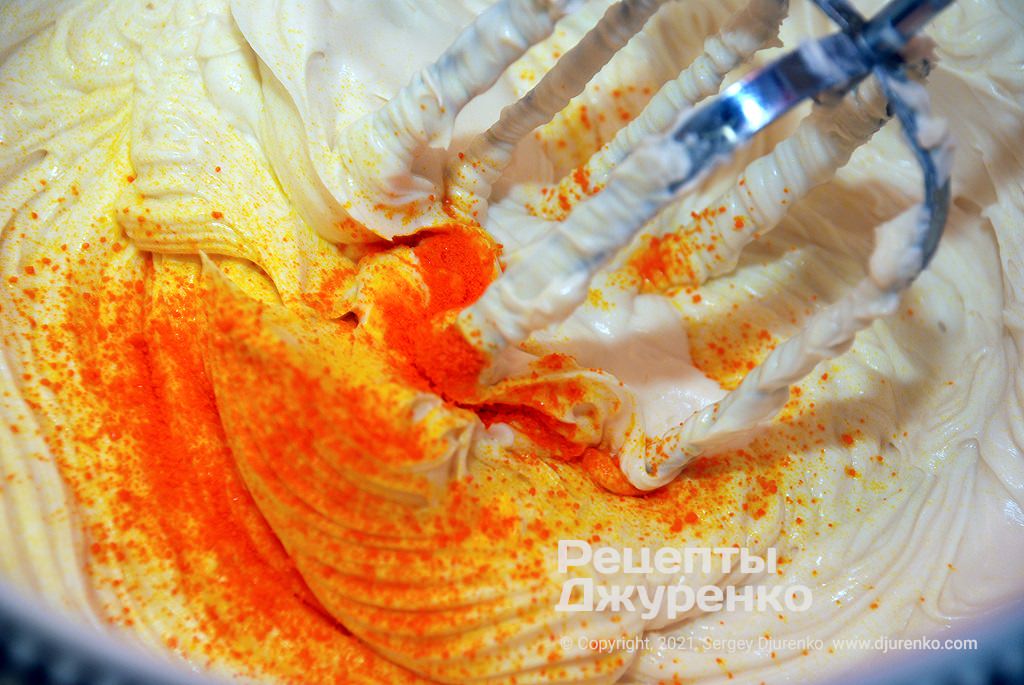
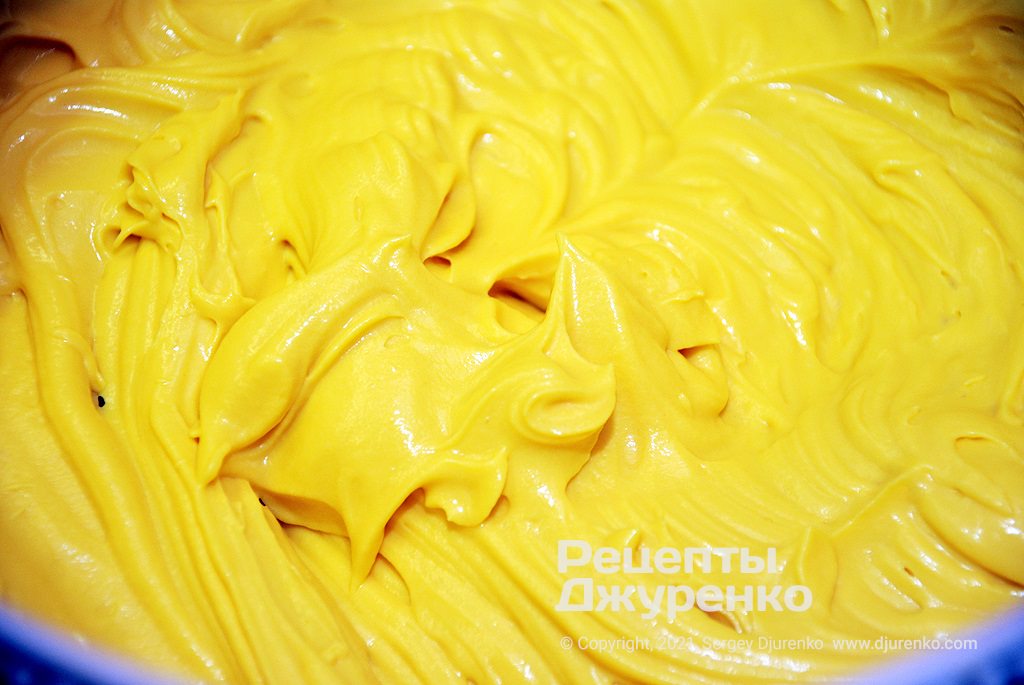
If the condensed milk is a bit runny, the cream won’t be thick, so we add 2 tbsp of powdered sugar (18 g). Mix the mascarpone and condensed milk. Add a little yellow food coloring. Decide the amount to your liking, as the cream should look like the peel of a ripe lemon.
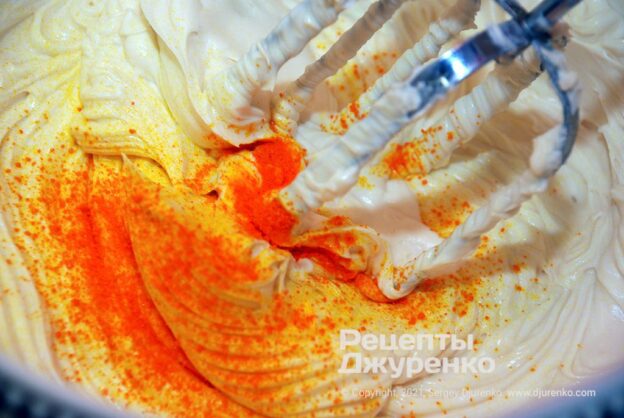
Mix the cream thoroughly with a mixer until completely smooth. The cream should be very thick. If it still runs, add more powdered sugar or a store-bought thickener. Put the cheese cream in the refrigerator.
How to assemble the lemon-blueberry cake
So, the sponge layers are baked and cooled, and the lemon and cheese creams are ready. You’ll need a large flat-bottomed platter, or a special cake stand if you can find one that fits the size of the layers.
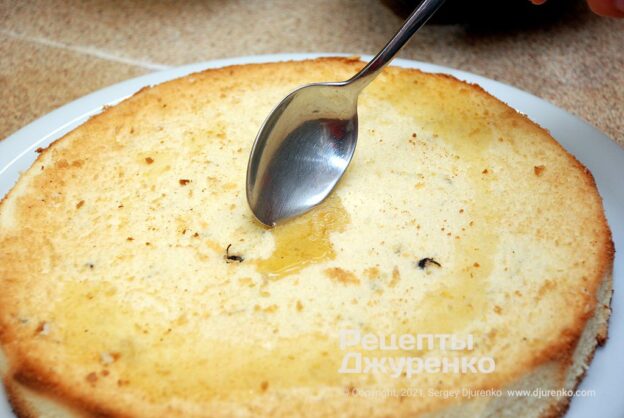
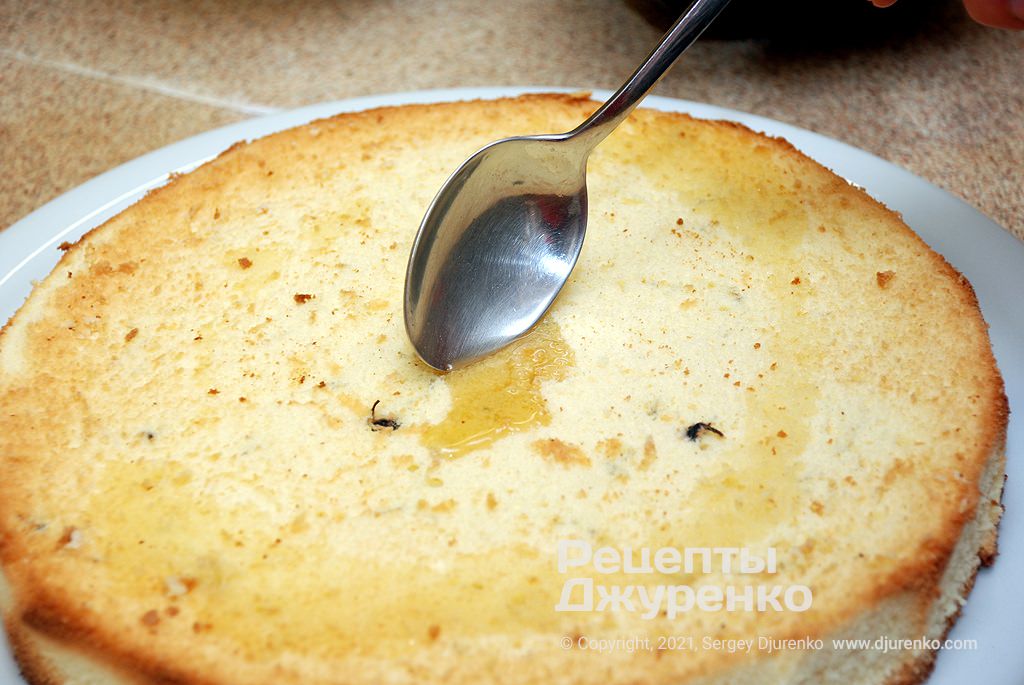
Place the first layer on the base and soak it. Using a spoon, generously pour the cooled syrup over the layer. The sponge should be moist but not soggy.
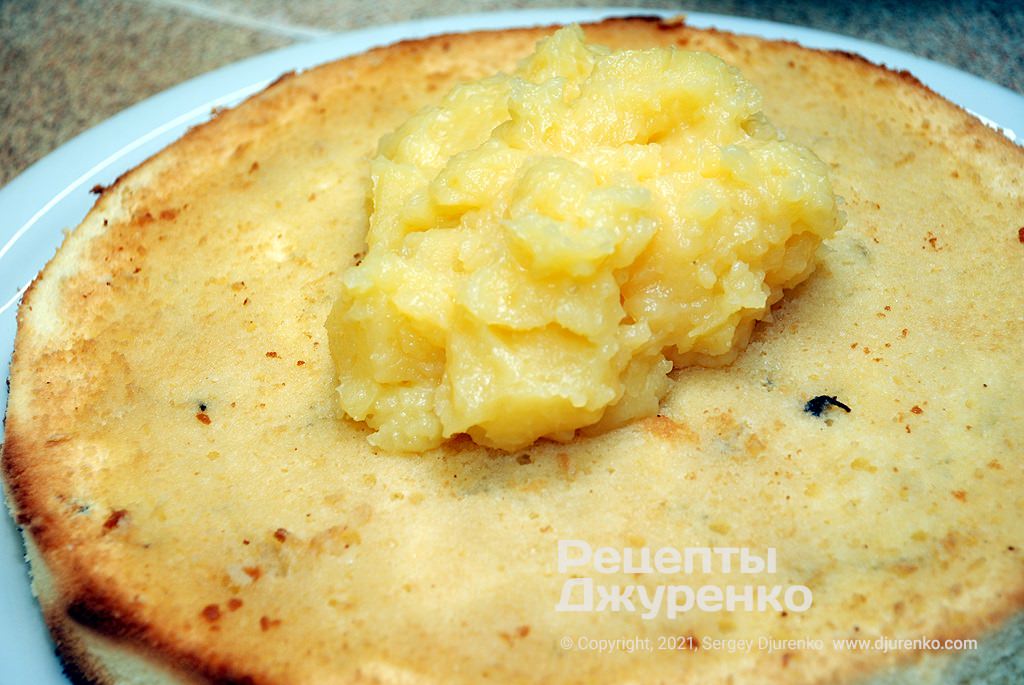
Spread the first layer with lemon cream. Take the lemon cream out of the refrigerator and stir it thoroughly to make the consistency more uniform. We will spread this cream on two layers, so divide it in half. Spread one part over the first layer, distributing the cream evenly. A soft silicone spatula is handy for this. If you come across lumps, try breaking them up by pressing.
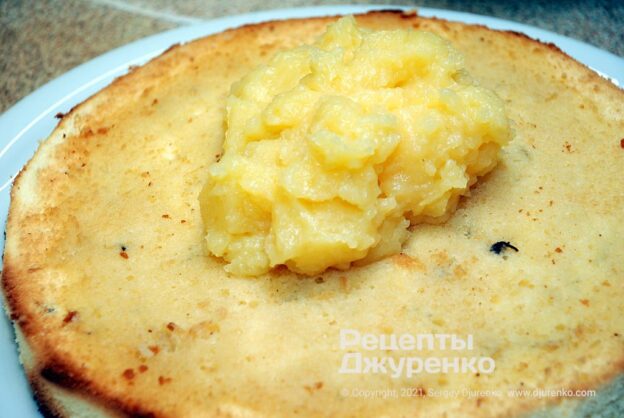
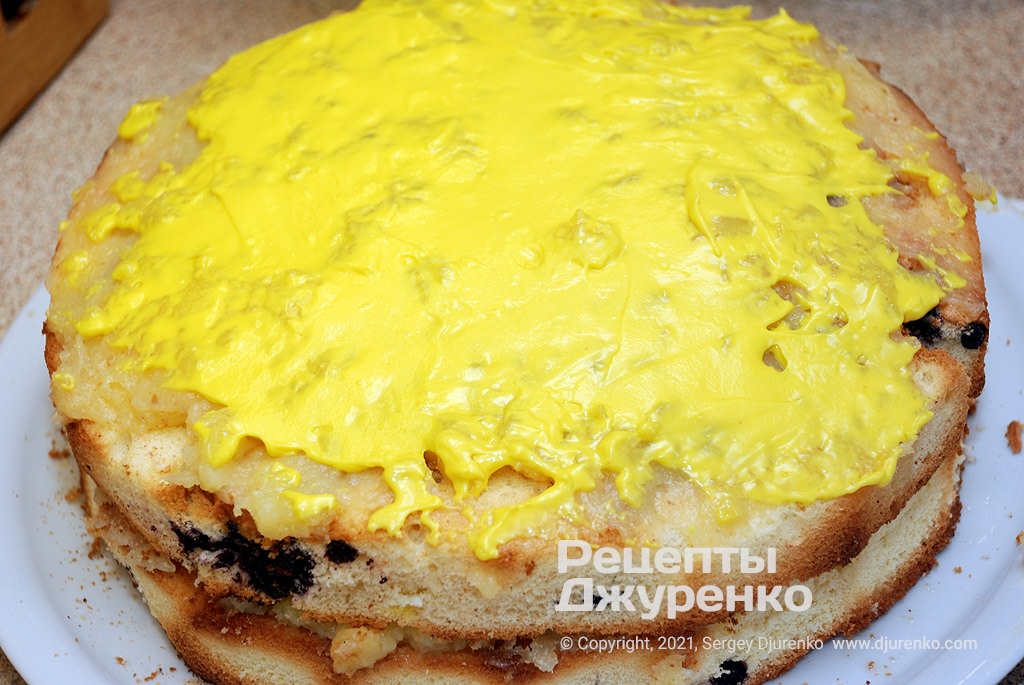
Add the cheese cream and stack the remaining layers. Divide the cheese cream into four parts: three for spreading on the layers and one for the sides of the cake. Spread a layer of cheese cream on top of the lemon cream. Then soak the second layer and place it on the cream. Press the layer lightly with your palms, trying to level the surface. Then, as with the first, spread the second layer first with lemon cream, then with cheese cream, and place the third layer, soaking it as well.
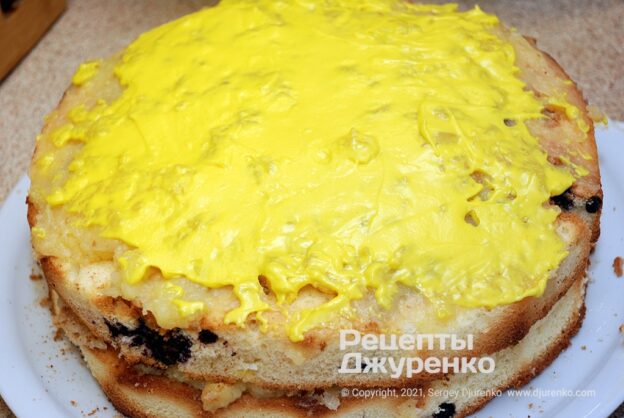
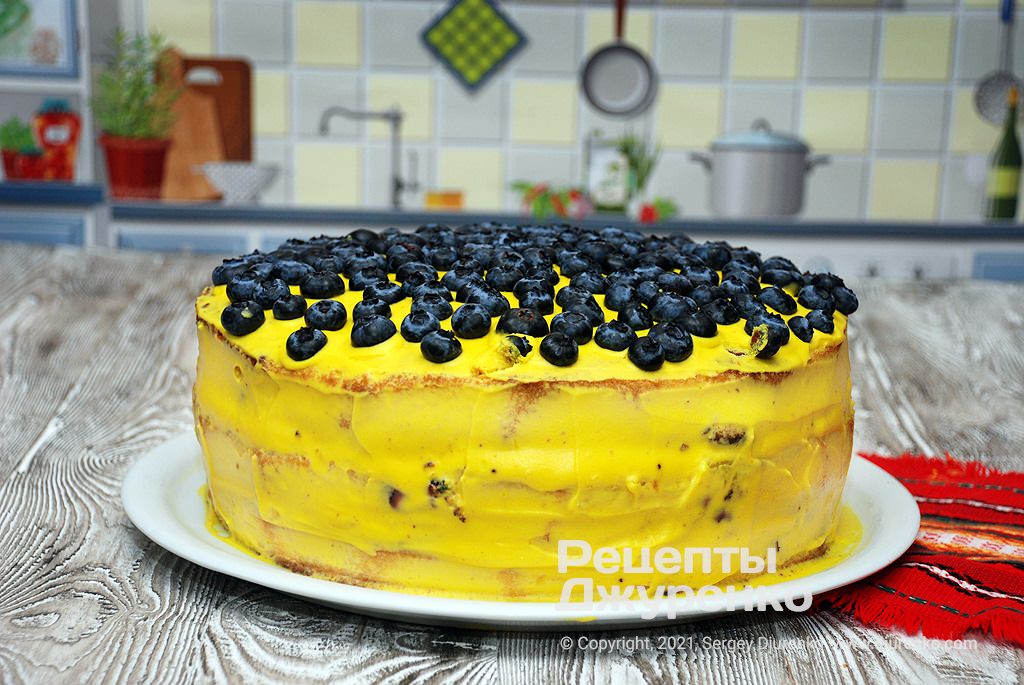
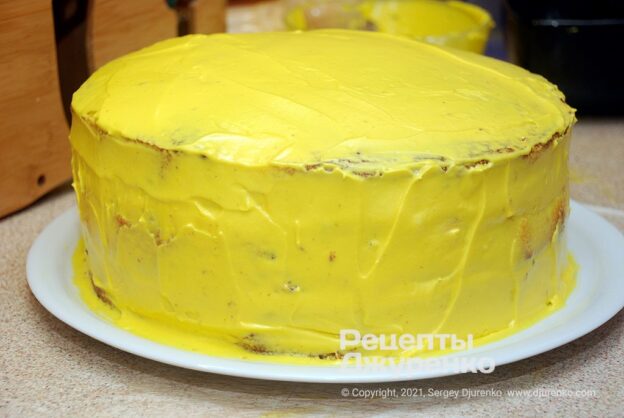
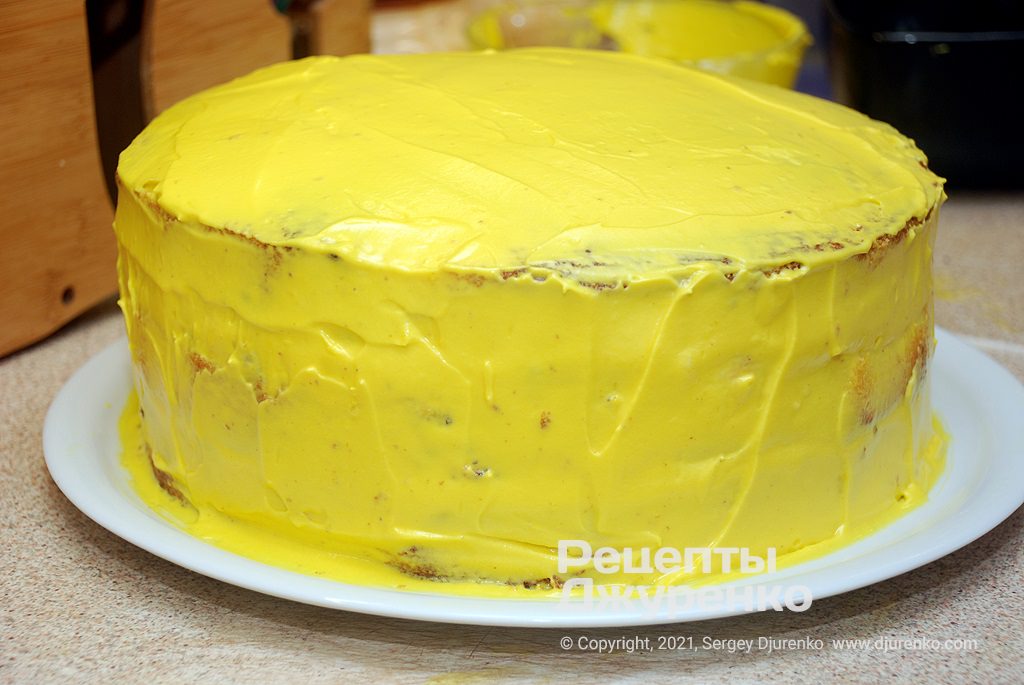
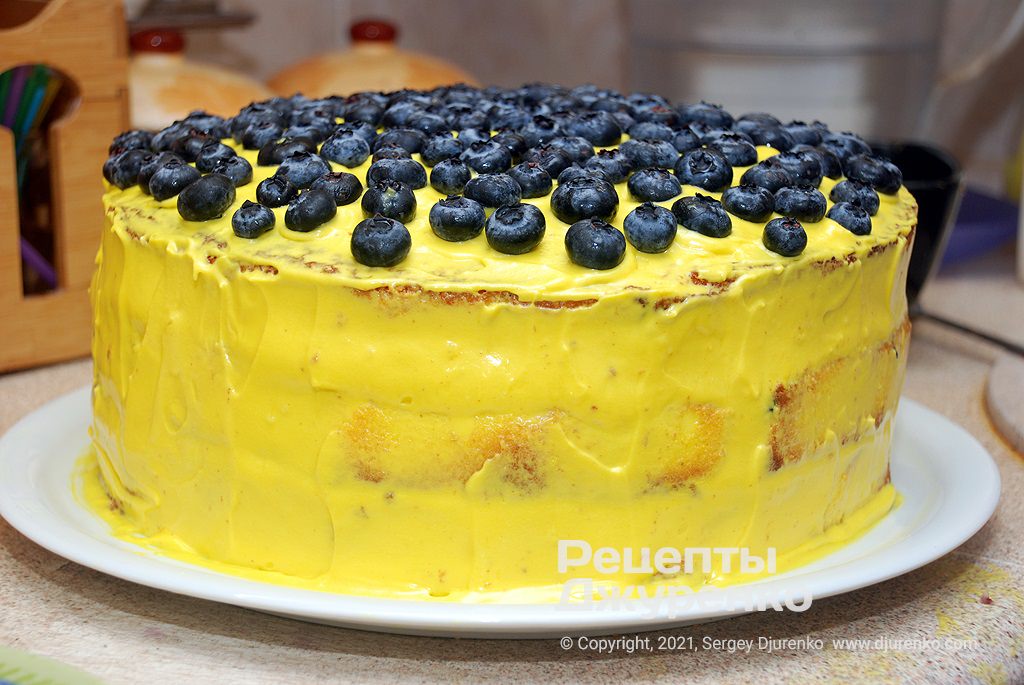
Coat the top and sides of the cake. Coat the top layer with cheese cream only. The cake covered with yellow cheese cream looks like a lemon in color, and the slightly uneven surface of the cheese cream resembles glaze. By the way, after chilling it does become a slightly firm glaze. Generously coat the sides of the cake with the remaining cheese cream, filling the gaps between the layers and in the layers themselves.
Decorate with blueberries and chill. While the top layer of cheese cream hasn’t set, arrange the blueberries in a single layer, and you can make a pattern. Press the berries into the cream so they stay in place. The cake needs to go in the refrigerator for several hours. It’s convenient to make it the day before the feast, so it soaks well and gets cold. If you like, you can decorate it with sprigs of mint.
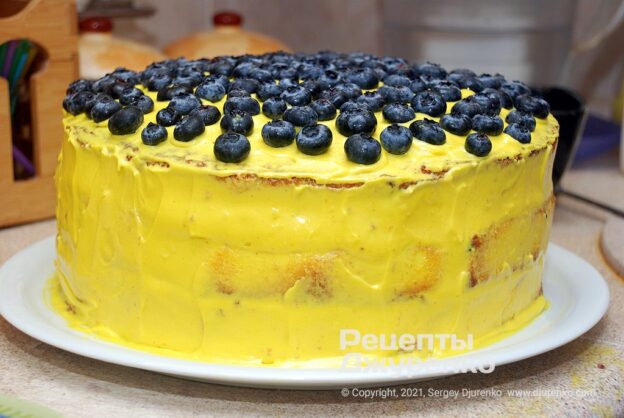
If you have a lot of fresh wild blueberries, you can try using them instead of regular blueberries. But most likely the berries will bleed a little and stain the cheese cream. To my taste, regular blueberries are preferable.
Serving
Take the cake out of the refrigerator and carefully move it to the table. Note that the cake is large and heavy, so it needs to be carried and moved carefully. If you like, sprinkle the top with a little thinly shaved lemon zest.

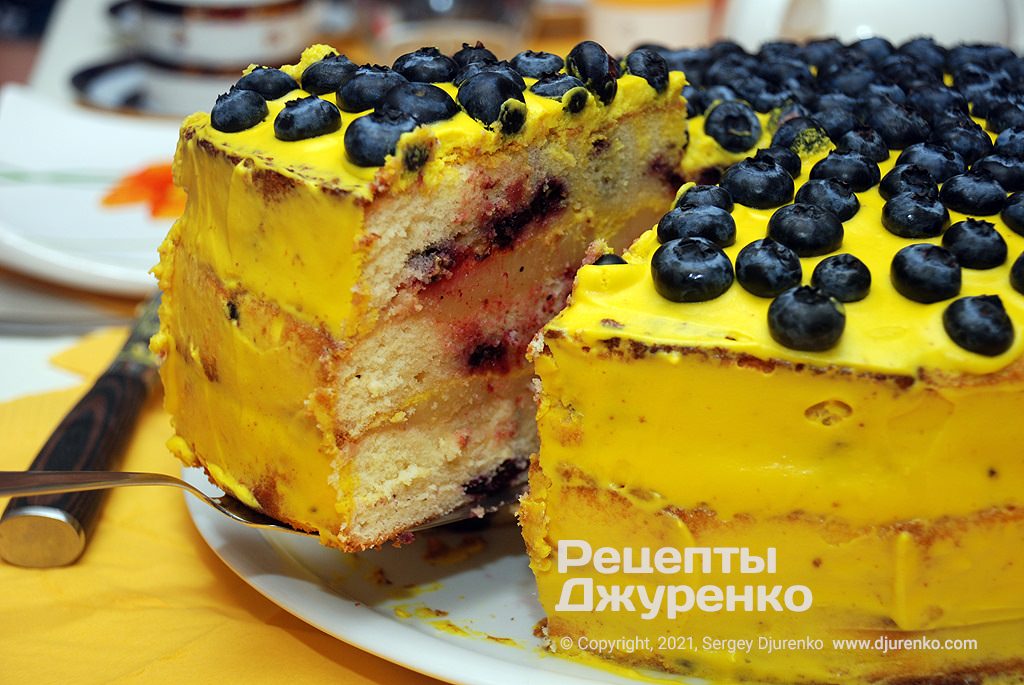
Cut open, the cake is multi-layered, with contrasting shades of sponge and yellow cream. The flecks of blueberry make it slightly speckled. If you like, the top of the dessert can be decorated with pretty decor: buttercream flowers, raspberries or even lemon wedges. Or, from the egg whites left over after making the custard, you can make meringue, and decorate the cake with it.
Calories and macros
400 kcal
Serving ≈ 170 g
- Protein7 g7% of kcal
- Fat12 g27% of kcal
- Carbs65 g66% of kcal
100 g234 kcalProtein 4.2 gFat 6.9 gCarbs 37.7 g
Calculated from the recipe ingredients, excluding salt and spices. Data: USDA and Matvaretabellen.