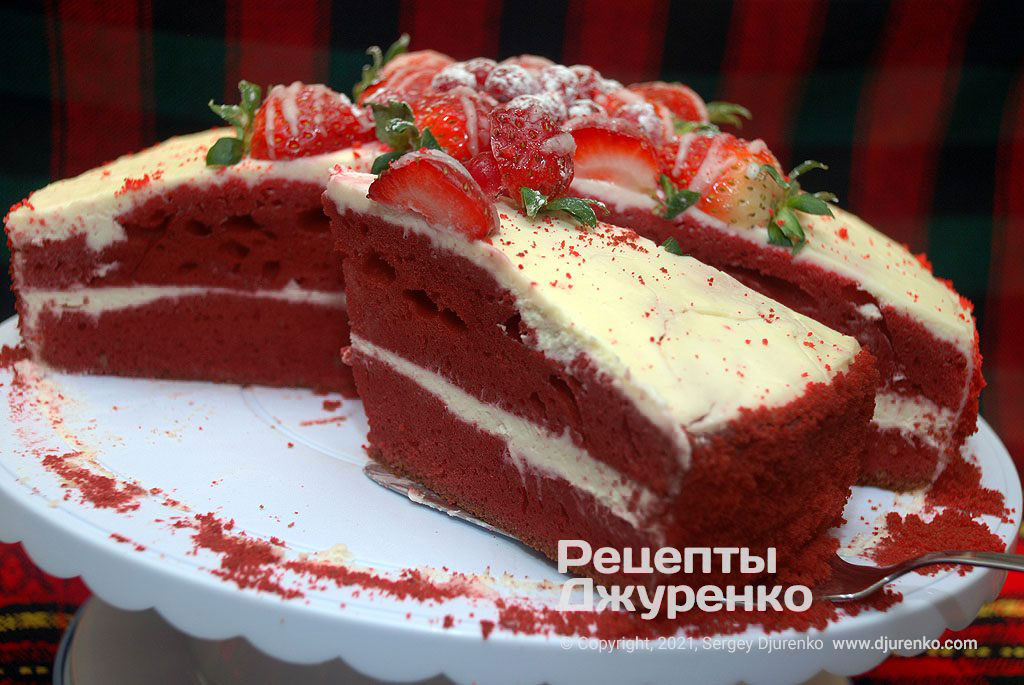
Red Velvet Cake
Ingredients
over 2 kg
For the sponge
- Eggs 8
- Red food coloring about 2 tsp (thick, gel-like)
- Sugar 2 cups (360 g)
- Butter 200 g
- Flour 2-2.5 cups (260–325 g)
- Cocoa powder 2 tsp (or to your liking) (5 g)
- Baking powder half a packet (a packet for 0.5 kg of flour)
- Salt a pinch
- Vegetable oil for greasing the pan
For the soaking syrup
- Sugar 3 tbsp (41 g)
- Water 120 ml
- Whiskey or brandy 50 ml
- Lemon juice 1-2 tbsp (half a small lemon)
For the frosting
- Cream cheese 600-700 g
- Powdered sugar 150 g
- Vanilla concentrated liquid extract, to taste
For decoration
- Powdered sugar to taste
- Strawberries, raspberries, candied cranberries to taste
- Mint, rosemary to taste
Step-by-step recipe
How to make the soaking syrup
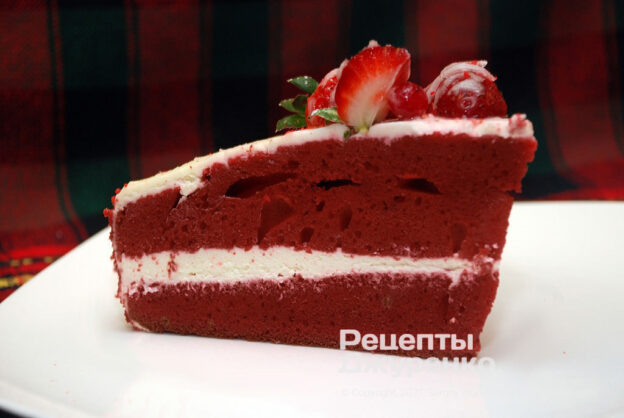
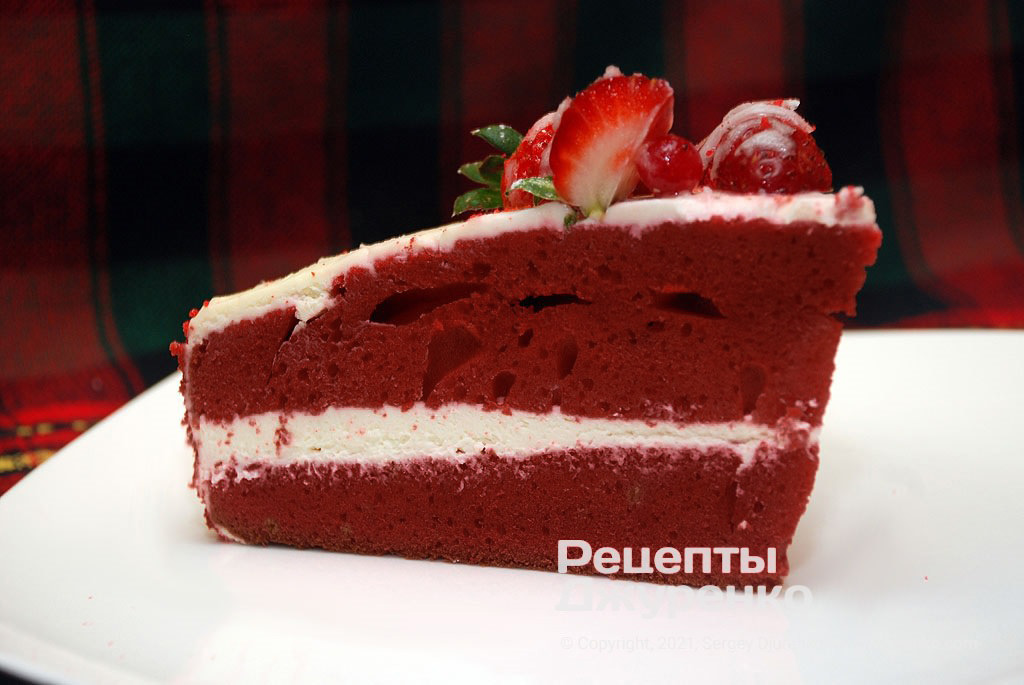
The first thing that catches your eye in a red velvet cake, apart from the color, is the unusually porous sponge and its texture. Cut open, the baked crumb is fairly coarse, with visible holes, some of which get filled with cream cheese. The sponge comes out quite dense and “dry”, and cream cheese doesn’t soak into it well, so it needs a moist syrup.
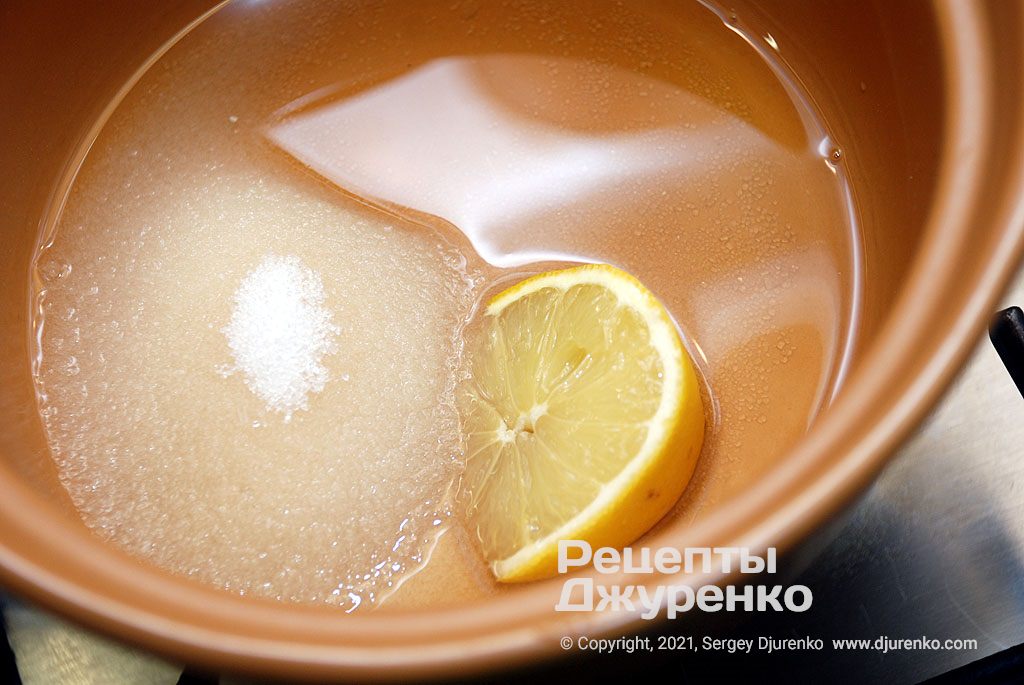
Make the syrup in advance. Heat 120 ml of water in a small saucepan over medium heat, stir in 3 tbsp of sugar (41 g) and squeeze in the juice of half a small lemon – you can drop the lemon half into the pot too. I also recommend adding 50 ml of aromatic spirits – whiskey or brandy. Bring to a boil and, as soon as the sugar dissolves, put the syrup somewhere cold to cool.
Making the red sponge layers
All in all, the sponge batter isn’t much different from a traditional one. Although many recipes call for cream and buttermilk or other cultured dairy, we decided to do it our own way.
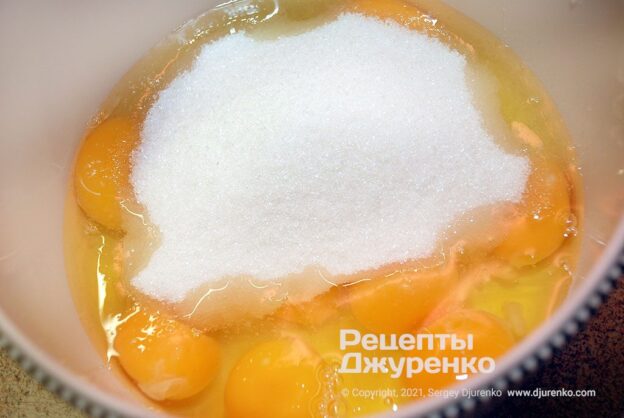
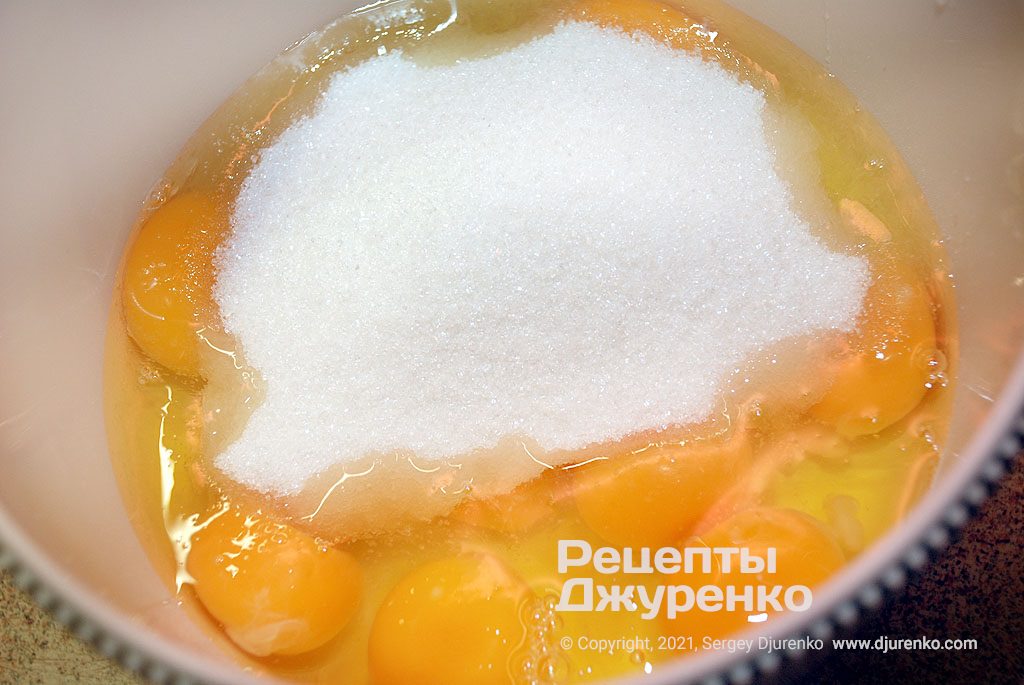
Beat the eggs with the sugar. Take the eggs out of the fridge ahead of time. Also melt the butter without letting it get hot. In a mixer bowl, combine the eggs, a pinch of salt and two cups of sugar (360 g). Beat the sweet egg foam thoroughly – it should be fluffy and thick. No flavorings are needed.
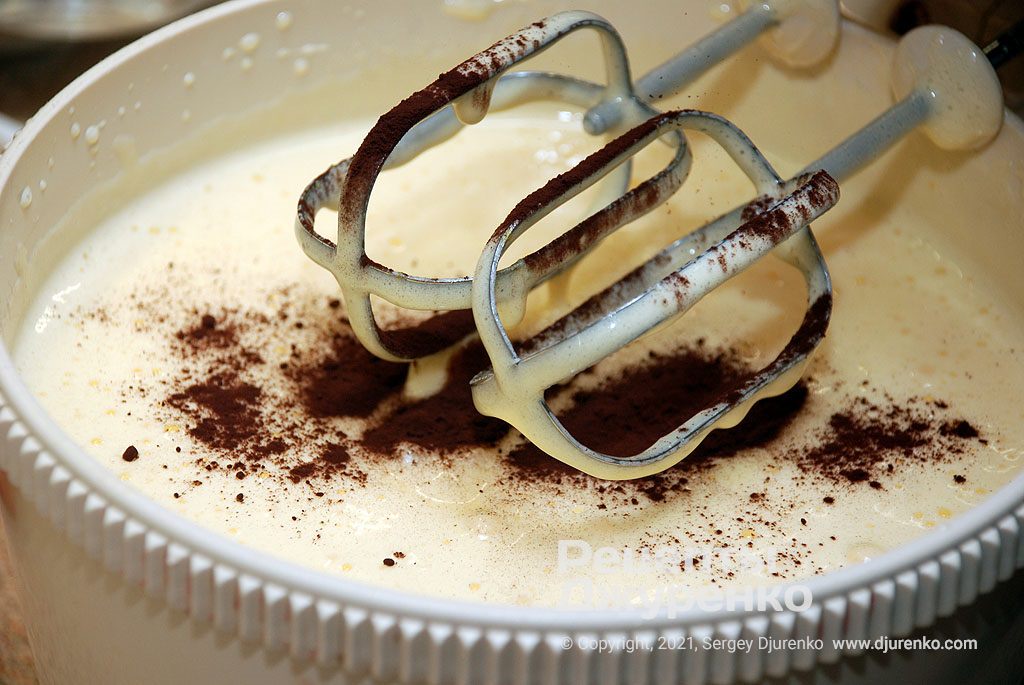
Mix the batter. While still beating the egg mixture, pour in the melted butter. It’s important that the butter isn’t hot, or the eggs will curdle. The mixture will deflate a little once the fat goes in. Then add the cocoa powder – it’s better not to use the very darkest kind. The amount is up to you: more cocoa makes the red velvet cake darker and redder, less cocoa gives a noticeably pink color. We added 2 tsp of cocoa (5 g).
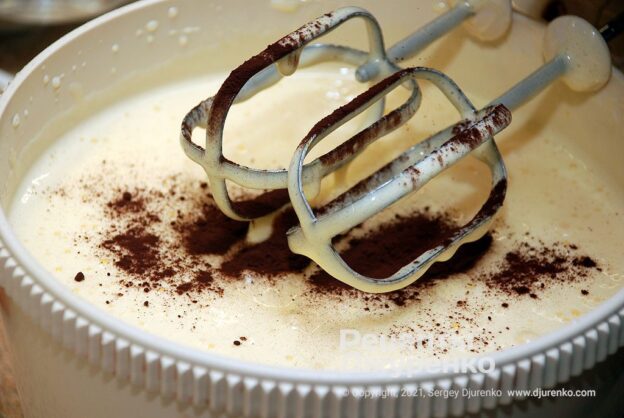
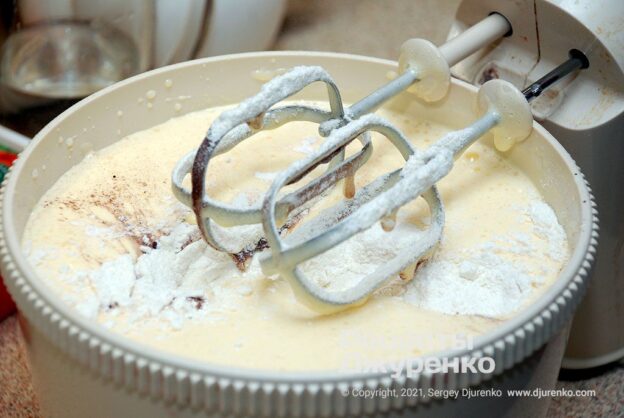
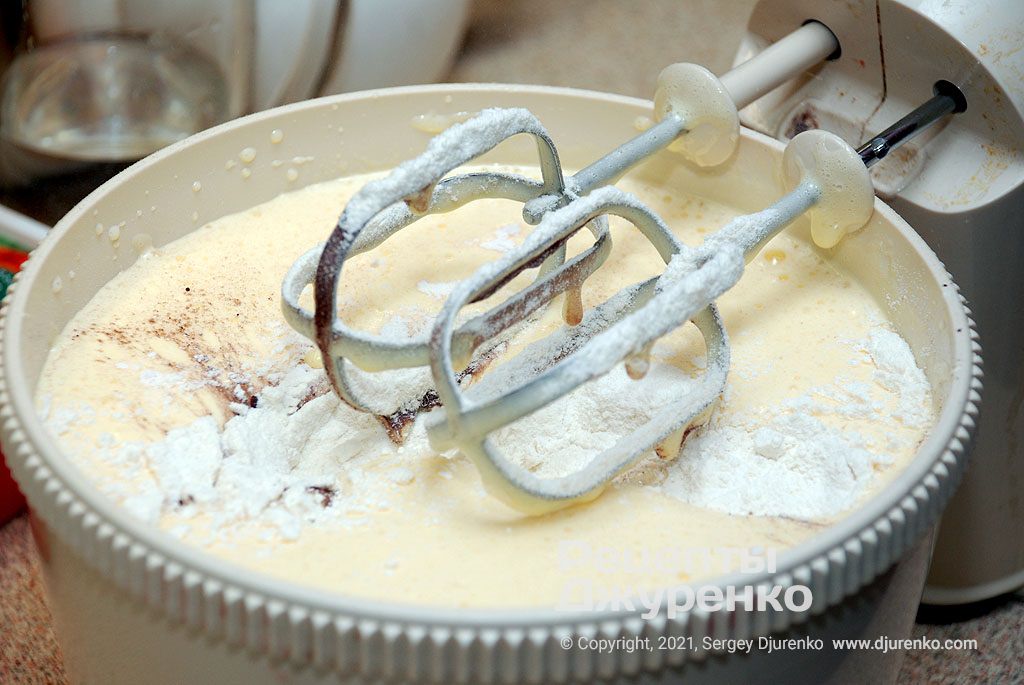
Add the baking powder – the packet usually says how much flour it’s meant for. Ours was for 0.5 kg of flour, so we added half a packet. Mix everything with the mixer and add 2 cups of sifted wheat flour (260 g). Mix the batter until completely smooth with no lumps – this matters. If the batter is too runny, add a little more flour (up to 2.5 cups in total). The finished sponge batter should be thick enough to drip slowly off the mixer beaters.
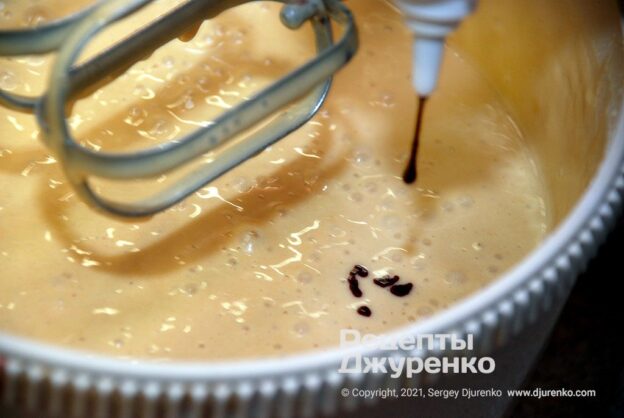
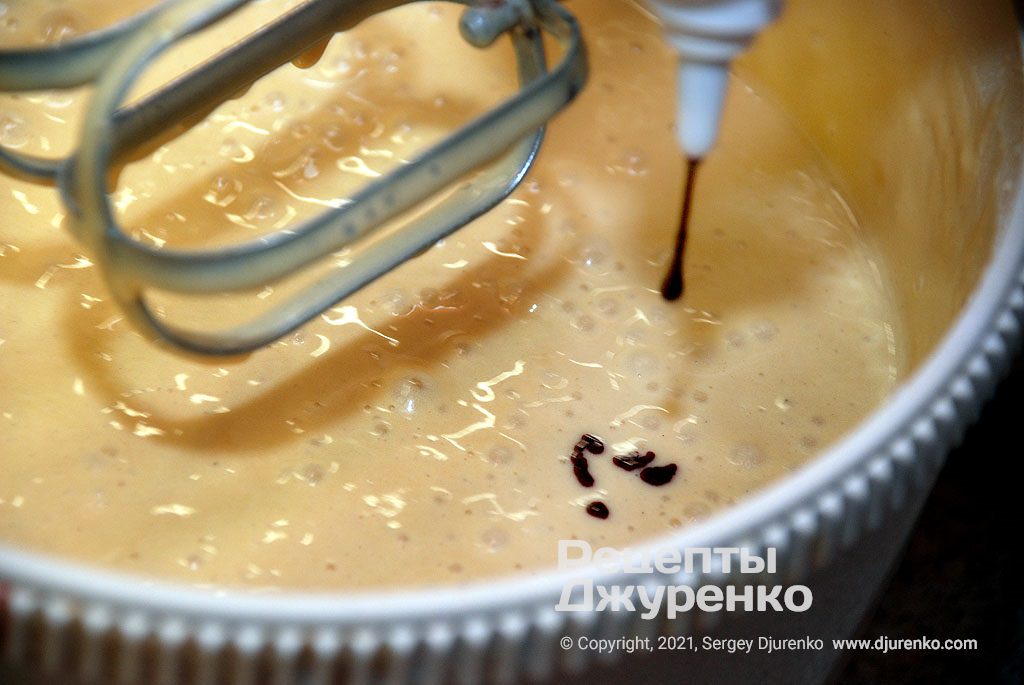
Add the red food coloring – the most important and fun part. We used a thick, gel-like coloring. How much you add depends only on getting a nice deep red shade – we poured about 2 tsp of coloring into the batter. This amount can vary widely depending on which coloring you bought. Mix the batter thoroughly until the color is even. If needed, add a bit more coloring.
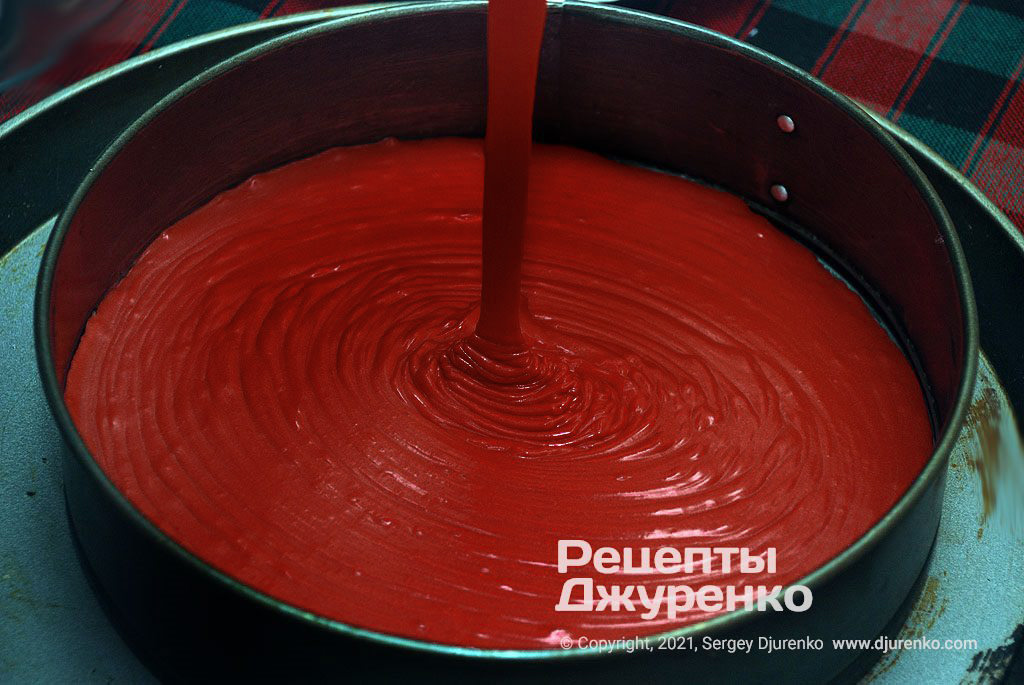
Bake the sponge. Get a springform pan with high sides, 24-26 cm in diameter. Line it with parchment paper and, if you can, grease the whole inside of the pan with vegetable oil. Pour all the batter into the pan and put it in an oven preheated to 180°C.
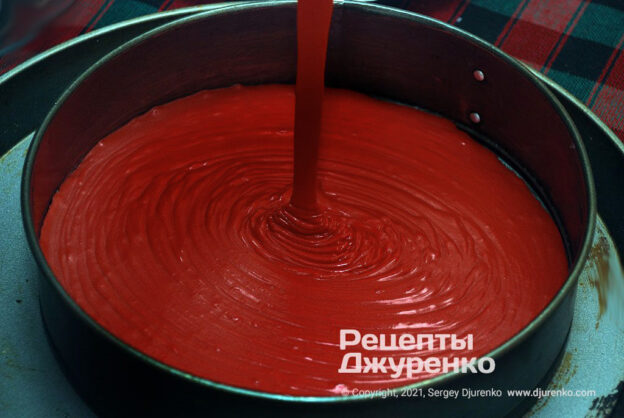
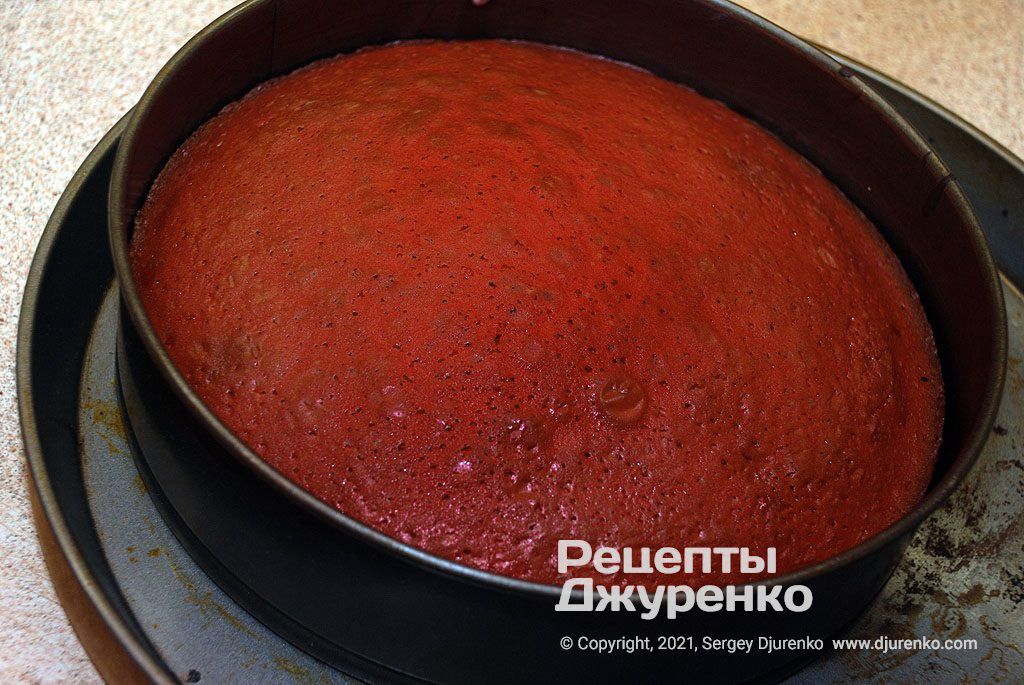
Depending on how thick the batter is, the sponge bakes for 30-40 minutes, possibly a little longer. Don’t worry – it won’t overbake or burn. What matters is that it comes out dense and dark. To check, poke it with a toothpick: if no wet batter sticks to it, the sponge is done.
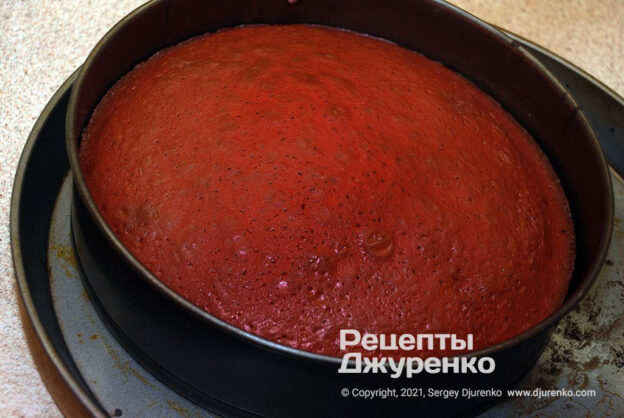
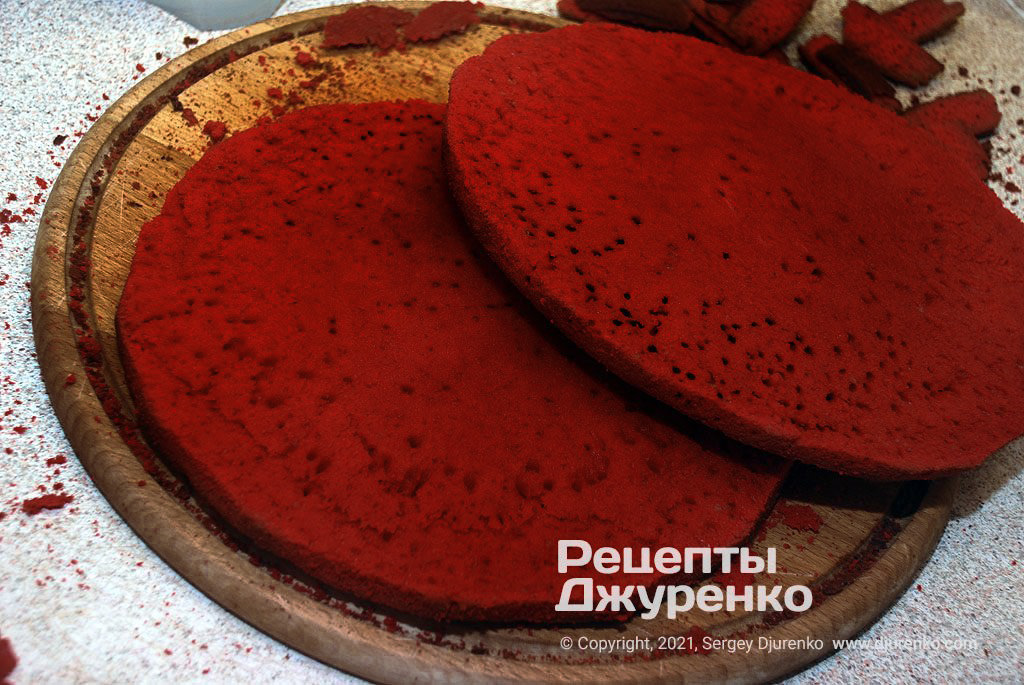
Cut and soak the layers. Take the sponge out of the pan and let it cool completely. Trim off the top and the sides, then slice the sponge horizontally into two equal layers. Soak both layers with the cooled syrup. How much to soak them is up to you – the sponge is dense, and extra moisture won’t hurt it.
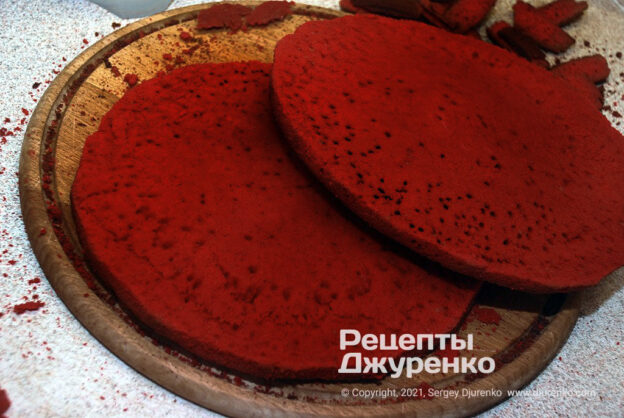
Grind the trimmed top and sides into crumbs in a blender for decorating.
How to make the cream cheese frosting
Red velvet cake uses the simplest possible frosting – really, it’s not so much a frosting as sweetened cream cheese.
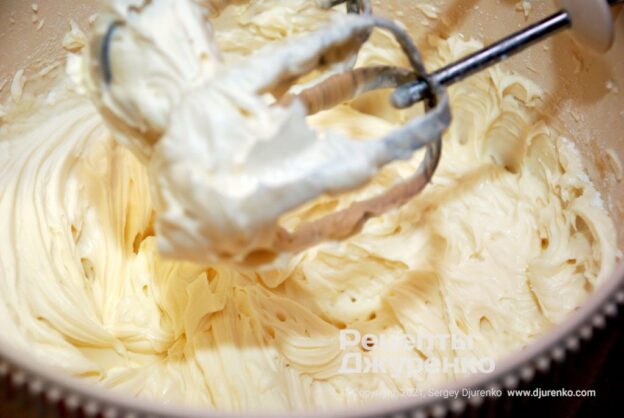
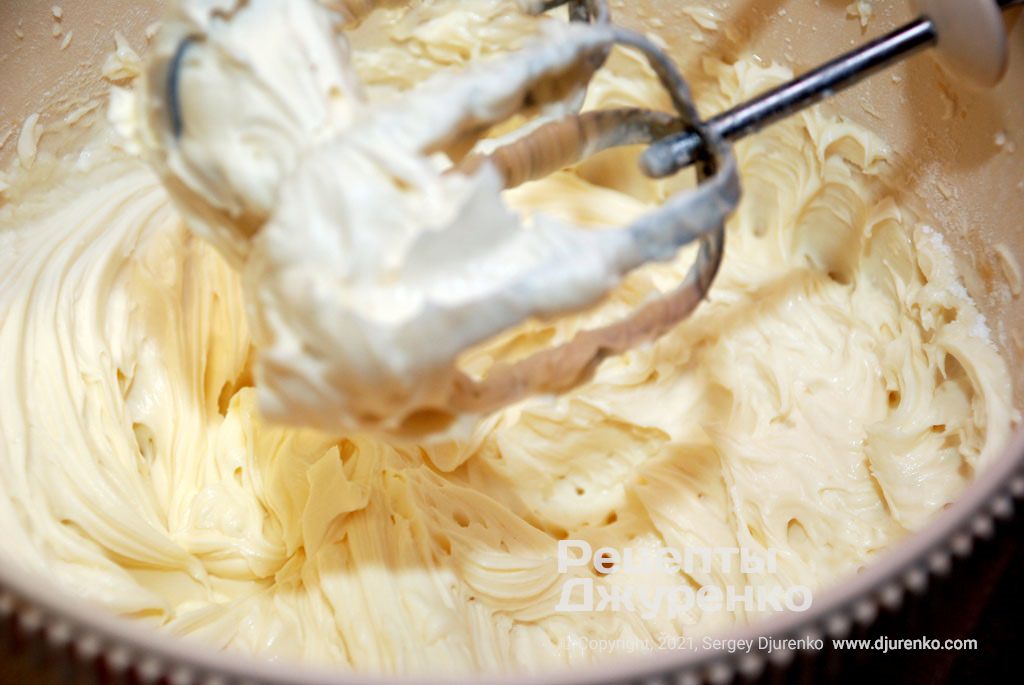
Mix the frosting. In a mixer bowl, combine 150 g of powdered sugar and 600-700 g of cream cheese – Philadelphia or something similar works great. By the way, supermarkets sell this kind of cheese in large tubs that are much cheaper. Add vanilla – use concentrated liquid extract. Beat with the mixer until smooth.
How to assemble a red velvet cake
A rotating cake stand is very handy here. Keep in mind that the soaked sponge is heavy, moist and prone to breaking, so handle it carefully.
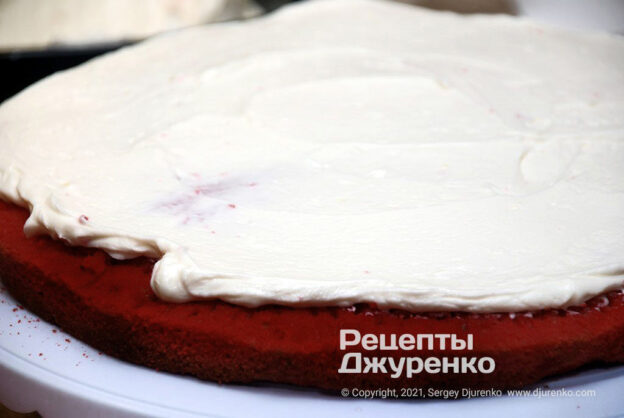
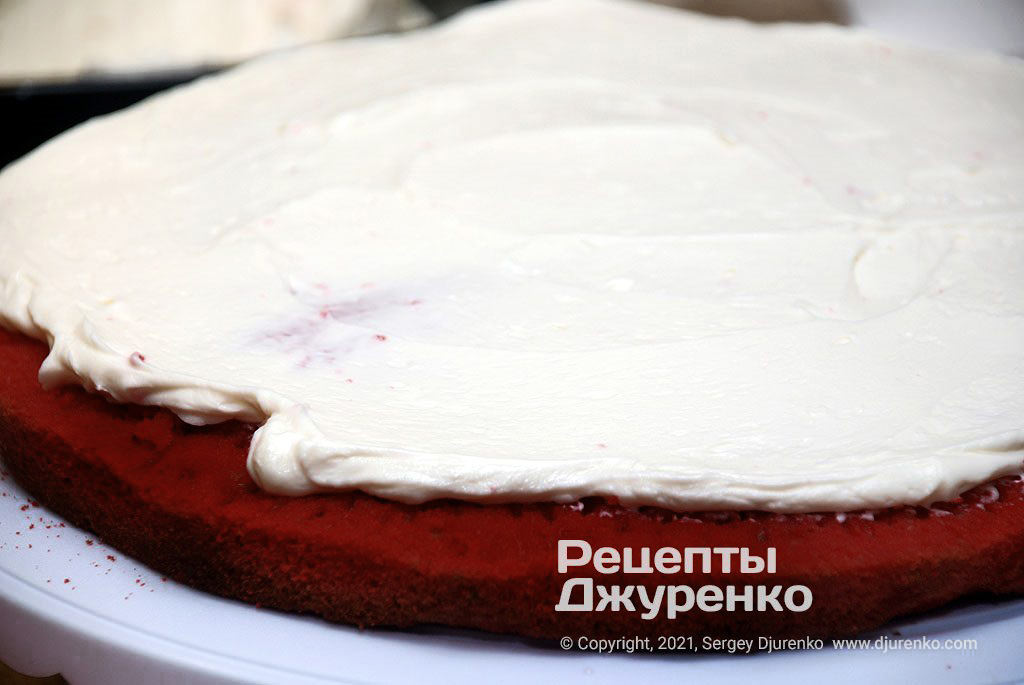
Frost the first layer. Place it on the stand and spread half of the cream cheese (300–350 g) frosting over it. Smooth it out carefully. If there are holes in the sponge, fill them with frosting. Try to make the layer even, reaching all the way to the edge.
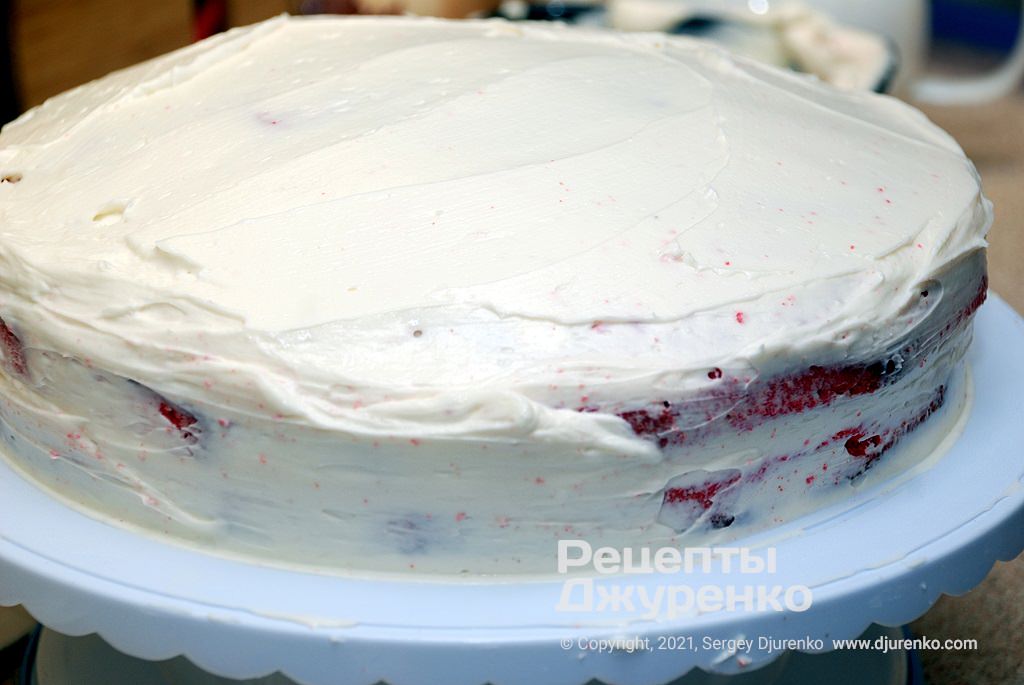
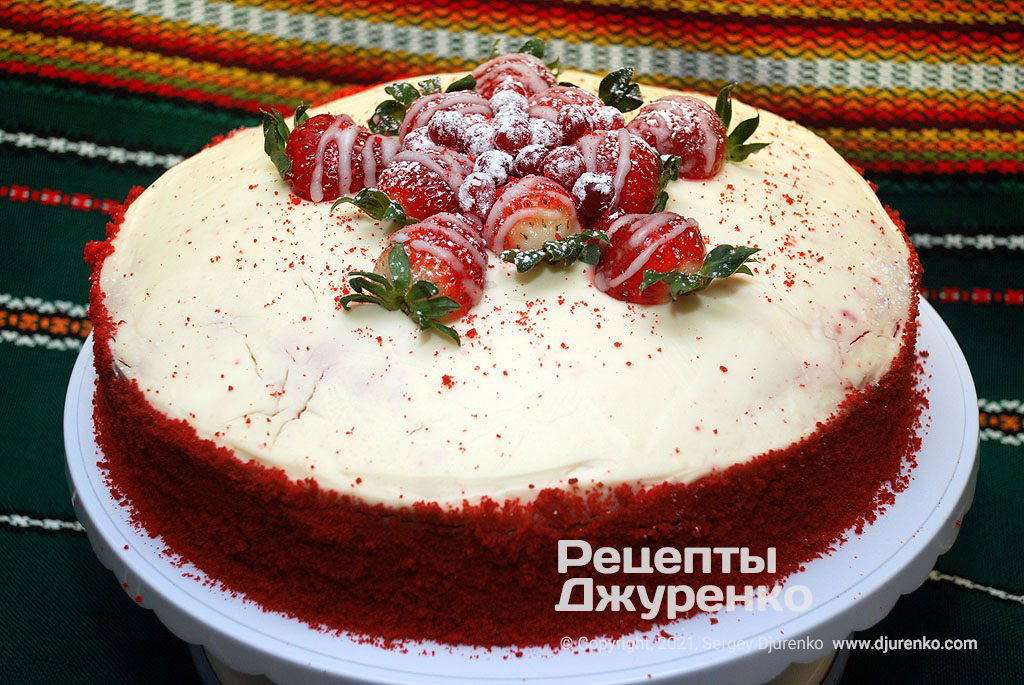
Place the second layer on top of the frosting and cover the cake. Press the layer lightly onto the frosting with your palms. Use the remaining frosting on the top of the cake, then cover the sides thoroughly and evenly, with no gaps. Freshly mixed cream cheese frosting is fairly soft and slightly moist, so right away press the sponge crumbs onto the sides of the cake. That way the frosting holds the crumbs better.
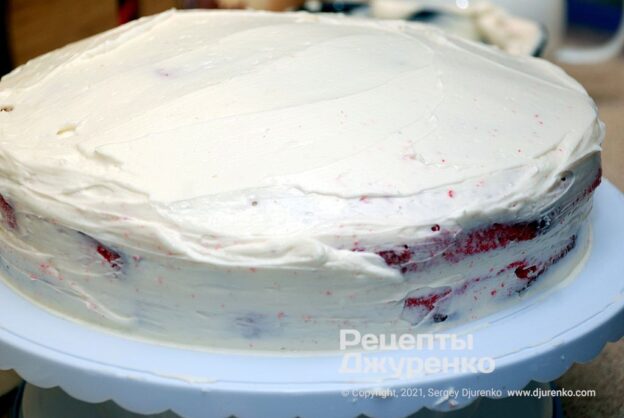
Put the cake, stand and all, in the fridge overnight. The cake will soak up the frosting and chill. As it sets, the frosting thickens a bit and forms a layer on the surface that looks like dense white icing.
Serving
Decorate the cake before serving with fresh strawberries and raspberries, sprigs of rosemary and mint, and candied cranberries. I also recommend a light dusting of powdered sugar.
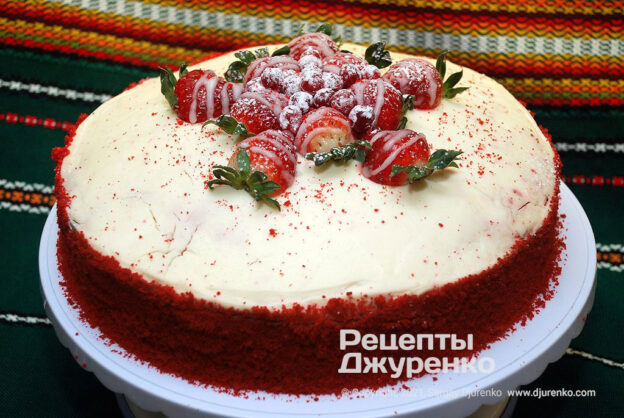
It’s best to serve the dessert on the same stand you assembled it on. Cut it into slices and put them on dessert plates. Serve the cake on its own or with tea – though it’s at its best as a dessert on its own.
Calories and macros
331 kcal
100 g
- Protein5.4 g7% of kcal
- Fat18.6 g51% of kcal
- Carbs35.1 g43% of kcal
Calculated from the recipe ingredients, excluding salt and spices. Data: USDA and Matvaretabellen.