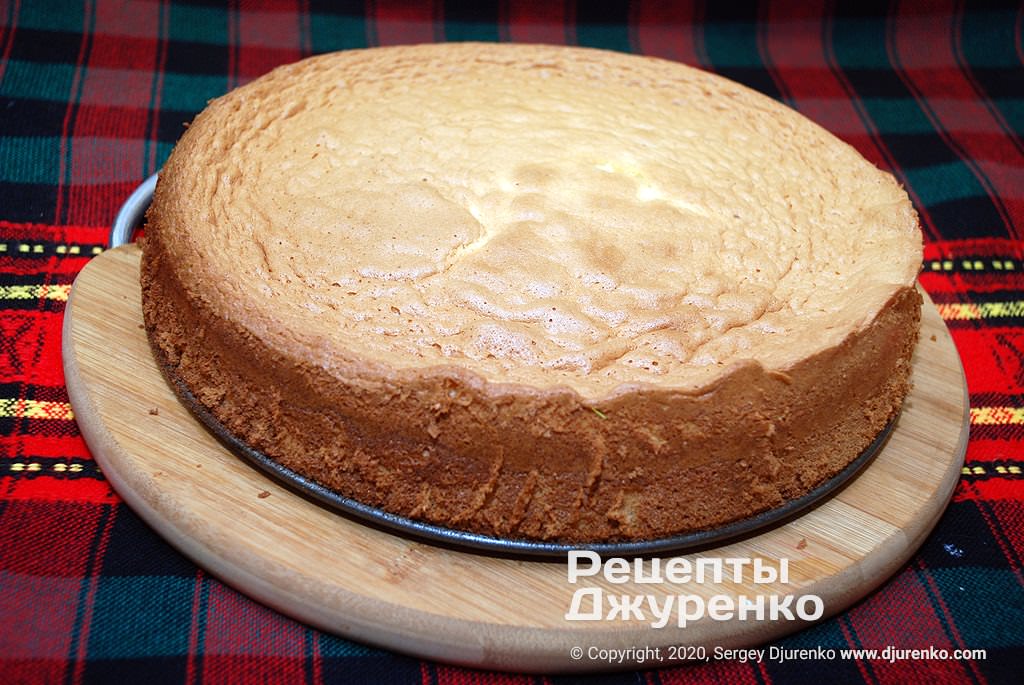
Sponge Cake Dough for Cake Layers - Easy Recipe
Even without much baking experience, especially with cakes, you can make sponge cake dough quickly and with guaranteed results. It is also called pastry dough or “bread”, and it is the base for a huge number of cakes, pastries and desserts. In cooking, “sponge” usually refers to a variety of treats, such as a sponge cake or a chocolate cake. But they are all built on this same baked dough.
I read somewhere that the name comes from the Italian biscotto, meaning “twice baked”. Italian biscotti are made exactly that way, and the dough is quite similar. The base is plenty of eggs, sugar and flour, plus various flavorings and additions. As a rule, the goal is sponge cake layers: the “bread” is cut into sheets, which are then soaked, spread with filling, decorated and so on.
The first description of how to bake a sponge was written more than 400 years ago. It seems to be one of the earliest known cake doughs made without yeast. The result is quite light. The flavor of the baked sponge is fairly neutral, so the creams and soaking syrups are what give each dessert its unique character.
At first, sponge dough was baked into something like cookies. Spices such as anise and coriander went into the dough. Along with the usual ingredients, leaveners, water and milk were also used. Today this is rarely done. Adding butter to the dough is also more the exception than the rule. Sponge layers are baked as a base for creams and soaking syrups, which is probably why they are made as simply as possible.
It is all very simple and quick. The most accessible method is to fold flour into eggs whisked with sugar until foamy. The runny batter is poured into a greased pan and baked at a moderate temperature until done. Once cooled, it is cut into layers.
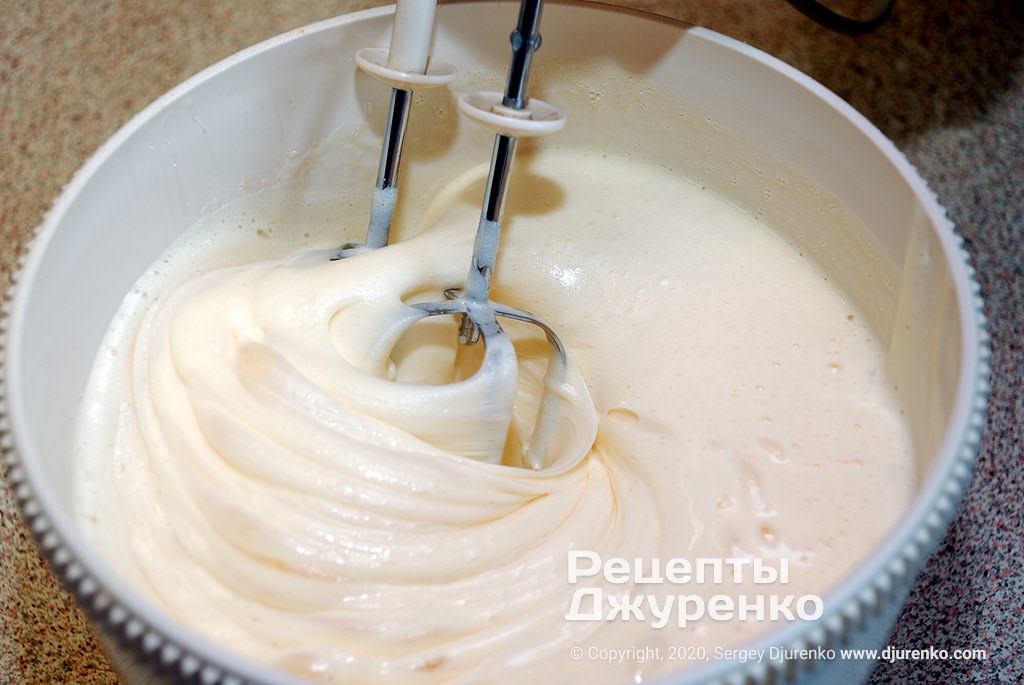
The composition of the dough is very simple. Fresh eggs are combined with sugar and flavorings. The eggs are whipped with a mixer until foamy, increasing in volume 2-3 times. Then the flour is added and folded in. The consistency of the batter is close to very thick sour cream. Bake in a suitable pan at up to 200°C for up to half an hour. After cooling, the sponge is cut into layers. I am grateful to my daughter Yulia for this recipe.
More with eggs and sponge cake
 Raisin CakeHomemade raisin cake: a quick butter sponge batter with soaked raisins and orange zest, baked in a tube pan and dusted with powdered sugar. Perfect with tea.
 Plum SharlotkaPlum sharlotka: a light, fluffy sponge cake baked with layers of ripe plum halves, vanilla and lemon zest. Simple batter, no special skills needed.
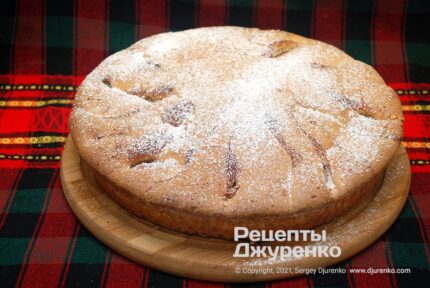 Pear CharlotteHomemade pear charlotte: a light, airy sponge cake baked with slices of ripe juicy pears. Step-by-step recipe with photos, tips and baking time.
 Honey CookiesEasy homemade honey cookies with cloves, cinnamon and lemon zest: dry, fragrant and great with tea. Step-by-step recipe with tips on choosing honey.
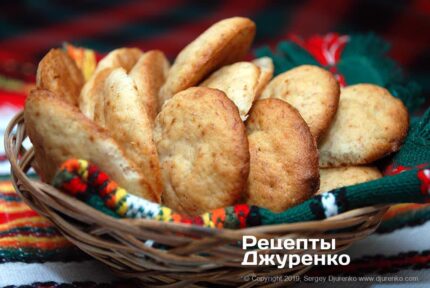 Banana cookiesHomemade banana cookies – fragrant and delicious pastry for tea. Step-by-step recipe of soft, airy cookies.
Ingredients
2-4 layers
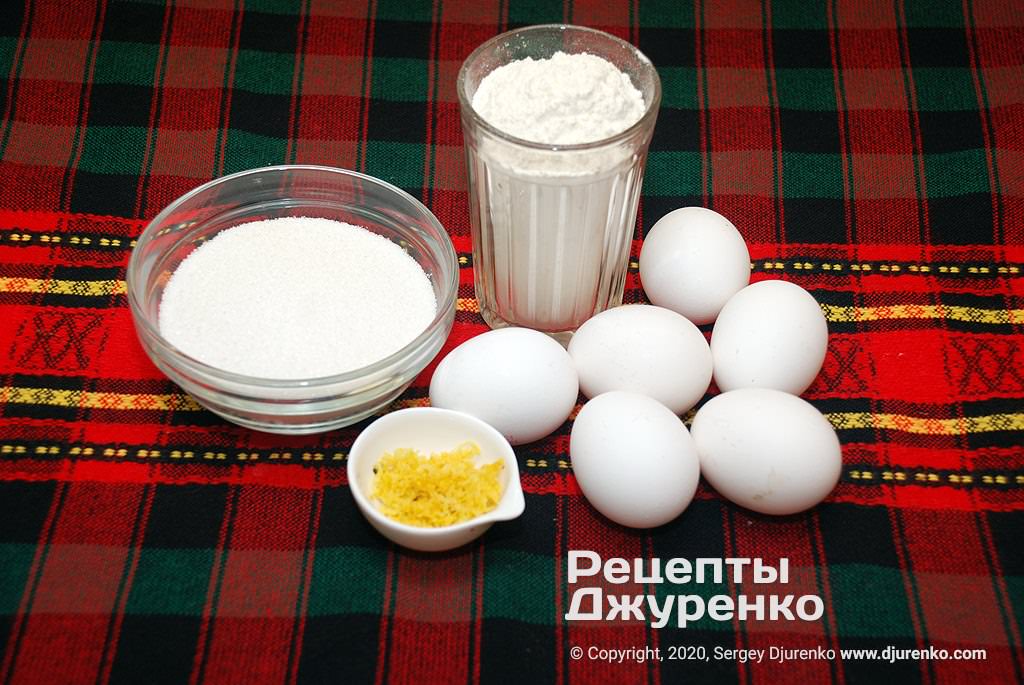
- Eggs 6-8
- Sugar 1 cup
- All-purpose flour 1 cup
- Vegetable oil (for greasing the pan) 1 tsp
- Vanilla extract, flavoring (to taste), zest to taste
Step-by-step recipe
- Before baking the sponge layers, prepare all the ingredients in advance. Sift the flour into a separate bowl. Grate 1-2 tbsp of orange or lemon zest. Take the eggs out of the fridge ahead of time so they come to room temperature. Turn on the oven and heat it to 180-200°C. Also prepare the pan, preferably a springform one. Line it with baking paper greased with vegetable oil so the sponge does not stick.
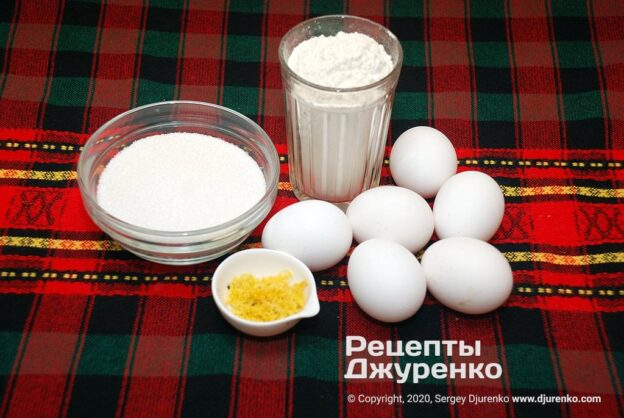
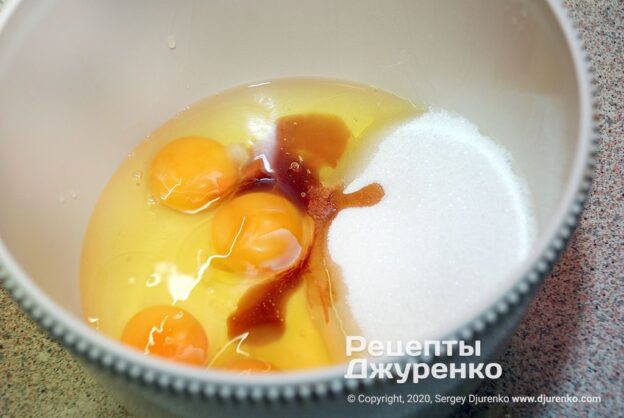
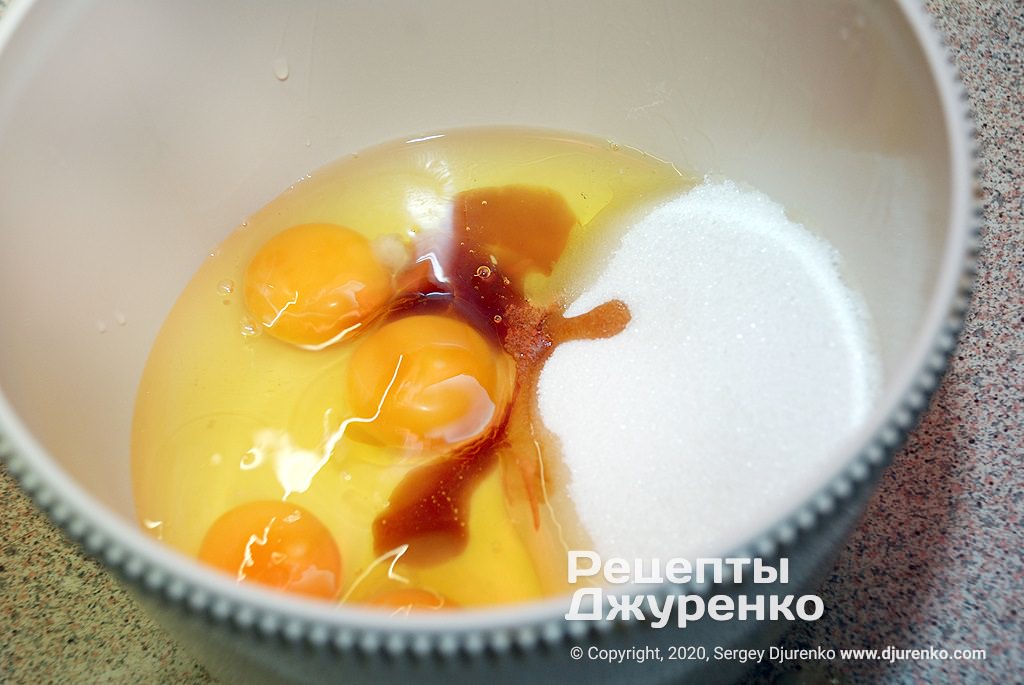
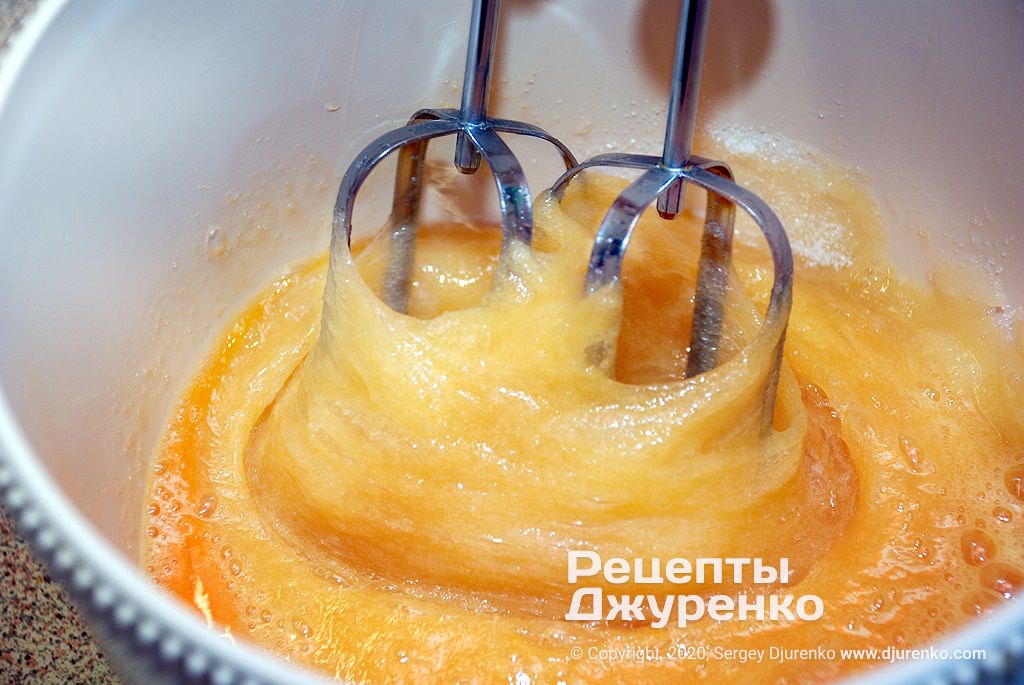
- For this sponge we used 2 egg whites, separated from their yolks, and 4 whole eggs. If the eggs are not the largest, you can use more. You can also whisk extra eggs and fold them in later if the batter turns out too thick. Pour the eggs into the mixer bowl and add a cup of white sugar. Pour in the liquid vanilla extract. If you like, add a flavoring such as lemon or orange, or 1 tbsp of fragrant orange blossom water.
- There are many ways to make sponge dough. The simplest is just mixing whisked eggs with flour and sugar. With this method the finished sponge often sinks. More complex recipes whip the yolks and whites separately. The yolks are mixed with the flour, and only then are the whipped whites folded in. This way the sponge is considered to be fluffier and to hold its shape better.
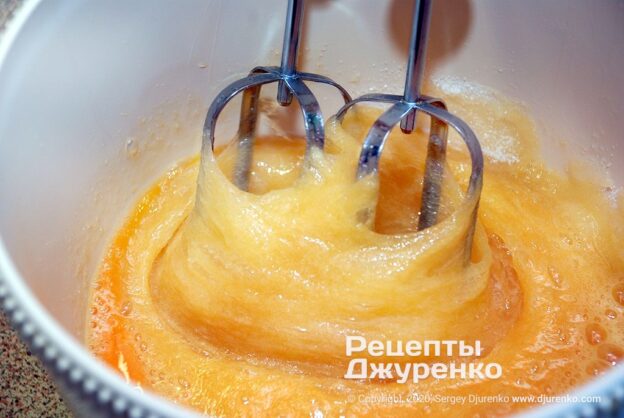
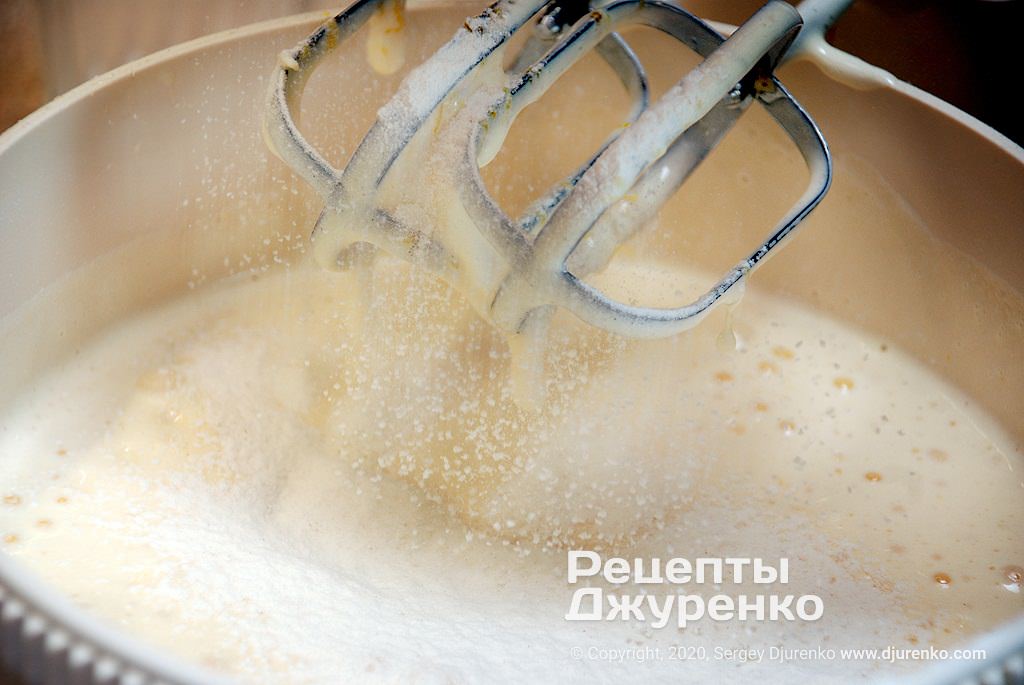
- Use a mixer to beat the eggs with sugar and flavorings until they increase significantly in volume and form a fairly thick foam. By the way, “foam” is a word often used in cooking when making dough with eggs. Next, add a cup of flour and mix with the mixer. If the batter is too runny, add more flour. Keep mixing and adding flour until you are happy with the consistency. The mixer will work against the batter with some effort.
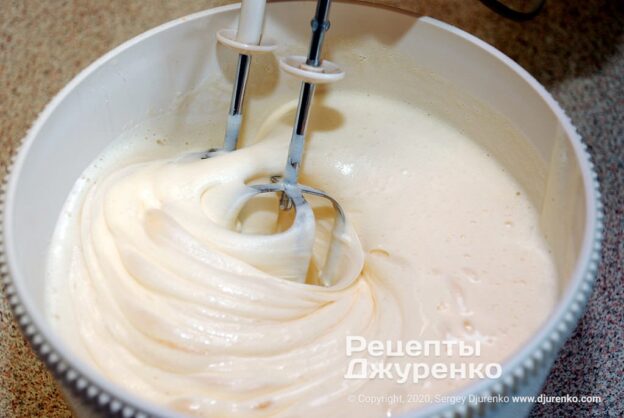
- If the batter turns out too stretchy and the mixer struggles to mix it, do not add water. Instead, whip 1-2 eggs separately until foamy and fold them into the batter. At the very end, add 1-2 tbsp of lemon or orange zest. For a larger amount of dough, increase all the ingredients proportionally.
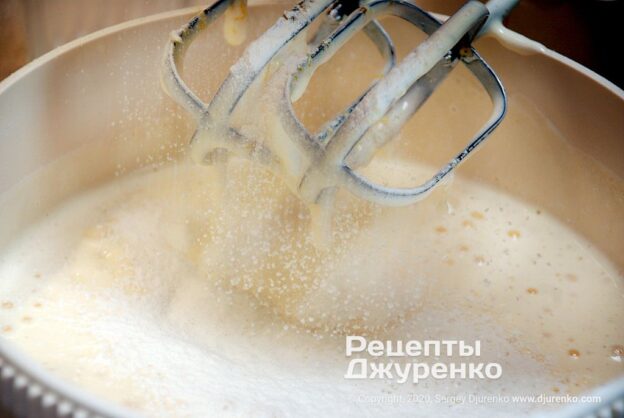
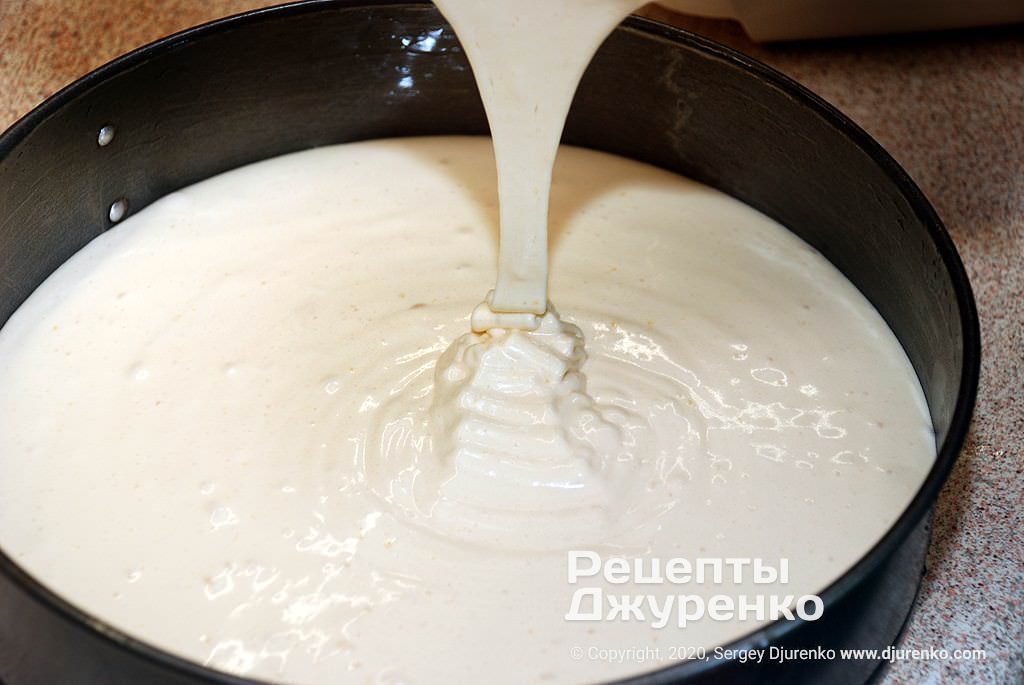
- Choose a baking pan to suit the type of cake: round or rectangular. Or heart-shaped, especially ahead of the holidays. As I said before, line the bottom of the pan with baking paper and grease it with vegetable oil. Pour the batter into the pan so that it fills about two thirds of its height. Do not pour in more: the sponge rises as it bakes and will simply spill over the edge.
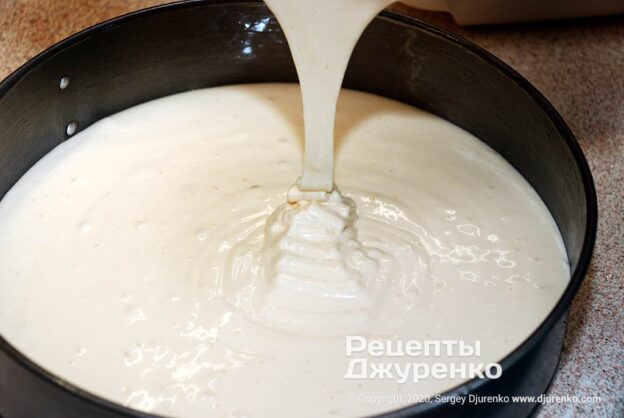
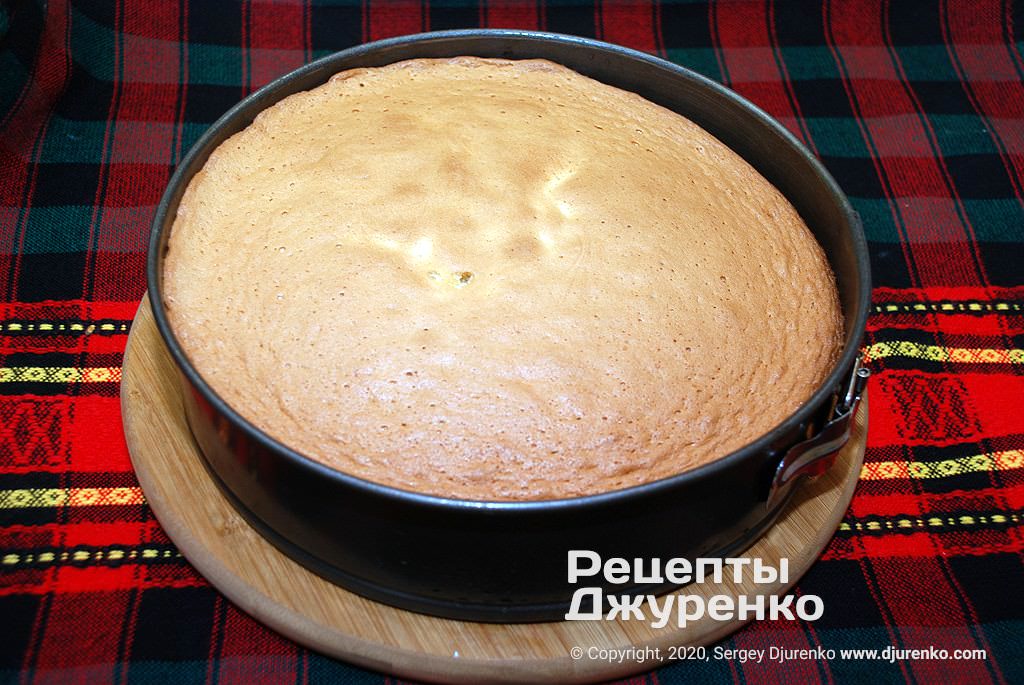
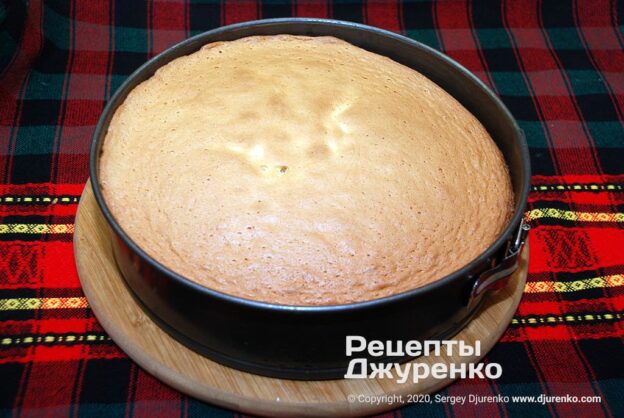
- Put the pan with the batter into a well-heated oven. Bake the sponge for up to 30 mins. Usually, if the oven bakes properly, the top darkens and turns brown after 20 mins. Check doneness with a simple test using a match or toothpick. If you pierce underbaked dough with a wooden stick, it leaves marks. Fully baked dough leaves no traces on the wood. As a rule, 25-30 mins is enough to bake a sponge for a cake.
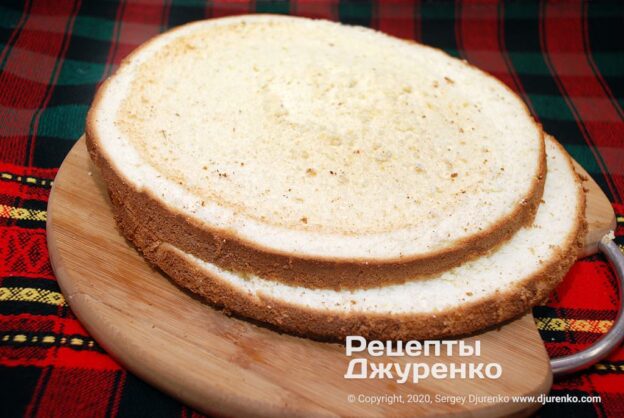
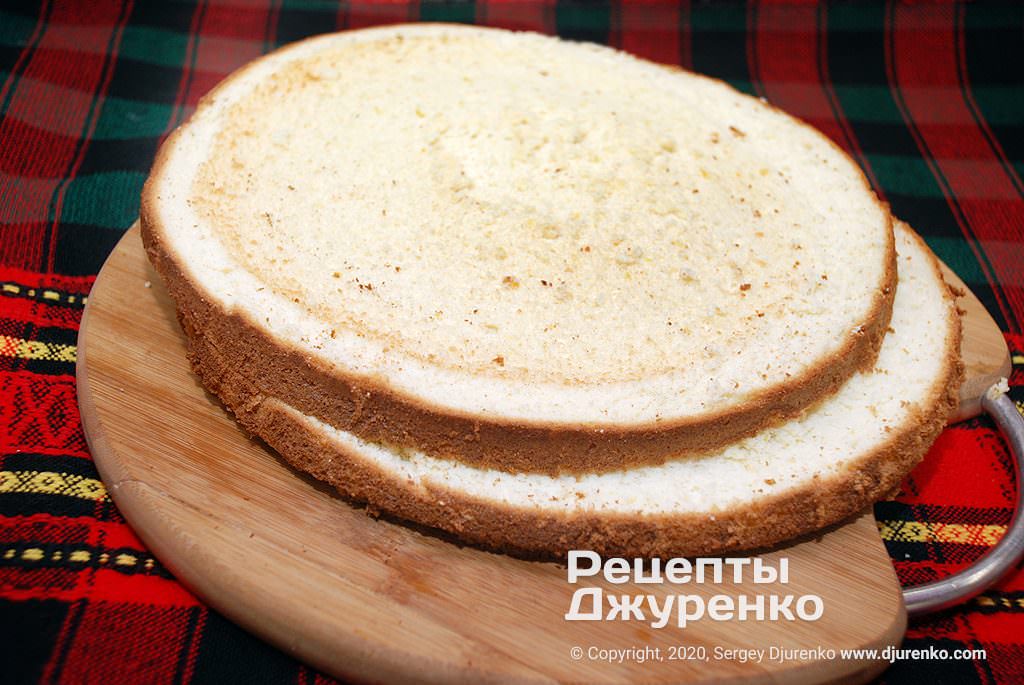
- The freshly baked sponge must cool completely. Most likely it will sink slightly, just a little. Carefully cut the cooled sponge into sheets with a large knife or some other tool. For a cake we do not use the baked top. It is quite firm and soaks poorly. You can cut the top off, dry it a little and grind it into crumbs, which make a wonderful topping for the sides of many cakes. You can get two layers or more.
- Sponge layers can be soaked with syrups, boozy soaks, even runny jam. They spread beautifully with creams or melted chocolate. You can add various aromatic infusions to the dough: rose or orange water, rum or brandy, cocoa. It all depends on what kind of pastry you are planning, so decide this before you bake the sponge.
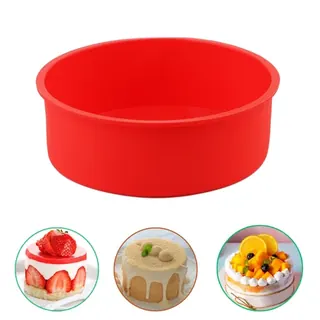 Silicone cake panAliExpress
 Piping bag with nozzlesAliExpress
 Kitchen scale up to 5 kgAliExpress
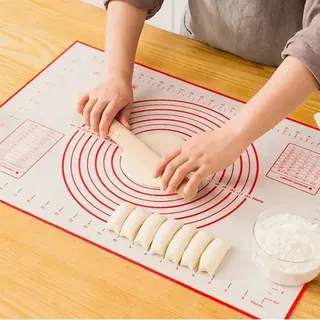 Silicone dough mat with markingsAliExpress
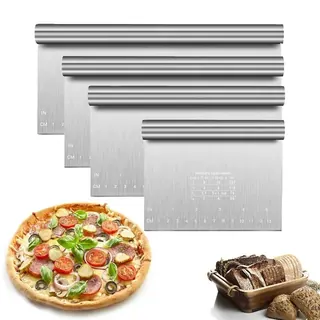 Dough scraper with scaleAliExpress
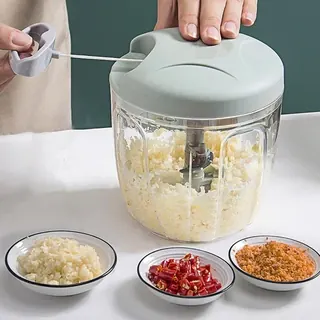 Pull chopper for garlic and onionAliExpress
| Yield: | 2-4 layers |
| Calories: | 250 kcal per 100 g |
| Prep: | 15 mins |
| Cook: | 30 mins |
| Total: | 45 mins |
| Cuisine: | European |
| Rating: |