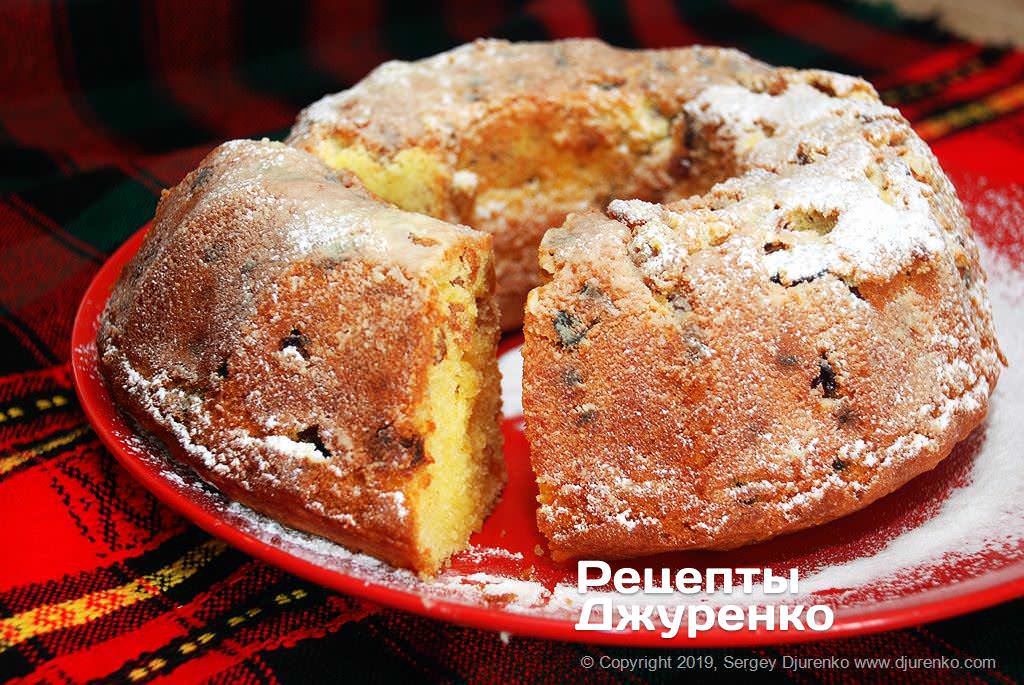
Homemade Raisin Cake with Orange Zest
I've loved raisin cake since childhood: big and small, round and square, with powdered sugar or glaze. We didn't bake at home very often, but in the school cafeteria I always bought a little cake and a cocoa, an unbeatable combination. Those small individual cakes had some special irresistible aroma, almost a little piece of happiness. The big ones, shaped like a miniature loaf of bread, were bought for family tea time.
Cakes like this are essentially sweet bread. They can be any shape, although most are rectangular or round with a hole in the middle. They're usually baked from yeast dough or sponge batter. This kind of cake is also often considered a Christmas treat and is sometimes baked for a wedding feast.
Most often the batter is a sponge-type one. Depending on the ingredients, the cake may stay soft, crumble once completely cool, or be quite dense; everyone's taste is different. It has to be said that sugar and margarine or butter go into it, so the dessert can be quite high in calories.
This is a rich cake: besides raisins you can add candied fruit, nuts, chocolate or cocoa, and even jam, since a filling is fairly common, as in muffins (see the recipe). Despite their ancient roots, recipes for loaf cakes and little cupcakes have a modern history. An ordinary cake with raisins or candied fruit is made differently depending on the region and local ingredients, but the general principles stay the same.
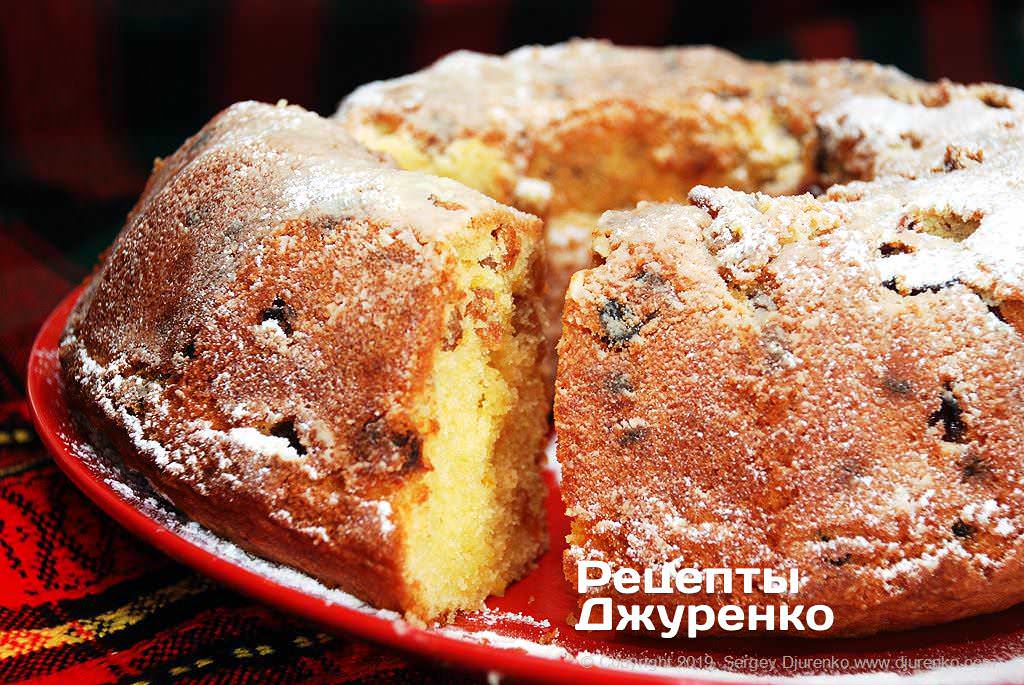
A traditional raisin cake has a fairly dense crumb; it crumbles after cooling but holds its shape when sliced. It keeps for quite a long time. The finished cakes are often lightly soaked with liqueur or cognac.
The tastiest cake is made from a sponge batter. As a rule, it's an easy batter, the baking isn't complicated either, and it all comes together quickly and simply. The batter is a bit stretchy, similar to a cream. It's simply poured into a buttered pan and baked, rising as it goes. The finished cake cools and is turned out, like a tarte Tatin, then topped with sugar glaze, chocolate or powdered sugar. Thanks to my daughter Yulia for her help and support!
Ingredients
4 servings
- All-purpose flour 200 g
- Butter 200 g
- Sugar 1 cup
- Eggs 5
- Seedless raisins 1 cup
- Baking powder, vanilla, orange zest, powdered sugar to taste
Step-by-step recipe
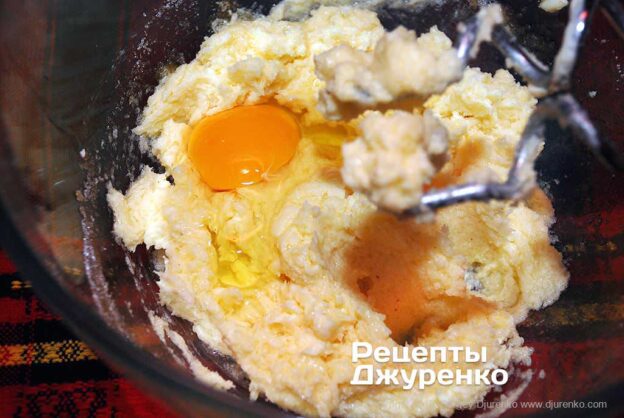
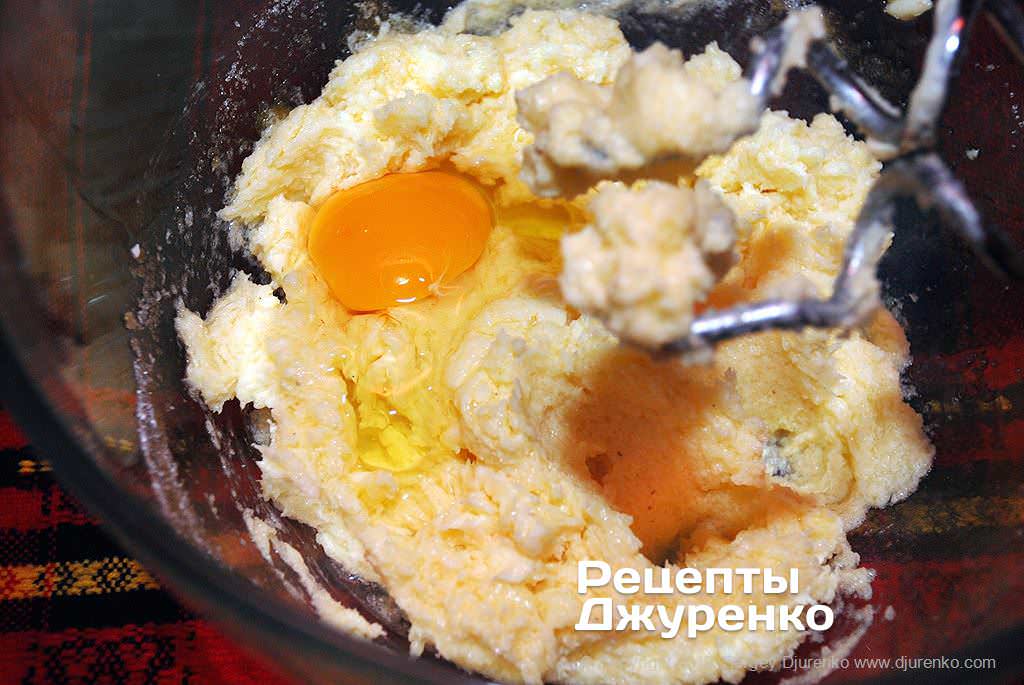
- The sponge batter we'll bake the cake from comes together very quickly. Take the butter out of the fridge in advance so it softens, and the eggs too: they shouldn't be cold. In a large bowl or mixer bowl, combine the sugar, butter, vanilla or vanilla sugar and one egg. Using a mixer with dough hooks on low speed, mix everything together. Keep mixing, adding two more eggs one at a time and then two egg yolks. The mixture should be smooth.
- As soon as you start on the batter, soak the raisins. At first glance it may seem like a lot of raisins. But the cake should be packed with sweet seedless dried grapes. A full cup of raisins is over 100 g; you can use a mix of dark and golden raisins. Soak the raisins in boiling water; you can add rum, cognac or Cointreau.
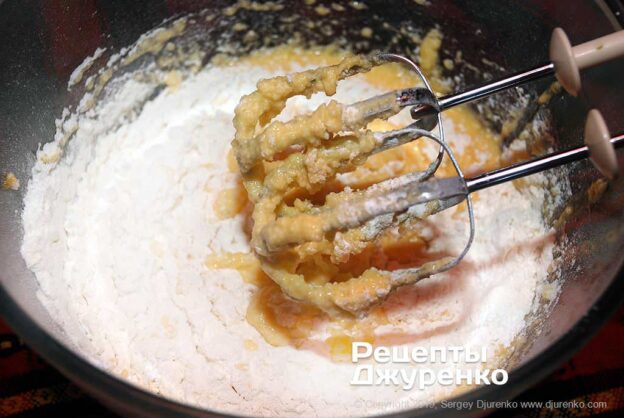
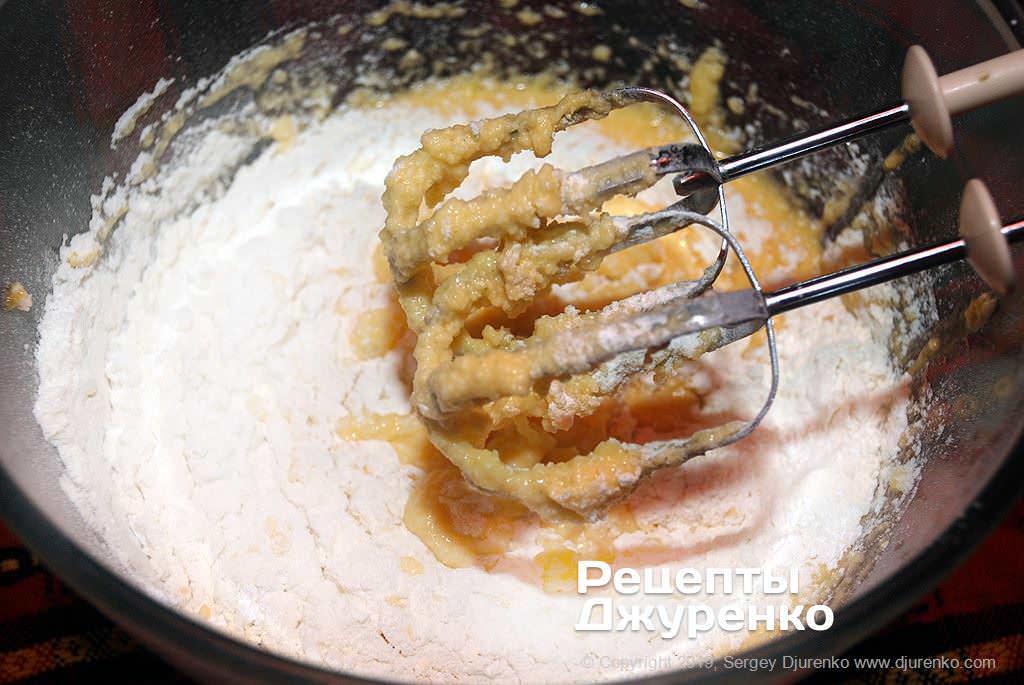
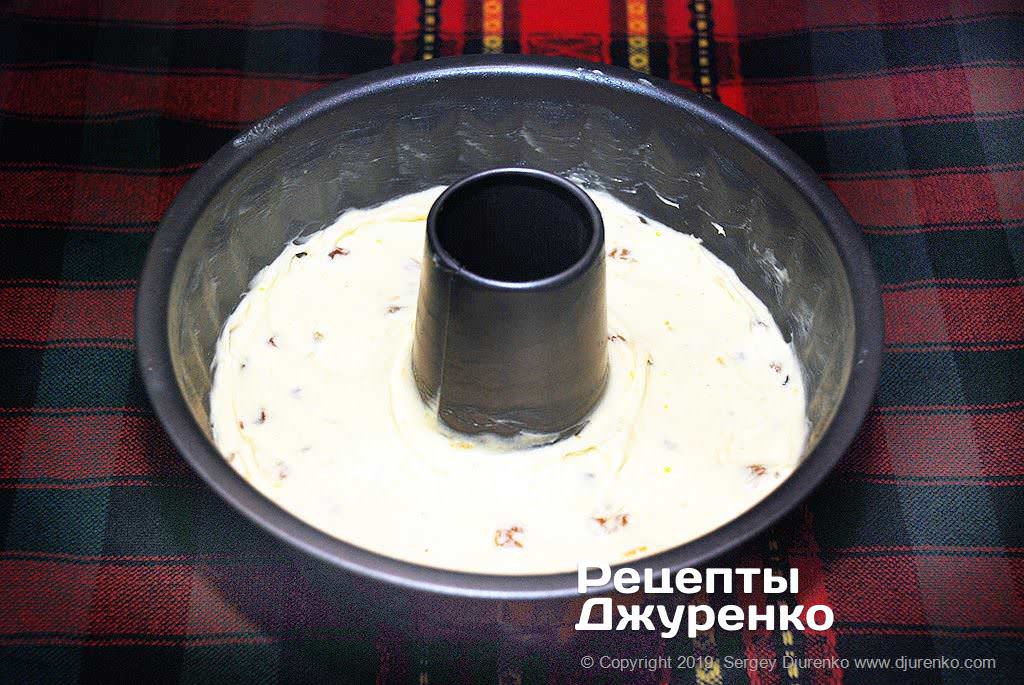
- Sift the flour and mix it with the baking powder, half a packet. Add the flour mixture to the bowl and mix the sponge batter thoroughly. Cake batter should be as smooth as possible. Its consistency is like very thick honey: it should barely flow and look like custard. If it's runnier, add a little more flour.
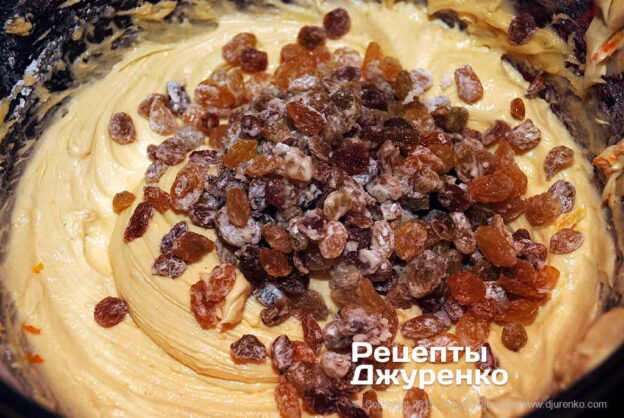
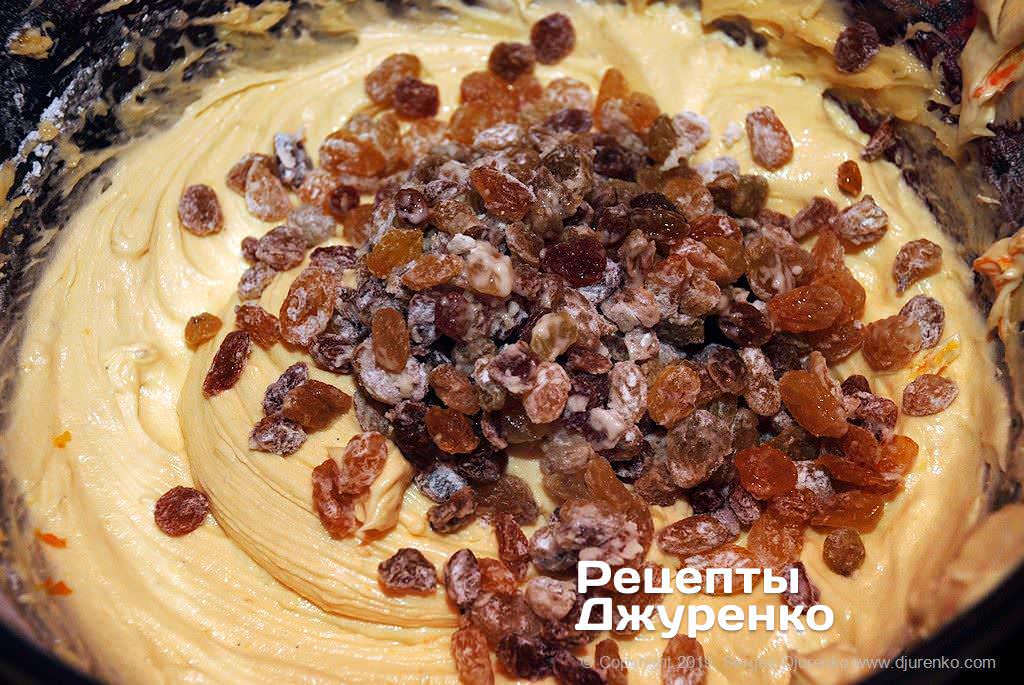
- Lightly squeeze the soaked raisins to get rid of as much water as possible and transfer them to a small bowl. Sprinkle the raisins with 0.5 tsp of flour and stir: this way they combine better with the batter and are less likely to sink to the bottom of the pan during baking. Add the grated zest of one orange and the raisins to the batter and fold them in with an ordinary wooden or silicone spatula.
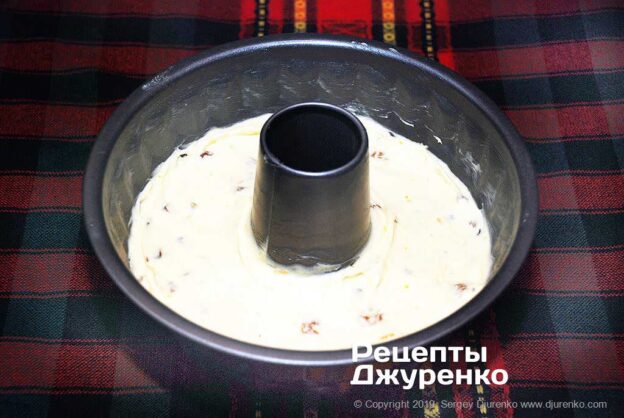
- Prepare the baking pan. It can be a metal or silicone pan of any shape. We chose a round metal pan with a raised center tube, which gives a round cake with a hole in the middle. Grease the pan generously with butter. Using a spoon, carefully pour the batter into the pan, filling it a bit more than halfway: the batter will rise during baking.
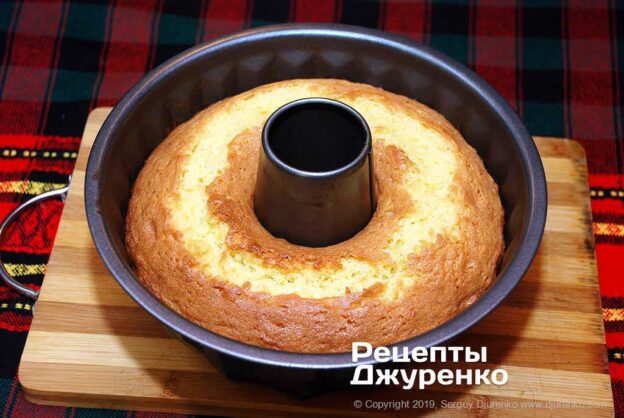
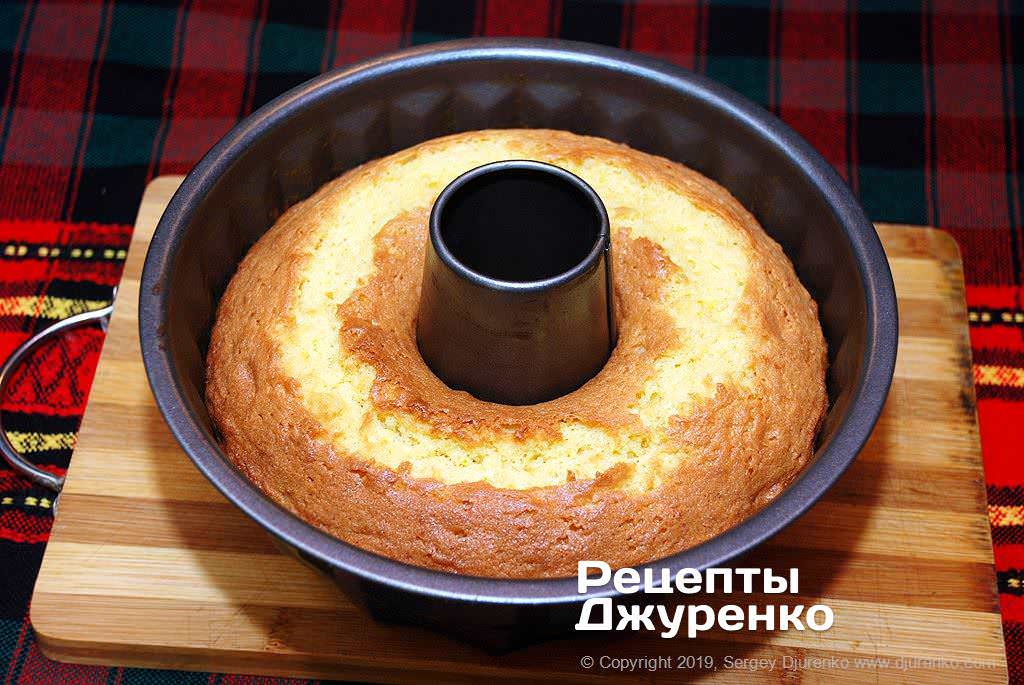
- Preheat the oven to 180°C. Put the pan of batter in to bake. Usually the cake takes about 30 minutes, and that's enough. But to brown the top you can add 10-15 minutes. The batter will definitely be cooked through, so go by the color of the top.
- Take the pan out of the oven and let the cake cool completely. Turn the pan over onto a board, the table or a large flat plate. Ideally the cake will drop out of the pan. You can help it release by tapping. Usually there are no problems. By the way, before pouring in the batter you can line the pan with parchment paper; it peels off the finished cake easily.
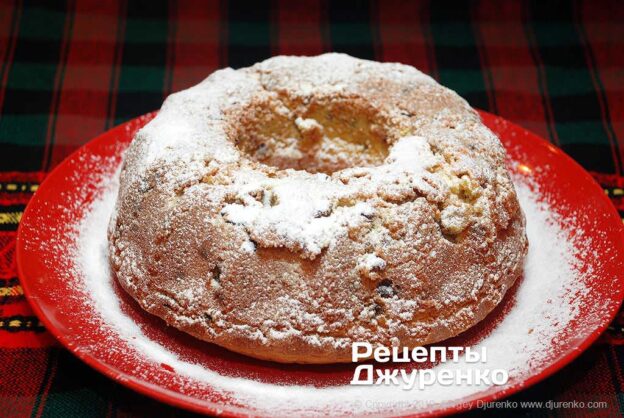
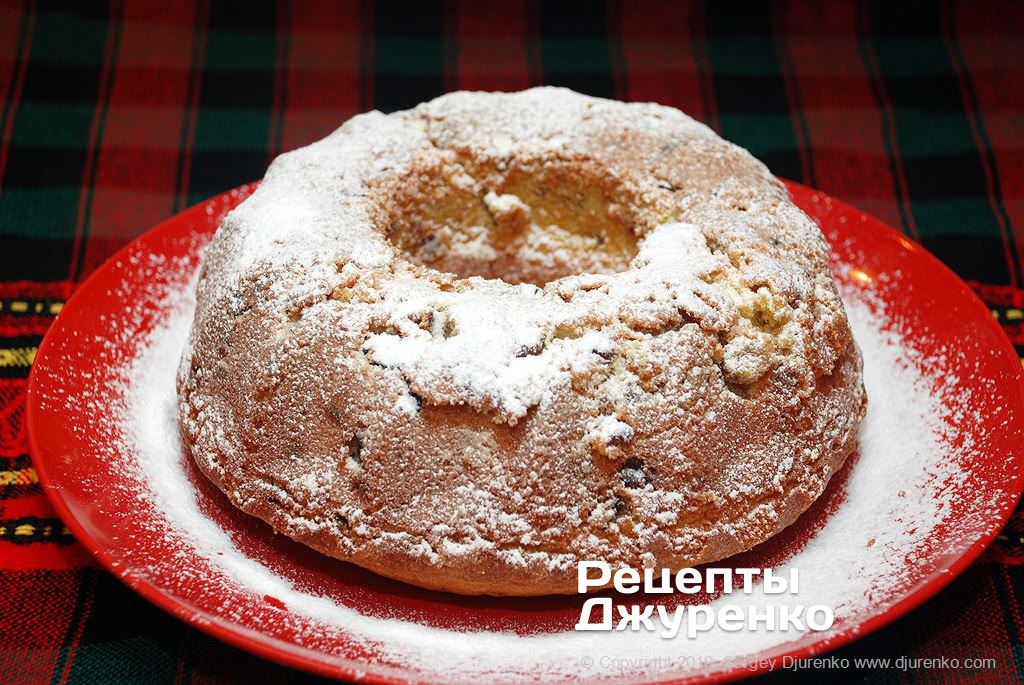
- The side that was browning ends up on the bottom, and the baked, darker layer becomes the top. The top will be golden, closer to brown, and slightly rough. If the cake didn't release cleanly, there may be some damage on the surface; that's normal. Raisin cakes are usually glazed or dusted with powdered sugar, and I like a lot of it. It hides any damage beautifully, just as glaze hides the hole for the cream in éclairs.
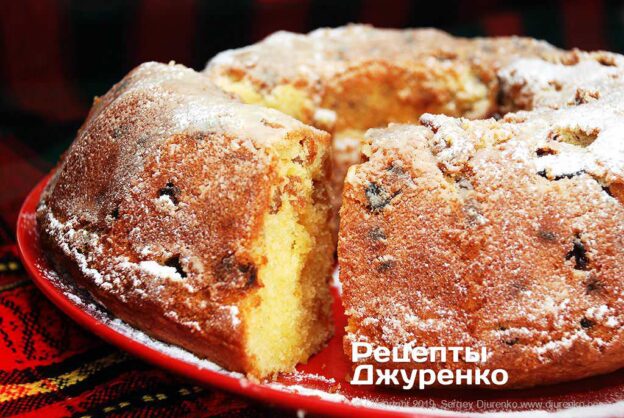
- The warm cake is quite soft. Once cool, it becomes dense and crumbly. Serve it on a board or plate, cut into wedges with a very sharp knife to avoid too much crumbling. Serve with tea or cocoa, whichever you prefer.
| Serves: | 4 servings |
| Calories: | 340 |
| Prep: | 15 mins |
| Cook: | 45 mins |
| Total: | 1 h |
| Category: | Baking |
| Cuisine: | European |
| Rating: |
⭐
⭐
⭐
⭐
⭐
4.3
(2)
|