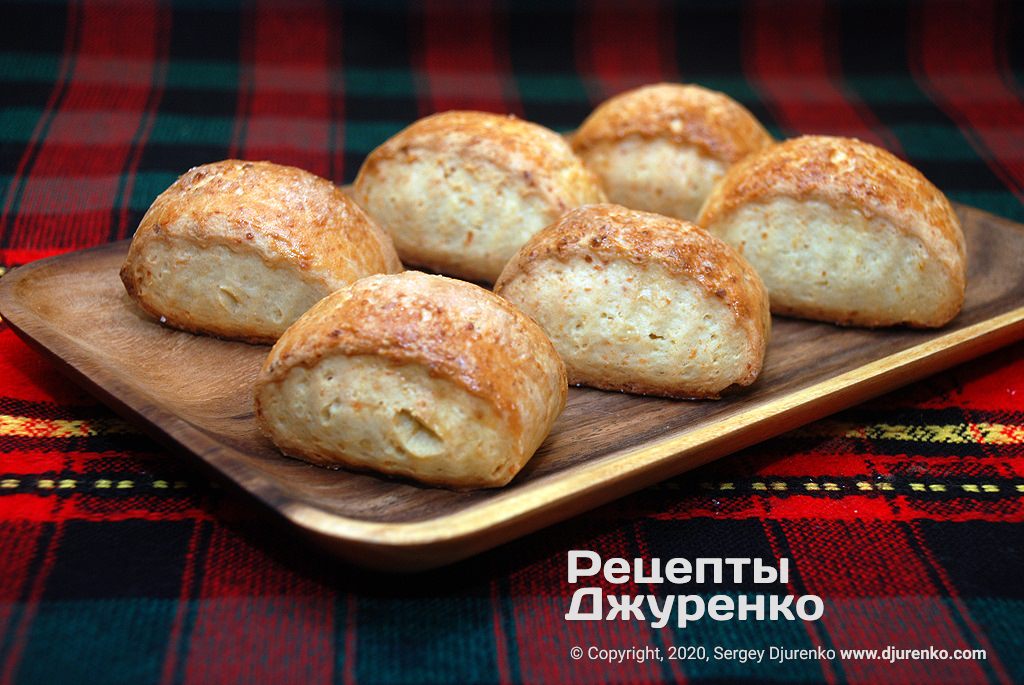
Cottage Cheese Cookies
Ingredients
12–15 cookies
For the dough
- Cottage cheese, 5% fat 300 g
- All-purpose flour 2 cups (260 g)
- Butter 100 g
- Egg 1
- Brown sugar 3–4 tbsp (41–55 g)
- Baking powder 1/3 sachet
- Orange zest 1 tbsp (6 g)
- Vanilla to taste
For the topping
- Egg 1
- White sugar 1 tsp (5 g)
- Powdered sugar optional
Step-by-step recipe
Making the curd mixture
The cookies bake in under an hour, and the dough comes together in one go in 10–15 mins.
Turn on the oven in advance and preheat it to 180–190°C. Line a baking sheet with parchment paper. There is no need to grease the paper — the cookies don’t stick to it at all.
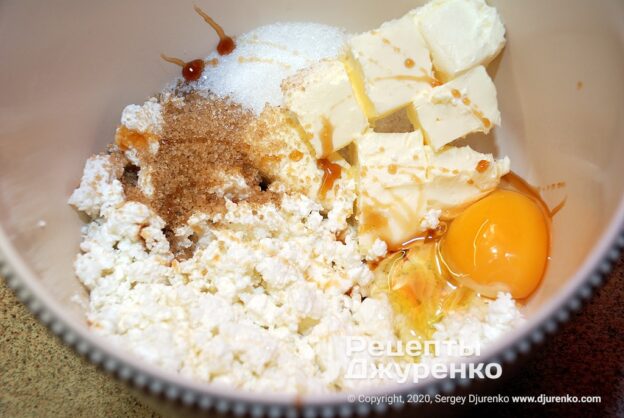
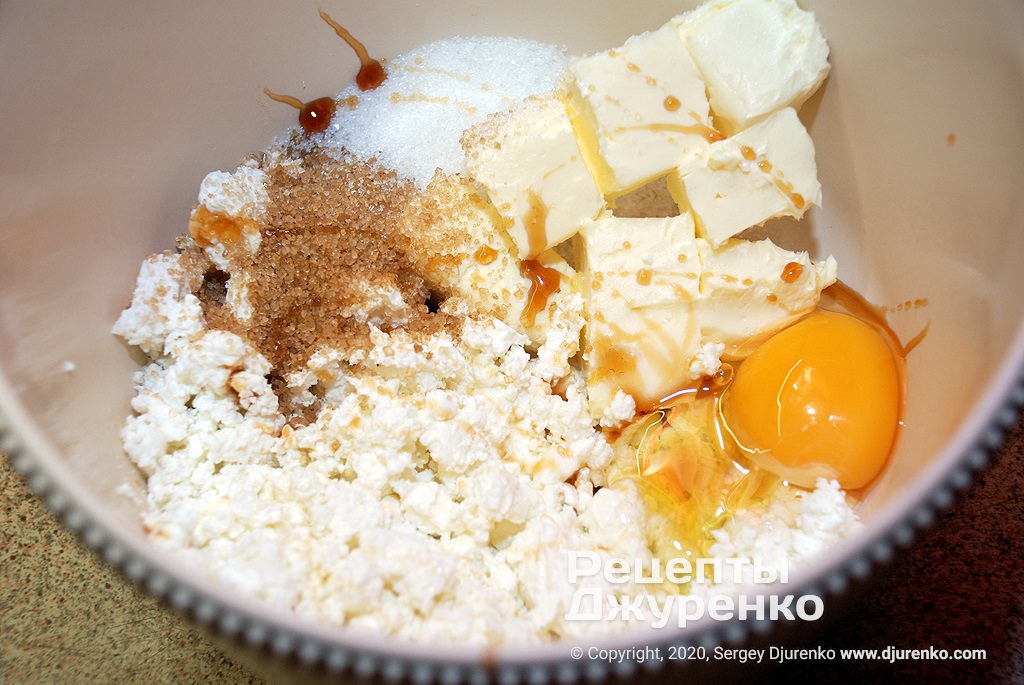
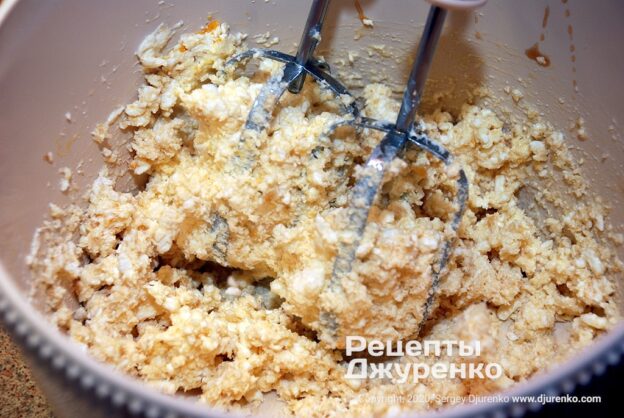
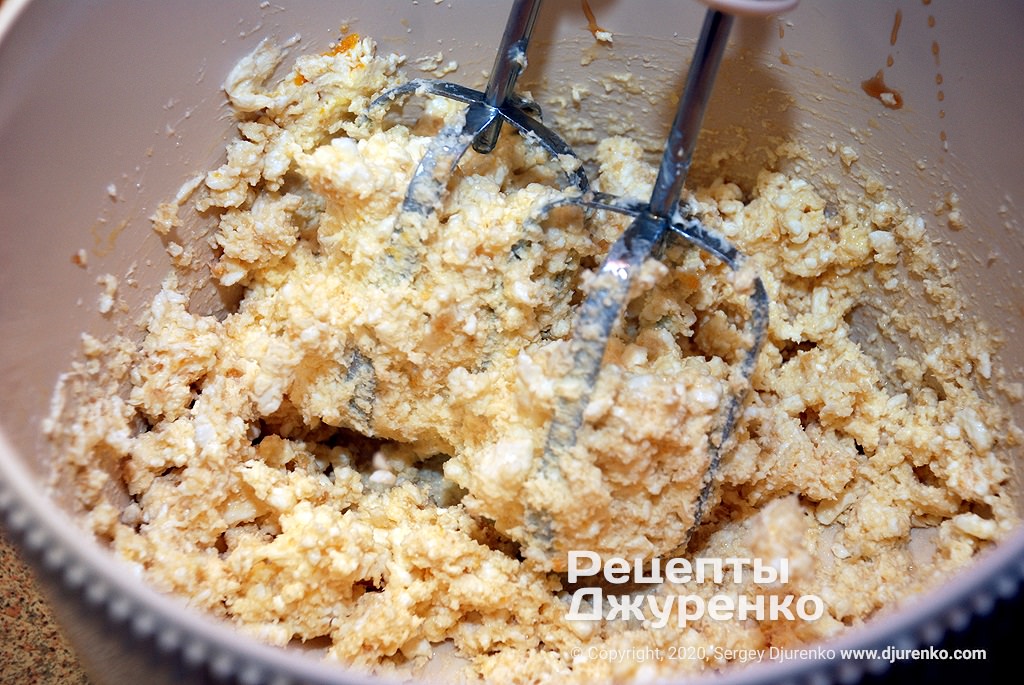
Make the curd mixture. If the cottage cheese is very coarse, press it through a sieve or run it through a meat grinder. Combine the cottage cheese with one egg and add the sugar. When my daughter and I made these, we used brown sugar for half of the total amount, as it is more aromatic. But if you can’t find it, feel free to use regular white sugar. Add vanilla — concentrated liquid vanilla is handy here. Add the softened butter and grate in 1 tbsp of orange zest (6 g). Mix everything until evenly combined — a mixer on low speed makes this easy.
Kneading the dough
Next comes the important part: adding the flour. The moisture of the cottage cheese strongly affects how much flour the dough needs.
Add baking powder to the mixture. A sachet is usually meant for 1 kg of flour; we added about a third of a sachet so the cookies would turn out a little fluffier.
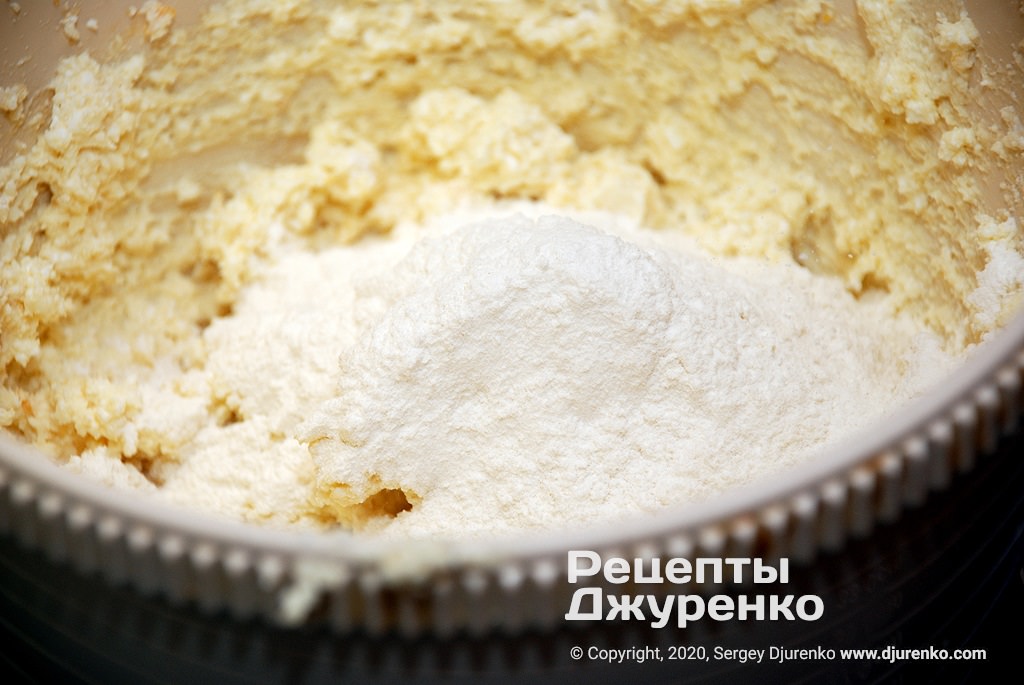
Add the flour in portions, stirring the dough each time.
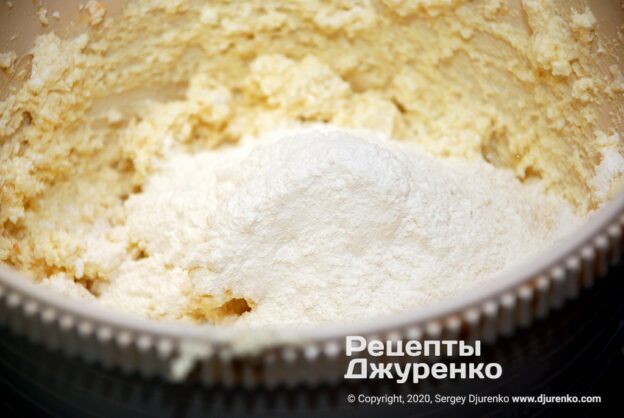
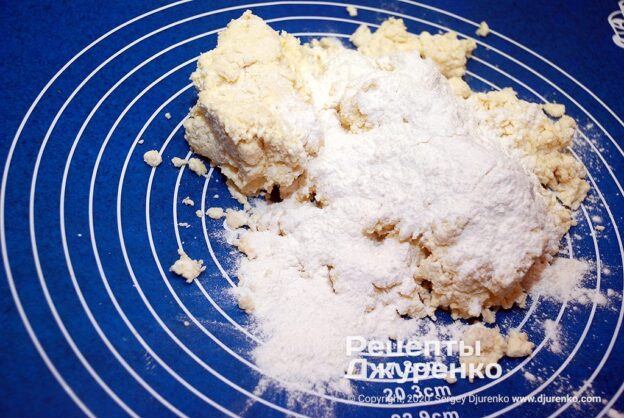
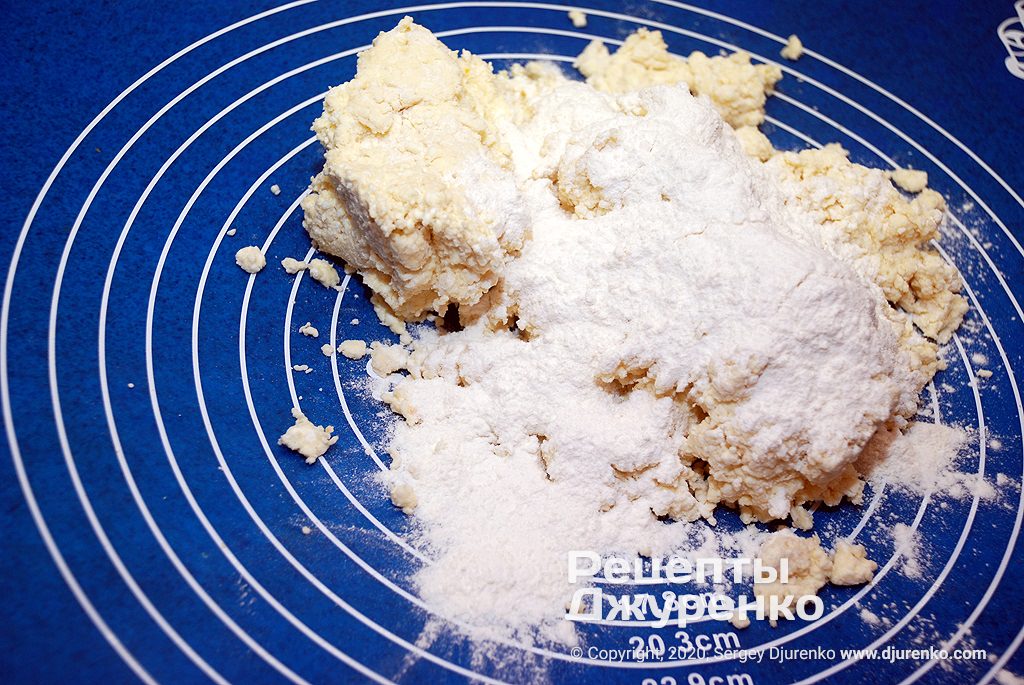
Once the dough gets firmer, turn it out onto the table or a silicone mat. Knead with your hands, adding flour, until it no longer sticks to your hands at all.
The final dough should be like the dough for pelmeni or cinnamon rolls: firm, but easy to knead by hand. Dough that is too stiff will bake up hard and won’t rise.
Shaping the cookies
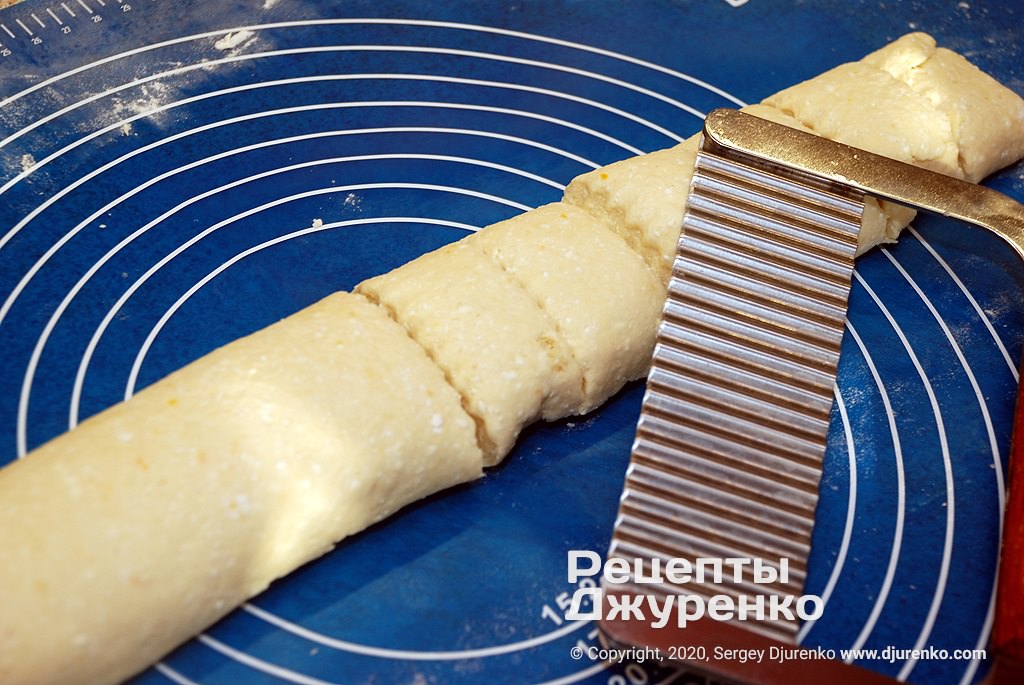
Roll the dough into a sheet 4–5 mm thick. Try to shape it into a rectangle. Roll one long edge out a bit more with the rolling pin so it is half as thick. This edge will be on the outside. Carefully roll the sheet into a log, starting from the thicker long edge. Press the rolled dough lightly with your hands so the thin edge sticks well.
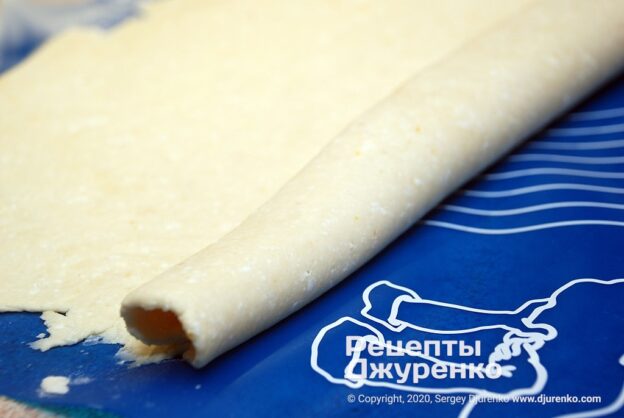
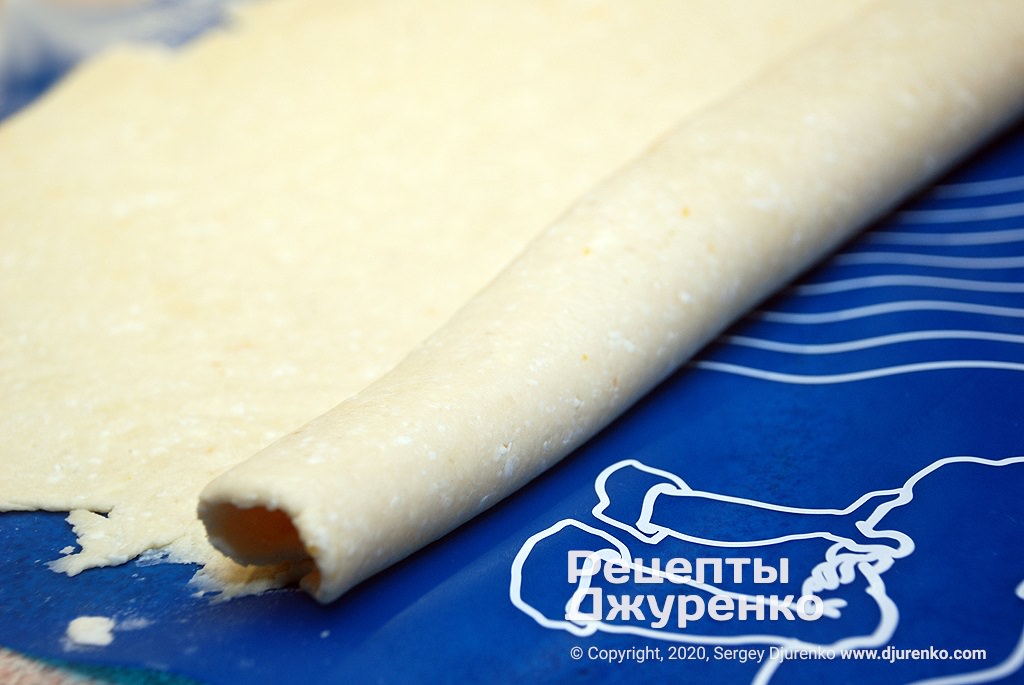
Carefully cut the log into pieces about the size of a small egg — this amount of ingredients usually makes 12–15 cookies. To make them look pretty, cut them with a crinkle knife rather than a regular one — we use one for slicing vegetables.
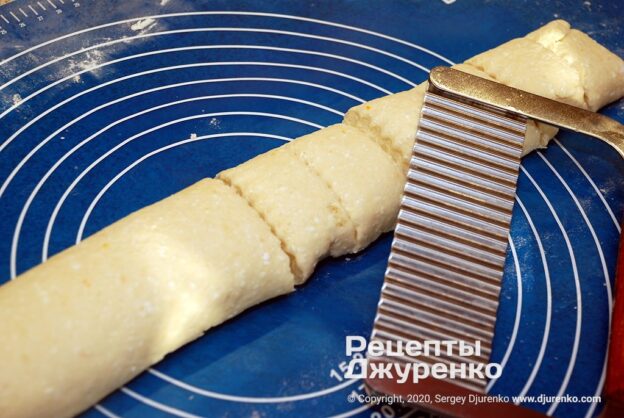
Arrange all the cookies on the lined baking sheet.
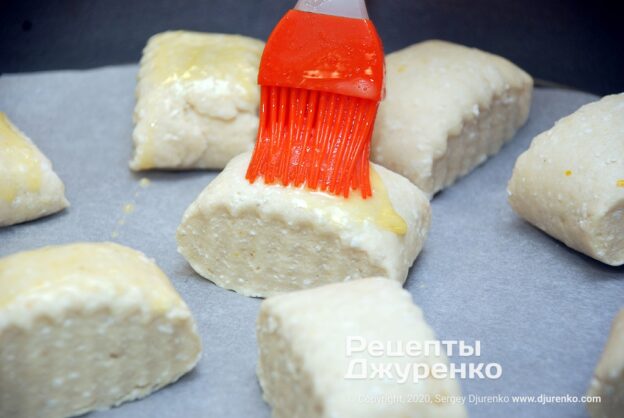
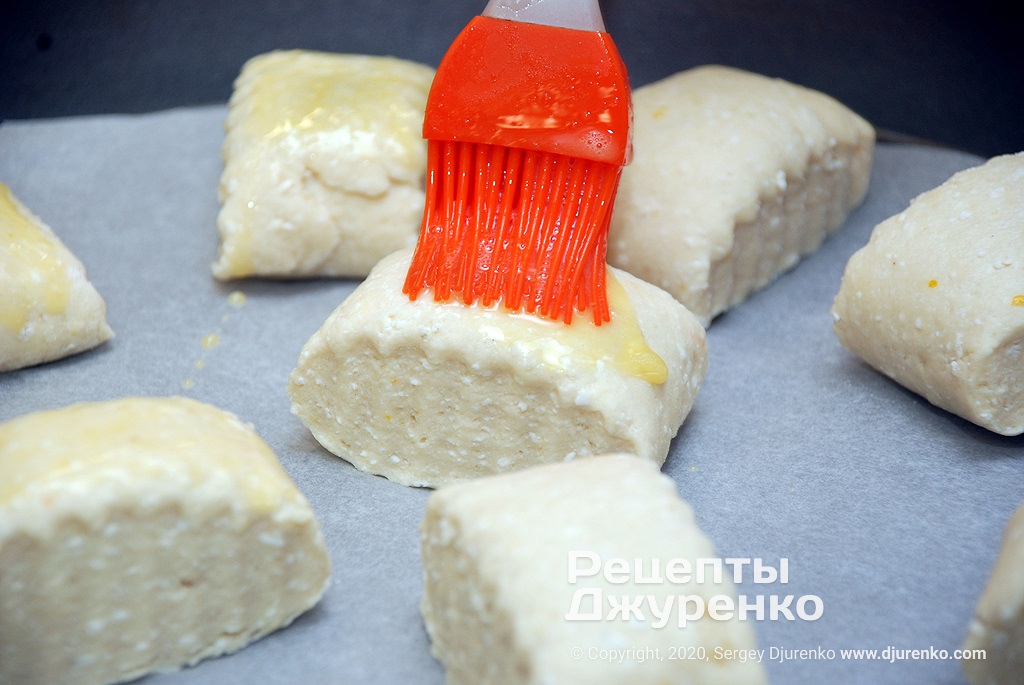
To make the cookies golden, beat the second egg with a fork and brush a thin layer over the tops. Then sprinkle with white sugar.
You can also bake them just like that, or brush the tops with wet hands and sprinkle with sugar.
Baking
Put the baking sheet in the hot oven. If everything is done right, baking usually takes 40–45 mins.
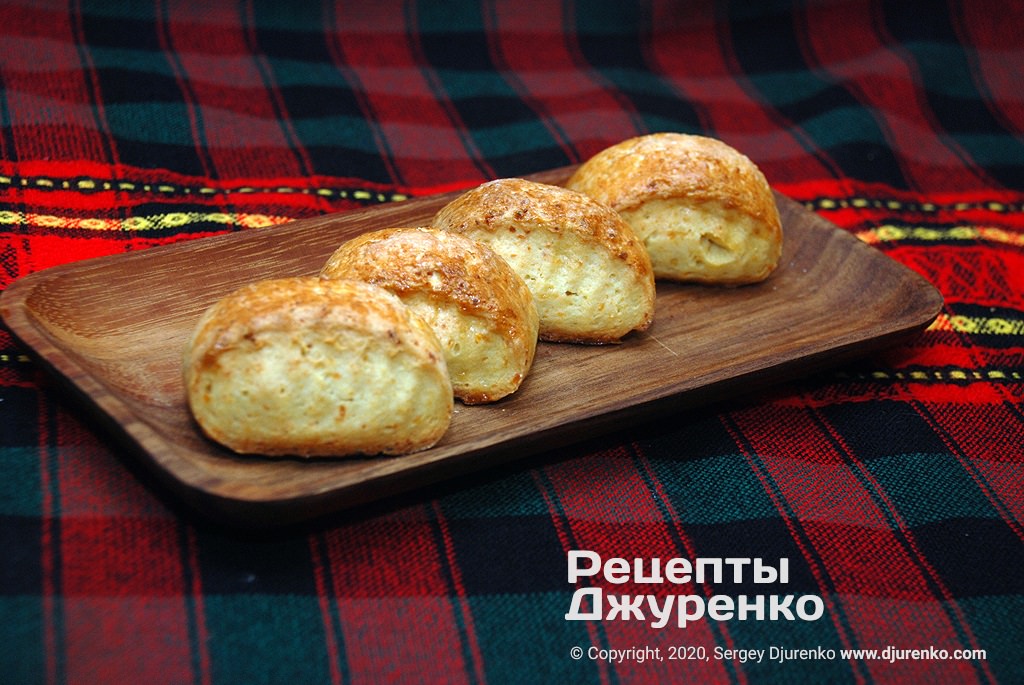
The cookies rise a little thanks to the moisture and baking powder. The tops brown quickly and the sugar crystals caramelize. By the way, the smell fills the whole house.
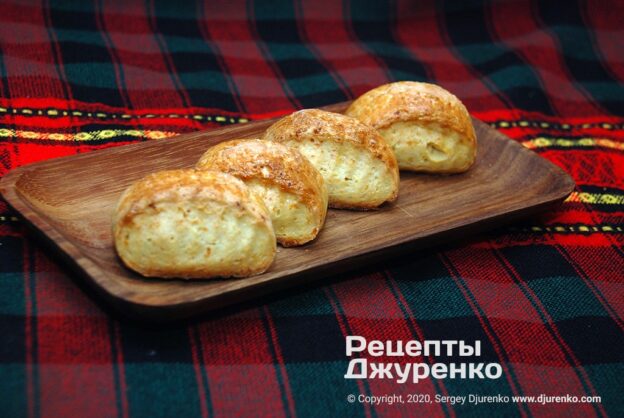
Check doneness by the golden color of the tops and with a toothpick. Let the cookies cool completely.
Serving
Serve with tea on a tray or in a wicker basket. If you like, dust the cookies with powdered sugar. Cover them with a paper or cloth napkin.
The cookies don’t keep long, so it is best to bake just enough for one sitting.
Calories and macros
328 kcal
100 g
- Protein12.7 g16% of kcal
- Fat15 g42% of kcal
- Carbs34.6 g43% of kcal
Calculated from the recipe ingredients, excluding salt and spices. Data: USDA and Matvaretabellen.
How did you like this recipe?
To Get It Right
How much baking powder
We use a third of a sachet meant for 1 kg of flour — that is a dose for roughly 330 g of flour. If your sachet is meant for 500 g of flour, use about two thirds of it (roughly 1.5 tsp).
Sugar to taste
3–4 tbsp of sugar (41–55 g) make cookies that are not very sweet: one reader used 3 tbsp and got soft, airy, mildly sweet cookies. Another made them with 500 g of cottage cheese and used about 4 tbsp.
Add-ins
Besides vanilla and orange zest, raisins, dried apricots and other citrus zest work well in the cottage cheese dough.
Have your own trick for this recipe?
Questions and answers
How do you make cottage cheese cookies fluffy and soft?
Don’t overload the dough with flour: it should be firm but soft and easy to knead by hand. Baking powder adds fluffiness, and over-baked cookies lose their softness — take them out as soon as they are golden and a toothpick comes out dry.
Can you make cottage cheese cookies without butter?
The amount of butter depends on the fat content of the cottage cheese: with rich homemade cottage cheese you can use less. Without any butter the cookies will be drier and denser.
Can you make these cookies with ricotta instead of cottage cheese?
Yes. Cottage cheese and ricotta are made differently, but they are interchangeable in baking. You may need a little more flour if the ricotta is wet.
How do you make crumbly cottage cheese cookies?
These cookies come out soft, like tiny buns. Crumbly cookies are made from shortcrust dough with plenty of butter — for example, homemade shortbread cookies.
Can you make cottage cheese cookies with apples?
Yes: grate or finely chop 1 sweet-tart apple, squeeze out a little juice and stir it into the curd mixture before the flour. The dough will take a bit more flour.