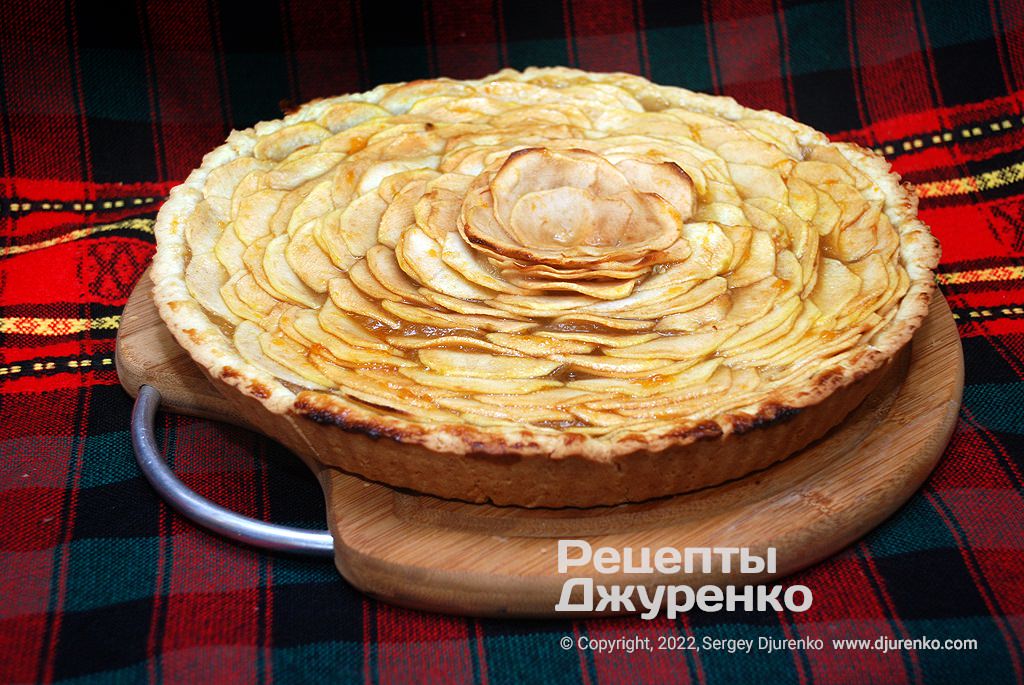
Shortcrust Apple Pie
For the shortcrust apple pie I take the dough at room temperature, not from the fridge: soft, it is easy to press into the pan. The filling is a purée of half the apples with brown sugar and apricot jam, topped with slices of the remaining apples. I bake it at 200°C.
Ingredients
about 2 kg
For the pastry
- Plain flour 2.5 cups (325 g)
- Butter, softened 150 g (or good-quality margarine)
- Egg 1
- Brown sugar 2 heaped tbsp (41 g)
- Lemon zest 0.5 tbsp (3 g)
- Salt a pinch
- Vanilla to taste


For the filling
- Apples (Reinette Simirenko) 2-2.2 kg
- Brown sugar 5 heaped tbsp (100 g)
- Apricot jam or marmalade 4 tbsp (2 for the filling, 2 for glazing) (80 g)


Step-by-step recipe
Preparing the apple pie filling
Making an apple pie on shortcrust pastry is easy and enjoyable. Especially since we made it for our daughter’s birthday – sadly, she’s very far away right now. But modern means of communication work wonders. The apples must be firm, otherwise the top layer of the filling will simply fall apart. And of course, they should be free of bruises or any signs of spoilage.
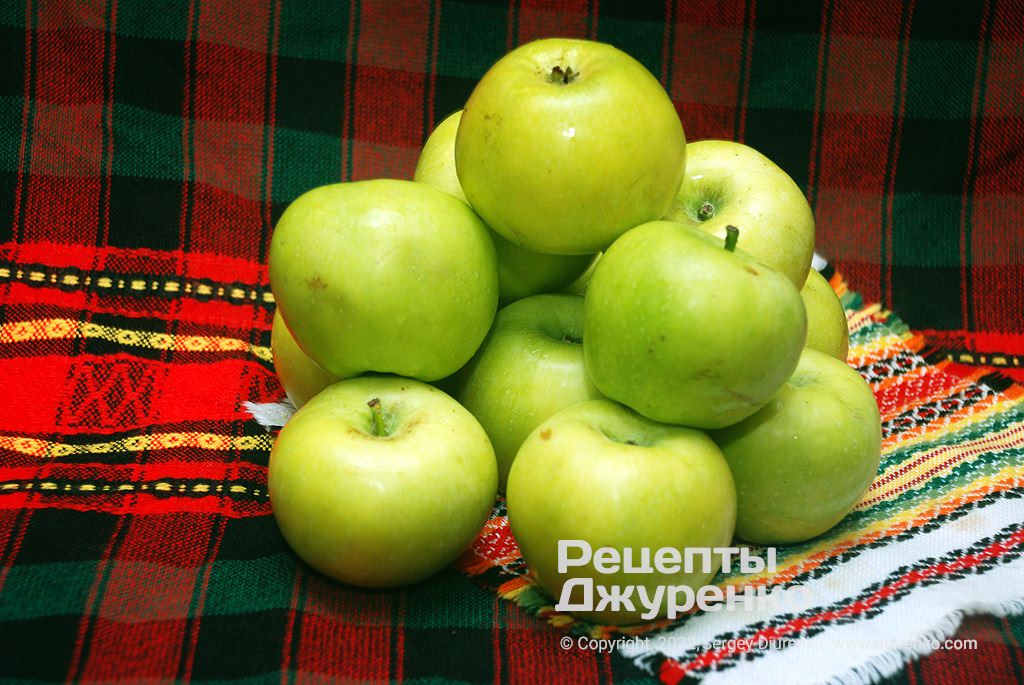
Unfortunately, fresh apples quickly turn brown in the air once peeled. So work quickly and carefully.
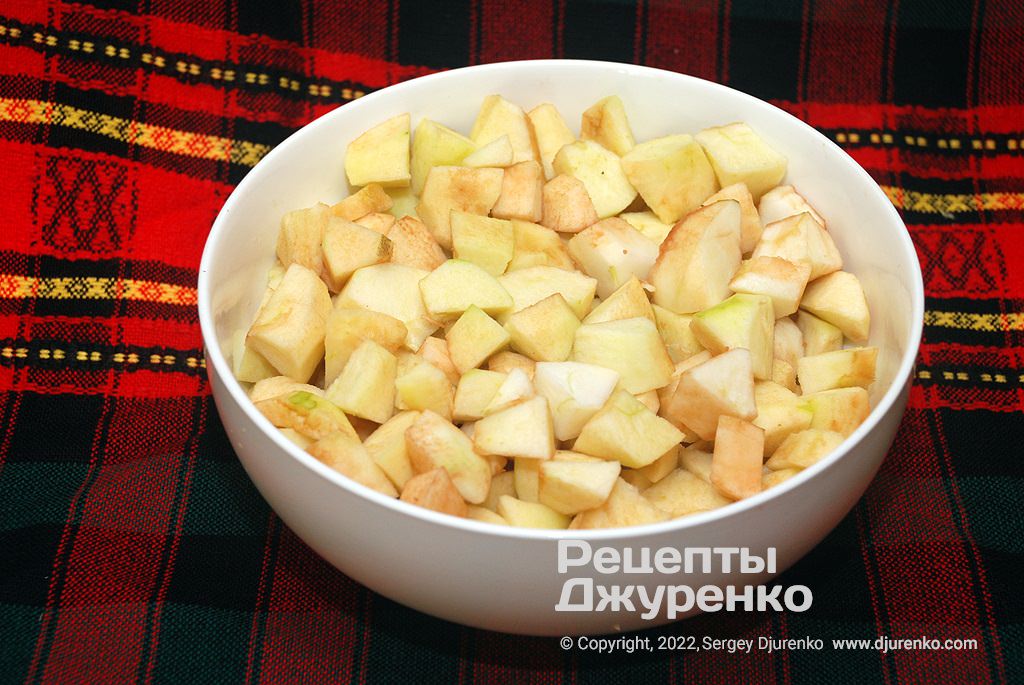
Divide the apples into two halves. One half is needed for arranging on top of the filling just before baking. The other half is the base of the filling – a marmalade or thick purée made from the flesh. Peel half of the apples, remove the seeds and any damaged parts. Cut the apples into cubes.
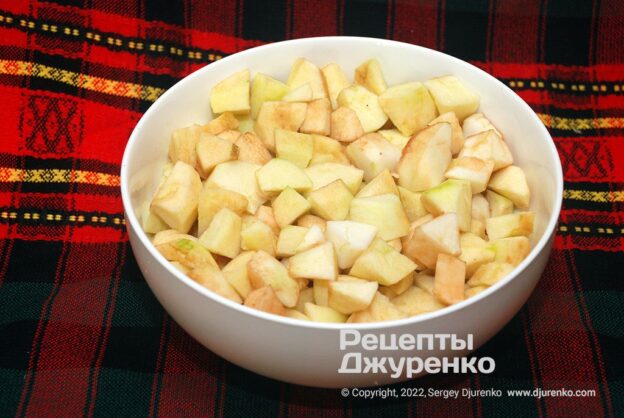
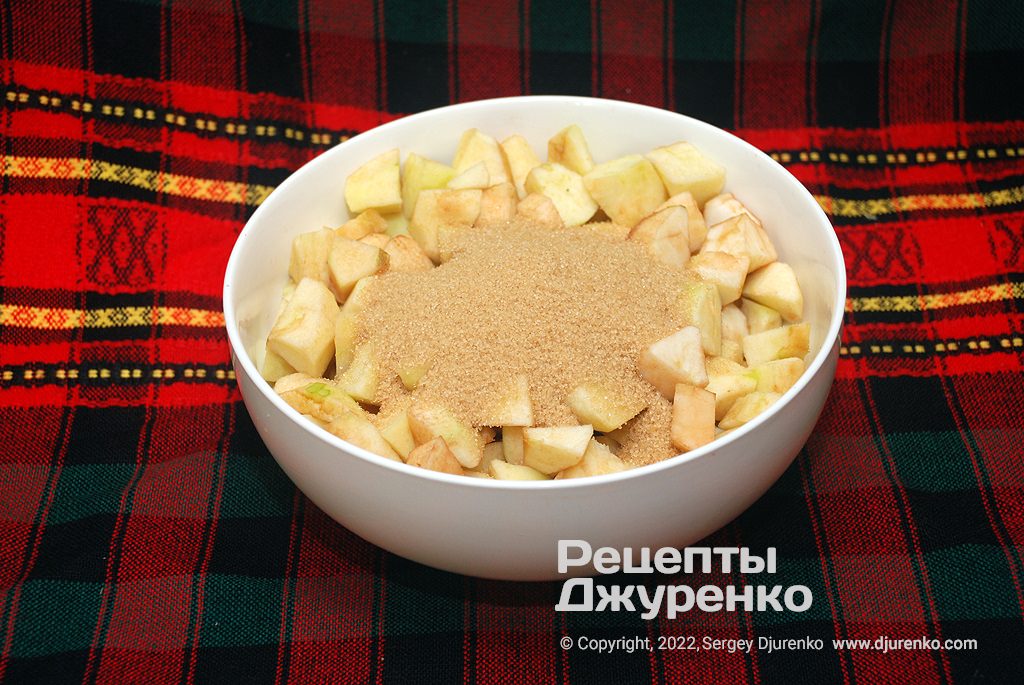
Put the diced apples into a ceramic bowl, add 5 heaped tbsp of brown sugar (100 g) and stir. You can use white sugar only, but the filling will taste different. Alternatively, mix white and brown sugar – the shortcrust apple pie will be tastier. Cover the bowl with an upturned plate and put it in the microwave. Heat the apples at full power for 12–15 mins. Then stir and give them another 3–4 mins – the apples should be completely soft.
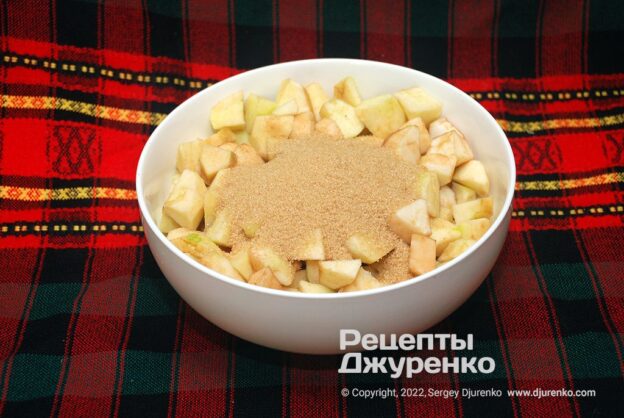
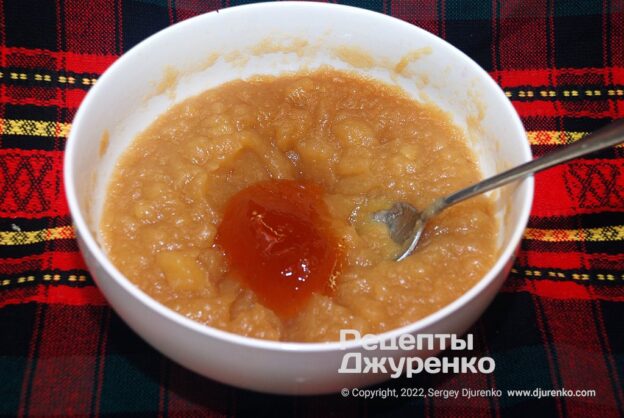
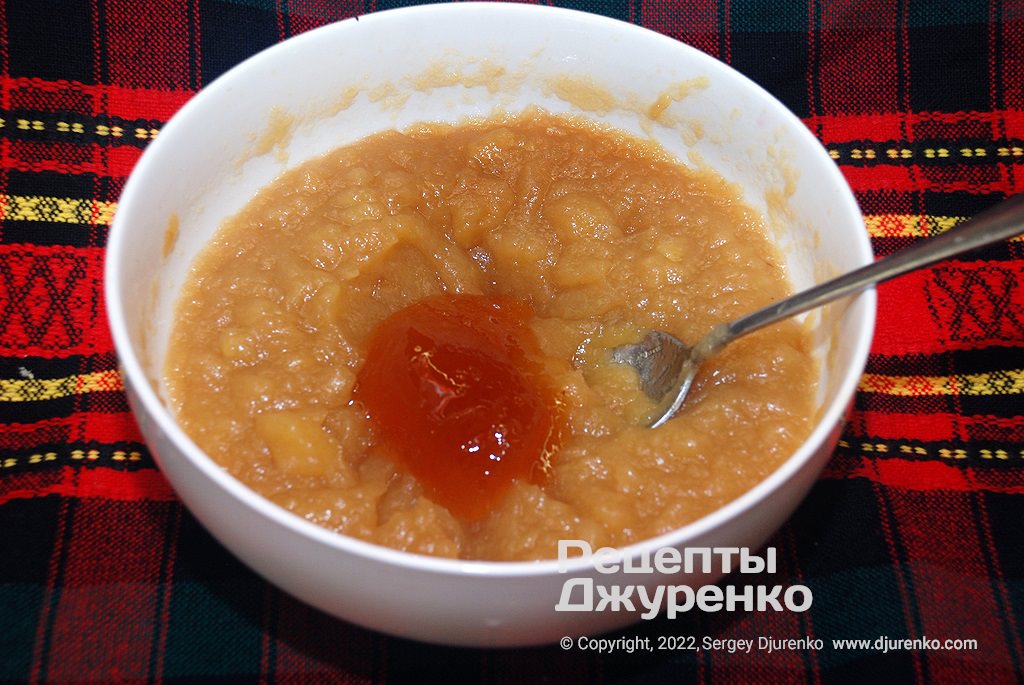
Add 2 tbsp of apricot marmalade or jam to the apple purée and stir. Use a hand blender to blend everything until completely smooth. Cool the filling base to room temperature. To do it quickly, you can stand the bowl of filling in ice water.
Making the shortcrust pastry
While the apple purée for the filling is cooking, make the shortcrust pastry. It’s easy and barely differs from the one used for a grated pie or a quiche.
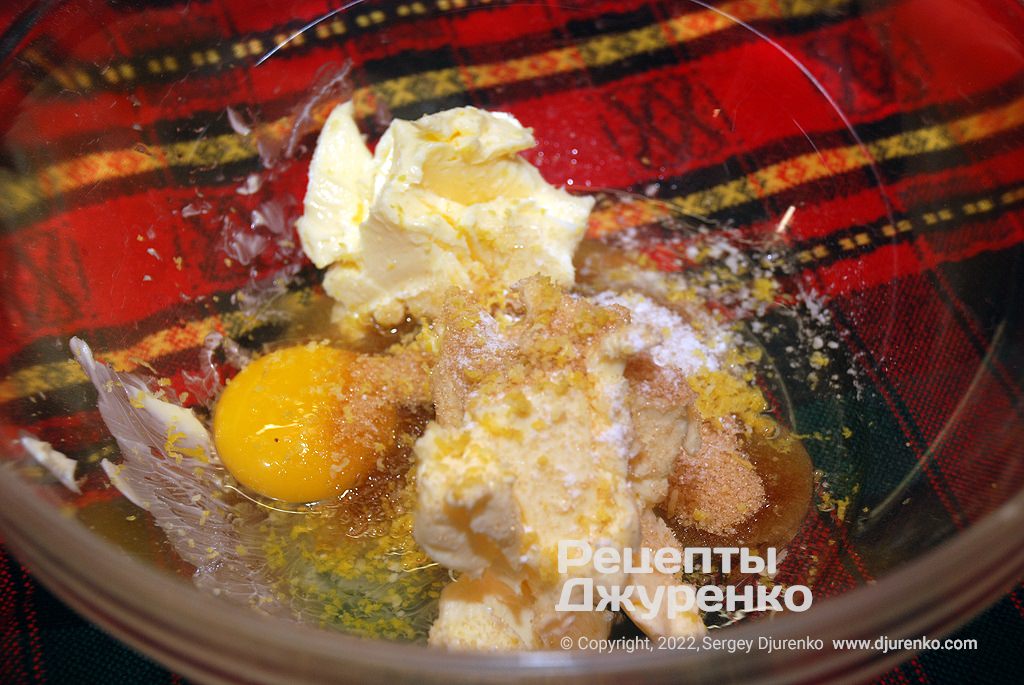
Chop the softened butter (you can substitute good-quality margarine) with a knife into a large bowl. Add one egg, a pinch of salt, vanilla to taste and grate in 0.5 tbsp of lemon zest (3 g). Then add 2 heaped tbsp of brown sugar (41 g). Mash everything with a fork.
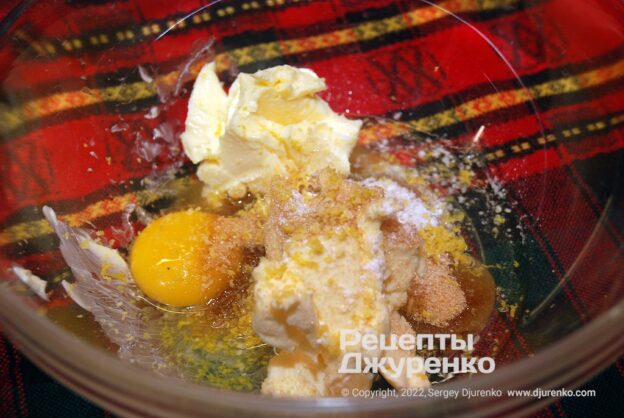
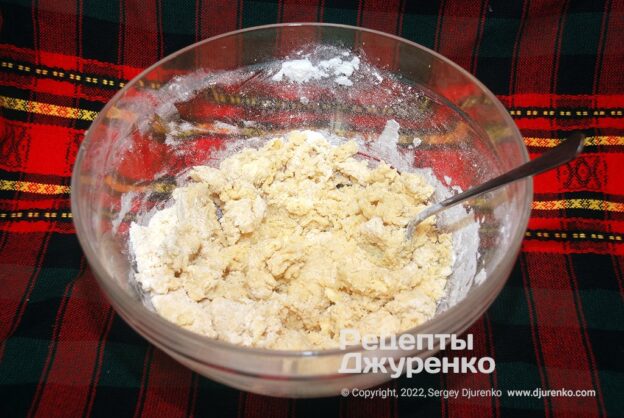
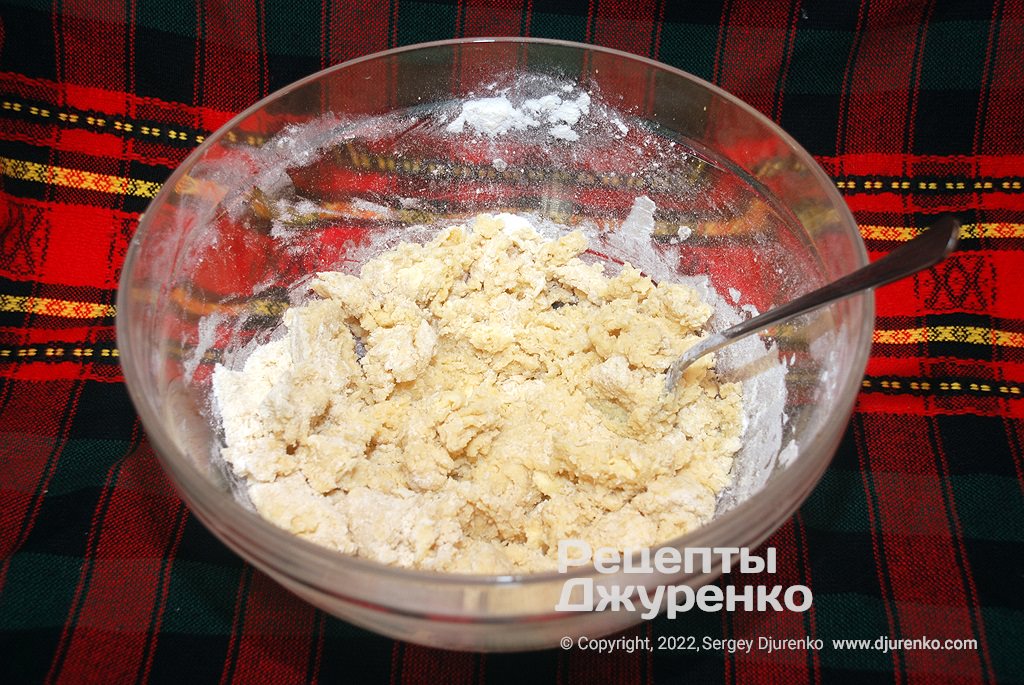
Sift the flour – you’ll need about 2.5 cups. First add 2 cups of flour (260 g) to the bowl with the butter mixture and start kneading. Since no water goes into the pastry, the egg and butter are its base. Once the flour is distributed and the dough turns crumbly, knead it by hand. While kneading, add the remaining flour in small portions until the dough stops sticking and becomes soft and very pliable.
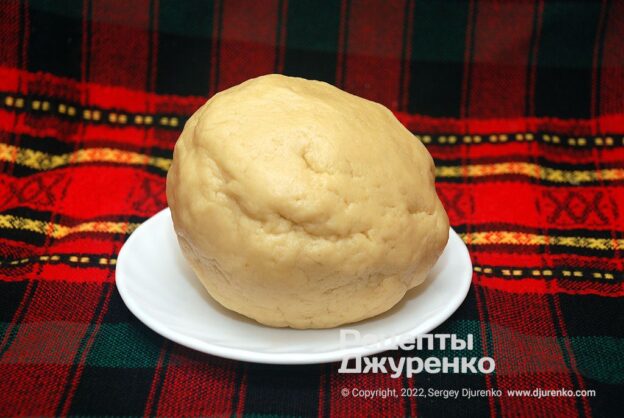
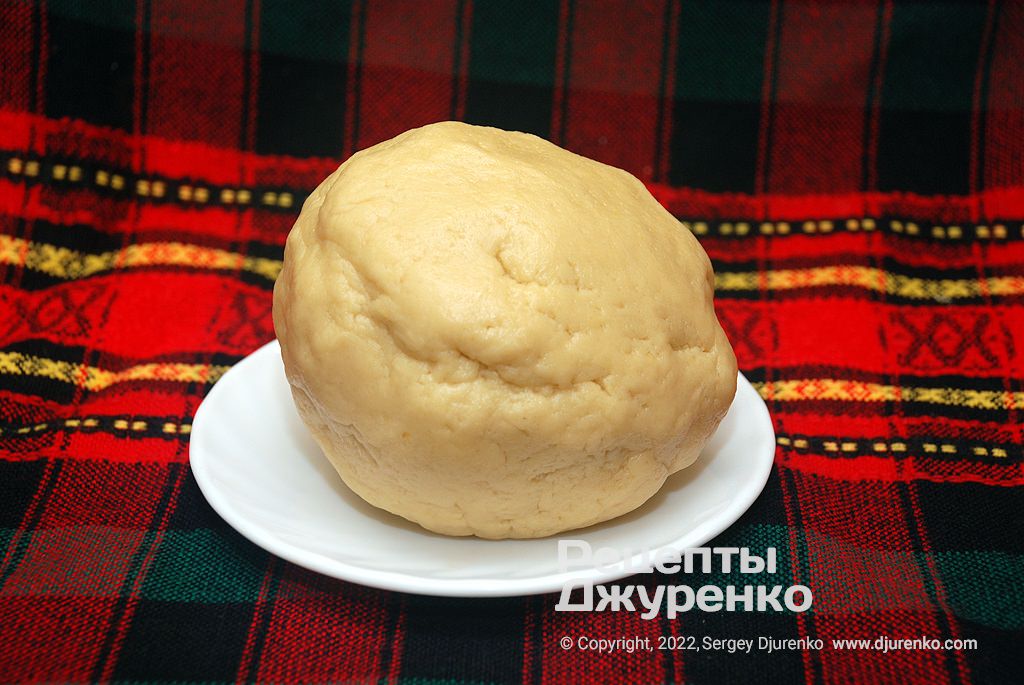
Roll the dough into a ball. Most recipes have you put the dough in the fridge to firm up. Frankly, spreading chilled dough over the tin is quite a struggle. That’s handy for a grated pie – it grates beautifully. But to line the tin I use the dough at room temperature: it’s extremely soft and presses out perfectly. The warmth of your hands helps too.
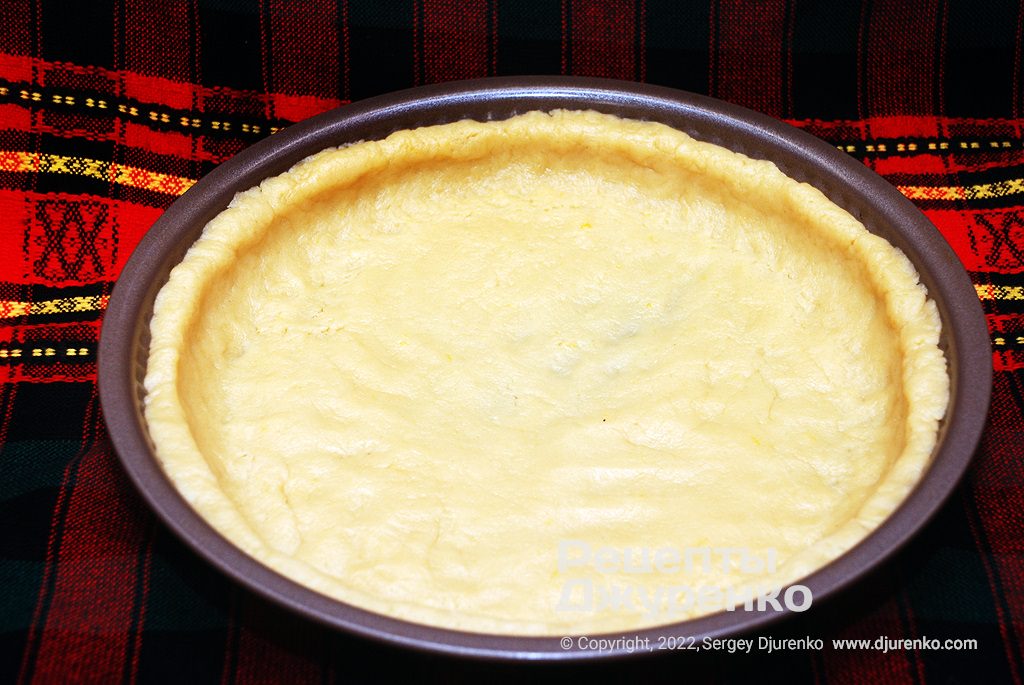
Slowly press the soft dough with your fingers over the base of the tin (about 26 cm in diameter). I recommend a tin with a removable base – that’s the ideal option. Given how fragile baked shortcrust is, such a tin will reliably keep your shortcrust apple pie from breaking. By the way, there’s no need to grease the tin at all – the pastry contains plenty of butter. Form a high rim so all the filling fits. Prick the pastry with a fork.
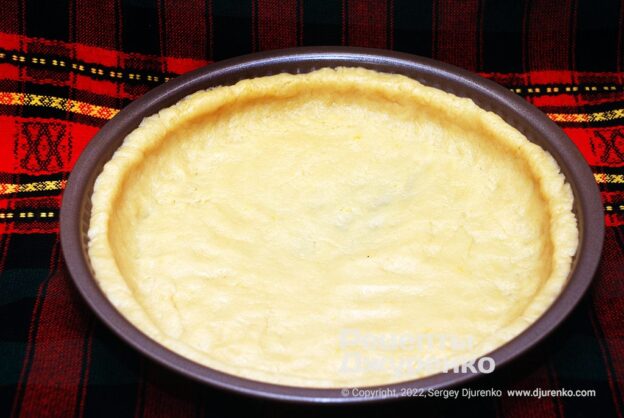
Put the tin with the pastry in the fridge while the filling cools.
Assembling the shortcrust apple pie
It’s crucial that the filling has cooled to room temperature. Otherwise, as soon as it touches the pastry, the butter will start to melt – and that mustn’t happen.
Spread all the prepared fruit purée over the pastry, right up to the rim. Smooth the surface with a spoon and spread a little purée up the inside of the rim.
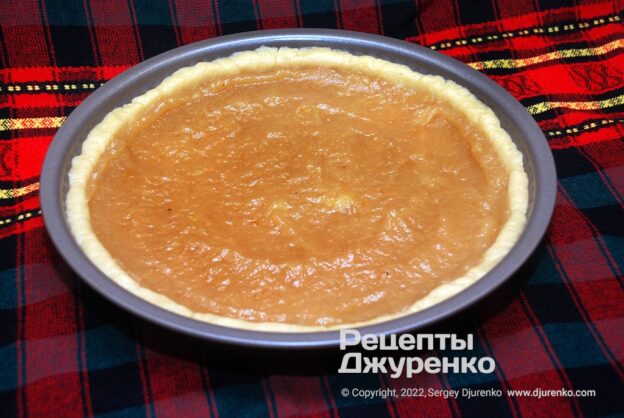
The next stage is the top layer of thinly sliced apple. Peel the remaining apples, cut them in half and carefully remove the core with the tip of a sharp knife. Work quickly, as the apples turn brown and you don’t really want to use lemon juice. Slice the apples 1–1.5 mm thick. Of course, you can do it with a knife, but that’s hard and tiring. Use a mandoline slicer – a cheap plastic gadget with a blade that lets you effortlessly slice a kilo of apples into the thinnest slices.
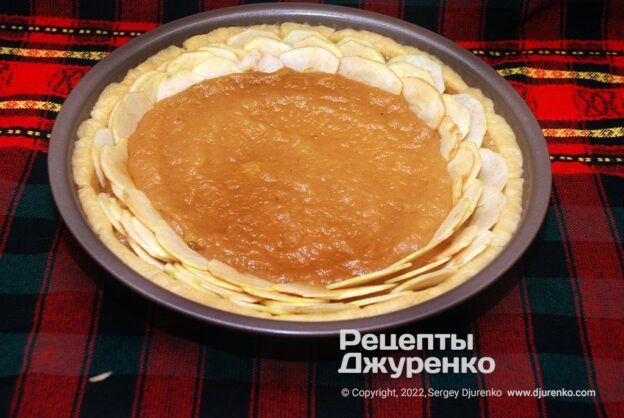
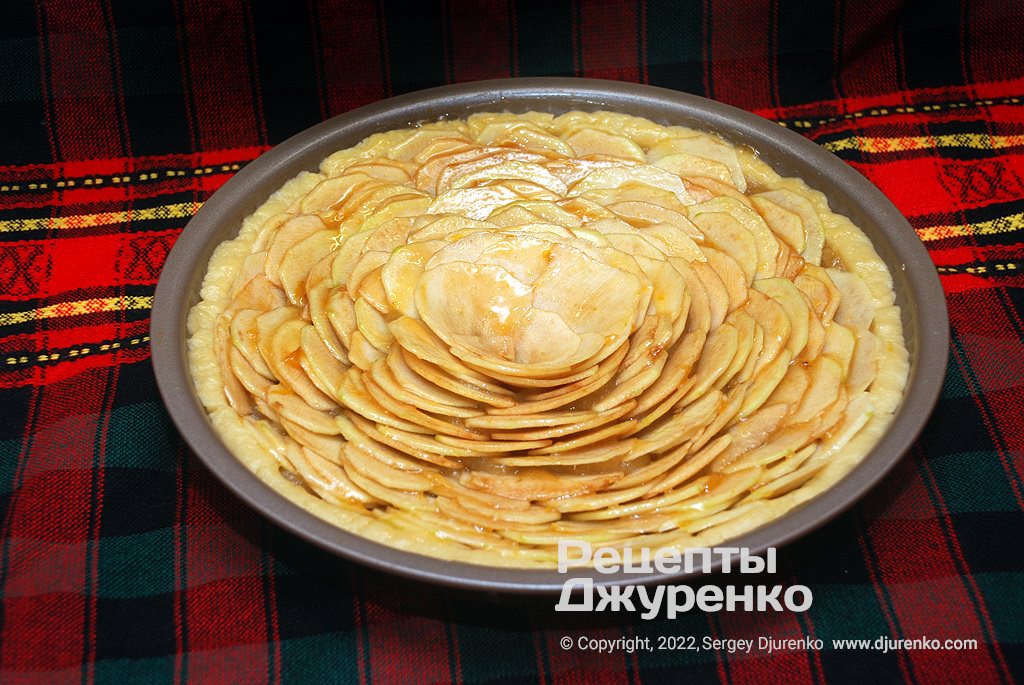
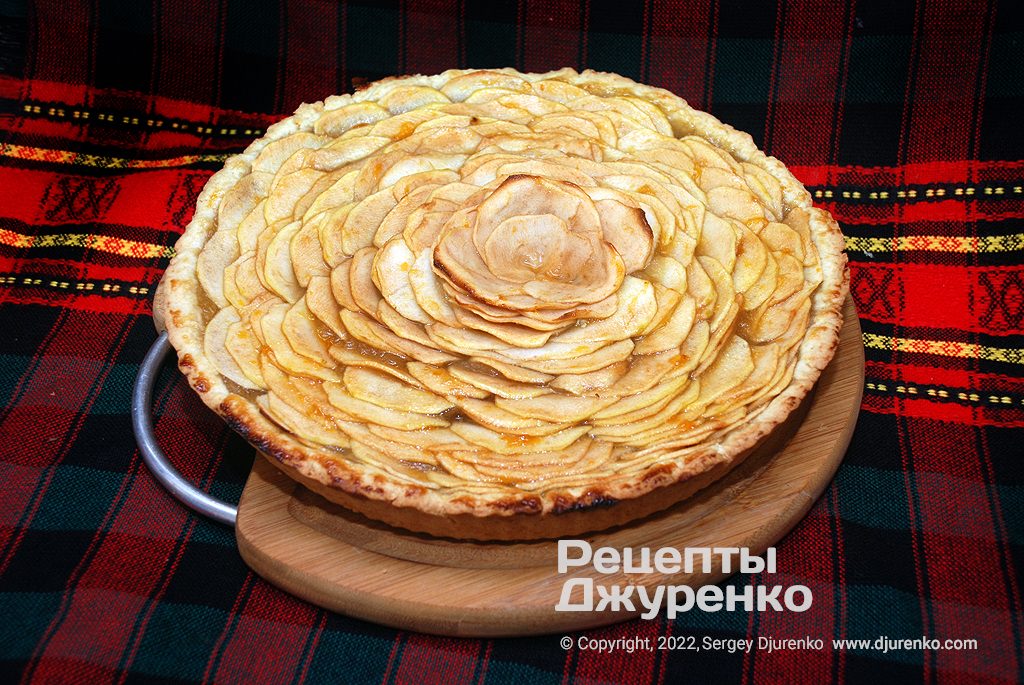
Then comes the fun part – arranging them. Starting from the edge, push the apple slices into the filling and work your way round in circles to the middle. Place the slices close together without big gaps.
When we started, this step seemed the hardest and likely to drag on for a while. In the end it took 10 mins, no more. Just slice a mountain of apple and don’t get distracted.
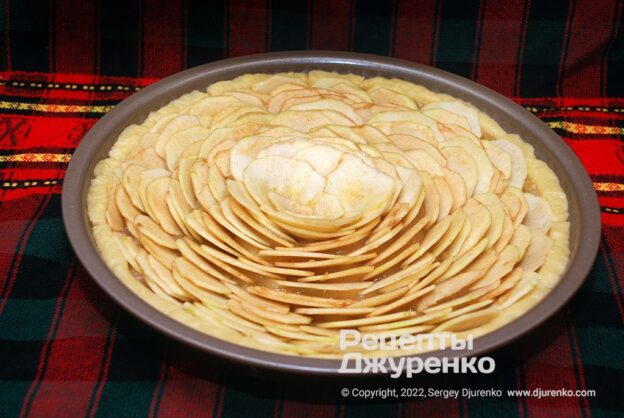
When the slices cover the whole surface, a hollow will remain in the centre of the pie. Take 3–4 large slices, roll them into a cone and insert it into the hollow, pushing it well down into the filling. That makes the centre of the “flower”.
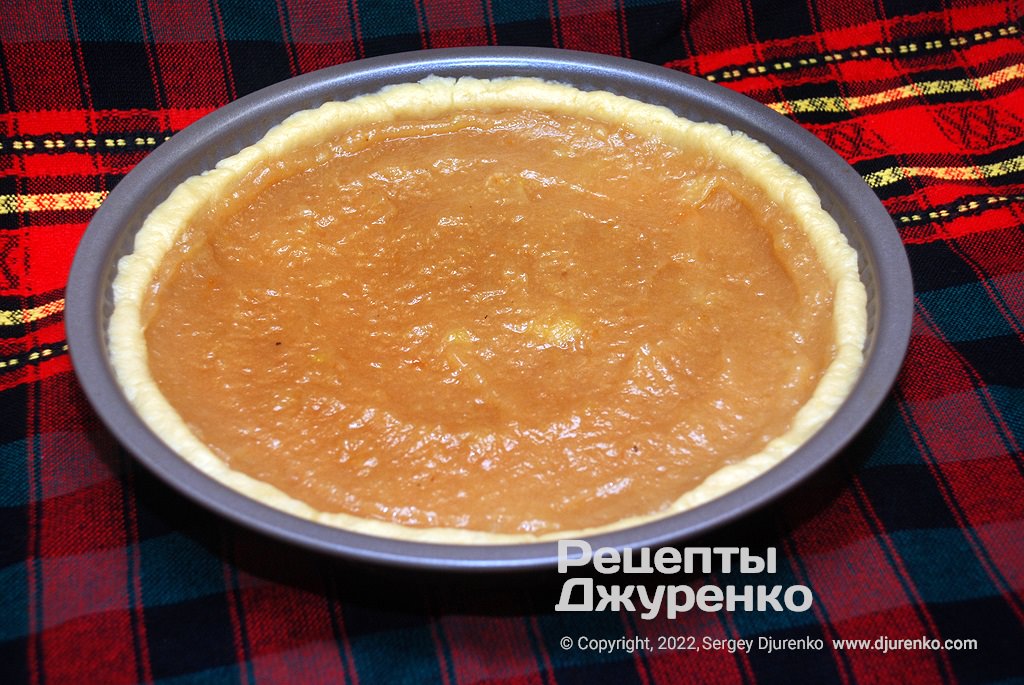
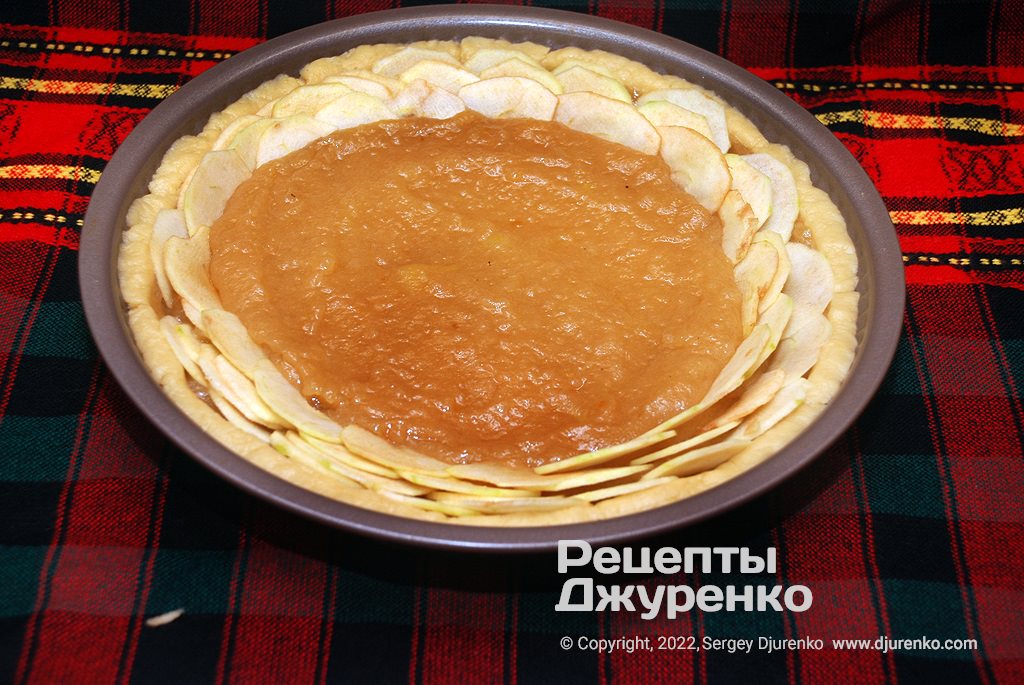
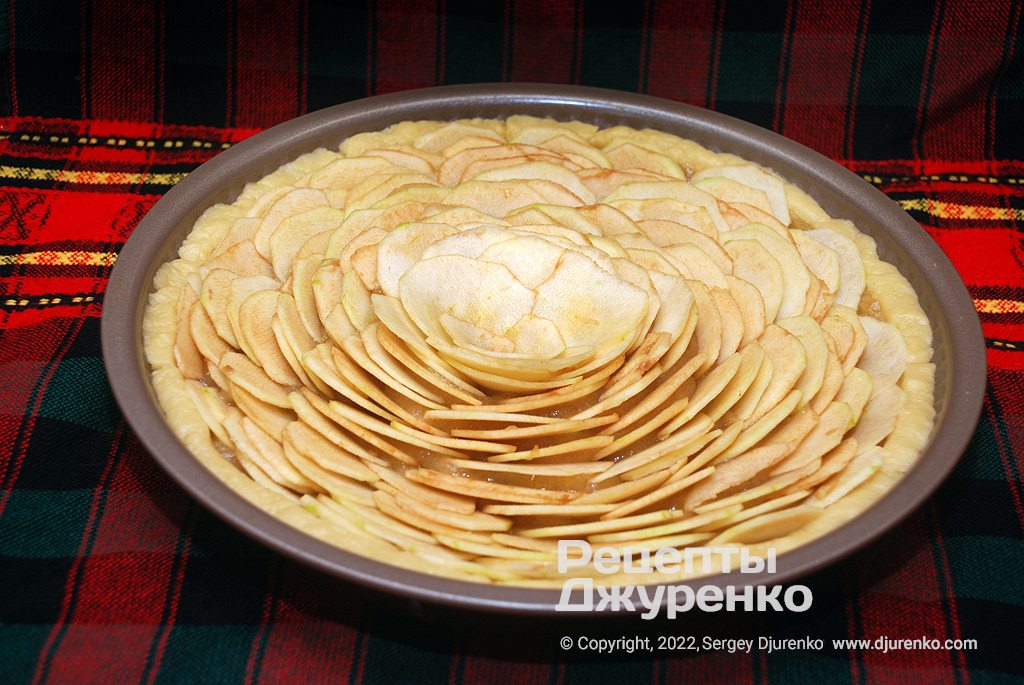
How to bake a shortcrust apple pie
Turn on the oven and preheat it to 200°C. Put 2 tbsp of apricot jam (39 g) into a small cup and blend it with a hand blender until smooth. Brush the surface of the apple layer with a silicone brush. Keep the remaining jam – you’ll need to glaze once more.
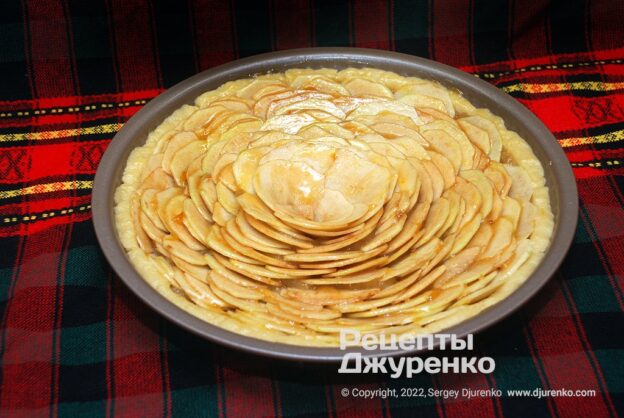
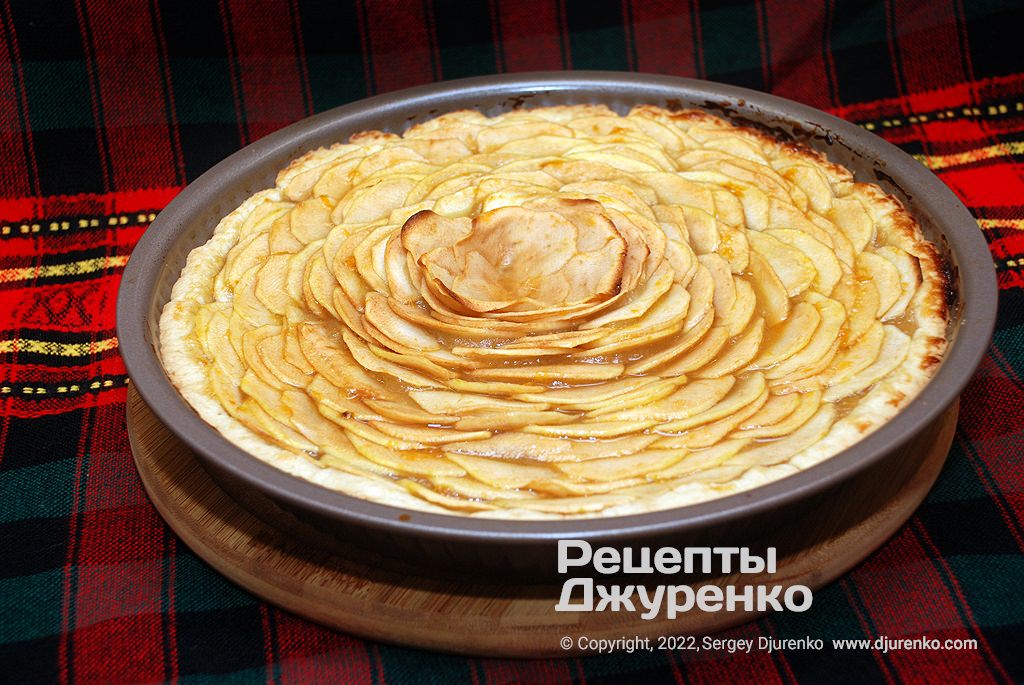
Put the tin with the shortcrust pie into the oven (middle shelf) for 25 mins. If your oven bakes unevenly, turn the tin every 10 mins. Shortcrust pastry usually bakes in 30 mins, but with this much filling it will take a little longer. After 25 mins, take the tin out of the oven and glaze the apples again with apricot jam.
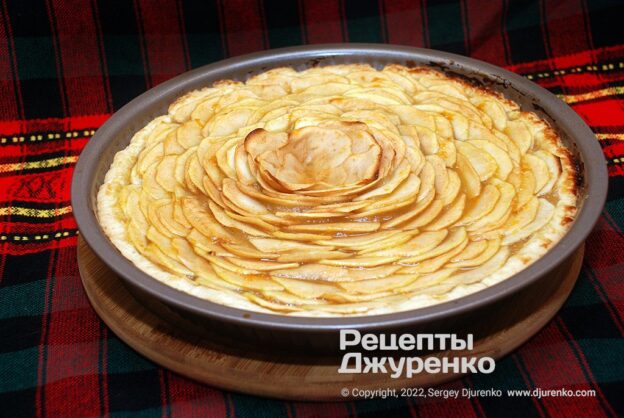
Return the tin to the oven. After 10–15 mins the top of the pie will start to brown – it’s done. To be sure, check that the pastry is baked through – test its edge next to the filling, at the very top.
Serving
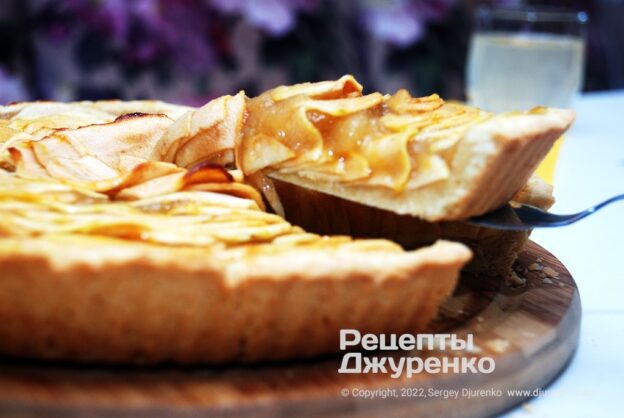
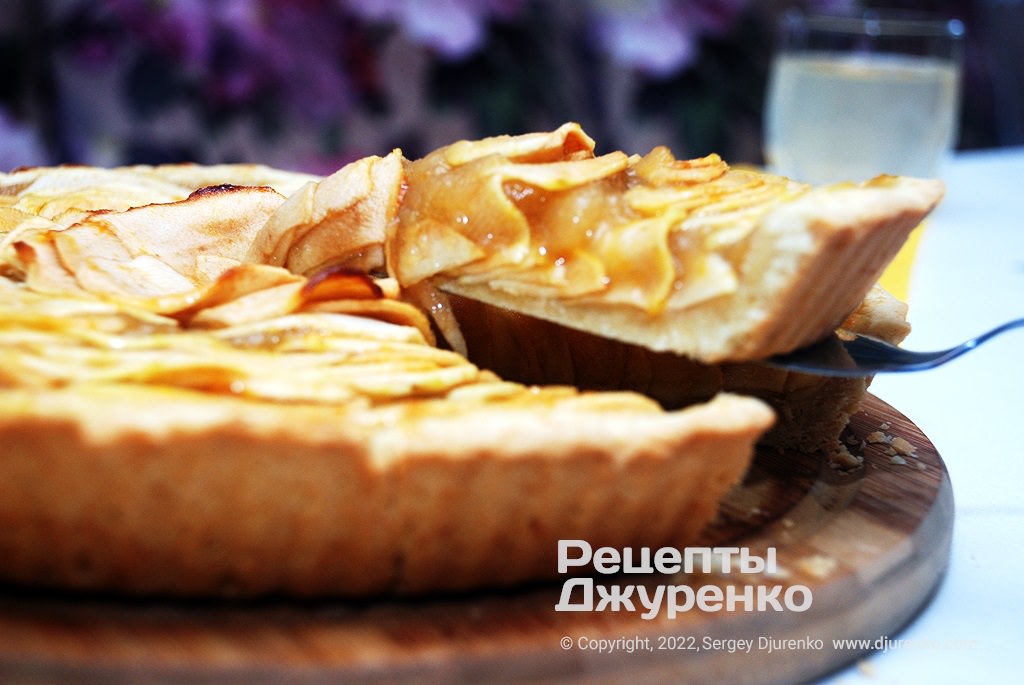
Let the pie cool in the tin. That can take a while, since the butter and sugar in the pie hold the heat well. Then remove it from the tin and transfer it to a wooden pizza board. Cut it carefully – shortcrust pastry is very fragile and crumbles readily. Use a chef’s knife to cut the whole pie into portions. Or, alternatively, cut with the very tip of a small paring knife, holding it vertically.
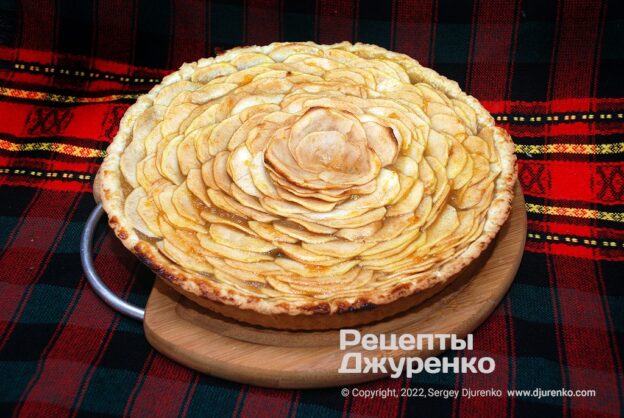
Put slices of pie on plates and serve with tea. The pie will keep in the fridge for a while – if you can resist eating it straight away. By the way, it’s a great bake to take when you’re visiting – such a gift is always welcome.

How did you like this recipe?
Rate it with one tap.
Calories and macros
171 kcal
100 g
- Protein1.9 g5% of kcal
- Fat5.3 g29% of kcal
- Carbs26.6 g66% of kcal
Calculated from the recipe ingredients, excluding salt and spices. Data: USDA and Matvaretabellen.