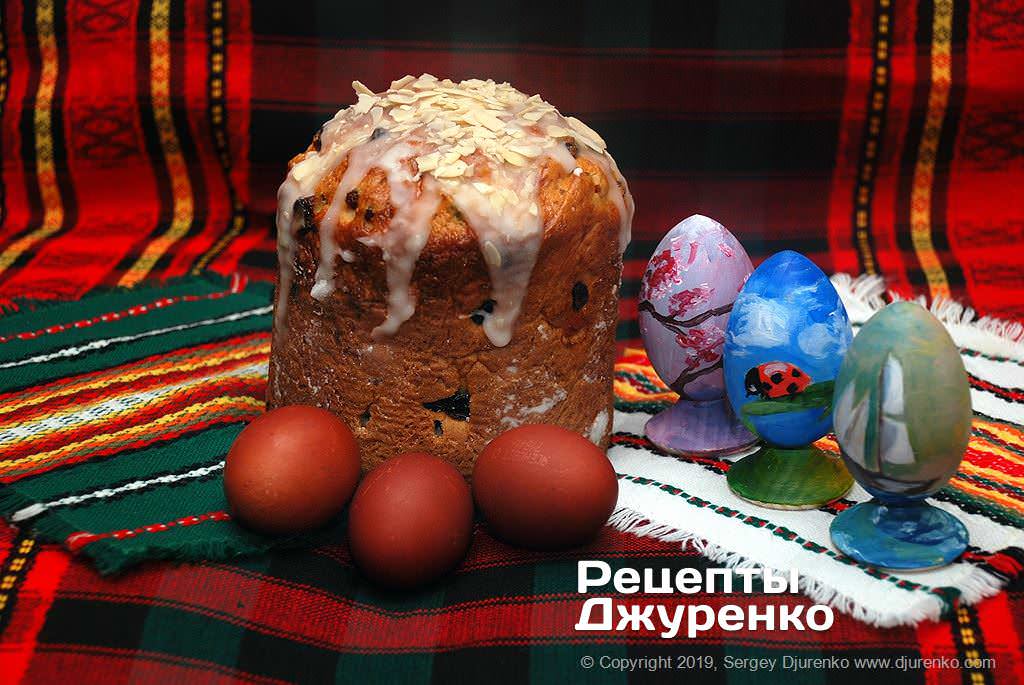
Panettone Easter Bread (Paska)
Ingredients
3 pcs
- For the starter and dough
- Wheat flour 1-1.2 kg (1 cup of it goes into the starter)
- Cream (10-15%) 400 ml (2 cups)
- Fresh yeast 50 g
- Eggs 8 (3 whole and 5 yolks)
- Butter 200 g
- Sugar 1 cup (180 g)
- Ground ginger, cinnamon, nutmeg 0.5 tsp each
- Brandy or cognac 30 ml
- Vanilla (liquid extract) to taste
- For the add-ins
- Raisins, candied fruit 300-400 g
- Rum, brandy or cognac for soaking 100 ml
- Hot water enough to cover the raisins and candied fruit
- For brushing
- Egg 1
- For the glaze and decoration
- Powdered sugar 150-200 g
- Boiling water 2 tbsp
- Lemon juice 1 tbsp (optional)
- Flaked almonds for garnish
Step-by-step recipe
Making the starter
Many people have trouble with dough and baking, but this recipe is quite simple and not difficult at all. You could say it is a basic dough for sweet, rich baking, while the nuances, fine points and personal touches are different for everyone. We liked the Italian panettone, and our festive bread is quite close to it. Give it a try, it is easy and it will work.
The quality of the starter determines the quality of the dough. Take this step seriously and don’t rush. Decide in advance where you have a warm spot for the starter and dough to rise. Keep in mind that the holiday is in spring, and your home may be chilly.
Make the starter in a large 5-6 liter bowl. Warm 2 cups of 10-15% cream until it is noticeably warm but not hot. Crumble 50 g of the freshest fresh yeast and mix it into the cream, breaking up any lumps. Add 1 cup of sifted flour (1 kg) and stir well. Cover the bowl with a cloth, or wrap it in a blanket, and put it in a warm place for 1 hour.
Making the rich dough
Take 200 g of the best butter out of the fridge ahead of time so it softens completely.
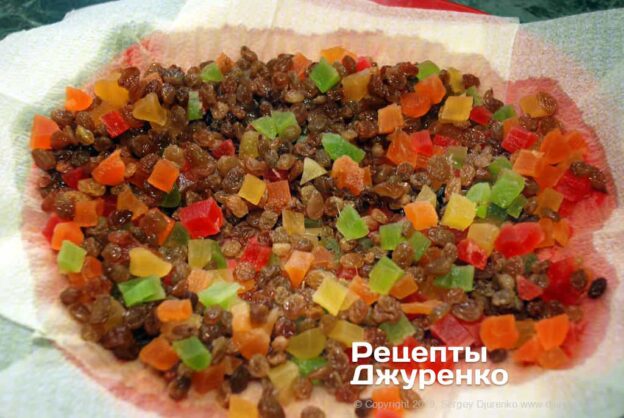
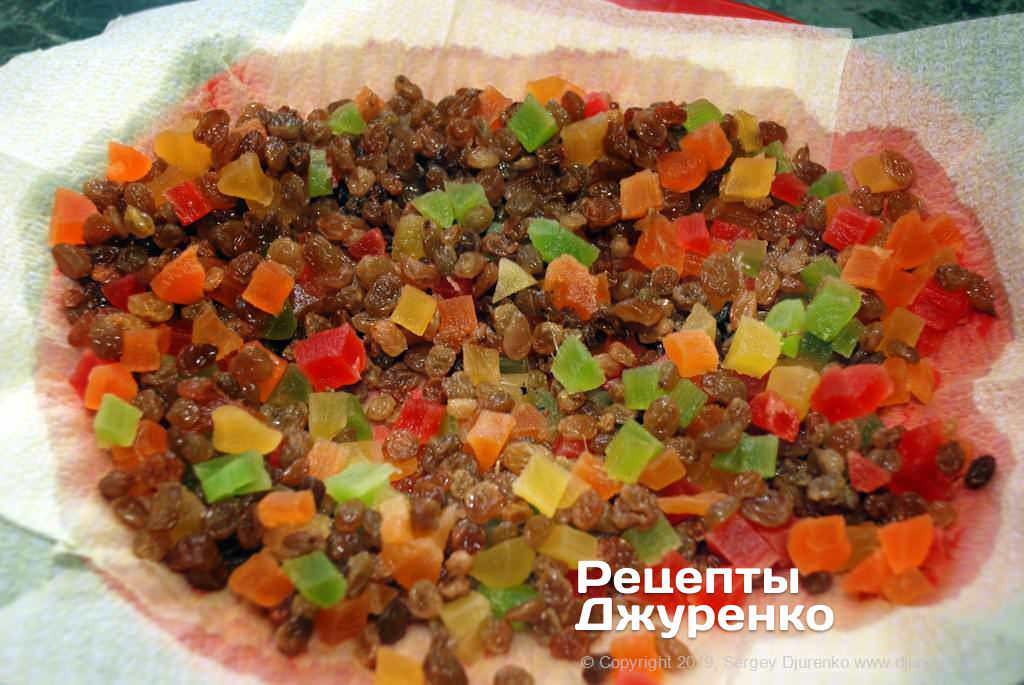
While the starter is rising, soak the raisins and candied fruit. You can use dark or golden raisins, but seedless ones are best. For candied fruit, use pineapple, papaya, melon and so on. Cut the candied fruit into pieces slightly bigger than the raisins. Put the raisins and candied fruit in a bowl and pour over 100 ml of fragrant alcohol: rum, brandy or cognac. Then add hot water to cover the dried fruit completely. After an hour, drain the liquid and spread the raisins and candied fruit on a napkin to dry.
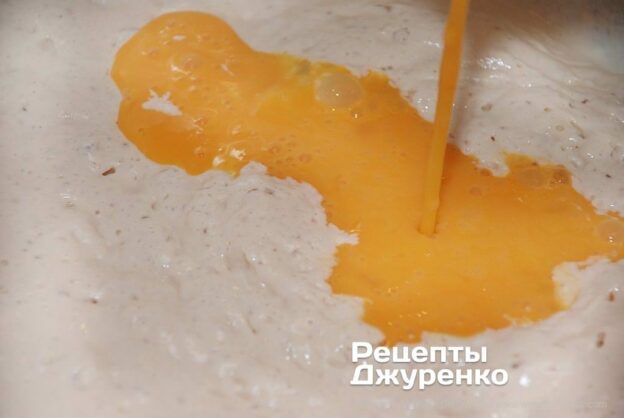
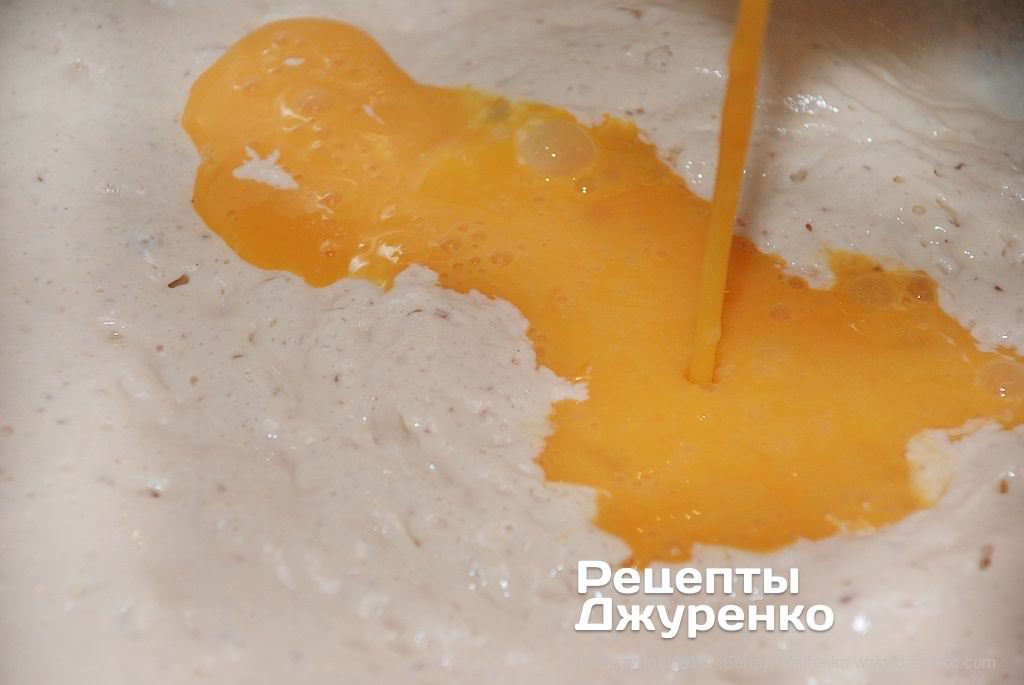
Pour the eggs and yolks into the starter. The starter has risen well and grown in volume, with bubble-like humps on top. This means the yeast is working actively and you can make the dough. You need three whole eggs and five yolks, so carefully separate the whites from the yolks. By the way, you can whip the whites for meringue. Mix the yolks with the whole eggs, pour them into the starter and stir thoroughly until smooth. The yolks give the Easter bread a pleasant color inside.
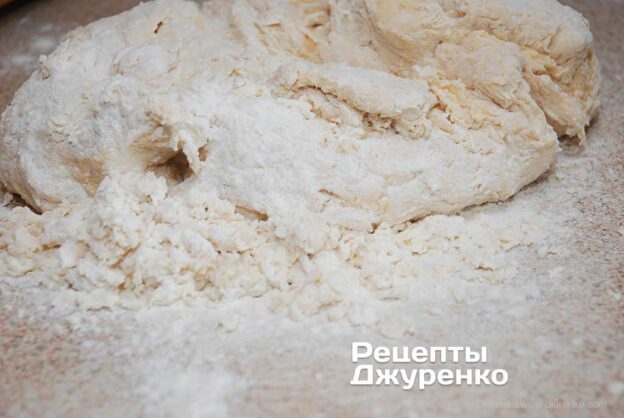
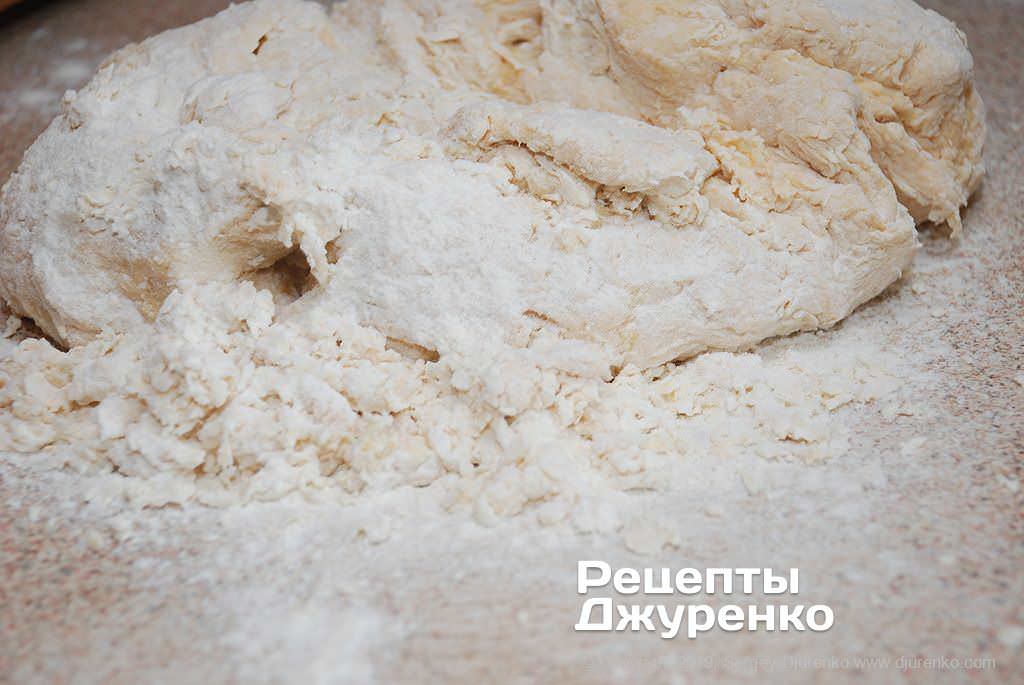
Knead the dough. Add the flour gradually, mixing the dough in the bowl, then, once it stops sticking to your hands, continue on the table. In total you need 1-1.2 kg of flour. Yeast bread dough is similar in consistency to poppy seed bun dough, or slightly firmer. It should not stick to your hands. By the way, don’t let the dough cool down, and knead it in a warm room.
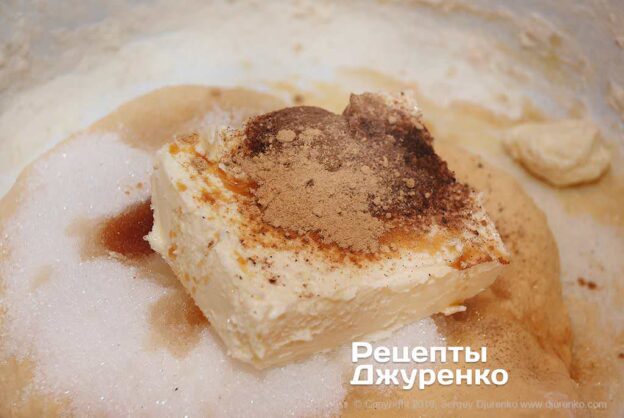
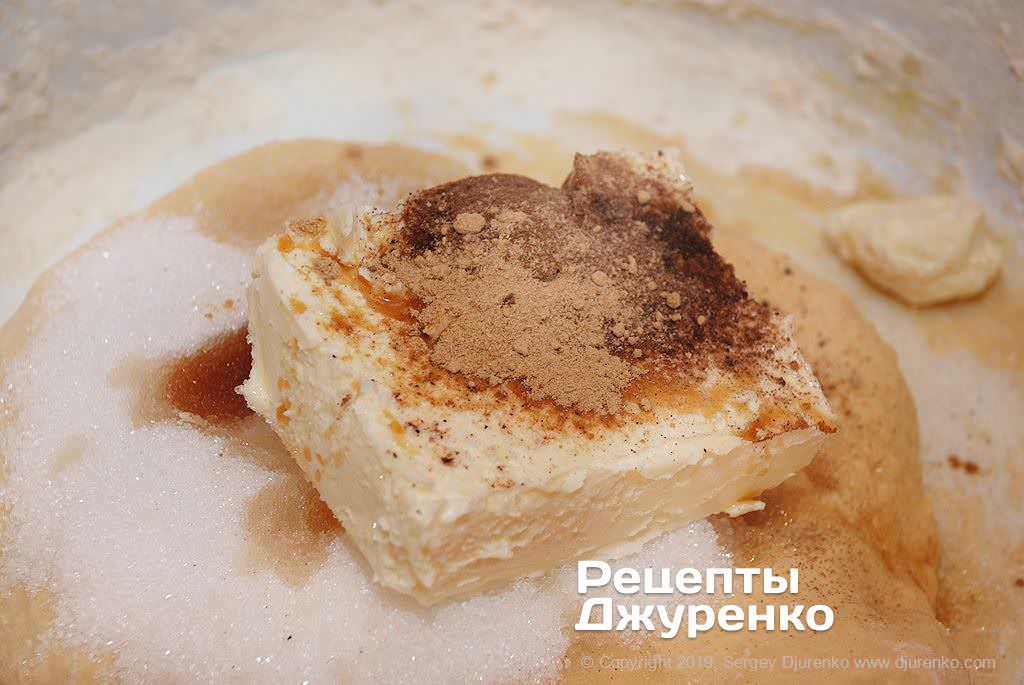
Work in the butter, sugar and flavorings. Add 1 cup of sugar (180 g), 200 g of softened butter and the spices to the kneaded dough: 0.5 tsp each of ground dried ginger, cinnamon and nutmeg. Add 30 ml of brandy or cognac and the liquid vanilla extract to taste.
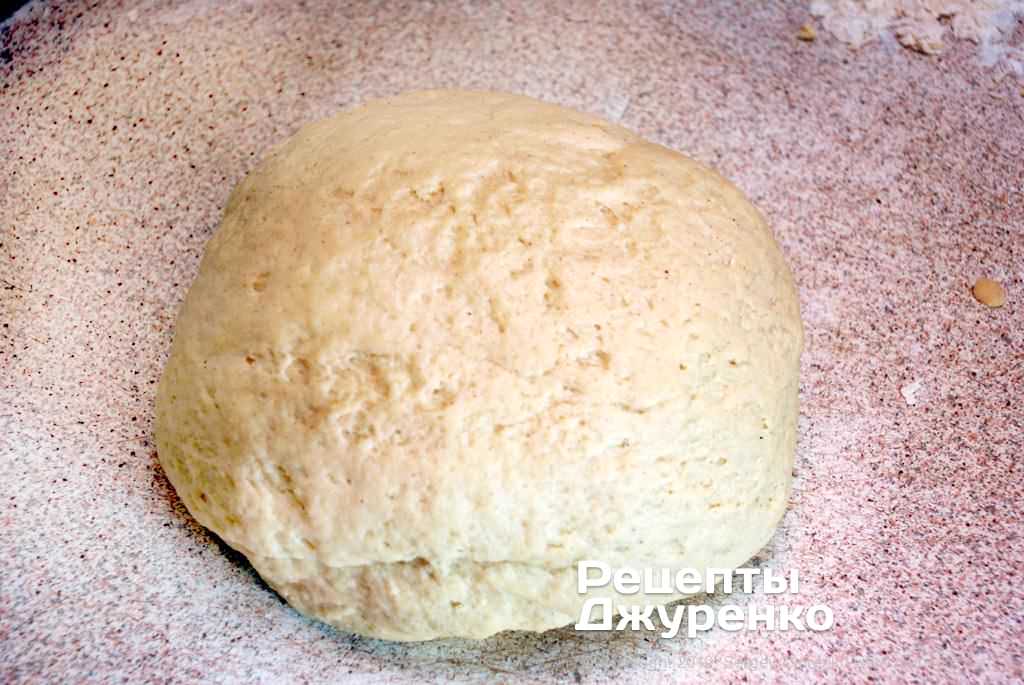
Next, and this is important, knead the dough very thoroughly. The butter and sugar have to be worked into the dough, which will be sticky at first. Add flour if needed. The dough should turn out very smooth, without lumps. It should be firm but easy to knead by hand. Shape the dough into a ball and put it in the bowl.
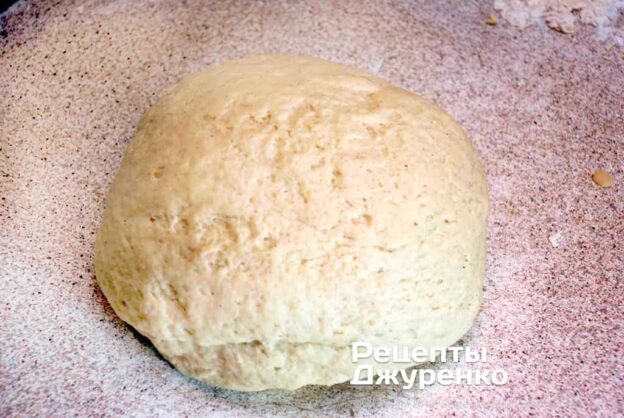
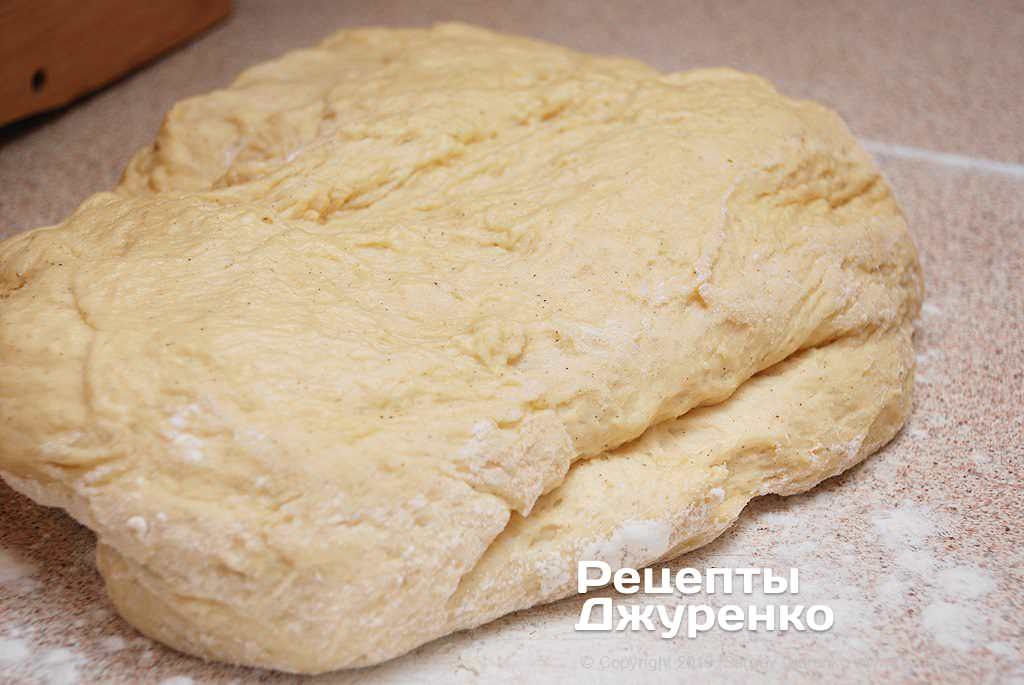
Let the dough rise twice. Wrap the bowl in a blanket and put it in a warm place. After 45 mins, knead the dough down by hand. If necessary you can add a little flour, but usually that won’t be needed. Shape the dough into a ball again and return it to the warm place. After another 45 mins, knead it down again. The rising time can be longer. What matters is that the dough rises well, roughly doubling.
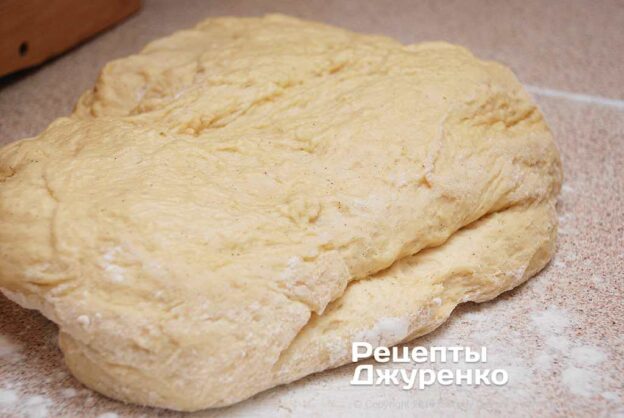
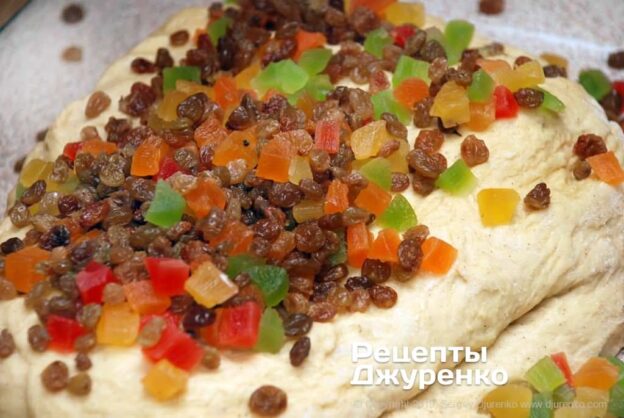
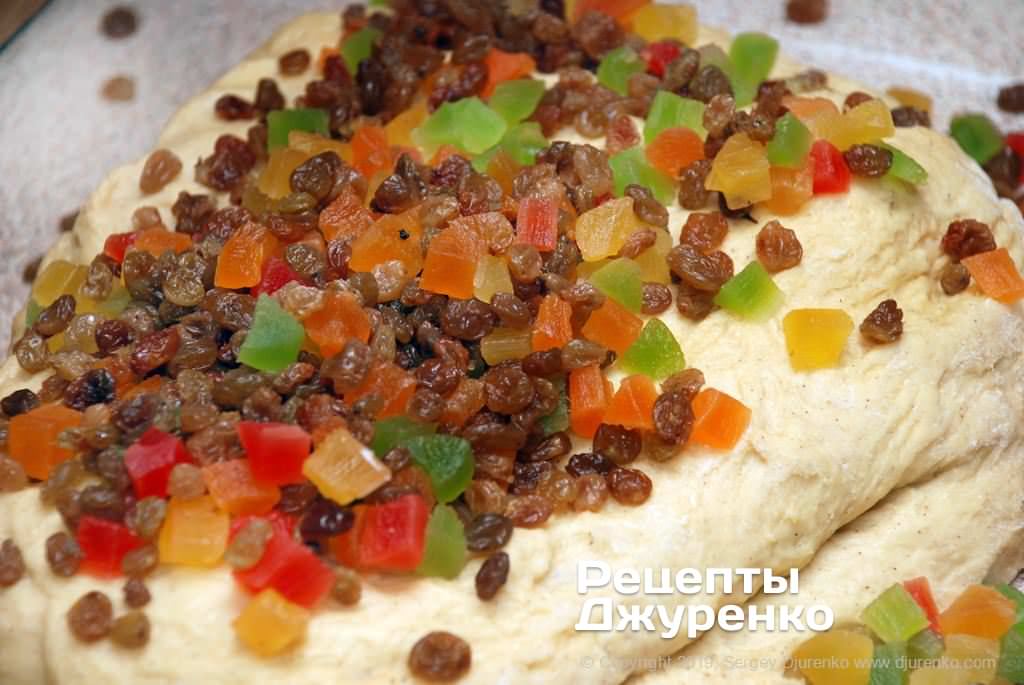
Work in the raisins and candied fruit. Flatten the dough into a sheet by hand and spread the slightly dried, soaked candied fruit and raisins over it. Knead the dough thoroughly with the candied fruit so they are distributed evenly. The result is a dough for paska with colorful flecks, like the dough for biscotti. And panettone is very colorful too, thanks to the candied fruit.
Baking
Easter bread is traditionally baked in special collapsible metal molds called paskovnyk. But more and more often they are replaced by disposable paper molds. We used metal molds lined inside with oiled baking paper.
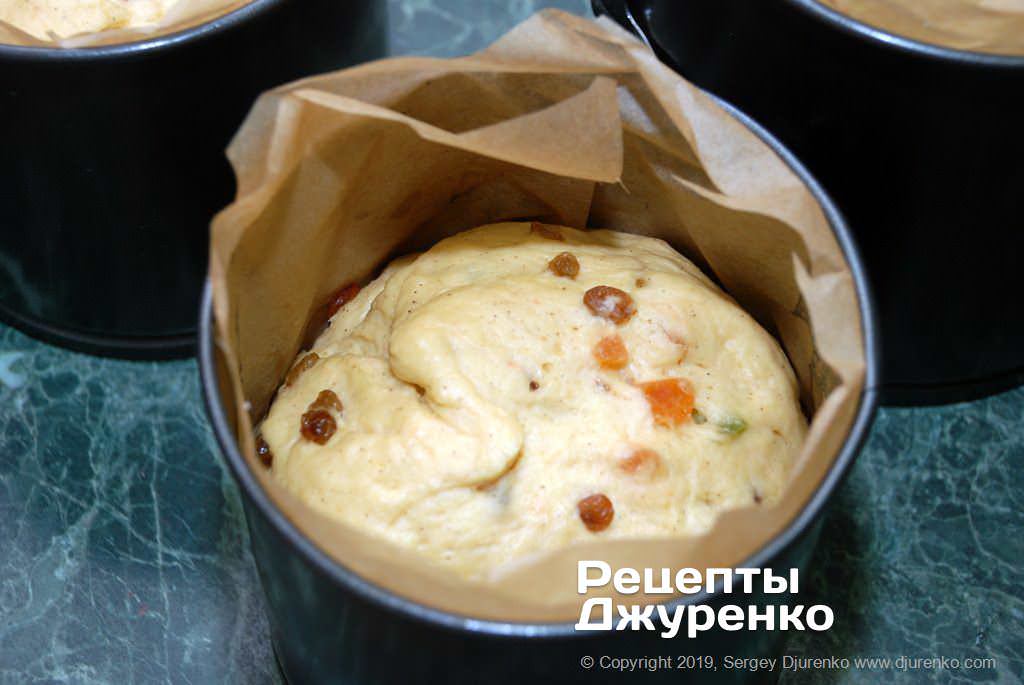
Put the dough in the molds and let it rise. Divide the dough into three parts and shape three balls. Place the dough in the prepared molds, cover them with a cloth and set in a warm place for 30 mins. The dough should rise in the mold itself and fill about two thirds of its height.
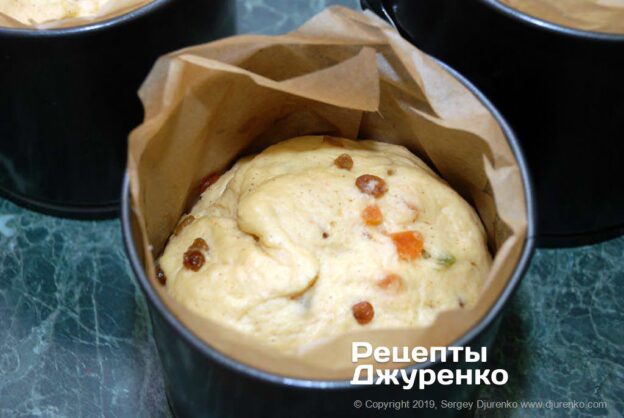
Score and brush the dough. Preheat the oven to 190-200°C and let it heat through. Crack the last egg into a cup and beat it with a fork. Score the surface of the dough with the tip of a knife in a cross, then brush the surface with the beaten egg. Put the molds with the dough in the oven.
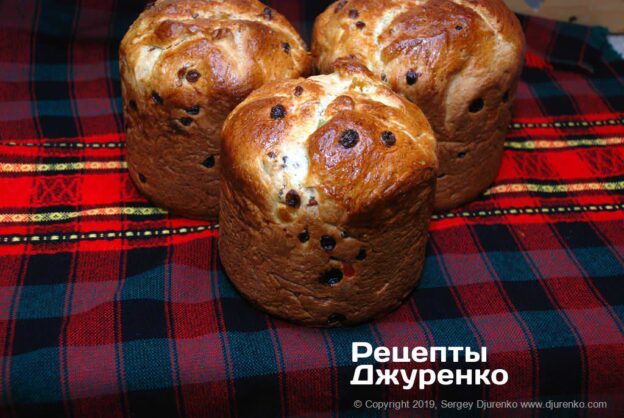
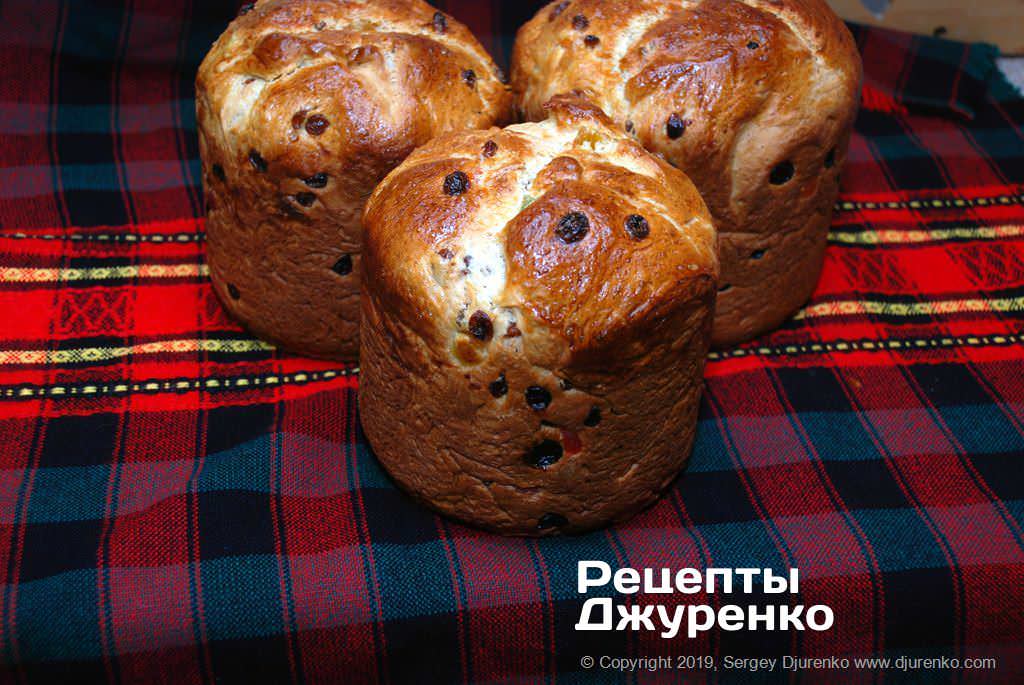
Bake for up to 1 hour. During this time the bread will rise a little and bake through, and the top will brown nicely. To check that it is done, pierce the kulich with a wooden skewer. If no dough sticks to it, it is ready. Take the molds out of the oven, let them cool for about 10 mins, then remove the loaves from the molds.
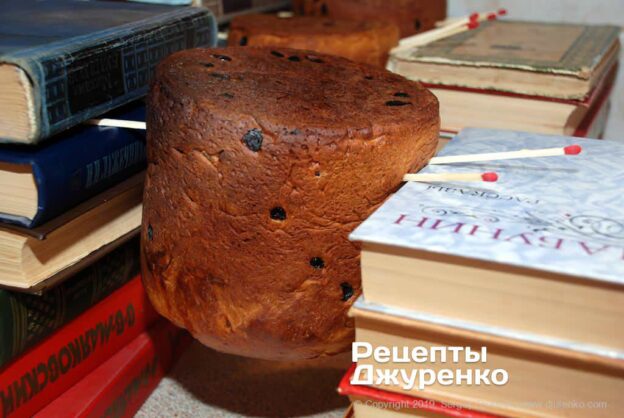
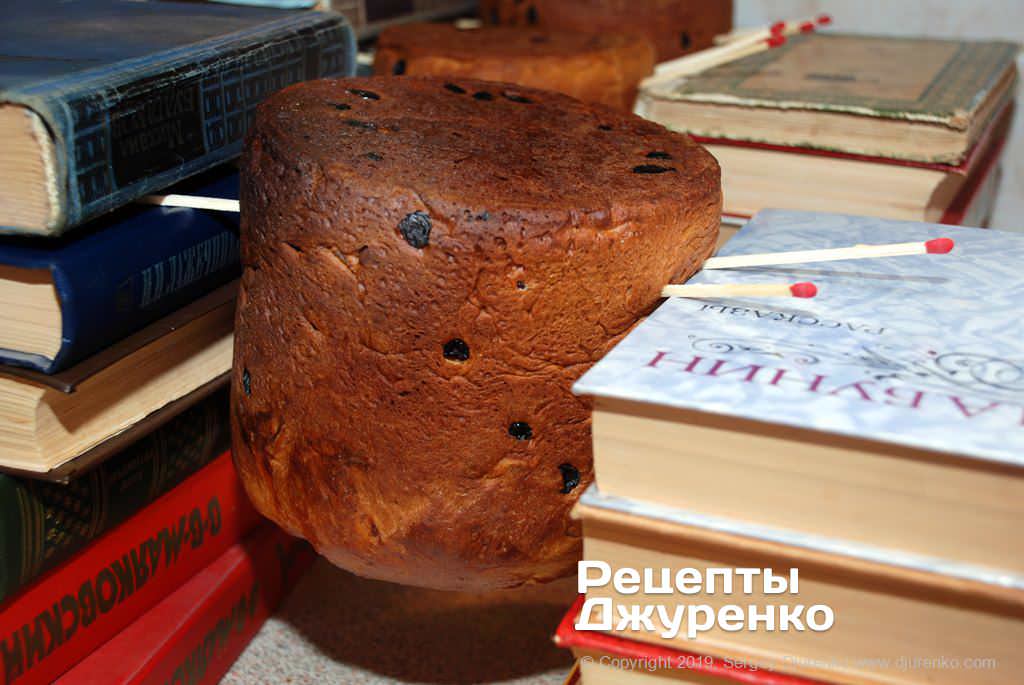
Hang the loaves to stretch them, if you like. Usually, after cooling, the loaves are glazed and decorated and they are ready. Italian panettone is additionally hung to stretch. This is unusual for us, but gives a good result. Turn each baked loaf over and pierce it through with a wooden kebab skewer, two big matches or something similar, close to the flat bottom and parallel to it. Set up two stacks of books or supports and hang the panettone between them overnight. Depending on the density of the dough, the loaves can stretch to half their height.
Making the sugar glaze
Whether to glaze or not is a matter of taste and preference.
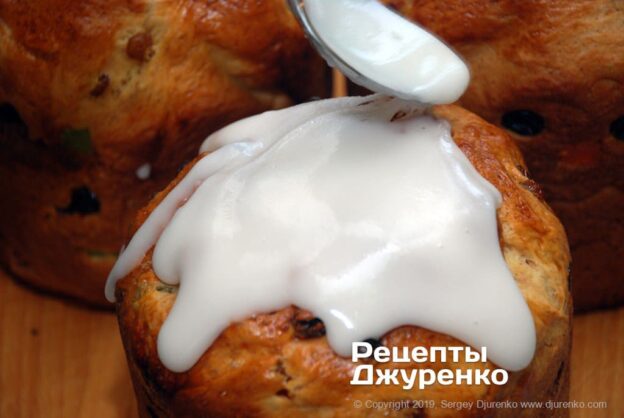
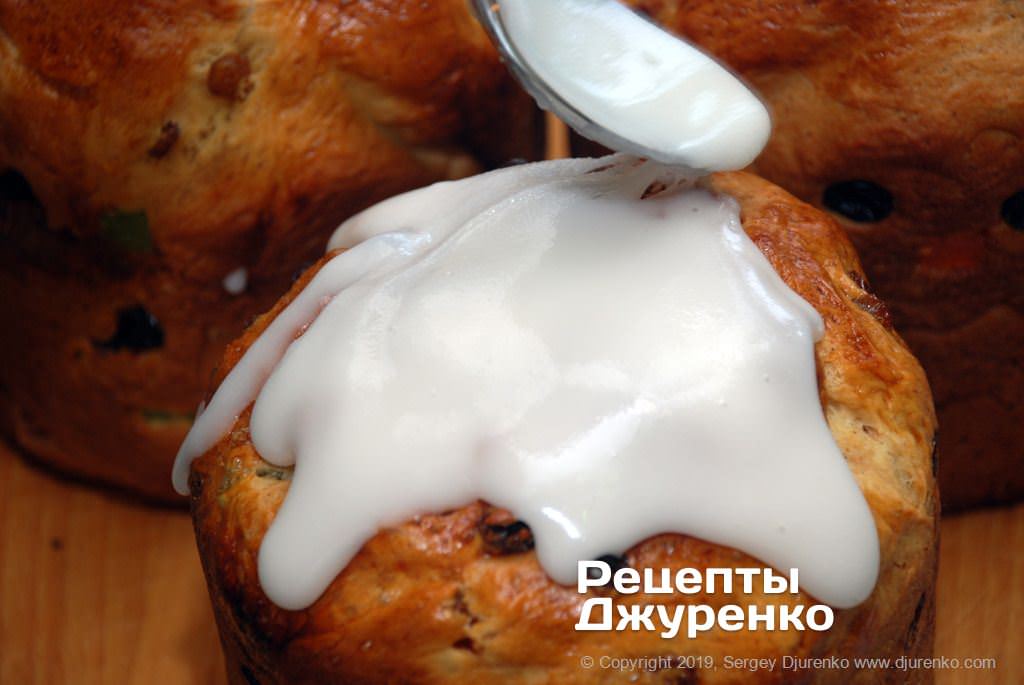
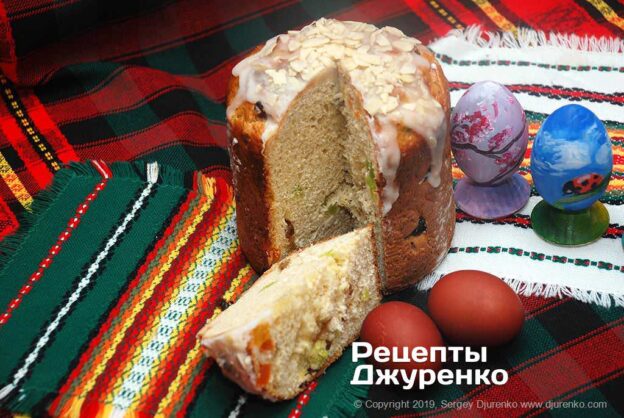
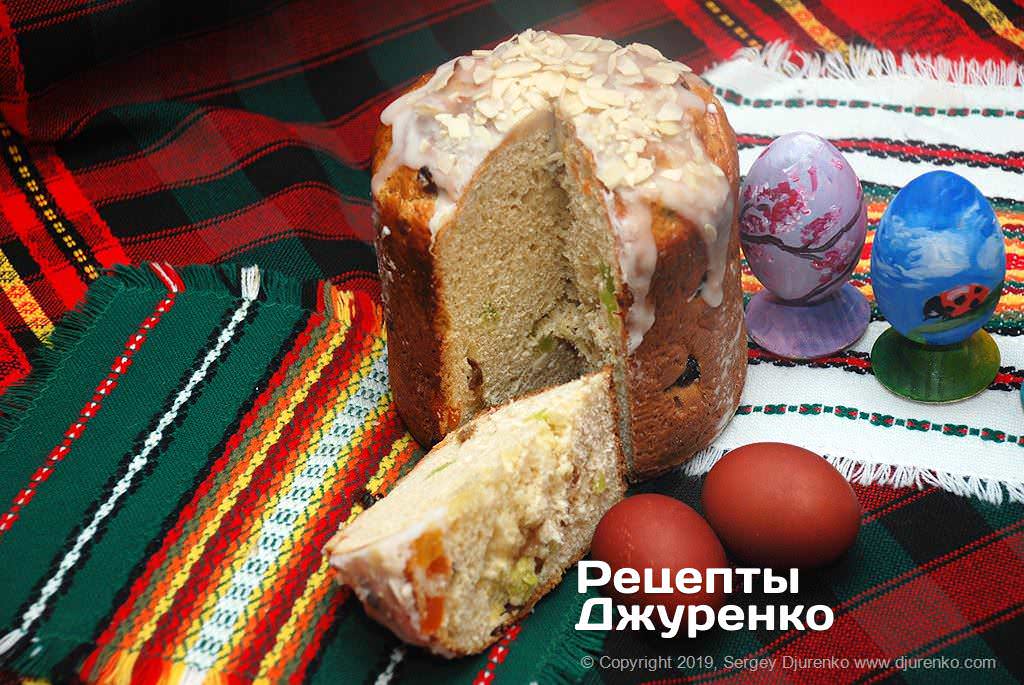
Glaze the cooled loaves. If you decide to use glaze, take 150-200 g of powdered sugar, add 1 tbsp of lemon juice (optional) and 2 tbsp of boiling water. Stir the sugar into the water until it turns thick. Pour the icing over each paska, spreading it with a spoon. The icing sets very quickly, so sprinkle with flaked almonds right away, before it hardens.
Serving
Serve with tea or at the festive table. The bread can be used for the holiday rituals or simply for the festive table. It is best to cover the bread with a cloth so it dries out less. Actually, panettone is a bread for tea, and it is delicious. So don’t deny yourself.
Calories and macros
361 kcal
100 g
- Protein8.6 g10% of kcal
- Fat11.8 g31% of kcal
- Carbs50.8 g59% of kcal
Calculated from the recipe ingredients, excluding salt and spices. Data: USDA and Matvaretabellen.