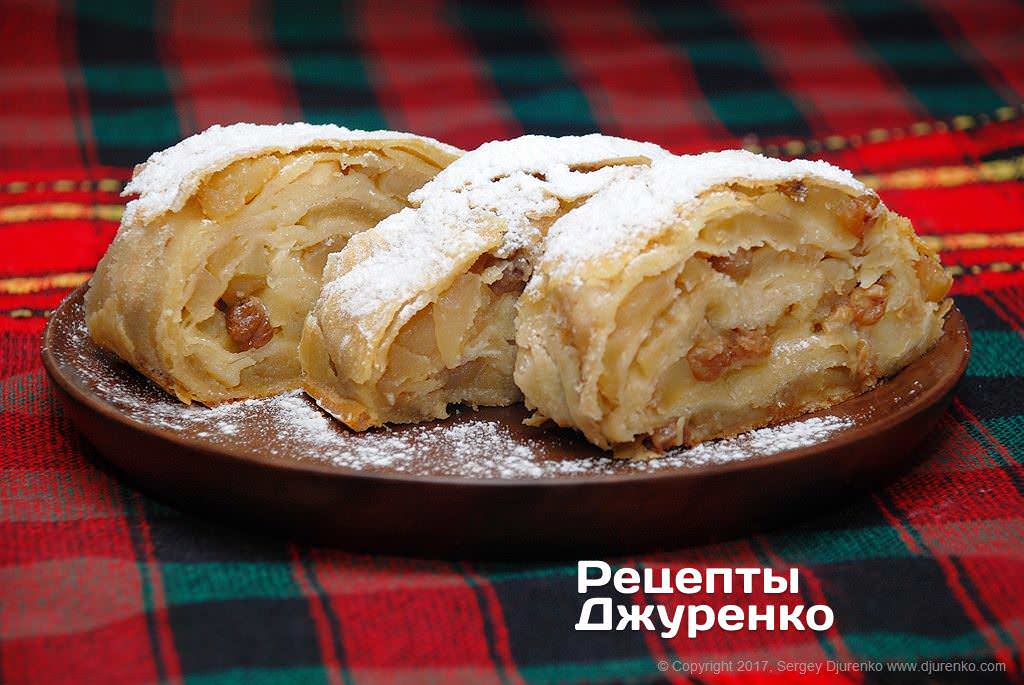
Apple Strudel
Ingredients
1 strudel
For the filling
- Large sweet-tart apples 5
- Sugar 1 cup (180 g)
- Brown sugar 2 tbsp (27 g)
- Butter 50 g
- Seedless raisins 100 g
- Rum or brandy ½ cup (100 ml)
- Water ½ cup (100 ml)
- Ground ginger 1 tsp (2 g)
- Ground cinnamon 1 tsp (3 g)
- Nutmeg ½ tsp
- Vanilla to taste
- Cinnamon sticks 1–2
- Cloves 3–4
For the dough
- Premium wheat flour about 2 cups, as needed (260 g)
- Egg 1
- Lukewarm water ½ cup (100 ml)
- Salt 1–2 pinches
- Olive oil 50–70 ml
For assembling
- Butter 50 g
- Breadcrumbs 3–4 tbsp (23–30 g)
- Egg 1
- Powdered sugar 2–3 tbsp (18–27 g)
Step-by-step recipe
Filling
At first glance the process seems very laborious and tiring. Looking back, my fears and prejudices make me laugh. Fear has big eyes, as the saying goes — and that’s exactly the phobia of making such a wonderful pastry.
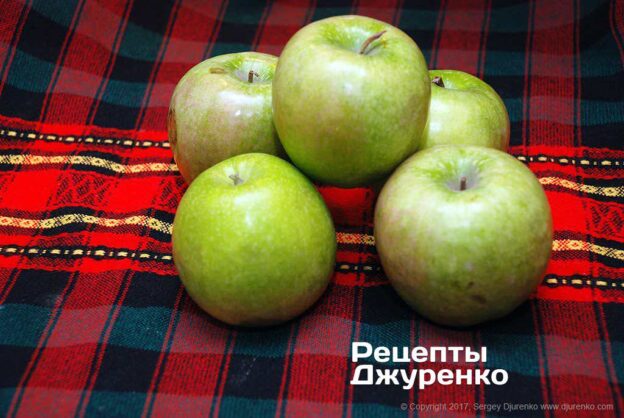
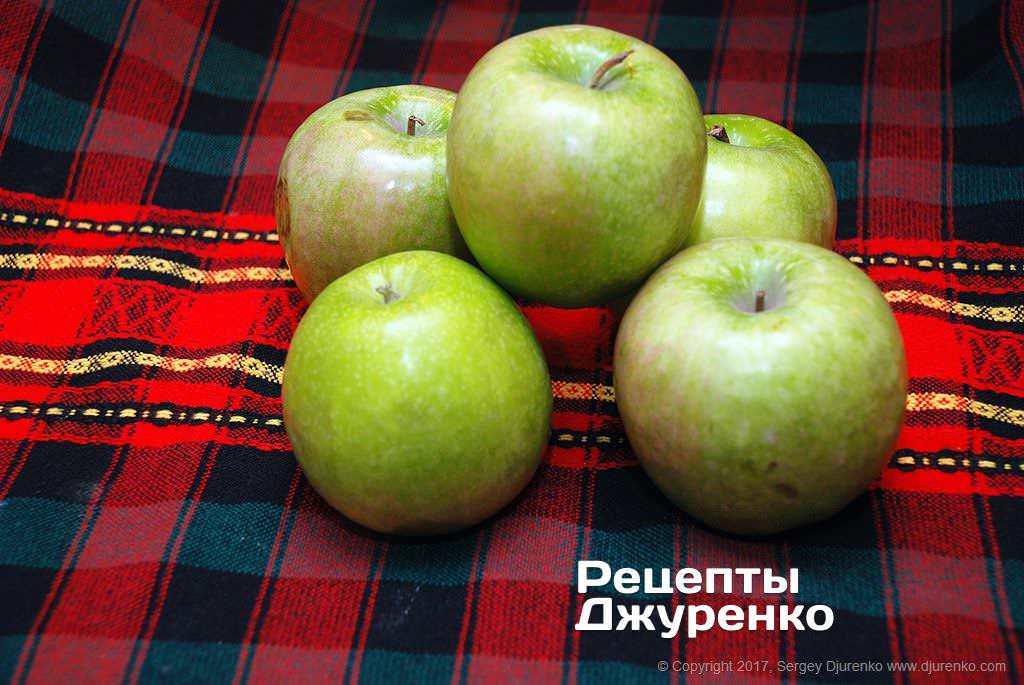
For the filling, choose large sweet-tart apples. The ideal choice is Renet Simirenko, Granny Smith or similar green apples. These apples hold their shape well when sliced and cooked and don’t release too much juice.
The day before, soak 100 g of seedless raisins. We use dark rum or brandy. Mix half a cup of rum (100 ml) or brandy with half a cup of water (100 ml), pour the mixture over the rinsed raisins and add 1–2 cinnamon sticks and 3–4 cloves. Leave for a few hours.
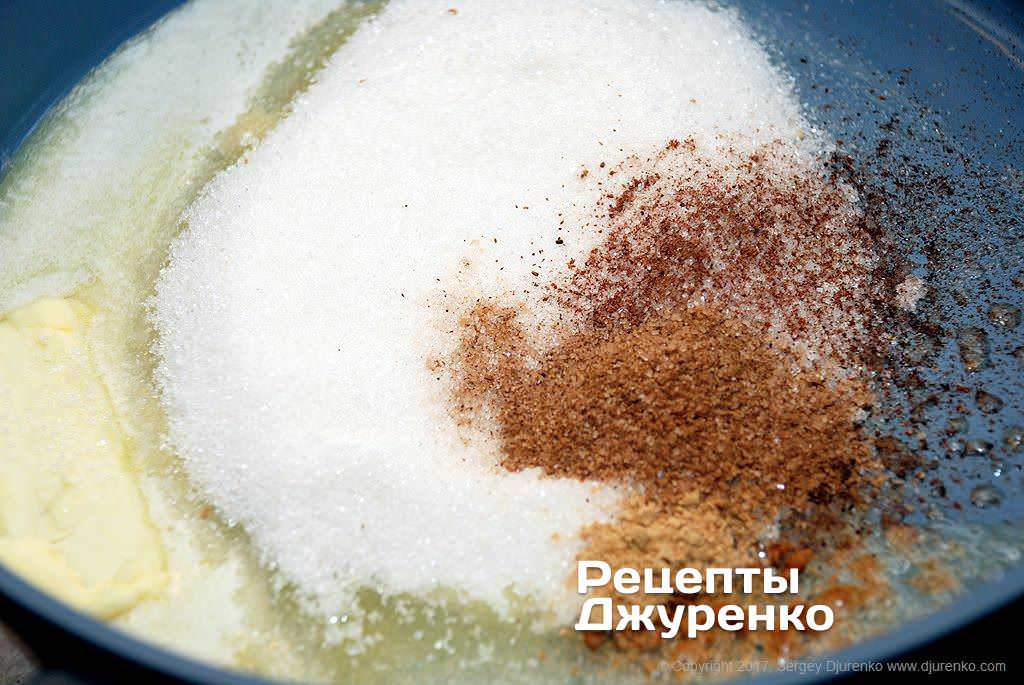
Make the caramel with raisins. Put 50 g of butter in a frying pan. Add 1 cup of sugar (180 g), brown sugar if you have it, and the spices. The spice mix can vary. We added 1 tsp each of ground ginger (2 g) and cinnamon, ½ tsp of nutmeg and a little vanilla to taste.
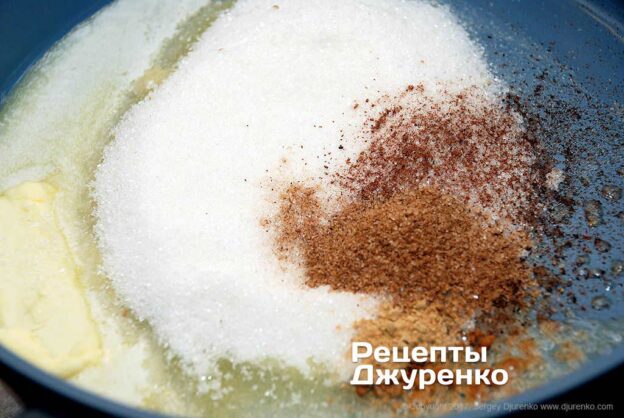
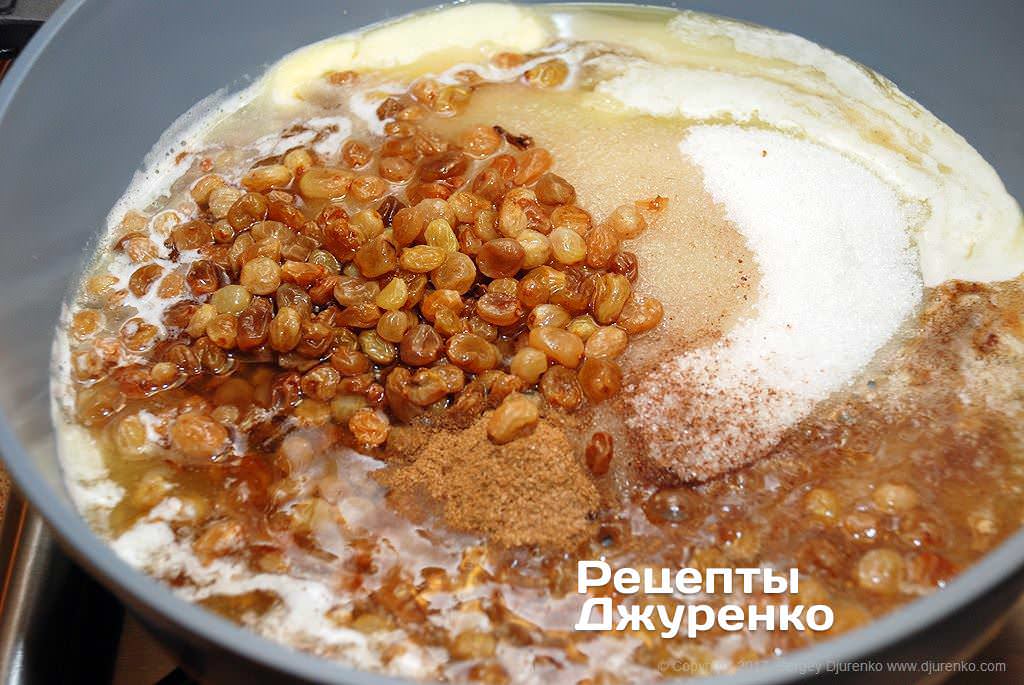
Once the butter has almost melted, add the raisins soaked the day before along with their soaking liquid, so the spices don’t overheat. Discard the cinnamon sticks and cloves.
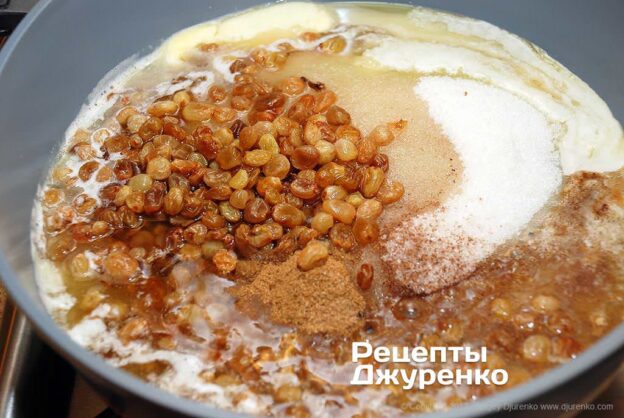
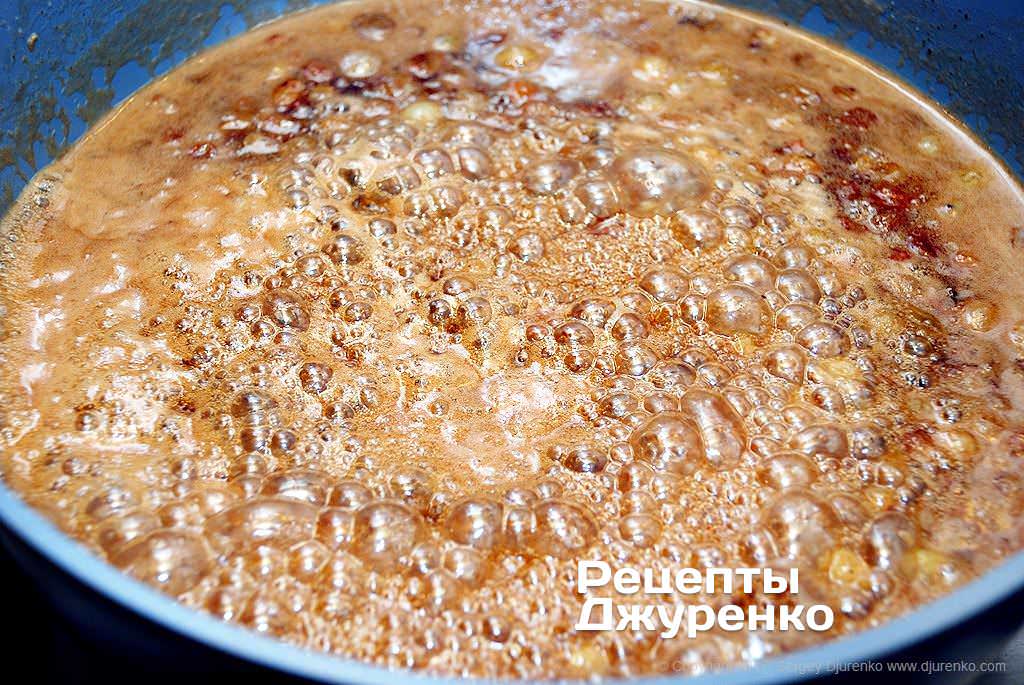
Stir everything and keep heating over medium heat, uncovered, until the sugar begins to caramelize. The sugar will start to foam a little and darken.
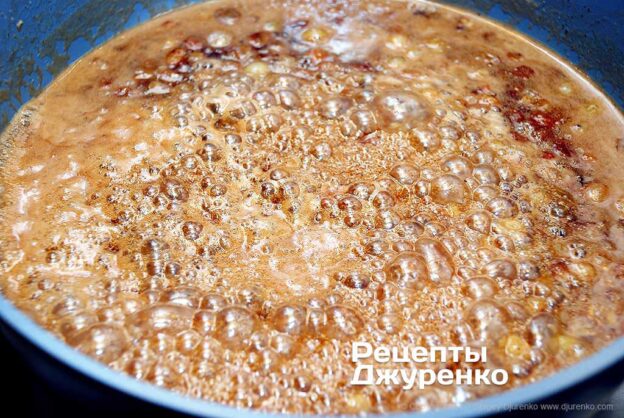
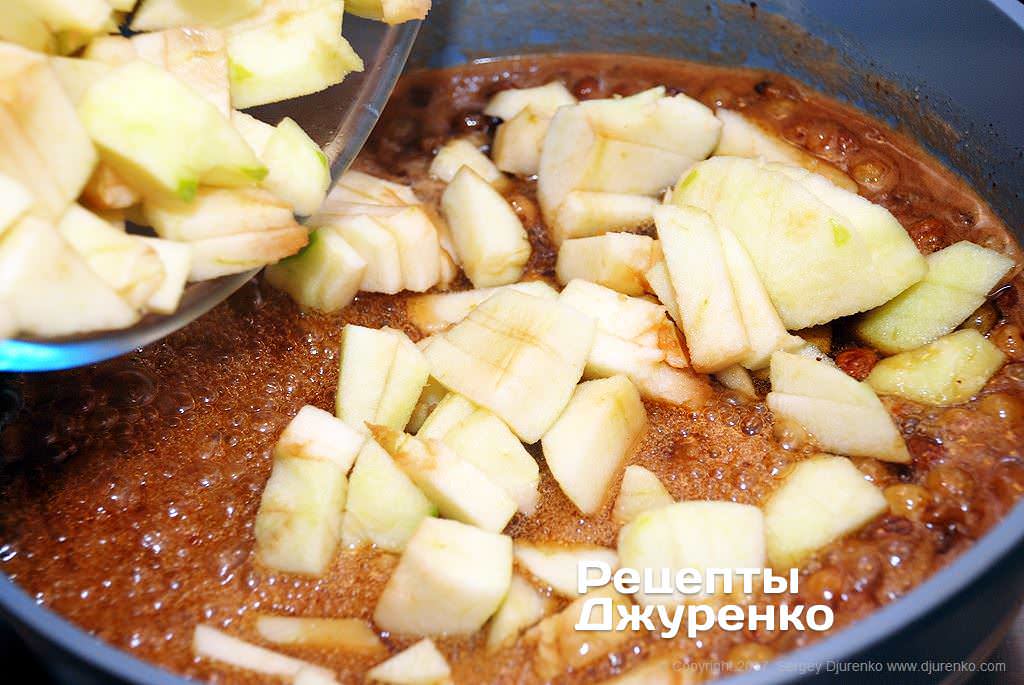
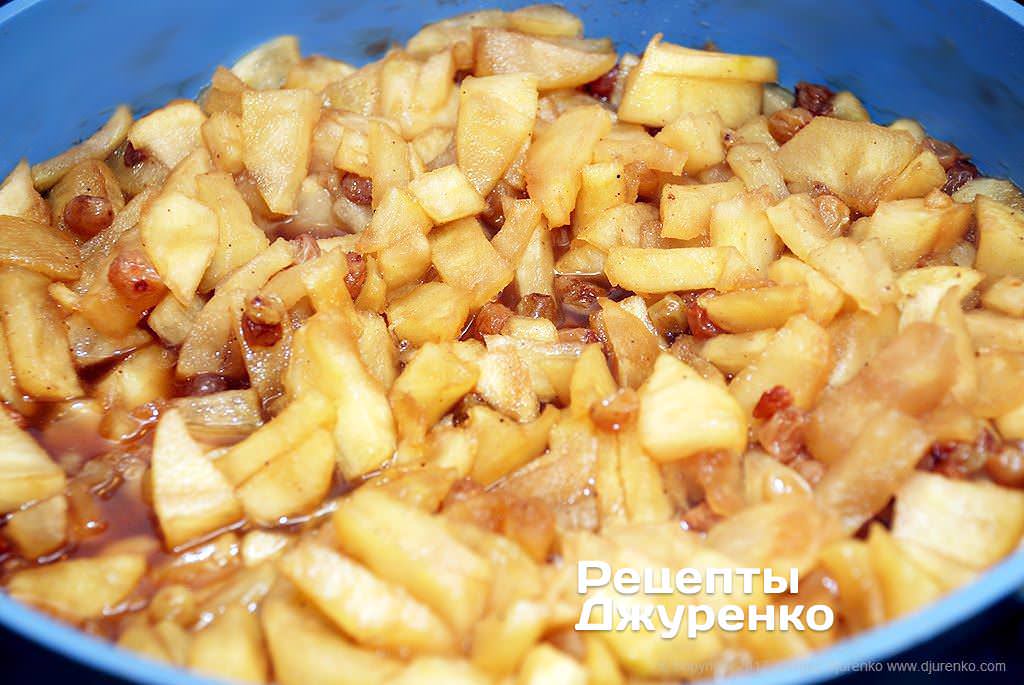
Immediately add the apples, peeled, cored and cut into small pieces or slices. Don’t cut them too small, or you risk ending up with applesauce. Stir the apples into the caramelized sugar.
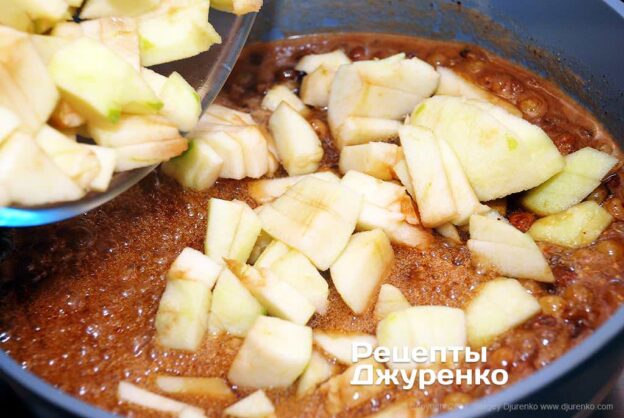
Simmer the apples over low heat, covered, until they are soft but still hold their shape. Depending on the variety, this will take 20–30 mins. The main thing is not to end up with applesauce.
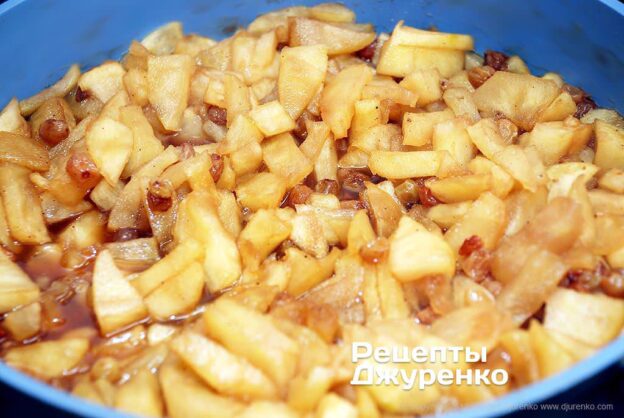
Let the cooked apples cool completely. Then drain off all the liquid. It’s best to tip the apples into a colander so the filling is almost dry, otherwise the roll will fall apart during baking.
Dough
Next comes the second stage — making the dough. Speaking for myself, it’s really interesting and fun.
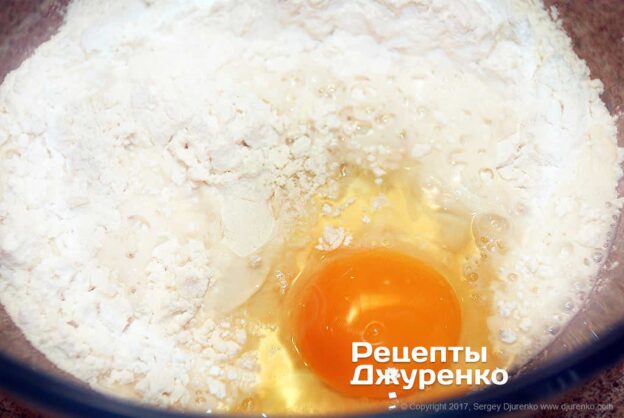
Make the dough. In a deep bowl, combine 2 cups of premium wheat flour (260 g) and crack in one egg. Warm half a cup of water (100 ml) slightly, so it’s just lukewarm, and add 1–2 pinches of salt to it. Pour the water into the flour and knead the dough. I’ll say right away: you’ll have to add more flour, judging by the state and consistency of the dough. Knead the dough very (!) thoroughly.
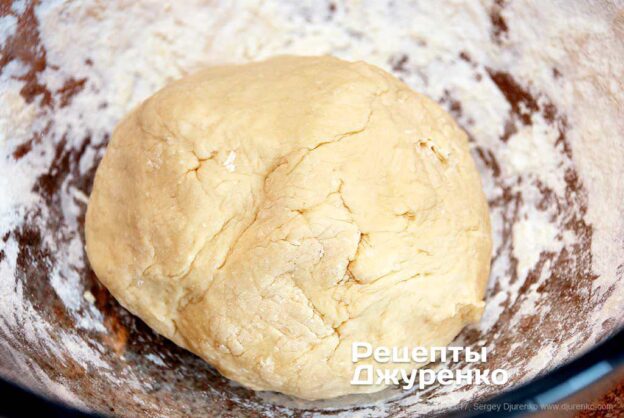
The dough should be very soft, yet it must not stick to your hands. Not at all.
Roll the dough into a ball and transfer it to a bowl.
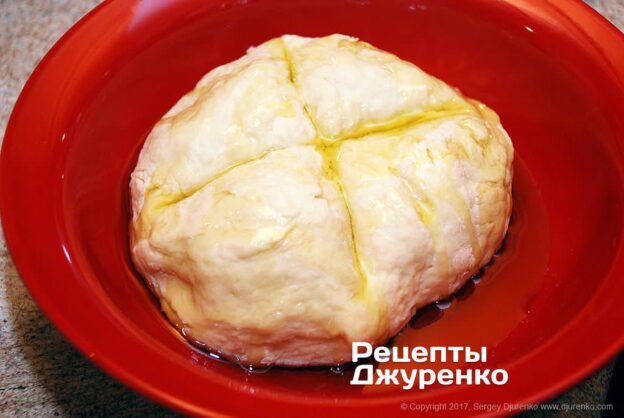
For the pastry to turn out right, the dough needs to rest. This is an unusual technique, not typical of most doughs: make a shallow crosswise cut in the dough and generously brush it with olive oil on all sides. You’ll need 50–70 ml of olive oil.
Cover the dough with an upturned deep plate and refrigerate for 45–60 mins. During this time the dough will mature and the apple filling will have time to cool.
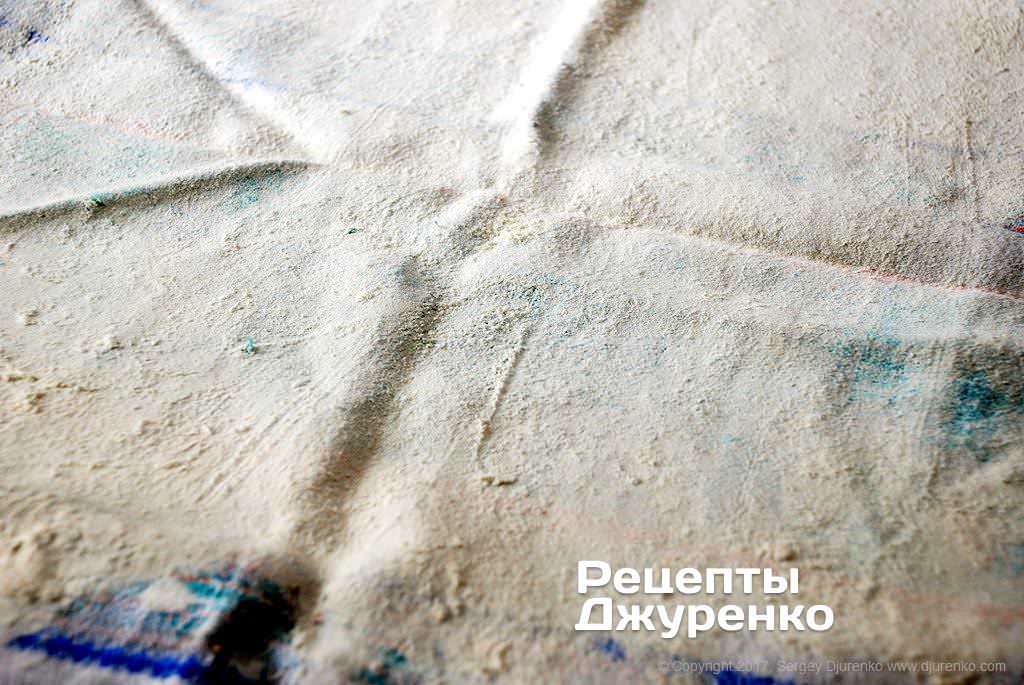
Prepare the table and baking sheet. To stretch the dough and shape the strudel, you’ll need a large table and a cloth. Cover the table with a clean cloth — canvas or a lint-free towel that is long enough. Then comes the step that left me stunned at first: the cloth needs to be generously dusted with flour. Right away, prepare a baking sheet as well: line it with baking paper and dust the paper with flour. It’s worth noting that the size of the baking sheet determines the length of the roll and, accordingly, how far you need to stretch the dough. Keep this in mind.
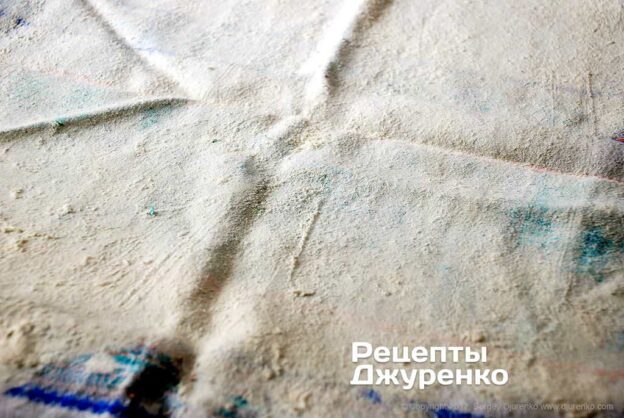
Stretching strudel dough is an unhurried process that doesn’t tolerate fuss. So if you want to bake a masterpiece rather than an apple hand pie, be patient.
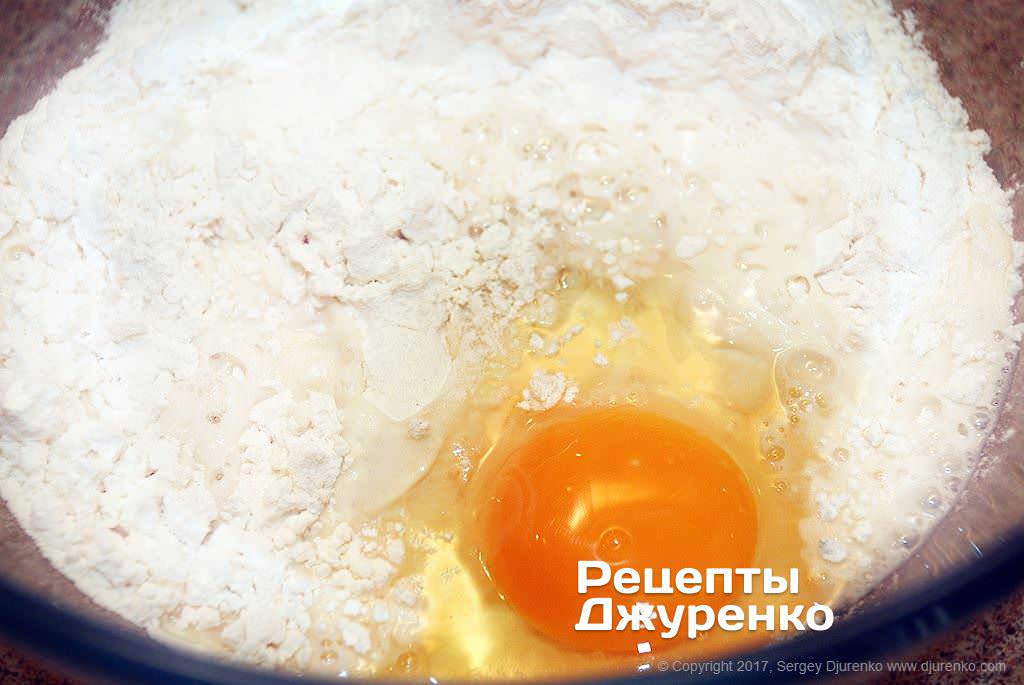
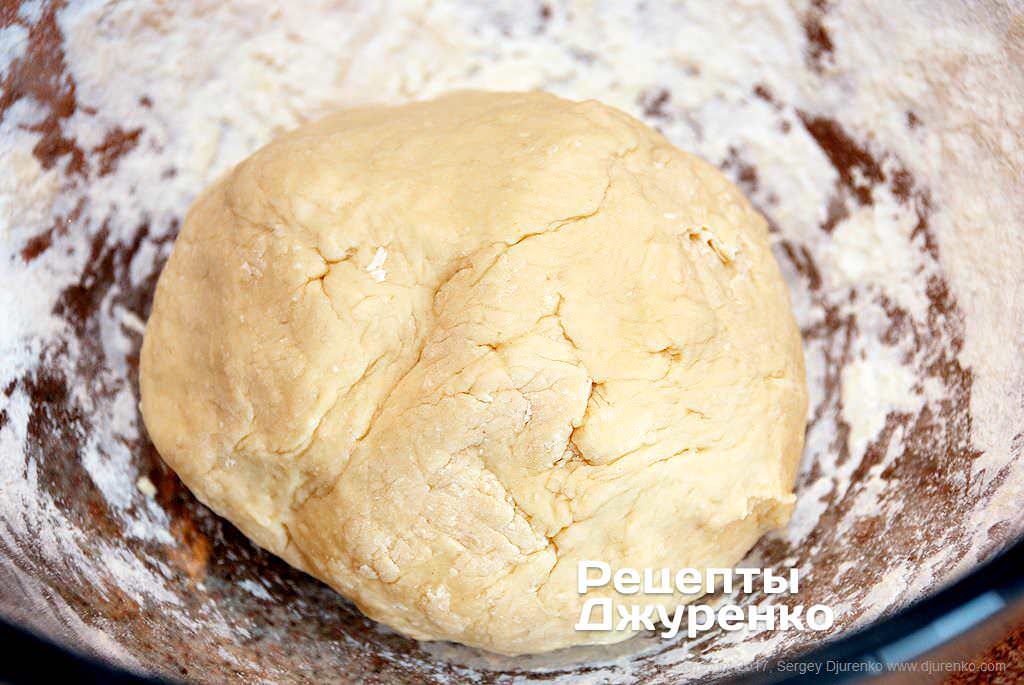
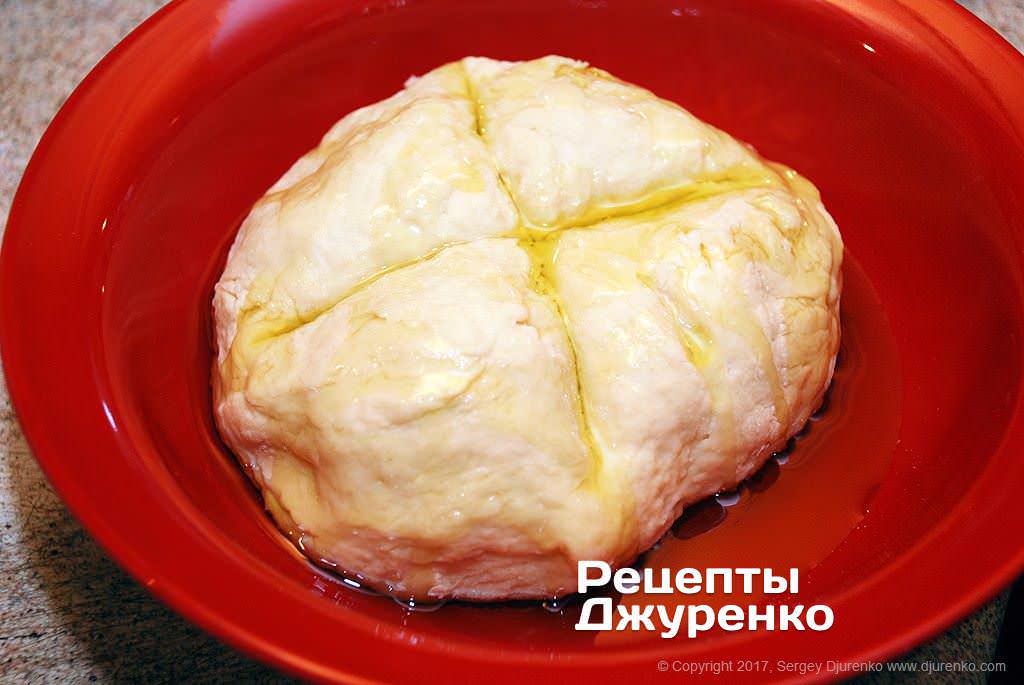
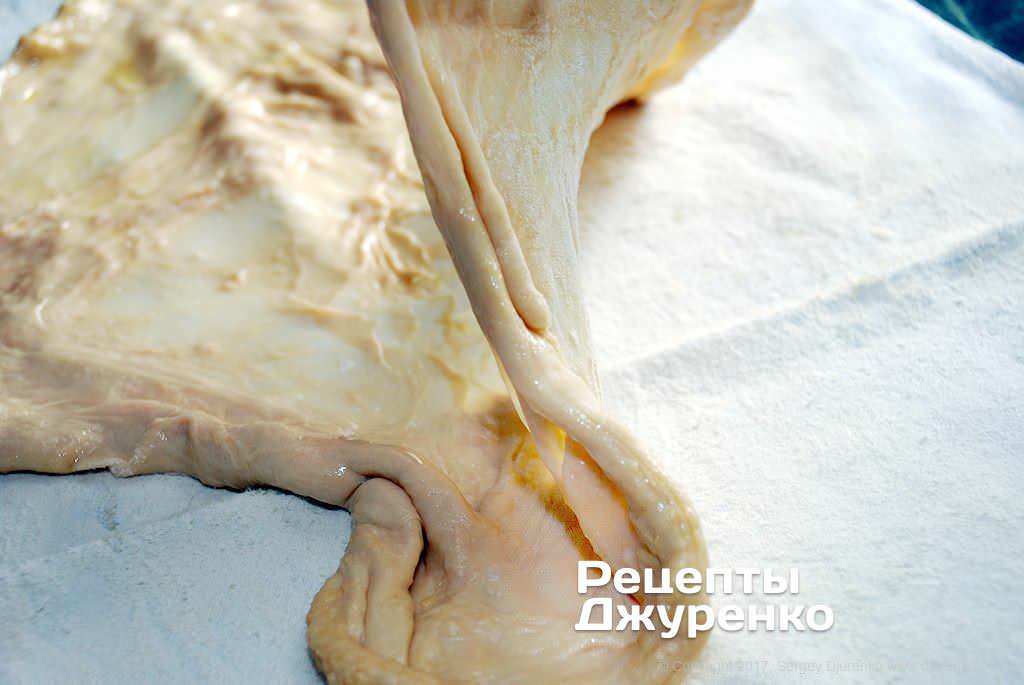
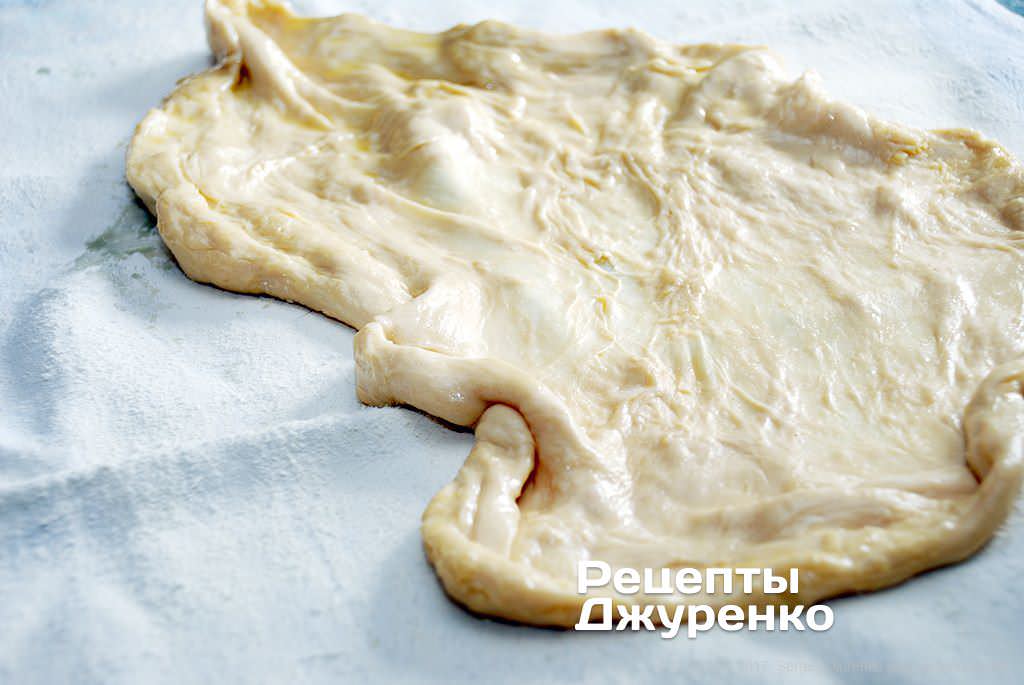
Place the dough on the floured cloth and, very slowly and carefully, pull it with your fingers starting from the edge, stretching and evening out the thick spots. The dough stretches beautifully with your fingers, and you don’t need a rolling pin at all.
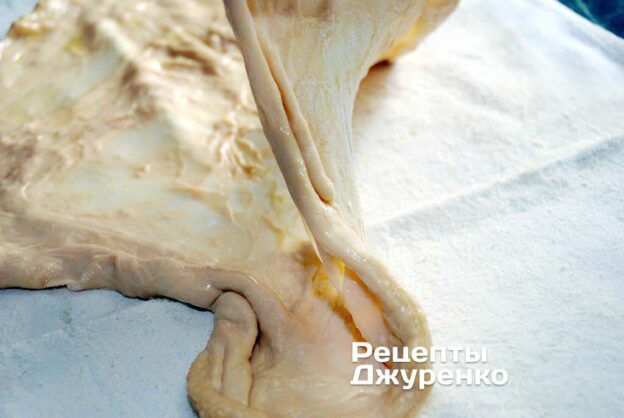
If a tear happens to appear in the dough, it doesn’t matter, for two reasons. First, strudel is a roll in which the dough is rolled up together with the filling, so all the tears will end up inside. Second, any tear can be patched with a small lump of dough that seals it, and then stretched again.
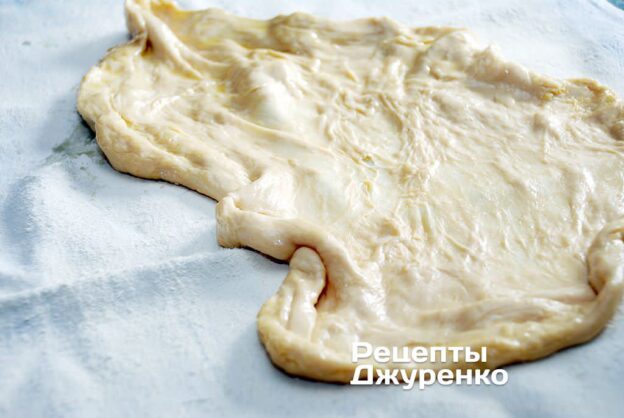
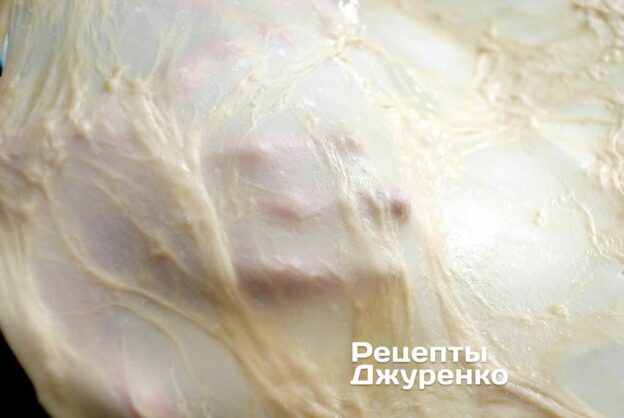
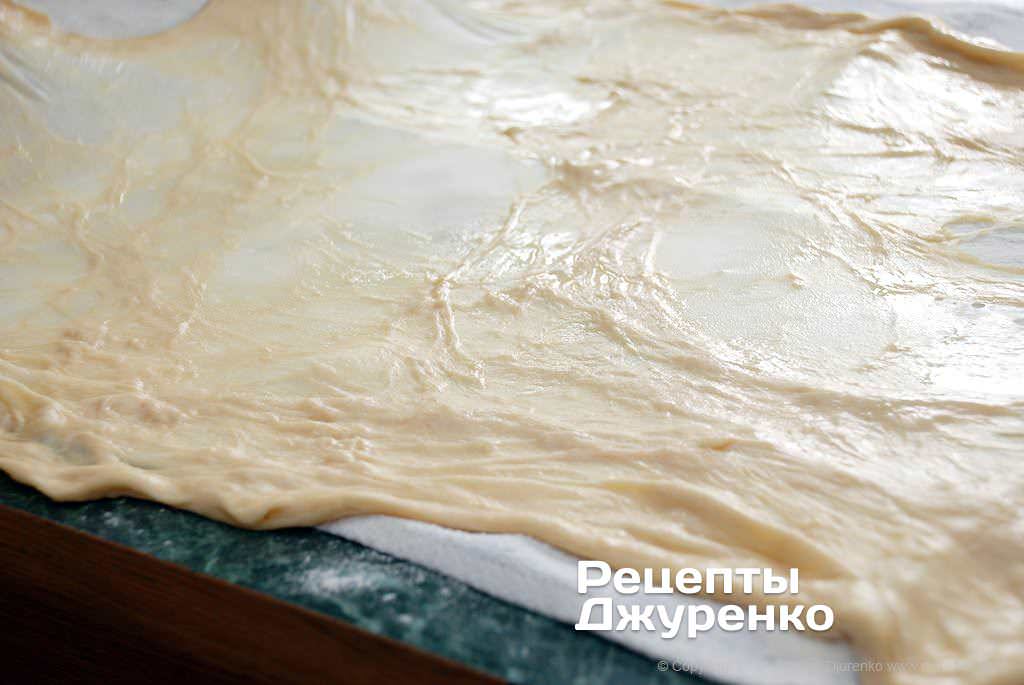
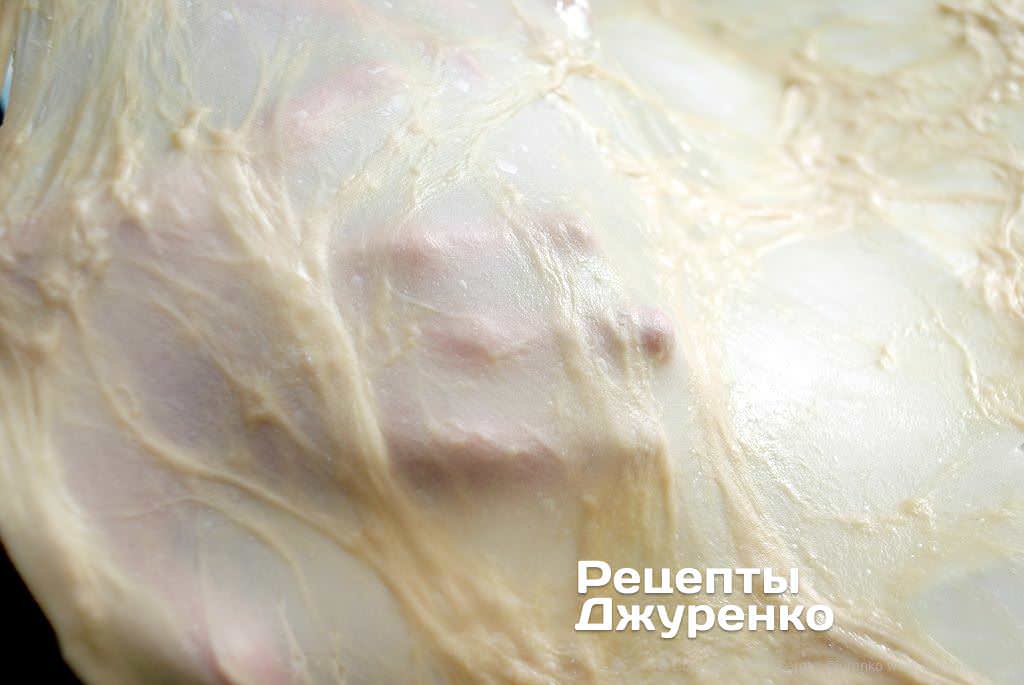
Keep stretching the dough into a very thin sheet. The sheet should be 25–30 cm wider than the length of your baking sheet. The length is however long it turns out. We ended up with a sheet of dough about 50 cm wide and around 140 cm long. Perfectly straight edges are absolutely not necessary.
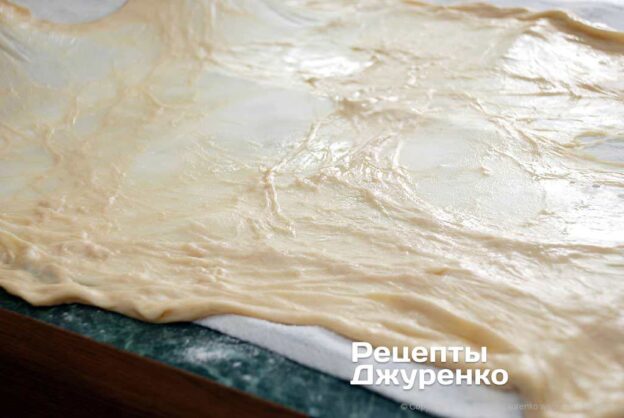
The dough turned out so transparent you could read a book through it. The thin sheet will have some unevenness in thickness anyway, with small thick spots — that’s normal. If for some reason the uneven edge bothers you, just trim it off.
Shaping the strudel
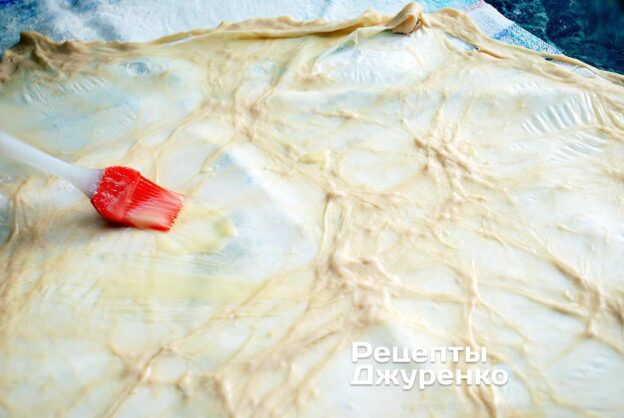
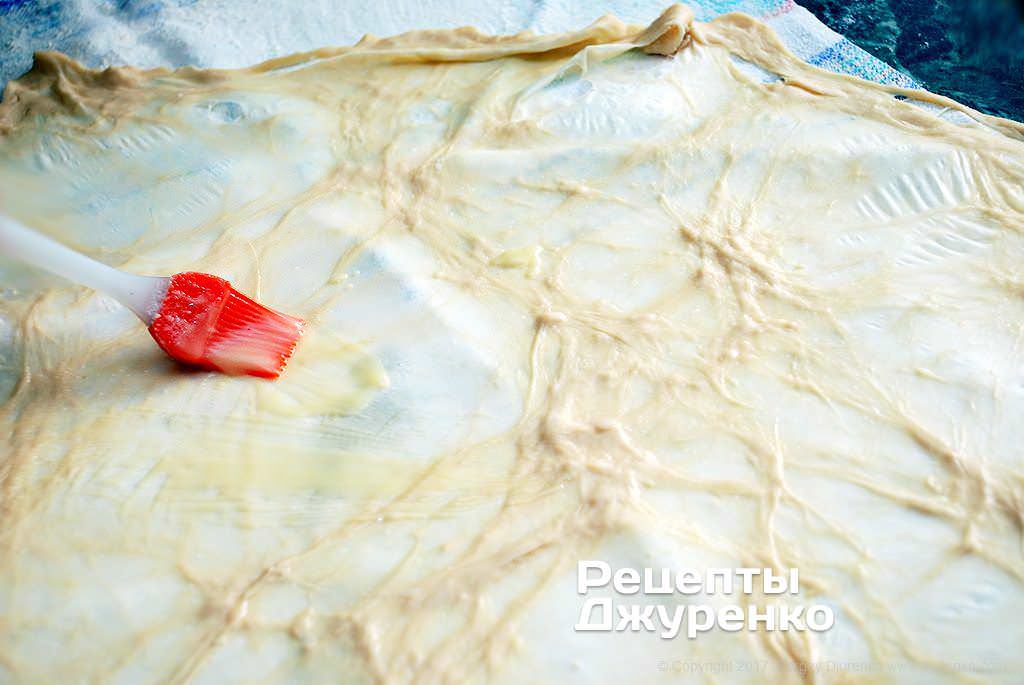
Brush the dough with butter and sprinkle with breadcrumbs. In a small bowl, melt 50 g of butter without letting it get hot. In another bowl, lightly beat one egg. Brush the dough stretched on the cloth with the melted but not hot butter. A silicone brush works great for this. When I was little, my grandmother brushed her roll with a bunch of feathers.
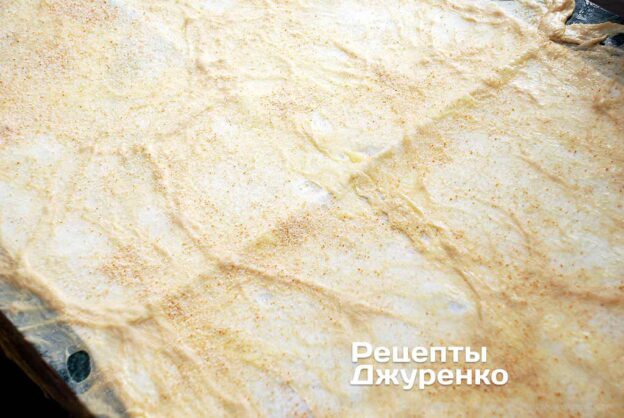
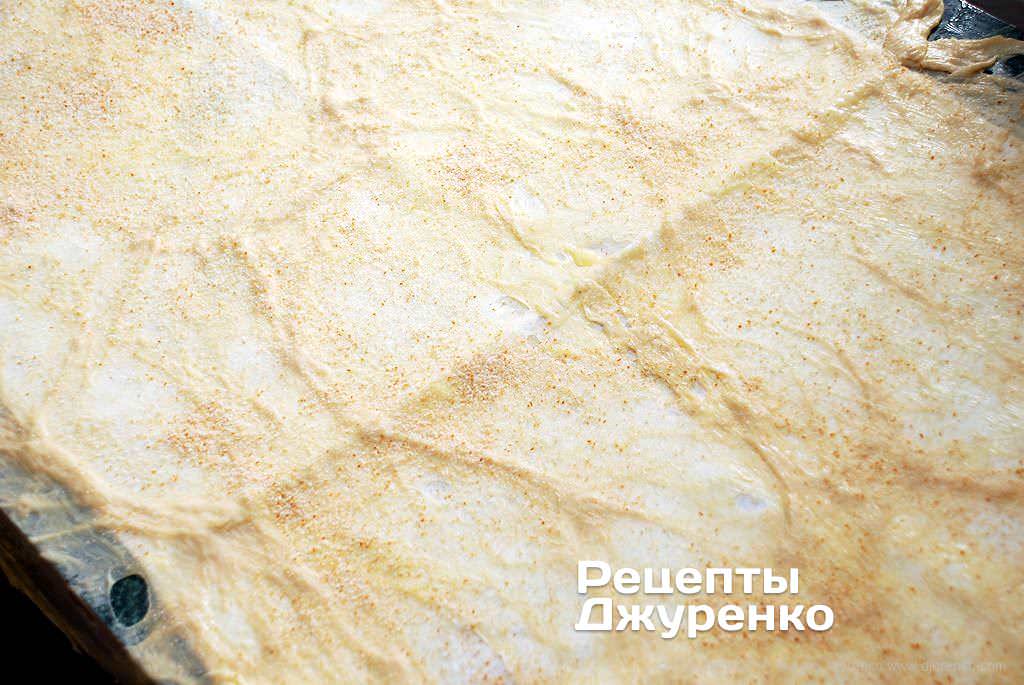
Sprinkle the buttered dough with 3–4 tbsp of breadcrumbs (23–30 g), or with grated and sifted stale bread — a “French” baguette works best. The crumbs will soak up the butter; this is important.
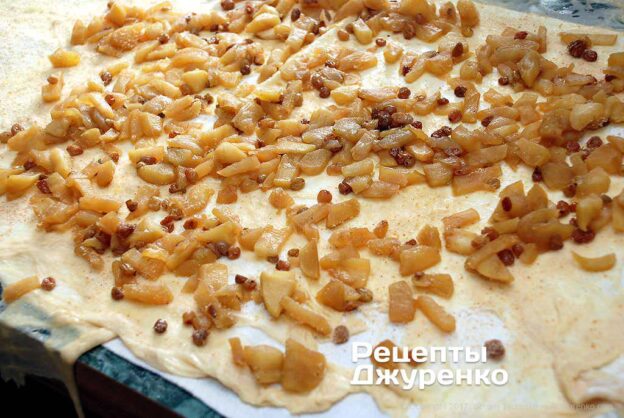
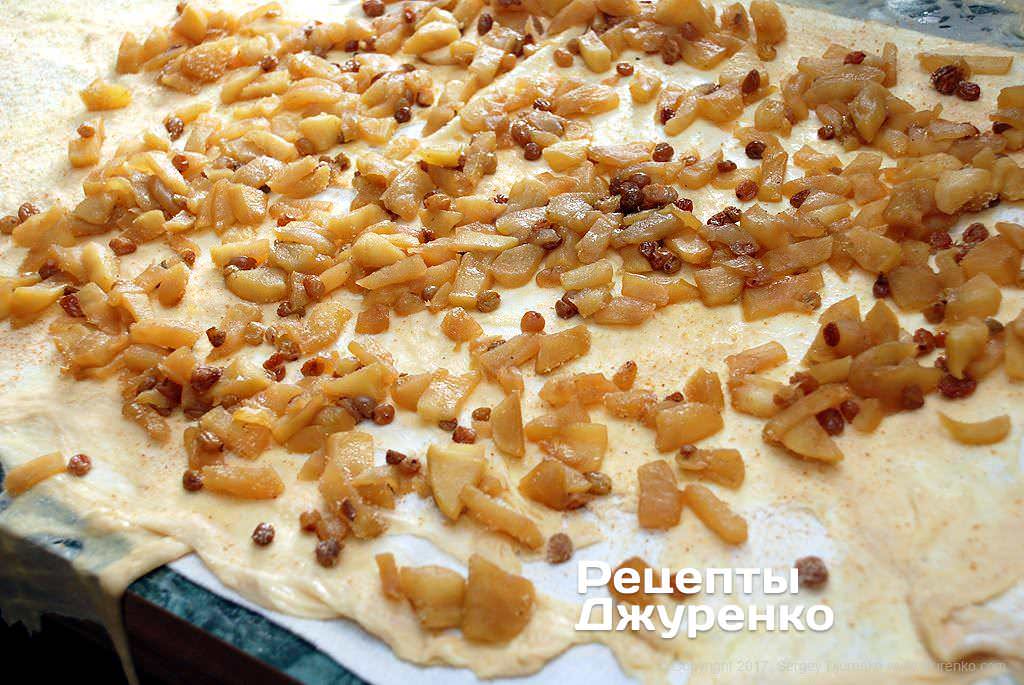
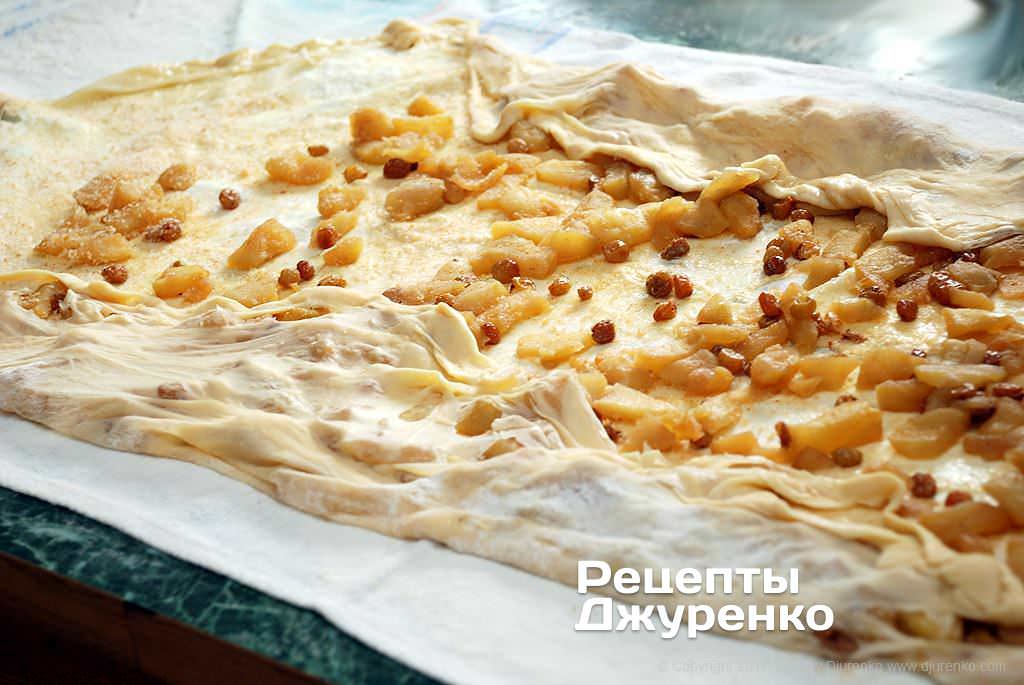
Spread the apple filling, which should be at room temperature, over the prepared dough. Distribute it evenly by hand, leaving an empty strip at one short end, about a quarter of the total length of the dough. Also leave both long edges free of filling, so that the strip of filling is as wide as the baking sheet.
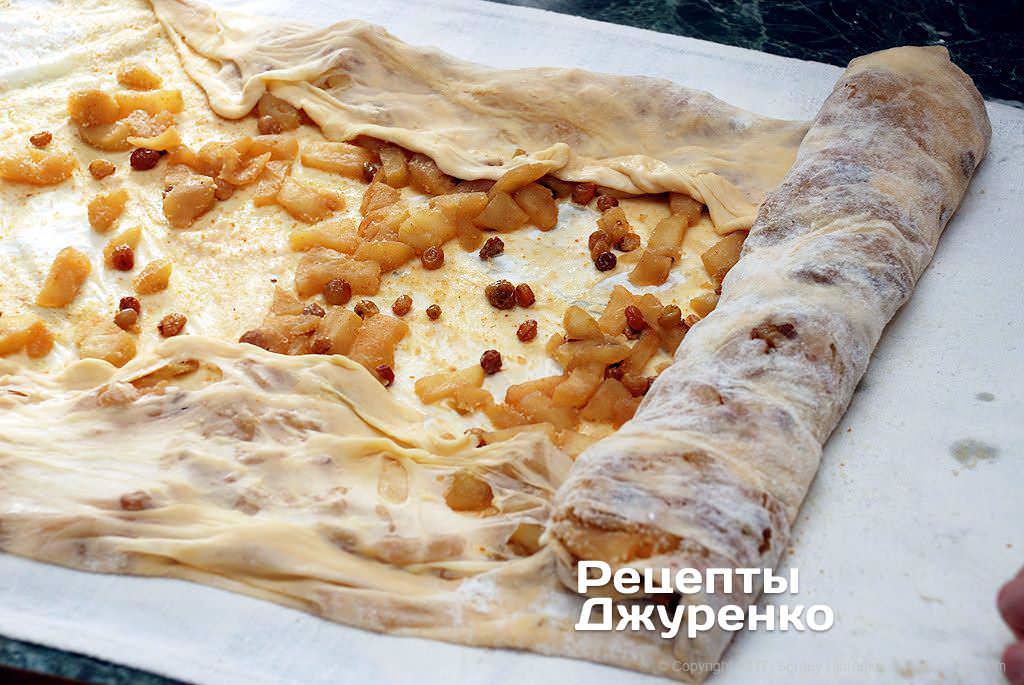
Roll up the strudel. Along the long sides, fold the overhanging edge of the stretched dough in over the future roll, so that the width of the dough with filling and folded edges matches the length of the baking sheet. You can fold the edge in by 10–12 cm. Do this along the entire length of the dough. At the short end, fold the edge with the filling over by about 12–15 cm to start forming the roll.
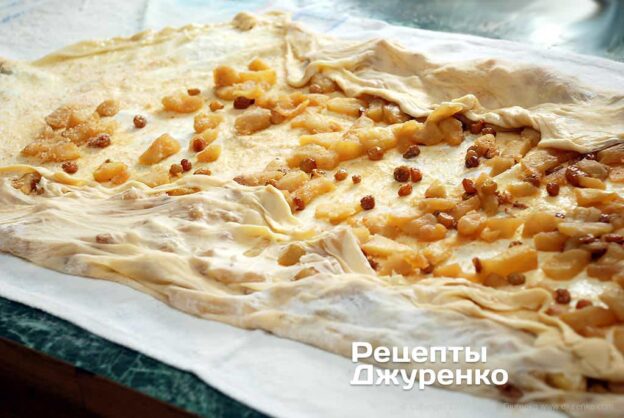
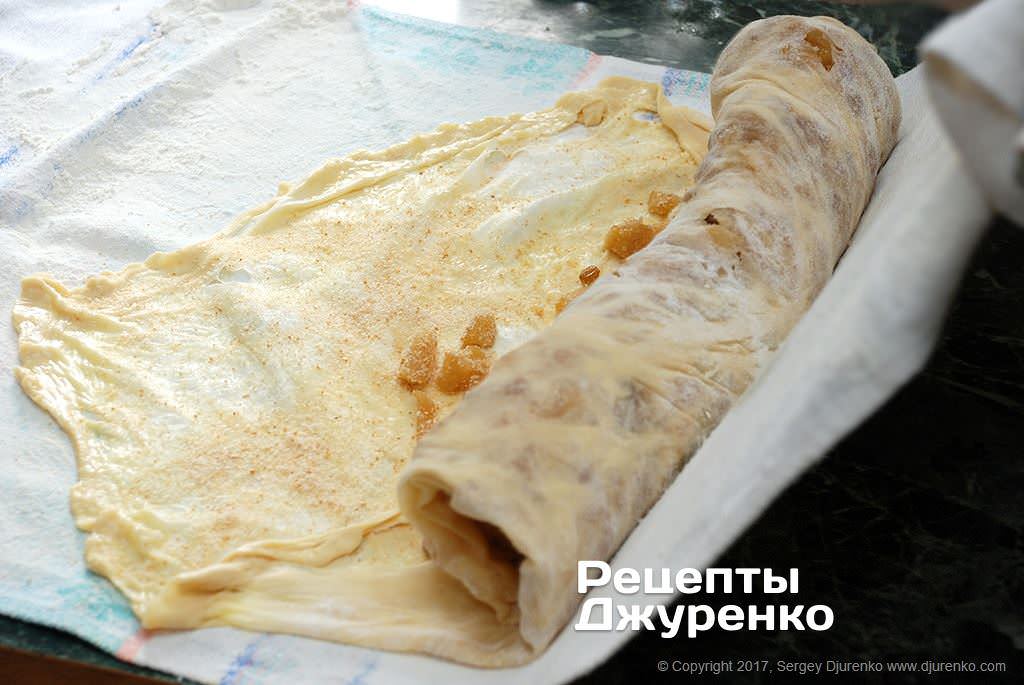
Then, lifting the edge of the cloth, turn the bundle of dough and filling over so the strudel rolls itself up. The roll should move toward the edge of the dough without filling that you left at the other short end.
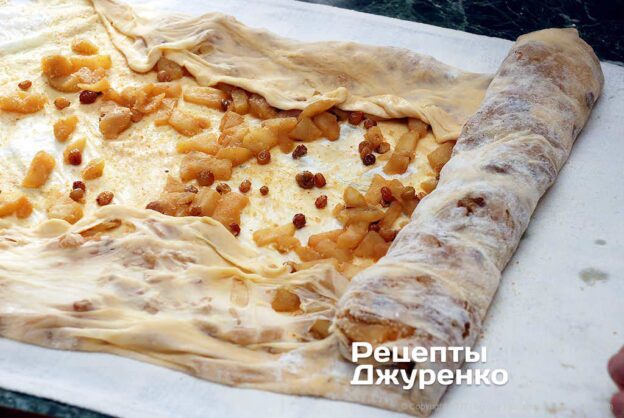
Important: the filled strudel should be short and thick, not long and thin.
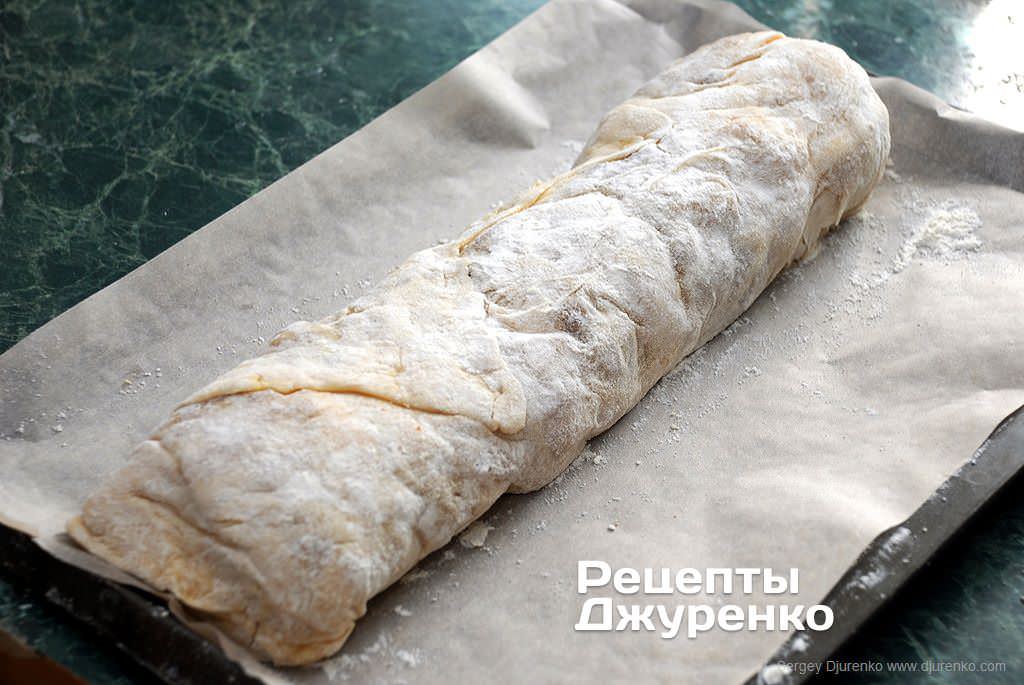
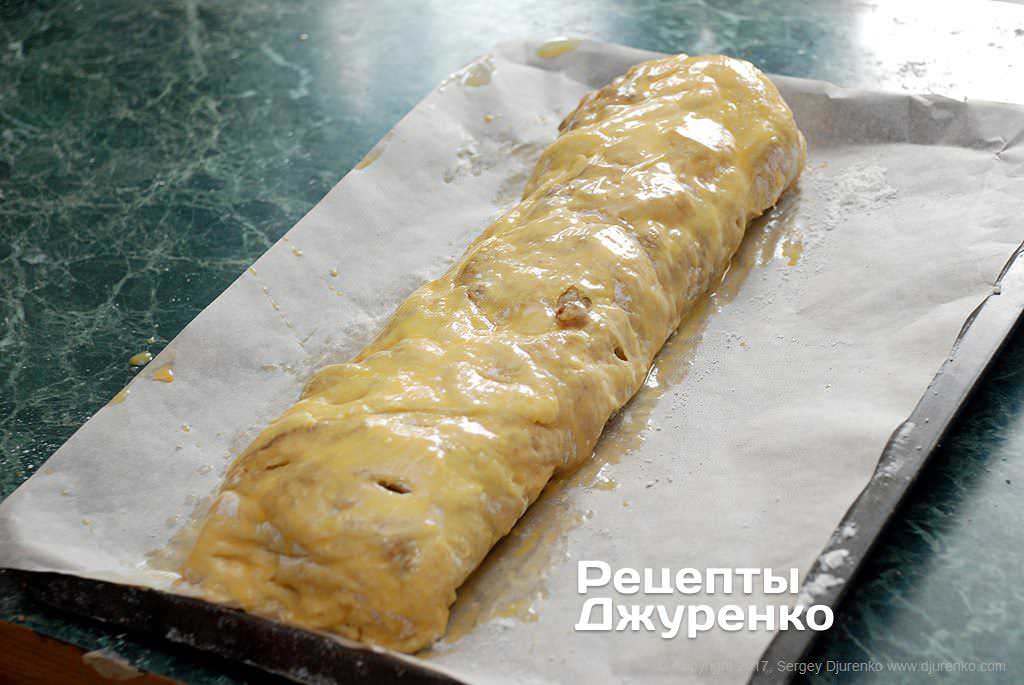
When the strudel is rolled up to the very end, roll it onto the prepared baking sheet lined with baking paper.
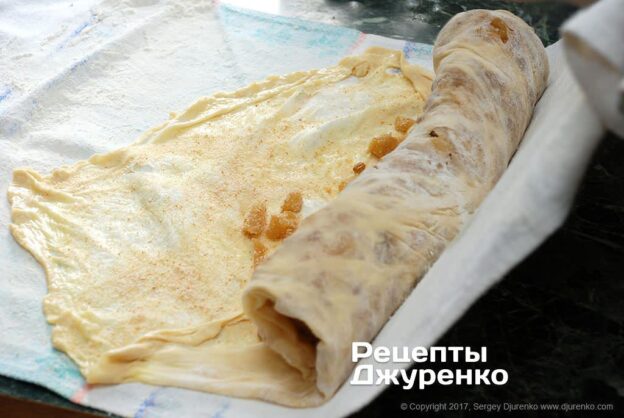
Firm up the stretched-dough apple roll with your hands, shaping it to the length of the baking sheet, and press down any bumps and sticking-out dough. You should end up with a neat, compact roll.
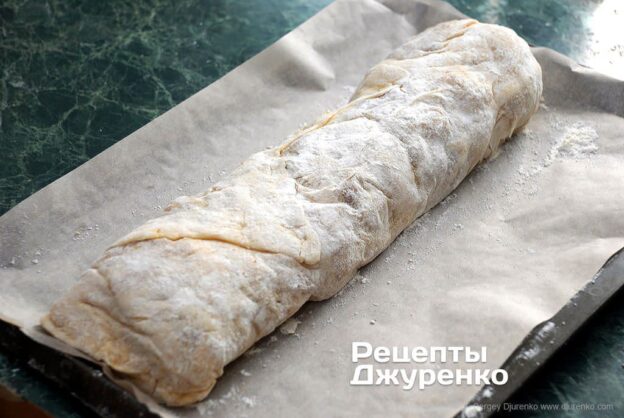
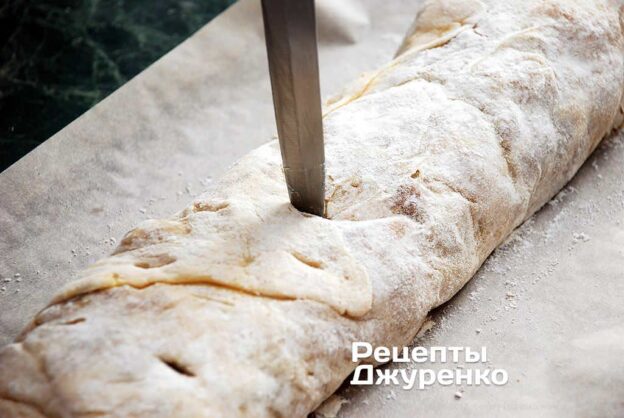
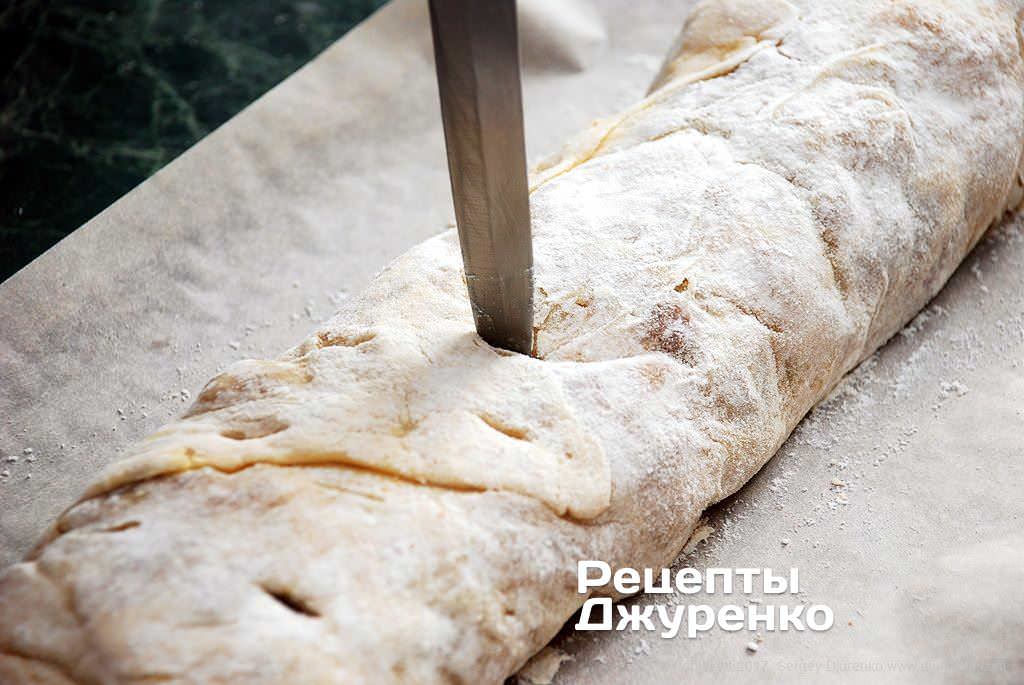
Prick the roll in several places with the tip of a knife to let steam escape, otherwise the steam will burst the delicate stretched dough as it heats.
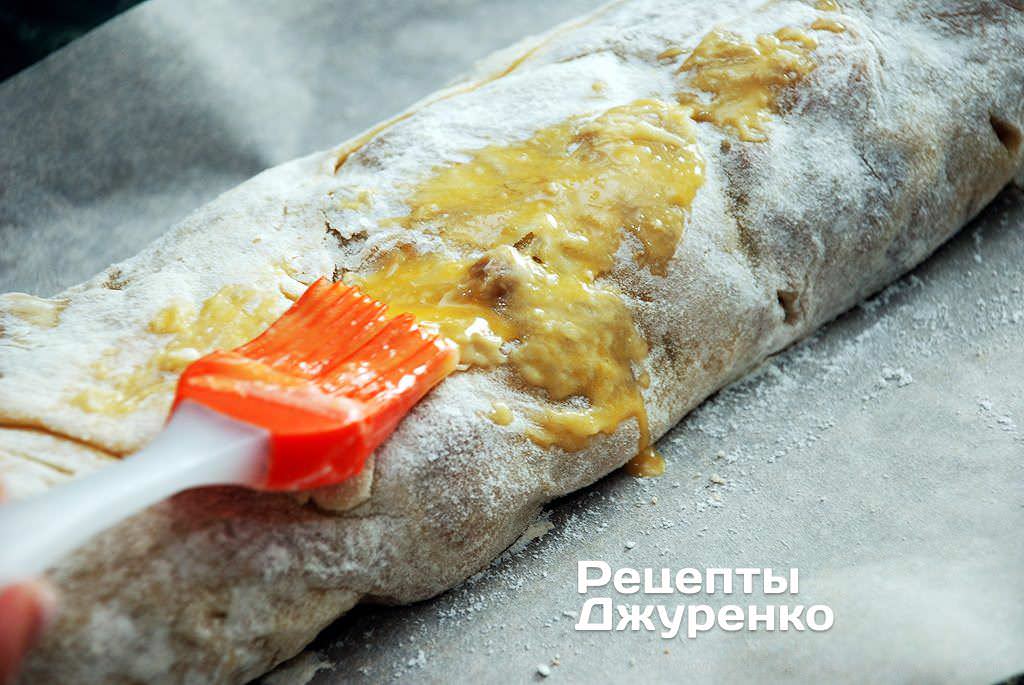
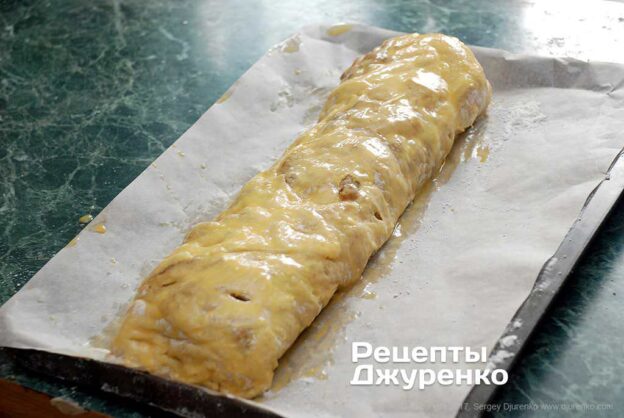
Brush generously with the beaten egg prepared earlier.

Baking
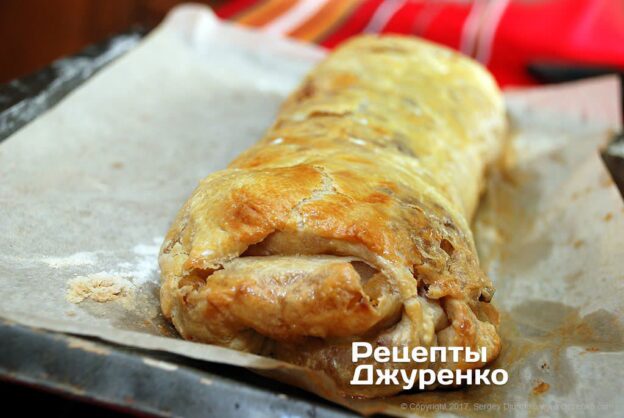
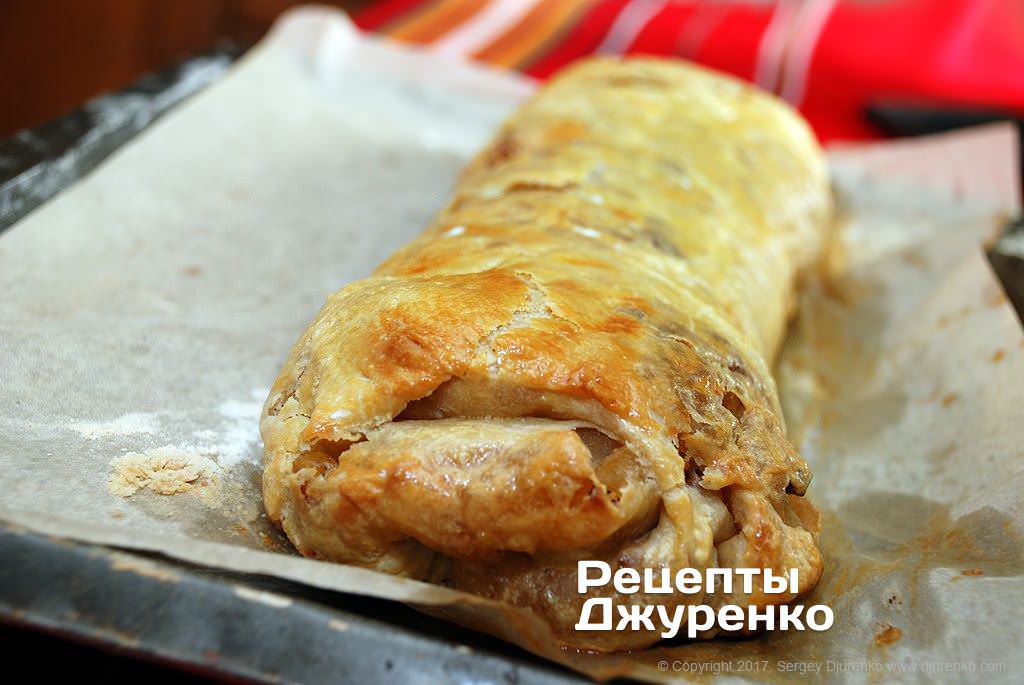
Bake the strudel at 200–210°C in a well and evenly preheated oven. Baking time is about 25–30 mins. Most likely you’ll need to increase the time. The apple strudel won’t have time to burn or overbake, but it does need to brown.
Take the finished apple strudel out of the oven, transfer it to a wooden board and let it cool. Although apple strudel is traditionally served warm, hot fresh pastry isn’t always a good thing.
Serving
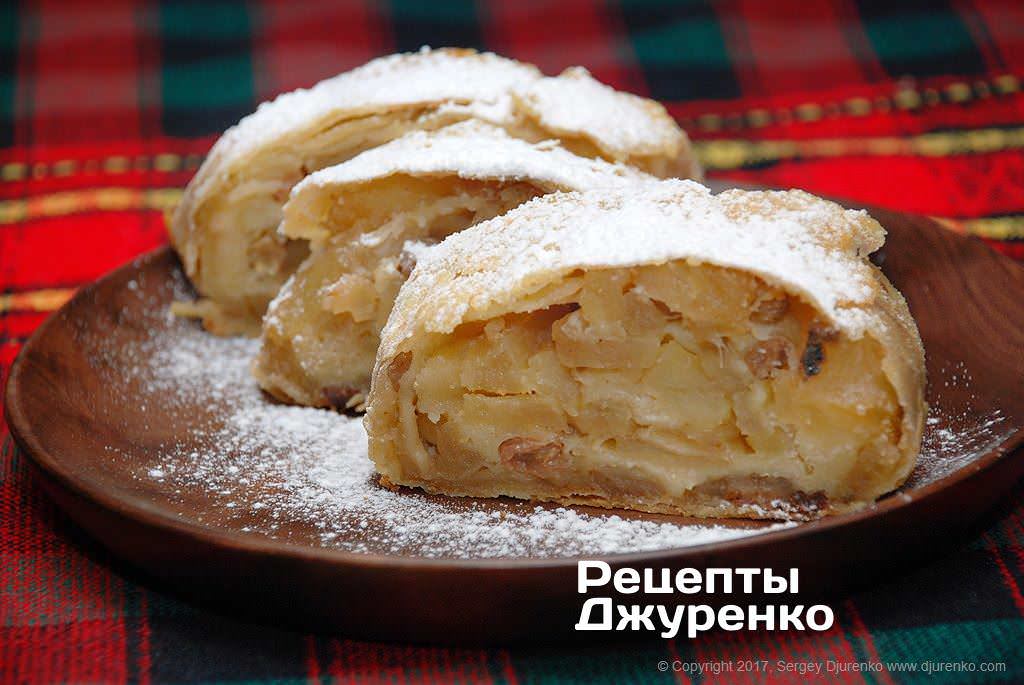
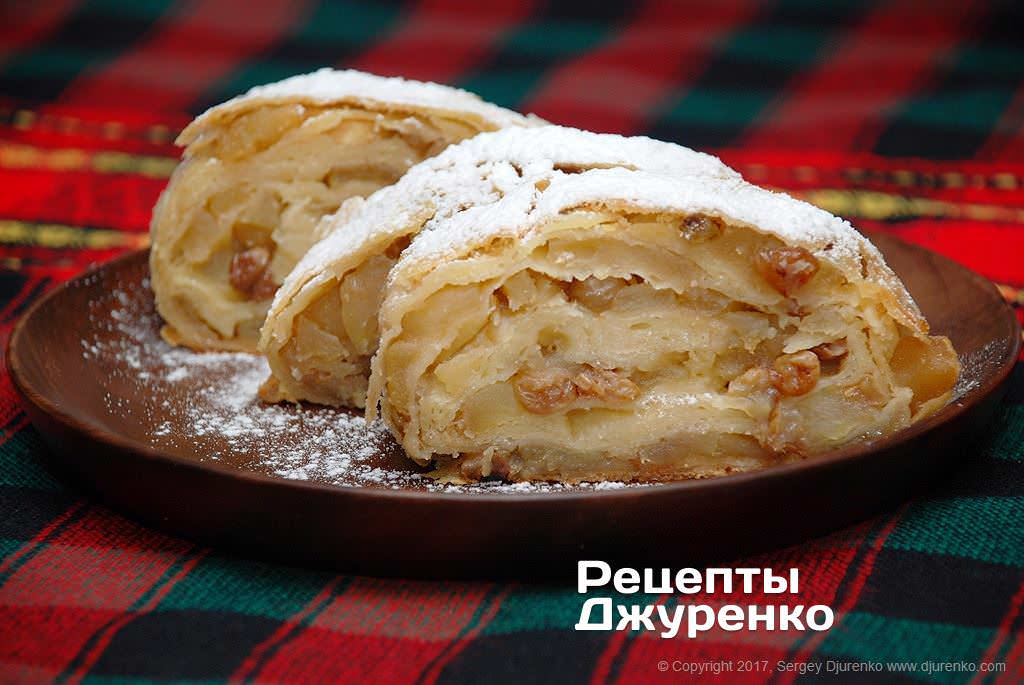
Dust with powdered sugar, sifting it through a tea strainer and spreading it evenly. Try to cover any tears and damage on the surface. However hard you try while baking, there will be some.
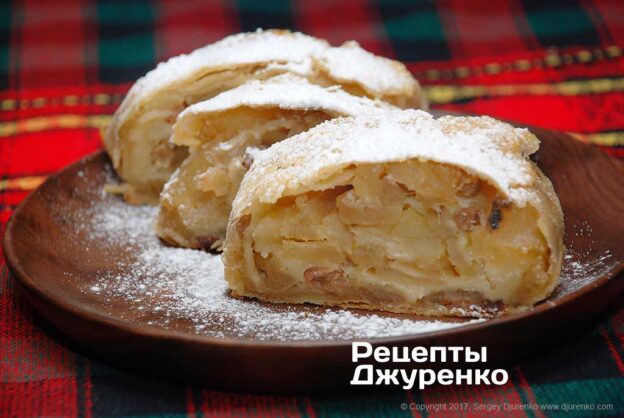
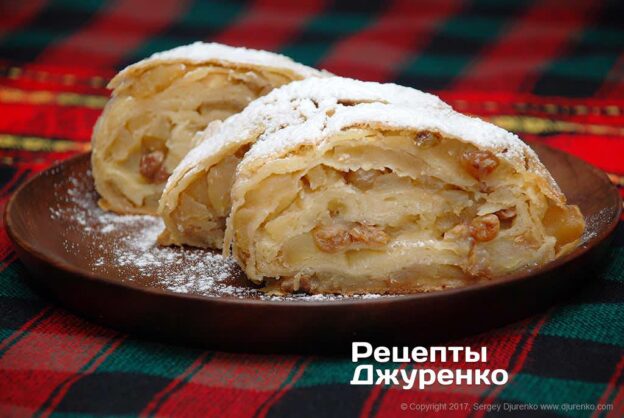
Cut the roll crosswise into pieces 20–25 mm wide and arrange on plates.
Yes, that’s it — everything is ready. Pour some delicious tea with lemon, warm cocoa or coffee with cream. All that’s left is to sit down at the table and enjoy this amazing dessert. Apple-filled strudel is a first-class dessert. I have friends who roll their eyes with pleasure as they eat it.
Calories and macros
221 kcal
100 g
- Protein2.5 g5% of kcal
- Fat7.5 g33% of kcal
- Carbs31.8 g62% of kcal
Calculated from the recipe ingredients, excluding salt and spices. Data: USDA and Matvaretabellen.
How did you like this recipe?
To Get It Right
How much flour
I wrote the flour as “as needed”: we got what you see in the photos from 2 cups. The dough should be very soft. If you followed the proportions and method but the dough tears and turns out wooden, the flour is most likely poor quality.
Without alcohol
You can soak the raisins without rum or brandy, in water for example. Give it a try — I think it will work.
The syrup from the filling
The liquid you drain from the apples is a spiced caramel syrup. Don’t pour it away: it’s good with blini or pancakes.
Have your own trick for this recipe?
Questions and answers
What dough is used for apple strudel?
Stretched dough: a yeast-free dough of flour, egg, lukewarm water and salt. It’s pulled out with your fingers until very thin — almost transparent, like thick plastic film.
Can you make strudel with store-bought dough?
I’ve never seen ready-made stretched strudel dough for sale, though I don’t rule out that it exists. Puff pastry for buns and filo are completely different. For store-bought puff pastry I have apple puff pastries.
How long do you bake apple strudel?
About 25–30 minutes at 200–210°C in a well-preheated oven, but most likely you’ll need longer: the strudel should brown.
What do you serve apple strudel with?
Usually warm, often with light vanilla ice cream or whipped cream. Or simply with tea or coffee with cream.