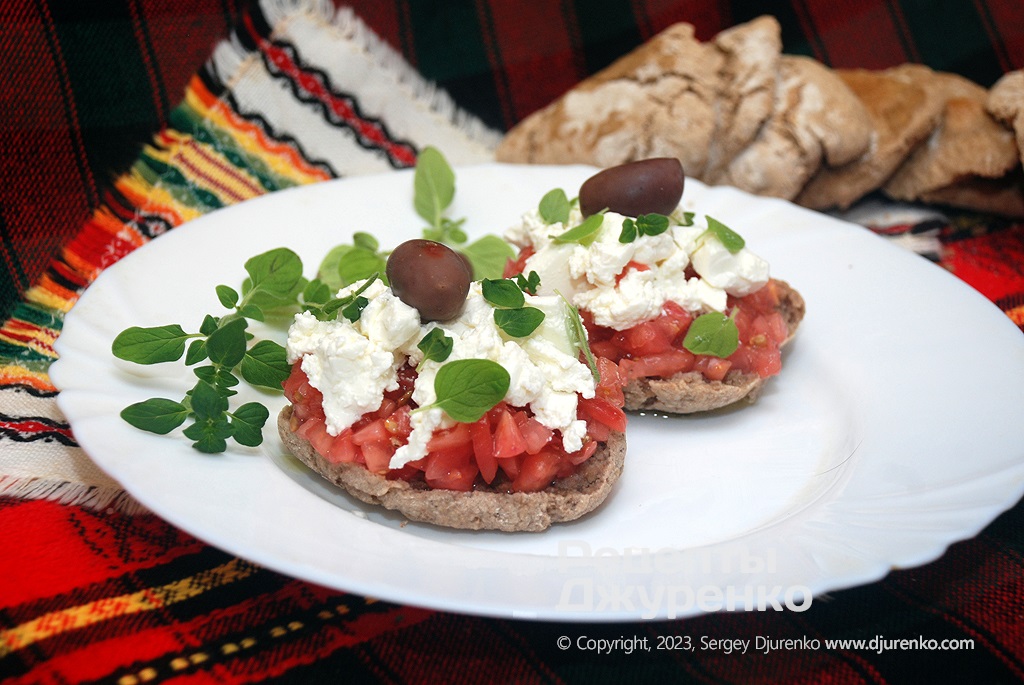
Kokouvagia: Cretan Dakos Appetizer with Tomatoes and Feta
Ingredients
6 pieces
- Barley paximadi rusks 6 pieces
- Large ripe tomato 1
- Feta cheese 100 g
- Black olives 6 pieces
- Olive oil 2 tbsp (1 tsp per rusk)
- Salt, oregano to taste
- Boiled water at room temperature for soaking the rusks
Step-by-step recipe
Preparing the ingredients
The Greek appetizer kokouvagia, or ntakos (Ντάκος), takes a few minutes to make, as long as you have prepared the barley rusks beforehand.
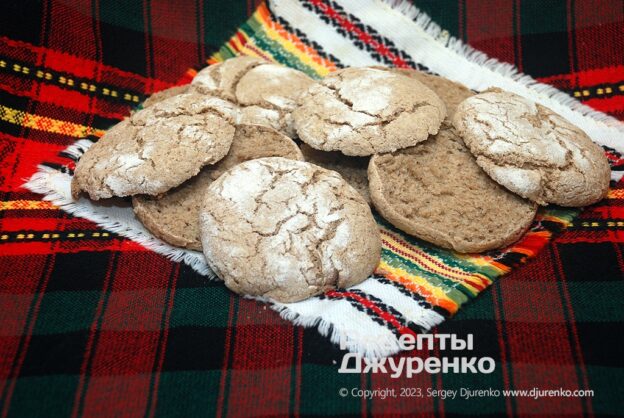
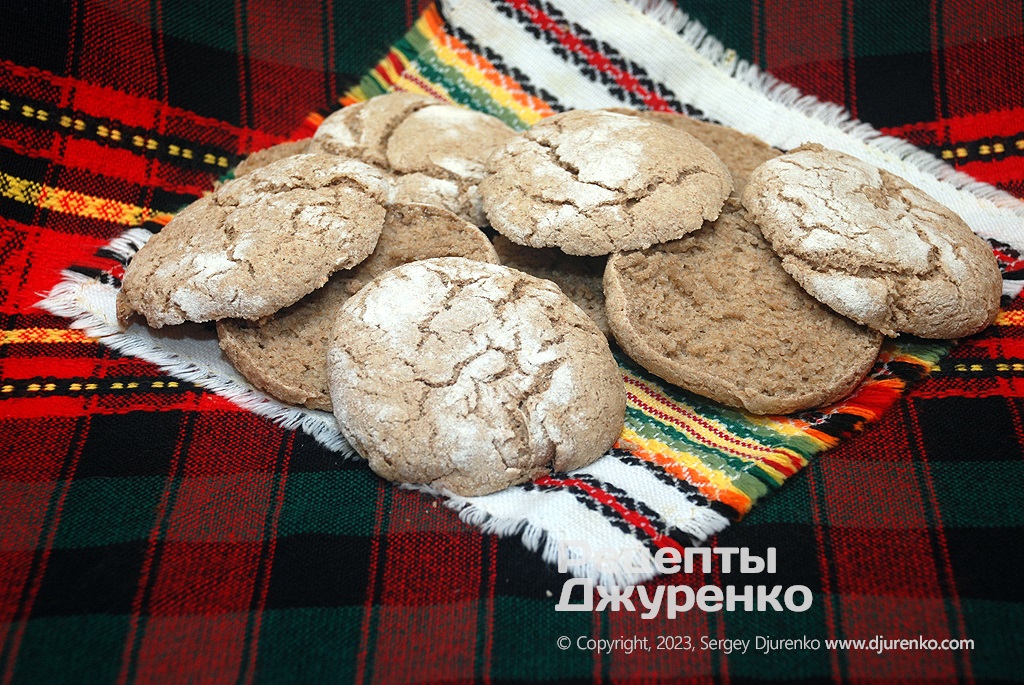
Prepare the paximadi barley rusks in advance. It is quite simple, I have published the recipe for paximadi rusks. Barley and whole wheat flour are sold in stores, and the rusks keep well, so you can make them ahead and use them as needed. The barley paximadi don’t have to be round, any shape will do, as it won’t affect the taste of the appetizer.
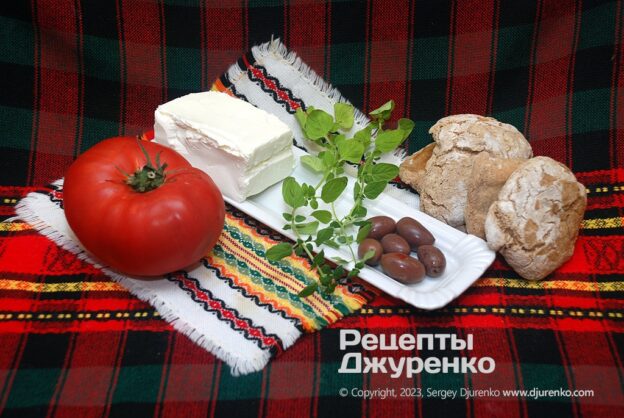
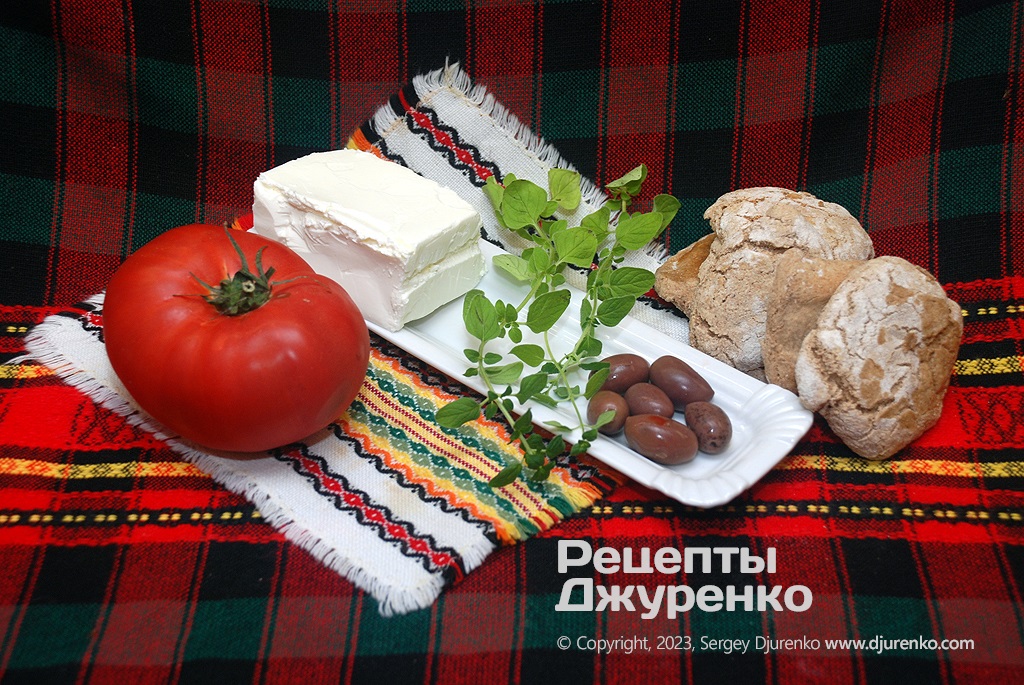
You need a large ripe tomato with few seeds, and there are varieties like that. Such a tomato is usually a bit misshapen and can weigh up to half a kilo, so for a few rusks you can cut off a part of the tomato and put the rest in the fridge. Brined feta is easy to find in stores. It is softer than brynza and has a creamy texture. Buy black olives that are not dyed.
Assembling the appetizer
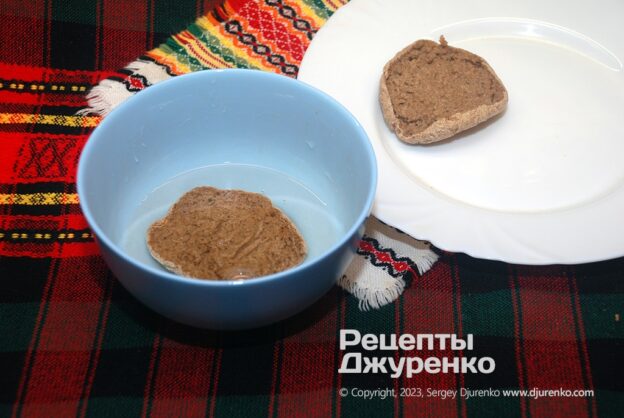
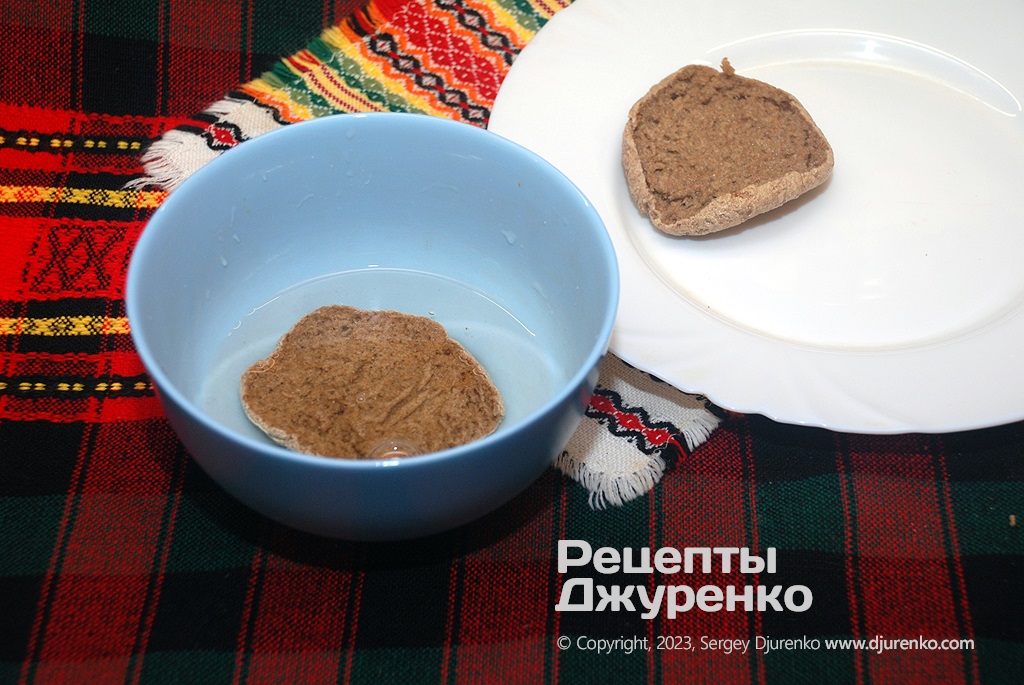
Soak the rusks lightly. Prepare a large plate for serving, and pour boiled water at room temperature into a cup or bowl. It all depends on how dry the rusks are: sometimes it is enough to just wet the surface, and sometimes they should stay in the water for a few seconds. The goal is for the rusk to feel like slightly stale bread, “yesterday’s” as we say, and by no means soggy.
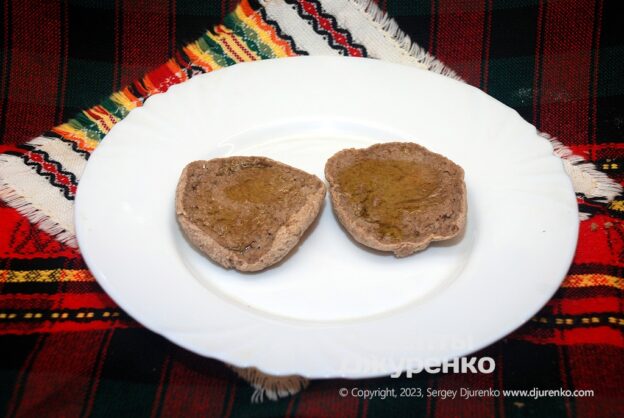
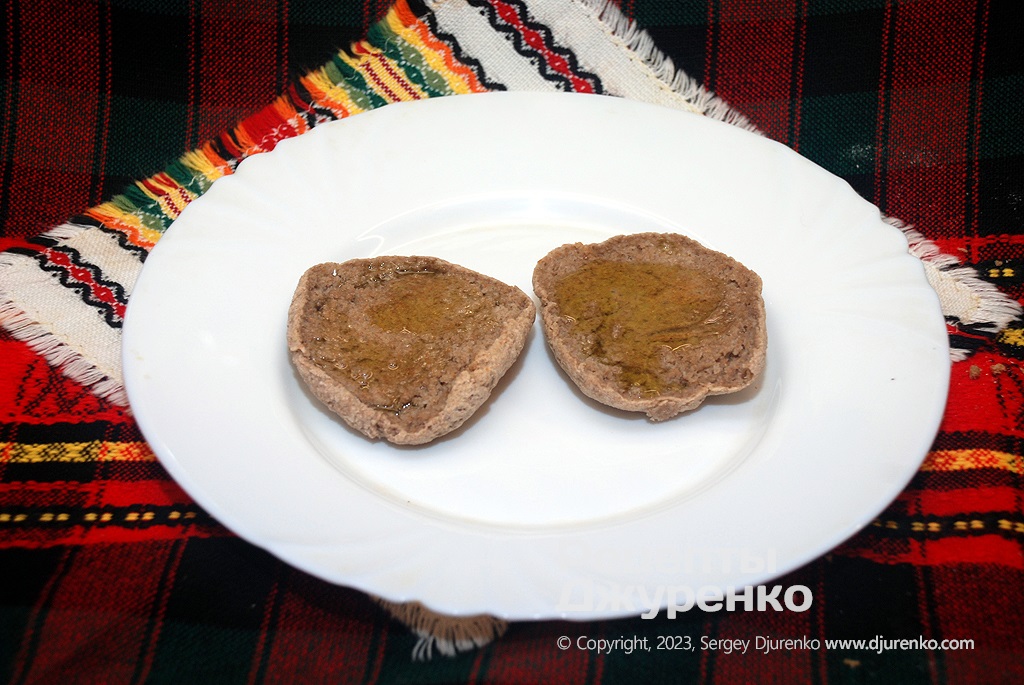
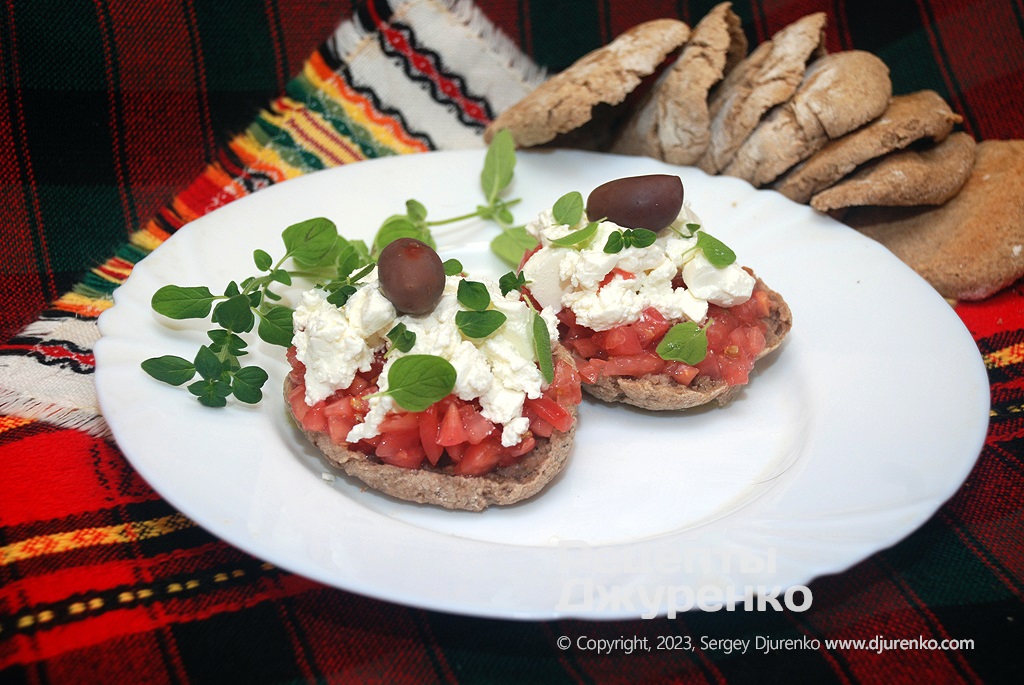
Shake off the excess water from two rusks, put them on the plate and drizzle with olive oil. It looks like owl eyes, doesn’t it? Take the best extra virgin olive oil and spread it over the whole surface of the rusks. I usually use 1 tsp of oil per rusk, which is enough.
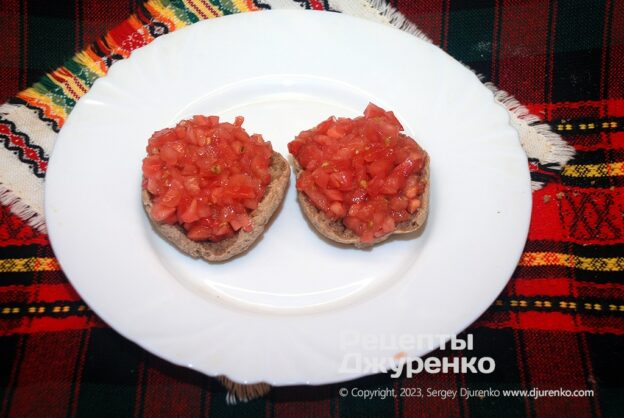
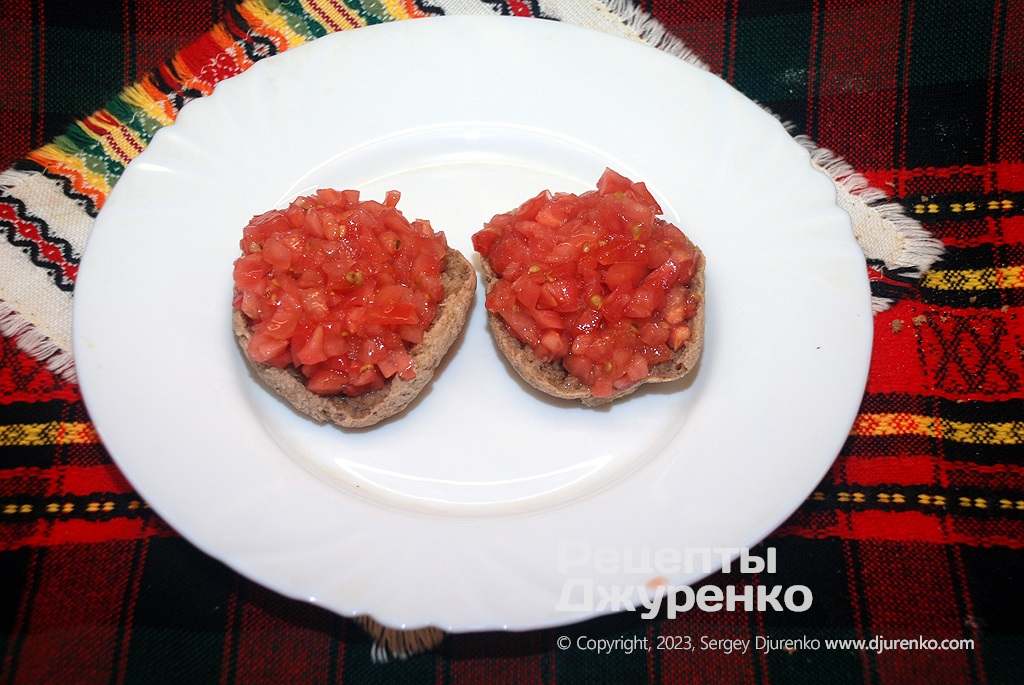
Peel the tomato and put the flesh on the rusks. The tomato, or the part you are using, needs to be peeled of its thin outer skin. You can scald it with boiling water so the skin comes off. An even easier way, since the tomato is quite large, is to peel it with a very sharp knife, like a potato. Traditionally, the tomato flesh is grated on a coarse grater. Feel free to grate it if you like. I usually just dice the flesh with a knife and then chop it further to a more uniform texture. If the tomatoes have a lot of seeds, remove them, and squeeze the grated flesh slightly. Put the tomato flesh on the soaked rusk and add salt.
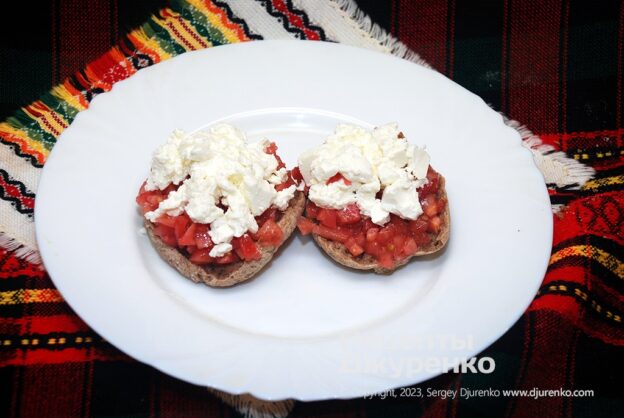
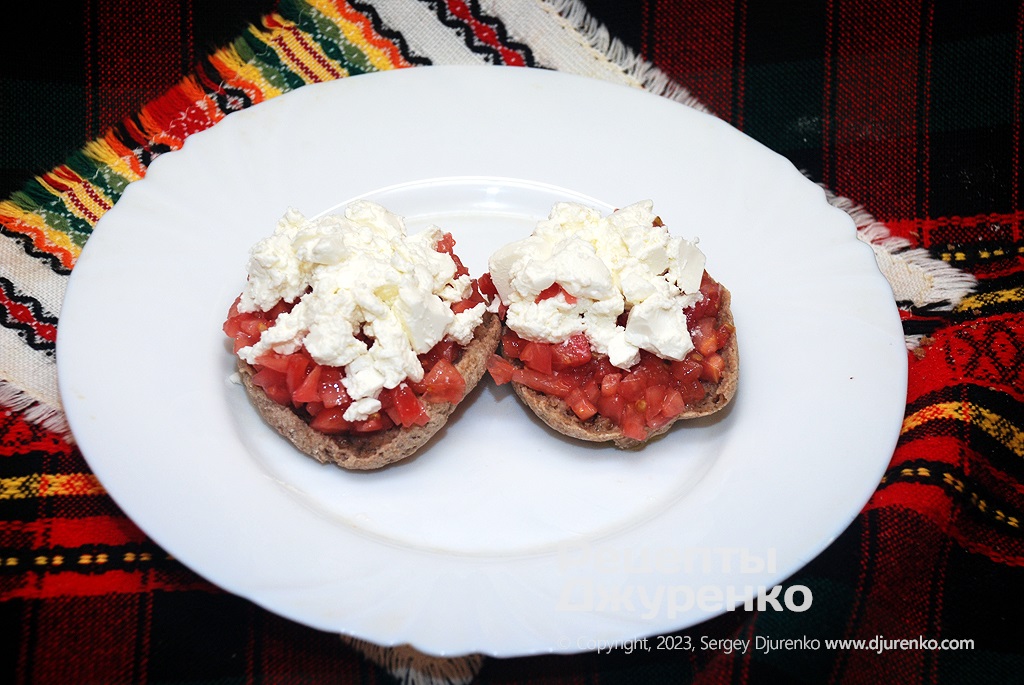
Crumble the feta over the tomato. I have tried making this appetizer with different brined cheeses. The best kokouvagia is made with feta, which is soft and even spreads on bread. Crumble the cheese with your fingers over the tomato flesh, not necessarily very fine. The amount of cheese is up to you, but it should cover the tomato completely. Brynza is a firmer cheese and can be used, but I can’t shake the feeling of Shopska salad taste.
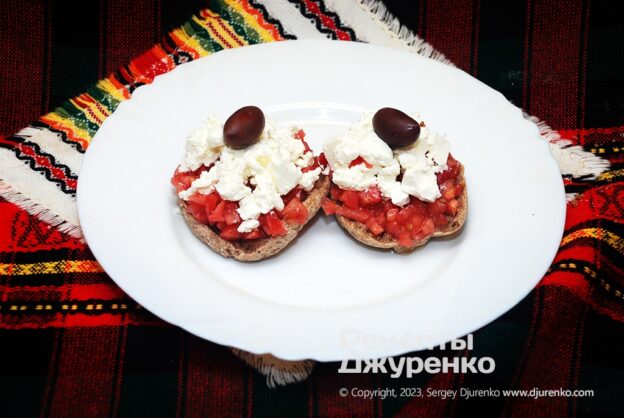
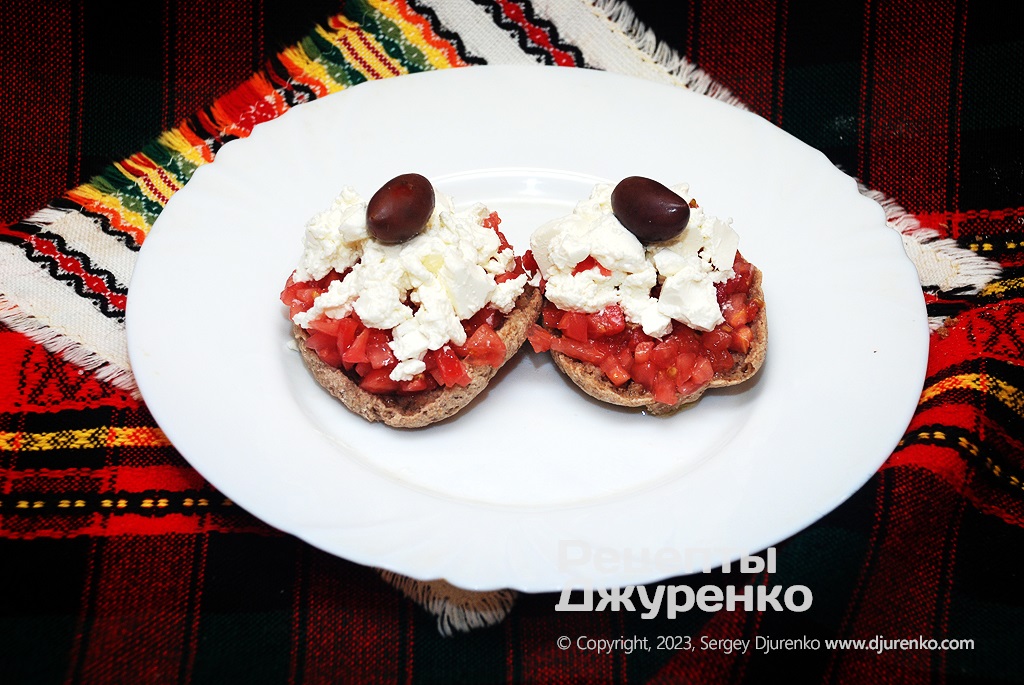
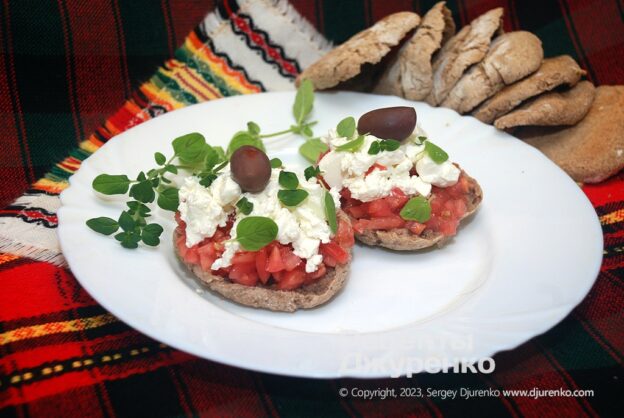
Put a black olive on top and sprinkle with oregano. It is better to take a brined olive. By the way, a black olive is actually more of a brownish, unevenly colored one, and in stores the black color comes from a dye in which green olives are soaked to get a super-black shade. Oregano is an important ingredient of the appetizer. Ideally, you have fresh green herbs in a pot on the windowsill or in the garden. Pick the leaves and sprinkle them over the cheese. Alternatively, take a large pinch of dried oregano and sprinkle it on. Dried oregano has a strong aroma, and you can combine fresh and dried.
Serving
Serve the appetizer right away, at room temperature. It is an appetizer in the literal sense, often eaten with strong drinks such as ouzo and tsikoudia (raki). But it is simply tasty food, and a very healthy one. This combination of grains, vegetables, cheese and olive oil is classic for Mediterranean cuisine.
Make the appetizer for one sitting. It won’t keep and shouldn’t be stored in the fridge, as the tomato flesh is wet and the rusk will simply turn to mush. Besides, all the topping ingredients taste best at room temperature and keep their aroma. I have seen onion added to the topping, which is, let’s say, for a very particular taste.
Calories and macros
247 kcal
100 g
- Protein7.6 g13% of kcal
- Fat12.8 g48% of kcal
- Carbs23.6 g39% of kcal
Calculated from the recipe ingredients, excluding salt and spices. Data: USDA and Matvaretabellen.