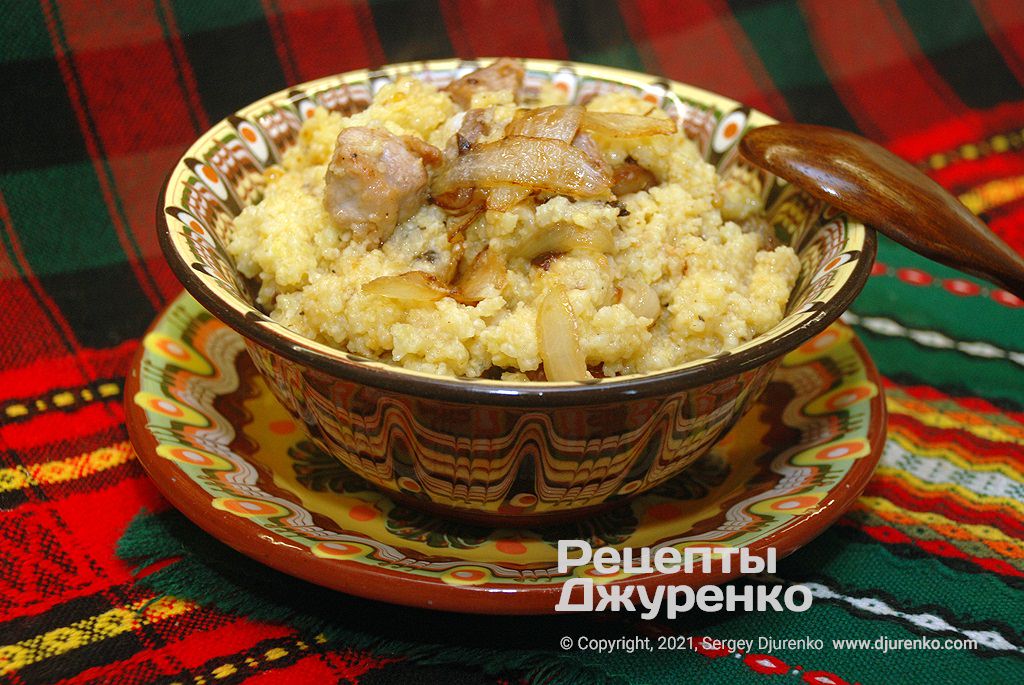
Millet Porridge
Ingredients
2–3 servings
For the porridge
- Millet 1.5 cups (270 g)
- Water 3 cups (600 ml)
- Salt a pinch


For the topping
- Pork belly 150 g
- Pork fat (salo) 50 g
- Onions 2–3
- Salt, black pepper to taste


Step-by-step recipe
Preparing the millet
The better the grain, the tastier the millet porridge.
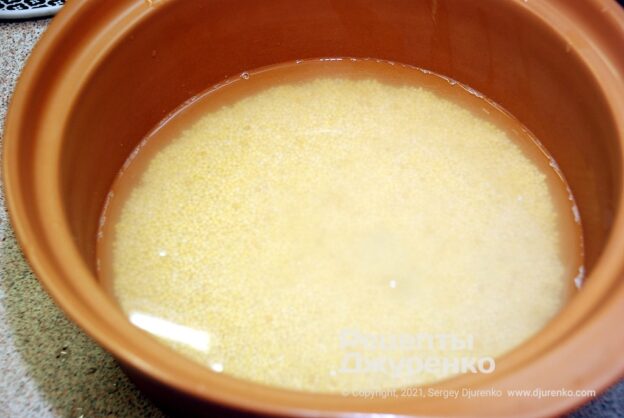
Before cooking, be sure to look the millet over carefully for pests. Rinse the grain under running water – this washes away the leftover “flour” from polishing and any husks. Soak the millet in cold water for a few hours, so the porridge comes out smoother. That said, you can skip this – the grain will cook through anyway.
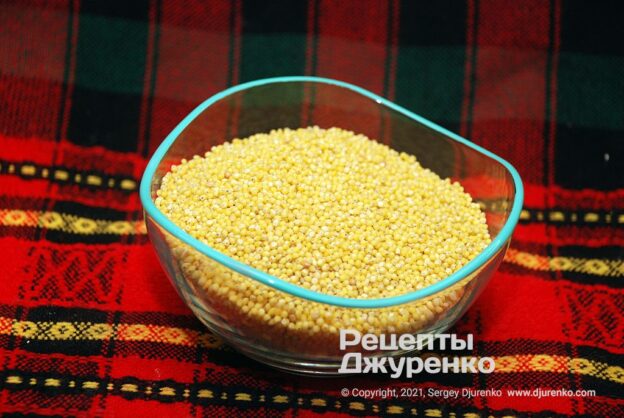
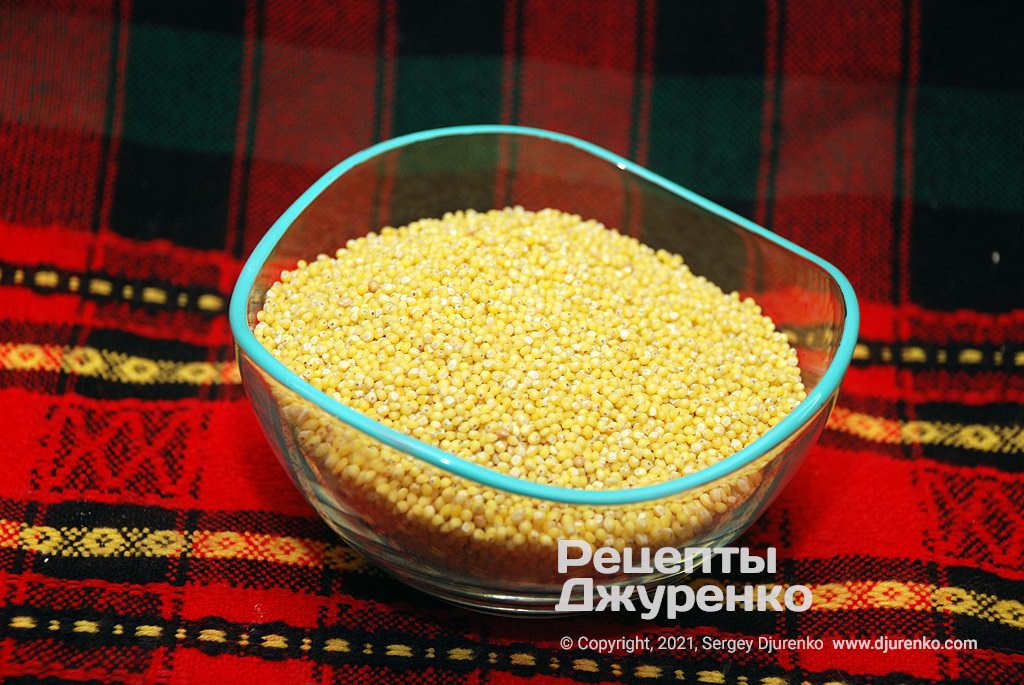
After soaking, drain the water and rinse the millet again.
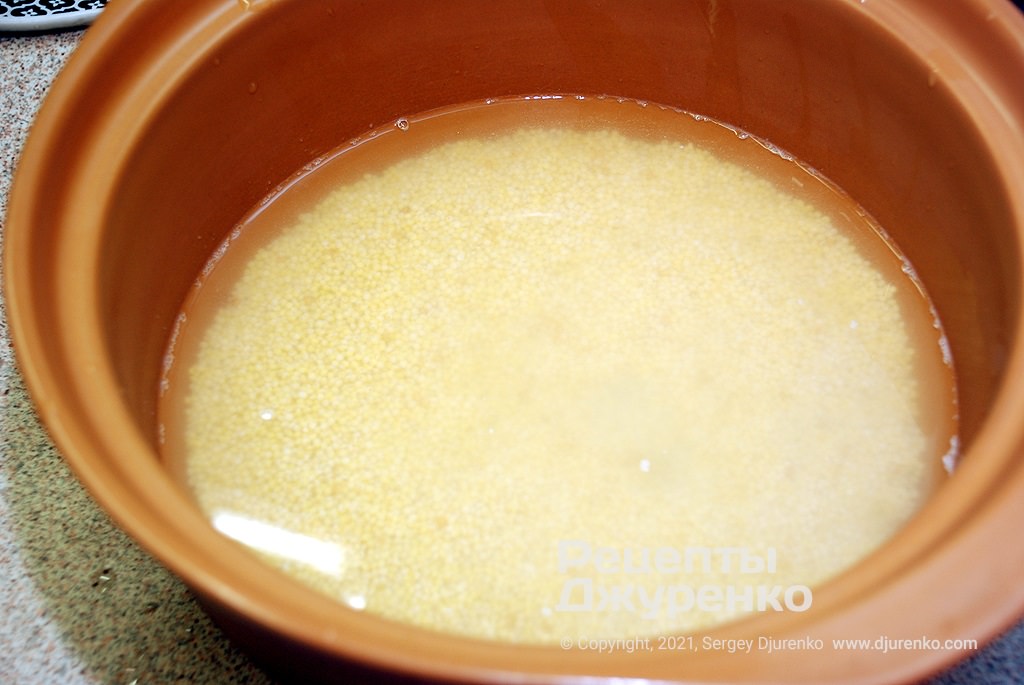
Cooking the porridge
Usually millet is cooked in three times its volume of water for up to 45 mins. But since the grain has already absorbed some water while soaking, I cook it in twice its volume of water. This gives a fluffy or “thick” porridge. If you want a runnier version, use more water.
Pour the right amount of water into a pot and add a pinch of salt. Add the rinsed millet and put it on the heat. When the water comes to a boil, stir the grain and cover the pot with a lid. Turn the heat down to the lowest setting that still keeps it simmering.
Let the millet cook. The grain is usually fully cooked in 20–25 mins. After that it’s customary to leave it for a while to “steam through”, although it’s already ready to serve.
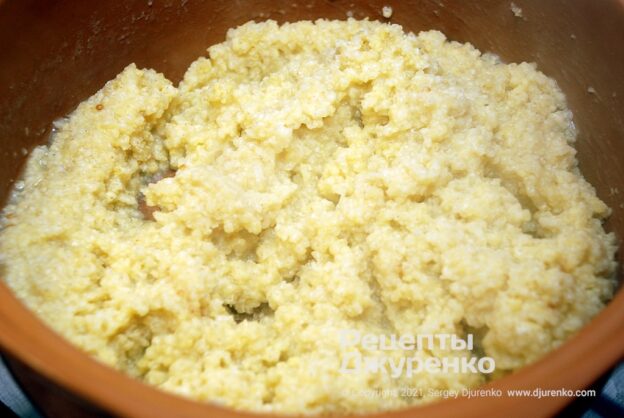
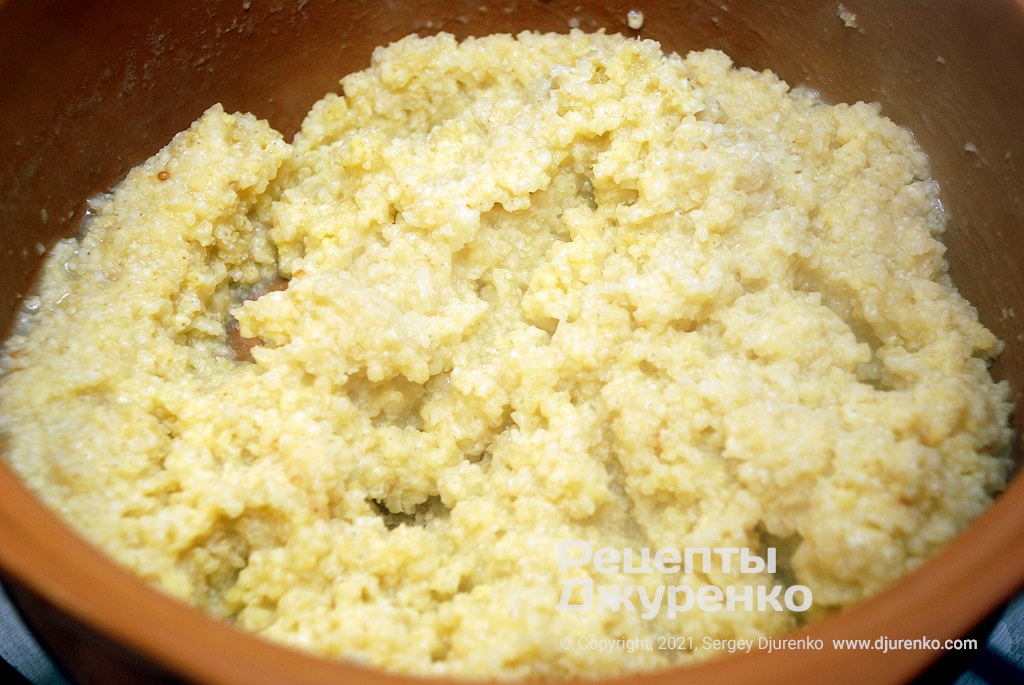
Onion and cracklings
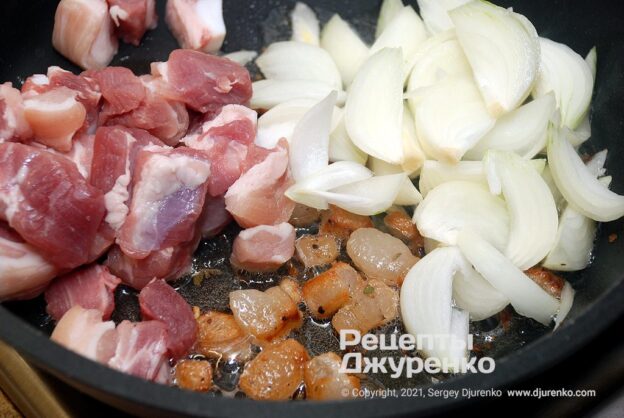
While the millet porridge is cooking, prepare a tasty topping. I make it with fried onion and cracklings. I usually buy sliced pork belly that has lots of meat and very little fat, but does have some cartilage. This meat is amazingly good for homemade plov and similar dishes.
If there isn’t much fat, dice a small piece of pork fat (salo) – plain or smoked – and render it in a frying pan.

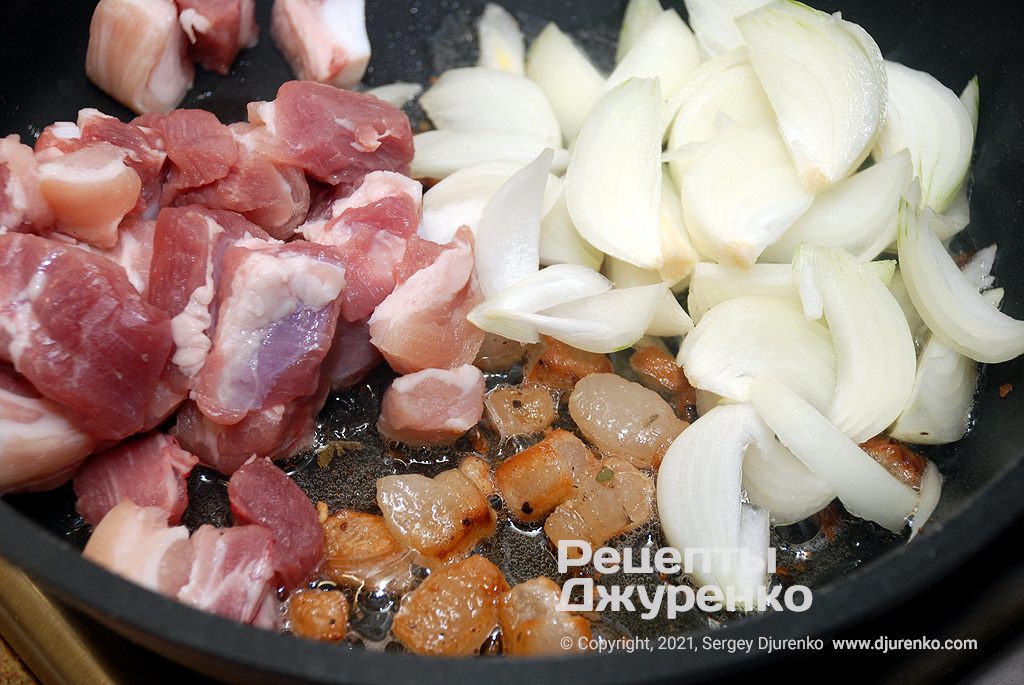
Peel the onion and cut it into thick strips. Dice the pork belly – you can remove the cartilage if you like.
Add the sliced onion and pork belly to the pan. Stirring fairly often, fry the meat and onion until they start to brown. Season with salt and freshly ground pepper. Fry the onion and meat until fully cooked.
The best result comes when the onion turns a nice deep golden color – the taste will be incomparable thanks to the caramelized sugars.

Bringing it together
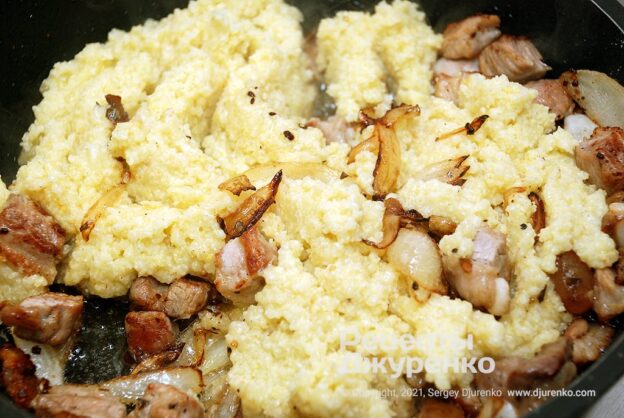
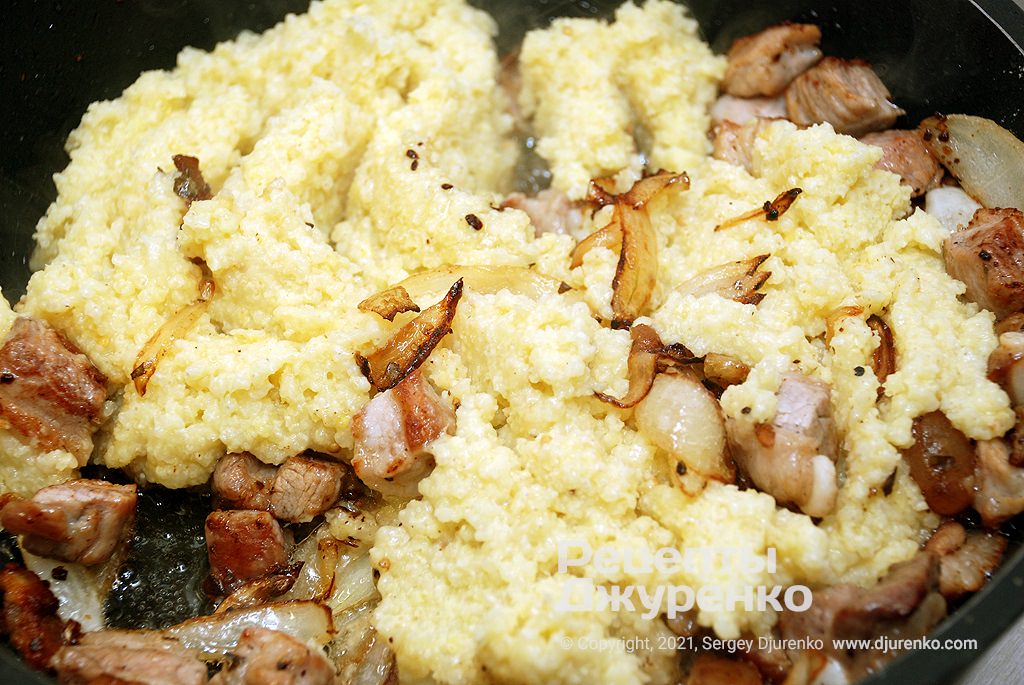
Stir the cooked millet, breaking up the lumps a little. If you cooked the porridge with more water, it will be less thick, so just stir it. Add the grain to the pan with the onion and meat and stir. Put the pan over low heat and cover with a lid. In 5–10 mins the millet porridge is ready.
Serving
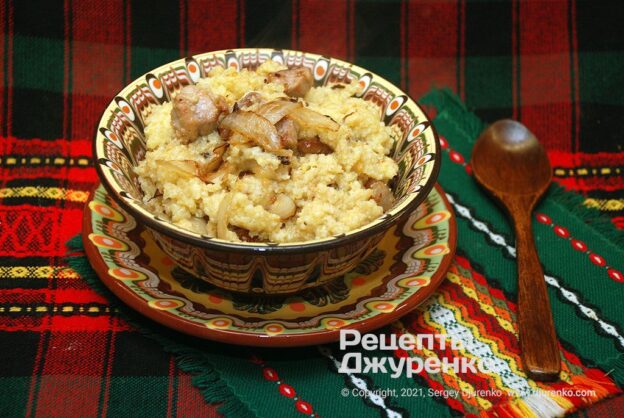
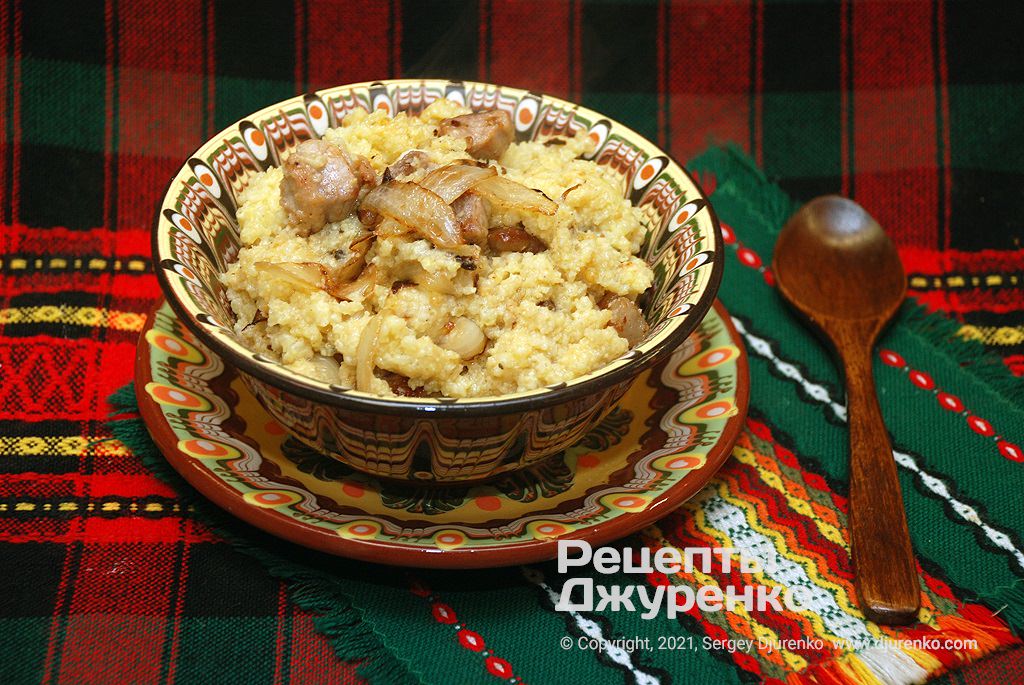
Spoon the millet porridge with cracklings and onion into bowls. I always add a bit more pepper before serving – I just like it, and the aroma gets more intense.
By the way, pork goes great with coriander – try adding some while cooking. Serve the porridge hot – as it cools it firms up, although you can always reheat it.
Calories and macros
1150 kcal
Serving ≈ 600 g
- Protein24 g9% of kcal
- Fat68 g56% of kcal
- Carbs96 g35% of kcal
100 g192 kcalProtein 4 gFat 11.3 gCarbs 16.1 g
Calculated from the recipe ingredients, excluding salt and spices. Data: USDA and Matvaretabellen.
How did you like this recipe?
To Get It Right
Instead of pork belly
Instead of pork belly, any pork fat works in millet porridge – plain or smoked salo, bacon or sliced pork belly with layers of meat. If the meat is lean, first render the fat from a piece of salo, then add the onion.
How to store millet
With long storage the grain for millet porridge fades to a whitish yellow, and moths can get into it. Keep millet in a tightly closed jar in a dry, cool place and don’t stock up too far ahead.
If there’s porridge left over
As it cools, millet porridge firms up – that’s normal. Keep it covered in the fridge for up to 2–3 days and reheat it in a covered frying pan with a spoonful of water.
All in one kazan
Some readers make millet porridge this way: render the salo in a kazan, pour in the water and, once it boils, add the millet and cook the porridge right with the cracklings.
Have your own trick for this recipe?
Questions and answers
How long do you cook millet?
After it comes to a boil, over the lowest heat with the lid on – usually 20–25 minutes, until the grain is soft. Unsoaked millet can take up to 45 minutes.
How much water do you need for a cup of millet?
Usually 3 cups of water (600 ml) to 1 cup of millet (180 g). I cook soaked millet in twice its volume of water – this makes the porridge fluffy or thick. For a runny porridge you need more water.
How do you cook millet so it isn’t bitter?
Choose bright yellow millet without a shine – they say shiny grain tastes bitter. Rinse the grain under running water before cooking, and rinse it again after soaking. If the millet has been sitting for a long time, readers suggest pouring boiling water over it first and draining it – the bitterness goes away.
How do you make millet porridge with milk?
Millet can be cooked in milk or in water with milk, which changes how thick the porridge is. It’s easiest to cook the grain in water until absorbed first, then pour in hot milk and simmer over low heat with the lid on for another 10 minutes, stirring.
How many calories are in millet porridge?
A serving of this porridge with pork belly and cracklings is about 200 kcal. Plain millet porridge cooked in water is about 90 kcal per 100 g.