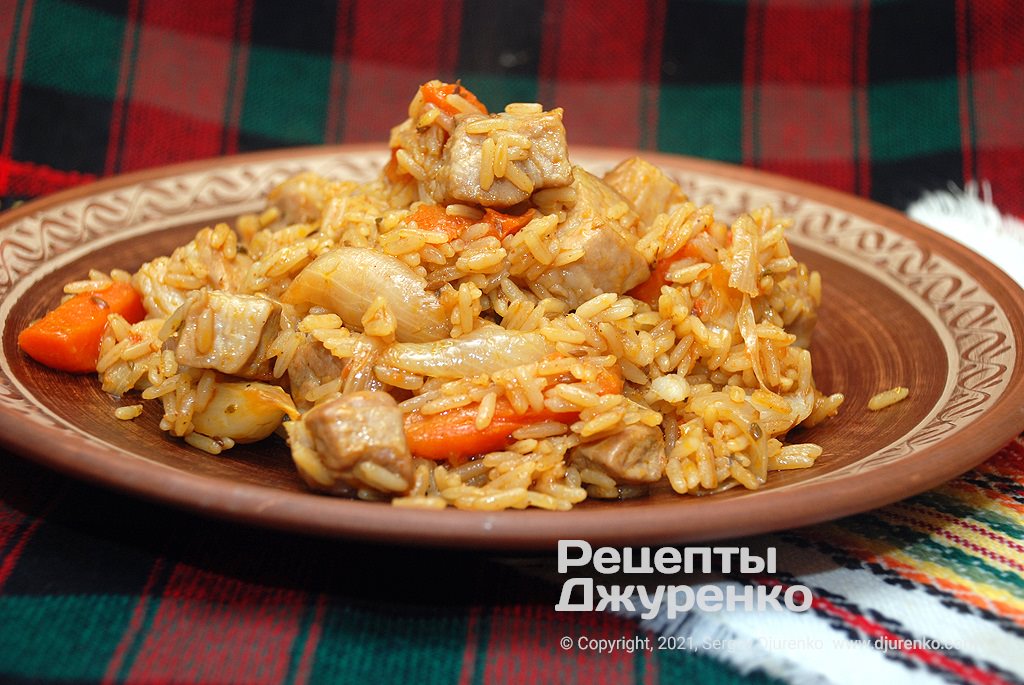
Skillet Pilaf with Pork
This simple dish cooks very quickly. You do not need a kazan, special ingredients, or much time and effort. A homemade skillet pilaf can easily be a breakfast when you are short on time. You can also make it with vegetables or chicken fillet, though in my opinion it is tastiest with pork belly.
Pilaf is commonly considered the calling card of Eastern cuisines. The most common grain for it is rice, although bulgur pilaf or even small pasta is by no means exotic. What matters is that the finished dish is fluffy and the grains stay separate. Otherwise it is just rice porridge with lots of add-ins. Fluffiness comes from special rice varieties and a fairly generous amount of fat in the dish.
In most Eastern languages the name of the dish translates as “boiled or cooked rice”. And this matters: during cooking the rice is first boiled and then steamed. I read somewhere that the way the rice is prepared is called “boiling in absorbed liquid”. The grain, being made of starch, can absorb quite a lot of water.
As a rule, most rice varieties are boiled in twice their volume of liquid. In different countries the rice is cooked separately and combined with the add-ins (meat, vegetables, fat) at the steaming stage. More interesting is preparing the grain and the add-ins at the same time. It is faster and simpler, and the result is always pleasing. For home cooking a kazan is rarely used, and an ordinary skillet with a lid is quite enough.
Any store has parboiled rice, sold under the name “steamed”. The grains of this rice are elongated and smoothly polished, with a dark pearly color and slight translucency. Pilaf also turns out well with basmati rice, which is softer and very aromatic.
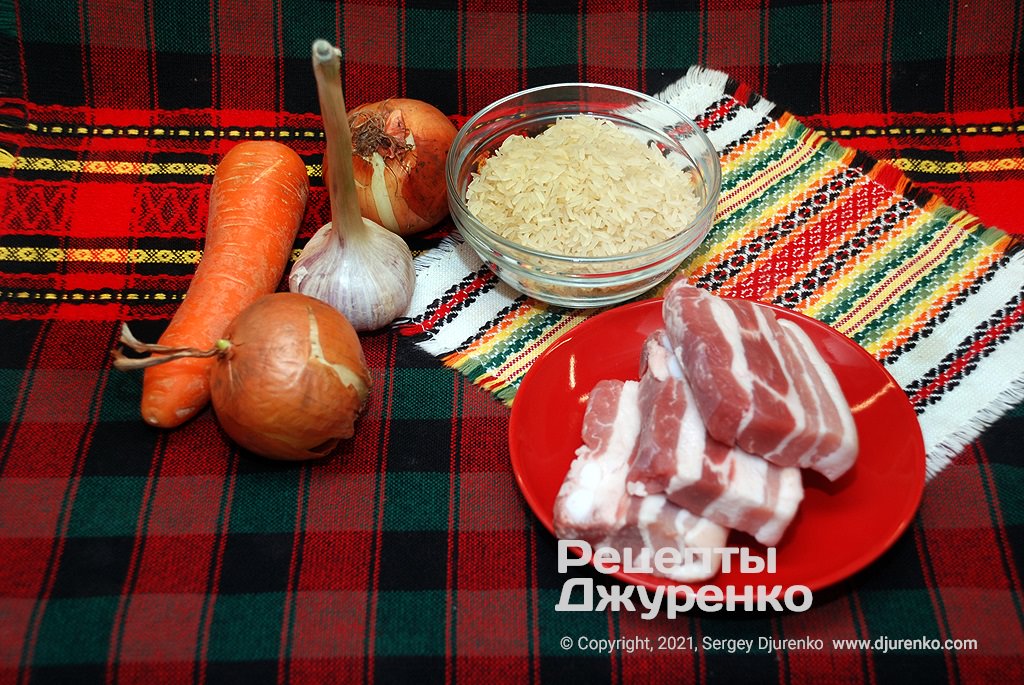
For the meat in home cooking, it is better to use chicken fillet or wings, or meaty pork belly. Stores sell sliced pork belly, which has a lot of meat, a little fat and some cartilage. Be sure to use carrots and onion. A special ingredient is a head of garlic, separated into unpeeled cloves. You can cook with any vegetable oil.

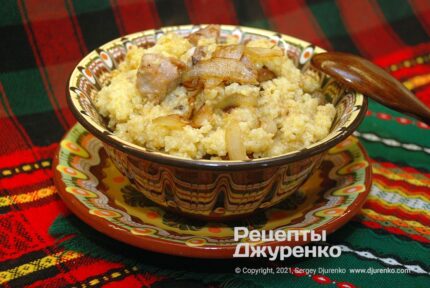
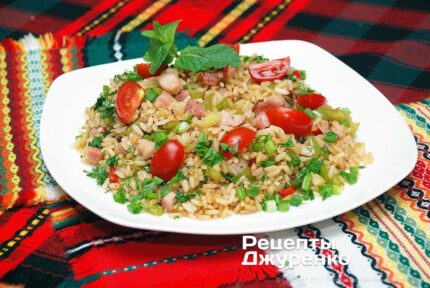
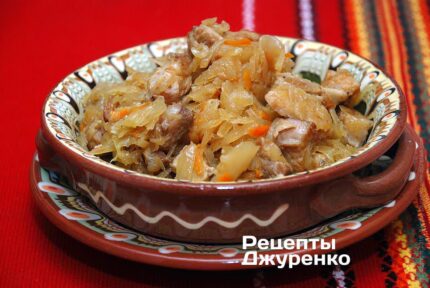
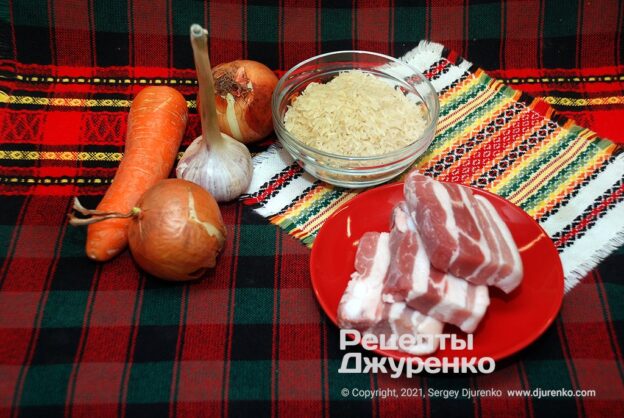
Ingredients
2 servings
- Parboiled rice 1 cup
(180 g) - Pork belly 350 g
- Onion 2
- Carrots 1
- Garlic 1 head
- Vegetable oil 50 ml
- Salt, black pepper, saffron (marigold), cumin, dried barberries, sweet and hot red pepper to taste
Step-by-step recipe
Homemade skillet pilaf is a tasty, filling dish. It cooks in the morning while you take a shower, with hardly any attention from you. You only need to fry the pork belly with the vegetables, add the rice and spices, then pour in water. After 15-20 mins, when the water is absorbed, all that is left is to steam the dish for 20-30 mins.
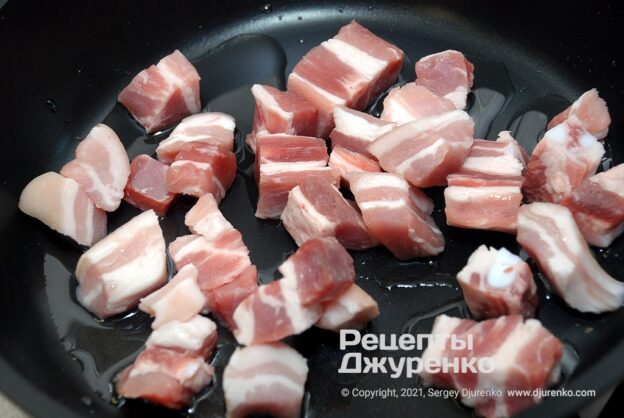
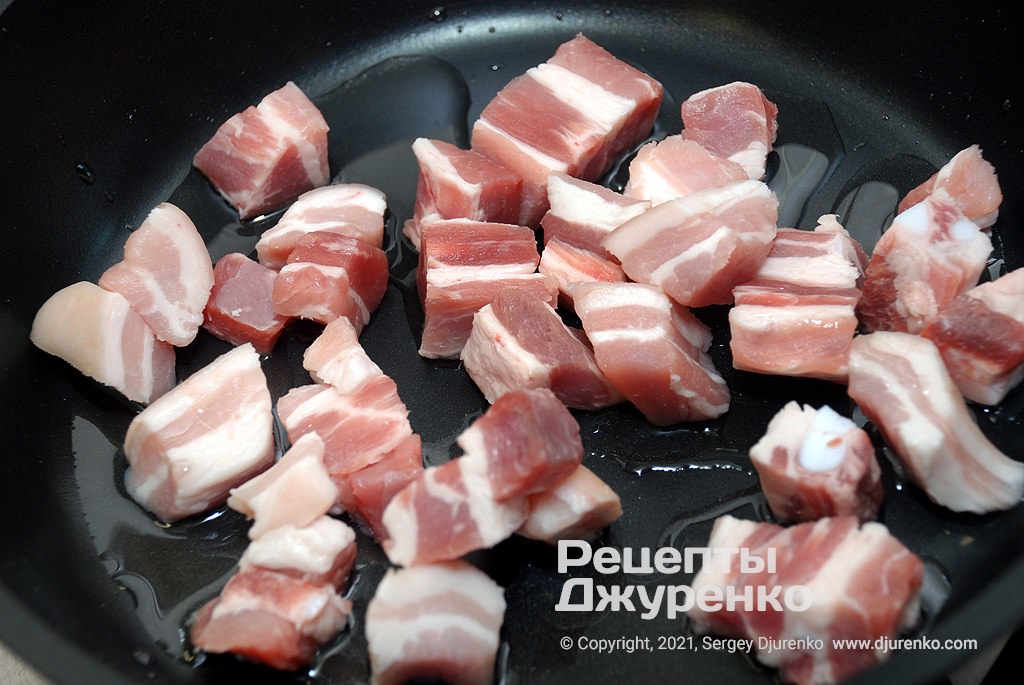
If the pork belly is fatty, you can use less vegetable oil. Cut the pork belly into cubes; the cartilage can stay. Heat the vegetable oil in a skillet and fry the meat until it browns. The pork will render some fat, and if there is a lot, pour some off. Move the fried pork belly cubes to a separate bowl for now.
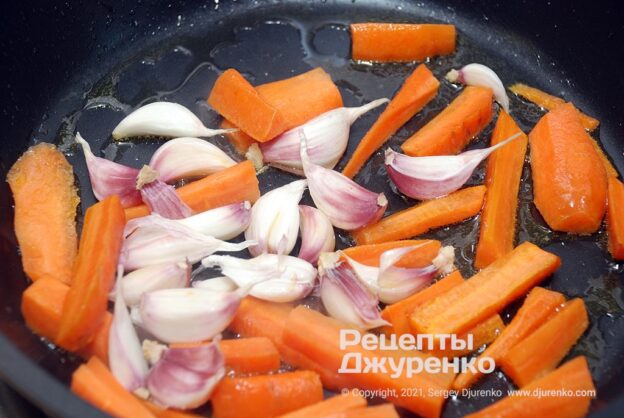
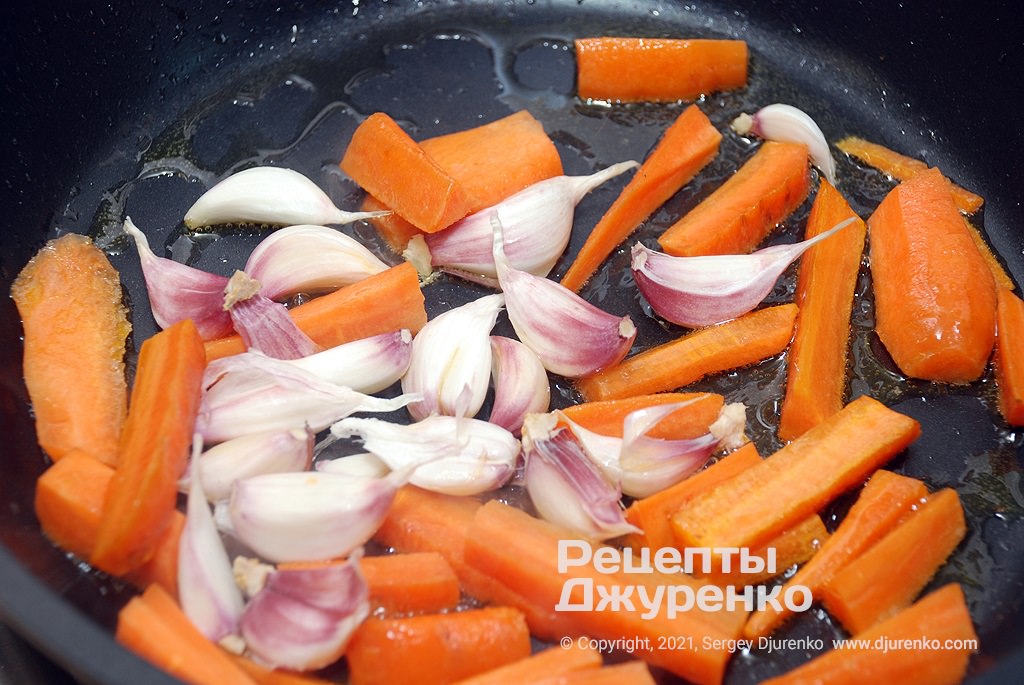
Peel the carrots and cut them into sticks or thick julienne. Fry the carrots in the fat left in the skillet until slightly soft. Add the unpeeled garlic cloves. When cooking in a kazan, whole or halved heads are usually put into the pilaf. Our portion is small, so separate cloves in their skins are just right. Young garlic is ideal; the skillet pilaf will be especially tasty.
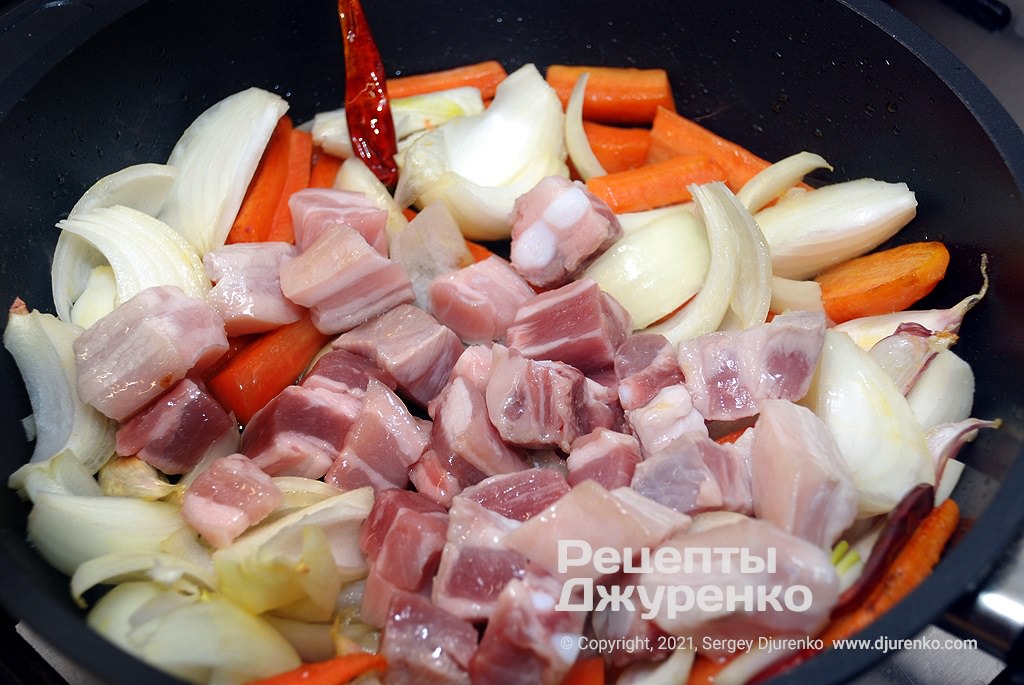
Peel the onion and cut it into large wedges. Fine chopping will not work, because the onion will simply “disappear” in the dish. Add the onion and the fried pork belly to the skillet and fry everything together. The vegetables should all become soft and start to brown a little. Stir the vegetables all the time for better, even browning. Do not cover the skillet with a lid.
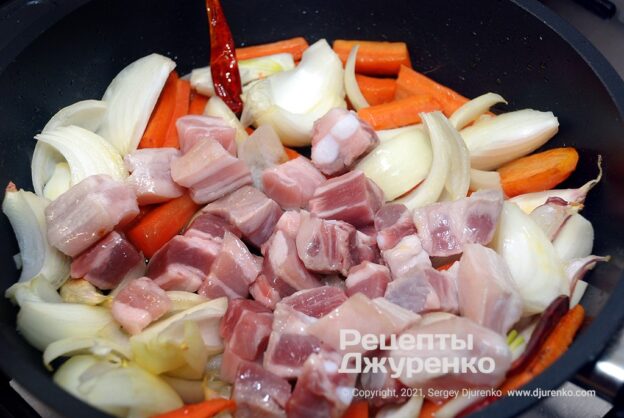
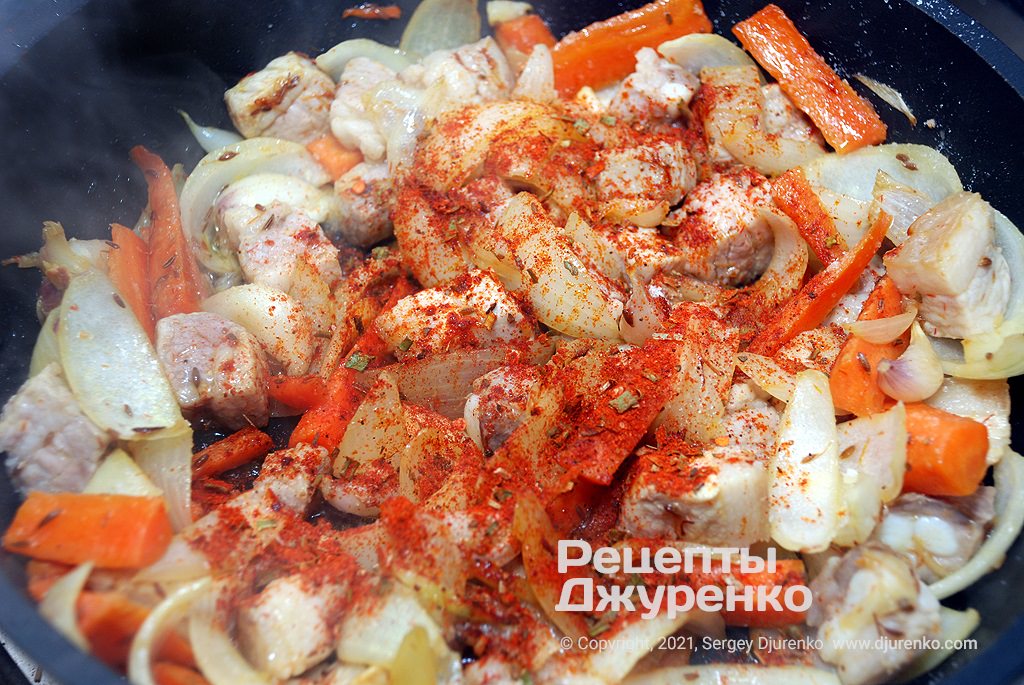
When the onion starts to take on a nice golden shade, add the spices. If you have it, add dried barberries, 1-1.5 tbsp. Be sure to add 0.5-1 tsp of cumin (1–3 g), an important ingredient. Add 1 tsp of sweet ground paprika (2 g), 2-3 pods of small dried chili, and salt and black pepper to taste. This is enough for a homemade pilaf.
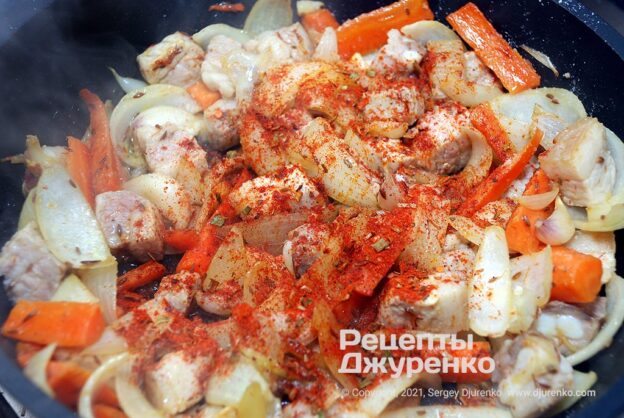
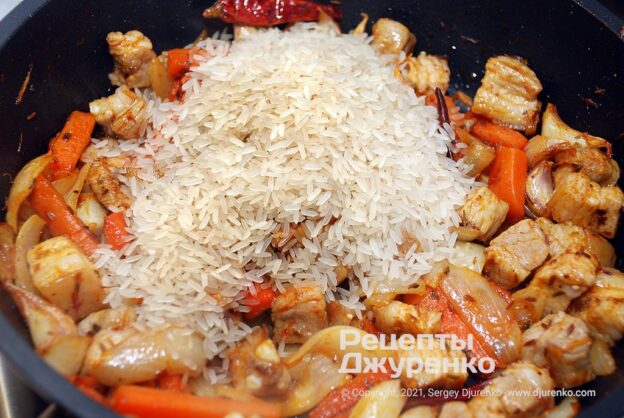
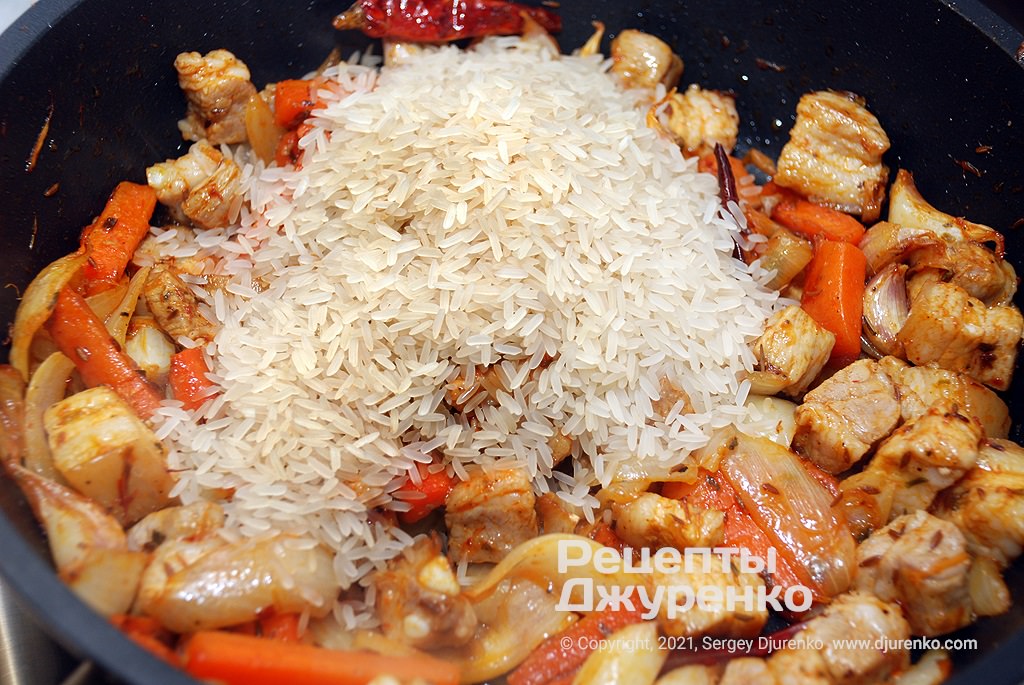
Fry the vegetables and meat with the spices for 2-3 mins, then add the rice. Parboiled rice generally contains no rice flour at all, since it is left over from polishing the grains. So there is no need to rinse the rice, or to soak it beforehand. Mix the rice with the vegetables and meat. The grains should be coated with a film of fat, so the skillet pilaf turns out as fluffy as possible and the grains stick together less.
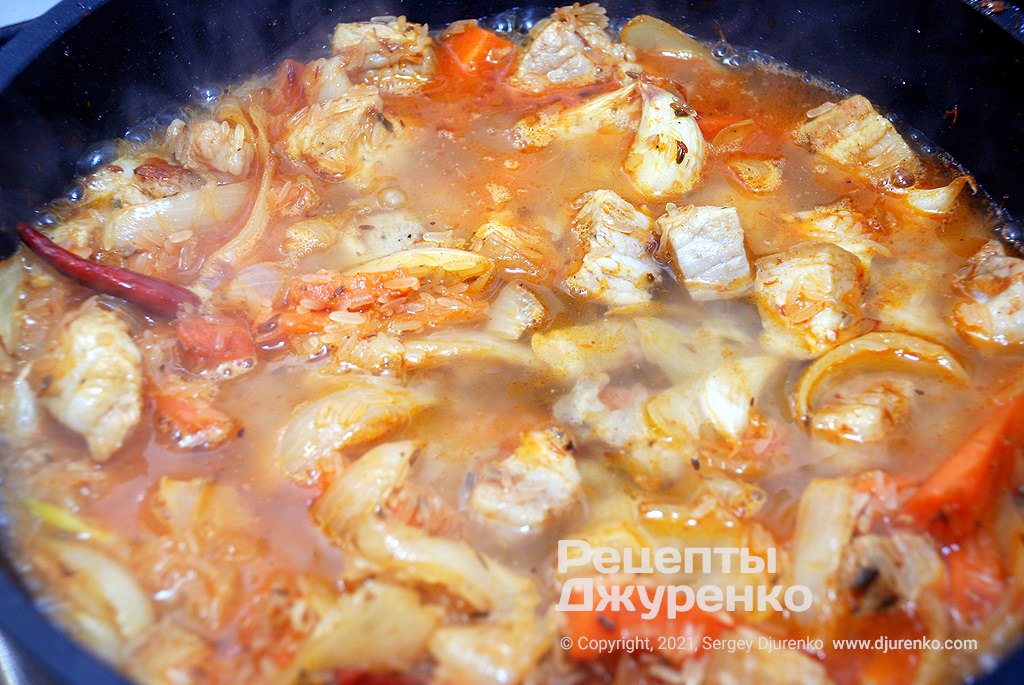
Add liquid to the skillet. Usually it is water, but you can use meat broth. Parboiled rice cooks well in twice its volume of water, so add 2 cups of liquid (400 ml). To color the rice, you can add a pinch of saffron or marigold, or first put it in the boiling water you will pour over the rice. Stir the rice and, once the water boils, cover the skillet with a lid and reduce the heat to minimum. The rice cooks for 15-20 mins, after which it is done and has absorbed almost all the liquid.
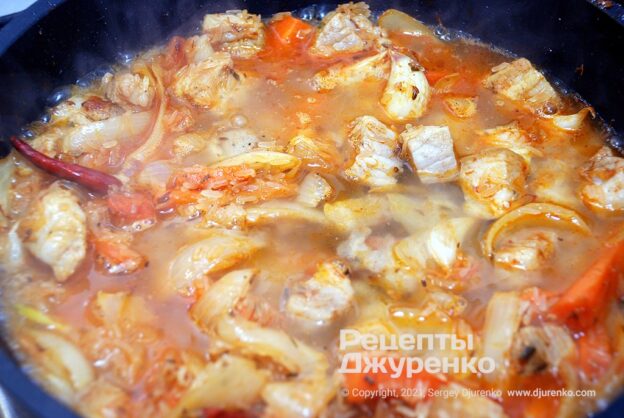
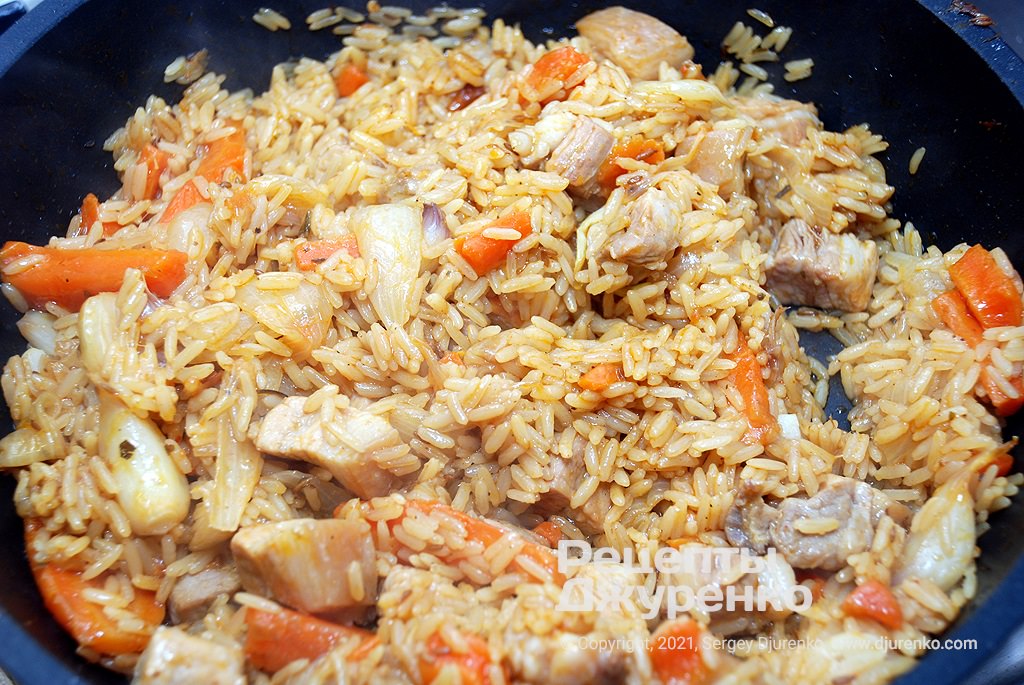
When the rice is almost done and the liquid is absorbed, stir the skillet pilaf and shape it into a mound. The pilaf needs to steam for at least 20 mins. Often a towel is placed over the rice and then a lid, so condensation does not drip onto it, but for home cooking that is unnecessary. Stirring the pilaf every 4-5 mins, steam it until fluffy. The grains will start to separate from each other and will not stick together.
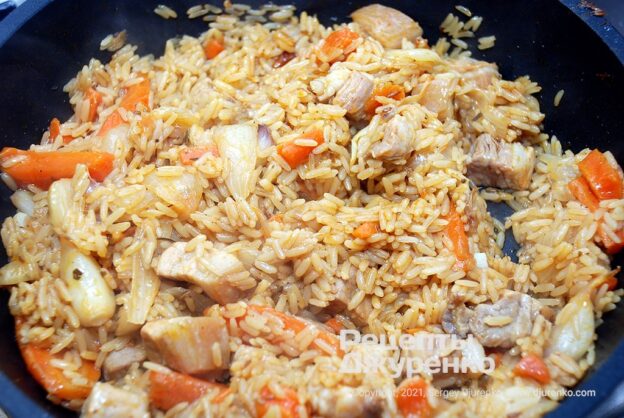
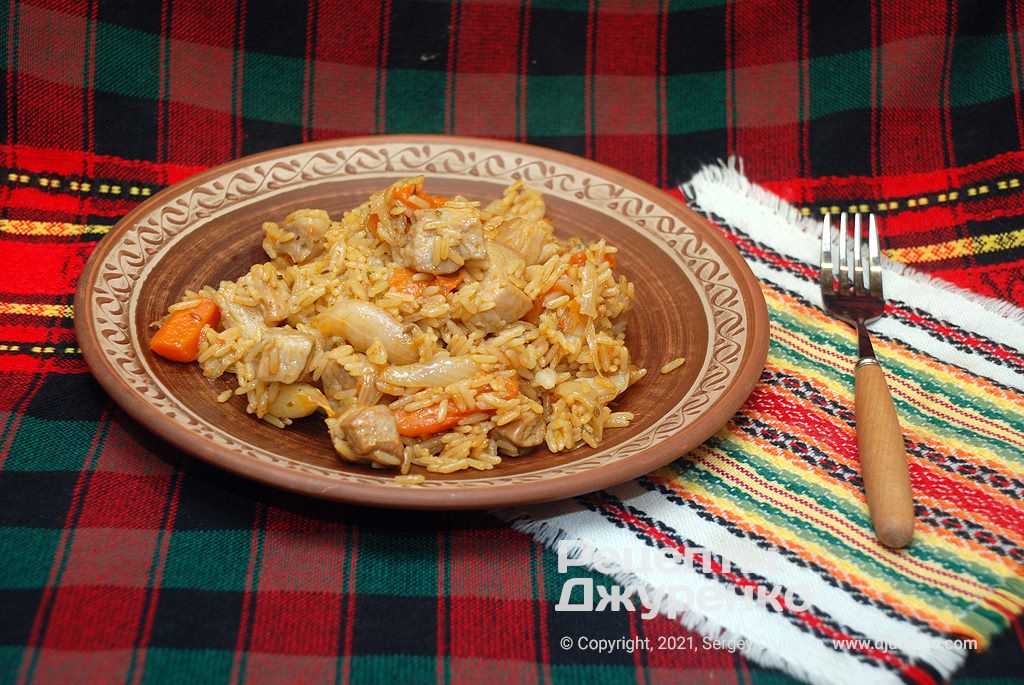
If you have the chance and the time, you can wrap the skillet in a blanket and keep it warm for 15-30 mins, which only improves the fluffiness. Serve the pilaf on a platter or in individual plates. By the way, try to divide the garlic cloves evenly, as they are probably one of the most coveted ingredients in the dish.
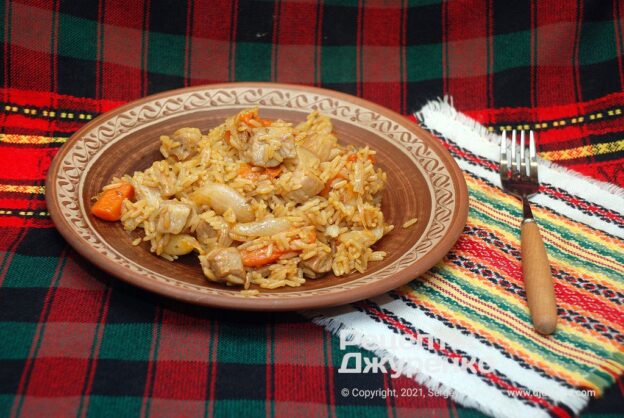
Serve the pilaf hot, and do not leave it to reheat later. It is tastiest when fresh. If you like, you can add dried apricots to the ingredients, which gives a special, slightly unusual flavor.
Calories and macros
1535 kcal
Serving ≈ 550 g
- Protein26 g7% of kcal
- Fat117 g70% of kcal
- Carbs88 g23% of kcal
100 g279 kcalProtein 4.7 gFat 21.3 gCarbs 15.9 g
Calculated from the recipe ingredients, excluding salt and spices. Data: USDA and Matvaretabellen.
 Meat tenderizerAliExpress
 Kitchen probe thermometerAliExpress
 Pull chopper for garlic and onionAliExpress
 Oil sprayerAliExpress
 Kitchen scale up to 5 kgAliExpress
 Vegetable chopper with handleAliExpress