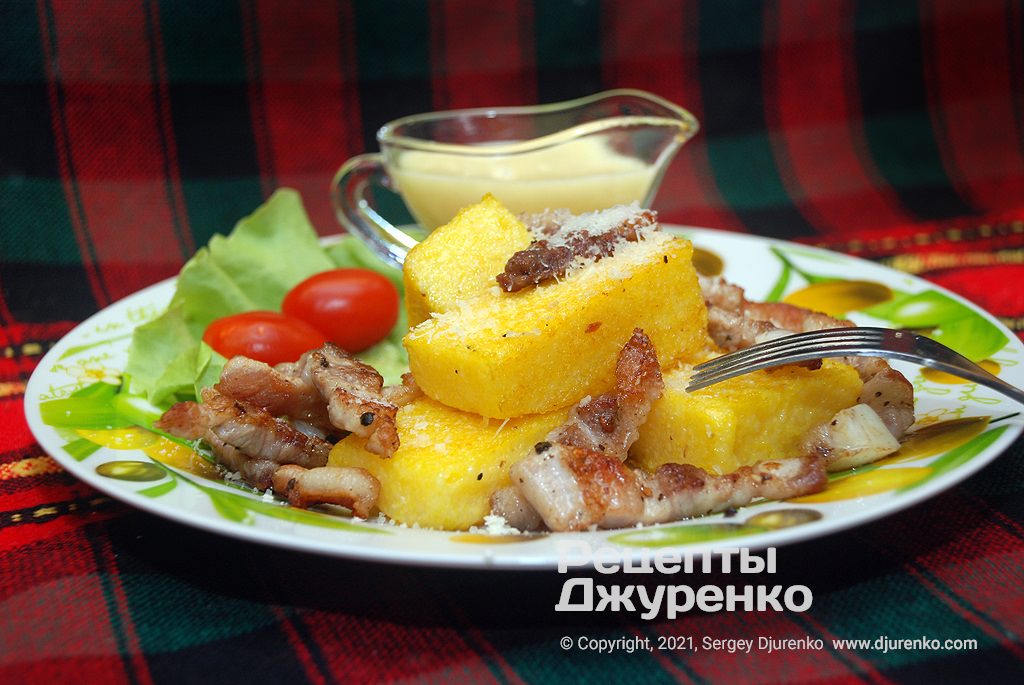
Polenta with Bacon, Parmesan and Egg Sauce
Ingredients
6-8 servings
For the polenta
- Medium-grind cornmeal 2 cups (300 g)
- Water 7-8 cups (1.4–1.6 l)
- Salt scant 1 tsp (6 g)
- Olive oil 1 tbsp (optional)


For the sauce
- Egg yolks 2
- Olive oil 1 tbsp
- Lemon juice 1-2 tsp
- Salt, black pepper to taste


For serving
- Bacon or pork belly 400 g
- Grated Parmesan 2-3 tbsp (14–20 g)
- Lettuce, cherry tomatoes optional


Step-by-step recipe
How to cook polenta
Polenta is easy to make, and cornmeal is sold in any store and costs very little. Keep in mind that plain thick cornmeal porridge is low in calories on its own, but you can make it more nourishing with add-ons and sides. For example, in this recipe I made the dish with a cornmeal base and rich additions – bacon, Parmesan, and a sauce of yolks, olive oil and lemon juice – close in composition to polenta carbonera from Trentino. This way the dish comes to more than 350-400 kcal per serving.
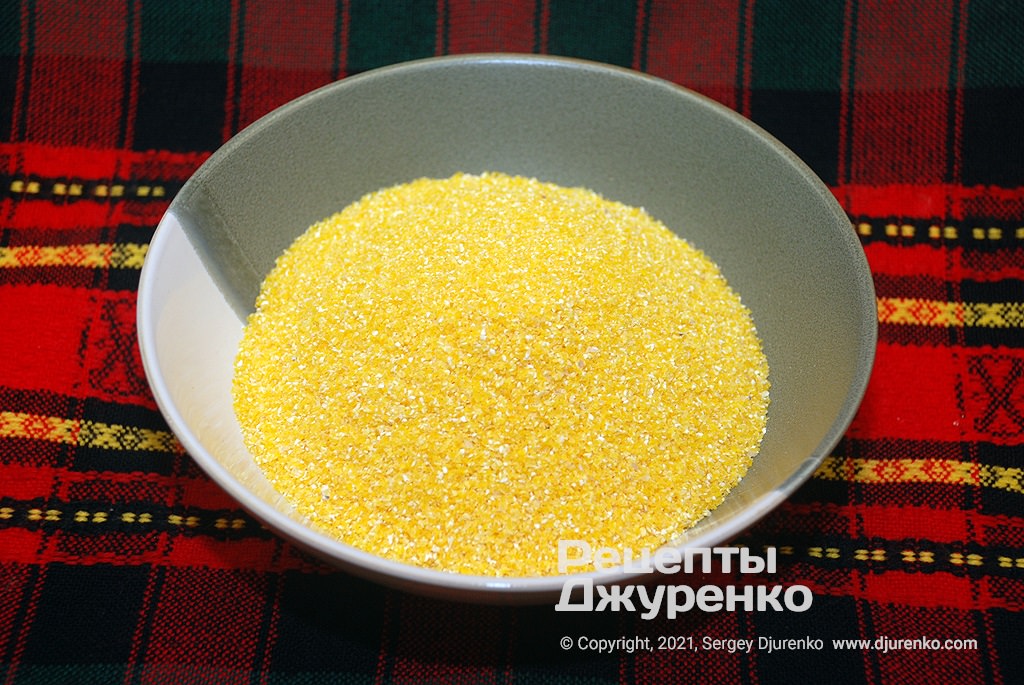
If you have a hearth and a copper pot, congratulations. If not, a large stainless steel pot will do.
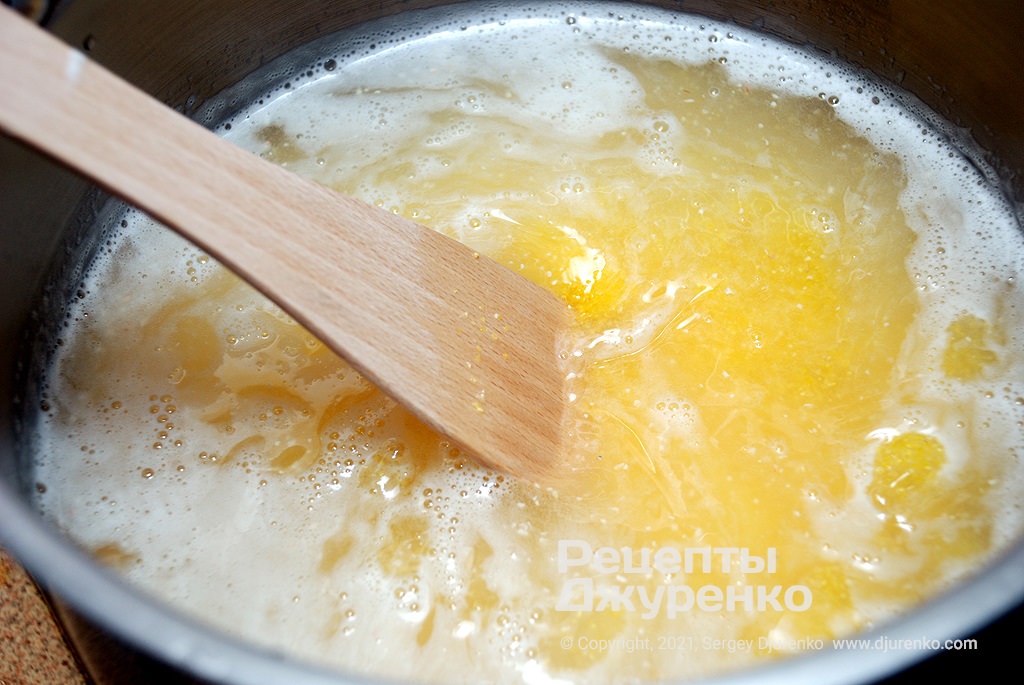
Bring salted water to a boil. Pour 7-8 cups of plain water (1.4–1.6 l) into the pot – 3.5-4 times the volume of the cornmeal – add a scant 1 tsp of salt (6 g) and bring to a boil.
Stirring constantly with a wooden spatula, add the cornmeal to the boiling water. If you like, add 1 tbsp of olive oil to the pot – it means fewer lumps.
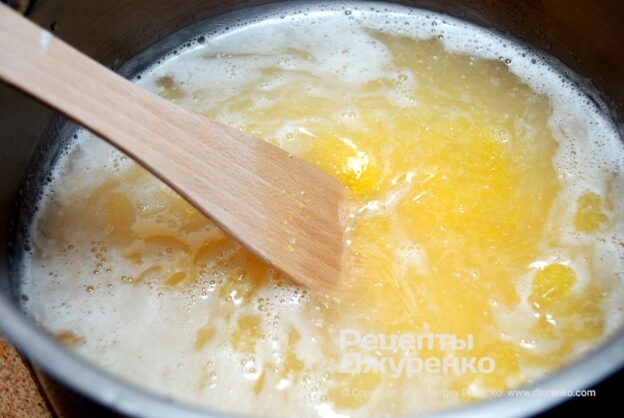
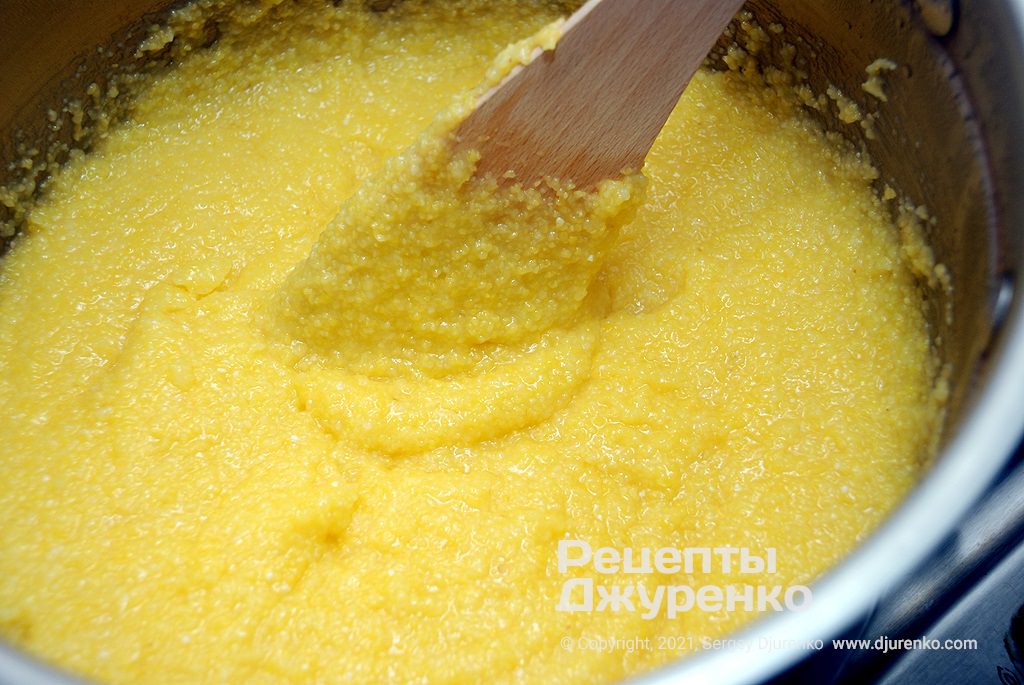
Cook over high heat, stirring continuously, until the cornmeal absorbs the water. Stir the porridge from the very bottom: polenta sticks to the bottom of the pot easily and burns. Be careful, the porridge can splatter.
Reduce the heat to the minimum and cook the porridge, covered, for 30 mins to an hour. Steam bubbles will appear only occasionally. Stir often, running the spatula along the very bottom so the mass doesn’t stick.
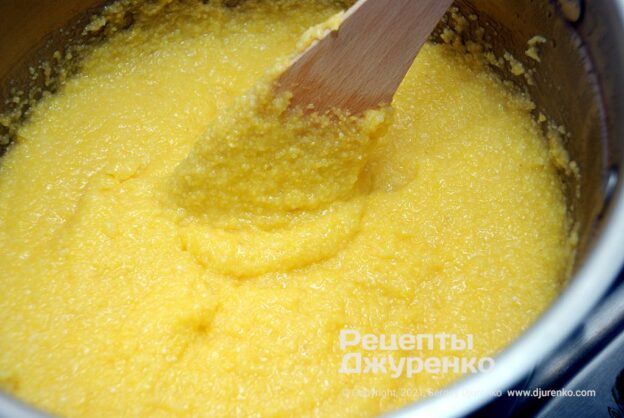
Cooking time can vary considerably depending on the cornmeal itself: finer grain cooks faster.
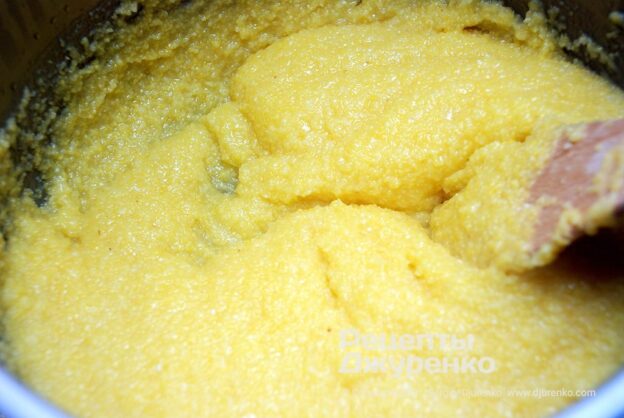
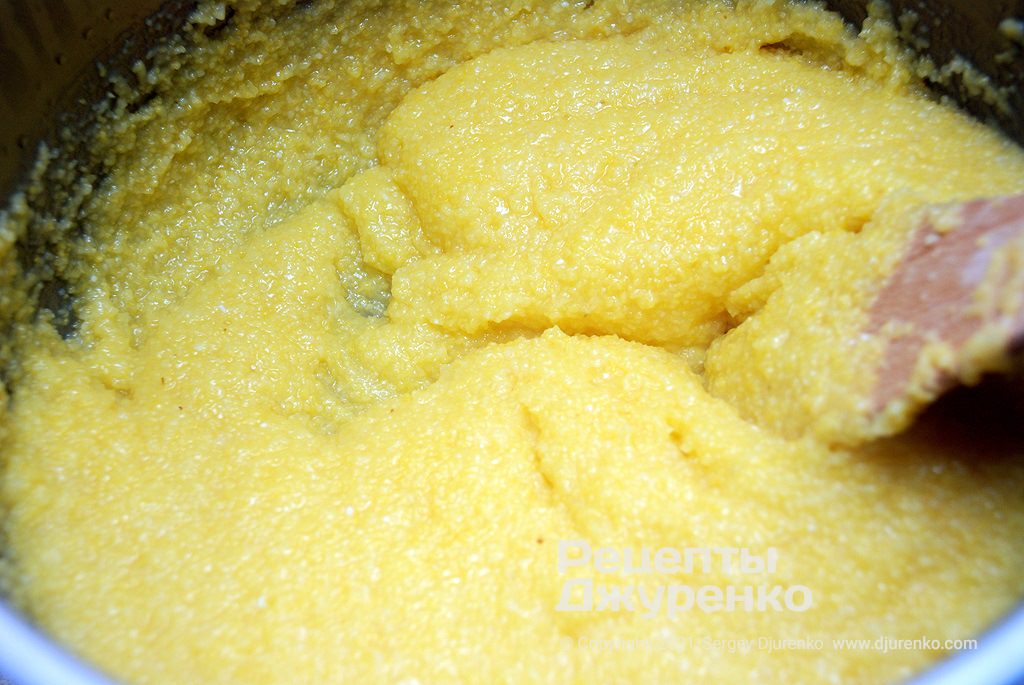
Check that it is done. The mass will be thick and will barely flow: if you push it with the spatula to the side of the pot, it won’t spread back. Taste the grains – they should be soft, but you should still sense a slightly grainy texture in the polenta.
At the very end of cooking, raise the heat and, stirring, get the cooked cornmeal to pull away from the sides of the pot.
How to cool polenta
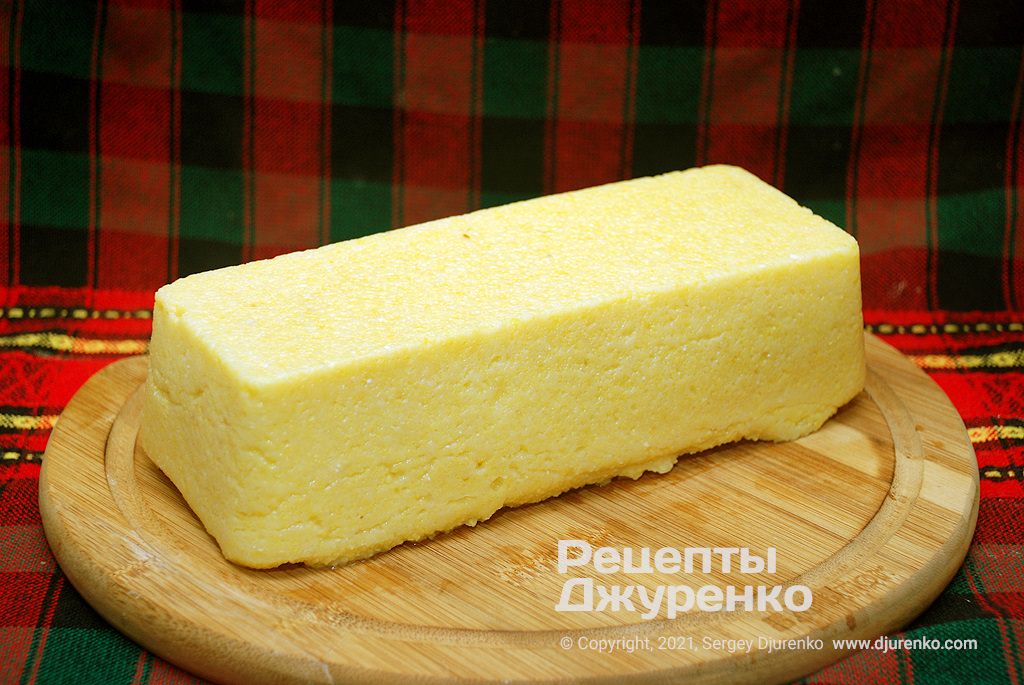
Transfer the polenta to a suitably sized mold and refrigerate, usually overnight. Often polenta is simply turned out onto a wooden board by flipping the pot over, but I prefer a mold.
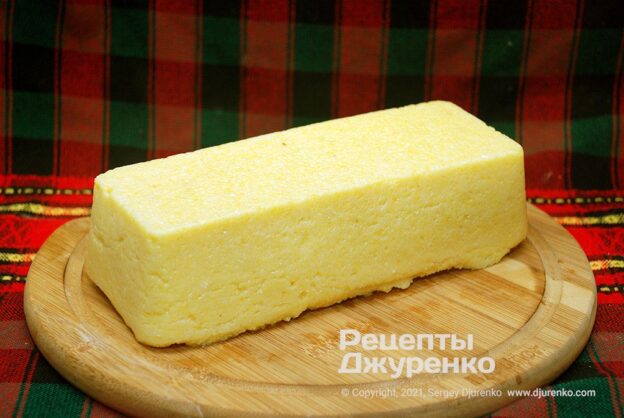
I like to cool cornmeal polenta – it sets and holds its shape perfectly.
How to fry polenta and bacon
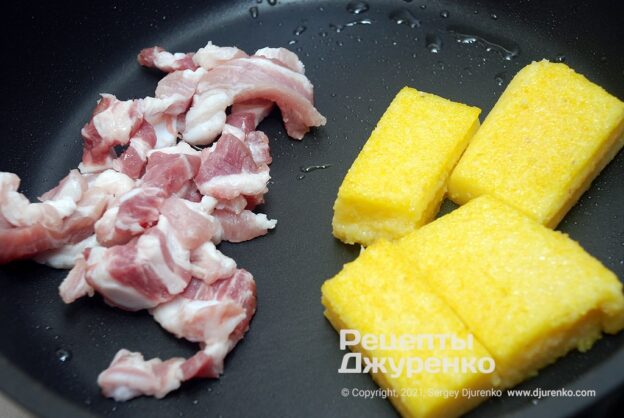
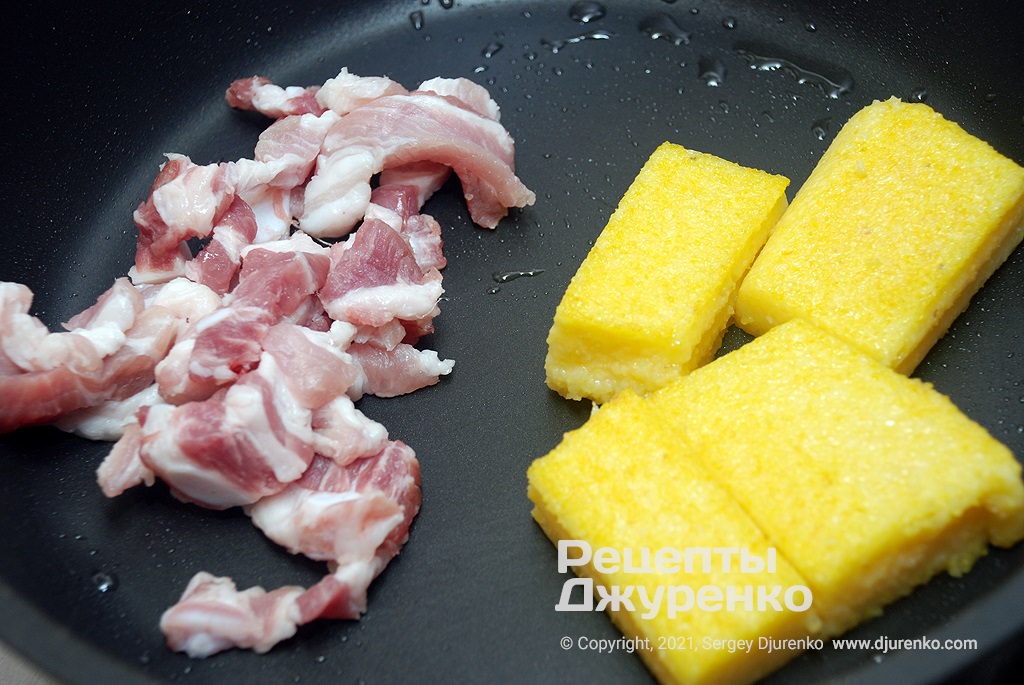
Cut the firm, set porridge into sticks or slices and fry in a dry pan over medium heat until a crisp, lightly golden crust forms. At the same time, fry the bacon or pork belly, cut into strips, until golden.
Serving
Hot or warm polenta can be served right away, without cooling and frying – just drizzle it with honey or jam.
Make a simple “cold” egg sauce. Beat 2 egg yolks, salt and black pepper with a mixer, then add 1 tbsp of olive oil. When the sauce begins to thicken, pour in 1-2 tsp of lemon juice.
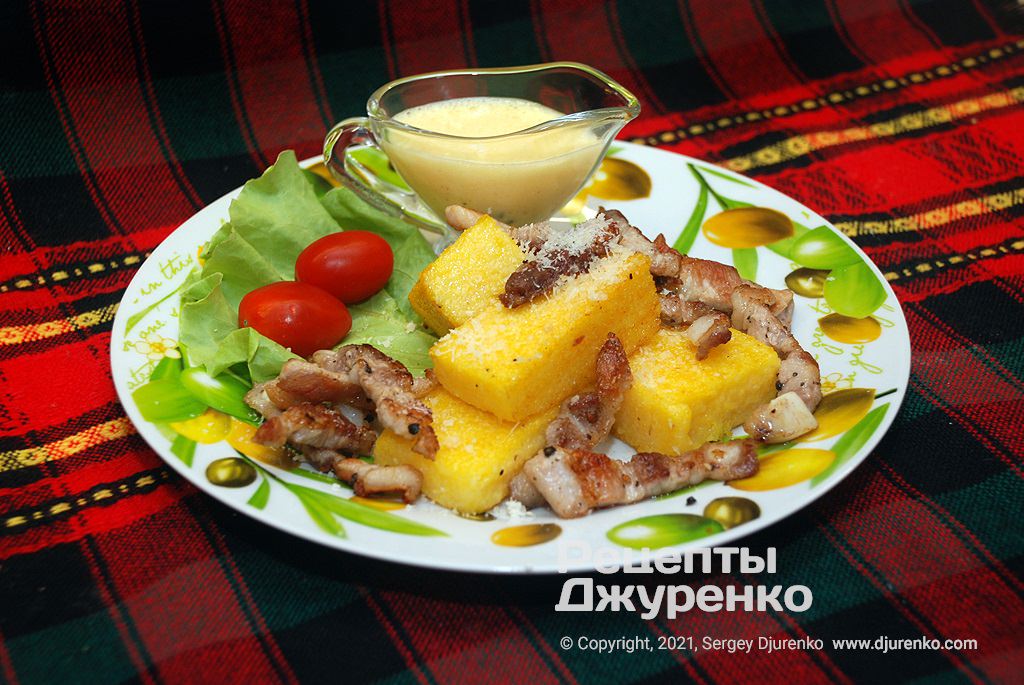
On a plate, lay 1-2 lettuce leaves, add the fried polenta, top with the bacon and sprinkle with grated Parmesan. Add 1-2 cherry tomatoes to the plate. Drizzle the sauce over the dish or serve it in a small sauce boat.
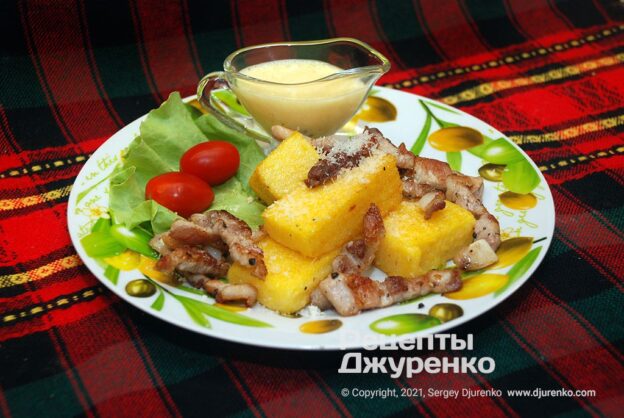
If you like, the cold slices of polenta can be baked in the oven after brushing them with a little oil. For add-ons you can use anything you like – jam, fruit, various sauces, vegetables and meat, mushrooms. The tastiest options are the various cheeses.
Fully cooked firm polenta keeps in a plastic container in the fridge for several days. Just slice and reheat it – a great breakfast is ready.
Calories and macros
275 kcal
Serving ≈ 330 g
- Protein6 g9% of kcal
- Fat7 g25% of kcal
- Carbs43 g66% of kcal
100 g83 kcalProtein 1.9 gFat 2.2 gCarbs 13 g
Calculated from the recipe ingredients, excluding salt and spices. Data: USDA and Matvaretabellen.