
Mussel Pilaf with Vegetables: Easy Step-by-Step Recipe
Let's make a homemade pilaf with mussels. There's a common belief that pilaf is a Central Asian dish. That's partly true. But almost every cuisine of the Old World has dishes that are similar in ingredients and cooking method. The word “pilaf” has Persian roots — “پلو” — polow, or comes from the Hindi “पुलाव”. It's pronounced pilaf, pilau, pilav.
An even older version is the Sanskrit “पुलाक”, meaning “boiled rice”. To this day, the names of this unique dish sound almost the same in nearly every language.
In any cuisine, pilaf is a complex, layered dish, usually made of a grain part (rice, lentils, wheat and so on) and what in Central Asia is called “zirvak”, the base of the pilaf. Recipes usually pay very little attention to the grain part, literally “take some good pilaf rice”. But it's the zirvak that really makes a pilaf unique, and often specific to one particular region.
Seafood makes an excellent base for pilaf, especially large mussels. I didn't believe it until I tried it: pilaf with mussels is spectacular. Recipes usually suggest using mussels in their shells, then boiling them, picking them out of the shells and so on. That's fine for plenty of dishes, like a soup, an omelette or a salad with mussels.
I'll admit, that's not for me. I'm used to mussels being “clean”. Not just free of dirt, though that too, but free of sand, bits of shell and other such delights. It's safer to buy ready-cleaned mussel meat.
Let's make pilaf with mussels, a truly worthy dish. It works well for cooking for a big crowd in a cauldron. And mussel pilaf turns out really delicious.
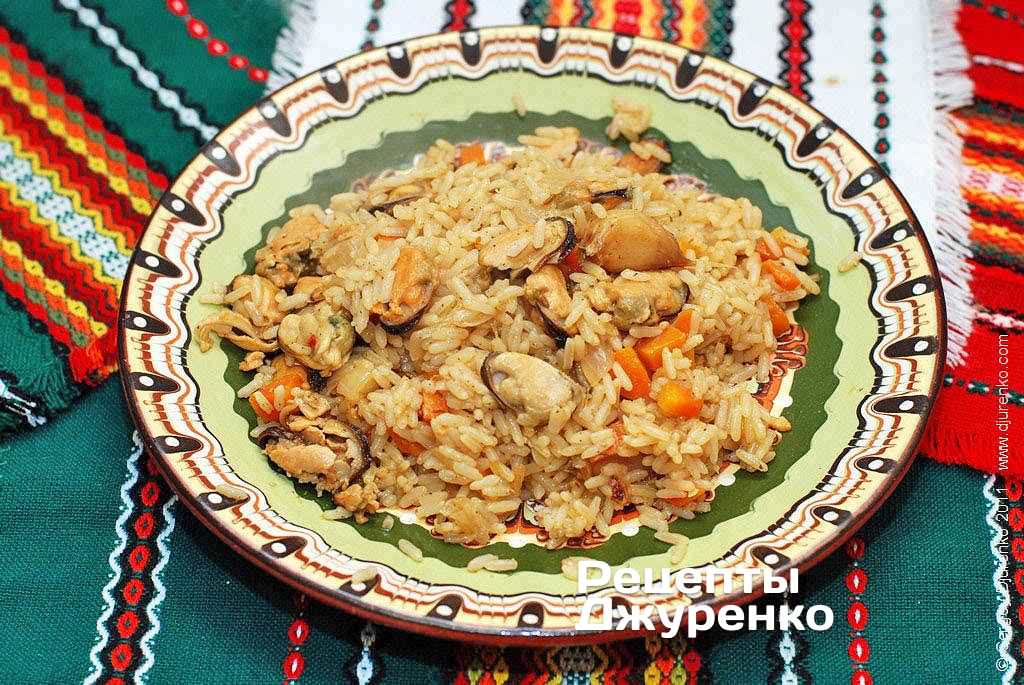
Ingredients
2 servings
- Rice (long-grain) 200 g
- Mussels (meat) 200 g
- Onion 1
- Carrot 1
- Garlic 1 head
- Cumin, salt, sweet paprika, ground black pepper, ground ginger to taste
Step-by-step recipe
- Pilaf is a widespread dish, though a tricky one. In Azerbaijani cuisine, for example, the rice and the base of the pilaf, called “tara”, are cooked separately. The base can be meat, fruit and so on. The rice and the tara are combined only when served.
- Then there's nasi goreng, widespread in Indonesia, literally “fried rice”. It has its own subtleties. First the rice is boiled, cooled and fried in oil with onion, garlic and meat. Eggs are often added to the finished dish. It's served with krupuk prawn crackers, a fried egg or shrimp on skewers. This combination is called nasi campur (“mixed rice”).

- Plain fried rice (炒飯, chao fan) is a common part of Chinese meals and is served before dessert.
- And also all kinds of Catalan paellas made of rice with seafood, fish, chicken and herbs. And Indian biryani (Urdu بریانی; Hindi बिरयानी), a dish of rice and spices with meat, fish and vegetables.
- Thaw the mussels. You can leave them at room temperature, but it's better to cover them with a little cold water, bring to a boil, then rinse.
- Pilaf is usually cooked in a round-bottomed kazan. That's tricky at home on the stove, but I've got a big cast-iron wok with a lid in my arsenal.
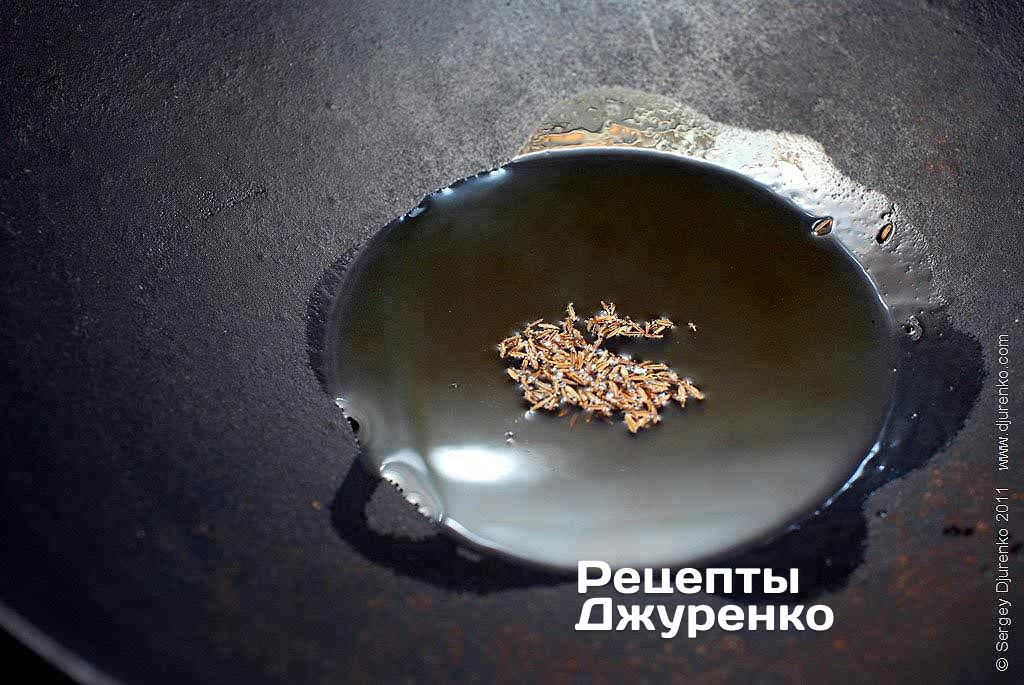
- Pour 4-5 tbsp of olive oil into the wok and put it on the heat. The oil needs to get really hot. When the oil starts to smell pleasant and crackle and a light white smoke appears, add 0.5 tsp of cumin to the oil. Cumin, or zira, is a truly unique spice with a strong, pleasant aroma. I can't imagine any pilaf without it at all. Fry the cumin in the oil for 2-3 minutes. This way the olive oil gets infused with its aroma.

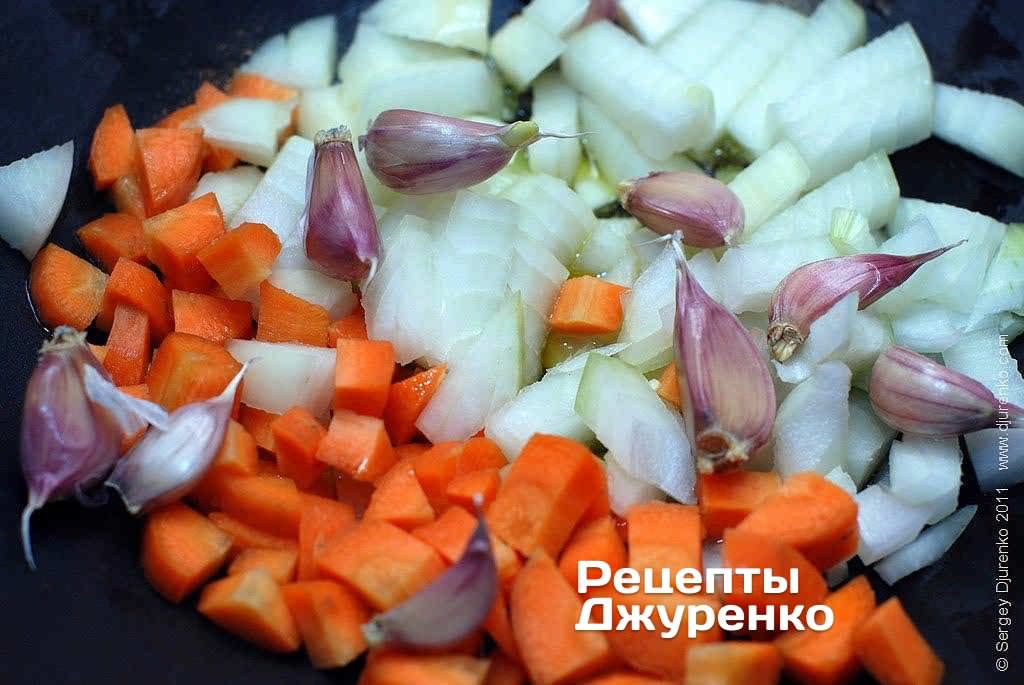
- Peel the onion and carrot and cut them into large cubes. Fry the onion and carrot in the oil, adding the unpeeled garlic cloves right away.
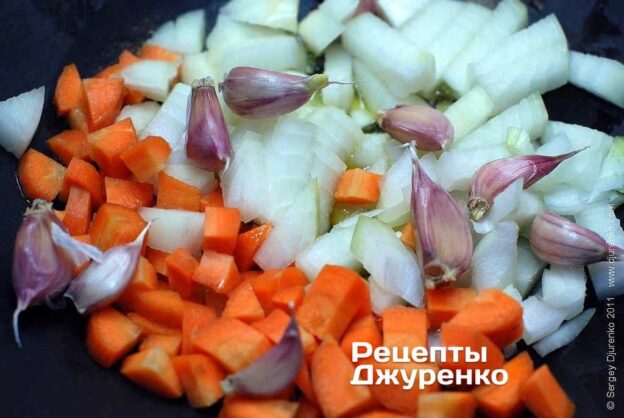
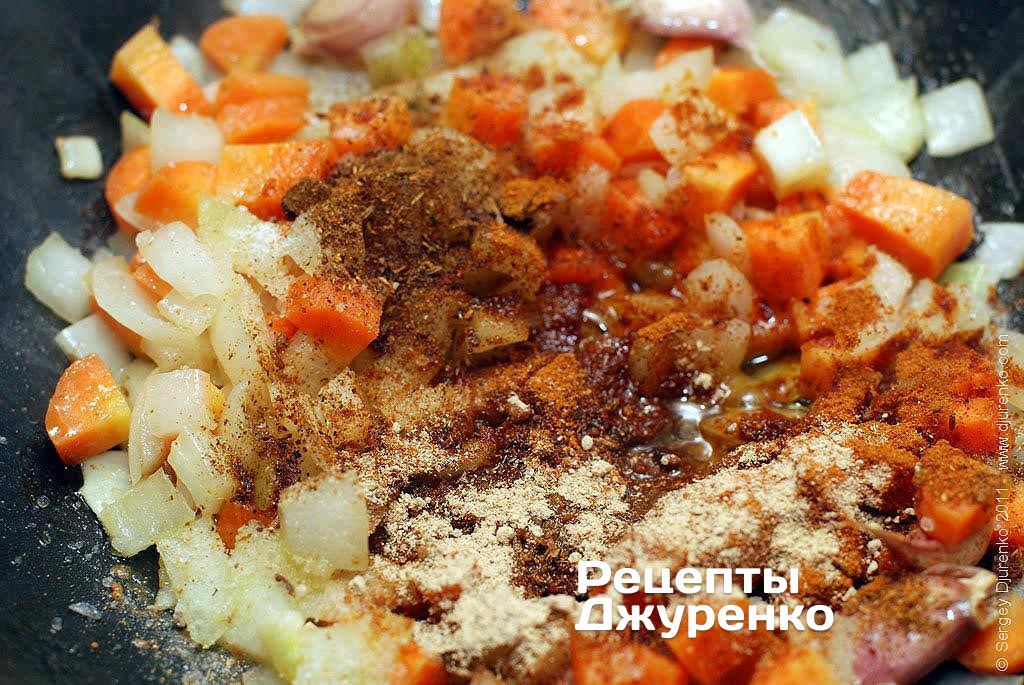
- Fry the mixture until the onion is almost translucent and the carrot is soft. Season with salt to taste, add ground black pepper and sweet paprika. You can add almost a teaspoon of paprika. Add a pinch of ground ginger; seafood really “loves” ginger.
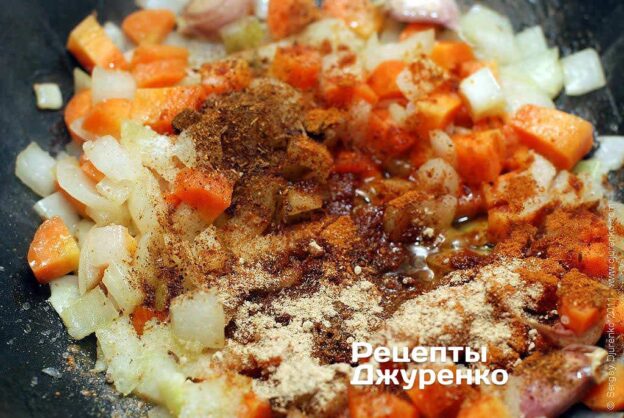
- Keep frying everything over medium heat, stirring constantly, for another 5-6 minutes.
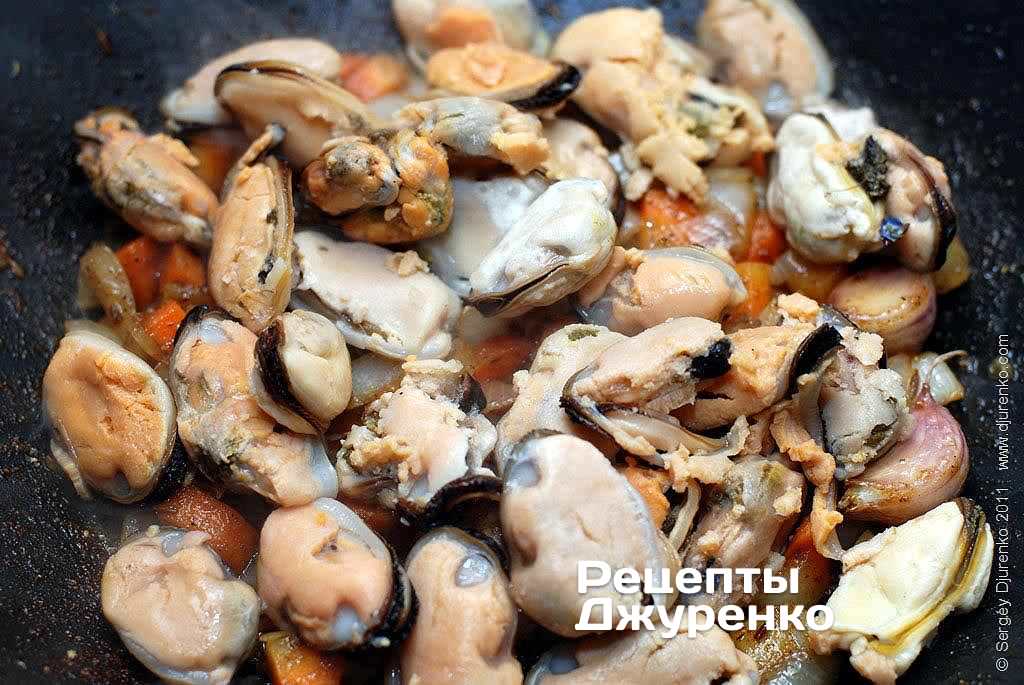
- Add the thawed mussels, stir and pour in half a cup of white wine.
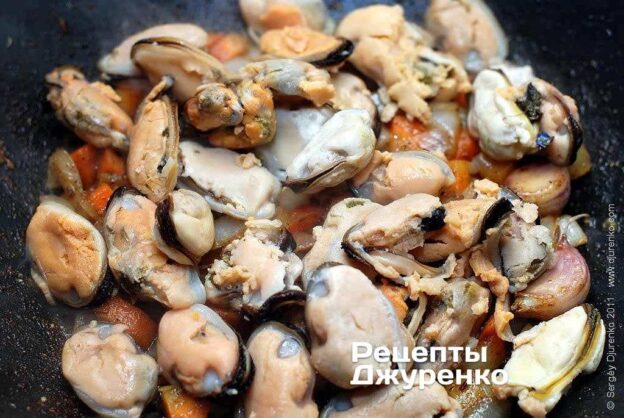
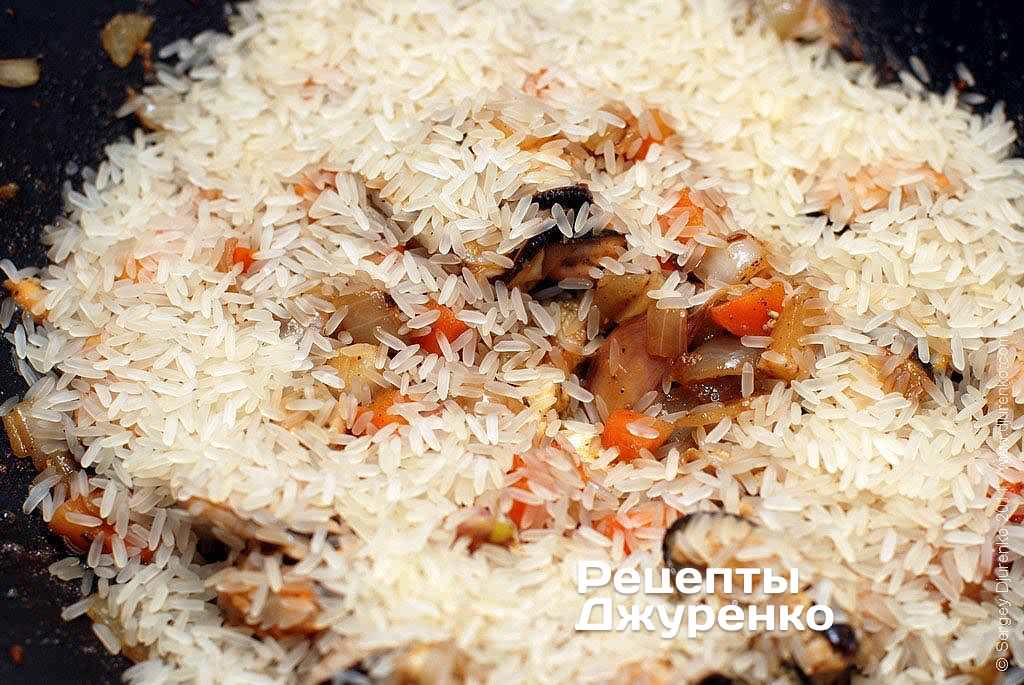
- Add the rice. It's best to use long-grain rice, and it must be a variety that cooks up fluffy.
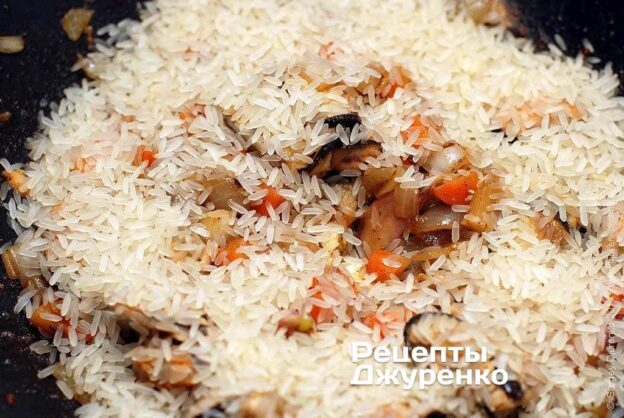
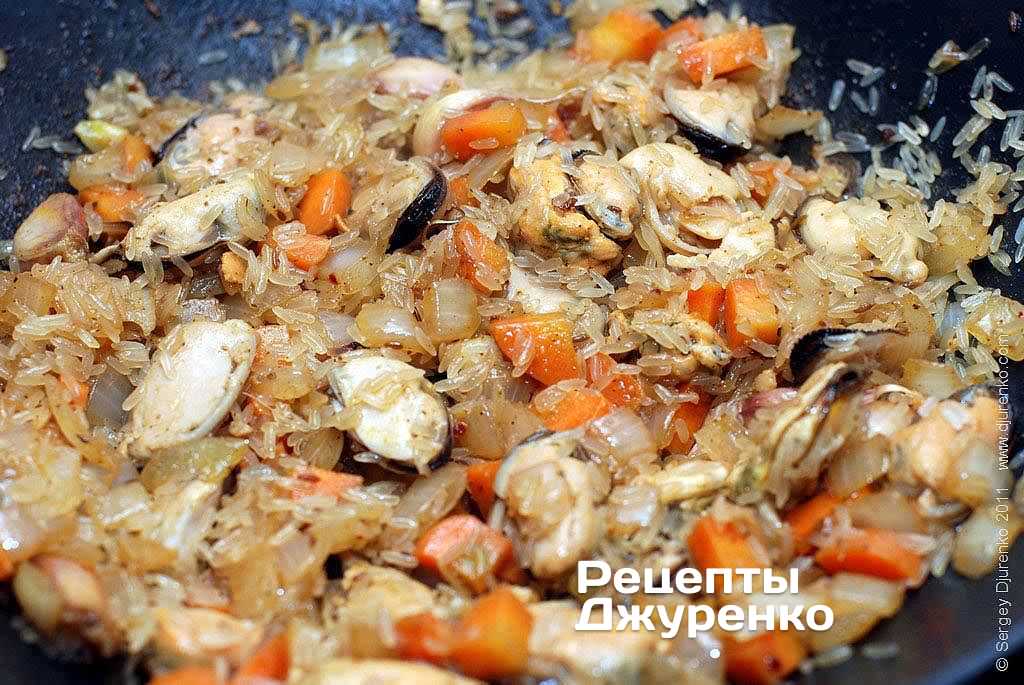
- Fry the rice briefly so that it gets coated with a film of oil. Amazingly, the rice turns slightly translucent, with a pearly sheen.
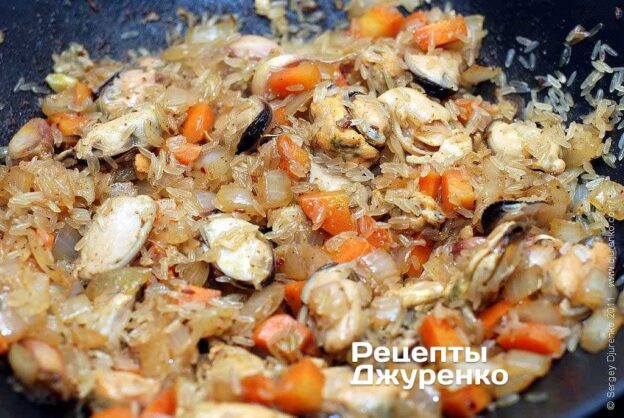
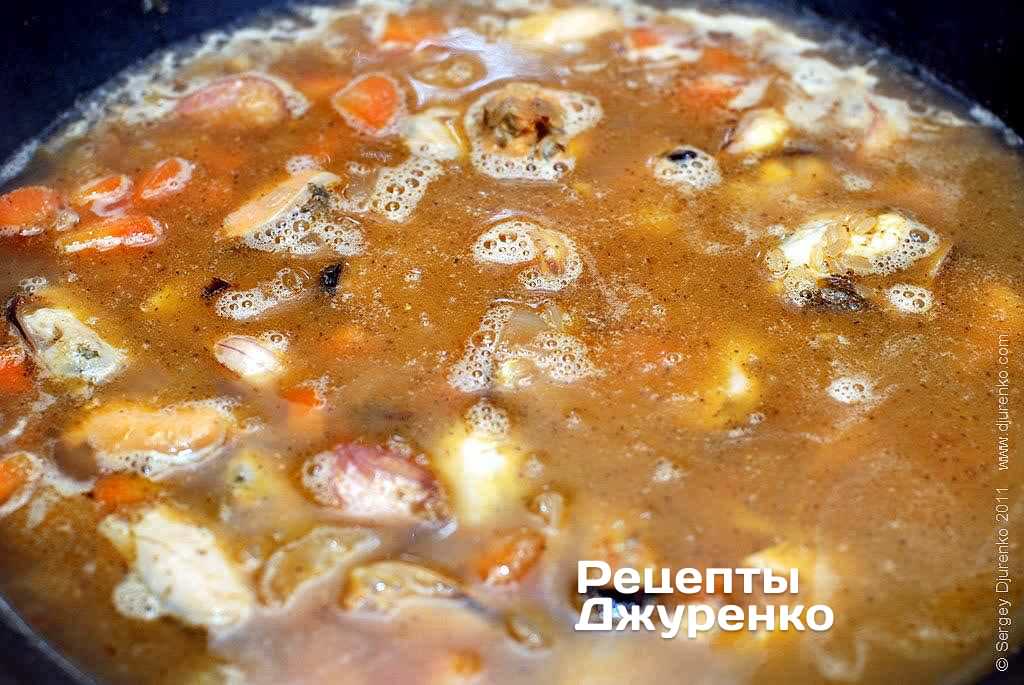
- Pour two cups of boiling water or stock over the rice (if you boiled the mussels, it's better to keep that stock). Bring the mussel pilaf to a boil, cover with a lid and cook over low heat so the liquid barely simmers. Cook until the rice has absorbed all the liquid.
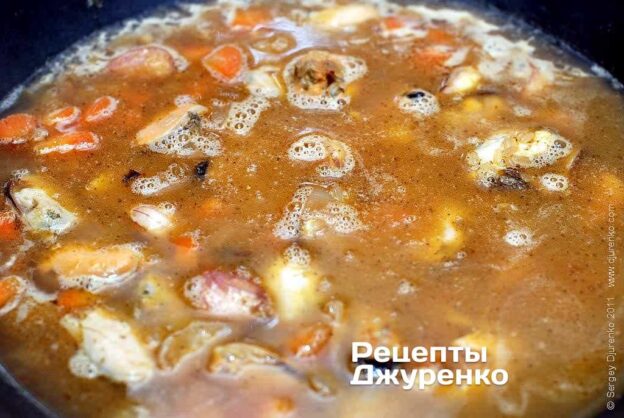
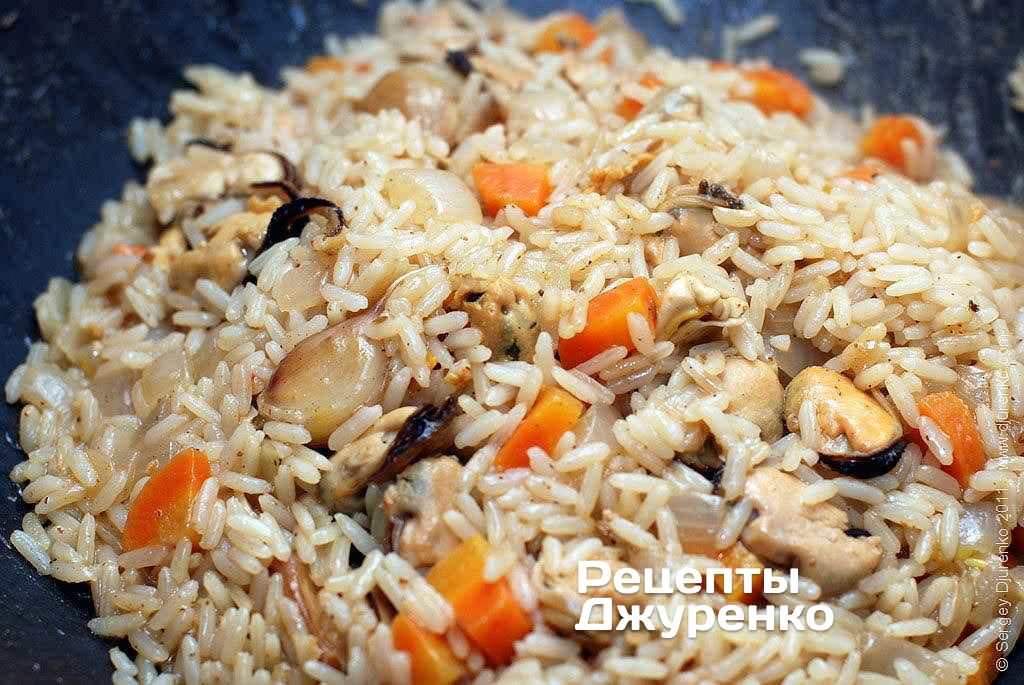
- The mussel pilaf takes 20-25 minutes to cook. Then gently stir the pilaf and pile it up in the wok in a mound, shaping it into a cone or pyramid.
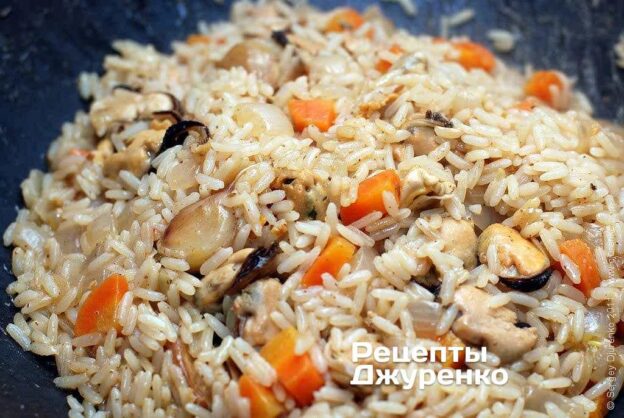
- Cover the mussel pilaf with a lid and heat for another 10-15 minutes over low heat, so it steams through and becomes perfectly fluffy.
- Transfer the finished mussel pilaf to a large platter or onto individual plates and dig in right away. I strongly advise against leaving the mussel pilaf “for later” or reheating it.


| Yield: | 2 servings |
| Calories: | 120 |
| Prep: | 15 mins |
| Cook: | 30 mins |
| Ready in: | 45 mins |
| Category: | Main Dishes |
| Cuisine: | Middle Eastern |
| Rating: |
⭐
⭐
⭐
⭐
⭐
4.5
(11)
|