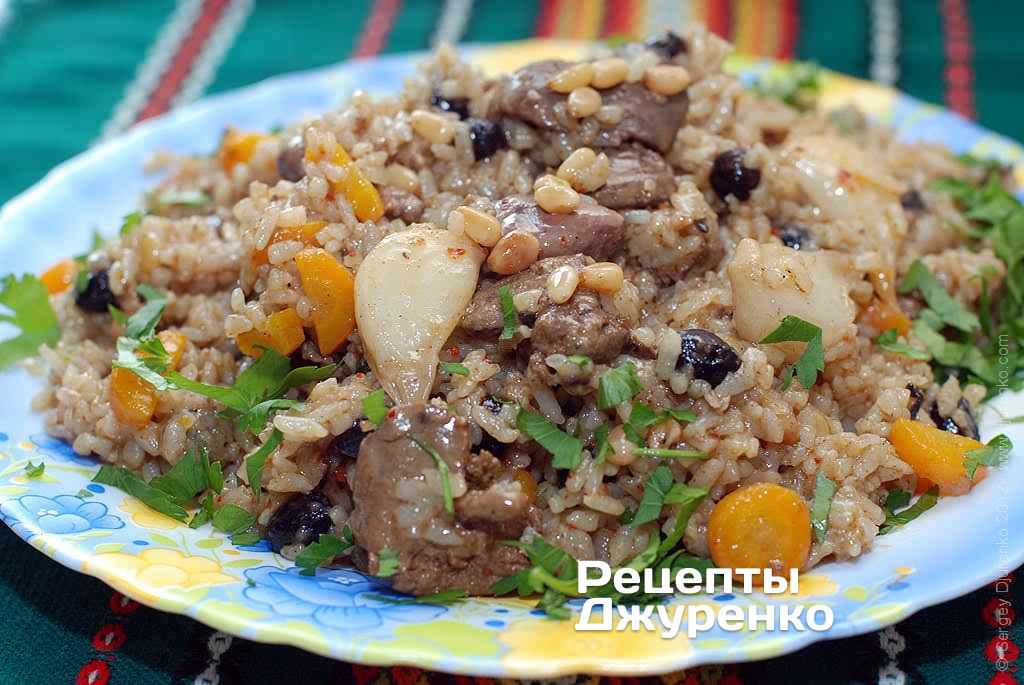
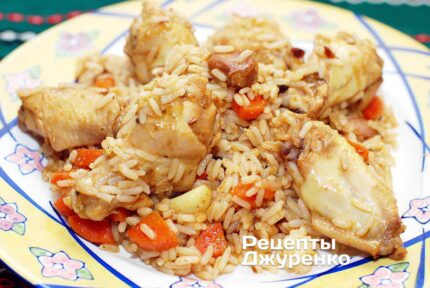
Pilaf with Chicken Giblets
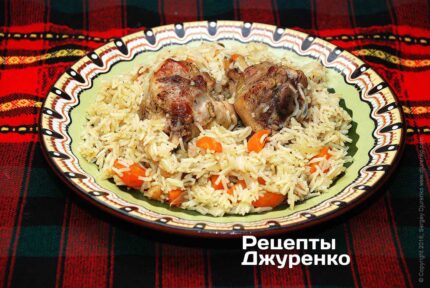
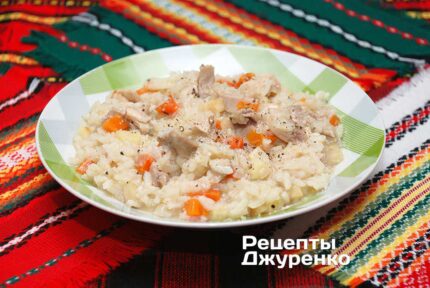
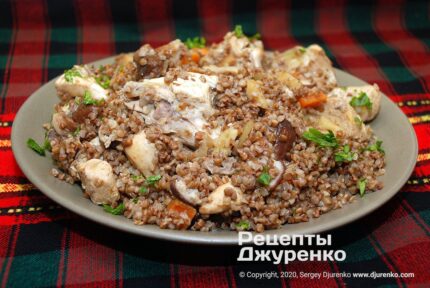
Ingredients
2 servings
- Rice (Egyptian Camolino) 200 g
- Hot water and salt for soaking the rice as needed
- Hot water or chicken stock 1.5 cups (300 ml)
- Chicken giblets (liver, hearts) 200 g
- Carrots 1
- Onion 1
- Garlic 1 head
- Olive oil 50 ml
- Pine nuts 1-2 tbsp (11–21 g)
- Black raisins (soaked) 2-3 tbsp (21–32 g)
- Parsley 3-4 sprigs
- Spices: salt, red pepper, black pepper to taste
Step-by-step recipe
Preparing the rice and ingredients
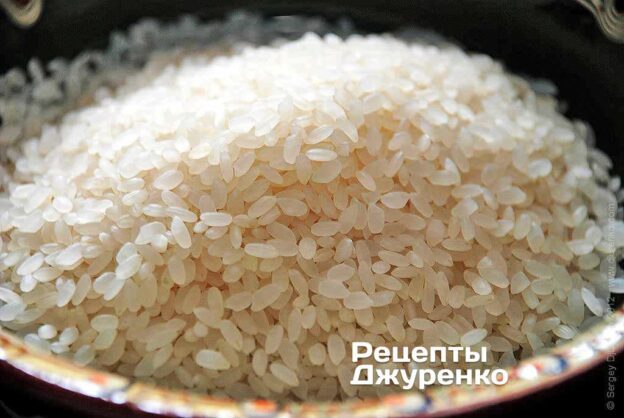
For this dish, medium-grain round rice is used, less often long-grain. The rice should be slightly sticky, but not clump together. There are quite a few such varieties, but it’s always worth cooking a test batch first. In my opinion, the Egyptian “camolino”, called the pearl of rice, suits this dish best. It is slightly sticky but doesn’t clump, and it is very aromatic. If you buy real camolino, you can be sure the pilaf will turn out excellent.
While analyzing recipes for Egyptian pilaf, Turkish pilaf and similar dishes, I noticed some inconsistencies that simply can’t be real. For example, recipes for Egyptian-style pilaf recommend adding diced ham. Egypt is a country with strong Muslim traditions, so eating pork there is highly unlikely. I understand that almost one in ten Egyptians is a Coptic Orthodox Christian, but I haven’t seen any pig farming in Egypt.
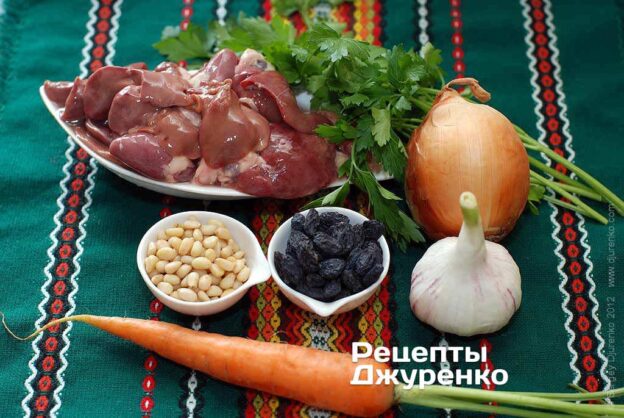
Turkish recipes everywhere call for Çam fıstığı, which means pine nuts. In Italy these are the seeds of the stone pine, the tree Pinocchio was carved from. Not pistachios. Apparently “cham fisty” (or something like it) is what causes the confusion. Pistachios in Turkish sound quite similar: antep fıstığı. I confess I bought pistachios and ate them with beer while watching the opening of Euro 2012. Then I bought pine nuts.
Chicken giblets are usually the gizzards, liver and hearts. I don’t use the gizzards, since they take a long time to cook. Original recipes use lamb liver, although they always add in brackets “(or chicken)”. Chicken liver makes a very tasty salad, which is simply called chicken liver salad.
Rinse and soak the rice. Rinse the rice under running water until the water runs clear. Then, as Turkish cooks recommend, cover the rice with slightly salted hot water for 30 minutes.
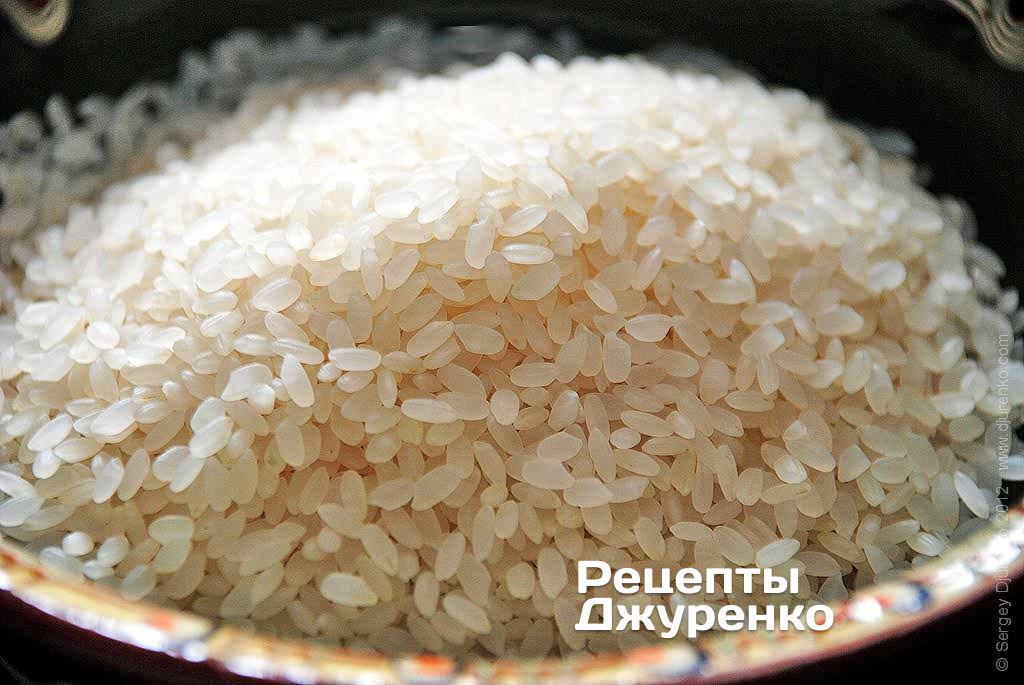
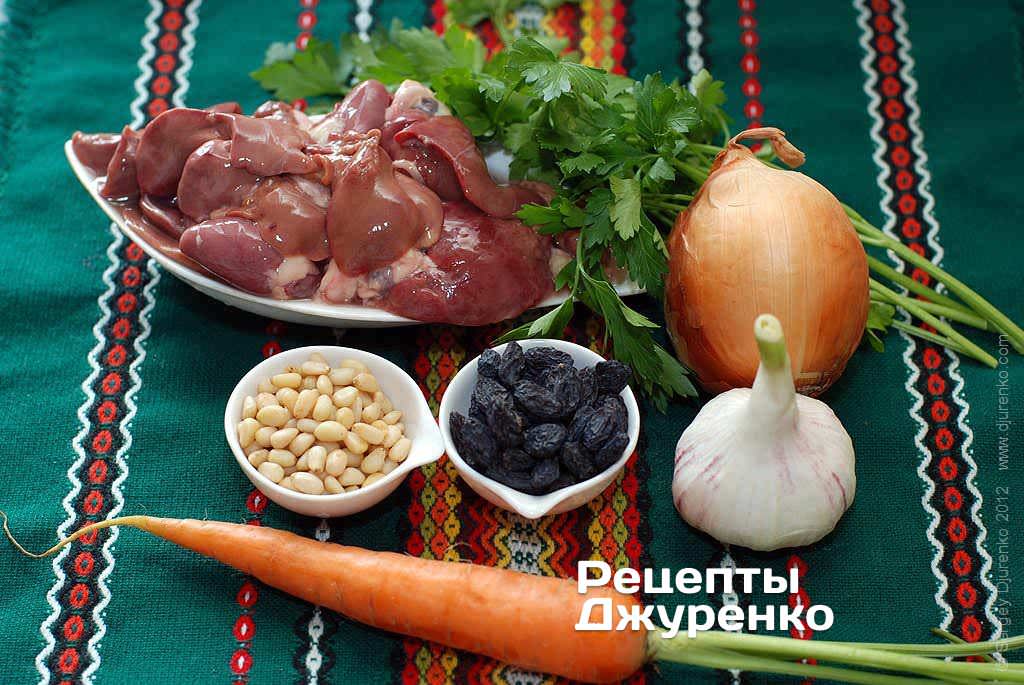
Frying the nuts, vegetables and giblets
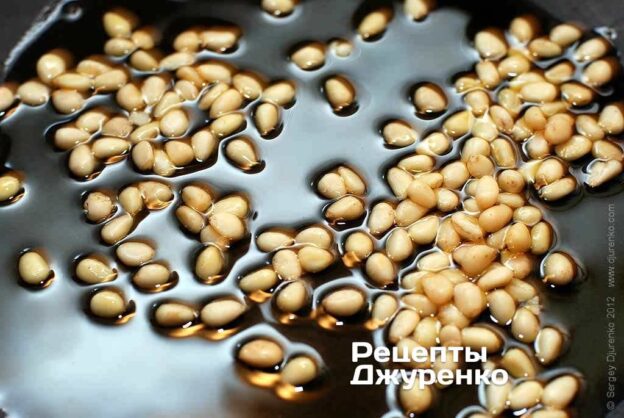
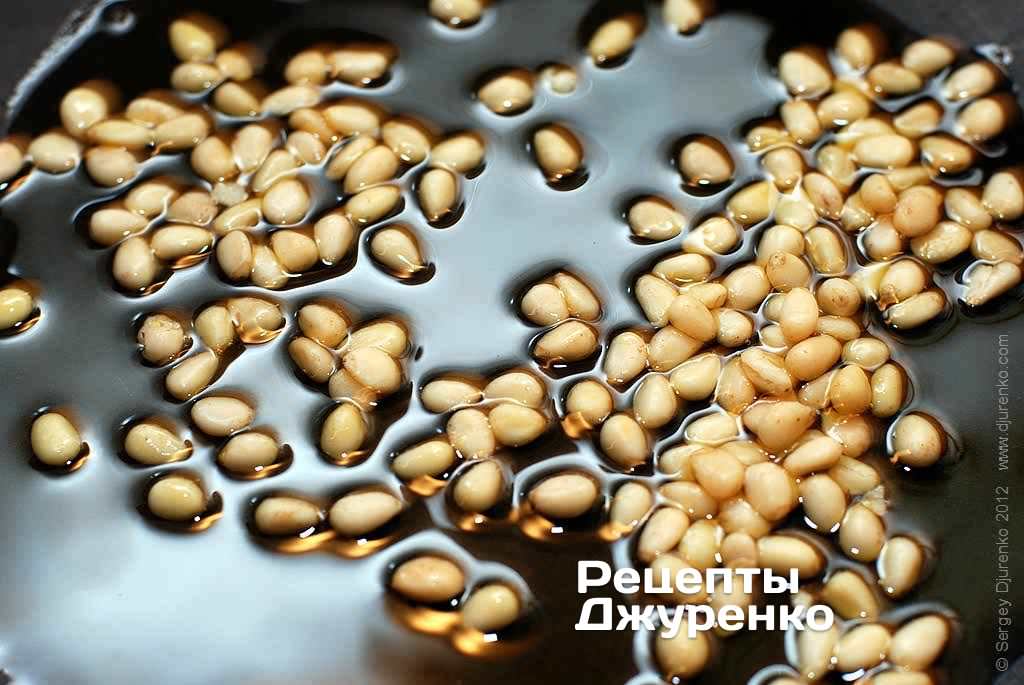
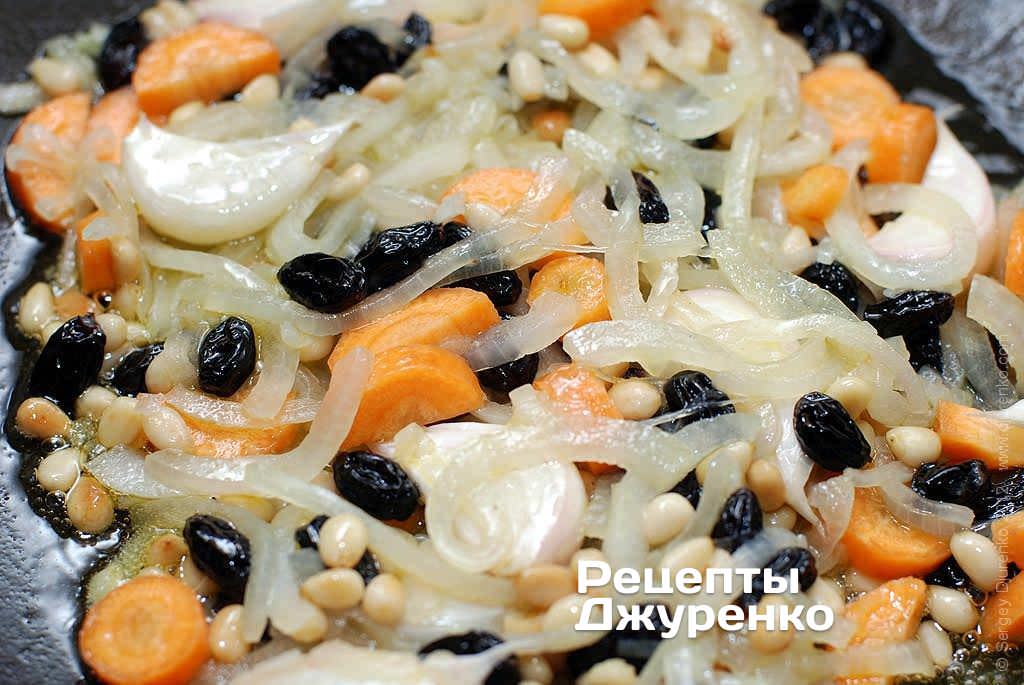
Fry the pine nuts. Heat the olive oil in a deep saucepan. Strictly speaking, butter is recommended, but real butter these days is a thing in itself. It’s better to take good-quality olive oil than suspicious butter, and there’s less cholesterol too. Quickly fry the nuts in the hot oil. They fry very fast, almost instantly, turning pinkish golden, and a barely perceptible pine aroma spreads.
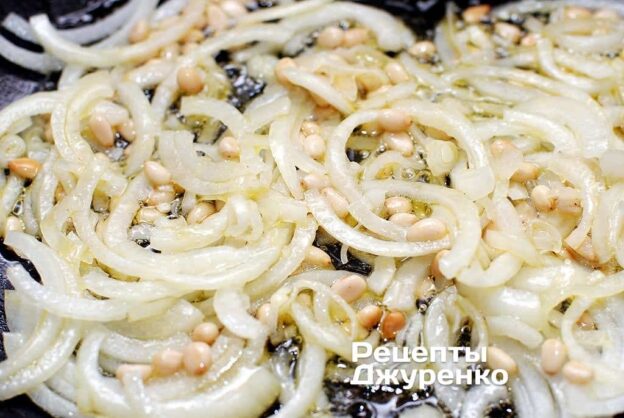
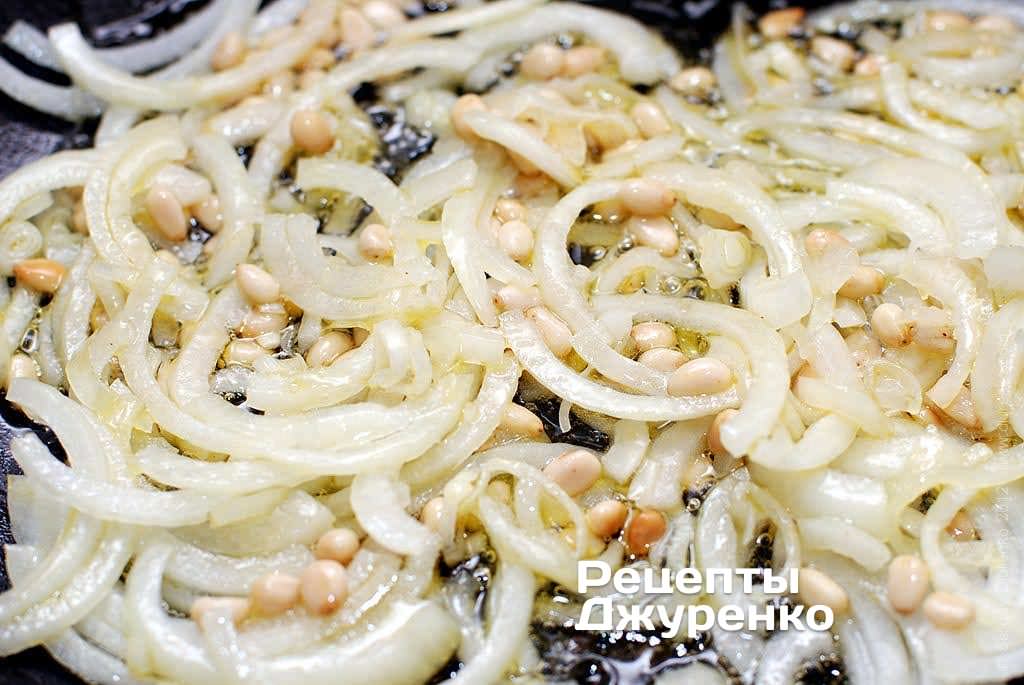
Immediately add the onion, cut into thin strips, and fry over medium heat, stirring. The onion should become soft and lightly browned.
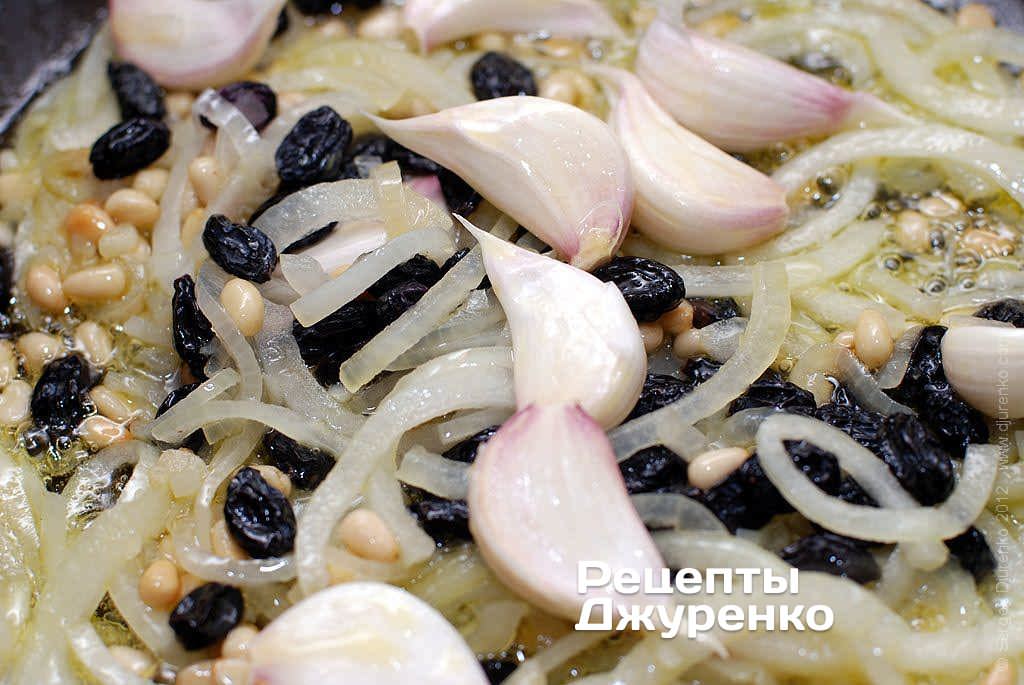
Add the soaked black, sweet raisins: the sweeter they are, the better the pilaf. You can often find wonderful black raisins with a strong smell and a price tag that says “good for the heart”. That is the right kind of raisin.
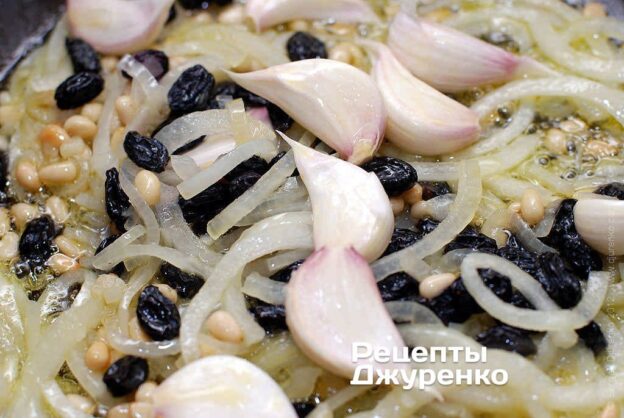
Add the carrot and garlic. Separate the garlic, preferably young, into cloves without peeling them. Peel and chop one clove, and leave the rest as they are. About 2-3 minutes after the raisins, add the sliced carrot and the unpeeled garlic.
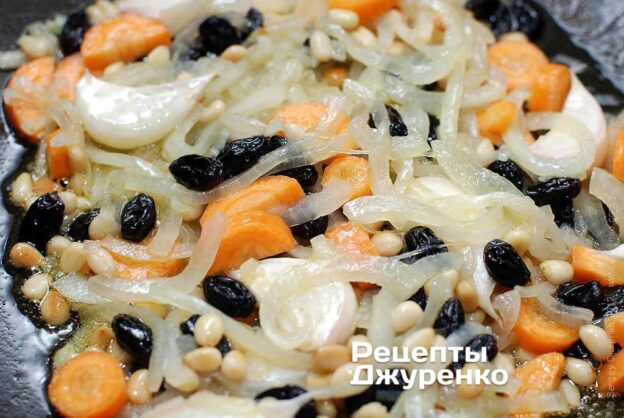
Stir and keep frying for 4-5 minutes.
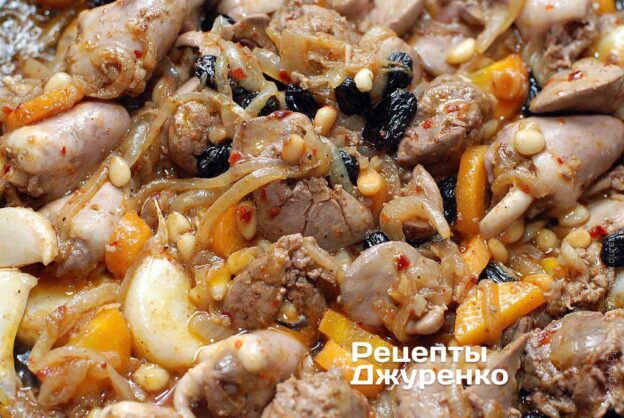
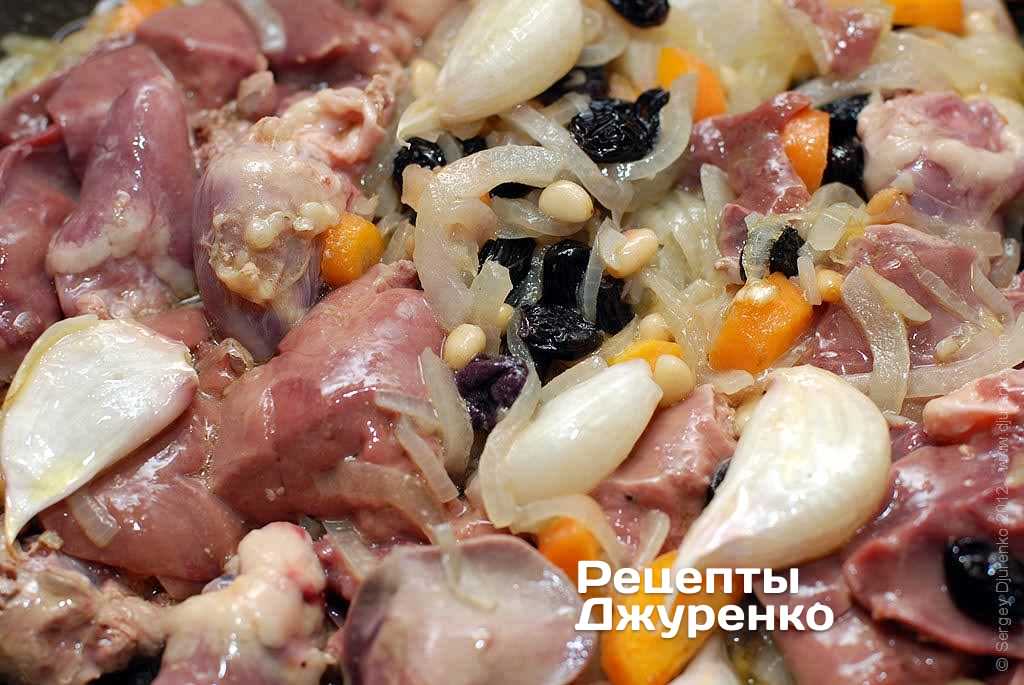
Fry the giblets with the spices. Add the chicken giblets, cut into large pieces.
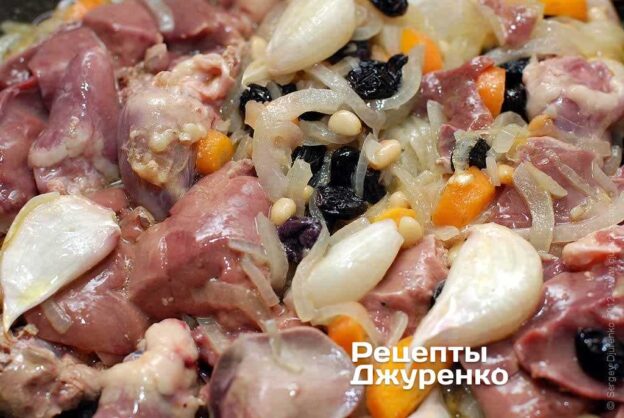
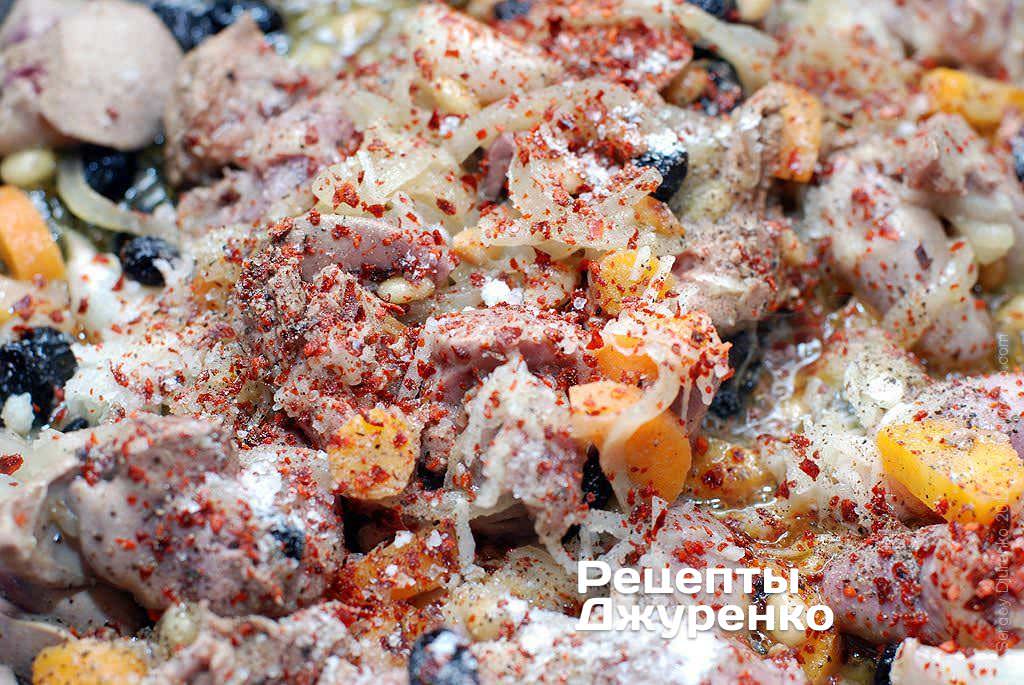
Add salt and ground black pepper. Add the chopped garlic clove. Add coarsely chopped red pepper. It can be sweet or hot: the dish should suit your taste.
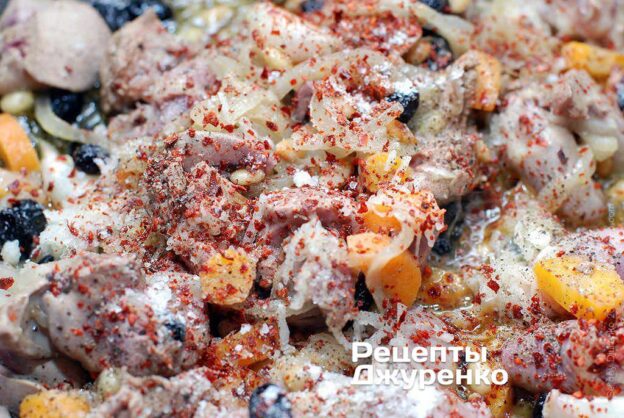
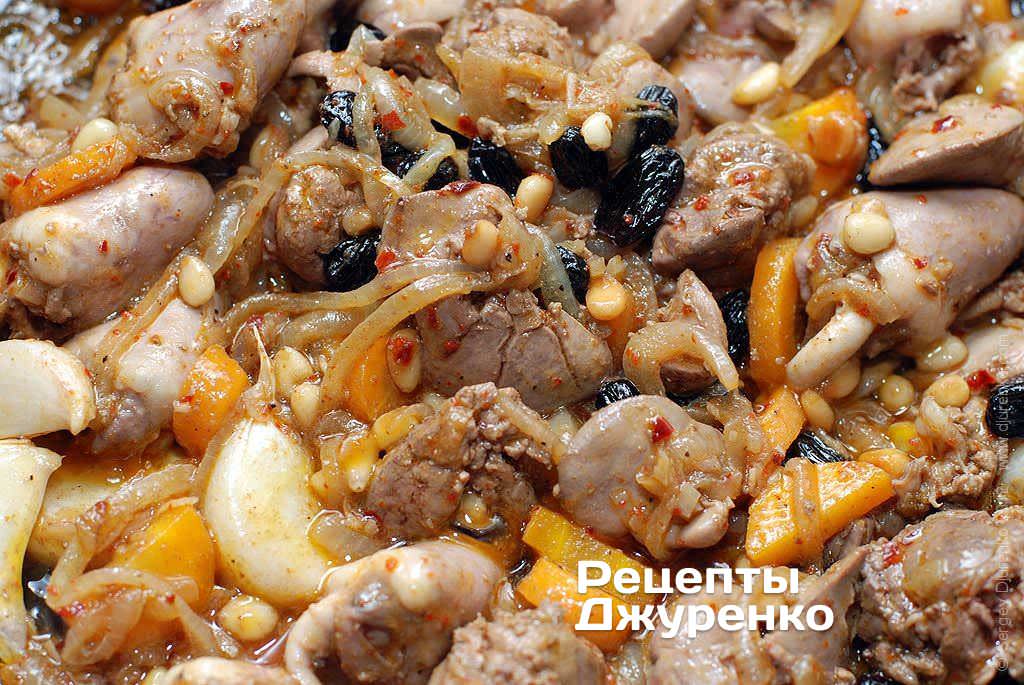
Fry everything for 10 minutes over medium heat, stirring.
Cooking the rice
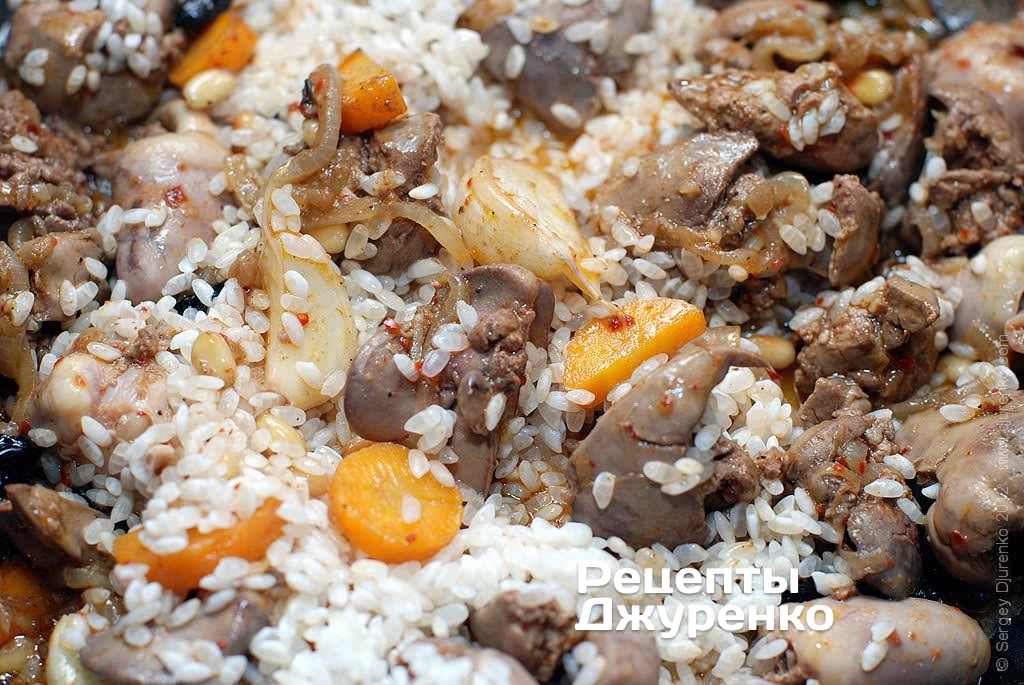
Fry the rice. Drain all the water from the rice and add it to the saucepan. Fry the rice with the vegetables and giblets for another 10 minutes over the same heat, stirring. During this time the rice will absorb the liquid, and the chicken giblets will be almost done.
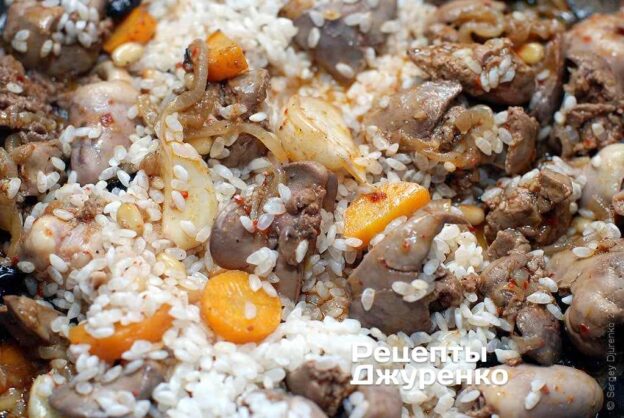
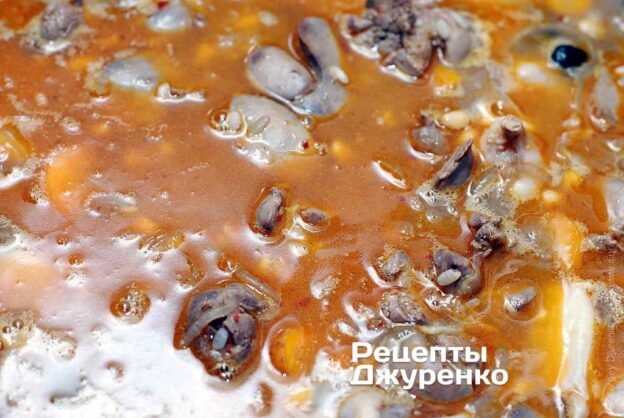
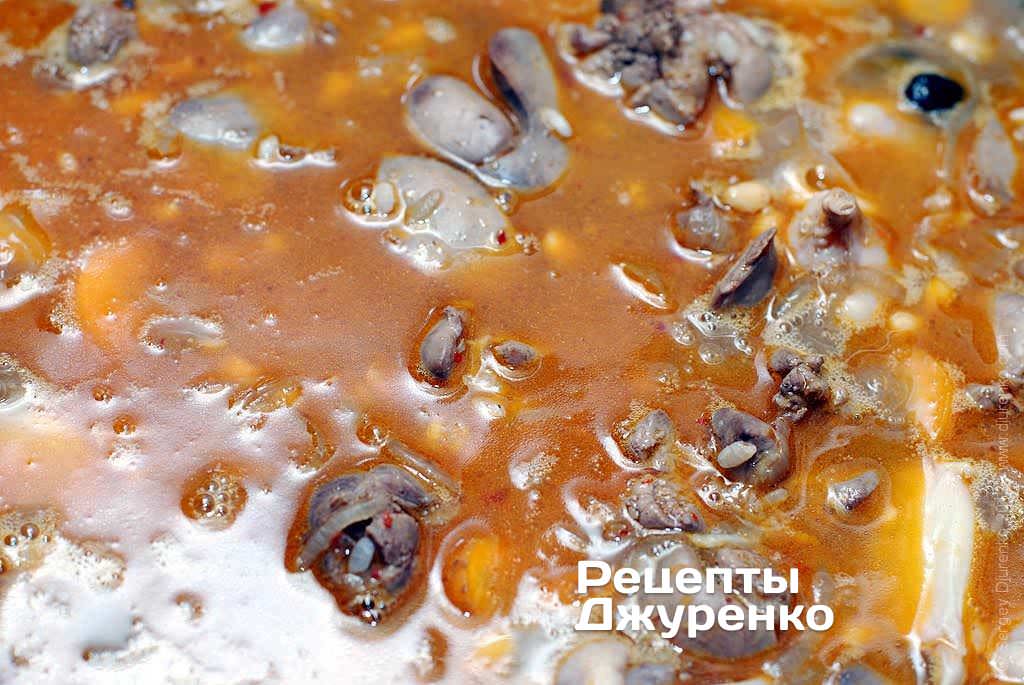
Pour 1.5 cups of hot chicken stock (300 ml) or plain water into the saucepan. Stir, bring to a boil, then cook covered over the lowest heat: it should barely simmer, so the liver turns out tender. The rice must absorb all the liquid completely.
Let the pilaf steam. After 15-20 minutes, when the liquid has been absorbed, gently stir, working from the edge to the center, and heap the dish into a mound right in the saucepan. Then leave the pilaf under the lid, possibly over very low heat, so that it “soaks up” the steam. This is an important step. Let it stand for at least 20 minutes, or better, half an hour.
Serving
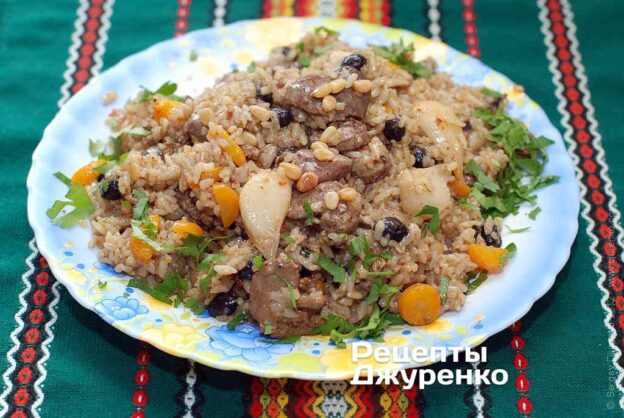
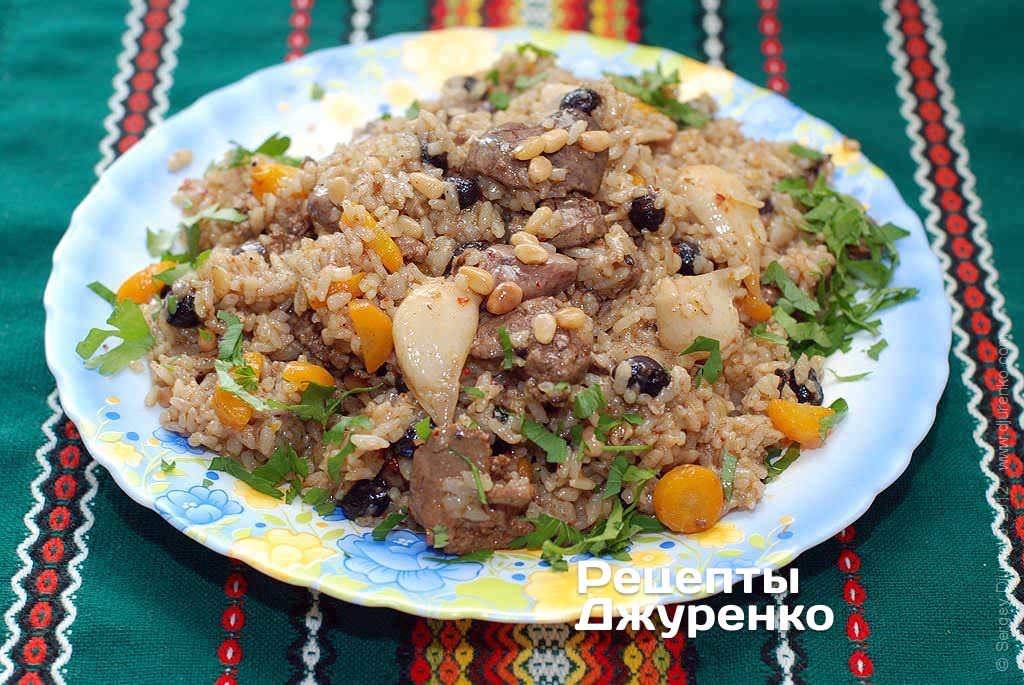
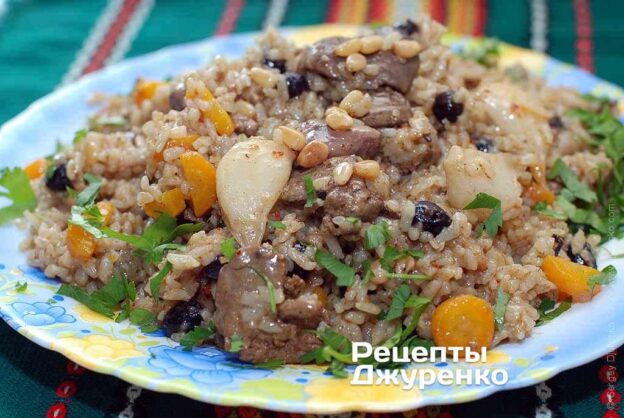
Transfer the finished pilaf to plates or a platter and sprinkle with finely chopped parsley.
Calories and macros
835 kcal
Serving ≈ 520 g
- Protein28 g14% of kcal
- Fat33 g36% of kcal
- Carbs103 g50% of kcal
100 g162 kcalProtein 5.3 gFat 6.3 gCarbs 19.9 g
Calculated from the recipe ingredients, excluding salt and spices. Data: USDA and Matvaretabellen.