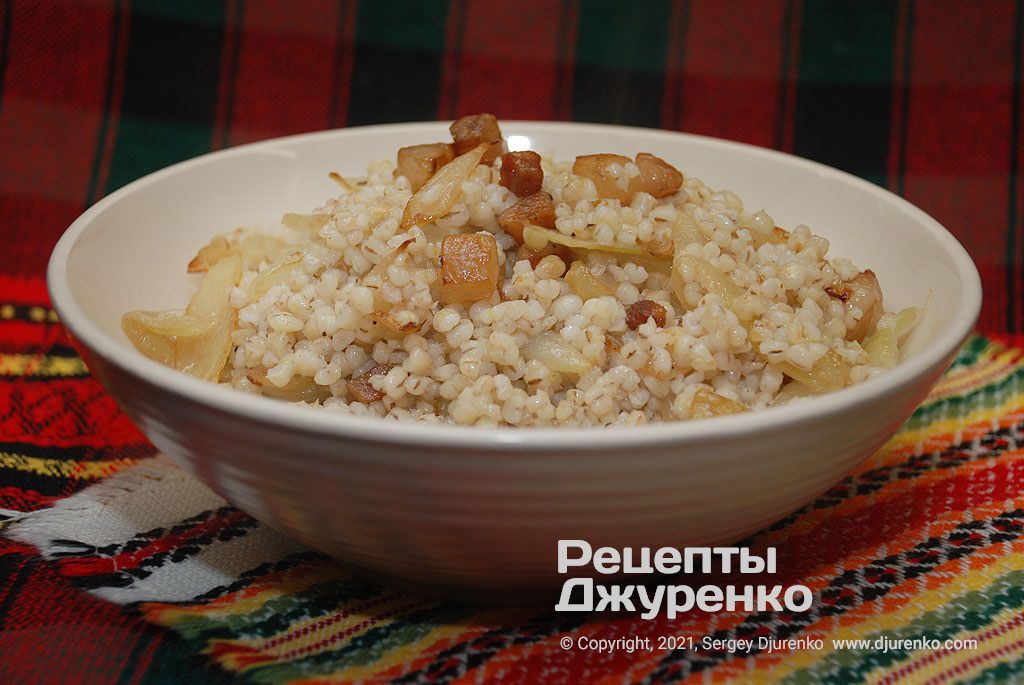
Barley Porridge with Pork Cracklings
Ingredients
2 servings
For the porridge
- Barley grits 1 cup (180 g)
- Water 2 cups (400 ml)
- Salt a pinch


For the topping
- Pork fatback 100 g
- Onions 3–4
- Salt, black pepper to taste


Step-by-step recipe
Cooking the grits
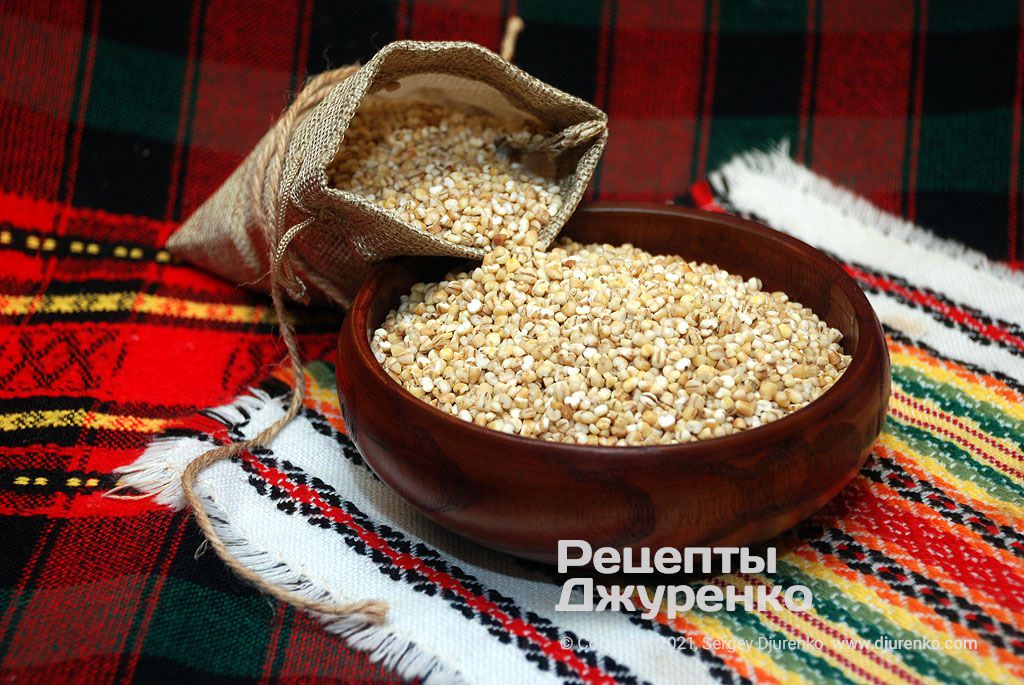
Fluffy barley grits porridge comes from coarsely crushed pearl barley without much fine flour in it. There’s no need to soak the grits – they will cook perfectly well as they are. If you like, you can lightly toast the dry grits in a hot dry skillet until they smell pleasant. But don’t overdo it.
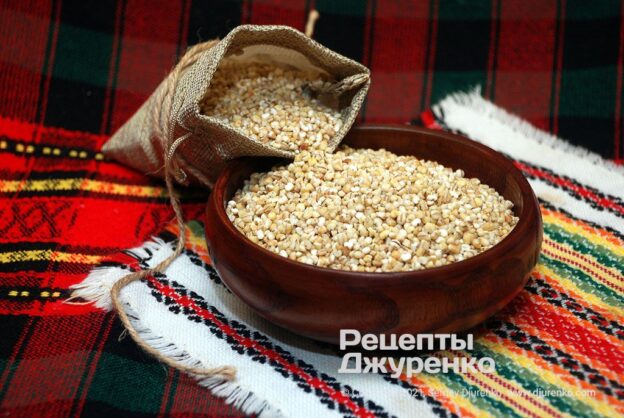
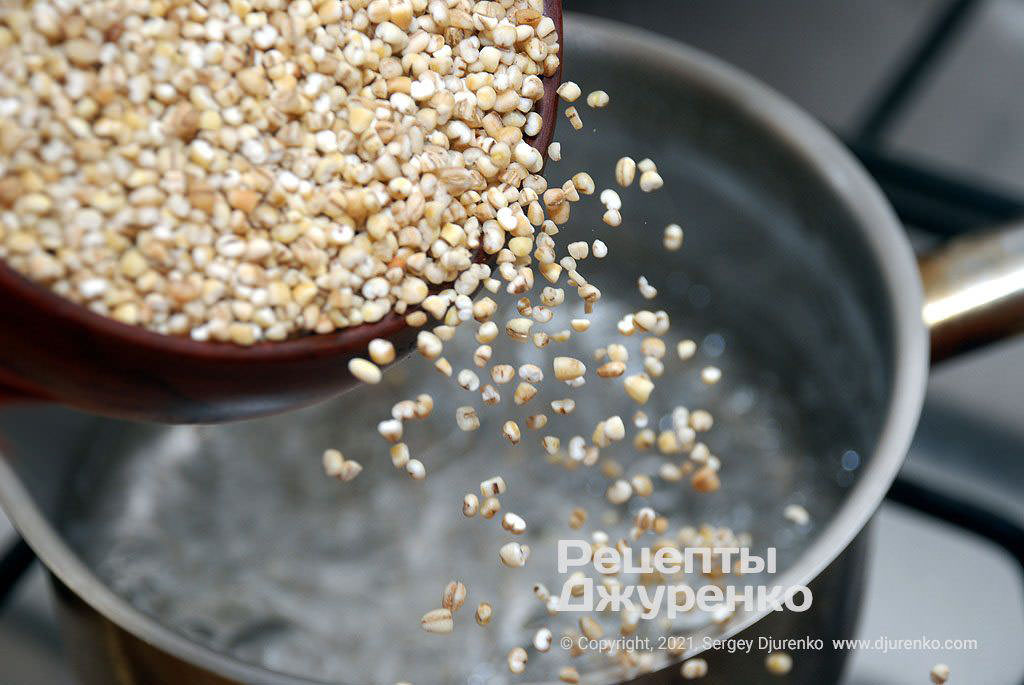
Pour two cups of water (400 ml) into a pot and add a small pinch of salt. Once the water comes to a boil, add the grits and stir.
The ratio is one cup of grits to two cups of water (400 ml). More water will make the porridge sticky and a bit “slimy”, while less won’t let it cook until soft.
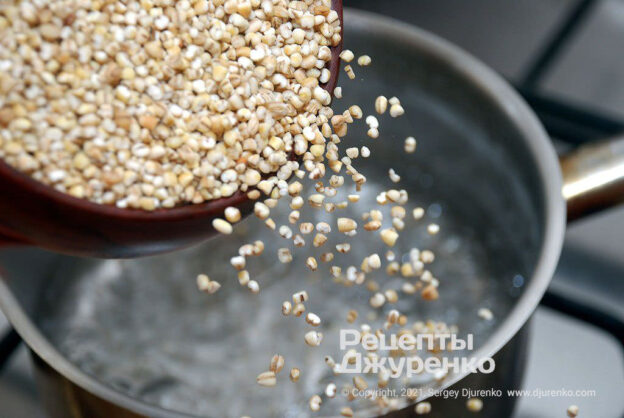
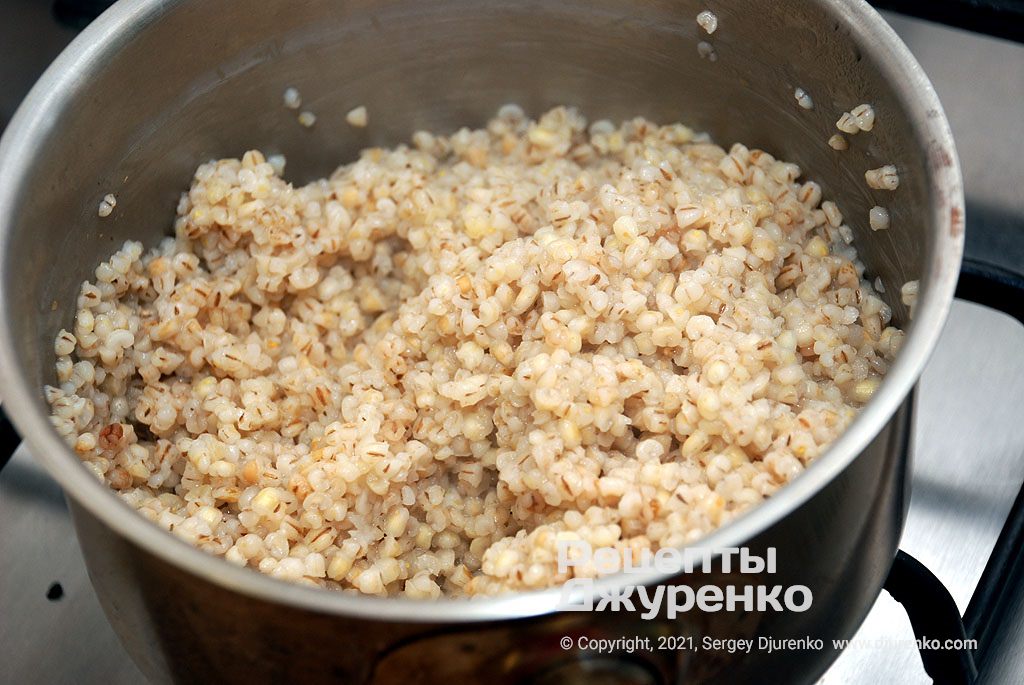
Turn the heat down to the minimum and cover the pot with a lid – the water should barely simmer. Cook until the liquid is completely absorbed and the porridge is soft. Usually you need to stir it 2–3 times while it cooks so it doesn’t stick to the pot.
By the way, grits are often just put into a thermos and covered with boiling water – they cook until soft perfectly well this way.
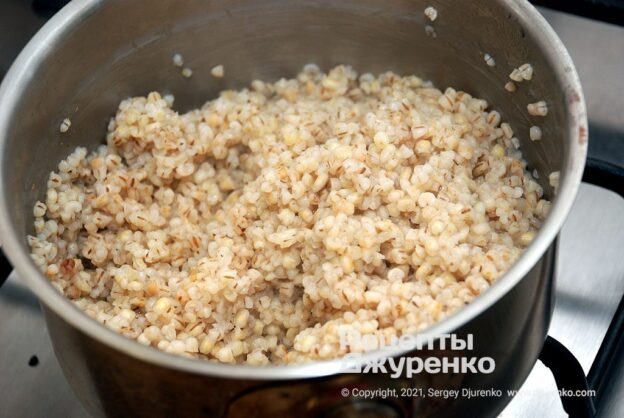
Once it’s done, wrap the pot in a blanket and leave it for 20–30 mins.
Cracklings with onion
Meanwhile, you can prepare the add-ins for the porridge. My grandmother in the village often fried pork cracklings with lots of onion.
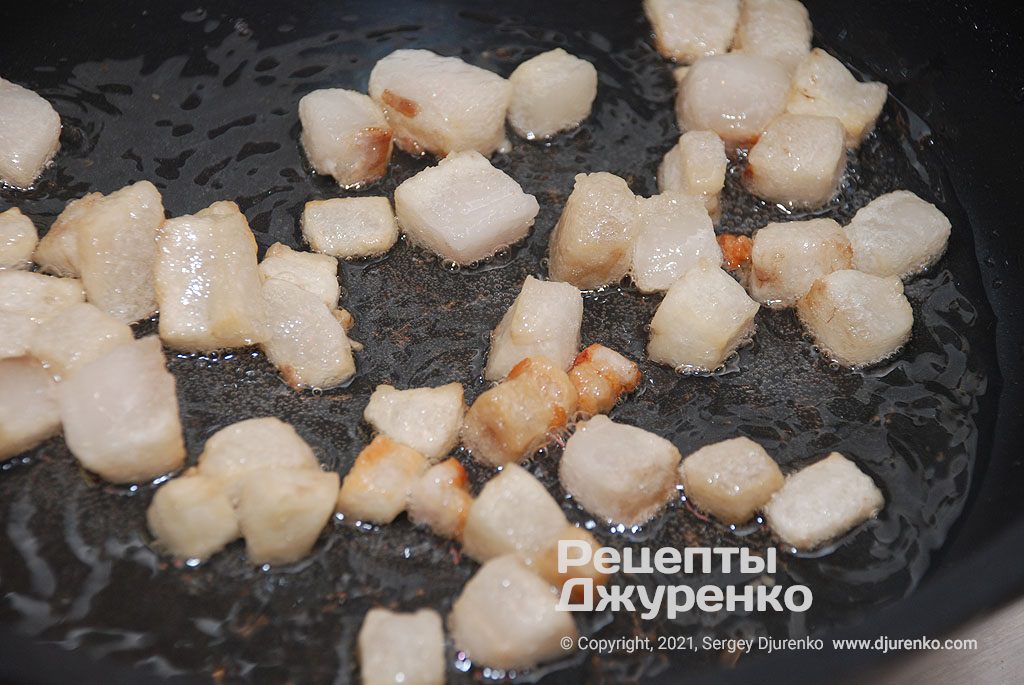
Cut a piece of good pork fatback into cubes – larger than for salads. It’s better to remove the rind, even if it’s very tasty and pretty.
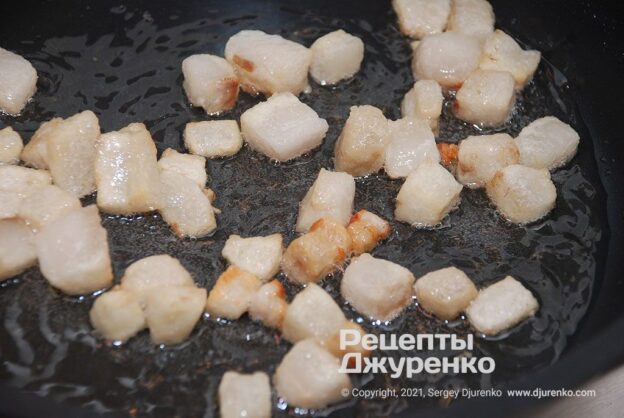
Heat a skillet and fry the cracklings – they should turn golden and slightly crispy. Pour off almost all of the rendered fat: no more than 2 tbsp should remain.
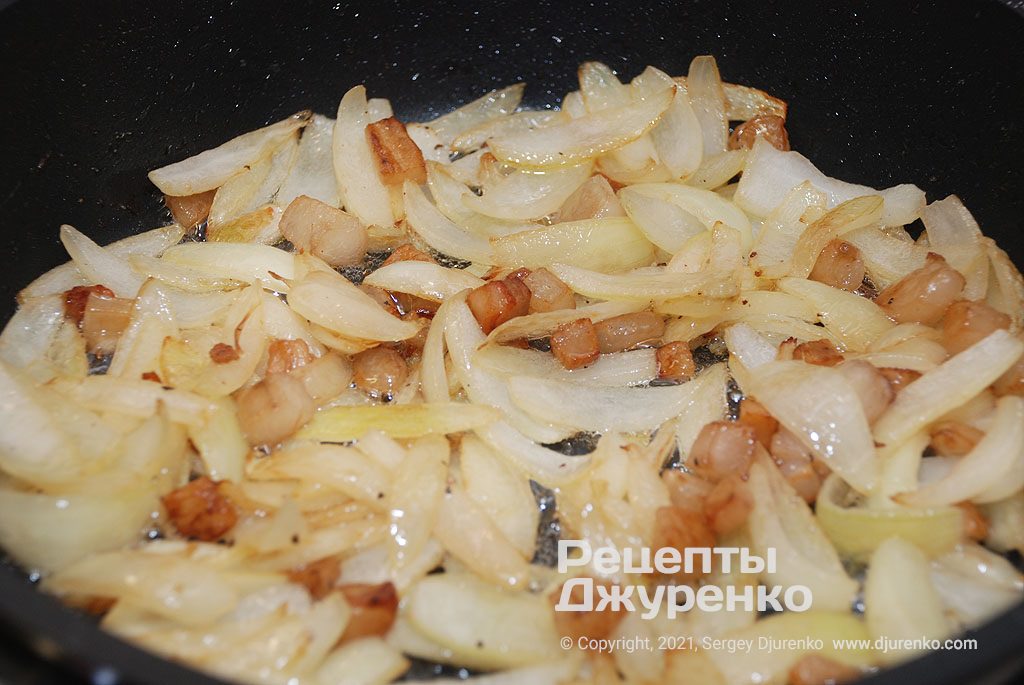
Peel the onions and cut them lengthwise into very thick strips, 10–15 mm wide. It’s better to remove the onion cores and save them for soup.
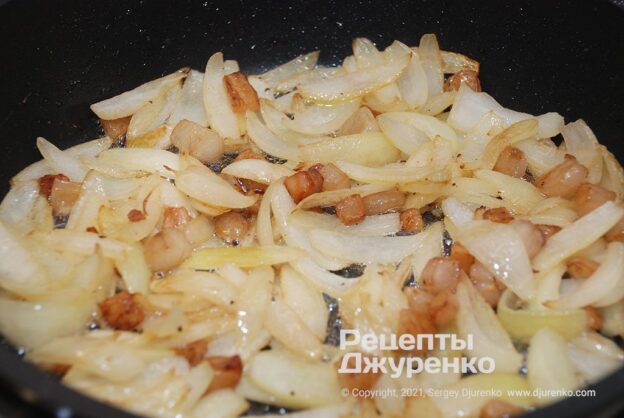
Add the onion to the cracklings and, stirring constantly, fry in the pork fat until the pieces are soft and lightly golden. The onion turns sweet and very tasty. I remember that as kids we loved eating it with fresh bread.
Bringing it together
By now the porridge is ready – the grains are almost dry, soft and with no trace of stickiness. I especially like them cooked al dente.
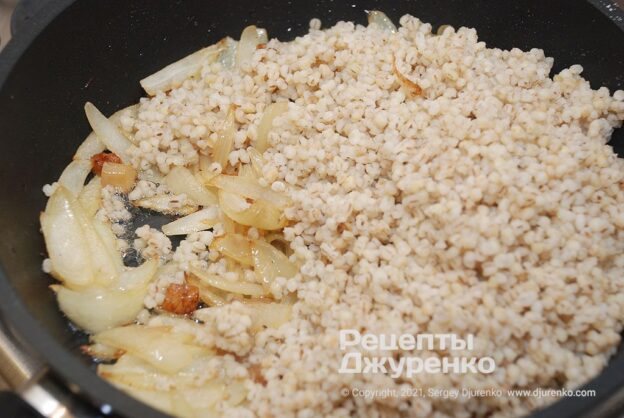
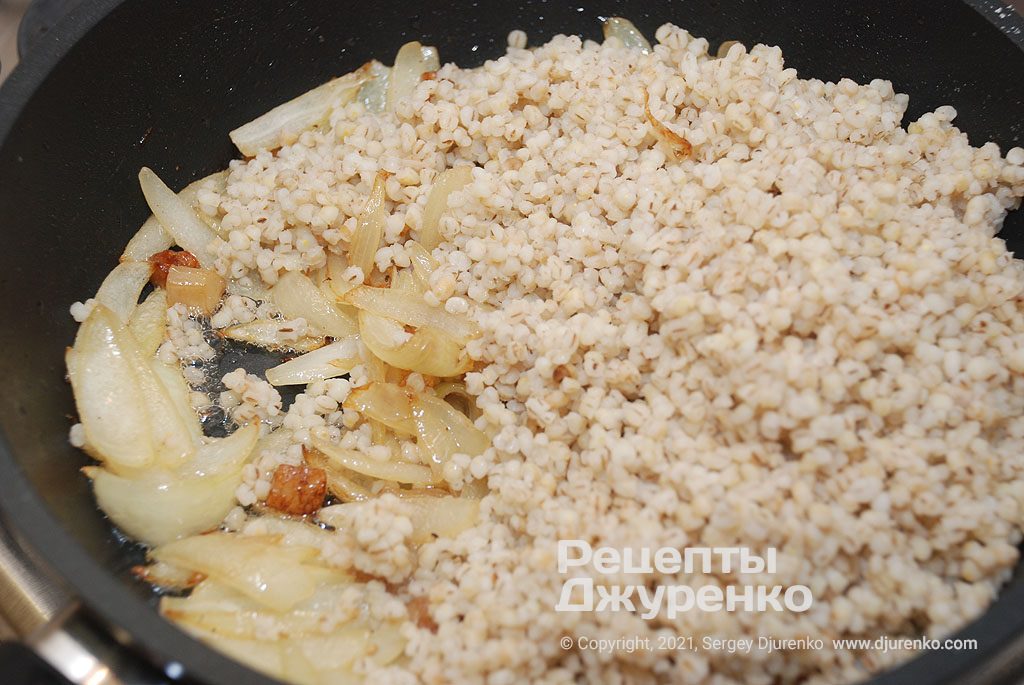
Add the cooked grits to the skillet and mix thoroughly. Salt to taste and season generously with pepper.
Stir again and let the porridge stand over low heat under a lid for 10 mins. After that it’s completely done.
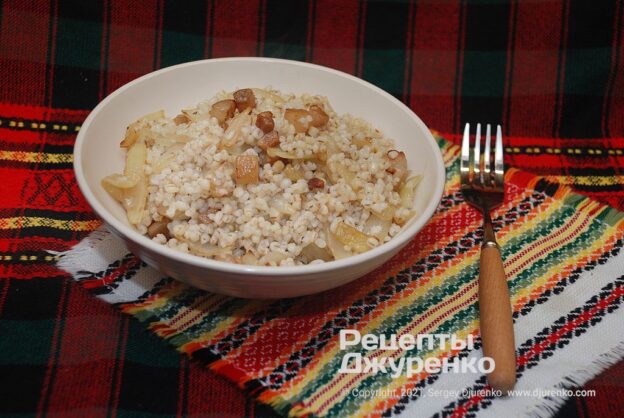
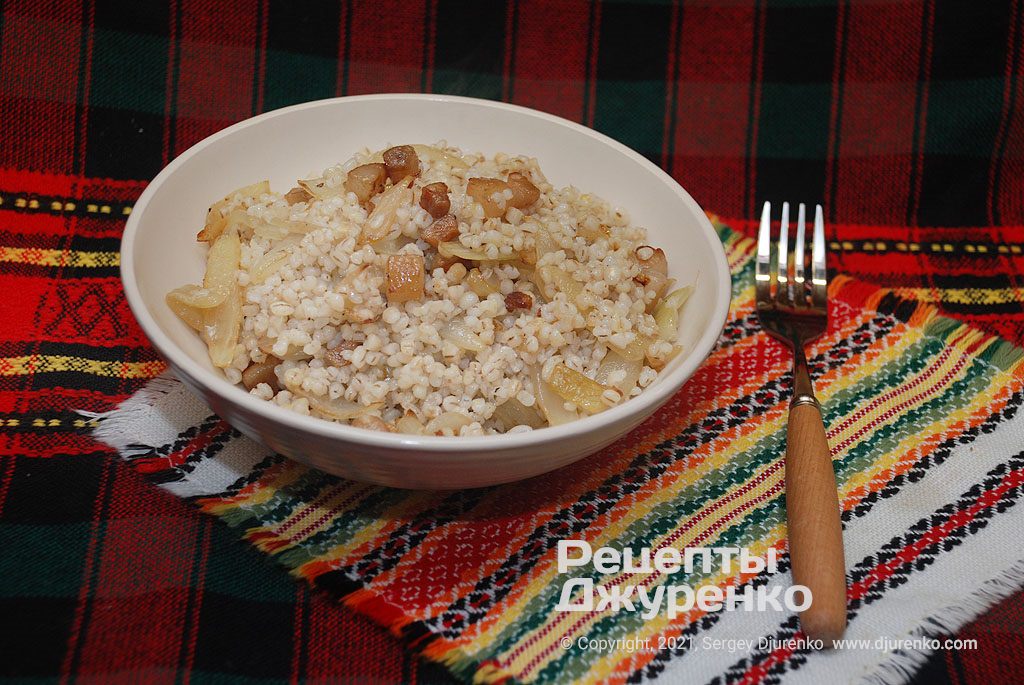
Spoon onto plates and serve hot – that’s when it tastes best. Barley grits porridge with cracklings and onion is good both as a dish on its own and as a side for meat or pork patties.
Calories and macros
600 kcal
Serving ≈ 380 g
- Protein11 g8% of kcal
- Fat28 g46% of kcal
- Carbs63 g46% of kcal
100 g160 kcalProtein 2.9 gFat 7.4 gCarbs 16.9 g
Calculated from the recipe ingredients, excluding salt and spices. Data: USDA and Matvaretabellen.
How did you like this recipe?
To Get It Right
Which grits to buy
Choose coarse barley grits – No. 1 or No. 2, with pieces of 1–1.5 mm and no fine floury dust: fine grits make a sticky porridge. If the pack has a lot of small bits, sift them out before cooking.
How long to cook
Over minimum heat under a lid – about 15–20 minutes after boiling, until the water is fully absorbed. Then wrap the pot and leave it for 20–30 minutes: the grits will soften on their own.
Creamy porridge
If you want a soft, creamy porridge rather than a fluffy one, use 3 cups of water (600 ml) per cup of grits and cook 5–10 minutes longer, stirring more often.
Barley grits porridge with milk
Cook the grits in water as in the recipe, but with 1.5 cups of water (300 ml). When the water is absorbed, pour in 1–1.5 cups of hot milk (200–300 ml) and simmer under a lid for another 10 minutes, stirring. Serve with butter and honey.
Instead of fatback
The best result comes from using bacon or fatback with streaks of meat – the cooking sequence is exactly the same.
Have your own trick for this recipe?
Questions and answers
How much water per cup of barley grits?
For a fluffy porridge – 2 cups of water (400 ml) per 1 cup of grits. More water makes it sticky, less won’t let the grits cook until soft. For a creamy porridge, use 3 cups of water (600 ml).
Do barley grits need soaking?
No. Whole pearl barley is soaked, but crushed grits cook perfectly well without soaking.
Should barley grits be rinsed?
Usually not: the fine particles turn into mush with water, and the porridge comes out sticky. If the pack has a lot of floury dust, it’s better to sift the grits.
Are barley grits the same as pearl barley?
Both are made from barley. Pearl barley is the whole polished grain, barley grits are the same pearl barley, only crushed. That’s why grits cook faster and need no soaking.