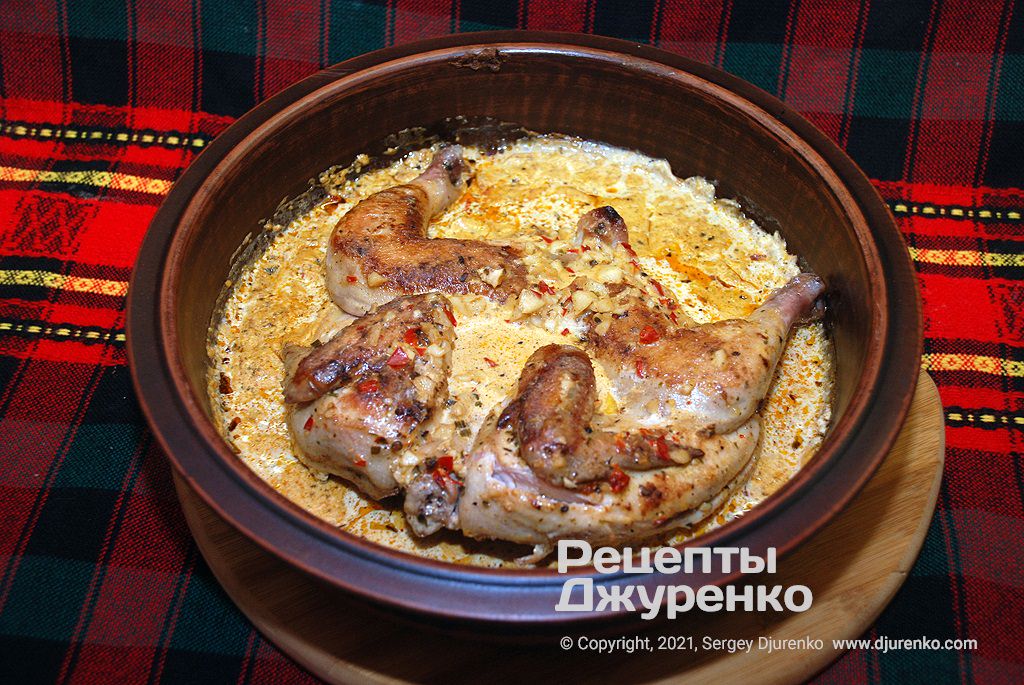
Chkmeruli
For chkmeruli I fry the chicken under a weight — usually my heavy marble mortar. A 600–800 g bird is pressed to the bottom and browns on all sides. Then a head of garlic with hot pepper fries in the same butter for 3–4 minutes, and 200 ml of cream and half a cup of water go in. All of it goes into a clay ketsi and into a cold oven.
Ingredients
1 serving
- Young chicken 1 (600–800 g)
- Cream, 15–20% 200 ml
- Water 0.5 cup (100 ml)
- Butter 50 g
- Garlic 1 head
- Hot pepper 1
- Khmeli suneli 0.5 tsp
- Salt, ground black pepper to taste
- Lavash for serving
- Cilantro optional


Step-by-step recipe
Frying the chicken
A young chicken is just the amount of food that can be served as a single portion, right in the clay pan. For a family or a group of friends it is better to cook a large chicken.
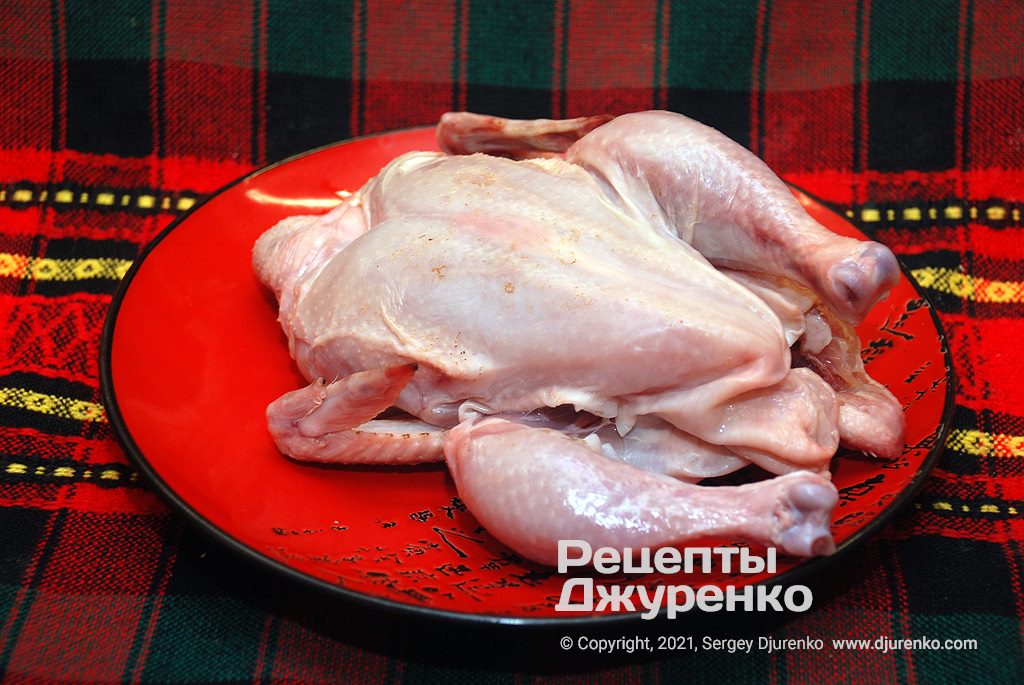
Wash the chicken and pat it dry with paper towels. Trim off any excess skin and fat. Check the bird over, too — there may be some feathers left.
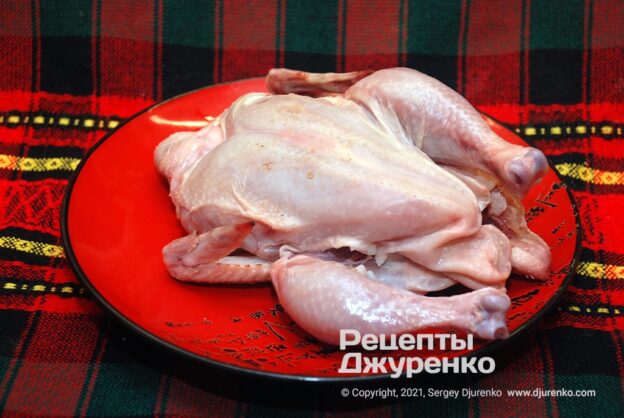
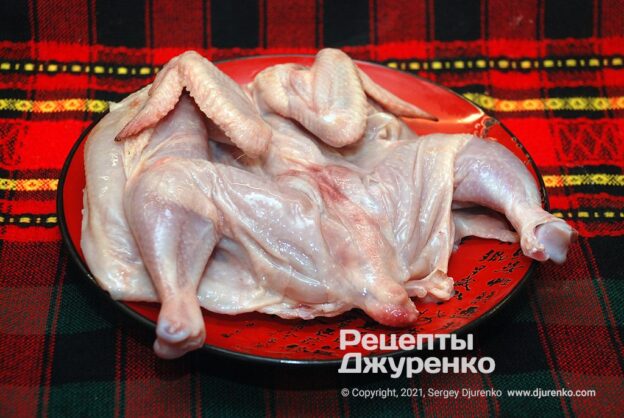
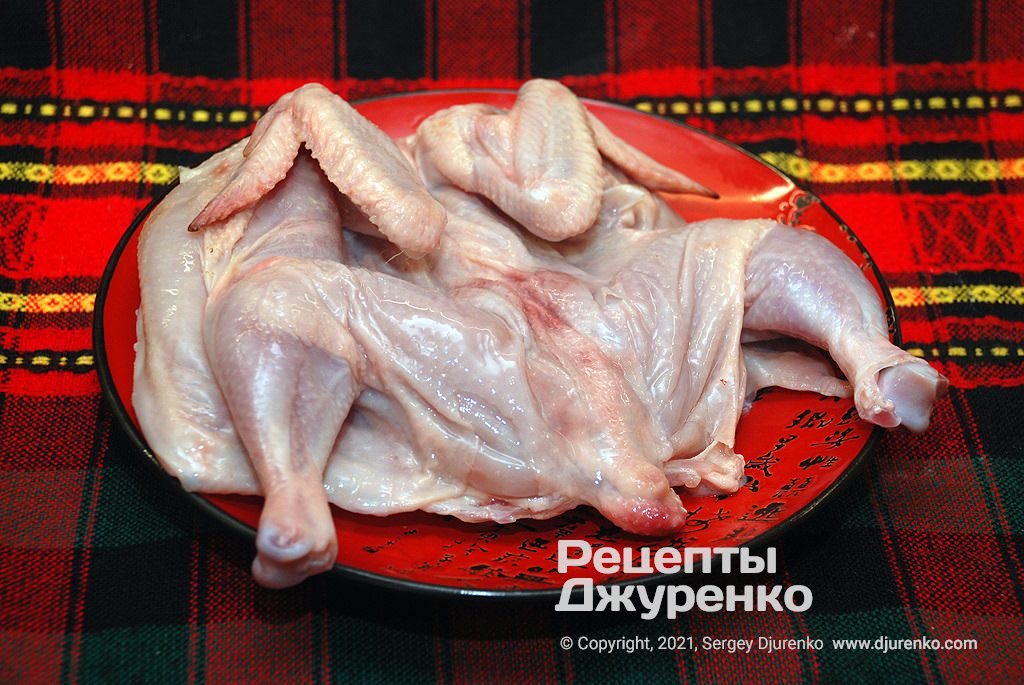
With scissors or a knife, cut through the centre of the breastbone, between the two breast fillets. If there are any remains of the innards inside, it is best to remove them carefully. Open the bird out like a book, then rub it with salt and ground black pepper.
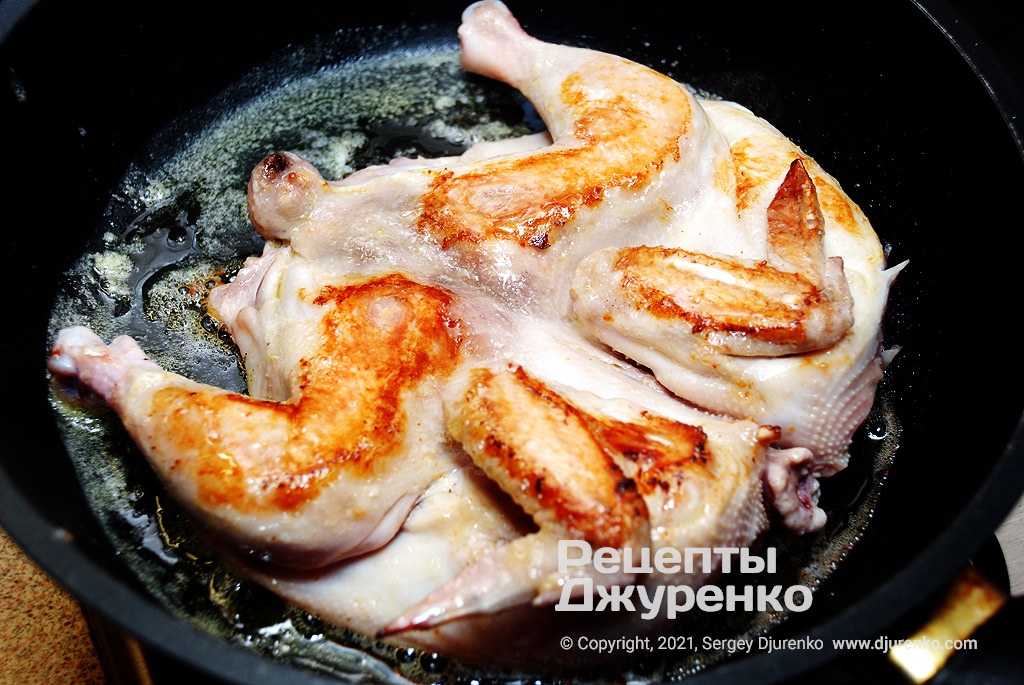
Melt the butter in a large frying pan. At home it is convenient to fry the chicken in an ordinary frying pan and then move it to the clay ketsi. When the butter is good and hot, put in the chicken, back side down. Press the bird against the bottom of the pan with a plate or a small board with a small weight on top. As a weight I usually use a heavy marble mortar for grinding spices. Fry the chicken for 7–8 mins, until lightly browned.
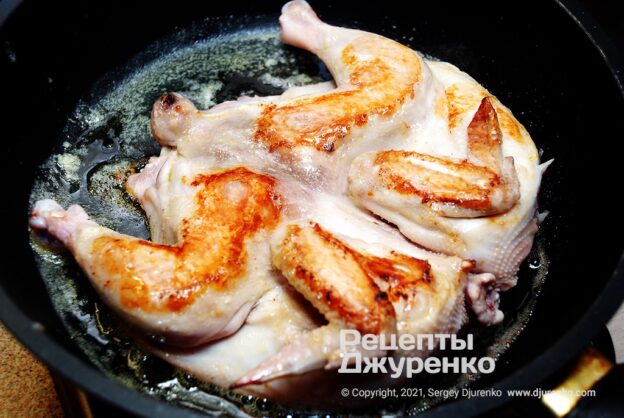
Turn the bird over and press it against the bottom of the pan in the same way. After 7–8 mins take the weight off and keep frying the chicken until it is cooked through, turning it to brown it evenly.
The meat is done when no pink juice runs out if you cut into a thick part — the breast or the leg. For chkmeruli the meat has to be fully cooked, since it will stew in the sauce only very briefly.
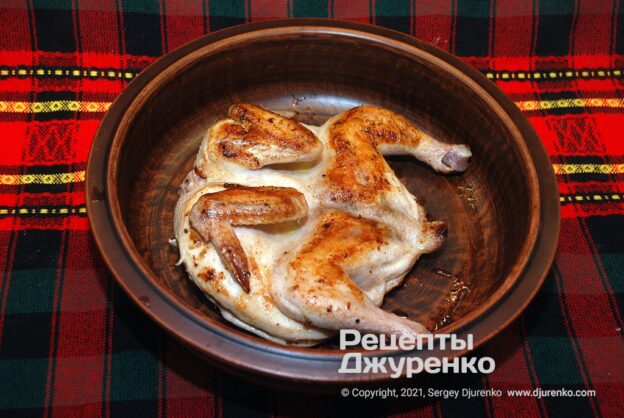
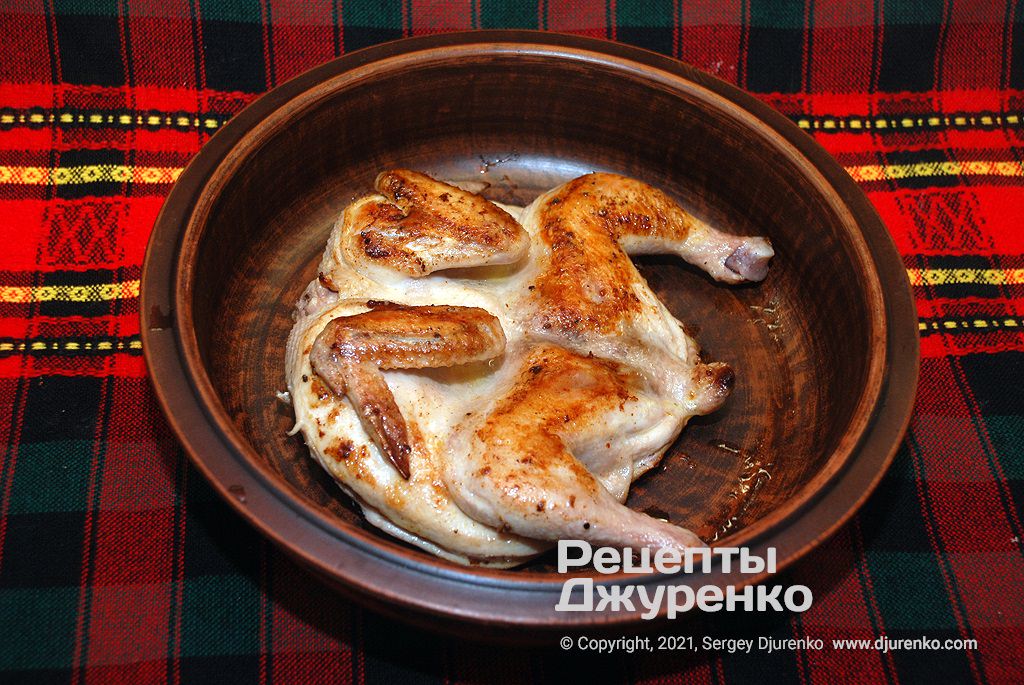
Move the cooked chicken to the ketsi, back side up.
Making the sauce
Get the garlic and pepper ready while the meat is frying.
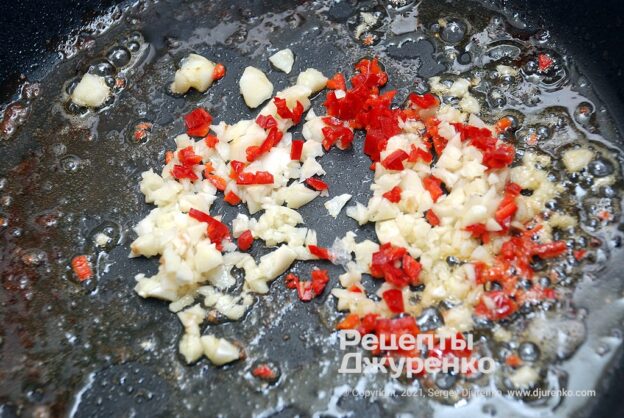
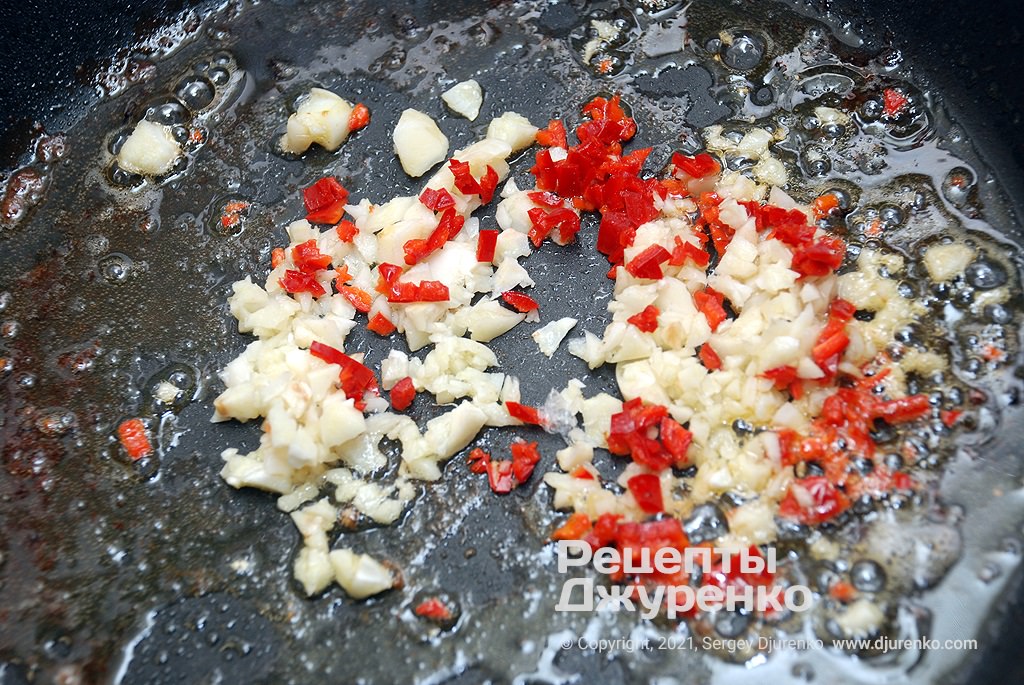
Peel the garlic and chop it with a knife — it does not have to be very fine. Deseed the hot pepper and chop it the same way. Toss the garlic and pepper into the butter left in the pan and fry, stirring, for 3–4 mins.
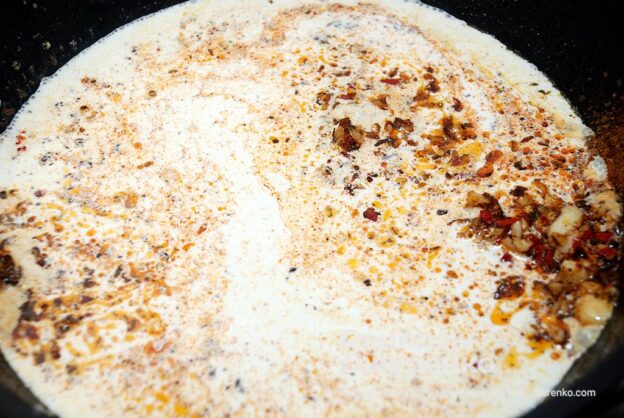
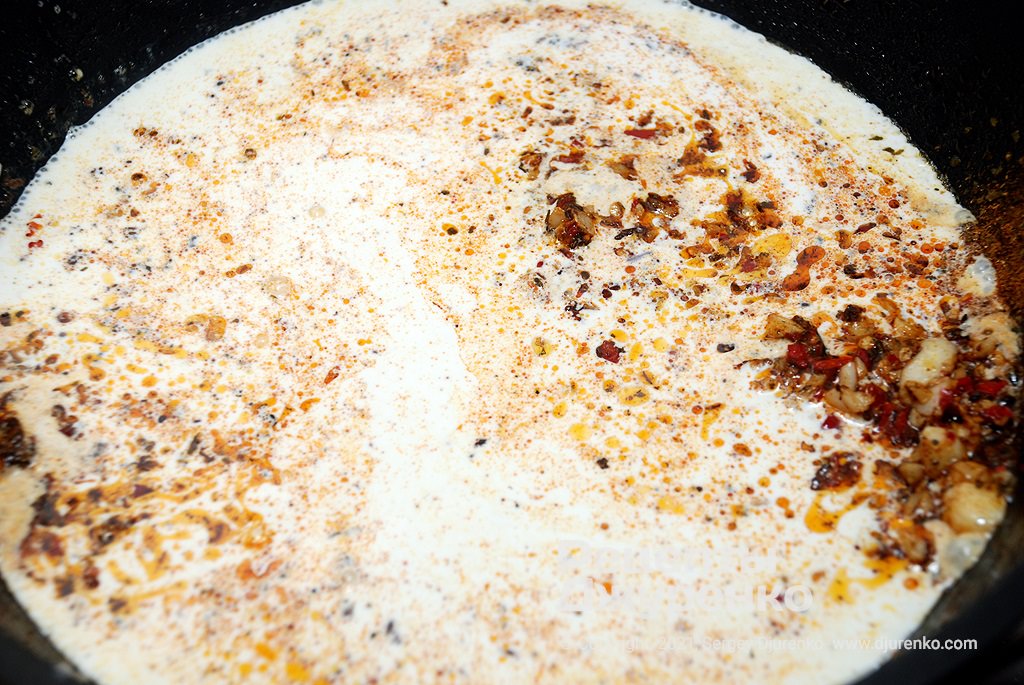
Pour the cream into the pan — not the richest kind — and add half a cup of plain water (100 ml). Season the sauce with salt and pepper and add 0.5 tsp of ready-made khmeli suneli blend.
If you like, you can use other spices typical of Georgian cuisine: utskho suneli (blue fenugreek) goes very well with chicken. Adjika, coriander and various spice blends typical of a particular region are often used too.
Bring the sauce to a boil — after 2–3 mins it is ready.
Simmering the chicken in the sauce
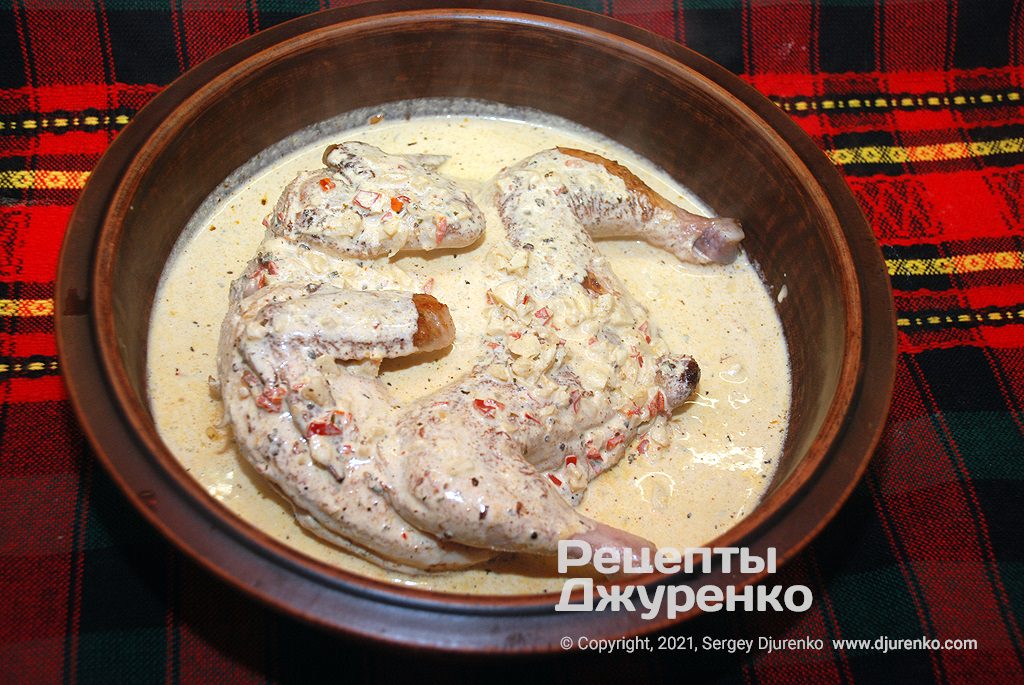
Pour the sauce over the chicken in the ketsi. Try to pour it so that the sauce runs down over the bird. There is not much sauce, so most of it will end up at the bottom of the ketsi.
If you are able to use coals, simply set the ketsi on them. At home, as a rule, the oven is used. Clay does not take sudden changes of temperature well, so put the ketsi into a cold oven and heat them up together.
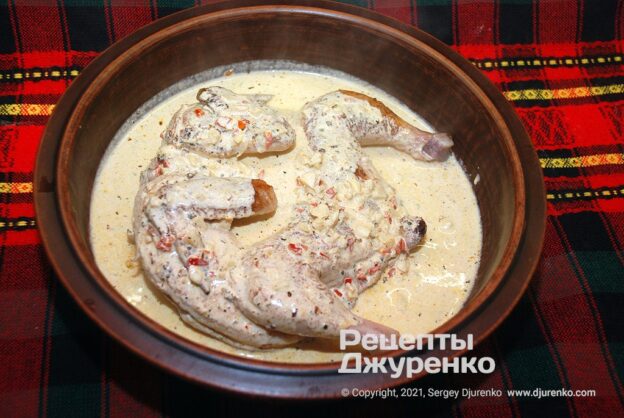
Watch for the moment the sauce starts to boil. The chicken is already cooked, so the meat only needs to soak up the sauce — that takes 4–5 mins from the start of boiling, after which the dish is completely ready. There is no need to turn the chicken in the sauce.
Often the meat is simply submerged in the sauce and left in a hot wood-fired or regular oven, even with the heat turned off.
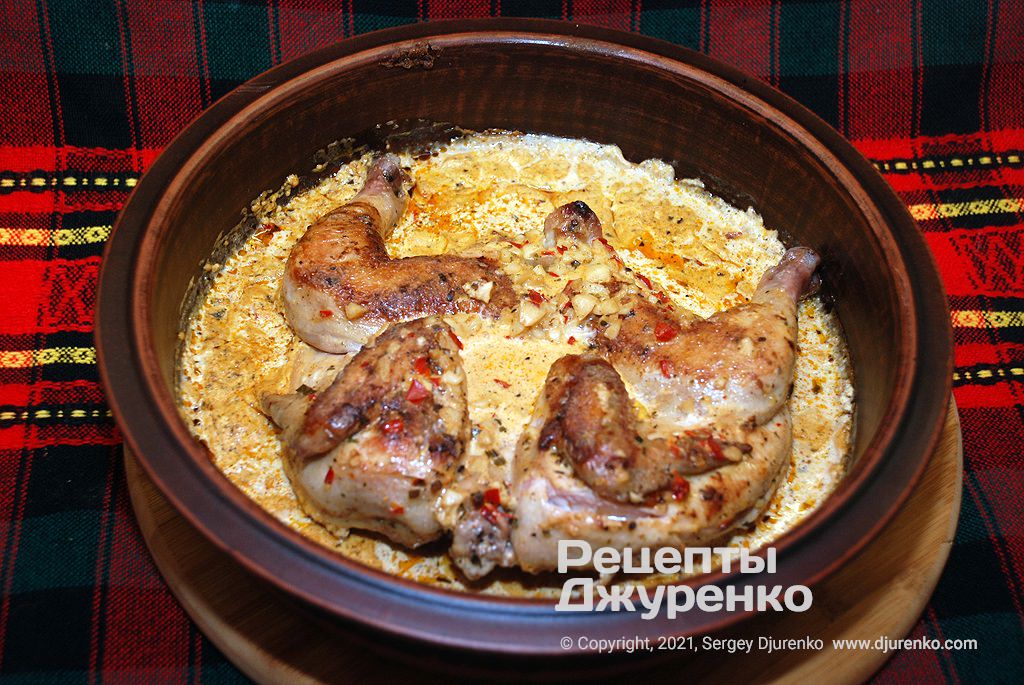
Serving
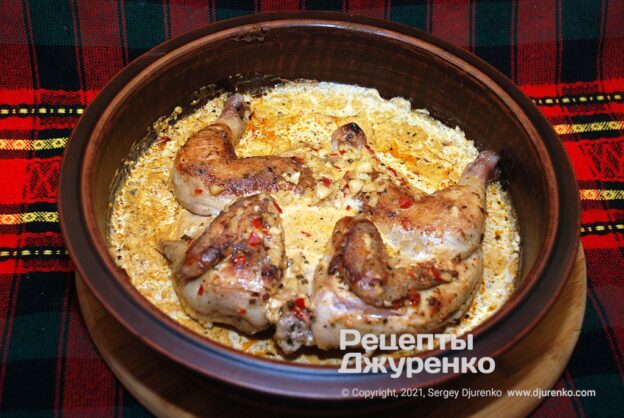
Serve the chicken in its milk and garlic sauce right in the ketsi, with lavash. If you like, sprinkle with chopped cilantro. Wine will not go amiss.
There is a lot of garlic in the sauce, yet its taste is not at all overpowering. The sauce is noticeably hot and spicy, but not fiery.

How did you like this recipe?
Rate it with one tap.
Calories and macros
1870 kcal
Serving ≈ 680 g
- Protein101 g22% of kcal
- Fat153 g74% of kcal
- Carbs22 g5% of kcal
100 g277 kcalProtein 14.9 gFat 22.7 gCarbs 3.2 g
Calculated from the recipe ingredients, excluding salt and spices. Data: USDA and Matvaretabellen.