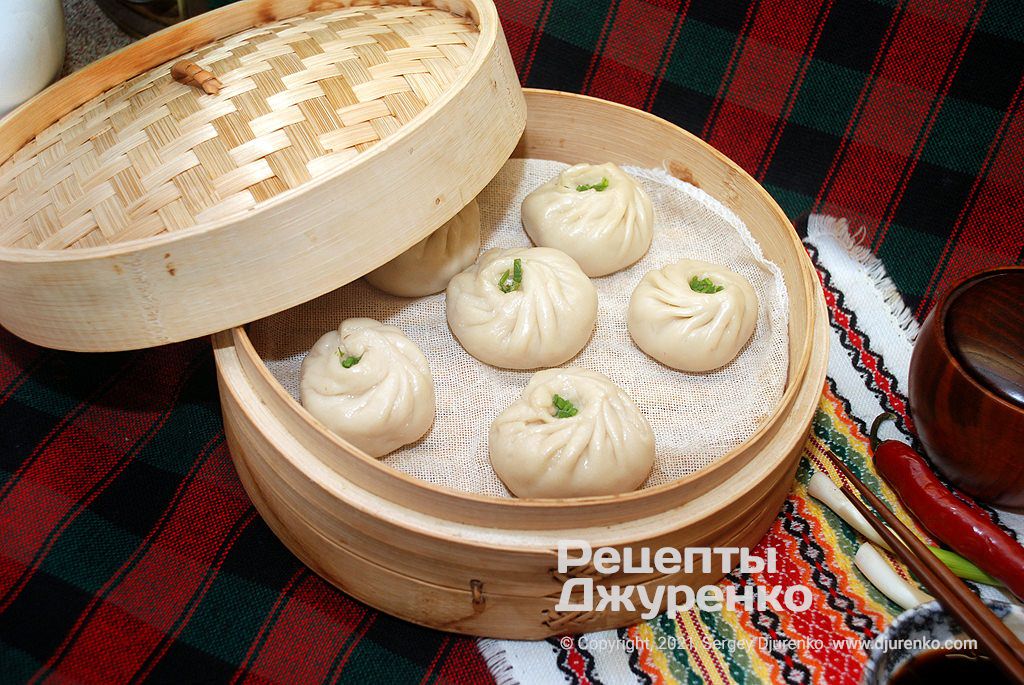
Baozi: Chinese Steamed Buns with Egg and Green Onion
Chinese cuisines are famous for all kinds of filled dough dishes. Around here, most of them get lumped together as a kind of dumpling, which doesn't come close to capturing how varied they are. They can be made from any dough, unleavened or yeasted, and cooked by frying, boiling, steaming or even baking.
Bao, or baozi, are generally understood to be filled steamed buns. Though, I admit, they do look like unusually shaped dumplings or Georgian khinkali. The main differences are shape and size. They're made small, almost like meat dumplings, or very large, barely fitting on a plate, so you have to hold them with both hands to eat them.
The dough is yeasted, which is probably why they're thought of as steamed pies or buns. The filling isn't always meat. Mushroom and vegetable fillings are common, and there are even sweet ones made from a special kind of bean. I really love a filling of green onion fried with eggs, and that's the one my daughter and I made.
They say you can buy ready-made frozen bao in stores that you just thaw and steam. But making them at home is no trouble. All it takes is the will and a knack, which comes quickly enough. Spend an hour or two making the dough and simply learn to roll and fold it. The skill sticks fast, and after that you can shape really cute buns.
For obvious reasons, most people prefer meat. I like a meat filling better in jiaozi: they're easier to shape and use unleavened dough. I go for eggs fried with green onion and spices. You can try chicken, pork, pumpkin, vegetables and so on.
The yeast dough takes about two hours, and it's very simple, with no enrichment. Just wheat flour, yeast, a little sugar and salt, water and vegetable oil for elasticity. While the dough rises, there's time to make the filling and to practice shaping; you can use a plain unleavened dough for that. It's easy to learn, and the skill sticks quickly.
Ingredients
5-8 servings
- For the dough
- Wheat flour 2 cups
- Dry yeast 5-6 g
- Salt, sugar, vegetable oil to taste
- For the filling
- Green onions 2 bunches
- Eggs 5-6
- Garlic 1-2 cloves
- Sesame oil 1-1.5 tbsp
- Soy sauce, fish sauce, rice vinegar, five-spice powder to taste
Step-by-step recipe
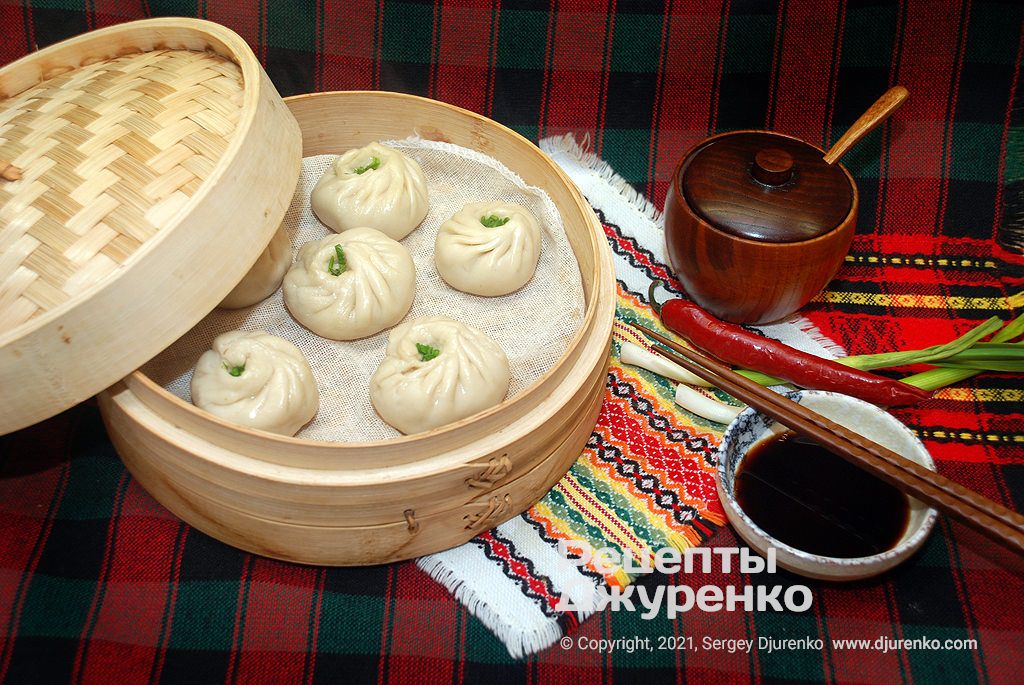
- Chinese baozi steamed buns are a staple of street food stalls and restaurants. On practically every corner you'll see an open-air stall with huge multi-tiered bamboo steamers. In cafés and restaurants, the buns come to the table in small wooden steamers; that's the standard way to serve them. For home cooking, we need a simple yeast dough plus green onions and eggs.
- How to make the yeast dough
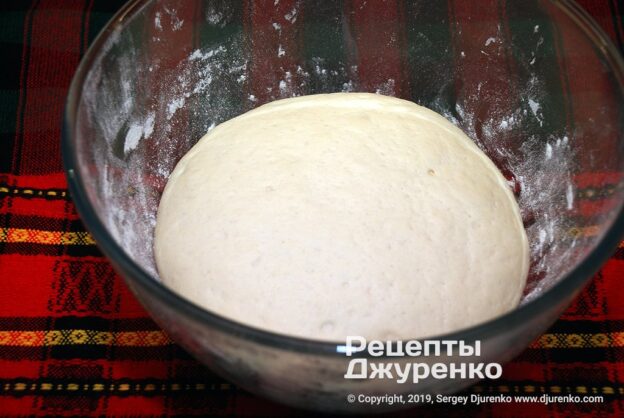
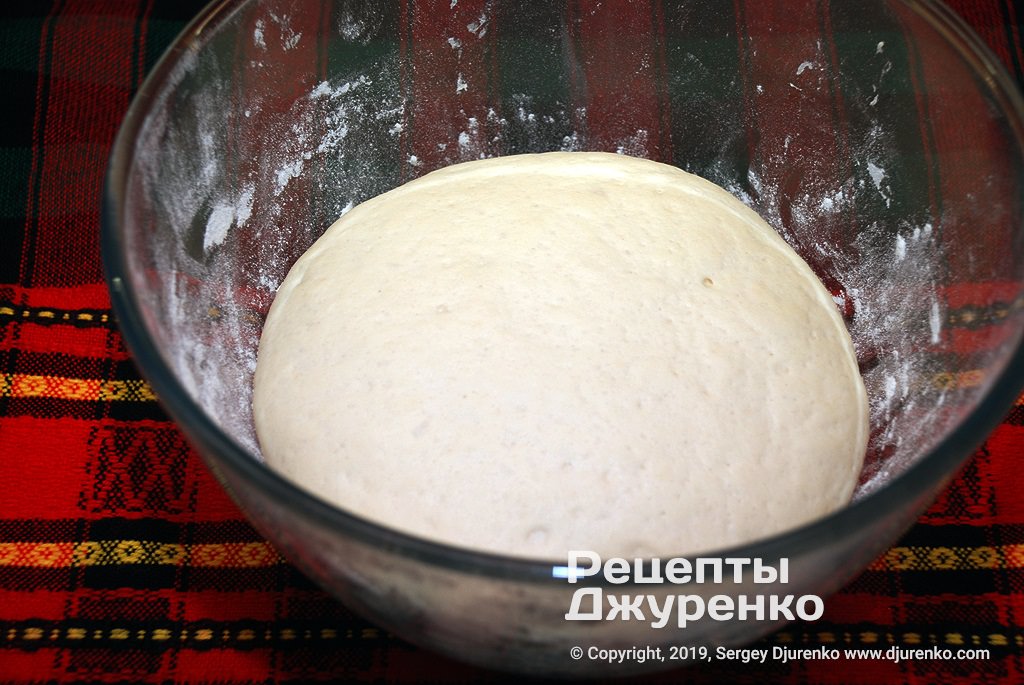
- By and large, the yeast dough is a lot like pizza dough. Sift 2 cups of wheat flour into a bowl. Add a pinch of fine salt, 2 tsp sugar and half a packet of instant dry yeast. As a rule, a whole packet is meant for 0.5 kg of flour, and two cups is just about half that. Mix the dry ingredients and add 180 ml of lukewarm water mixed with 1 tbsp vegetable oil. Cover the bowl with a towel and leave it somewhere warm for 45-60 minutes. Then punch the dough down and leave it somewhere warm again for the same time.
- Making the filling
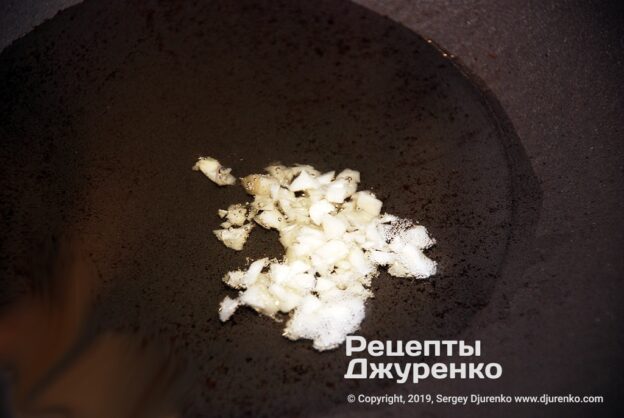
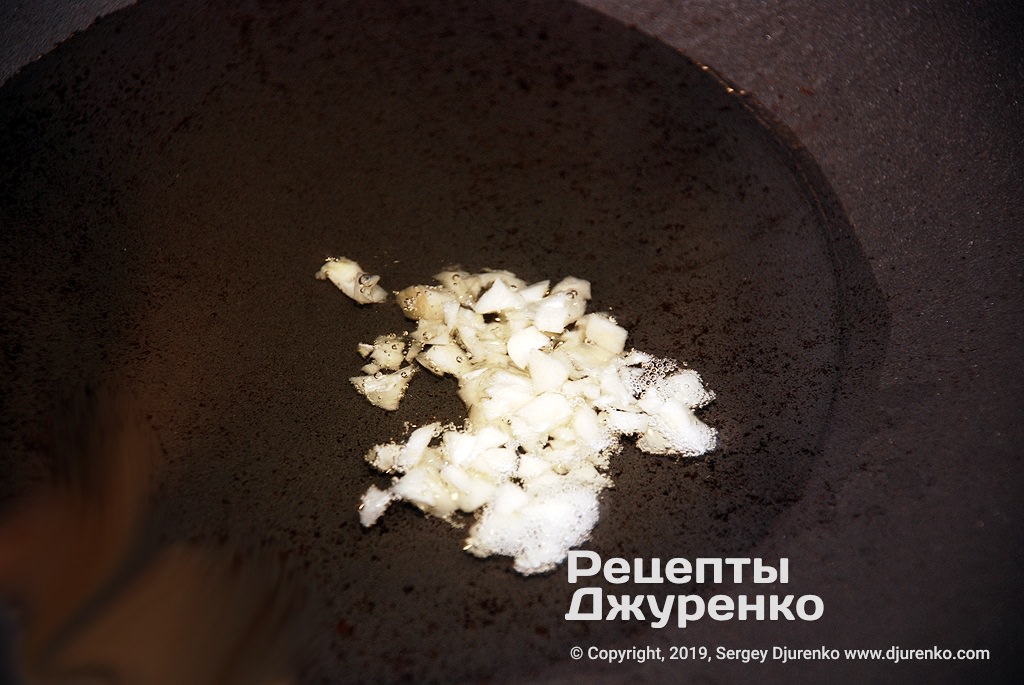
- To fry the eggs you need a skillet, or better yet a Chinese wok: it's round-bottomed, which makes it easier to fry a small amount of filling. Pour sesame oil into the wok; it has a distinctive aroma and flavor. If for some reason you don't like them, use sunflower or olive oil. Finely chop the garlic cloves and fry them in the hot oil for 1-2 minutes.
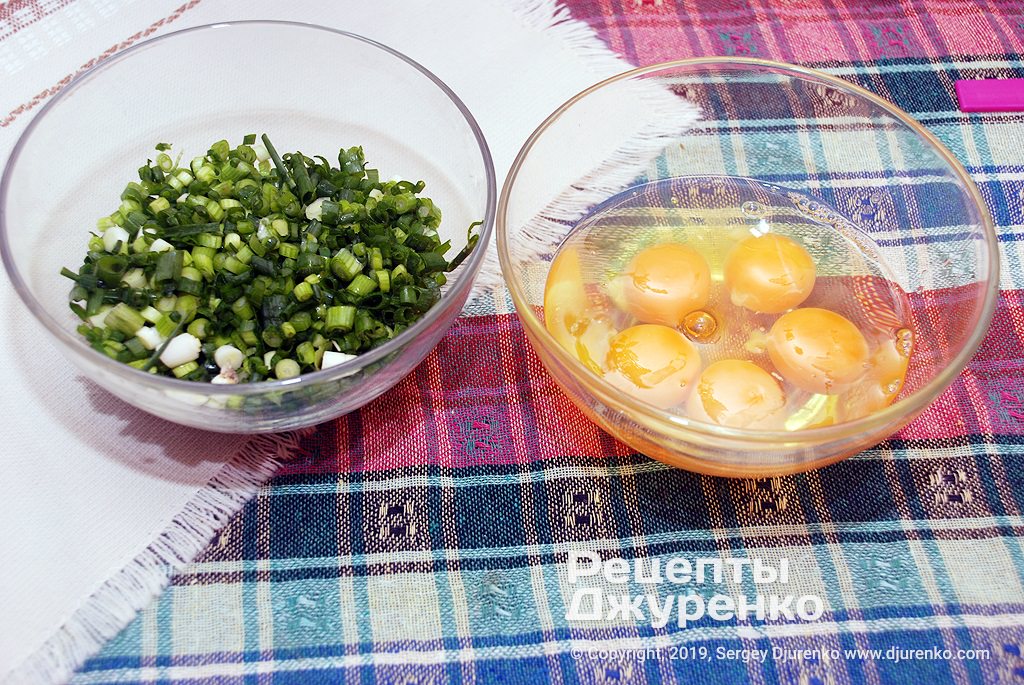
- Meanwhile, wash and sort the green onions. I usually use only the green tops in my cooking, but the white part works for the filling too. Slice the onions with a knife, the usual size, as for salads. Crack the eggs into a bowl, making sure no bits of shell get in. Mix the green onions with the eggs and beat with a fork.

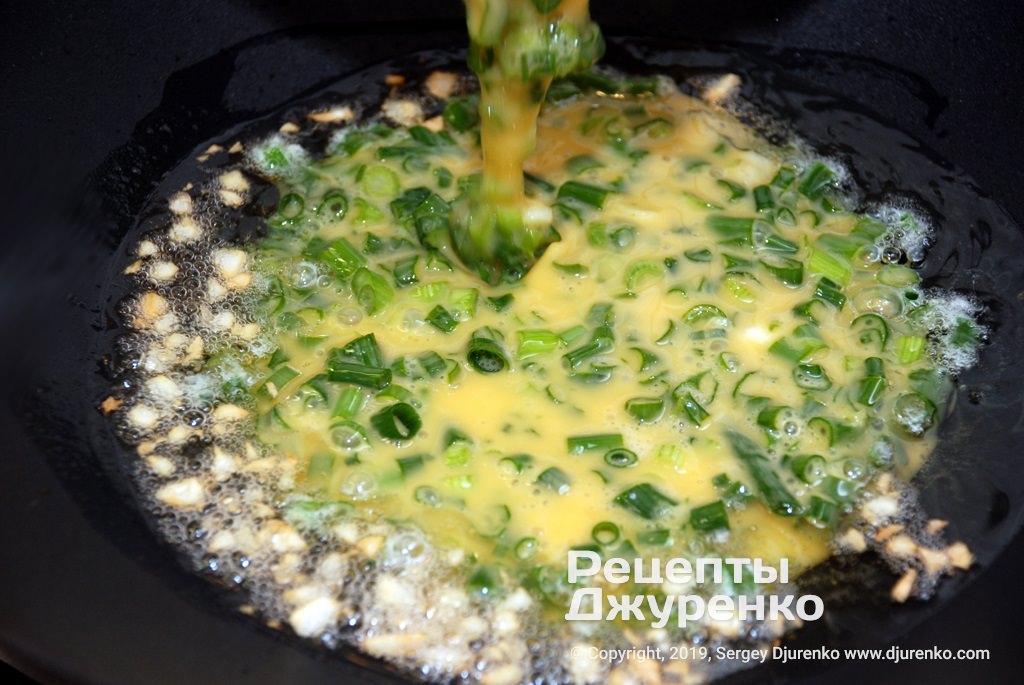
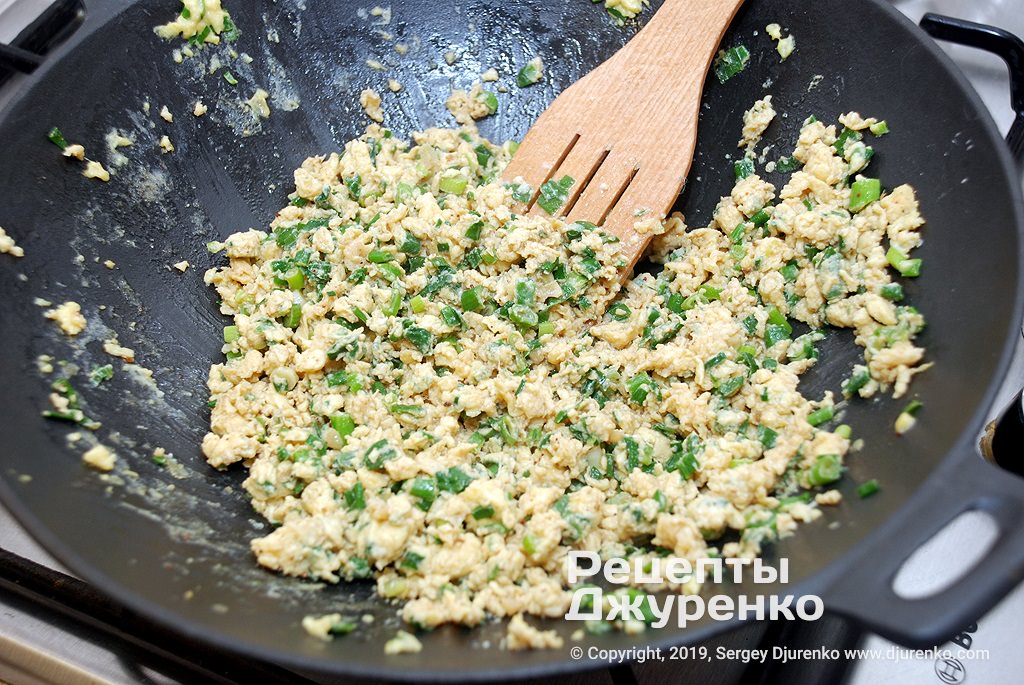
- As soon as the garlic has fried in the oil, pour the egg and green onion mixture into the wok. The eggs set quickly, so stir the hot mixture fairly vigorously with a wooden spatula. Add 1 tsp each of soy sauce and fish sauce to the filling. There's no need to salt it; soy sauce is salty enough. Also add a little rice vinegar to taste; you want a faint sourness.
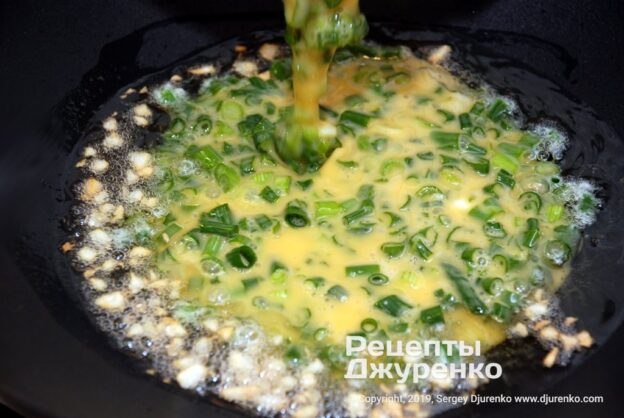
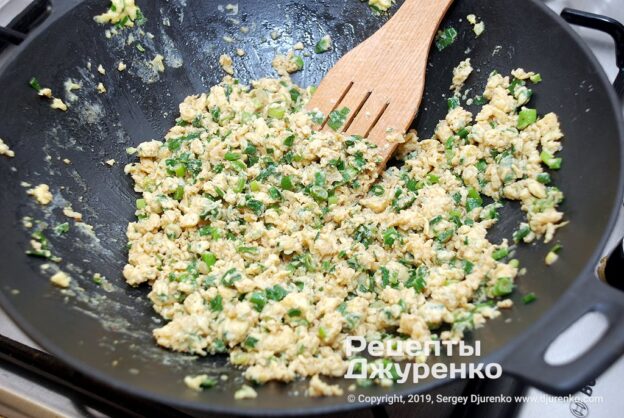
- The main spice in the filling is five-spice powder. It usually contains ground cinnamon, cumin, cloves, anise and Sichuan pepper. Quite often some of these get swapped out, and licorice, star anise, fennel and so on turn up in the mix. It's a very fragrant blend, typical of many dishes of Southeast Asia. Add 0.5 tsp of five-spice, or more, to the filling. Keep frying until almost all the moisture has evaporated. Then let the filling cool to room temperature.
- How to shape baozi
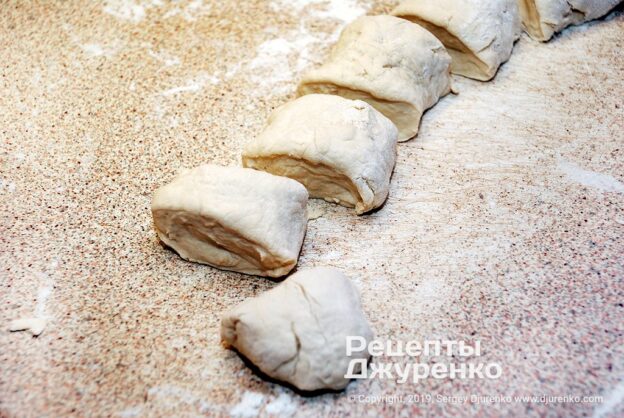
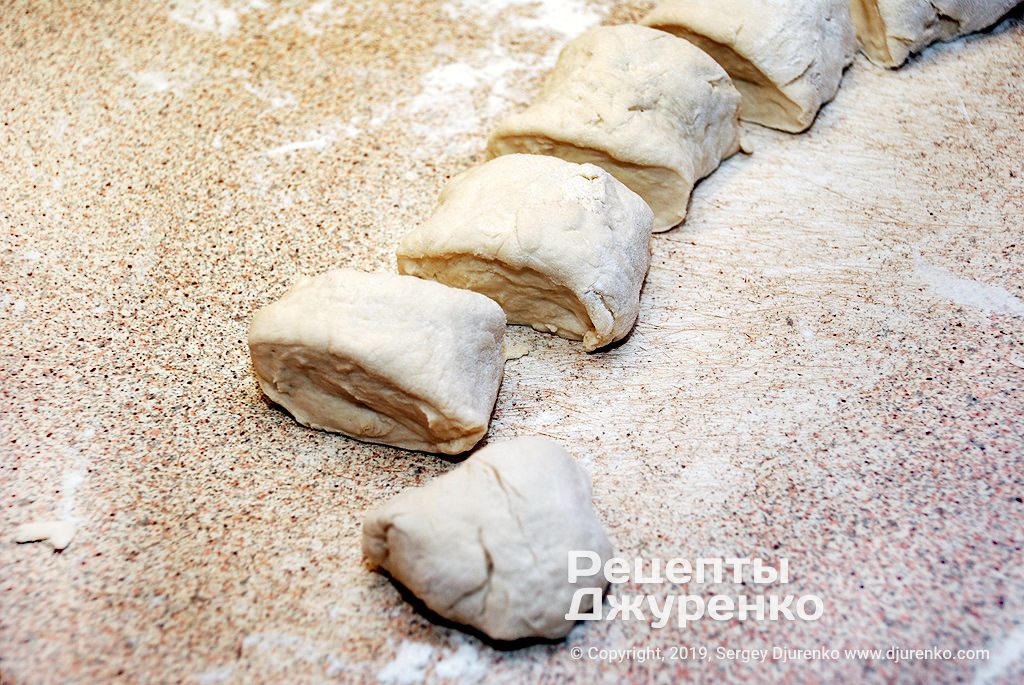
- Looking back, there's nothing hard about it at all. You need a knack and a bit of experience. I learned to make buns of acceptable quality and looks in about an hour. Just knead a plain unleavened dough and practice with it: roll it out and wrap something about the size of a portion of filling in it, a walnut, for example. I plan to improve my skills from here. So, roll the dough into a long log and cut it into pieces about the size of a small egg.
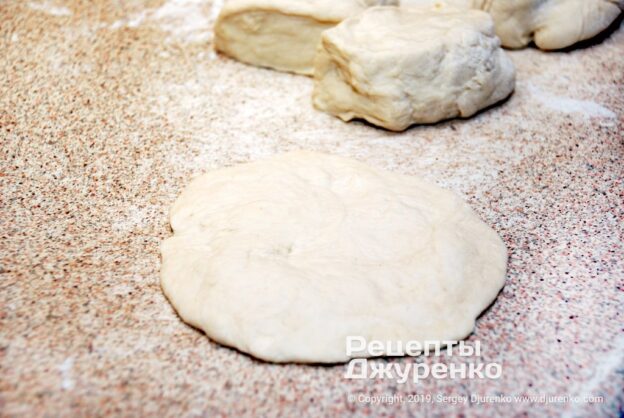
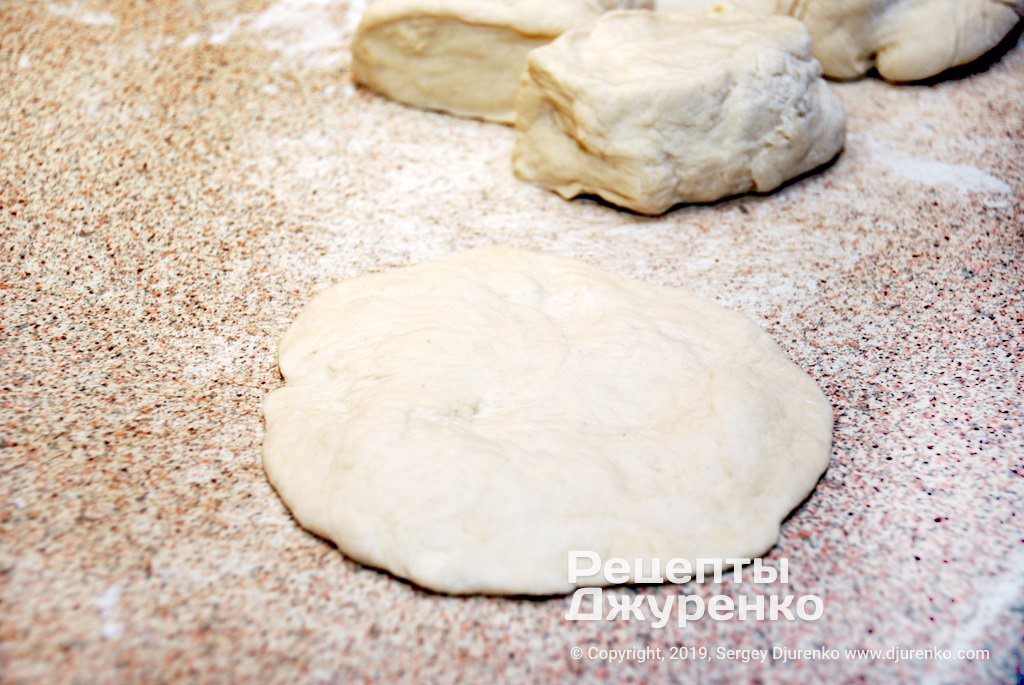
- A silicone mat is very handy for rolling out dough: the dough hardly sticks to it. If the dough is too soft, knead in a little more flour. By the way, a small rolling pin is best for rolling out rounds; it's far easier to handle than a big traditional one. Roll each piece of dough into a circle about the size of your palm. Make the edges 2-3 times thinner than the middle, or it will be very hard to form the top of the baozi.
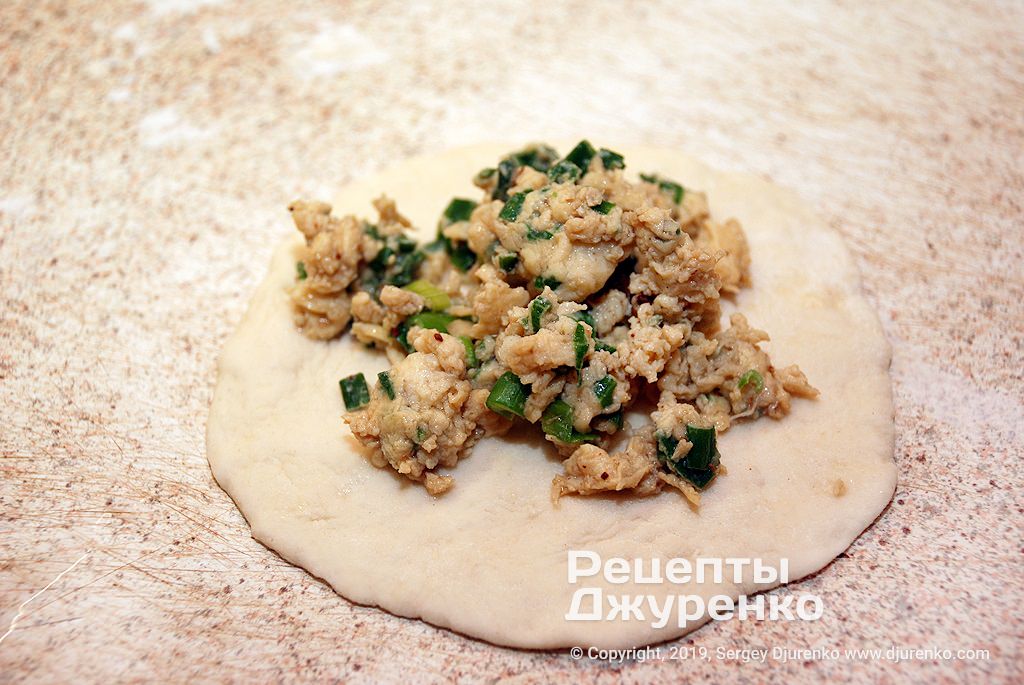
- Keep in mind the dough is yeasted, so it will rise a bit more, if only slightly. The size of the rounds decides the size of the finished buns. Don't make them too small; these aren't dumplings. A normal diameter is 5-6 cm, no less. You can, and should, make them bigger. Place a round of dough on your palm and put a heaping tablespoon of filling on it.
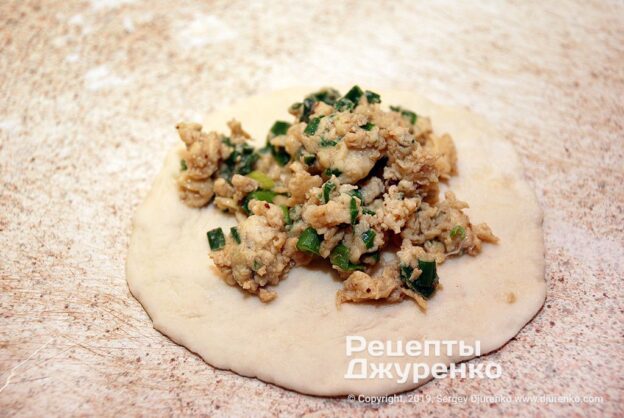
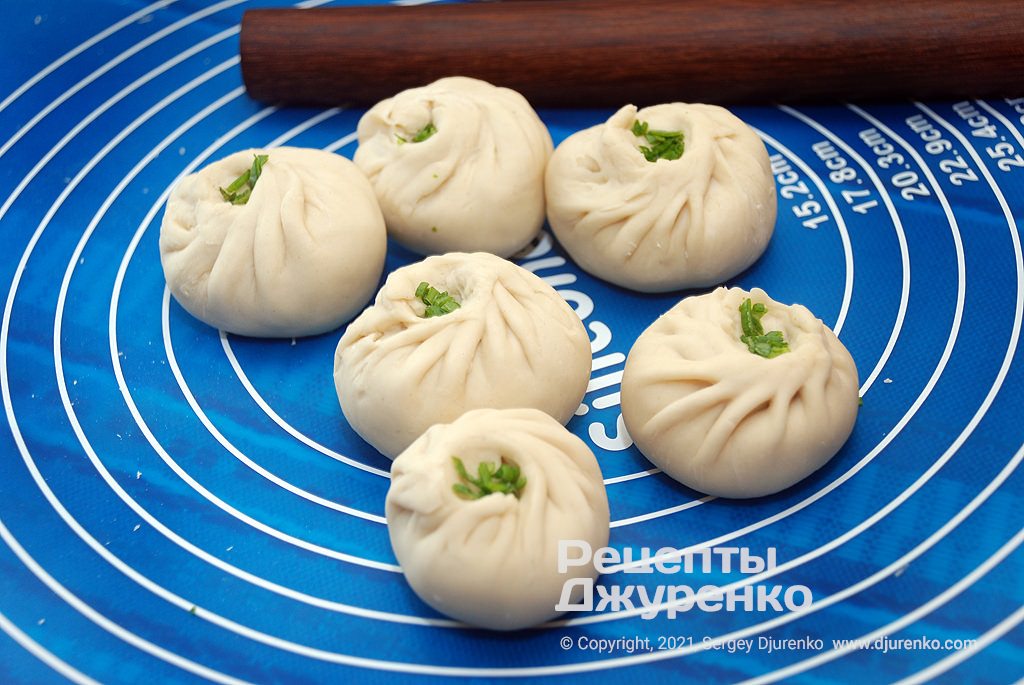
- The rest, as they say, is technique. The whole shaping process boils down to pleating the edge of the dough like an accordion, tucking it slightly inward, while turning the ball of dough and filling in your hand at the same time. Hold the top of the filling down with your thumb so a hole stays open at the top. Fold over 1-1.5 cm of the edge, tuck it in slightly and press it against the next section of the edge. This way the edge forms slanted accordion pleats, which gives you a crimped top with a small hole. It's like pinching khinkali, but with the pleats twisted at an angle.
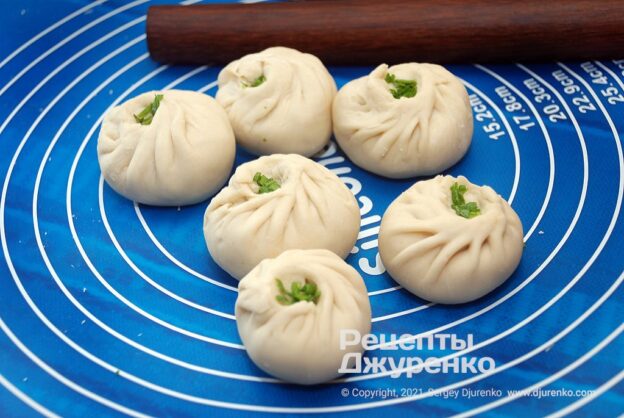
- How to steam the buns
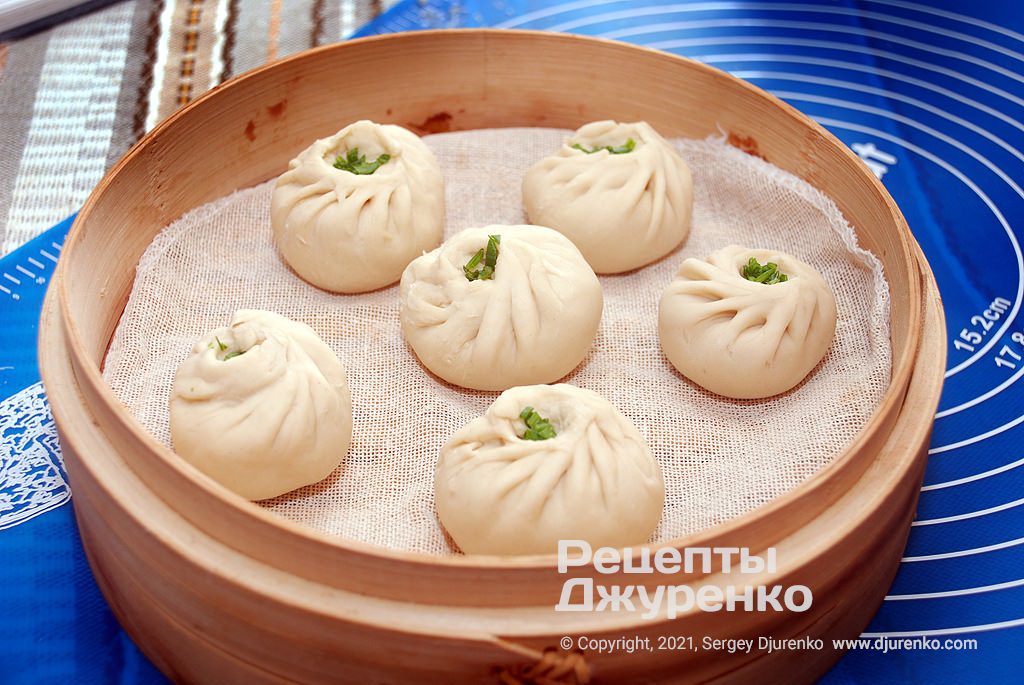
- A Chinese bamboo steamer is an inexpensive gadget: one or more baskets stacked on top of each other with a single lid on top. It sits on an ordinary pot of water; you just need to match the diameter. Pour 1 liter of water into the pot and bring it to a boil. Line the steamer with a cloth or a special liner. Arrange the baozi on it with enough space from the sides and from each other.
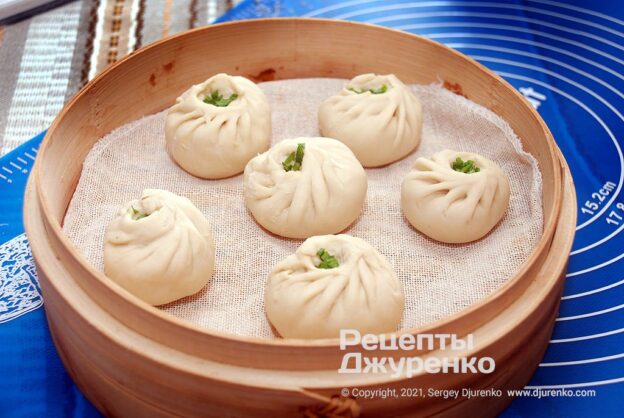
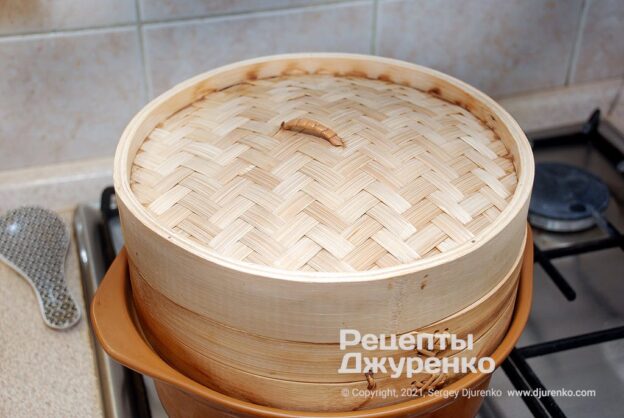
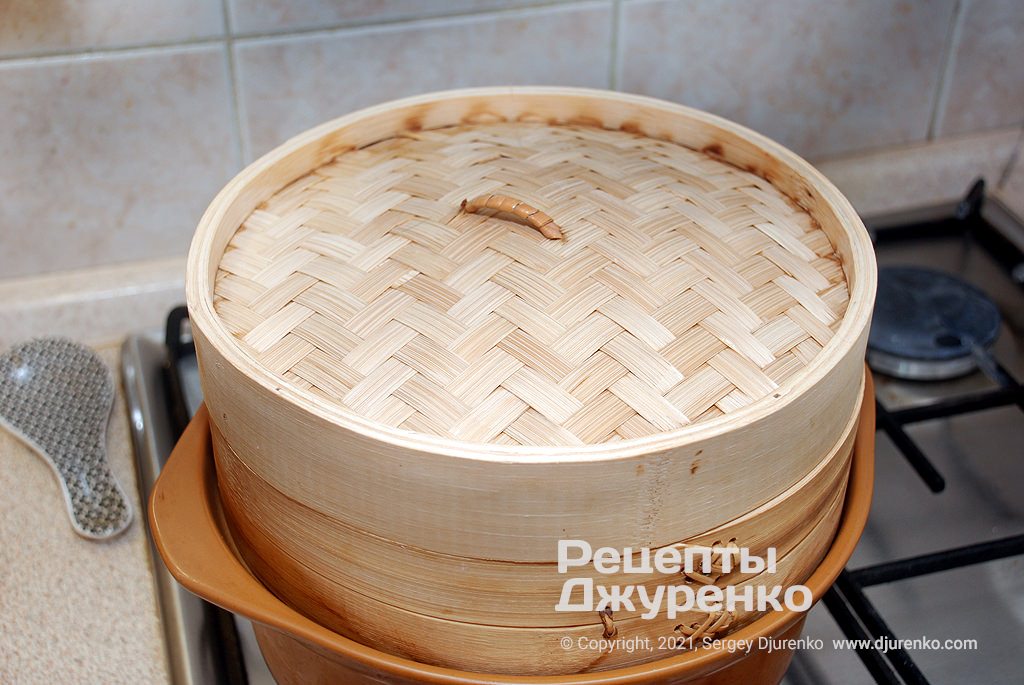
- Set the steamer on the pot in place of a lid. Depending on the size of the buns, steaming takes 6 to 15 minutes. We steamed ours for 8 minutes, which was sure to cook the yeast dough through. Be careful: steam is very hot and completely unpredictable, and it can give you a nasty burn. You can serve the buns in the steamer or move them to a plate.
- What sauces to serve with baozi
- To my taste, the ideal sauce is soy sauce mixed with rice vinegar, plus brown sugar, garlic and grated ginger, in proportions to taste. You can also add a sesame chili oil sauce. Being a fan of spicy food, I just add a hot chili pepper to the plate.
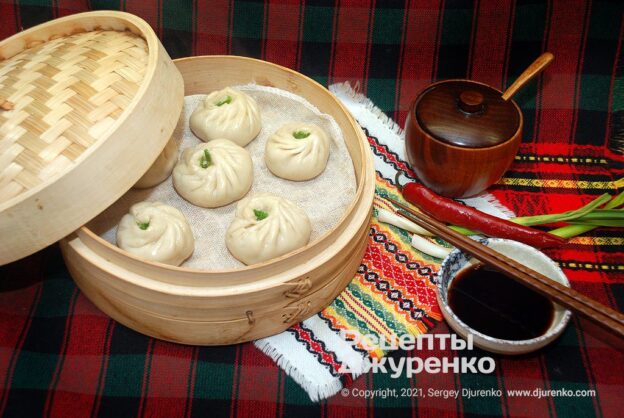
- Serve right away, while they're piping hot. Like any other steamed dough, the buns lose their charm as they cool, turning dense and dry. If they're small, they're usually eaten with chopsticks. Just dip them in the sauce and enjoy.
Serves: 5-8 servings Calories: 180 Prep: 2 h Cook: 30 mins Total: 2 h 30 mins Category: Main Dishes Cuisine: Chinese cuisine Rating: