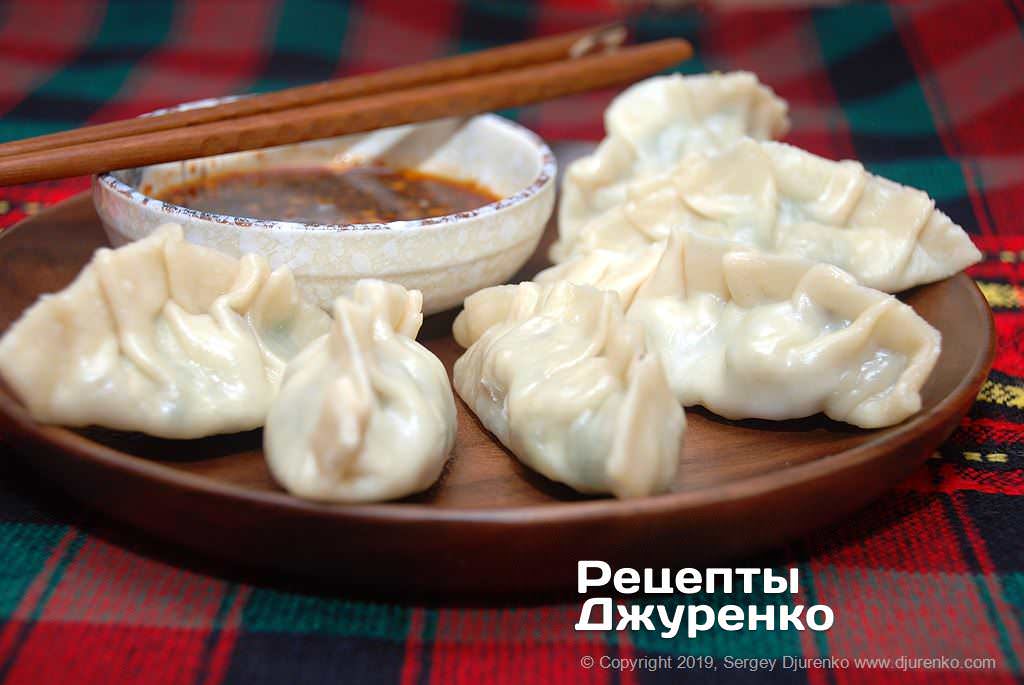
Jiaozi, Chinese Dumplings with Mushrooms – Step-by-Step Recipe
Chinese cuisine is full of all kinds of treats made of a filling wrapped in dough. Chinese dumplings, and there are dozens if not hundreds of varieties, are a very ancient dish. Jiaozi are among the most common – you can easily recognise them by their distinctive angular shape, like an elongated crescent.
The origin and the translation of the name 餃子 are not entirely clear. I read somewhere that the first part of the word means “corner”, and together with the second character it gives angular dumplings, or triangular dumplings, something like that. An online translator, though, simply renders it as “dumpling”. In their traditional form these Chinese dumplings are a wrapper of thin unleavened dough with a filling – meat, vegetable and so on. What sets jiaozi apart from other dumplings is, for the most part, the special way the dough is pleated.
Once the filling is sealed in the dough, Chinese dumplings are boiled, steamed, fried or baked, or used in soup, like wontons. For the most part the dough is the simplest one – unleavened, made of wheat flour and water. Buckwheat flour is used less often. The dough is kneaded, then cut into pieces that are rolled out into rounds of different diameters, which determines the size of the dumplings. The dough is no more than 1 mm thick.
The fillings often contain no meat. To my taste, the most interesting version is mushrooms fried with greens and egg. It is easy and quite doable in home cooking. Besides mushroom and vegetable fillings you can come across fish, seafood, chicken and so on. The easiest way to cook the dumplings is to fry or steam them. By the way, a Chinese bamboo steamer is an exceptionally useful thing to have in the kitchen.
The most common sauce for Chinese dumplings is a mix of soy sauce with rice vinegar, ginger and garlic. With it jiaozi are simply delightful.
These dumplings matter a great deal in food culture. First, they are a simple and widespread kind of street food. On city streets you can see lots of stalls and cafes where jiaozi are cooked in large bamboo steamers stacked in several tiers. Second, all the ingredients are inexpensive and therefore affordable. And third, this is festive food on the eve of the Chinese New Year, and many families, when they make the dumplings, hide a coin in one of them, which brings luck to whoever finds it.
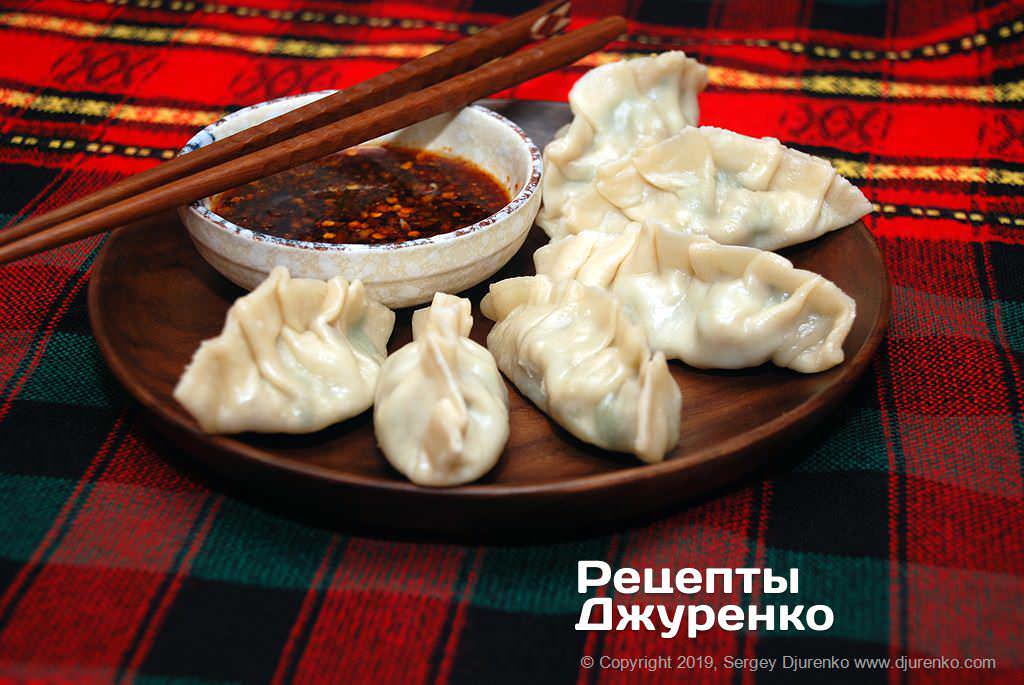
Ingredients
30-40 dumplings
- Wheat flour 2 cups
- Mushrooms (shiitake, oyster mushrooms, champignons) 200 g
- Eggs 3
- Green onions (green tops) 0.5 bunch
- Spinach 1 bunch
- Sesame oil, five-spice powder, cumin, soy sauce to taste
- Soy sauce, rice vinegar, coriander, garlic, ginger, hot pepper, brown sugar for the sauce
Step-by-step recipe
- At first glance it may seem that shaping dumplings is hard. It is not. Everything is extremely simple. The dough is easy and rolls out well with a rolling pin or a pasta machine, and the shaping itself is no harder than making ordinary dumplings or ravioli. The skill comes quite quickly, and each dumpling takes half a minute. What matters is that all the components – the dough and the filling – are prepared in advance.
- Preparing the filling for jiaozi
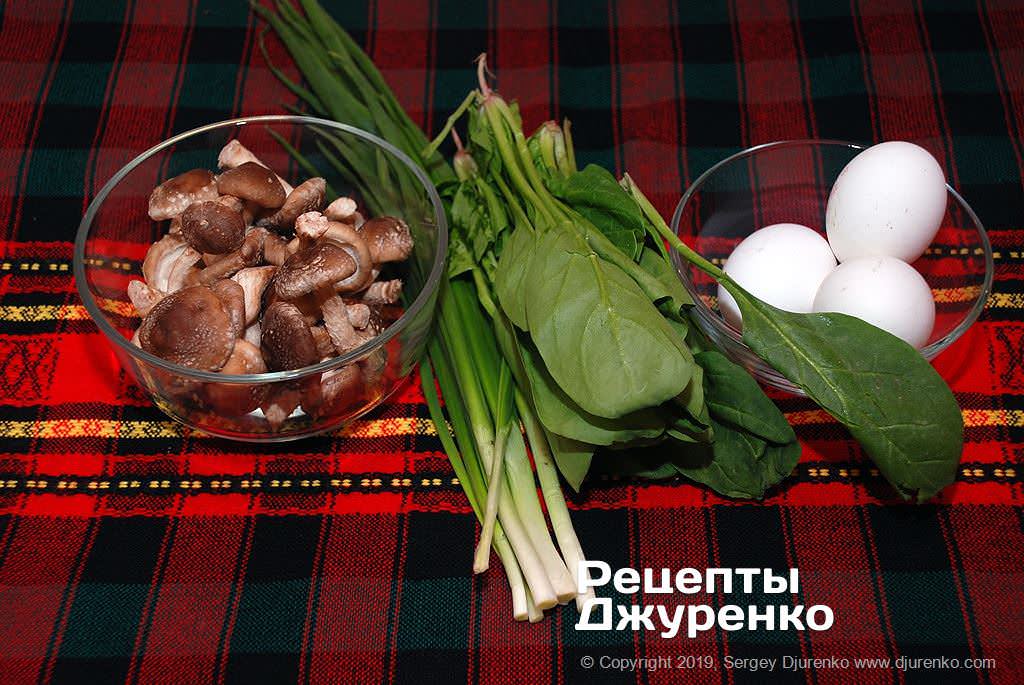
- As I said, the filling can be anything, though we chose mushrooms with egg and greens. We settled on shiitake mushrooms, they are on sale here, though others will do too – oyster mushrooms, champignons. A bunch of spinach and the green tops of green onions, though you can use the white part as well, a few fresh eggs and Chinese five-spice powder – that is pretty much all you need for the filling.
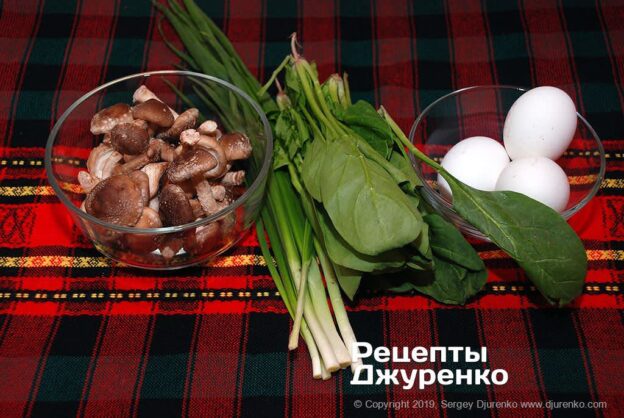
- Wash the mushrooms and remove any remains of substrate or soil. Chop the mushrooms finely, even mince them with a knife, and put them in a separate bowl. Slice the green onions – the green tops or the whole stalk – as you would for a salad. Wash the spinach, tear off the tough stems and tear the leaves into pieces with your fingers. Put all the ingredients in separate bowls.
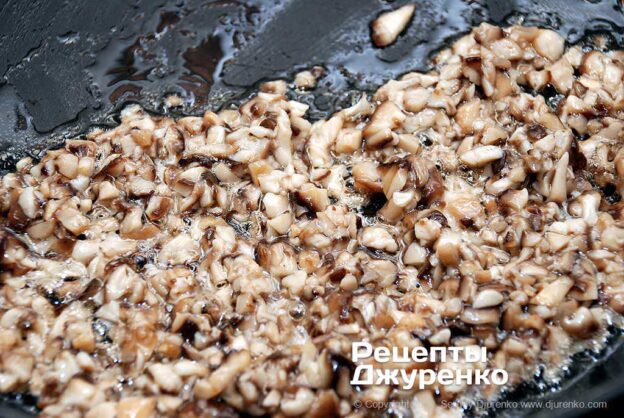
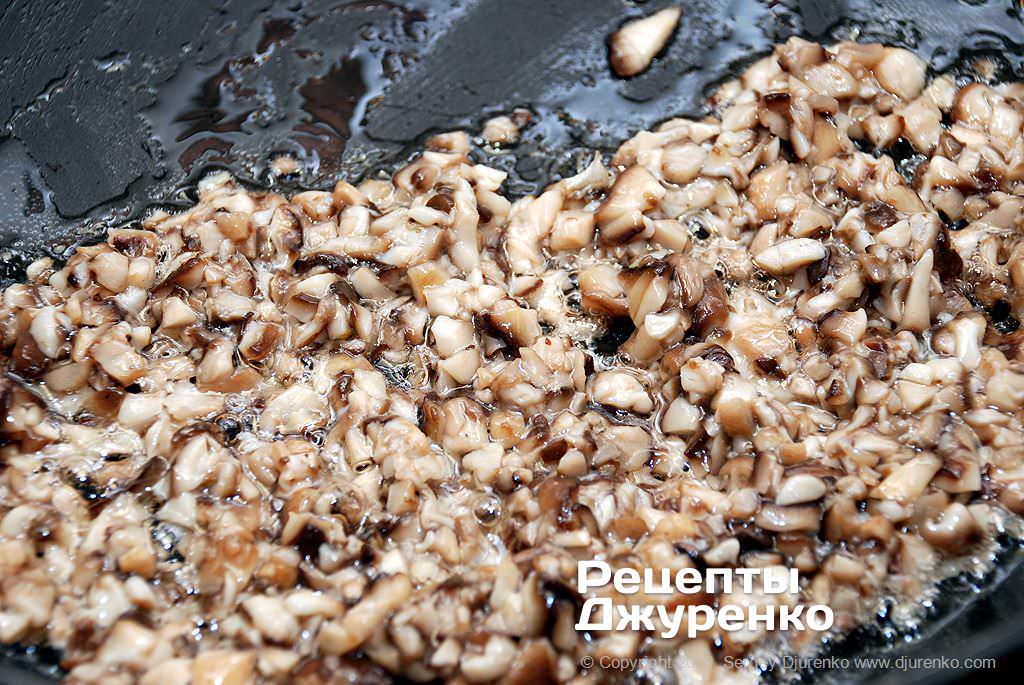
- Heat 2-3 tbsp of sesame oil in a frying pan. You can use soybean, corn or olive oil. Fry the chopped mushrooms in the hot oil, stirring them with a spatula all the while. Fry for 3-4 mins, that is enough. Transfer the fried mushrooms to a separate dish, trying to let the oil drain from them back into the pan.
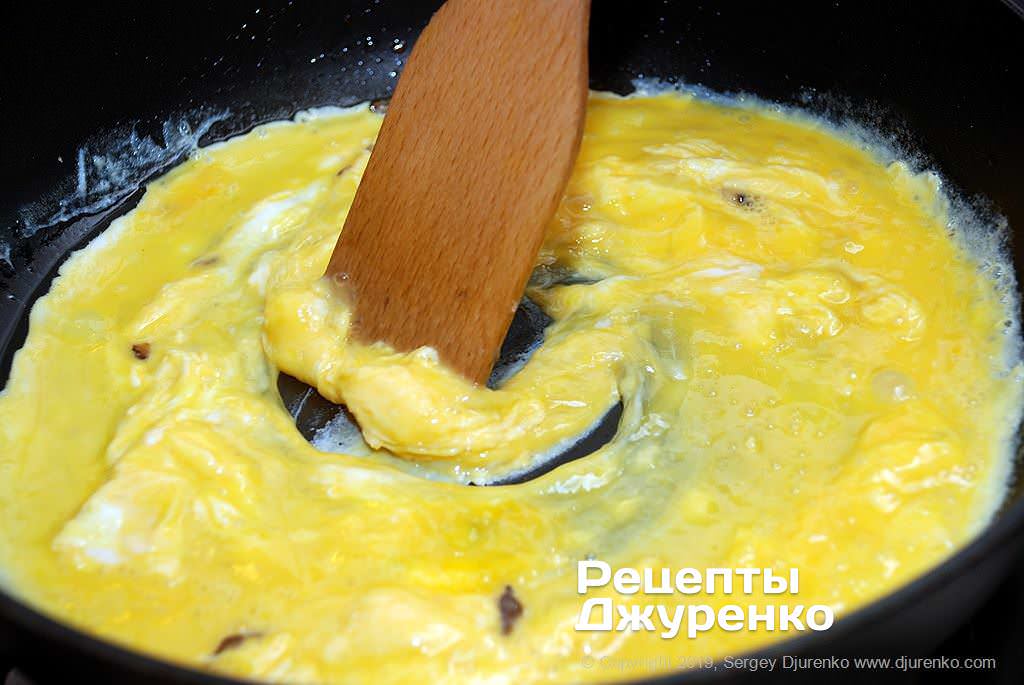
- Crack the eggs into a bowl or a cup and beat them thoroughly with a fork, as you would for an omelette. Stirring constantly, pour the eggs into the hot pan. As soon as the eggs set, scrape them off the pan with a spatula so that you get something like a porridge.
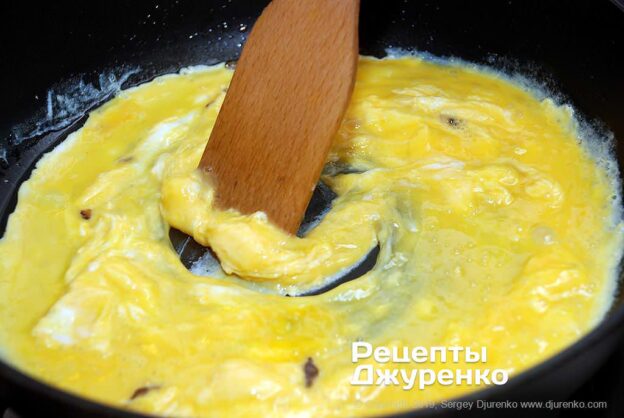
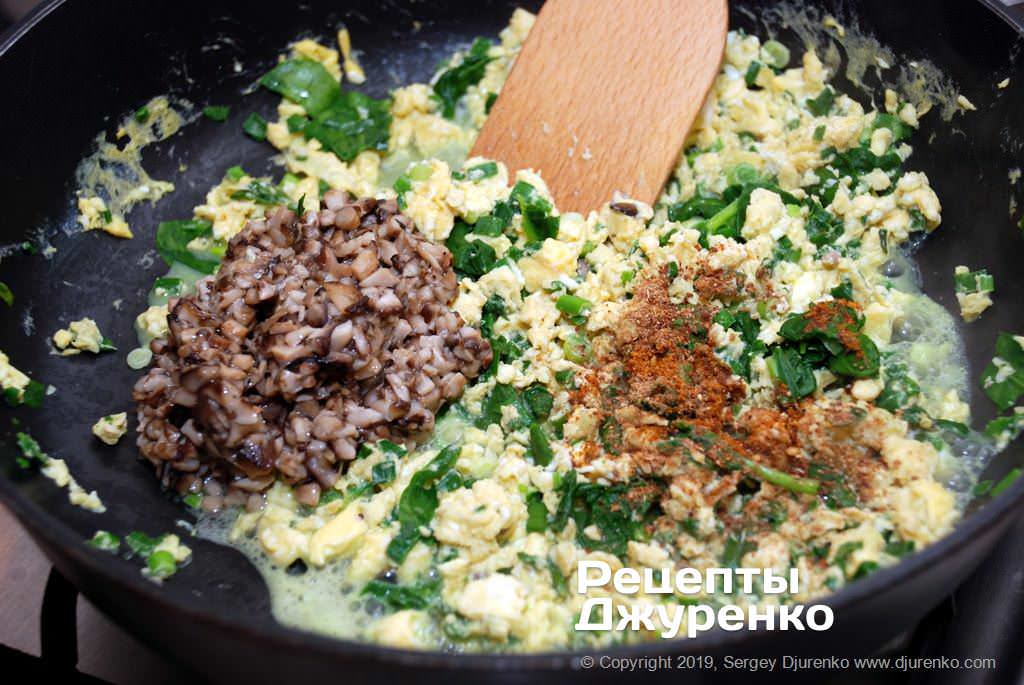
- Add the sliced green onions to the eggs and stir. After 1-2 mins add the torn spinach. Pour in 2-3 tbsp of water and simmer for 2-3 mins, stirring constantly. All the greens should wilt and combine with the eggs. Break up large lumps with the spatula – ideally the mixture turns out grainy, with small lumps.
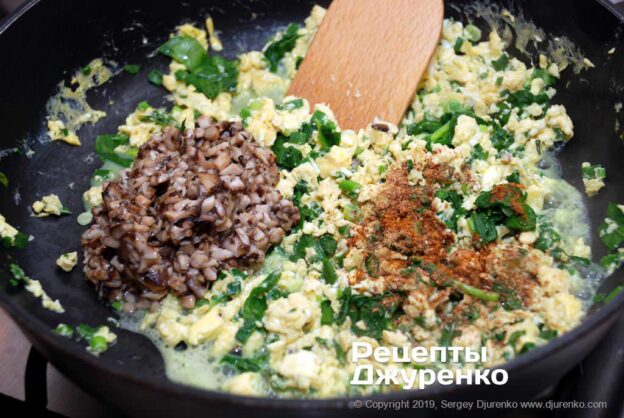
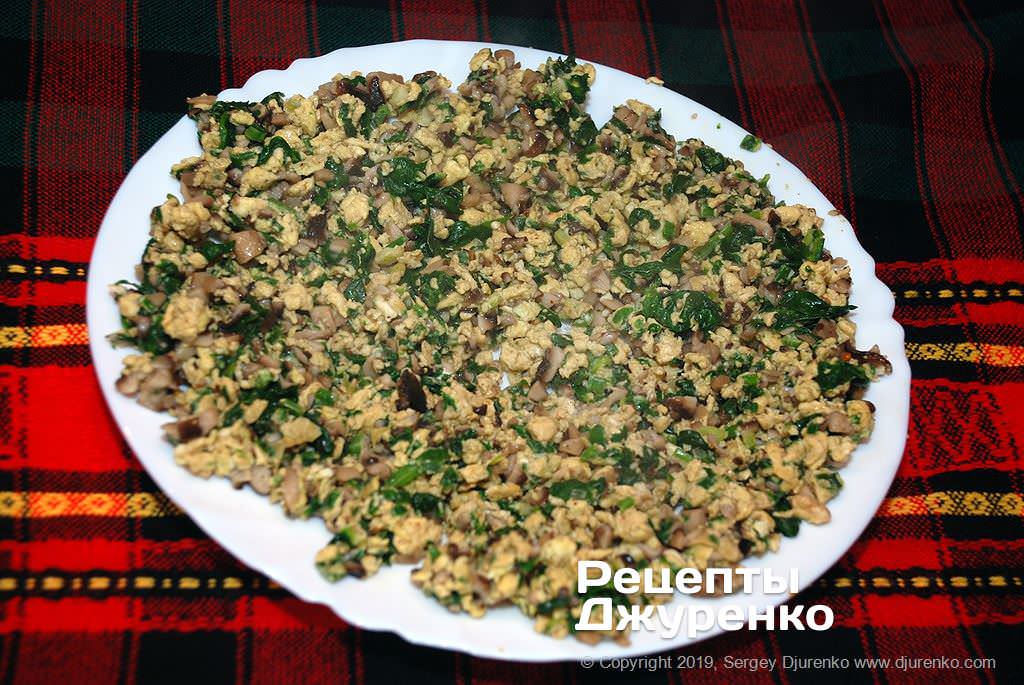
- Add the mushrooms fried earlier to the eggs and greens, along with 1-2 tbsp of soy sauce and ground coriander and ground cumin to taste. Stir and simmer for another 2-3 mins. After that the filling for the Chinese jiaozi dumplings is ready. The filling must cool completely – you can spread it in a thin layer on a large plate.
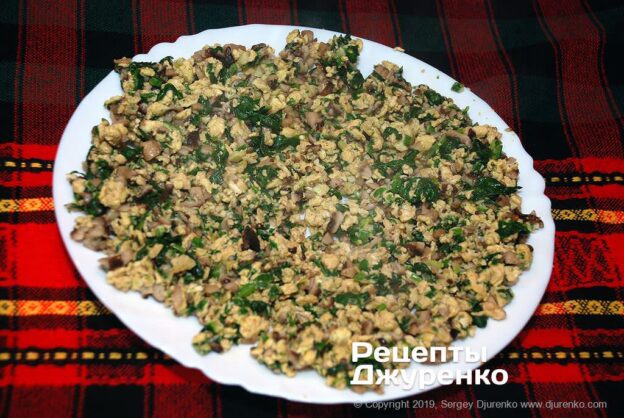
- Preparing the dough for jiaozi
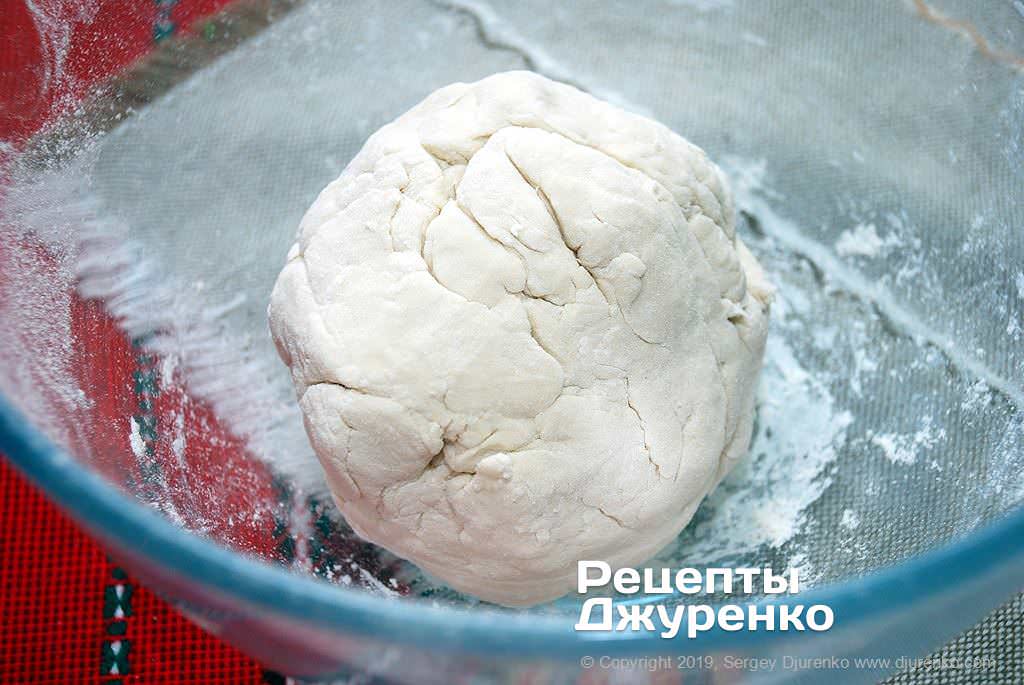
- The dough calls for ordinary soft wheat flour of high quality. Sift the flour into a large bowl. There is no need to add salt, sugar or leavening agents. Chinese recipes sometimes use hot water and sometimes cold, letting the water soak into the flour. But those methods take some skill. Pour 160-170 ml of warm water into the flour and knead the dough. The dough should be firm, should not stick to your hands, and should take some effort to work with your fingers. Adding flour a little at a time, bring the dough to the right firmness.
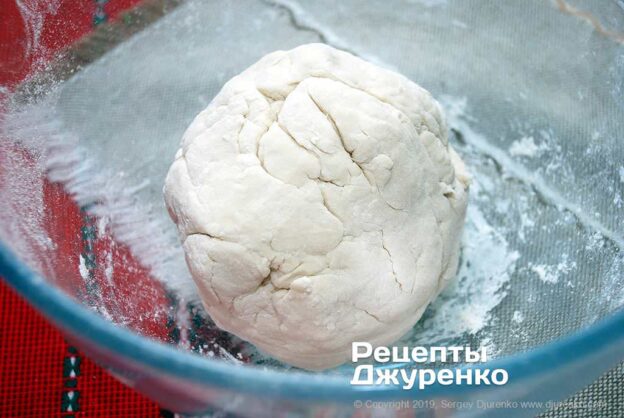
- You can roll out the dough with a rolling pin or an Italian pasta machine. In the first case, roll part of the dough into a log 2.5-3 cm in diameter, then cut it into pieces of the same length. Roll each piece with the rolling pin into a round 8-9 cm in diameter. The machine is more convenient.
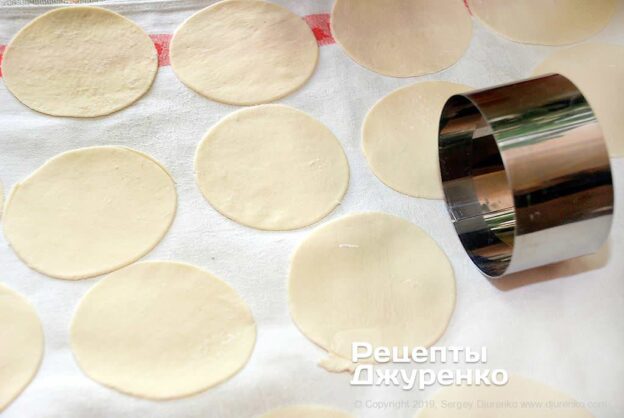
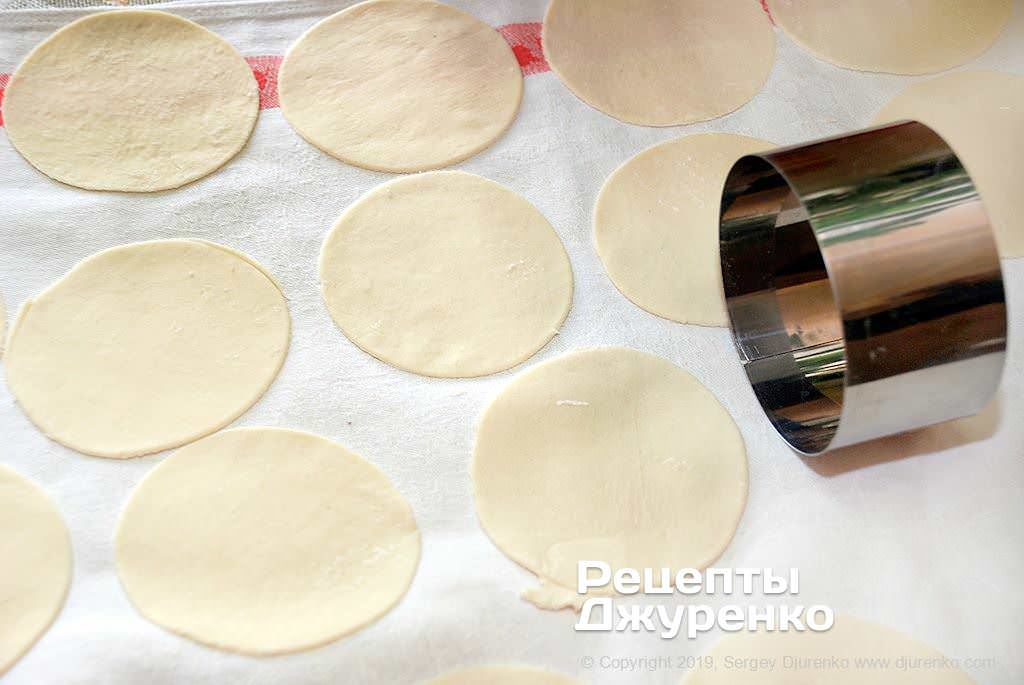
- Roll the dough into a strip up to 1 mm thick, then cut out rounds 8-9 cm in diameter with a pastry ring, remove all the leftover dough between them and roll it out again. You will need 30-40 rounds – lay them out on a clean cloth.
- How to shape Chinese dumplings
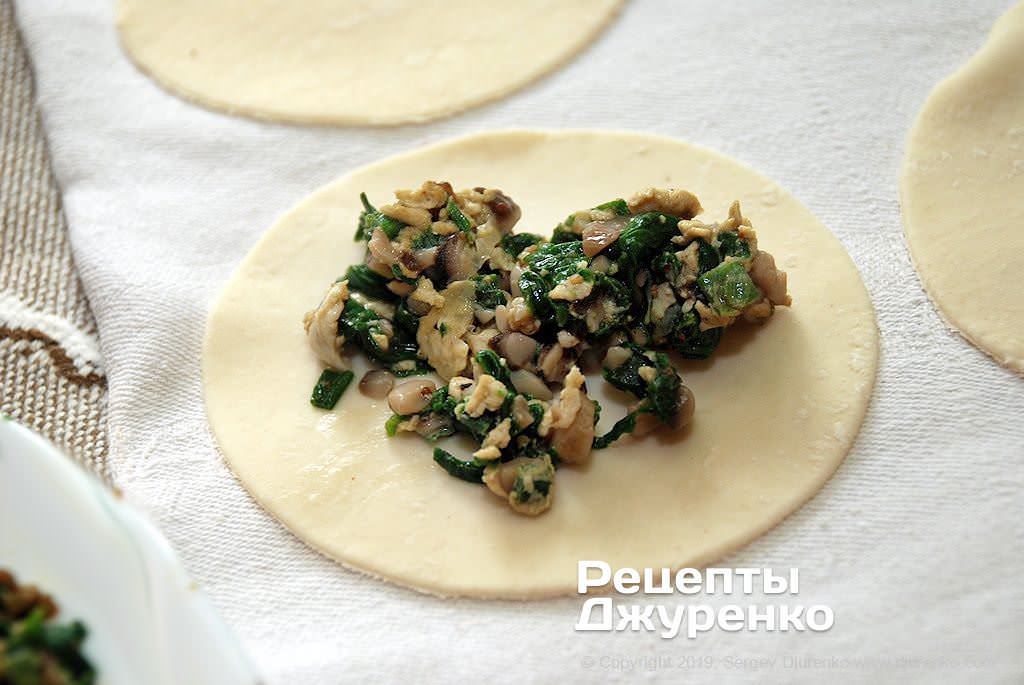
- Let me say right away, the shaping is quite enjoyable and even creative. There are many ways to seal the filling in the dough and shape the dumplings. You will need a little water – dip a finger in it and moisten the edge of the dough before sealing each dumpling. Put 1-1.5 tsp of the cooled filling on each round of dough.
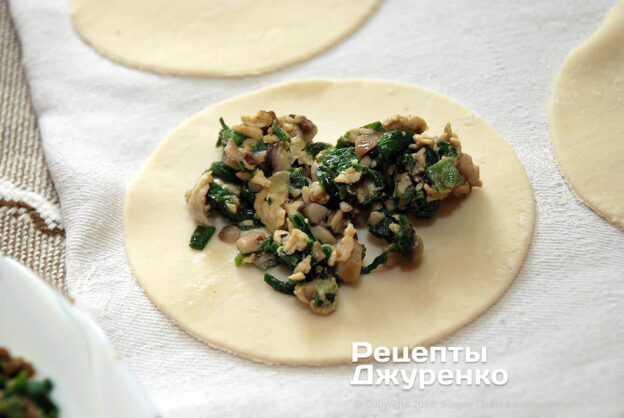
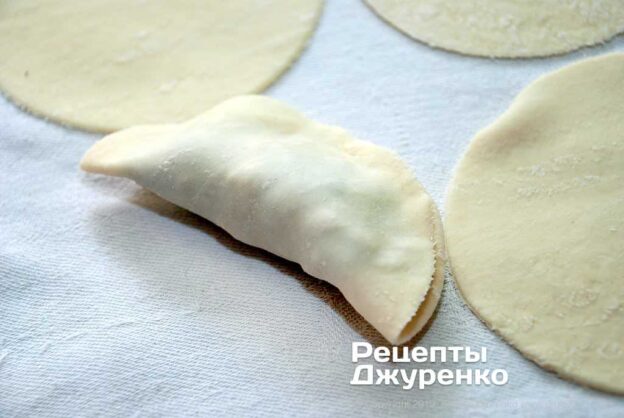
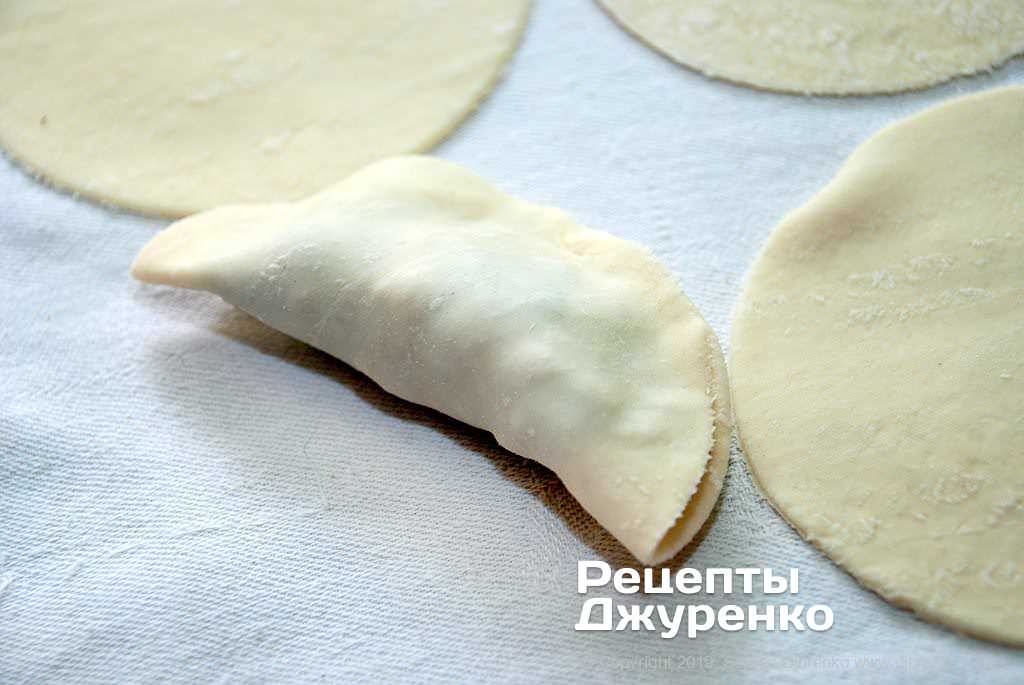
- Moisten the edge of the dough on one side with a wet finger and fold the dough into a half-circle so that the filling is covered. Lightly press the dough along the half-circle with your fingers so that it does not open up on its own. At this point a jiaozi looks like a Ukrainian varenyk – they have a lot in common.
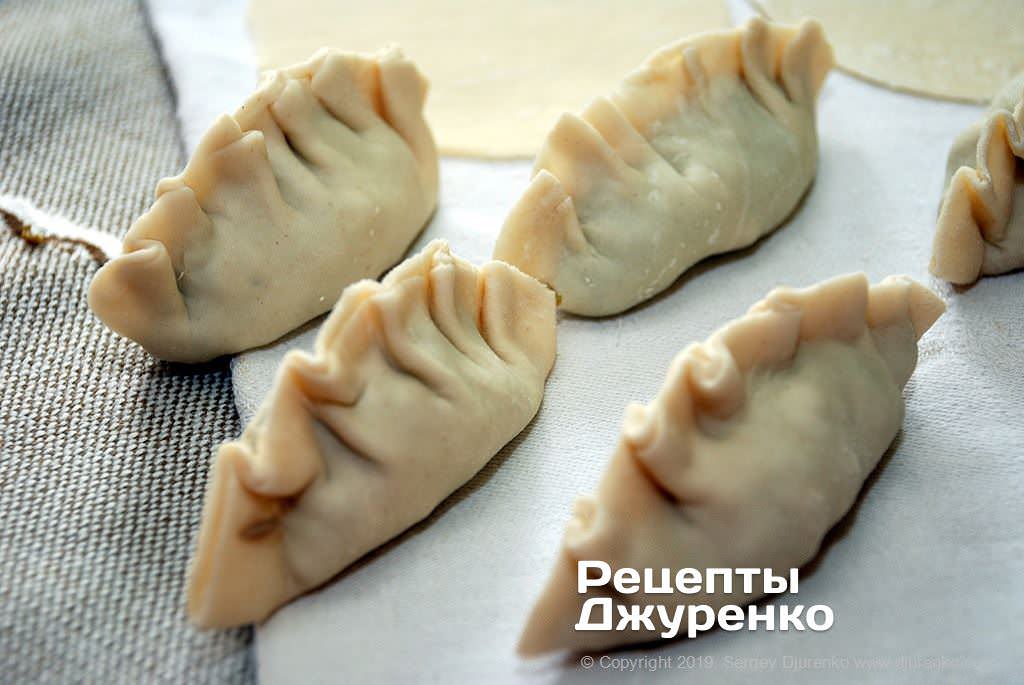
- Next the dough has to be pleated. Of all the many ways, we will use one of the simplest. With your fingers take the dumpling at the middle of the folded edges and make a pleat, overlapping the layers by about 3-4 mm – in cross-section the pleat looks like the letter Z. Move 5-6 mm away from the pleat in either direction and form the next one. Keep going like this from the centre to the edges in both directions. In the end the jiaozi will be sealed with 7-9 pleats. By the way, it is worth alternating the direction of the pleats.
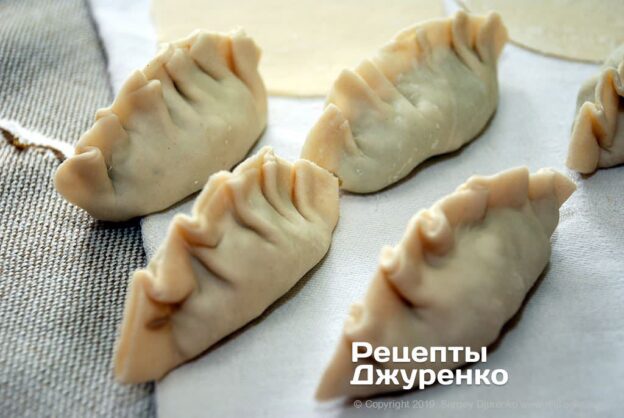
- As a result the dumplings come out like little boats – angular and slightly ruffled. This shape is the most popular in China. Shape all the dumplings one by one and lay them out on the cloth. There is no need to dust them with flour, as is done with ordinary dumplings. By the way, at this stage Chinese dumplings can be frozen and cooked as needed.
- How to cook jiaozi
- Of all the ways to cook them, steaming is the most popular. You can use any steamer, or rig up your own with a pot and a rack. A Chinese bamboo steamer is chosen to fit the pot you have. My steamer is 24 cm in diameter, and its design lets you stack identical steamers on top, building a multi-tier structure.
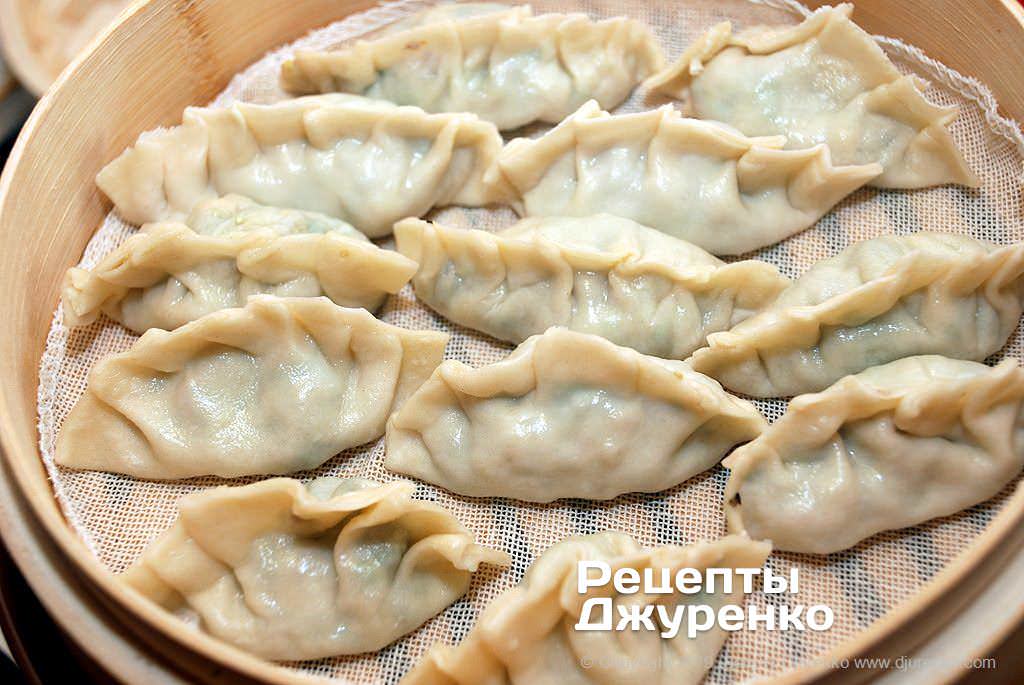
- To keep the dough from sticking to the bottom, line it with coarse cheesecloth – for my steamer I buy ready-made disposable liners cut to size. Fill the pot halfway with water and put it on the heat. When the water comes to a rolling boil, take the lid off the pot and set the steamer in its place. Arrange the jiaozi on the cloth. Leave gaps between the dumplings.
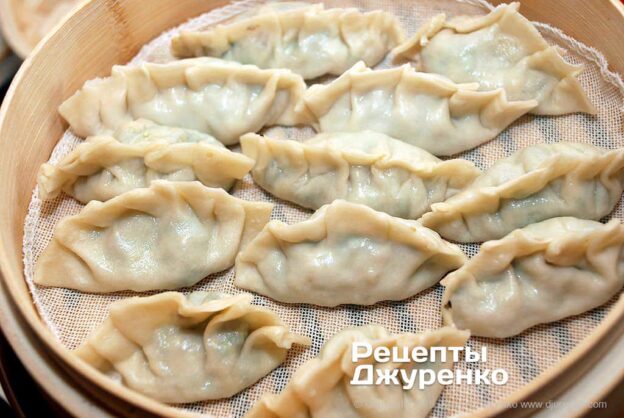
- By the way, do not pile the Chinese dumplings up in the steamer. Cook only as many dumplings at a time as you will eat in one go and, importantly, while they are hot. Cover the steamer with its lid and leave for 5 mins. That is quite enough time for the dough to cook through.
- Making the sauce for serving
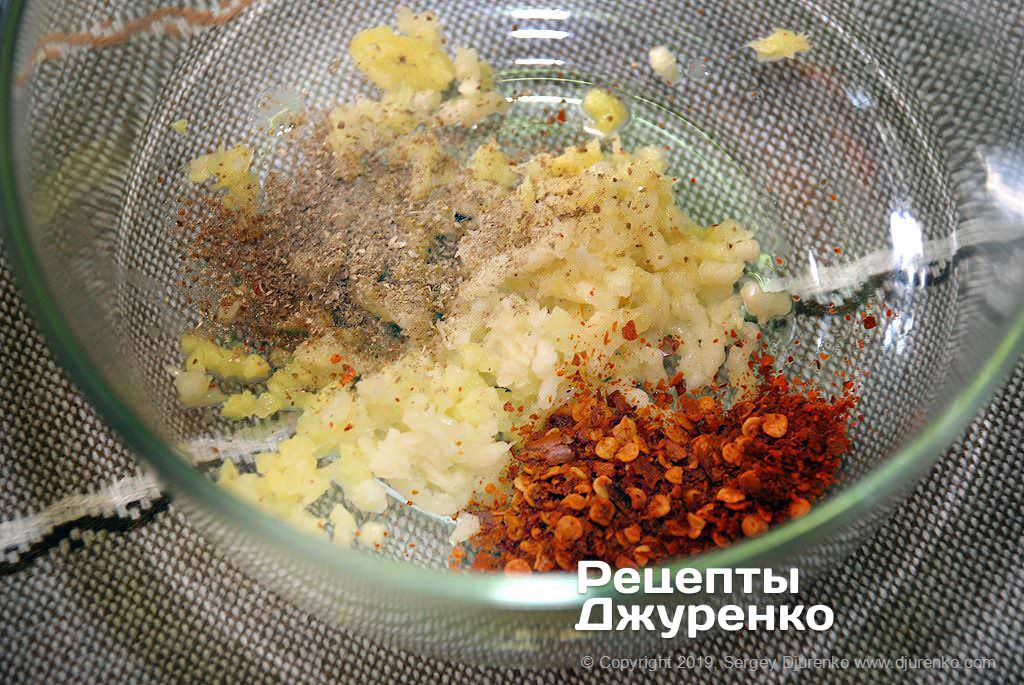
- A sauce of soy sauce with garlic and ginger turned out to be very tasty with jiaozi. It is all very simple. Peel 4-5 cloves of garlic and a piece of ginger about half the size of a matchbox. Crush the garlic cloves and the ginger to a paste with a garlic press. It is better to chop the ginger finely first, otherwise it may be hard to crush.
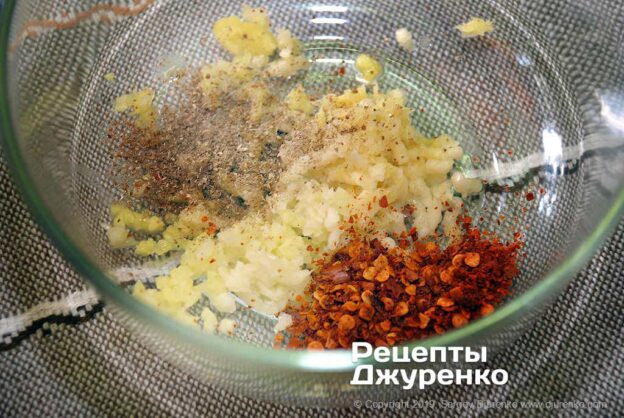
- Add coarsely ground hot pepper, 1 tsp of brown sugar and 2-3 pinches of ground coriander. Stir everything and pour in 1 tbsp of rice vinegar. Add 4-5 tbsp of good soy sauce. Stir the mixture and wait a little for the sugar to dissolve.
- How to serve Chinese dumplings
- When the Chinese dumplings are steamed, transfer them to a plate with chopsticks. Pour the soy sauce with garlic and ginger into a small cup and set it on the plate alongside. While the Chinese dumplings are hot, start eating right away. With chopsticks, or with a fork if you cannot handle chopsticks, take one dumpling at a time, dip it in the sauce and take a bite. Then dip it in the sauce again and carry on.
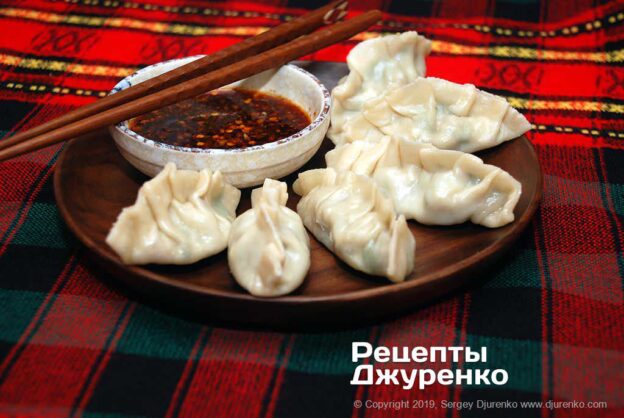
- While you are enjoying the first batch of jiaozi, you can cook the next one. It is important not to let the dumplings dry out and cool down. In Chinese cafes dumplings are quite often served not on a plate but right in the steamer, brought on a plate, with several different sauces alongside.
| Yield: | 30-40 dumplings |
| Calories: | 160 |
| Prep: | 1 h |
| Cook: | 30 mins |
| Total: | 1 h 30 mins |
| Category: | Main Dishes |
| Cuisine: | Chinese cuisine |
| Rating: |
⭐
⭐
⭐
⭐
⭐
5
(7)
|