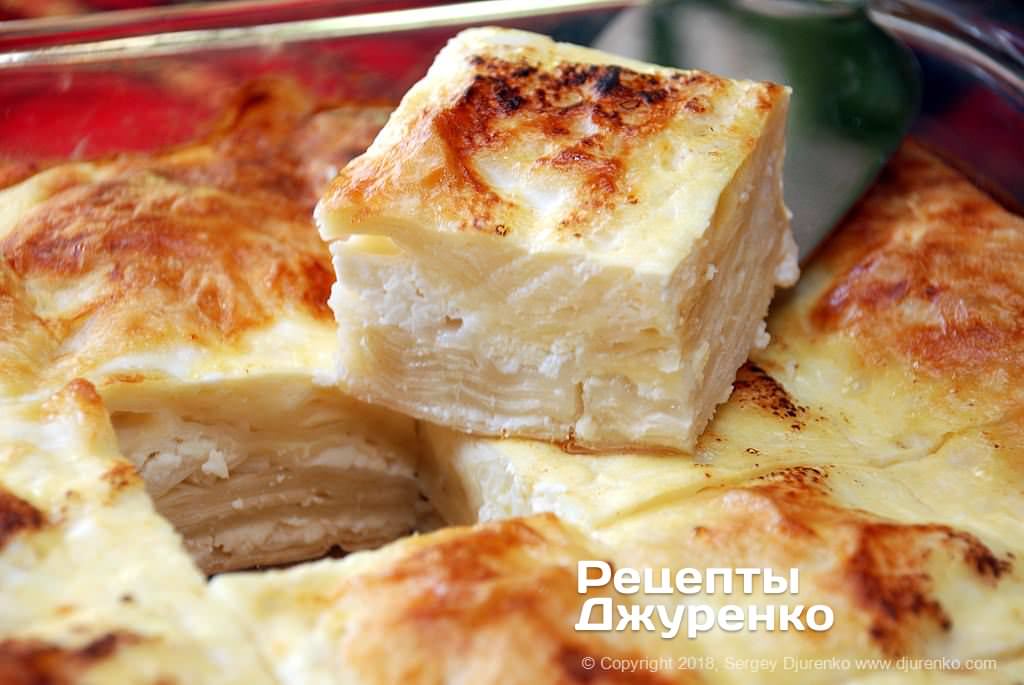
Bulgarian Banitsa with Cheese – Easy Filo Recipe
Banitsa with brynza is the best breakfast pastry there is, and we have been buying it on holiday in Bulgaria for two decades now. Paired with natural soured milk, it makes an incredibly good breakfast that has become a tradition for us. I often dream of it: early morning, a big balcony overlooking the sea, and a delicious pastry. Homemade banitsa is quite different from the store-bought kind – similar, yet not the same.
Traditional Bulgarian banitsa with brynza is made from a special layered dough. It is made with wheat flour, contains very little fat, and soured milk is added to it. After resting, the dough is rolled out extremely thin – the sheets are almost transparent – and then dried a little. These days banitsa dough is sold frozen; in Bulgaria it is called “tocheni kori”, and here you can also buy a suitable stretched dough – filo. This dough seems rather bland, unlike the dough for strudel.
There are a great many kinds of banitsa, just as there are of moussaka, tarator soup, kebapche or lyutenitsa, for example. I once bought a book in Bulgarian describing the culinary traditions of Bulgarians. Almost every folk tradition and festive meal has its own dishes and its own kinds of pastry. The banitsa we are used to is made for the Ivanovden holiday on January 7. That said, it is baked on other holidays and on ordinary days too.
We tried to write down how to make banitsa almost straight away. At first it was tricky because of the dough and our lack of experience with this kind of pastry. But in fact there is nothing difficult about it. Filo dough is sold in most large supermarkets, it is good quality and fresh, and it makes an excellent banitsa. It is important that the dough is not refrozen.
Traditional Bulgarian banitsa is made from many layers of very thinly rolled dough filled with brined brynza (sirene) with butter and, often, eggs. More elaborate fillings can include cottage cheese, meat, vegetables, mushrooms and various herbs.
If you are not making the stretched dough yourself, the banitsa recipe is simple: it comes down to spreading the filling, buttering the layers and then pouring over an egg mixture. Bulgarian bakeries rarely make plain banitsa with an egg topping; it is fairly rich and resembles burek, a fried pastry, but it is still wonderfully tasty. For baking you need brined brynza made from natural milk. I like it best when the cheese is made from sheep's milk or a blend of sheep's and other milk.
Ingredients
6-8 servings
- Filo dough, 400 g 1 pack
- Fresh brined brynza cheese 250 g
- Soured milk (prostokvasha) 100 ml
- Eggs 3-4
- Butter 100 g
Step-by-step recipe
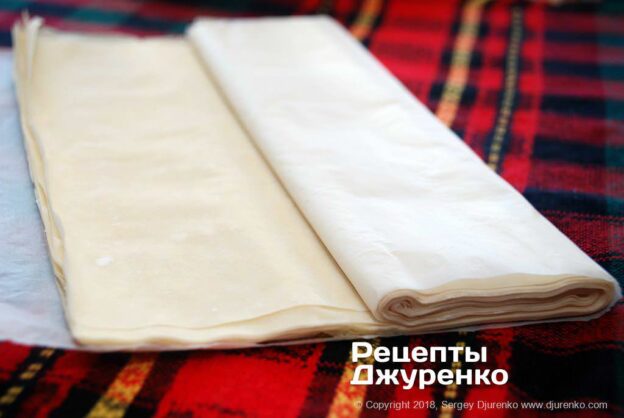
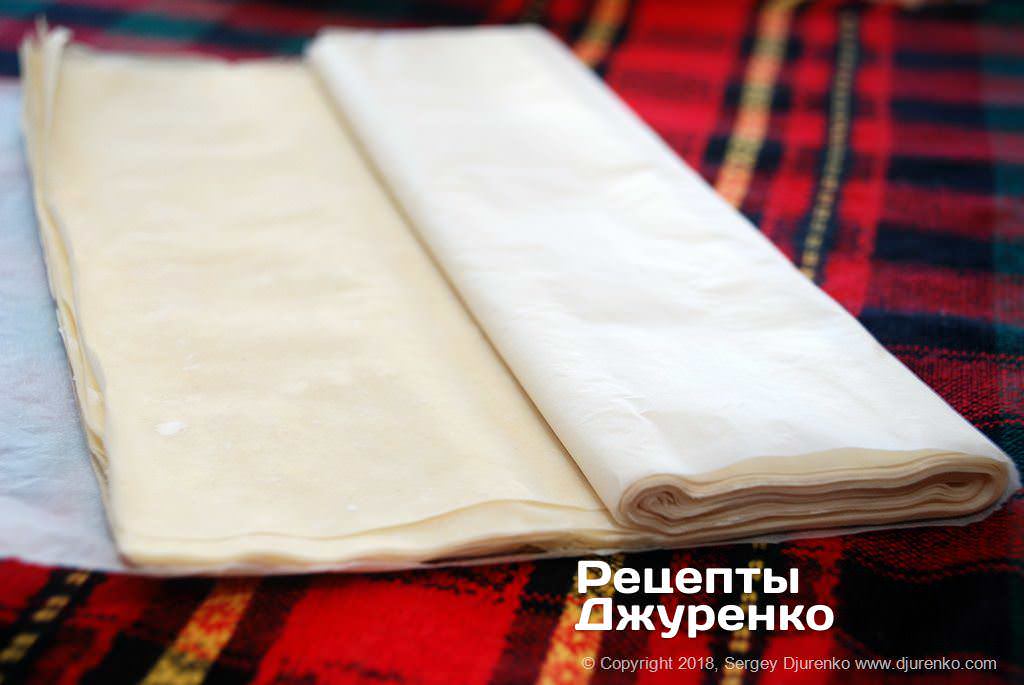
- So, our banitsa recipe uses store-bought filo dough. It is sold in large supermarkets, in the freezers next to the dumplings, frozen vegetables and ice cream. We rarely paid attention to any dough other than the kind for puff pastry pie or puff pastry pizza. You just need to look carefully at what is on offer. The package has all the information you need on thawing and baking. Don't invent problems – do as it says. Dried stretched dough separates easily into individual transparent sheets.
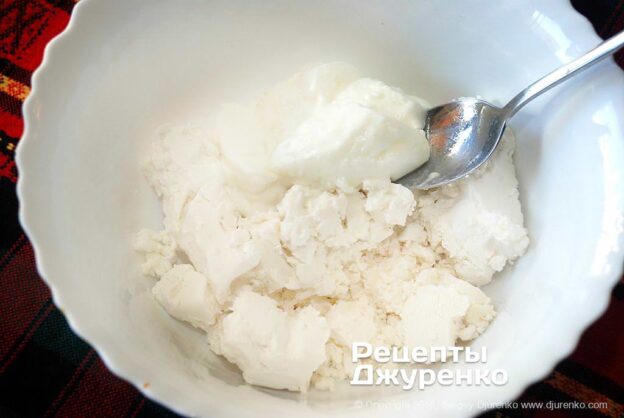
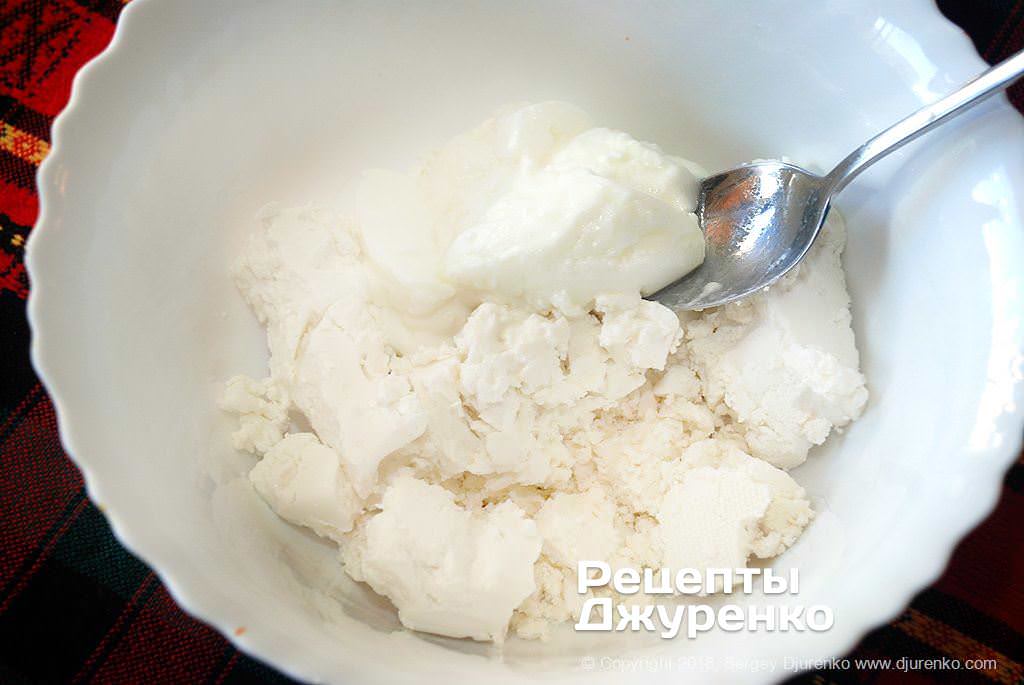
- Making the filling is extremely simple. Take the brynza out of the brine and crumble it by hand or grate it into a small bowl. By the way, you can use more brynza if you like. Add a quarter cup of natural soured milk to the bowl. It is best not to use kefir or other fermented dairy products. If all else fails, buy a litre of regular whole milk and let it sour. Stir and mash the filling until smooth. Brynza is salty, so there is no need to salt the filling.
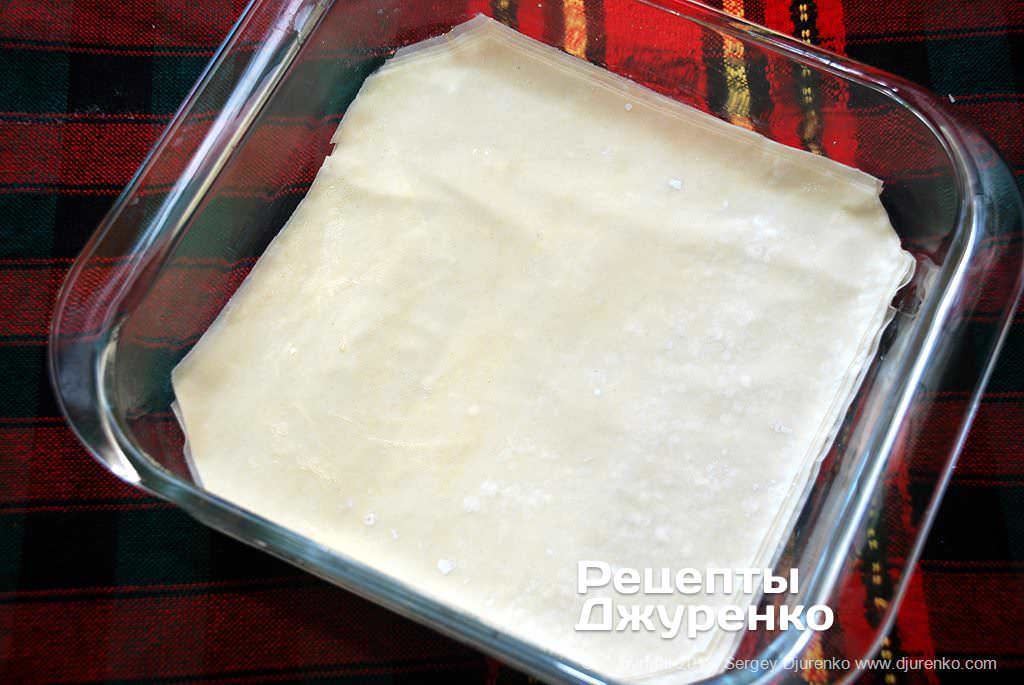
- Unfold the thawed filo dough, trying not to damage it. Get a ceramic or glass baking dish ready. As a rule, the unfolded dough does not match the size of the dish, so the stack of sheets has to be “tailored” with kitchen scissors. If narrow or shapeless pieces are left over, use them in the inner layers – the banitsa will be no worse for it. Decide how many layers of filling the pastry will have: I ended up with two layers of filling and three layers of dough.
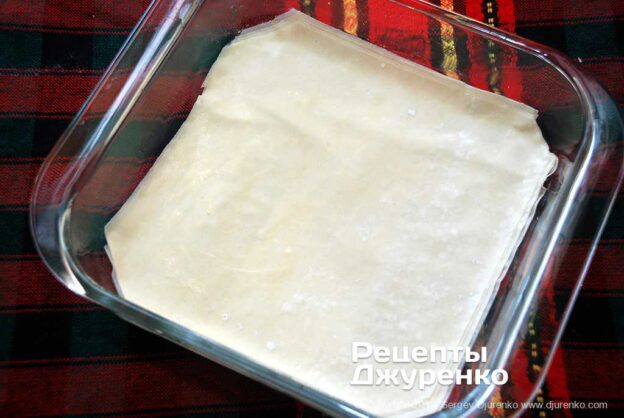
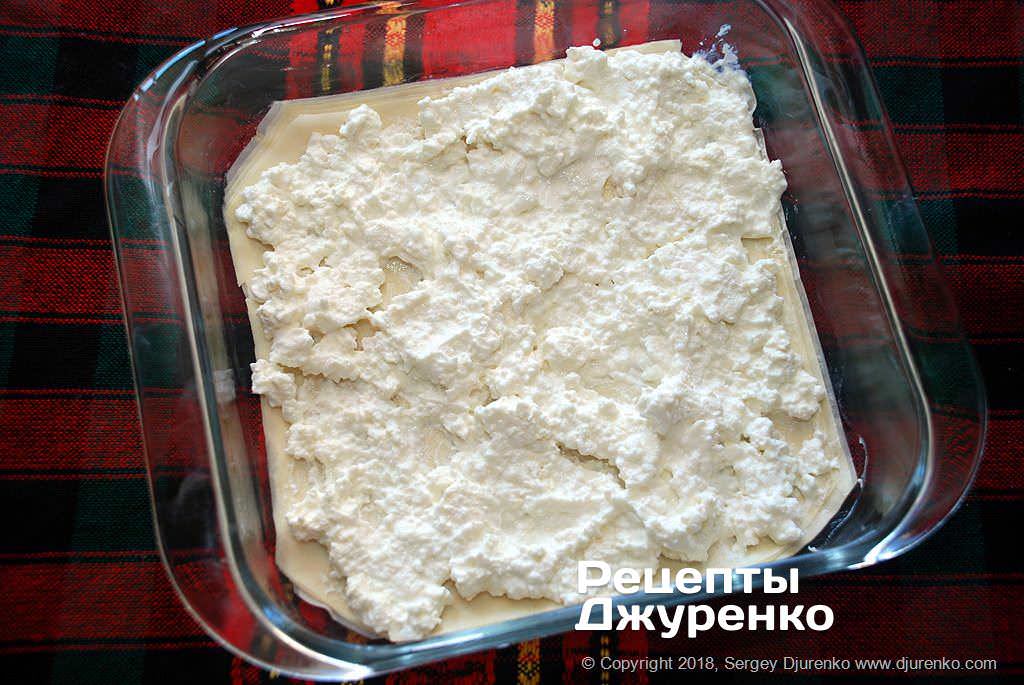
- Grease the dish with a little butter and lay a third of the dough in the bottom without buttering the layers. Spread half of the prepared brynza and soured milk mixture over the dough. The filling is not runny – more like a paste. Use a spoon or spatula to level it into an even layer over the whole surface of the dough, from one side of the dish to the other.
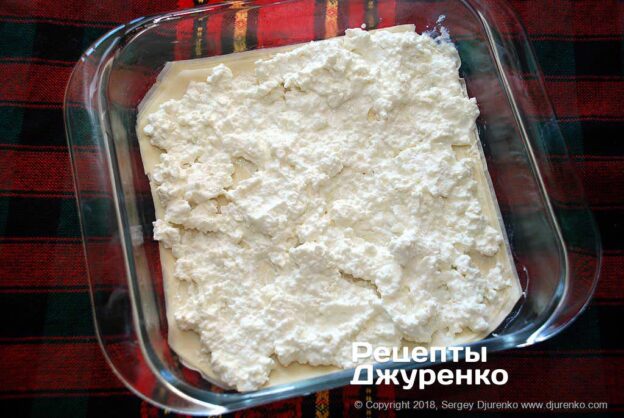
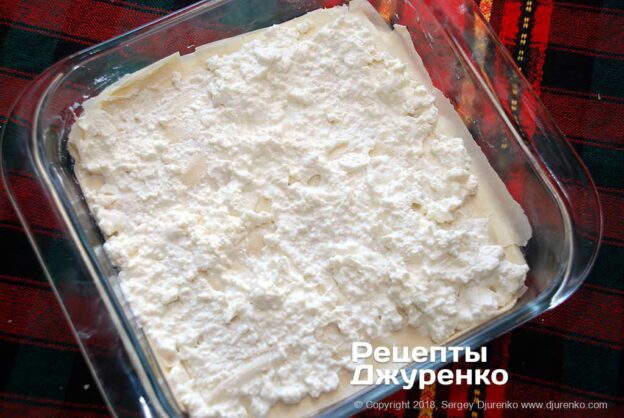
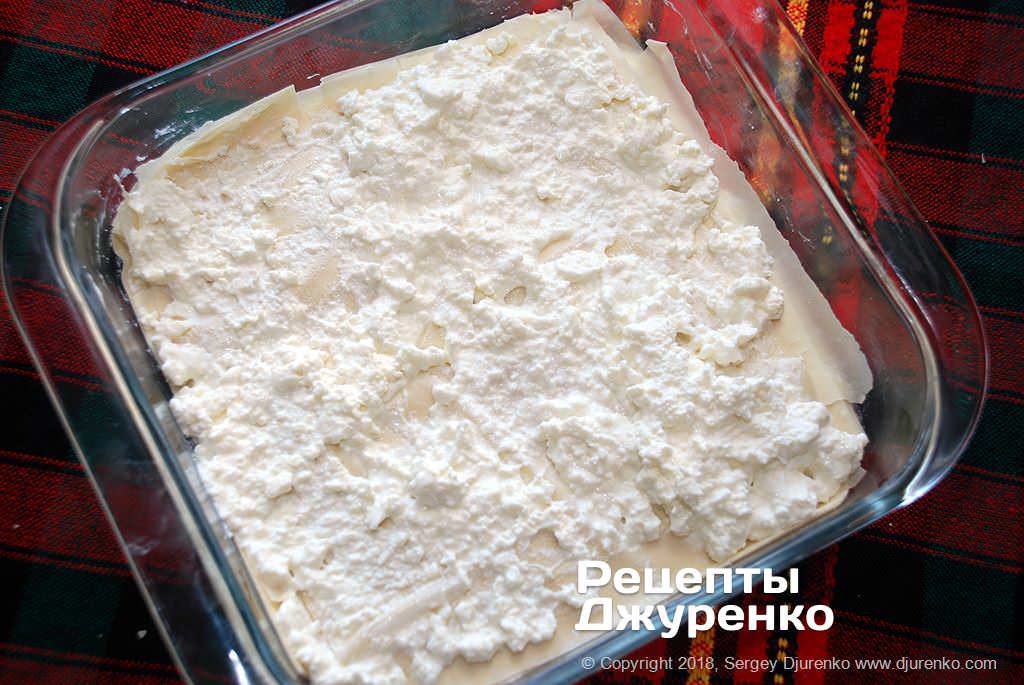
- Lay another third of the dough on top of the filling – you can use the trimmings and shapeless pieces here. By the way, how neatly the layers are laid and how precise they are does not matter. The sheets can lie a little “messily”. Once the pastry is baked, it will be completely unnoticeable. Spread the rest of the filling, level it and cover with all the remaining dough. It is very easy to press the dough and filling together with your palms, levelling the surface.
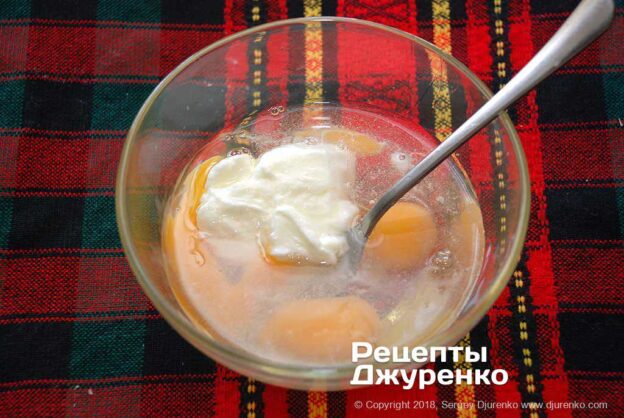
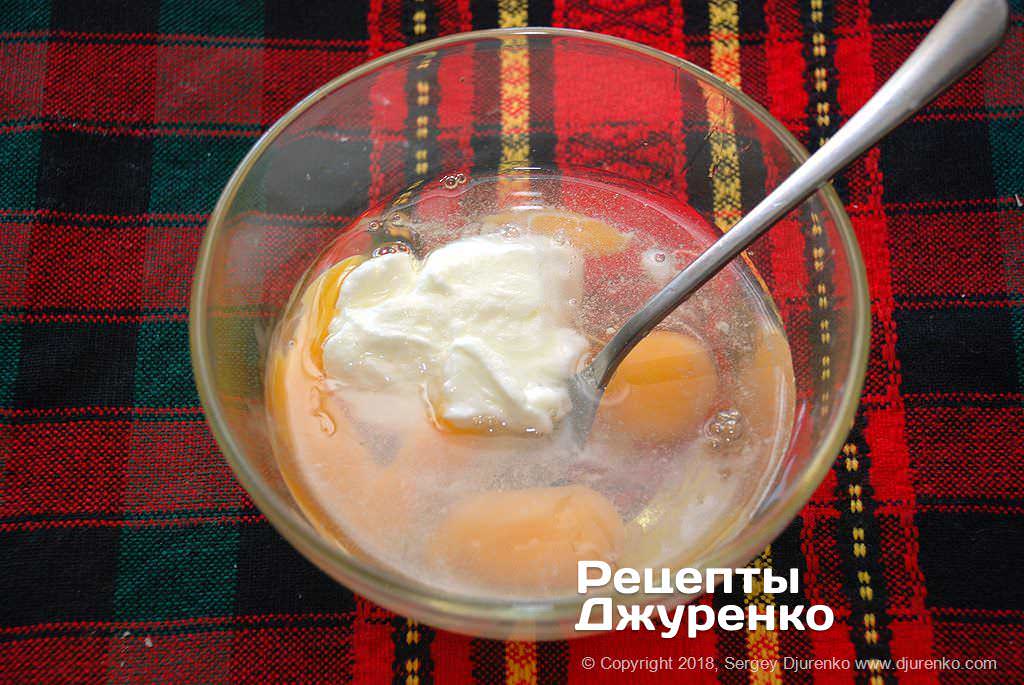
- Crack the eggs into a small bowl and add all the remaining soured milk – a quarter cup. Beat the mixture with a fork and set aside for now. Melt the butter – the microwave works fine. These are the two toppings ready.
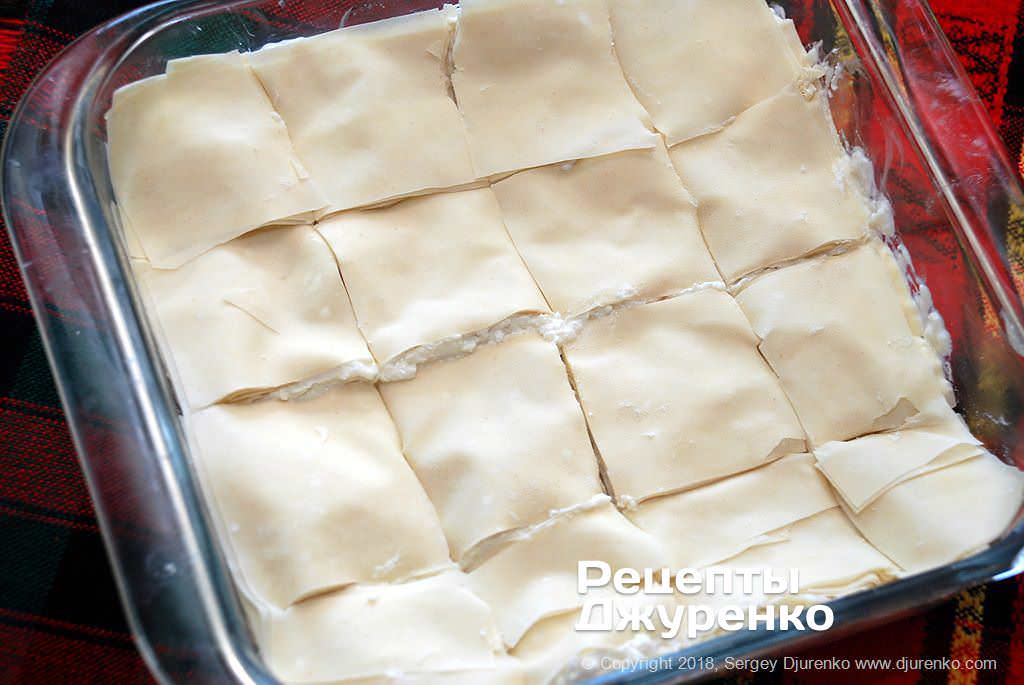
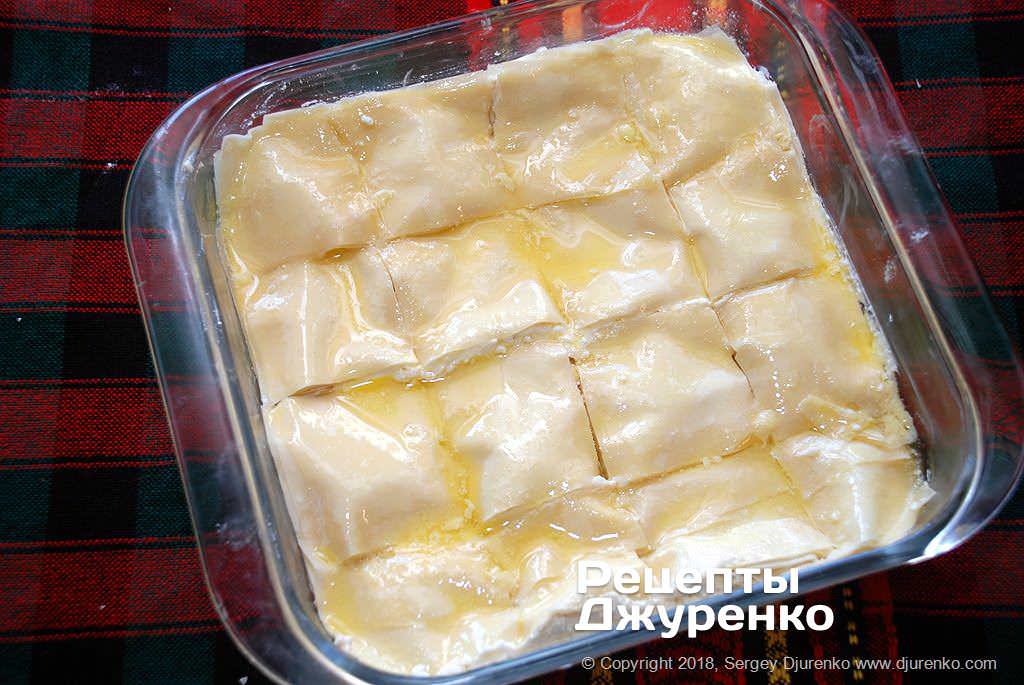
- Before baking, the banitsa needs to be cut so the topping can run between the layers of dough. You need a small, very sharp knife for this. Holding it vertically, cut through all the layers with just the tip of the knife. You will get squares about 4-5 cm on a side. The layers lie fairly loosely, so hold the dough with your fingers as you cut.
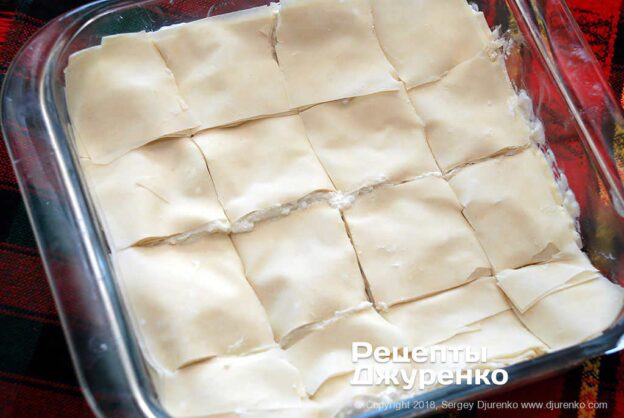
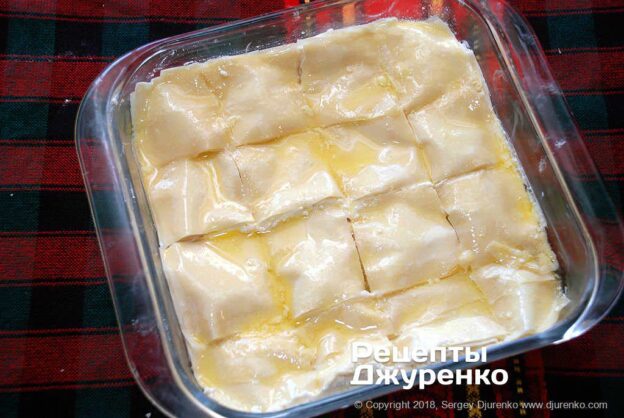
- Pour the melted butter over the cut banitsa. It is important that the whole surface of the dough is coated with a film of butter – otherwise it will dry out and crack during baking – and that the melted butter runs into all the cuts as much as possible. Preheat the oven to 200°C and put the dish in.
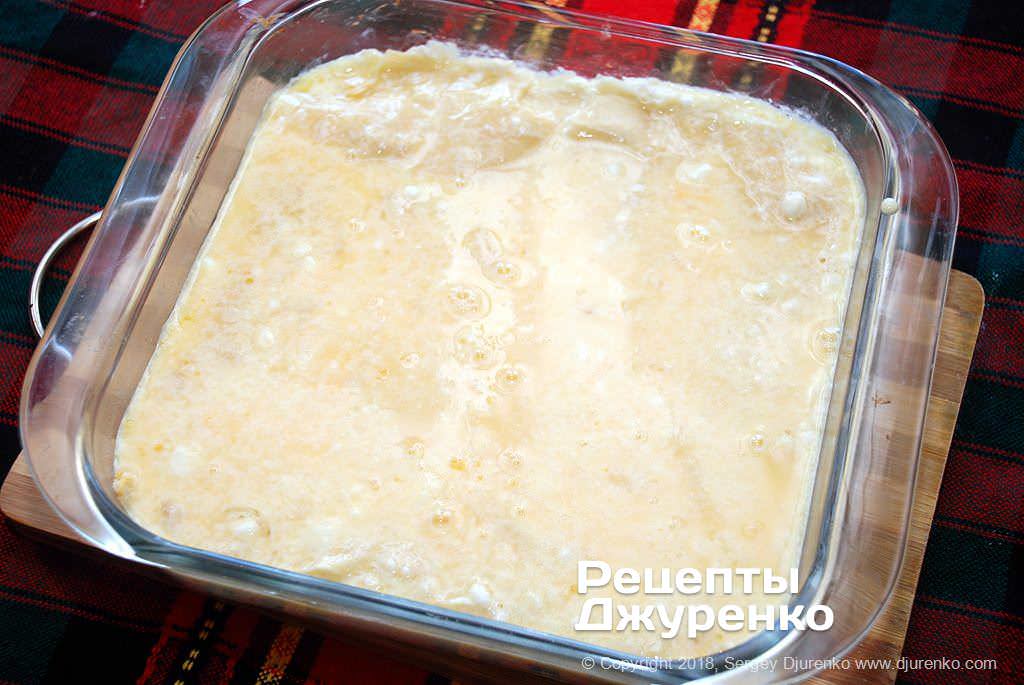
- After 20-25 mins, take the dish out of the oven. Pour a quarter cup of water into the egg and soured milk mixture and shake it up. Pour the egg mixture over the banitsa and run the knife once more along all the cuts and around the edge. Put the dish back in the oven.
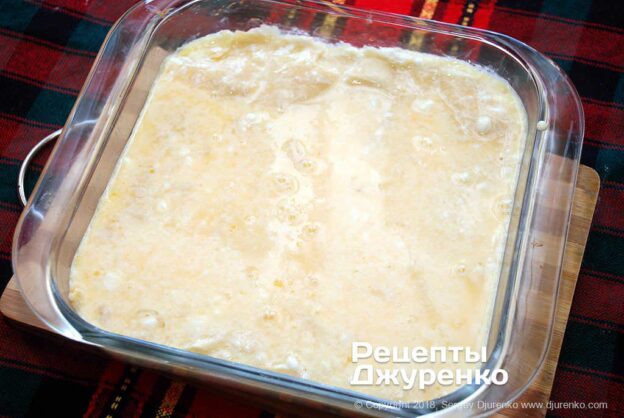
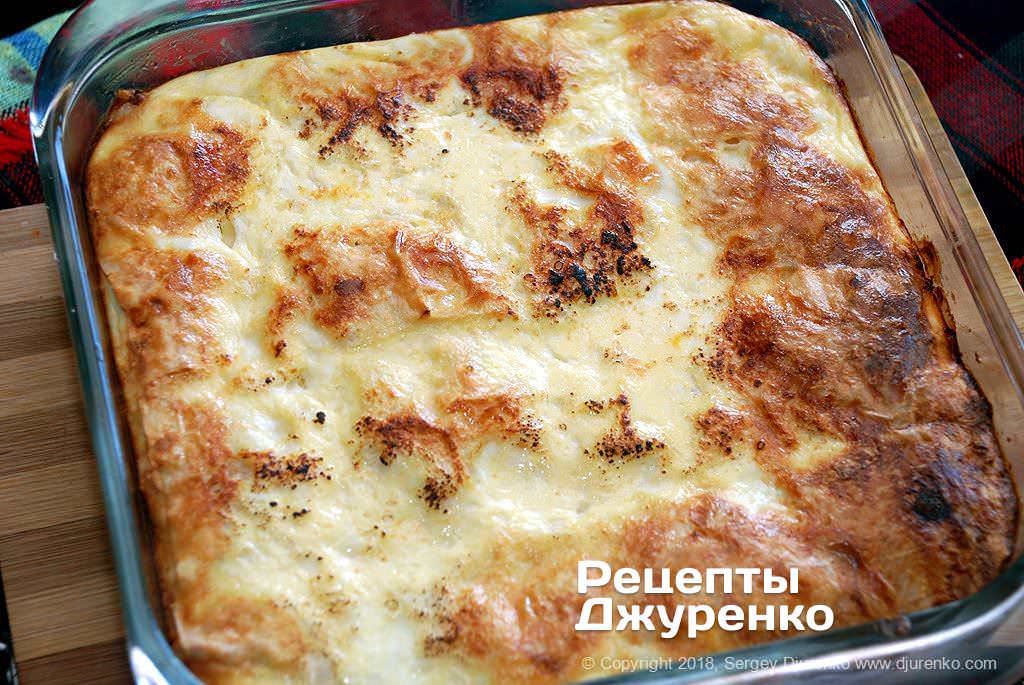
- The liquid soaks into the dough, making it very soft and tender. After adding the topping, bake until the surface is nicely browned. This may take more than 30 mins. The topping can range in colour from light to dark brown.
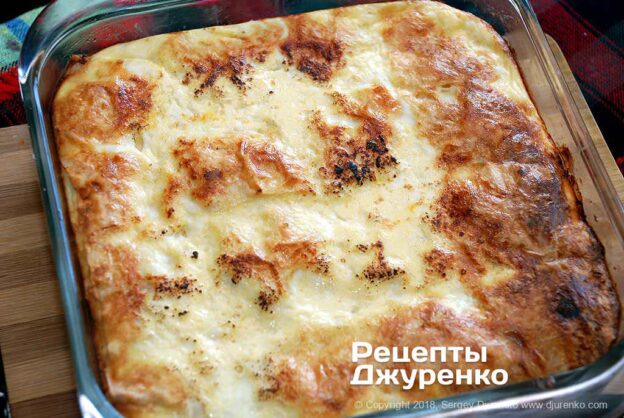
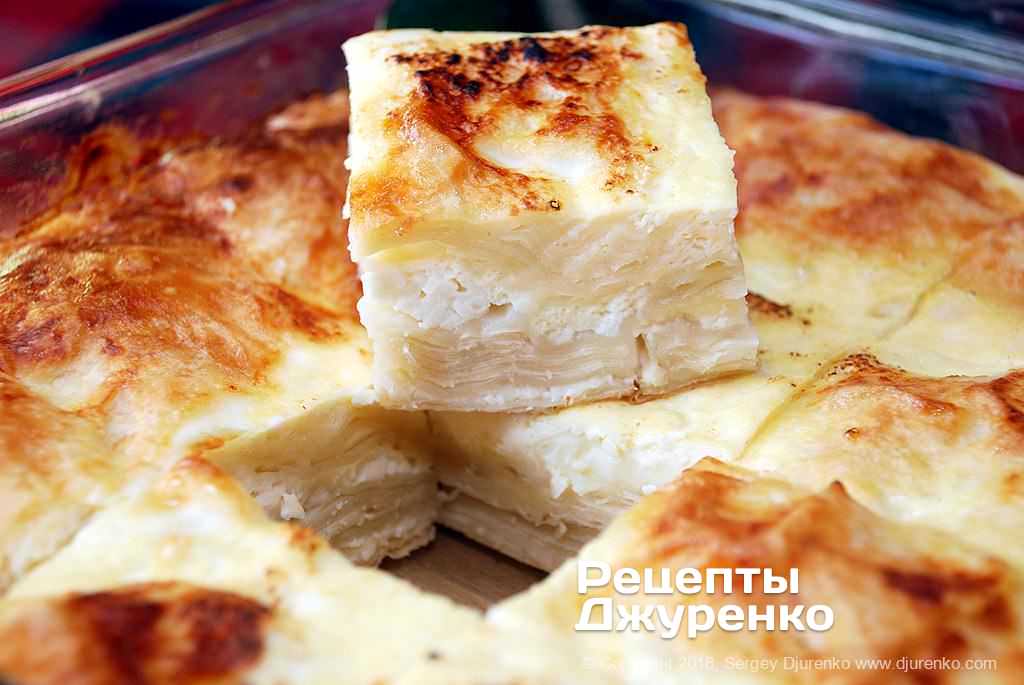
- Take the dish out of the oven and set it on a wooden board. If you look closely, you can see the cut lines. Divide the banitsa into pieces along the cut lines. Use a spatula to separate the pastry into portions and put them on plates. Banitsa with brynza is served warm or cold. You can reheat it too, if you like.
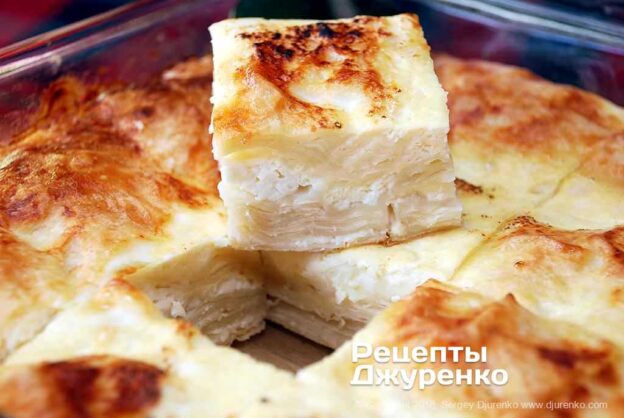
- For breakfast, banitsa goes exceptionally well with natural soured milk or, as many people like, with tomato juice. If you like, you can serve it instead of bread with soups – for example, a beef soup with herbs. Enjoy!
| Yield: | 6-8 servings |
| Calories: | 175 |
| Prep: | 30 mins |
| Cooking: | 1 h |
| Ready in: | 1 h 30 mins |
| Category: | Main Dishes |
| Cuisine: | Bulgarian cuisine |
| Rating: |
⭐
⭐
⭐
⭐
⭐
4.7
(5)
|