
Strapatsada Greek Scrambled Eggs
Ingredients
2 servings
For the eggs
- Eggs 4
- Tomatoes 500 g
- Onion 1
- Mild chili pepper 1
- Olive oil 3-4 tbsp
- Sugar 0.5 tsp (2 g)
- Sweet paprika 0.5 tsp
- Dried oregano and thyme a pinch of each
- Balsamic vinegar a few drops
- Salt to taste
For serving
- Wholegrain bread a few slices
- Feta 1-2 pieces
- Herbs (basil, parsley, cilantro) a little
- Fermented or pickled vegetables to taste
- Olive oil, sun-dried tomatoes optional
Step-by-step recipe
Preparing the vegetables
Like any other egg dish, strapatsada is quick and simple to make. Ripe tomatoes are essential – they are the base of the dish. They are often diced or grated into a purée, especially if they are juicy. That doesn’t matter much, since everything cooks down into a smooth sauce anyway. The pepper can be hot or sweet – your choice. I recommend farm eggs: their yolks are usually darker and they taste better.
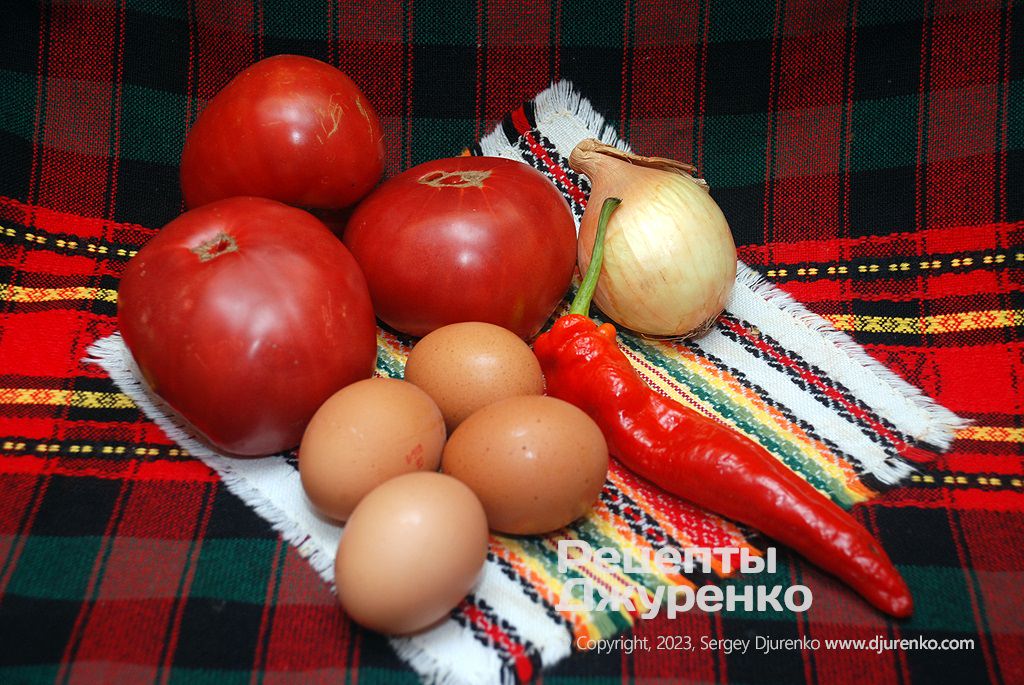
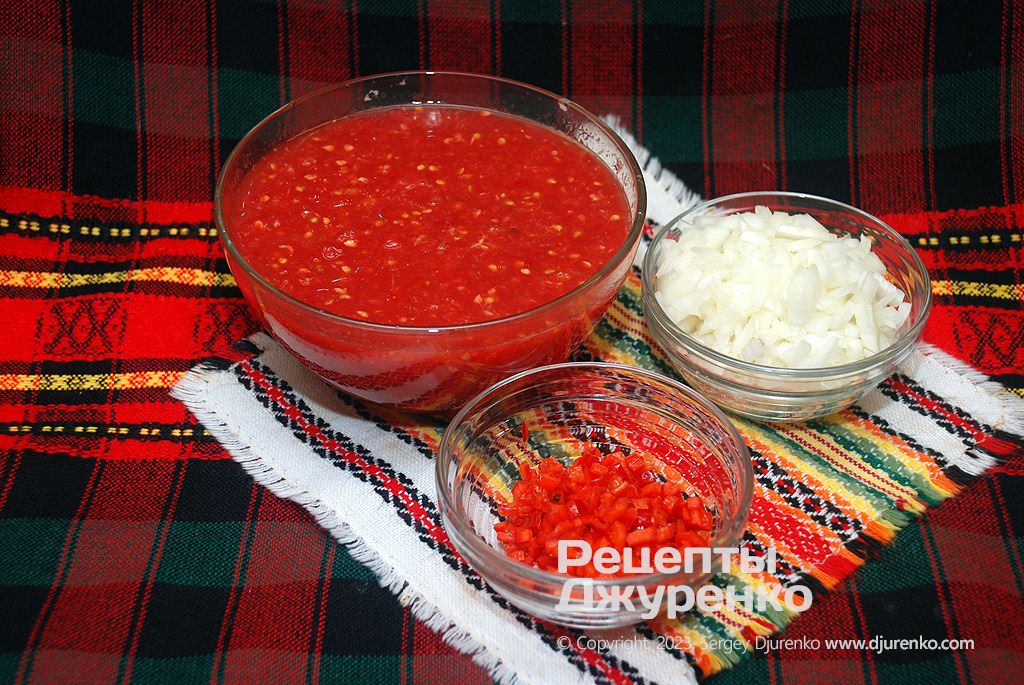
Peel the tomatoes and chop the flesh. Often a sharp knife is enough to remove the skin. Or, easier still, scald the tomatoes with boiling water (leave for 1 min) and put them under cold water – the skin then comes off easily with your fingers. The flesh can be diced, grated on a coarse grater or chopped with a knife into a purée with noticeable chunks. Don’t use a blender – you’ll end up with tomato juice.
Chop the onion and pepper. Peel the onion and dice it. Seed the pepper and chop it finely – a mildly hot one is best, or a sweet one if you don’t like spicy food.

Tomato sauce
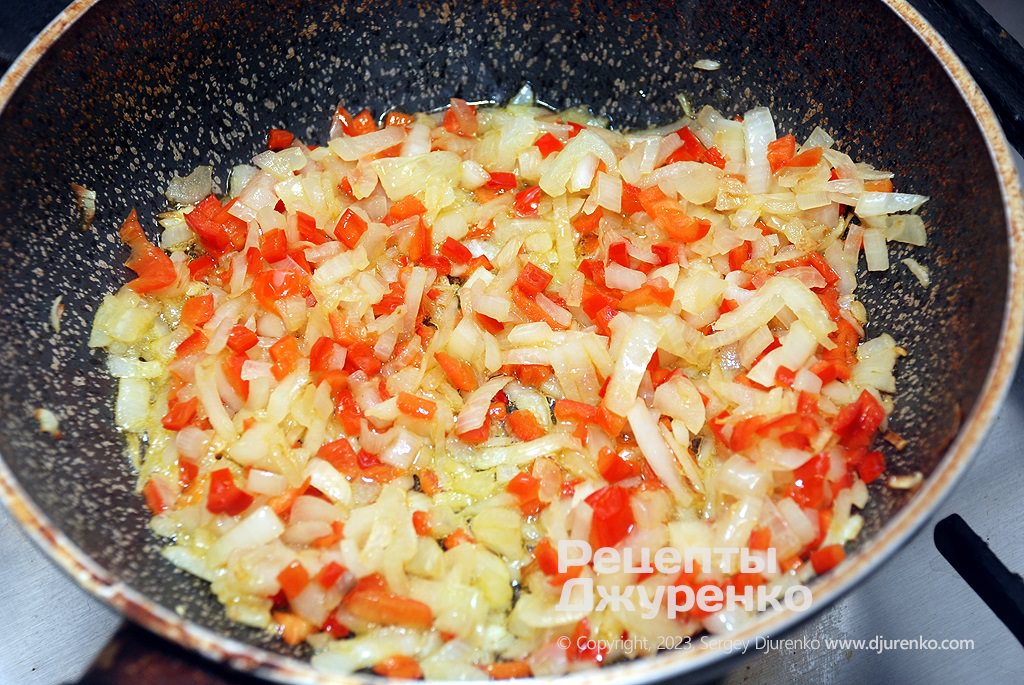
Fry the onion and pepper. Heat olive oil in a large frying pan over medium heat. Once the oil is hot, add the onion and fry for 2-3 mins until it softens a little. Add the pepper and fry together for another 3-4 mins.

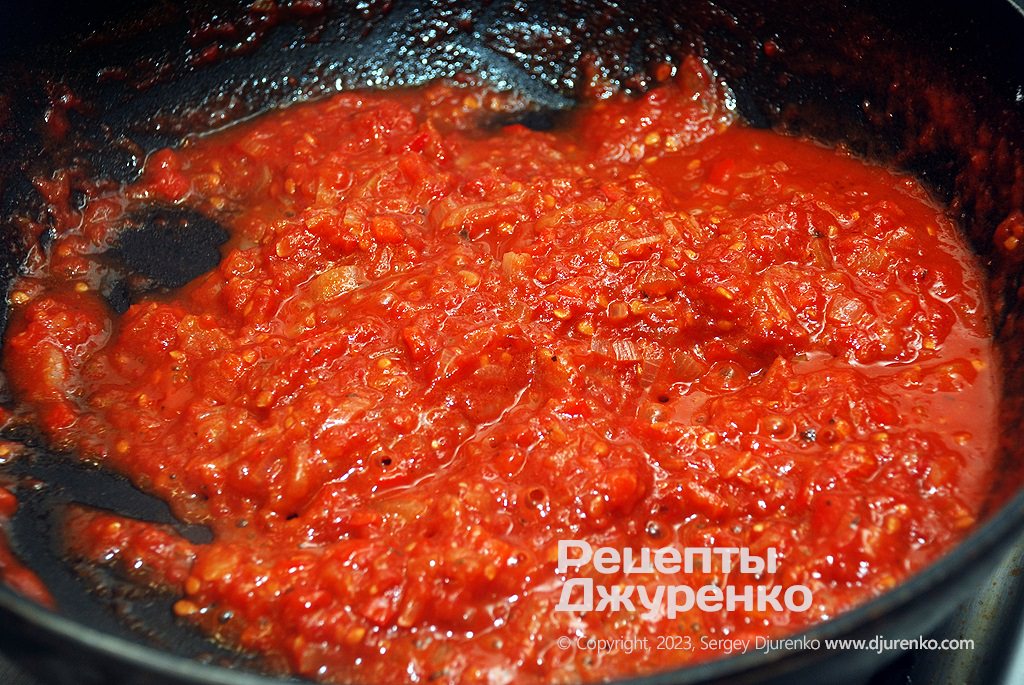
Add the tomatoes and seasonings and simmer the sauce until thick. Add the tomato flesh, 0.5 tsp sugar (2 g), salt, a pinch of dried oregano and thyme, and 0.5 tsp sweet paprika. Strapatsada is especially good if you add a few drops of balsamic vinegar to the tomatoes. Bring the sauce to a boil over high heat, then lower the heat to medium and simmer uncovered for about 10 mins. Some of the liquid needs to evaporate so the sauce thickens – it should barely run.

While the sauce simmers, toast a few slices of wholegrain bread in a dry frying pan.
Eggs
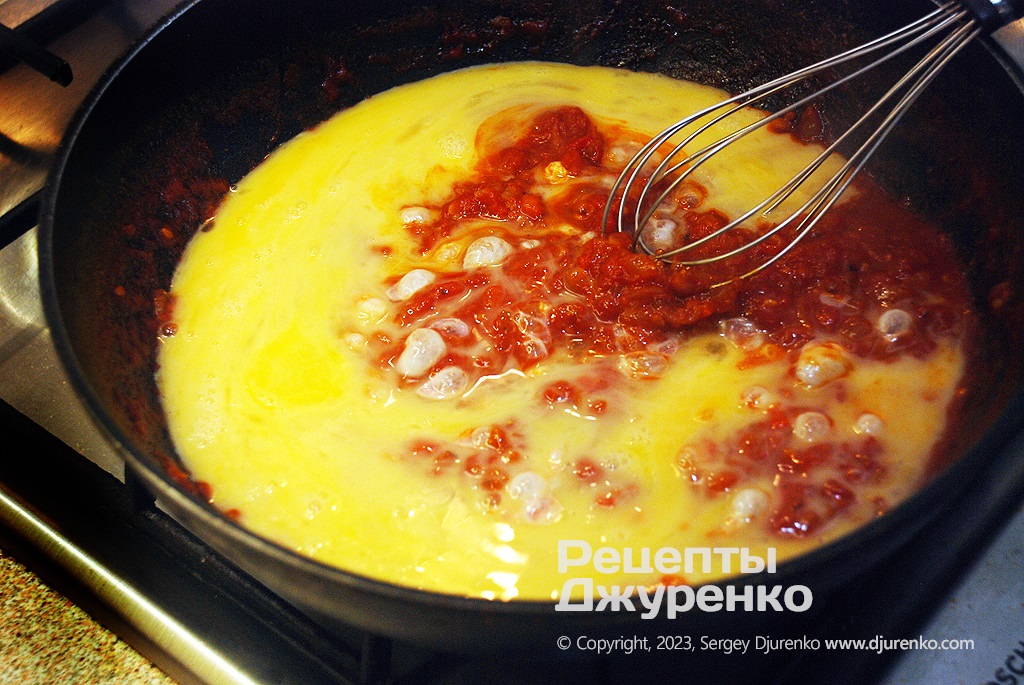
Beat the eggs and pour them into the sauce. Crack the eggs into a bowl and beat them lightly with a whisk until smooth. When the sauce is thick enough, pour the lightly beaten eggs into the pan. Use the same whisk to stir the eggs into the sauce until the mixture is evenly mottled.

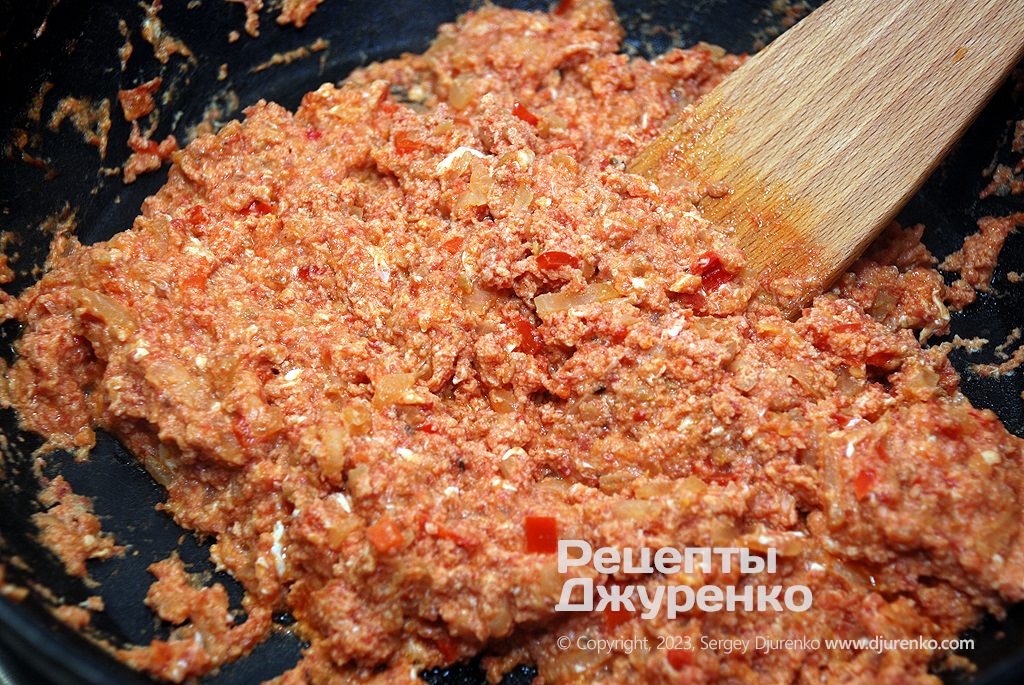
Keep stirring, turn up the heat and cook the eggs until set. The eggs set quickly – usually in a few minutes. The mixture will gradually thicken and stop running across the bottom of the pan. At this point the dish is done. Sometimes crumbled feta is added at this stage. I prefer to serve a piece of cheese on the plate instead.

Serving
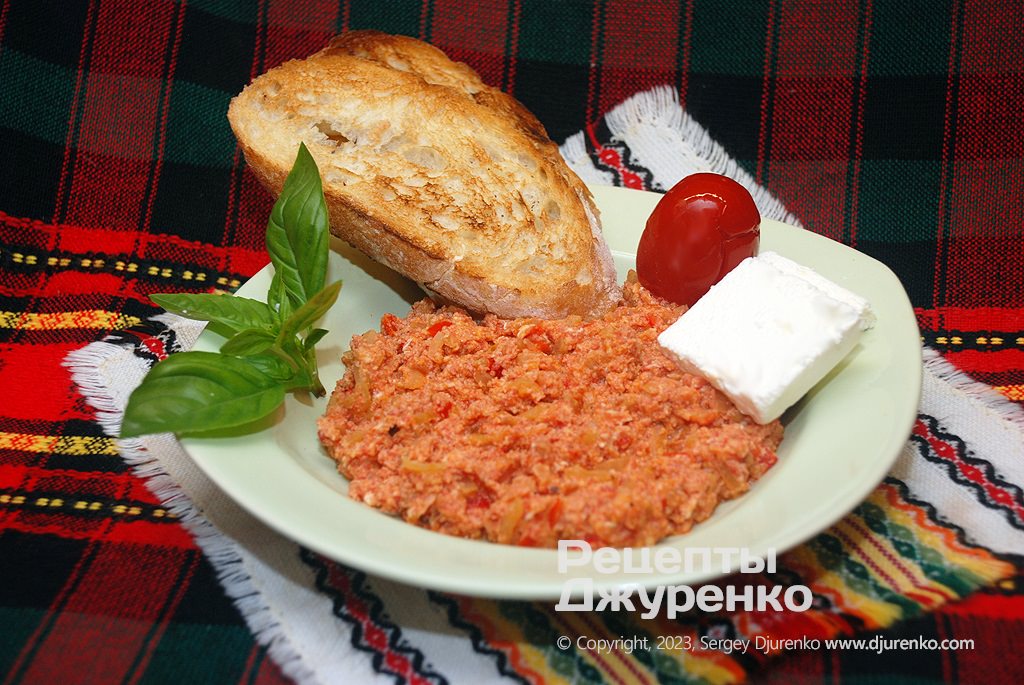
Put the finished eggs on a plate – they are firm enough and don’t run. Add the bread slices, a piece or two of soft feta, fermented or pickled vegetables and some herbs – basil, parsley, cilantro. The dish can be served hot or cold. I’ll say straight away – it’s better hot. You can also grate the soft cheese over the eggs. A drizzle of olive oil on top is common when serving, and sometimes a few pieces of sun-dried tomatoes are added.

Serving can be quite fanciful and varied. What sets these eggs apart from the well-known Shakshuka is that the eggs are stirred in. Balkan Mish-mash, in turn, calls for lots of fried or roasted sweet peppers. But the dishes are clearly related.
Calories and macros
445 kcal
Serving ≈ 420 g
- Protein16 g15% of kcal
- Fat34 g71% of kcal
- Carbs15 g14% of kcal
100 g107 kcalProtein 3.9 gFat 8.3 gCarbs 3.6 g
Calculated from the recipe ingredients, excluding salt and spices. Data: USDA and Matvaretabellen.