
Sesame Buns


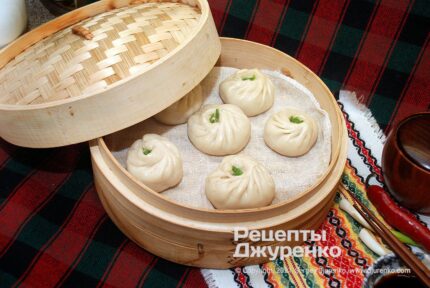


Ingredients
8 buns
- Wheat flour 3 cups (plus a little for dusting) (390 g)
- Warm water 250–270 ml
- Instant yeast for dry flour 1 packet (11 g)
- Olive oil 2 tbsp
- Vegetable oil for greasing the baking sheet
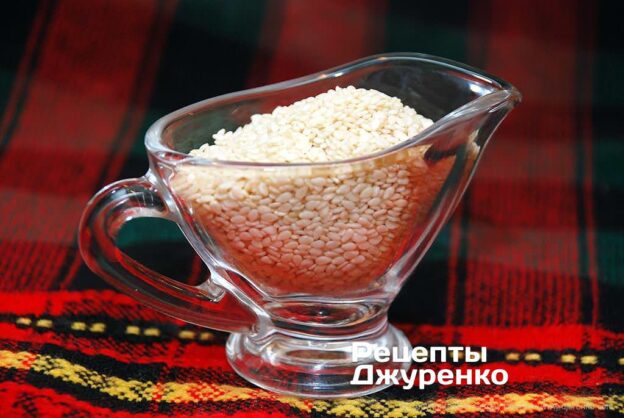
- Sesame seeds 2 tbsp (20 g)
- Egg 1 (the white only)
- Sugar 2 tsp (9 g)
- Salt 1 tsp (level) (6 g)
Step-by-step recipe
Dough
To make the buns, you need a yeast dough. Traditionally, from the old days, fresh yeast is used for baking bread. It is specially prepared for fermentation and raising the sponge. Nowadays, with progress, people often use active dry yeast, or “instant” yeast, as it is usually called. It is sold in small packets. One packet is meant for 1 kg of flour. But always read the instructions carefully.
Some yeasts are added to dry flour, and others are sponge yeasts that must be dissolved before kneading the dough. To bake tasty buns, by and large, it does not matter which yeast you use. What matters is that the dough rises and is fluffy. We will bake the bread with “instant” yeast for dry flour.
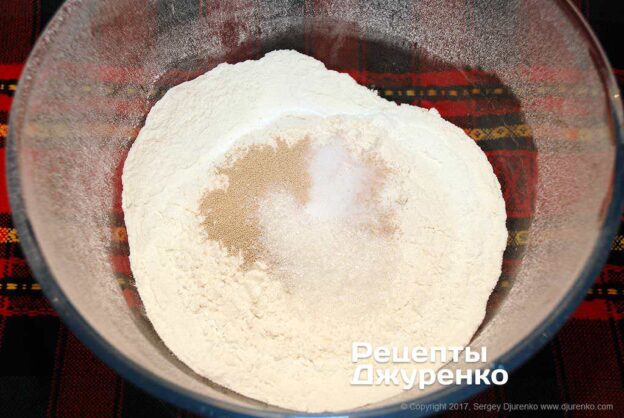
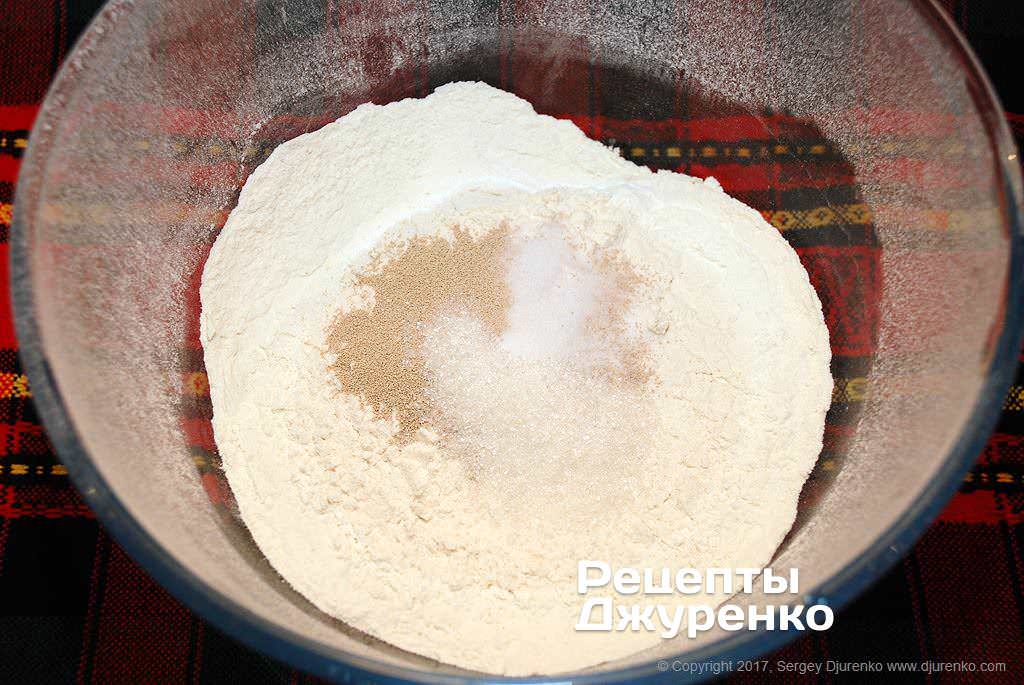
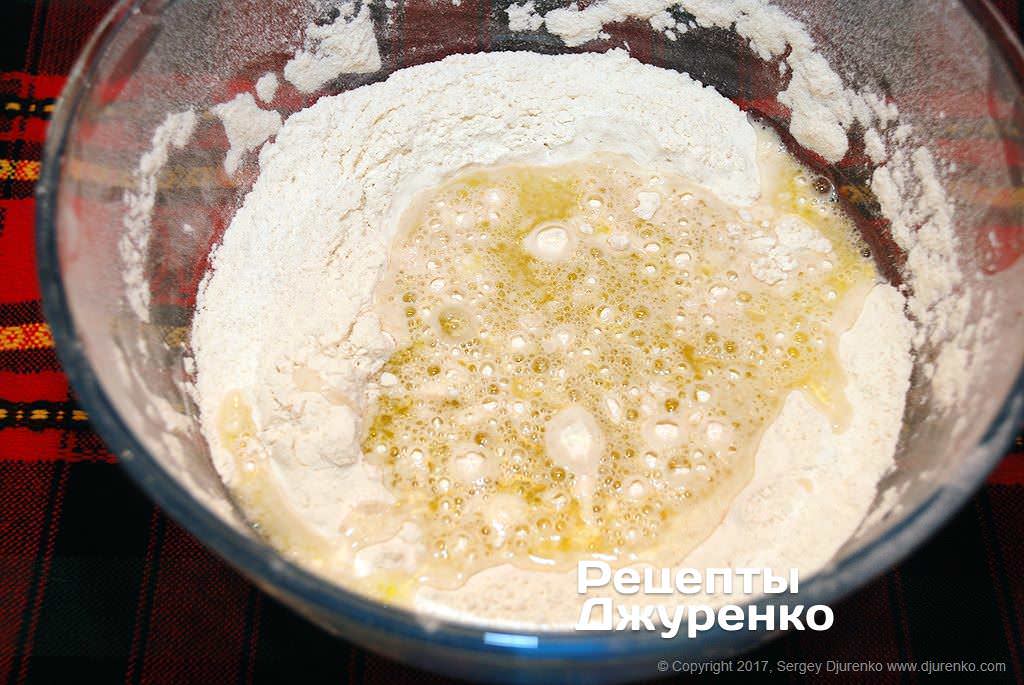
Sift the flour and mix it with the sugar, salt and yeast. Sifting the flour is a must: sometimes you come across pieces of wheat husk, large lumps or little stones, and other quite surprising things. Sifting also loosens the flour and enriches it with air, which is important for the dough to rise. Add 2 tsp of sugar (9 g) and 1 level tsp of fine “extra” salt to the sifted flour, pour in a whole packet (11 g) of dry yeast and mix thoroughly.
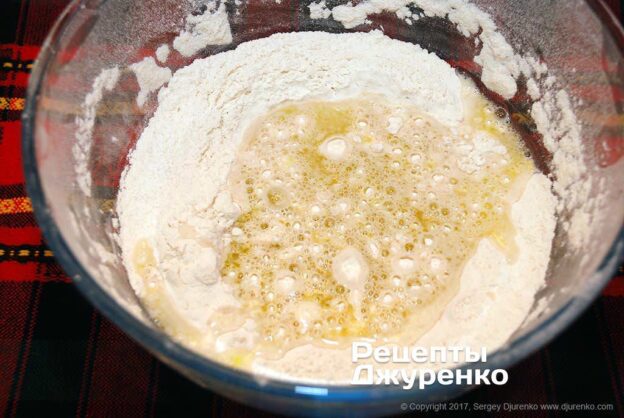
Warm the water and mix it with the oil. Pour about 250–270 ml of water into a cup and microwave it for 15–20 seconds, until the water is just slightly warm. Mix the water with 2 tbsp of olive oil, whisk the mixture and pour it into the flour right away.
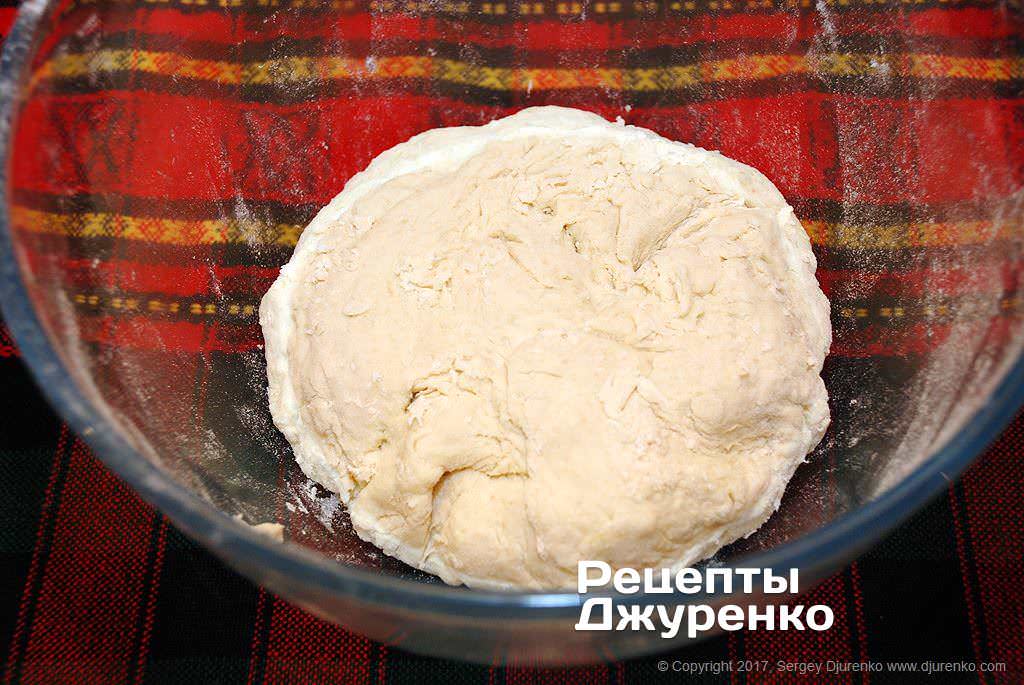
Knead a very soft dough that sticks only a little. It is better to knead the dough wetter than needed and add flour until it reaches the right consistency. It is always better to add flour to the dough than liquid.
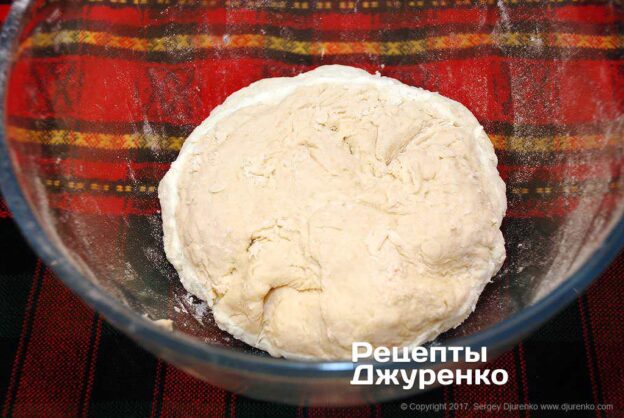
It is hard to explain what soft dough is. I will try. Ideally, the dough is as soft as it can be and stretches under its own weight when you lift it. But it hardly sticks to your hands at all.
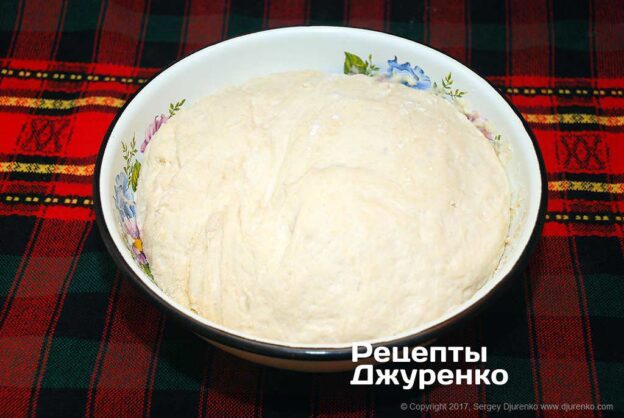
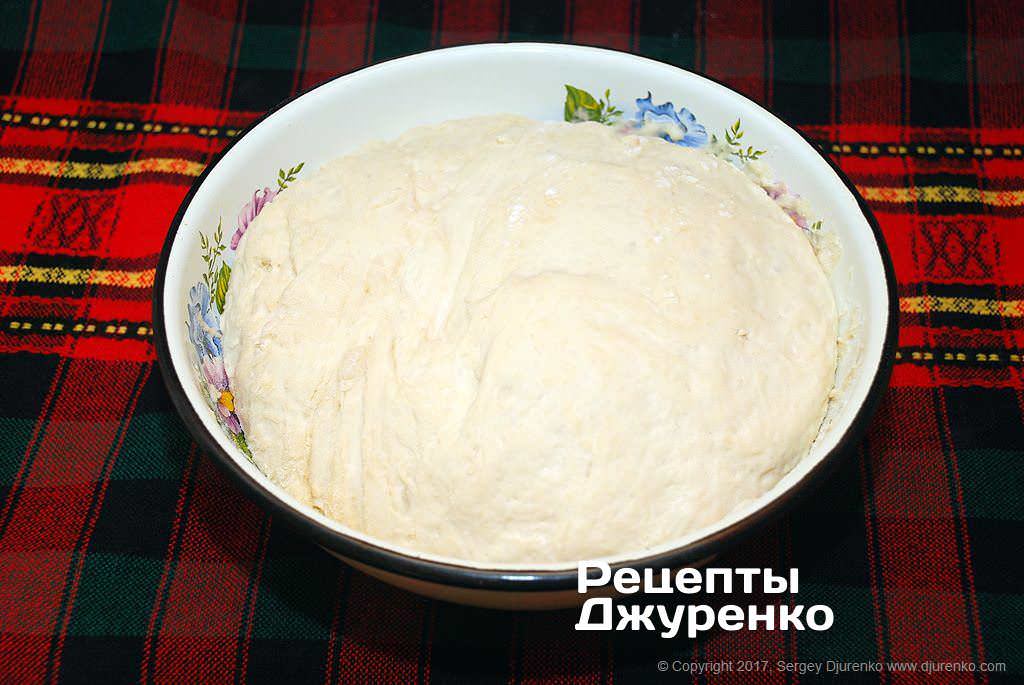
Roll the dough into a ball and let it rise for 1 hour. Put it in a bowl with a little flour sprinkled on the bottom, cover with a thick clean cloth and put it in a warm place. In an hour the dough will rise and increase noticeably in volume.
Knead the dough and let it rise again. Add a little flour and knead the dough by hand, only briefly, then put it under a towel for another 1 hour.
Shaping
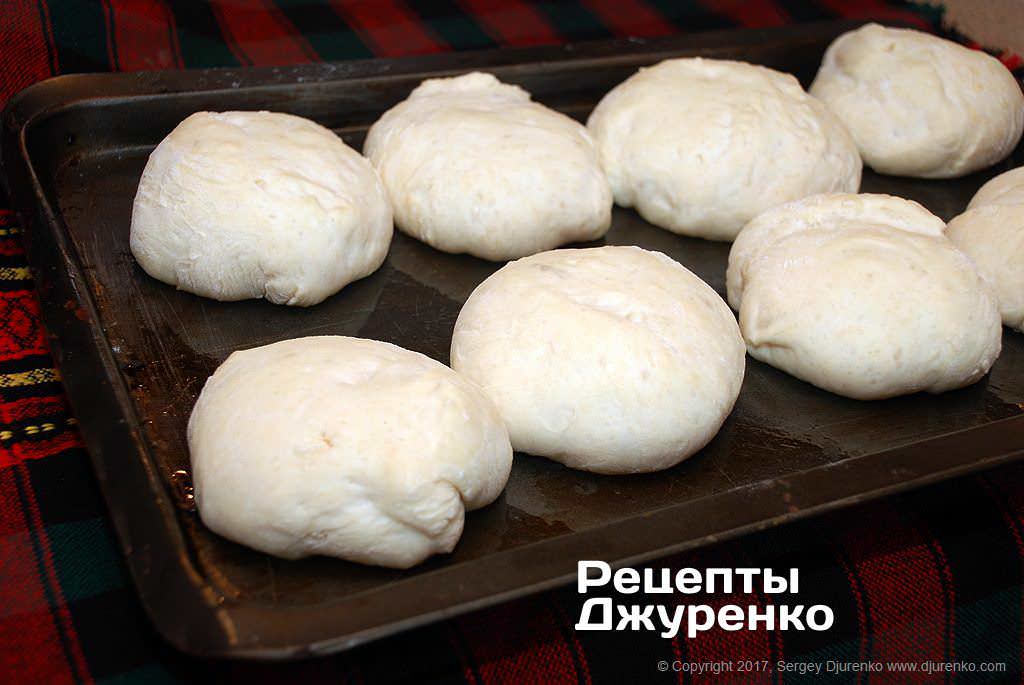
Divide the twice-risen dough into 8 pieces and shape the buns. On a table or board dusted with flour, shape round buns by hand, flattening them slightly.
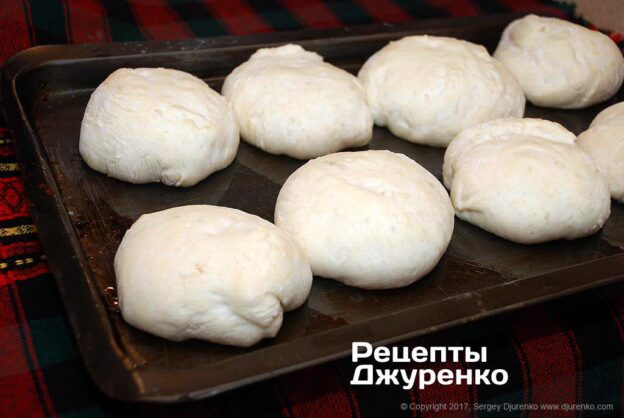
Place the buns on a baking sheet lined with parchment or baking paper. Or just on a bare baking sheet. Grease the paper or the sheet with vegetable oil.
Let the buns stand for 30 minutes. Brush the surface of the buns with a damp, but not wet, hand and cover with a clean cloth. Preheat the oven to 180°C. The buns on the sheet will rise a little more and will be ready for baking.
Baking
Put the baking sheet on an upper oven rack, so the buns do not burn on the bottom and brown on top, and bake at 180°C for the first 15 minutes.
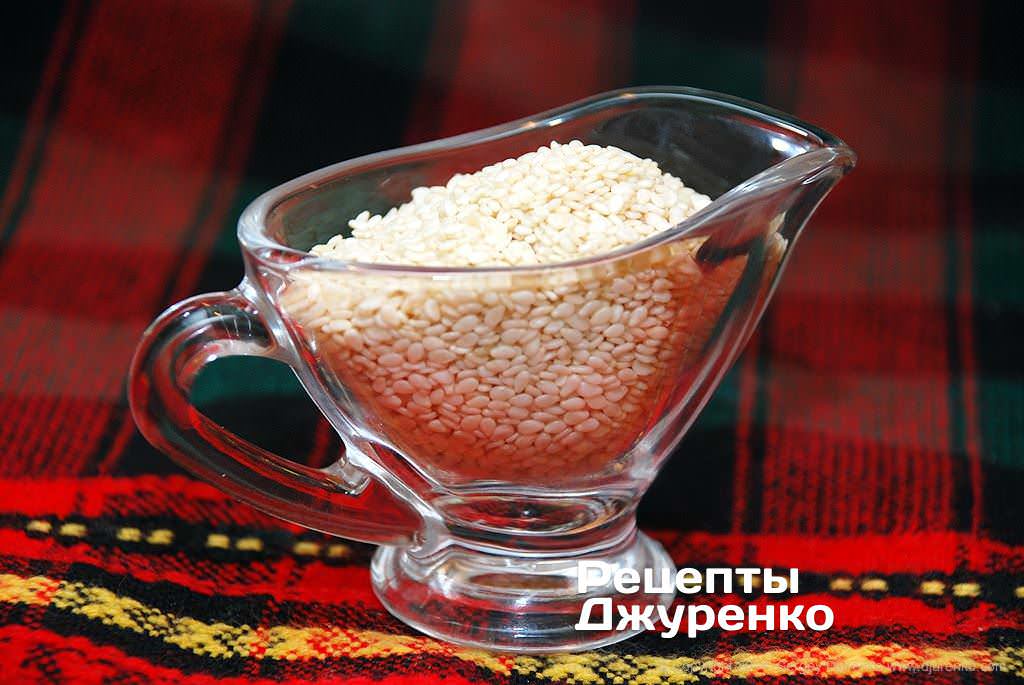
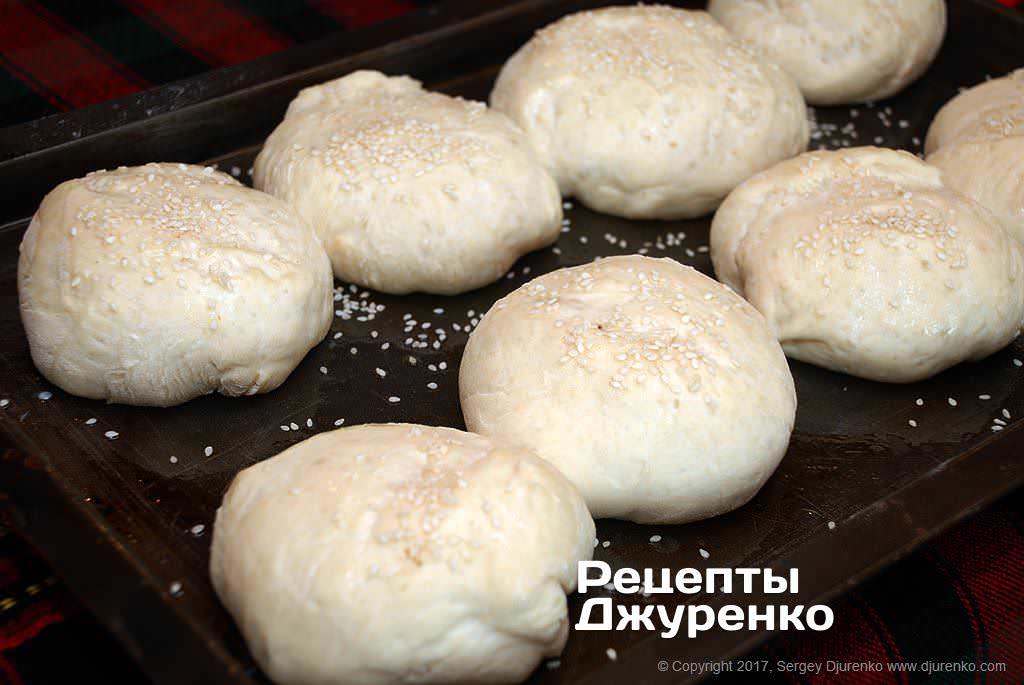
After 15 minutes of baking, brush the tops of the buns with a little egg white and sprinkle with sesame seeds right away. The sesame seeds will stick well to the wet surface.

Bake the buns until the bottoms are golden. The total baking time is roughly up to 1 hour. Everyone knows how their own oven bakes, so keep an eye on doneness by the bottom of the buns, and as soon as the bottom is golden, in principle that is enough baking.


Serving
Let the buns cool. In fact, bread with sesame seeds does not go stale for several days if you keep it wrapped in a cloth. It is a great addition to almost any dish.

The buns go great with tea, especially spread with jam. You can use them for luxurious sandwiches or instead of bread.



Calories and macros
282 kcal
100 g
- Protein8 g12% of kcal
- Fat6.9 g23% of kcal
- Carbs44.1 g65% of kcal
Calculated from the recipe ingredients, excluding salt and spices. Data: USDA and Matvaretabellen.