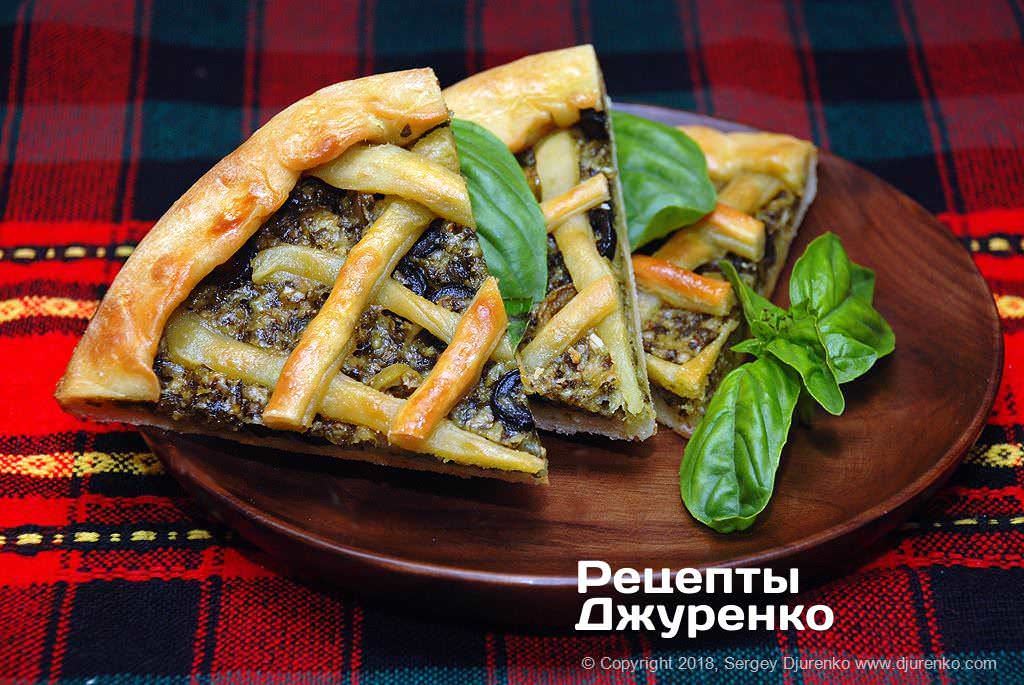
Yeast-Free Focaccia with Herbs and Olives
Ingredients
6 servings
For the dough
- Wheat flour 2 cups (plus a little for dusting) (260 g)
- Baking powder 1 sachet (or 0.5 tsp baking soda with lemon juice)
- Egg 1
- Cultured milk starter or soured milk 150 ml
- Olive oil 1 tbsp
- Salt a pinch
For the filling
- Basil a few sprigs
- Garlic 1-2 cloves
- Parmesan or Grana Padano a small piece
- Olive oil 1 tbsp
- Dried oregano a pinch
- Salt, black pepper to taste
- Pitted olives to taste
For the pan and greasing
- Vegetable oil for greasing the pan
- Beaten egg a little, optional
Step-by-step recipe
Dough
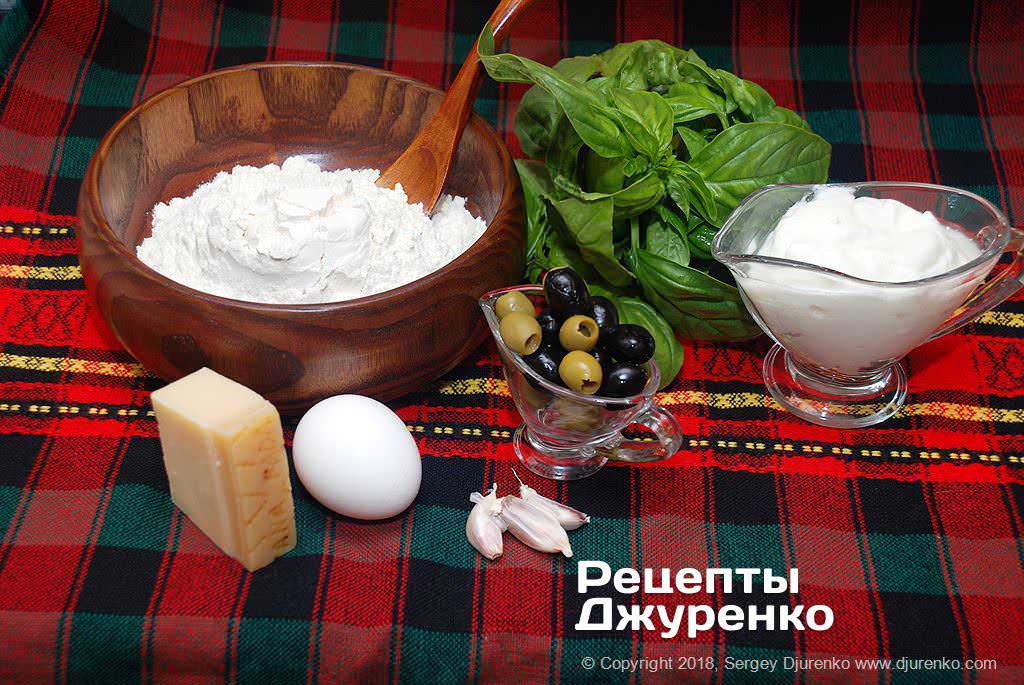
For a small round loaf 20-22 cm in diameter you will need 2 cups of wheat flour (260 g), one egg and a scant cup of cultured milk (200 ml) starter or plain soured milk. The filling in savory baking should be generous: hearty, fragrant and tasty. I suggest preparing various olives and a simplified analogue of pesto sauce for the filling: basil, Parmesan or Grana Padano, olive oil, spices and a little garlic.
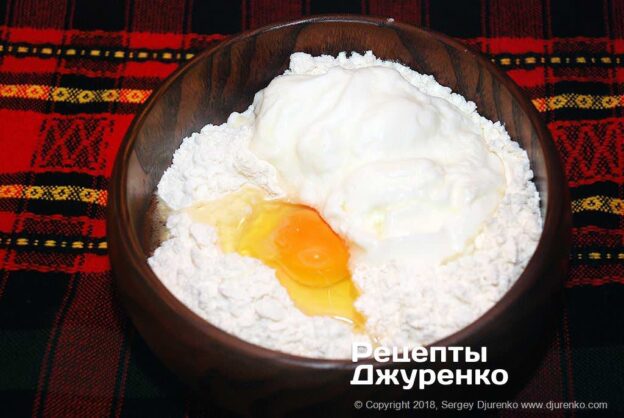
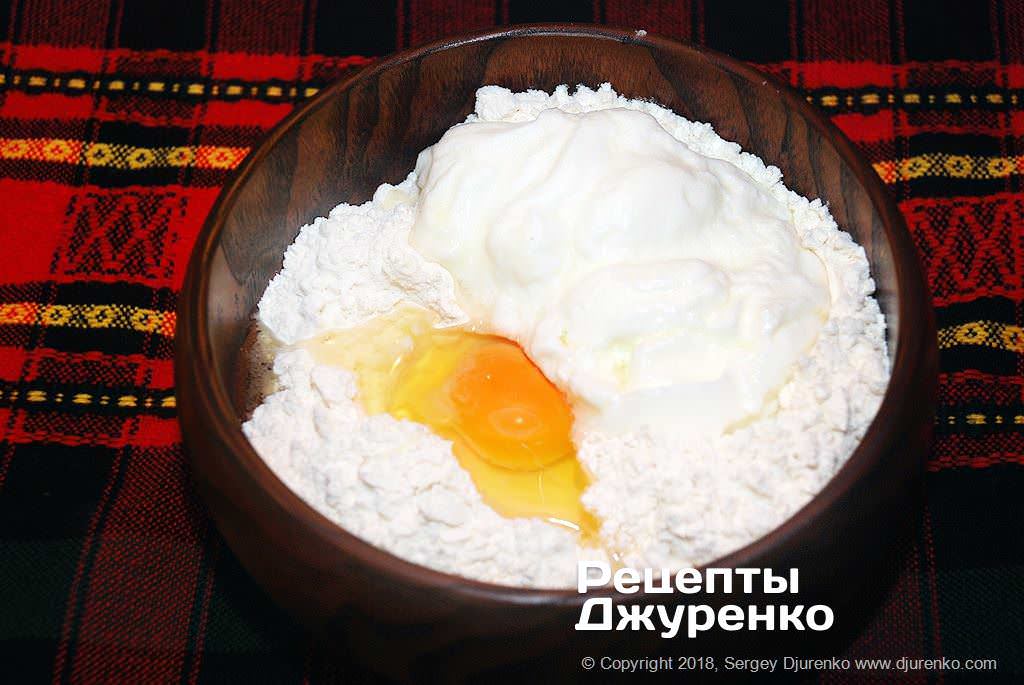
Mix the flour with the baking powder, add the egg and the starter. Since focaccia is bread and not pizza, its dough should be firmer, but not stiff. Sift the flour into a bowl. By the way, if you have soft Italian flour, it makes an excellent pizza dough. Add the sachet of baking powder, or 0.5 tsp of baking soda (3 g) mixed with lemon juice, to the flour and stir. Break the egg into the flour, add a pinch of salt and about 150 ml of starter or soured milk.
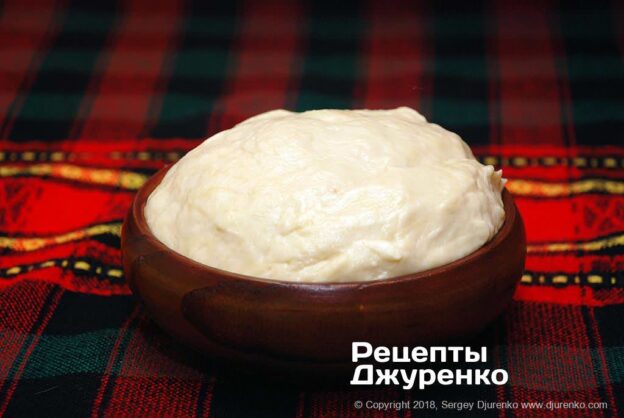
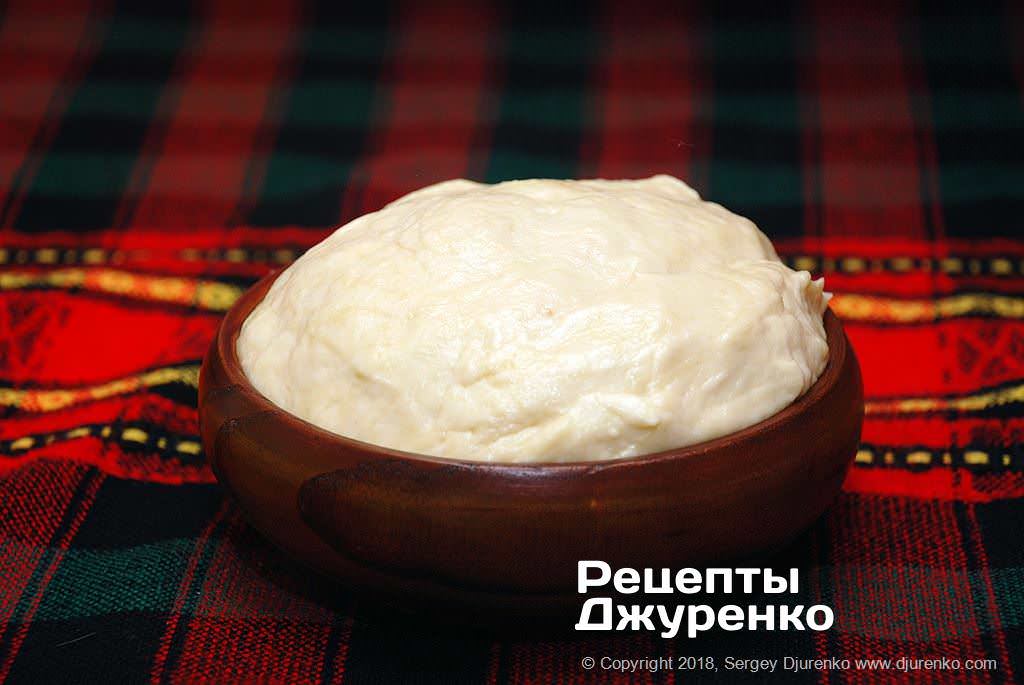
Knead a soft dough with olive oil and leave it under plastic wrap. The dough should stretch well, sag under its own weight and stick to your hands slightly. The flour mixture needs to be kneaded very well on the table until completely smooth. So that the bread does not turn out “dry”, work a little olive oil into the dough, literally 1 tbsp: just pour the oil over the mixture and knead it in thoroughly with your hands. Roll the finished dough into a ball and cover it with plastic wrap. Let it stand at room temperature while you prepare the filling. By the way, this dough rises quite well, although not very fast.
Filling
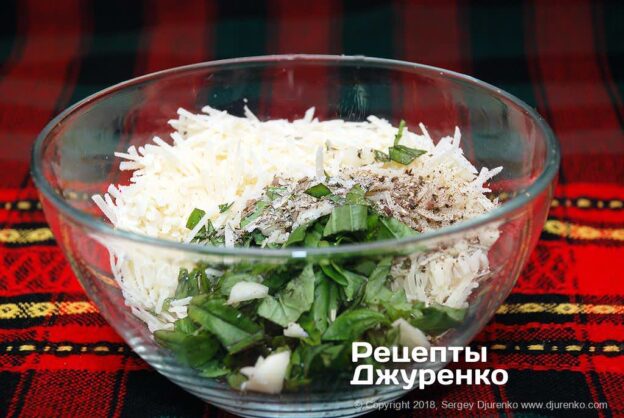
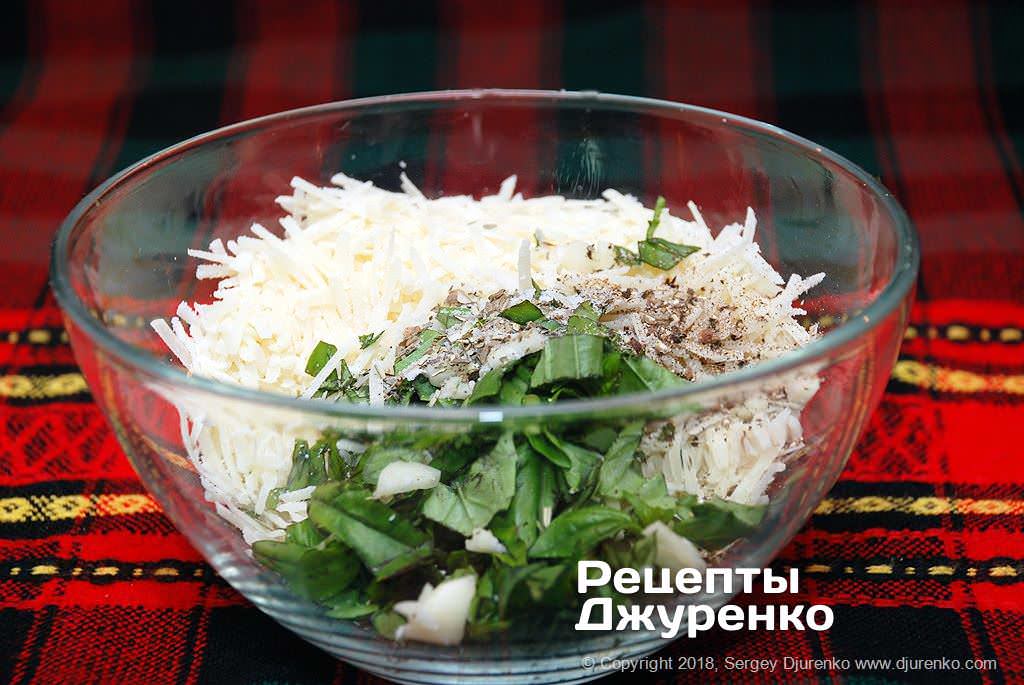
Make a sauce from basil, cheese and garlic. Just like in a pesto recipe, wash the green basil sprigs and dry them. Pull all the leaves off the sprigs, chop them roughly with a knife and put them in a blender or chopper. Peel 1-2 cloves of garlic and add them to the blender, add salt and pepper, and a pinch of dried oregano. Grate a piece of Parmesan or Grana Padano and add it to the blender too.
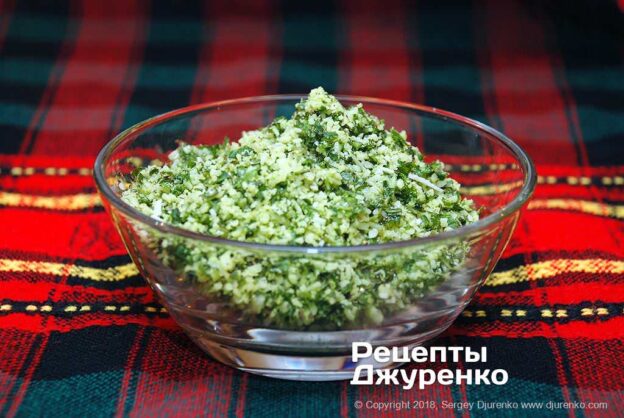
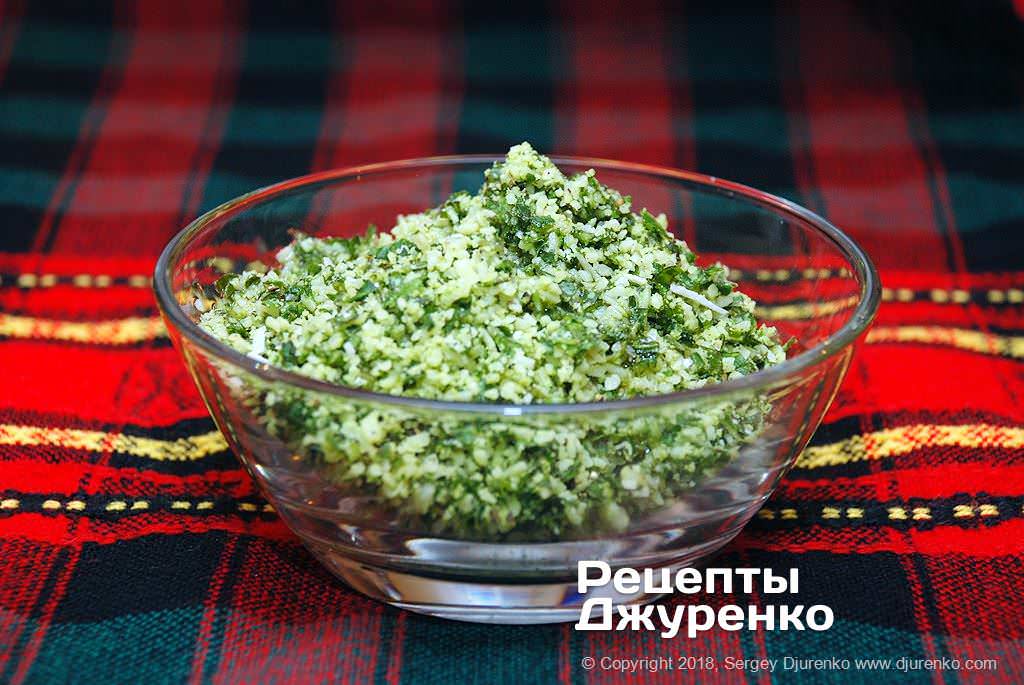
Chop the cheese, basil and garlic to the texture of coarse sand, so that the particles are clearly visible. The mixture will have a pleasant emerald shade. Add 1 tbsp of olive oil and stir: you will get a very thick paste that spreads well on the dough.
Assembly
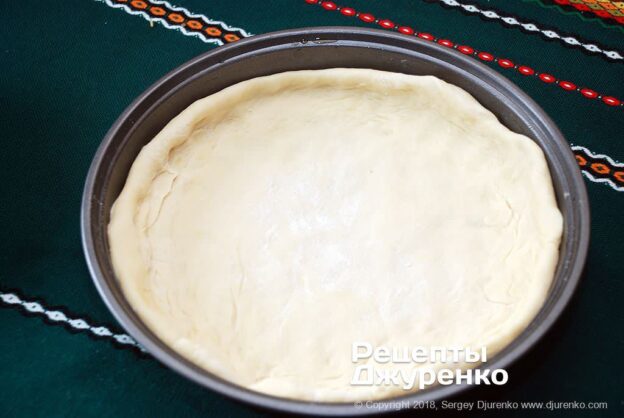
Put the dough in a greased pan with a rim. Grease a metal baking pan with vegetable oil. Pinch off a piece of dough the size of a large chicken egg and set it aside for now; it is for the “covering” part of the bread. Flatten the rest of the dough by hand on a floured table into a round flatbread slightly larger than the pan. Put the dough in the pan, spread it over the bottom, trying to keep the thickness even, and shape a rim 3-4 cm high around the edge.
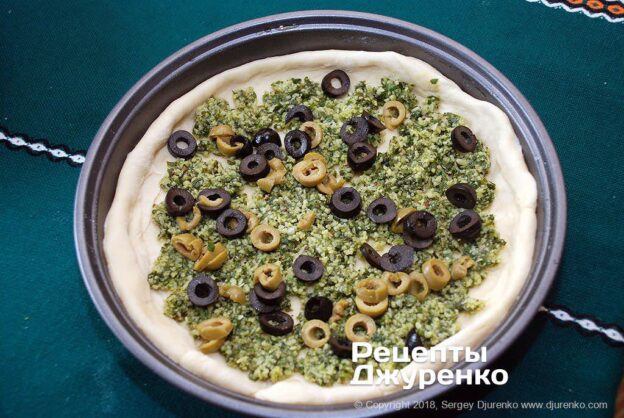
Spread the sauce over the dough and arrange the olives. The sauce is quite thick and does not run on its own, so it has to be spread, distributing it evenly. Pit the olives if they have pits, and slice them into rounds, cutting each olive into 4-5 pieces. The olives can be black or green, as you like, but it is better if they are not stuffed. Arrange the olives over the cheese sauce and press the filling down lightly with your palms.
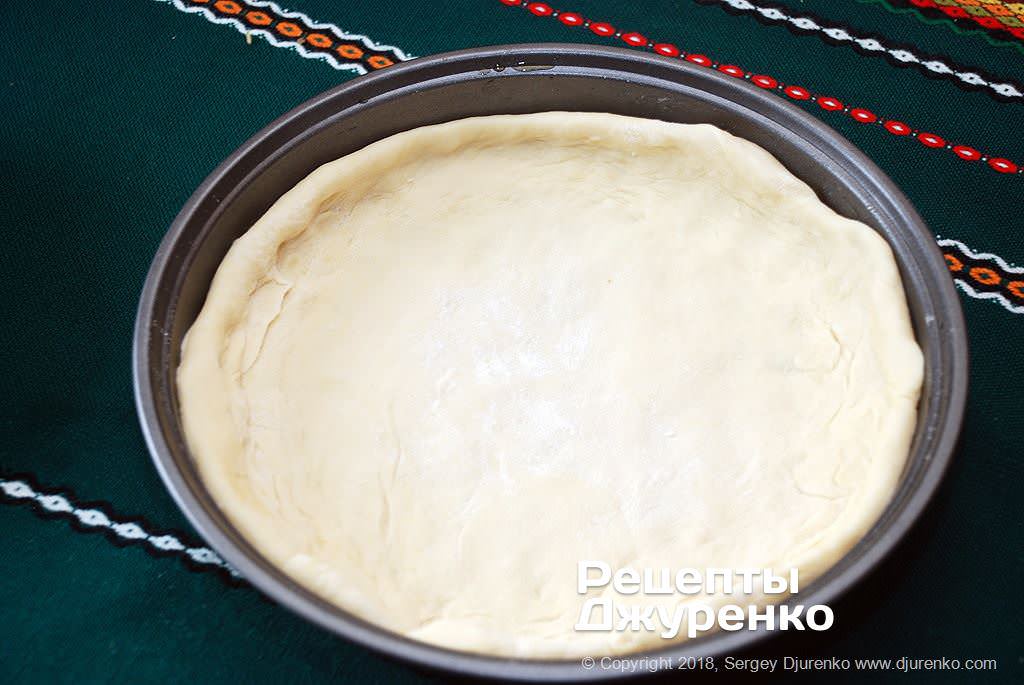
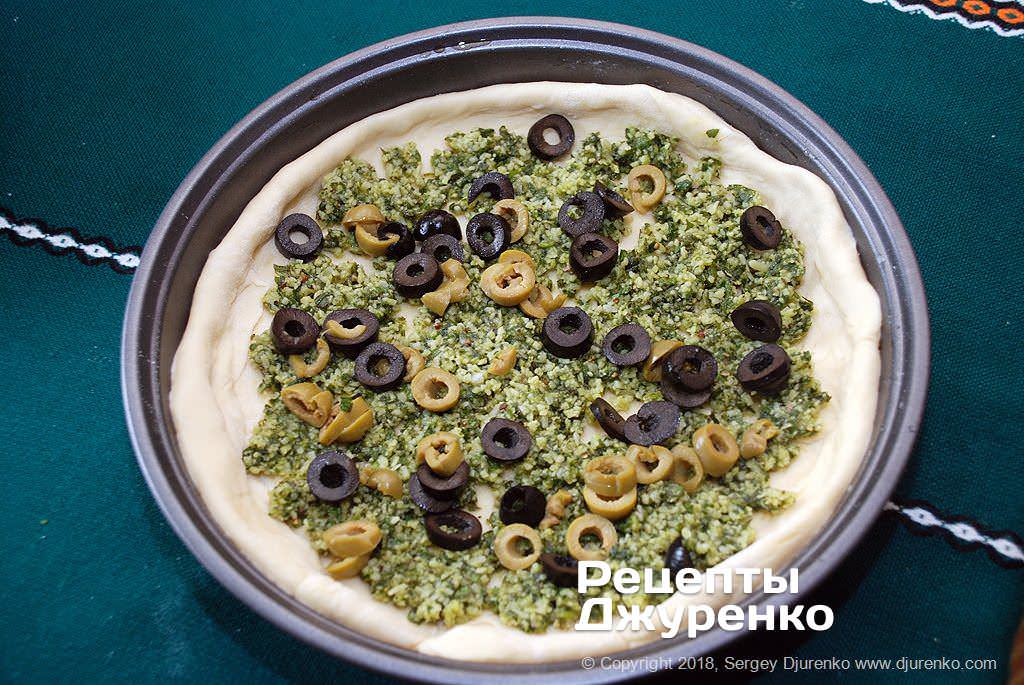
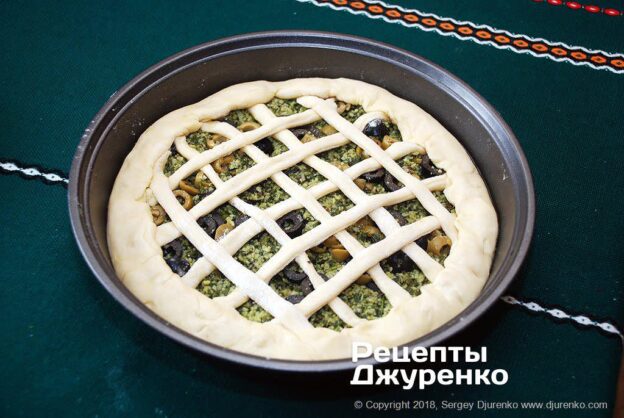
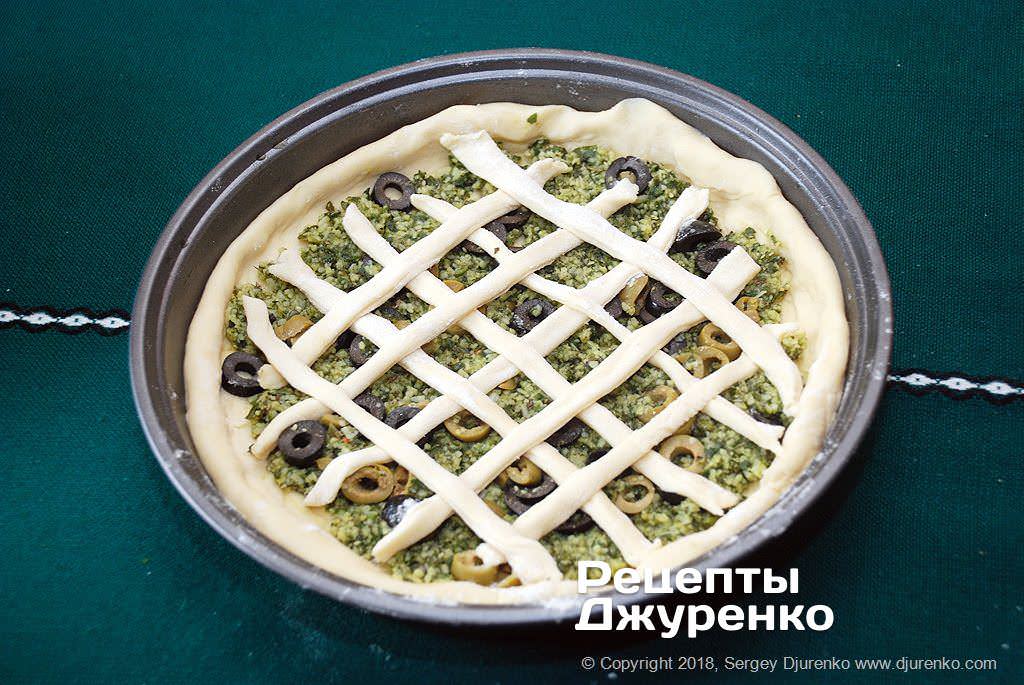
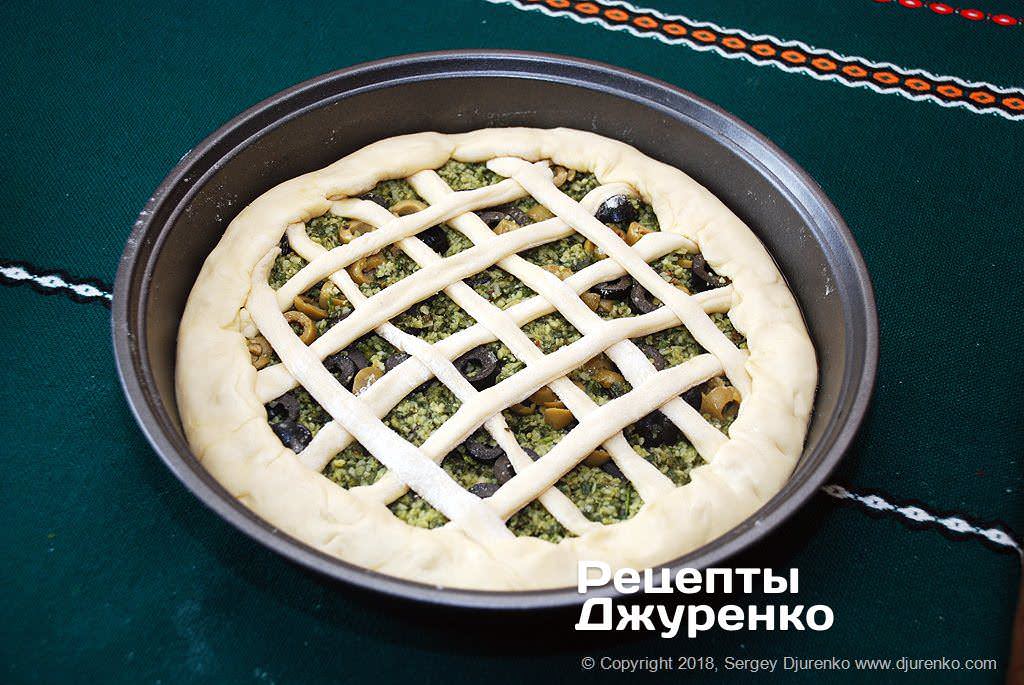
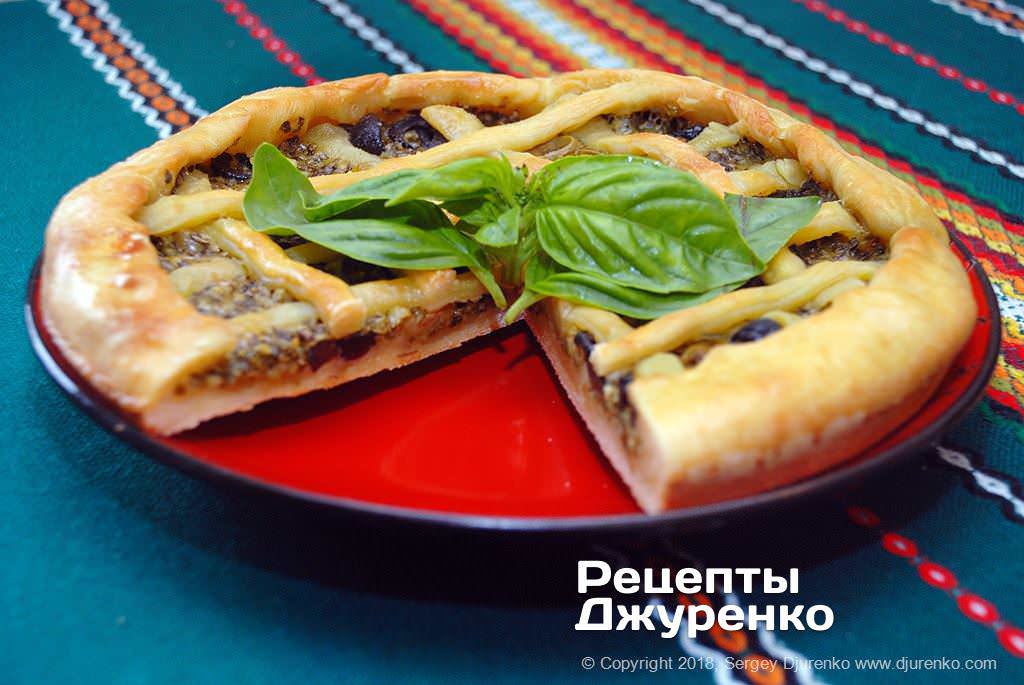
Cover the filling with a lattice of dough strips. Roll the reserved piece of dough into a thin rectangle and cut it into strips 10-12 mm wide. Lay the strips over the filling in a net or lattice pattern, from rim to rim. Fold the edge of the base dough from the rim over the focaccia so that the ends of the strips are covered, and press the dough very lightly and carefully around the edge.
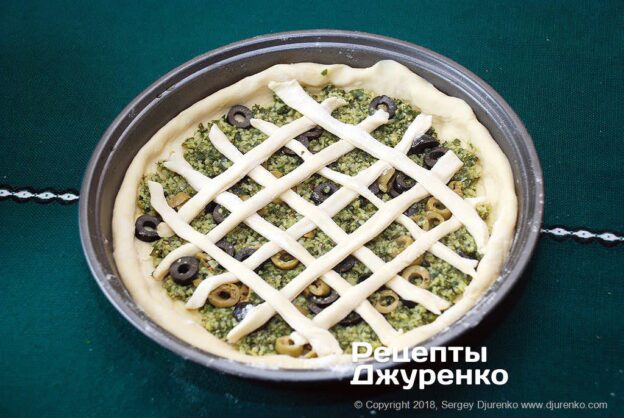
Let the focaccia stand under a towel for 30 mins. The dough will rise a little. If you like and have the time, you can make a pattern or decorations out of dough. And finally, if you prefer the bread to be golden brown, like a vatrushka, brush the top of the dough with beaten egg before baking, just a little.
Baking
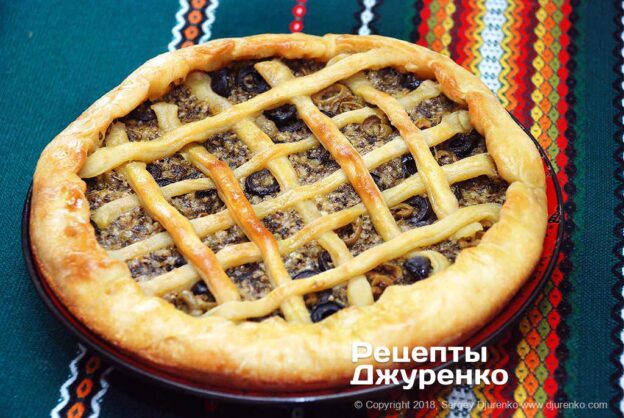
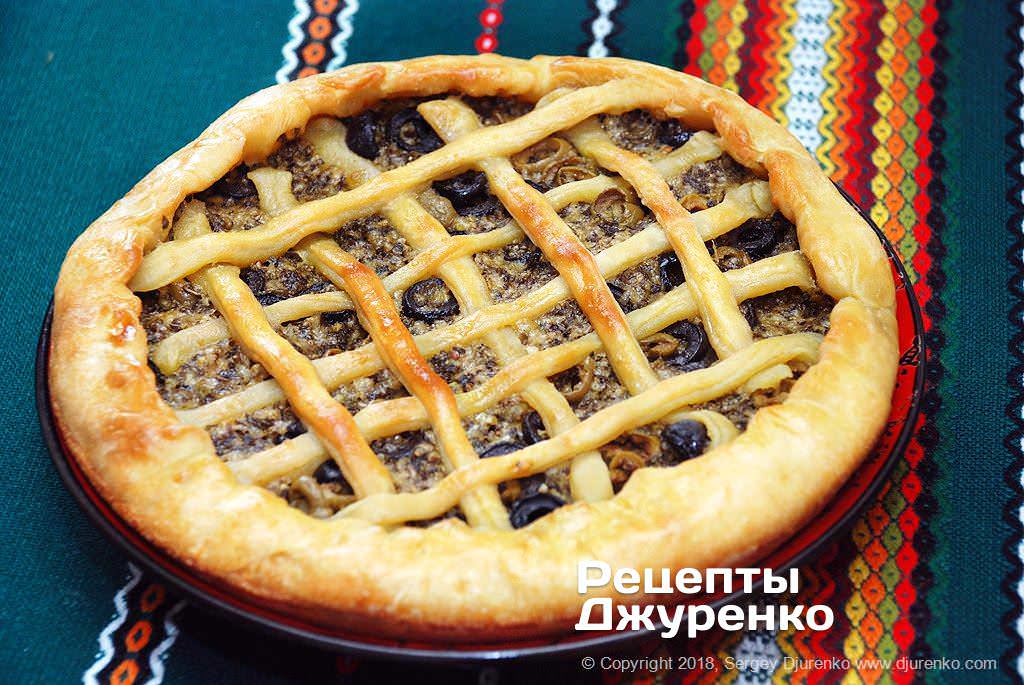
Bake the focaccia in an oven preheated to 180°C for 30 mins, until the dough is baked through and the top starts to brown. Put the pan into an already hot oven. If the bread is not done in that time, you can add more; it is convenient to check doneness with a wooden skewer, which should come out dry. It is important to watch the bottom of the bread, as it may start to burn.
Serving
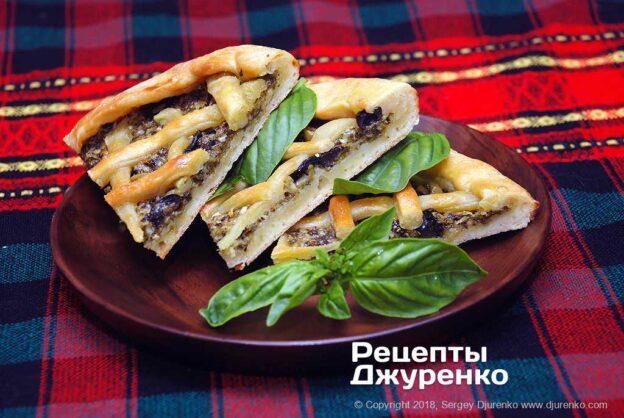
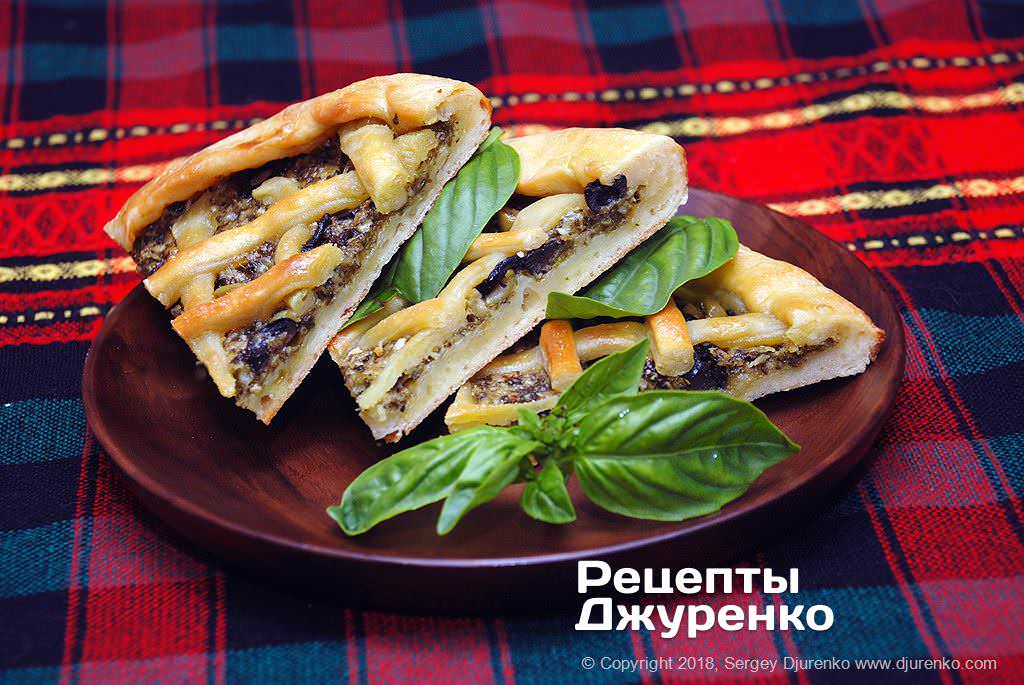
Let the focaccia cool and cut it into 6-8 pieces. Take the finished bread out of the oven and move it to a wooden board or pizza peel. The bread must cool. Once cooled, cut it with a sharp knife and put the pieces on a plate or in a wicker basket lined with a paper napkin.
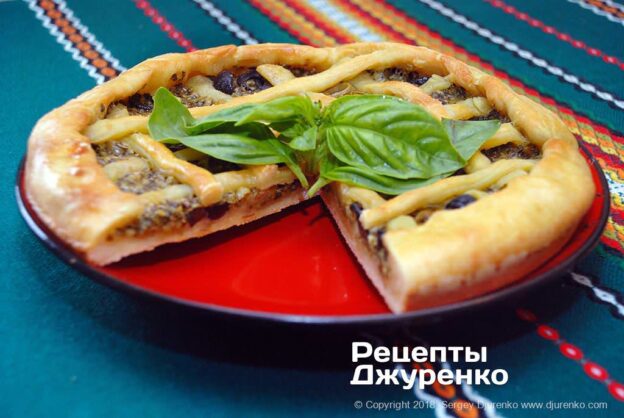
Savory baking with olives is served at lunch instead of bread. It goes very well with young cabbage soup or a light green salad of young vegetables. I must say that this tasty filled bread can be eaten with tomato juice, and you only come to your senses at the last moment. Enjoy!
Calories and macros
245 kcal
Serving ≈ 80 g
- Protein8 g14% of kcal
- Fat8 g30% of kcal
- Carbs34 g57% of kcal
100 g310 kcalProtein 10.3 gFat 9.9 gCarbs 42.7 g
Calculated from the recipe ingredients, excluding salt and spices. Data: USDA and Matvaretabellen.