Pork Schnitzel
Ingredients
2 servings
For the meat
- Pork slices (250 g) 2
- Salt, black pepper, dried onion and garlic, sweet paprika to taste
For the breading
- Flour 3–4 tbsp (29–39 g)
- Eggs 2
- Water 2–3 tbsp
- Breadcrumbs or breading mix 0.5 cup (50 g)
For frying
- Vegetable oil 4 tbsp
- Butter 30 g
Step-by-step recipe
Pounding the meat
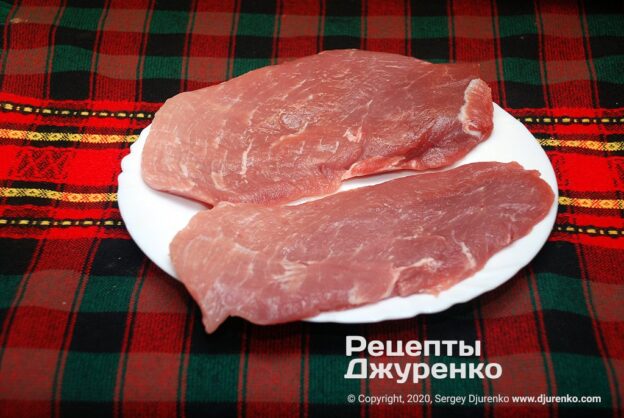
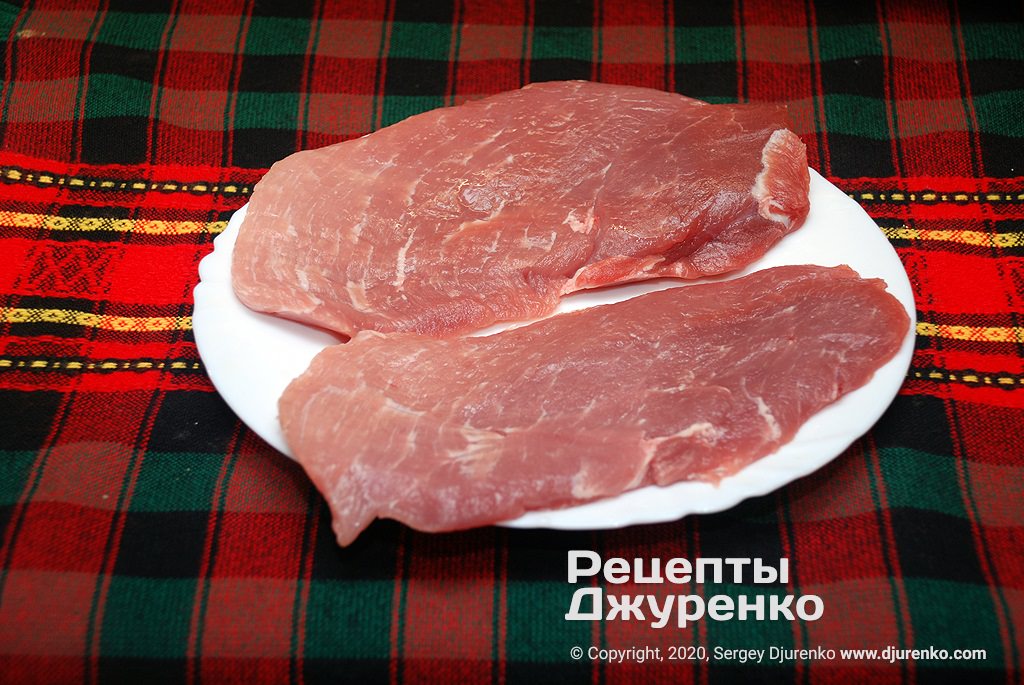
For pork schnitzel to turn out right, it’s crucial to start with good meat. Luckily, there’s plenty of choice nowadays. Interestingly, supermarket shoppers buy pre-sliced cuts less often than whole pieces, so the slices are almost always available.
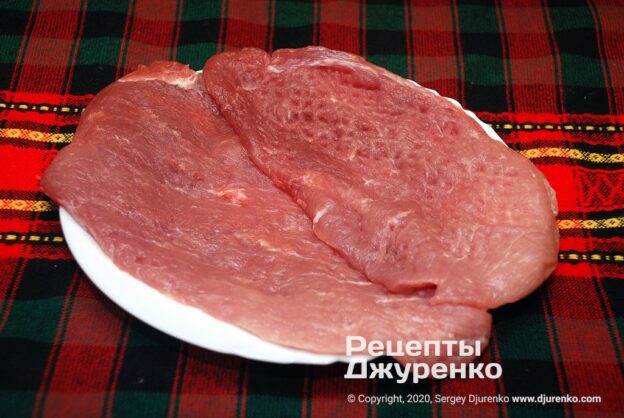
Buy two slices of lean pork, about the size of an adult’s palm or even a bit bigger. They can be about 1 cm thick. As a rule, we don’t freeze meat; we prefer to cook it right away.
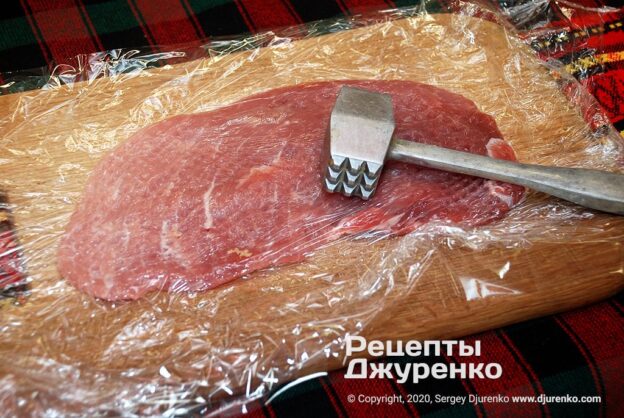
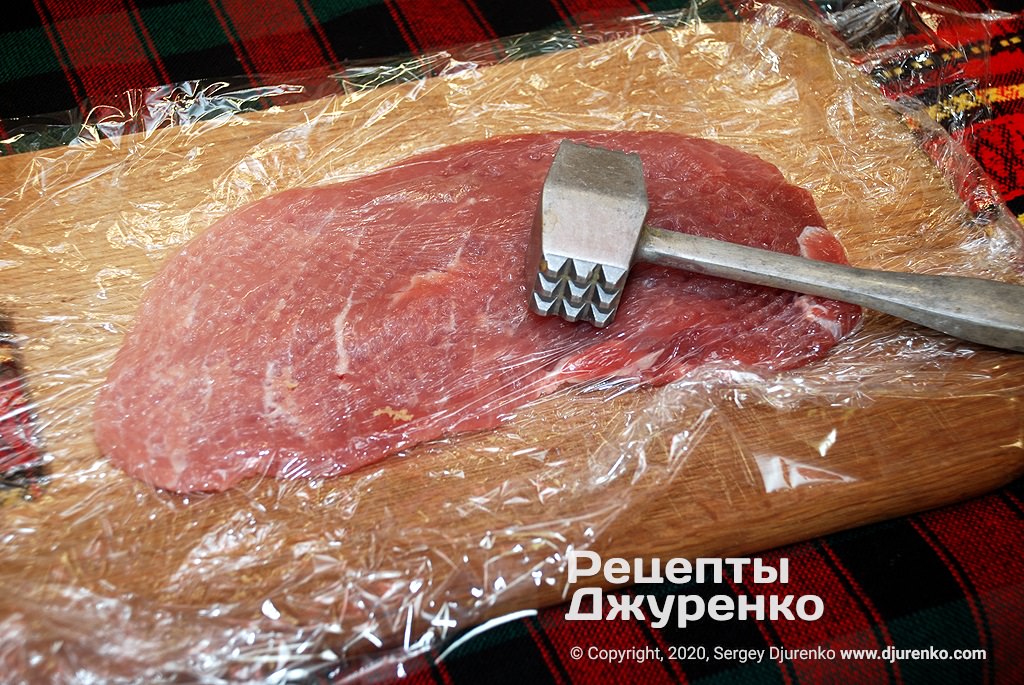
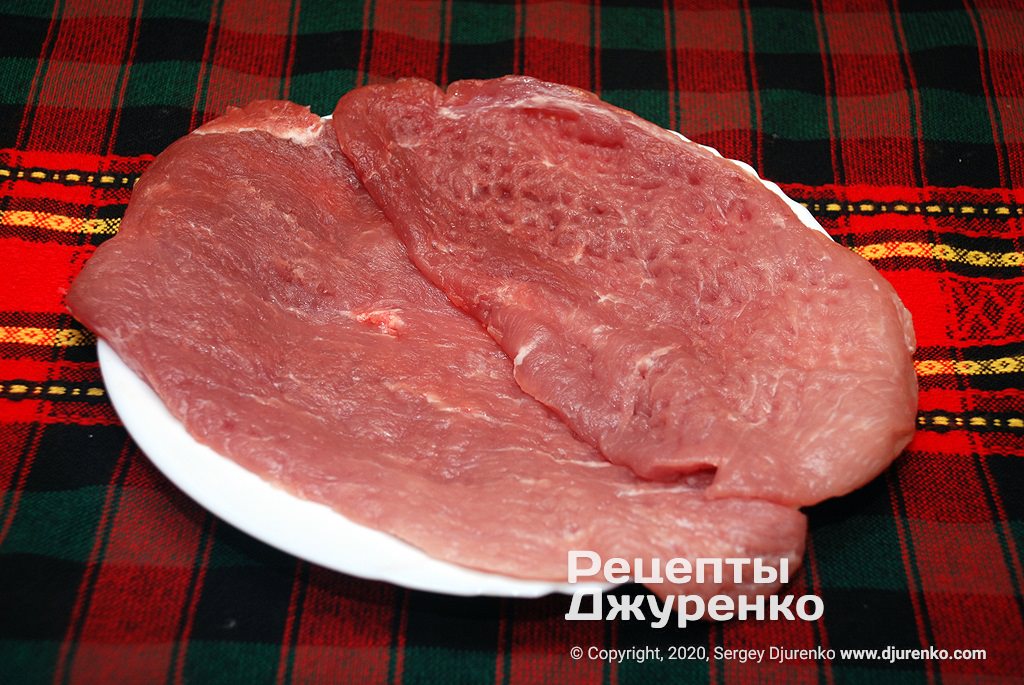
The most important step is pounding the meat. You’ll need a cutting board and a meat mallet. By the way, to avoid scaring the neighbors and the cats, put a folded towel under the board to muffle the sound. For convenience and to damage the meat as little as possible, cover the board with plastic wrap, lay the pork slice on it and cover with another sheet of wrap. Pound the meat lightly and evenly. It will spread out and get thinner, 3–4 mm, no more. That’s much thinner than pork for chops.
Put the pounded pork on a plate. Season the pieces with salt and pepper. Sprinkle the meat with seasoning. Recipes often suggest rubbing the meat with minced onion and garlic. I use a homemade meat seasoning with sweet paprika, chili and herbs, granulated garlic and sometimes dried onion. In my view, that’s enough to give pork schnitzel a delicate flavor and aroma.
Breading
To bread the meat, you can use store-bought breadcrumbs or grate a stale white loaf. This time, as it happens, I bought a ready-made breading mix with breadcrumbs, aromatic herbs and spices.
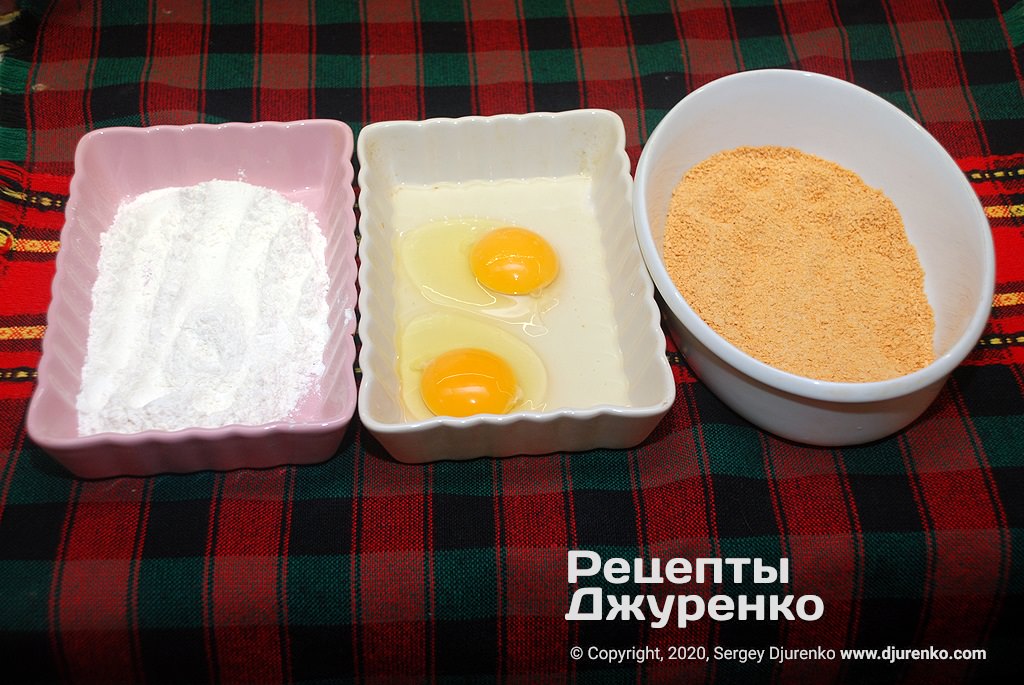
For convenience, set out three shallow plates or trays. Put 2–3 tbsp wheat flour (20–29 g) in the first. Crack two eggs into the second, add 2–3 tbsp water and beat well with a fork. Pour your chosen breading into the third.
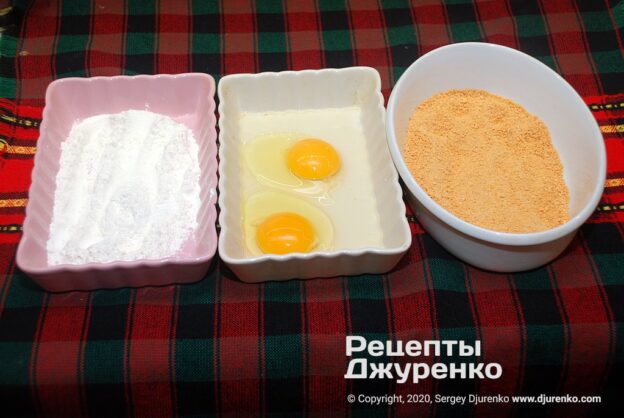
Dredge the meat thoroughly in flour, leaving no bare spots; that guarantees the egg and breading will stick. Then dip the meat in the egg and water mixture, and coat it thoroughly in the breading. If needed, sprinkle any bare patches so the coating is even.
Frying
If the meat is well and thinly pounded, most likely only one piece will fit in the skillet, so you’ll have to fry in two batches. Unless, of course, you have two skillets.
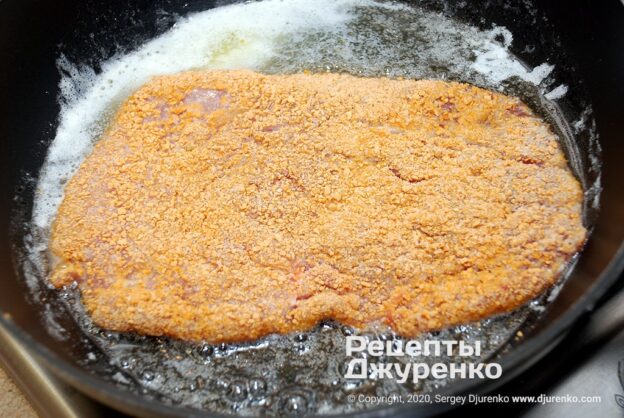
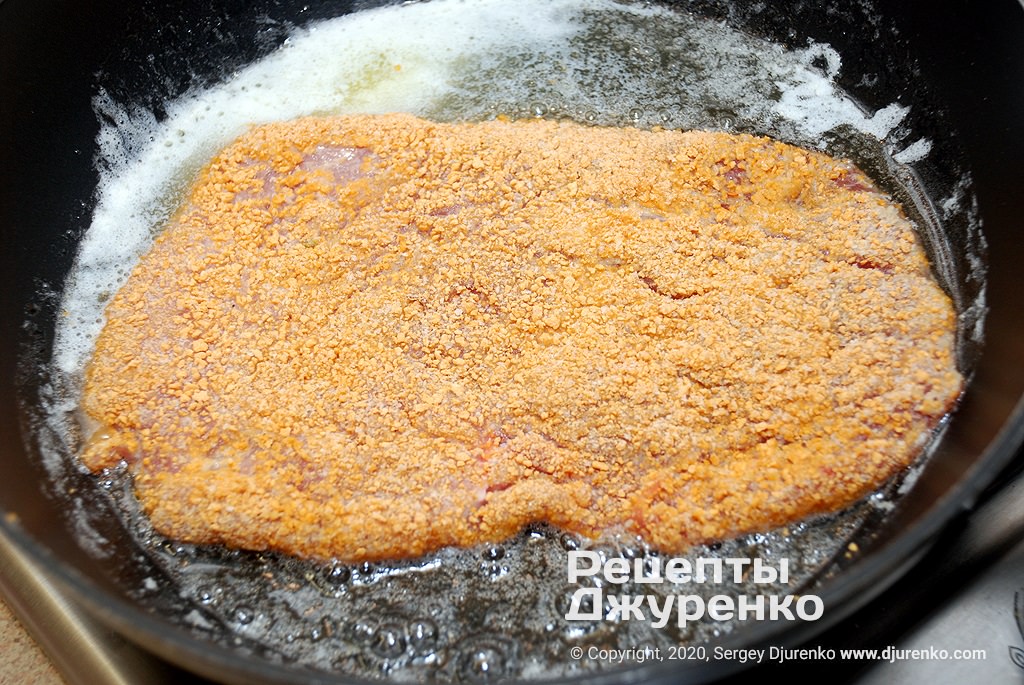
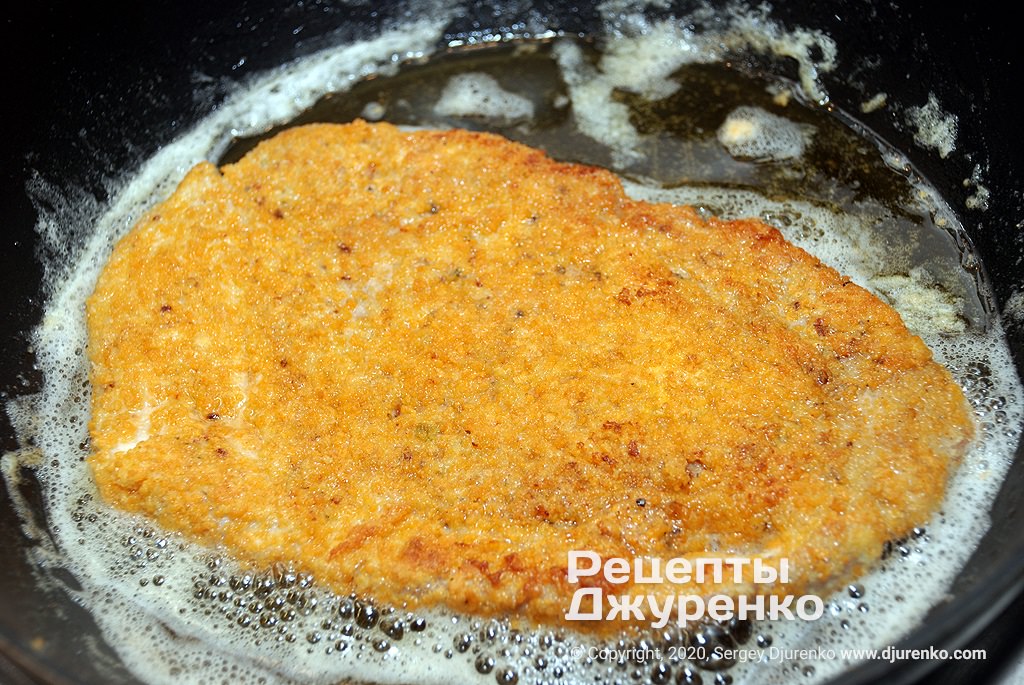
For frying, I mixed 3 tbsp vegetable oil with a knob of butter, which gave a fragrant blend. Schnitzels are supposed to be fried swimming in hot fat, almost deep-fried, so you need enough of it. Lay the breaded pork in the hot fat. I fried it for 1.5–2 minutes over medium-high heat, then flipped it, fried for the same time and flipped again.
To keep the breading from burning, it’s best to flip the schnitzels in the oil every so often. By the way, and this matters, hot fat tends to spatter if a drop of moisture gets into it. Be careful!
As soon as the breading turns crisp and deep golden, the pork schnitzel is done. The meat is thin enough that it doesn’t take long to cook through. In total it took me about 8 minutes to get the result I wanted.
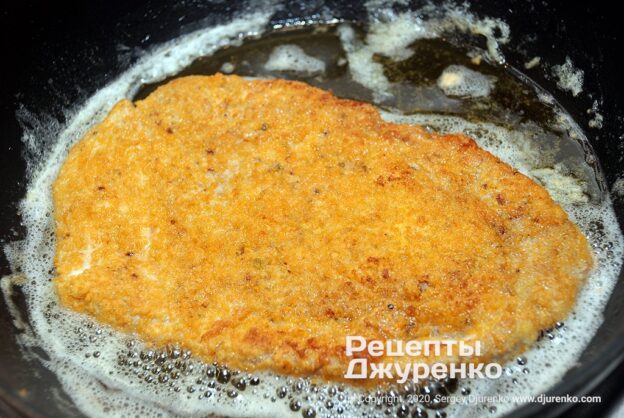
If you fry one schnitzel and then the other, it’s best to use fresh fat for the second. Butter burns easily and darkens. If after frying the breading seems too greasy, lay the meat on a paper towel for a few minutes to soak up the fat.
Serving
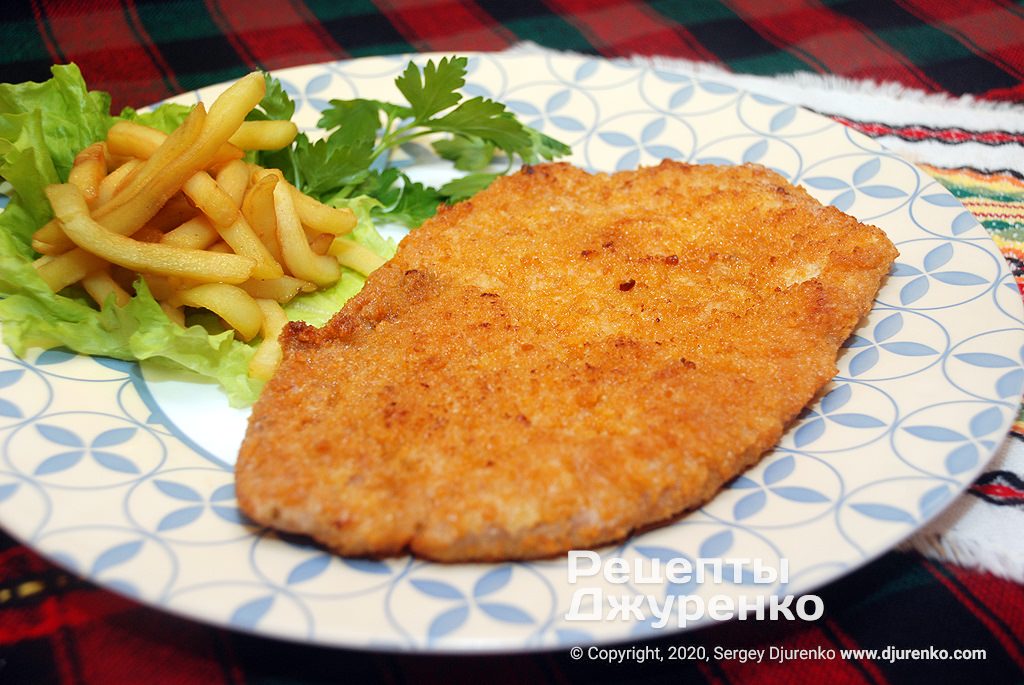
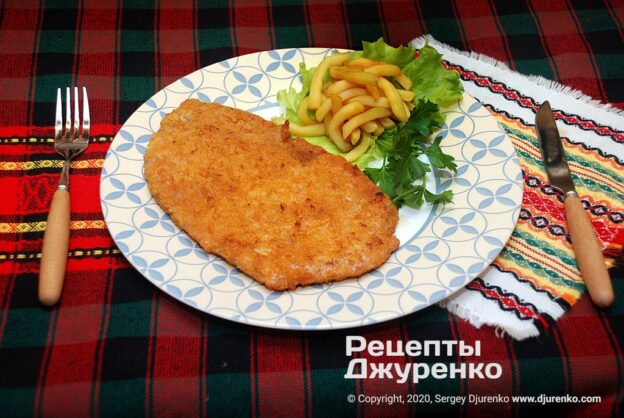
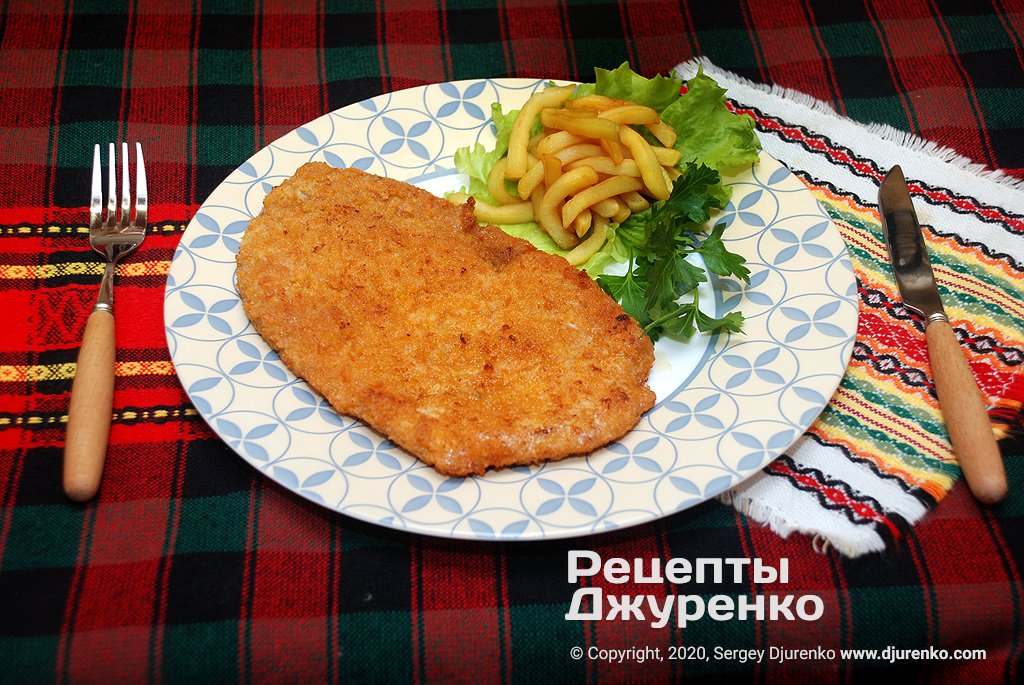
Pick a big plate for serving. Or rather, a huge one. A pork schnitzel, like any other, is supposed to be bigger than the plate. It’s a convention, but it looks impressive on the table. We served it with deep-fried potatoes, a few herbs and a hearty appetite!
Calories and macros
1175 kcal
Serving ≈ 300 g
- Protein55 g19% of kcal
- Fat91 g71% of kcal
- Carbs30 g10% of kcal
100 g388 kcalProtein 18 gFat 30.1 gCarbs 9.8 g
Calculated from the recipe ingredients, excluding salt and spices. Data: USDA and Matvaretabellen.
How did you like this recipe?
To Get It Right
How to pound the meat
Pound the meat for the schnitzel through plastic wrap, lightly and carefully, so it doesn’t tear: a slice about 1 cm thick should become 3–4 mm, no thicker. A folded towel under the board muffles the noise.
To make the breading stick
- dredge the schnitzel in flour all over, with no bare spots – the flour holds the egg and crumbs;
- add 2–3 tbsp water to the eggs and beat well;
- sprinkle breading over any bare patches.
What to fry in
A mix of vegetable oil and butter gives a nice aroma, but butter darkens quickly – make a fresh mix for the second schnitzel. You need plenty of fat: the schnitzel should almost swim in it.
Have your own trick for this recipe?
Questions and answers
How long to pan fry pork schnitzel?
About 8 minutes over medium-high heat: 1.5–2 minutes per side, flipping several times, until the breading is crisp and deep golden. Thinly pounded meat doesn’t need longer.
What cut of pork is used for schnitzel?
Lean slices from the leg or shoulder – stores often sell them as escalopes. Generally, meat from any part of the carcass can be pounded thin.
What meat is schnitzel made from?
It’s a thinly pounded slice of breaded meat fried in plenty of fat. Classic Wiener schnitzel is made from veal, but pork or chicken are often used.
What is the difference between a schnitzel and a chop?
Meat for schnitzel is pounded much thinner, down to 3–4 mm, so it’s large, almost plate-sized, and fries in just a few minutes. A chop is left thicker.
How to cook pork schnitzel in the oven?
Arrange the breaded schnitzels on a well-greased baking sheet, drizzle with vegetable oil to moisten the breading, and bake at 200–210°C until golden, about 15–20 minutes.