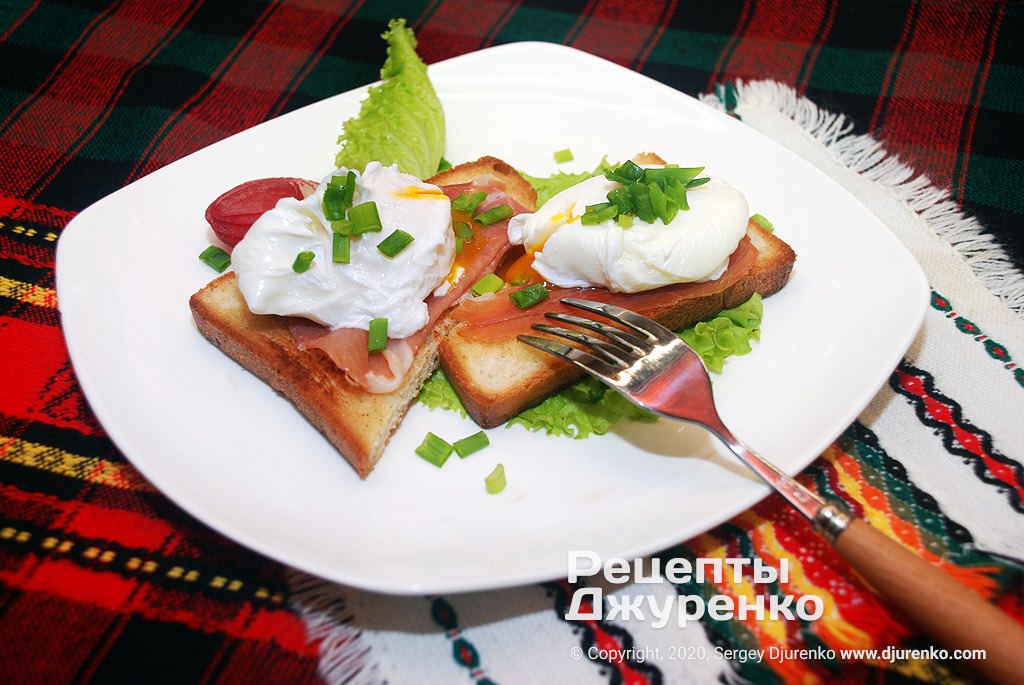
Poached Eggs with Ham on Toast
Ingredients
1 serving
- Fresh hen’s eggs 2
- Toast bread 1 slice
- Ham, prosciutto or jamón 30 g
- Lettuce 3-4 leaves
- Butter 1 tsp
- Radish, tomato, cucumber, green onion, parsley optional
- Wine vinegar 1 tbsp
- Salt, black pepper to taste
- Water for boiling
Step-by-step recipe
Preparation
Poached eggs cook in just a few minutes. They need to go straight onto a prepared plate and be served for breakfast, so get everything ready and plate up in advance.
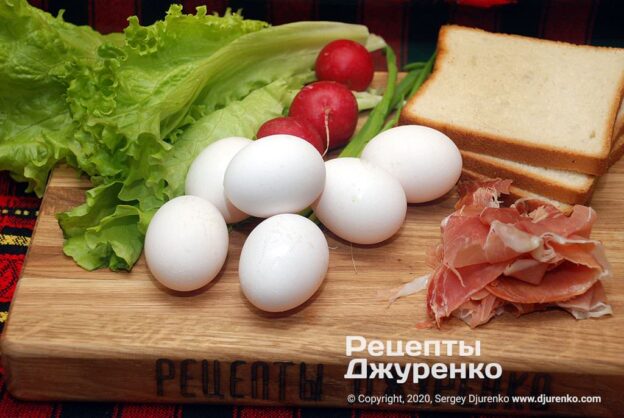
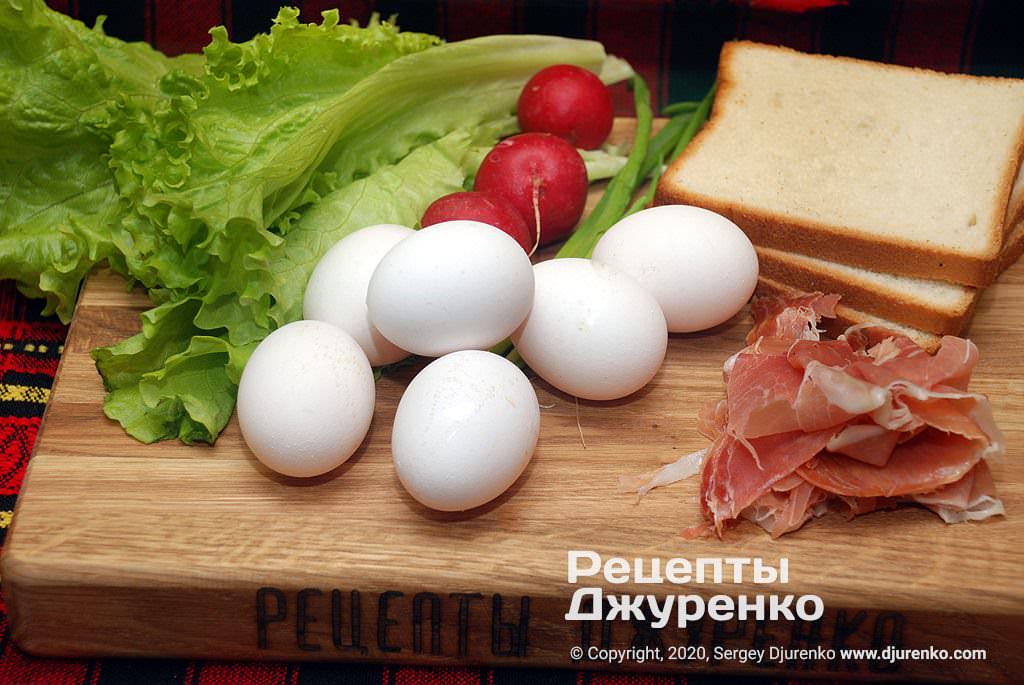
Prepare the ingredients: fresh hen’s eggs, bread, herbs, vegetables, and the sauce if you are using one, so that everything is ready for quick cooking. Wash the egg shells beforehand.
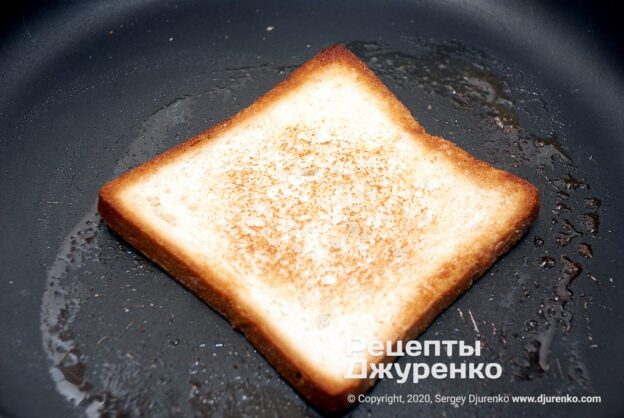
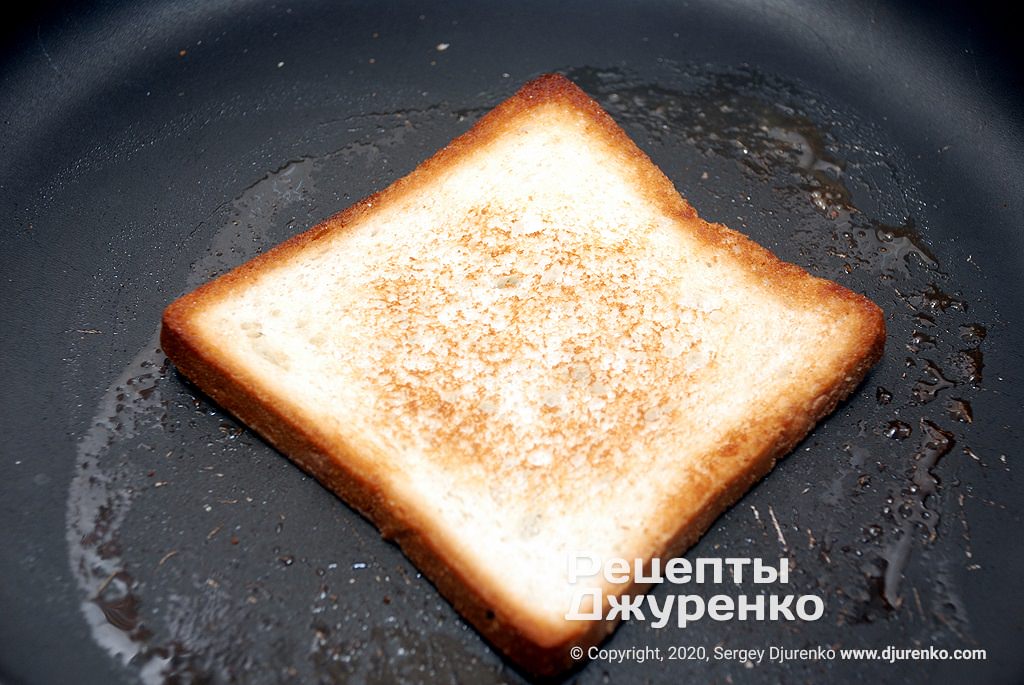
Fry the bread. Put a pot of water on the heat to come to a boil. Meanwhile, heat a flat-bottomed frying pan over medium heat. Grease the hot pan with butter, just a little, enough for a thin film. Fry a slice of thin toast bread on both sides until lightly golden.
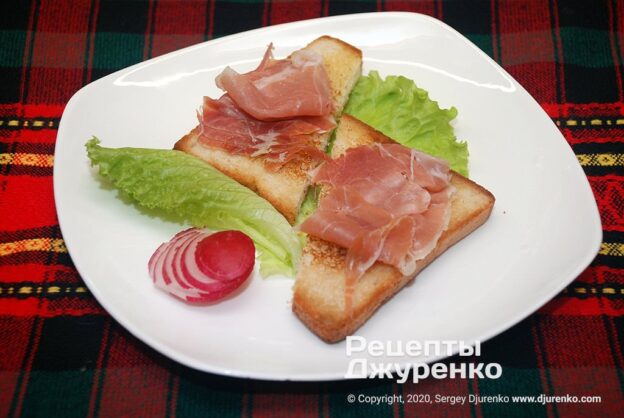
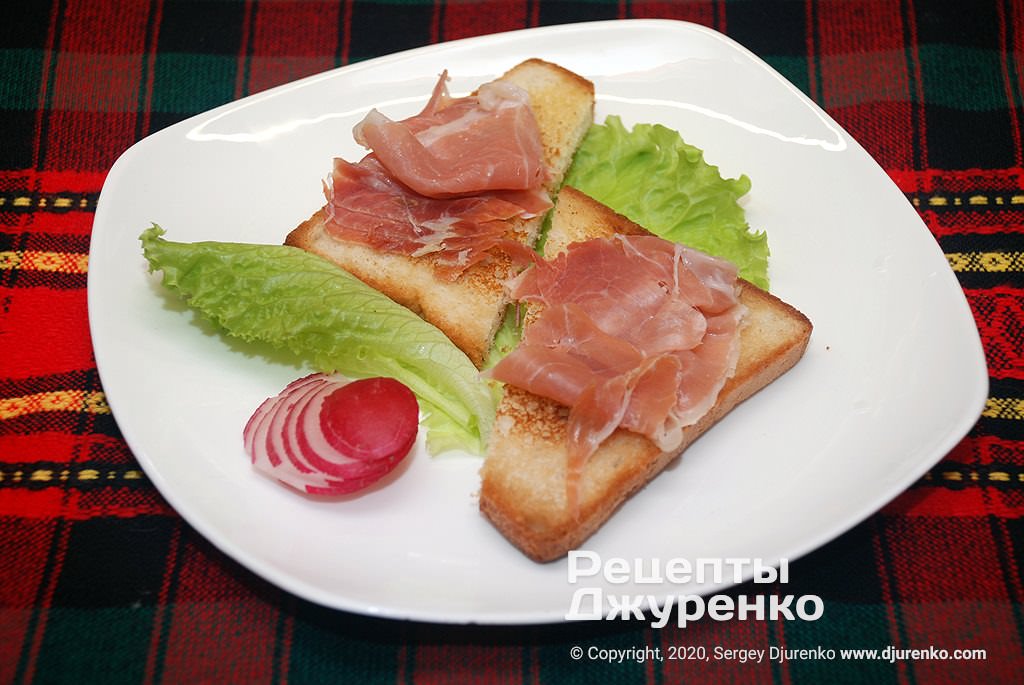
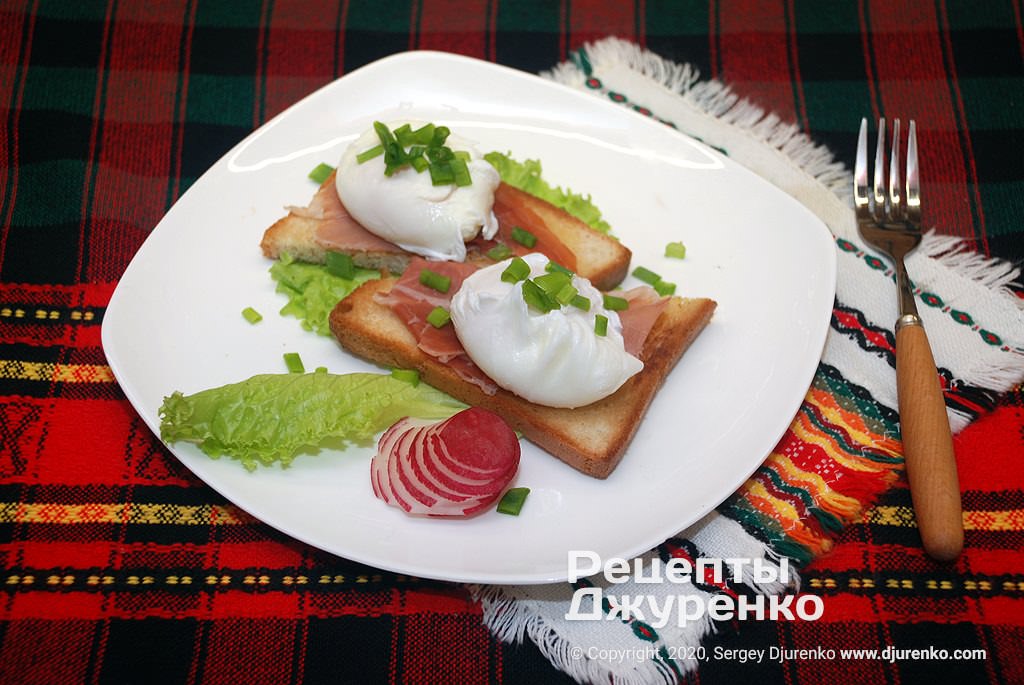
Prepare the plate. Arrange lettuce leaves on the plate and put the fried bread on top. Add sliced vegetables as you like: radish, cucumber, tomatoes. The main thing is that you enjoy it. If you are cooking two eggs per serving, you can cut the bread in half. It will act as a “stand”, so the number of pieces should match the number of eggs. Lay thinly sliced ham on the bread.
Poaching
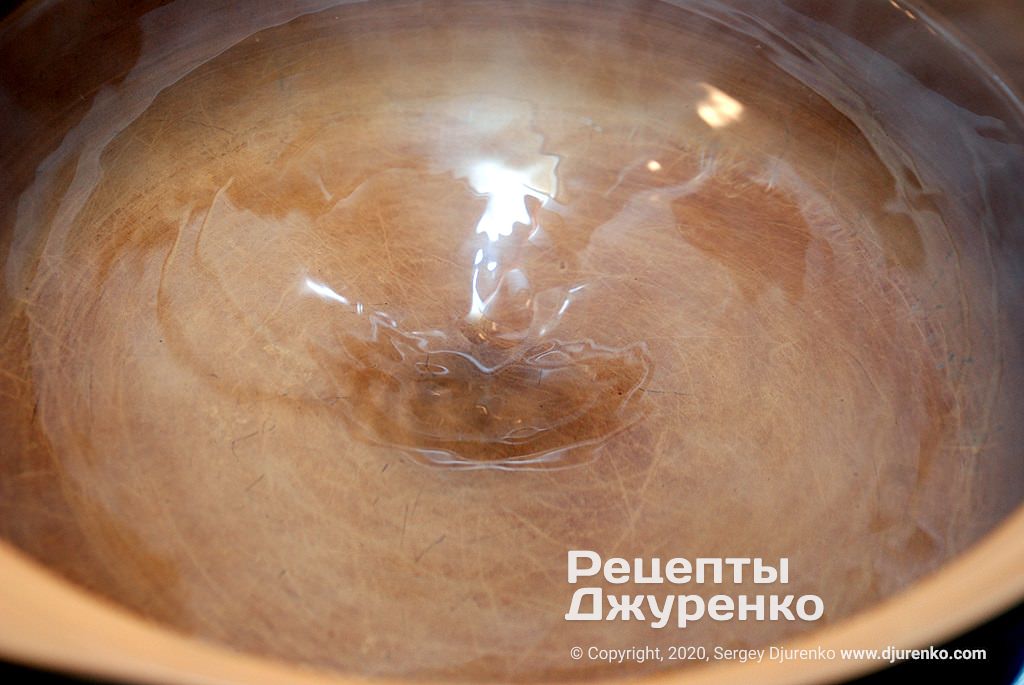
It is very important that the water stays just below the boil while you cook: there should be no bubbles or rolling, only barely visible traces of simmering.
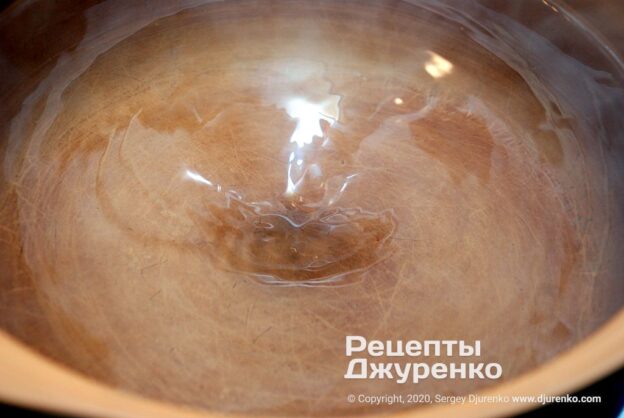
Prepare the water. By now the water in the pot should be boiling. Add 1 tbsp of vinegar. The acid is believed to help the egg white set quickly, so it does not spread out in flakes. You can salt the water a little, but it is not essential.
Create a small whirlpool in the hot water. This is the most important part of the usual technique. To do this, take the pot off the heat for a moment so that the boiling stops. Put it back and turn the heat to low. By the way, you can also calm the boil by adding 1 tbsp of cold water. You can make the vortex with a small spatula: simply stir the hot water in a circle in one direction, without hurrying. This creates a swirl with a funnel in the middle. It is the key moment, so it is worth practicing.
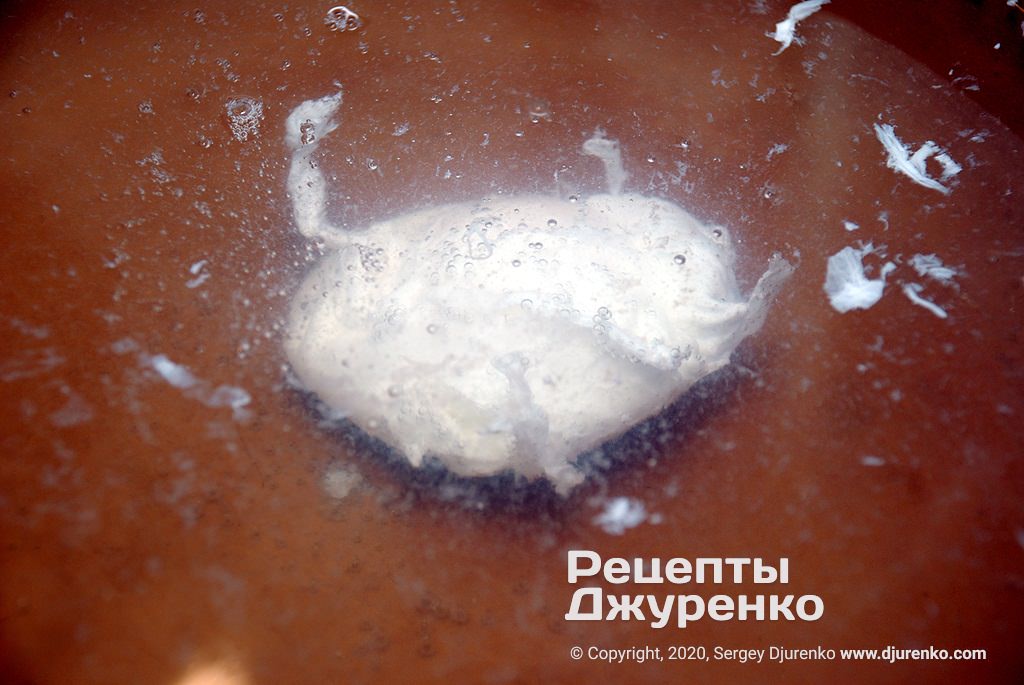
Pour the egg into the center of the funnel. First crack the egg into a small cup or ramekin and make sure there are no shell fragments. Create a gentle whirlpool in the hot water and, in one smooth motion, pour the egg into the very center of the funnel without splashing. The white will stay in the center and hold the yolk. Either way, a small amount of white will disperse in the water in flakes, and that is normal.
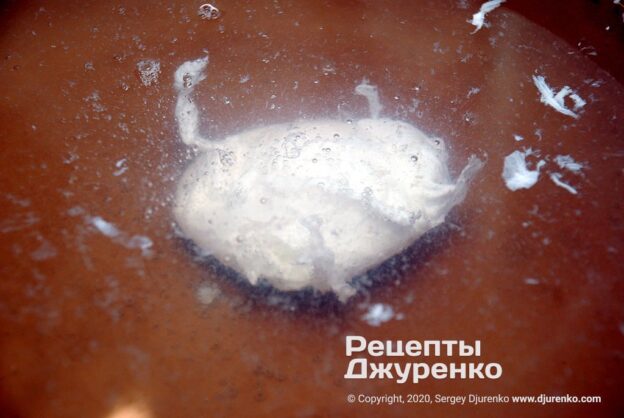
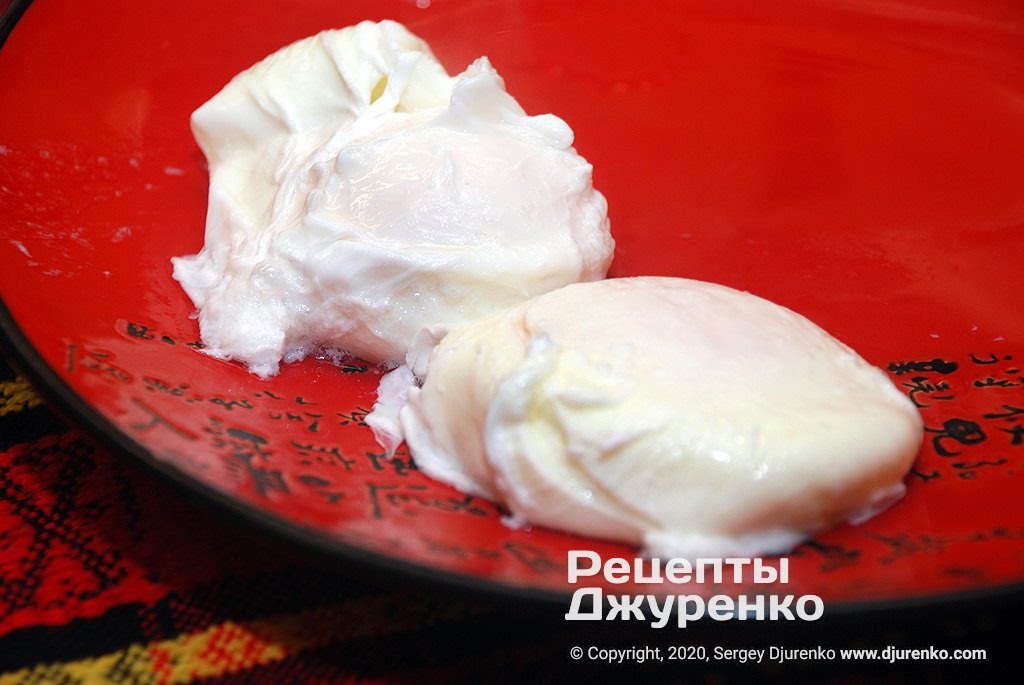
Cook each egg for 2-3 minutes, checking doneness by eye. When the white has set and the yolk is still runny but just starting to firm up on the outside, the poached egg is ready. Very carefully lift it out with a slotted spoon and wait a few seconds for the water to drain. Cook the second egg the same way.
Some people recommend dipping the finished egg into cold water. This stops the cooking from the residual heat.
Serving
Poached eggs are served with toasted bread, sometimes with ham, sauce and herbs.
Transfer the eggs to the prepared plate and sprinkle with herbs or finely chopped green onion.
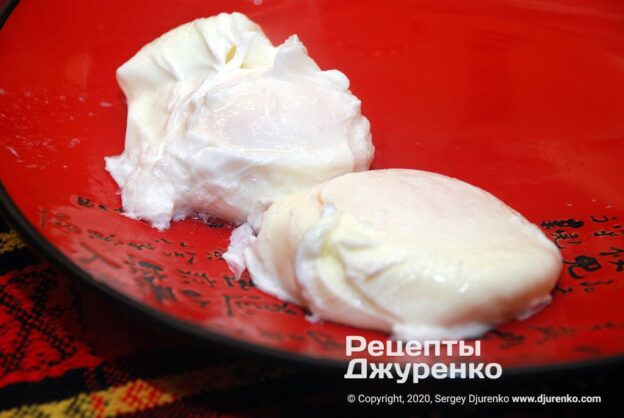
Most often the eggs are slit slightly so that the yolk runs out a little. You can add a bit of pepper. Serve immediately, and a luxurious breakfast is guaranteed.
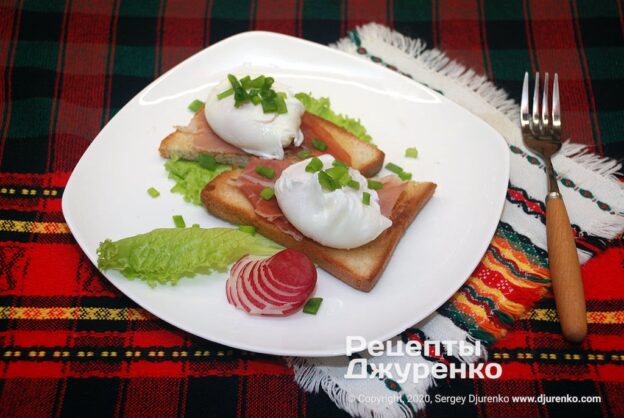
Among the known variations of this dish, the most interesting is probably “winemaker’s eggs”, where dry wine, white or red, is used instead of water. With red wine the dish turns pink. It is both tasty and fun, so give it a try. A simpler and more accessible method is to cook the eggs in a film of greased cling wrap. It is not by the rules, but it almost guarantees a result.
Calories and macros
1295 kcal
Serving ≈ 500 g
- Protein53 g17% of kcal
- Fat29 g21% of kcal
- Carbs189 g61% of kcal
100 g261 kcalProtein 10.7 gFat 5.8 gCarbs 38 g
Calculated from the recipe ingredients, excluding salt and spices. Data: USDA and Matvaretabellen.