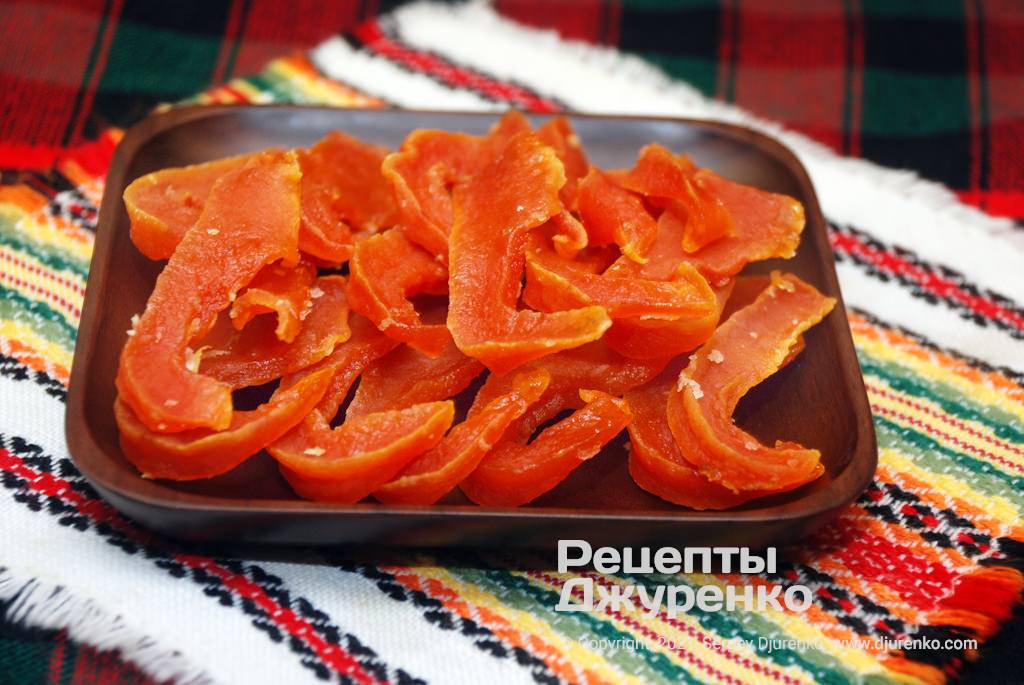
Candied Pumpkin: Homemade Recipe with Lemon and Lime
I remember from childhood how delicious homemade candied pumpkin was, especially when the pumpkin was ripe and a beautiful orange. The combination of flavor and color was unbeatable. First, it's a treat. Second, it's a great dessert for a pleasant afternoon. And third, it's a great way to decorate cakes and pastries.
The Slavic word for candied fruit, “tsukat”, may come from the word for sugar; in one European language it's “cukier”. Still, there are plenty of versions and theories. In the simplest case, it's pieces of fruit or suitable vegetables boiled many times in short bursts in sugar syrup, treacle or other sugary mixtures. The pieces are then dried to lose moisture.
Both fruit (apricots, pears, figs, tropical fruit and so on) and vegetables (pumpkin, zucchini, watermelon, even the rind, carrots and so on) are used. Candied fruit goes into doughs and fillings, for biscotti, for example, or into festive baking like panettone. It also makes a very pretty and effective decoration for pastries.
Besides the raw material, candied fruits differ in how they're made. Depending on the surface treatment, some have a firm dry crust of sugar syrup. They can be drained, or so-called glacé or crystallized: briefly dipped in hot syrup or left in it for a while, then dried. Different methods are said to produce different surfaces. But those are fine points that only interest professionals.
The ideal pumpkin has few seeds and lots of flesh. It should be ripe and sweet, with no astringency. Ideally it's brightly colored, which will show in the finished candy.
At home we make candied pumpkin by briefly boiling the pieces in sugar syrup. Then we steep them in the sweet liquid several times, bringing it back to a boil now and then and pouring it back over the pieces. That's how the pumpkin slices get hot-soaked with sugar. Then, when they're candied enough for us, we dry them in the oven as much as possible to drive off the moisture. That's all there is to it: nothing difficult, though it takes a while.
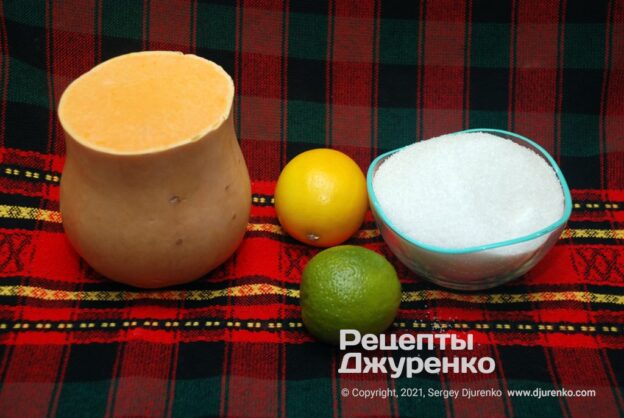
Ingredients
150 g
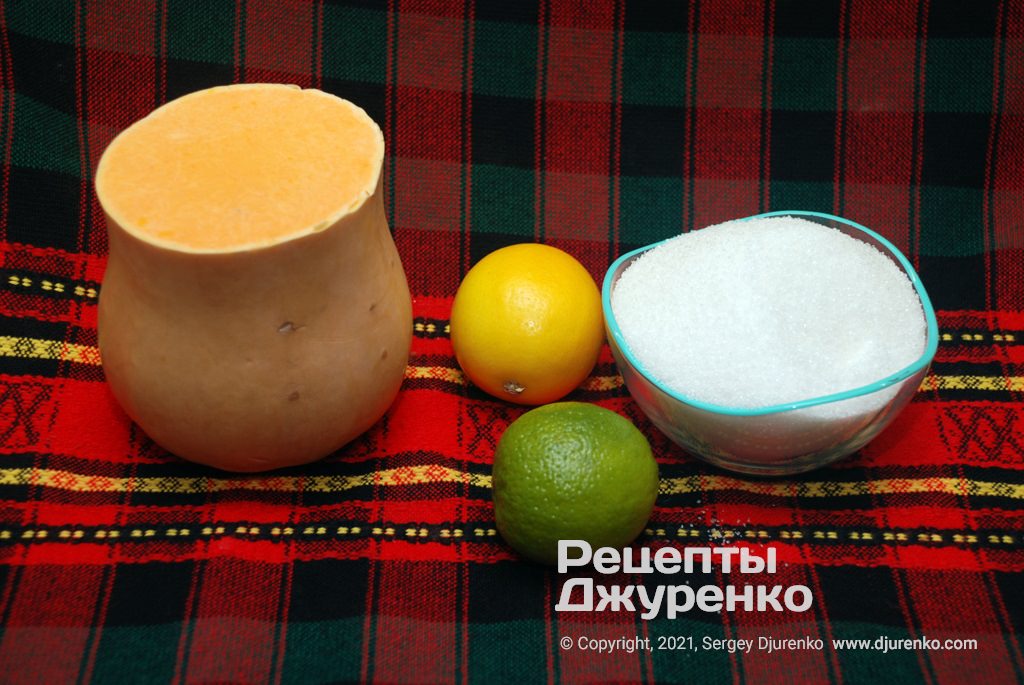
- Ripe pumpkin 0.5 kg
- Sugar 0.5 kg
- Zest (lime, lemon, orange) to taste
- Lemon juice to taste
Step-by-step recipe
- Finished candied pumpkin contains a lot of sugar; it's a sweet dessert. The sugar and low moisture keep microorganisms from growing, so the pieces keep for quite a while outside the fridge. Essentially, candying is a way of preserving with sugar. The method described in this recipe is close to crystallizing. All you need is a good pumpkin, sugar and a little citrus: lemon, lime.
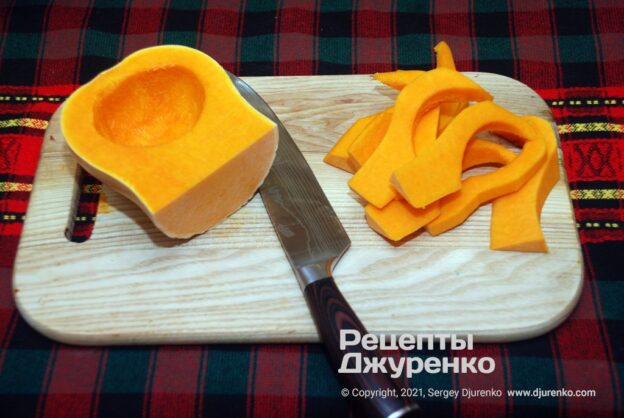
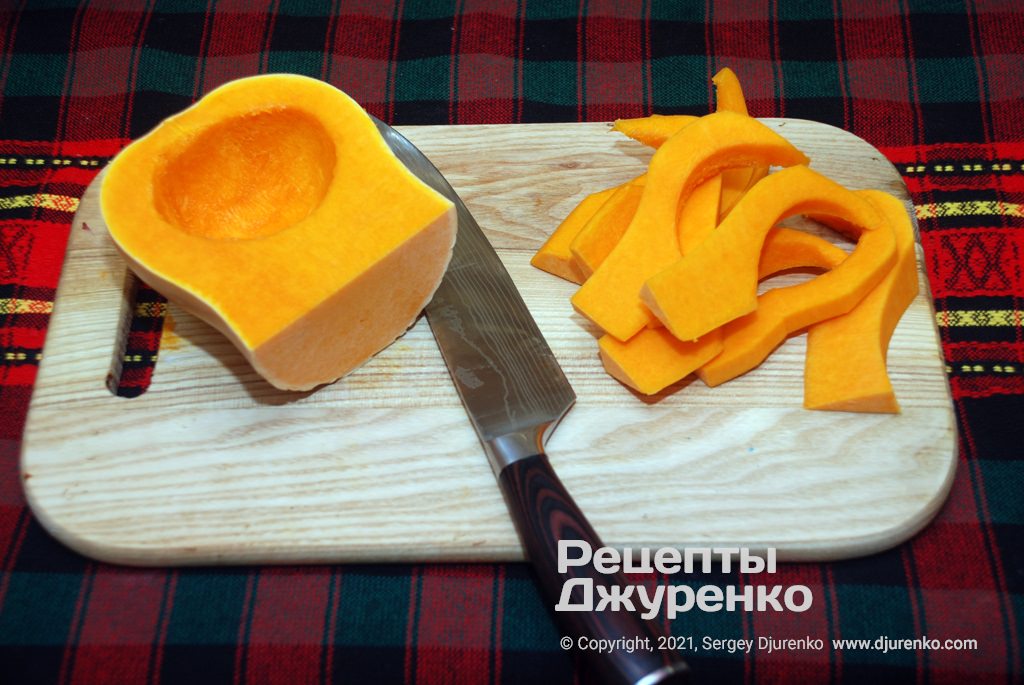
- Cut the pumpkin into several pieces right away; that makes it easier to peel. Scoop out the stringy pulp and seeds with a spoon. By the way, pumpkin seeds are a favorite snack, especially roasted in the oven. Cut the hard rind off the pumpkin pieces; use a sharp steel knife, as a ceramic one may break. Cut the pieces into thin slices, wedges or even cubes. What matters is that they're no more than 15-20 mm thick.
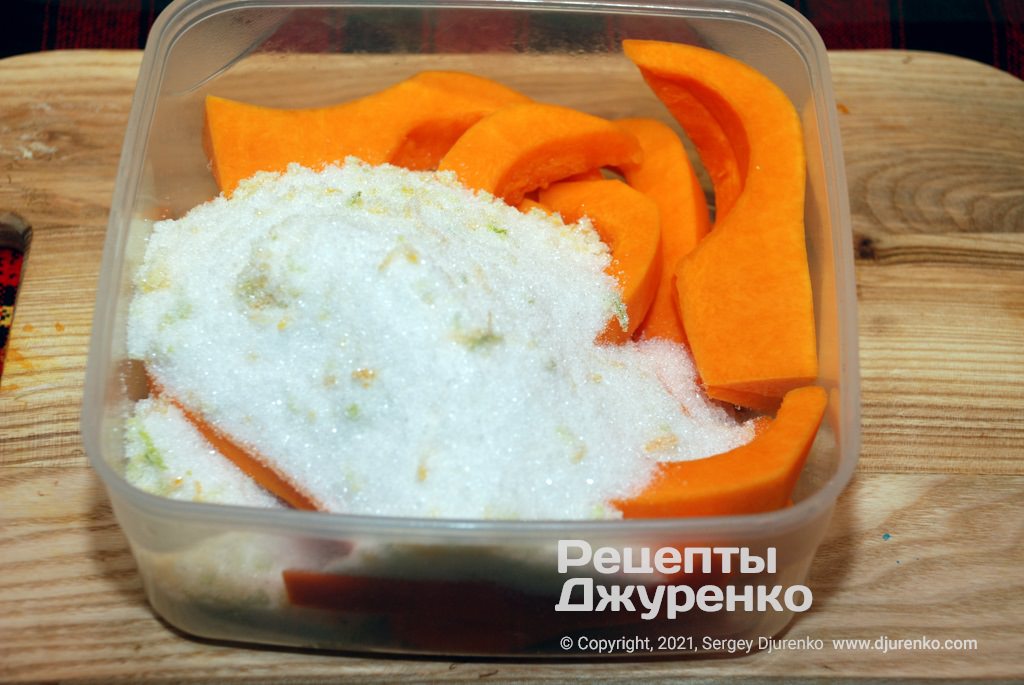
- Pour sugar into a bowl, ordinary white granulated sugar. If you really want, you can mix white and brown cane sugar in any proportion. By the way, the recipe uses no other spices, like nutmeg or cinnamon. Even without them, candied pumpkin comes out very fragrant and delicately flavored. Grate 2 tbsp of zest into the sugar; we used lime and orange. Also squeeze in the juice of half a small ripe lemon. Mix the sugar and pour it over the pumpkin pieces in a container with a lid.
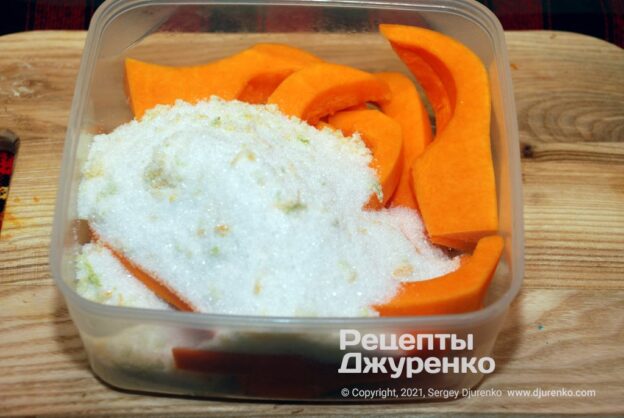
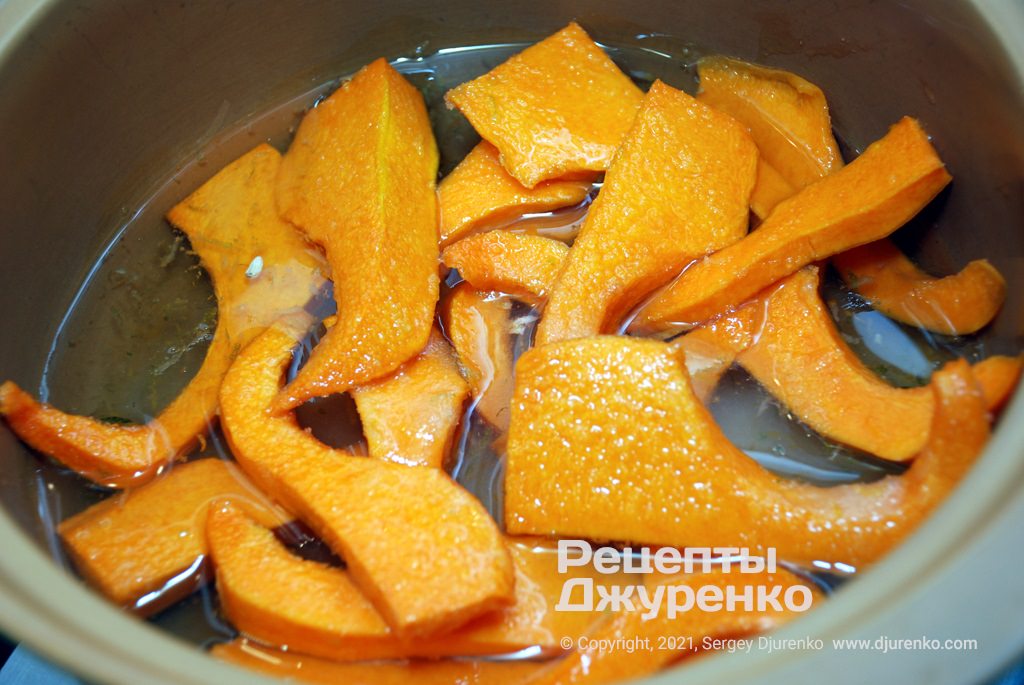
- Put the container with the pumpkin in the fridge for 5-6 hours, or better yet overnight. The sugar will quickly get wet from the moisture the pumpkin releases. At first it won't all dissolve; there's too little moisture. But never add water. After that time, transfer the pieces to a wide pot, pour in the syrup and scrape the softened sugar off the sides of the container with a spoon. Put the pot on the heat.
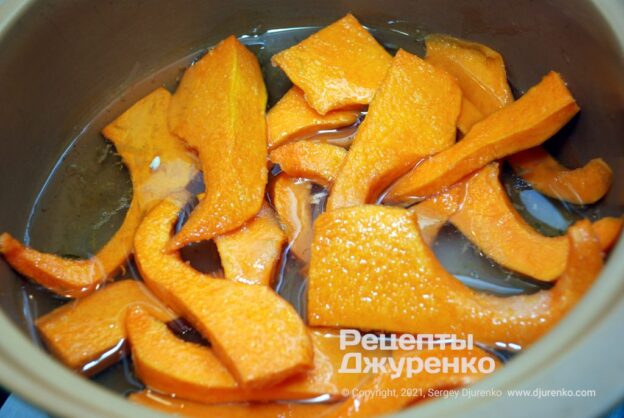
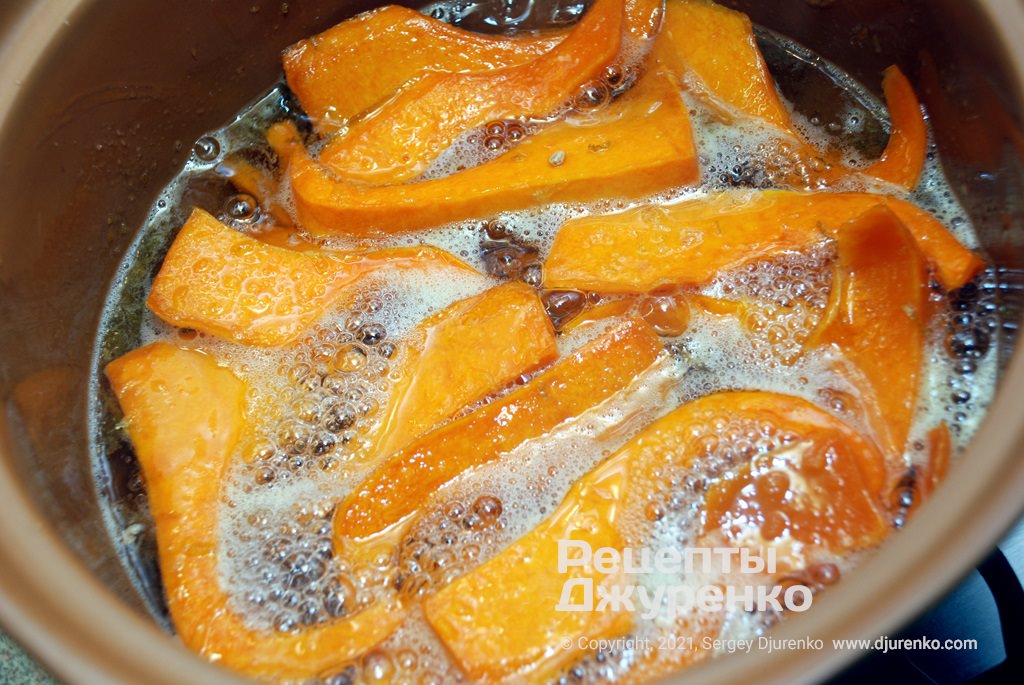
- Bring the syrup to a boil. Try to keep the pumpkin pieces fully covered with syrup; turn them with a wooden spoon or spatula. The sugar will dissolve very quickly, and the hot syrup will cover the pumpkin completely. How long to boil the pumpkin the first time comes down to one important test: pierce the thickest piece with the tip of a knife. As soon as the knife meets no resistance, take the pumpkin off the heat right away. Ours boiled for 4 minutes.
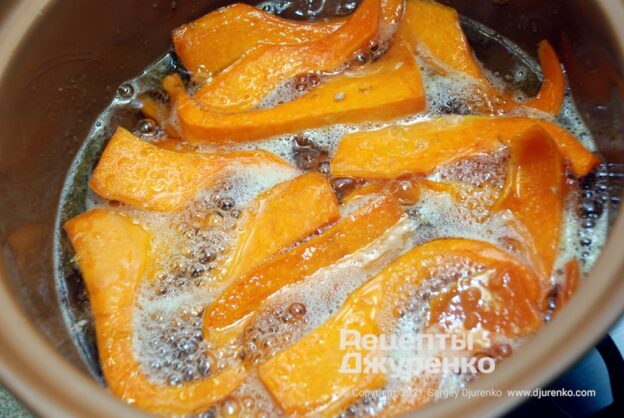
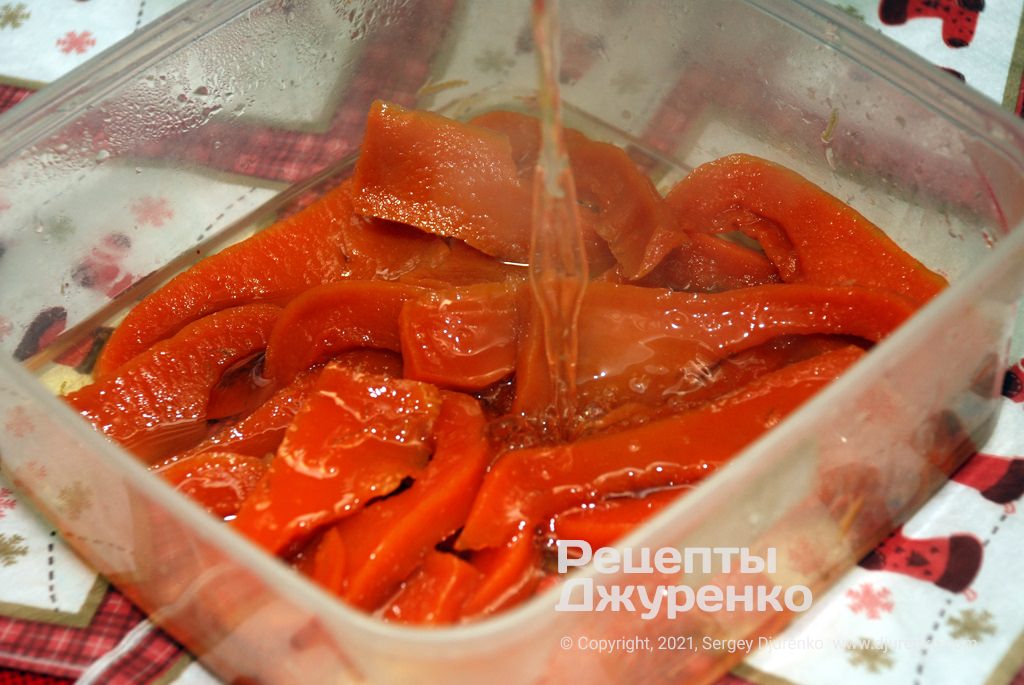
- Transfer the pumpkin to a lidded container and pour all the hot syrup over it. Careful: hot sugar syrup can burn far worse than water. Once the syrup cools, put the container in the fridge for another 5-6 hours. During this time the pumpkin will soak up sugar and lose more moisture. By the way, many people like the aroma and light taste of nutmeg and cinnamon; after the first boil you can add a cinnamon stick and half a nutmeg to the hot syrup.
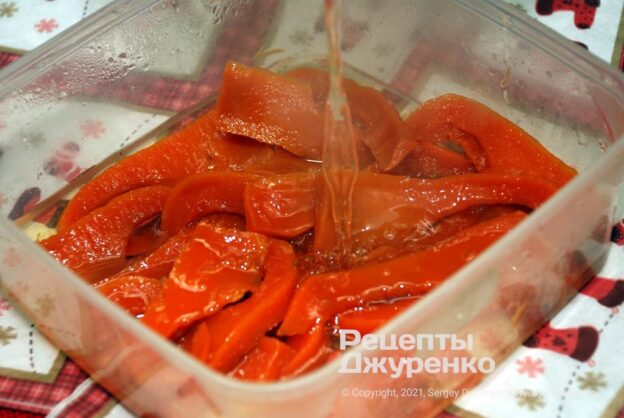
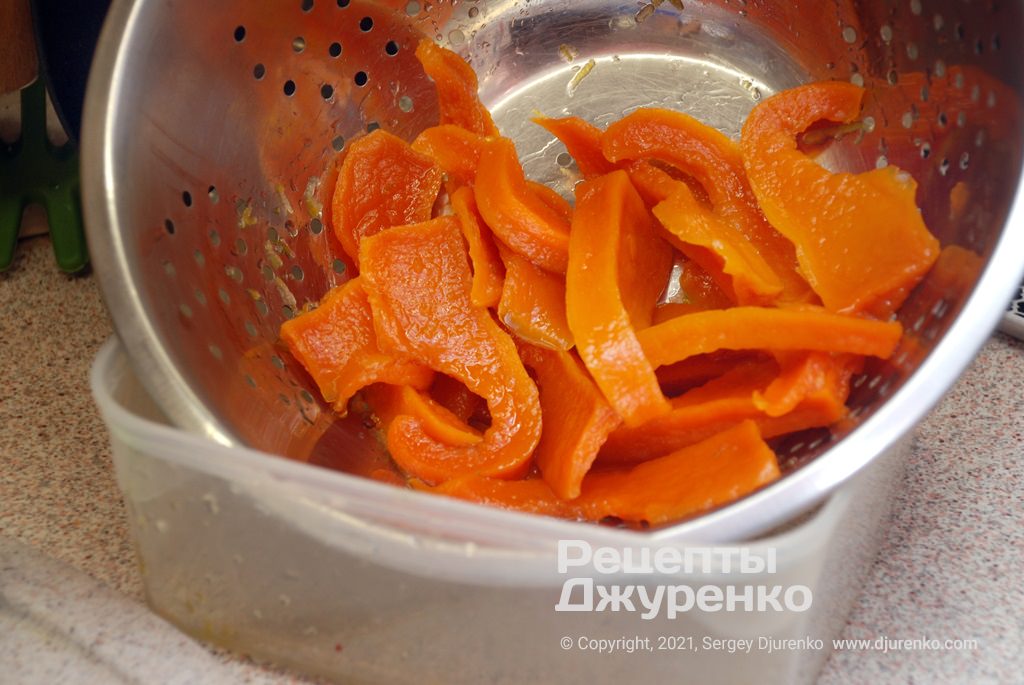
- Depending on how well the pieces lose moisture and absorb sugar, 2-3 times at 5-6 hour intervals, drain the pumpkin in a colander. Then bring the syrup to a boil in a pot, boil it for 10 minutes and pour it back over the pieces. Usually pouring boiling syrup over the pumpkin twice is enough. But if the pieces are thick and chunky, do it another 1-2 times.
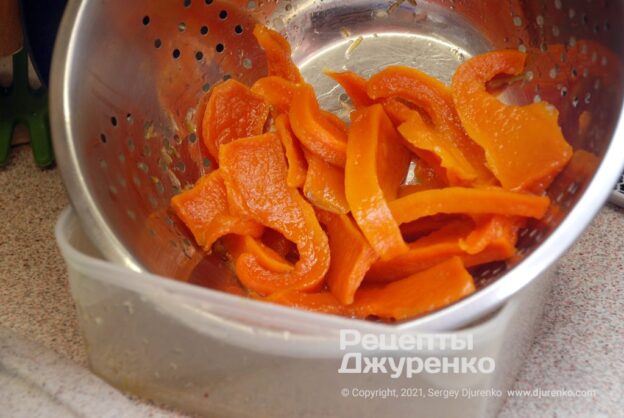
- Well-soaked pumpkin slices shrivel slightly, and there's no sign of raw vegetable in the middle: they should be soaked with sugar syrup all the way through. Now you can start drying the candied pumpkin. Drain the pieces in a colander so all the leftover syrup drips off. The syrup itself is full of sugar and can be used for baking. It's no good for soaking fresh pumpkin again, as it has too much moisture. That said, people often suggest boiling it down.

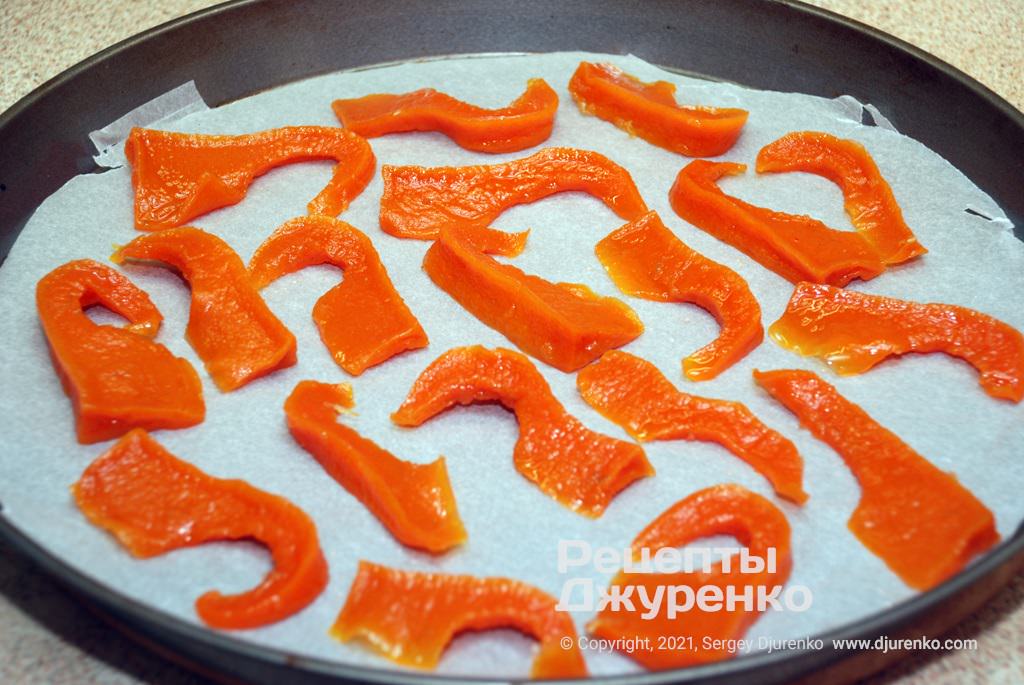
- Line a large baking sheet with parchment and spread the wet candied pumpkin on it with space in between. There are several ways to dry it. Electric dehydrators for vegetables, mushrooms and herbs do the job perfectly. You can even try air-drying in a warm room. Home electric ovens can be used at 100-120°C.

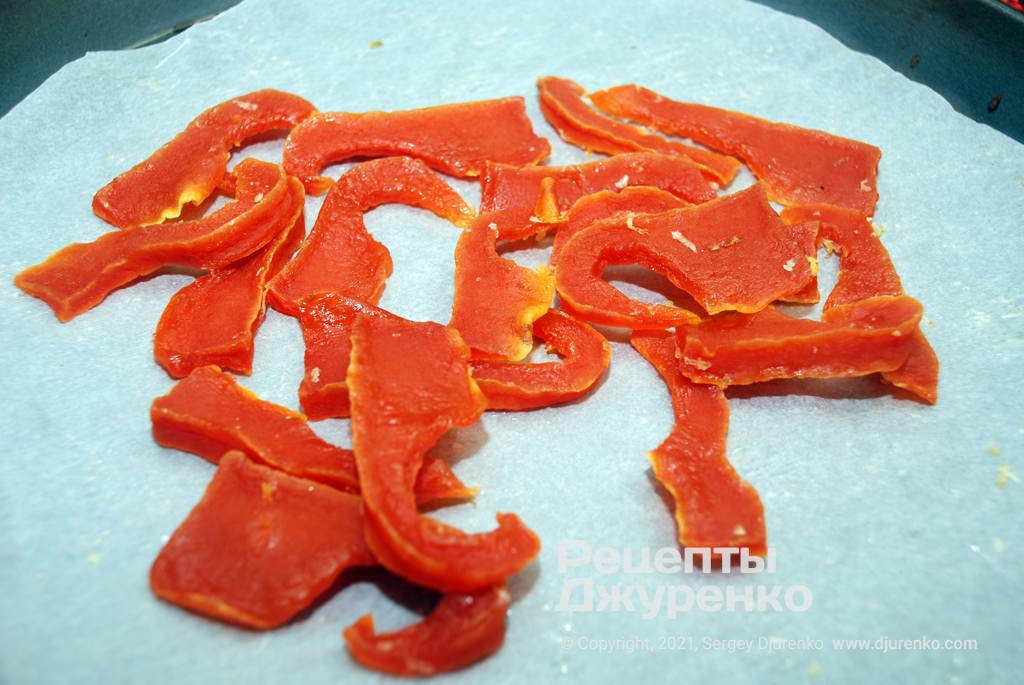
- Gas ovens usually don't run steadily at such low temperatures. You can heat a gas oven to 150°C, then turn it off and put the tray of candied pumpkin in. It will take up to half an hour to cool down; then you can heat it again and keep drying. After a few rounds, the pieces will dry to a springy texture, soft yet dry. Don't overdry them; they just need to be firm and slightly flexible.

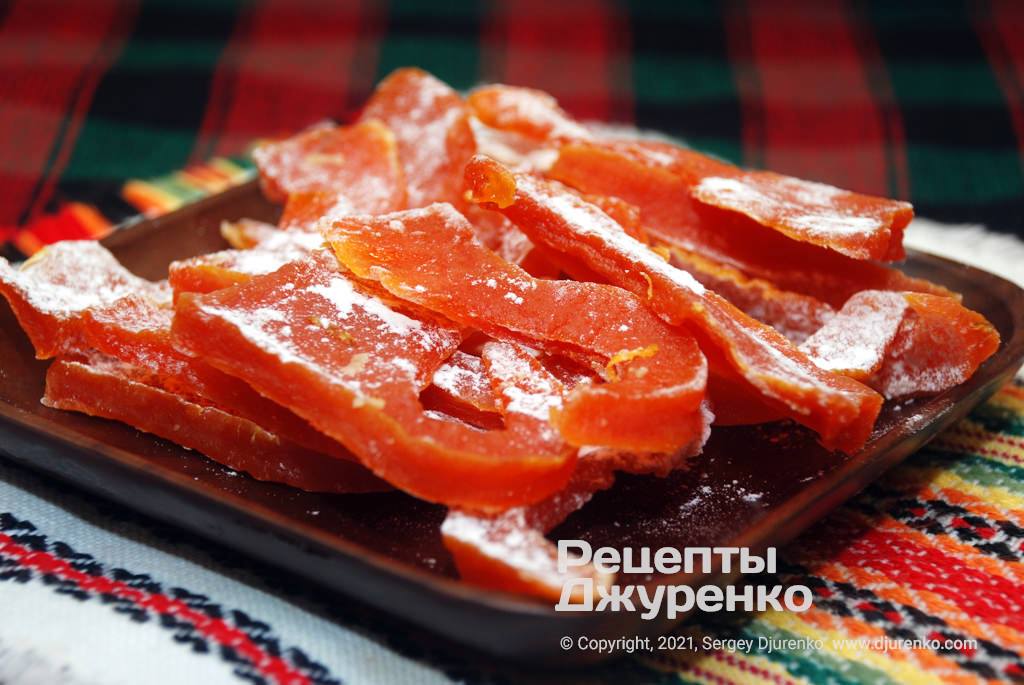
- The finished candied pumpkin can be used right away in dough, to decorate pastries or as a dessert. To keep the pieces from sticking together, dust them with a little powdered sugar. Mind you, given how much moisture they lose, even a big pumpkin doesn't make a lot. So it's more of a treat than a baking ingredient.
| Serves: | 150 g |
| Calories: | 160 |
| Prep: | 15 mins |
| Cook: | 1 day |
| Total: | 1 day |
| Category: | Desserts and Drinks |
| Cuisine: | European |
| Rating: |
⭐
⭐
⭐
⭐
⭐
4.9
(8)
|