
Choux Pastries, Eclairs
Ever since childhood, choux pastries, or as they are fashionably called now, eclairs, have been that small joy of life that made childhood what it was. Small oblong pastries with butter cream or custard, covered with hardened chocolate: the vitamin of childhood happiness. And even now, in this respect, I am quite happy!
Eclairs are oblong pastries, a dessert with custard cream. They appeared in the second half of the 19th century and are attributed to the pastry chef Marie-Antoine Carême, just like the modern choux pastry we know, although the first mentions of the choux dough used for eclairs date back to the 16th century, to the time of Catherine de’ Medici. But the world is huge, and choux pastries are made everywhere, in different ways.
Interestingly, quite similar pastries, made with a similar recipe and technique, are considered a national dessert in different countries and are called different names. For example, the Spanish “pepito”, the Argentine Palo de Jacobo, in Ukraine eclairs or choux pastries, the American long john, the German Liebesknochen or Kaffeestange. Their essence is the same: pastries with different creams and additions, of various sizes and shapes.
In France, it is believed that “real” eclairs are perfect pastries 14 cm long, all exactly alike, filled with custard through an inconspicuous hole hidden under chocolate glaze or sugar fondant. Eclairs got their name from the word for lightning, l’éclair, which refers to how fast they are eaten, and I completely agree!
Making eclairs is not difficult, and you pick up the skill the first time. Making the choux dough and the custard are two independent processes that can be done at the same time. By the way, eclairs with butter cream or boiled condensed milk are no less tasty than those filled with custard.


Ingredients
50-60 pieces
- Eggs 8-10
- Milk 250 ml
- Butter 200 g
- Wheat flour 2 cups
(260 g) - Water 250 ml
- Your favorite cream (custard, butter cream, etc.) to taste
- Glaze or fondant to taste
- Salt, sugar, vanillin to taste
Step-by-step recipe
The first question I’m always asked is why make pastries in such quantity. My answer: can you really resist? I know from experience that however many eclairs you make, they get eaten and people ask for more. Besides, choux pastries are a festive dessert, so there is simply no point in making just a few.
The amounts of ingredients given are approximate. You can always make choux pastries from half the ingredients, or even a quarter. Or you can double it; it all depends on the goal. Also, don’t forget that choux dough is baked into a base, a shell for the filling, and the filling doesn’t always have to be cream. Mini appetizers with unsweetened fillings turn out superbly.
Choux pastries need fresh, large eggs. Freshness is easy to tell from the stamp. In Ukraine, fresh dietary eggs are marked with the letter D and table eggs with the letter S. Dietary eggs keep no longer than 7 days. Table eggs can be stored at low temperatures for up to 3 months. The fact that an egg has moved from dietary to table doesn’t mean it’s inedible. It has just become a little “older”. But fresh eggs are preferable, if only out of respect for yourself.

Mix the milk and water in a saucepan. Many recipes use different proportions of milk and water, and there are even versions of choux dough made only with water or only with milk. Put the saucepan on the heat and start warming the mixture.

Add real (!) butter to the milk mixture. The butter doesn’t need to be softened or specially prepared. Season the mixture with one pinch of salt and add one scant tablespoon of sugar (11 g). Add vanillin to taste. The vanillin can be synthetic or mixed with sugar, but it is better to use natural vanilla: a dark dried pod ground to dust and mixed with sugar.

Keep heating the milk and butter mixture until the butter dissolves, stirring with a wooden spatula so that the butter blends with the milk and all the additions are evenly distributed.

As soon as the mixture shows the first signs of boiling, add the sifted flour and reduce the heat to the minimum. Stir the milk and flour mixture over low heat, breaking up any lumps. The dough has to be scalded, hence the name choux dough.

Take the saucepan off the heat and beat the choux dough with a mixer until smooth and uniform. If the dough has a few small lumps, that’s fine; it won’t affect the quality of the finished pastries.

Now comes an important moment: the eggs must be added one at a time. Crack the eggs into separate small cups or glasses beforehand, making sure no shell is left. After adding one egg, beat the dough thoroughly with the mixer. Keep beating and add the eggs one by one. For the given amount of ingredients (flour, milk, butter) you need at least 8 eggs. Then you have to catch the moment when the dough stops sticking to the mixer and stop adding eggs. Most likely 8-9 eggs will be enough, but go by the state of the dough.

Beat the dough with the mixer until completely smooth. The final choux dough, from which the eclairs will be baked, is thick, doesn’t run, is glossy, and barely sticks to the mixer or spoon.

Preheat the oven to 210-220°C. Grease a baking sheet with a little vegetable oil. You can lay a silicone baking mat on the sheet or line it with parchment paper.
It is generally held that eclairs are oblong and 14 cm long. By and large, if you have the knack, you can bake oblong pastries too. We like round ones, like big profiteroles. Using an ordinary spoon, drop portions of dough onto the baking sheet. One choux pastry is 1 tbsp of dough. Don’t pile on a lot of dough trying to get huge eclairs, and don’t (!) fix or smooth the dough. The dough rises considerably during baking, thanks to the hollows that form inside. Besides, large pieces hold their shape worse.

There should be fairly large gaps between the mounds of dough. Put the baking sheet with the dough into the well-heated oven. And forget about the choux pastries for 20 mins: don’t check, don’t open the door, and above all don’t slam it.
Choux dough rises very well, greatly increasing in size and creating large hollows inside. During baking it tends to sink and lose its shape, so it shouldn’t be “disturbed”. The baked shells for the pastries will look like small golden buns, remarkably light and airy.

Lay the finished shells on a cloth or board and let them cool to room temperature.
Next, fill the pastries with your favorite cream. I deliberately don’t give a cream recipe for choux pastries, since everyone has their own. The simplest way to make a cream for choux pastries is to beat condensed milk, plain or boiled in the can until it resembles toffee, with softened butter using a mixer.
Or, if you like, you can always make custard. It is a bit more complicated, but the cream always turns out very well. The technique for custard is close to that of the choux dough.
Fill the pastries with the cream. To do this, make small slits or holes in the wall of the finished shells and, using a teaspoon or a piping bag, fill the hollows with cream, jam, or even chicken liver pâté and fish appetizer.

Dessert pastries filled with sweet cream are usually covered on top with sugar fondant, chocolate, or glaze. By and large, this is done more to hide the hole than for flavor. Still, eclairs with chocolate glaze look elegant.
For a simple version, mix 1.5-2 tsp of cocoa (3–5 g) powder and 1 tsp of powdered sugar (3 g) in a bowl and, mixing vigorously with a mixer, pour in just a little boiling water. You get a cocoa mixture with a consistency like thick or crystallized honey, which you can spoon onto the choux pastries. The thickness of the mixture is adjusted by adding cocoa or water. You can also make a festive cake from the pastries, decorating it with chocolate and small choux pastries.

Finished eclairs can be served at room temperature. If the pastries are filled with a cream that contains butter, it is better to chill them a little.

It’s hard to say whether choux pastries should be served only with tea or coffee. For me, these wonderful desserts are great even on their own. Although, still, good tea.


Calories and macros
218 kcal
100 g
- Protein5.8 g11% of kcal
- Fat16.1 g67% of kcal
- Carbs12.2 g23% of kcal
Calculated from the recipe ingredients, excluding salt and spices. Data: USDA and Matvaretabellen.
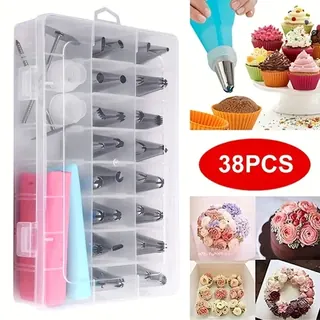 Piping bag with nozzlesAliExpress
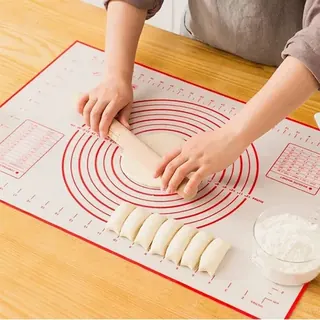 Silicone dough mat with markingsAliExpress
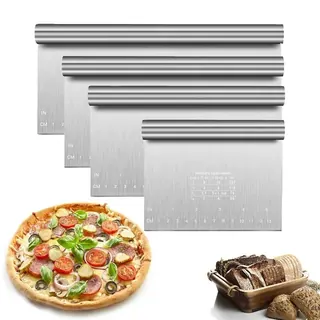 Dough scraper with scaleAliExpress
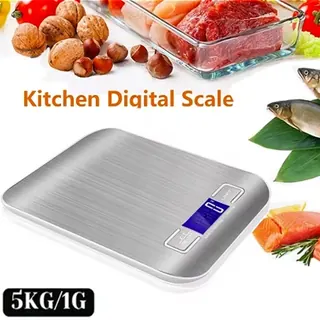 Kitchen scale up to 5 kgAliExpress
 Pull chopper for garlic and onionAliExpress
 Oil sprayerAliExpress