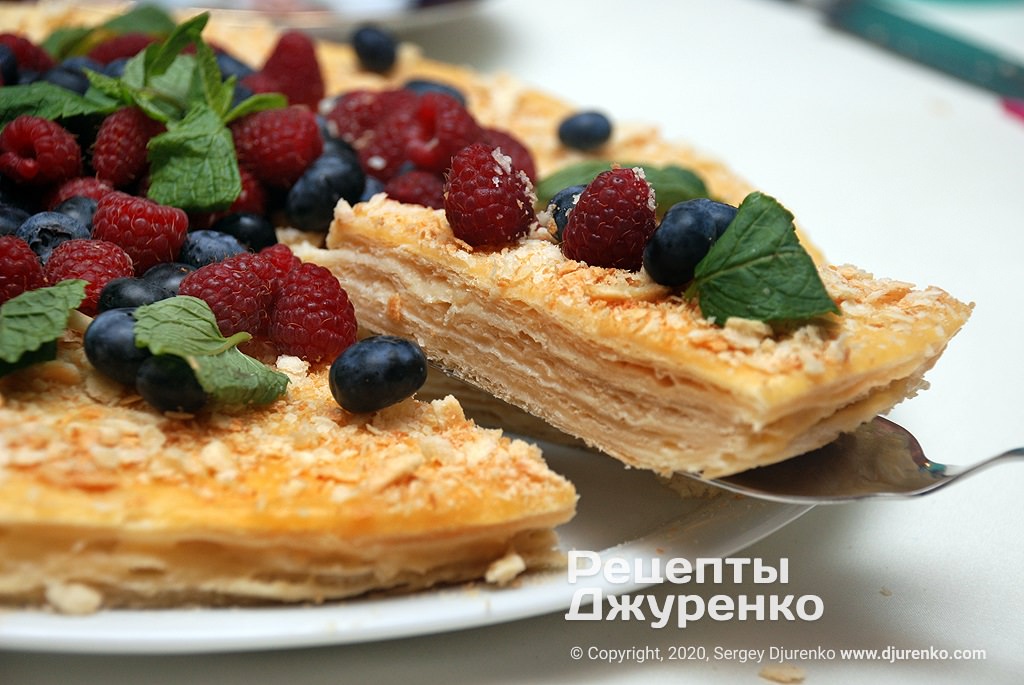
Napoleon Cake with Custard and Condensed Milk
One of the most coveted and beloved treats I remember from early childhood is Napoleon cake. Or the pastries of the same name. Long ago, for some reason, they were more often simply called “puff” pastries with cream. As I recall, you could buy this dessert in almost any café – it was hugely popular. By the way, it was most often made with buttercream, so it was quite high in calories.
Interestingly, here and in the US it bears the Emperor's name, while in France it is mille-feuille – a thousand layers, and in Britain it's a cream slice. But the essence stays the same: puff pastry layers with cream. The dessert has to soak up the cream and chill in the cold. Puff pastry layers are rather “hard”, and the soaking makes them wonderfully soft, even moist.
I once read that three centuries ago the layers were soaked not with cream but with ordinary jam. By the way, you quite often come across layered desserts where half the layers are spread with cream and the other half with apricot jam or strawberries mashed with sugar. This changes the taste considerably – for the better. Besides, the cake melts in your mouth and looks very appealing when cut.
The simplicity of this dessert has given rise to many variations, some of them quite different. Most well-known chefs have their own signature recipes, which differ in how the puff pastry is made. Jams, buttercream, custard and so on are used for soaking. Sometimes whipped cream is used instead of custard, and the layers hold small berries. What matters is that the layers have a neutral taste and soak well – becoming soft and tender.
Although most people prefer buttercream, I love a simple custard with condensed milk. My daughter taught me how to make it – the sugar is replaced with condensed milk. As a result, it soaks the baked puff pastry layers exceptionally well and makes Napoleon cake exceptionally tender and delicious.
When you think about it, making a layered dessert with cream is very easy. As a rule, the puff pastry layers are baked the day before. This is a bit laborious and time-consuming. In supermarkets you can buy ready-made layers or frozen puff pastry. If you're short on time or simply don't feel like fussing with dough, these are perfectly fine options. Making the custard poses no particular difficulty. It's much harder to decorate the dessert and show some willpower while it soaks and chills.
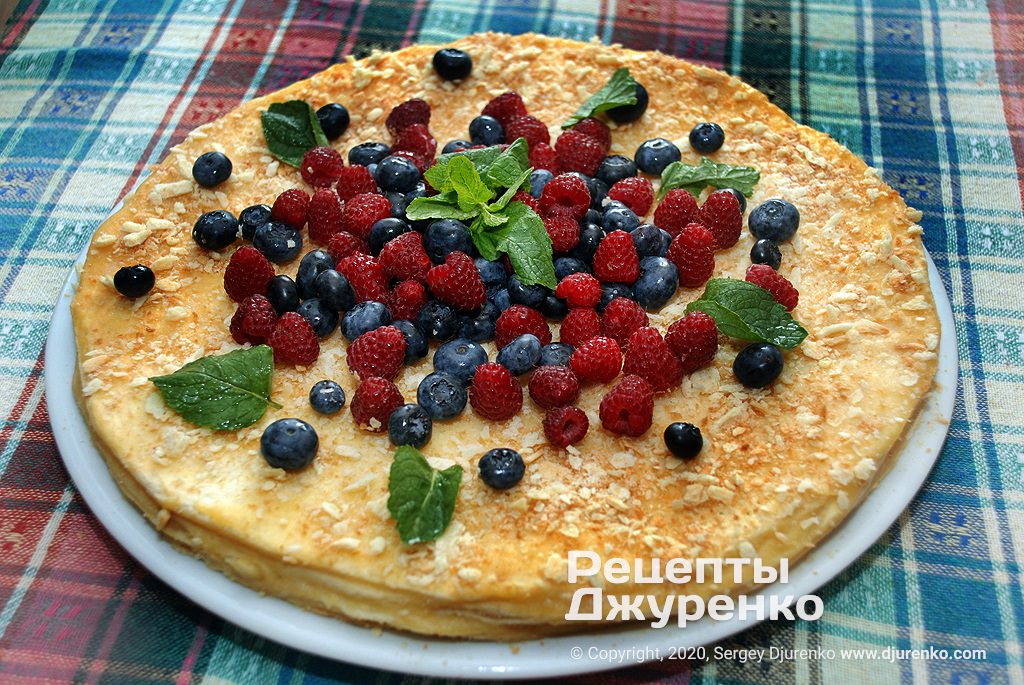
Ingredients
12-16 servings
- Puff pastry layers 4-6
- Milk (2.5%) 0.5 l
- Condensed milk 1 can
- Eggs (yolks) 6
- Cornstarch 1-2 tbsp
- Zest, liqueur, vanilla to taste
- Raspberries, currants, blackberries, mint, etc. for decoration
Step-by-step recipe
- Napoleon cake combines all the qualities that make it so popular. It is incredibly delicious and tender. It is easy to make, although it does need your hands-on attention. If you like, you can make it with different creams and jams and decorate it to your taste. And most importantly, if you're expecting guests, this dessert never fails to delight.
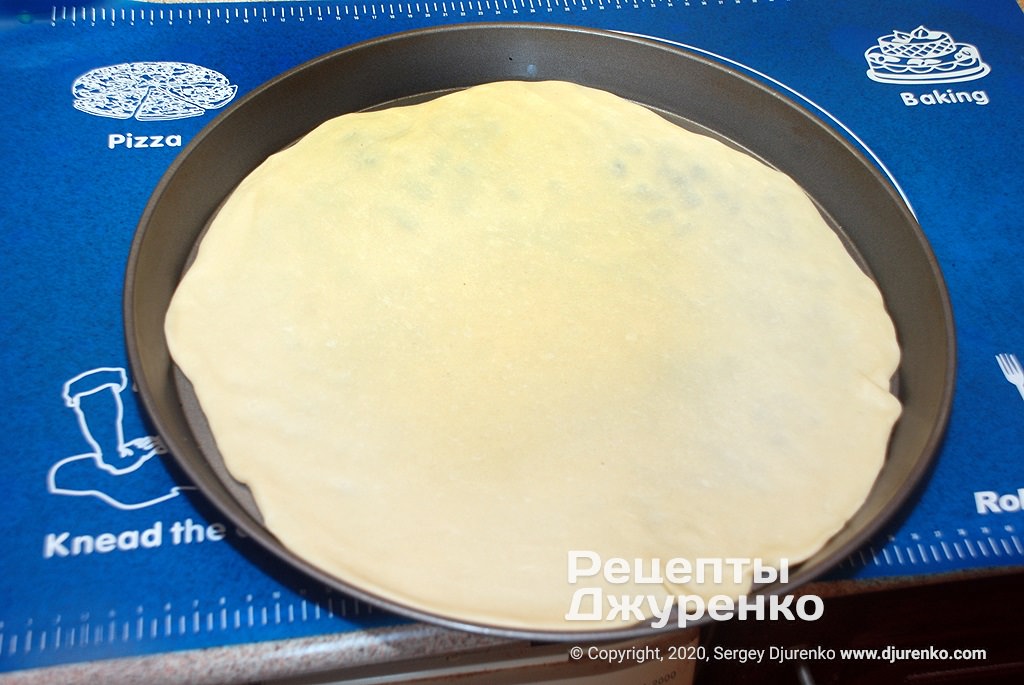
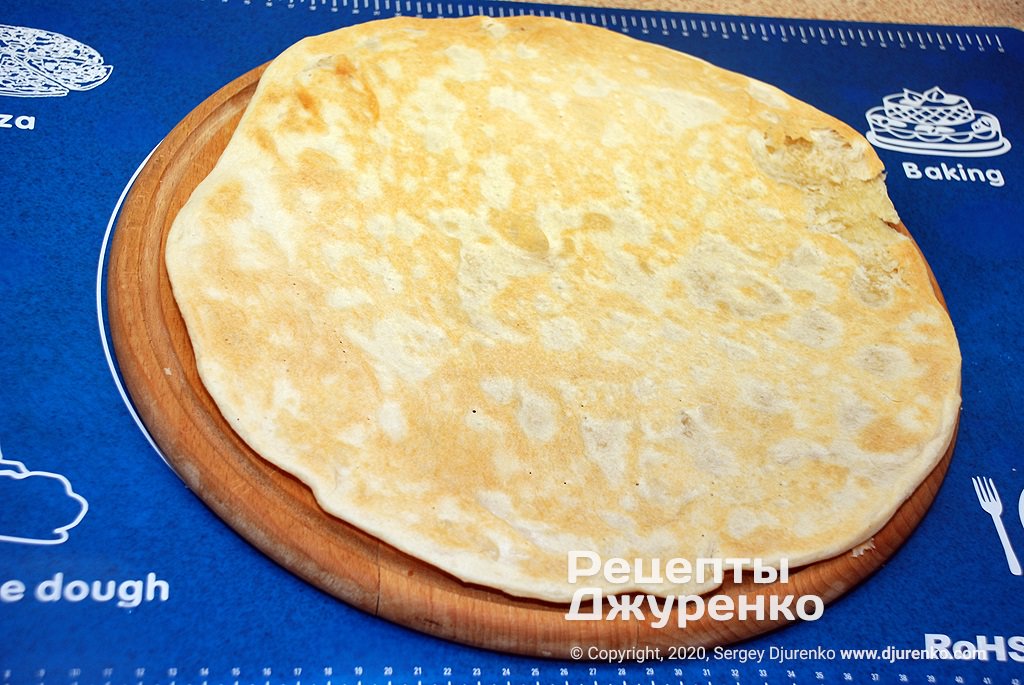
- I described in great detail how to make puff pastry yourself in a separate recipe. At first glance it seems difficult. But by and large it isn't hard to make – just repeatedly folding and rolling out the dough with a layer of butter in between. This creates numerous layers. During baking the butter soaks into the dough and the gaps fill with steam, which makes the pastry puff up. It's worth making the puff pastry the day before. Then a portion of it is rolled out to the size of the pan and baked at 220-240°C for about 15 mins.
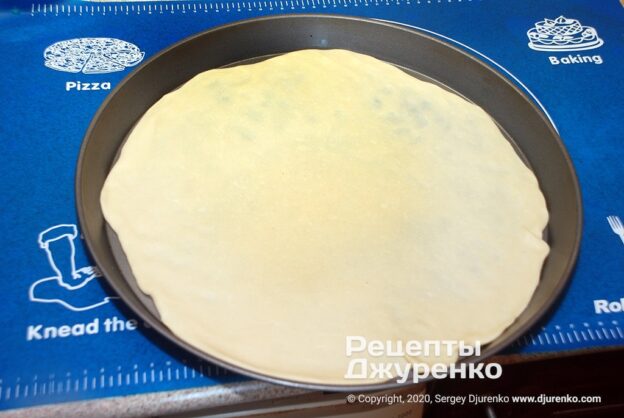
- Depending on the size and height of the finished cake, you can use any number of layers. My daughter and I decided to make a Napoleon cake that wasn't very tall – about 5 cm – but fairly large in area. The idea was to eventually cut it into individual pastries for serving. We used 4 baked layers about 32 cm in diameter. We baked the layers in a pizza pan. The dough should just barely begin to brown. By the way, if you like, you can flip the layer in the pan at the very end so the other side browns a little too.
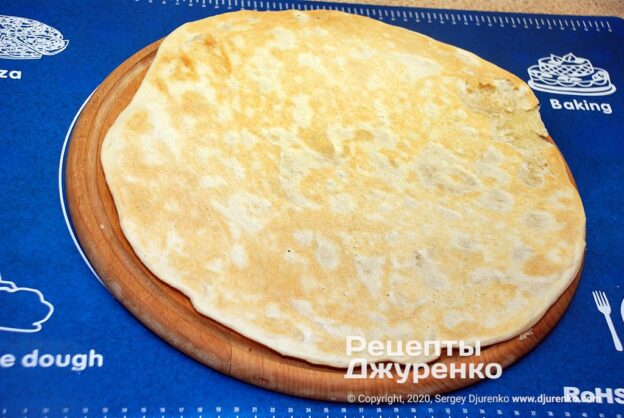
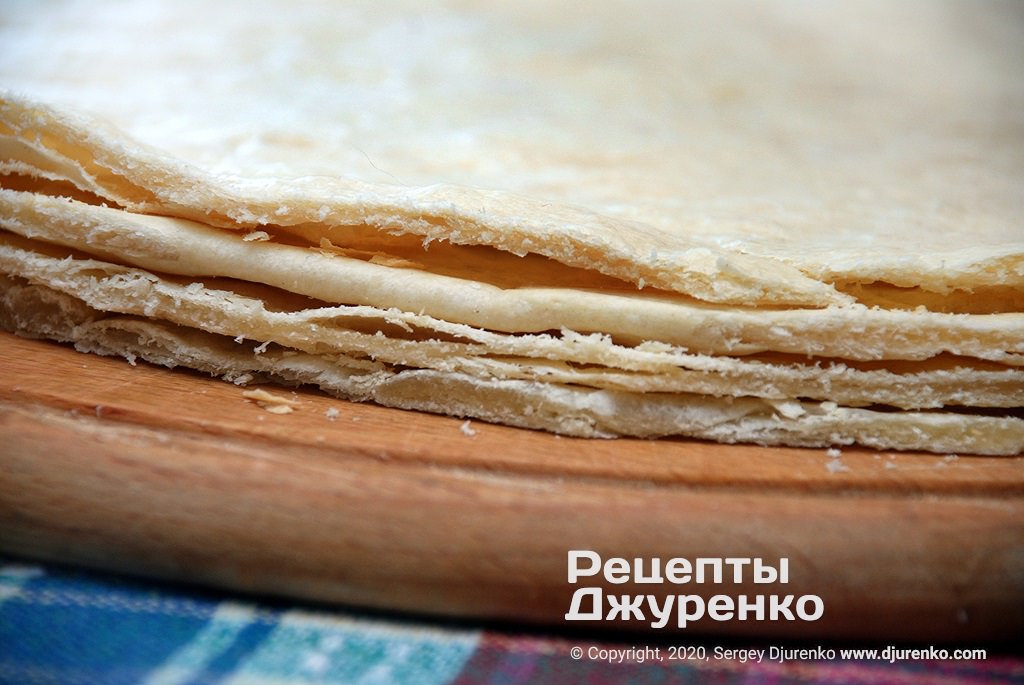
- The layers must cool completely. They are a little hard – that's normal. It's precisely the cream that makes them soft and tender. As a rule, the layers have uneven edges. And there's no need to strive for a perfect circle or rectangle. We stack all the puff pastry layers. Then, using a sharp knife, we trim the edge of the whole stack, giving all the layers the desired shape at once. And the trimmings, after a little preparation, are used to sprinkle the sides and top of the cake.
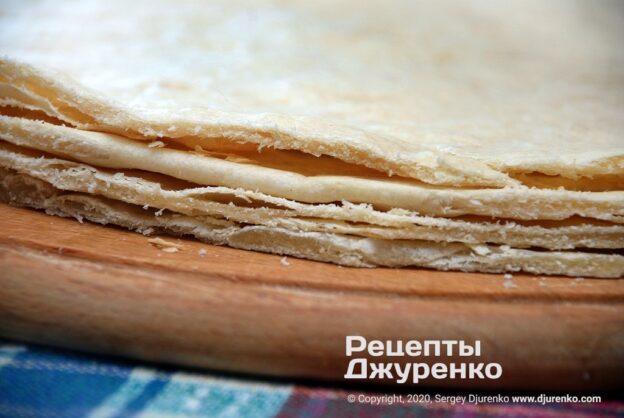
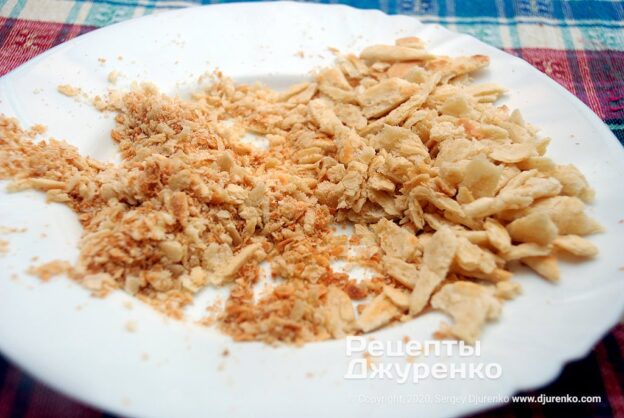
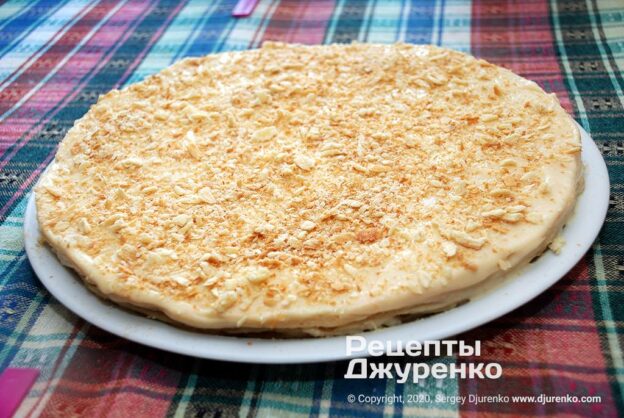
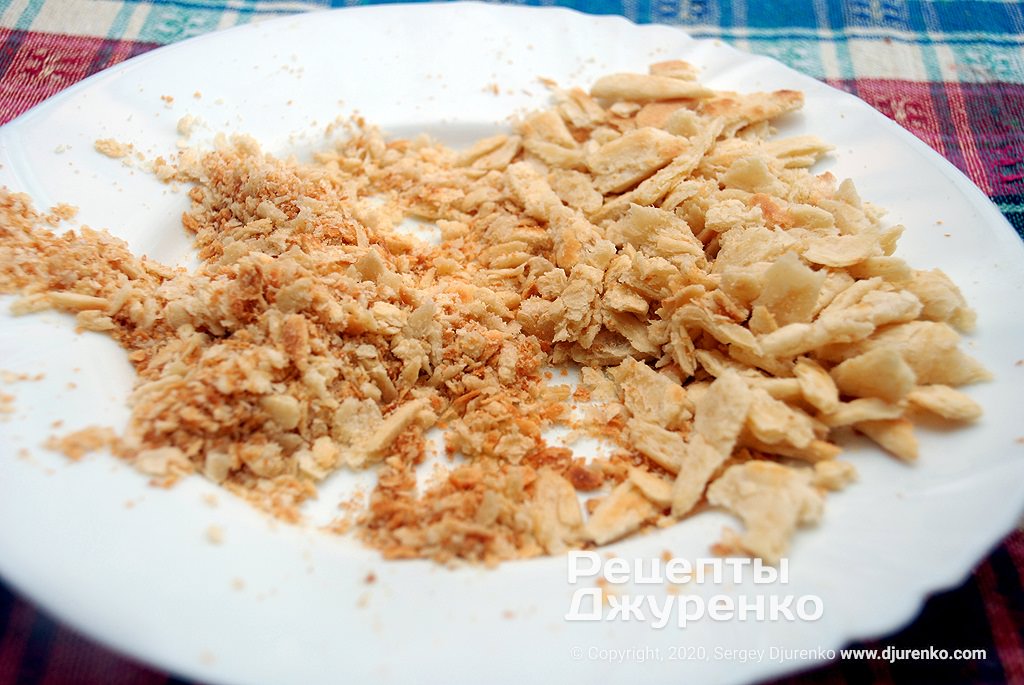
- Trimming the edges of the layers exposes the flaky structure of the dough, opening up gaps along the sides. These are spread with cream, which helps the dough soak and improves its texture. We dry and toast the remaining trimmings in a hot dry frying pan. Once they've cooled, we rub the trimmings between our hands into coarse crumbs – slightly darker than the layers. They are perfect for sprinkling on top of the cake and cling to the cream beautifully.
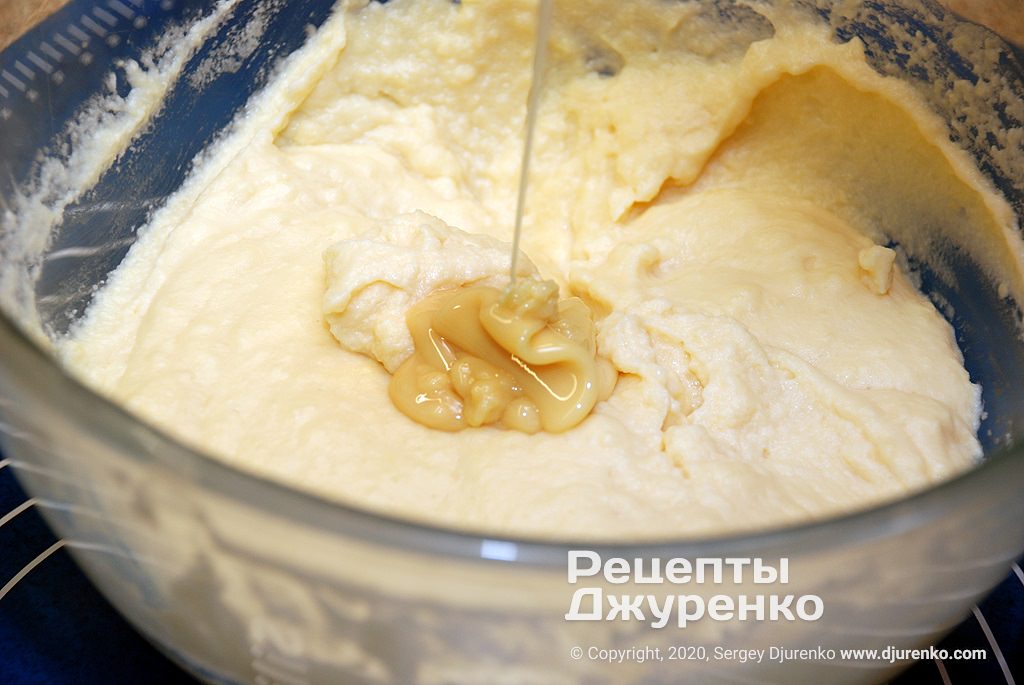
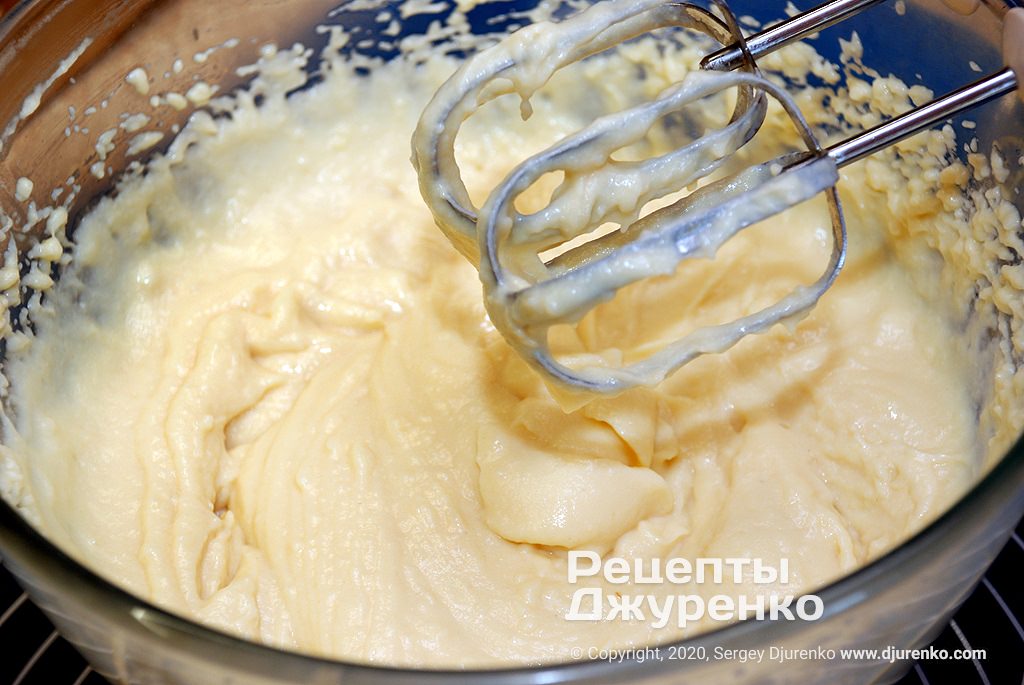
- While the layers bake and cool, we make the custard – it's our choice. But if you prefer, spread your Napoleon cake with buttercream. Usually, or rather always, we make more custard than needed. For this many layers we use half a liter of fresh milk, 6 egg yolks and cornstarch. We don't add sugar to the cream. I've written in detail about how to make custard earlier in my recipe. Be sure to press the cooled custard through a sieve or colander to get rid of lumps. Mix the cooled unsweetened custard with the condensed milk. Then stir thoroughly.
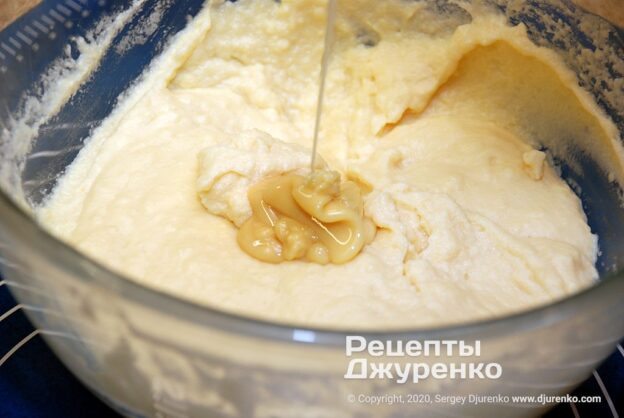
- You can add lemon zest, vanilla and a little fragrant alcohol – liqueur or brandy – to the cream. The custard shouldn't be runny, but it shouldn't be too thick either. It should be like very thick honey – barely dripping off the spoon. The cream and the layers should be at room temperature before assembling.
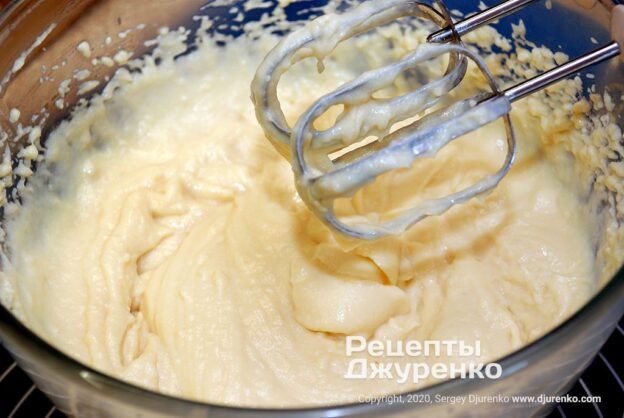
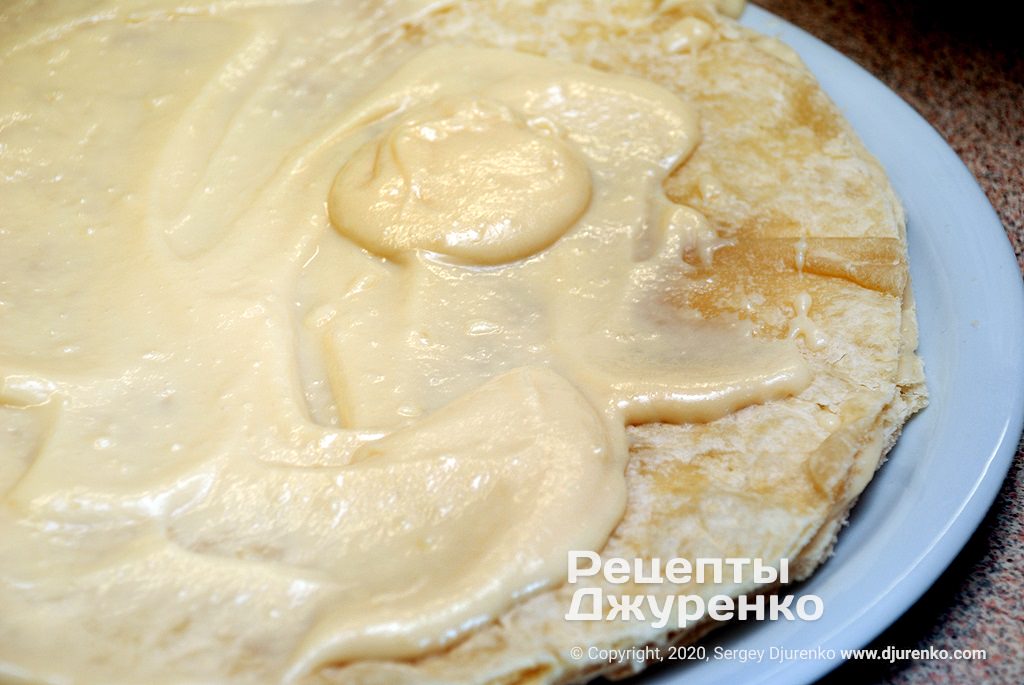
- All that's left is to spread the layers with cream and give them time to soak. Place one layer on a plate – you can put baking paper under it; it comes away easily from the moist dough later, and the layer won't stick to the plate. Generously spread the layer with the prepared cream, trying to make the cream layer quite thick. While the Napoleon cake soaks, some of the cream will be absorbed by the dry pastry. Place the second layer on the cream and press it lightly with your palms. Spread and stack all the layers of the cake this way.
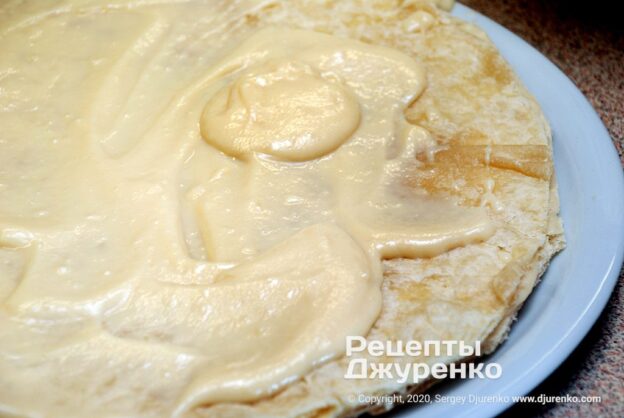
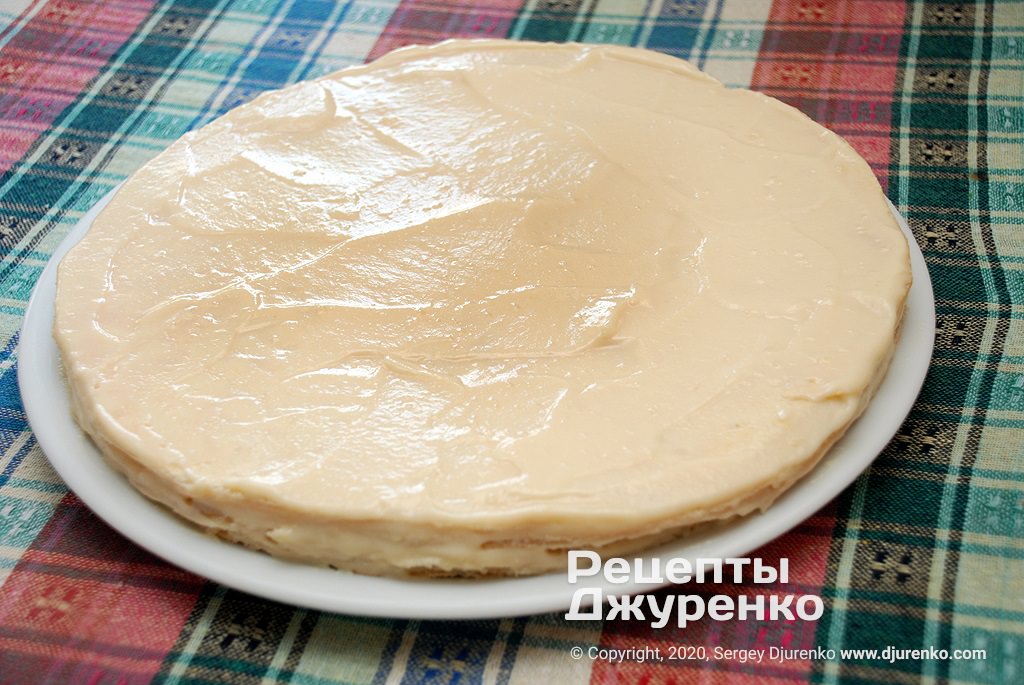
- Generously spread the top layer. Also generously coat the sides of the cake – there are open gaps in the puff pastry there, which hold the cream perfectly, and it seeps inside the layers. Use a spatula to spread the cream evenly over the entire surface, trying to make it smooth. The top layer of cream can be made a little thicker.
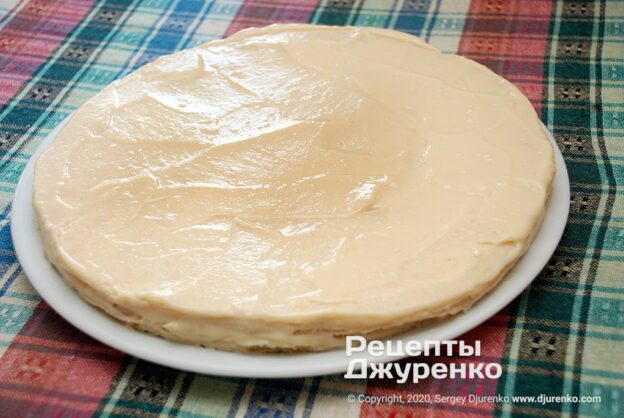
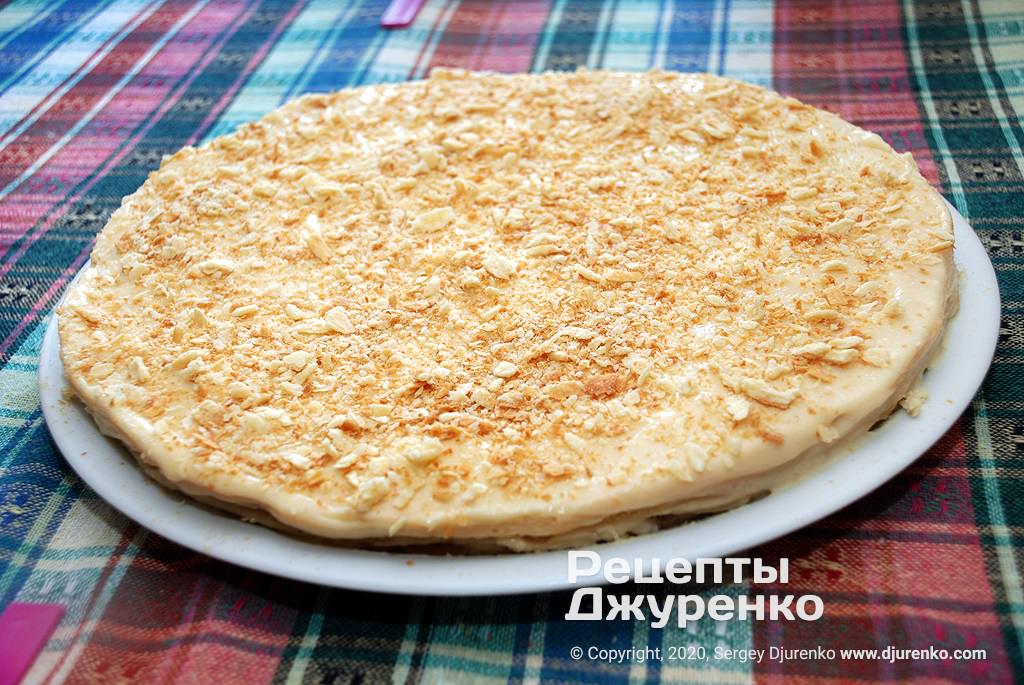
- Then sprinkle the top and sides especially thoroughly with the prepared toasted puff pastry crumbs. If needed, you can very lightly and gently press the crumbs into the cream. But don't use force – the cream is soft and dents easily. All that's left is to put the Napoleon cake in the fridge. It's best if you have a full day for soaking. In that time the puff pastry will soak up the cream beautifully and become soft and tender. Don't decorate the cake before chilling and soaking – within a day any berries will wilt.
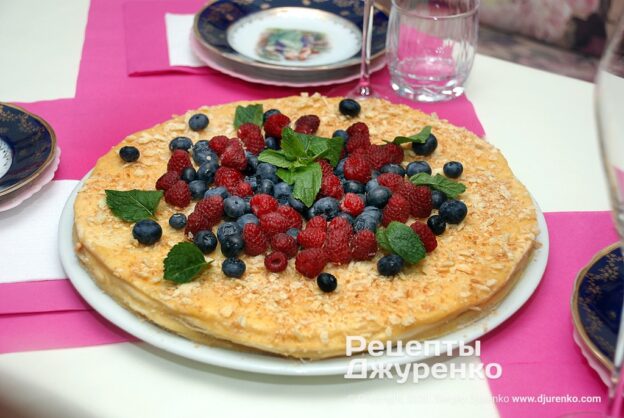
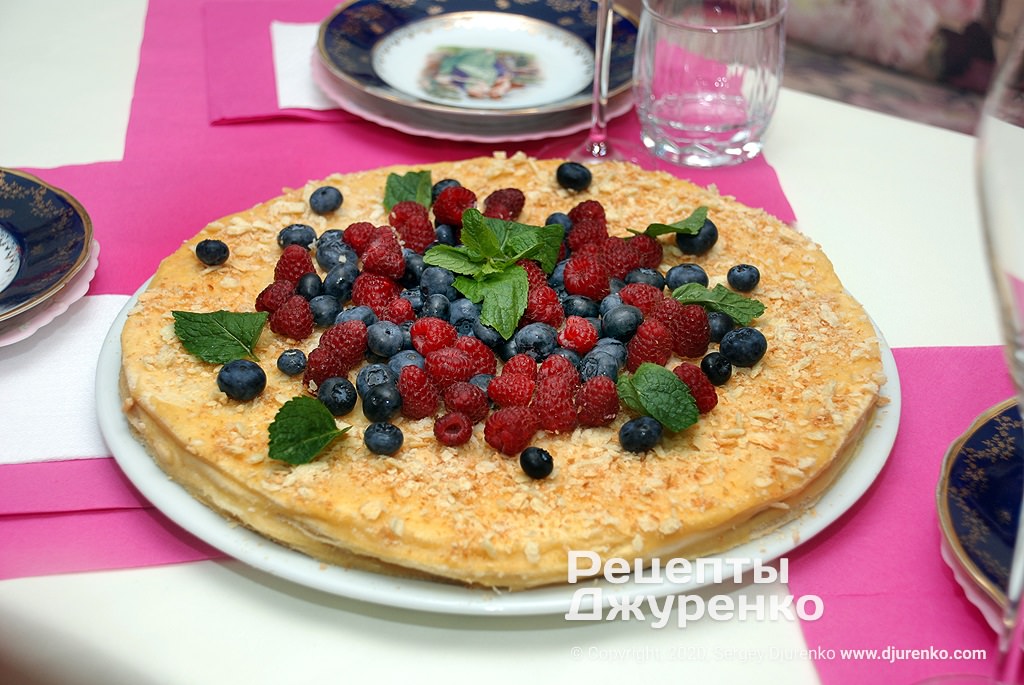
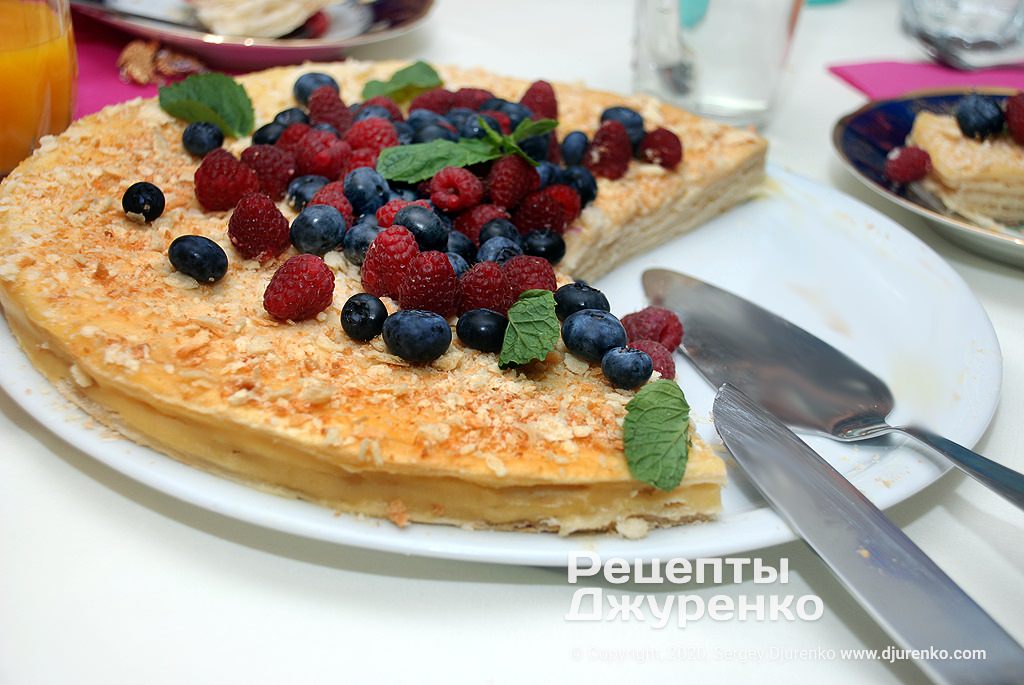
- Right before serving, decorate the top of the cake with fresh berries – raspberries, strawberries, wild strawberries, currants and so on. Here you have complete freedom and room for imagination. Many people like to decorate the top with cream flowers and candied fruit – that's fine, although I prefer berries and a few sprigs of fresh green mint.
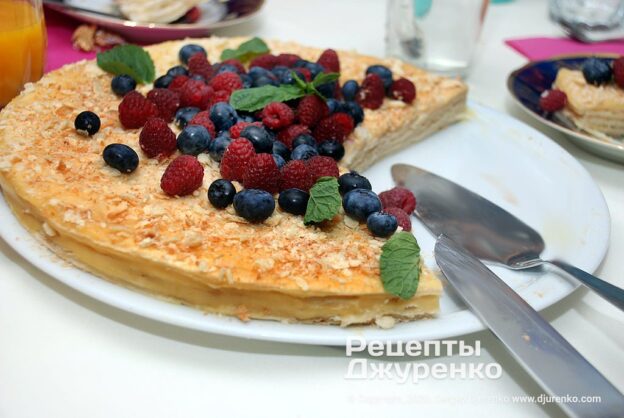
- It's best to serve the dessert on the same plate it was chilled and soaked on. With a very sharp knife held vertically, cut the cake into portions of any size. Try to make sure every piece has berries – I love it when there are plenty of them and they're sweet.
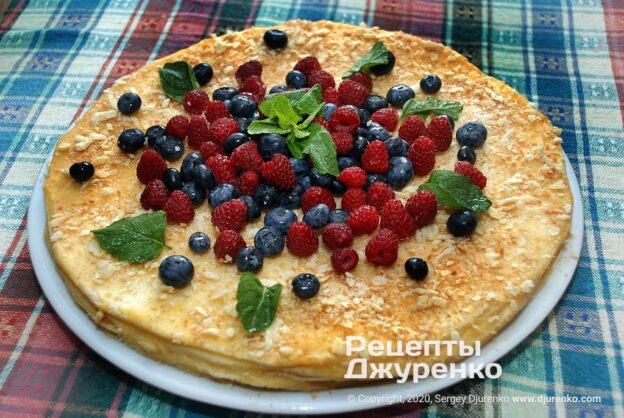
- The cake keeps well in the fridge for several days. That is, of course, if you don't eat it quickly. Don't leave it at room temperature for long – let it stay cold. To keep the pastry from drying out, it's best to cover the cake with a napkin while storing. It's delicious on its own and makes excellent company for tea or coffee with milk.
| Yield: | 12-16 servings |
| Calories: | 380 |
| Prep: | 30 mins |
| Cooking: | 15 mins |
| Ready in: | 45 mins (plus soaking time) |
| Category: | Desserts and Drinks |
| Cuisine: | European |
| Rating: |
⭐
⭐
⭐
⭐
⭐
4.9
(5)
|