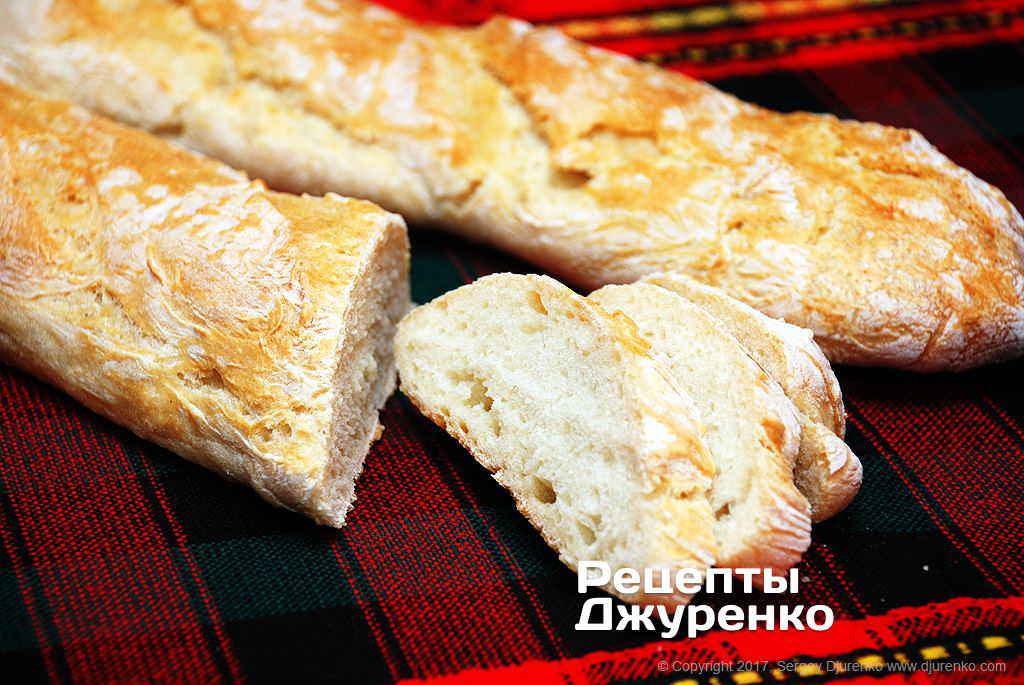
Homemade White Bread in the Oven
Ingredients
2–3 loaves
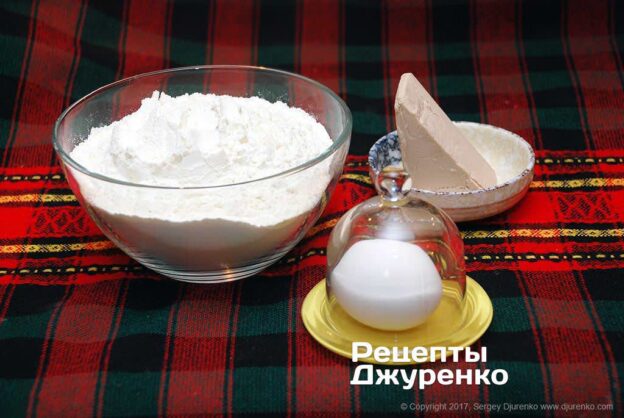
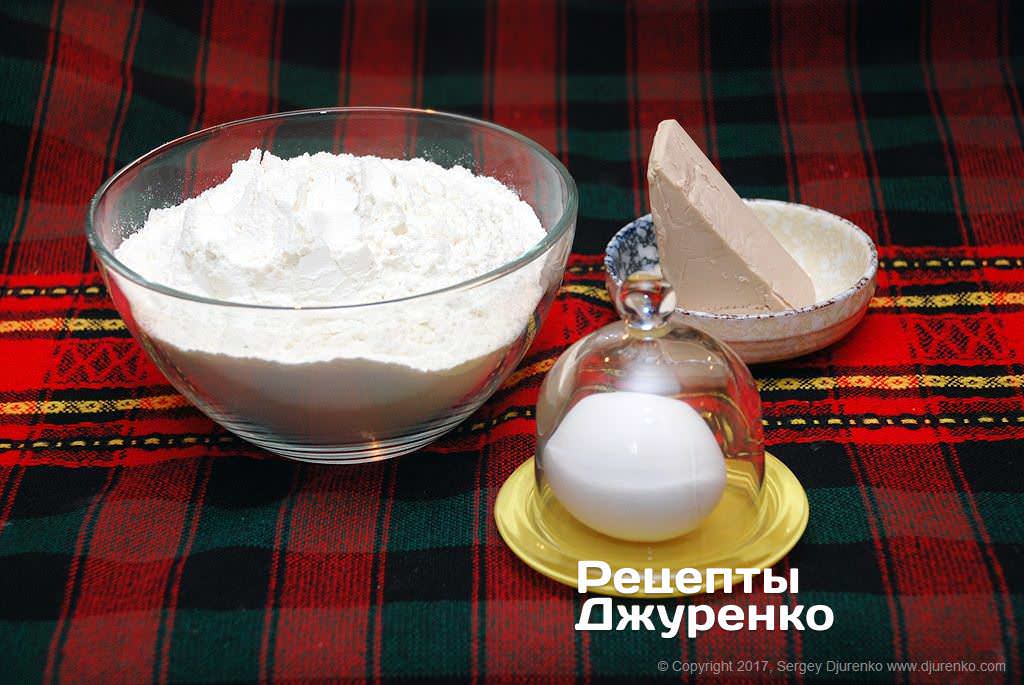
- All-purpose wheat flour 4 cups (about 520 g), plus a little for kneading
- Baker’s yeast 15 g
- Warm water about 300 ml (100 ml for the sponge and 1 cup for the dough)
- Sugar ½ tsp (2 g)
- Fine salt ½ tsp (3 g)
- Egg 1 (the white for brushing)
- Olive oil for greasing the baking sheet
Step-by-step recipe
Sponge
Sift the all-purpose wheat flour through a sieve.
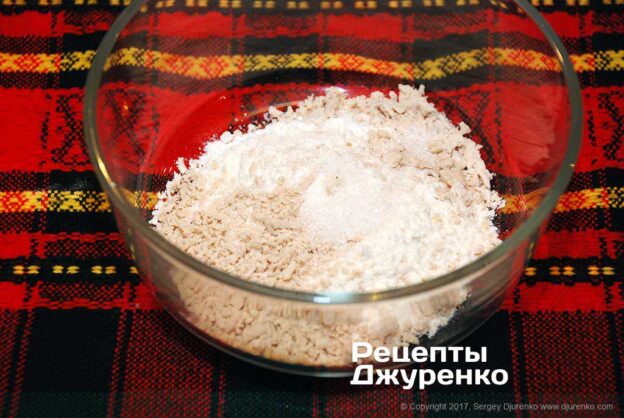
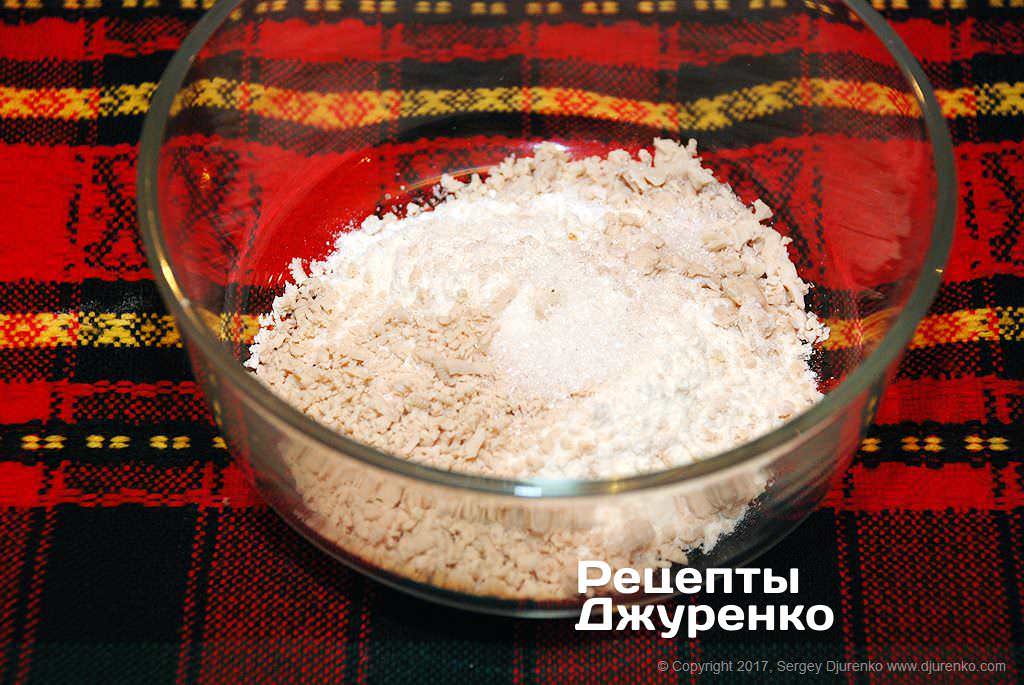
Put half a cup of flour (65 g) into a small deep bowl, add ½ tsp of sugar (2 g) and crumble in the baker’s yeast. Pour in 100 ml of warm water and stir: the yeast should dissolve and blend completely with the flour and water. It’s a good idea to strain the mixture through a small sieve to catch any lumps, which you can then rub through and strain again.
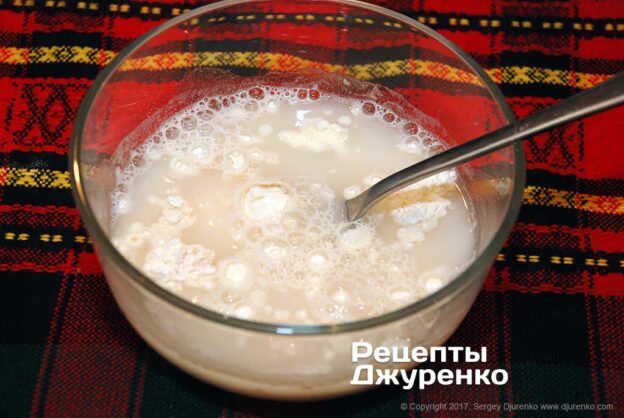
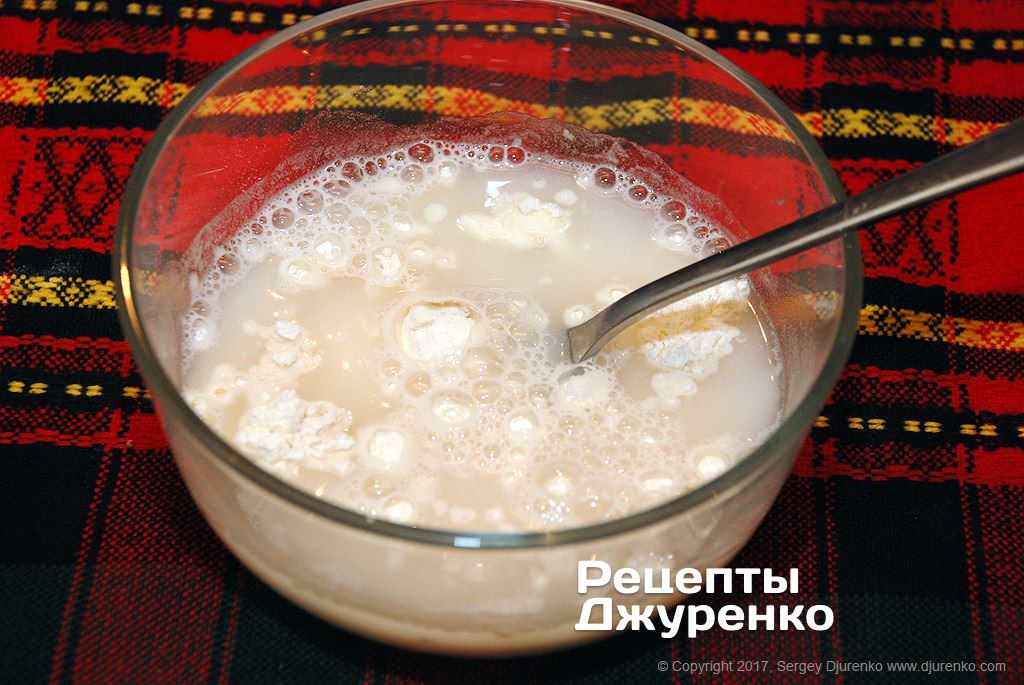
Cover the bowl of yeast with a cloth napkin and set it in a warm place. After a while the yeast will become active and the sponge will begin to rise. This usually happens quickly – within half an hour.
Dough
To bake plain bread, you need a plain dough with no extra additions or complications.
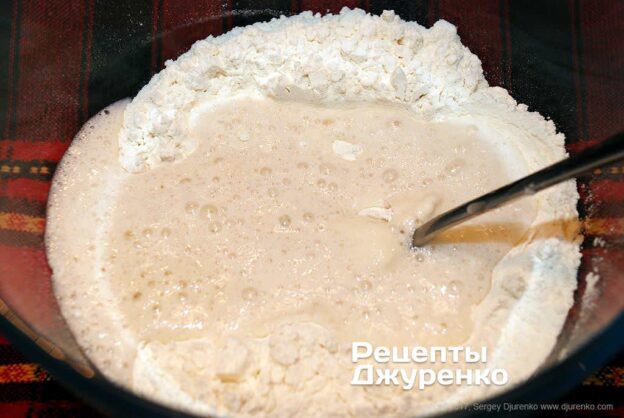
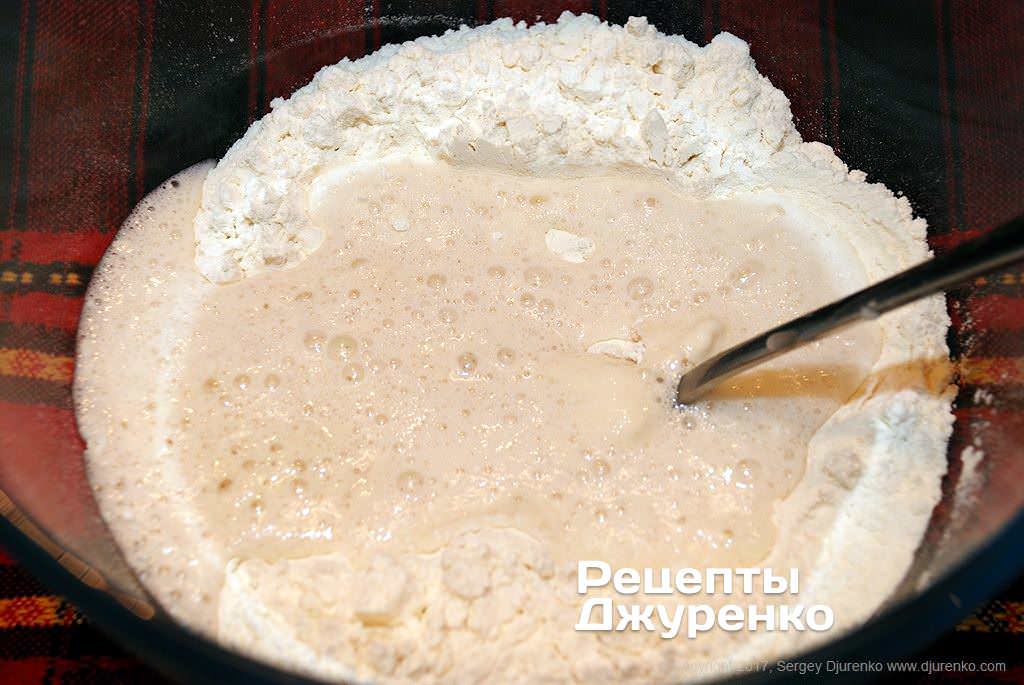
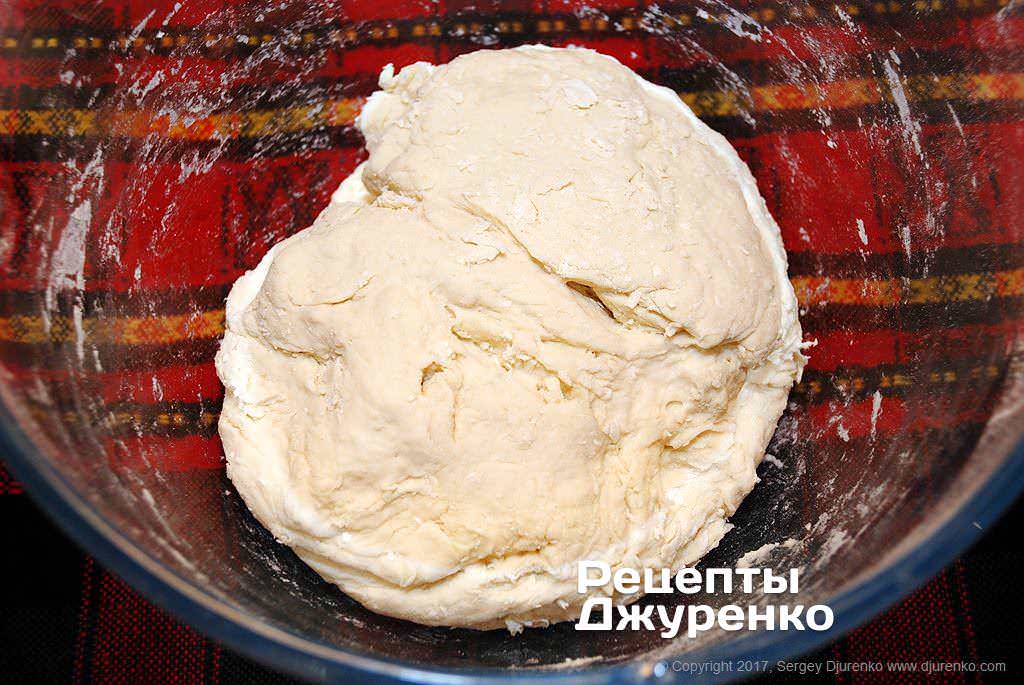
Put 3 cups of flour (390 g) into a large bowl, add ½ tsp of fine salt (3 g) and mix. Add the yeast sponge and another cup of warm water. Mix a soft dough. Knead the dough thoroughly until it is completely smooth and slightly sticky to the touch.
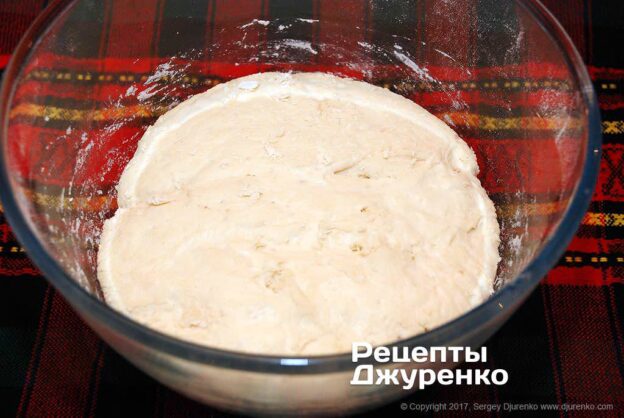
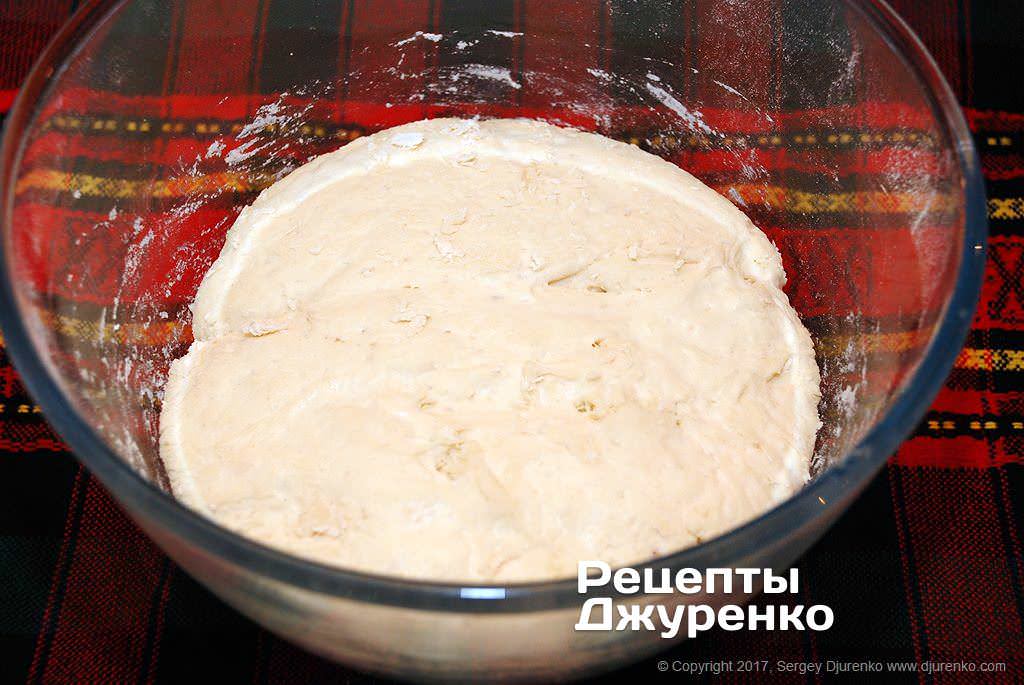
Roll the dough into a ball, cover the bowl with a cloth or towel and set it in a warm place. The dough needs to rise and double in size.
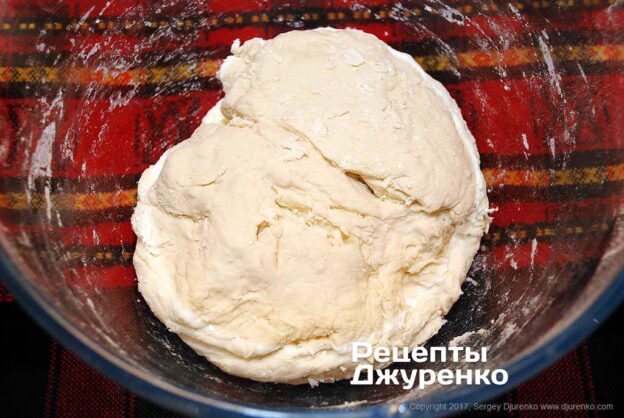
Knead the dough again, adding flour, and leave it to rise a second time. Well-prepared dough is the guarantee that this plain bread will truly delight you.
Shaping the loaves
Homemade bread doesn’t have to be round or shaped like a rectangular loaf. Yes, those shapes are traditional and very common for wheat bread. But think of the French baguette or the Italian ciabatta, both of which are long and narrow. So the shape of the bread has no effect on its taste.
Grease a baking sheet with olive oil. Divide the yeast dough into two or three pieces, depending on how thick you want the loaves to be.
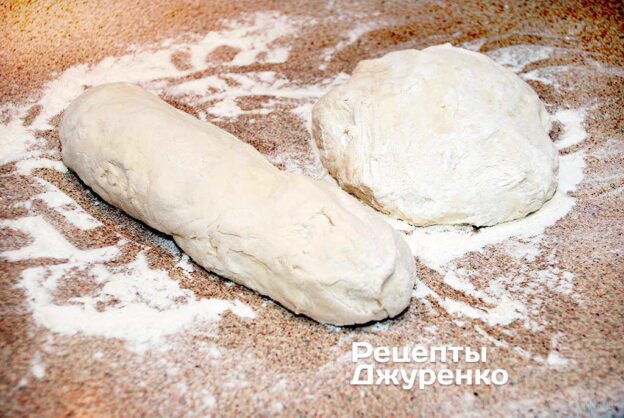
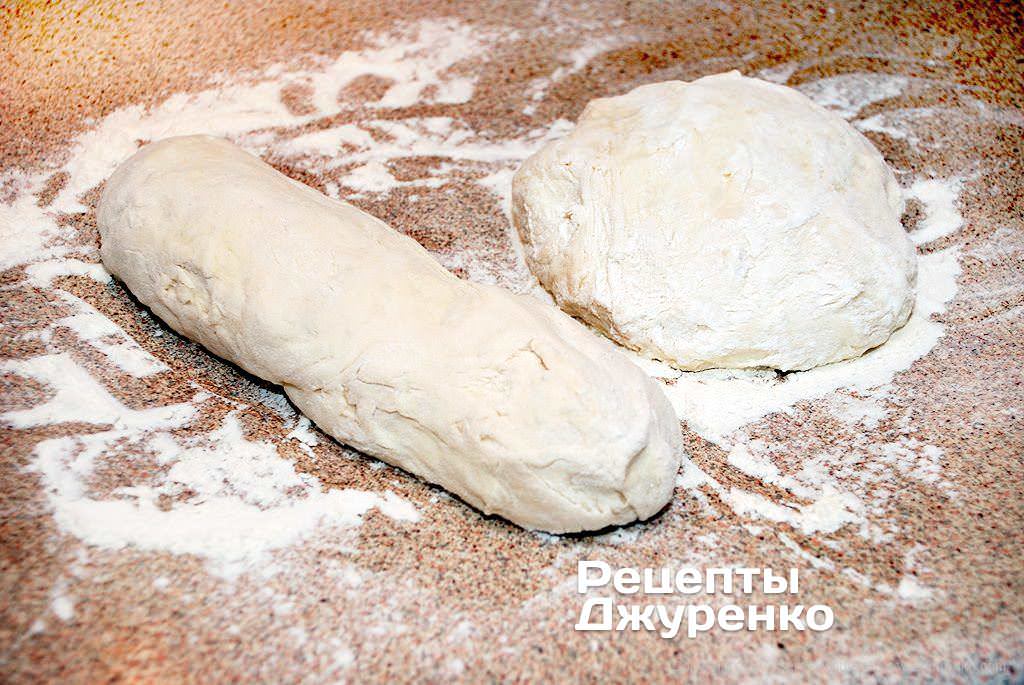
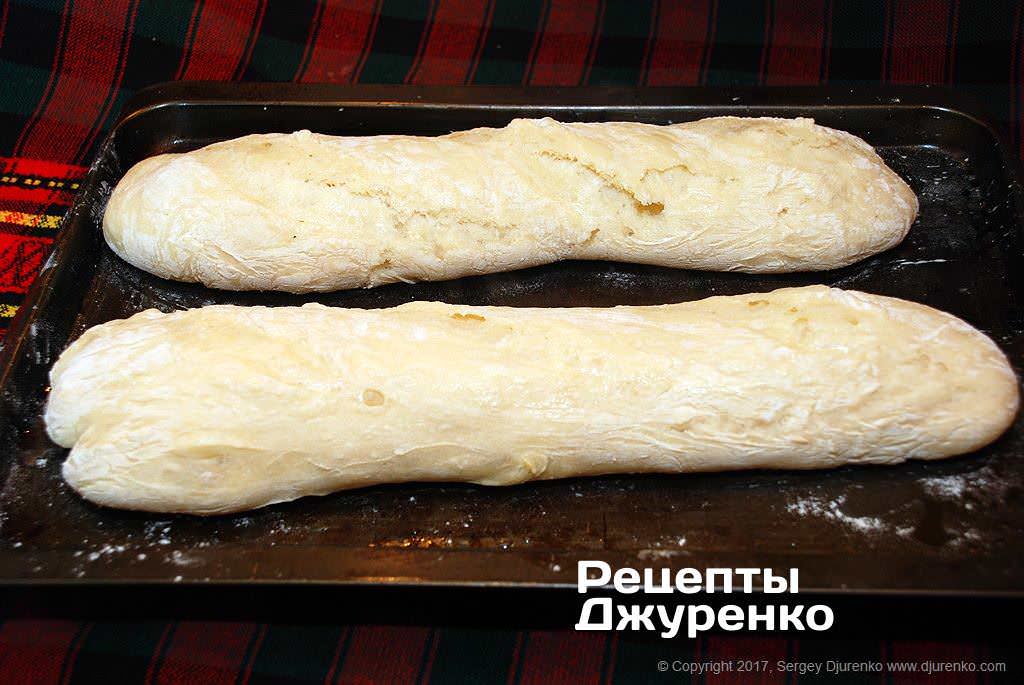
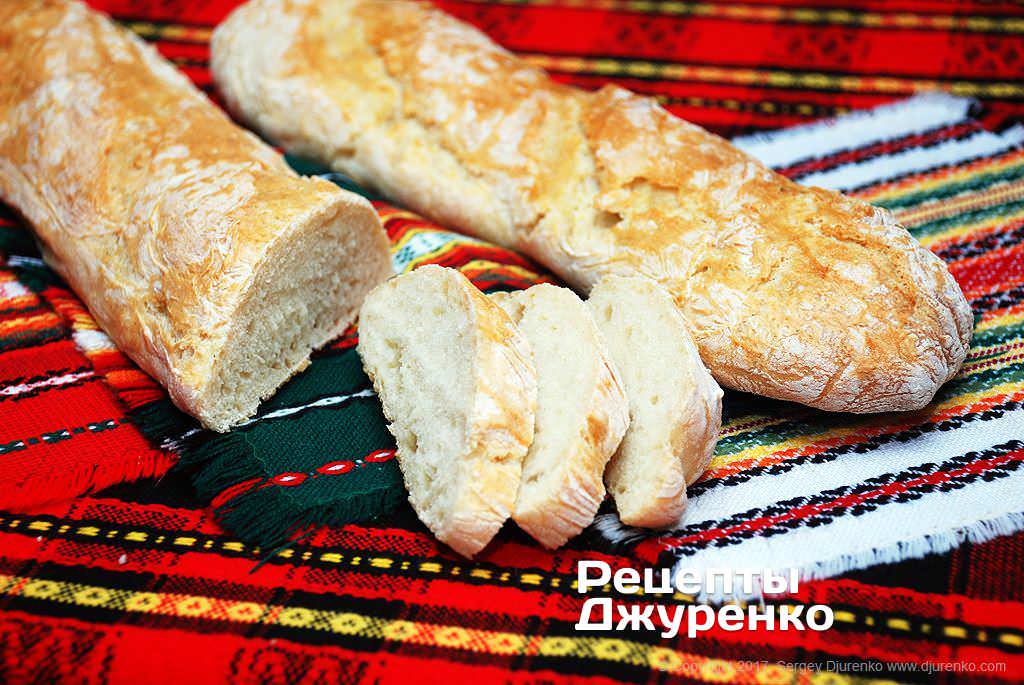
Shape each piece of dough into a long baguette and flatten it out with your hands. There’s no need to try too hard to give it a perfect shape. With a sharp knife, make a shallow cut lengthwise along the whole loaf. Alternatively, you can make several diagonal cuts. The cuts should be very shallow, just a few millimetres deep.
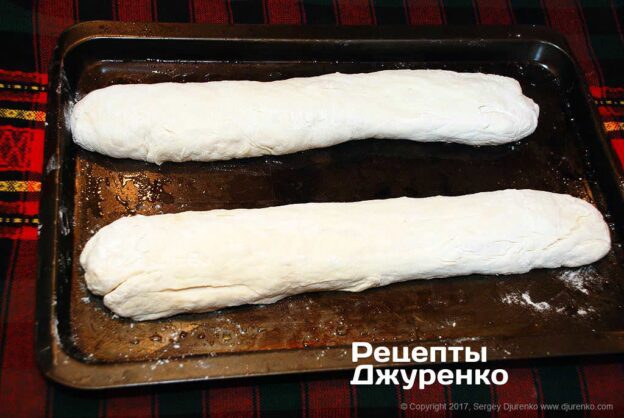
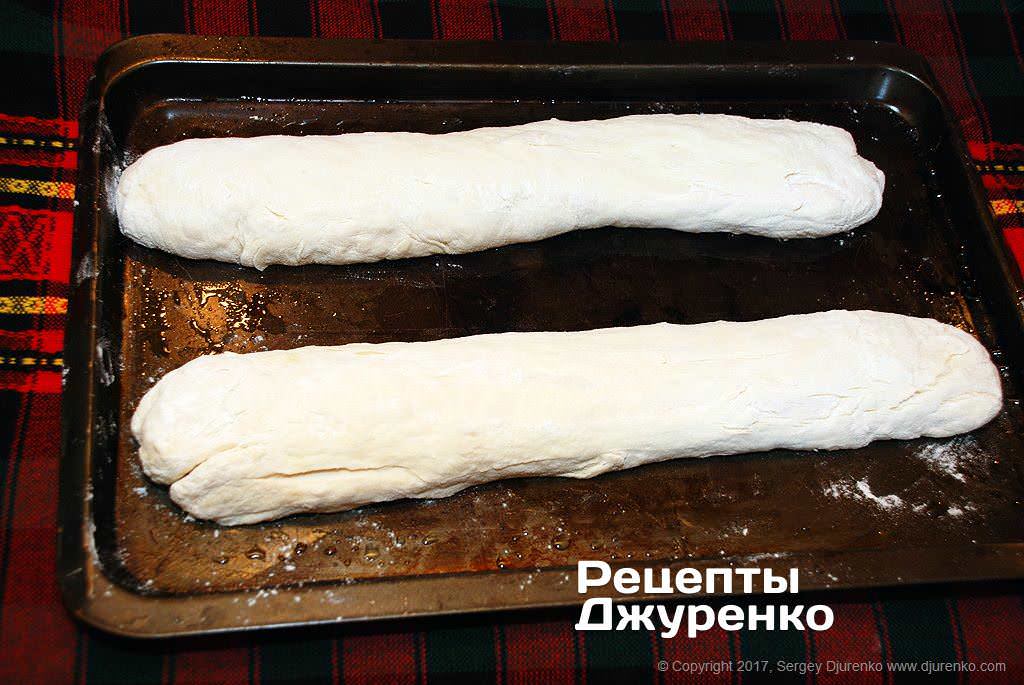
Place the baguettes on the baking sheet, cover with a linen napkin and let them rest for 15 mins while the oven heats up. The oven should be at about 240 °C.
Baking
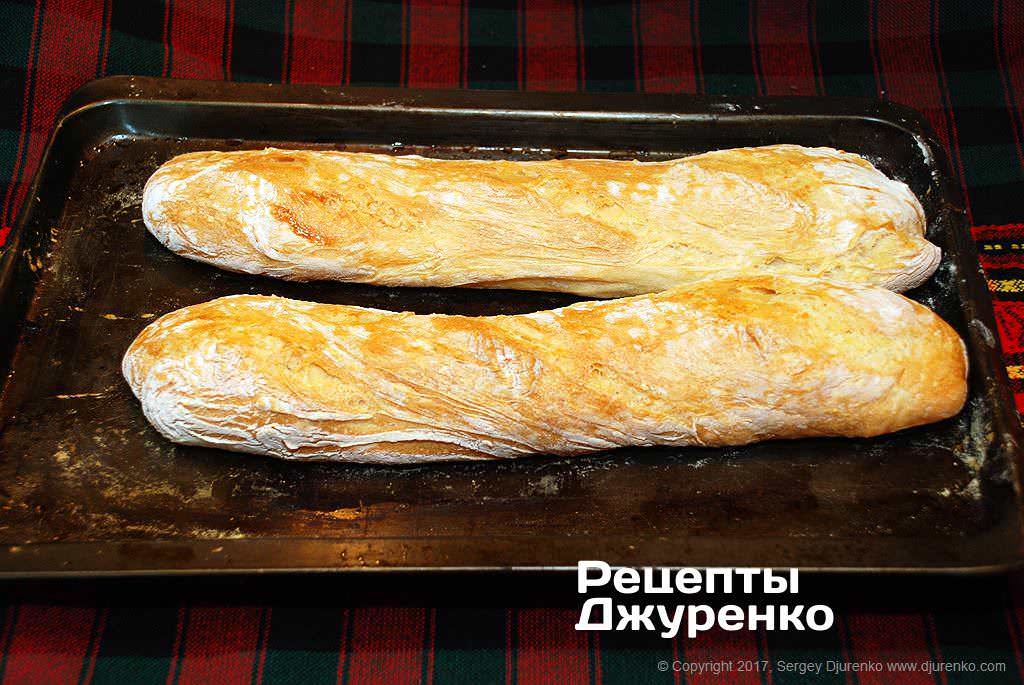
Put a ceramic cup of hot water on the lower rack. There should be a little steam in the oven the whole time, otherwise the crust will come out too hard and crunchy. Put the baking sheet in the oven on the very top rack, above the water. Bake at high heat for 15 mins.
Take the baking sheet out of the oven and brush the surface of the bread with whipped egg white – this gives the loaves a lovely straw-yellow colour.
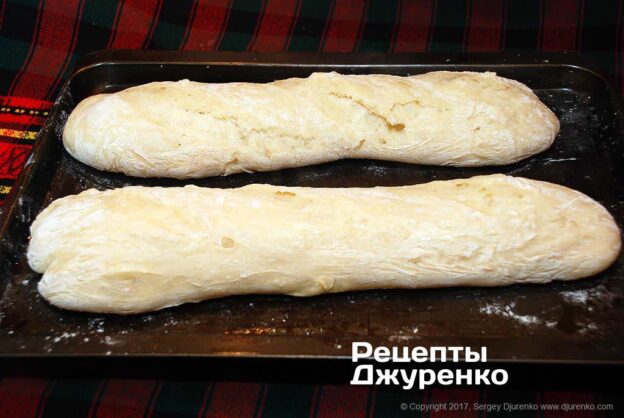
Return the baking sheet to the oven and continue baking, lowering the temperature to 210 °C. The final baking time for the white bread can be 40–50 mins.
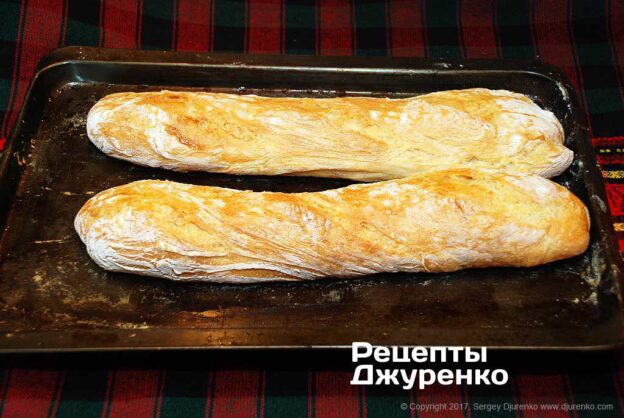
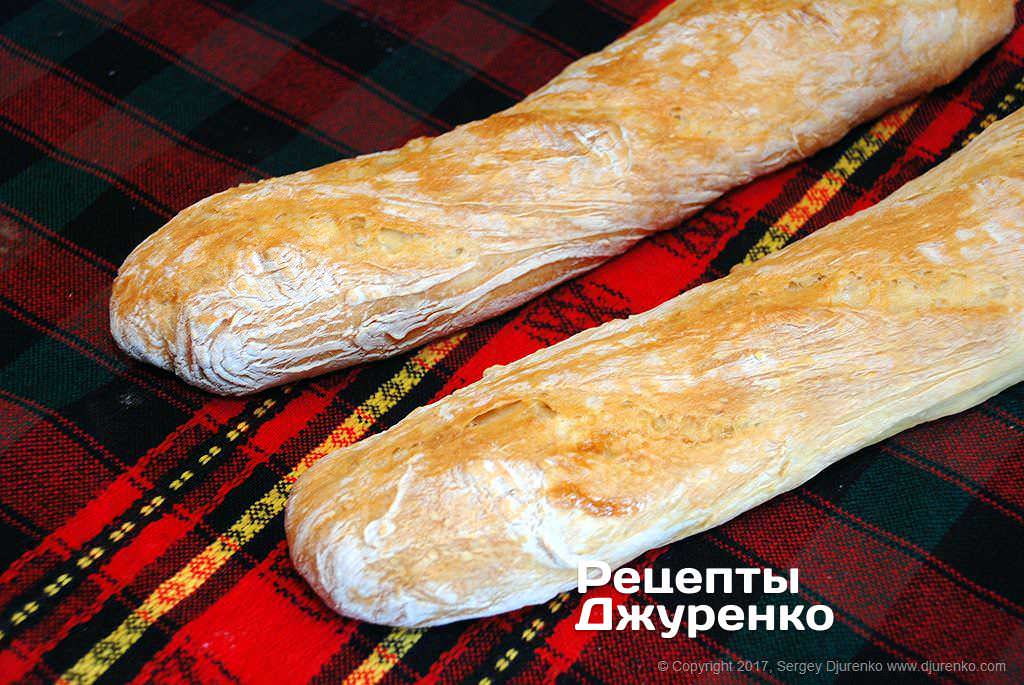
Take the finished homemade wheat bread out of the oven and cover it with a clean cloth – it needs to cool.
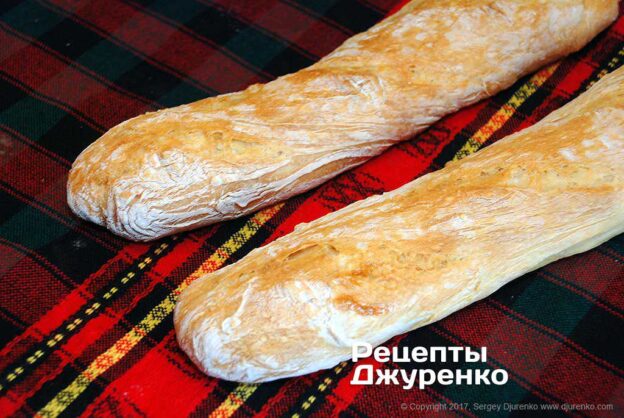
Serving
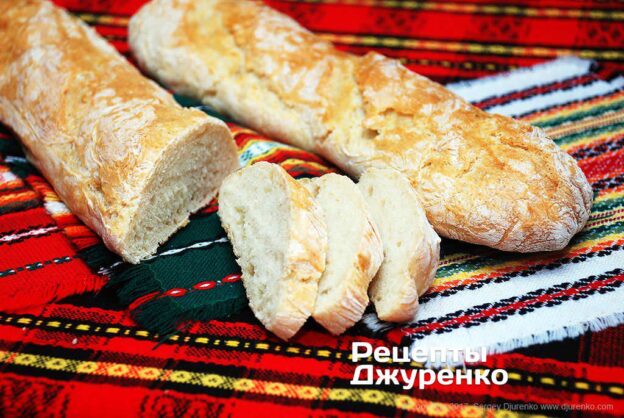
Slice the baguette with a knife. If you like, spread the slices with garlic basil butter. Or make small sandwiches with cod liver pâté. Thinly sliced white bread makes excellent toasted croutons.
Calories and macros
258 kcal
100 g
- Protein8.4 g14% of kcal
- Fat1.4 g5% of kcal
- Carbs49.5 g81% of kcal
Calculated from the recipe ingredients, excluding salt and spices. Data: USDA and Matvaretabellen.
How did you like this recipe?
To Get It Right
How much flour and water
4 cups of flour is about 520 g, and there’s only about 300 ml of water in total: 100 ml in the sponge and a cup in the dough. The same goes for a stand mixer. If the dough is too sticky, add a little more flour.
You can skip the egg
The egg doesn’t go into the dough itself: the egg white is brushed over the bread after 15 minutes of baking to give the crust a straw colour. You can do without it.
Dry yeast instead of fresh
Instead of 15 g of fresh baker’s yeast, use about 5 g of dry yeast. Dissolve it in the sponge the same way, with flour, sugar and warm water.
How to store it
Homemade bread will keep, but it’s best eaten as soon as possible. Keep the cooled bread in a bag or wrapped in a cloth, and slice and freeze whatever you won’t eat within a couple of days.
Have your own trick for this recipe?
Questions and answers
How long and at what temperature do you bake bread in the oven?
About an hour: the first 15 minutes at 240 °C, then 40–50 minutes at 210 °C. Keep a cup of hot water (200 ml) in the oven the whole time for steam.
Why knead the dough twice?
The second kneading pushes the excess gas out of the dough, so after the second rise the crumb comes out even and fine-textured.
Can you bake bread in the oven without a loaf pan?
Yes, this bread is baked without a pan: the dough is shaped into long baguettes and placed on an oiled baking sheet.
What is bread made of?
Plain bread is flour, water and a leavening agent: yeast or baking ammonia. Salt is usually added, along with a little sugar to help the yeast work. White bread is baked from wheat flour, dark bread from rye flour or a blend.
How many calories are in white bread?
About 246 kcal per 100 g of homemade white bread.