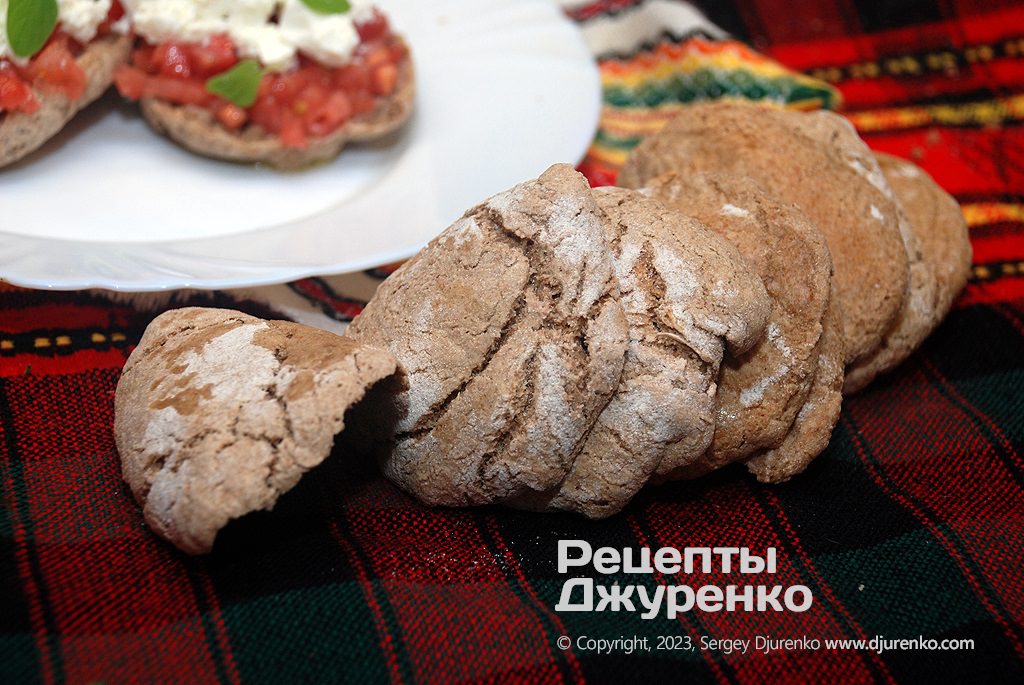
Barley Rusks Paximadia
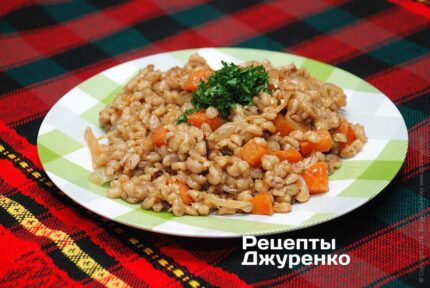
Ingredients
8-10 pieces
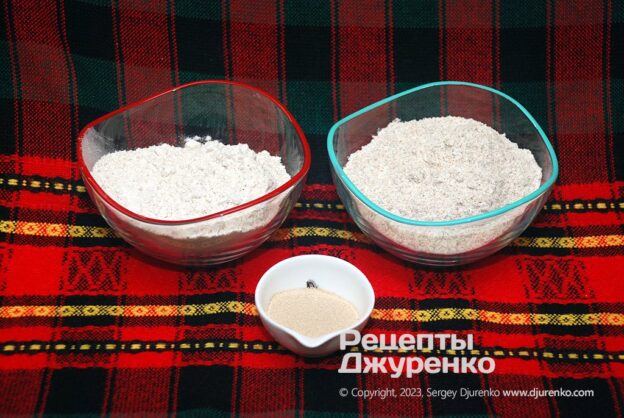
- Whole grain barley flour 150 g
- Whole grain wheat flour 150 g
- Wheat or barley flour for dusting a little
- Instant dry yeast 5 g
- Warm water 180 ml
- Sugar 1 tsp (5 g)
Step-by-step recipe
Dough
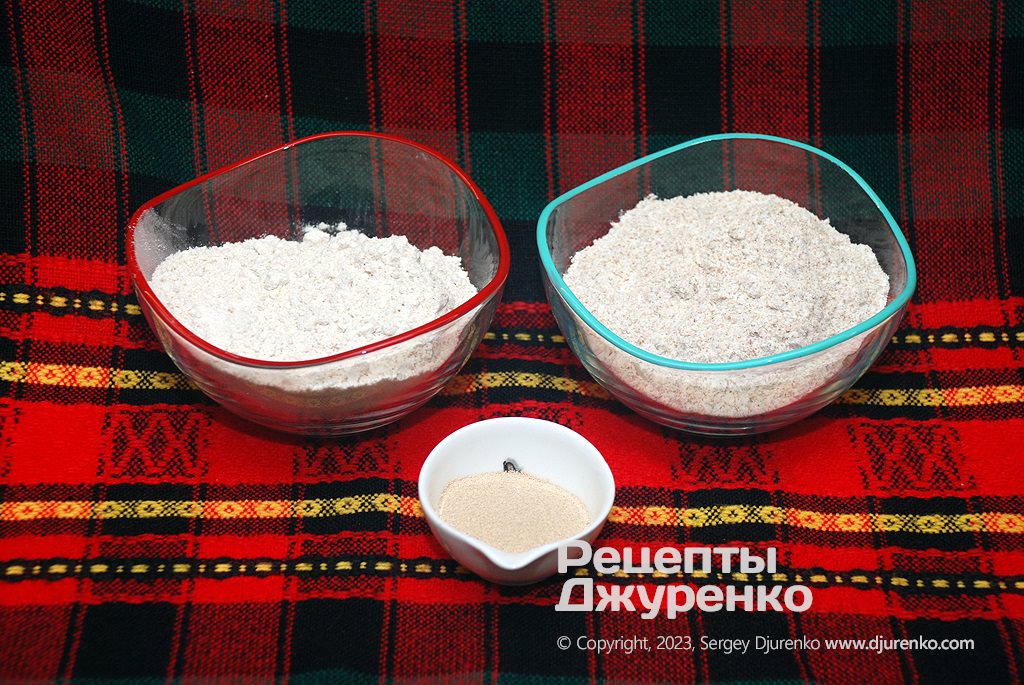
Since we are making the base for an appetizer of tomatoes and cheese, this recipe describes how to make plain barley paximadia. If you like, you can add spices, dried herbs, sweetness and so on to the dough. Many people ask where to buy barley flour. Honestly, I had never paid attention to it, and it turns out to be sold in the same place as regular flour, where there are many other kinds of grain flour too. For the rusks I bought whole grain barley and wheat flour. They are darker than the soft flour used for pies.
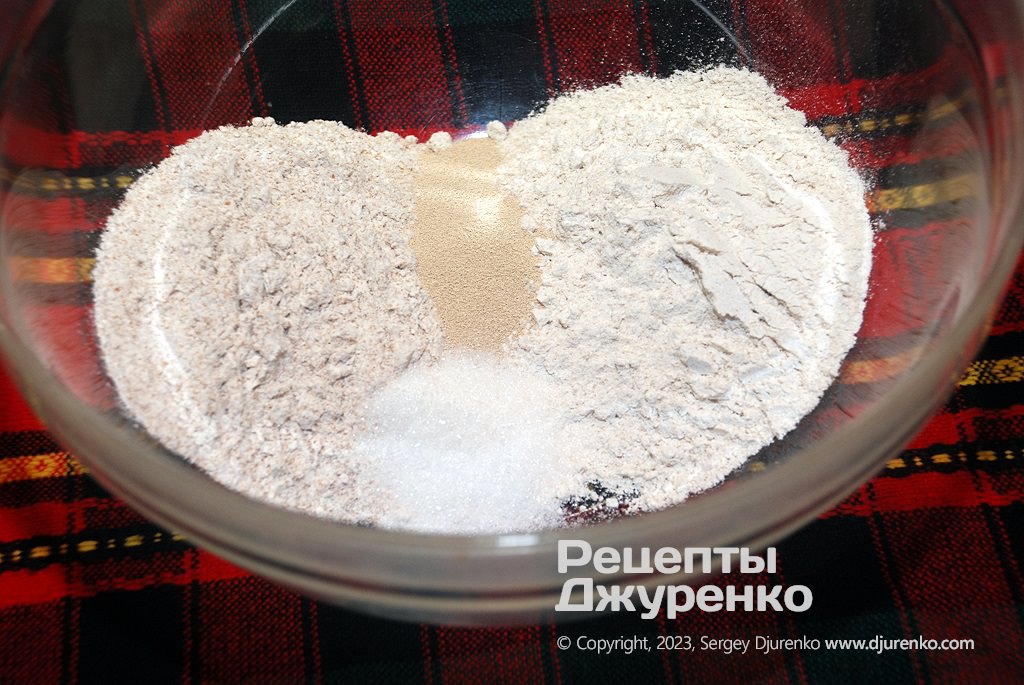
Mix the dry ingredients. Be sure to sift the flour: when whole grains are milled, impurities and large bits of grain can get into it. Put everything into a deep bowl.
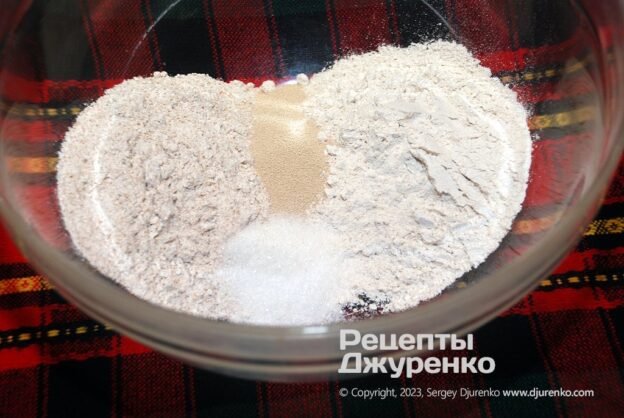
Add 1 tsp of sugar (5 g) and half a packet of instant dry yeast, about 5 g. If you prefer, you can make a starter from fresh yeast and knead the dough with it. Stir the dry ingredients with a fork so they are evenly distributed.
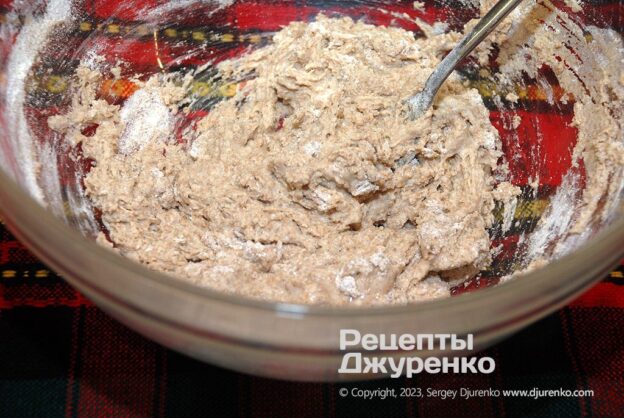
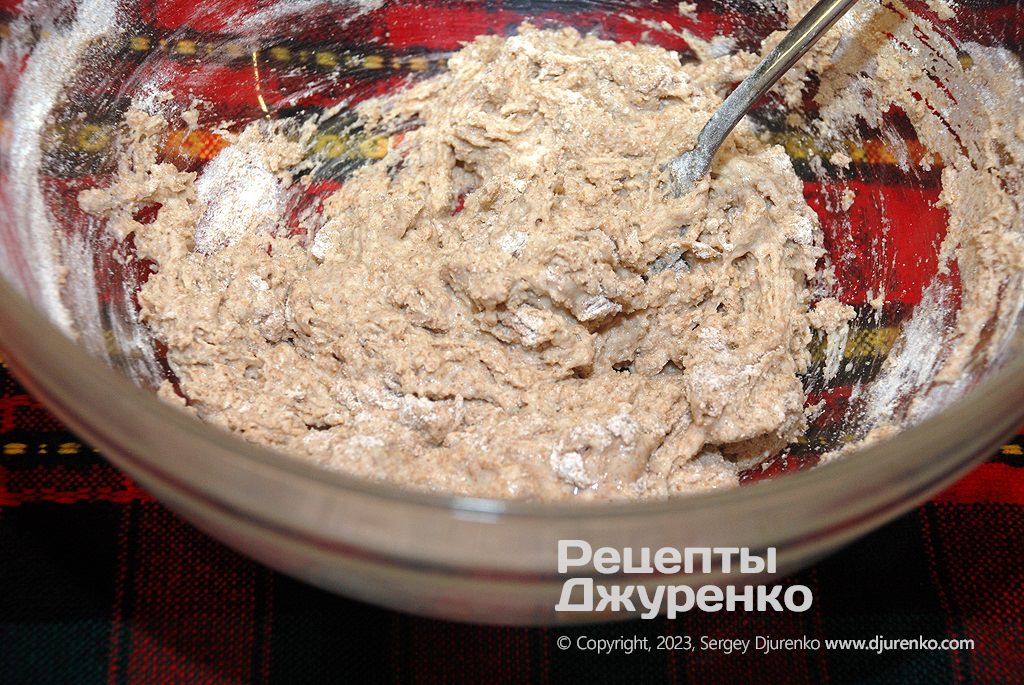
Knead a slightly sticky dough. Pour about 180 ml of water into a glass. The water should be warm. I put the glass in the microwave for 10 seconds, which gives a fine temperature. Pour the water into the flour and knead the dough. Many recipes use eggs or add vegetable oil, but for plain rusks you shouldn’t. If you want something sweet and soft, it might make sense.
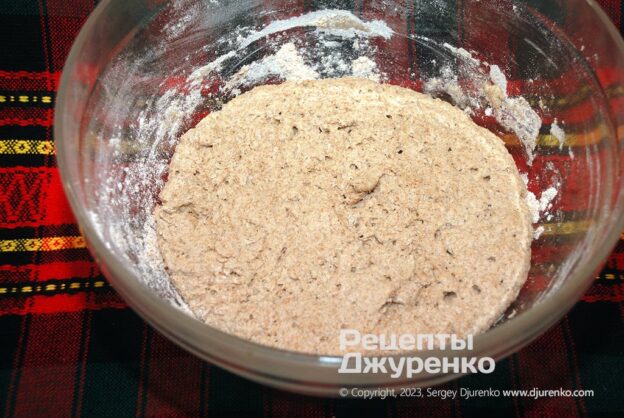
Let the dough rise. Roll the dough into a ball and dust it with a little flour, and dust the bottom of the bowl with flour too, wheat or barley, it makes no difference. Put the dough in the bowl and cover it with a cloth. Then leave it in a warm place for 45 mins. During this time the dough will rise and double or triple in volume.
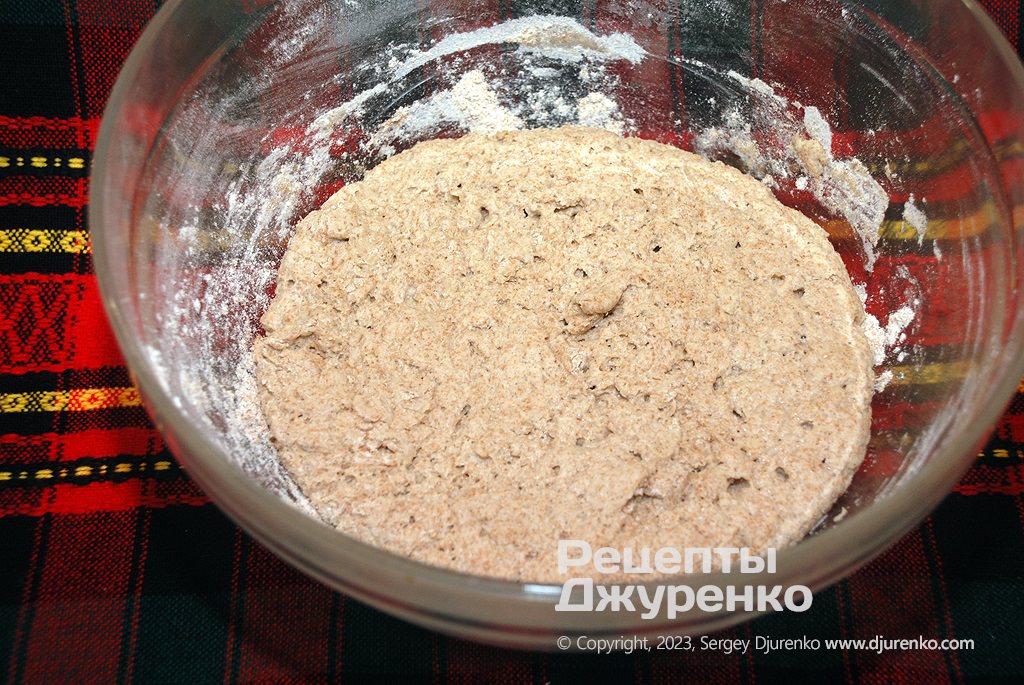
Shaping
Barley paximadia can be shaped in several ways. The more complicated option is to roll the dough into a log, lay it on a baking sheet, and cut across it, not all the way through, at intervals of 7-10 mm, so that after baking the bread can be broken into separate rusks. I prefer to bake round “buns”, then cut them in half and dry them.
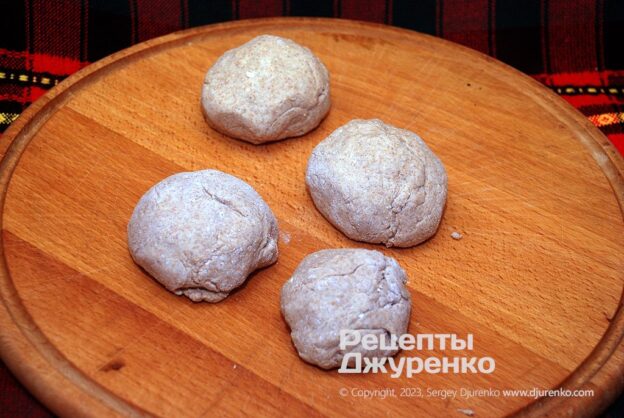
Knead the dough again, adding a little flour. It should stop sticking to your hands but still be very soft. Divide the dough into 4-5 pieces, each will make two rusks. Roll the pieces into balls.
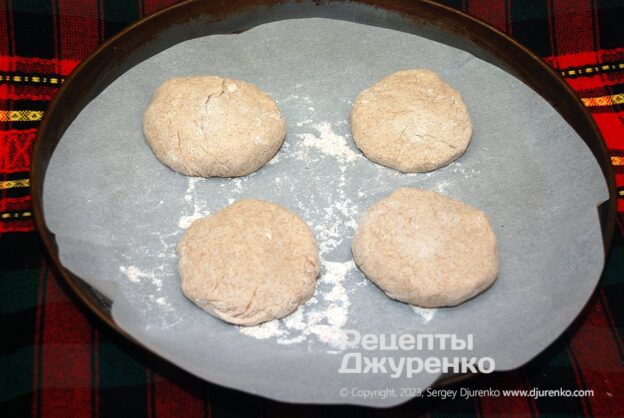
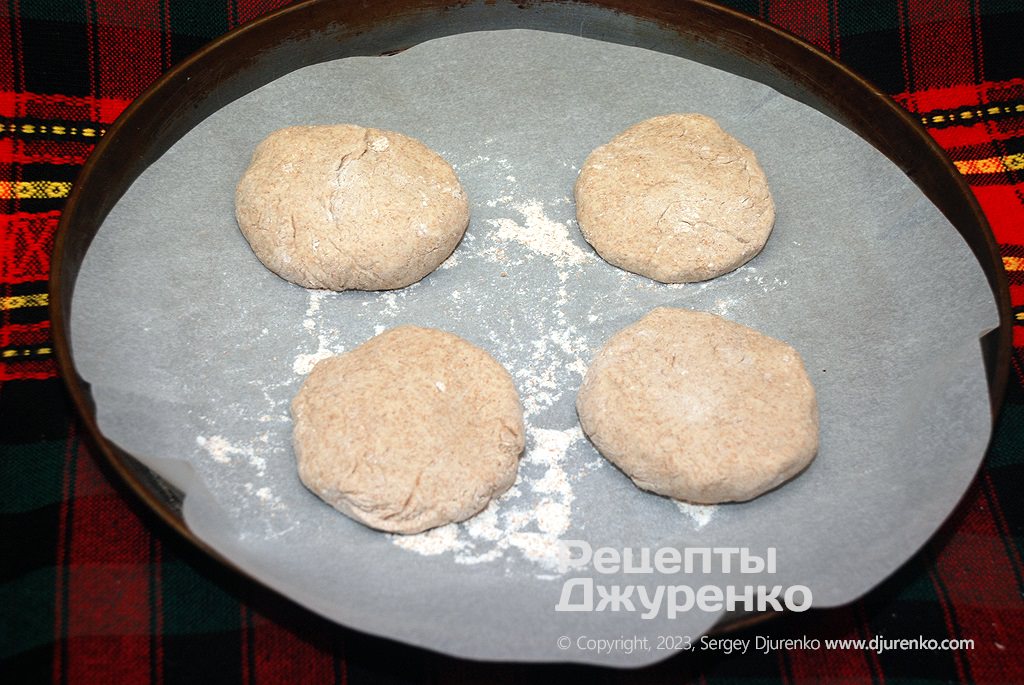
Shape the buns. Line a baking sheet with parchment paper and sprinkle it with a pinch of flour. Shape the balls of dough into flat round buns 7-8 cm in diameter and 1.5-2 cm thick. Place the buns on the baking sheet, cover with a cloth and let them rest for 15-20 mins.
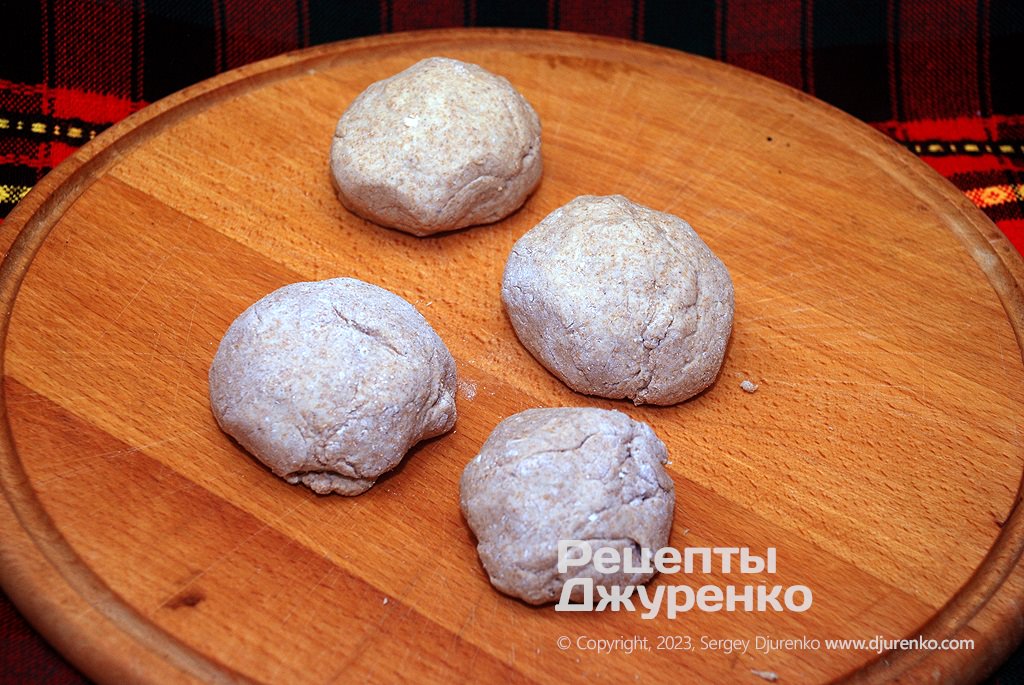
During this time the dough rises a little more. Press the buns down lightly with your palm so the surface is flat and the dough is no more than 2 cm thick. Sprinkle a pinch of flour over the dough and rub it in with your palm.
Baking and drying
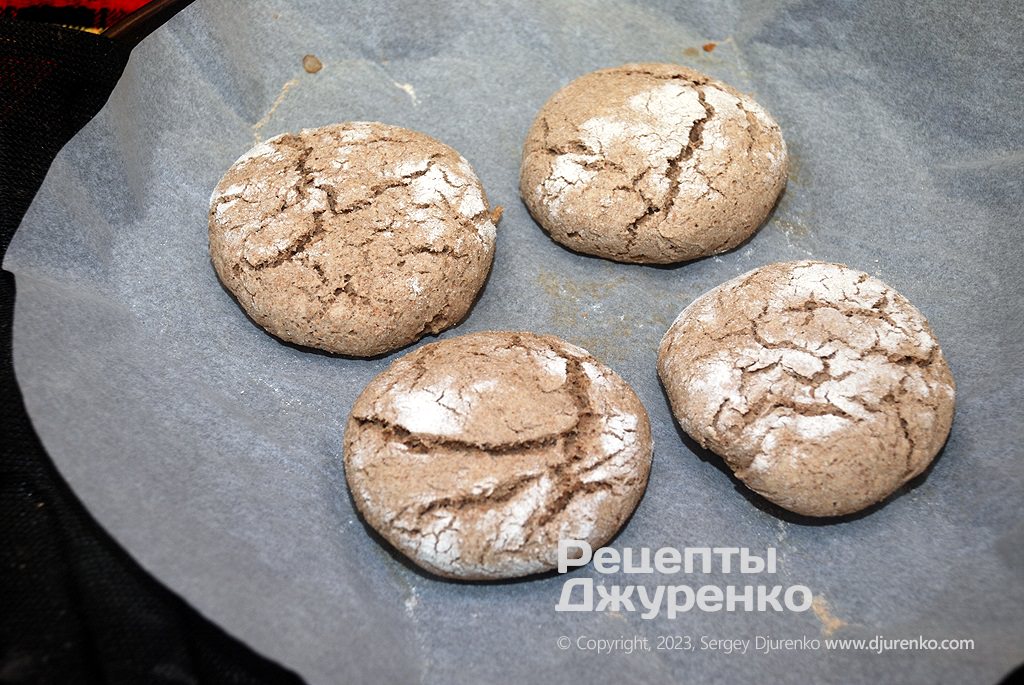
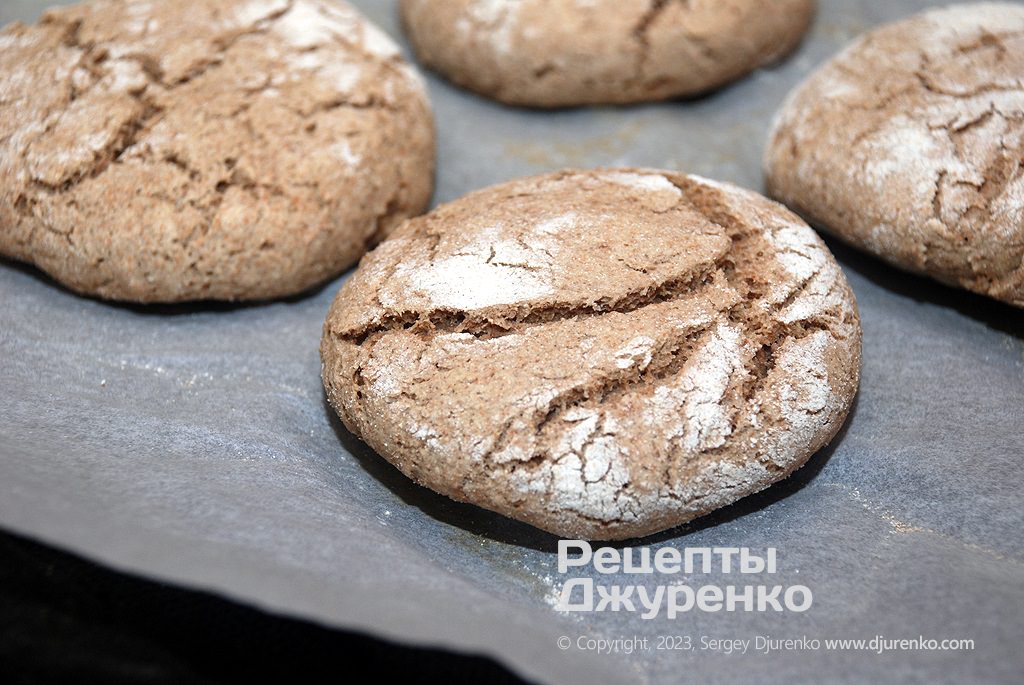
Preheat the oven to 180°C and put the baking sheet in. Homemade barley rusks bake for about 20 mins. They don’t rise and stay almost the same size, but the surface cracks, and the cracks are shallow but pretty. You can check doneness with a toothpick, which should come out dry. By the way, in many ovens that heat from below, the bottom of the baked goods often overbakes. Put a silicone mat under the parchment paper to help.
The second stage of baking is drying. Paximadia are often compared to biscotti, the Italian twice-baked cookies. Let the bread cool so it doesn’t crumble when you cut it. Then cut the finished “buns” in half through their thickness.
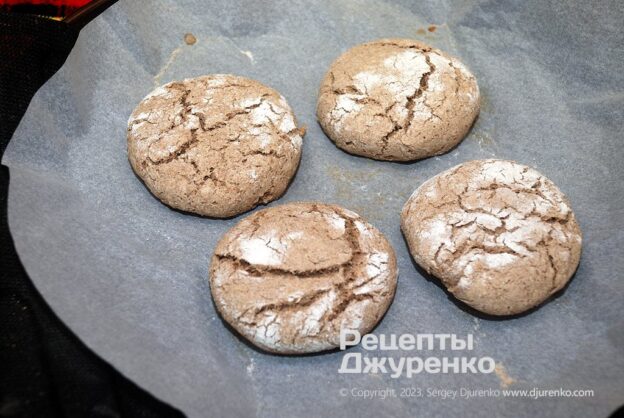
Dry the bun halves until they “ring”. You can dry paximadia in the same oven if it holds a steady 100-110°C. The second option is the microwave, which is how I dry rusks from bread. Just lay the round bun halves on a plate and put them in the microwave. Adding 2 mins at a time, dry the rusks until they “ring”. Usually 6-8 mins is enough and the result is excellent.
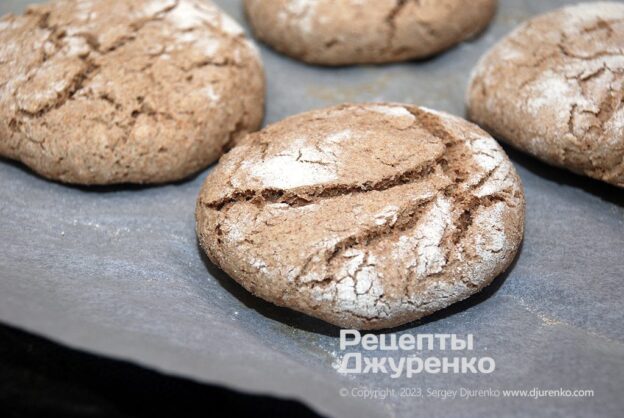
The rusks can be kept in a container or a bag. I make them for several days at a time, so ours sit in a basket covered with a linen napkin.
Serving
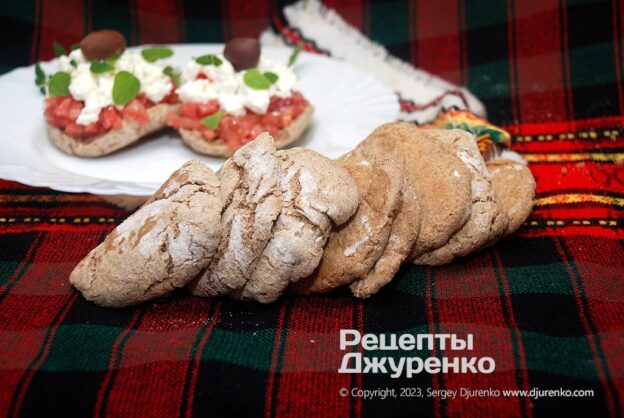
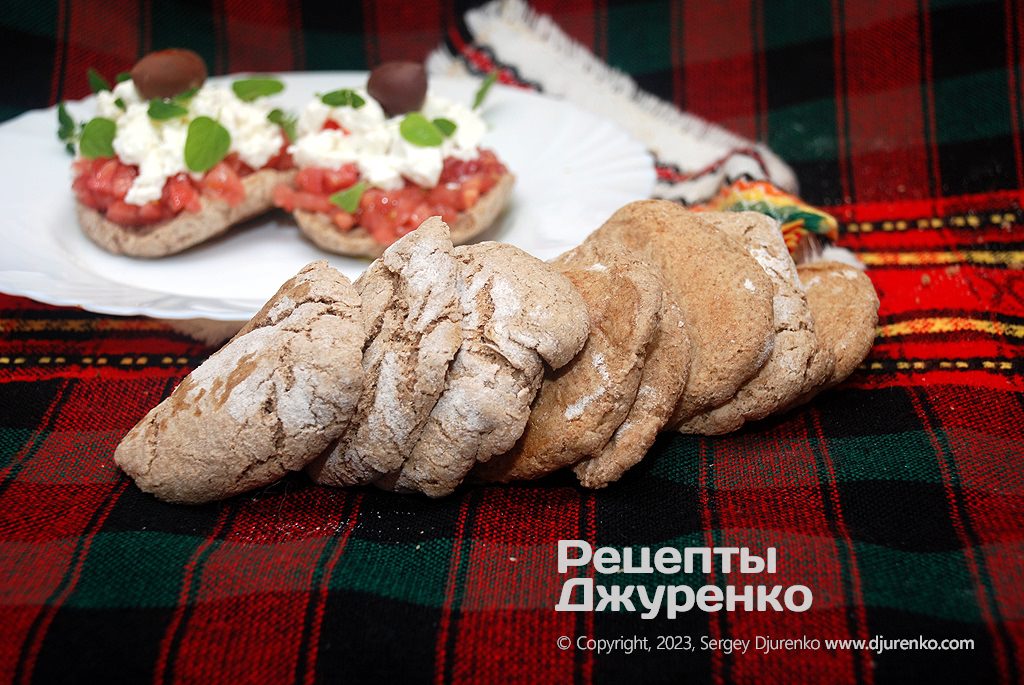
Soak the rusks in water and put the appetizer on top. We often make dakos for breakfast instead of bread: a fresh tomato, feta, olives and fresh oregano that grows in a pot on our windowsill. It’s tasty and quick, simply divine!
Calories and macros
245 kcal
100 g
- Protein9.7 g17% of kcal
- Fat1.8 g7% of kcal
- Carbs43.9 g76% of kcal
Calculated from the recipe ingredients, excluding salt and spices. Data: USDA and Matvaretabellen.